Feeds:
Posts
Comments

Archive for the ‘Diabetes’ Category

I was lucky growing up in the fifties, neither of my parents took sugar in tea or coffee–spoilt the taste they insisted.

Like a good son, I copied them and in spite of Ma’s talent for baking–coffee cakes and flapjacks were unrefusable offers at “tea-time”–I didn’t develop the raging sweet tooth some people have to feed.

So the changes I made after I was diagnosed with Type 2 Diabetes thirteen years ago were minimal and not really painful.

“Out with the whites” (refined carbohydrates like white rice, white pasta, white bread)–an earlier post–became the rule and I don’t miss ’em!

I prefer wholewheat pasta, brown basmati rice and whole rye bread–I prefer the taste I mean.

And of course I don’t drink artificially sweetened soft drinks, though I remember in the fifties enjoying my share of something colored red called TIZER, bought in large bottles from “The Tuck Shop” in Highgate Village after school.

I was doubly lucky it turns out, according to this piece from The Guardian:

http://www.guardian.co.uk/business/2012/jun/11/why-our-food-is-making-us-fat

I was brought up before the development of high-fructose corn syrup (H-FCS) produced in the 1970s from a glut of corn.

This readable article is an introduction to a three-part TV series to be shown on BBC2  starting this Thursday evening.  Journalist and film maker Jacques Peretti identifies SUGAR–and in particular the development and wide spread introduction into food and drink products of H-FCS–as villain in the search for why people (especially children) are dangerously overweight these days.

Obesity is strongly linked to the development of Type 2 diabetes in adults–and, more recently, also  in children.

(Meredith just told me that her father restricted her to one bottle of Coca-Cola a day in the fifties but lifted the order when Diet Coke was introduced. Game, Set and Match to Coca-Cola!!)

Read Full Post »

Delicious Dishes–gone digital!

You can now download the cookbook to your Kindle.

In it you’ll  find the recipe for this spicy delight on page 114!

Spicy courgettes and prawns with fresh coriander

(Haven’t seen the Kindle version yet ourselves. We don’t have one. We’re  wondering how well Hope James’  lovely water color sketches come through….)

Here’s the link to the digital version: http://tinyurl.com/DeliciousDishes/.

Read Full Post »

…from the local Amazon service in the UK, France, Italy, Germany  and Spain!

The postage and packaging charges should be significantly cheaper than when ordering it from the US.

The revision is 9000 words longer and tells the sad story of the how the promising third series of Poldark failed to materialise– plus further stories of life after Poldark, including our move to France and how a passion for cooking and a diagnosis of Type Two diabetes had very positive consequences…

There are many more photos, some from Winston Graham’s private collection, taken when he and his wife Jean joined us on location in Cornwall during the filming of the second series.

Read Full Post »

The word Diabetes focused my interest.

Yesterday morning I was listening with half an ear to a radio trailer for a programme coming on in an hour.

BBC’s Radio 4 is running a series profiling scientists and their work in various fields called The Life Scientific.

Frances Ashcroft was the subject for this episode.Who is she?

The search for a cure for diabetes goes on in medical research centers all over the world and nearly every day newspaper headlines announce that somewhere a team of scientists has made a major breakthrough.

Usually these often sensational pronouncements hover around the ether for a week or so and then get filed in the memory bank and the teams of scientists return to their work benches and microscopes to continue their quest for a cure.

Until yesterday morning Frances Ashcroft was one such anonymous boffin to me.

Now, thanks to the BBC’s ever inquiring spirit she has come into three dimensions–and hers is a good story.

To quote from Wikipedia, her work “with Professor Andrew Hattersley has helped enable children born with a rare form of diabetes–neonatal–to switch from insulin injections to tablet therapythus making the condition infinitely easier to cope with for thousands of very young sufferers and their parents.

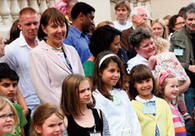
Prof. Ashcroft with some of the youngsters helped by her discoveries.

Her enthusiasm and passionate commitment to the cause make it a compelling listen.

 Listen here to the BBC radio piece.

It encourages me to believe that one fine day–with people like Professor Ashcroft on the case–a cure to Type 2 diabetes will be found.

The ultimate goal-according to her Oxford University Dept’s websiteis to elucidate how a rise in the blood glucose concentration stimulates the release of insulin from the pancreatic beta-cells, what goes wrong with this process in type 2 diabetes, and how drugs used to treat this condition exert their beneficial effects.

In other words : to discover what causes Diabetes.

This is a short film on her now available on YouTube.


Read Full Post »

I’m planning a cooking workshop in Lautrec the first weekend in October, based on my cookbook, Delicious Dishes for Diabetics and healthy, simple recipes in the Mediterranean tradition.

Lautrec

What’s on the menu?

  • A three-and-a-half day workshop in Lautrec (department of the Tarn in southwest France), in a charming small hotel with a magnificent garden and lovely views.
  • We’ll make our meals and eat them together.
  • All meals and wine are included.
  • Group size limited to about six people (non-cooking partners or traveling companions are welcome to come along and enjoy the meals we prepare for a supplement).
  • Excursions to local markets.
  • All participants have their own private room with en-suite bathrooms.
The focus:
Preparing (and enjoying) healthy recipes based on the Mediterranean way of eating.
My cookbook and blog will be the springboard for the recipes–depending on what is in season.
Dates:
Starting Thursday afternoon, Oct. 4th and finishing Sunday night, Oct. 7th with the farewell meal;
Departure the following morning, Monday, Oct. 8th 2012–i.e. four nights, three full days and a half-day on arrival.
Who might come:
Anyone interested in developing a wider repertoire of healthy recipes that can be enjoyed by the whole family.

What’s the venue?
A beautiful new demonstration kitchen in a charming small hotel in the centre of Lautrec:

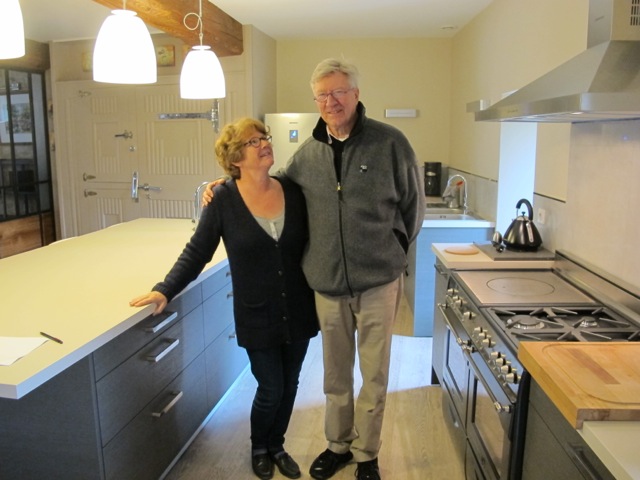
With Dominique, the owner of La Terrasse de Lautrec in the special workshop kitchen.

La Terrasse de Lautrec

Many more photos of La Terrasse and Lautrec here: http://tinyurl.com/LautrecWorkshop

Lautrec is a medieval bastide–a fortified hilltop village with a population of about 1000 people.
It enjoys the official recognition as Un des plus beaux villages de France [one of the most beautiful villages in France].

Lautrec

It is famous for it’s pink garlic (l‘ail rose)–one of the staples of Mediterranean cooking.
The nearest airports are Toulouse Blagnac (about 1 hour 20 minutes drive) served by BA, Air France and Easy Jet amongst others.
Carcassonne Airport (served by RyanAir) is about the same distance.
Castres also has a small airport with a limited service from Paris.
The nearest train station is Castres, about 15 minutes drive.
Cost: 1000 euros
(as of today’s currency rates, in dollars that is $1288 (US) or in Sterling,  £800)
Transportation from airport to Lautrec can be arranged for an extra fee.
Note: the venue is not suitable for people with mobility problems–i.e. there are stairs to the first floor and no elevator.
To book or for further info, contact Meredith:
meredithwheeler1@gmail.com

Read Full Post »

The numbers of undiagnosed diabetes in western countries is astonishingly high. Even when people get the right diagnosis (often YEARS after they’ve developed the disease) there’s often little support for how to make appropriate changes to lifestyle and way of eating.
I stumbled on this inspiring Type 2 diabetic story today from a newspaper in West Virginia, the Charleston Gazette.
It has a happy ending….

Recognize diabetes before it’s too late!

By Kate Long
28/4/20212
(edited)

Everette Roberts in October, 2011 (left) and six months later in April, 2012. 
Quitting soda pop, eating right and staying active has made a world of difference, I don’t get sweats and blurry vision any more, I’ve got a lot more energy, and my outlook is better.
WILLIAMSON, W.Va. — The winter of 2010-11, it snowed a lot in Mingo County. Fifty-four-year-old Everette Ray Roberts was shut in for days, me and my dogin a small trailer perched on a steep hillside near Matewan.

A rugged bachelor, Roberts has three ruptured discs in his back from heavy lifting. 

 “I was constantly dizzy and thirsty, with all the snow, I wasn’t getting out and walking around, doing stuff. I’d gained a lot of weight. My eyes got blurry. I’d get so shaky, sitting on the couch watching TV, and I was pouring down the 24-ounce bottles of pop, five or six of them a day. It was like adding gasoline to the fire, all that sugar, but I didn’t know it.

All I knew was, I was terrible thirsty. I kept a gallon of water sitting beside me for when I ran out of pop. I couldn’t sleep. I’d get real, real sweaty;  kept running to the bathroom. I thought maybe it was high blood pressure or something.  I had no idea what danger I was in.”

He was one of an estimated 69,000 West Virginians who have diabetes, but don’t know it.

“Going to the doctor in the snow is not exactly easy, and it’s expensive.”

When he finally did go,  the doctor told him he had all the symptoms of diabetes: blood sugar was up the high 400s and A1C [the three-month blood sugar levels] was 12.5.

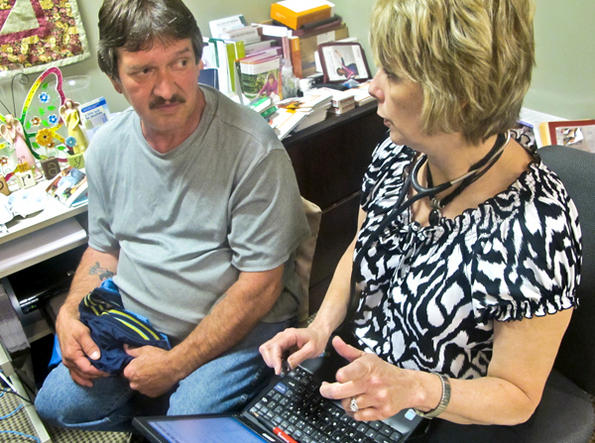
His doctor referred him to diabetes educator and nurse practitioner Vicki Lynn Hatfield.
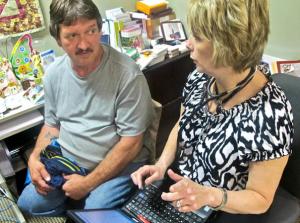
Hatfield and her partner help about 500 of the area’s estimated 3,500 diabetics figure out how to control the condition from day to day, despite sometimes harsh realities of life: shortage of cash, two jobs, kids, and so on.

“I lucked out, if it hadn’t been for Vicki, I’d probably be in kidney failure now,” Everette said.

He and Hatfield went over what he ate, how often he ate, his schedule, his physical activity.

To get rid of his dizziness, shakiness and blurry vision, they planned specific ways he could change what he ate or when he ate and increase physical activity every day. They also got his medicine adjusted.

Everette went to Hatfield’s group Diabetes Self-Management Classes at Williamson Memorial Hospital.

He learned how to shop for food that wouldn’t set off his blood sugar, how to read his own blood sugar levels, how to cope with periods of depression.

“Everette is somebody who, once he found out how to control his diabetes, he took the reins,” says Vicki Hatfield.

A year later, his blood sugar was in normal range. He requires less medicine to keep it there.

“He doesn’t have a lot of money and he doesn’t have a lot of education, but he learned very quickly how to do it. And, just as important, he did it!” 

Hatfield dished it out to him in small steps, he said. He learned what foods would keep him stable and how to lower his blood sugar by taking a walk, how to buy healthy foods on a budget.

“There’s a whole lot more to it than what I thought….

I stay on the move now, 24/7 , I cook for myself. I take the skin off my chicken, and bake it instead of fry it. I make myself a lot of salads. I like salad and I put all kinds of stuff in them, vegetables, meat.

Vicki Hatfield adds,

“People are not born knowing the symptoms of diabetes, and they aren’t born knowing how to control it, and it takes more than a 15-minute doctor visit to help them get a handle on all they need to know.
I have found that if I can get people the information, most will apply it, with whatever means they have. We’ve got plenty of patients who don’t have a lot of education and income, but that doesn’t have to stop them!”

She keeps trying new ways to stamp out diabetes .

Two years ago, she helped start a Mingo County Diabetes Coalition. Now they have a five-year grant for $50,000 a year through Marshall University to spread diabetes awareness and prevention through the county.

Hatfield now offers diabetes prevention classes.

“People tell their neighbors what they learned. So it’s spreading.”

The coalition plans to post symptoms of diabetes in store windows and telephone poles all over the county.

“We want people to know they can catch it early. If we can get people to go after it like Everette has, our diabetes rate should drop.”

Last word to Everette:

“I would tell anybody, the bottom line of it is, if you don’t set it in your mind that you’re going to get it under control, then it’s not going to get better.

It’s up to you whether you do or you don’t.”

(If you or someone close to you has been diagnosed with diabetes, feel free to share your experience of post-diagnosis support in the comments.)



Read Full Post »

The emphases are mine but otherwise this is posted verbatim…

WHO (World Health Organisation) Report 

Diabetes

August 2011

Key facts

  • 346 million people worldwide have diabetes.
  • In 2004, an estimated 3.4 million people died from consequences of high blood sugar.
  • More than 80% of diabetes deaths occur in low- and middle-income countries.
  • WHO projects that diabetes deaths will double between 2005 and 2030.
  • Healthy diet, regular physical activity, maintaining a normal body weight and avoiding tobacco use can prevent or delay the onset of type 2 diabetes.

What is diabetes?

Diabetes is a chronic disease that occurs either  (Type 1): when the pancreas does not produce enough insulin or (Type 2) when the body cannot effectively use the insulin it produces.

Insulin is a hormone that regulates blood sugar.

Hyperglycaemia, or raised blood sugar, is a common effect of uncontrolled diabetes and over time leads to serious damage to many of the body’s systems, especially the nerves and blood vessels.

Type 2 diabetes

Type 2 diabetes (formerly called non-insulin-dependent or adult-onset) results from the body’s ineffective use of insulin.

Type 2 diabetes comprises 90% of people with diabetes around the world, and is largely the result of excess body weight and physical inactivity.

Symptoms may be similar to those of Type 1 diabetes, but are often less marked. As a result, the disease may be diagnosed several years after onset, once complications have already arisen.

Until recently, this type of diabetes was seen only in adults but it is now also occurring in children.

Impaired glucose tolerance (IGT) and impaired fasting glycaemia (IFG)

Impaired glucose tolerance (IGT) and impaired fasting glycaemia (IFG) are intermediate conditions in the transition between normality and diabetes.

People with IGT or IFG are at high risk of progressing to type 2 diabetes, although this is not inevitable.

What are common consequences of diabetes?

Over time, diabetes can damage the heart, blood vessels, eyes, kidneys, and nerves.

  • Diabetes increases the risk of heart disease and stroke. 50% of people with diabetes die of cardiovascular disease (primarily heart disease and stroke).
  • Combined with reduced blood flow, neuropathy in the feet increases the chance of foot ulcers and eventual limb amputation.
  • Diabetic retinopathy is an important cause of blindness, and occurs as a result of long-term accumulated damage to the small blood vessels in the retina. 
  • After 15 years of diabetes, approximately 2% of people become blind, and about 10% develop severe visual impairment.
  • Diabetes is among the leading causes of kidney failure. 10-20% of people with diabetes die of kidney failure.
  • Diabetic neuropathy is damage to the nerves as a result of diabetes, and affects up to 50% of people with diabetes.
  • Although many different problems can occur as a result of diabetic neuropathy, common symptoms are tingling, pain, numbness, or weakness in the feet and hands.
  • The overall risk of dying [prematurely] among people with diabetes is at least double the risk of their peers without diabetes.

What is the economic impact of diabetes?

Diabetes and its complications have a significant economic impact on individuals, families, health systems and countries. For example, WHO estimates that in the period 2006-2015, China will lose $558 billion in foregone national income due to heart disease, stroke and diabetes alone.

How can the burden of diabetes be reduced?

Prevention

Simple lifestyle measures have been shown to be effective in preventing or delaying the onset of type 2 diabetes. To help prevent type 2 diabetes and its complications, people should:

  • achieve and maintain healthy body weight;
  • be physically active – at least 30 minutes of regular, moderate-intensity activity on most days. More activity is required for weight control;
  • eat a healthy diet of between three and five servings of fruit and vegetables a day and reduce sugar and saturated fats intake;
  • avoid tobacco use – smoking increases the risk of cardiovascular diseases.

Diagnosis and treatment

Early diagnosis can be accomplished through relatively inexpensive blood testing.

Treatment of diabetes involves lowering blood glucose and the levels of other known risk factors that damage blood vessels.

Tobacco use cessation is also important to avoid complications.

Interventions that are both cost saving and feasible in developing countries include:

  • moderate blood glucose control. People with type 1 diabetes require insulin; people with type 2 diabetes can be treated with oral medication, but may also require insulin;
  • blood pressure control;
  • foot care.

Other cost saving interventions include:

  • screening and treatment for retinopathy (which causes blindness);
  • blood lipid control (to regulate cholesterol levels);
  • screening for early signs of diabetes-related kidney disease.

These measures should be supported by a healthy diet, regular physical activity, maintaining a normal body weight and avoiding tobacco use.


Read Full Post »

Not a captain’s clarion call to arms at the start of the cricket season…*

…but a policy statement from Chef Shep in Chicago.

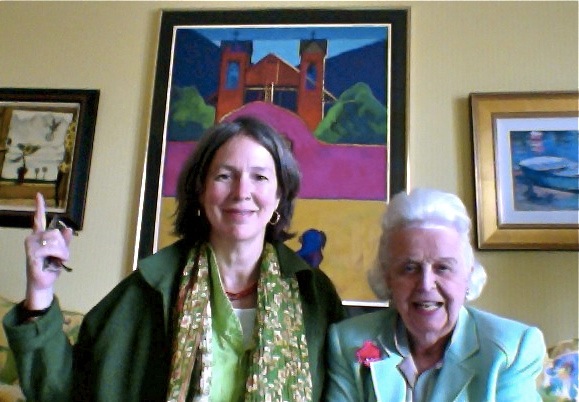
We met him when visiting Dixie, a spritely 88-year-old family friend of Meredith’s mother, in her elegant retirement home in Glenview on Chicago’s North Shore.

Our clocks were out of kilter from time differences (a lame excuse) and Chef Shepherd had kept the kitchen open for us.

He himself has type 2 diabetes–and was interested to meet me, said Dixie, and see my book.

He took our simple orders–it was late–and my book back to the kitchen as we made our peace and caught up with Dixie.

When he returned a few minutes later with salads for us and a hamburger and chips for Dixie (it’s breaking the rules that keeps her young, it would seem!), he reduced–chef’s lingo– part of the introduction to the book into the simple and memorable phrase “OUT WITH THE WHITES”.

In other words his approach when cooking for the folks with diabetes in the retirement community–and as a principle he follows when cooking for himself–is to avoid refined carbohydrates and potatoes (foods that metabolize too quickly into sugar for those with type 2 diabetics).

So the whites–rice, flour, pasta, bread, are replaced by the browns–wholewheat pasta, bread made with whole grains (rye or wheat), brown rice (basmati, if possible) etc.whole/unrefined alternatives.

I was impressed.

Here is a chef cooking in a corporate context (Hyatt, no less), personally invested in doing the right thing for his clientele of “seniors“.

After her hamburger the ever insouciant Dixie tucked into the chef’s special dessert!

* Not everyone knows that cricket is played in white togs, which makes for a pretty sight on village greens in summer.

Read Full Post »

Just received this link to my segment on the CBS-TV Morning Show in Chicago.  http://chicago.cbslocal.com/video/6884361-diabetes-can-still-mean-eating-well/

FAST FOOD!

Under two minutes from a whole piece of salmon to a fishcake in the mouth.

Below is the piece I wrote while recovering in a coffee shop, waiting for the wonderful ( i.e. full of wonders) ART INSTITUTE of Chicago to open.

With CBS anchor Kris Gutierrez in Chicago for the early show this morning (as part of their upcoming diabetes awareness program)

Dawn came up as we headed downtown with the early risers this morning–sister-in-law Mary driving us through the light traffic just a little before her normal hour.

The early morning CBS program had invited me to do a brief cooking piece to be aired as part of their ground-breaking Diabetes Awareness campaign–so great they have taken the lead on this important health issue.

It was anchor Kris Gutierrez’s second day on the job–he recently relocated from Dallas–and it was my first ever on-air demo!

So two debutantes “struttin’ with some barbecue“!

Meredith was holding her breath–she gets nervous on occasions like this.

Kris was a delight and made me feel like I knew what I was doing.

I could get a taste for this…

Read Full Post »

Waking up near the finish line of the Los Angeles Marathon in Santa Monica.

The Pacific Ocean is at the end of our road!

They’ll start this morning at Dodgers Stadium in downtown Los Angeles and run the twenty six miles plus a few more yards east-west to the water’s edge.

They–the everyday runners–will feel exhausted but exhilarated to have made it to the line.

We can sympathize!

Today’s the start of our last full week; tomorrow we head to Palo Alto and San Francisco for two bookstore signing sessions.

The apricot tree outside our window has little pink and white flowers ready to burst into life against the almost cloudless blue sky.

Los Angeles is herself again after the drenching downpours of yesterday which we thought would put a damper on  the event at Chevalier’s Books in Larchmont village–Angelinos stay home when it rains we were told.

NOT SO!–enough brave souls ventured out to make it a modest sell out.

This evening–a “poignant” Poldark reunion.

Ross meets Elizabeth again after thirty five years.

We are having dinner with Jill Townsend.

Read Full Post »

« Newer Posts - Older Posts »