Feeds:
Posts
Comments

Penne in a sauce of tomatoes, rosemary and balsamic vinegar.
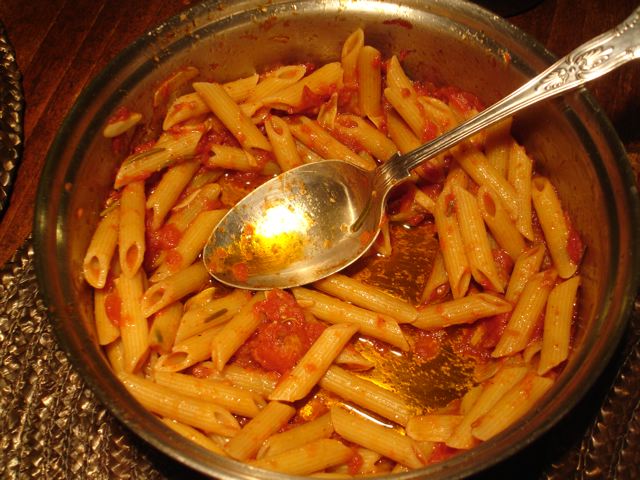
This is adapted from a recipe in  Marcella’s Kitchen by Marcella Hazan.

It is included in my recipe book Delicious Dishes for Diabetics (to be published in August this year in the UK, November in the USA).

Quick and simple to do, it has a distinctive earthy flavour, thanks to the rosemary.

It’s worth taking care to slice the garlic real thin.

for 4

8 tablespoons of olive oil

4 cloves garlic–very thinly sliced

2 sprigs rosemary or 2.5 tsps dried rosemary

A large tin [800gms/2lb] of tinned tomatoes- -drained of  their juice

s&p

1lb/400gms [100gms/4oz each person] wholewheat penne, farfalle or any short pasta

2 tsps balsamic vinegar

Sauté the garlic gently in the oil with the rosemary (if using fresh) until the garlic sizzles–a couple of minutes.

Add the tomatoes, salt and plenty of pepper—(if using dried rosemary add it with tomatoes).

Cook for 10-15 minutes.

Cook the pasta in salted water.

Drain well and add to the sauce.

Turn the pasta in the sauce and cook for a minute or two longer.

Turn off heat and make a well in middle of the pasta and add the balsamic vinegar.

Turn over the pasta again in the sauce.

Serve on heated plates with freshly grated parmesan cheese.

It’s raining, it’s pouring…..

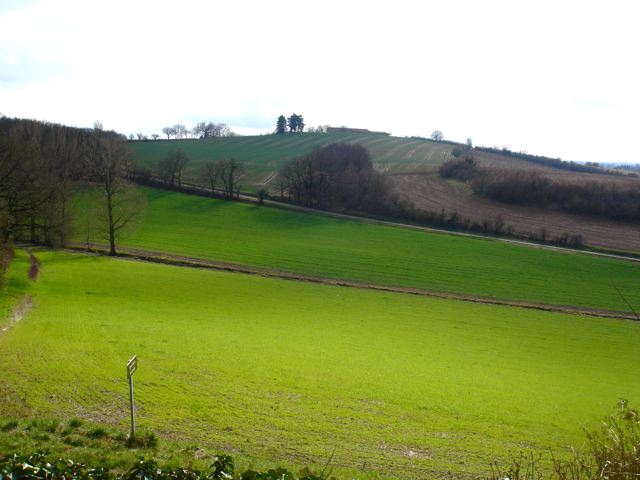
And the hail was so heavy yesterday it left the fields looking like it had snowed.

Just to reassure me that Feste in Shakespeare’s Twelfth Night didn’t get it all right when he sings:

Hey Ho, The Wind and the Rain.

When that I was and a little tiny boy,
With hey, ho, the wind and the rain,
A foolish thing was but a toy,
For the rain it raineth every day.

But when I came to man’s estate,
With hey, ho, the wind and the rain,
‘Gainst knaves and thieves men shut their gate,
For the rain, it raineth every day.

But when I came, alas! to wive,
With hey, ho, the wind and the rain,
By swaggering could I never thrive,
For the rain, it raineth every day.

But when I came unto my beds,
With hey, ho, the wind and the rain,
With toss-pots still had drunken heads,
For the rain, it raineth every day.

A great while ago the world begun,
With hey, ho, the wind and the rain.
But that’s all one, our play is done,
And we’ll strive to please you every day.

These two photos of our bitter almond tree were taken just a couple of days ago—and remind me that things will change again– for the better!


Peckishness can present problems for people with diabetes.

To snack or not to snack–that is the question!

One reason to eat a good breakfast is not to feel that nagging hunger mid-morning.

I have a bowl of oats, with walnuts, a teaspoon of linseeds, a prune, a dried apricot chopped, half a tub of low/no fat yoghurt, cinnamon sprinkled over and oatmilk, every morning and it’s sometimes my favourite meal of the day!

That and the two pieces of rye bread toasted and a cup of coffee take me happily through to lunch.

For me it is in the gap between lunch and dinner that peckishness kicks in–usually between 5pm-6pm.

What to do about it?

Ideally nothing–but then when dinner time comes the temptation to scoff is hard to resist.

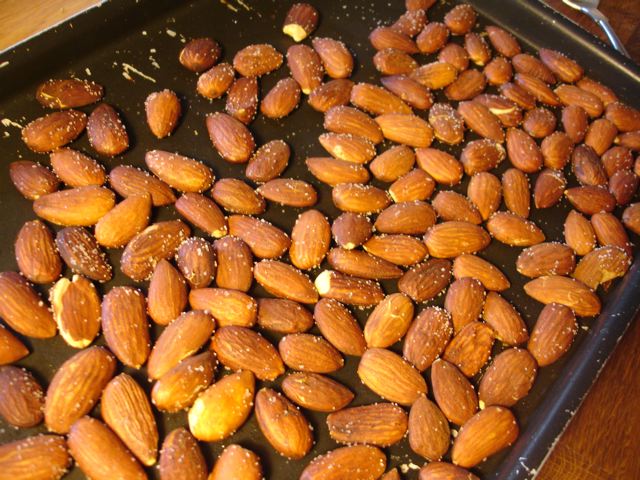
I ease the pain with nuts. Almonds are my prefered nut at the moment–roasted with a little salt. Pistachios preceded them until my nails started to split with opening them. Both have good health properties. Eaten in moderation, one doesn’t have to feel guilty about snacking.


Home-roasted almonds


8oz/250gm almonds

1 teaspoon olive oil

fine salt

heat the oven to 180c/375f

Put the almonds in a bowl and tip the teaspoon of oil over them.

Turn them over in the oil until they are well covered.

Add a couple of sprinkling of salt and flip them over and over until the salt is well distributed.

Spread  the nuts on a shallow baking tray and roast in the middle of the oven for about 10 minutes.

Light lunch for two

Stuffed red peppers with baked sweet potato and swiss chard

More a summer dish this, with ripe tomatoes–but I had the chevre [goat’s cheese], needed to use it and it’s already the “Ides” of March today.

for the stuffed pepper


1 red pepper–carefully halved through the stem

2/3 tinned tomatoes for each half

1 garlic clove–thinly sliced

1 soft goat’s cheese–halved or quartered, depending on its size (it should fit snugly in the pepper half)

olive oil

salt and pepper

heat the oven to 180C/375F–medium

Place the pepper halves on a shallow oven tray–covered with foil.

Put three tomatoes, slivers of garlic, and half the chevre in each pepper half.

Drizzle over some olive oil and season well with salt and pepper.

for the sweet potato

1 medium sweet potato–pricked to avoid it bursting!

for the swiss chard

8oz/250gm swiss chard–leaves only, separated and washed

see post-Light lunch for one–for how to cook it

Bake both the pepper halves and the sweet potato in the oven for about an hour.

When ready halve the sweet potato–one half for each plate.

A pepper half for each plate (careful not to spill too much of the juice).

Add a serving of the swiss chard.

Divide any  juice left in the pan between the the plates.

Bon Appetit!


Nature’s first green is gold.

Her hardest hue to hold.

Her early leaf’s a flower;

But only so an hour.

Then leaf subsides to leaf.

So Eden sank to grief,

So dawn goes down to day.

Nothing gold can stay.


Robert Frost

[The American poet much loved by my American wife, Meredith.]

I found this recipe in Anna del Conte’s Classic Food of Northern Italy. It originates from an Umbrian cook, Zia Lidoria, and though in her version is for rabbit, it works well for chicken. [see below one way to cut up a chicken].

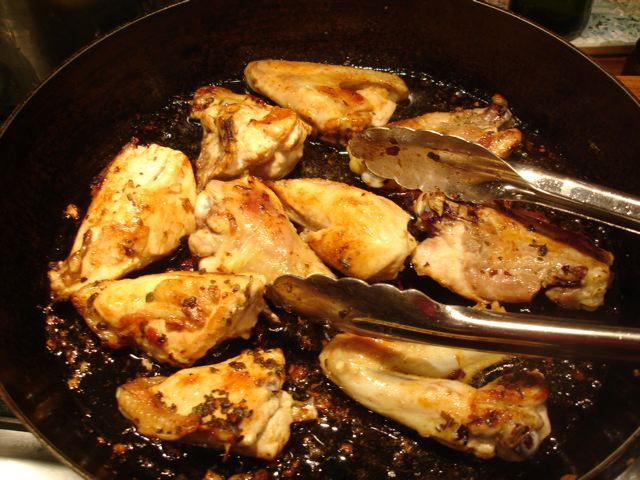
The long initial browning of the chicken is a little scary; the pieces seem to be shrinking alarmingly, but they come back to life when liquid is added.

Browning up

1 chicken–cut up into 8/10 pieces

1 tablespoon sage leaves

3 garlic cloves

6 tablespoons olive oil

5 floz white wine vinegar

5 floz hot water

rind of half a lemon—removed without the white pith

2 tblsps capers—drained and squeezed

4 anchovy fillets

1 tblsp chickpea flour

Salt and pepper

Heat the oil  in a large sauté pan.

Chop the garlic and sage together.

Fry the mixture gently until the garlic begins to colour—a couple of minutes.

Add the chicken pieces to the pan and turn them over well in the garlic, sage and oil mixture.

This is the long bit and will take about 45 minutes!

Keeping the heat low, turn the pieces every few minutes as they begin to take on a good colour.

Hold your nerve and when they are nicely browned add the vinegar and hot water.

Turn the chicken in the liquid, season well with salt and pepper and cover the pan.

Cook on a low heat for a further 40  minutes.

While the chicken cooks on, chop the lemon rind, the capers and the anchovies finely together, then sprinkle in the flour, stirring it in well.

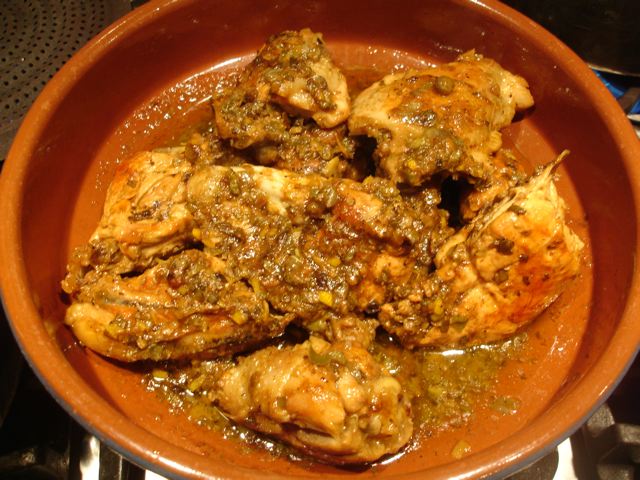
When it’s time, remove the chicken pieces and keep them warm in a heated serving bowl, covered with a lid or foil.

Try the sauce in the pan and if necessary reduce it a little to concentrate the taste.

Stir in the lemon rind mix and cook for a minute.

Pour the sauce over the chicken and serve with brown basmati rice or chickpea mash.

We had some broccoli with it last night.

Mark Bitman of the New York Times bones a chicken in this video and explains clearly how to do it and why there are good reasons to try.

'Where did she go?...'

A friend in New York City sent us a book about a Japanese cat called Wabi Sabi…


When a Japanese cat met a French cat

Wabi Sabi asked

Marmalade about his name

which was puzzling her


Marmalade never

Thinks much about his name– more

About the next meal


But he’s a kind cat

And polite to strangers–so

He humours Wabi


“Yes my name is odd,

But to tell you the truth, I’m

Rather proud of it.


You see for me it

Evokes early morning–

The start of a new day.


That’s all I will say;

Never fully explain–that’s

The secret of life”


Light lunch for one

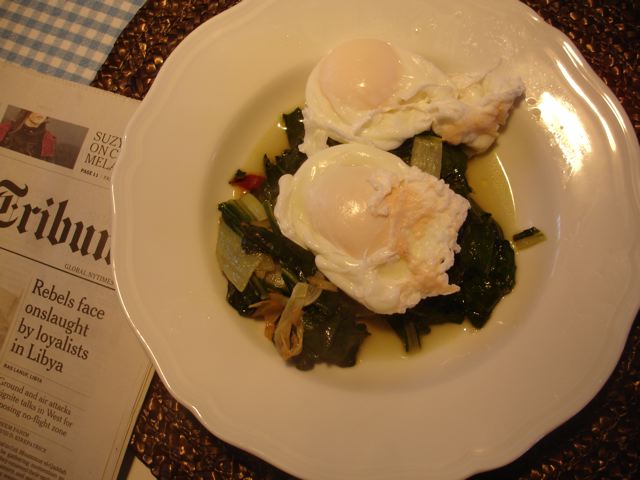
Two poached eggs on Swiss Chard or Spinach

Mid-week Meredith went out to lunch with a friend, so I looked in the fridge and found a handful [4-6oz/100-150gm] of Swiss Chard [see below] and a couple of eggs. This is what I did then:

Peeled a garlic clove, sliced it thin and deseeded a small dried red chili.

Poured two tablespoons of olive oil into a sauté pan, added the garlic and chili and let the garlic colour lightly.

Roughly cut up the chard and added it to the pan with a little salt, turning it in the garlicky oil.

I covered the pan and cooked the chard on a low flame turning it now and then to prevent it burning for about 5 minutes until it was cooked through.

Spooned off the excess liquid before making a nest of the chard on a plate ready to receive the eggs.

I poached the two eggs, drained them well and placed them in the nest and hey presto!–a light lunch.

I could have had a small salad with it but I didn’t.

To prepare the chard or spinach

First separate the leaves from the stalks of the chard or spinach, wash them and shake as much water as possible from them, before chopping and adding them to the pan.

Solo light lunch

You might say “so what?”, cows are usually in fields. True–but these cows haven’t been in the field at the back since October; they’ve been cooped up in the barn all winter. Sorry to go on about it, but something’s up.

My father spent a year in Arizona in 1944 training to be a fighter pilot.

Dad is under the '2'- -far left

He  returned with a strong affection for America and a permanent tan. He used to delight us kids, about this time of the year, by quoting the so-called Brooklyn National Anthem “Ode to Spring”– which went:

Da spring is sprung
Da grass is riz
I wonder where dem boidies is?

Dem boids is on der wing.
Ain’t dat absoid?
Der little wings is on der boid!

There’s plenty of blue tit traffic to and from the bird table–which leans over the field where the cows are enjoying the fresh pasture.

The almond blossom is out–almost–enjoying the sunshine.

Lautrec market is buzzing–a smaller version of Realmont–and there’s a queue at the fish stall. Pots of daffodils are for sale at the épicerie [grocer] and people are talking in that animated fashion that indicates they know something’s up.

I pop into the tiny branch of the bank to do a transfer. Even the Manager is in a good mood.

No room for complacency though. He reminds me, with a bank manager’s useful caution, that things can change again and I remember that this time last year, there was snow on the ground.

Haiku from mid-March 2010:

A chill north wind–cuts,

And keeps the snow from melting,

In the midday sun.

Jack posed this question yesterday in a comment and it is not an unreasonable one. It made me think about the new language of the internet, which sometimes seems like webspeak gobbledigook!

I put the above question into Google and found this on one site:

Any user-posted root node is subject to moderation.

Moderation refers to two possible changes in a node’s status:

  1. Approval of a node into the selected section of the site;
  2. Front-Paging a node, i.e. allowing it to be listed on the main page.
  3. Note that a node cannot be “front-paged but unapproved”.

Silly me I should have knowd!

I think I understand what is meant but wouldn’t plain english explain it better?!

Moderation has other meanings and there are  jollier definitions:

“Moderation is a fatal thing. Nothing succeeds like excess.”

Oscar Wilde

“Moderation in temper is always a virtue; but moderation in principle is always a vice”

Thomas Paine

Moderation is the inseparable companion of wisdom, but with it genius has not even a nodding acquaintance”–[Oh dear!]

Charles Caleb Colton: (English sportsman and writer, 1780-1832)

“Throw moderation to the winds, and the greatest pleasures bring the greatest pains”

Democritus

This definition is from wikipedia:

Moderation is a principle of life. In ancient Greece, the temple of Apollo at Delphi bore the inscription Meden Agan (μηδεν ἀγαν) – ‘Nothing in excess’. Doing something “in moderation” means not doing it excessively. For instance, someone who moderates their food consumption, tries to eat all food groups, but limits their intake of those that may cause deleterious effects to harmless levels.

This I can understand!