Feeds:
Posts
Comments

For 2

4 fennel bulbs

1 garlic bulb–cloves separated and peeled

1/4 cup/60ml/2floz olive oil

500gm/450oz spicy sausage–cut into wine cork size chunks

salt

1. Remove the outer casing of the fennel and cut  the bulbs into eighths vertically.

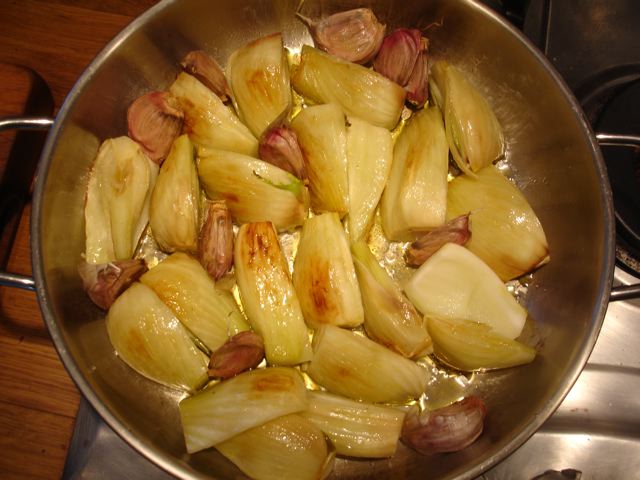
2. Put them in a pan large enough to take them in a single layer.

3. Scatter the whole garlic cloves among them.

4. Pour over the olive oil and add a pinch of salt.

5. Sauté gently, uncovered, for half an hour, turning the fennel as it colours.

6. Add 1/4 cup/60ml/2floz of water, cover the pan and continue cooking for about another half hour, adding more water as needed.

7. The fennel should end up meltingly tender. The water makes a light sauce.

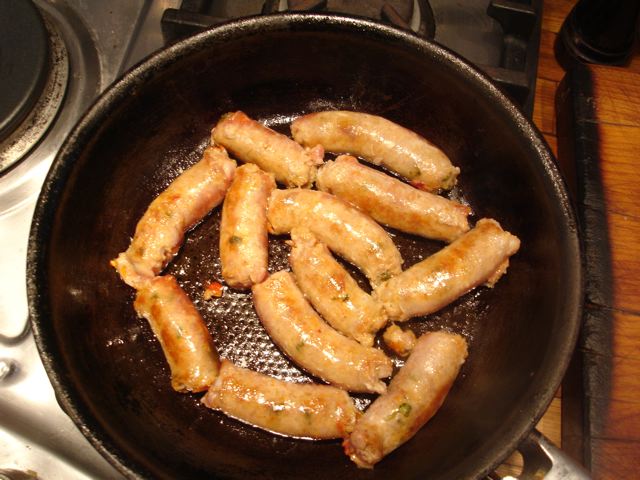
8. While the fennel cooks its second half hour, sauté the sausages gently in a separate pan, turning them as they colour.

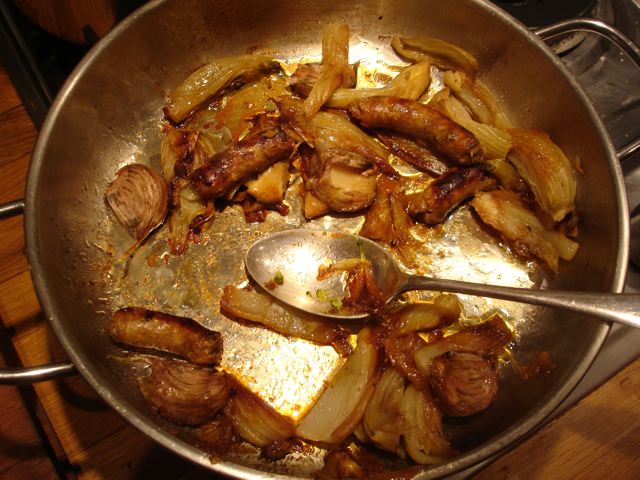
9. Add them to the fennel and cook it all together for 5 minutes.

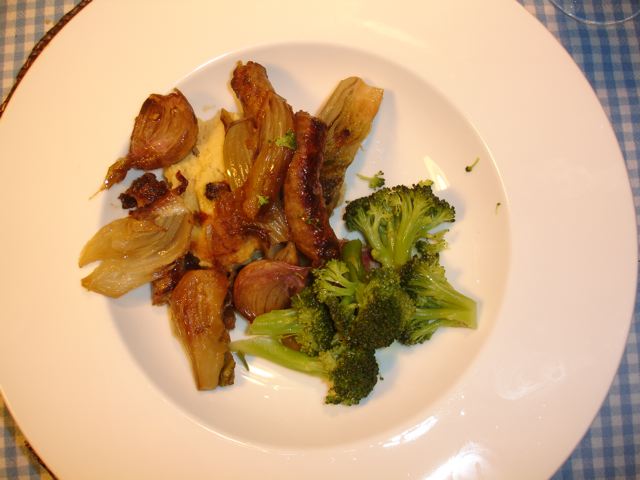
10. Adjust the seasoning and serve over Chickpea mash or what you will.

Spring is in the air at Realmont market this morning. People are very chatty; the terrace of the cafe is packed–seven round one of the small tables, relishing the sunshine.

Winter is still on the stalls though–no change yet from the root vegetables, cabbages, broccoli, sprouts, and cauliflowers that have dominated for months. A few stalls are selling plants for early bedding. Frost still threatens, limiting the choices.

At a pork butcher’s stall I have yet to shop at–mainly because there’s always a long queue–I spot a different looking sausage. It’s marked : Saucisse fraiche Basque.

I ask the stallholder what’s in it: “Piment d’Espelette et poivre”, she says.

The chili pepper of Espelette is a speciality of the Basque country that borders Spain and the Atlantic coast four hours to the west of us. It is harvested in late summer and appears on the stalls here in September. As chilis go it is not very hot–but it’s colourful.

“I’ll take some–thank you” and she cuts off about a pound from a nestling wheel of fresh sausage. I also buy a kilo of pork shoulder.

I already have four or five fennel bulbs in my basket and dinner slowly dawns on me!

The sweetness of the slowly braised fennel will, I hope, contrast well with the lightly spiced sausage.

This a new dish–so we”ll see.

Braised Fennel with Spicy Sausage.

to be continued later today…..

Lunch in a UFO

Lunch in a UFO today.

It’s sitting in a French field,  looking spectacularly out of place–as any self-respecting UFO would.

The owner tells us it’s coming up to two years now since they landed.

He built it himself, from packs–“like Ikea! he says. Packs or no packs, it’s a piece of work and it revolves 360 degrees–as any self-respecting UFO would.

It’s beautiful inside with many  features that are familiar to us: a high-tech kitchen, a dining area and toilets.

It has living quarters too and there are children’s toys lying around. This is obviously both a home and a work place.

The owners call it Dôme de Montmiral.


It is a couple of miles from the Castelnau of that name, though there’s about a thousand years of history separating them. We ask if there were any problems getting permission to build it there–sorry, to land it? “No, everyone was for it–but we had to go to the highest level.” Well, you would for a UFO…..

Enough of that!

The Dôme is an unusual restaurant, set in the middle of  beautiful countryside in the north Tarn, here in southwestern France. Its shape resembles a flying saucer and it serves vegetarian food. A bioclimatic house, made from wood–it is self-sufficient in many ways.

This is the fantastic project of Valérie and Raymond Moncan. She is the cook and she’s passionate about it; quite a change, as she used to be a professor of  Latin and Greek!

She serves a fixed menu–though you  can have input when booking and she is sensitive to special needs.

I notice the shelves are full of cookbooks which I can’t resist investigating. The first one I pull out is titled: “Mal de Sucre” [the evil/curse of sugar]. I feel I’m in good hands!

Today we’re having lunch with Donald Douglas –aka “Captain McNeil”–my old enemy in Poldark.                      

Old rivals call it a day!

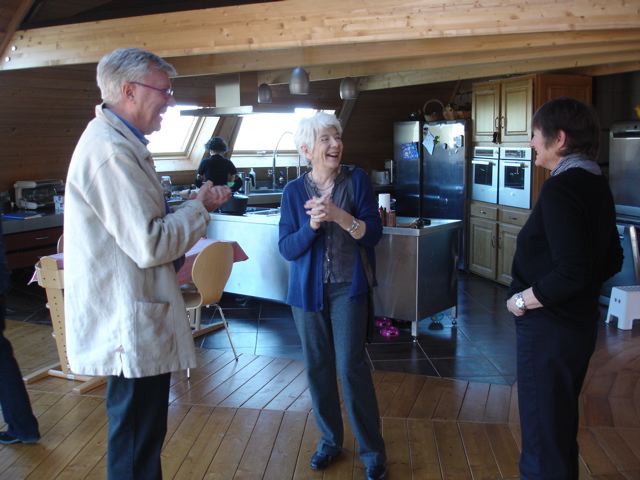
It’s his birthday and we are celebrating with his partner and other friends.

There are three courses for 25 euros with wine on top.

The food is different–more delicate than the usual restaurant vegetarian. In fact it is vegan–no dairy products. It’s tasty and lightly-spiced and  perhaps a little other worldly…?

Shredded patés of beetroot, apple and mushroom with seasonings

Kitcheri of basmati rice & red lentils with vegetables

The sort of fare one might imagine being served in a UFO….!

Comfort food par excellence, adapted from  Rose Elliott’s The Bean Book.

This and her nicely-titled  Not Just a Load of Lentils have been friends for years.

for 4

1 onion–finely chopped

1 stick of celery–finely sliced

1 tablespoon olive oil

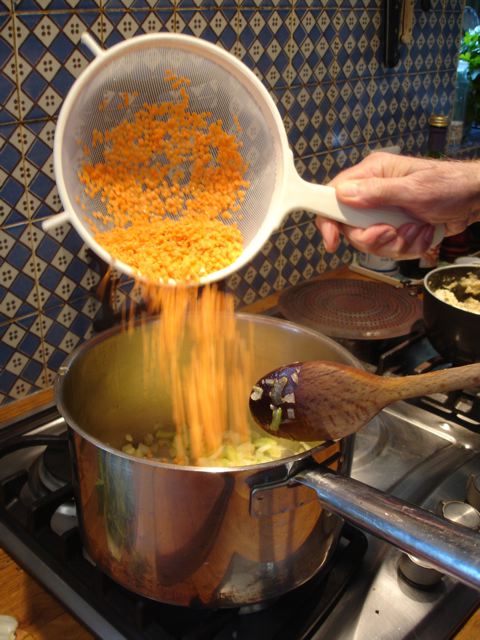
4oz/100gm red lentils–thoroughly rinsed

14oz/400gm tin of  tomatoes with their juice

1 1/2 pints/850 litres vegetable stock (I use organic stock cubes)

juice of half a lemon–more if you like

Salt and pepper

1 tablespoon parsley–chopped

Soften the onion and celery in the oil over a low heat.

Add the lentils and turn them in the mixture.

Add the broken up tomatoes and the stock.

stir everything thoroughly and bring to a simmer.

Partially cover the pan and cook until the lentils have melted.

Remove from the heat and let it cool for 5 minutes.

Liquidise to a smooth finish and season to taste .

Stir in the lemon juice.

Serve hot in bowls that show off the beautiful colour, with a pinch of parsley in the middle of the bowl.

Even if you know what Diabetes is–others–perhaps some close to you–may not have a firm grip on what it is and what causes it. There’s a lot of unhelpful ignorance about. Family and friends may not take it seriously, since there may be no obvious symptoms.

I often find it hard to explain–and I’m always on the lookout for clear definitions.

Here are a couple that have helped me…(with apologies to those who are already well-briefed!).

From Diabetes UK:

“Diabetes is a condition in which the glucose (sugar) in the blood is higher than normal.

Insulin, a substance produced by the pancreas, helps to control the blood glucose level.

In diabetes there is a problem with the production of insulin.

There are two main types of diabetes:

1). Type 1 diabetes which occurs when the pancreas stops producing insulin. This usually develops quickly and before the age of 40. It is always treated with diet and insulin.

2). Type 2 diabetes occurs when the pancreas does not produce enough insulin or the insulin it does produce does not work properly. It usually develops gradually in middle and later life and is treated by diet alone, diet and tablets or diet and insulin. The majority of people with Type 2 diabetes are overweight. Losing weight and maintaining the weight loss is a major part of treatment as it helps insulin work more effectively.

Eating a healthy diet is an essential part of the treatment for diabetes and will help to control your blood glucose levels, blood cholesterol and blood pressure.

Eat regular meals and do not miss meals.”

The above says it all–an excellent summation–but I also like the metaphor of fueling the car in the following explanation:

“Normally, the cells of the body use the simple sugar glucose as fuel, the way a car uses gasoline. Glucose comes from starchy or sweet foods we eat, and the hormone insulin escorts it into the muscle cells to power our movements. Glucose also passes into our brain cells to power our thoughts. In type 2 diabetes, the cells resist insulin’s action, so glucose has trouble getting into the cells.”

“If glucose can’t get into the cells, it builds up in the blood. It is as if gasoline coming out of a gas pump somehow can’t get into your gas tank, and it ends up spilling over the side of your car, coming in through your car windows, and dribbling all over the pavement. It is a dangerous situation.”

“The abnormally high levels of glucose circulating in the bloodstream are toxic to the blood vessels, especially the tiny blood vessels of the eyes, the kidneys, the extremities, and the heart.”

My mother, who developed Type 1 diabetes in her thirties, died of a sudden heart attack at the age of 68.

Which is why, when I was diagnosed with type 2 diabetes– with no symptoms, I took it seriously.


 

This slideshow requires JavaScript.

Cabbage soup

A simple but delicious soup this, that cooks for a while– deepening the taste.

The recipe is adapted from Carolyn Mcrum’s wonderful  The Soup Book published in 1978.

She writes: “Soup-making is one of the most pleasurable of culinary processes, but it takes time, and that it why it is so little enjoyed in a hurried age. My hope is to persuade people that the soup you make yourself is infinitely superior to soup from a packet or tin, and that making soup is a comforting activity, surpassed only by the activity of eating it”.

For 4

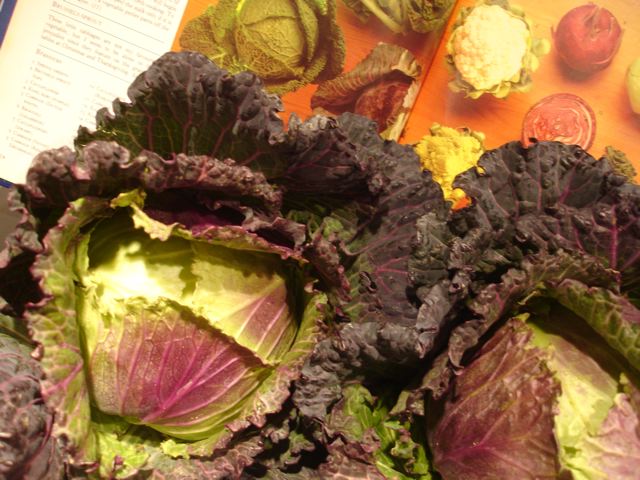
1 cabbage—a Savoy or one of the other “beautiful faced” varieties, rather than the tightly formed White or Green cabbage

Red Drumhead cabbages

2 medium onions—chopped small

1 garlic clove—chopped small

1 rasher (slice) of bacon—chopped small

2 tablespoons olive oil

2 ½ pints/1 ¼ litres—vegetable stock—I use organic stock cubes

Salt and pepper

Grated parmesan cheese to finish

  1. Blanch the cabbage whole for two minutes in lightly salted boiling water—this keeps the cabbage together in the water. Set it aside to cool, before chopping it up.
  2. Soften the onions, garlic and bacon very gently in the oil for at least 10 minutes—this is the taste engine of the soup and needs time for the magic to work.
  3. Add the chopped cabbage and the stock and season well.
  4. Cook at a gentle simmer for at least an hour and a half.
  5. Check the seasoning and serve hot with a sprinkling of parmesan cheese worked in.

The wonderful aroma—though not everyone would call it that—fills the house for hours!

Good article by Tracey Neithercott published in Diabetes Forecast that I spotted on  Diabetes Daily:

Are Carbs the Enemy?


Worth reading the whole piece, but the opening paragraph sets up the debate:

When it comes to diabetes, there may be no topic more fraught with controversy than carbohydrates. Sure, everyone agrees that the body uses carbs for energy in the form of glucose. But how much carbohydrate should people with diabetes really eat?”

It pits the “Moderate-Carb” approach  against the Low-Carb” approachboth represented by respected medical experts.

It also addresses what it calls the “Fat Question” before asking which what is the “Right Way”?

For me the final sentence says it all:

In the end, the best diet is the healthy one you’re able to follow.”

What do YOU think?

Sonia, our green-fingered friend, brought us leeks from her vegetable garden yesterday. Welcome gifts arrive from time to time all the year round. Much appreciated.

She was here to do the Wednesday Chi Gong class, which has temporarily moved to our converted hayloft during the cold weather, as the room–where it’s usually held–is difficult to heat. Life is never dull in our bit of rural France!

The recipe is adapted from the River Café Pocket Books Salads and Vegetables Pocket Cookbook.

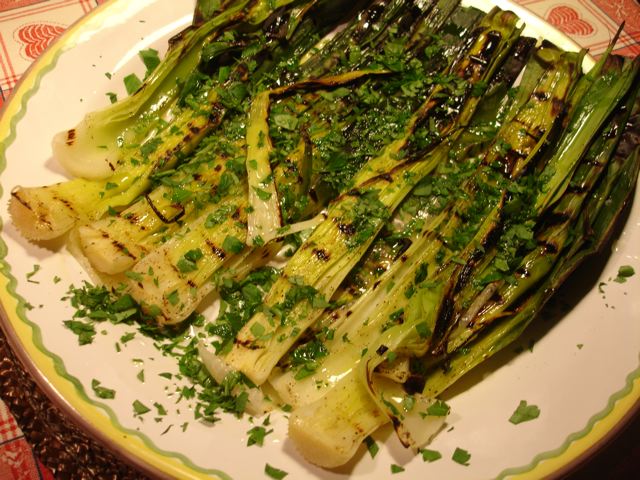
Griddled Leeks with thyme and parsley

for 4 as a starter or side vegetable

6 leeks–damaged leaves removed, sliced in half lengthwise and washed thoroughly
1 tablespoon thyme leaves
3 tablespoons olive oil
1 tablespoon lemon juice
salt and pepper

1.Tie the leeks together with a piece of string, and blanch them in salted boiling water for 3 minutes.
2. Remove from the pan, carefully squeeze out the excess water and leave them, cut side down, to dry on kitchen paper.
3. Heat a griddle to hot.
4. When the leeks are dry, season them and place them, cut side down, on the griddle.
5. When they are nicely griddled (should take about three minutes), as below, turn them over and grill for a similar amount of time.


6. Transfer to a serving plate and with a pair of kitchen scissors cut them into threes, which makes them easier to eat.

7. Sprinkle over the thyme; then drizzle with lemon juice and olive oil and season to taste with salt & pepper.

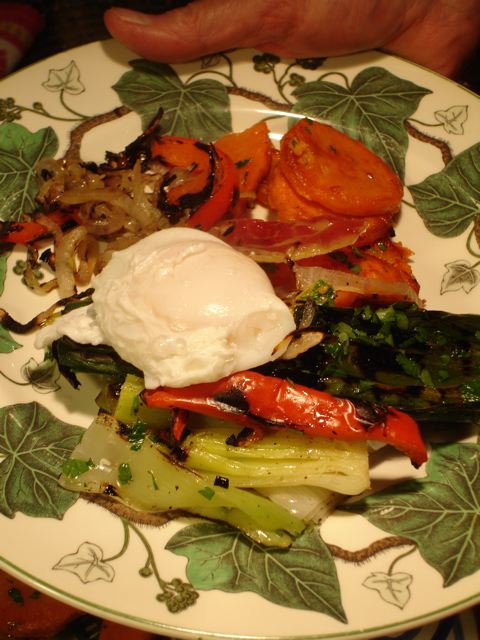
I served them with other grilled vegetables and an egg on top. They were delicious.


  • Red cabbage is a member of the strangely named cruciferous family of vegetables (the four petals of their flowers are in the shape of a cross), together with broccoli, cauliflower, brussels sprouts, kale, and bok choy. These are super vegetables with many health benefits claimed for them.
  • Adapted from a Marcella Hazan recipe it has the advantage of being an all-in-one dish. The chicken stays beautifully moist under its warm overcoat of collapsed cabbage.
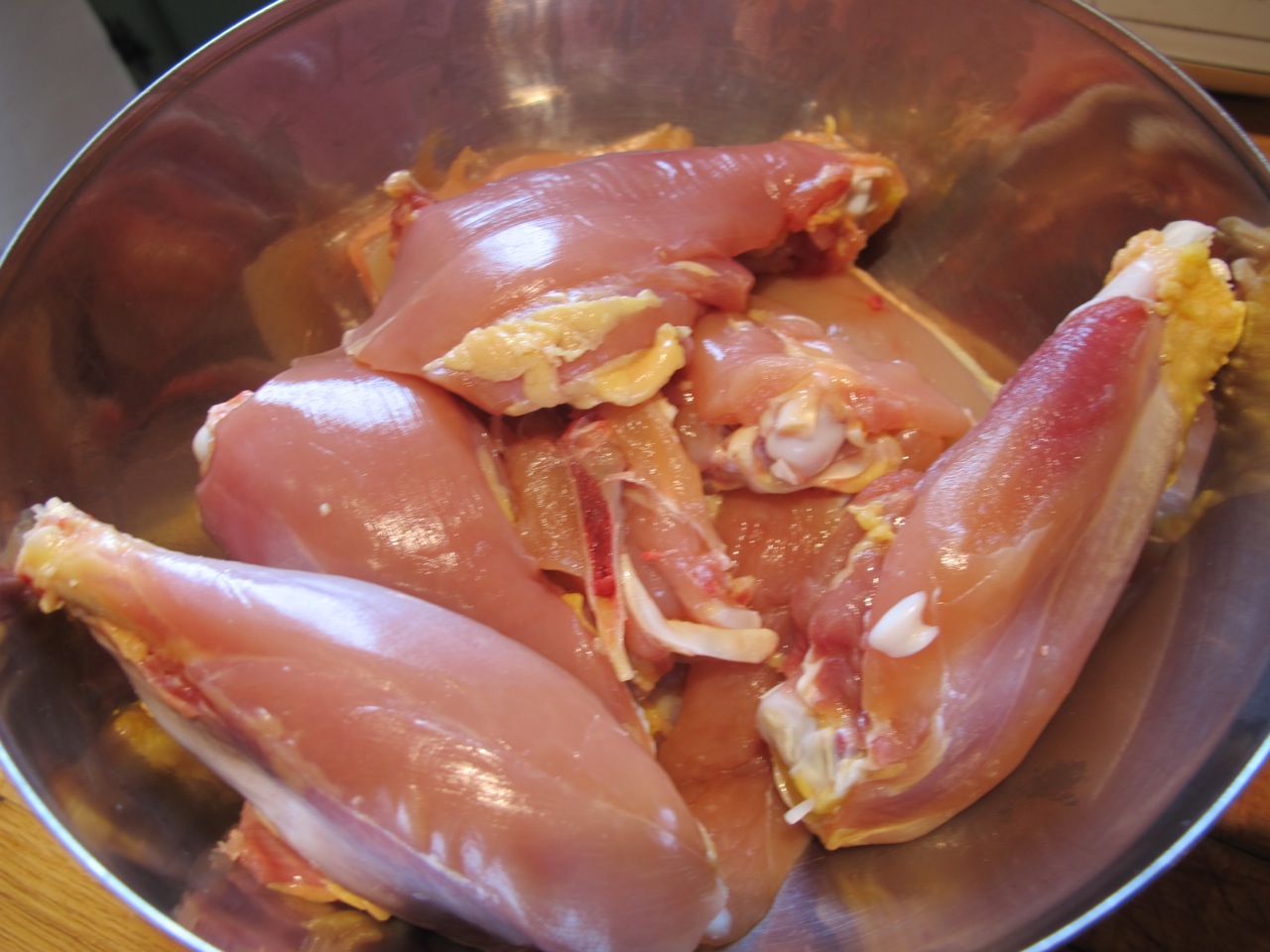
  • 1 chicken–cut up into eight or more pieces
  • IMG_4655
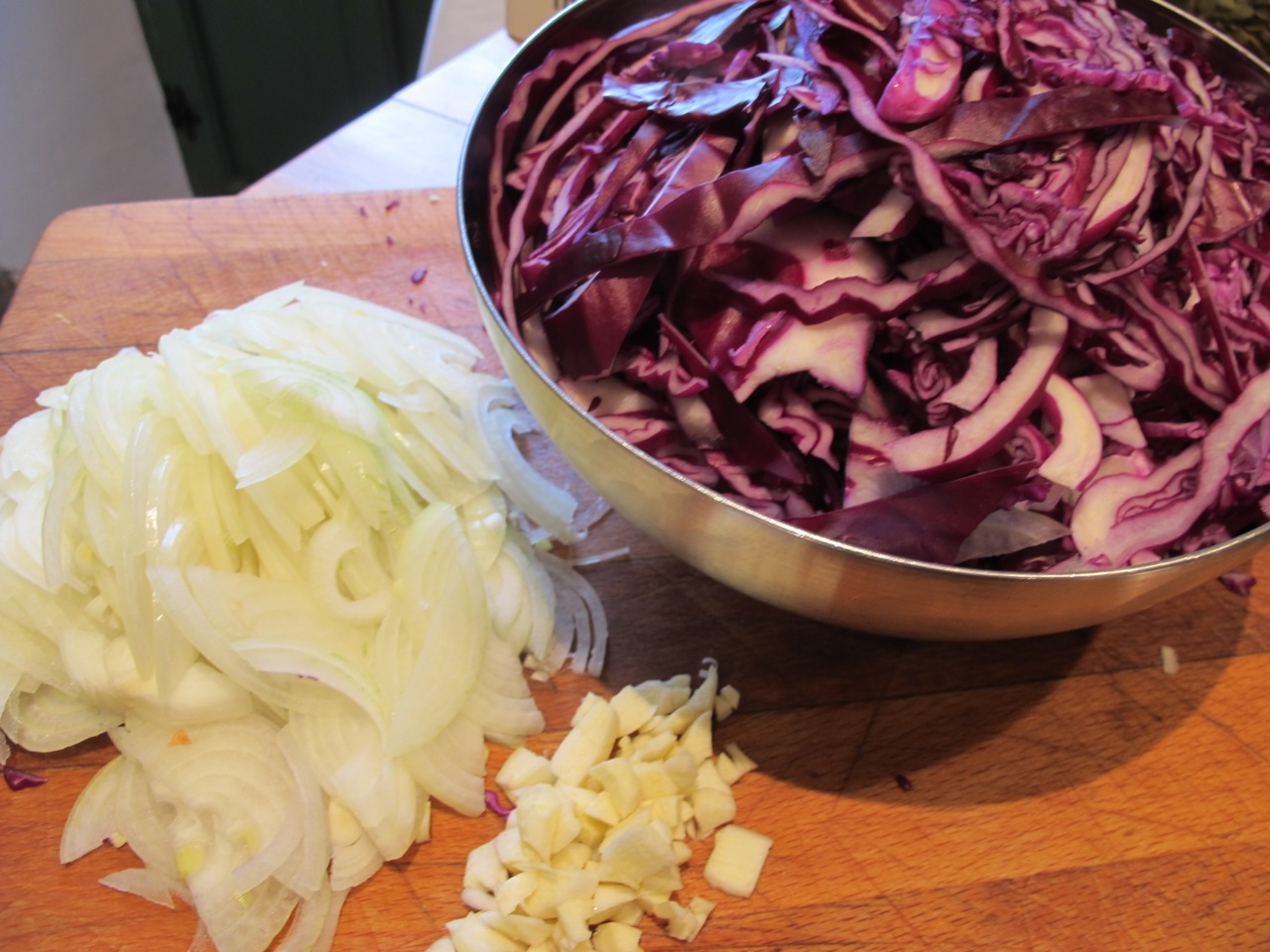
  • 1 red cabbage (at least 1lb/450gm)–quartered, the white stem removed, and thinly sliced
  • 1 largish onion–peeled and thinly sliced
  • 2 cloves of garlic–peeled and roughly chopped
  • IMG_4657
  • 6 tablespoons olive oil
  • 8 tablespoons red wine
  • salt and pepper
  • Choose a casserole or terracotta pot large enough to hold the chicken pieces in one layer.
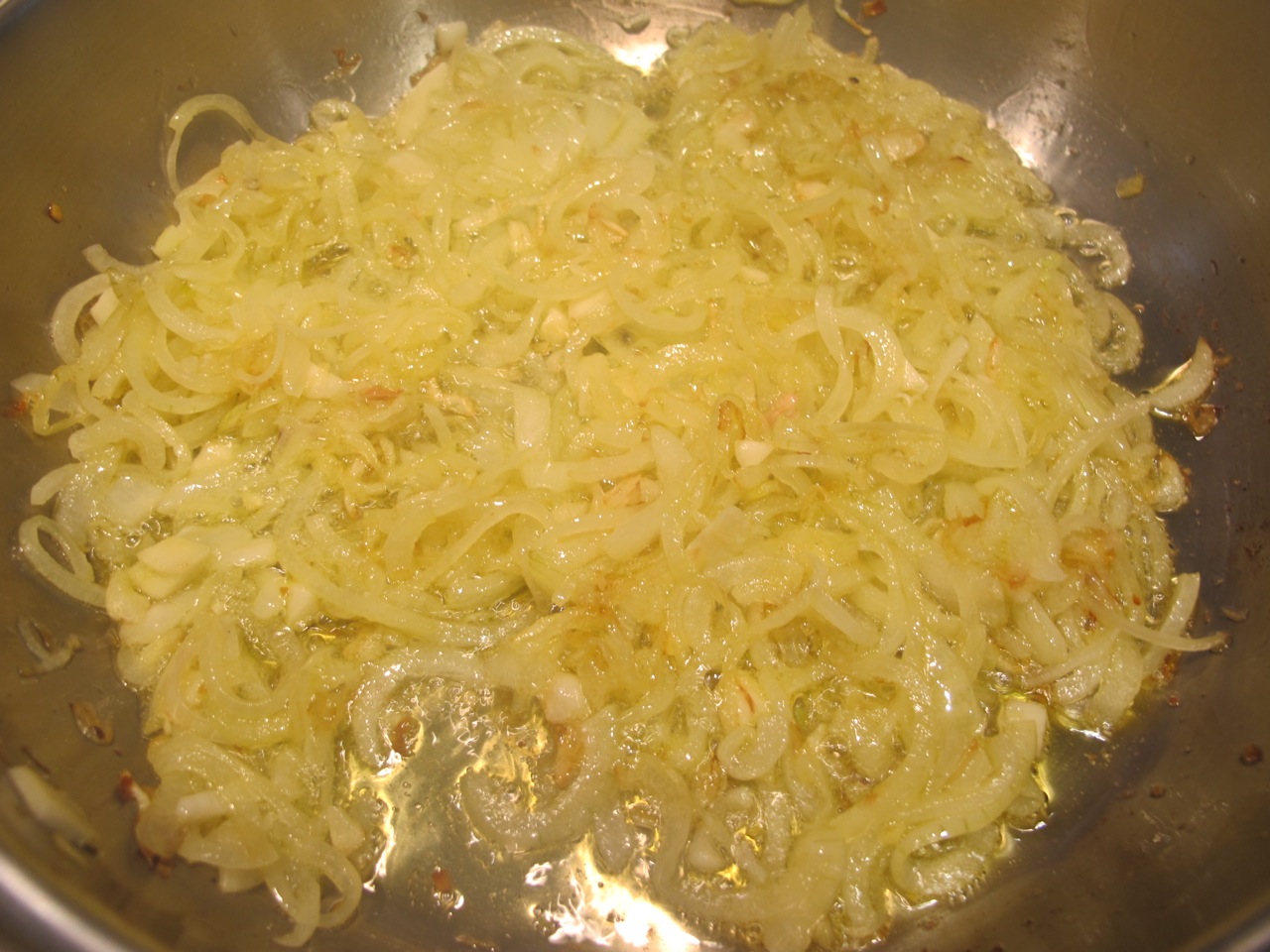
  • Soften the onion and garlic in the oil until the garlic begins to colour–about 10 minutes.
  • IMG_4659
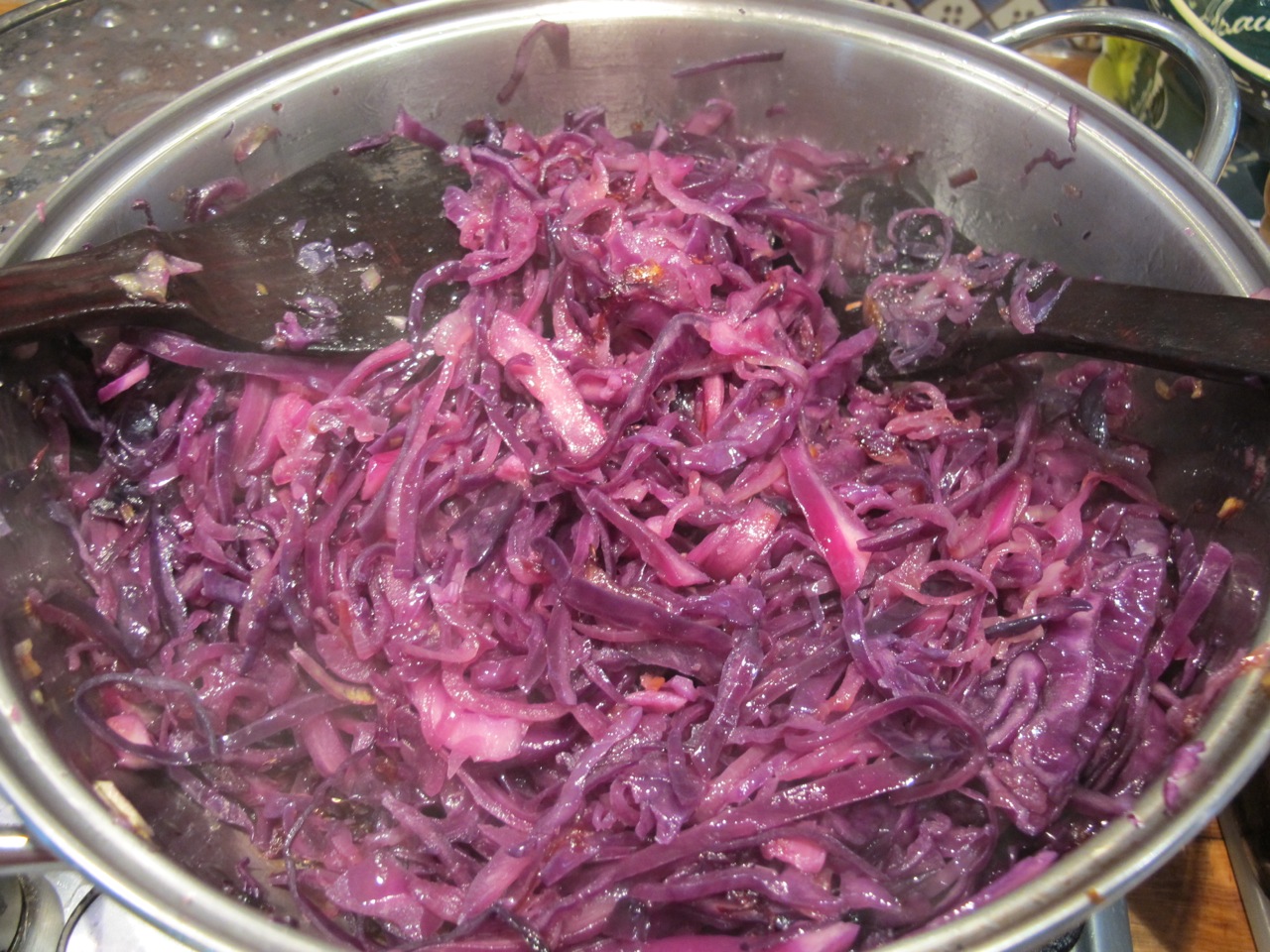
  • Add the cabbage and coat it well with the oily onion and garlic mix. Cook for 15 minutes, turning it over from time to time.


  • IMG_4661
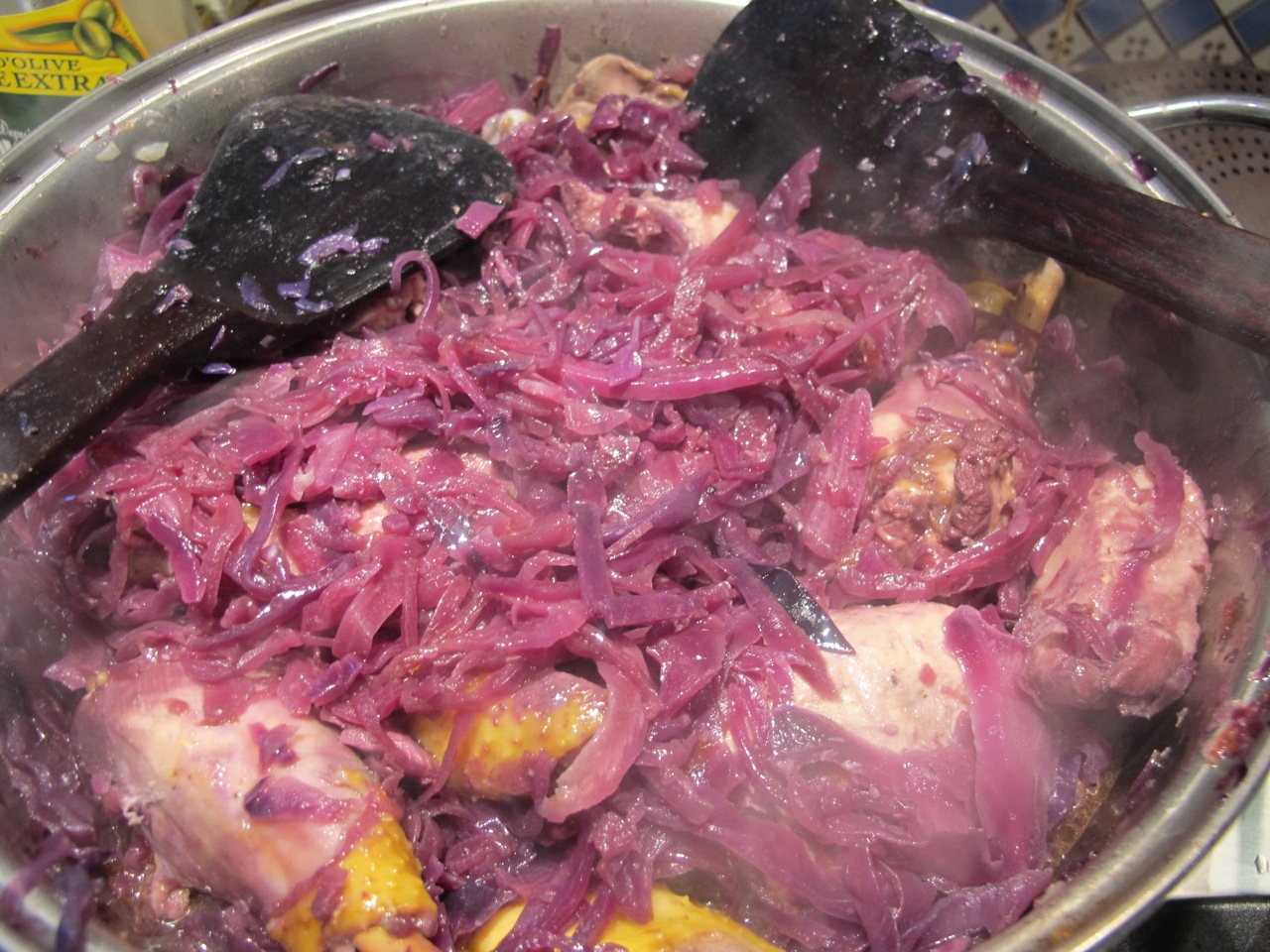
  • Season the cabbage well, then bury the chicken pieces underneath it.
  • Pour over the red wine and cover the pot.
  • Cook for 40–45 minutes, turning the contents over from time to time and taking care it doesn’t burn.

IMG_4663