Feeds:
Posts
Comments

The launch–part 1

First “post-launch” post–we’ve been busy!

Twenty-two friends (many of whom, in one way or another, had helped with the book) sat down for lunch on Friday at tables set end on end under the trees–
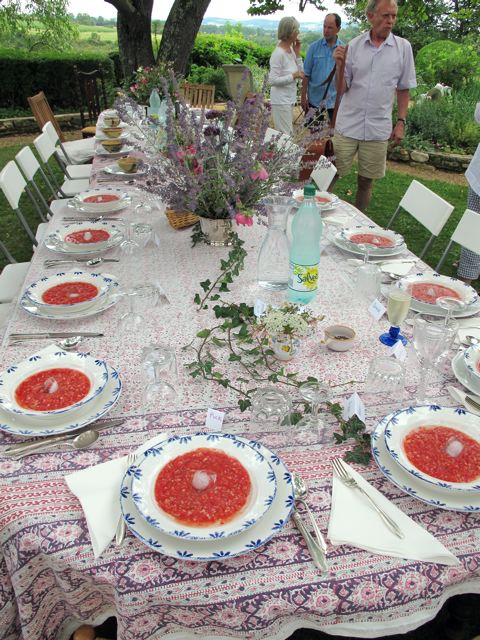
Ma's Gazpaccio waiting patiently

–nicely protected from the sun but rain could be a problem and it has been uncharacteristically wet this year.

The skies were scoured for signs, forecasts checked hourly and finally a prayer went up to the heavens.

We were blessed–not a drop fell the entire afternoon.

A friendly sounding hum rose early from the throng–Ma’s Gazpacho was hitting the spot; as was the mellow Tuscan red poured from a 3 litre magnum–a gift from our friends Keith and Helen.
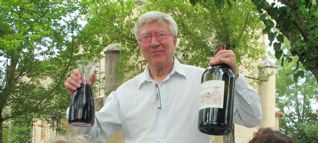
It–“the book”–was launched.

Hope James–the book’s illustrator–was there and I read this out from our friend Eva Marie’s email, received that morning:–

“Her beautiful sketches brought me right back to your cozy home and the French countryside. I am suddenly missing you and Meredith!”

That’s what they do–they bring the book to life.

Chicken was next, with unfamiliar spices–sumac and za’atar–[see part two–tomorrow– for the recipe]

An Ottolenghi special that lends itself well  to large parties.

Marinaded overnight on Wednesday, cooked in three batches Thursday afternoon and gently reheated–stacked in its juices–an hour before we ate it.

Served with plain green beans, a garlicky yogurt sauce and toasted Moroccan bread.

Then followed two lovely surprises–for me.

Fellow Poldark actor Donald Douglas [his chilled cucumber soup features in the book] tapping a glass and rising during the cheese course, meant only  one thing–he was going to speak.
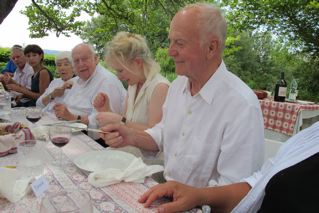
He not only spoke–he sang!

“There is nothing like a Dame” from South Pacific–adapted for the occasion.

“He played Ross the brave and bold

Now here he is grey haired and old”.

Now another surprise.

My old friend George–one of three distinguished judges present–touched me and everyone with his words on long lasting friendship.

What a day!

[A second helping promised for tomorrow…!]
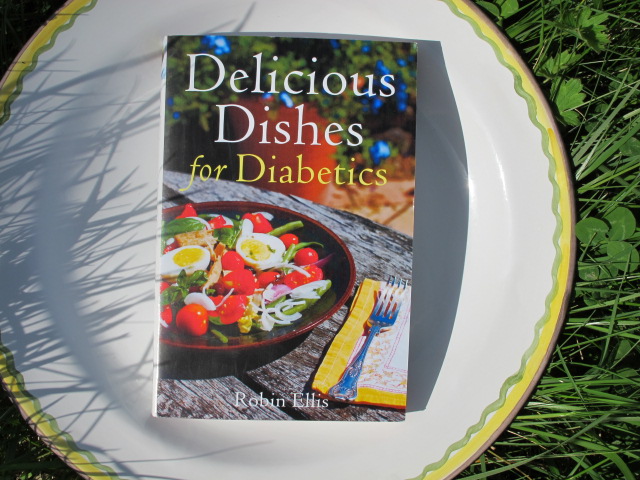
PUBLISHED!!

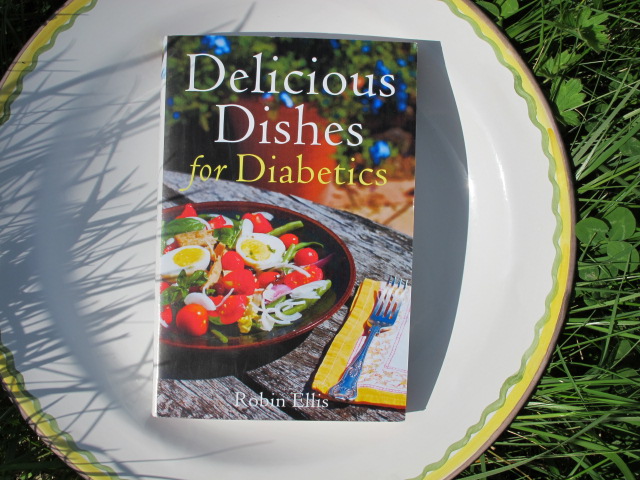
It’s publication day–August 4th–for Delicious Dishes for Diabetics!

In February 2010, Meredith and I popped into publishers Constable and Robinson in London for a meeting.

Eighteen months later and the book goes on sale–TODAY!

What can I SAY but–

HOORAY!

And a big THANK YOU to Francia, Paula, Judith, Hope, Paige, Alex,Holly, of course Meredith, and all those who have helped it along the WAY.

Thanks too to all for supporting the blog–which I’m enjoying writing hugely.

Ex-CEP-tional Gifts

“Brown gold”

[this was published but the toadstool fairies censored it for a while!]

Our friend David’s generous gift nearly caused a diplomatic incident at a sun-drenched shindig yesterday!

The unseasonal weather last week (grey skies and downpours) followed by the heat of the last couple of days made for unusual mid-summer sights–roadside stalls selling ceps–not peaches.

David knows where to look in his neck of the woods for these big brown beauties so prized by the locals. They fetch good money in the markets in the autumn. So when my box of treasure was spotted, things got animated…

“–Dangereux–Je vous assure!”

“Bad–Very bad!”–implying poisonous.

Envious by-standers

Dangerous indeed–I had to fight my way out of the party and make a dash for the car. It seems cep-envy can can bring out the worst in people!

They starred at last night’s farewell to Christine and Alice who were leaving [as the good weather hits] and  our friend Roger’s arrival.

Happy to report a hundred percent survival rate this morning!

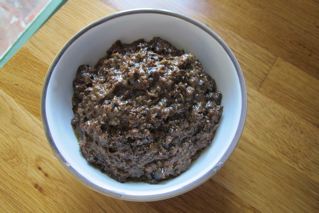
Tapenade

This is in Delicious Dishes for Diabetics–to be published in TWO DAYS TIME!!–4th August

Based on Mireille Johnston’s recipe – she got the mix just right – this is a traditional savoury spread.

The word tapenade originates from the Provençal for ‘caper’.

It’s a great standby to have in the fridge and is simplicity itself to make.

Serve it as a summer lunch on toast brushed with olive oil and a slice of the ripest tomato on top, or on grilled slices of

courgettes or aubergines, or on savoury biscuits or small pieces of toast as an appetizer, or whatever!

It is a favourite at St. Martin–and would even persuade Cal McRae to come to lunch!

Serves 4 or more

200 g/7 oz black olives–the oily fleshy Greek ones are best, carefully stoned; it’s important to use the plumpest tastiest olives

6 anchovy fillets – chopped

2 tbsp capers

2 cloves garlic – crushed

1 tsp fresh thyme

1 tbsp Dijon mustard

juice of a lemon

black pepper

120 ml/4 fl oz/½ cup olive oil

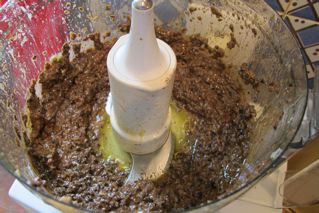
  • Put all the ingredients, except the oil, in a processor.
  • Using the surge button, gradually pour in the oil, bringing it to a nice nobbly sludge, i.e. not too smooth.
  • Taste for balance; you may need a little more lemon juice.
  • Pour into a bowl or plastic box, and dribble a little more olive oil over to form a preserving film.
  • Store in the fridge.

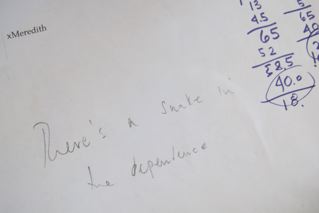
… I pencilled in a note to Meredith who was in the middle of a skype conversation.

Waltzing over there for a quiet read I was stopped in my tracks when I spotted what looked like a colourful belt lying across the entrance.

It wasn’t a belt.

It was a beautiful snake.

We looked at each other for a minute before it swung round and started to slither into the building.

They can move with a surprising speed but so did I–over the threshold–sort of tippy-toe.

I beat him/her inside but didn’t stop it proceeding in a slinky snake-like fashion round the edges of the door and along the length of the small Ikea kitchen in the direction of the bedroom–ie away from me.

We both had a dilemma.

For the snake it was–“where can I go to get away from him?”.

For me –“what shall I do to get him/her out of here?”.

I couldn’t pick it up–I didn’t have one of those forked sticks you see snake handlers using to handle snakes humanely.

The snake coyly slunk along the skirting board of the kitchen looking for an escape, at one point considering the small mat in front of the sink–too small it decided quickly.

It then spotted the dishwasher and seemed to slide effortlessly inside it–from underneath.

Strange I thought–it’s a dishwasher–surely it can’t have gone inside–that would mean water could gush out when it was used!

Such was my state of disorientation as a result of  having a wild animal on the premises, that two or three minutes after it had disappeared, I actually opened the dishwasher to check.

No snake.

I realised it had slid up into the space between the skirting board and the dishwasher.

I got down on my knees and saw there was a gap large enough for a snake to slink.

I didn’t fancy putting my fingers into the gap to prize the skirting board back–so I sat down.

I thought if I stay quiet and still, it’ll surface again–I’ll be able to guide it to the exit.

No fool this snake!

I left it in occupation–with the door open–hoping it would make a dash for it overnight.

I think [hope, trust, pray!] it’s a Couleuvre– 

–which “prefers dry, sunny open situations that also offer shelter”–to scary spots behind the skirting board!

Stop Press

Late this afternoon we return from a lunch date and are given the all clear by our friend Mitch–who was brave enough to sneak a look behind the skirting board.

No sign of snake.

Must have slipped/slid away under cover of darkness, in search of more congenial accommodation.

[*where the priest in earlier times used to stable his horse.]

I was searching through an old blue large-format scrapbook for the recipe I planned to post today.

No luck–but I found this from Jenny Baker’s Simple French Cuisine–which has been an old friend for years.

It qualifies nicely for the “what to do with the courgettes/zucchini season” list!

for 4

2 lbs/1 kilo courgettes/zucchini–[a mix of green and yellow if you like]-sliced thin. [A food processor helps here.]

2 tablespoons olive oil

2 oz/50gms anchovy fillets–mashed to a pulp

1 teaspoon olive oil [to melt the anchovies in]

2 cloves of garlic–chopped fine

2/3  tablespoons of parsley–chopped

3/4 tablespoons wholewheat/rye breadcrumbs

black pepper and a pinch of salt

for 4

Heat the oven to 200C/400F

  • Heat the oil in the largest sauté/frying pan you have.
  • Add the courgettes and turn them in the oil.
  • Cook them for 15 minutes–turning occasionally over a medium heat–taking care not to brown them.
  • When they are cooked through mix in the pinch of salt–the anchovies in the topping will provide enough additional saltiness.
  • Heat the teaspoon of oil in a small pan and melt the anchovies in it.
  • Turn off the heat and add the garlic, parsley and breadcrumbs.
  • Season with pepper and mix thoroughly–you have the topping.
  • Fold the courgettes into a medium gratin dish and spoon over the topping.
  • Crisscross some olive oil over the topping and round the circumference.
  • Cook in the oven for about 15 minutes–[it should be nicely browned and come out sizzling a little!].

We had it for lunch.
The juices from the tomato salad melded well with the anchovy breadcrumb topping.

Testing times…

Our friend Simon–who also has Type 2– emailed:

Why do you not do the early morning thing? (to start with my doc had me finger-pricking morning and evening)… I jot down the count every day, so could easily work out an average. Is that what one should do?
It’s a good question.
I have the hemoglobin A1C test every three months and occasionally the fasting plasma glucose test (FPG). 
Different doctors have different approaches for different patients–makes sense.

Jottings on the test I take every three months:-
The Hemoglobin A1C test measures your average blood sugar in the previous three months to see if it has stayed within a target range.[5-7]

This is an explanation of how the test works and for me is helpful in understanding why it is effective:-

“Your red blood cells contain hemoglobin, which allows cells to transport oxygen to tissues. As a cell ages, the hemoglobin becomes increasingly “glycated”, meaning that more glucose molecules stick to it.

Higher glucose levels in the blood mean higher glycated hemoglobin, which translates into a greater HbA1c reading.”

The level of glycated hemoglobin provides information on the average level of glucose in the body over a 90 to 120 day period.

[You don’t need to fast or prepare for an HbA1c test.]

The Food and Drug Administration (FDA) in the US, has cleared the first over-the-counter test that measures glycated hemoglobin in people with diabetes to help monitor how well they are managing their disease (glycemic control).

Whichever test you take, it’s clear that the most important thing is TO TEST.
Enrico Cagliero, MD, a diabetes researcher and assistant professor of medicine at Harvard Medical School, has recently noted that:
 “If you look at the nationwide data [in the US], it’s sobering–a lot of diabetic patients are missing essential checks.
People with diabetes should know that complications aren’t inevitable.
Unfortunately, we still see a lot of complications, and a lot of those could have been prevented. It’s absolutely essential to get into this preventive mode as soon as possible. It definitely pays down the road.”


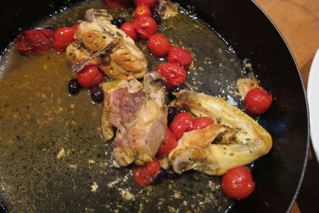
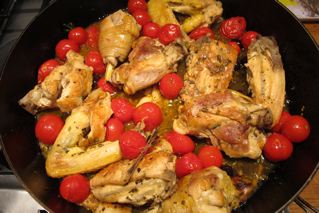
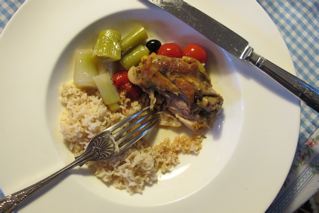
A bowl of cherry tomatoes waiting their turn, reminded me of this delicious Marcella Hazan recipe–a different summer way with chicken.

The sweetness of the cherry toms is cut by the little black olives from Nice. Meredith bought some last week.

And rosemary is cascading in the garden.

for 4

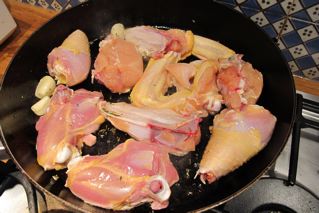
a free range chicken–cut up in 8/10 pieces

1 tablespoon of olive oil

5 cloves of garlic–peeled and left whole

2 teaspoons of rosemary needles–chopped fine

salt and pepper

4fl oz/100ml white wine

20+ cherry tomatoes

a handful of black nicoise olives 

Trim the excess fat and some of the loose skin from the chicken–tidying it up.

Heat the oil in a large sauté pan with a lid.

Add the rosemary and garlic.

Put in the chicken pieces skin side down and sauté them over a medium high heat.

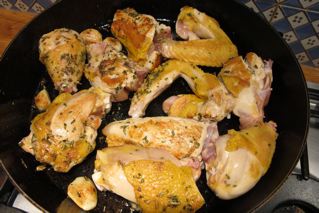
Nudge them with a spoon after 2 to 3 of minutes–when they move easily without sticking to the pan look to see if they’ve nicely browned. At that point, turn them over and repeat on the reverse side.

When you have a pan of golden chicken pieces season them generously and add the wine.

Let it bubble a little–then cover the pan and cook the chicken for about 30 minutes on a low heat–turning the pieces from time to time to keep them moist. Add a tablespoon or two of water if needed.

Add the tomatoes and olives and cover the pan again.

Cook until the skin of the tomatoes show signs of splitting.

It’s  “summer“–though it felt more like March this weekend.

(“We had our summer in May,” said my egg supplier in the market early Saturday morning.)

It’s the busy season of guests–and the unexpected.

It was brighter Sunday morning and we took our visitors from Washington D.C., Irv and Iris, to Lautrec for lunch with two other friends.

Café Plum  (charming bookstore/café, a touch of the Left Bank in Lautrec) was finding it a challenge being popular.

A table of twelve had just ordered when we arrived.

We waited twenty minutes, and then were told, politely, it would be another twenty if we wanted to eat!

The six of us decided a salad in the courtyard chez nous might be a better bet–though we might be chasing the sun.

Iris and I got back first.

“Shall I make a tomato salad?”

“Good idea,” I said.

Iris and Meredith had picked some of our tomatoes Saturday evening–five varieties–for  a taste test.

Plenty were ripe, despite the weather. (Do they get tired of waiting for the sun and say to themselves: “time to go red?“.)

They cut them up in bite-size chunks and arranged them on a pretty plate with salt & olive oil for the sampling.

Delicious!”– though some were sweeter than others.

Certainly good enough for a quickly improvised salad.

To go with the sweet tomatoes, Iris found black olives and buffalo mozzarella in the fridge, added some torn basil, thinly sliced red onion and sunflower seeds (dry roasted).

She dressed this good-looking mix with Tuscan olive oil (Liquid Gold) made by our friends, Keith & Helen.

We had it with tuna salad (A saucy tuna lunch for two), slices of melon and Parma ham, followed by local cheese.

We poured out more of our favourite everyday red– Gaillac’s Clément Termes and continued the animated chat.

Next time we go Café Plum we’ll make sure we pip “the party of twelve” to the post!

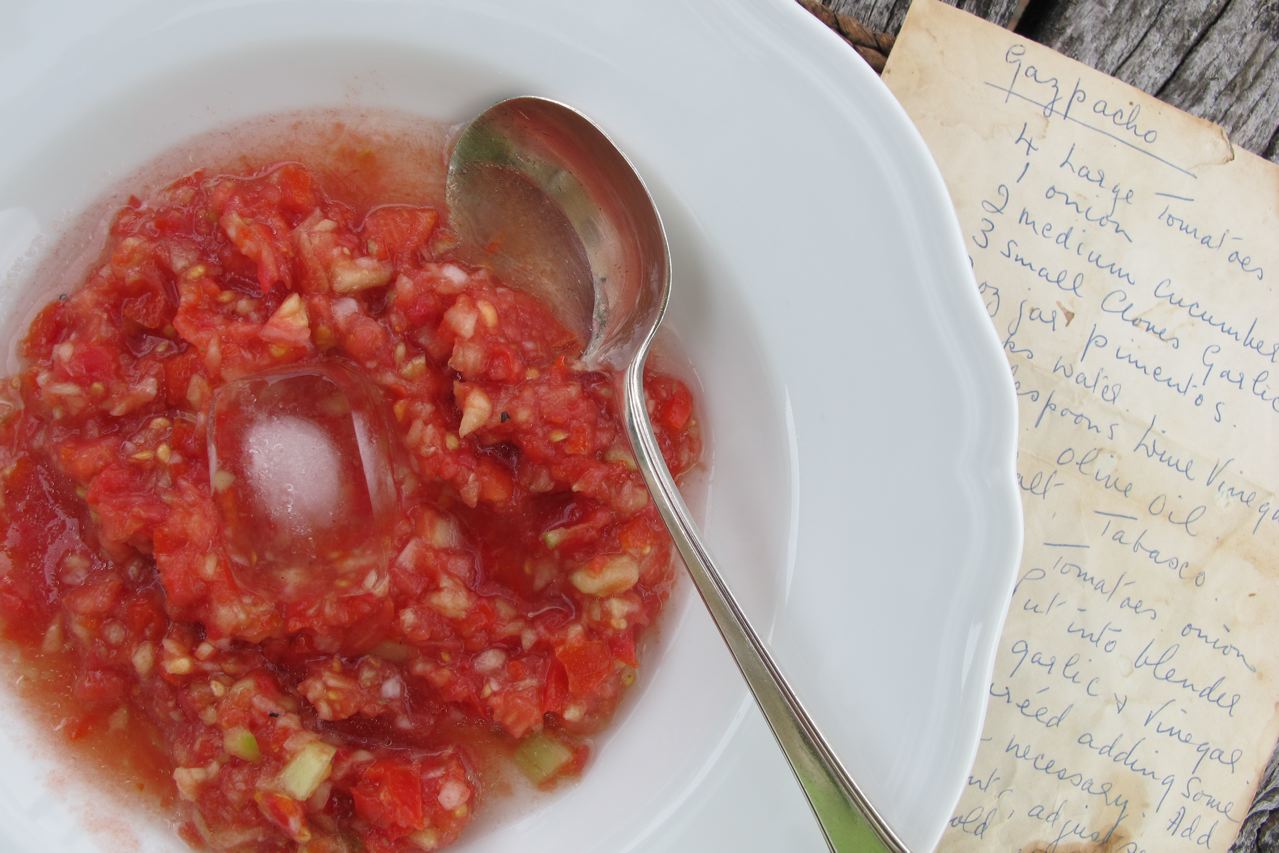
Ma’s Gazpacho

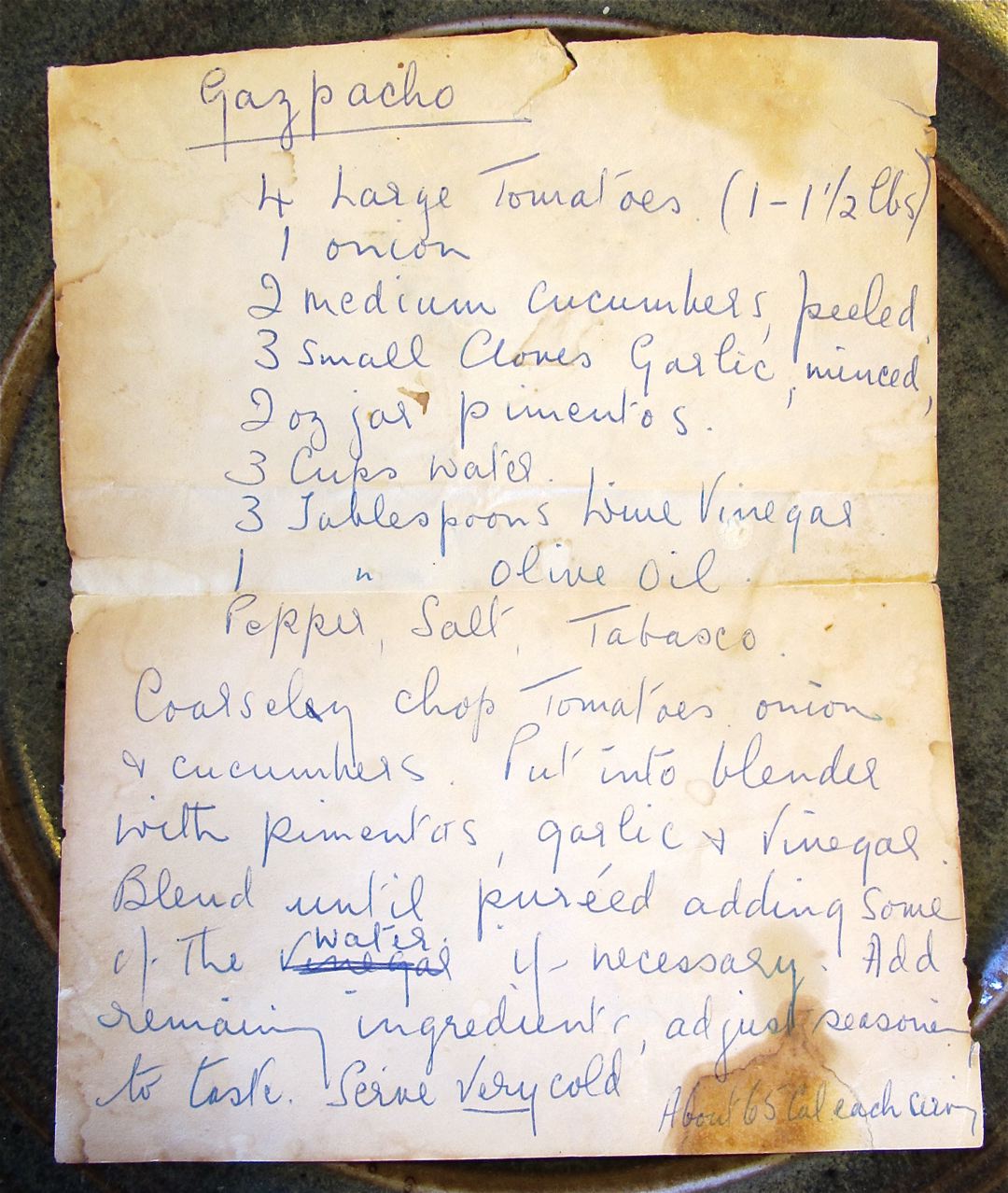
It’s a fair bet my Mother first tasted this traditional summer soup from Andalusia in 1953–when my parents took brother Peter and me to the Costa Brava for a two week holiday. Dad worked for British Railways and got a certain amount of concessionary travel in Europe.

There were five hotels at that time in Lloret del Mar (five hundred plus now!).

We stayed in one of them with a pretty courtyard–twenty yards from the beach.

I don’t remember the soup but the egg fried in olive oil I can taste to this day!

Franco’s military police, patrolling the beach in funny hats and holding not-so-funny machine guns, also made an impression. No such thing at on the sands at Woolacombe!

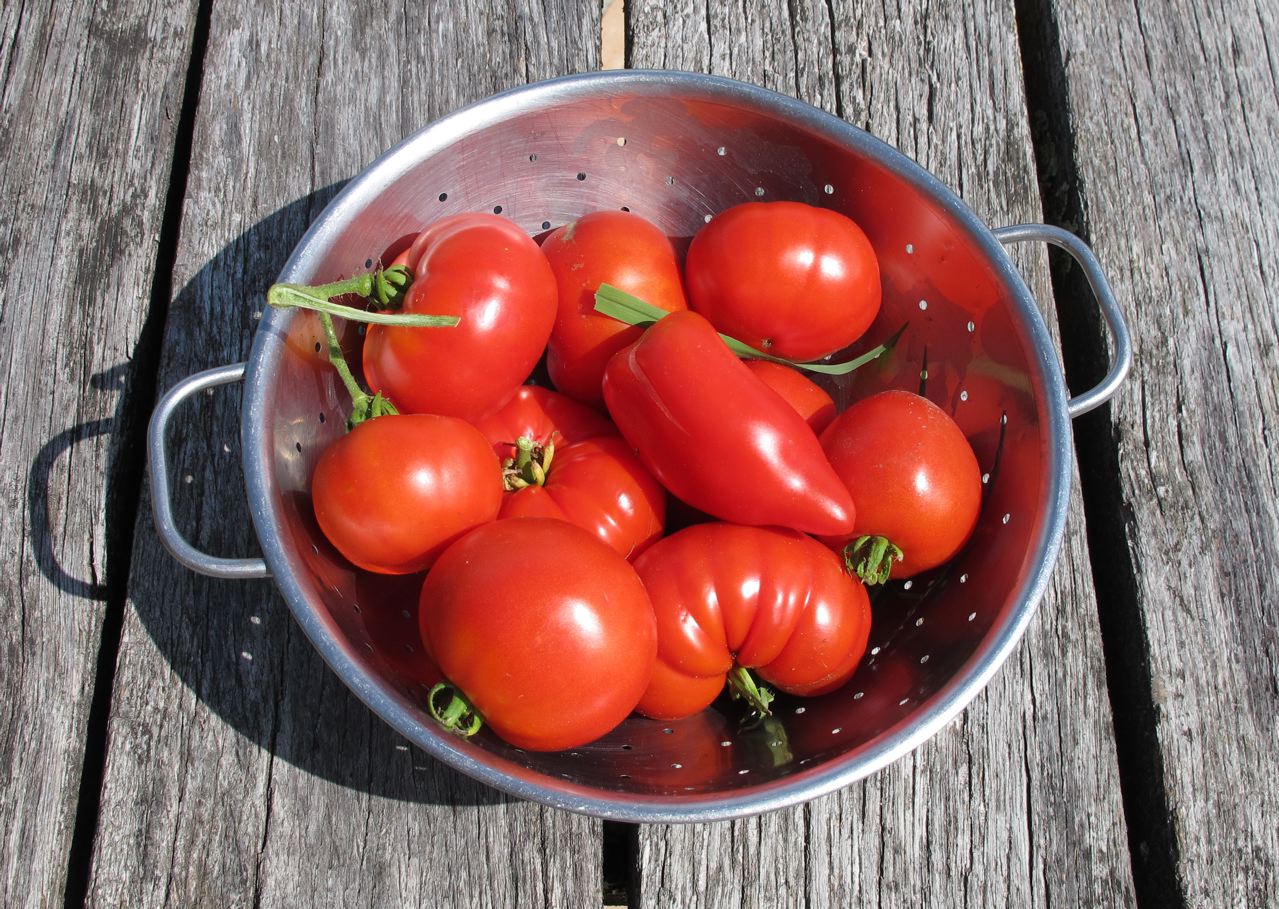
About a kilo collected this morning--a little more than the recipe.

Molly Ellis’ Recipe (slightly adapted!)

Chop the tomatoes roughly–and put them in the food processor.

Chop up half a large, peeled cucumber and half a large,  red pepper–seeded–(she calls them pimentoes) and add them to the processor.

I add a couple of spring onions (scallions)–chopped. (Ma adds a yellow onion–which I’ll try next time).

Mash up 3 cloves of garlic, as she does, with a little salt–and add them to the processor.

Pulse the contents–not too smooth a finish.

Empty this already tasty mix into a bowl and adjust the seasoning with salt and pepper.

Stir in 3 tablespoons of red wine vinegar and two tablespoons of olive oil.

A few drops of Tabasco–as she suggests–a matter of taste.

(At lunch today I added an ice cube to each bowl instead of water.)

Chill for a couple of hours.

We found a ladle each is enough–with a whirl of olive oil to finish?