Feeds:
Posts
Comments

Our friend Helen is a natural cook.

She rarely uses recipe books; rather she builds a dish from the ingredients to hand–throwing in this and that from time to time with an instinctive sense of when it’s right.

I love watching her cook.

She prepared this pasta on our visit last year–a reviving lunch after a morning working in the olive grove.

It was creamily delicious–hard not to take another spoonful! It seems to get better and better just sitting on the table. How did she managed to make it turn out that way?

I asked her to cook it again for us this November–while I took notes.

She uses a variety of courgette/zucchini that is paler than those I find here and has raised ridges–ideal for catching the garlicky olive oil sauce.

No matter–I shall try this at home with the common dark green variety.

Here’s what she did:

for 4

a pound and a half/750gms zucchini/courgettes–sliced evenly

3 tblsps olive oil (their own!)

2 garlic cloves–peeled, crunched under a knife and roughly chopped

a pinch of chili powder–(Helen adds more when her son Lucio is expected for lunch. Sometimes she doesn’t add any when it’s just her and Keith.)

hot water

salt

A handful of chopped parsley

400gms/16oz–wholewheat spiral pasta (or other shapes)

parmesan cheese to grate for those that like it

  • Helen sets plenty of water to boil for the pasta.
  • Then she heats the oil in a large sauté pan and adds the garlic, letting it take on some color.
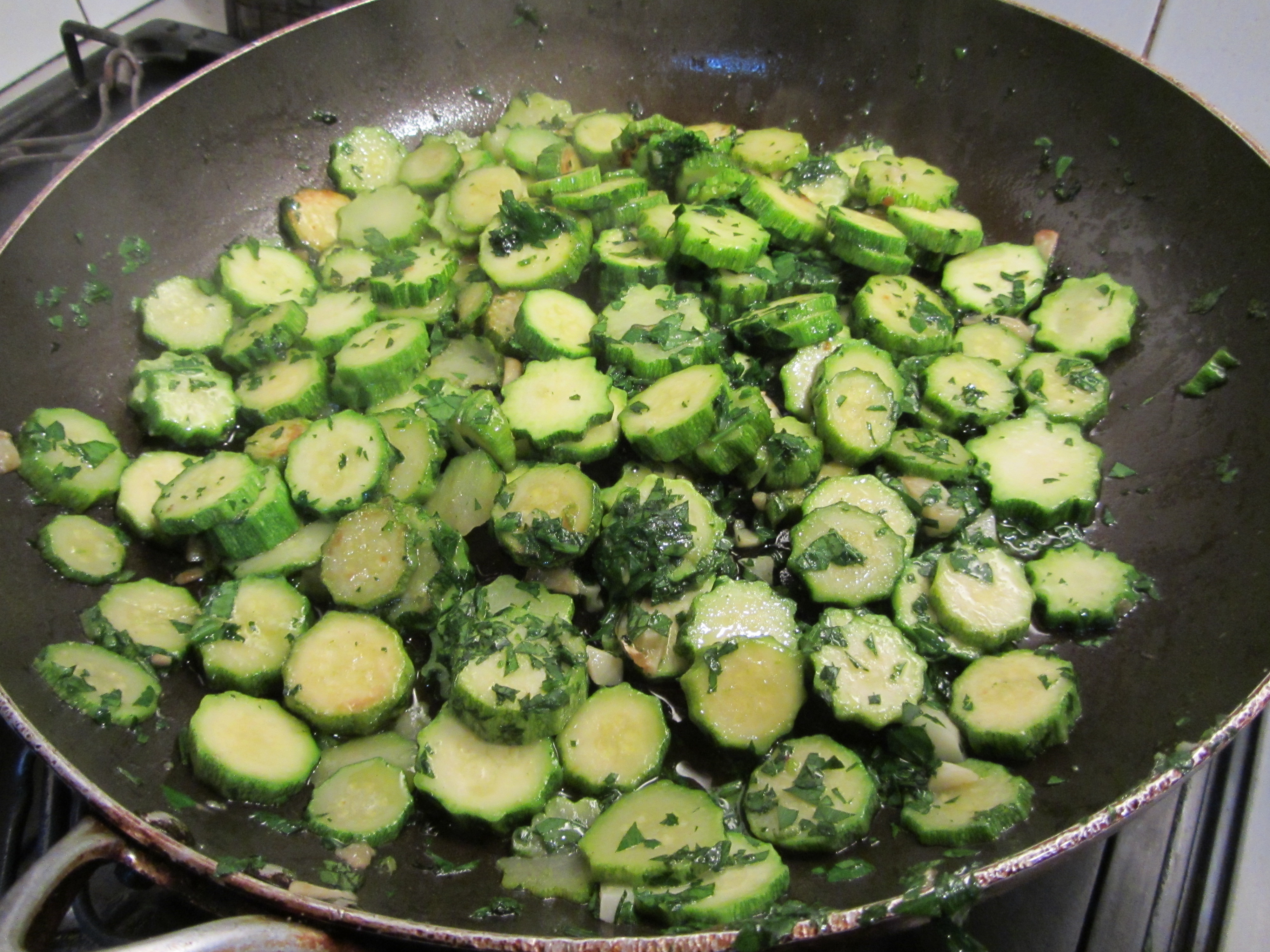
  • Next she adds the courgettes and a tablespoon of hot water; she shakes the pan to coat the courgettes in the oil and sprinkles over some salt.

  • She leaves the mixture to cook gently on a lowish flame, jiggling it from time to time, for about 20 to 25 minutes.
  • A little more salt and the parsley is added towards the end.
  • She cooks the pasta just before al dente, then drains it–saving some of the hot water.
  • She adds that water to the courgettes in the pan.

(Those additional tablespoons of hot pasta water prevent the dish from tasting too dry. )

  • She covers the pan until the moment of serving so the pasta stays moist and warm.
  • We enjoyed it with some grated parmesan–Helen leaves it as it is.
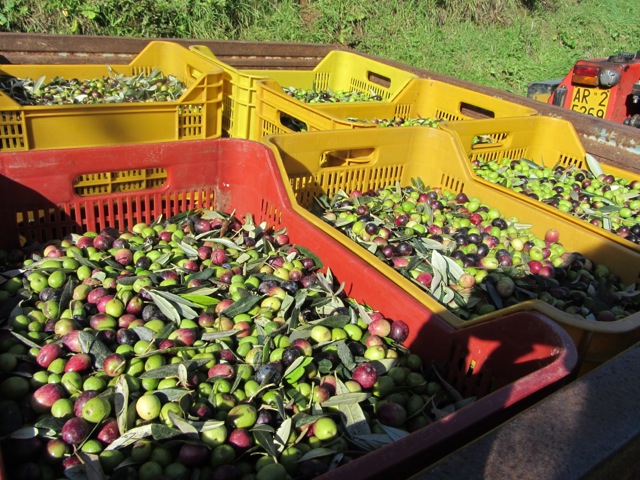
Keith is driving the white van loaded with red and yellow crates brimming with the last two days olive harvest.

We’re bunched in beside him–Meredith finishing off her oat flake breakfast as the sun begins to warm the hillside vines and olive groves.

It is 8.30 in the morning, at the start of a long day.

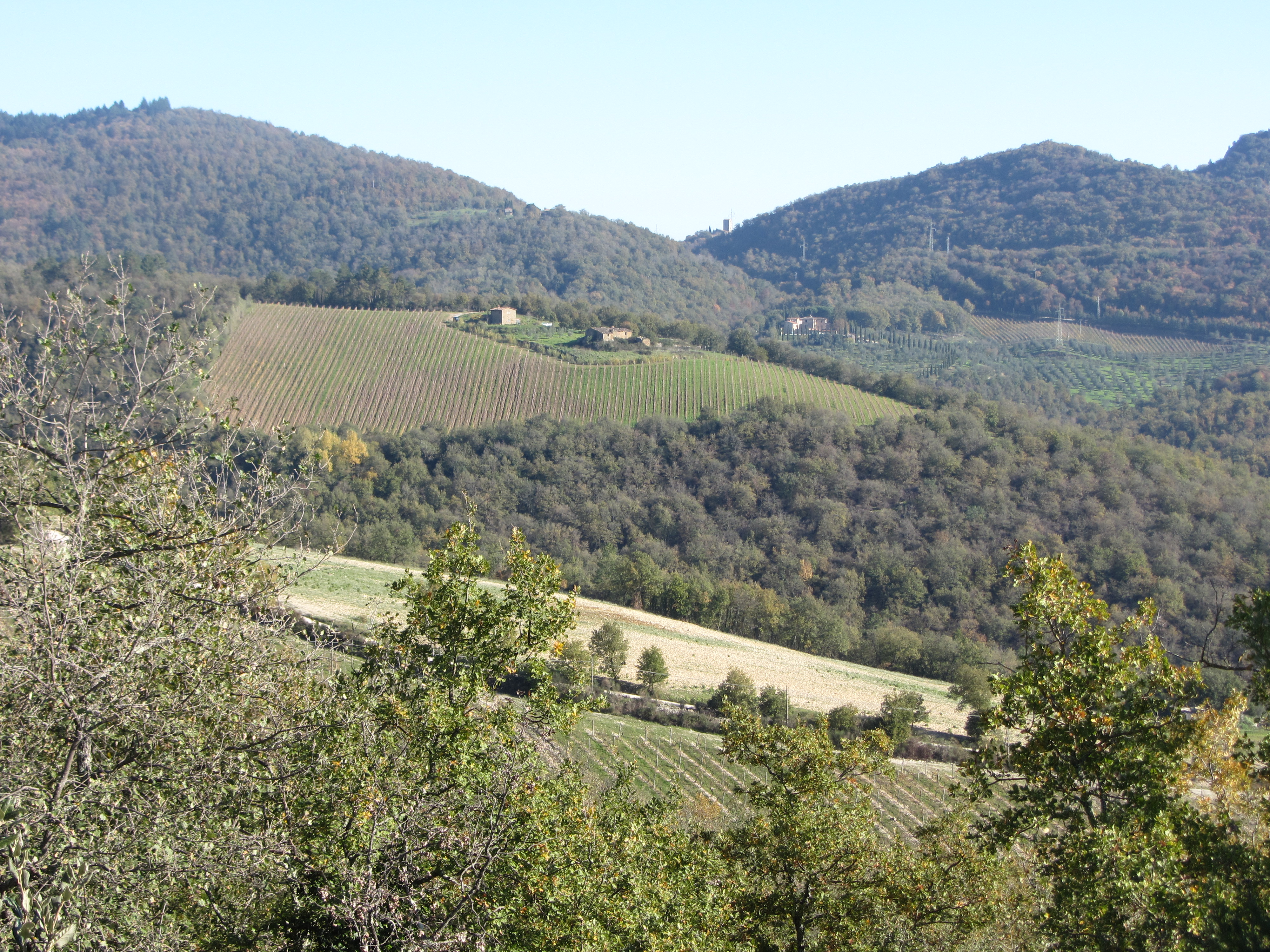
Through the windows of the van as it negotiates the holes in the unmade-up road–the central Tuscan hills come into historic perspective.

What’s that tower up there?

Tuscan hills with the tower in the dip between.

Dates back to 800AD.

The hills are smirking in the shade–they’ve been here a lot longer.

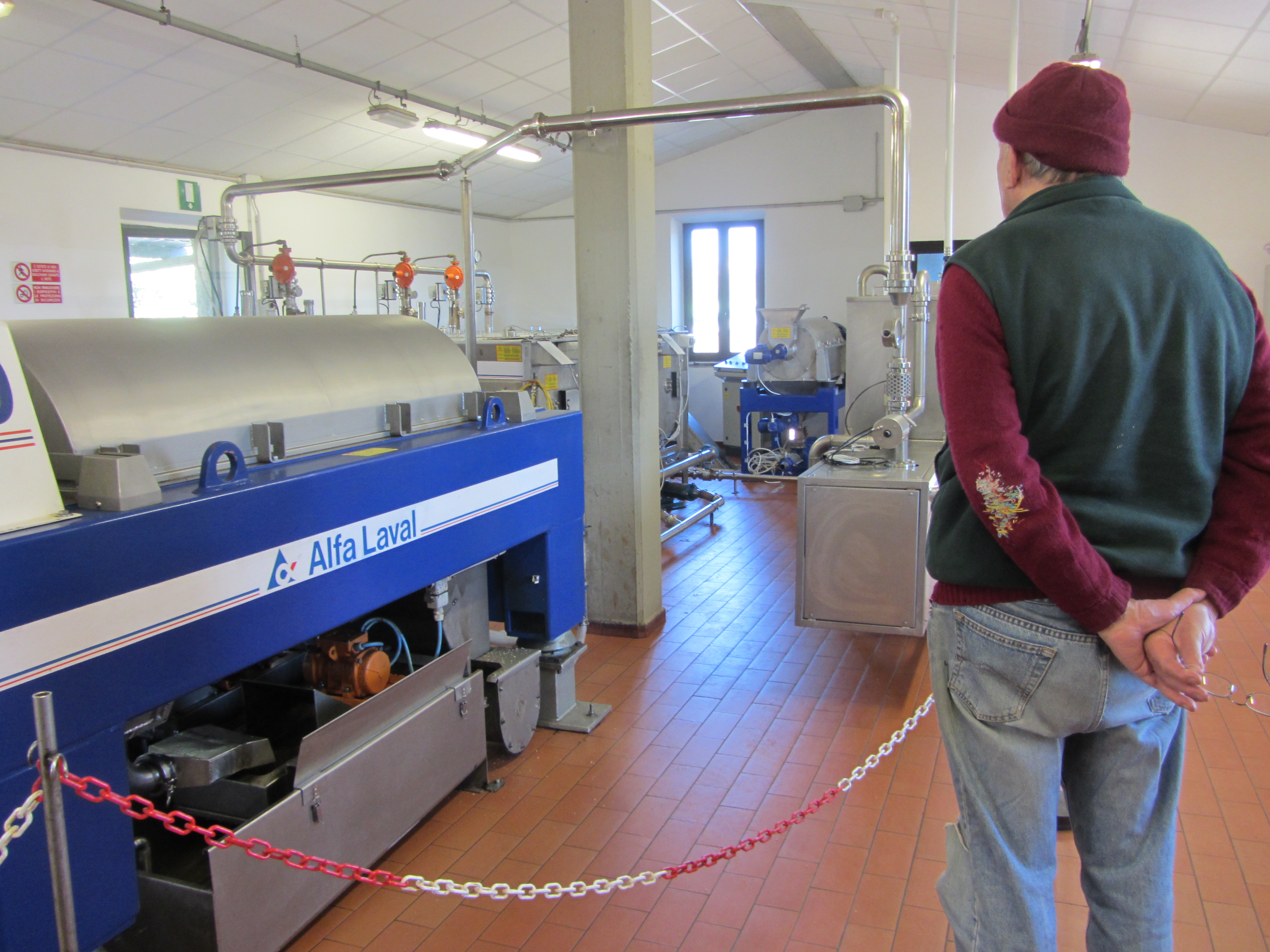
By nine we are at the Frantoio.

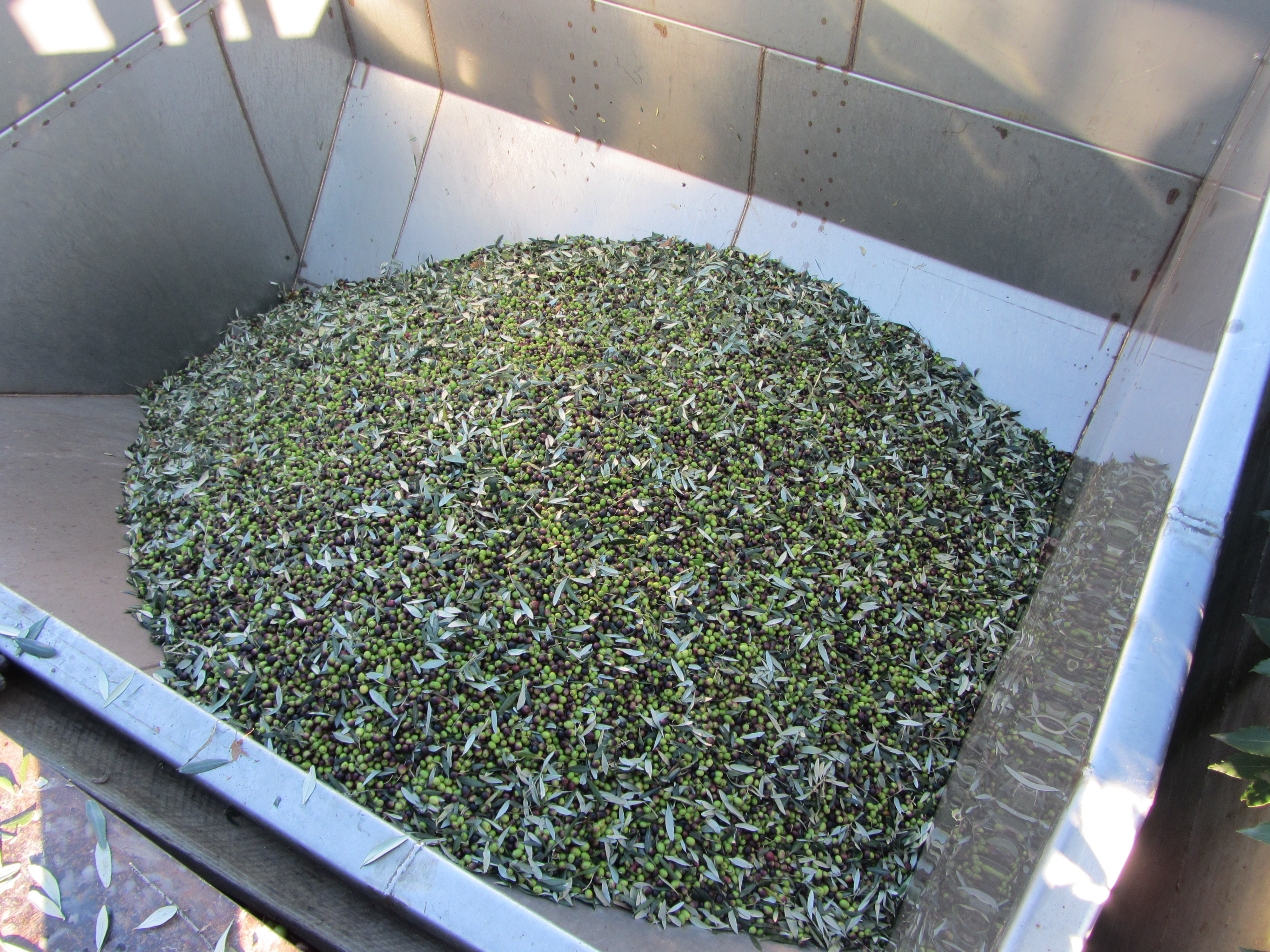
By 9:15am the olives have been emptied into the steel shute and are in the system, soon to come out as liquid gold–as we thought.

We wait in the sunny waiting room, reading.

After half-an-hour Keith comes in looking daggers.

There’s a fault in the heating mechanism–they don’t know how long it’ll take.

This is a problem for us–we have to be in Florence by lunchtime.

Meredith spotted a conference being held over the weekend at the New York University Florence campus analyzing the recent American elections.

(She spent six months at Stanford University’s campus in Florence in her student days–so this kind of event resonates.)

I’ll take you back home and check train times.

Keith, keeping his good temper but worried about his olive oil, ferries us back through the sunny hills.

Within an hour we are on a train to Florence.

Soon after we manage a quick lunch (research!) before heading to the event.

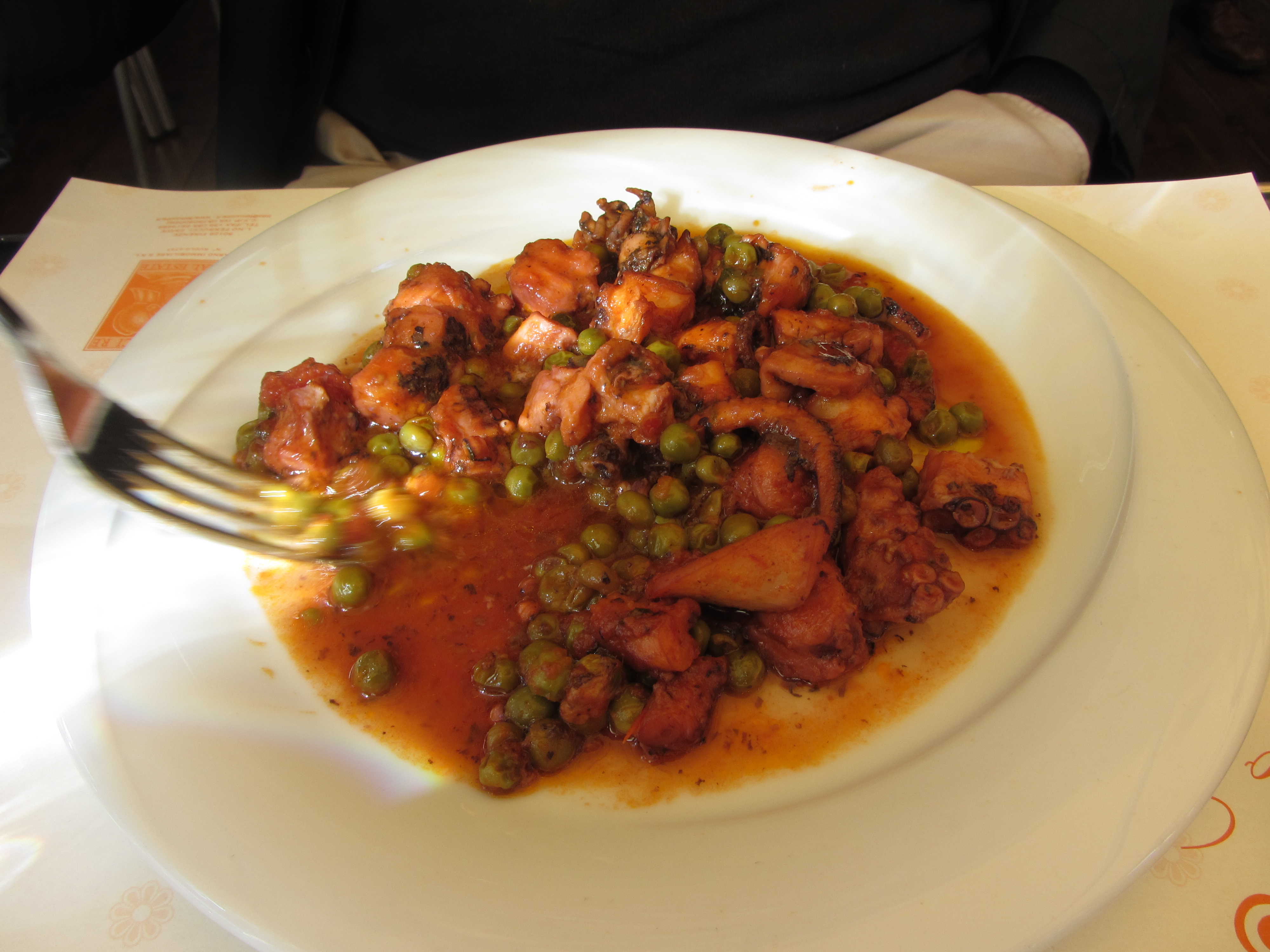
Polpo e piselli (octopus and peas)

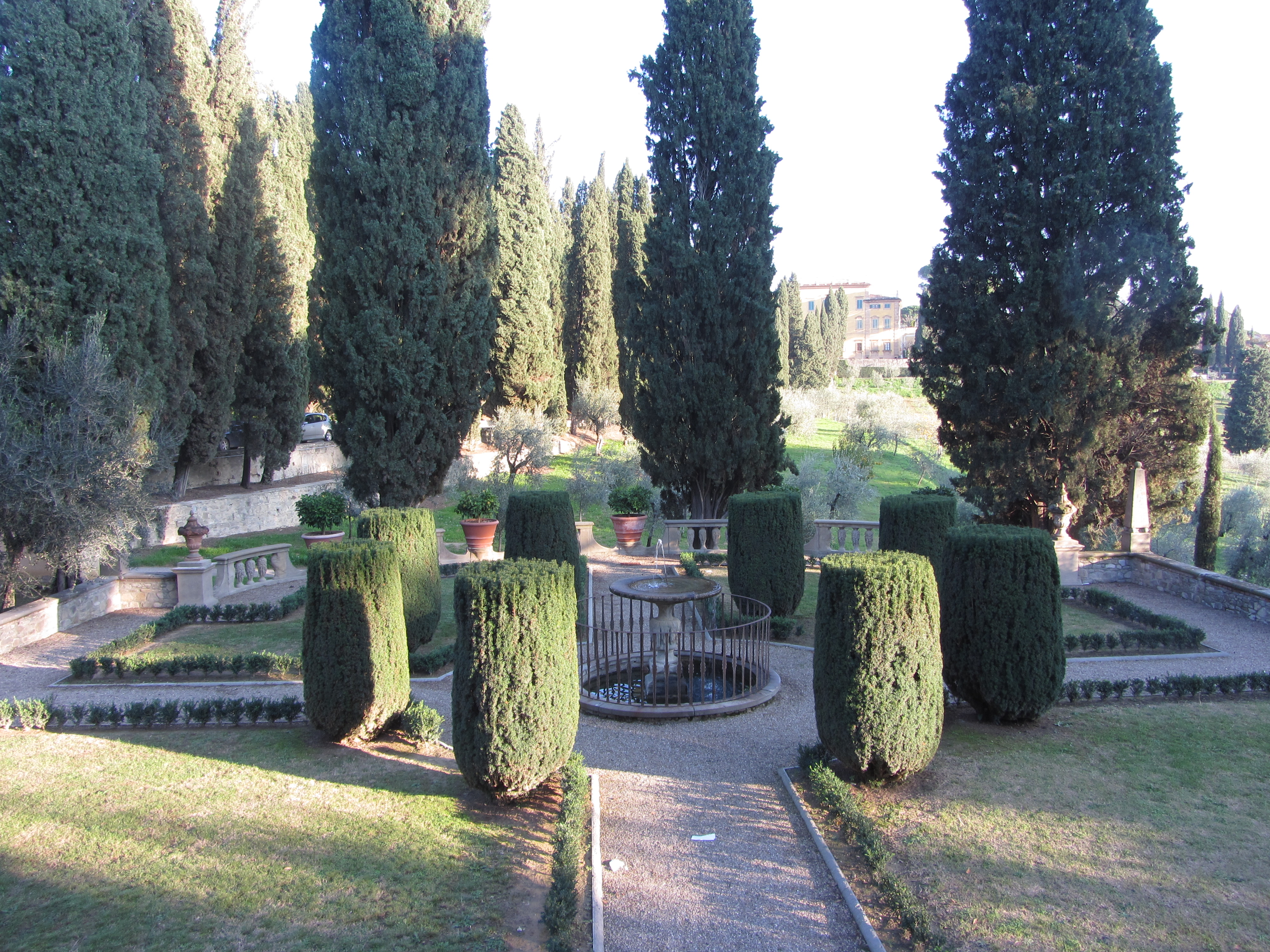
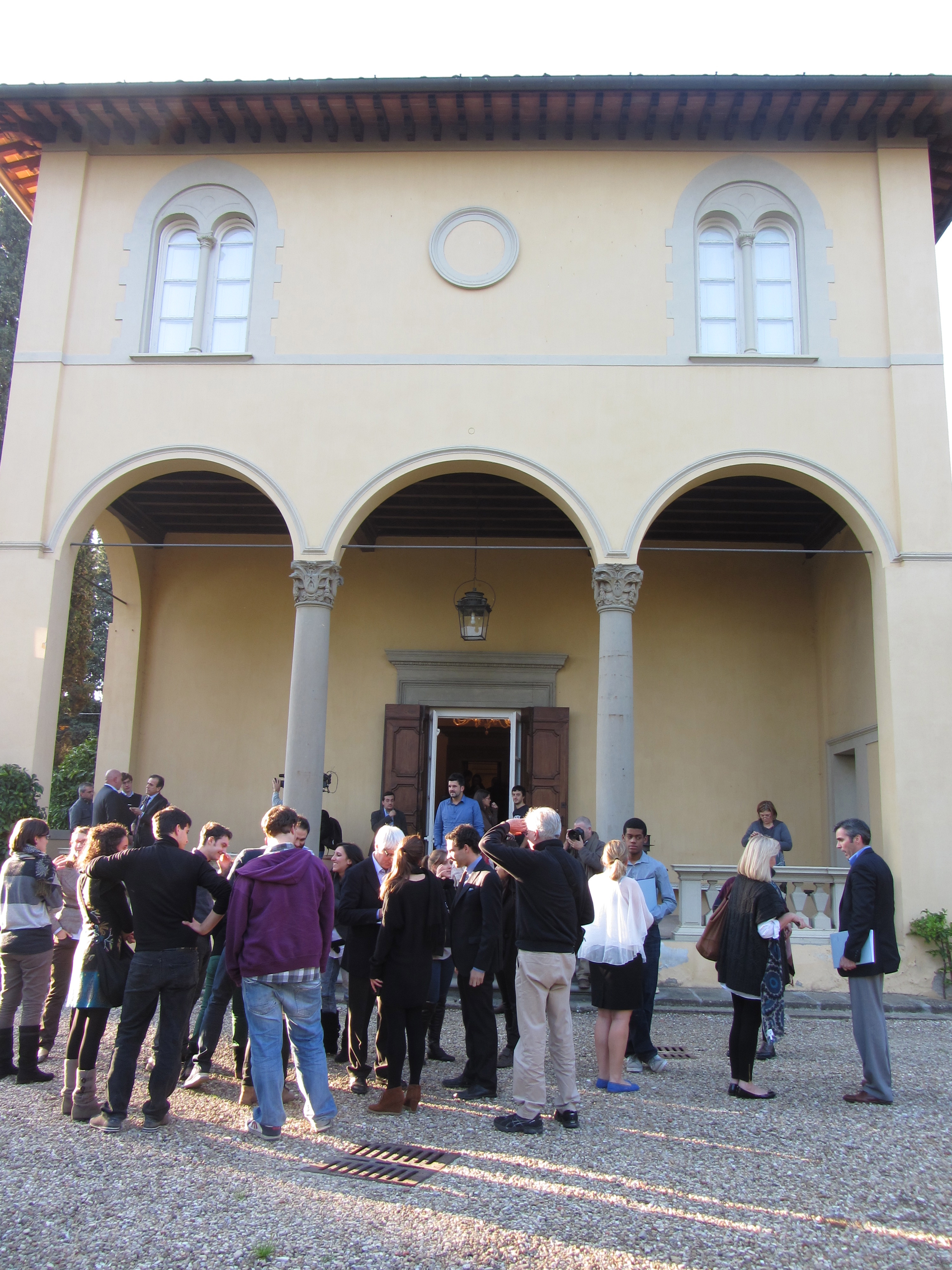
The conference is being held at the magnificent Villa Pietra up in the hills north of Florence.

(Sir Harold Acton was born and lived there most of his life. It is now the NYU campus in Florence.)

Pollsters, pundits and campaign managers from both sides sit on panels and talk amicably about what happened on November 6th, why and how the parties will adjust to the result.

(One afternoon’s talking shop does for me and I’m able to watch the following morning from the comfort of the hotel room as it’s streamed live over the internet.

From the low drone of garroulous expertise a voice arises that I recognise! Delighted I turn up the volume to hear my wife making a succinct point to the room while the large panel of experts look on in wonder!)

Late afternoon, now, we make our way back into Florence and catch our first sight of the Duomo this trip.

It sits benign and vast in the centre of the city as the evening lights come on round it.

We check into our hotel down by the river and think about dinner!

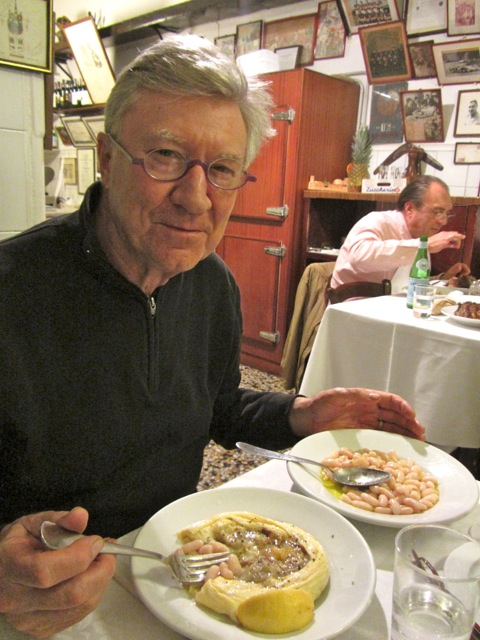
La Sostanza is a short walk away and they have room at 7.30.

Tortino carciofi (artichoke omelette) and fagioli e olio (beans and oil) and a happy punter!

I discovered this modest restaurant by chance in 1977 and have been a regular ever since.

It serves simple fare at communal tables in an unassuming room.

The cooking is done on a wood fire in a kitchen the size of a postage stamp.

Same photos and paintings on the walls–and two of the waiters are sons of ones I met on my first visit!

We are weary, but happy to have heard from Keith that the machinery at the frantoio

was fixed quicker than expected and no harm done to the olives already being processed.

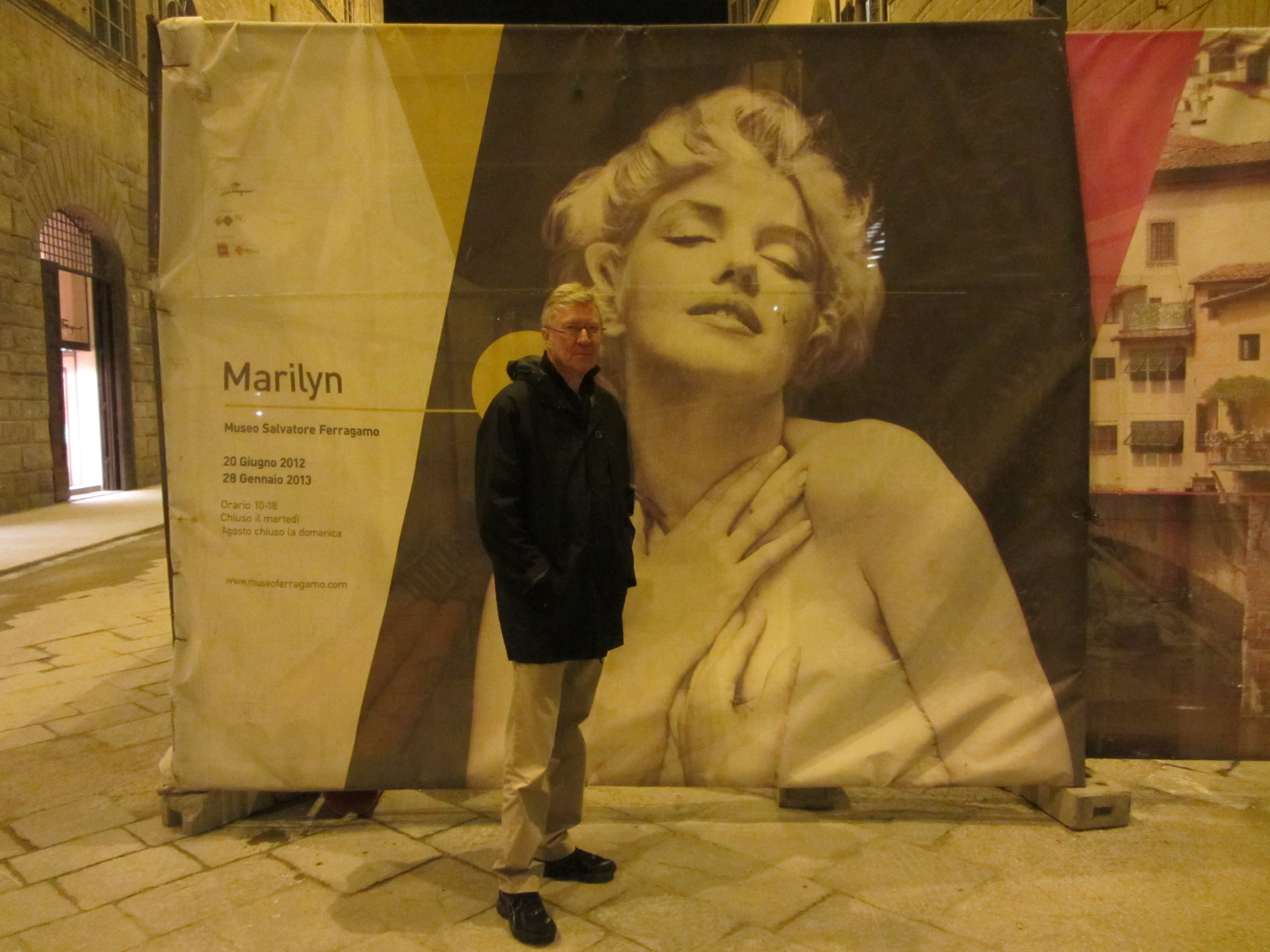
End of a day and a half and back to the hotel and a final photo op.

Closest I’ll get now! RIP Marilyn.

Olive picking resumed yesterday, Wednesday, after rain stopped play for two days–(sounds like the English cricket season!)

We arrived here Sunday night after driving down the Ligurian coast in a storm.

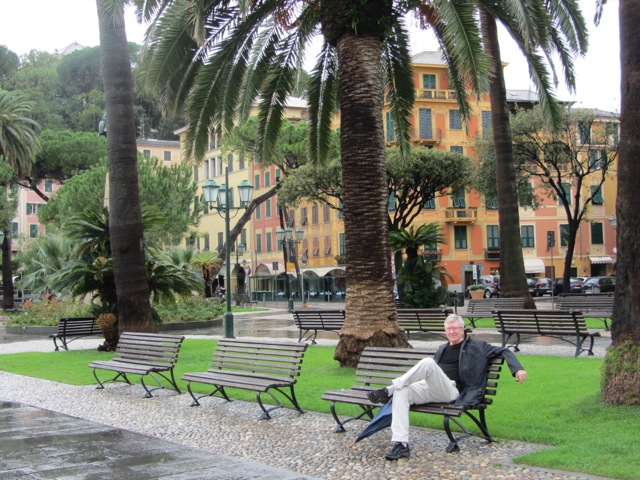
A brief and beautiful pause in Santa Margherita Liguria, Sunday morning–

soon proved one of Mother Nature’s teases as the rain began in earnest again on the road to Florence.

Footage of flood devastation on the Tuscan coast reminded us of America’s East Coast troubles–still terrible for many.

Our friend, Keith, didn’t apologize for the uncharacteristic Tuscan gloom.

You brought the rain and wind with you–from home!

It’s true, it tagged onto our coattails in Provence and followed us all the way.

But today all that is forgotten as autumn returns to its golden glory.

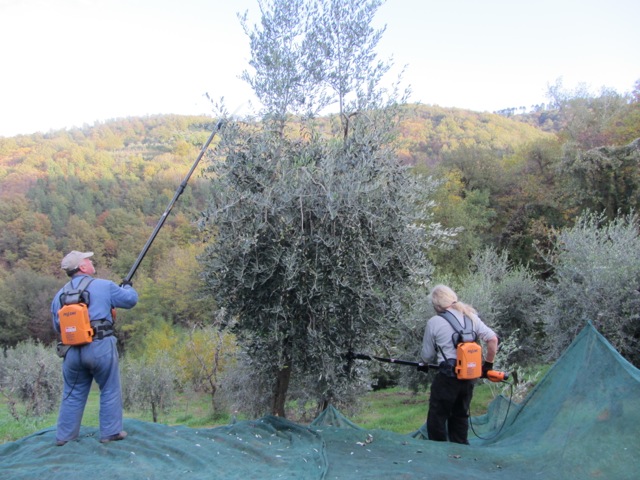
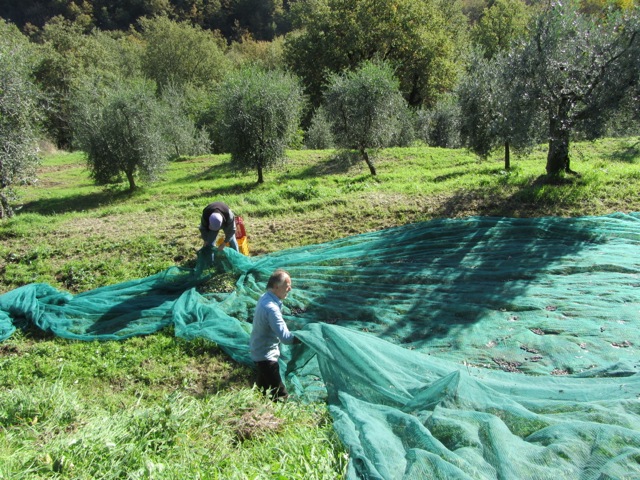
Keith’s team of five work their tough eight hour day on the steep terraces–the clickity-clacking of the picking poles playing constantly in their ears as the pretty little olives, green and all shades of purple, rain down from the trees and onto the nets.

A tree yields a litre of oil, roughly–Keith says.

He has a thousand trees. It takes a couple of weeks to harvest his crop, depending on the weather.

Then our job begins.

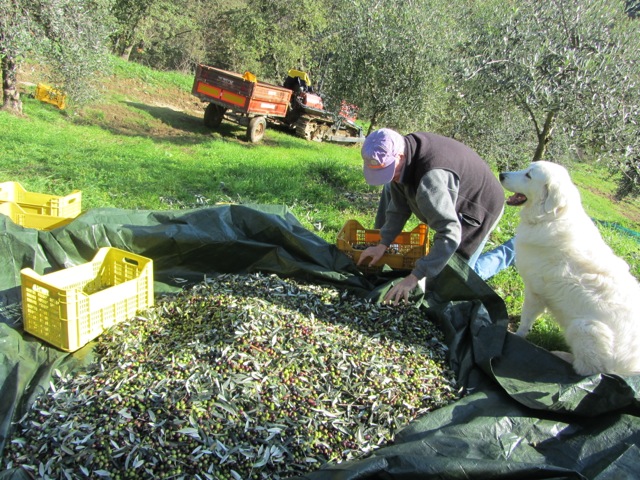
Gently lifting up the nets after the trees have yielded up their treasures, we help guide the olives into piles.

We pull out any twigs and small branches that have fallen and gather the olives into the plastic paniers, ready to go to the frantoio to be processed  in the morning.

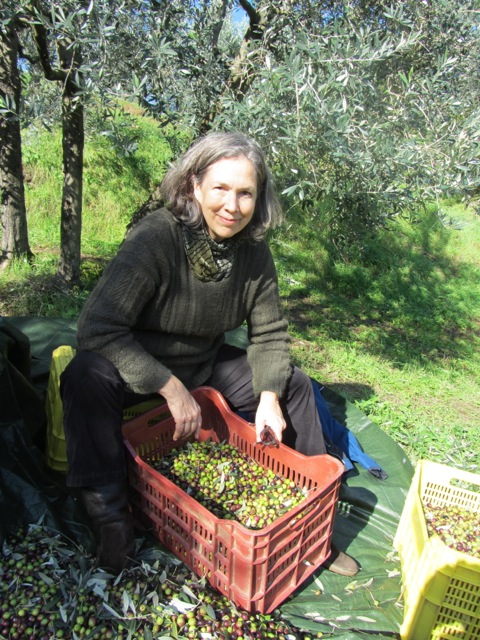
Alba–a willing helper.

They had four good days last week though the rain has lowered the percentage of oil in the olives, plumping them up with water.

It doesn’t affect the overall quality of the oil–just the yield.

The liquid gold seems even better than last year.

My hands I notice smell of sea water–that slightly salty tang.

Must ask the master about this.

Exhausted olive worker, is now retiring to the shower!

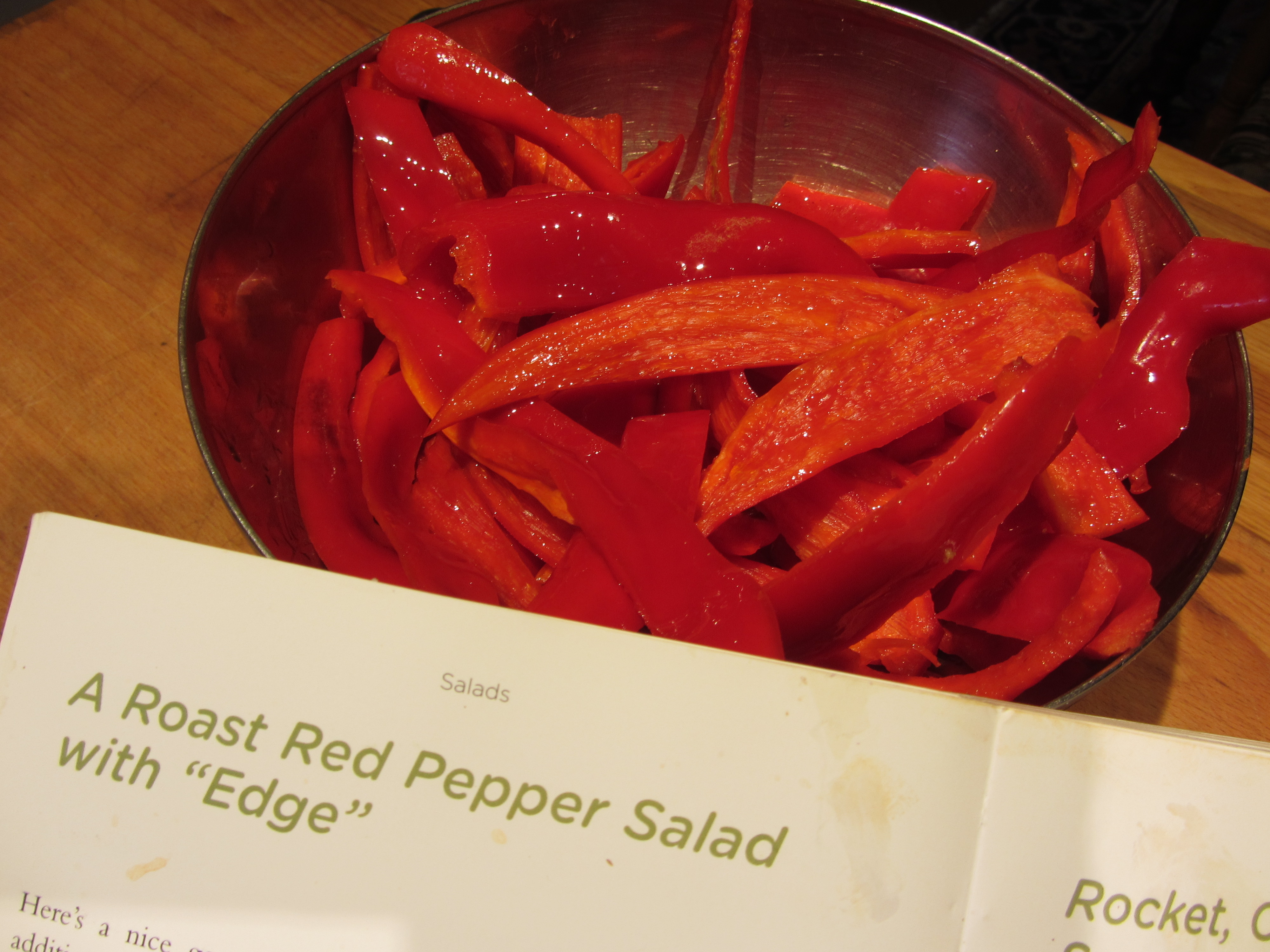
This is from Delicious Dishes for Diabetics.

Our friend Mark tried this the other day and wrote to me afterwards saying:

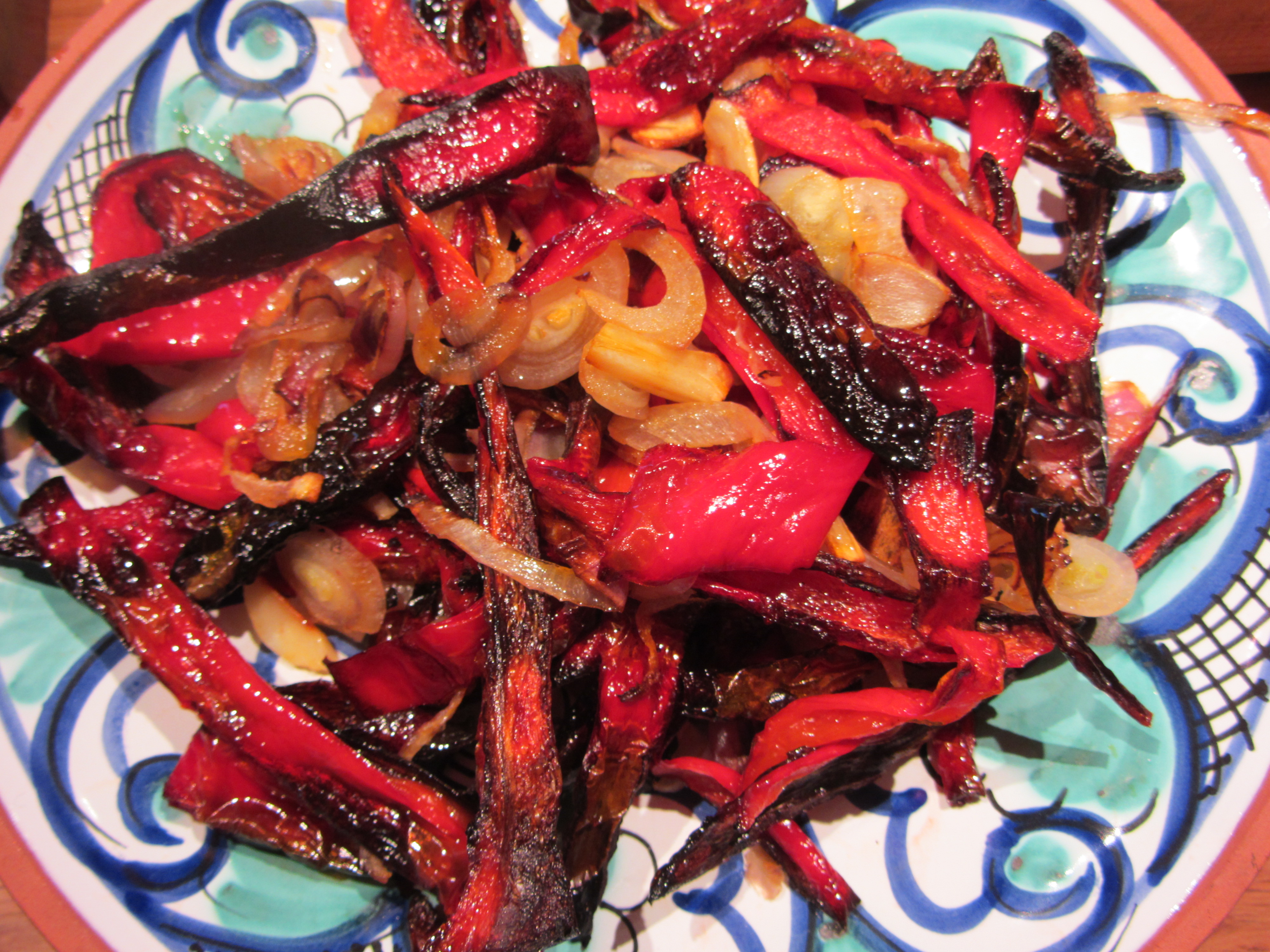
the peppers and onion you did for us – “salad with an edge” – delicious, but mine was way overcooked. So either my oven is hot, or yours is cool. Have you got a reliable thermometer to check it?
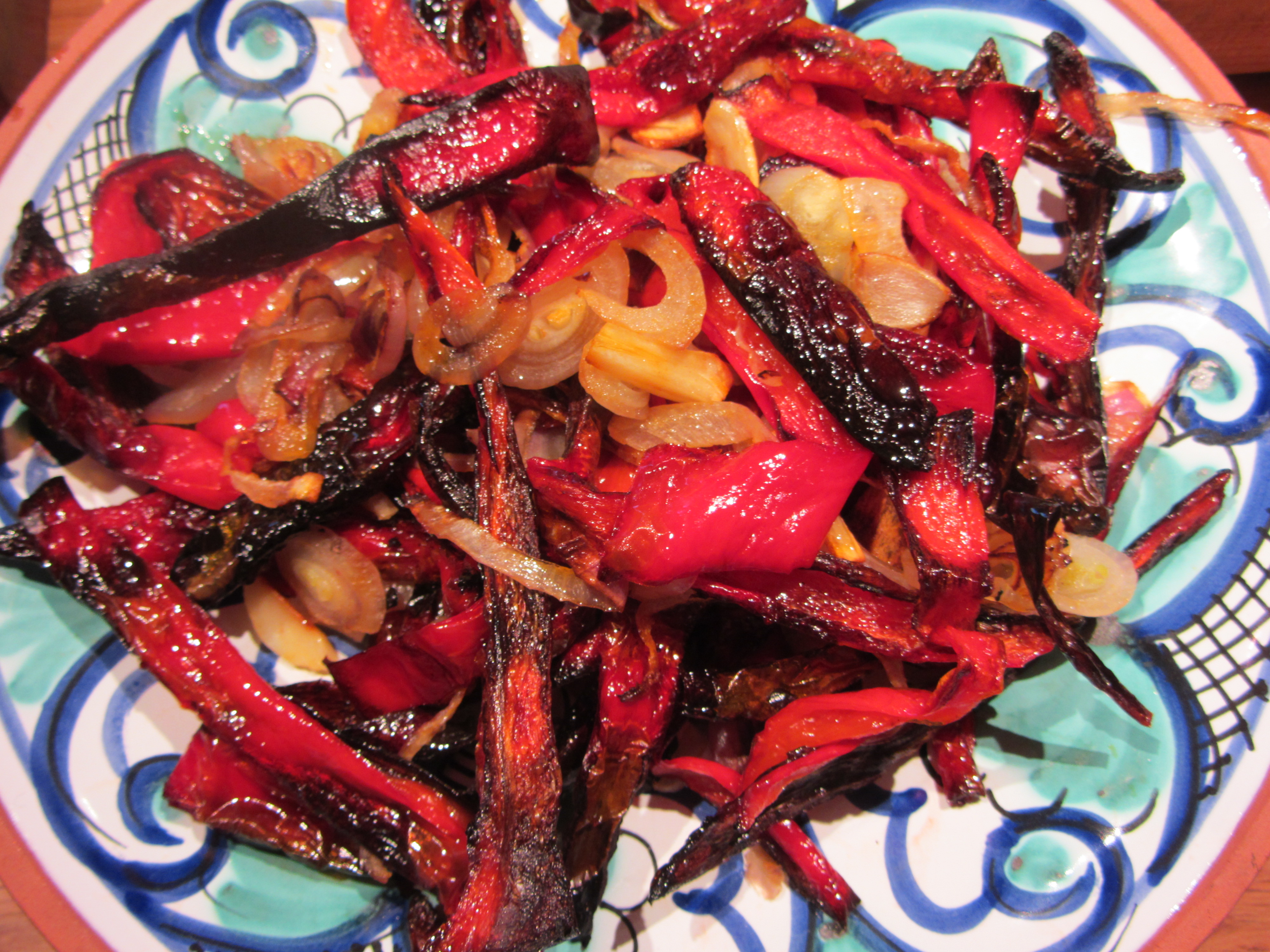
So I did it again a couple of days ago and reduced the oven time to 15 minutes–but kept the same temperature. Meredith thought they were still too charred–not for me though!

The thickness of the peppers is a factor.

These below are a thinner, cone-shaped variety grown locally.

The recipe asks for 220C –which I normally reduce by 10 degrees because I have a convection oven (fan-assisted).

(Next time I cook these, I’ll try them at 200C (fan-assisted) for 20 minutes.)

Thanks Mark–useful feedback!

Serves 4

Here’s a nice gooey slightly piquant salad that profits from the addition of some flaked very fresh feta or goat’s cheese.You could also add a few slices of thin pancetta for the last 10 minutes of cooking.

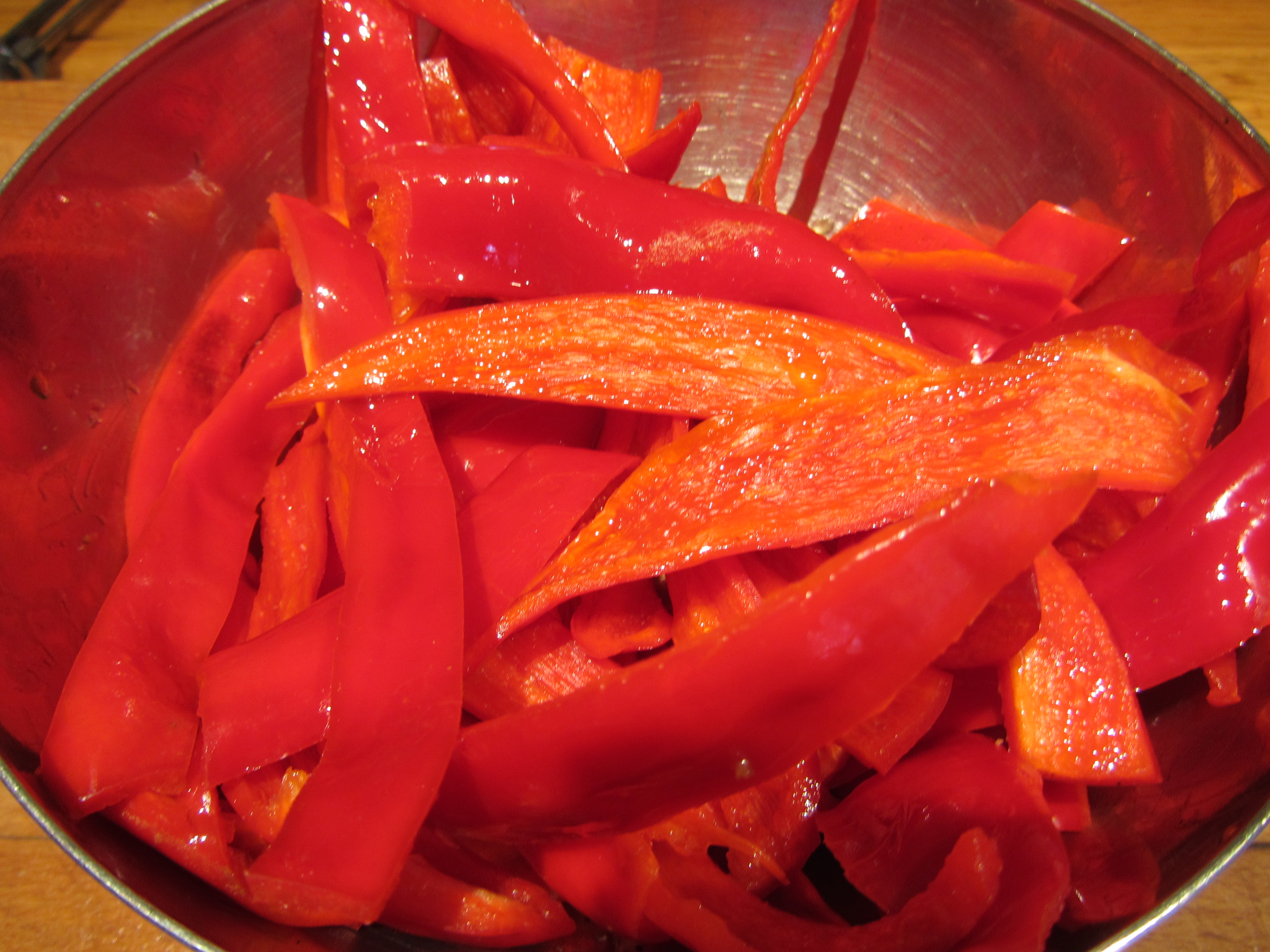
4 red peppers–cut in half lengthwise, deseeded and cut into strips

1 fresh red chili–not too hot, deseeded and cut into strips
4 tbsp olive oil
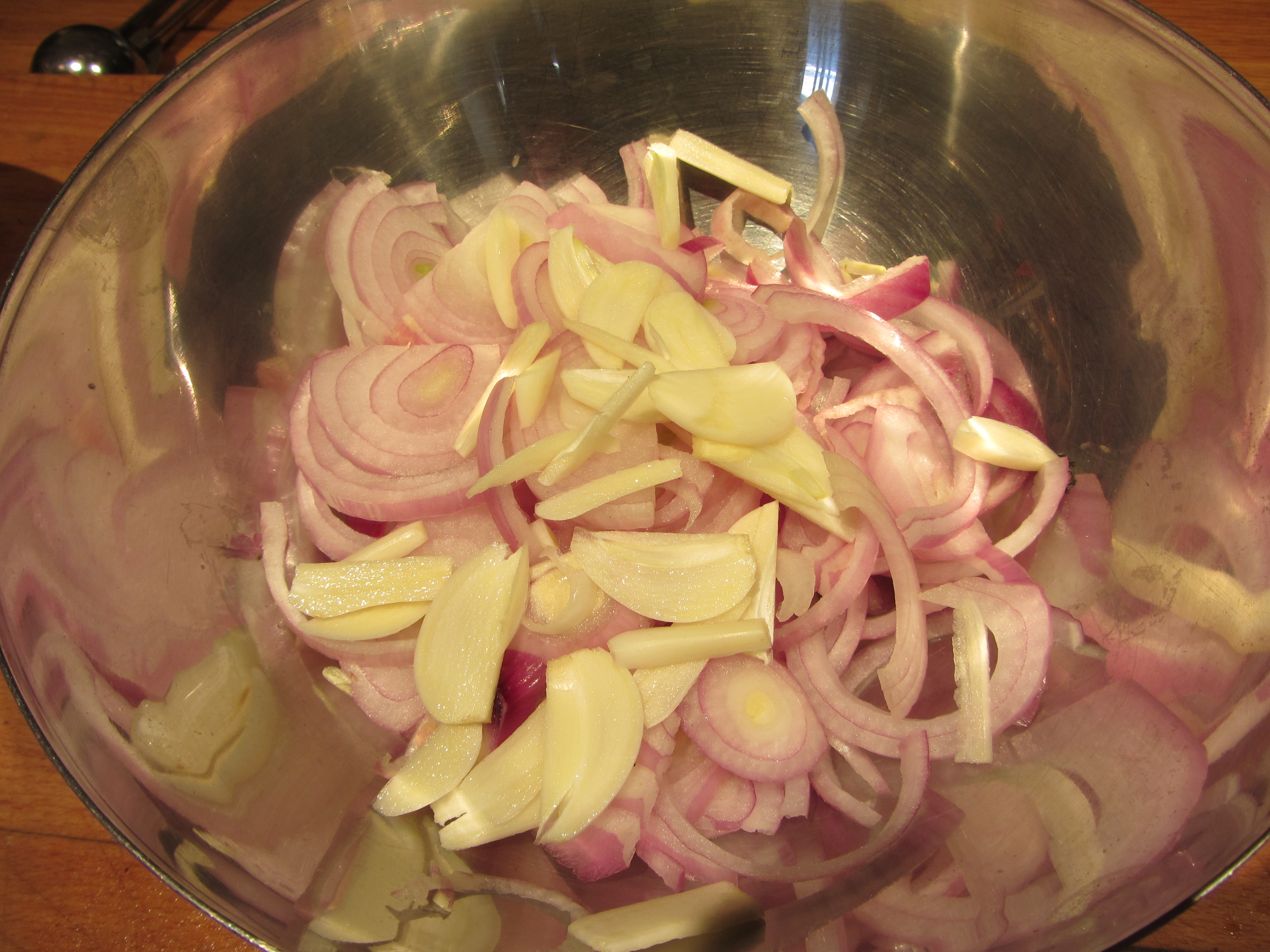
1 large or 2 medium red onions--peeled, cut in half and thickly sliced

2 cloves of garlic–peeled and sliced

2 tbsp balsamic vinegar

fresh basil–chopped (if available)

Heat the oven at 210°C (normal oven–this is a CHANGE from the recipe in my book!)/425°F/Gas Mark

  • Put the peppers and the chili in a bowl and dribble over 3 tablespoons of oil.
  • Turn over and coat them thoroughly in the oil.
  • Line a shallow medium-sized oven tray with foil and brush with oil.
  • Spread the peppers and chili evenly over the tray.
  • Leave in the oven for 20 minutes before spreading over the onion and garlic and cooking for a further 20 minutes.
  • Everything should be lightly charred in a nice way, i.e. edible!
  • Sprinkle over the balsamic, the torn basil and more olive oil if you like.

Tarator sauce

TARAT!  TARAAHH!!–a sauce for all seasons–TARATOR!

Discovered this sauce while looking for an alternative to yogurt.

Meredith is cutting out dairy products for a few weeks while she takes advice from an ayurvedic practitioner in Albi.

We’ve been we eating mainly vegetarian–and more lightly in the evenings.

It is a challenge for me and I’m enjoying it.

New Directions I’m calling it and it will be a chapter in the new book Healthy Eating for life.

Tarator is variously described as a yogurt soup from Bulgaria and a sauce from Lebanon.

My version of this tahini based sauce is loose, lemony and lightly garlicky, to be enjoyed with meat or vegetables.

For lunch today I’m revisiting a salad from Delicious Dishes-Roast Red Pepper Salad with an edge–(recipe tomorrow).

We had the sauce with it and enjoyed it.

for 2

3 tblsps tahini

2 tblsps lemon juice

1 garlic clove–peeled and pulped in 1/2 teaspoon salt

1/3 teaspoon cumin powder

4 tblsps water

1 tblsp parsley–chopped

  • Put the first five ingredients in mixer and whizz to a smooth runny consistency.
  • Stir in the parsley
  • Add more salt to your taste.

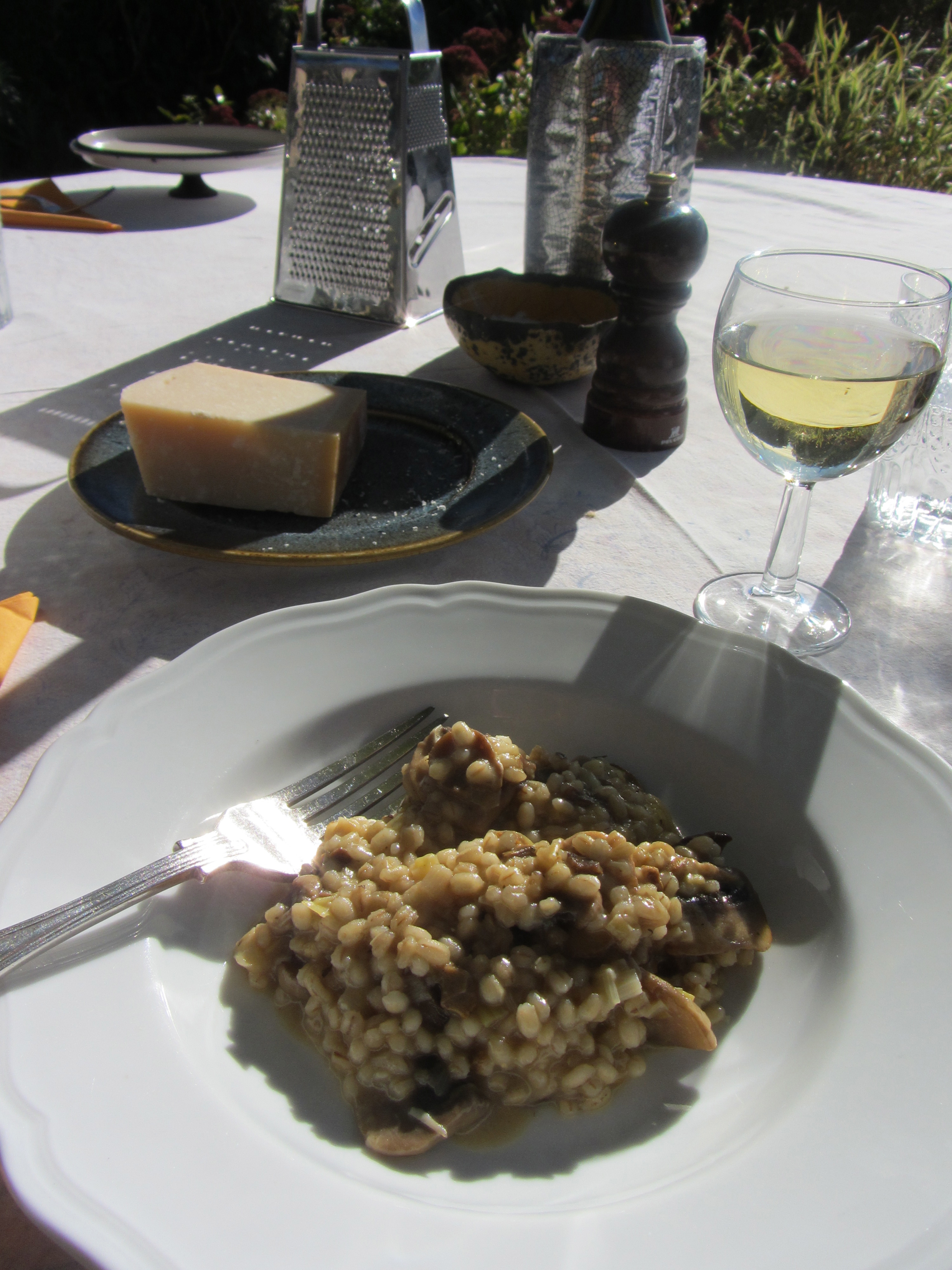
Traditionally risotto is made with Italian arborio rice–a round variety that plumps up well as it absorbs liquid, while still retaining a bite at its centre.

As white rice–a carbohydrate converting more quickly to sugar–it’s not ideal for those with diabetes.

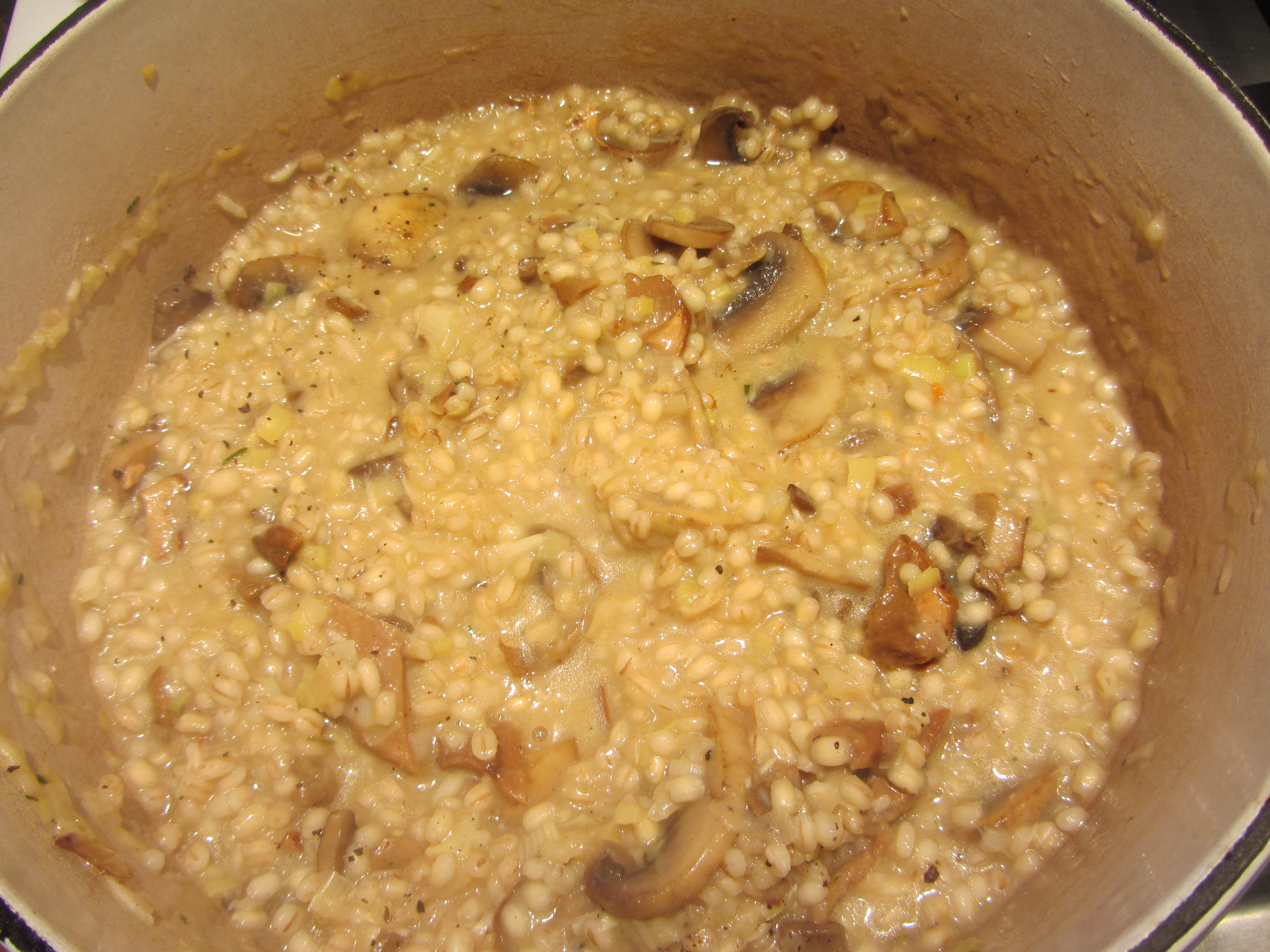
Pearl barley is an acceptable substitute. It has a delicious nuttiness all it own while modestly hosting the mushrooms and leeks (in this case).

This takes a little time but when you come to cook it, the zen of making risotto (!) kicks in and it becomes a quiet meditation followed by a satisfying chew.

Risotto has the virtue of being a meal-in-one dish–eventually!

As with omelettes, you add the the subject to the base and serve it in one.

This is adapted from an original recipe by Emma Booth who won a prize with it in Stylist.co.uk magazine!

for 2/3

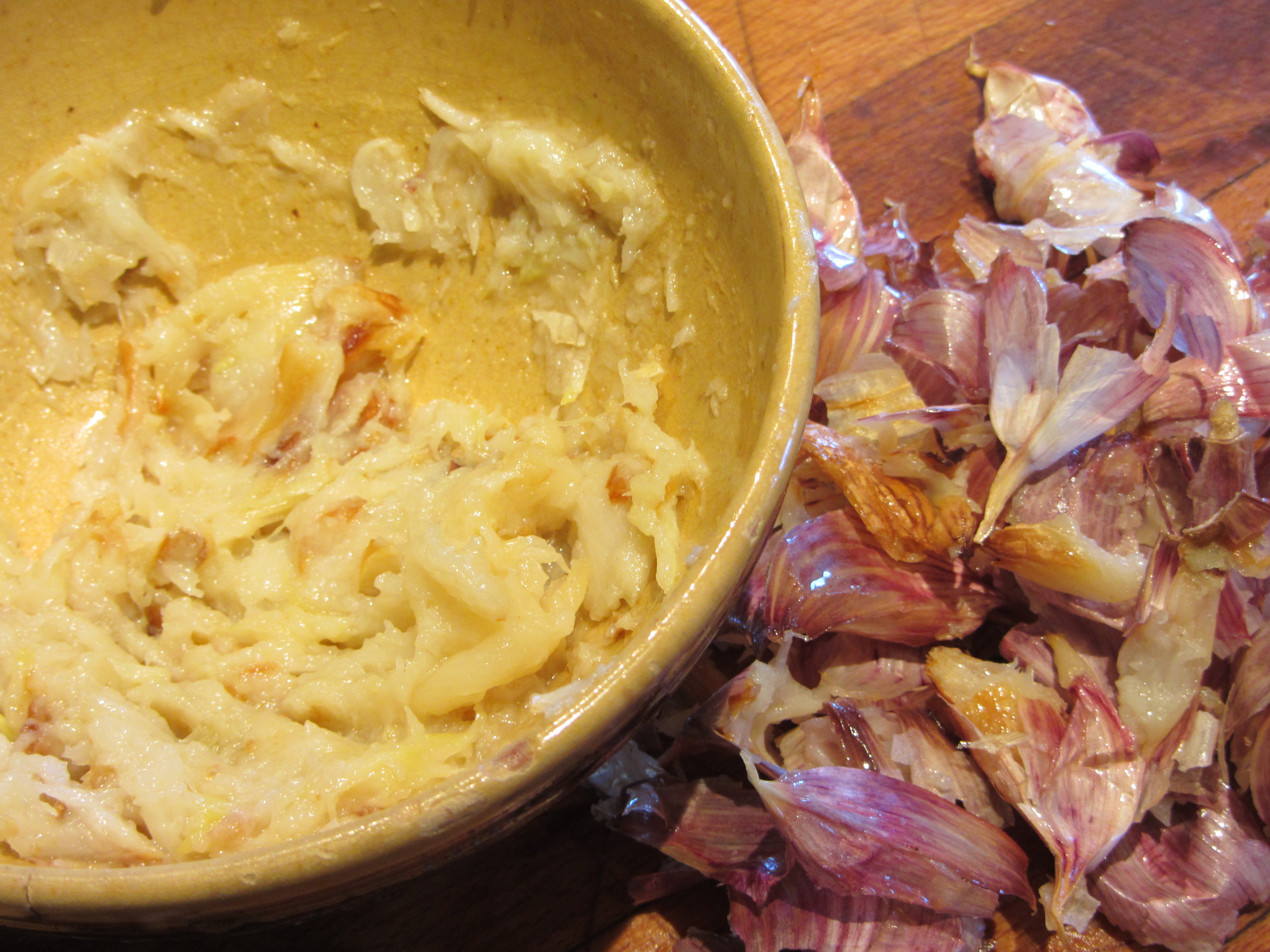
2  garlic heads–cloves separated but skin left on

4 tbsps olive oil

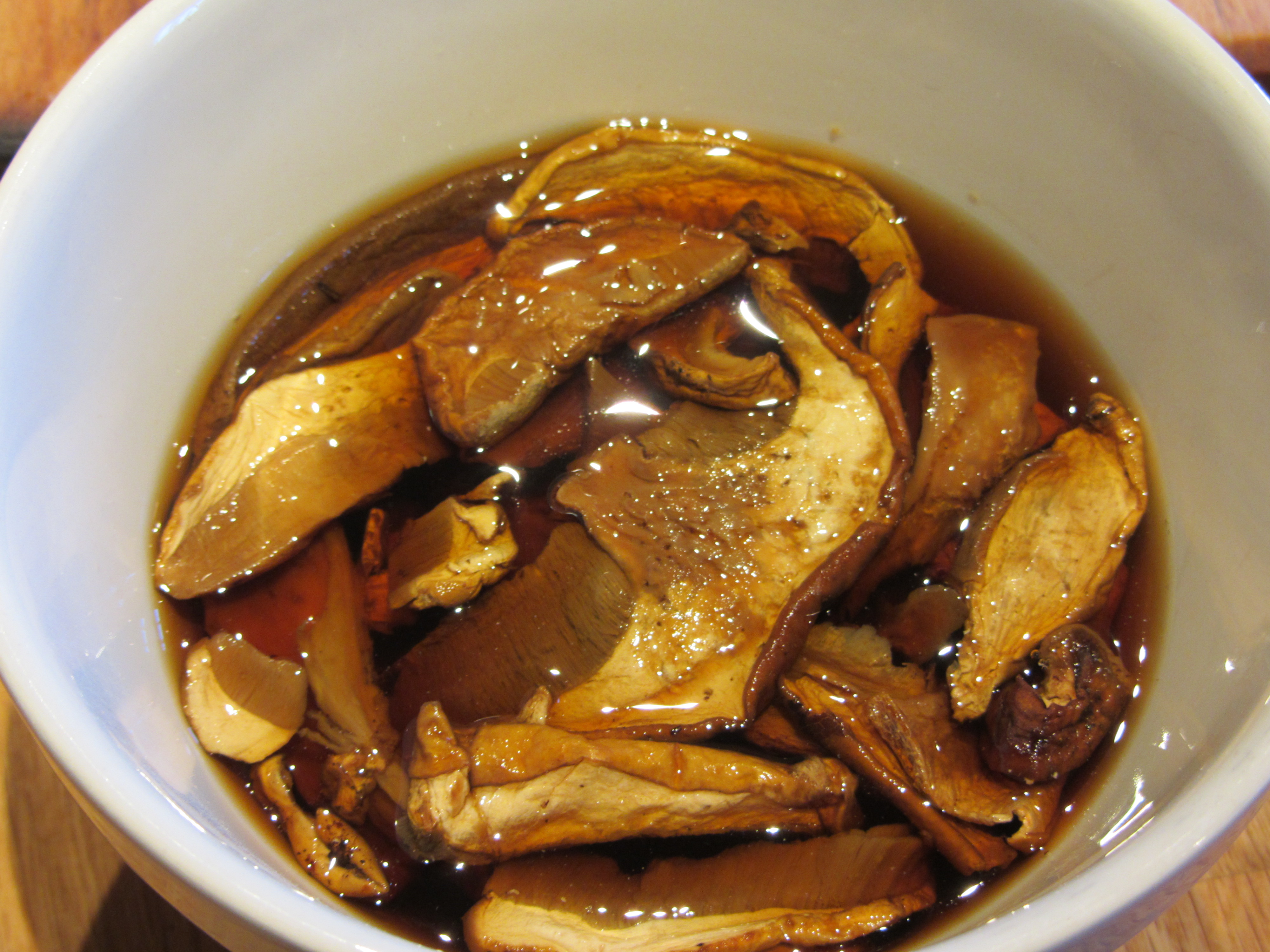
1 oz dried mushrooms–soaked in 200ml warm water.

(These are not always easy to find but they’re a good taste engine, adding depth to the dish.)

(If you can’t get dried mushrooms, just use the 200ml warm water!)

200g fresh mushrooms–sliced thin

11/2 leeks–chopped fine

200g pearl barley–rinsed thoroughly until the water runs clear

1 tsp fresh thyme–chopped

600ml stock–I use organic vegetable stock cubes

2 tblsps white wine

50g/2oz Parmesan–grated

black pepper and salt

heat the oven to 190C/380F

  • Put the dried mushrooms in a bowl and pour over 200ml hot water–leave to soften for 20 minutes.

  • Then strain into a bowl, reserving the liquid.
  • Chop the mushrooms ready for use.
  • Put the garlic cloves in a bowl and mix with a tablespoon of olive oil.

  • Empty them onto a shallow oven tray.
  • Bake for about 15 to 20 minutes until they are soft–and set aside to cool.
  • Peel them and fork them into a mush–this is a messy business but it ends with a satisfying licking of the fingers.

  • Heat two tablespoons of oil in a pan and sauté the mushrooms until they start to colour (this happens after they have released their moisture), then set aside.

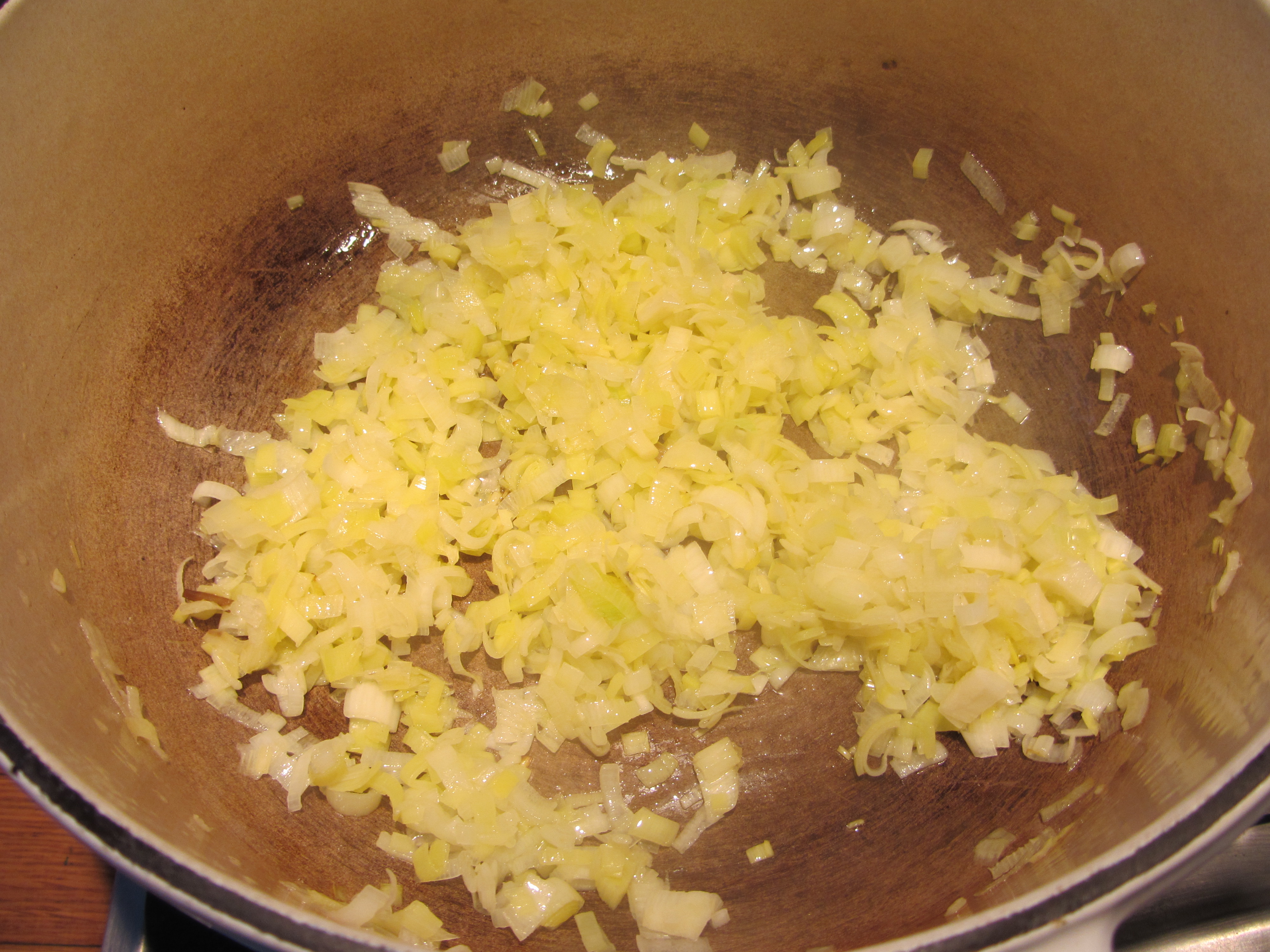
  • Heat the last tablespoon of oil in a medium casserole (the one in which you will serve the risotto) and sauté the leeks over a medium heat until they soften and colour a little.

  • Add the wine and let it evaporate, stirring the while.
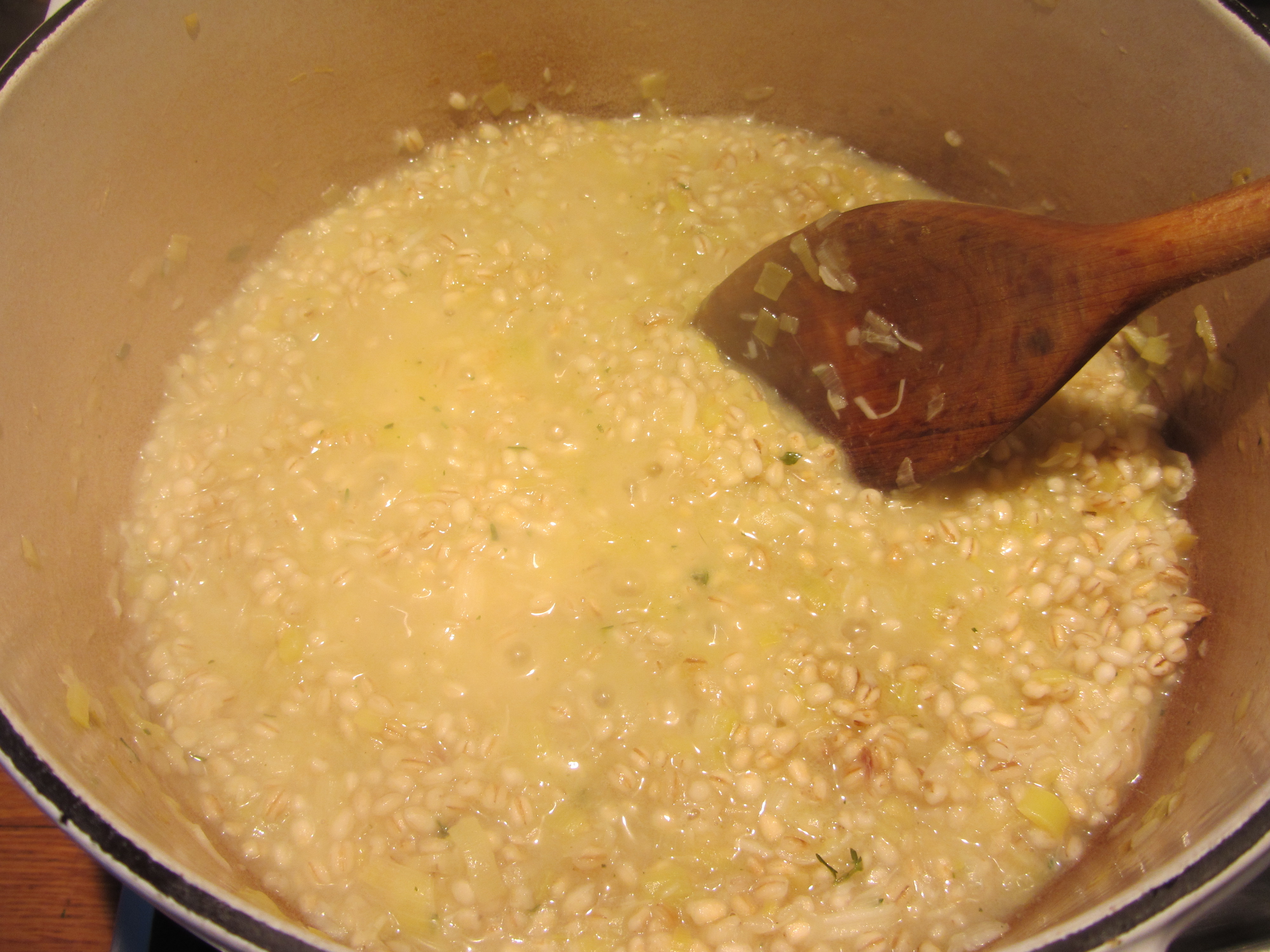
  • Mix in the pearl barley, thyme and cooked garlic mush.

  • Have the stock in a pan close by–simmering on a low heat.
  • Add the stock a ladle at a time, stirring often, taking care the mix  doesn’t catch.

  • Followed by the mushroom water–if you are using dried mushrooms–or warm water if not.
  • When the barley is soft but still has a little bite in the centre–this took about 20 minutes this morning–the risotto is ready for the mushrooms–dry and fresh.
  • Add them and stir in, followed by the parmesan cheese.

  • Season with black pepper and salt.
  • Meredith recommended a sprinkling of parsley at the finish–and she’s right!

I have been commissioned to write another cookbook!

Publisher Constable and Robinson proposes the title:  Healthy Eating for Life–and  I like it.

It widens the remit of Delicious Dishes for Diabetics a little–and straightforwardly tells you what its’s about.

Hope Jameswho did the wonderfully atmospheric illustrations for DDD–has agreed to a repeat.

It is due out in January 2014.

Head down!

P.S.   Poldarke be out!

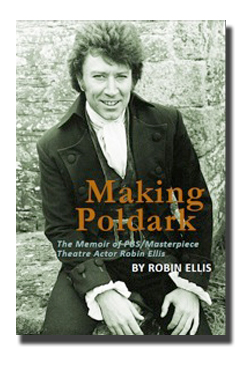
  My expanded and revised memoir of the Poldark series–Making Poldark–released earlier this yearis now available as an eBook for Kindle via Amazon.com ($10.29). It will be out for Nook and other platforms soon!


Hard to resist this photo!

It was hard to resist the thing itself!

I bought this beauty in Castres market on Saturday morning from a young woman’s stall that was covered in pumpkins of all sizes.

I liked shape of the 2e too!

She told me not to peel it–just scoop out the seeds and cut it into chunks.

The skin and flesh contain vitamin A, flavonoid poly-phenolic antioxidants such as leutin, xanthin, and carotenes in abundance; in other words health giving properties–good things!

This idea is an aside in the Riverford Farm Cookbook (a treasure trove).

for two

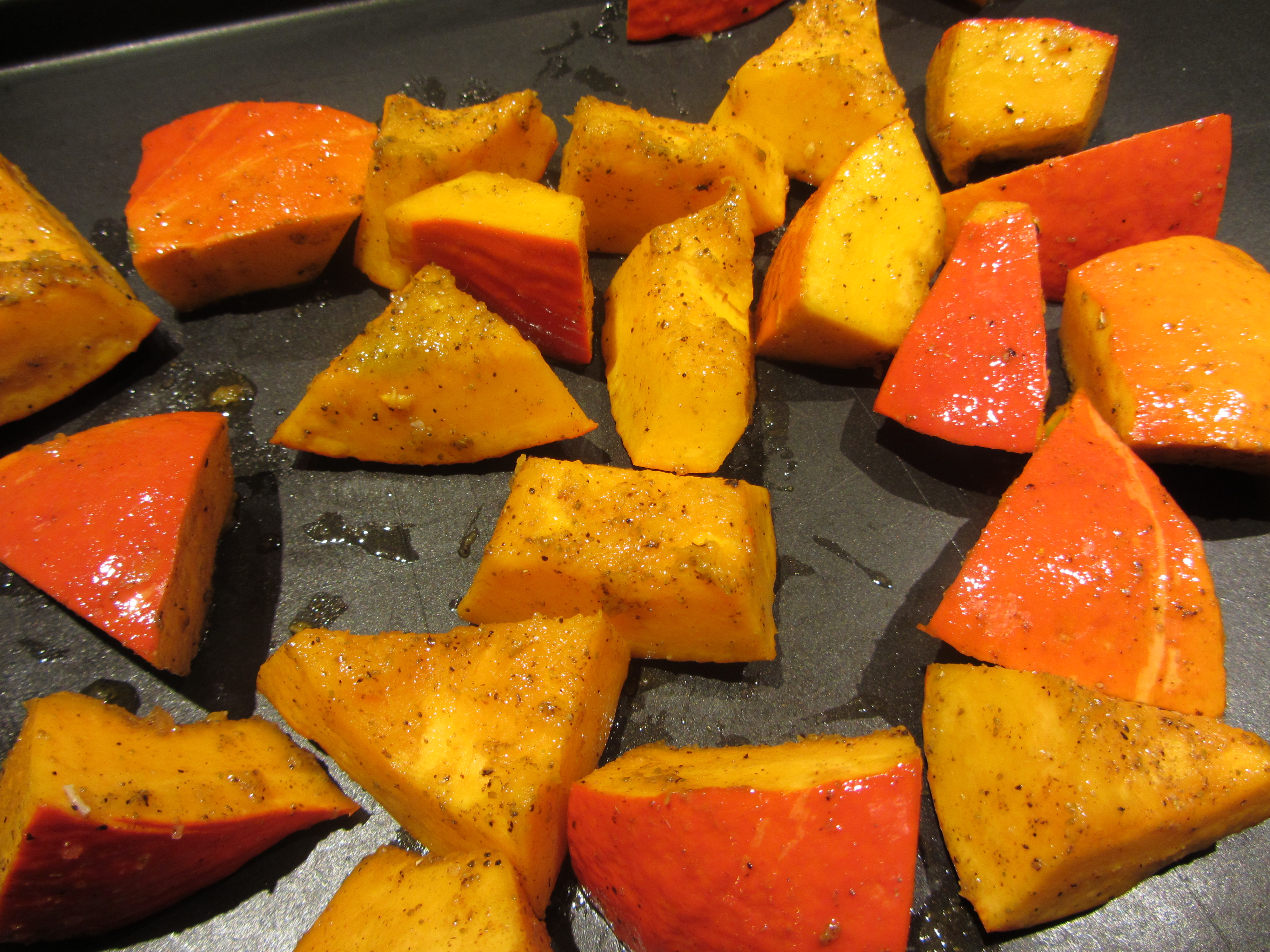
1 smallish pumpkin–about 1 kilo/2lbs–quartered, seeded and cut into chunks

1 tsp cumin powder

salt and pepper

1 red chili–chopped

1 garlic clove–chopped

2 tblsps olive oil

roasted pumpkin seeds

heat the oven to 200C/400F

  • Put the pumpkin pieces in a bowl and spoon in the olive oil.
  • Turn them over thoroughly in the oil.
  • Sprinkle over the cumin powder and season with salt and pepper–mix again.
  • Empty the contents of the bowl onto a shallow oven tray.

  • Bake this for about 20 minutes or until the pumpkin pieces are tender.
  • Then take the tray out of the oven and sprinkle the garlic and chili over and cook for another five minutes.

  • Serve with dollops of humous and some roasted pumpkin seeds sprinkled over.

Meredith tells me most pumpkins sold in America are carved up for jack o’lanterns–not supper!

Happy Halloween Everyone!

We had simple salmon fillet for supper the evening that we returned from the clinic.

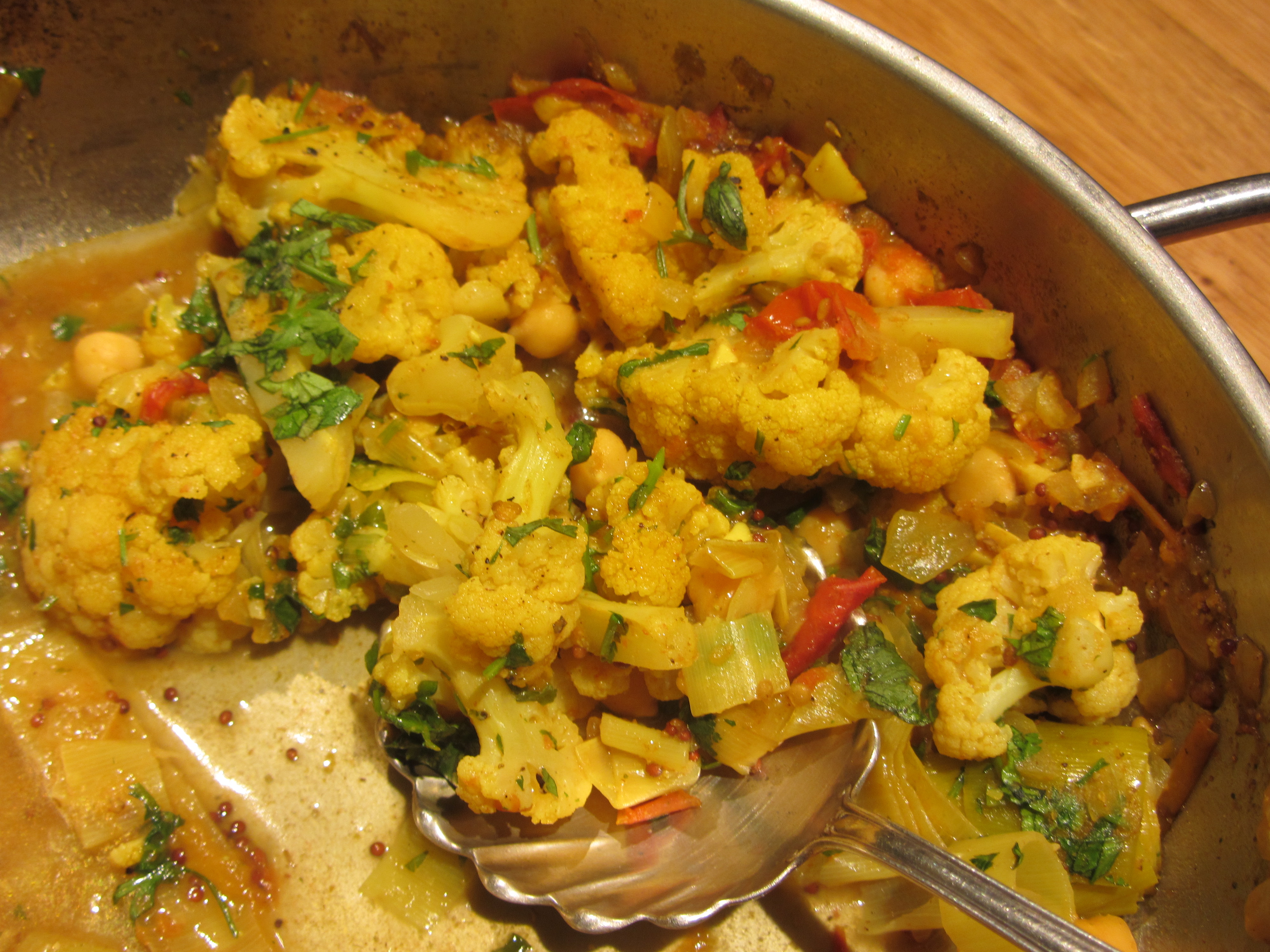
The next night I felt a little more adventurous, but in need of something easy and preferably from a single pot–a ladleful of taste over some basmati brown rice; comfort food that cooks itself.

I looked in the fridge and found a cauliflower in good condition, a leek and a bottle of chickpeas on the shelf in the larder and I knew there were a few small tomatoes left to gather at the end of the garden–perfect!

I love buying cauliflowers–their tight white heads look so tempting and beautiful.

However sometimes they stay in the fridge–not exactly forgotten, but requiring some thought.

What am I going to do with that cauliflower?!

Cosy cauliflower curry–why not?

Here goes…!

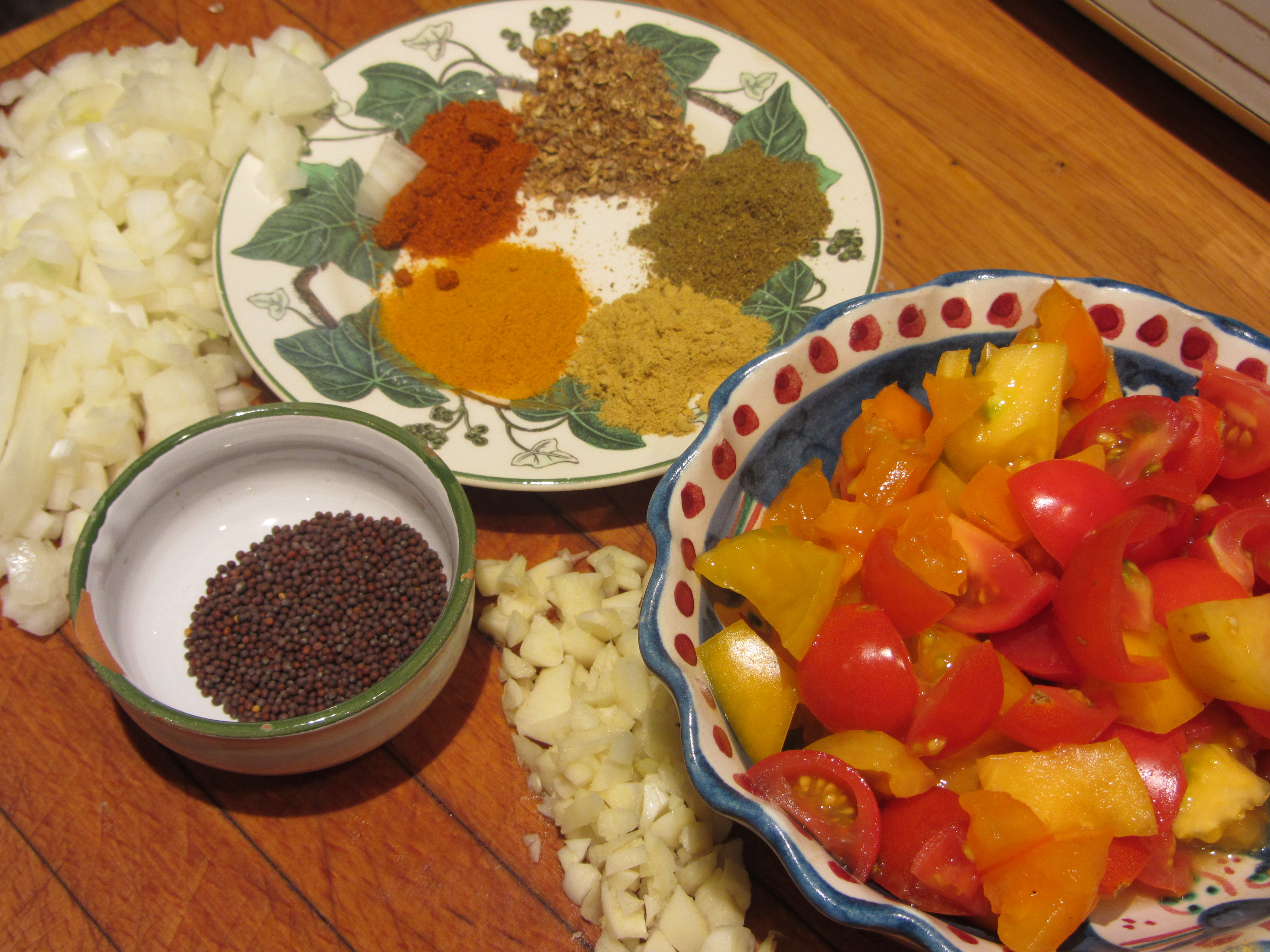
1 onion--chopped small

2 garlic cloves–chopped

2 tblsps olive oil

1 tsp black mustard seeds

1 tsp each of turmeric, cumin powder and ginger powder

1/2 tsp each of coriander powder, cayenne powder

8oz tomatoes–chopped roughly

1 pint/450 ml stock–I use organic vegetable stock cubes

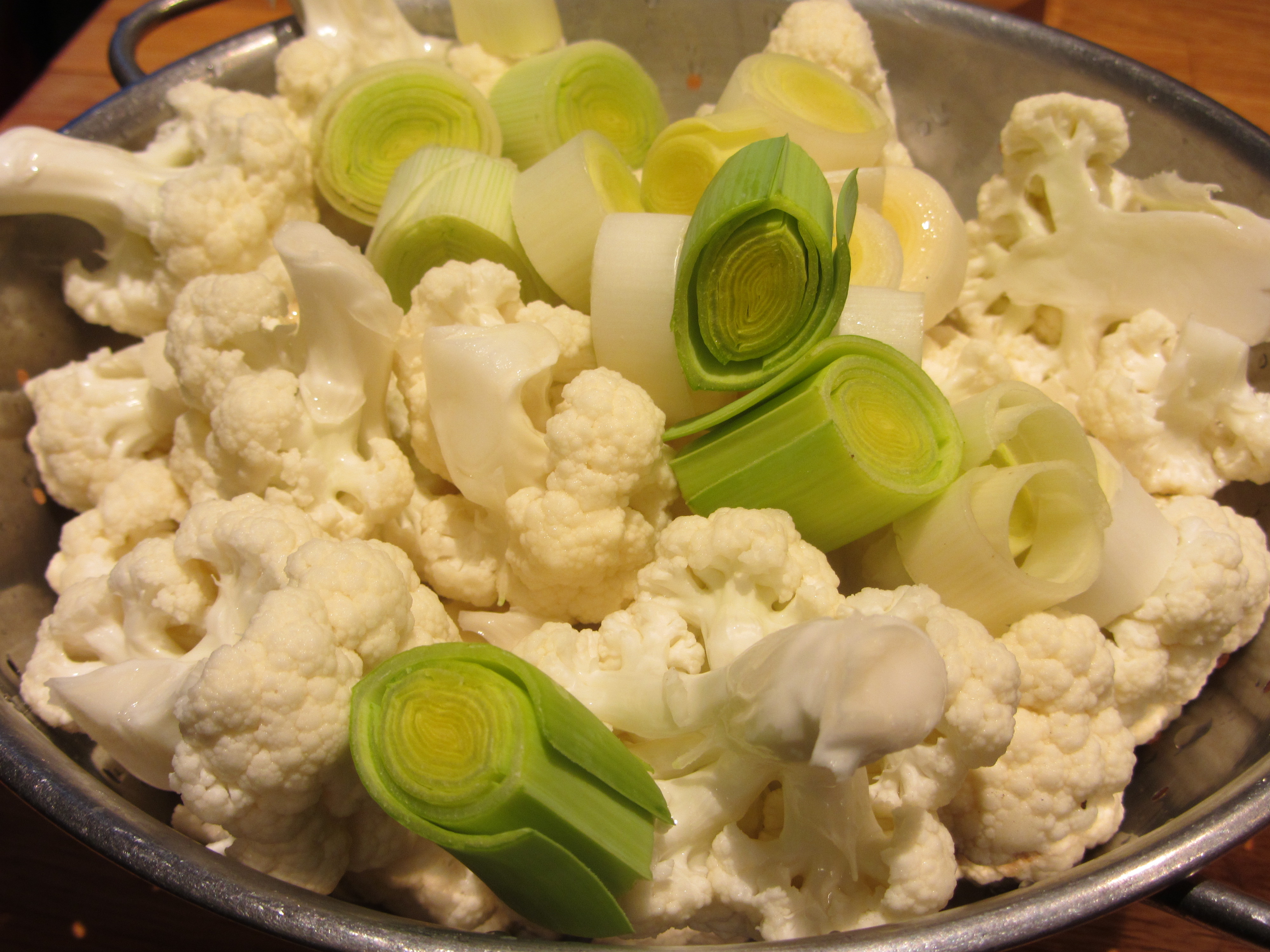
1 cauliflower–separated into bite-size florets

1 leek–cleaned and sliced

3 tblsps cooked chickpeas (from a tin [a can] or bottle–you may not need the whole tin. Spoon out the required amount and drain off any liquid–but no need to rinse.)

salt and pepper

2 tblsps of whisked low/no fat yogurt or coconut cream (my new discovery; more on that in future posts)

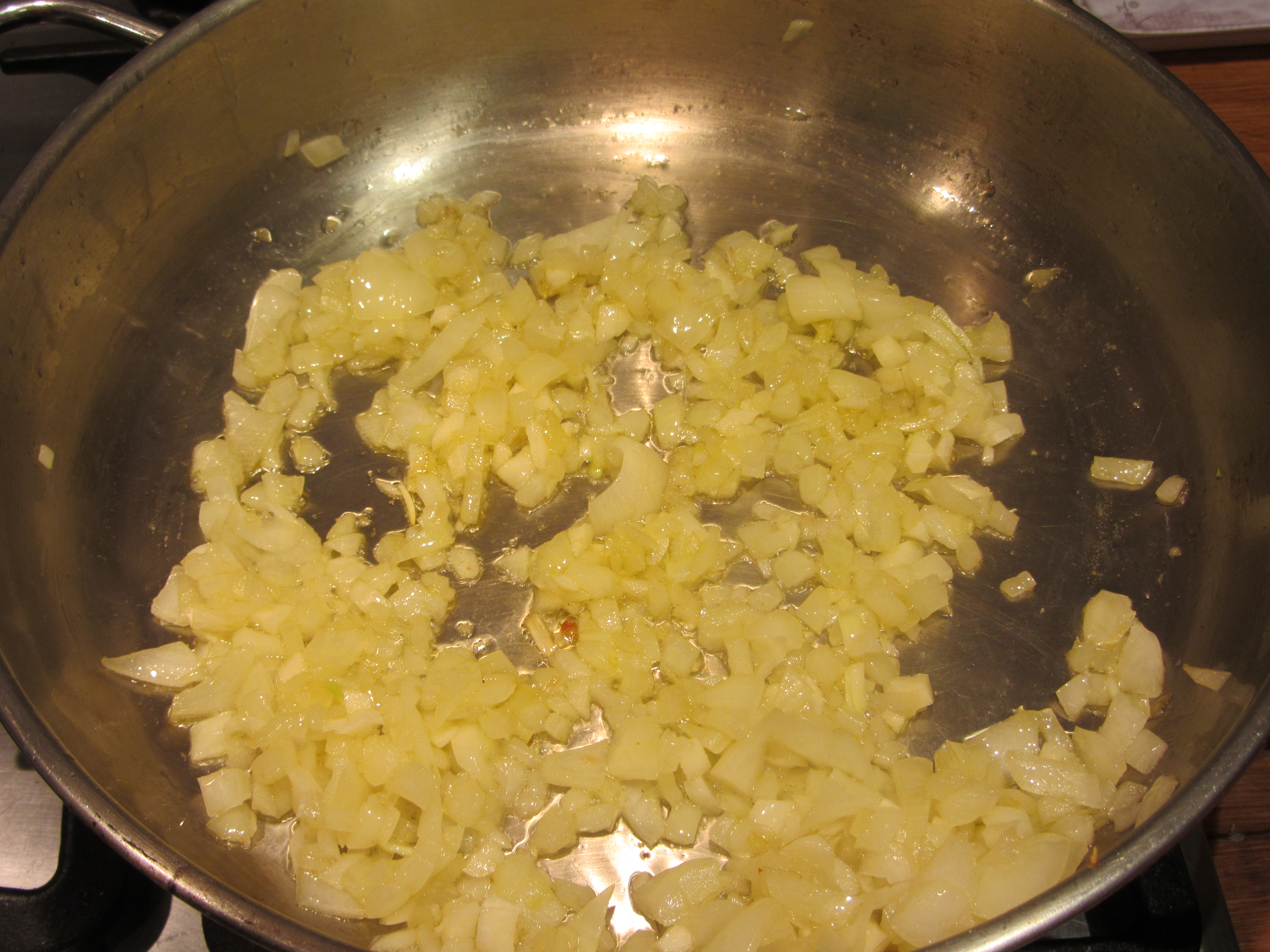
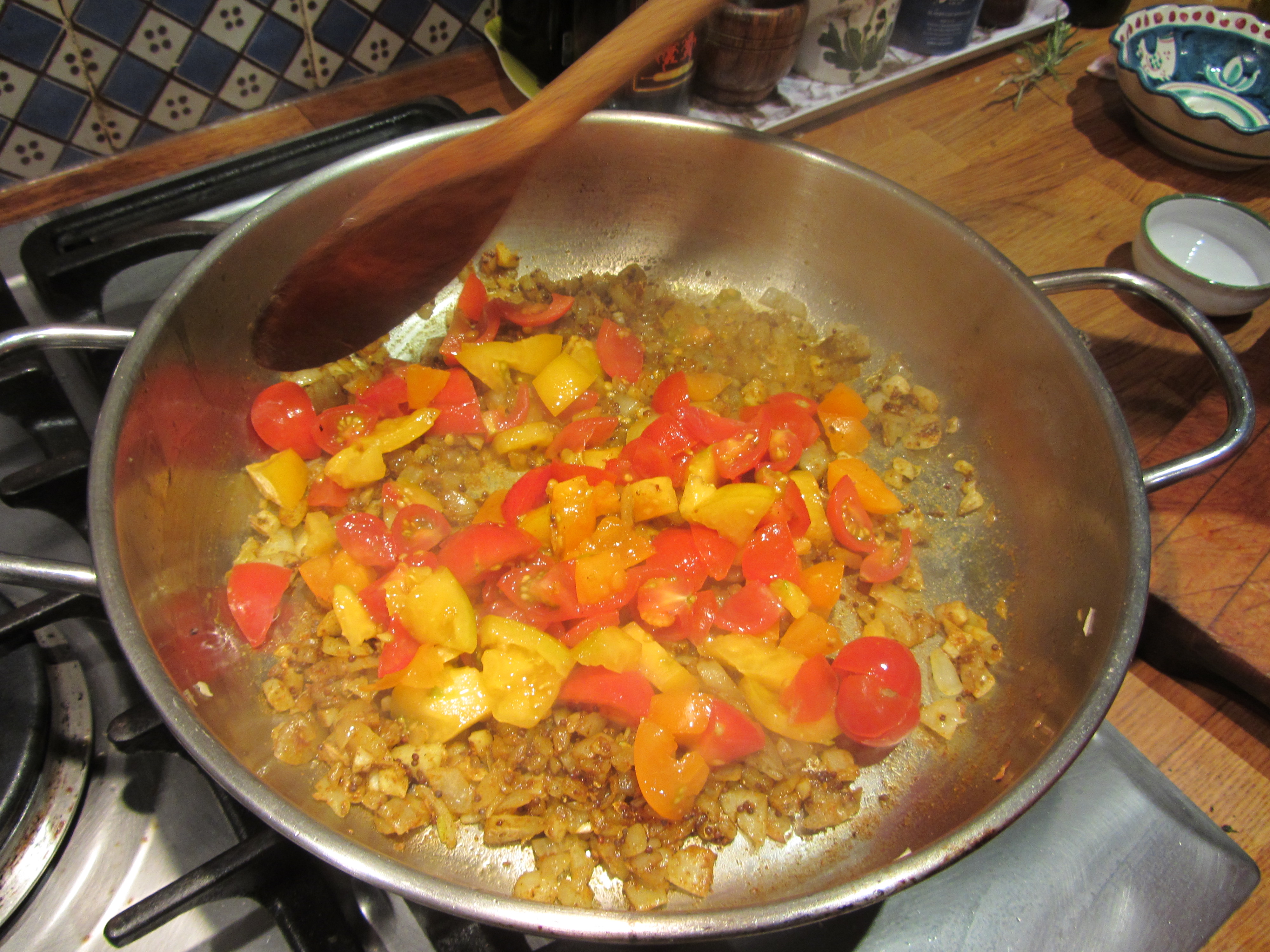
  • Sweat the onion and garlic in the olive oil until they soften and begin to colour.

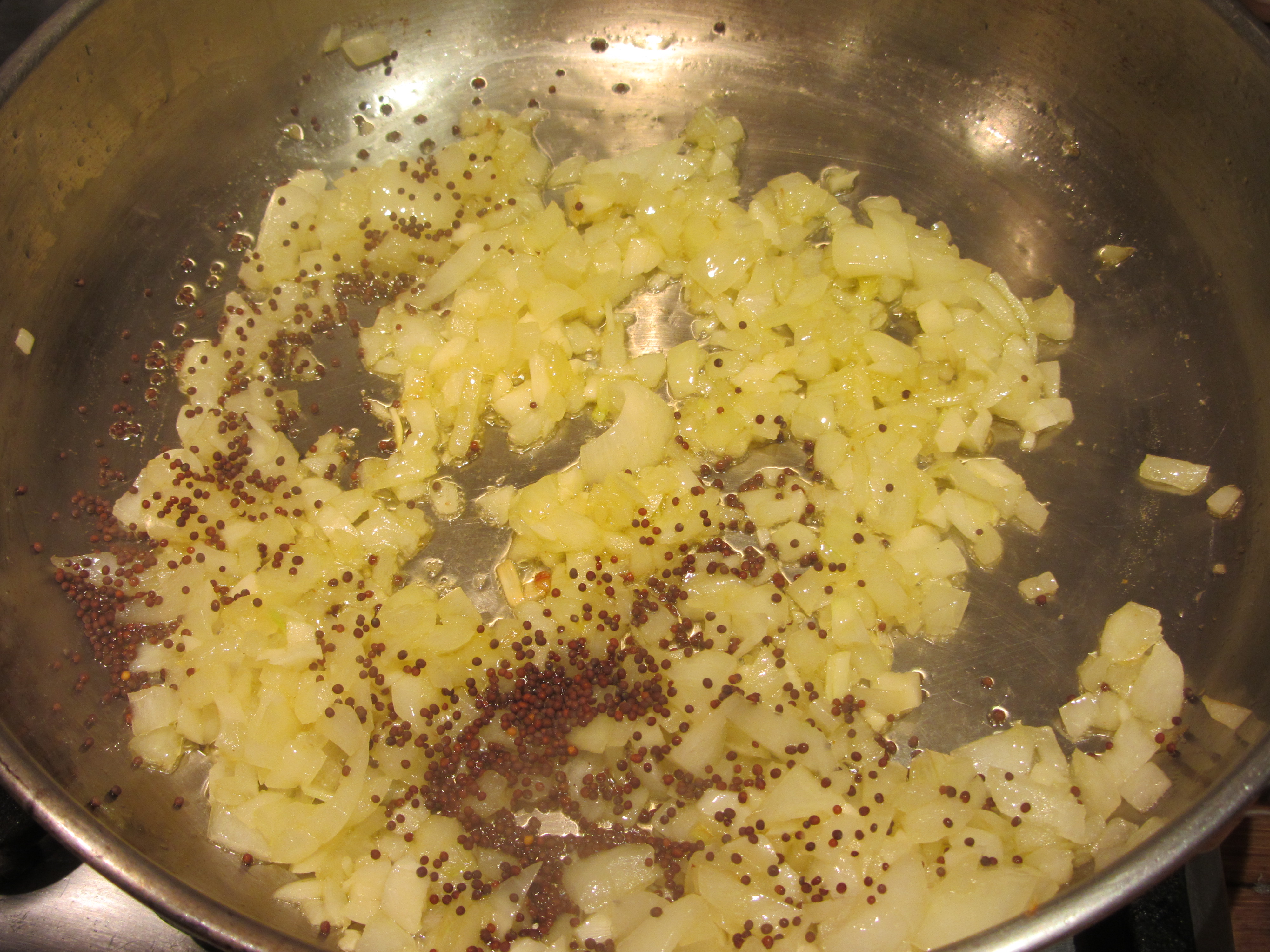
  • Add the mustard seeds and let them cook for a minute.

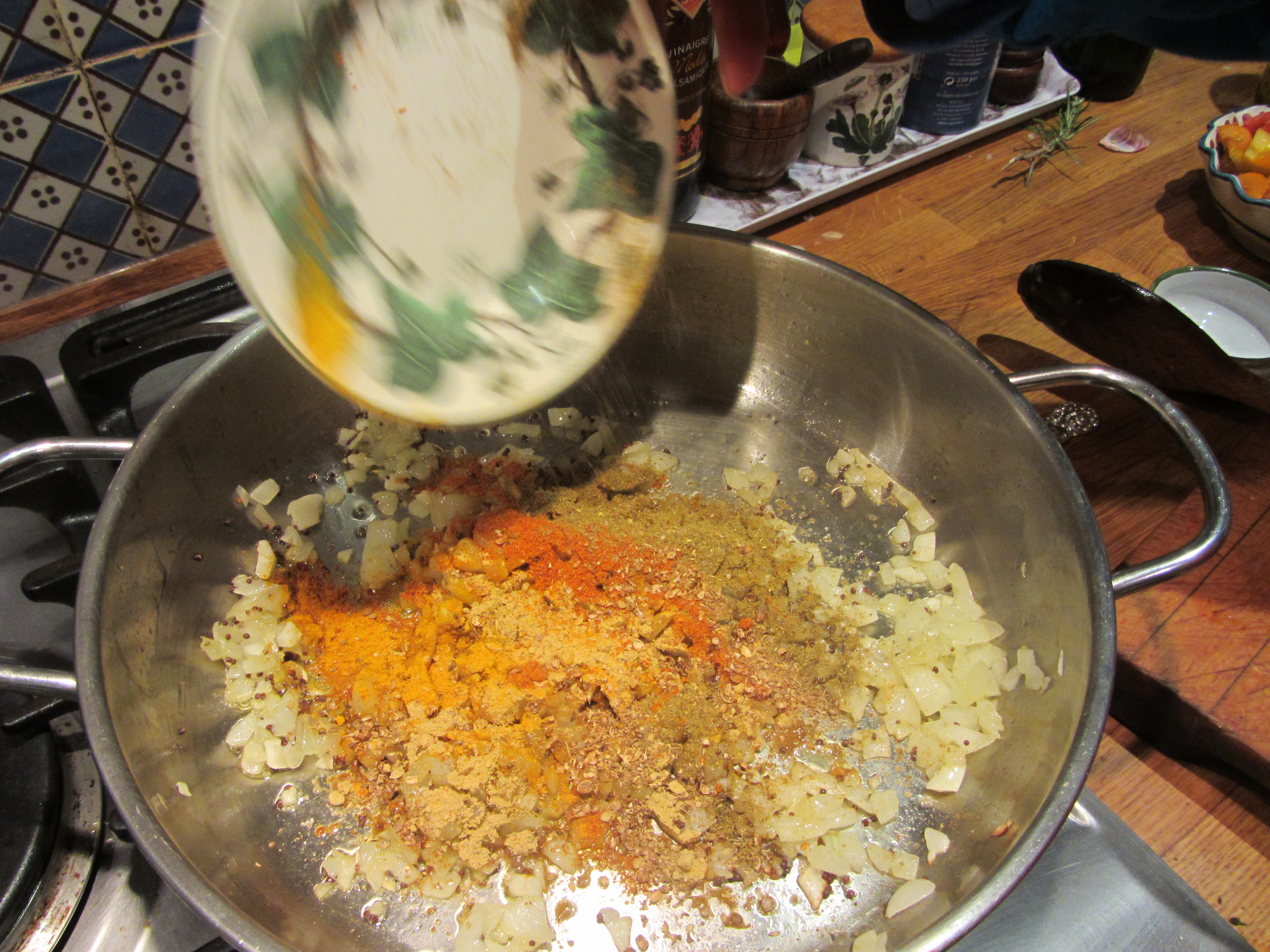
  • Add the rest of the spices and mix them in.

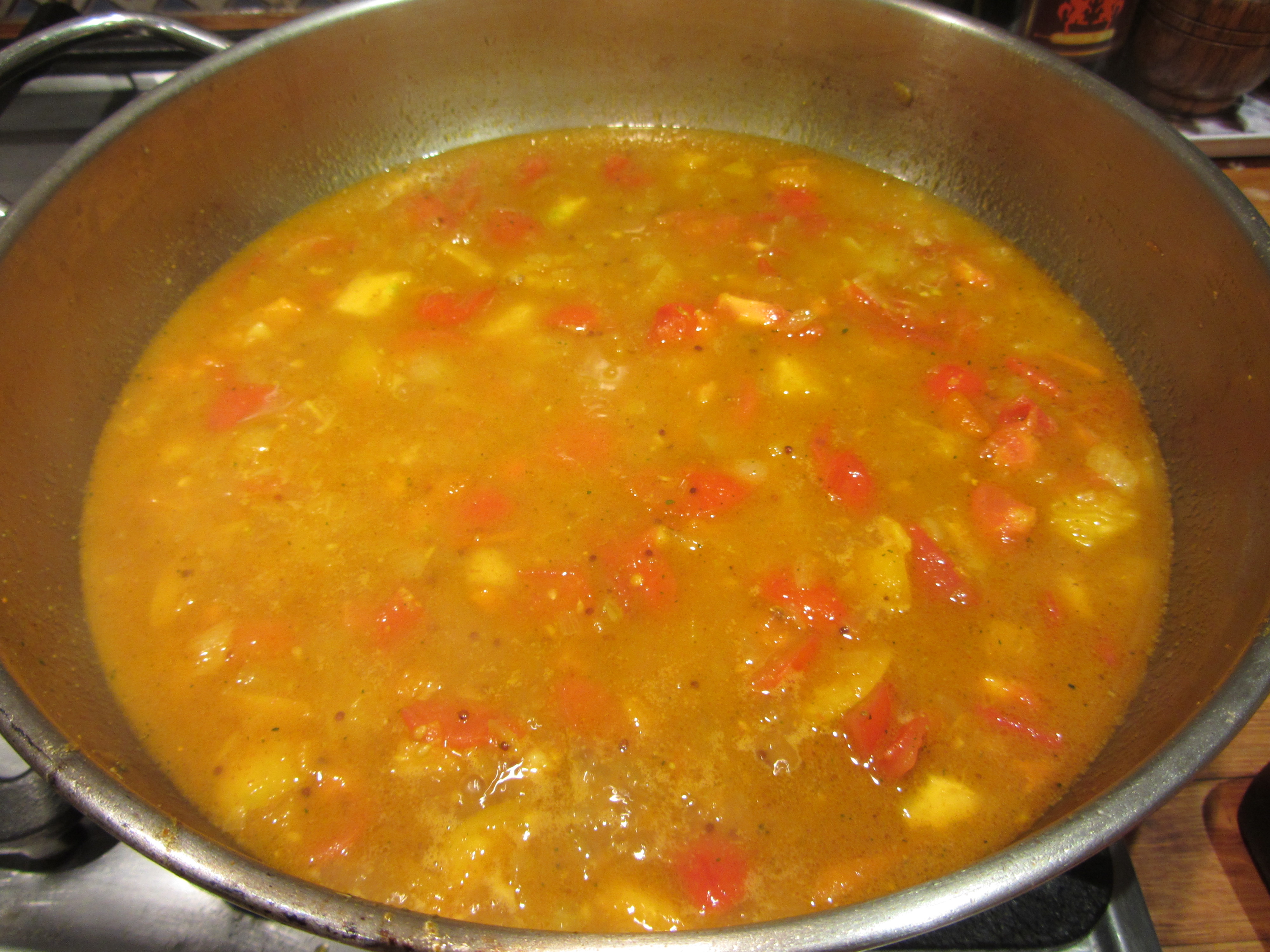
  • Add the tomatoes, stirring them into the spice mix and cook for five minutes to break them down a little and form a sauce.

  • Add half the stock and cook for a further 5 minutes–reducing it a little.

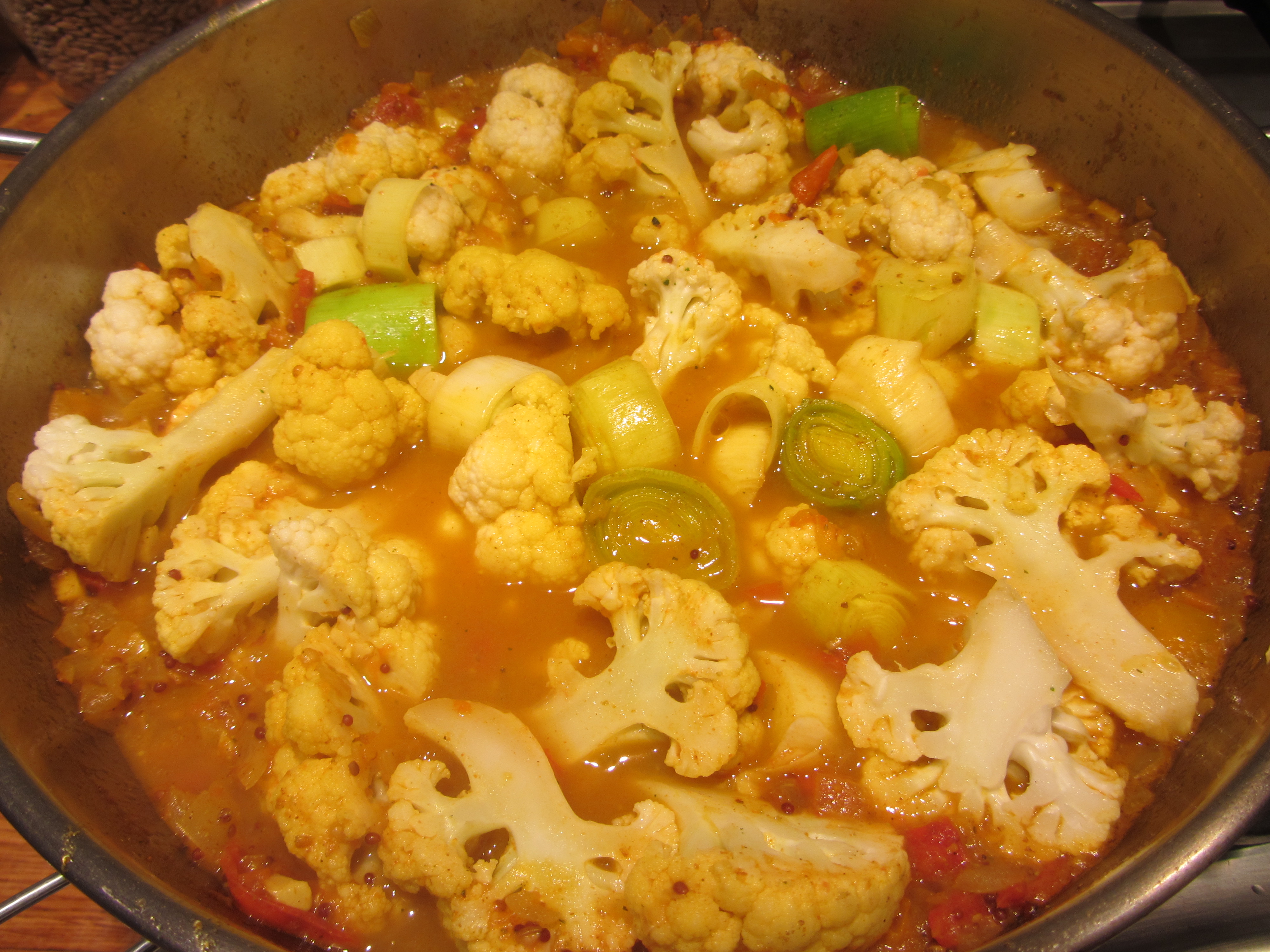
  • Mix in the sliced leeks and the broken up cauliflower–you may find you only need half the head–making sure the vegetables are immersed in the liquid.

  • Cover and cook on a low heat for 30 minutes–checking now and then in case it’s drying up–as it very nearly did for me!
  • (Add more stock as you need and cook on.)
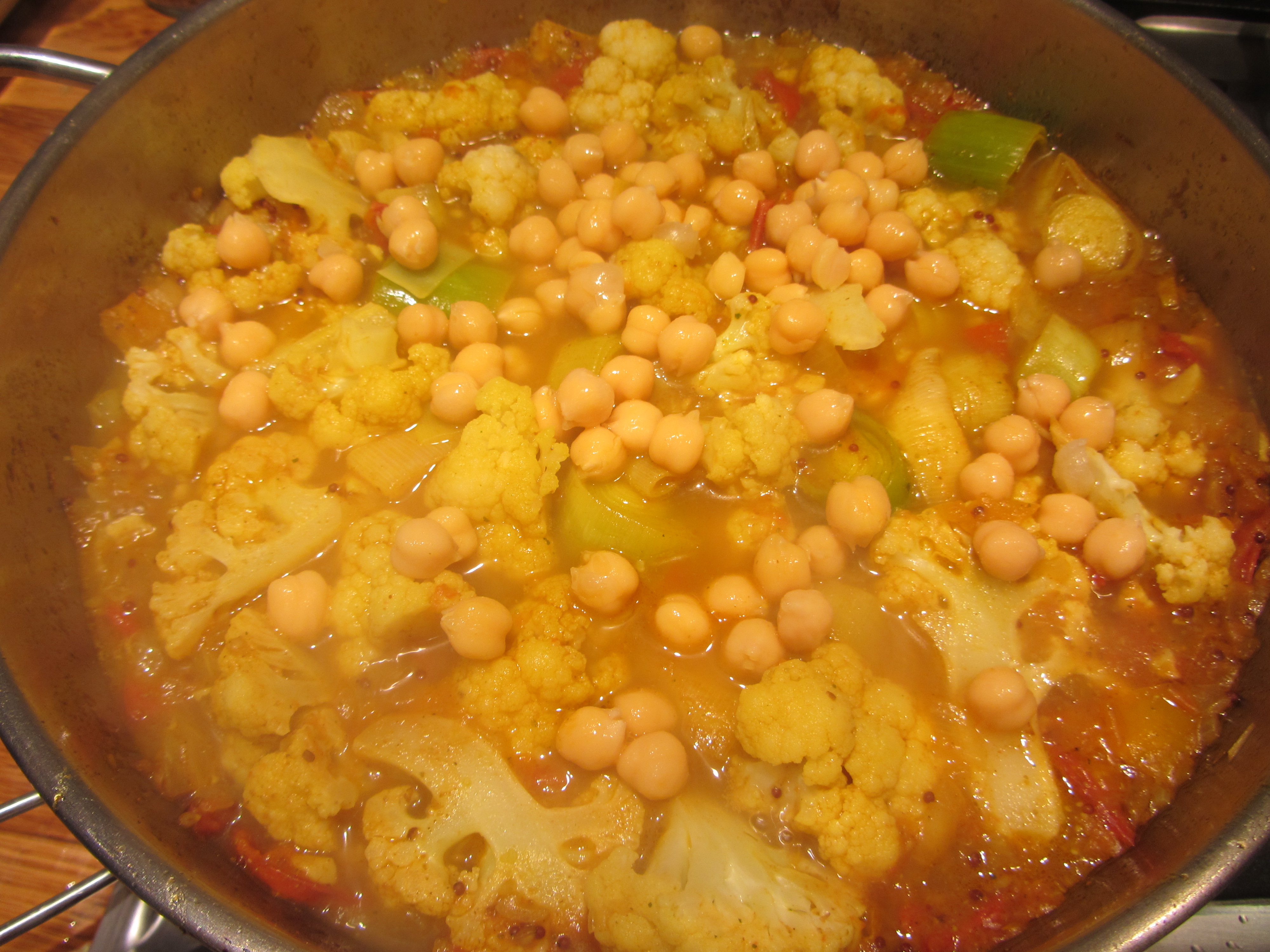
  • Add the chickpeas and cook a further five minutes.

  • When the vegetables are tender, turn off the heat and let it cool down.
  • Fold in the yogurt or coconut cream.
  • Gently reheat to serve over some basmati brown rice.
  • There was a thumbs-up from Meredith as she helped herself to a spoonful more (see above)!

Today I sing the praises of the French Health System.

Pre-intervention–ignorance is bliss!

I had an intervention late Tuesday afternoon at the remarkable Clinique Pasteur* in Toulouse and arrived back home, little the worse for wear, just a bit weary–early Wednesday evening.
I was a lucky fellow, though….
The recent cardio stress tests I underwent locally had shown that all was not as it should be–though the extent of what was wrong was not clear on their apparatus.
So Docteur Lefevre, my cardiologist in Castres, decided to send me to Toulouse, where they can insert a solution in the relevant arteries and scan for blockage or damage.

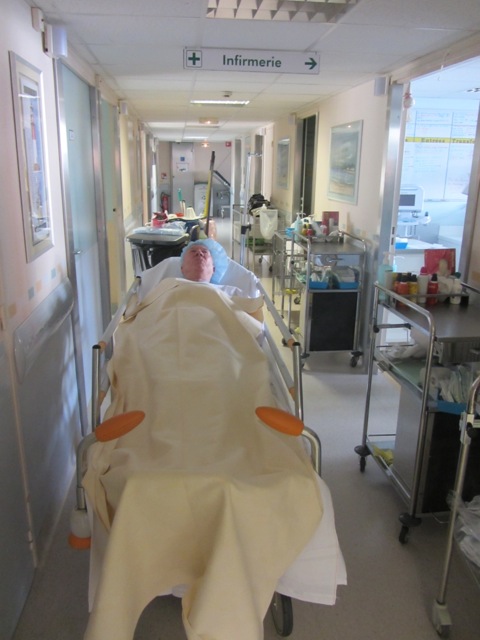
On my way to the theatre–but not the one I’m most familiar with!

This happened early Tuesday evening as I lay naked on a slab, like an oven ready chicken, my right hand tied firmly to the spot, in the cardio theatre of the clinic.
With automatic cameras constantly shifting position over me (like an old fashioned studio shoot for Poldark back in the seventies!) Dr. Assoun made his assessement of the possible problem(s).
After an age–so it seemed–a masked face, with two big eyes, appeared through the sanitary barriers and Dr. Assoun announced quietly that I had a partial blockage in the main artery and two more in subsidiaries and that as I was “presenting well” he was going to insert stents, there and then, to free the blockage and allow the blood to run freely.
Whoopee! I thought–at least I won’t have to go through the tedious indignity of being “prepared for the table” a second time.
Fully conscious, I was determined to remain calm and not move a muscle!
The clanking cameras were on the move again as he started the process of guiding the stents one by one up the artery from my right wrist with the aid of a catherter.
The mind boggles at how medical advances have made this possible.

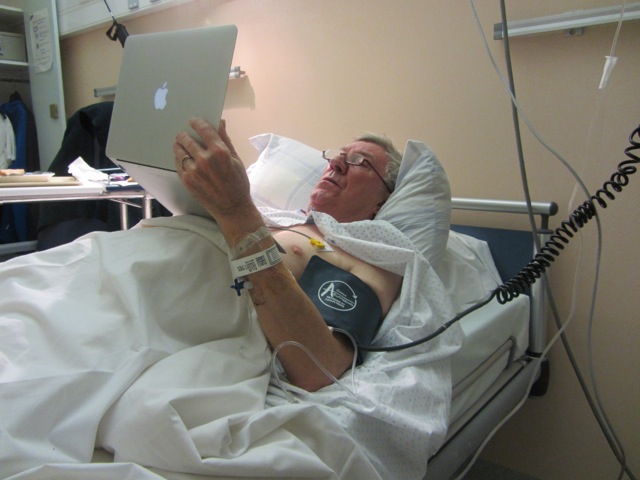
Well that wasn’t so bad!

Later that evening Docteur Assoun came to my room to reassure me that all had gone to plan.
(The dear fellow blushed when I said what a fantastic job he had done.)
It was only yesterday afternoon just before we left for home that I saw the video, recorded on the clanking cameras, playing out on the TV screen in Docteur Assoun’s office.
There’s my main artery in the “before” version.
A squiggly black tube snaking its way towards the heart. (The black is how the blood shows up.)
Dr. Assoun then points to the “problem”–a small section that was crimped and pale, with a thin black line running through it–a narrowing–a partial  blockage–a danger!
When/if that had closed up–heart attack!
The “after” pictures show a healthy black tube with no pale section.
Why then had I not felt something was wrong?
I had had none of the usual signs–breathlessness on walks or pain in the chest.
The original visit to Docteur Lefevre a month ago was for a ROUTINE check-up.
(Something I had been meaning to do but perhaps unconsciously putting off.)
I am a lucky fellow!
The problem for diabetics, Dr. Assoun says, is that the condition can mask vascular/arterial problems.
This I will investigate with Michel, my G.P. and Docteur Lefevre.
For now this experience has brought home to me the importance of making regular service visits to the heart doctor–just as I do for my eyes and my feet.

Now for a  full bloodied rendition …! (honouring too the staff of the Clinique Pasteur who do Le Systeme Medical Francais proud with their positive, friendly and reassuring manner.)  

Allons Enfants de la Patrie,

Le jour de la gloire est arrivé!                   

[Arise, children of the homeland 

The day of glory has arisen!]

* This quote from Louis Pasteur is the mission statement of the Clinique and is printed on the front of their brochure.

“On ne demande pas d’un malheureux: de quel pays ou de quelle religion es-tu?”

On lui dit: “Tu souffres, cela me suffit. Je te soulagerai.”

(We don’t ask an ill person what country they are from or what is their religion.

We say: “You are suffering, that’s all we need to know–we will ease that suffering.”)