Feeds:
Posts
Comments

Archive for the ‘Food’ Category

Lyn and Ernie's cherries

….neighbourlyness too!

Our cherry tree upped and suddenly died a month ago.

The poor thing had not been well for a couple of years–it was attacked by an interior blight, leaving an open wound.

It still came up with the goods, yielding a good harvest of ruby red cherries each year.

There were always more than we could deal with, though the birds helped out–there’s a limit to how many clafoutis* you can eat!

Remarkably it flowered this year in the early spring and we were hopeful for another year. It was not to be.

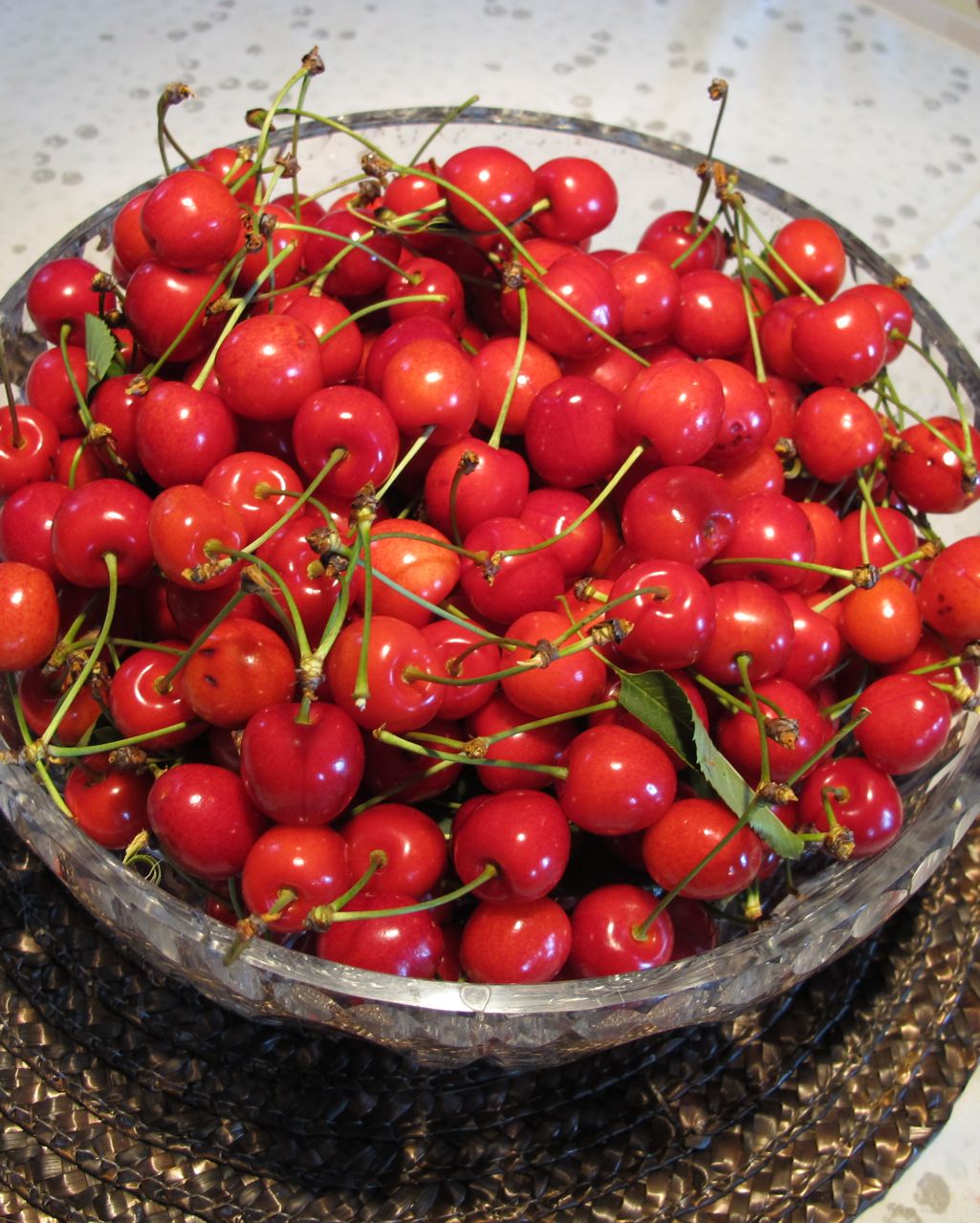
This morning our neighbour Lyn arrived with a large bag of cherries from their tree.

(*Clafoutis–a baked dessert of cherries arranged in a buttered dish and covered with a thick flan-like batter. Not ideal for diabetics!)

Read Full Post »

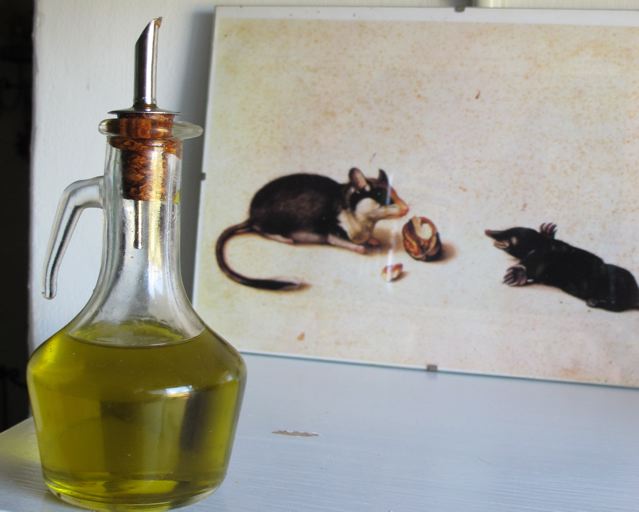
Bottled gold--aka--olive oil

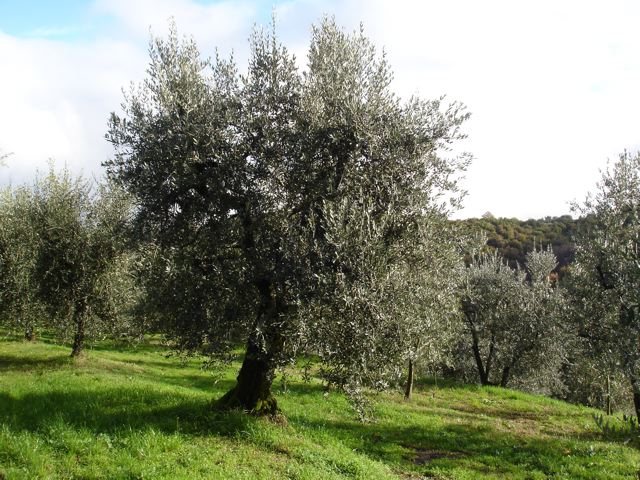
Our friends Helen and Keith just left–heading back to the Tuscan hills where they make world class green-gold nectar from the olives on their farm.

They have a thousand trees high above the valley of the Arno, south east of Florence.

Last November we went to “help” with the harvest.

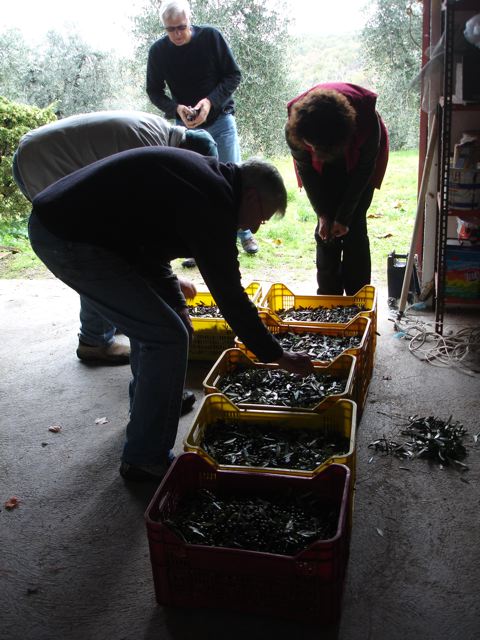
Our job was to sort the leaves and branches from the purple green fruit–

–while trying not to crush the newly fallen olives underfoot, and get in the way of the real workers.

These were five and it took them three weeks–(rain stopped play every other day when we were there, which

gave our backs a chance to recover.)

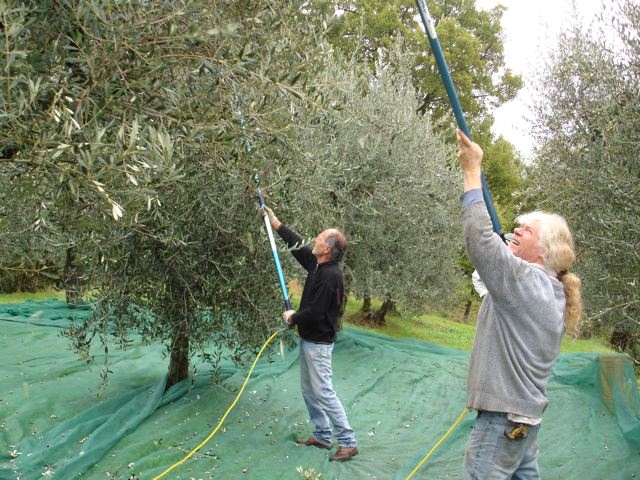
They brush the trees with long poles in downward strokes, teasing the olives onto the nets laid out below.


Fitted to the ends of the poles are what look like pairs of hands, which “clap” pneumatically.

“Well done, olives–but time to go to the press!”

Every two days Keith loads up the van and heads to the frantoio where the olives make the journey from fruit to oil.

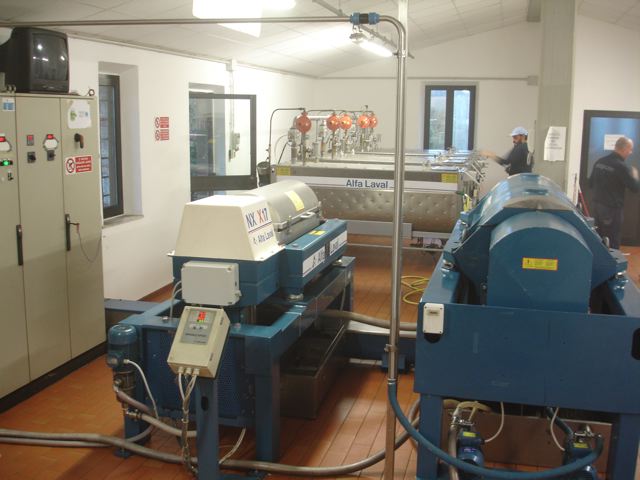
Stone pressing is a thing of the past; now the olives are processed by centrifugation–a horrible word but a cleaner method that produces better quality oil.

The unromantic centrifuge

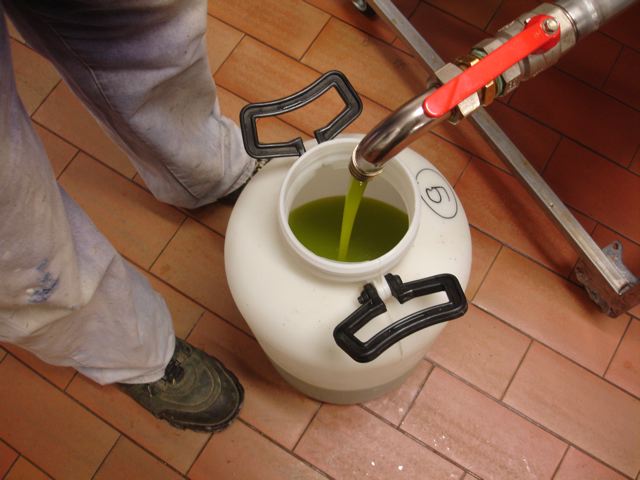
The liquid gold emerging.

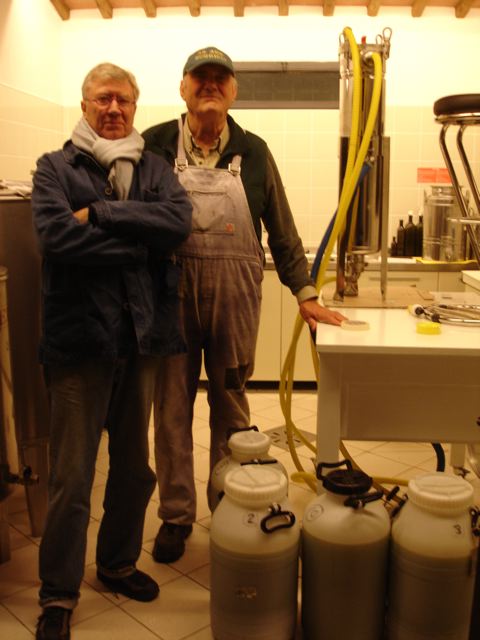
A proud moment–for a beginner!

Proud parvenu!

Keith says he gets about a litre of oil per tree.

Last November’s harvest was his all-time second best–that pleased us!

Read Full Post »

A simple soup for a jet-lagged cook to prepare for guests who are arriving tonight.

Soup is a good option when people may have had asparagus just once too often–towards the end of the season.

You can add the parmesan to the soup and heat it through before serving or–as suggested–leave to the guests to add to their bowls.

for 4

450gms/1lb asparagus–woody stalk ends and tips removed

1/2 a small onion–chopped

1 clove of garlic–chopped

1 tablespoon olive oil

1 oz butter

450ml/1 pint stock–I use organic vegetable stock cubes

225ml/1/2 pint asparagus “water”–that in which you have simmered the woody stalk ends and the tips

salt

100gms/4 oz prosciutto–diced and sautéed to crisp

100gms/4 oz  parmesan cheese–grated

  • Simmer the stalk ends in 225ml /1/2 pint of water, covered, for 20 minutes.
  • Discard the stalks and–
  • –using the same  water, simmer the tips, covered, until tender–about 5 minutes– keep the water and reserve the tips to serve with the soup.
  • Sweat the onion and the garlic gently, covered, in the oil and butter for 5 minutes.
  • Add the asparagus and a little salt (remembering that the stock cubes will have salt in them) and sweat, covered, for a further 5 minutes.
  • Add the drained asparagus water and the stock, cover and cook gently for 20 minutes.
  • Liquidise the soup to a smooth finish.
  • Serve–hot–with the tips, the cheese and the prosciutto on the side, for guests to add as they please.

Read Full Post »

lamb chopper

We had these the night before last. Meredith had a yen and Monsieur Fraisse, the butcher, had the chops–there were four of them waiting on display in Lautrec. I said they had our names on them–he looked puzzled!

(The photos are from a previous meal)

Serves 2

The timing for cooking depends on the thickness of the chops.

4 lamb chops

4 tbsp olive oil

Bay leaves/rosemary/thyme – any one or all three

A couple of cloves of garlic – finely sliced

2 lemons

salt and pepper

  • Leave the chops to bathe in the oil, herbs, garlic and the juice of one of the lemons for a couple of hours.
  • Heat a grill to hot.
  • Place the chops on it and leave for 3 minutes without moving.
  • Turn over and salt and pepper the uncooked side.
  • Cook for a further 3 minutes. For a pinkish finish, the chop should spring back after you press it gently with your finger.
  • Quarter the second lemon and offer the pieces for squeezing over the succulent chops

Read Full Post »

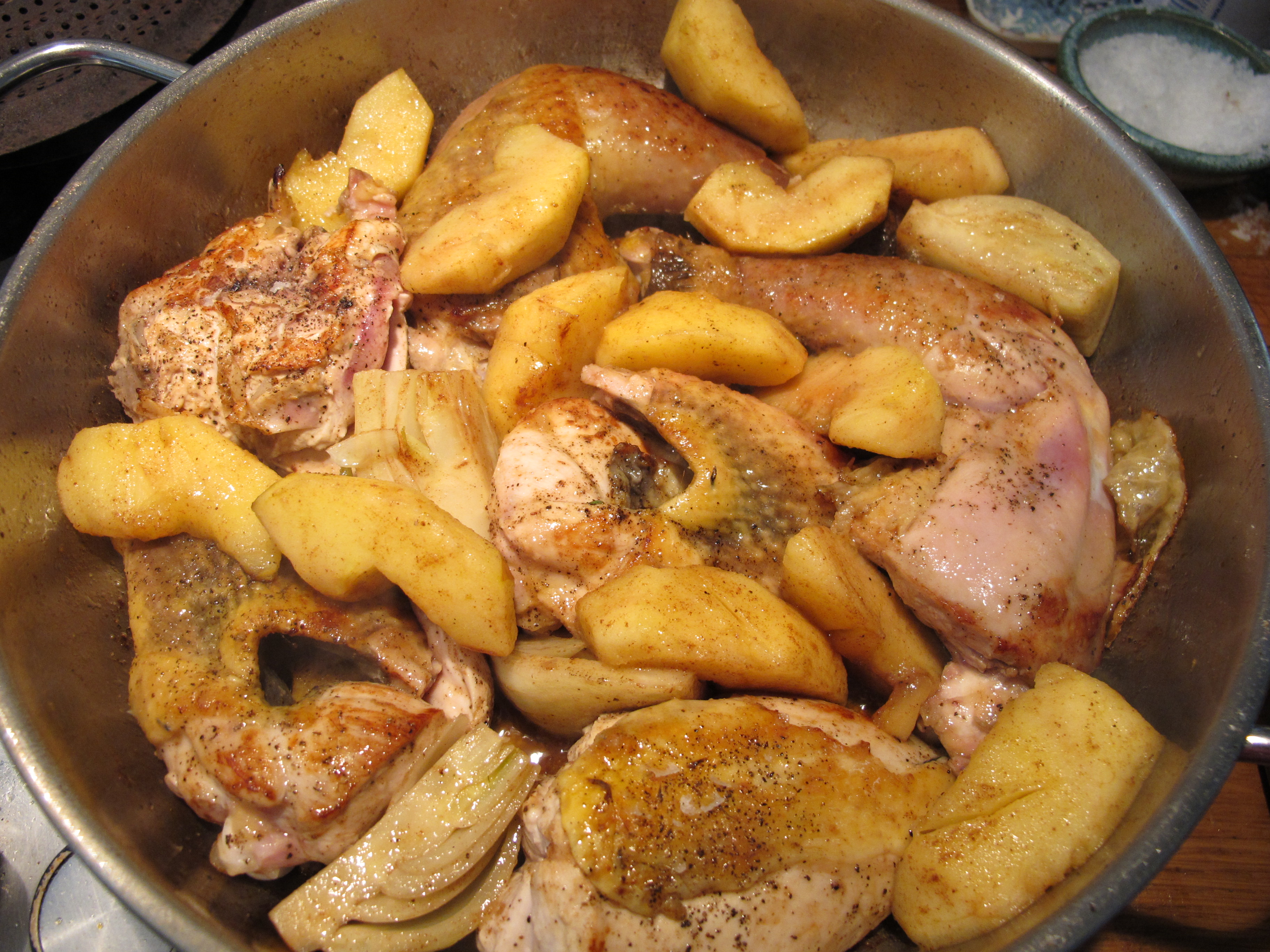
Meredith points out that this is more  North than South–more Normandy than Mediterranean and she’s right. It’s tasty though and it is a one pot dish to go with some brown basmati rice or quinoa. Adapted from  Jenny Baker’s handy Kitchen Suppers, this is a flavoursome way to cook an alternative to chicken.

for 4

1 guinea fowl–cut into six pieces ( larger pieces stay moist better)

2 large apples–(cox’s/fuji), peeled, cored and quartered

1 fennel bulb–cut into quarters or eighths if it is large

1oz/25gm butter

1tblsp olive oil

1/2 tsp cinnamon powder

salt & pepper

150ml/1/4 pint dry cider

2 tablespoons no-fat yogurt–whisked smooth (this is optional–it gives the sauce a little more depth)

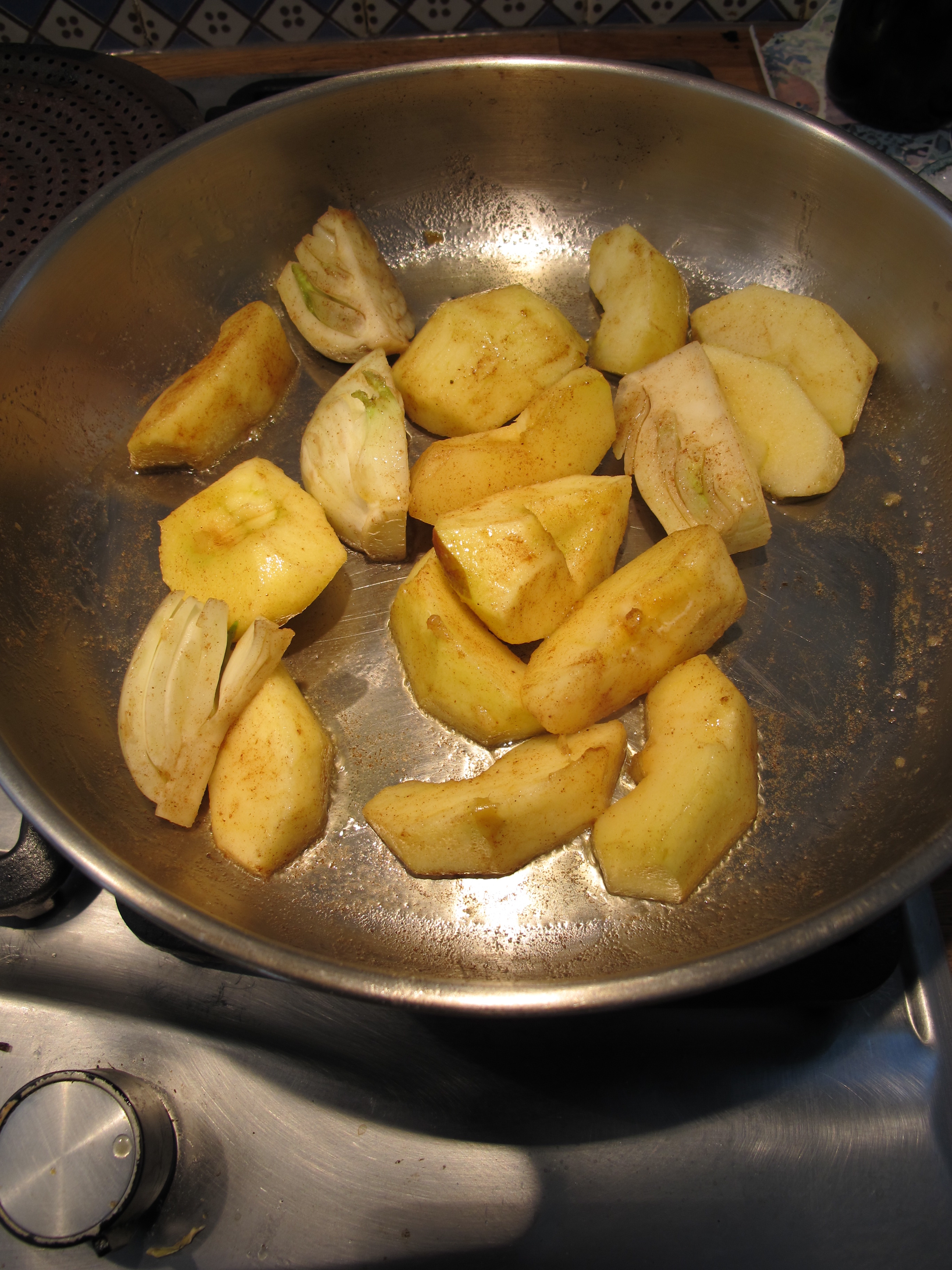
  • Fry the apple and fennel pieces, sprinkled with cinnamon, in half the butter and oil for 5 to 10 minutes
  •  and set aside in a bowl.
  • Boil the cider in the pan to reduce it to roughly 3 tablespoons and pour it over the apples.
  • Brown the guinea fowl pieces on a medium heat in the remaining butter and oil, seasoning them as you turn them over.
  • Return apples, fennel and sauce to the pan.
  • Cover the casserole and cook on a low heat for half an hour.
  • The juices of the guinea fowl should run clear when the thigh is pierced; if they are still pinkish, cook a little longer.
  • Remove the guinea fowl pieces, the apples and fennel from the casserole
  • Whisk the yogurt into the sauce.
  •  Carefully pour the sauce into a heated jug.
  •  Serve with brown basmati rice or quinoa and the apple and fennel pieces.

Read Full Post »

It’s a beautiful pre-summer day and there were some fresh looking sardines at Intermarché in Realmont.

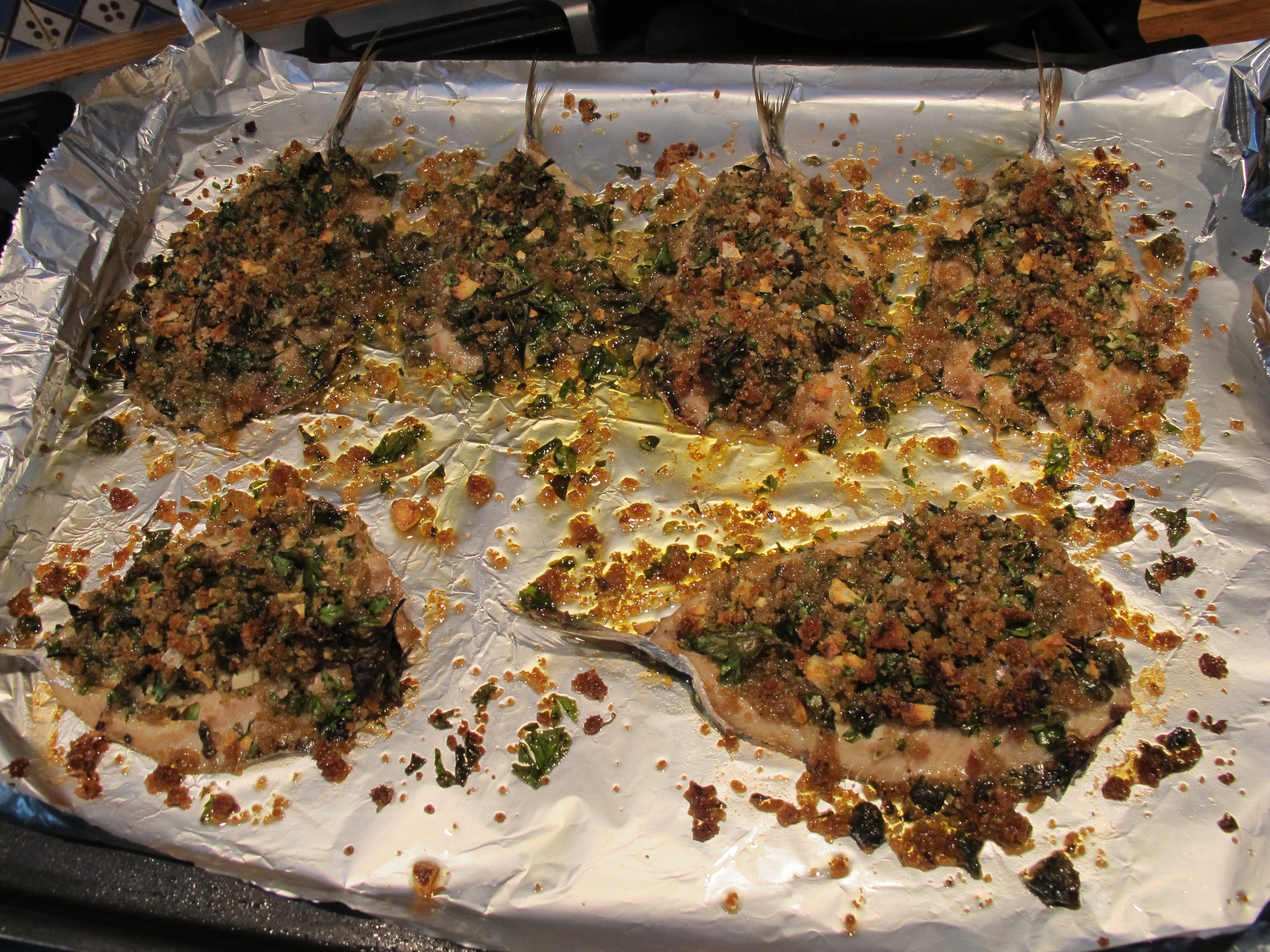
A bit early to be thinking “summer lunches” but we need cheering up, so I bought three each–juicy ones–and butterflied them.

We had them baked with a simple fennel salad which cuts the richness of the sardines.

Butterscotch is still not well–in fact poor mite–she’s worse and so thin.

Butterscotch aka little Mother

She wants to eat and to go on as usual and doesn’t understand why she can’t.

She came out into the garden this morning while we did the exercise routine with our friend Flo and was “with us”–as cats often like to be.

Going over to Flo she did one of those wonderful cat “rolls” they do for you– “it’s a greeting” Meredith says.

She managed it and even did a return roll–that lifted our spirits.

She is twelve now and some systems seem to be failing her.

“On s’attache”–“you grow fond”–of your pets and it’s hard.

Here’s the recipe to cheer you up after reading this!!

For 2

6 firm and fresh sardines–butterflied (see below)

100gms/4 oz wholewheat breadcrumbs

1 tablespoon parsley–chopped

2 garlic cloves–chopped fine

1 tablespoon of capers–chopped

a pinch of dried oregano

3 tablespoons olive oil

salt and pepper

Heat the oven at 180°C/350°F/Gas Mark 4 if using.

Butterfly filleting is a bit of a business but rewarding.You’ll need a
chopping board and plenty of kitchen paper. Have a pair of
scissors to hand and a plate to receive the fillets. Make sure

there are no scales left on the fish, then with the head in your

left hand and the body in your right, gently pull the head off
and as much of the innards as possible from the tail end. Use
the scissors to snip along the belly, then with your left thumb
coax out the rest of the innards. Place the fish, belly down, on
the board and press gently up and down the backbone with
both thumbs. Flatten the fish as much as you can with three
fingers of both hands. Lift and snip off the small fin, then snip
the backbone at the tail end and, with the left hand, draw it
carefully away from the body, taking care not to take too
much of the flesh with it. Voila! You have a butterfly fillet.

  • Wash and dry the fillets
  • Place a sheet of foil on a shallow baking tray
  • Using a brush if you have one it spread it with a tablespoon of oil.
  • Place the fillets on the tray.
  • In a bowl combine the breadcrumbs, parsley, garlic, capers, oregano and season with the salt and pepper.
  • Pour over a tablespoon of olive oil and mix it all together thoroughly.
  • Spoon the mixture evenly over the fillets.
  • Drizzle over the remaining olive oil adding a little extra if you feel it needs it.
  • before baking

  • Bake for 15 minutes.
  • and–after baking

I let them have a minute under a hot grill this morning to finish off.

Read Full Post »

I’d bought fish fillets today for lunch–but wasn’t sure what to do with them–spice ’em up?–have ’em in tomato sauce?–season ’em well, grill ’em and eat them with little gem lettuce and spring onions?

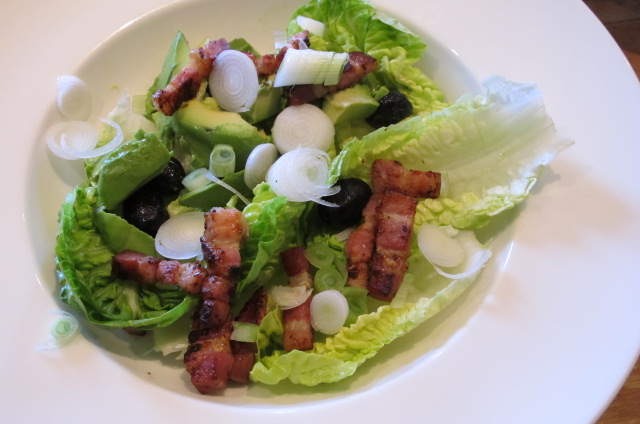
Meredith arrived with ripe avocadoes and a firm penchant for an avocado salad with spring onions, lettuce, lightly sautéed bacon bits, a few juicy black olives and a poached egg on top—-AND she was offering to make it–no contest, win-win, I thought!

poached egg and dressing to come!

and so it was.

I drizzled some of our best olive oil over the crisp looking salad with a sprinkling of salt; while Meredith added a spoonful or two of the everyday dressing (see below) to hers–and that was lunch.

Gives me time to think what to do tomorrow with the fillets resting in the fridge.

Everyday vinaigrette (from Delicious Dishes for Diabetics)

1 clove garlic–pulped with a pinch of salt

1 tblsp balsamic vinegar

1 tsp dijon mustard

6 tblsps olive oil

  •  mix the first three ingredients thoroughly
  • add the olive oil and whisk to a viscous delight

Read Full Post »

This recipe–inspired by one we ate at our friends and neighbours Julie and Richard–reminds me of meals round the kitchen table at home in the fifties. It’s simple and inexpensive and would possibly stretch to a second meal–important factors for my mother, with a husband and  three children to feed and limited means.

Nevertheless she could be an adventurous cook. The dishes she tasted on the trips to Europe we enjoyed as a family with Dad’s concessionary rail tickets (he worked for the LMS–London Midland and Scotland), encouraged her to experiment in a modest way. Nothing very exotic about this–except its little kick from the chillies and the olives and peppers added at a later stage; comfort food really but none the worse for that.

She would would have celebrated her ninety sixth birthday this Saturday–so this is for her too.

Ma with a Morris dancer!--on 'is way to the 'obby 'oss festival perhaps..

100gm/4 oz  bacon/pancetta–diced small

3 sticks or a heart of celery– chopped small

1 medium onion–chopped small

1 clove of garlic–chopped

3 tablespoons olive oil

1 free range chicken–cut into 8-10 pieces and washed and dried

1 sparse tablespoon flour–I use chickpea

125ml/4fl oz white wine

125ml/4fl oz of stock–I use organic vegetable stock cubes

8oz/250gms tinned tomatoes–chopped roughly

3/4 sprigs of rosemary

3 small fresh red chillies

1 red pepper–cut in thin strips

a handful of juicy black olives–stoned if you have the time

a handful of parsley–chopped

set the oven at 160c/320f

  • Heat a tablespoon of olive oil in a large frying pan and sauté  the onion, celery, bacon, and garlic gently for about 20 minutes allowing them to colour–concentrating the taste. Spoon the mixture into an oven-proof casserole.
  • Season the chicken pieces and heat another spoonful of oil in the frying pan.
  • Sauté them on a highish heat–turning them as they brown.
  • Transfer them to the casserole.
  • Tuck in the whole chillies and the rosemary sprigs and pour over the wine and the stock.
  • Sprinkle over the flour and add the wine and the stock.
  • Turn over the contents, cover the casserole and bring to a simmer on the stove.
  • Transfer it to the oven and cook for 30 minutes.
  • While this is in the oven, heat the third tablespoon of olive oil in the pan and gently sauté the strips of pepper.
  • Add these to the casserole with the olives after 30 minutes and cook, uncovered, for a further 15 minutes in the oven.
  • Sprinkle over the parsley and serve over brown basmati rice or quinoa

Read Full Post »

This is a variation on a recipe from The River Café Cookbook Easy.
.

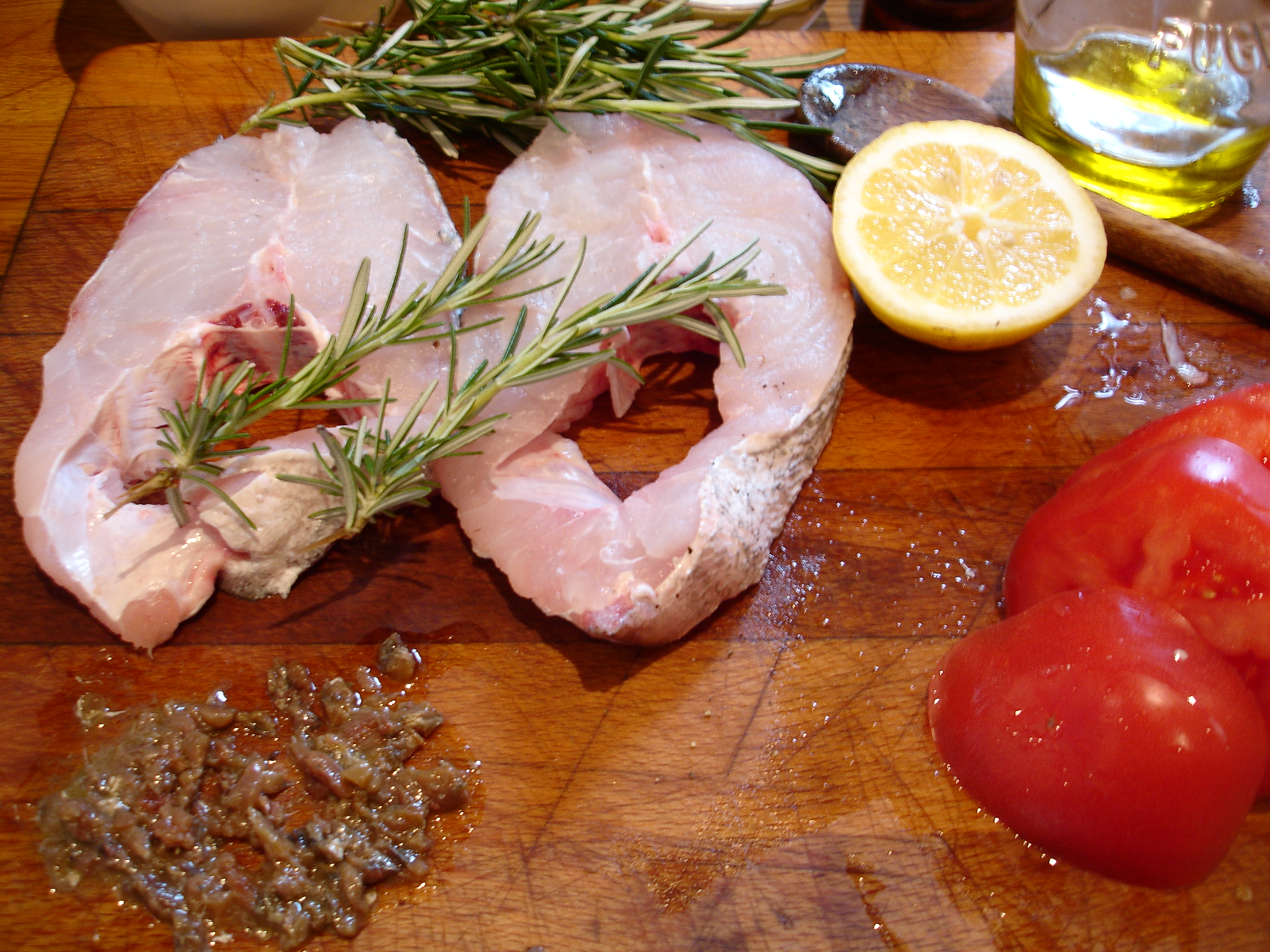
Pollock steaks at the ready!

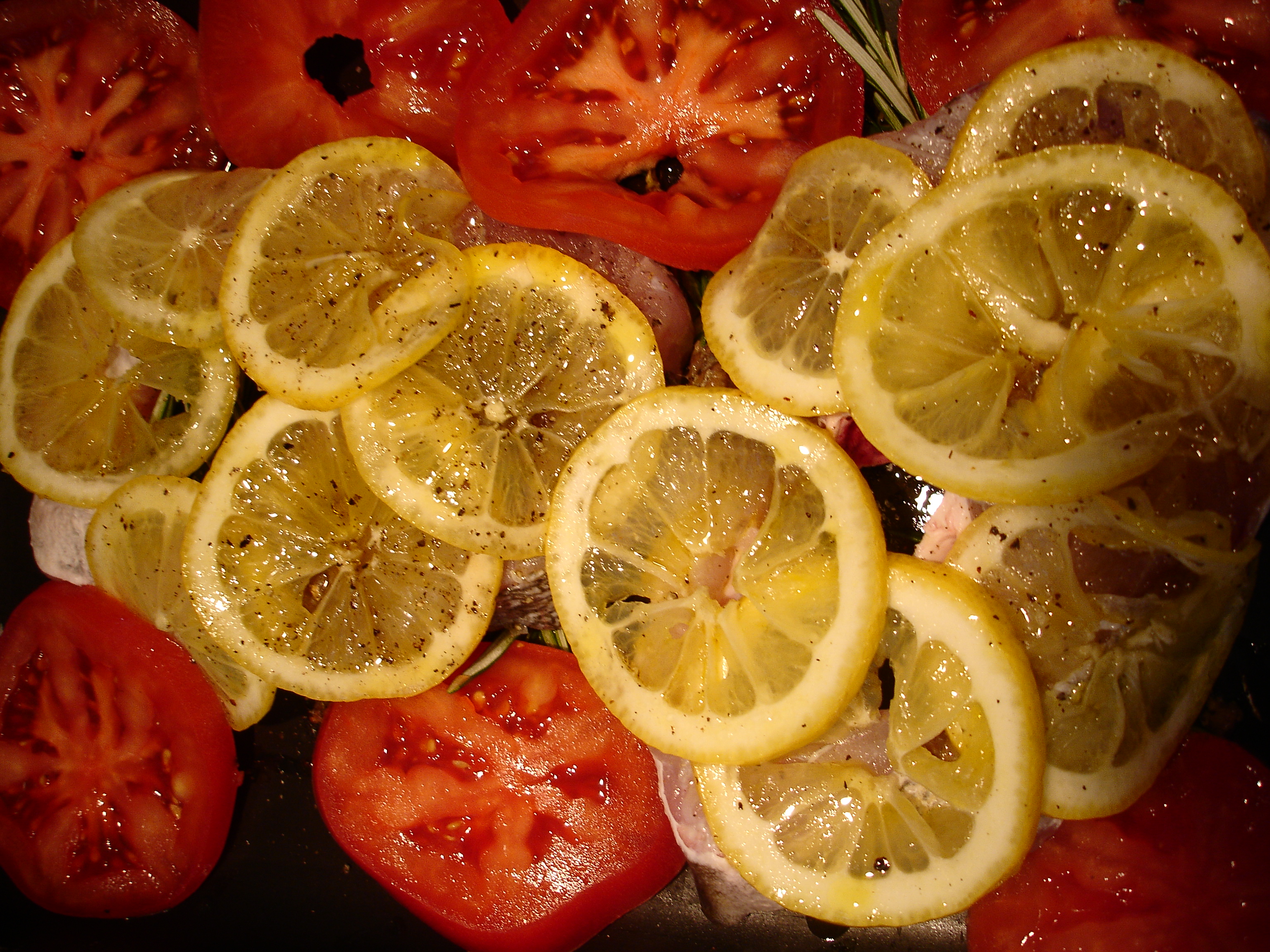
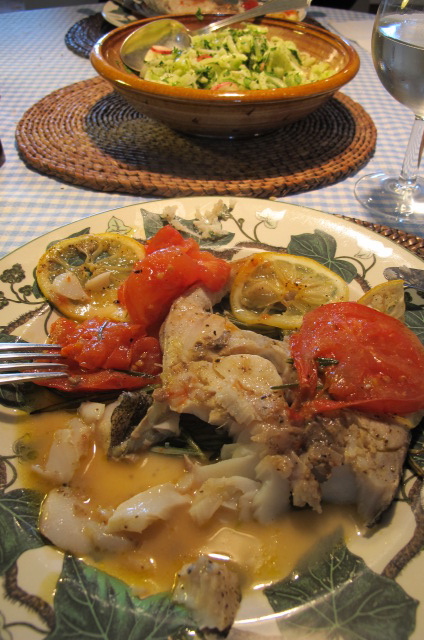
I’ve substituted pollock for monkfish (it’s on the list of sustainable fish) and added a sliced tomato which melds well with the oil, anchovy and lemon base. In the summer, sweet little cherry tomatoes halved add even more colour and taste.

Find the fish!

For 2

2 pollock steaks–rinsed and patted dry (you could try fillets–though the bone in the steaks adds flavour I think)

A good handful of rosemary sprigs

1 lemon–sliced thinly

2 anchovy fillets–mashed to a pulp

1 largish tomato–sliced thinly (you can use a couple of tinned tomatoes–roughly chopped)

3 tablespoons of olive oil

Salt and pepper

Heat the oven to 220c/420f

  • Put the lemon slices in a bowl and season them with salt and pepper–add a tablespoon of olive oil and mix carefully but thoroughly.
  • In a small, shallow oven tray heat about a tablespoon of olive oil.
  • Spread the rosemary over the base.
  • Place the fish steaks on top and season lightly.
  • Spread half the the anchovy pulp on each and cover them with the lemon slices.
  • Arrange the tomato slices round the outside and drizzle the remaining tablespoon of olive oil over them.
  • Roast in the middle of the oven for  about 10 minutes–the time depends on the thickness of the steaks.

(We had a fennel, radish and celery salad with these for lunch today–dressed with of a tablespoon of lemon juice blended with half a teaspoon of Dijon mustard, seasoned and then mixed with 3 tablespoons of olive oil. Big hit with Meredith.)

Read Full Post »

Caponata has as many versions as there are towns in Sicily, no doubt!

Everyone has their way of cooking this traditional peasant dish.

The English cook Jamie Oliver calls it Incredible Sicilian Aubergine Stew.

It’s a good description; this is adapted from his version.

(There are echoes of the French ratatouille, of course.)

This recipe is in my cookbook, Delicious Dishes for Diabetics,  which is published in August in the UK, November in the USA.

for 4

2 large aubergines (aka eggplant)–cut in chunks, salted and left to drain–overnight if you can, but an hour or two anyway (They soak up less oil this way, when cooked.) Dry them thoroughly with kitchen paper.

1 tsp dried oregano

s&p

1 small red onion–chopped fine

2 garlic cloves–sliced fine

1 small bunch parsley– stalks chopped separately very finely–(chop the leaves finely too to scatter over the finished dish)

2 tablespoons of capers–drained and squeezed free of liquid

A handful of green olives–stoned, if you’ve time

2/3 tablespoons herb vinegar (I use tarragon vinegar)–not more or it dominates

5 ripe tomatoes (tinned, if it’s not the season)–roughly chopped

Heat 2 tablespoons of olive oil in a large pan.

Add the aubergine chunks and oregano (do this in two lots if your pan isn’t big enough)

Cook on a highish heat to brown the chunks, turning them as they colour.

(This is the longest part of the cooking.)

When the aubergines are nicely coloured, add the onion, garlic and the parsley stalks.

Cook for a couple of minutes.

Add more olive oil if you feel it needs it.

Add the olives, capers, and herb vinegar.

When vinegar has evaporated, add the tomatoes.

Bring up to a simmer and cook on a gentle heat for 15 to 20 mins, covered for the first 10 minutes, until the aubergines are really melting.

Season with pepper and salt–bearing in mind that you salted the aubergines earlier.

Sprinkle over the parsley.

Serve with extra olive oil on hand.

Tonight we have a vegetarian among the six, so I am serving this as a vegetable with our slow roast shoulder of lamb and as the main dish for the vegetarian.

caponata–tastes better than it looks!

Read Full Post »
« Newer Posts - Older Posts »