Feeds:
Posts
Comments

Archive for the ‘Diabetes’ Category

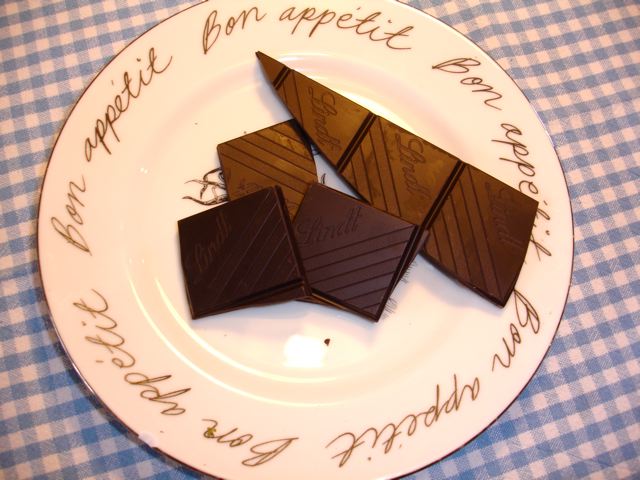
A postcard arrived from Kent today, (forwarded by my publisher, Constable & Robinson) wryly commenting on a promotion included in the package with the cookbook from Amazon:

I was most amused to receive with your book a mailing for chocolates! They look great, too–but hardly suitable for diabetics like us. Oh well!

My editor, Judith, pointed out, when I complained about this:

“I’m afraid the leaflet for chocolates is just one of a general mailing which probably goes out with every item despatched by Amazon, who couldn’t possibly be expected to check whether it’s relevant to the rest of the package (it may even be an automated process)”.

So a simple irony.

However two days ago I had spotted this article on a study, published online by the British Medical Journal, about the health benefits of chocolate!

Coincidence too!

It mentions that scientists at Cambridge University reviewed all the relevant evidence from seven studies involving 100,000 people.

“Five of the seven studies (carried out) found chocolate – eaten in a variety of forms, from sweet bars to chocolate biscuits and drinking cocoa – to be protective.”

Catherine Collins, a dietician at St George’s Healthcare NHS Trust, is quoted  in the piece saying:

“This paper doesn’t really say eat chocolate to improve heart health – nor do the authors conclude this either. What they seem to say is, those who don’t deny themselves a sweet treat of chocolate – white or brown – have better cardiovascular outcomes”.

Tom Sanders, Professor of Nutrition and Dietetics as well as Head of the Diabetes and Nutritional Sciences Division of the School of Medicine at King’s College London, warns that:

“The main problem with chocolate is overindulgence and calories [my emphasis]. A little bit of chocolate is OK but the mega-slabs offered cheaply are fuelling obesity in the overweight.”

In other words “moderation” is the key.

It occurred to me to post about this earlier–but I got distracted when Alice arrived with the honey!

Then I remembered an earlier post  entitled “Just no Desserts”, back in February, when I was starting out–in which I “fess up” to an indulgence:

…A  good meal needs a grace note at the end, a contrast to the savory tastes of the main dish–something to complement the coffee or tea to come. Well, all is not lost…!

My solution, surprisingly, is CHOCOLATE–with a high proportion of cacao.

One square eaten with a small cup of coffee (and maybe a dried fig) is the perfect  finish to a meal for me.

I have got used to 90% cacao chocolate (but we worked our way up from 70%).

The idea is catching on. 

This site positively encourages the consumption of high cacao chocolate:

10 Reasons to Eat High Cocoa Content Chocolate —[always with the mantra “in moderation”]

21.30/9.30pm—Excuse me–as I reach for my second square of the day!


Read Full Post »

This guy weighed in at 750gms/1lb 10oz!

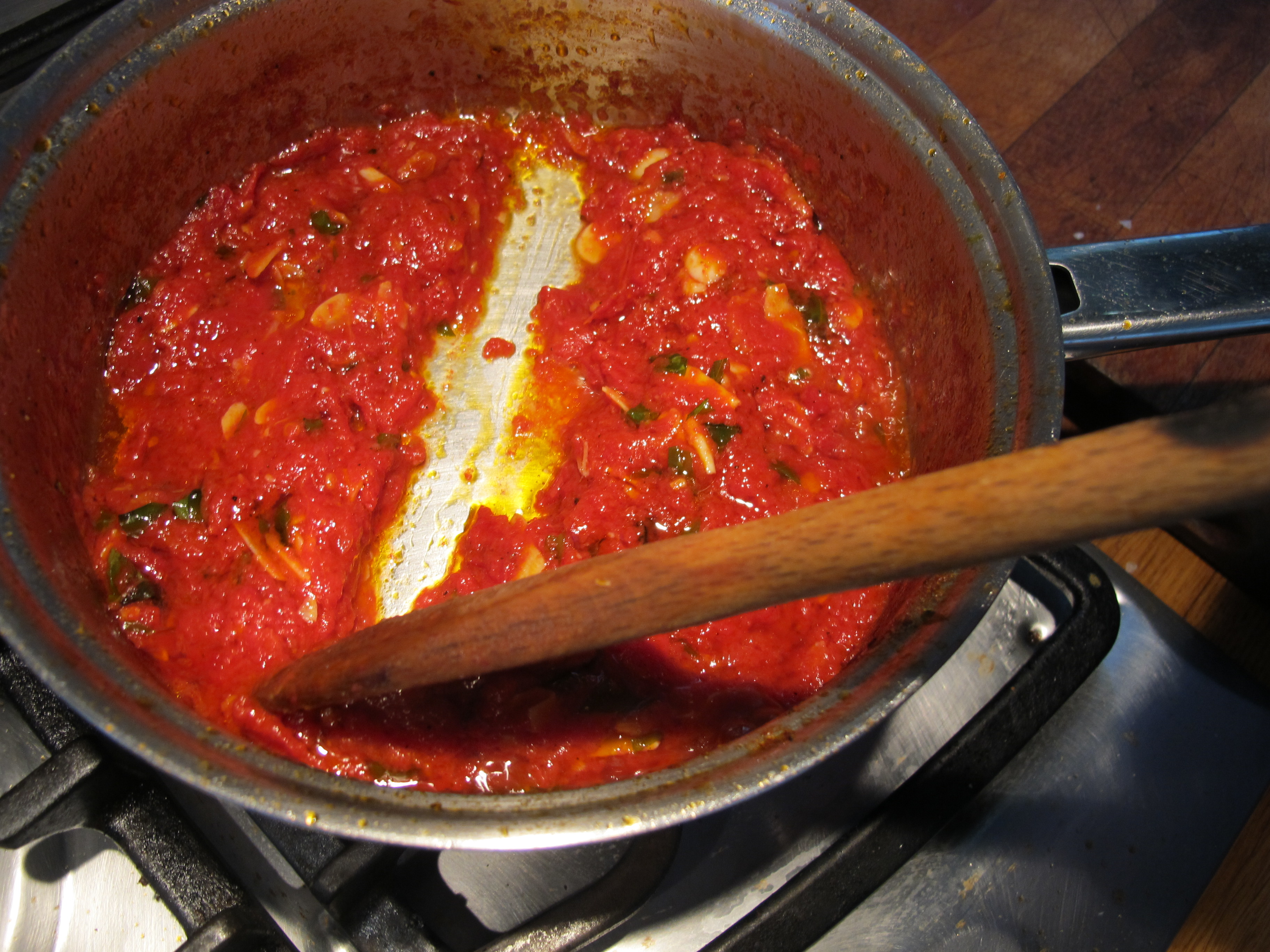
I’m making a simple fresh tomato sauce with garlic and basil

First we go to La Fête du Pain, [the Bread Festival] in Lautrec. I find a convenient parking place–not easy.

Kids welcome you with an entrance sticker and a little sack of Lautrec flour (the village has one of the oldest working windmills in the South West!)…

and wish you “Bonne Journée ” with eager faces.

Charming.

A percussion group climb up to the village in front of us.

Baritone and crisp side drums keep a good rhythm, making it sound like Sienna on Palio day.

We reach the square and “BANG”–du monde–too many people–too much noise!

I’m not grumpy–just not geared up for the crowd.

I leave Meredith there with her camera and drive home (losing the parking place).

Starting the sauce

I start the sauce* and feel better.

Meredith rings and says there’s a stall grilling lamb and sausages.

I rally and make my way back to Lautrec (retrieving the parking place).

After waiting in line for an age, we sit down with two plates of meat in the upper village square.

I buy two small glasses of red–1 euro each–and break the pledge a day early. We feel no guilt.

It’s definitely a “Jour de Fête“–happy crowds “milling” [jour du pain!] and “teeming” .

Plenty for the kids to do too–like learning to make pizza….

Eager students...

and “Guessing the Grain”…

"Older children"--guessing which grain is which!

and I’ve cheered up too!

Felicitations, LAUTREC!!

Simple fresh Tomato sauce

1 1/2lb/700gms–ripe tomatoes

4 tablespoons olive oil

3/4 fat cloves of garlic–sliced finely

a few basil leaves–chopped

s&p

Heat the oil in a pan.

Sauté the garlic gently in the oil until it starts to colour.

Chop the tomatoes–scooping out and leaving aside much of the seedy liquid.

Add them to the pan.

Cook them over a medium heat, stirring from time to time, for about 20 minutes.

When you can divide the red sea with a spoon and little pock marks appear in the sauce is done.

Season and serve as you like.

Read Full Post »

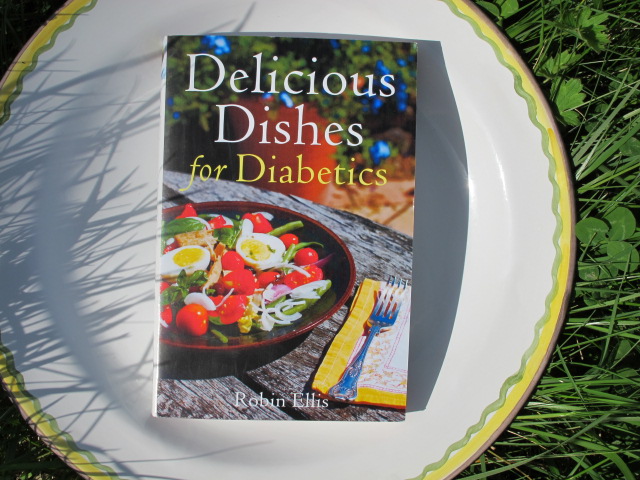
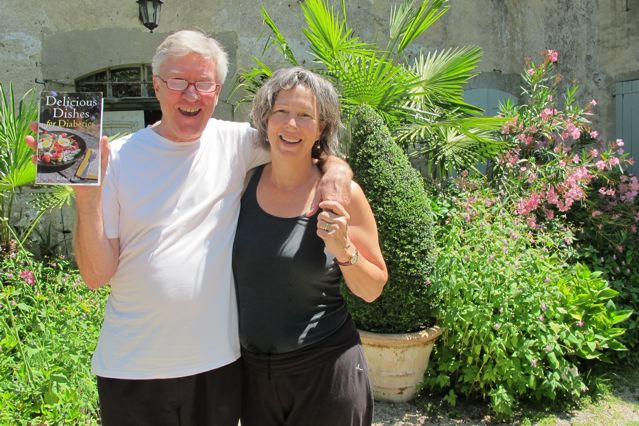
It’s publication day–August 4th–for Delicious Dishes for Diabetics!

In February 2010, Meredith and I popped into publishers Constable and Robinson in London for a meeting.

Eighteen months later and the book goes on sale–TODAY!

What can I SAY but–

HOORAY!

And a big THANK YOU to Francia, Paula, Judith, Hope, Paige, Alex,Holly, of course Meredith, and all those who have helped it along the WAY.

Thanks too to all for supporting the blog–which I’m enjoying writing hugely.

Read Full Post »

Testing times…

Our friend Simon–who also has Type 2– emailed:

Why do you not do the early morning thing? (to start with my doc had me finger-pricking morning and evening)… I jot down the count every day, so could easily work out an average. Is that what one should do?
It’s a good question.
I have the hemoglobin A1C test every three months and occasionally the fasting plasma glucose test (FPG). 
Different doctors have different approaches for different patients–makes sense.

Jottings on the test I take every three months:-
The Hemoglobin A1C test measures your average blood sugar in the previous three months to see if it has stayed within a target range.[5-7]

This is an explanation of how the test works and for me is helpful in understanding why it is effective:-

“Your red blood cells contain hemoglobin, which allows cells to transport oxygen to tissues. As a cell ages, the hemoglobin becomes increasingly “glycated”, meaning that more glucose molecules stick to it.

Higher glucose levels in the blood mean higher glycated hemoglobin, which translates into a greater HbA1c reading.”

The level of glycated hemoglobin provides information on the average level of glucose in the body over a 90 to 120 day period.

[You don’t need to fast or prepare for an HbA1c test.]

The Food and Drug Administration (FDA) in the US, has cleared the first over-the-counter test that measures glycated hemoglobin in people with diabetes to help monitor how well they are managing their disease (glycemic control).

Whichever test you take, it’s clear that the most important thing is TO TEST.
Enrico Cagliero, MD, a diabetes researcher and assistant professor of medicine at Harvard Medical School, has recently noted that:
 “If you look at the nationwide data [in the US], it’s sobering–a lot of diabetic patients are missing essential checks.
People with diabetes should know that complications aren’t inevitable.
Unfortunately, we still see a lot of complications, and a lot of those could have been prevented. It’s absolutely essential to get into this preventive mode as soon as possible. It definitely pays down the road.”


Read Full Post »

I am just about to spread the “no-added-sugar fruit paste” on my regular 2 pieces of 100% rye this morning with a bone-handled dessert knife, when I’m minded to look more closely at the blade.

This prompts a memory surge going back 60 years.

The knife has seen better days; the bone handle is split, but still feels comfortable in the hand.

The name of the shop it came from–Bravingtons–is clearly visible on the small broad blade–which spreads the fruit paste nicely.

I always liked the knives from this set–probably a wedding present for my parents from Ma’s uncle Harry, back in April 1938.

They were in everyday use when I was a boy–perhaps helping to establish my pernickity taste in cutlery. My enjoyment of food is always affected by what I am eating it with.

Great Uncle Harry Weakford, worked at the Bravingtons in Knightsbridge, selling silver to the posh.

He was my mother’s father’s brother.

This branch–just down from Harrods–had the familiar black-marbled, silver-lettered banner front–favoured by pre-war jewellery shops.

The Bravingtons shops proudly displayed the Royal Coat of Arms–as the official supplier of cutlery to the Queen.

Uncle Harry was a jovial cove who lived with his wife in Norbury, south London, where my mother was born & raised.

Once we visited for tea in the Fifties. I remember watching Leslie Howard in The Scarlet Pimpernel (1934) on their telly. We didn’t have a set at home, and I recall being swept up in the brave romance of it all. (Little did I know that years later I’d be rescuing French aristos in the guise of Ross Poldark!)

Uncle Harry, like my mother, had diabetes–and these thoughts about the knife make me want to know more about him and

remind me how “family inheritance” can be a mixed blessing!

Read Full Post »

…though not so lazy for our neighbouring farmer, Pierre.

I watch him from the bench in the tomato patch, performing an elegant tractor ballet routine in the shorn field opposite  as he collects and neatly stacks the rectangular hay bales.

First the “chug, chug, chug,” of a tractor as he arrives on stage, pulling an empty trailer behind.

He drives off in the “work-a-day” car he’s left overnight in the half-finished field.

Five minutes later (a long wait for the audience!) he’s back with a second tractor, fitted with a fork lift.

The ballet commences.

Forward approach with the fork lift tractor and spear the bale–forward again to the next.

Carefully lower the speared bale on top and back off–forward again lowering the fork, spear the second bale, lift the two and turn towards the tractor with the trailer, lower the two speared bales and retreat.

Turn and repeat until the trailer is full.

Change tractors and drive off slowly with the spoils on board and the sun still shining with the prospect of well fed cows in the barn this winter.

The “audience” leaves with a couple of ripe tomatoes in the empty breakfast bowl.

The tractor with the fork lift is left wondering what it did wrong as it stands alone “on stage”.

Act two for the watcher–checking out the leftovers in the fridge for a lazy Monday lunch.

Plenty to choose from and two ripe tomatoes….

Act threelazy Monday siesta!

STOP PRESS!

LATE CHANGE OF SCRIPT!

An advance copy of the COOKBOOK arrived in the post today!

🙂

Grand Finale!?

Read Full Post »

Our friend Romaine arrives today and I know she likes houmous.

the ingredients

I do too–and this version has a bit of a kick to it.

ready to whizz...

There’s garlic, cumin and cayenne in this mix–with olive oil and lemon juice to loosen it.

whizzed and ready to spread!

8 oz cooked chickpeas–I prefer the kind in jars

3 cloves of garlic–peeled and chopped

1/2 teaspoon salt

3 tablespoons tahini

1 teaspoon cumin powder

1/2 teaspoon cayenne

2 tablespoons olive oil

juice of 2 lemons

Put all the ingredients except the lemon in a food mixer and whizz smooth.

Add half the lemon juice  and taste.

Add the rest of the lemon juice as you like.

I just made it with all the juice of 2 lemons and it tastes right –it depends on the size and juiciness of the lemons.

Read Full Post »

Cyril's peril!

It’s always a pleasure to see Cyril.

Every three months I settle back into the chair at his office and relax. I’m not a great fan of my feet and don’t spend much time looking at them. On the other hand–so to speak –I don’t knock them, they’ve always stood me in good stead. I’ve run miles on them and now I walk miles, so thanks feet for standing by me!

In return I try to care for them–visiting Cyril every three months for example.

Looking at feet is a job for Cyril and he is good at it. He’s friendly–patient too as we talk about football–le foot–me in my fractured French and knowing much less than he does about “the beautiful game”.

This morning I notice he has a list of do’s and don’ts for diabetics on the wall of the waiting area. Easy to read and not too long.

  • Don’t walk barefoot indoors or out.
  • Wash your feet daily–but don’t soak them.
  • Dry them well afterwards especially between the toes.
  • Rub them regularly with moisturizing cream.
  • Take care buying shoes–and, interestingly–buy them towards the end of the day. (I guess because they’ll be a bit weary by then and you’ll be better able to judge if the pair you’re trying really fit you.)
Here’s a helpful site for more info…

I ask Cyril if he’d mind being mentioned in my post today.

He says non–as long as he comes out of it well!  He then offers to take before and after photos. “Uh, non merci.”  My feet are camera-shy and might react badly…

Cyril's peril 2

At 26 euros it is 45 minutes well spent. I leave with a spring in my feet and a date in my diary, three months hence.

My mother with Type 1 diabetes went regularly to the chiropodist; now I understand how important it was for her.

Read Full Post »

The GI news [http://ginews.blogspot.com/] arrived yesterday as always on the first of the month.

Diabetes and its treatment through lifestyle and diet, is central to its raison d’etre.

Based in a research unit at the University of Sydney, Australia, it’s an excellent monthly newsletter–easy to sign up for and free.

It includes discussion of current attitudes to health issues related to diet, with the concept of GI–Glycemic Index as a base.

Articles this month include: “Reduced fat intake may reduce diabetes risk without weight loss” and Prof Jennie Brand-Miller, a leading authority on GI, oninsulin sensitivity”.

There ‘s a recipe feature included each month.

Dr Alan Barclay [http://ginews.blogspot.com/2011/07/gi-symbol-news-with-dr-alan-barclay.html], the resident medical expert, expresses his view of the recent study by a research team at Newcastle University in the UK, which was the subject of one of my recent posts [https://robinellisdotnet.wordpress.com/wp-admin/post.php?post=2365&action=edit].

The study had been headlined in the press as a “Cure for Diabetes” through a restricted diet. Dr. Barclay is sceptical.

I enjoy receiving this newsletter  and usually find something helpful in it.

Read Full Post »

This morning our friend, Jane, alerted me to the early lead article in today’s Guardian newspaper: [http://www.guardian.co.uk/society/2011/jun/24/low-calorie-diet-hope-cure-diabetes].

It reports on the eye-catching (though hardly mouthwatering) results of a study carried out recently at Newcastle University, England,  involving type 2 diabetics.

The participants were put on “an extreme diet” for two months.

*The title of the post refers to a documentary [http://topdocumentaryfilms.com/simply-raw-reversing-diabetes-in-30-days/] which another friend, Denise in London, sent me some months ago. I was reminded of it while reading The Guardian this morning.

In this 90-minute film (free to watch online) the six participants in the program are:

challenged to give up meat, dairy, sugar, alcohol, nicotine, caffeine, soda, junk food, fast food, processed food, packaged food, and even cooked food for 30 days. The film chronicles moments of “struggle, support and hope as what is revealed, with startling clarity, is that diet can reverse disease and change lives”.

The immediate results were stunning in some cases, like the study reported in The Guardian. The effect on participants was moving.

Nevertheless the challenge overwhelmed a couple of the participants and one dropped out. I remember being left feeling a little uneasy about the claims made in the film about the possibility of curing  diabetes.

Reversing the condition was clearly achieved by following the regimes shown.

However Professor Roy Taylor, the leader of the Newcastle experiment  acknowledges that, “we need to examine further why some people are more susceptible to developing diabetes than others”.

Meanwhile–in the everyday world, food philosopher Michael Pollen’s simple mantra is worth keeping in mind.

Eat food. Not too much. Mainly plants.

Read Full Post »

« Newer Posts - Older Posts »