The oak and and the walnut–two tardy trees–seem to be competing to be the last to go green.
The false acacia is as usual first out in the front garden. We have three of them and their unbashful arrival is a reassuring sign that winter is on its way out. Now the Judas tree is in full bloom and the young Liquid Amber is leafing out.
Curtains up on “Easter Parade”–but these two rivals are still in the dressing room!
They remind me of a scene in a film a few years back when two veteran actors are seated in front of a roaring fire on dueling armchairs. Each attracts attention by gradually lowering his voice, until both are whispering and we, the audience, almost feel the heat as we lean forward to catch what they are saying!
In the cow pasture behind our house the oak is winning this particular duel. They always edge out the walnuts in the greening game. They keep their old and brown leaves well into the new year, last to admit that things must change.
The people round here call the wood of the oak [le chene]—un bois noble.
It’s a hard wood–which lasts. There’s a lot of it in this old house–beams bent with the weight of the tiles they support.
oak beams bendingThey’ve held for almost three hundred years–a noble wood indeed!
Perhaps it has earned the right to takes its time–and be the last to green.


Posted in other sides to this life | Tagged Oak tree, walnut tree | Leave a Comment »

I like coincidence–the apparent chance conjunction of happenings.
Last night in a long comment on my blog, Jill Littrel, a clinical psychologist at Georgia State University in Atlanta, talks about the root causes of Type Two Diabetes.
This morning’s Guardian newspaper carries an article (http://www.guardian.co.uk/society/2011/apr/13/obesity-surgery-treats-diabetes) about a study of people who have undergone surgery to remove excess body fat–and how this procedure has stopped the developement of the diabetes in a significant number of cases.
I am still digesting Jill’s piece (so to speak!), which is rich and written in scientific terms that are sometimes a little opaque for the layperson…. (I am going to ask Jill for a less technical version.)
The overall message is clear though: Type-two-ers have an insulin ‘delivery system’ that is faulty–the ‘goods’ (i.e. insulin) are not arriving where they are needed to do the job–to distribute glucose efficiently to the body’s cell system.
In the comment, she explains that there are a number of explanations.
One reason is the effect of excess fat round people’s middles on the body’s ability to self-regulate.
Which takes us to the article in The Guardian….
The theme here is getting rid of fat that is contributing to the breakdown of a healthy ‘delivery’ system.
According to the study, surgery to remove or reduce the fat can be effective in re-tuning the body and stopping the disease in its tracks.
It is easy to see the attraction of such a move.
Problem solved with a quick slice of the knife!
But doesn’t this conveniently sidestep the vexed question of why the person is overweight in the first place? Isn’t this just another ‘band-aid’ solution. How long will it take before the person puts it all back on?
For Jill Littrel the answer is to make lifestyle adjustments–e.g. more exercise, meditation to reduce stress, the use of certain spices like turmeric in cooking (I could add–a little cinnamon sprinkled on your breakfast choice!) which over time will help the body to readjust.
A British Department of Health spokesperson quoted in The Guardian agrees, saying in response to the findings of the study that surgery should only be considered as a last resort once weight-loss schemes and exercise programmes have been tried.
————————————————————————————
Presidents John Adams and Thomas Jefferson both died on the same day (as far as we know, NOT of diabetes!)– July 4th, 1826 – 50 years to the day after they both signed of the Declaration of Independence.
I like coincidences!
Posted in Diabetes | Tagged coincidences, diabetes, surgery & diabetes | 1 Comment »

the ingredients--I forgot the sunflower seeds!
This is based on an early Nigel Slater recipe, and is a good standby for lunch–we had it yesterday, when I found very little else in the fridge!
2 small/125 gm pots of non-fat yogurt
1 dessertspoon (for Americans, a scant tablespoon) Dijon mustard
1 dessertspoon white wine vinegar–if you can find it with tarragon all the better
2 dessertspoons olive oil
A small bunch of chives–chopped
A dessertspoonful of spring onions (scallions)–chopped
salt and pepper
190 gm tin of tuna–drained and broken up with a fork–(the amount of tuna is a matter of choice; I reckon about 75 gms each)
1 tablespoon dry roasted sunflower seeds (gently brown the seeds in a small frying pan [with no fat] )
There are two ways of making the non-fat yogurt thicker and more interesting.
If you have a square of muslin, place it in a sieve and the sieve over a bowl.

yogurt in muslin
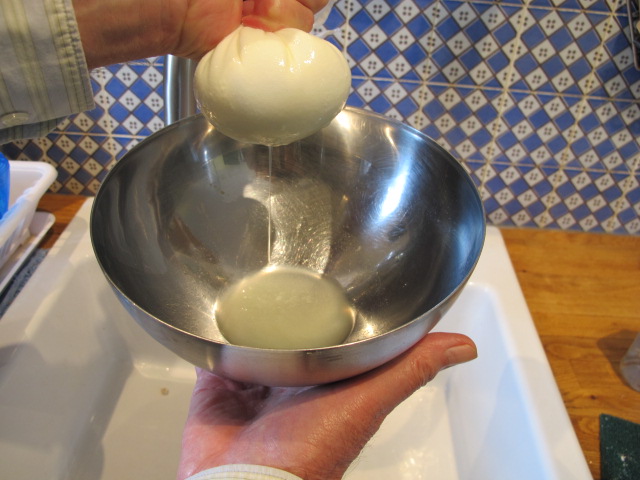
Carefully empty the yogurt into it and–as in the photo–
yogurt ball
gather the material together and gently squeeze out about 60 ml of whey (liquid).
If there’s no muslin to hand, empty the yogurt straight into the sieve placed over a bowl and let the whey slowly drip out for about an hour. (Leave the bowl in the fridge while this happens.)
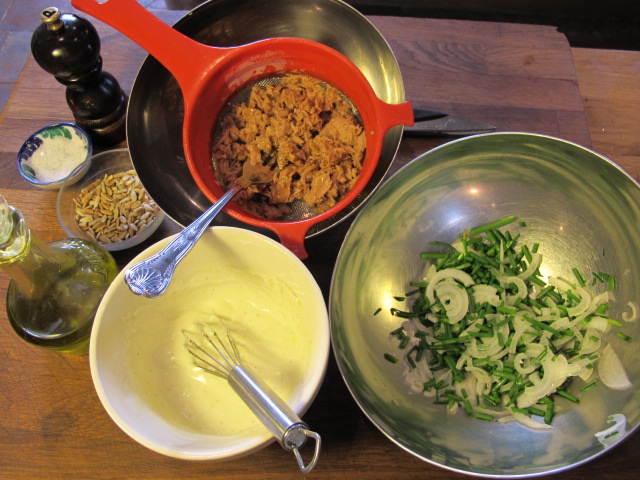
Meanwhile, empty the tuna into a bowl, add the herbs, the spring onion, the sunflower seeds, a scant tablespoon of olive oil and a twist or two of pepper.
Mix these ingredients together.
When you are ready, discard the whey and put the thickened yogurt into the empty bowl.
Whisk in the mustard, combining it well with the yogurt.
Add a scant tablespoon of olive oil and the vinegar–blending well.
Season lightly with salt and pepper.
ready to mix...
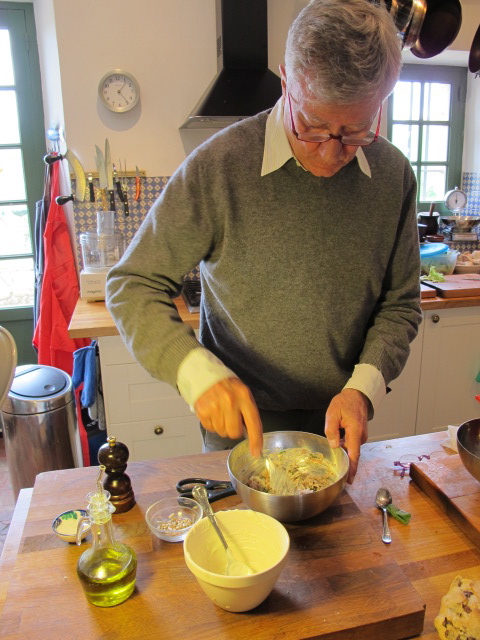
Fold the tuna mix into the yogurt and combine well.
Adjust the seasoning, before
...and mixing.
serving with a green salad.

tuna salad --ready to serve!
Posted in Food, Recipes | Tagged Nigel Slater, quick lunch, Tuna, tuna and yogurt, tuna salad | 1 Comment »
Much of the language of the Internet is still a mystery to me.
But with a little research I discover that a Rich Site Summary (RSS) helps you Easily Stay Informed of the Regularly Changing Content of a web site or blog!
You can save time by not having to visit a particular site each day–anything new gets delivered by email automatically.
Signing up for this service is simple (famous last words!).
On the top right corner of my home page, it says Feeds: Posts and Comments.
To receive the posts, click on the word Posts; this takes you to another page where you click on the button saying “subscribe now” and hey presto!
If you also click on “Comments”, you will receive the remarks of other readers and occasionally my responses. (Same process, you will be taken to another page where you click on a button saying “Subscribe Now”.)
It’s a learning curve–or a nightmare, depending on your mood!
I hope I haven’t ruined your day!
Posted in other sides to this life | Tagged Rich Site Summary, RSS, what do they mean? | 5 Comments »
…OK, but what flowers can I eat?
Johnny-jump-ups, nasturtiums and I discover today…

…the flowers from our Judas tree (Redbud to Americans).

…which is almost in full bloom here–a magnificent sight.
Legend has it that this was the tree from which Judas Iscariot hung himself. The flowers turned from white to blood-red in shame. It’s more likely that the name derives from the hills of Judaea in the Middle East, where this tree is commonplace.
The flowers have a lemony citric taste–I’m going to try them in a salad tomorrow!
Posted in Food, other sides to this life | Tagged edible flowers, Judas Tree, legend of the Judas Tree, Redbud | 3 Comments »

…which is published on August 4th in the UK and in November in the USA, comes this recipe adapted from one of my favourite British cooks, Nigel Slater.
Salmon Fishcakes with dill and grainy mustard
I have always loved fishcakes. Must be the comfort food factor kicking in–but they usually contain 50 per cent potato, not ideal for those like me with type 2 diabetes. This recipe solves the problem by leaving the potato out! The dill and the grain mustard make the fishcakes special. They sometimes serve as a tasty starter, but today with our friend Mitch–who is working here to fix the drainage system at the back of the house–we’ll have them as a light lunch as it’s hot.
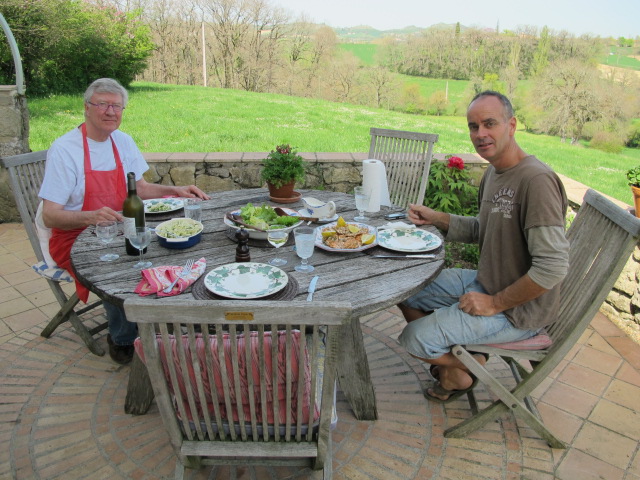
If you keep them small and cook them quickly, they’ll be crisp and brown on the outside and still succulent inside.
Yogurt sauce
2 x 125 ml pots low-fat yogurt
1 tsp grain mustard
good pinch of chopped dill (from the main bunch)
salt
The Fishcakes
400 g/1 lb salmon fillet – skinless and checked for bones
white of an egg
1 tbsp chickpea flour – of course, plain flour works as well
1 tsp grain mustard
juice of ½ lemon
bunch of dill – chopped fine
salt and pepper
2 tbsp olive oil
1. Mix all the yogurt sauce ingredients and refrigerate until you
are ready to eat.
2. Cut up the salmon fillets in roughly equal-size pieces. Put
these in a mixer and pulse three or four times. Avoid working
them too much and producing slush at the end. You could
just cut them up in small pieces if this suits better.
3. Put the salmon in a bowl. Turn in the egg white and the flour,
and then the mustard, lemon juice, and the dill. Season with
salt and pepper.
4. It’s a good idea to taste the mix for seasoning at this point –
the dill and the salt should come through.
5. Refrigerate if not using immediately.
6. Heat the oil in a frying pan and using a dessertspoon scoop
out a dollop and make a ball. Put this in the pan and flatten
it gently.

Cook on a medium-high flame, crisping and
browning the outside while making sure the interior cooks
through.
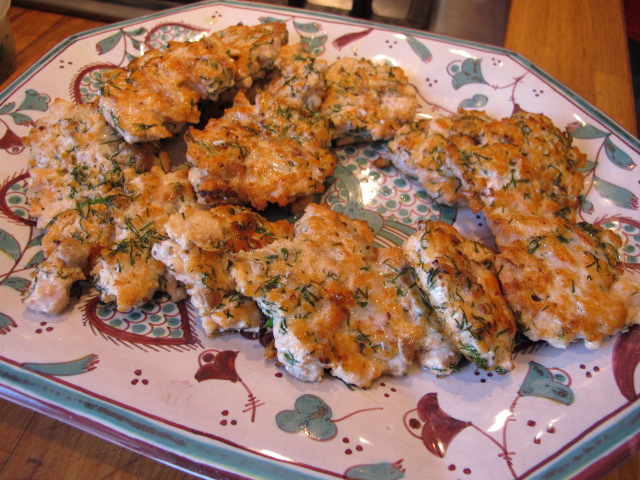
7. Serve with a fennel salad and the mustardy yogurt
dipping sauce on the side.
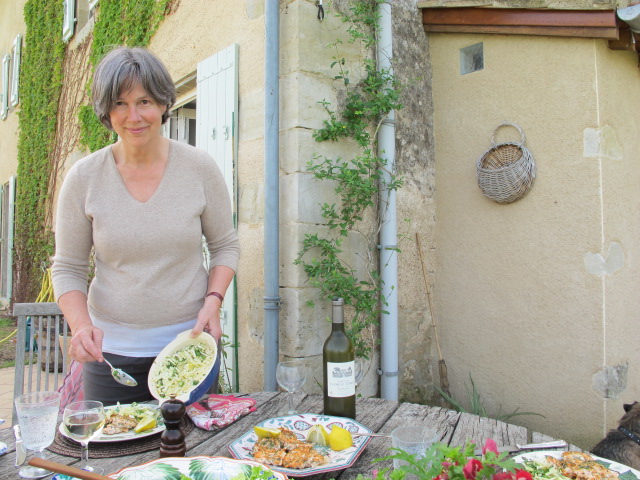
Meredith goes for the fennel salad!
Posted in Food, Recipes | Tagged Delicious Dishes for Diabetics, Nigel Slater, no potato fishcakes, salmon fishcakes, yogurt sauce | 2 Comments »
Alice–our mushroom supplier earlier this week–just arrived with a hive full of displaced bees.
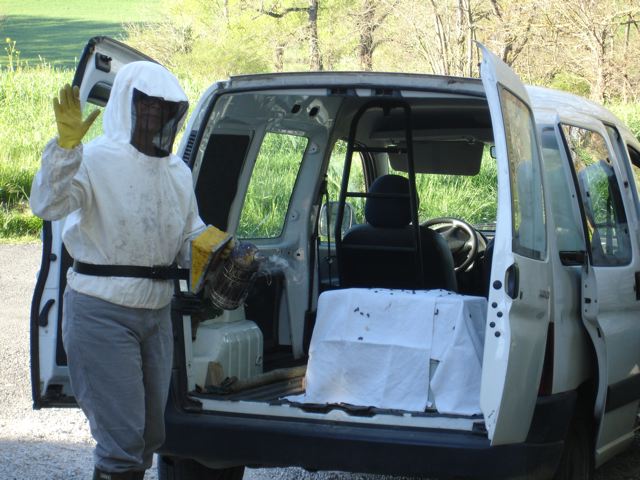
“You’d better stay inside, Robin, you might get stung!”
I’m happy to continue having my honey-free breakfast in the kitchen.
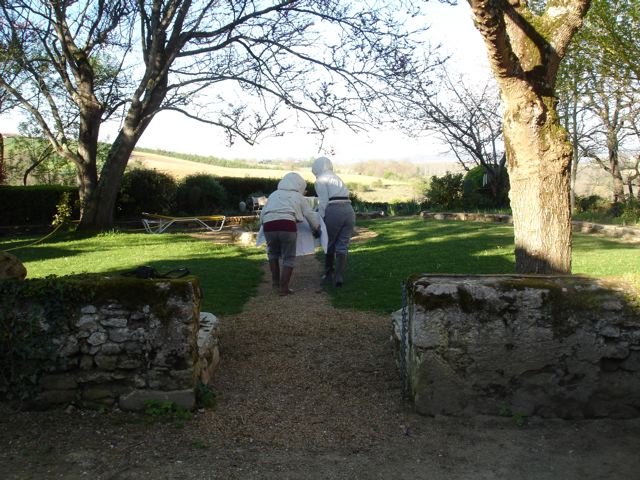
Meredith and Alice, dressed in their protective costumes, carry the box of bees out to the end of the garden.
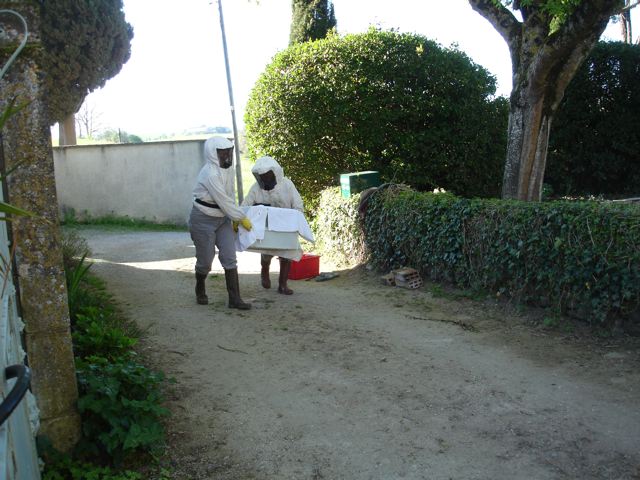
!
Alice seems confident they will be happy in their new setting–and she is often right about things.
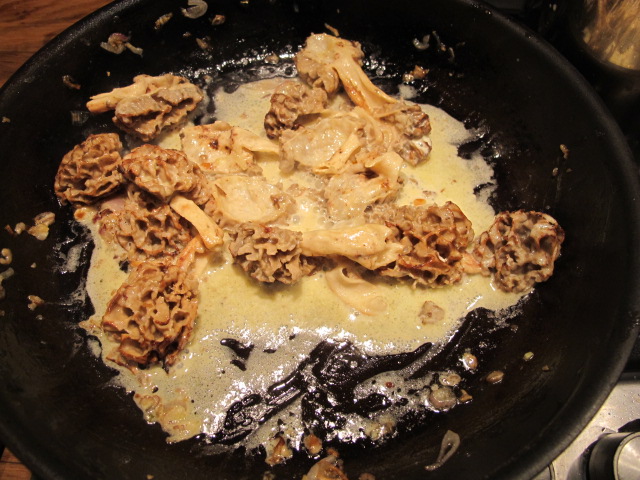
Yesterday she’d brought round another bag of morel mushrooms–‘miffed’ perhaps that I had not followed her advice about using creme fraiche in the cooking of the first lot. (I didn’t have any.)
“Has he bought creme fraiche?” she asked. Meredith nodded in the affirmative.”Eh voila!” and left the second bag for supper last night. She was right–they taste good with a tablespoon of cream amd a twist of fresh ground black pepper added to the pan.
morels with cream
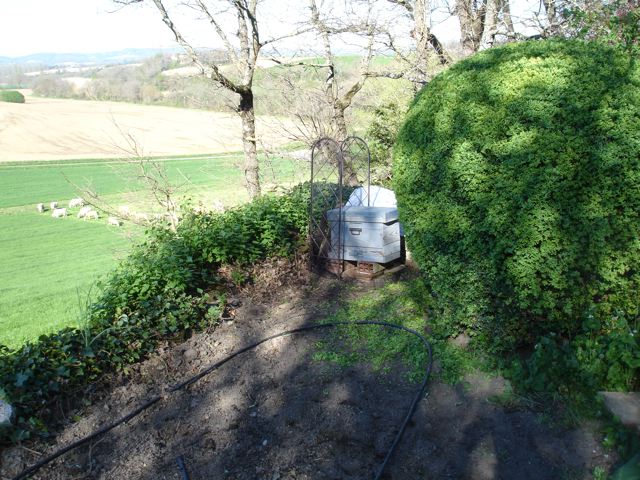
She thinks the field across the road will be a rich source of nectar for them this year, with much buzzing contentment.
“The fascinating process of making honey begins when the bees feast on flowers, collecting the flower nectar in their mouths. This nectar then mixes with special enzymes in the bees’ saliva, an alchemical process that turns it into honey. The bees carry the honey back to the hive where they deposit it into the cells of the hive’s walls. The fluttering of their wings provides the necessary ventilation to reduce the moisture’s content making it ready for consumption.”*
Happy bees would be better than discontented bees when I’m working in the tomato patch close by, in a month or two.
The danger zone?
“The vexed question”
Honey promoting web sites are keen to be positive about the vexed question of honey and diabetes, pointing out that it is a better option than sugar and sugar substitutes.
Because honey is generally thought to be health promoting, a little everyday is a good idea–even for people with diabetes, they argue.
* more than you need to know perhaps about HONEY–but useful nonetheless.
Posted in Diabetes, Food, other sides to this life, Recipes | Tagged bee-keeping, bees, meredith, morel mushrooms | Leave a Comment »
A good dish for company as it is prepared beforehand.
“Escabeche” —explained
Ingredients
4 fresh medium trout–gutted and cleaned
8 tablespoons olive oil
4 tablespoons flour–I use chickpea (avoiding processed white flour)
for the marinade:
The peel of an orange–chopped
Half a pint/250ml white wine
Juice of 2 oranges
Juice of one lemon
Half a medium onion–chopped small
2 tablespoons of parsley–chopped
Salt and pepper

unsuspecting trout
Wash and thoroughly dry the trout.

trout--floured for frying
Spread the chick pea flour on a large plate and turn the trout in it to coat well. Tap the excess flour off the fish.
trout--frying
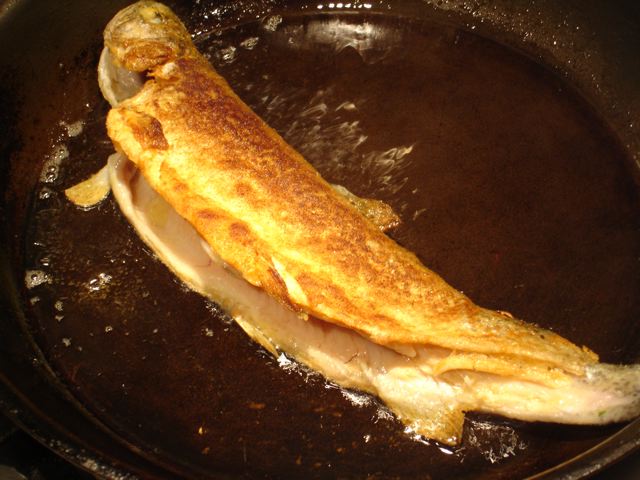
Heat the oil in a large frying pan and fry the trout for about 5 minutes on one side and a minute less on the second side. Then lift it carefully out of the pan and into the marinading bowl.

bowled trout waiting for the marinade
Cut through the skin in two places on each side, without damaging the flesh.
To assemble the marinade:
In the same oil in which you fried the fish, sauté the onion until it colours.
Add the wine and chopped orange peel; let this boil for a few seconds.
Add the two juices, the salt and pepper and the parsley. Let this simmer for a few seconds before carefully pouring the contents of the pan over the trout.

trout--bathing after frying
The trout should bathe in the sauce overnight if possible, or at least for a few hours–to let the flavours mingle and inform.

trout-- prét à manger
Bring it back to room temperature if it’s been in the fridge and gingerly remove the skin on both sides–preserving the wholeness of the fish with its head and tail–for the look.
Posted in Food, Recipes | Tagged escabeche, trout | 4 Comments »
One of my mother’s favourite phrases was “when at first you don’t succeed, try, try again!”
For my first go at this very simple soup a couple of days ago I used the popular French Caribbean curry powder called colombo.
It is very mild and gives a beautiful light yellow finish, but it didn’t taste quite right.
I tried Madras curry powder yesterday, which worked better–but was still too bland.
So–“third time lucky?”–another mantra from my youth.
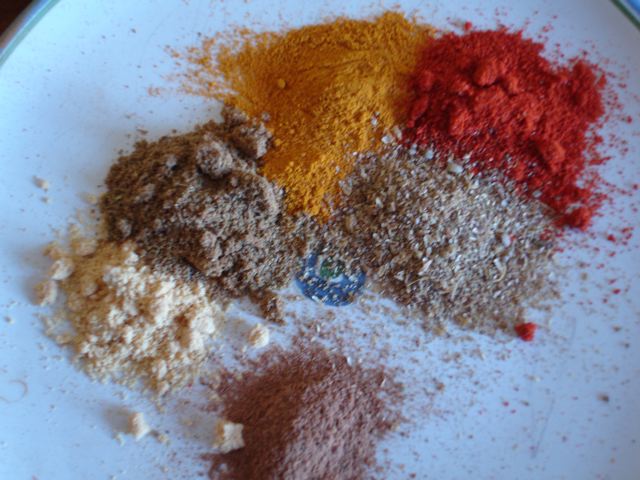
Here goes–with a mix of individual spices!
Let’s hope it has more of a kick–more of “a back story”– than the previous two efforts.
for 4
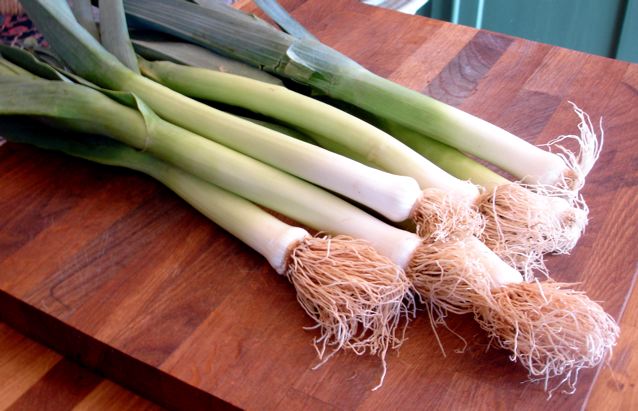
.75k/1.5 lbs–leeks–using mainly the white and pale green parts
1 tablespoon olive oil
1 oz butter
Half a teaspoon each of:
cumin, coriander, English mustard powder (substitute a little more cayenne if you don’t have it), turmeric and a pinch of cinnamon, cayenne and salt.
1 litre/1.75 pints vegetable stock–I use organic stock cubes
Prepare the leeks by cutting away the damaged brown tops and trimming the root ends.
To wash them effectively, cut them down centrally from the top to just above the root and wash thoroughly to clear any muddy residue.
Slice them finely.

Heat the butter and oil in a large saucepan.
Add the sliced leeks (keeping back a small handful for the topping) and turn them over in the oil and butter.
Sweat them gently for 5 minutes.
Sprinkle over the spices, mix them in and cook on for a couple of minutes.
Add the stock and bring it to the boil.
Simmer gently for 15 minutes.
Let the soup cool a little before liquidizing into a smooth finish.
Gently sauté the handful of leeks you kept back in a little oil or butter.
Drop a small spoonful of cream, creme fraiche or beaten yoghurt in each bowl, topped off with a pinch of the sautéed leeks.

We had this third version for lunch. Not as beautiful as the two earlier attempts, but markedly tastier.
The verdict was positive!
Posted in Food, Recipes | Tagged curried leek soup, curried soup, leek soup | 2 Comments »
Meredith’s new camera has its first outing and doesn’t disappoint.
The day takes your breath away and so do the photos this camera is capable of.
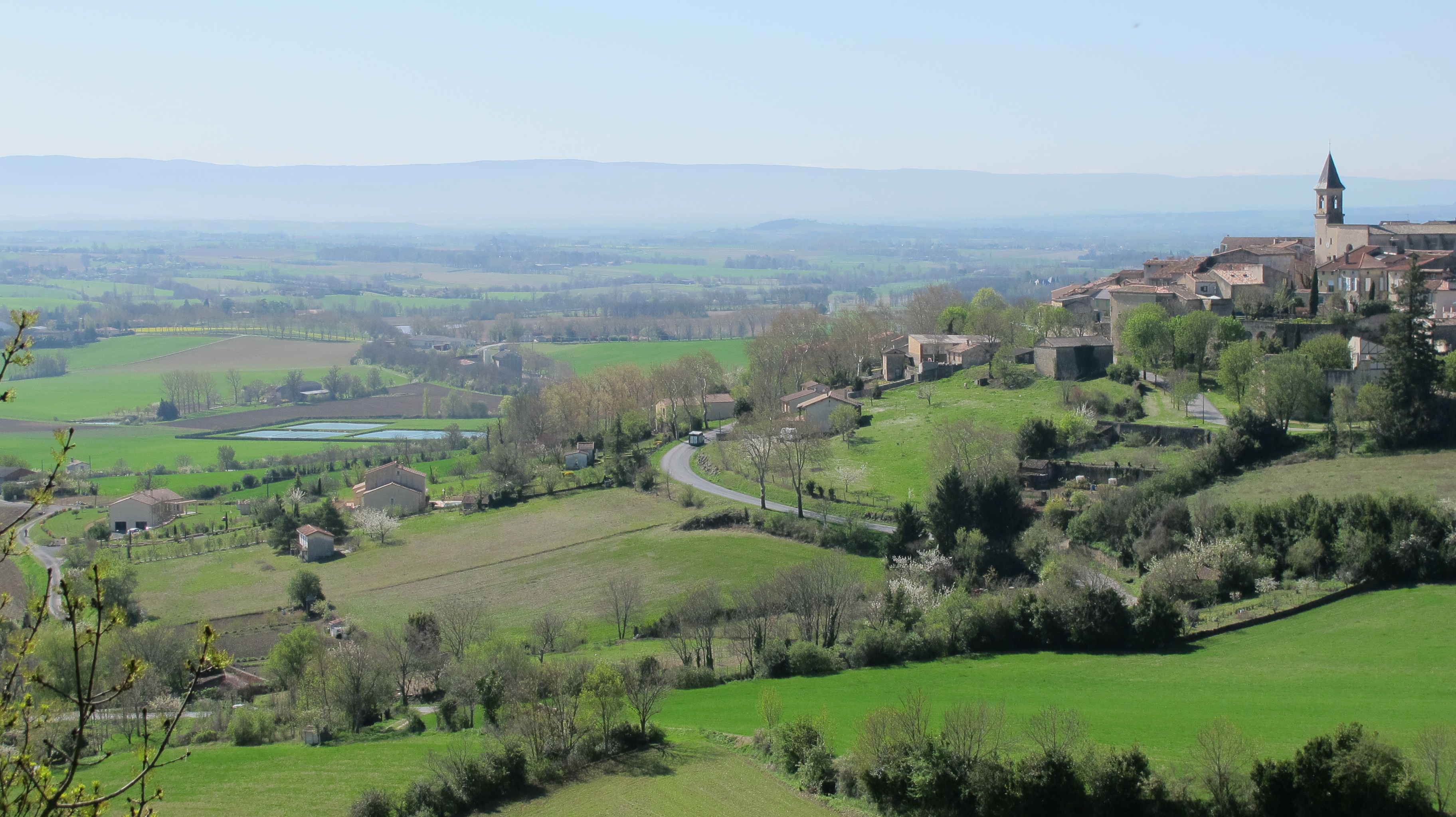
The bastide village of Lautrec

"I'm here too!" Iris

proud pink tulip

Goddess watching over...
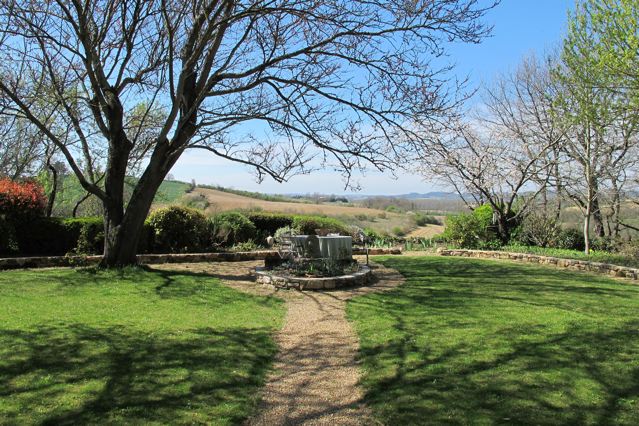
...the garden.
Meanwhile there’s a hand of pork chugging away on the stove with some green split peas for company–more of that in due course.
Enough for now to stand and wonder….
Posted in other sides to this life | Tagged Lautrec | 2 Comments »
Making Poldark: Memoir
Includes photo from the NEW Poldark series!
Mediterranean Cooking for Diabetics
Healthy Eating for Life
Delicious Dishes for Diabetics: Eating Well With Type-2 Diabetes
Follow Robin on Facebook…
-
Thank you! You can now check your email to confirm your subscription.
-
Recent Posts
Tag Cloud
anchovies angharad rees asparagus broccoli cabbage cats cauliflower celery chicken chickpea chickpeas corfu coriander courgettes cumin Dal Delicious Dishes for Diabetics diabetes Donald Douglas eggs fennel food frittata garlic ginger green beans Healthy Eating for Life honey Ismail Merchant l'ail rose de lautrec Lautrec leeks madhur jaffrey Making Poldark Marcella Hazan Mediterranean Cooking for Diabetics meredith Nigel Slater no potato fishcakes nutmeg olive harvest olive oil onion Ottolenghi parsley Poldark recipe recipes red cabbage red lentils red onion red peppers roast chicken robin ellis rosemary salmon salmon fishcakes socca soup spicy spring summer sweet potato. thyme tomatoes tour de france turmeric Type 2 diabetes vegetarian Walking walnuts white beans winston graham yogurt sauce zucchiniCategories
Twitter Updates
Tweets by RobinPoldarkMeta


 Robin Ellis