Meredith points out that this is more North than South–more Normandy than Mediterranean and she’s right. It’s tasty though and it is a one pot dish to go with some brown basmati rice or quinoa. Adapted from Jenny Baker’s handy Kitchen Suppers, this is a flavoursome way to cook an alternative to chicken.
for 4
1 guinea fowl–cut into six pieces ( larger pieces stay moist better)
2 large apples–(cox’s/fuji), peeled, cored and quartered
1 fennel bulb–cut into quarters or eighths if it is large
1oz/25gm butter
1tblsp olive oil
1/2 tsp cinnamon powder
salt & pepper
150ml/1/4 pint dry cider
2 tablespoons no-fat yogurt–whisked smooth (this is optional–it gives the sauce a little more depth)
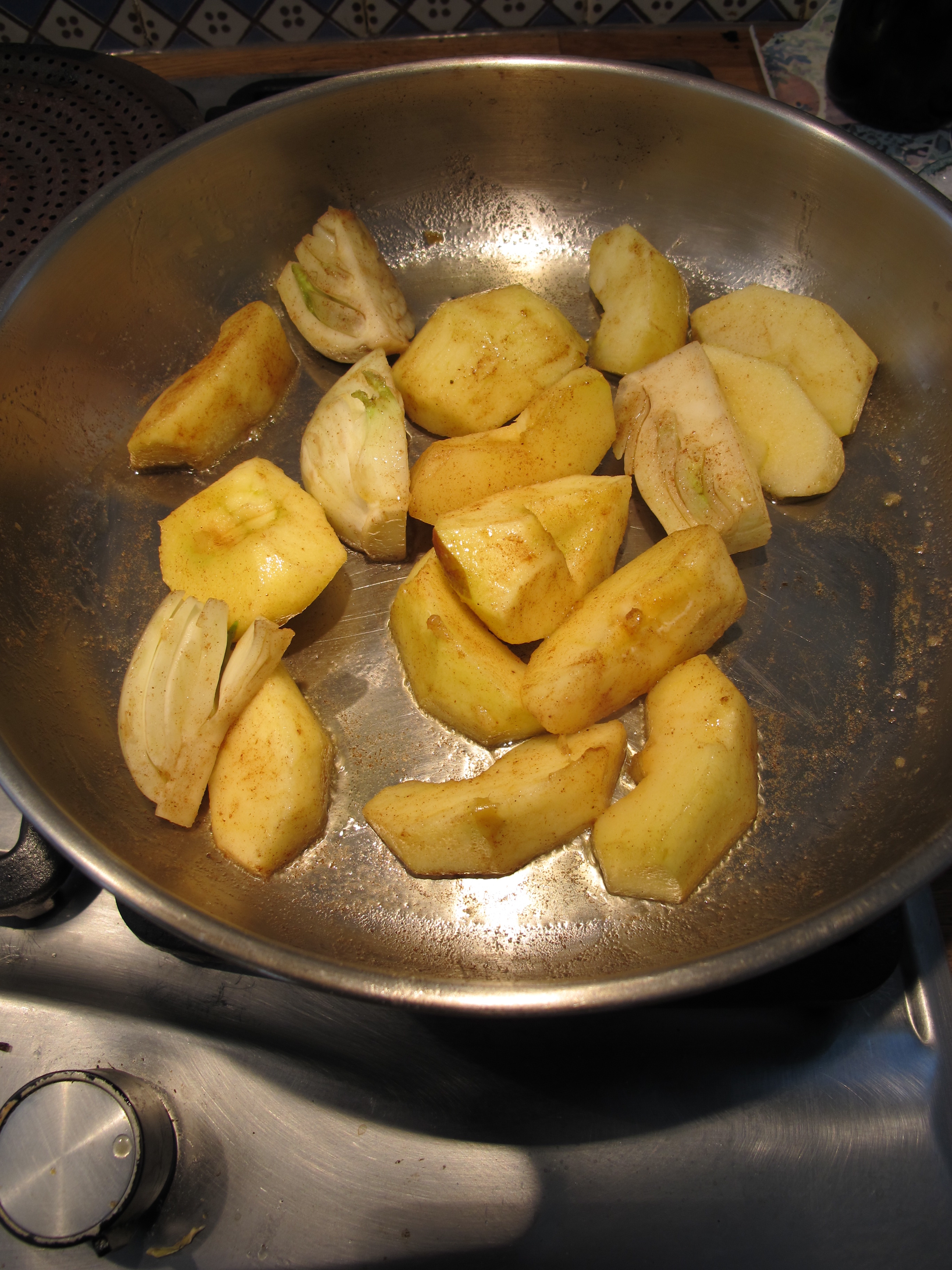
- Fry the apple and fennel pieces, sprinkled with cinnamon, in half the butter and oil for 5 to 10 minutes
- and set aside in a bowl.
- Boil the cider in the pan to reduce it to roughly 3 tablespoons and pour it over the apples.
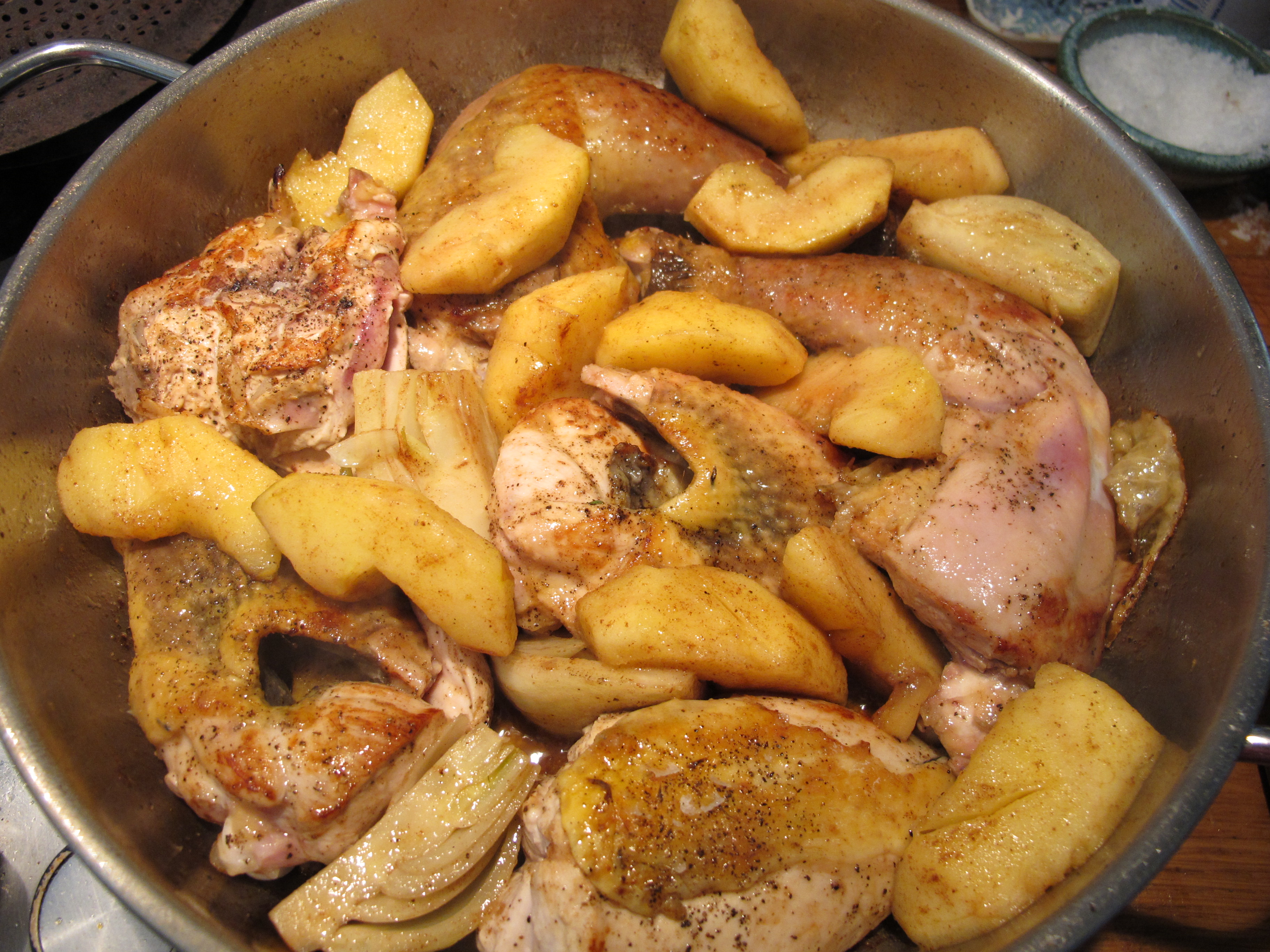
- Brown the guinea fowl pieces on a medium heat in the remaining butter and oil, seasoning them as you turn them over.
- Return apples, fennel and sauce to the pan.
- Cover the casserole and cook on a low heat for half an hour.
- The juices of the guinea fowl should run clear when the thigh is pierced; if they are still pinkish, cook a little longer.
- Remove the guinea fowl pieces, the apples and fennel from the casserole
- Whisk the yogurt into the sauce.
- Carefully pour the sauce into a heated jug.
- Serve with brown basmati rice or quinoa and the apple and fennel pieces.



Posted in Food, Recipes | Tagged guinea fowl with apples, guinea fowl with cider, guinea fowl with fennel, guinia fowl, roast guinea fowl | 5 Comments »
It’s a beautiful pre-summer day and there were some fresh looking sardines at Intermarché in Realmont.
A bit early to be thinking “summer lunches” but we need cheering up, so I bought three each–juicy ones–and butterflied them.
We had them baked with a simple fennel salad which cuts the richness of the sardines.
Butterscotch is still not well–in fact poor mite–she’s worse and so thin.

Butterscotch aka little Mother
She wants to eat and to go on as usual and doesn’t understand why she can’t.
She came out into the garden this morning while we did the exercise routine with our friend Flo and was “with us”–as cats often like to be.
Going over to Flo she did one of those wonderful cat “rolls” they do for you– “it’s a greeting” Meredith says.
She managed it and even did a return roll–that lifted our spirits.
She is twelve now and some systems seem to be failing her.
“On s’attache”–“you grow fond”–of your pets and it’s hard.
Here’s the recipe to cheer you up after reading this!!
For 2
6 firm and fresh sardines–butterflied (see below)
100gms/4 oz wholewheat breadcrumbs
1 tablespoon parsley–chopped
2 garlic cloves–chopped fine
1 tablespoon of capers–chopped
a pinch of dried oregano
3 tablespoons olive oil
salt and pepper
Heat the oven at 180°C/350°F/Gas Mark 4 if using.
Butterfly filleting is a bit of a business but rewarding.You’ll need a
chopping board and plenty of kitchen paper. Have a pair of
scissors to hand and a plate to receive the fillets. Make sure
there are no scales left on the fish, then with the head in your
left hand and the body in your right, gently pull the head off
and as much of the innards as possible from the tail end. Use
the scissors to snip along the belly, then with your left thumb
coax out the rest of the innards. Place the fish, belly down, on
the board and press gently up and down the backbone with
both thumbs. Flatten the fish as much as you can with three
fingers of both hands. Lift and snip off the small fin, then snip
the backbone at the tail end and, with the left hand, draw it
carefully away from the body, taking care not to take too
much of the flesh with it. Voila! You have a butterfly fillet.
- Wash and dry the fillets
- Place a sheet of foil on a shallow baking tray
- Using a brush if you have one it spread it with a tablespoon of oil.
- Place the fillets on the tray.
- In a bowl combine the breadcrumbs, parsley, garlic, capers, oregano and season with the salt and pepper.
- Pour over a tablespoon of olive oil and mix it all together thoroughly.
- Spoon the mixture evenly over the fillets.
- Drizzle over the remaining olive oil adding a little extra if you feel it needs it.
-
before baking
- Bake for 15 minutes.
-

and–after baking

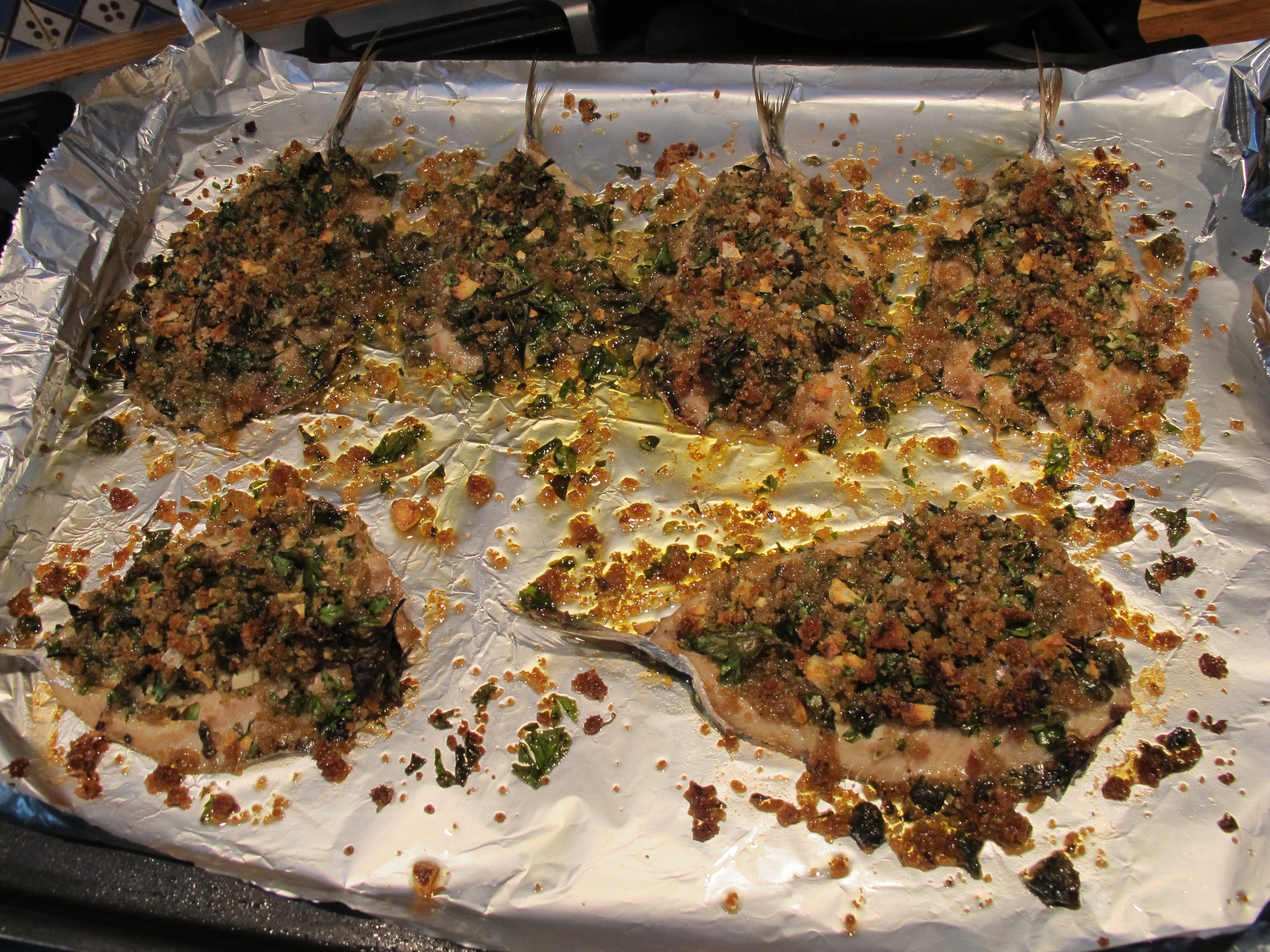
I let them have a minute under a hot grill this morning to finish off.
Posted in Food, other sides to this life, Recipes | Tagged butterflied sardines, pets, sardines, sick cat | 21 Comments »
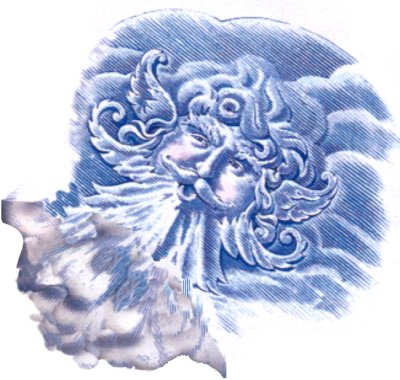
“Blow, winds, and crack your cheeks! rage! blow!”
…and so it did for two days, needing no exhortation from a King Lear heading for madness.
It’s called le vent (wind) d’Autan–the name is obscure but seems to suggest a bye-gone age (autrefois–other times); its force is primeval, outrageous, unreasonable. It blows from the south-east and in principle is a warm wind–but that implies some degree of benevolence on its part.
It doesn’t feel that way as it tears into the newly-leafed trees, shaking them so violently that our judas (redbud) for one, lost a large branch, in a brutal unnatural pruning.
They put up with it, survive and stand today uncomplaining while Nature is admitting nothing.
“Moi?” she seems to be saying.
It drives people mad (ça peut vous rendre fou), like the Mistral, (it’s better-known cousin in Provence) and can blow for a week.
According to our neighbour, René (brother of Alice the beekeeper), old folk say that if it blows on Palm Sunday it will be a windy year.
This year it blew on Palm Sunday.
The countryside is calm again–but the wind has blown so deafeningly for two days that hearing a cuckoo and the percussion of dueling woodpeckers on my morning walk was a shock!
I had grown accustomed to the “rage”.
Posted in other sides to this life | Tagged French weather, French winds, le vent d'Autan, Mistral, wind | 10 Comments »
Diabetes is in my family.
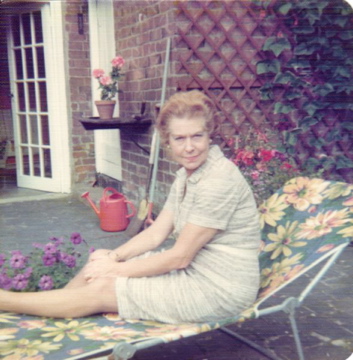
My mother, Molly–who’d be 96 today–died of a diabetes-related heart attack at 9 a.m. on December 2nd 1982, while dressing to go shopping. Perhaps a good way to go–but hard for the rest of us. She was 68.
She developed Type 1 diabetes in the early fifties–the result, we were told, of shock at the sudden death of her own mother at our home in north London. Molly was in her mid-thirties. Diabetes was in her family–her Uncle Harry had it.
Enough was known about the disease by then to allow her another thirty years of life–she would often cite Drs. Banting and Best (http://nobelprize.org/educational/medicine/insulin/discovery-insulin.html ) as her saviours, for their ground breaking work on insulin (http://en.wikipedia.org/wiki/Insulin).
When she was pregnant with my youngest brother Jack, the doctors at St. Thomas’ Hospital over the Thames from the Houses of Parliament, were uncertain whether to allow the pregnancy to continue. They went ahead–praise the Lord!–and Jack Ellis (http://en.wikipedia.org/wiki/Jack_Ellis_%28actor%29) thrives to this day!
She injected insulin twice a day for the rest of her life without any song and dance. I was in awe.
From time to time she would have what she called a”reaction“.
http://www.emedicinehealth.com/wilderness_diabetic_reaction/article_em.htm
This usually happened as result of a low blood sugar level.
If she hadn’t got her insulin balance quite right–at a cocktail party perhaps (this was the fifties!), she’d start acting strangely, sometimes appearing to be the worse for drink. My father would delve into her handbag for the lump of sugar he knew was there and with some difficulty persuade her to swallow it.
At first it struck us ignorant kids as odd that a person whose body couldn’t absorb sugar normally would swallow some to save her from a coma or worse!
These “reactions” would occasionally occur in the middle of the night–a real danger. Miraculously my father always woke up in time to administer the sugar lump–though a couple of times I remember Ma being taken by ambulance to St. Thomas’ in a comatose state.
Witnessing first hand the damage diabetes could inflict, I needed no persuading to take it seriously when my diagnosis came a dozen years ago.
Ma set a great example. She was steadfast, brave and determined to enjoy life–despite her difficulties.

Molly
Posted in Diabetes, other sides to this life | Tagged diabetes, Drs. Banting and Best, family history, insulin, insulin shock, Jack Ellis, Molly Ellis, reactions | 15 Comments »
I’d bought fish fillets today for lunch–but wasn’t sure what to do with them–spice ’em up?–have ’em in tomato sauce?–season ’em well, grill ’em and eat them with little gem lettuce and spring onions?
Meredith arrived with ripe avocadoes and a firm penchant for an avocado salad with spring onions, lettuce, lightly sautéed bacon bits, a few juicy black olives and a poached egg on top—-AND she was offering to make it–no contest, win-win, I thought!
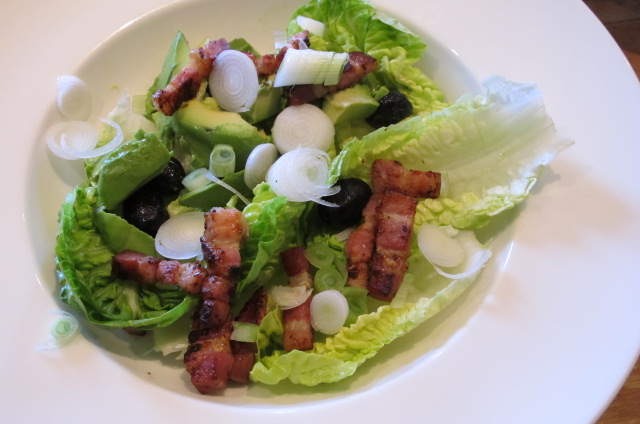
poached egg and dressing to come!
and so it was.
I drizzled some of our best olive oil over the crisp looking salad with a sprinkling of salt; while Meredith added a spoonful or two of the everyday dressing (see below) to hers–and that was lunch.
Gives me time to think what to do tomorrow with the fillets resting in the fridge.
Everyday vinaigrette (from Delicious Dishes for Diabetics)
1 clove garlic–pulped with a pinch of salt
1 tblsp balsamic vinegar
1 tsp dijon mustard
6 tblsps olive oil
- mix the first three ingredients thoroughly
- add the olive oil and whisk to a viscous delight
Posted in Food, other sides to this life, Recipes | Tagged avocado salad, vinaigrette recipe | Leave a Comment »
This recipe–inspired by one we ate at our friends and neighbours Julie and Richard–reminds me of meals round the kitchen table at home in the fifties. It’s simple and inexpensive and would possibly stretch to a second meal–important factors for my mother, with a husband and three children to feed and limited means.
Nevertheless she could be an adventurous cook. The dishes she tasted on the trips to Europe we enjoyed as a family with Dad’s concessionary rail tickets (he worked for the LMS–London Midland and Scotland), encouraged her to experiment in a modest way. Nothing very exotic about this–except its little kick from the chillies and the olives and peppers added at a later stage; comfort food really but none the worse for that.
She would would have celebrated her ninety sixth birthday this Saturday–so this is for her too.

Ma with a Morris dancer!--on 'is way to the 'obby 'oss festival perhaps..
100gm/4 oz bacon/pancetta–diced small
3 sticks or a heart of celery– chopped small
1 medium onion–chopped small
1 clove of garlic–chopped
3 tablespoons olive oil
1 free range chicken–cut into 8-10 pieces and washed and dried
1 sparse tablespoon flour–I use chickpea
125ml/4fl oz white wine
125ml/4fl oz of stock–I use organic vegetable stock cubes
8oz/250gms tinned tomatoes–chopped roughly
3/4 sprigs of rosemary
3 small fresh red chillies
1 red pepper–cut in thin strips
a handful of juicy black olives–stoned if you have the time
a handful of parsley–chopped
set the oven at 160c/320f
- Heat a tablespoon of olive oil in a large frying pan and sauté the onion, celery, bacon, and garlic gently for about 20 minutes allowing them to colour–concentrating the taste. Spoon the mixture into an oven-proof casserole.
- Season the chicken pieces and heat another spoonful of oil in the frying pan.
- Sauté them on a highish heat–turning them as they brown.
- Transfer them to the casserole.
- Tuck in the whole chillies and the rosemary sprigs and pour over the wine and the stock.
- Sprinkle over the flour and add the wine and the stock.
- Turn over the contents, cover the casserole and bring to a simmer on the stove.
- Transfer it to the oven and cook for 30 minutes.
- While this is in the oven, heat the third tablespoon of olive oil in the pan and gently sauté the strips of pepper.
- Add these to the casserole with the olives after 30 minutes and cook, uncovered, for a further 15 minutes in the oven.
- Sprinkle over the parsley and serve over brown basmati rice or quinoa

Posted in Food, other sides to this life, Recipes | Tagged chicken casserole, Molly Ellis, Morris dancer | 20 Comments »
I found this (http://www.diabetes.co.il/) yesterday.
It’s quick, fun and informative.
Excuse me while I get back to the kitchen…!
Posted in Diabetes | Tagged diabetes, quizz | 1 Comment »
This is a variation on a recipe from The River Café Cookbook Easy.
.
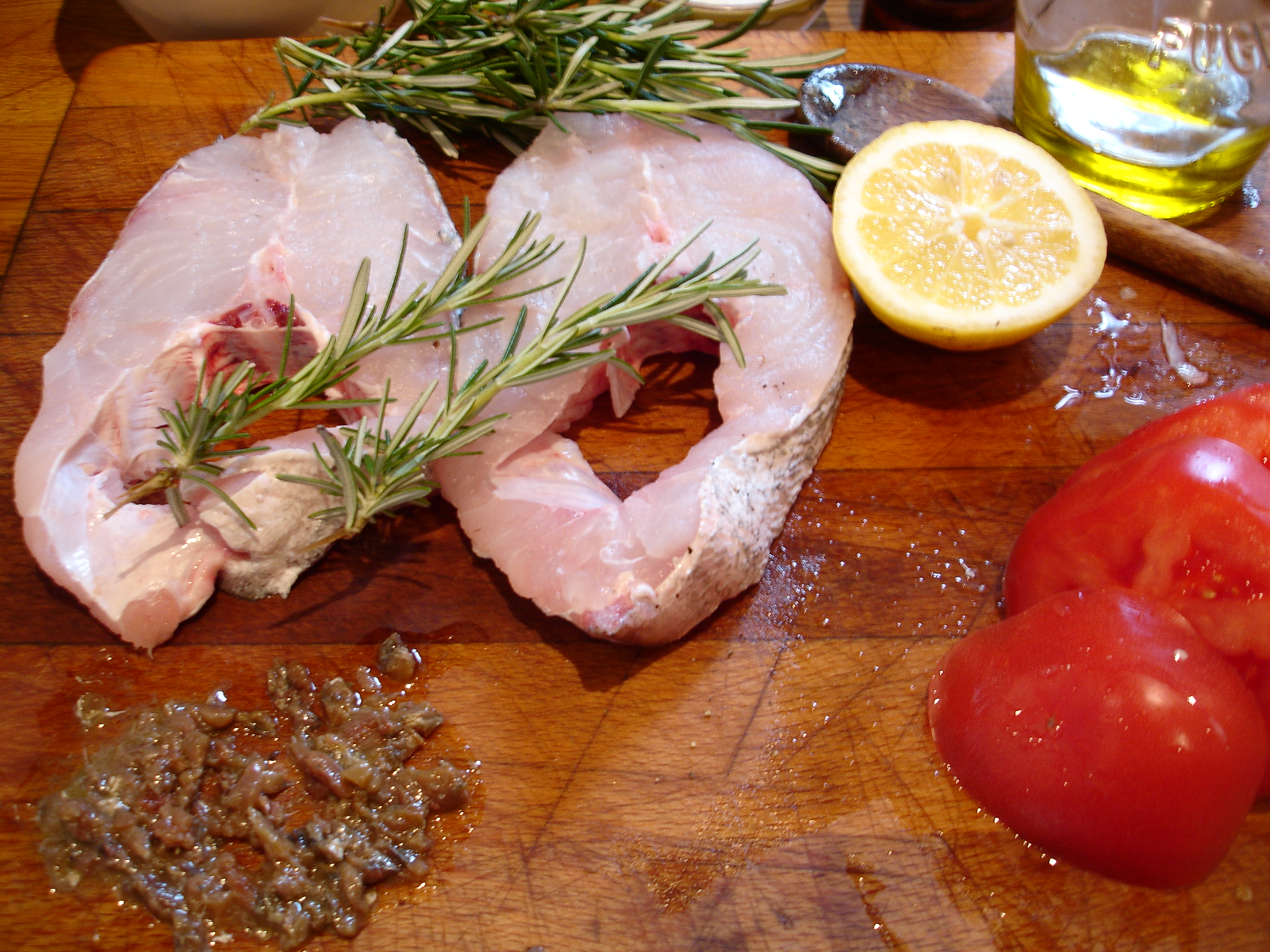
Pollock steaks at the ready!
I’ve substituted pollock for monkfish (it’s on the list of sustainable fish) and added a sliced tomato which melds well with the oil, anchovy and lemon base. In the summer, sweet little cherry tomatoes halved add even more colour and taste.
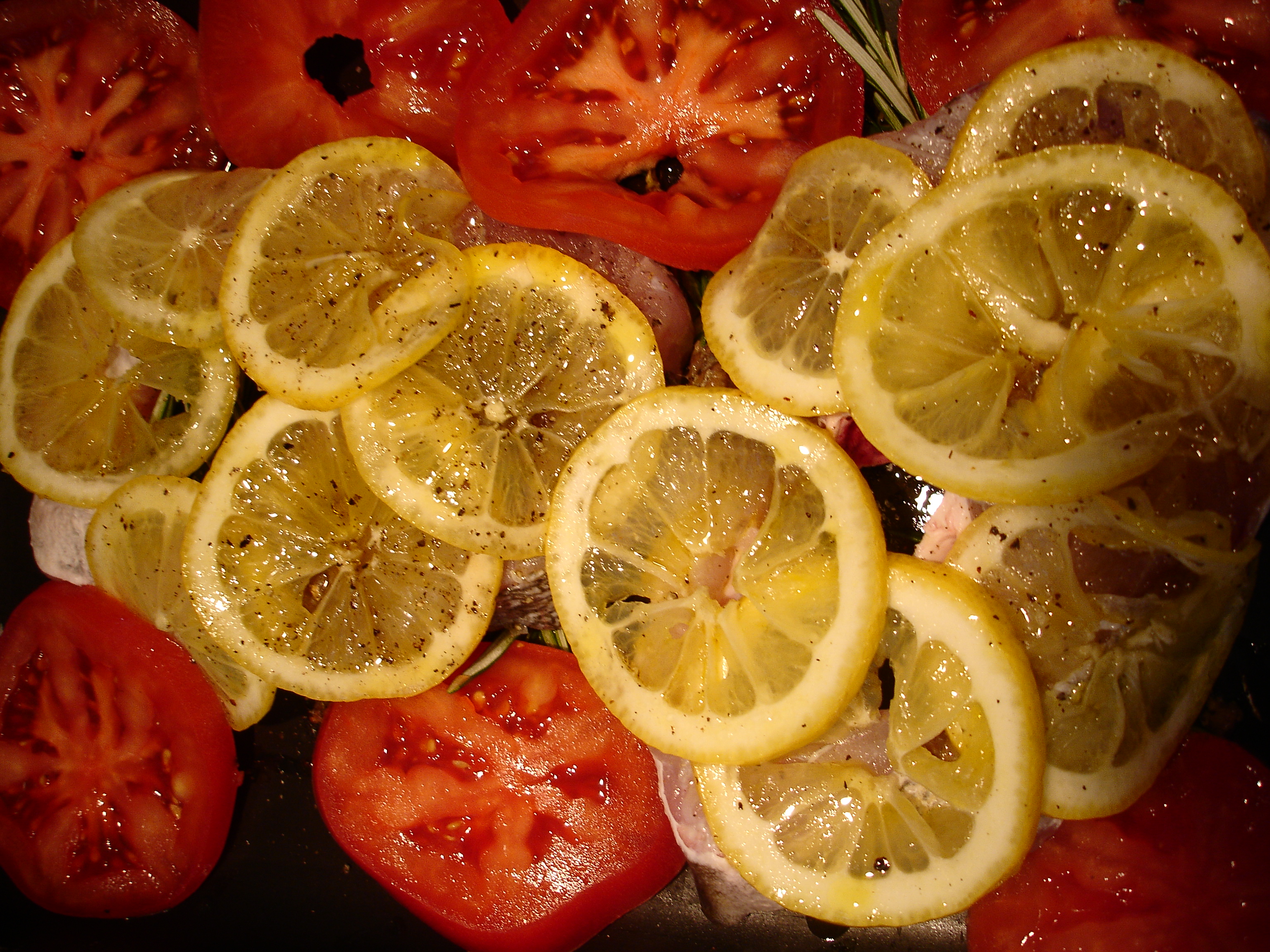
Find the fish!
For 2
2 pollock steaks–rinsed and patted dry (you could try fillets–though the bone in the steaks adds flavour I think)
A good handful of rosemary sprigs
1 lemon–sliced thinly
2 anchovy fillets–mashed to a pulp
1 largish tomato–sliced thinly (you can use a couple of tinned tomatoes–roughly chopped)
3 tablespoons of olive oil
Salt and pepper
Heat the oven to 220c/420f
- Put the lemon slices in a bowl and season them with salt and pepper–add a tablespoon of olive oil and mix carefully but thoroughly.
- In a small, shallow oven tray heat about a tablespoon of olive oil.
- Spread the rosemary over the base.
- Place the fish steaks on top and season lightly.
- Spread half the the anchovy pulp on each and cover them with the lemon slices.
- Arrange the tomato slices round the outside and drizzle the remaining tablespoon of olive oil over them.
- Roast in the middle of the oven for about 10 minutes–the time depends on the thickness of the steaks.
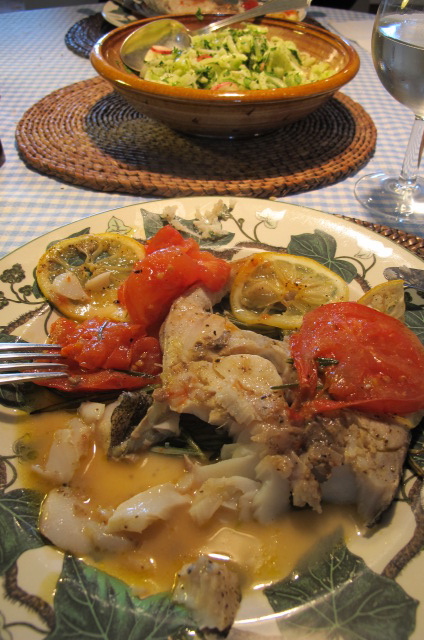
(We had a fennel, radish and celery salad with these for lunch today–dressed with of a tablespoon of lemon juice blended with half a teaspoon of Dijon mustard, seasoned and then mixed with 3 tablespoons of olive oil. Big hit with Meredith.)
Posted in Food, Recipes | Tagged achovy, pollock, rosemary | Leave a Comment »
We were filming the second series of Poldark in spring 1977 and were based for a while near the seaside town of Padstow on Cornwall’s north coast.
On May 1st the town is taken over by the ‘Obby ‘Oss (Hobby Horse) Festival–an excuse for a day of communal good natured madness and merriment, with obvious origins in traditional fertility festivals that pop up everywhere at this time of year.
This is the account of it I wrote in my book Making Poldark .
We’d finished filming the expedition to France,"Operation Rescue"!
and it was May Day; a group of us decided to go to Padstow for the Festival.

We arrived at about 7 pm, and from far away we could hear the beat of the drum and the music.It had been going on for at least twelve hours and the atmosphere was “jolly” –you might say. We rounded the bend and came into a square and there it was! The umpteenth parade of the hobbyhorse in full swing.

The drumbeat was mesmeric and the man inside the hobbyhorse never stopped moving–round and round he went, tempting and teasing the circle of young maidens. A pagan ritual full of fun and danger. Not English at all.
Someone in the crowd recognised me and although George Collins, my dresser, insisted I was his cousin Fred, and not Poldark, they weren’t convinced! So we moved on quickly to a pub down the hill.The beer and the cider were flowing freely, and it happened again and again.I was bought pasties and pints everywhere.A man in one of the pubs came up and said, “You’ve put Cornwall on the map. Thank you.” I was amazed and flattered, a little embarrassed and by this time somewhat stewed.We settled down in a corner to listen to the accordionist. We sang and we danced and everyone forgot about Poldark. It was a great night.I suppose I was naive to think I could go to a big Cornish festival like this and remain anonymous–television is a powerful and popular medium–but as for “putting Cornwall on the map”– on the evidence of this particular evening–it later occurred to me that it might be the other way around.The Poldarks enjoying a previous 'Obby 'Oss fayre?

Posted in other sides to this life, Poldark | Tagged 'Obby 'Oss Festival, Cornwall, Hobby Horse Festival, May Day, Padstow, pagan festival, Poldark | 22 Comments »
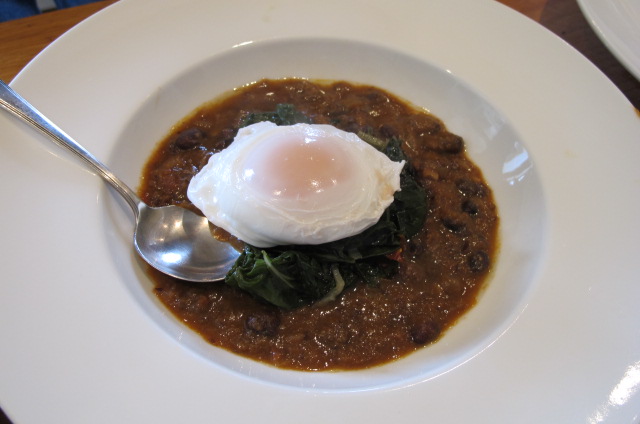
I love left-overs and some things get better with age…!
For 2
1) “Left-over” Black Bean Soup (see my recent post)–heated through–thoroughly.
2) A large handful of Swiss chard leaves (or spinach)–(about 8oz/250gms) washed and most of the water shaken off it, then sautéed in 2 tablespoons of olive oil with 1 clove of garlic sliced very fine.
Heat the oil in a pan with a lid.
Fry the garlic until it starts to colour.
Carefully add the chard, a little salt and turn it in the oil.
Cover the pan and let the chard reduce until it is tender.
Drain any excess liquid.
3) 2 eggs–poached
Assemble as above and…

--Hey presto!
Posted in Recipes | Tagged black bean soup, black beans | Leave a Comment »
Making Poldark: Memoir
Includes photo from the NEW Poldark series!
Mediterranean Cooking for Diabetics
Healthy Eating for Life
Delicious Dishes for Diabetics: Eating Well With Type-2 Diabetes
Follow Robin on Facebook…
-
Thank you! You can now check your email to confirm your subscription.
-
Recent Posts
Tag Cloud
anchovies angharad rees asparagus broccoli cabbage cats cauliflower celery chicken chickpea chickpeas corfu coriander courgettes cumin Dal Delicious Dishes for Diabetics diabetes Donald Douglas eggs fennel food frittata garlic ginger green beans Healthy Eating for Life honey Ismail Merchant l'ail rose de lautrec Lautrec leeks madhur jaffrey Making Poldark Marcella Hazan Mediterranean Cooking for Diabetics meredith Nigel Slater no potato fishcakes nutmeg olive harvest olive oil onion Ottolenghi parsley Poldark recipe recipes red cabbage red lentils red onion red peppers roast chicken robin ellis rosemary salmon salmon fishcakes socca soup spicy spring summer sweet potato. thyme tomatoes tour de france turmeric Type 2 diabetes vegetarian Walking walnuts white beans winston graham yogurt sauce zucchiniCategories
Twitter Updates
Tweets by RobinPoldarkMeta


 Robin Ellis