Feeds:
Posts
Comments

A Long Goodbye…


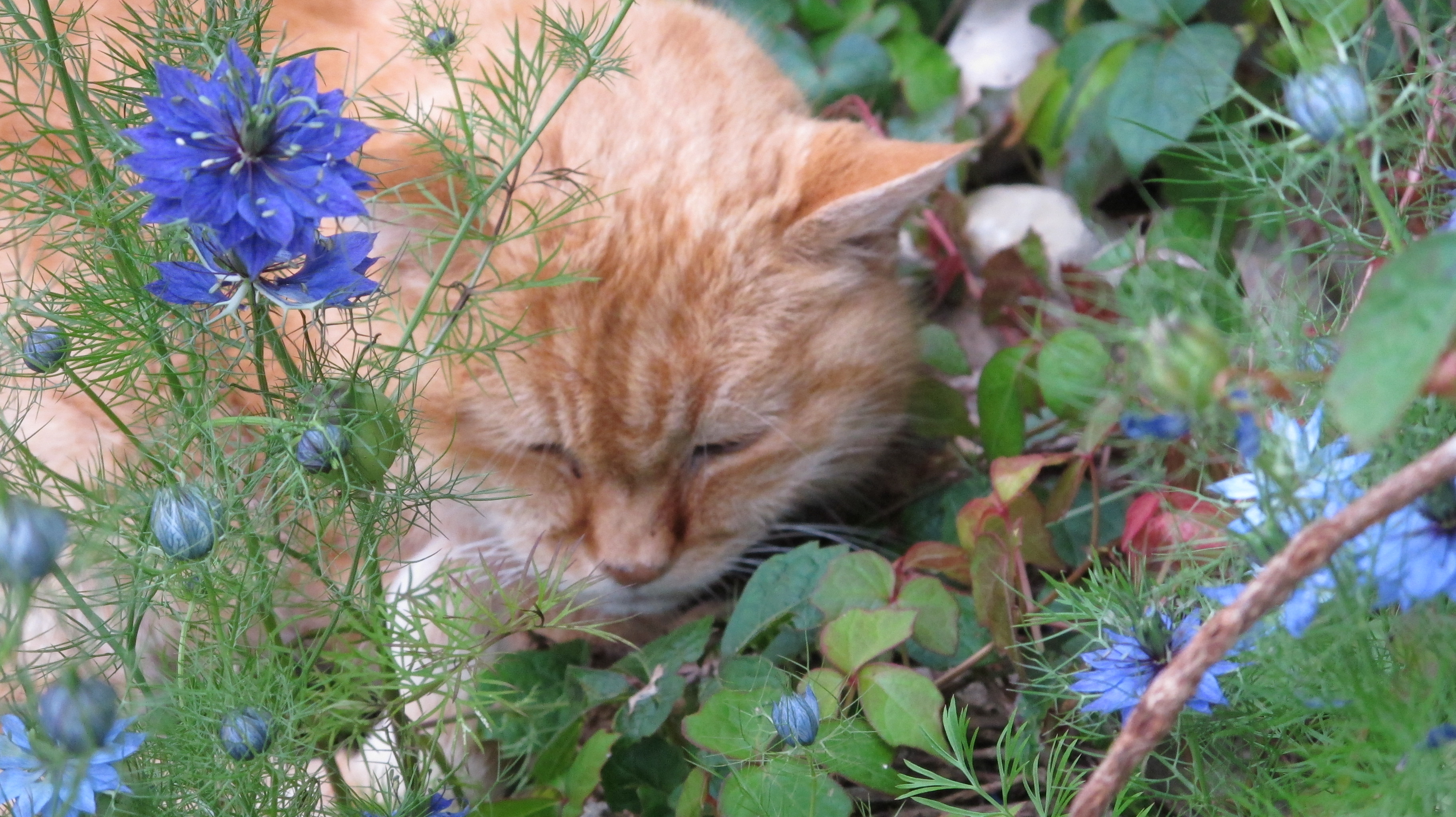
Butterscotch

Butterscotch, also known as Little Mother or Mo, died yesterday.

She was thirteen and had a tumor in her lung.

We buried her in the garden, close to where we buried Beauty last October.

Nina, from whom we bought our house, rang by chance an hour before the vet arrived.
She said the garden was full of cats, from her 25 years here.
Beauty was pure white, blue eyed and rangy. (We thought he was female, until the vet put us right.)

He was 4 when he died of a respiratory illness.

Meredith had owned a large sheep dog when she was living in New York and had grown up in a house full of pets.

I had never owned an animal until after we bought this house 21 years ago.

My mother had found a cat for me at the end of the 1940’s.
I called her Mary, after my aunt who had gone to Africa.

I was fond of Aunt Mary–she’d taken me to Lords in 1948 to see Bradman bat for the Australians, which won’t mean much to people now, but was tremendous for a cricket-mad six-year-old.

All I remember about Mary–the cat–was that she was black and white.

I didn’t realize then that all cats are different and have singular personalities and foibles.

Little Mo was a rather solitary figure, who sought out quiet spots away from the general hubbub of the house.

We’d find her comfortably curled up in a large bowl or shopping basket or buried under a bedcover in a spare room–a visible lump, gently rising and falling with each breath.

Perhaps she was hiding from Lucien–our orphan Tabby–who is roughly the same age and her unrequited suitor.

Poor Lucien never stood a chance–she was disdainfully uninterested.

Kids though, she loved. Meredith says she’s the only cat she’s known who approached children and paid no heed when they unwittingly treated her roughly.

She seemed fearless–remaining unconcernedly on her chair while the hoover wailed round her, or unmoved while swapping curious looks with a troupe of cows surrounding her, in the field behind the house.

Her step was an unhurried plod and she thought long before leaping, like an athlete preparing for the high jump.

Just occasionally–and not so much recently–she would surprise us on a short walk with a sudden burst of speed–a sort of exlposive expression of joy–and then revert back into “plod mode”.

On my return from the market, she’d “plod” towards me, her tail would go up and she slowly rolled over.

I felt flattered–singled out for special treatment.

She was more social in the evenings, watching TV with us–from the comfort of a convenient thigh.

But she reserved for Meredith her most open show of affection, often settling down for the night flat out on Meredith’s chest.

We loved her. She’s at peace now and life goes on.

We spotted this young fellow at lunchtime. We rarely see hedgehogs here –and we’ve never seen one as young as this.

For Meredith it was a sign that all was well with Mo.

The “Food Pyramid” was an early post back in February.
In a campaign backed by the First Lady Michelle Obama, this has now been replaced (by the USDA — the American Department of Agriculture)  by “My Plate”.
The new icon sets out on “your plate”  –a guide to a healthy, balanced way of eating.
In principle anyway, it is simpler and more logical than the pyramid image–we eat off plates not pyramids–though I don’t find it visually pleasing.
Will its message get through?…
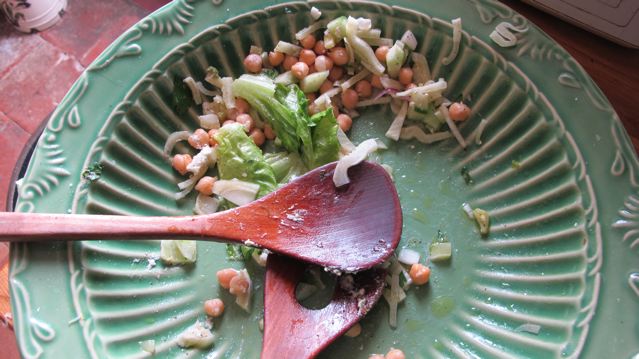
We have just finished lunch
and without intending to–it was stuff I found in the refrigerator– I ended up pretty much following the guidelines.
It was a Salad of:-      (protein, grain, vegetable, and dairy)
chickpeas (pg)–out of a tin or, as in my case, dried, soaked overnight, then simmered in water until tender
with thinly sliced/chopped fennel  (v)
some chunks of avocado (v)
a small cucumber, de-seeded and chopped (v)
thinly-sliced red onion (v)
small pieces of cooked chicken breast (p)
a few black olives (v)
some cubes of goats cheese with (dp)
chopped parsley (v)
with an olive oil and lemon juice dressing–oh and a few dry roasted (in a frying pan) pumpkin seeds(pv) scattered over, seasoned with salt and pepper.
And–we ate it off  plates!

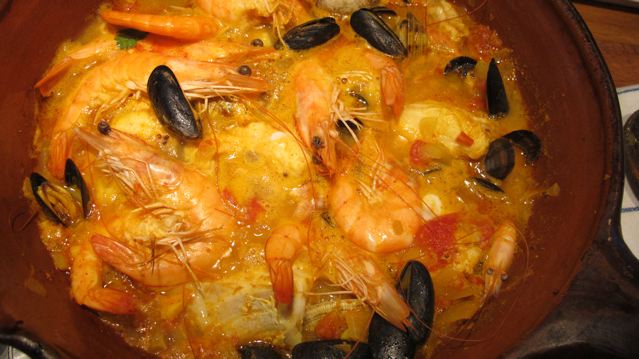
Much fish curried!

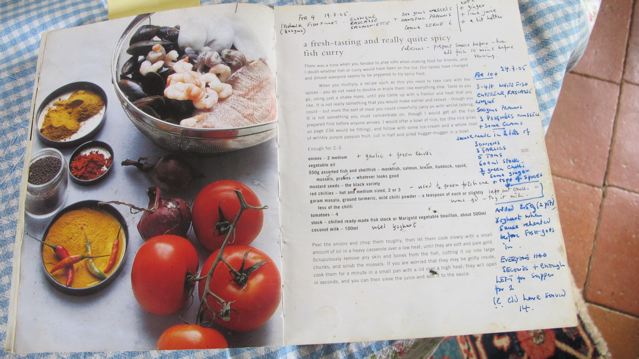
This is adapted from a recipe by the brilliant and imaginative British food writer–Nigel Slater.

It’s simple and a good dish for company (we had it on Christmas Eve one year)– allow 150 g/5 oz of fish per person.

You can make the basic sauce ahead of time–even the night before–and prepare the fish pieces in advance too.

Then all you have to do is reheat the curry sauce and slip in the fish in the appropriate order while you cook some brown basmati rice.

We had it tonight with a cooling cucumber raita.

Serves 4

2 medium onions–chopped

2 cloves of garlic–chopped

1 tablspoon of olive oil

1 teaspoon black mustard seeds

a thumbnail size piece of fresh ginger–chopped

3 small red chillies (the heat level is a matter of taste)–chopped

1 teaspoon each–garam masala, cayenne and turmeric

225 g/8 oz fresh or tinned tomatoes–chopped

500 ml/1 pint/2 cups stock–I use organic vegetable stock cubes

250 g/9 oz mussels

8 clams (palourdes)–if you can find them

600 g/20 oz white fish in fillets–this could be monkfish, haddock, cod or some of each, preferably fish that holds its

shape when cooked in pieces

8 prawns in their shells

1 tablespoon of low/no fat yogurt – whisked smooth

A good handful of chopped parsley–or coriander if you can find it

  •  In a casserole large enough to hold all the fish, fry the chopped onions and the garlic gently in the oil until soft.
  •  Add the mustard seeds and ginger and mix.
  • Add the chopped chilli and mix.
  •  Add the garam masala, cayenne and turmeric and mix.
  •  Add the chopped tomatoes and let them mingle with the spices for 5 minutes.
  •  Add the stock and bring everything to the boil.
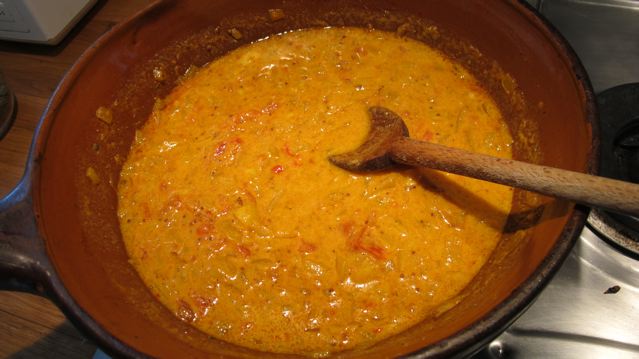
  •  Let this sauce simmer for 15 minutes.
  • Let the sauce cool.
  •  Stir in the yogurt carefully.

    ready for the fish

  • Debeard, scrape and rinse clean the mussels.
  • Scrub the clams if you have them.
  • Check the fish fillets for bones and cut into bite-size pieces.
  • Have the prawns standing by.
  • Reheat the sauce if you have precooked it.
  •  Slip in the white fish and cook until it turns opaque.
  •  Then add the mussels, clams and prawns.
  • Cook gently, making sure that the sauce is covering the fish, until the mussels and clams open and the prawns heat through.
  • (I sometimes throw the mussels and clams in a saucepan with a tablespoon of water to get them to open, then add them to the curry.)
  •  Check the salt, add the parsley/coriander and bring this bubbling colourful wonder to the table.
This is Meredith’s choice for my 100th post– and it’s a recipe from Delicious Dishes for Diabetics–A Mediterranean Way of Eating (Constable & Robinson and Skyhorse).
(Published August 4th 2011 in the UK and November 1st in the USA–but available on Amazon.co.uk for pre-order now.)

Our friend Florence arrives just before nine this morning to do “the exercises”.

We call them Yoga for Softies.

They last 35 minutes and are a mix of disciplines including pilates, yoga, tai chi, and various others learned over years, which have gelled into a sequence.

They are hardly taxing–hence the title–but the three of us always feel better for doing them–certainly more virtuous.

Meredith and I then have breakfast and Flo, who has been up betimes seeing to her goats, joins for  coffee and chat.

Flo tells us it’s St Médard’s day today–June 8th. If it rains today it will–according to legend–rain for 40 days.

St. Médard not having much luck.

I anxiously look out of the window, and remember what they say about St. Swithin’s day (July 15th) in the UK:

St Swithun’s day if thou dost rain

For forty days it will remain

St Swithun’s day if thou be fair

For forty days ’twill rain nae mare

or less poetically:

If on St Swithun’s day it really pours

You’re better off to stay indoors.

Further research (Wikipedia) reveals that:

There is a scientific basis to the legend of St Swithun’s day.”

“Around the middle of July, the jet stream settles into a pattern which, in the majority of years, holds reasonably steady until the end of August.”

“When the jet stream lies north of the British Isles then continental high pressure is able to move in; when it lies across or south of the British Isles, Arctic air and Atlantic weather systems predominate.” (bringing bad weather).

By mid-afternoon Myriam arrives and says all is not lost even if it rains today.

The French version has a “get out” clause in the shape of St Barnabé (June 11th).

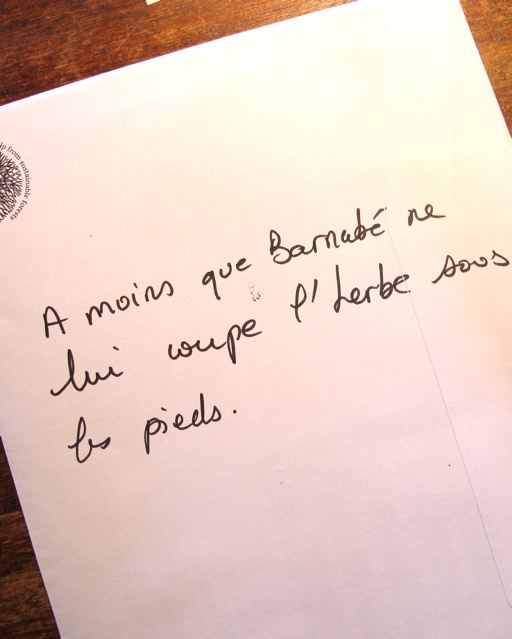
She writes it down:

“A moins que Barnabé ne lui coupe l’herbe sous les pieds.”

[“Unless Barnabas gives him a kick!”]

In other words, if the sun shines this Saturday, all will be well!

St. Barnabas a.k.a. the Cavalry!

It’s late afternoon now and still no need of Barnabé!

This is adapted from Rena Salaman’s lovely and authentic book, Greek Food.

It’s a refreshing garlicky sauce that goes well with grilled summer vegetables, chicken and lamb, and the previous post’s  No–Potato Fishcakes.

Serves 2

2 small pots no/low-fat yogurt*

a tablespoon of olive oil

a teaspoon of white wine or cider vinegar

a clove of garlic – pulped in a mortar with a little salt

2 fresh mint leaves – finely chopped

¼ medium cucumber – peeled, quartered lengthwise, deseeded and finely diced

salt and pepper

*For a thicker sauce–which is how we like it–empty the yogurt into a piece of muslin drapped over a sieve and leave it to drain into a bowl for half an hour in the fridge.

Discard the liquid and carefully empty the yogurt into the bowl.

Or use the yogurt as it comes out of the pot–emptying it into a bowl.

  • In a separate small bowl, whisk the oil and the vinegar together.
  • Mix in the garlic and the mint.
  • Fold this into the yogurt and add the cucumber.
  • Season to taste and mix it all together thoroughly.
  • Refrigerate until you’re ready to serve it.

Eagle-eyed for fishcakes made without potatoes (which I prefer to avoid)–I spotted these a few years back in an article by Gordon Ramsay.

I’ve added an egg to the original recipe to lighten them a little.

A  garlicky yogurt sauce goes well with them–Tzatziki (see next post)

for 2–or 4 as a starter

200 gms salmon fillet–skinned and checked for bones

200 gms smoked haddock–undyed if possible, and skinned

2 small shallots–chopped small

an egg–lightly beaten

salt and pepper

olive oil for sautéeing

  • Cut the fish into chunks and put into a food processor.
  • Pulse to a coarse mince–too much and it will be a slurry.

The "mix"

  • In a bowl, mix the fish with the shallot, the egg, salt and pepper.
  • Check the seasoning.
  • Form into little patties or “cakes”.
  • Chill them for an hour if possible–it just helps to bind them.
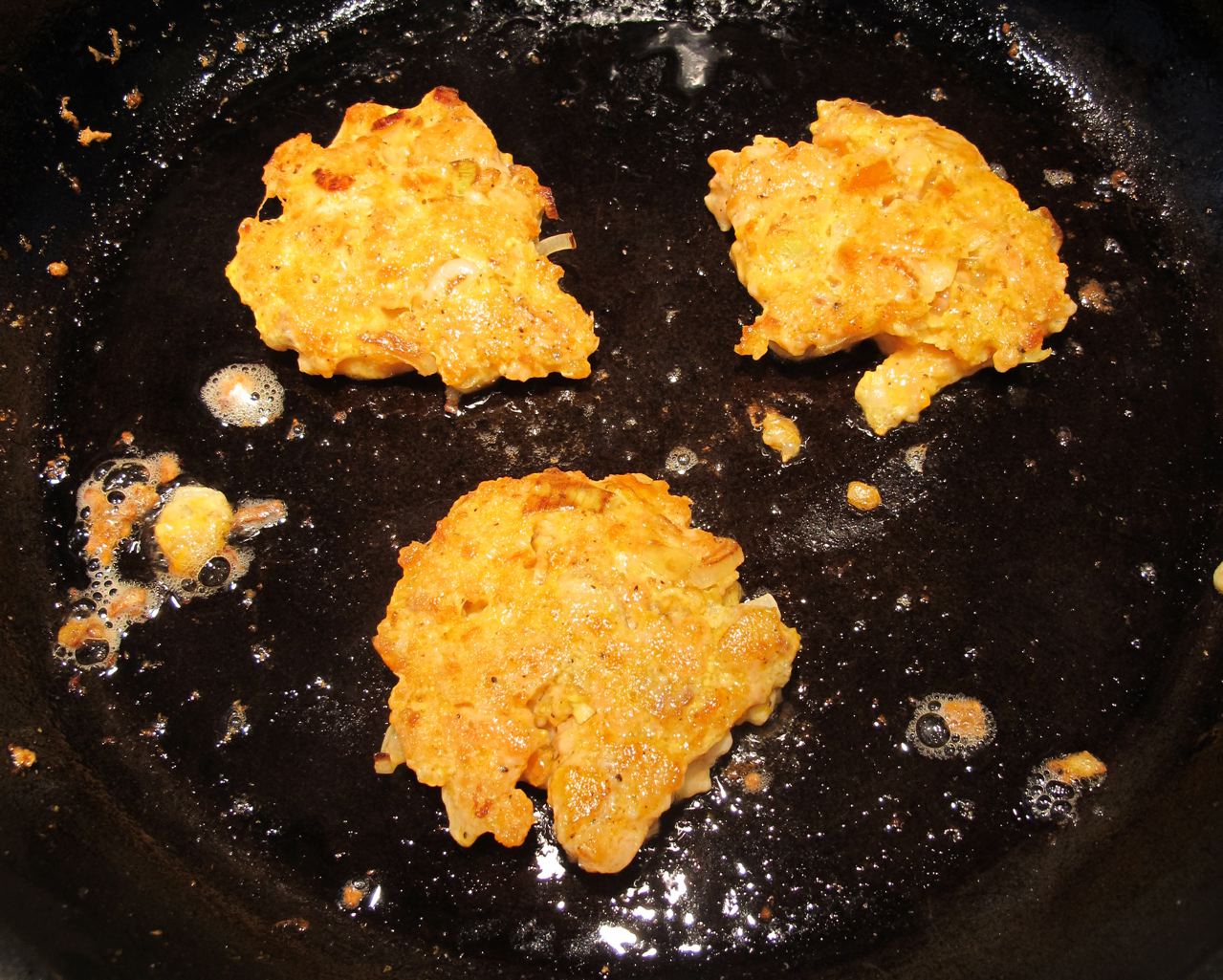
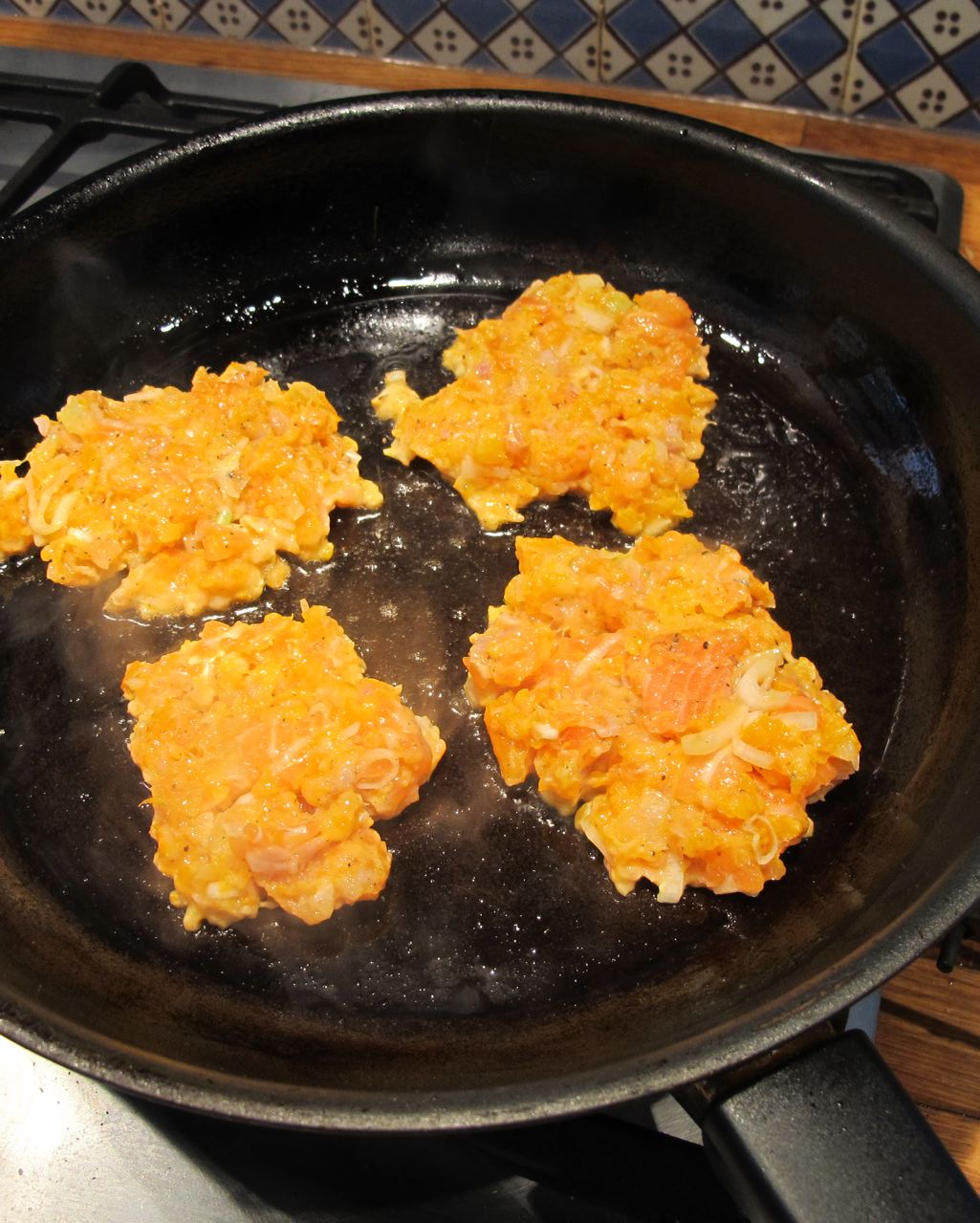
  • Heat a tablespoon of oil in a large pan.
  • When it’s hot slip the “cakes” into the pan and gently flatten them a little.
  • Sauté them on each side to a light brown finish–2/3 minutes a side.
  • They should still be moist inside.

"Prêt à manger" fishcakes

We have just had these for lunch on a rainy day–with a simple green salad and tzatziki.

Steadily–in twos at the moment.

Meredith came in from the garden yesterday and offered me two fat strawberries.

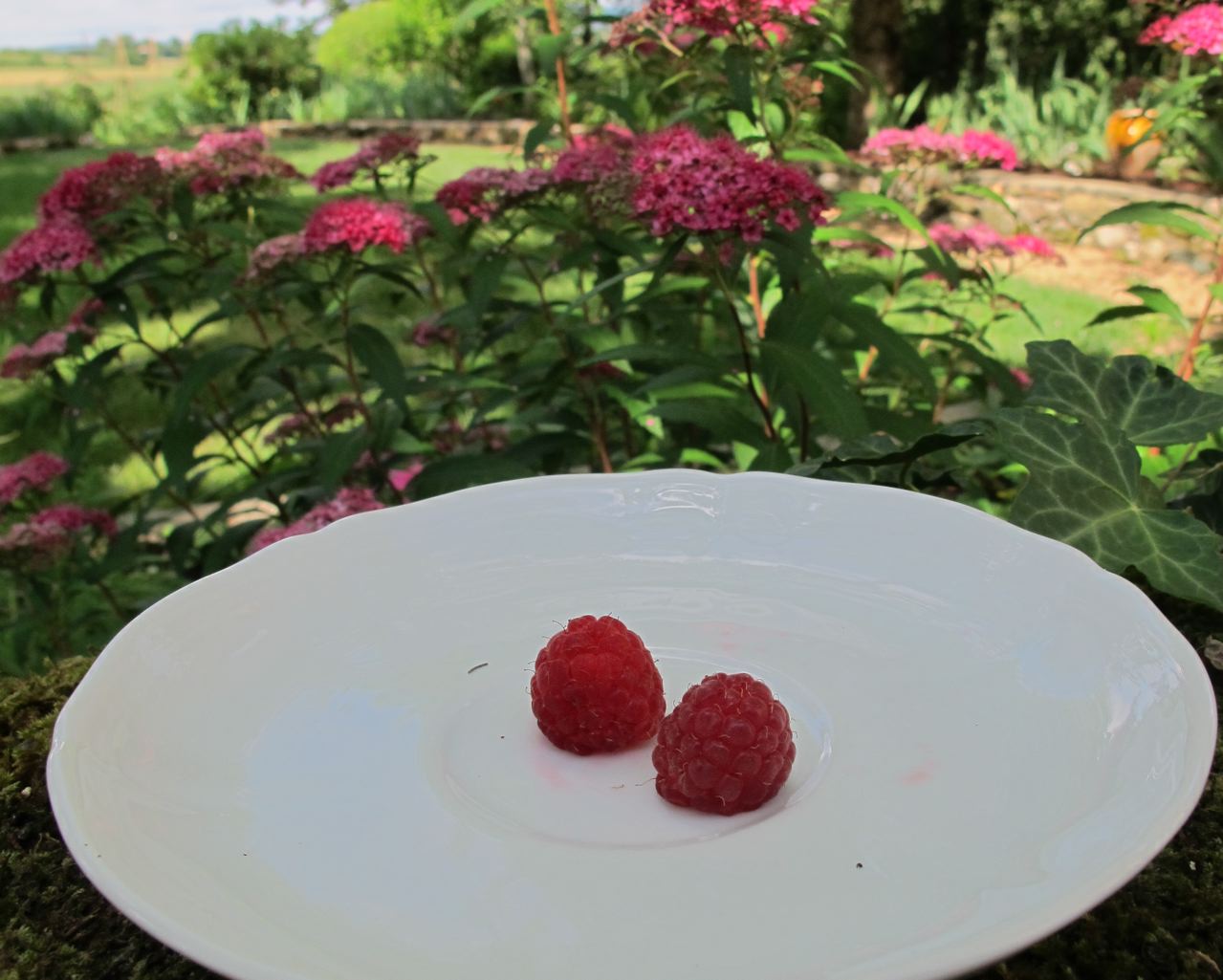
I “harvested” two raspberries this morning.

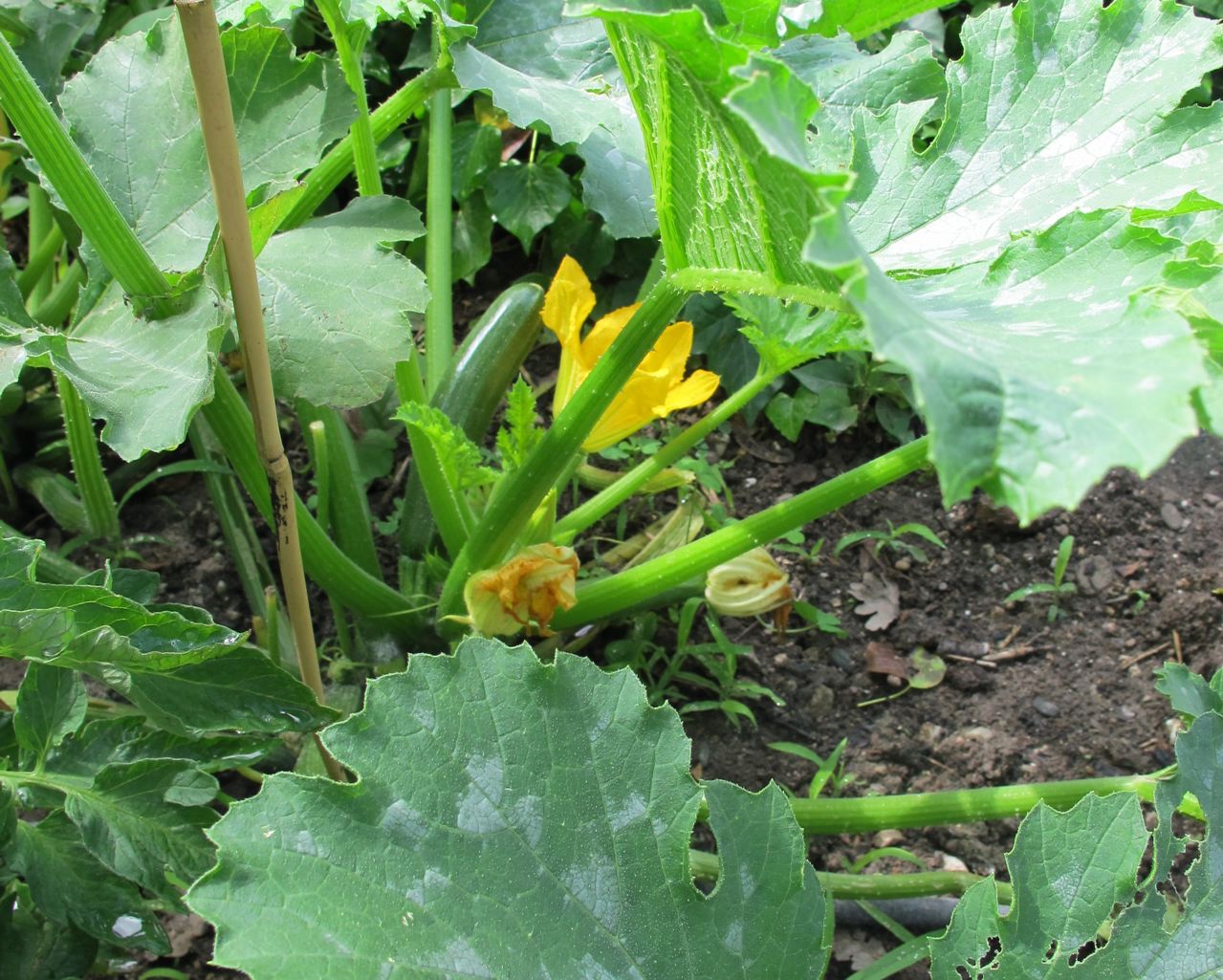
We have already eaten two courgettes.

Tomatoes are small green golf balls–but it’s only the first week of June.

The rain this week and now the sun has made us hopeful.

“Mary Mary quite contrary–” 

My Aunt Mary was contrary–contrary enough to live to 92–and a talented gardener.

She transformed a long rectangle behind her Suffolk cottage into something magical, with a fishpond at the end. She loved her garden and reigned over her 90th birthday party in it–on a glorious early July day.

She and my father were privately adopted in 1915 by my grandmother, who was 40 and a widow.

Granny taught violin and brought the two children up as a single mother. She lived to 87 and was contrary too–according to my mother!

Young Dad--RAF trainee

My father was an enthusiastic gardener–Dahlias in October, as I recall….He grew vegetables too–important in post war Britain where some food was rationed until 1954!

I have not inhereted the gene.

…with silver bells and cockle shells

And pretty maids all in a row.

This nursery rhyme has nothing to do with gardens, I discover, but disguises a darker theme (http://www.rhymes.org.uk/mary_mary_quite_contrary.htm).

A corner of our garden--no sign of silver bells and cockle shells...just a couple of canoodling snails this morning.

It has rained on and off for the last three days and Serge–one of our young farmer neighbours–has a broad smile on his face in Lautrec market.

“J’imagine que vous êtes content…”

“Tous le monde est content!”

I mention the sunflower fields I have just driven past and how they have sprung back to life.

Patchy and arid looking a few days ago they are now returned to almost normal–serried ranks of small green plants standing proud.

He looks to the heavens and grins, miming sunflowers offering their faces to the rain and drinking deep.

I buy his last 6 eggs and remark on the pile of garlic on the stand–it looks new and I pick up a half kilo.

“Je vais te donne”( “a gift”)–I protest–he insists; I put the truss in my basket beside the eggs–everyone is happy!

There is action too in the garlic fields.

Small groups of workers arrive early and–bending low–slowly work their way through the crop, snipping off the flowers that have appeared after the rainfall.

All the plant’s energy must go into the garlic bulb in the couple of weeks remaining before the harvest.

Now the sun comes out.

The biting north wind has dropped and June feels like June at last!

Tous le monde est content…!

Sir John Falstaff--see below!

An actor friend–who has type two diabetes and had a tendency to be overweight–told me a couple of days ago that he had taken up walking with hiking poles. He’d lost 10lbs and was feeling all the better for it.

(Meredith bought me a pair a couple of years back but I was too self conscious to use them for long!)

Professor Steven Blair (Arnold School of Public Health, University of South Carolina) writes
in this month’s GI news, that there is now overwhelming evidence that regular physical activity has important and wide-ranging health benefits, including reduced risk of chronic diseases such as heart disease, type 2 diabetes and some cancers.

Fit people come in all shapes and sizes the professor says:

“I often tell people that I was short, fat and bald when I started running, but that after running nearly every day for more than 40 years and covering about 70,000 miles … I am still short, fat, and bald. But I suspect I’m in much better shape than I’d be if I didn’t run.”

Being fit, he believes, means accumulating 150 minutes of moderate intensity exercise, such as walking, each week–a brisk walk of about 40 minutes 4 times a week.

Overall, his data showed about a 50% lower mortality rate in the moderately fit as compared with the unfit.

Professor Blair believes that weight isn’t everything (he would wouldn’t he!) and recommends focusing on good health habits, no matter what number you see on the scales.

  • Give fruits, vegetables and whole grains a major place in your daily diet.
  • Be moderate about fat and alcohol.
  • Don’t smoke.
  • Work on managing stress.
  • Perhaps most important, get out of your chair and start moving for at least 150 minutes/week.

His studies show that a normal weight person who is unfit is twice as likely to die in the next decade as a person who is overweight and fit.

Nevertheless, next time my friend plays Sir John Falstaff--which he has done several times–he’ll have to use artificial padding–and good for him I say!

STEVEN BLAIR
Prof. Steven Blair–who believes that physical inactivity is the biggest public health problem of the 21st century.

It rained a couple of nights ago and the morning after–a steady persistant rain that soaked the earth without flooding it–the countryside is absorbing it thankfully.

The emerging sunflowers were struggling with the drought but already look greener and happier.

 ” a box of rain–“

the phrase came into my mind because the rain was gentle and reminded me of the rhythm of a number from “American Beauty”–

a studio album the Grateful Dead recorded in the early Seventies.

…It’s just a box of rain

I don’t know who put it there

Believe it if you need it

or leave it if you dare

But it’s just a box of rain

or a ribbon for your hair

Such a long long time to be gone

and a short time to be there.

The song is upbeat and beautiful–though the circumstances of its creation were sad I discovered…

Bassist Phil Lesh, who wrote the music:

“..at that time, my dad was dying of cancer, and I would drive out to visit with him at the nursing home  and  on the way out there I would practice singing the song. I sort of identified that song with my dad and his approaching death. The lyrics Bob (Robert Hunter) produced were so apt, so perfect. It was very moving for me during the period of my dad’s passing. I felt like singing it in other situations similar to that since then.

asked what the phrase meant, lyricist Robert Hunter replied:-

 By “box of rain,” I meant the world we live on, but “ball” of rain didn’t have the right ring to my ear, so box it became, and I don’t know who put it there.”

Nothing to do with rainfall after all–“but me and the sunflowers” are “grateful” anyway!