Feeds:
Posts
Comments

A week nearly since Angharad died. The response on the blog has been extraordinary.

Over twelve thousand hits and an outpouring of emotion that has astonished me.

She touched so many hearts with her performance and–for those that met her–with her charm and zest for life.

Her early death at 63 is shocking and promotes a feeling of disbelief–how can this be?

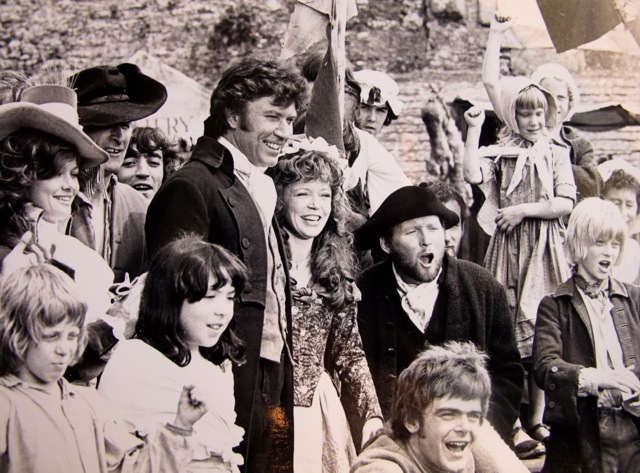
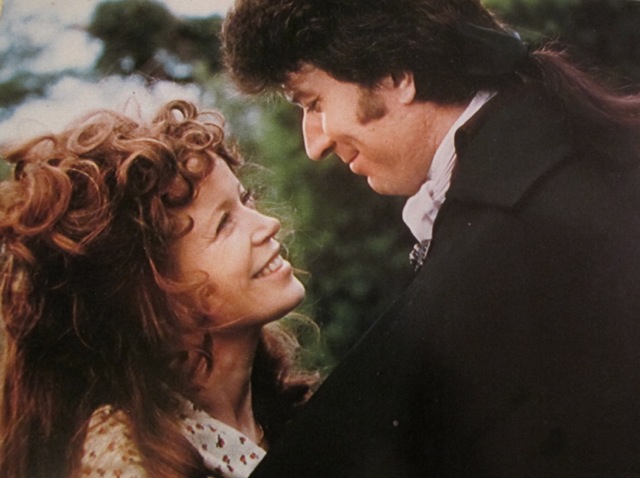
Many people are watching Poldark again on the newly-reissued DVDs or on Netflix in the USA  and there she is in her prime–fiery and proud–in full flood, giving as good as she gets and eventually winning through.

It seems impossible that she’s gone.

Karen H in her comment recalled Demelza’s words in the final scene of the series.

“The last sentence Angharad says as Demelza rings so true,There is no tomorrow. All we have is now.”

Carpe diem–Karen adds.

Life goes on.

Il faut l’accepter.

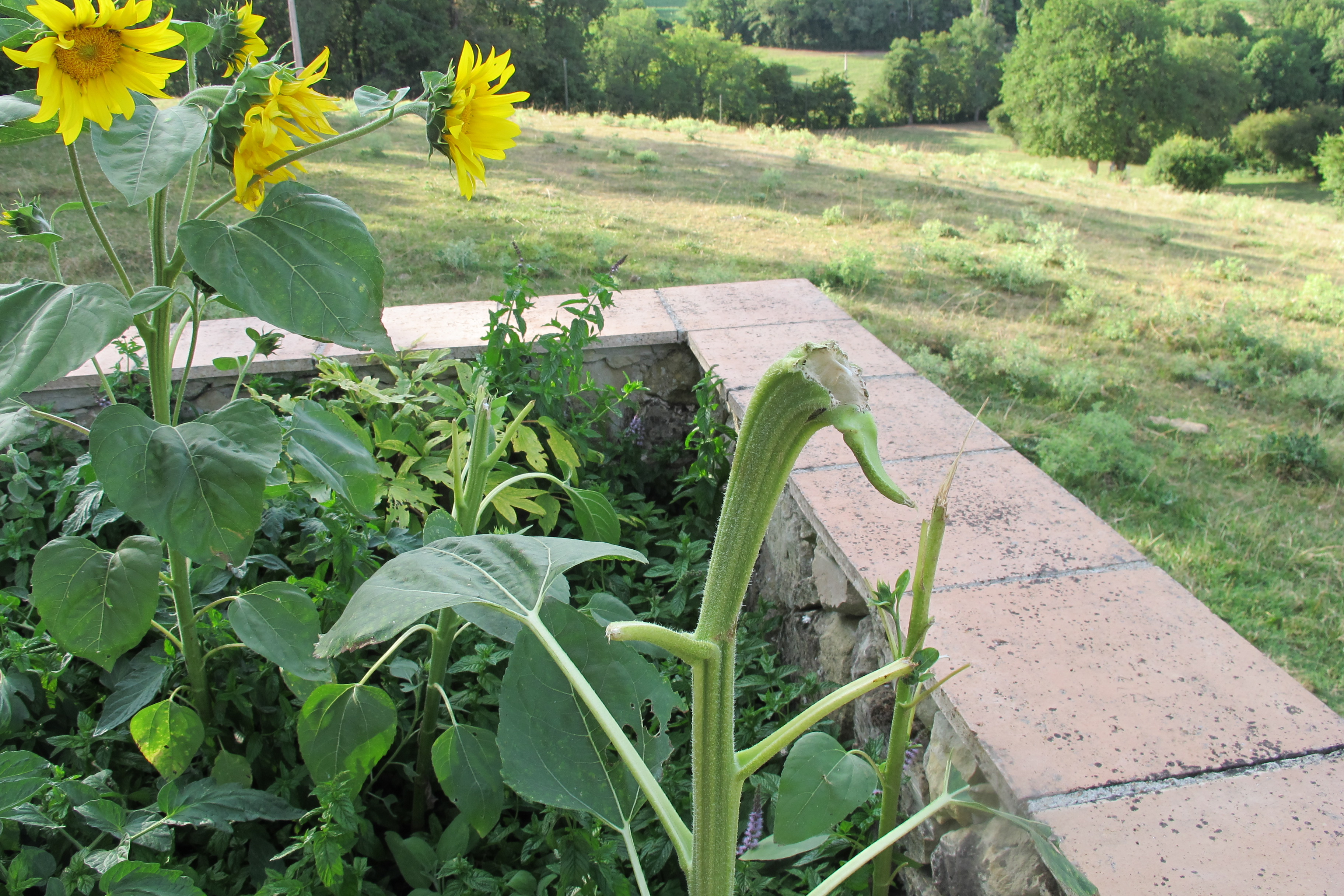
The hay is in and the sunflowers are beginning to bow to the inevitable.

The tomatoes–better tended than last year–are ripening.

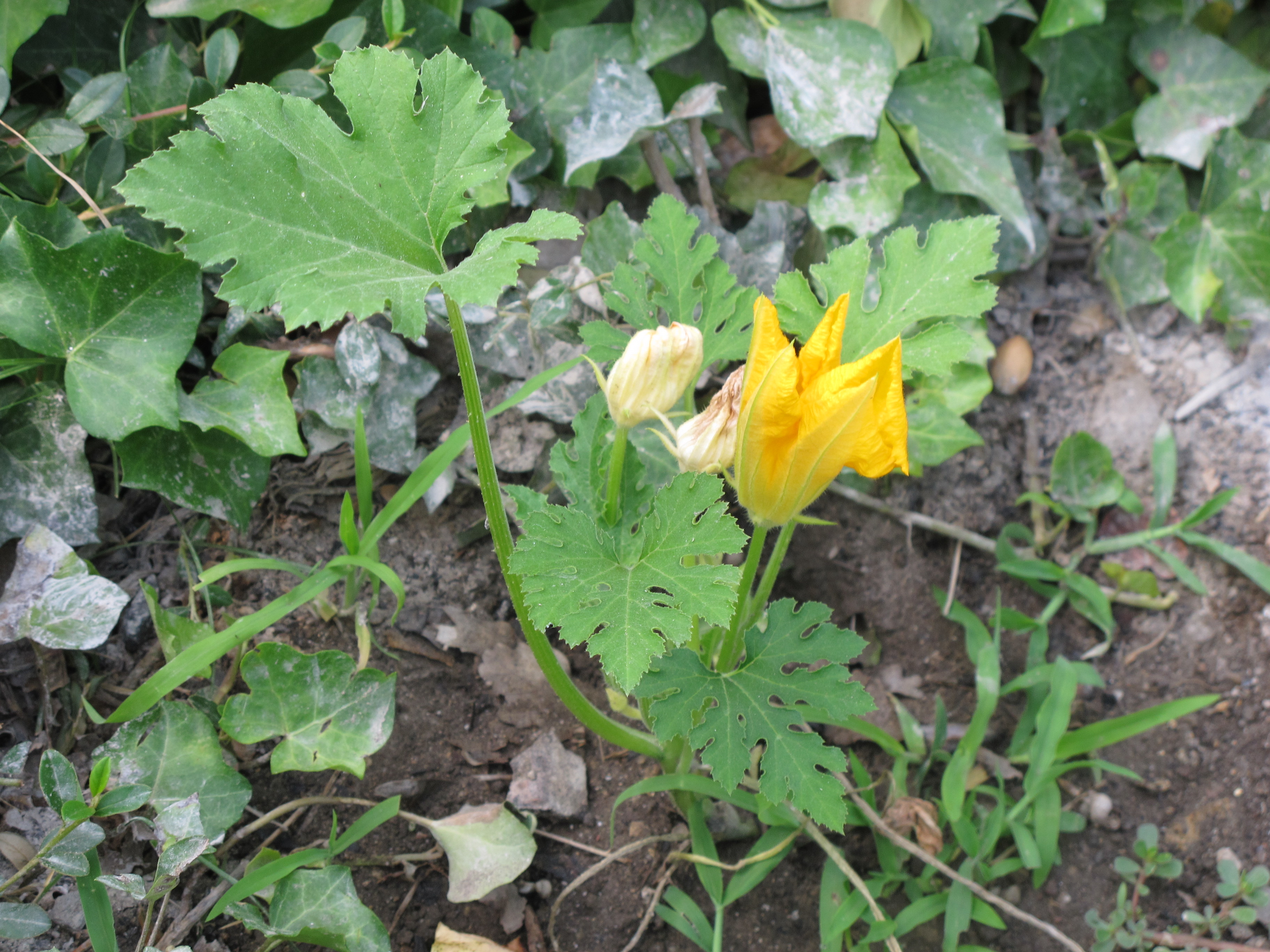
Even the two courgette plants are surviving.

Meredith and Alice collected five kilos of honey from the hive this week in the second harvest. It has a deeper hue this time due to the different plants the bees are working on.

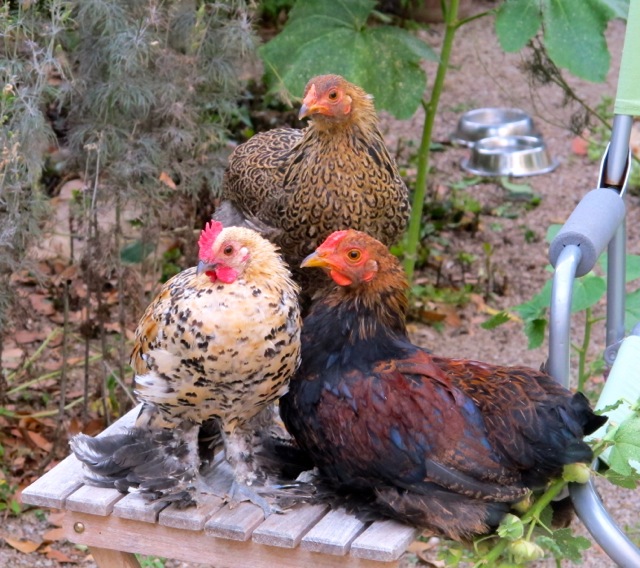
The chicks are no longer chicks and are roaming wider each day on bug patrol.

The garlic is drying in the barns as the Lautrecois, (us locals!), look forward to the annual Fete de L’Ail Rose–held always on the first Friday of August–in a week’s time.

If the weather holds we can expect over 10 thousand people to mill through the narrow streets of the village.

Sawle Feast was a more modest affair back then but surely no less anticipated and prepared for by the Nampara household!

It has touched me deeply to read the many comments and learn how moved people are by Angharad’s passing.

Angharad Rees

I have just heard that Angharad Rees has died aged 63 from pancreatic cancer.

It is devastating news.

Angharad was a wonderful friend and talented professional colleague.

Her portrayal of Demelza in Poldark was definitive and the series could not have enjoyed the success it had without her unique spirit informing the role.

We shared a very special time.

I will always remember her with enormous affection and respect.

She was a person who took pains to care for others.

She spread her magic where ever she went.

Her sense of humour was a joy and often for me a morale booster.

It was a privilege to know her.

Something or someone (hard to believe)–is beheading our sunflowers!

There are–or were–four of them self-seeded in the mint bed at the back outside the kitchen.

They made a pretty picture–yellow on green.

Our bees have been enjoying them too–not so far to fly, more like working from home.

Sharing the bed with mint and sage and a couple of tomato plants–also self-seeded.

Three are GONE–the entire flower face cut off, leaving almost no trace on the ground.

It happened overnight.

One plant is left. Will it survive the night?

Could  it be a cow? Can’t be a dog? Is it a werewolf!?

Certainly a Midnight Rambler.

Who or what is the Mystery Muncher of St Martin?

(Meredith S Holmes proposes to put powder on the wall tiles tonight!)

Cat Walks

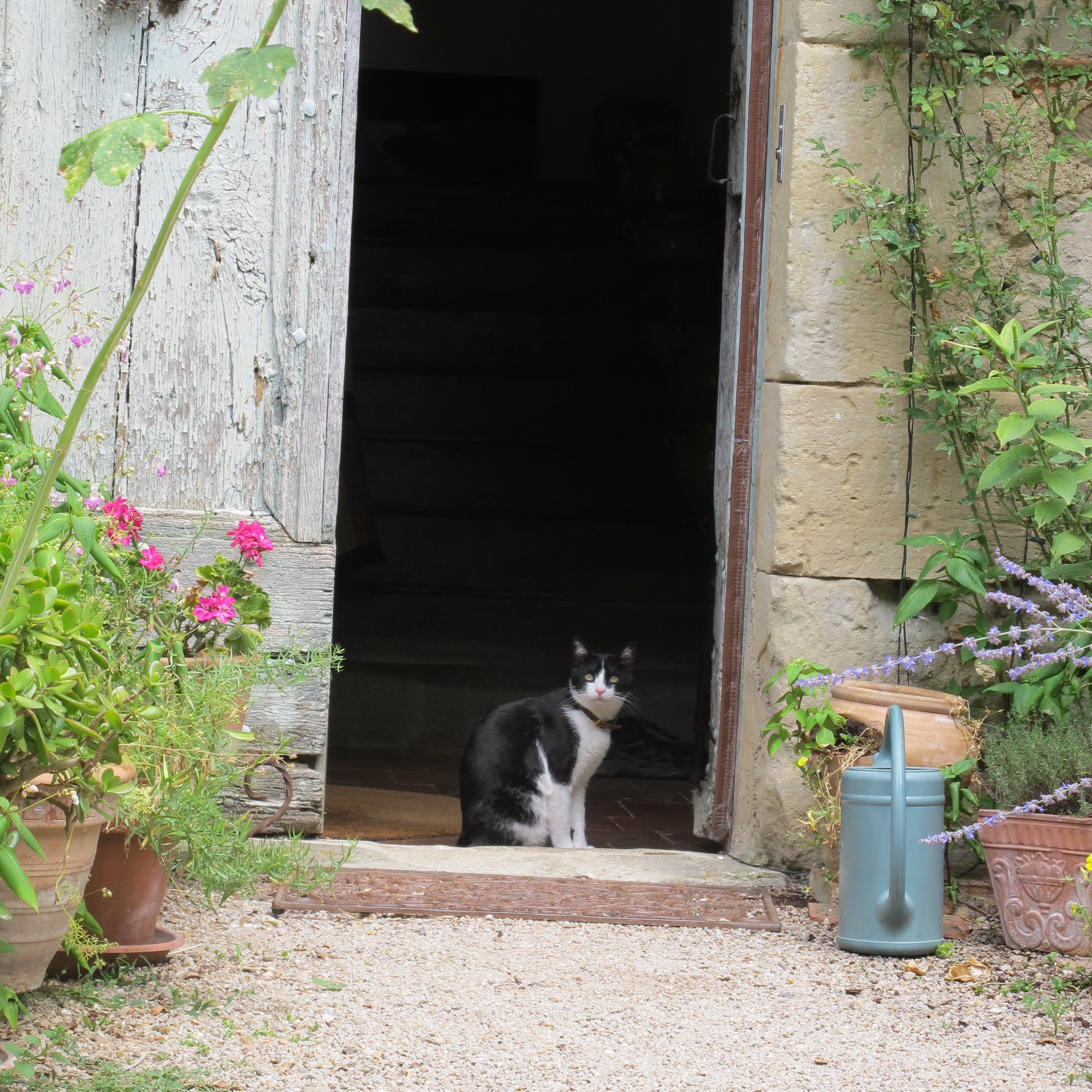
Beau takes his first post-prandial summer walk with us–out into a brave new world.

Tentative and doubtful at first, he adopts a deep crouch position in the short grass, watching us set off, reluctant to respond to our calls of encouragement.

Come on, Beau!”

Then when we turn our backs he begins to walk gingerly down the road behind us, his tail trailing behind him, not in its customary erect position, sniffing at the verges, not sure he wants to be this brave.

Pippa–head cat and veteran hiker–is, as always, reluctant–not from fear but from a deep sense of “why bother?“.

She makes a show of “here I am and here I’m staying” before moving sideways a few steps in a downhill direction; more from a desire to keep our interest than a decision to follow us down the road.

Seeing Pippa go through her you go on without me, I’m not coming with you this time routine, reminds us of the evenings when we’d have five cats in tow (a full house)–Pippa, Lucien, Marmalade, Butterscotch and Beauty–the newcomer.

By and large they were friendly walks, though with touches of attitude creeping in–Beauty was  never really accepted by Pippa.

Beau has the same experience as we come back up the hill.

He stalks her for a few paces then tries a playful leap–he’s got his confidence back and we’re heading towards more familiar ground.

Pippa surprised by his cheek wheels round and hisses her disapproval.

Too old for that my boy–watch it!

In the distance we hear the whine of a motor scooter and Beau looks round anxiously.

The noise gets louder as the rider heads in our direction.

Beau takes off up the hill, stretching his young legs,  followed by Pippa–managing a scamper.

Safely back home Beau looks out at the big new world he’s just experienced for the first time.

WOW!

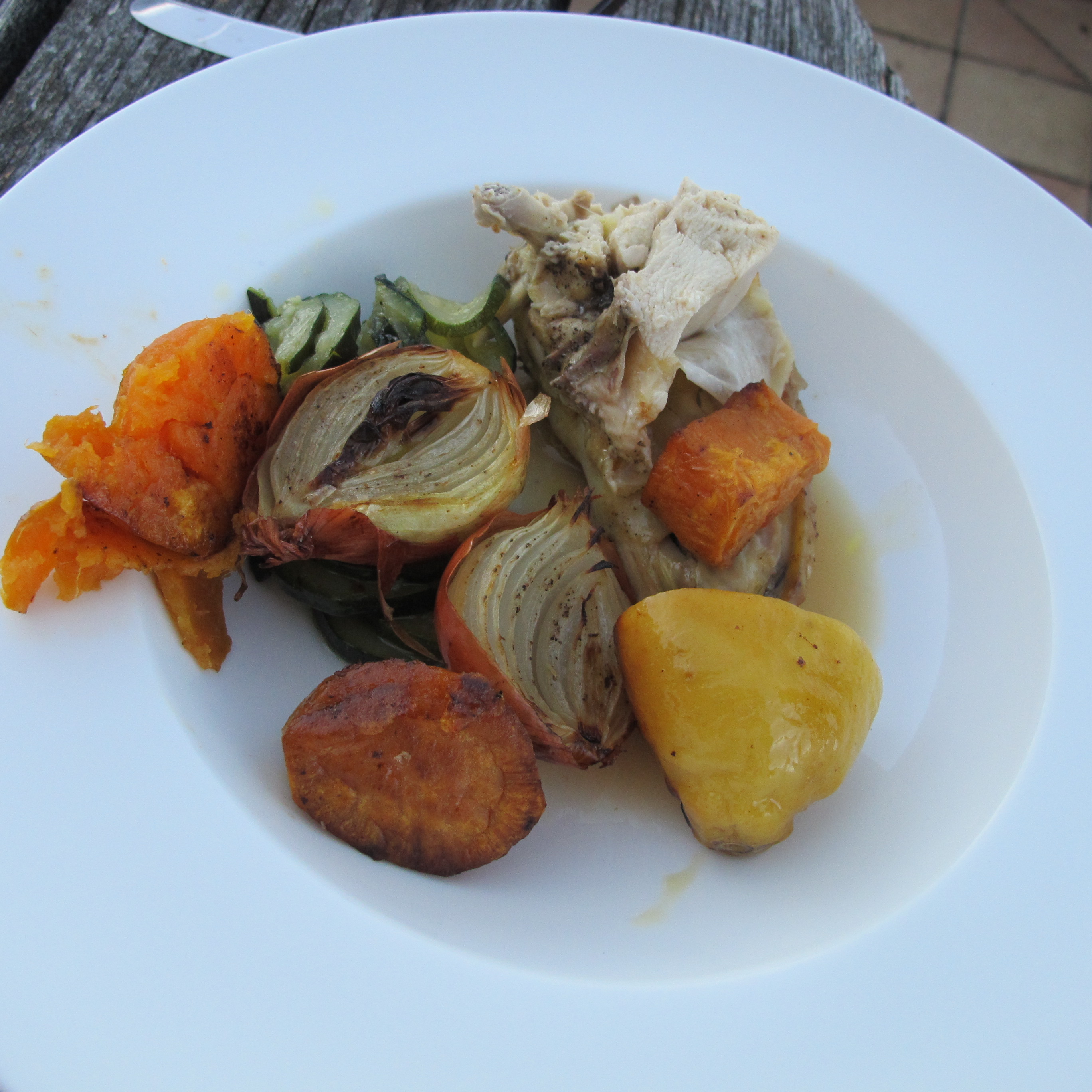
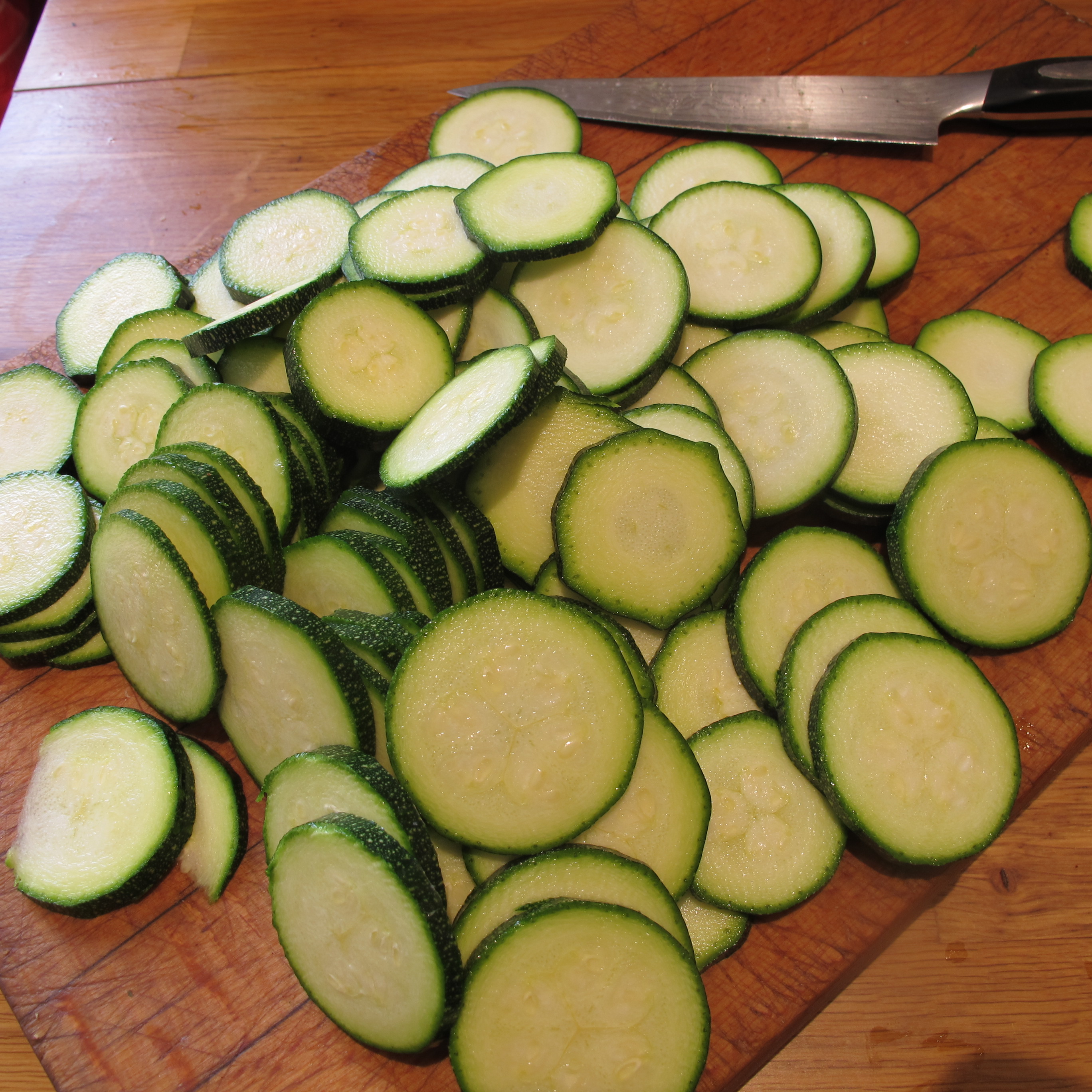
Spatchcocked chicken, roasted onion and sweet potato and a new courgette/zucchini dish

Joy!

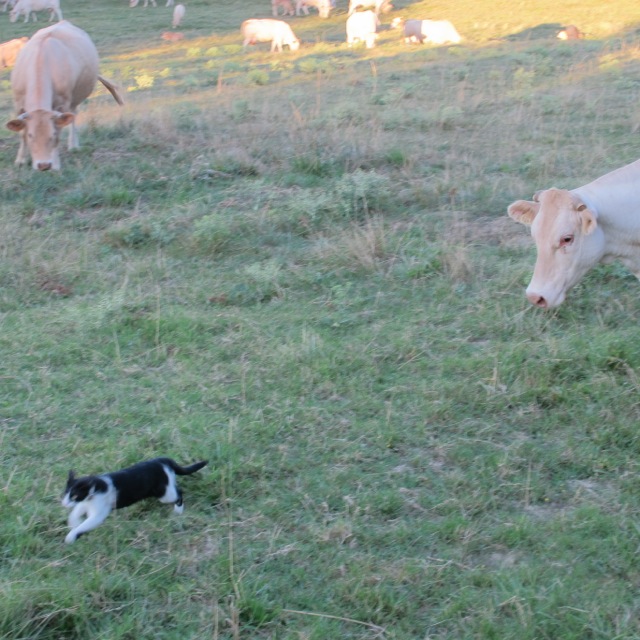
We sat on the terrace last night and ate this simple meal, while Beau played tag with the cows…

and the harvesters were hard at it in the field beyond the road.

Just the three of us–our friend Romaine came back with us from London.

The chicken she and Meredith bought would serve six and there were more onions and an extra sweet potato in the basket for unexpected guests.

The kilo of courgettes–slow cooked and melting–would easily stretch to six.

Happy to be home–we tucked in.

The courgettes/zucchini recipe is from Skye Gyngell’s version in her book  How I Cook.

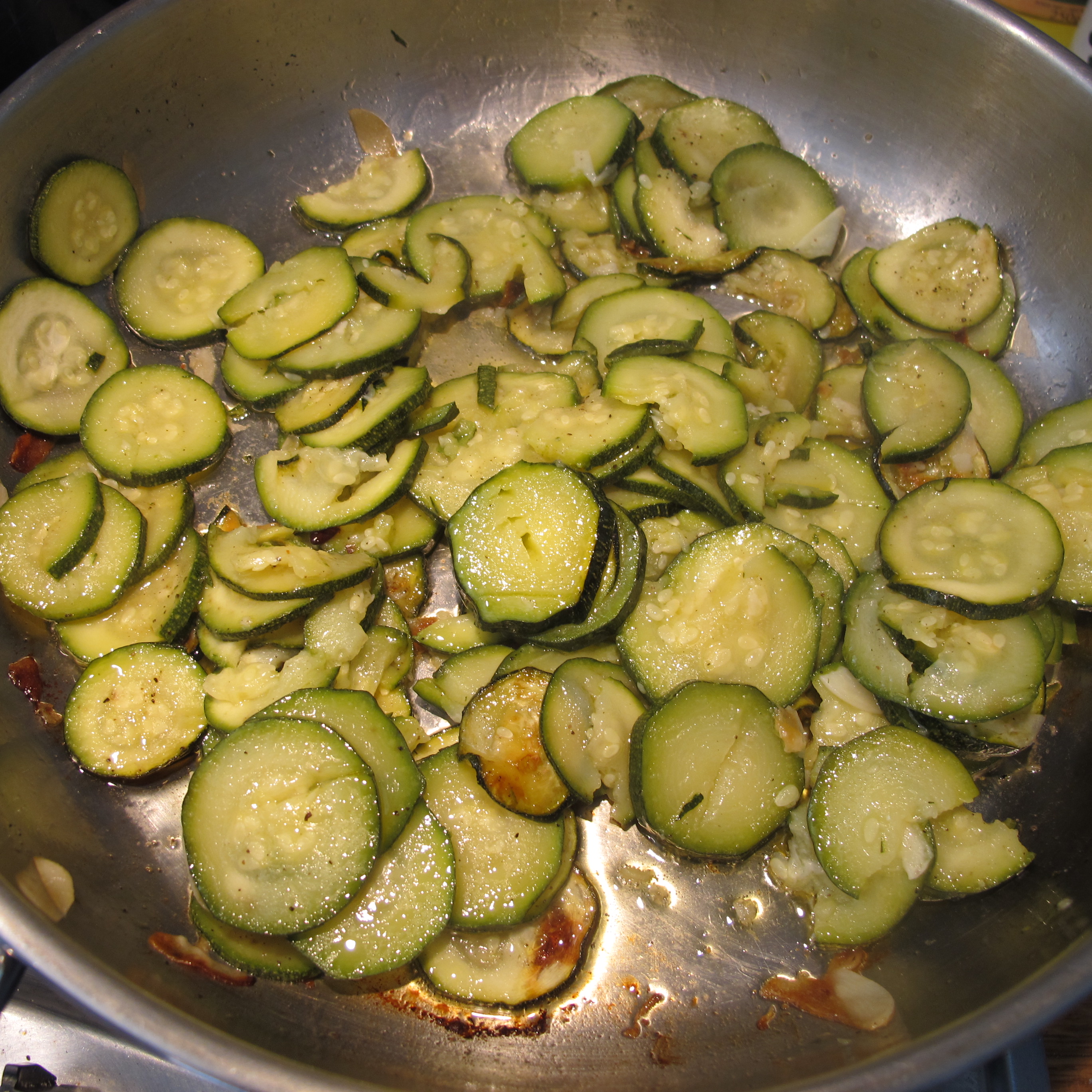
It is cooked slow and is mushily delicious with a little kick from the chili.

 Slow cooked courgettes/zucchini with garlic and mint.

for 4 

1 lb courgettes/zucchini--sliced thin

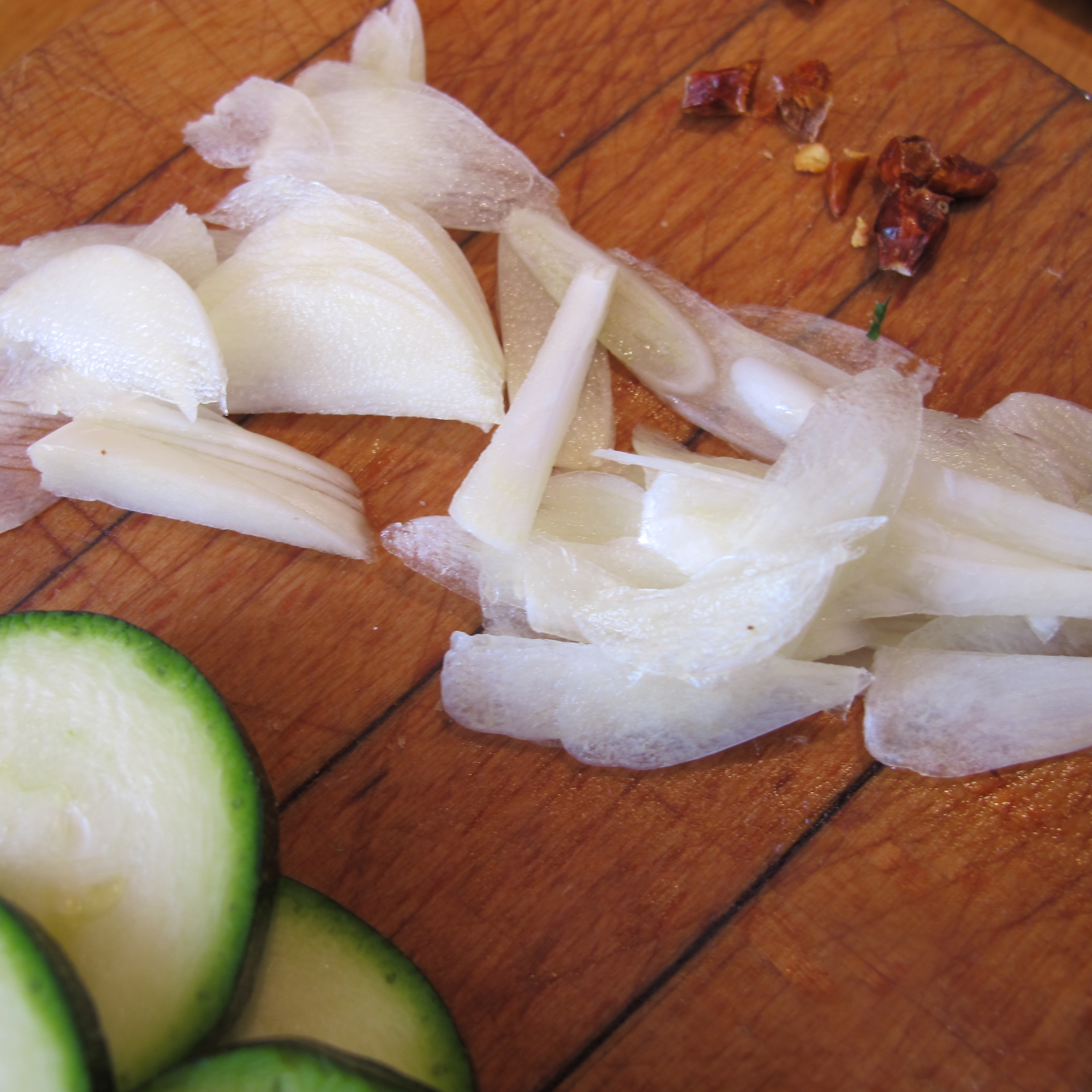
2 garlic cloves–sliced thin

1 small dried red chili–chopped

a handful of mint (if you have it)-chopped

salt and pepper

1 tblsp olive oil

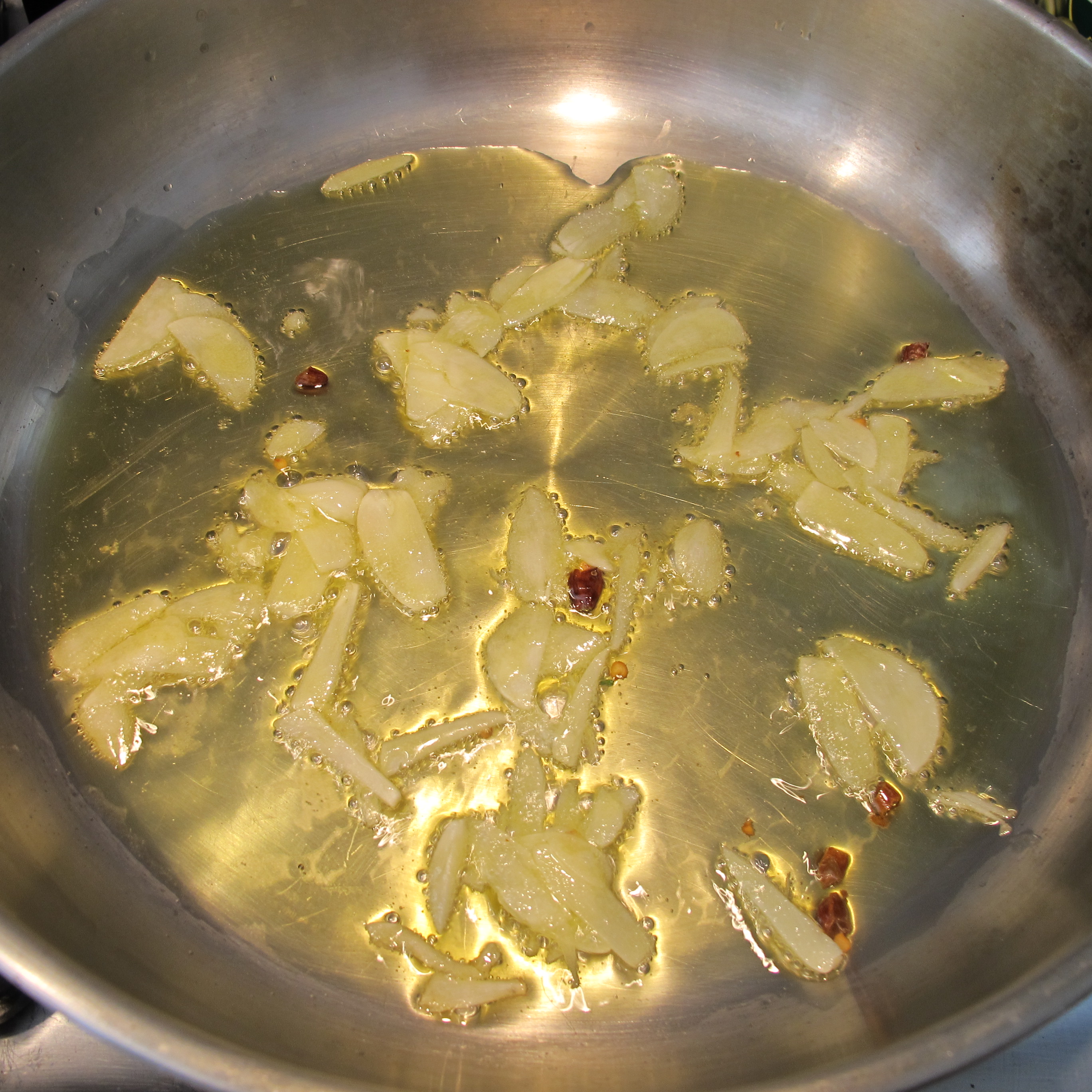
  • In a medium pan,  gently soften the garlic and chili in the oil.

  • Add the sliced courgettes/zucchini and turn them over in the oil to coat them thoroughly.
  • Season generously with salt and pepper.
  • Turn again to distribute the seasoning.
  • Cover the pan and cook for forty minutes on a very low heat.
  • Uncover and fold in the mint, if you have it–which we have, but I forgot it!

I made it again today with a pound (500 grams) of the courgettes and we enjoyed it tepid as a salad.

A short break…

Thank you for all the heartfelt and very moving comments that were posted after Marmalade-adieu.

Quite remarkable.

They were helpful and touching.

 His journey clearly brought back memories.

We are on a short break in the UK for a double celebration–(hence the two glasses!)

A wedding in a rainy Malvern and a 60th wedding anniversary in a sunny (we’re hoping) Cambridge.

A bientôt, alors!

Julie our travelling vet came in the late afternoon and confirmed what we sensed.

Marmalade’s cancer had grown in his mouth and he was having difficulty breathing.

His quality of life had diminished significantly.

He would arrive at meal times as usual, showing initial interest but quickly change his mind.

We spent the afternoon with him in the garden. He’d responded, as he always did, to a call–

Mar! Marmalade! Marmadukey!–emerging from the shade and joining Meredith on the grass.

He was a companionable soul.

When we were still living in London in the nineties, he and sister–much missed Butterscotch–were boarded at a place nearby between our visits. We would arrive to reclaim them and it only took a couple of calls for him to come trotting keenly out of the bushes to greet his people!

He was a head nudger: Bonjour! Good to see you.

(It runs in the family. Mother of all cats Pippa says thank you for food with a nudge.)

Stretching by the cemetery wall after my early morning walk, I’d suddenly become aware of a presence.

Looking up I’d find Marmalade looking down at me from just above head height.
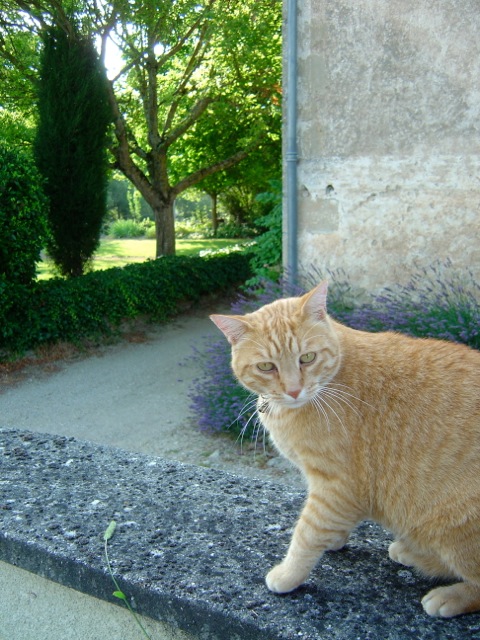
As I pulled myself level with his head he’d nudge my cap: Bonjour! Good to see you.

I’d be foolish not to think there was a touch of cupboard love involved as he eagerly followed me into the courtyard heading for the kitchen–but the greeting was genuine!

Marmalade liked his food…

–and not only his.

Before setting out on my morning walk, I’d feed all the cats.
Ev’rybody’s here-
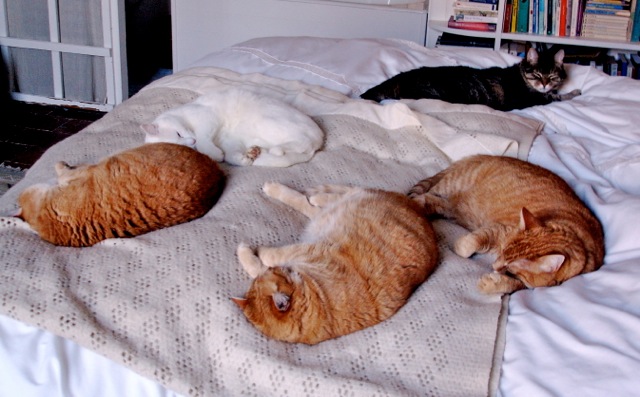
White, ginger, tabby–all five;
Sunny morning queue!
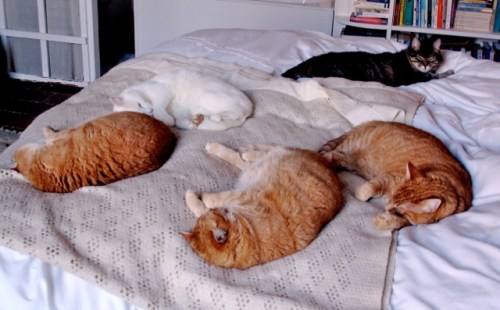
post prandial snooze

Working on the principle that the grass is always greener on the other cat’s plate…Marmalade would leave his bowl untouched and nudge in on his sister’s.
Often he’d join us at lunch–sitting up on the arm of a chair, apparently happy just to be present at the table.
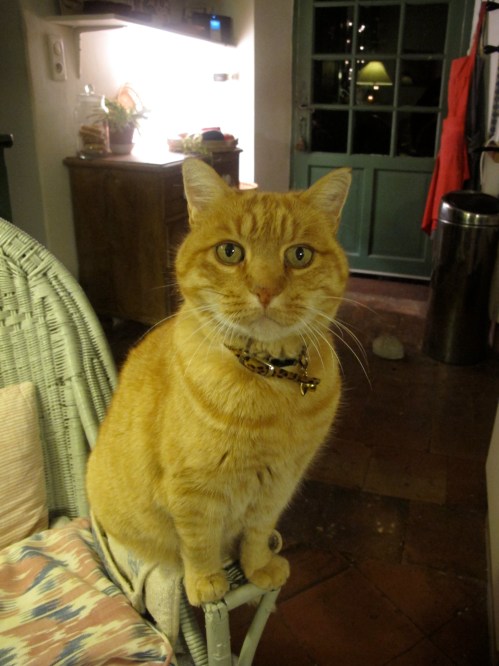
No pressure you understand! I’m not really hungry–but if there should be any leftovers, I wouldn’t say no.

There was a bit of the cuckoo in him too.

Orphaned Lucien–the tabby–a lone spirit, has a talent for finding comfortable places to park himself.

Marmalade would see a snoozing Lucien, check out the spot and decide that his “brother” needed a friendly lick-bath.

He’d judge it perfectly and move in on the nicely-warmed space when Lucien had had enough attention.

Mar has not been himself since snow white Beauty died prematurely aged 4, two years ago, followed last year by beloved sister Butterscotch.

Beauty hero-worshipped Mar (eight years his senior) from the moment he arrived. Marmalade was happy to give in and accept he was adored.

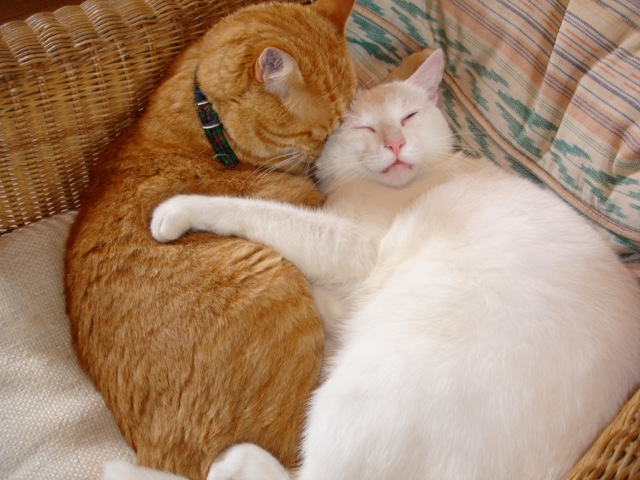
It was a touching sight to see them cuddled up together in apparent mutual admiration.
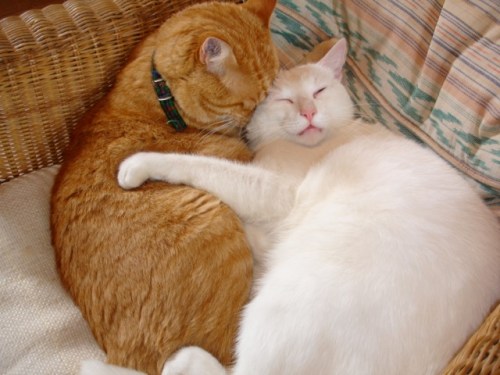
Since losing those two close companions, Marmalade seemed lost.

Young Beau–full of beans–tried to jolly him out of the dumps with his gleeful leaps and japes but dear, tolerant long- suffering Marmalade found it all too much.

Leave me alone old boy, I need a bit of a rest you know.

He lost weight and started getting ill.

His face became distorted, his breathing heavy and his left eye wept.

He was losing his magnificence.

He could still respond to a call and enjoy a moment with his people.

This week he took a turn for the worse and we called Julie–not wanting to prolong his ordeal.

So hard to judge the moment….

We kept our arms around him as he faded, lying full length on the kitchen table.

We buried him under the trees in the garden–beside Butterscotch and Beauty.

It’s the dailyness of domestic animals that makes their passing so difficult.

We miss his nudges, his quirks and the unqualified love he gave his people–for fourteen years.

Adieu! Nous te remercions–Big Mar.
Click below for Meredith’s touching tribute to a great cat.

http://youtu.be/Iq0xmg-l1gg
I couldn’t think of the French word for “butterfly” at Monsieur Fraise’s, our Lautrec butcher, the other day.  The word was as elusive as the insect. Pamplemousse kept fluttering around my mind, which means grapefruit!

Papillon is the word!

When I tried to demonstrate with my hands, starting them in the praying position then opening out like a butterfly, the butcher looked flummoxed.

I don’t blame him.

The idea of slicing a pork chop almost in half horizontally was new to me when I read about it recently in the Food Section of The New York Times.

After more elaborate miming, he understood–and was game to have a go.

  • He carefully cut round the bone, freeing up the meat.

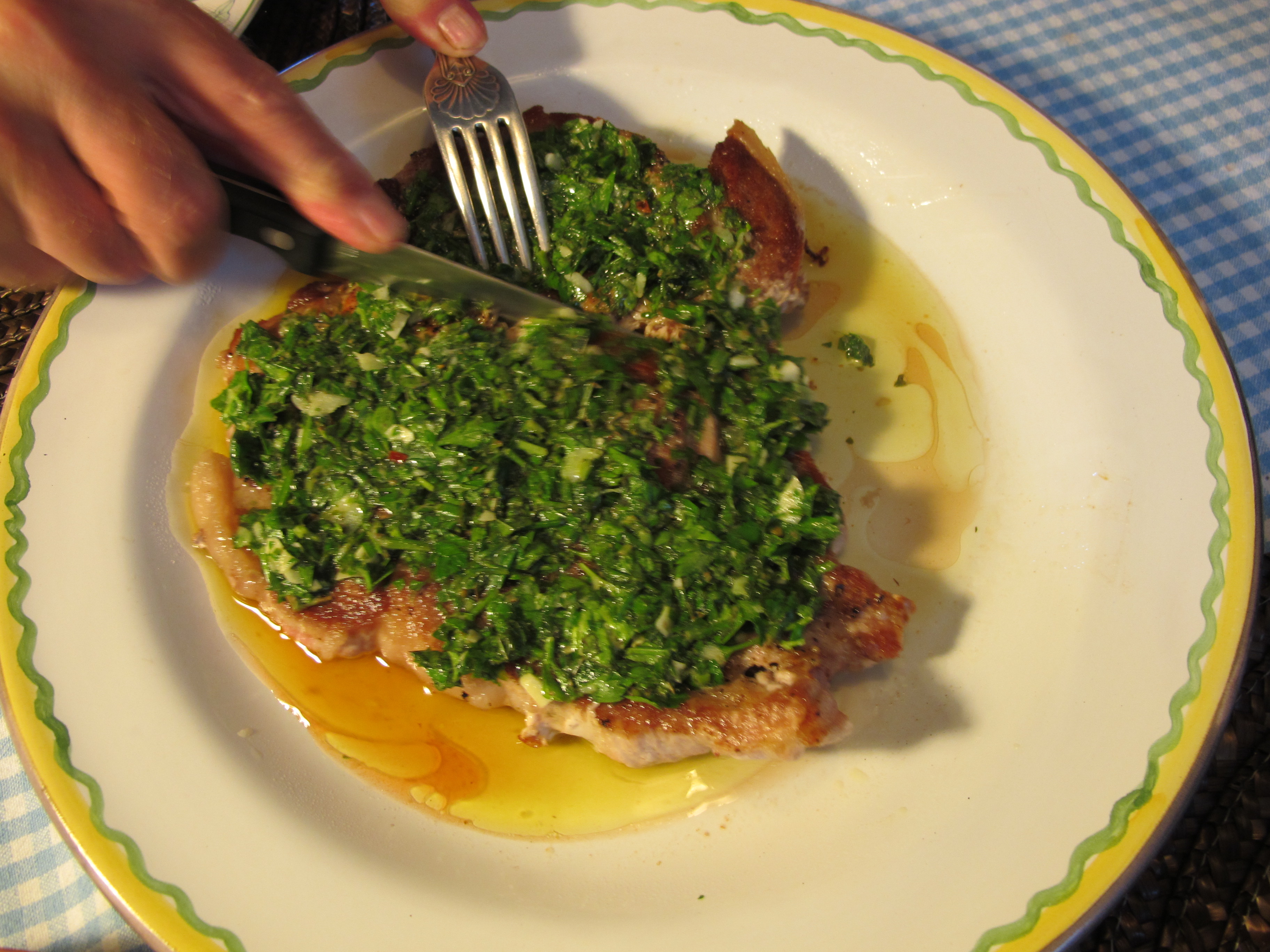
(Meredith’s photos below show me having a go….)

  • With his left hand holding the boneless fillet down, he sliced into the meat with a sharp knife working it through to leave a quarter of an inch uncut.
  • He folded back the two halves–still connected–to reveal the “butterfly”.
Below is the professional’s effort.  (Monsieur Fraise gets the Gold Medal I’d say!)
The advantage–apart from making a single chop go further–is that it cooks quickly–three minutes each side–retaining a juiciness that sometimes escapes when cooking pork longer.

Meredith and I tried out the herb topping (suggested by The New York Times). It looks good and is tasty–but leave it off if you like.

I enjoyed a piece of the chop–plain–the other evening with some slices of tomato dressed with olive oil and salt. I didn’t miss the topping.

for 2

1 thickly cut pork loin chop–butterflied

1 tblsp olive oil

salt and pepper

for the herb sauce

3 tblsps parsley

2 tblsps mint

1 tblsp chives

1 clove of garlic–sliced finely

1 tblsp–lemon juice

4 tblsps–olive oil

salt and pepper

  • Pile the herbs together and chop them finely.
  • Season to taste.
  • Add the lemon juice.
  • Stir in the olive oil.

for the pork

  • Season the chop well with salt and pepper.
  • Heat the tablespoon of oil in a sauté pan to hot and slip in the chop.
  • Turn the heat down to medium and leave the chop to cook for 3 minutes.
  • Turn it over and cook for a further 3 minutes–(the cooking time depends on the thickness of the butterflied chop. The juices should not run pink.)
  • (If you are using the topping, spread some over the chop at this point).

  • Let it rest on a serving plate–covered with foil–for 5 minutes before slicing and sharing it.

Our friends Irv and Iris from Washington D.C. stayed over the weekend en route to Paris.

Ex-history teacher Iris kindly tore herself away from reading Hilary Mantel’s second installment of the Thomas Cromwell saga long enough to show me that Delicious Dishes for Diabetics is now available as a Kindle download– an ebook–for £4.93 from Amazon.co.uk/.

She’s thinking of downloading it for their time in Paris.
I’m thrilled!
(* ee by gum!– English expression of surprise and amazement!)

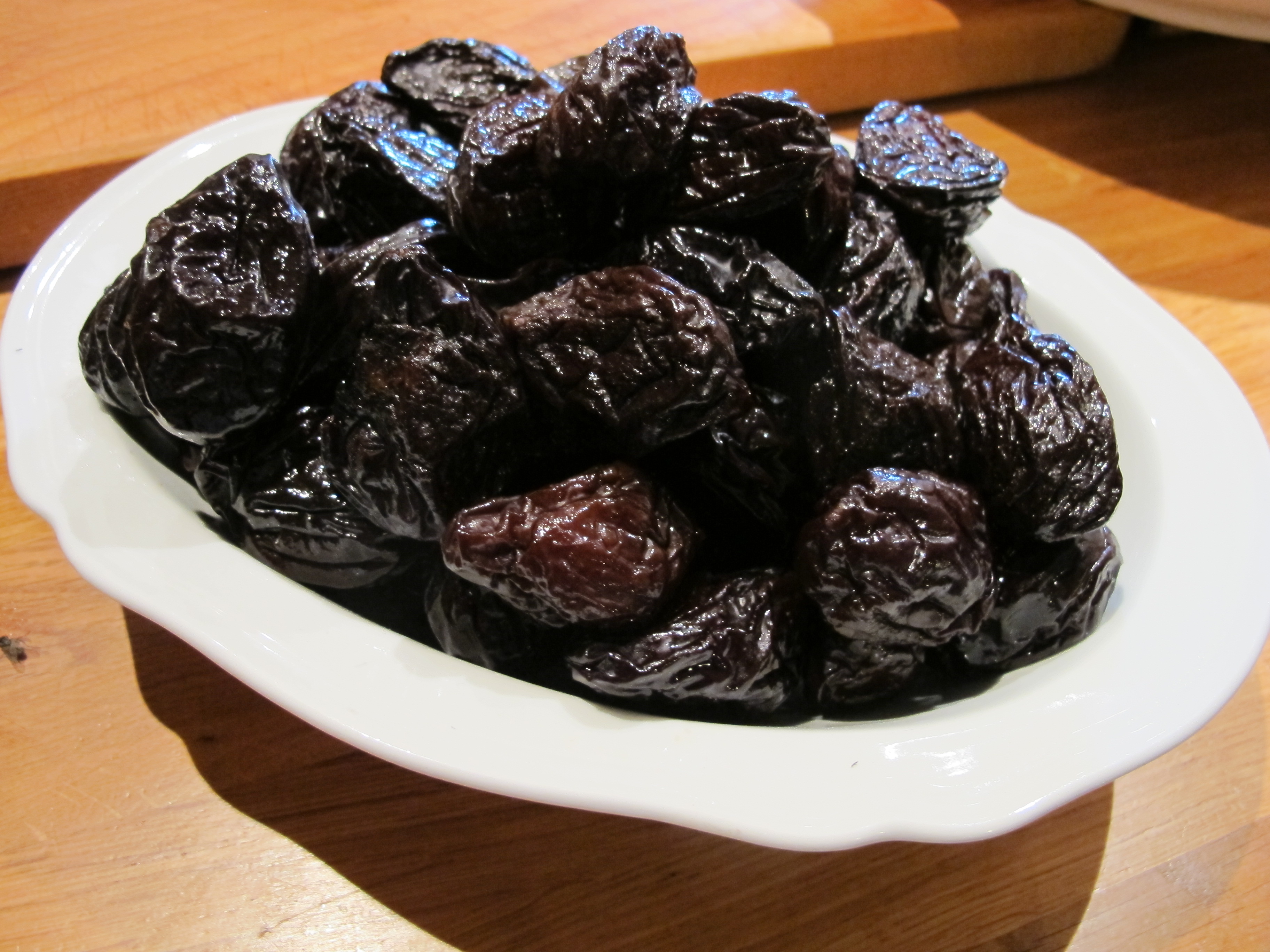
Prunes

Pile of uncooked prunes

I like my daily prune.

I took a jar of cooked prunes to Corfu.

Seems eccentric–my mother must have had a hand in establishing the habit.

“Keeps you regular, Robin!”

There’s a funny side to prunes–mention of them can make people smile.

(Anything to do with body functions tends to bring a smile to English faces.)

The word itself has a comic sound– PROONE and it’s wrinkled appearance is not beautiful.

BUT they are delicious when soaked first and then gently stewed and allowed to cool.

The prunes here are from Agen–a couple of hours to the north west of us and they are extra as the French say of something special.

Some people eat them dried.

I prefer them after they’ve been through the Method–soft and melting in the mouth–as an essential part of breakfast.

The Method (for a pound of prunes):

  • Empty the prunes into a saucepan.
  • Cover them with boiling water.
  • Let them stand for a half hour.
  • Gently bring them up to the boil.
  • Cover them and let them simmer for another half hour–covered.
  • Leave them to cool then store them in the fridge.

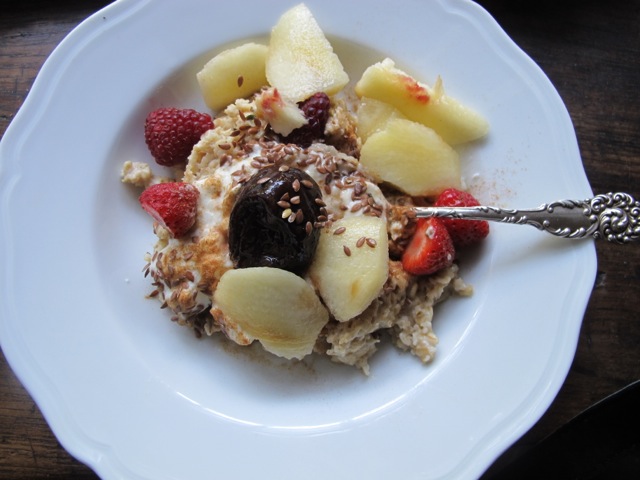
Here’s one in Meredith’s breakfast bowl–heaven she says!

“There’s no more faith in thee than in a stewed prune….”–                                                                                                          ~Jack Falstaff to Mistress Quickly in Shakespeare’s Henry the Fourth Part One.

I couldn’t possibly comment on that–but I have enough faith in prunes to take a jar of them to Corfu.