Feeds:
Posts
Comments

IMG_7320

I was surprised to see locally grown green peppers–(they are lighter and thinly fleshed)–in the market yesterday, nudging small white peaches on a new stall.

Everything is so late this year.

IMG_7351

I remembered a recipe I used to do years ago from Antonio Carluccio’s Vegetables book. Very Italian–simple and different.

The peppers are cooked whole in olive oil. They collapse, charring nicely and are finished in a quickly cooked tomato sauce.

If these particular peppers are unavailable use thicker fleshed ones–deseeded and cut into largish pieces.

500gm/1lb green peppers–tops and seeds removed

6 tbsp olive oil

3 garlic cloves–chopped

14oz/400gm tin of tomatoes–drained of their juice and roughly chopped (fresh sun -ripe tomatoes, skinned and seeded would be good too)

salt and pepper

Heat the oil in a deepish pan.

When the oil is hot carefully slide in the peppers–you may have to do this in two batches.

Turn them as they collapse and brown, for about 5 minutes–they should be tender.

Set them aside and spoon off four tablespoons of the oil–(I used this oil for sautéing later).

Slip the garlic into the oil.

When it starts to colour, mix in the chopped tomatoes.

Cook these over a high heat for five minutes to form a sauce.

Season with salt and pepper.

Stir in the peppers and cook on for another five minutes.

We ate these for supper last night served on lightly sautéed (in the excess oil) slices of leftover chickpea “bread” .

IMG_7329

A recipe remembered and reclaimed.
Just back from an unexpectedly extended London visit–thanks to a strike by air traffic controllers in France. In fact the extra days (4) were a blessing. A chance to catch up with brother Jack who flew in from Japan the day before we were supposed to leave and nephew Theo, who plays bass guitar in Wolf Alice–burgeoning indy band about to hit the big time.

IMG_7240

Brothers as the backing group to the new kid on the block!

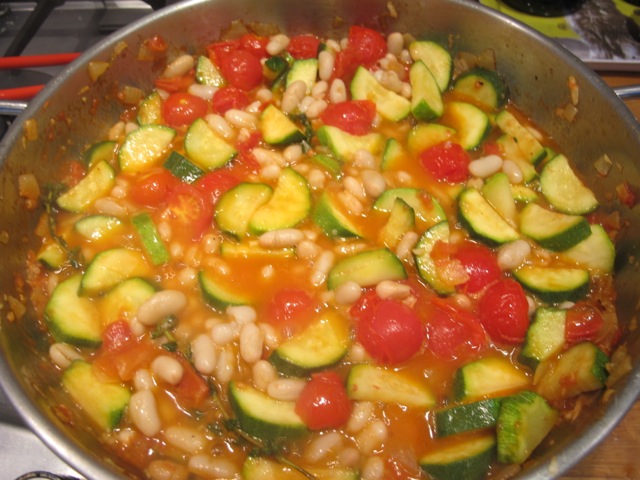
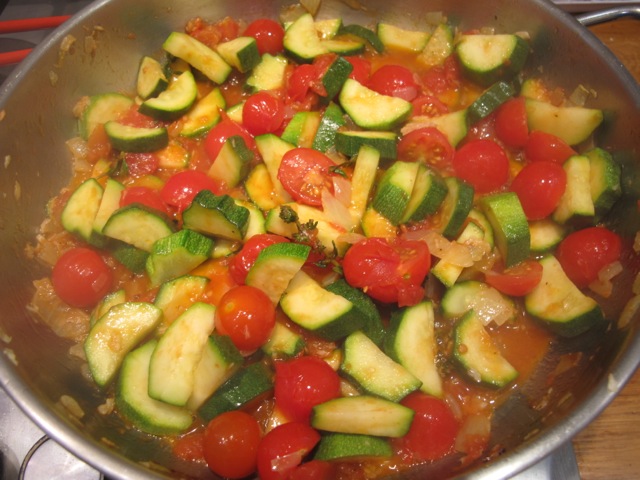
Now back in France and a stew with SUMMER  in its DNA–though the seasonal sweetness of fresh tomatoes  may not yet be fully expressed–and enough comfort factor to lift the spirits after a wet and wretched May here–not to mention the tempest raging outside today!

IMG_6629

It’s inspired by a Martha Rose Shulman recipe in The New York Times.

Few ingredients, simple to do and a pleasing look–just the ticket!

1 medium onion–chopped

2 tbsp olive oil

3 garlic cloves–mashed with half a teaspoon of salt

3 medium courgettes/zucchini–cut in centimeter rounds

3 tbsp chopped tomatoes–tinned [canned] at this time of year

200gm/8oz cherry tomatoes–halved

250gms cooked white beans, tinned or jarred–(the best you can find–I favour jarred)

3 sprigs of thyme

salt and pepper

Sweat the onion in the oil until soft; then tip in the garlic and sauté for a few seconds.

Add the courgettes/zucchini and turn them over in the mix.

Cook until they too start to soften–about 5 minutes.

Add all the tomatoes, thyme sprigs and a seasoning of salt and pepper and cook for 10 minutes until the cherry tomatoes start to soften.

IMG_6627

Add the beans and their liquid and/or a couple of tablespoons of water.

Cook for a further 15 minutes.

Check the seasoning for salt and pepper.

We are having the stew spooned over a baked sweet potato tonight.

This is a recipe from my new cookbook–Healthy Eating for Life–due out in early January 2014.

It’s simple to do–no fuss and can be made anytime of year.

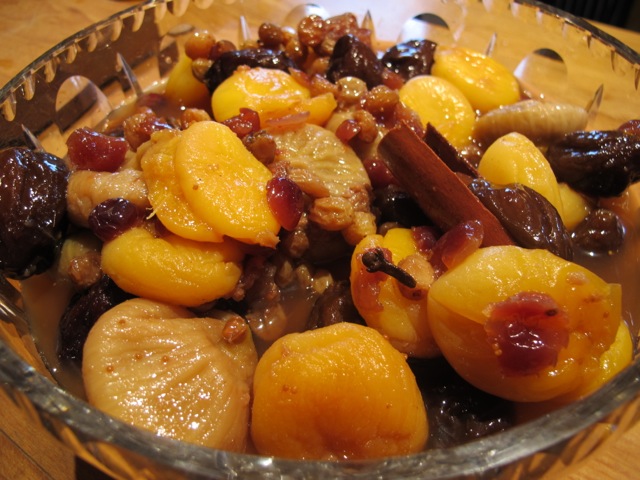
I don’t as a rule eat dessert but when Meredith hands me a small bowl of this with a dollop of yogurt–I find it hard to resist.

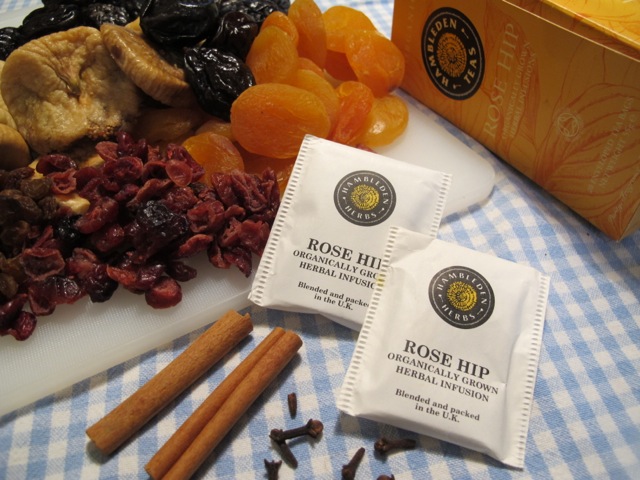
Yellow apricots lighten the colours but the darker untreated ones taste as good.

These amounts can serve at least ten people but as it tastes even better the next day and the day after having sat in the fridge any left over will serve well over the following few days.

IMG_6667

serves 10

400gms prunes

250gms dried apricots

350gms dried figs

50gms raisins

25gms dried cranberries

1500ml water

2 rosehip tea bag

7 cloves

2 cinnamon sticks

25gms flaked almonds

yogurt or creme fraiche

  • Wash the fruit.
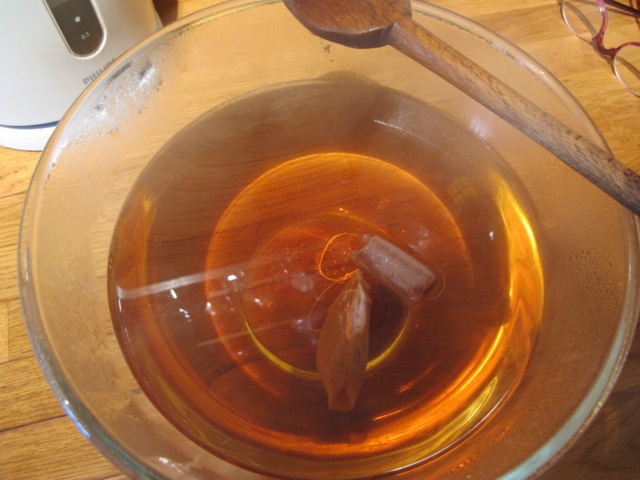
  • Boil the water and pour it over the teabags in a china bowl—leave for 10 minutes.

IMG_6671

  • Remove the teabag and pour the liquid into a pan.
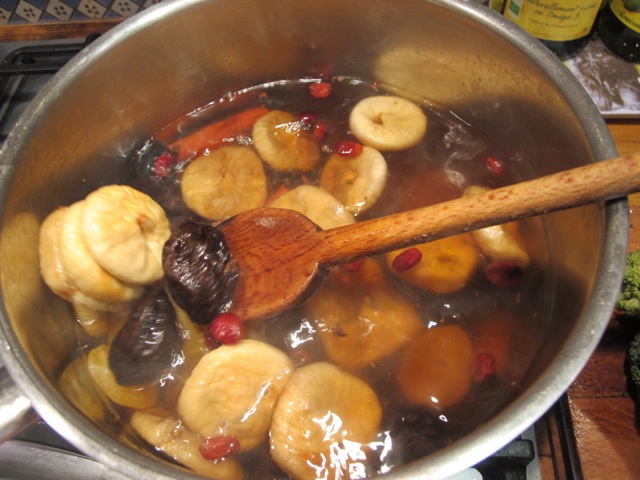
  • Add the dried fruit, cloves and cinnamon sticks and simmer 15 minutes.

IMG_6677

  • Leave to cool.

IMG_6715

  • Serve with flaked almonds and yogurt or creme fraiche.

Les CO triumph!!

Les Bleus de Castres have just won the Championship de France.

19 points to 14 points

On a gagné! 

So tense I couldn’t watch! Followed it on the the internet. The kitchen has never been so clean. I even prepared my breakfast for the morning.

2057446

It went down to the wire but Castres held on.

Allez les Bleus!!

Seven this morning and I’m on my way to the market in Castres.

I pass through the next small hamlet which has white and blue balloons hanging from the front doors and windows.

IMG_6737

I’m reminded that this evening there is a match in Paris at the Stade de France and that Castres Olympique, whose colours are white and blue, are one of the two teams involved.

It’s the final game of the French rugby season–which decides the top team of 2013.

I continue on my way but am held up by a large white coach gallumphing through the narrow country lanes. I get close enough to see it’s full of people.

Seven o’clock on a Saturday morning! Never seen such a sight.

Ah!–must be on their way to Paris for the match.

I pass several small groups of bleary eyed people gathered round single cars all wearing tell-tale blue and white scarves and hats–must be on their way to Paris for the match!

I later learn from the fish-stall in the market that 39 coaches are doing the seven hour trip up the motorway.

A number that has increased at each stall I shop at!

Ten thousand people are on their way, I’m told.

No wonder the market seems empty–not just because the weather is dismal, making it difficult to grow things–everyone’s on their way to Paris for the MATCH!

And why not? This could be an historic day. Castres Olympique last won the cup in 1993. Twenty years is a long time to wait for another chance.

But it is going to be tough.

Toulon, the opposing team, are favourites by some way and they have the advantage of English rugby-man Jonny Wilkinson’s right foot–a dangerous limb. He makes a habit of kicking teams to victory. He won the last-but-one World Cup for England on the last kick of the game.

Castres maybe sparsely populated this morning but it’s awash with blue and white–and those left in the market are buzzing with anticipation.

Dominique–from whom we buy our cheese–has two short stripes–white and blue of course–painted across each cheek.

Tribal signs are everywhere. Balloons in shop windows, pendants hanging from lampposts and car aerials–no-one dare not display their allegiance today.

I meet our neighbour Maïte–always early to the Saturday market and we talk–about which channel to watch the game on. She recommends Channel 2.

I say everyone is so excited and happy.

Ouishe says doubtfully–but there could be tears before bedtime.

(Could have been my mother speaking!)

Well yes, but as the French also often say so wisely:

On ne sait jamais! [You never know!]

Kickoff at 8.30pm!

2057446


Few spring vegetables on the stalls yet.

Asparagus and spring onions, yes–but where are the broad beans?

The rain continues to pour and it’s still cold–making it near impossible for local vegetable growers.

(Our neighbour, Serge’s younger brother told me in Lautrec market this morning that there was a year in the Fifties–he’s too young to remember which–when it rained until September!)

Brainwave!

I buy a couple of fat courgettes (Spanish, no doubt) and think to grill them in thick slices on the griddle and top them with scallions/spring onions done the same way.

Could make a pretty picture…

IMG_6681

… and go well with the salmon fillets I just bought.

2 plump courgettes–carefully sliced lengthwise, not too finely, lightly salted and left to drain for an hour

1 or 2 plump scallions/spring onions–sliced similarly

2 long chilis–sliced lengthwise

olive oil

salt and pepper

  • Heat the griddle to hot.
  • Mix the the courgettes slices with a tablespoon of olive oil.
  • Mix the onions and chili with a little less olive oil.
  • Place the courgettes slices on the griddle and leave for five minutes to char and soften.
  • Turn over and repeat the process.
  • When you judge they are done sufficiently remove to a serving plate and grind over some pepper.

IMG_6679

  • Distribute the onion and chili mix over the griddle.

IMG_6680

  • Grill for about five minutes to soften and char these too.
  • Remove them to the serving plate, season and serve.

IMG_6685

  • This lunchtime they made a nice contrast with the salmon fillet cooked slow (see recipe in Delicious Dishes for Diabetics!).

Chickpea soup

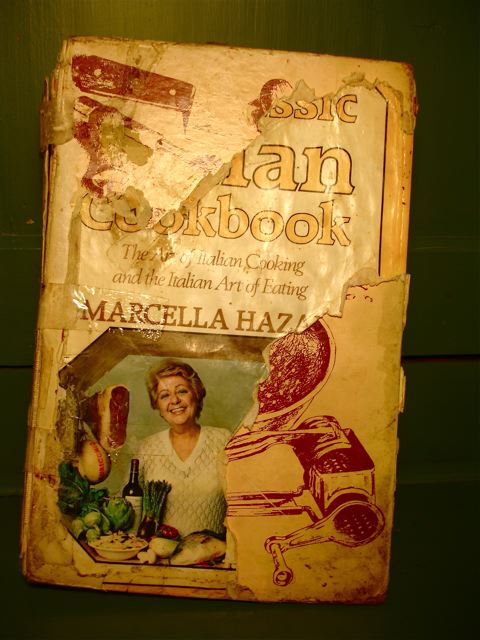
Easing back into the flow and with one foot–so to speak–still in Italy, I go to my comfort zone for guidance and authenticity.

my culinary Bible

my culinary Bible

Marcella Hazan’s first cookbook–still usable, though much patched-up and thumbed.

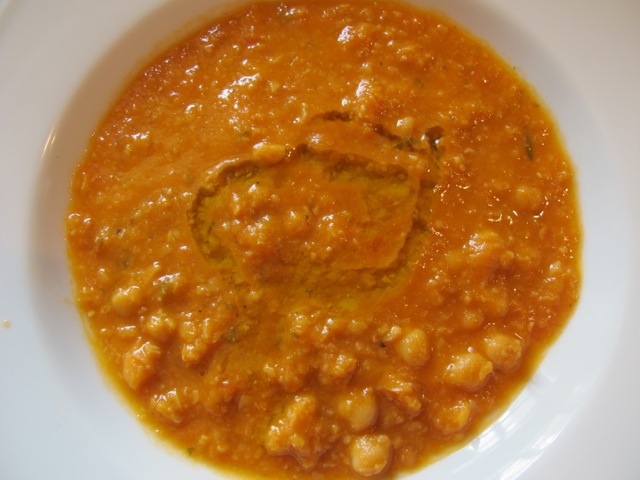
She doesn’t purée this nourishing and warming soup–though some do, she says.

I’ll go with roughly 1/4  whole chickpeas to 3/4  puréed.

I’ve also added a hint of fire! A couple of small dry red chilis left in the cooking tomatoes for five minutes and then fished out; or leave them in–but careful you don’t swallow them later.

I’ve used twice the liquid she suggests. Italians like to eat their soup almost solid.

3 garlic cloves–peeled but left whole

6 tbsp olive oil

2 tsp rosemary needles–chopped fine

8oz/200gm tinned (canned) tomatoes–chopped with the juice

14oz/400gm can cooked chickpeas–drained

450ml/1 pint stock–I use organic vegetable stock cubes

salt and pepper

  • Heat the oil in a large saucepan and sauté the garlic until it is well browned.
  • Take it out; it’s job–infusing the oil–is done.
  • Throw in the rosemary and stir once, then add the tomatoes with their juice.
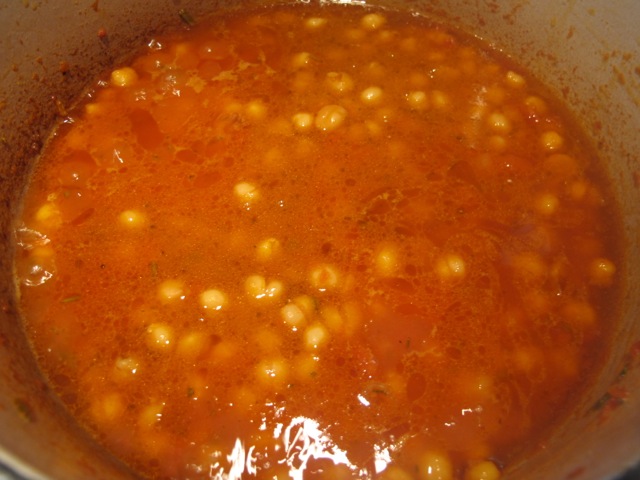
  • Cook these down to a sauce–about 20 minutes, stirring often to avoid it burning.
  • Add the chickpeas and stir these around for five minutes to inform them with the tomato sauce.
  • Add three-quarters of the stock and stir it in.

IMG_6645

  • Season with salt and pepper.
  • Cover the pan and cook for fifteen minutes.
  • Take off the lid, stir well and taste for salt.
  • Add more stock if you like.
  • Serve it piping hot with a swirl of best olive oil.

IMG_6647

Guests are arriving for lunch.

We are hoping to eat outside shaded from the May sunshine (ha! ha!) by the new parasol.

No chance!

However…

Yesterday I made a soup from half a kilo of asparagus, as an experiment–keen to find something different to do with it during the season.

It is raining today and cold–time for soup?

Meredith tasted it this morning–

Just enough for five–she said–it’ll warm everyone up on a chilly day!

We could have some roasted spears on the side–I said.

YES!– she said

and no need for a sauce!–I said, always looking to cut down the workload!

2 leeks–cleaned and chopped roughly

1tbsp olive oil

1lb/450gm asparagus–the tough ends removed, chopped roughly

1 litre/2 pints stock–I use organic vegetable stock cubes

1 tbsp fresh tarragon–chopped fine

salt and pepper

1 tbsp creme fraiche

  • Sweat the leeks in the olive oil over a gentle heat, in a covered saucepan–five minutes.
  • Add the asparagus and stock.
  • Bring to a simmer and cook until the asparagus is just tender.
  • Season carefully.
  • Liquidize–best done with a hand held stick liquidizer (if you have one).
  • Fold in the creme fraiche and tarragon.
  • Gently reheat to serve–with roasted spears on the side if you like.

ps–off to Italy tomorrow for a short break, a change of scenery and a recharging of the culinary batteries?

IMG_6355

Ciao!!

14333412-italian-vintage-car

IMG_6269

These fluffy chicks, with unusual sticky-out plumage, arrived last week–the gift of our friend and neighbor Flo.

Four of them–five weeks old; a possible cockerel (the little red cockscomb is the give away, it seems) which we’d return if confirmed–and three females. They busied themselves immediately–casing the joint; in and out of the abundant foliage which is growing like mad–there’s been so much rain.

Chuck-chucking round the courtyard they went, checking for bugs and other goodies in this new environment–content to forage and let the morrow look after itself.

Oh dear..!

We had a job herding them into the little hen house for the night–why don’t they know it’s for their own good!

Chased them round and round the courtyard–a comic carousel–until the bright idea of backing them into little hall area of the dependence (side building) occurred.

One by one, we cornered them–me holding out the light long handled fishing net used to catch mice and relocate them! Meredith grabbing them and after much squeaking–poor terrified creatures–folding them gently but firmly through the door of the henhouse–why don’t they know it’s for their own good!

Down went the flap on the last one and we sighed with relief. Safe for the night.

Oh dear..!

An appointment in Toulouse means an early departure the next morning.

Meredith takes out a bowl of food just before we leave.

Silence…

I follow her out to see how the little chickadees are doing.

They’re dead! 

Dead?

All four!

And indeed there they were lying inert in the fresh hay.

We had the whole day in Toulouse to wonder how in the world..!?

Meredith started itching. Little mites had colonized her since she handled the chicks. Could they have done for them? Were they fatally  traumatised by our efforts to coral them into the henhouse? Had they eaten something poisonous in the courtyard? Was the henhouse itself infected with a virus? Seemed unlikely.

By the time we arrived home, Flo’s husband Thierry had come by to take them away.

Flo came up with the more convincing answer the next day.

fouine (stone marten) attack.

images

a pretty little stone marten–pretty but lethal!

Our friend Jean-Phillippe–here for seasonal box hedge clipping–confirmed this theory.

Dramatically he held up his pen, saying the little predator is able to get through a hole as small as the circumference of a pen.

The marten then goes for the jugular and turns into Dracula!

This explains the almost unharmed look of the chicks as they lay dead on the floor of their short lived new home.

Oh dear

A sad tale from the Tarn.

Does it mean perhaps that no more little hens can safely inhabit the courtyard of Saint Martin for fear of the deadly night rambler–the unseen Stone Marten?

Rachel Lucas just left a comment following the post on Keith Richmond’s olive oil:

I prefer olive oil to butter on everything…currently on steamed English asparagus at almost every meal!….

It inspires me to reproduce the recipe for Roast Asparagus from Delicious Dishes for Diabetics.

IMG_7838

We are eating a lot of asparagus at the moment; it’s hard not to–it’s the season and the poor weather has meant the changes that should be happening now are unusually slow in arriving.
Roasting it for a short time at a high temperature makes for a different taste and texture.
We just had some for lunch with a simple new fish recipe for plaice which I’ll post soon.

Asparagus is wonderful, but even in its short season it can get a bit repetitive! This is a handy alternative way; quick and easy with the thinner type.The addition of thyme comes from the River Café.

2 tbsp olive oil
500 g/1 lb asparagus

2 tbsp fresh thyme leaves

salt

1. Heat the oven at 220°C/425°F/Gas Mark 7.
2. Heat the oil in a shallow baking tray.
3. Turn the asparagus in it and sprinkle over the thyme and

some salt. The roasting time depends on the thickness of the asparagus: about 5 or 6 minutes for thin and a bit longer for the fatter size. It should crisp up a bit.