Feeds:
Posts
Comments

diabetes_gymnema1

I feel pretty invested in this day–November 14th–each year. World Diabetes Day…

banting

Frederick (Fred) Banting, who would have been 122 today (!) was one half of the Canadian duo (the other was Charles Best) who by discovering insulin, prolonged the life of my mother Molly Ellis and millions of other diabetics worldwide.

“With the relief of the symptoms of his disease, and with the increased strength and vigor resulting from the increased diet, the pessimistic, melancholy diabetic becomes optimistic and cheerful. Insulin is not a cure for diabetes; it is a treatment.”

Sir Frederick Banting, Nobel Prize Lecture, 1923

220px-C._H._Best_and_F._G._Banting_ca._1924

Dr. Banting and Dr. Charles Best (a medical student at the time) worked together at the University of Toronto where they discovered a method to extract the hormone, insulin. It was a fundamental breakthrough in the treatment of diabetes.

Insulin is central to regulating (metabolizing) sugar and carbohydrate in the body. Without it there was little hope of survival for millions who, like my mother, were diagnosed with Type 1.

On January 23rd, 1922–a historic date–they tested their insulin serum on 14-year-old Leonard Thompson–who experienced almost instant relief. He survived into his thirties.

My mother, Molly, often referred to Banting and Best as her saviours–and they were.  Diagnosed in her mid-thirties, she survived for over 30 years, dying from a diabetes-related heart attack at the age of 68. ma3img_0044_2

November 14th is also the anniversary of my father’s death–30 years ago. Tony would have been ten days into his 99th year today. Image 83 RIP Mum, Dad and Dr Banting.

Millions of people have diabetes but are ignorant of it (for Type 2, there are often no symptoms in the early stage). It’s diagnosed by a simple blood test.
http://www.diabetes.org.uk/

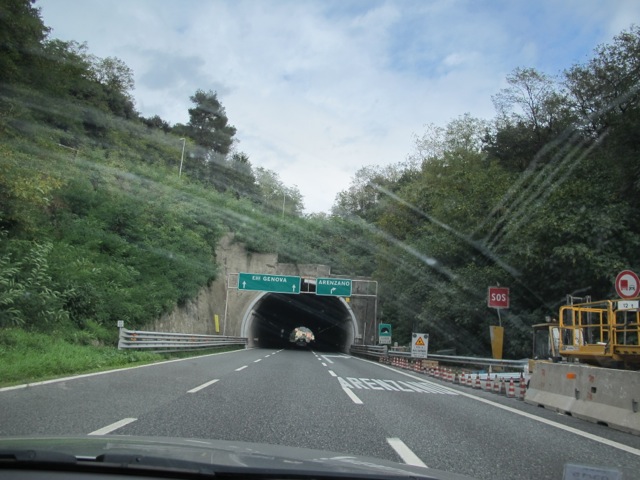
Doing the tunnels is the only option.

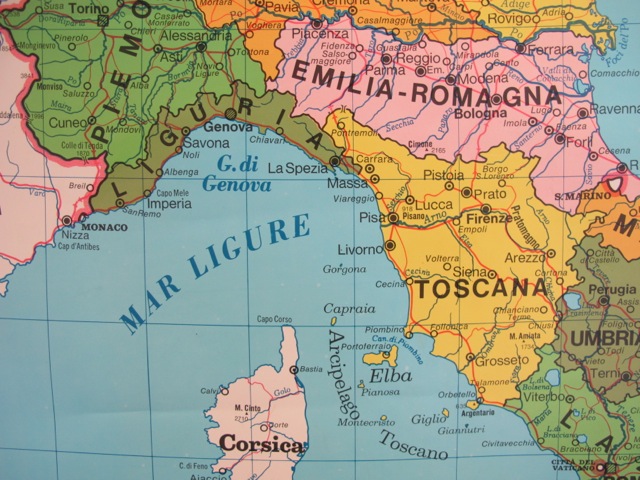
There is no escape if you are driving from southeast France to Tuscany.

IMG_9870

The tunnels thread through the Ligurian hillsides that slope down to the Mediterranean water’s edge. Some are just a few hundred feet long, others a mile or more. We count them for fun and tally 136!

IMG_9720

It’s the slow lane for us on the last leg of our annual journey to Tuscany and the olive harvest.

There are some great sea views,  if you’re not driving. It can feel a little ‘hairy’ at times, as a big black beetle-like vehicle–you wouldn’t call it a car–hurtles past, followed closely by a purring, predatory Porsche.

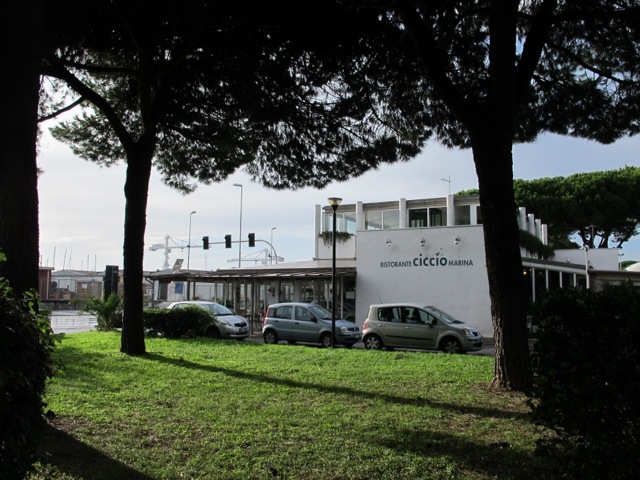
Sunday morning and we’re making for a little bar/ristorante in Marina di Carrara called Ciccio. We found it by chance years ago–as sometimes happens with the favourite places.

The restaurant looks onto the port from where the historic Carrara marble–still being cut out of the hillside–is shipped.

IMG_9737

The cranes and modern lifting machinery make us wonder–in both senses–how Michelangelo transported the huge marble block back to Florence and the workshop where he fashioned the David.

IMG_9743_3

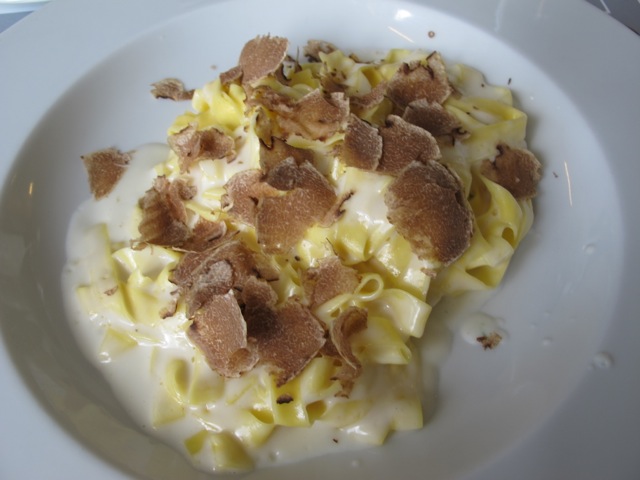
Meredith has the seasonal ‘special’ in mind–freshly made spaghetti in a cream sauce with black truffles. She had it once years ago and has never forgotten it.
Today the truffle is the rare white variety (though perversely a browny pink in colour).
Then it’s ordered–for both of us. (I decide to live dangerously and indulge!)

IMG_9728_2

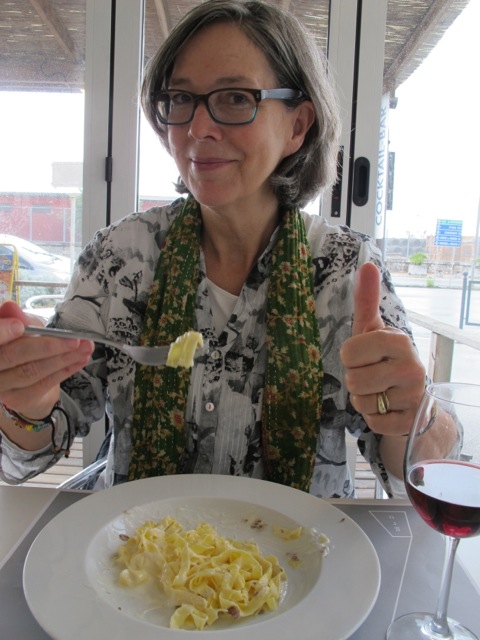
Meredith is delighted, though she says when we’re back in the car ‘On the whole I think I prefer the black truffle best…’ Well…!

IMG_9730

We head off back to the autostrada, truffled out but happy the tunnels are behind us.

IMG_9750

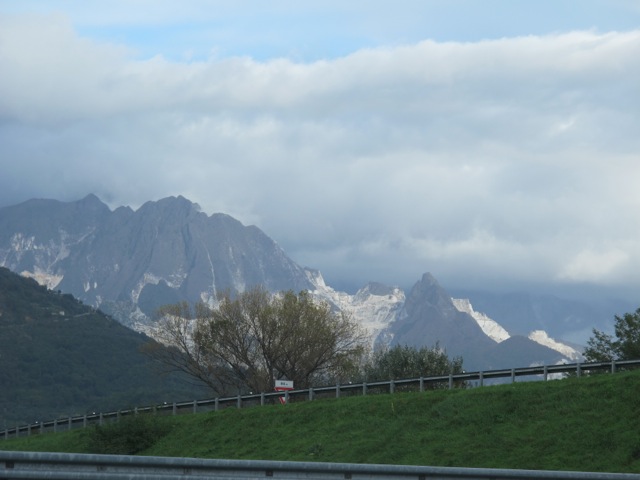
Marble mountain

Betsy Webber–who attended my cooking workshop in May–recently commented that this was one of her favorite dishes. Thanks Betsy for reminding me!

We are having it for lunch–I had just enough tomato sauce left over to make it work.

I’ve been looking forward to trying it again for a couple of weeks.

It heralds the new season we are glorying in here.

Comfort food for the new chill.

An autumn/winter replacement for the Italian classic–Parmigiana Melanzane.

Here it is with a slice of sweet potato and some baba ganoush.

450gms/1lb broccoli–broken up into florets

4 tblsps tomato sauce*

parmesan cheese–freshly grated

salt and pepper

  • Steam the broccoli florets until they soften–but retain a bit of crunchiness.
  • Put them in a bowl and pour over two tablespoons of olive oil and season.
  • Heat a grill pad to hot.

  • Char the the florets lightly and remove.

  • Oil a shallow oven proof dish and spread some tomato sauce over the base.
  • Cover this with a layer of broccoli florets and season with salt and pepper.
  • Sprinkle over some parmesan.
  • Repeat the process finishing with a layer of parmesan.

  • Dribble olive oil over the top.
  • Heat the oven to 200C/400F.
  • Pop in the dish and bake for 15 minutes.

  • It should come out sizzling!

*Tomato sauce

3 cloves of garlic – peeled and finely sliced

4 tbsp olive oil

2 x 800 g/28 oz tins tomatoes – drained of their juice

salt and pepper

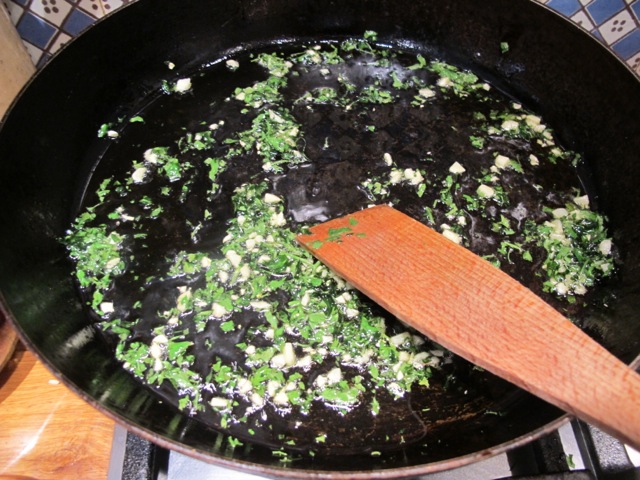
  • Fry the garlic gently in 2 tablespoons of olive oil in a large pan but do not let it brown.
  • Add the broken up tomatoes and the salt and pepper.
  • Cook on a high heat, stirring frequently to prevent burning, and watch out for splattering!
  • (Use the biggest wooden spoon you have!)
  • Cooking time is about 20 minutes.
  • When little red pock marks appear, making it look as though the surface of the moon has turned red, you know it is almost there.
  • The sauce will have reduced considerably and thickened, with very little liquid left.
  • Add the last two tablespoons of olive oil, taste and check the seasoning.


We decided that Betsy’s right–it’s delicious!

Wallander and diabetes

DSC03246

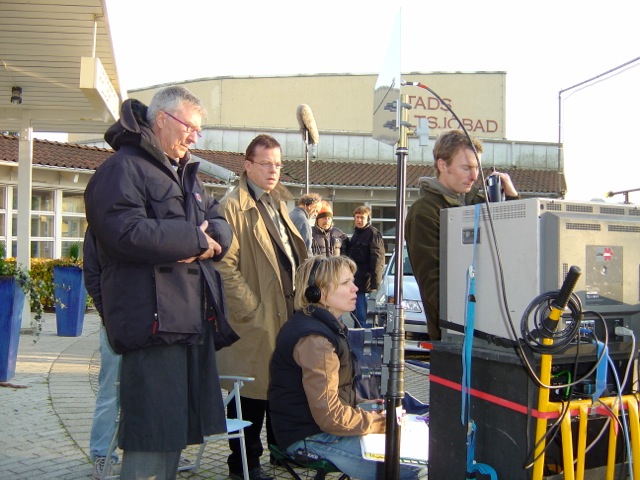
In 2006 I worked on an episode of the Swedish TV version of Wallander, playing an American professor suspected of killing his wife. (Meredith couldn’t resist a visit to the set!).

It was an entirely enjoyable experience working with a fine cast and crew in Ystad on the southern tip of Sweden where the stories are set.

No hint was given in our episode that Kurt Wallander (played definitively by Krister Henriksson) was diabetic. Perhaps the production company decided not to go down that road.

A pity in my view.

Henning Mankell, author of the Wallander books, explained in an interview in The Daily Telegraph why he’d made his hero diabetic:

“I wanted to show how difficult it is to be a good police officer. But after, I think, the third novel, I spoke to this friend of mine and asked what sort of disease I could give him. Someone who leads the life he does. Without hesitating, she said: ‘Diabetes!’ So I gave him diabetes and that made him more popular. I mean, you could never imagine James Bond giving himself a shot of insulin, but with Wallander it seemed perfectly natural.”

I’m reading The Troubled Man at the moment–the last in the nine-book series.

It is as much a character study of his vulnerable and flawed detective as a thriller–an absorbing read.

Wallander is in his early sixties, divorced, living alone and full of foreboding and gloom about his future.

He doesn’t take care of his diabetes, which is Type 1.

He’s overweight, eats haphazardly and takes little exercise. At one point in the novel he has a hypo (hypoglycemic–low blood sugar–blackout) and nearly dies. He’s discovered naked and unconscious in the shower by his daughter, also a police officer, worried when she is unable to reach him by phone.

She has recently given birth to his first grandchild and is keen that he lives long enough to know his granddaughter and vice-versa.

Shocked into action by his narrow escape, he starts to take more care of his condition.

Henning Mankell doesn’t elaborate further on the condition, but saddling his main character with this disease of-the-moment works well and stealthily provides readers with helpful information, even if that wasn’t the author’s intention.

DSC03239

being wired for sound just before making a run for it!

For the record–my character is arrested, after a car chase, on the Oresund Bridge that links Denmark and Sweden.

800px-Øresund_Bridge_-_Øresund_crop

“OK Gov, it’s a fair cop!”

IMG_9604


Yesterday I found myself fancying chickpea soup.

There was a bottle of chickpeas three-quarters (300gms) full in the fridge.

We had plenty of onions, a couple of carrots, some celery and two  fennel bulbs in the crisper.

I put a third of the chickpeas in the small blender bowl with some of their liquid and whizzed them smooth.

Soffrito/battuto (what’s the difference?!*) next–the engine room of the soup–to give it some oomph.

So I chopped up 2 smallish onions, a couple of garlic cloves into small dice and sweated them in four tablespoons of olive oil in a medium saucepan for 20 minutes.

While the soffrito was softening I chopped the fennel into larger dice.

I added the chickpeas–mashed and whole–to the pan and stirred it well together.

Then in went the fennel dice and added a small stem of fresh thyme.and two bay leaves

I squeezed a scant tablespoon of tomato concentrate from a tube in the fridge, stirred it into the mixture and added a pint/500ml of vegetable stock and a tablespoon of chopped parsleynext time I’d add this to the soffrito.

Seasoned well with salt and freshly ground black pepper, brought it all up to the simmer and nearly forgot to add a small piece of the rind of parmesan cheese–cooked it all on for about 20 minutes until the fennel had softened.

We swirled some olive oil into our bowls, ate it slowly and sighed!

*A battuto is a pile of chopped raw ingredients, in this case just vegetables but sometimes it involves smoked or green bacon.

It becomes a soffrito when the pile is cooked slowly in oil, fat or butter as the base of a soup or a casserole.

This serves 2/3 or 4 at a pinch.

For the past few days I’ve been holed up in bed with the “lurgie” (a tummy bug).

In a reversal of roles, Meredith has been cooking and caring (she was ill first)–serving up simple, delicious, restorative vegetable soup and scrambled eggs.

Yesterday I had stomach enough to read a brilliant piece in The Observer newspaper by food writer Jay Rayner challenging people’s reluctance to give a second try to food they have detested eating (or in my case, the thought of eating)–tripe for instance.

Unknown-3

It transported me back nearly 35 years to Madrid.

RobAnghorses_2

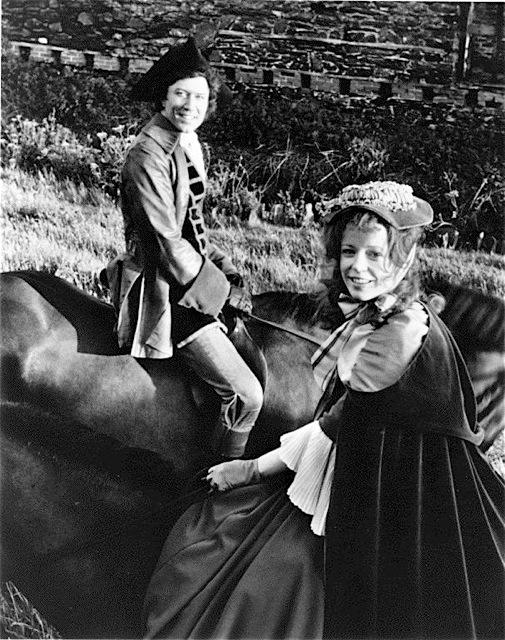
Angharad and I were in Spain to promote Poldark, which was proving enormously popular there.

At that time there were only two TV channels–and the other one was devoted to parliamentary debates.

The visit was an extraordinary experience.

Two thousand plus fans at the airport to welcome us. We were mobbed everywhere we went–it felt momentarily like being a Beatle. (Nobody waiting for us at Heathrow on our return, however….)

Years before Angharad had spent some months in the city au pairing for the family of a well known psychiatrist–a friend and professional colleague of her father Professor Lynford Rees.

Her return had a particular resonance for her and the Spanish family.

To celebrate, they threw a lunch party for us at their home.

It was a moment of peace, an escape from the craziness of the celebrity culture that was new to me and which I was finding both exciting and at times hard to handle.

(At one point, the tabloid johnnies were crowding me with questions about how it was that at the age of 35 I wasn’t married. Angharad–sensing the danger of an explosion–whispered in my ear, “Smile, Robin, for heaven’s sake, SMILE!”.

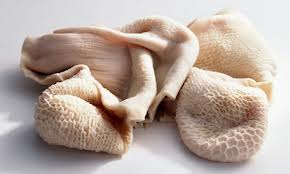
The party was delightful, of course, except for one detail: The main dish was tripe in tomato sauce.

Unknown-2

Photo found on the Internet–but strongly resembling the dreaded dish.

Tripe, I’m told, is a delicacy in Spain–and cooked by an expert (I have to take Jay Rayner’s word for it) it’s delicious.

I eat most things–growing up in the fifties, fussiness about food was not encouraged in our house. The starving children in India featured often at meal times when a reluctance to polish off the last crumb was shown. My mother never tried tripe on us though.

I remember looking down at the plate I’d been offered and after a moment mastering feelings of politeness, guilt and hunger, turning discreetly away from the crowd and parking the plate of offal, untried, behind a palm tree.

There have been moments since–in Florence for example where street stalls selling steaming piles of tripe are a regular sight–when I have thought about giving it a second try. So far I have managed to resist the temptation.

Anyone else willing to own up to a food phobia?

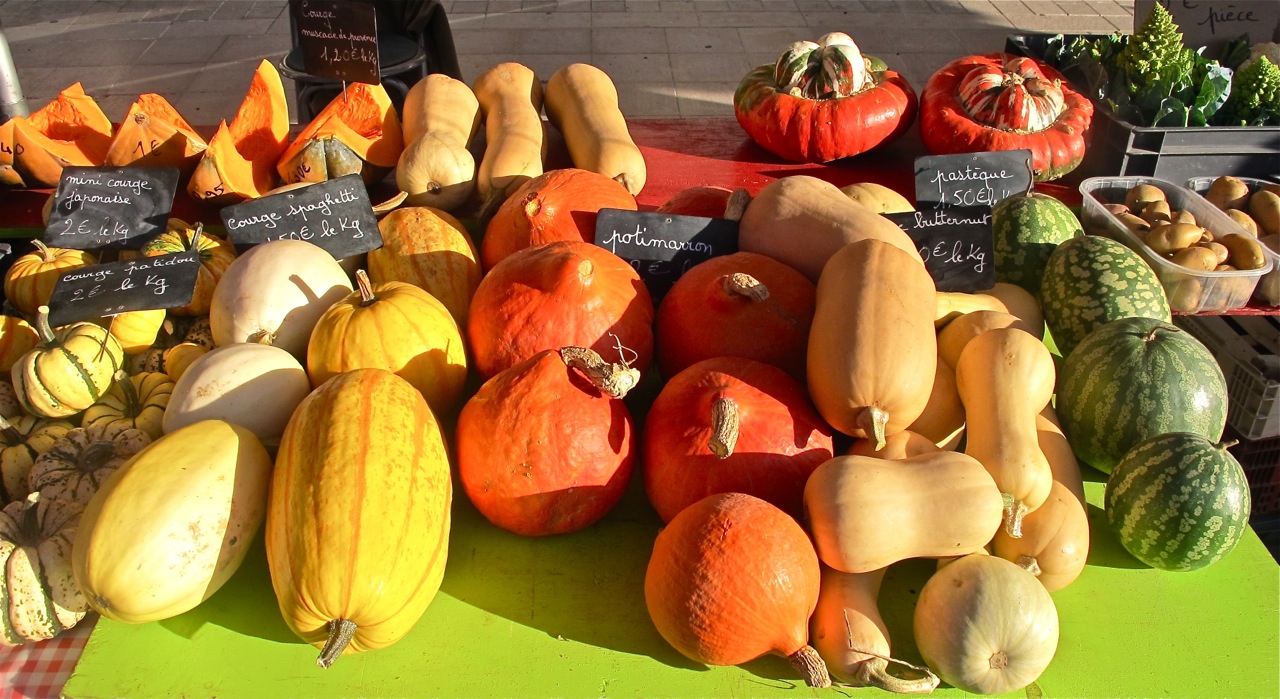
Autumn is the season of squash.

IMG_4325

This is an early post I found on a mining the past exercise last week.

I cooked it again and the recipe didn’t disappoint–in fact we finished the lot as we’d done way back in February 2011.

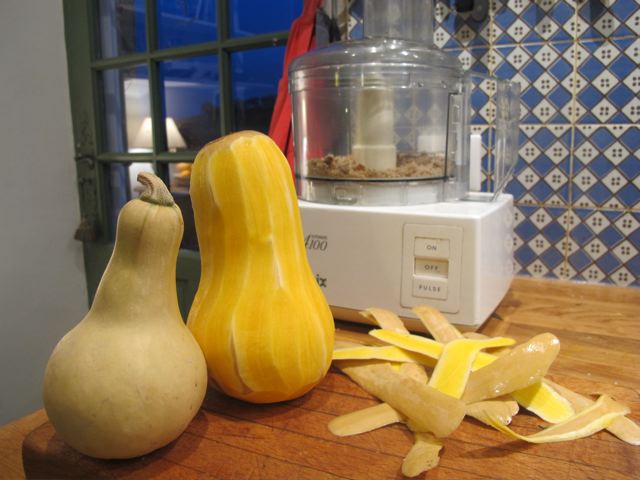
Butternut squashes dress modestly in light fawn leaving their showier cousins in orange and red to hog the limelight around this time of year–Halloween and Toussaint.

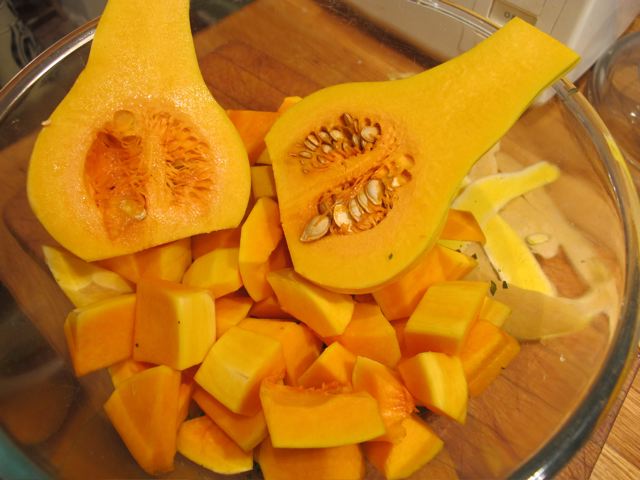
Under the skin though they show their true colors.

IMG_9540

A wonderful autumn glow emerges, mustardy yellow–warming heart and body–as in the soup below (recipe here).

squash4img_5430-1

“What’s on the menu today?”
“Gratin of one of us”
“Scary–after you, ClaudeI”

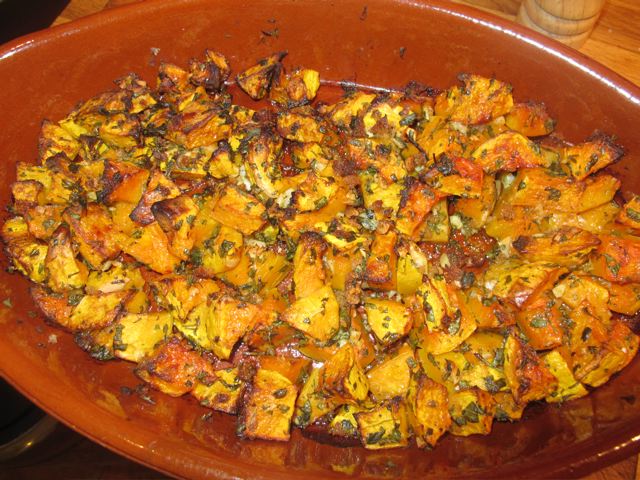
This is delicious–I’ll stick my neck out.

We had it with some seasoned quinoa (sautéed onion, garlic, a small chili and a little steamed broccoli) last night for dinner and finished the lot.

The recipe is adapted from one in The New York Times*, which in turn was adapted from a recipe in a cookbook by a legendary American food writer**, who most likely adapted it from something he ate in a restaurant in Provence***, which was probably invented by the grandmother of the restaurant owner****–who had passed it on to her daughter*****.

In other words it’s a version of a traditional seasonal gratin dish.

It can be eaten as a vegetarian main course as we did last night or as an accompaniment to a roast chicken or lamb chops–for instance.

for 4

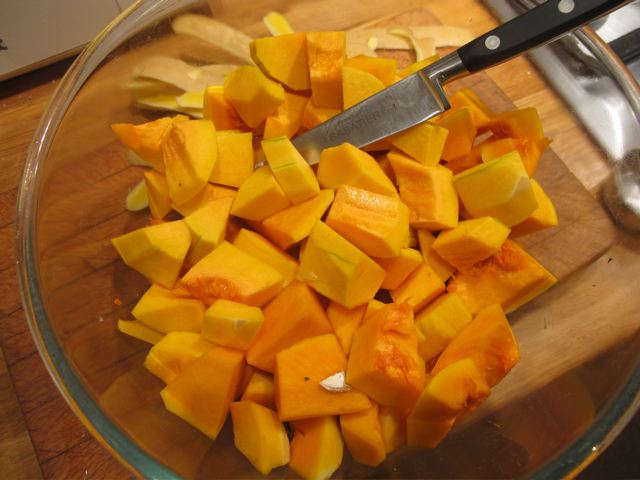
1kilo/2 lbs of butternut squash–peeled, deseeded and cut into small chunks

4 cloves of garlic–peeled and chopped small

1 generous tablespoon of wholewheat breadcrumbs

1 generous tablespoon of parsley--chopped

1 tablespoon of fresh thyme leaves

salt and pepper

3 tablespoons of olive oil

set the oven to 190C/375F

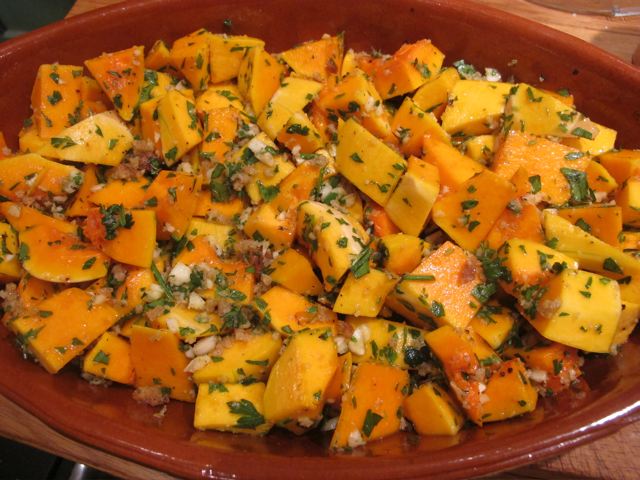
Combine all the ingredients in a large bowl and turn them over and over mixing them thoroughly together and remembering to season well with the salt and pepper.

Tip into a roasting tray or better still an earthenware ovenproof dish.

Roast in the middle of the oven, for about an hour and a half–(the time depends on the size of the chunks)–so it comes out nicely charred on top.

Martha Rose Shulman

** Richard Olney–author of Simple French Food

***, ****, ***** All three names lost in the mists of time!

Cat Tales

Five cats at the trough this morning.

Head cat, Pippa– (no messing!)

IMG_8658_2

Beau (always first in)…

IMG_2053

Ben (politely patient, knowing his place in the pecking order (low), tip-toes round the bowls.)

IMG_7333

and Lucien, who stomps around like a grumpy member of a fusty old London Men’s club finding his favourite chair is occupied by someone he’s never seen before and worse–a female.

On a dark night he does a good impression of “Bill Sykes“.

IMG_3912

Bill Sykes was never so cosy!

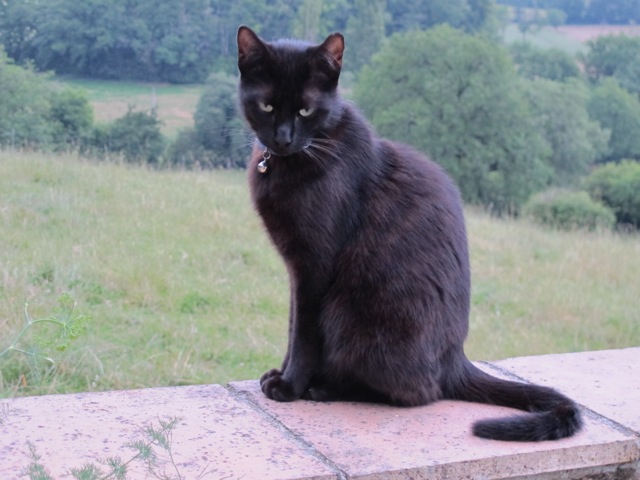
The “newcomer” is Blackie, who is gradually becoming an in-door cat after years of nervous coming and going pit stops–mostly out-doors.

IMG_8654

Blackie’s a cat with no tail but a lot of oomph.

IMG_9137

She has survived six or seven years in the relative wild–too nervous to put her head down indoors for longer than an hour or two.

Something is changing though–perhaps with age, sleeping rough every night through the seasons is losing its charm.

In summer she’d arrive for a quick snack with insect bites all round her eyes.

IMG_9515

It has been slow progress, but close encounters in the tomato patch have helped.

There’s a small bench there, perfect for an early morning cogitation/rumination, after a bit of weeding and watering.

This summer Blackie and I have spent some serious time together.

She appears from nowhere, entwines me in elaborate leg embraces, chatting away anxiously about something.

These early morning approaches have gradually calmed into more of a companiable, “Hi, how’s it going?” greeting, as she jumps lightly onto the bench beside me and nudges my arm.

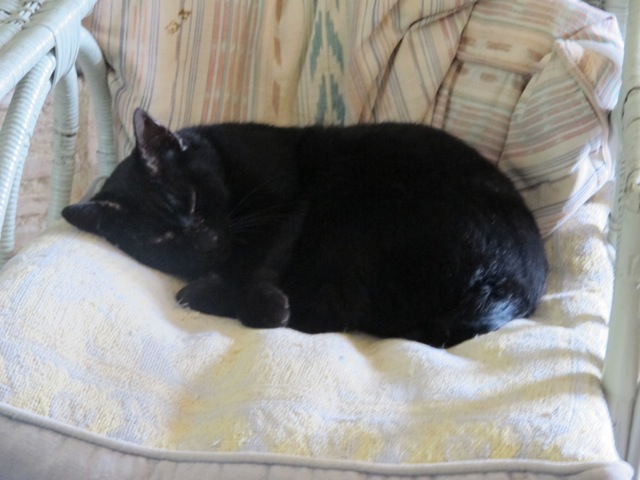
This morning she “knocks” on the back door and enters at a pace, ate a little, jumps into her chair of choice and watches, unconcerned, as the others arrive.

IMG_9517

An indoor cat with rights like theirs.

We’ll see. The arrival of winter may settle it.

Later in the morning, I open the backdoor for Pippa; she’s off for her post-breakfast constitutional.

There below the step is Blackie, tucking into elevensies.

“Whoops!”

Pippa looks at Blackie for a long beat. She decides to lean forward and give her a nudging nose kiss. She then steps aside and down and saunters away.

Blackie enters and hops onto her favored chair and hunkers down again.

“Wow!” No Pippy hissy-fitting–things are changing round here.

A five cat household–oh my!

Courgette tortino

Another last “hurrah” for the courgette-zucchini!


IMG_8924

Two of the three I used for this dish came from our vegetable patch–even in mid-October the last surviving zucchini plant is turning out courgettes–and perfect specimens they are. Almost a pity to cook them!

However they made a light and creamy lunch!

IMG_9491

This is adapted from a recipe in the excellent Italian Vegetarian Cookery by Paola Gavin.

4 eggs

6 tbsp olive oil

2 cloves of garlic–peeled and chopped

1tbsp parsley–chopped

salt and pepper

3 medium courgettes/zucchini–passed through the thin slicer of a food processor.

1oz/25gm wholewheat breadcrumbs

1 oz/25gm parmesan–grated

Heat the oil in a large pan.

Add the garlic and parsley and cook, stirring, for less than a minute.

IMG_9481

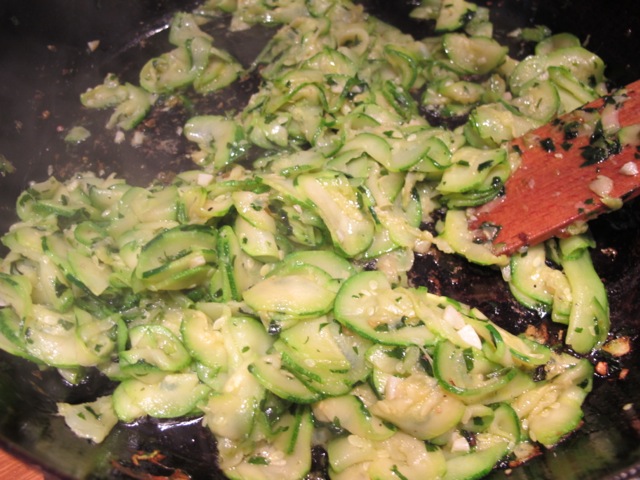
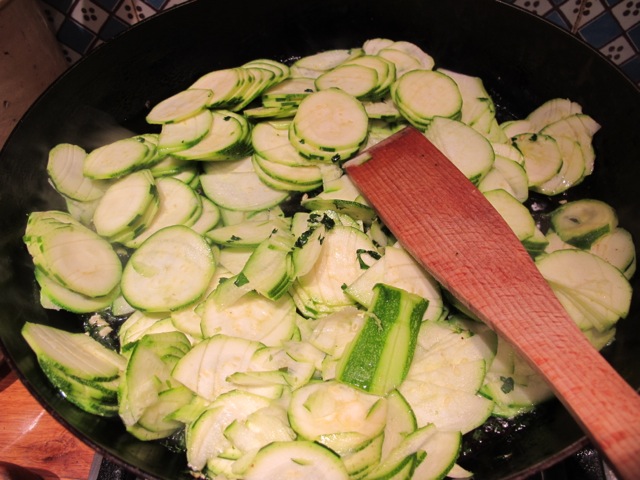
Mix in the courgettes…

IMG_9483

and cook until they wilt and take on a bit of color.

IMG_9485

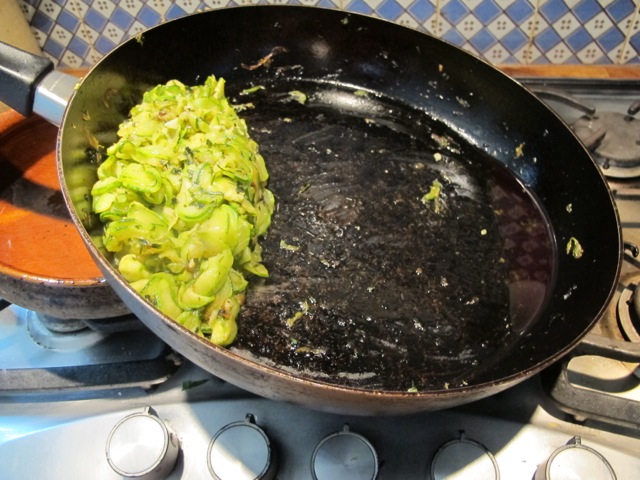
Turn off the heat and let them cool.

Tip the pan a little to drain off some of the oil.

Heat the oven to 190c/375f

IMG_9486

Break the eggs into a bowl and whisk.

Add the breadcrumbs and grated cheese and mix thoroughly.

Season well with salt and pepper.

Add the courgettes to the egg mixture and blend carefully.

IMG_9487

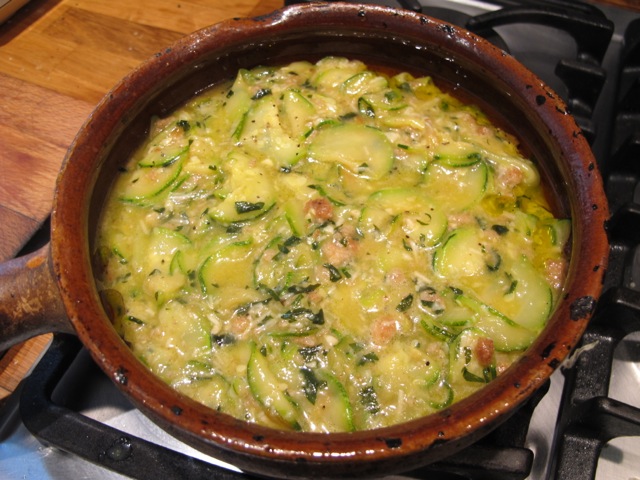
Oil an oven dish and pour in the mixture.

IMG_9489

Cook in the middle of the oven for about 25 minutes.

It should be nicely browned on top; but check after 20 minutes–ovens vary and you don’t want to lose the creamy interior; inserting a knife through the top, will help you judge.

This was taken half-way through lunch!

IMG_9492

We had it with new season’s broccoli–lightly steamed.

A friendly meeting of summer and autumn.

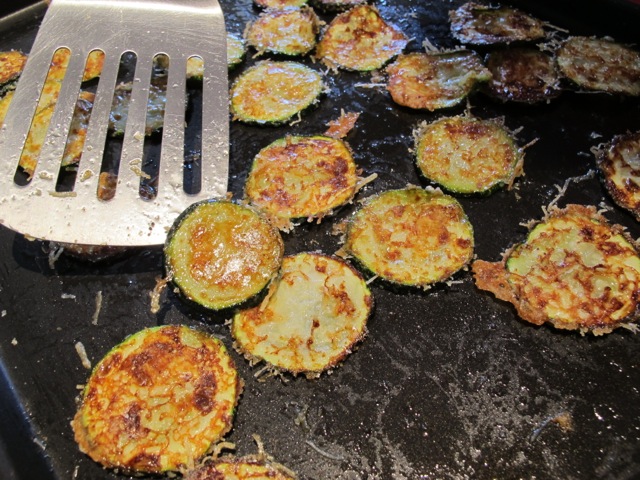
These little discs disappear as quickly as cash in your hand.

IMG_8879

In other words it’s hard to stop eating them!

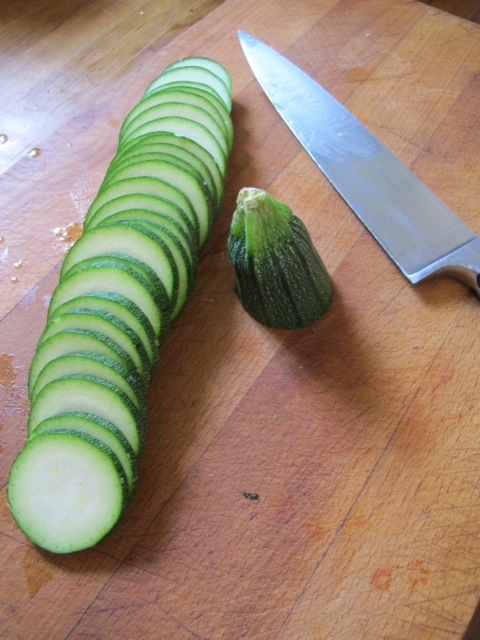
It’s surprising how many one can slice from a single medium courgette–enough for a pre-lunch treat for two anyway.

If you have time it’s worth lightly salting them and letting them drain for an hour before coating them with egg white and parmesan.

I spotted this recipe on a well-known food blog–smittenkitchen–and adapted it a little.

1 medium to long courgette (or more if you have a mind), sliced thin–1/4 inch

IMG_9020

1 egg white with a teaspoon of water added and whisked in a shallow bowl

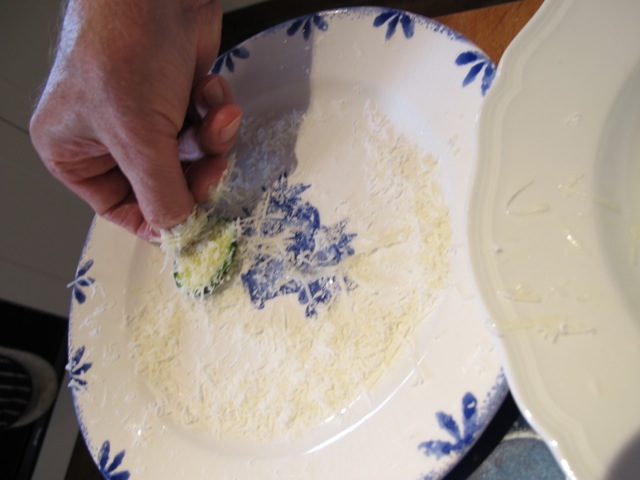
50gm/2oz parmesan cheese–grated onto a plate

salt and pepper

heat the oven to 220C/430F

Brush a shallow oven tray with some olive oil.

Dry the courgette coins, if you have salted them.

Lightly salt and pepper the parmesan and mix the seasoning in.

Pass each disc through the egg white…

IMG_8857

then the parmesan

IMG_8858

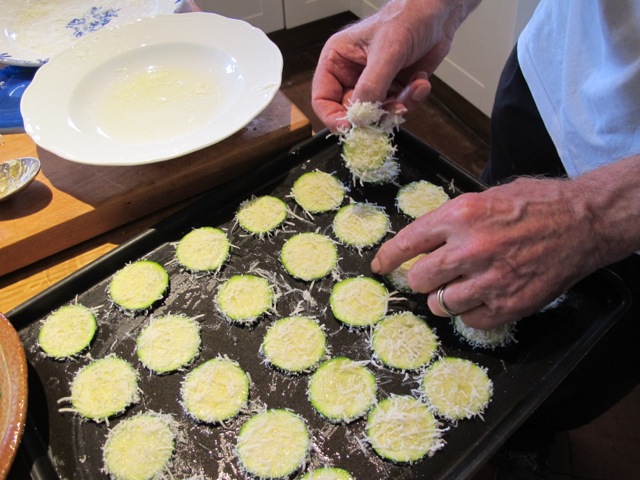
coating both sides.

Place them side by side on the oven tray.

IMG_8859

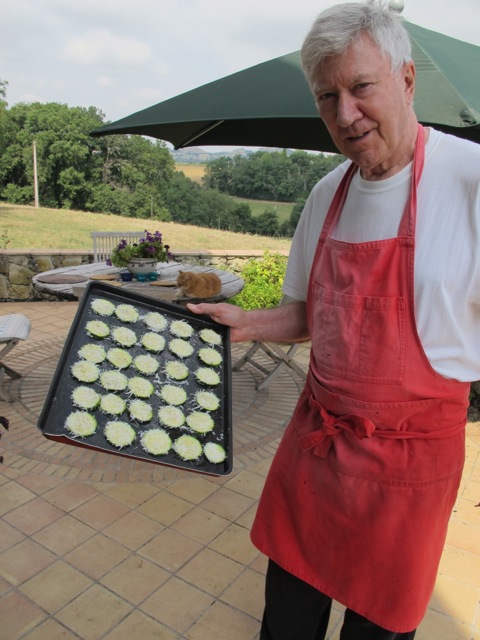
A satisfyingly symmetrical effect.

IMG_8864

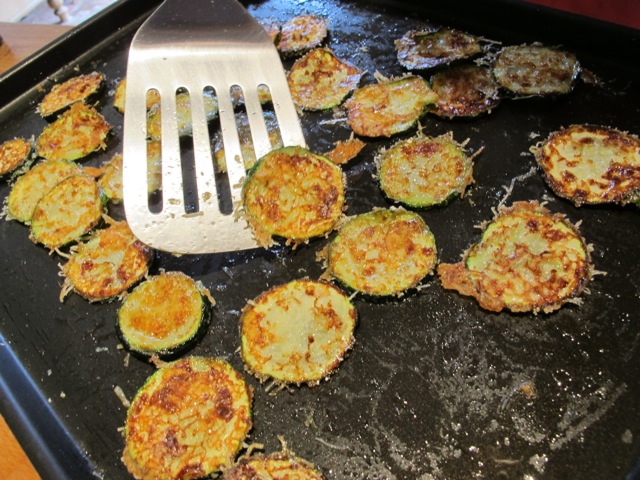
Then slip them onto the top shelf of the heated oven.

Check after five minutes and if they are brown on the underside turn them over

IMG_8880

and return to the oven for a further five minutes or until they are nicely browned.

Then it’s everyone for themselves!

(I have found that those on the outside of the tray tend to brown more easily–but it may be the vagaries of my oven.)