Feeds:
Posts
Comments

IMG_0349

I revisited this dish on my blog a few days ago and was confused by my own description of my original recipe!

Confusionsloppiness–Meredith might say, such as omitting to indicate when the tomatoes go in and adding the white wine twice!!

I wrote it up two-and-a-half years ago–in my more stumbling early days as recipe blogger….

That said, it has been one of the most visited recipes on my blog (just after no-potato fishcakes!).

I enjoyed cooking (and eating) it again, but didn’t have the optional red peppers to hand to brighten the ‘look‘. The red chilis, already in the recipe, stood in (warning: do not to EAT them!).

IMG_0378

Local bonnet chilis–or “cardinals hats” [My name for them!]

‘Tis the season for a cosy chicken casserole–so here’s the recipe again–sans sloppiness (I hope!)

It reminds me of meals round the kitchen table at home in the fifties. It’s simple and inexpensive and would possibly stretch to a second meal–important factors for my mother, with a husband and three sons to feed on limited means.

Nothing exotic–except a little kick from the chilis, olives and peppers (optional)–comfort food really.

The low temperature of the oven helps keep the chicken moist–but you need to test for ‘doneness’.

If the juices run pink when you insert the tip of a knife into a leg joint–it needs a little more time.

100gm/4 oz  bacon/pancetta–diced small

3 sticks or a heart of celery– chopped small

1 medium onion–chopped small

1 clove of garlic–chopped

3 tablespoons olive oil

1 free range chicken–cut into 8-10 pieces and washed and dried

125ml/4fl oz white wine

125ml/4fl oz of stock–I use organic vegetable stock cubes

8oz/250gms tinned [canned] drained tomatoes–chopped roughly into a mush

3 to 4 sprigs of rosemary

3 small fresh red chilis–kept whole

1 red pepper–cut in thin strips (optional–but adds color to the dish)

a handful of juicy black olives–stoned if you have the time

a handful of parsley–chopped

set the oven at 160c/320f

  • Heat a tablespoon of olive oil in a large frying pan and sauté the onion, celery, bacon and garlic gently for about 20 minutes allowing them to colour–concentrating the taste.
  • Spoon the mixture into an oven-proof casserole.
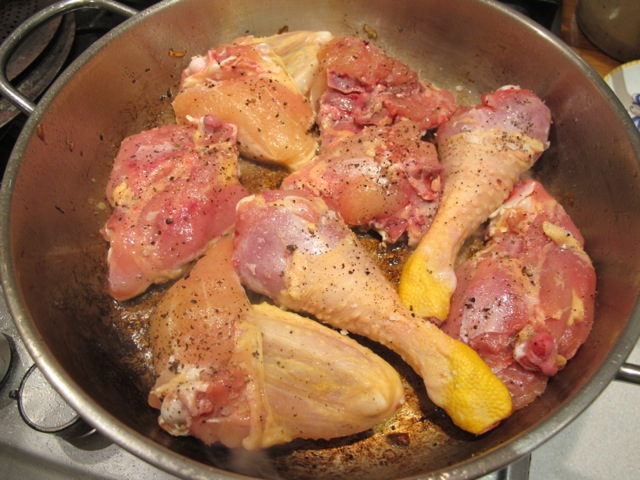
  • Season the chicken pieces and heat another spoonful of oil in the frying pan.
  • Sauté them on a highish heat–turning them as they brown.
IMG_0347

  • Add them to the casserole.
  • Add the tomatoes to the frying pan and and stir vigorously.
  • Add the wine and stock,  scraping the residue into the mix.
  • Carefully pour this into the casserole.
  • Tuck in the whole chilis and the rosemary sprigs.
  • Turn over the contents, cover the casserole and bring to a simmer on the stovetop.
  • Transfer the covered casserole to the oven and cook for a further 30 minutes.
  • While this is in the oven, heat the third tablespoon of olive oil in the pan and gently sauté the strips of pepper–if using.
  • Add the peppers and olives to the casserole after 30 minutes and cook, uncovered, for a further 15 minutes in the oven. (This can be done on the stovetop too.)
  • Sprinkle with chopped parsley and serve.

We had it with baked sweet potato–but it would also be delicious with basmati rice.

IMG_0358

Those chilis are red hot and not for eating!
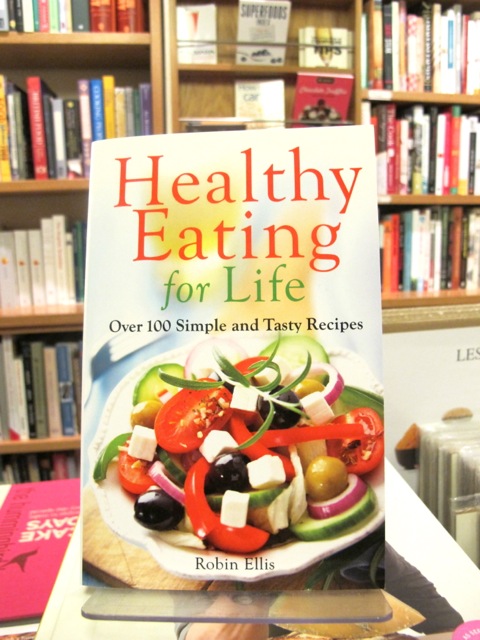
As a follow up to publishing the launch date of my second cookbook,

Healthy Eating for Life

here’s the first recipe in that book–a warming dish for winter:

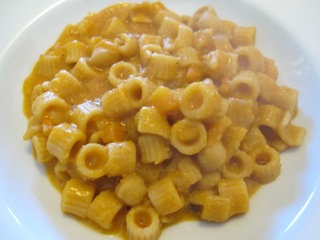
Chickpea and Pasta Soup

Worth considering for Christmas Eve or Boxing day evening [the 26th for American friends] !

IMG_3792

It has been eaten in Italy since Roman times.

The poet, Horace, wrote about heading for home and a bowl of leeks, pasta and chickpeas.

There are many variations on the theme of chickpeas and pasta.

A constant flavour is rosemary.

Serves 4

450g cooked chickpeas–tinned or bottled

6 tbsp extra virgin olive oil

carrot–chopped fine

stick of celery–chopped fine

small onion— chopped fine

garlic cloves–pulped with a teaspoon of salt

1 tbsp tomato concentrate

pinch of cayenne pepper (optional)

a sprig of rosemary 

a sprig of sage

750ml vegetable stock (I use organic vegetable stock cubes)

Parmesan rind (optional–this is just the leftover rind when you’ve grated all the useable cheese off. Save them for this soup!)

salt and black pepper

180gms small pasta (tubular is what I use, but any small pasta will do)

olive oil to swirl in each bowl

  • Purée two-thirds of the cooked chickpeas in a food mixer or blender (you can use a bit of the liquid from the tin, can or jar to loosen the mixture, if you wish)
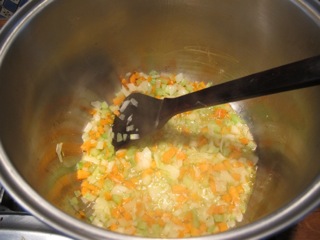
  • In a large pan gently sauté the carrot, celery and onion until they soften–about 10 minutes.

IMG_3994

  • Add the garlic, the cayenne (if using) and the sprigs of herb, mixing them in for a couple of minutes.
  • Stir in the tomato concentrate and cook a further couple of minutes.
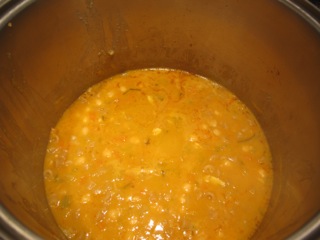
  • Stir in the chickpeas and the purée.
  • Add the stock and the parmesan rind (if using) and bring the soup gently up to the boil.
  • Add the raw pasta and stir well ensuring the purée doesn’t stick to the bottom of the pan.
  • Season and simmer until the pasta is done–adding more liquid if it gets too thick.

IMG_3995

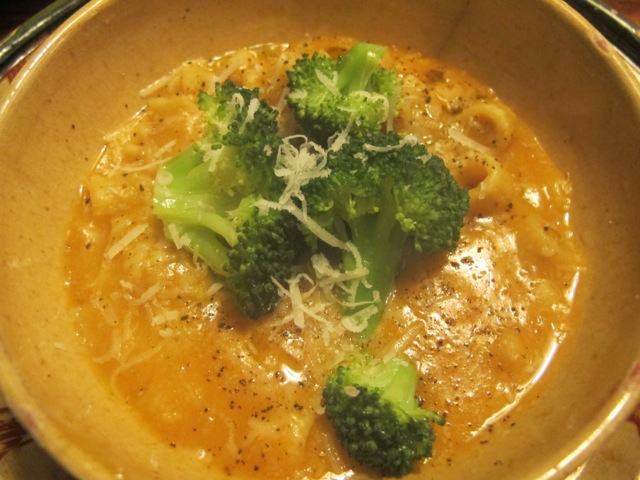
  • Serve hot–with the addition of some steamed broccoli, si vous voulez!

chickpea soup with broccoliIMG_3823

Along with its cousin, pasta e fagioli, these are my two favorite soups of the moment!

POST No. 500!

 announcing

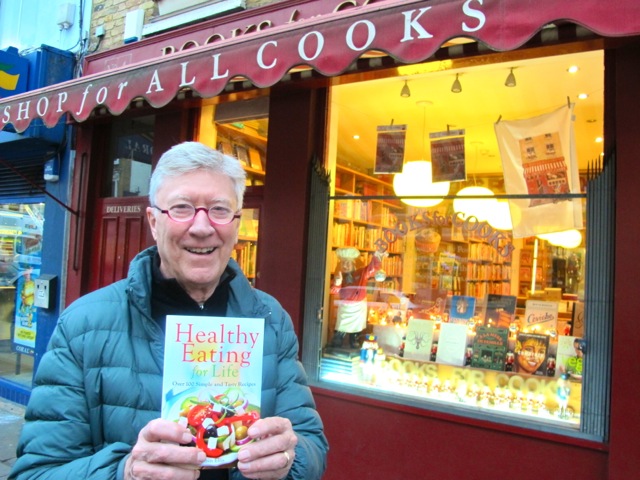
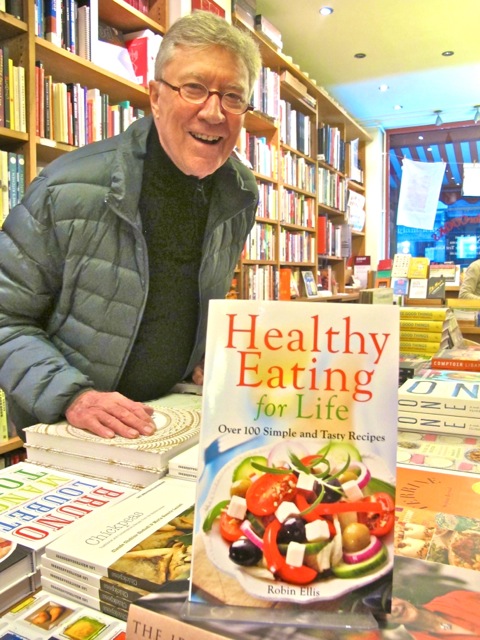
                  a BOOK-SIGNING in London for my new cookbook:

HEALTHY EATING for LIFE

image003

Come say hello and get your book signed on:

Thursday 16th January 2014

BOOKS  FOR COOKS

4 Blenheim Crescent (just of Portobello Road) Notting Hill,

London W11 1NN

http://www.booksforcooks.com/find_us.html

If you can’t attend and want a signed book, order via Books for Cooks and I’ll sign your copy  and they will post it on to you:

Tel 020-7221-1992
Fax 020-7221-1517

The bookstore has a café in the back serving  light lunch (arrive early to get a place!) or come for tea between  4.00 and 5.00pm on January 16th when I’ll be there signing books.

image006

image004

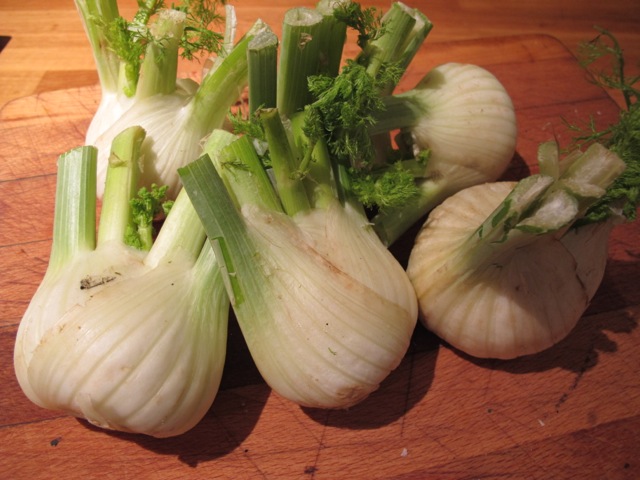
Fennel bulbs can be intimidating–how on earth do they translate into something worth eating?

IMG_0182

a huddle of fennels!

Firstly you have to “disarm” them by removing the discolored and damaged casing.

To do this it helps to slice them across the base.

Then quarter them and shave off the hard white core.

Now you have a friendlier looking and more promising vegetable to work with!

Slice these quarters not too thinly and away we go!

IMG_0184

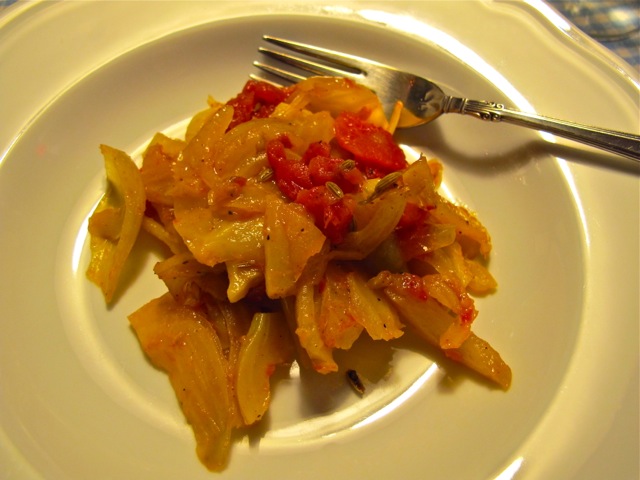
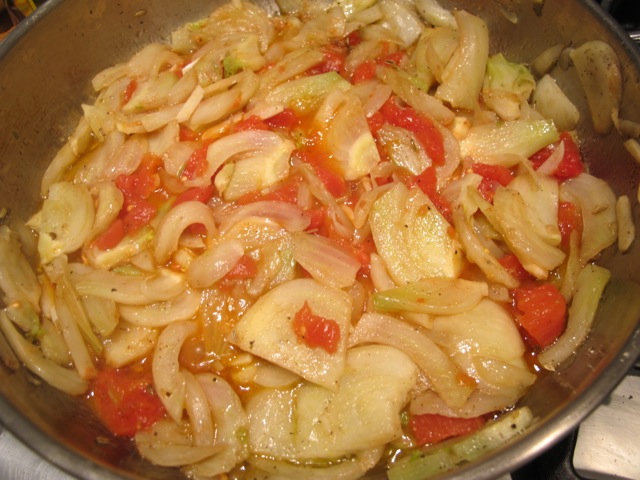
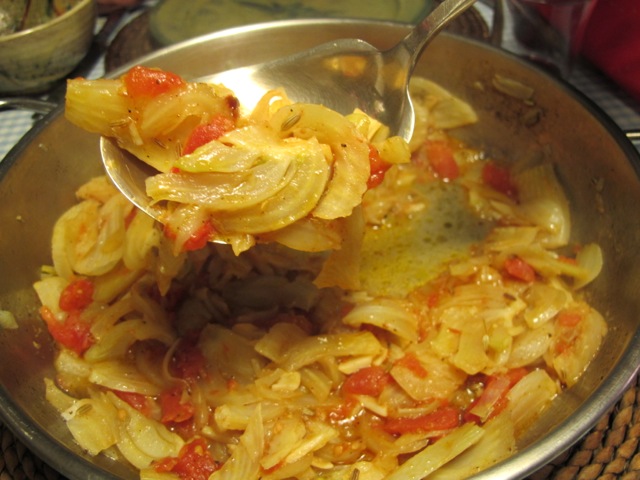
This dish has a background “heat“, not too strong–call it a soft kick–that keeps the interest and makes you want to finish it off.

IMG_0194

To be enjoyed as a side dish–or even the main event.

4-6 average fennel bulbs

3 garlic cloves–peeled and sliced

1 tsp fennel seeds

1 small red chili–seeds removed and the remaining chili chopped

3 tbs olive oil

250gm/8oz tinned [canned] tomatoes–drained and chopped

—-

Heat the oil in a pan with a cover.

Add the fennel and turn it in the oil.

Let it soften a little.

IMG_0188

Add the garlic and mix well.

When the aroma rises, add the seeds and the chili and turn them in.

Add the chopped tomatoes and 2 tablespoons of water and mix thoroughly.

IMG_0189

Season with salt and pepper, then cover the pan.

Cook on a low heat for 20 to 30 minutes–the fennel should be tender and inviting.

IMG_0191

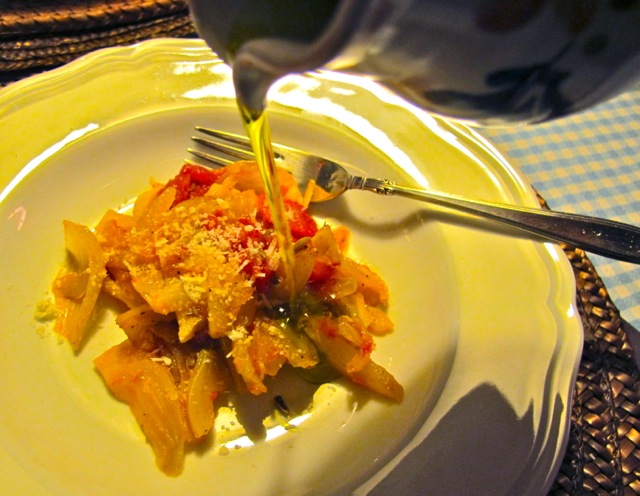
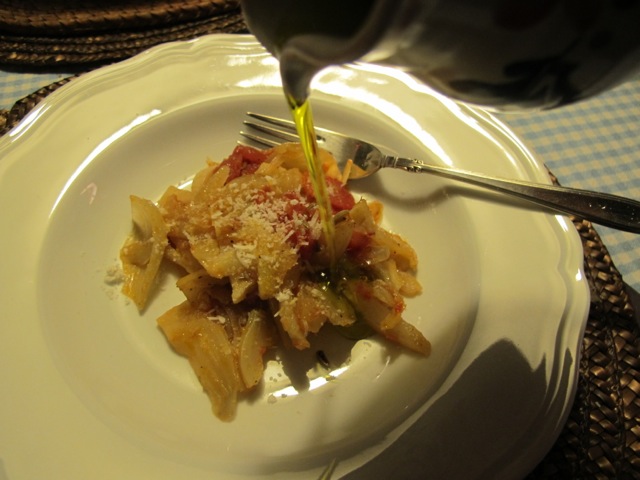
Drizzle with a little of your best olive oil–and try not to have a second helping!

IMG_0195


Lucien

IMG_3911

Lucien (Lulu, Louby-lou, Lou), who died peacefully yesterday at the age of 15 plus, was a cat of many parts.

Grumplestiltskin, sleep-a-lot, loner, lounger, sybarite, guardian.

He was not a cat who easily showed affection like Marmalade or Ben. He was not a big greeter like Butterscotch who would roll over in the courtyard whenever we returned from an outing. Nor was he a cat that cared, in the sense that Pippa seems to care, when either of us are confined to bed and she decides it’s her duty to be with us.

He was a solitary cat, a cat apart, a cat set in his ways, a loner by choice–happy it seemed to spend hours curled up in favorite familiar places where he wouldn’t be bothered.

DSC03882

He wasn’t a tolerant cat either and could be the scourge of newcomers–prowling round the kitchen at feeding time like Bill Sykes in a black mood

He was a “found” cat, who’d been separated from his mother too early–a rough start for anyone. After such a trauma, likely it was hard for him to trust anyone–one reason perhaps for all those years he spent in the garage with one sleepy eye on the cat-flap, guarding us from unwelcome guests!

It took him practically a lifetime to start cosying up on the sofa for a bit of telly watching in the evening rather than clambering arthritically onto the back of the sofa opposite, where his favorite folded blanket awaited him. For years no amount of cajoling would persuade him to change; he was a stubborn cat.

Meredith thinks that missing out on his mother’s milk for the vital first few days contributed to his physical difficulties later in life.

DSC01355

He arrived at the front door in a cardboard box. He sat nervously in the palm of one hand–he was so small–not understanding that he’d fallen in the butter dish, as a friend used to put it.

He’d been found in her garden by the sister of a friend who knew we loved cats and that Pippa had just had a litter. Perhaps, our friend thought, Pippa could be persuaded to accept a small addition.

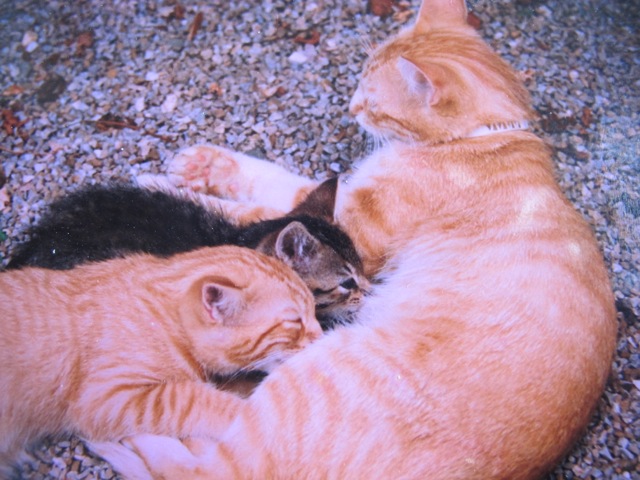
Meredith tried adding him to the line of tiny mites who were suckling at Pippa’s teats–but she was having none of it at first and quickly shook him off.

Meredith tried again, but no go. A little while later she watched Pippa walk over to Lucien, pause, then step forward to clean his face–as if he were one of hers.

IMG_0151

Lucien, Butterscotch and Marmalade.

Pippa had had a change of heart and accepted him into her litter.

IMG_0383

It was a significant bonding for both of them. They remained friends for life.

DSC01354

Pippa was Lucien’s only close relationship, though he spent years pursuing Butterscotch, apparently the love of his life, with no success.

She was disdainful of him, clearly regarding him as a parvenu and beneath her!

All this doesn’t make him sound much fun but he did have a playful side most often brought on when the sun shone.

Even last week when he was clearly fading fast–the vet on a home visit had told us to our relief that we was not in pain–he spent part of an afternoon outside, following the sun round the front of the house.

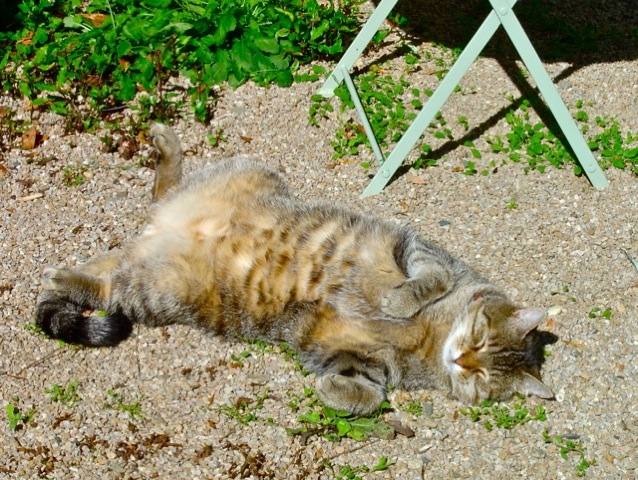
Lucien loved to lounge in the open air, albeit often behind a tree and close to the garage and sometimes, very occasionally, he’d forget himself, throw care to the winds and simply let it all hang out!

DSC01046

So why did we love him so?

We loved him for his difference, for his curmudgeonliness, for his contrarinessfor his independent spirit, we loved him to be precise– for being Lucien and unlike any cat we knew.

DSC01048_2

.

Roasted hazelnut pasta

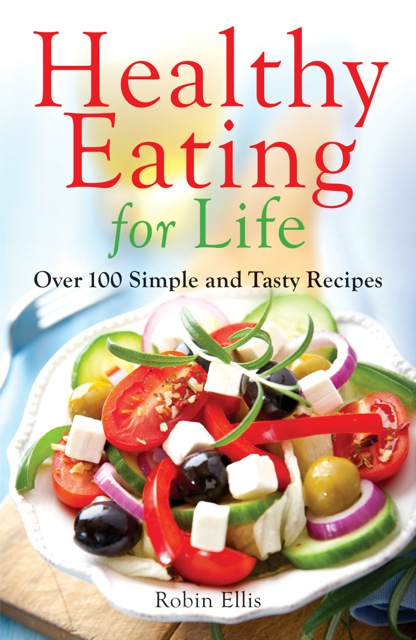
This is one of the pasta recipes in my new book, Healthy Eating for Life.

You can prepare the nut mix beforehand and reheat it very gently when you come to cook the pasta– stress-free cooking, in principle!

IMG_0114

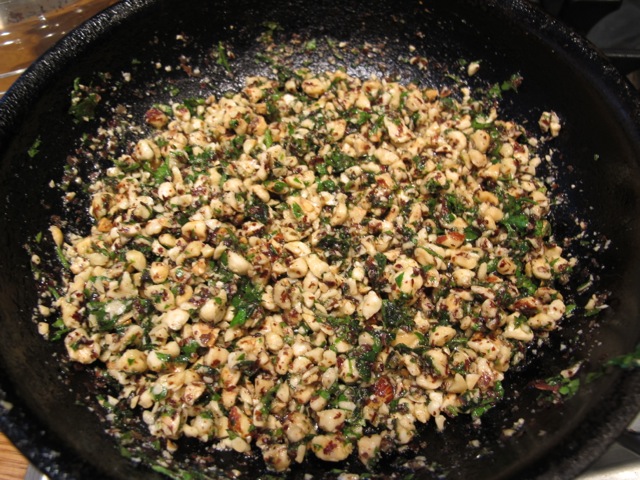
Hazelnuts roasted are particularly more-ish*. Mixed with olive oil, chili and garlic and served, as here, with nutty wholewheat pasta, they are irresistible!

IMG_0117

for 2

7oz  wholewheat penne or spaghettini

3 tbsp olive oil

1 tsp hazelnut oil–if available

garlic cloves--pulped

2 small dry chilis–chopped

75gms roasted hazelnuts–chopped  (I use the small container in a food mixer and pulse the nuts to control the finished size–crunchy little bits–not powder)

2/3 tbsp parsley–chopped

2 tbsp saved pasta water (i.e. the water that the pasta was cooked in!)

50gms parmesan cheese–grated

pecorino cheese–if available, a couple of tablespoons–bearing in mind its saltiness.

salt

Heat both oils in a pan and add the garlic.

Colour it gently, taking care not to burn it.

IMG_0113

Turn off the heat and remove the garlic from the pan to prevent it burning–a sieve with a metal net does this safely–and let it cool.

IMG_0115

Add the chili to the warm oil in the pan.

Gently reheat the oil and chili in the pan.

Add the hazelnuts and the parsley to the pan and cook briefly over a low heat–about three minutes.

IMG_0116

Turn off the heat and mix in the sautéed garlic.

Bring a large pan of water to the boil with a dash of salt.

Add the pasta and cook it to taste.

When the pasta is done as you like it–drain, remembering to save 3 or 4 tablespoons of the water.

Return the pasta to the warm pan you cooked it in and add the nuts, parsley, garlic and cheese(s) and mix thoroughly.

Add a couple of tablespoons of the warm pasta water to loosen the sauce a little.

Add salt to taste.

Serve immediately (it cools down quickly)–with extra cheese and a swirl of olive oil, if you like.

*To roast the hazelnuts:

Preheat the oven to 180C/350F.

Spread the hazelnuts over a shallow oven tray and place in the oven.

Check after 5 minutes. Taste and fragrance are the guide.

Taste one to check for crunchy doneness–roast them a little longer if you feel they need it.

Cooking time depends on their size and your oven!

Let them cool before processing them.

…heralding my new book, Healthy Eating for Life!
Image

(My first book  Delicious Dishes for Diabetics is alive and well and readily available.)

Healthy Eating for Life is published by Constable and Robinson,  on January 8th, 2014– and is available for pre-order. If you’d like a signed copy and live near London, I’ll be at Books for Cooks in Notting Hill on Thursday, January 16th, from 4pm-5pm. (If you can make it to Books for Cooks, please reserve your book with them ahead of time.)

From the Intro:

“Healthy eating for life”

What’s this?

Sounds like something handed down by a crusty old judge–a life sentence of eating humble pie for past sins.

“Prisoners at the bar, you have sinned most grievously, eating too much of the wrong stuff for too long. Bad habits must be punished! I therefore have no alternative but to sentence you to—HEALTHY EATING–FOR LIFE—take them down!”

Ouch!

But NO! Emphatically no!

This book is not promoting a diet of worms, grapefruit or any of the strict rule-ridden diets that are so guilt-inducing and hard to stick with.

It’s a book for people who love good food and enjoy cooking it or at least are willing to try. All manner of food, cooked in all manner of ways—a balanced diet, avoiding extremes.

“No one is born a great cook one learns by doing.”–Julia Child

We woke up to the news that our friends’ organic Tuscan olive oil won First Prize last night at the local Tuscan competition!

Complimenti, Keith and Helen!

Here’s their website for Boggioli, pictured below–1100 olive trees on a hillside in the Valdarno south of Florence: http://www.boggioli.com/

IMG_0055

The judges got it right–the oil we brought back last week is exceptional.

IMG_0106

We arrived at Boggioli this year, as last, in a rainstorm that disrupted the olive picking process.

Our usual contribution to the work–gathering the olives into the plastic paniers and pulling out any twigs and small branches that have fallen in–was minimal–limited this year to one afternoon.

IMG_9811

The torrential rain had made it impossible for the five-man team of professional pickers to work. This left Keith with a problem: He had booked a visit to the frantoio (oil processing plant) but only had a small quantity of olives waiting to be transported from the previous day’s limited picking.

Olives begin to degrade fast and waiting more than two days might affect the overall quality of this year’s yield. So to make up the quantity a little, Keith, Helen, Meredith and I picked some trees nearest to the house where the ground is flat and relatively dry.

IMG_9792

Pas grand choses but it was fun and made more sense of the next morning’s trip to the frantoio.

IMG_9805

The health benefits of extra virgin olive oil are well known–and Tuscan oils are especially highly prized.
Keith and Helen’s dedication to the cause has been justly rewarded.
We sped home last week with our precious cargo on board–highly prized now in more senses than one!

Our friend, Romaine Hart–a wise counsellor–was adamant last night that we were not getting enough PROTEIN!

Our tales of how long it’s taking to shake off the virus that has been a companion (on and off) for nearly three weeks was all the proof she needed.

So we agreed that a couple of lamb chops for lunch today would be a step in the right direction.

Vegetable soups–all very well, but they need backing-up!

We are eating meat less frequently now.

This is reflected in the meat section of my new book,  Healthy Eating for Life (to be published January 8th–my birthday!).

I awake this morning intending to visit Lautrec’s Friday market, pick up some lamb chops from the local butcher and see what’s up. 

It’s a chilly, grey November day and I light the fire.

My determination wavers and I start to think, “Maybe chops tomorrow–how about a heartwarming vegetable soup?”.

Then I remember this soup from my first book–and rationalize: White beans are a good protein source!

I picture it steaming in a bowl with a swirl of the new, green olive oil and thoughts of driving to Lautrec disappear in the mist!

IMG_0073

for 4

1 clove of garlic – peeled and chopped

8 tbsp olive oil

2 tbsp parsley – chopped
1 kg/36 oz canned or–preferably–bottled white beans – drained and rinsed

salt and pepper

250 ml/1⁄2 pint/1 cup vegetable stock

toasted wholewheat bread with a little olive oil

for 4

Sauté the garlic in the oil gently until it colours.

Add the parsley and stir a couple of times.

Mix in the beans, salt and pepper.

IMG_0066

Cover and cook gently for about 5 minutes to warm through.

IMG_0067

Purée a quarter of the beans in a mixer and return with the stock to the pan.

IMG_0070

Simmer for another 5 minutes.

IMG_0069

Check the seasoning.

Serve over the toast with a swirl of olive oil in each bowl.

Optional: Sprinkle chopped parsley over the top before serving.

Chickpea flour is also known as Besan and gram. A good substitute for wheat flour for those with gluten intolerance, it has other nutritional virtues and it tastes delicious.

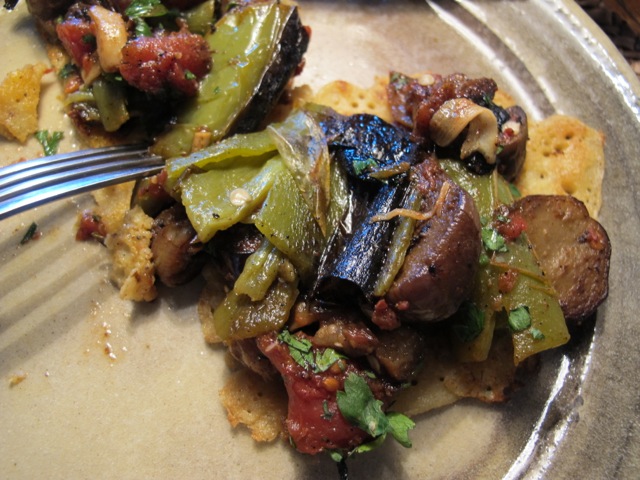
This is street food and is still sold on the streets of Nice and Marseille in southern France. The pancakes are about 20 cm/8 inches wide and are good for parking things on – a fried egg or some bacon bits or as I did recently a spoonful of leftover green pepper and aubergine ratatouille.

IMG_9674

170 g/6 oz chickpea flour

400 ml/14 fl oz/1½ cups sparkling water

60 ml/2 fl oz cup olive oil

salt and pepper

1 tbsp rosemary leaves

olive oil for frying

  • Shake the flour gently through a sieve into a mixing bowl.
  • Add the water and whisk it in until you have a smooth runny paste.
  • Add the oil and whisk in.
  • Add pinches of salt and pepper plus the rosemary.
  • Leave to soak for 20–30 minutes.
  • When you are ready to make the pancake, heat a swirl of olive oil in a 25 cm/10 inch frying pan.
  • When the oil is hot, put a tablespoonful of the stirred mixture in the pan and let it spread.
  • Cook for a few seconds until you can ease the pancake loose with a spatula.
  • Now you have to turn it over–be bold!
  • Practice makes perfect and anyway the first attempt, if not completely successful, will be edible.
  • Cook the pancake a further few seconds and remove from the pan.
  • Both sides should be a golden brown.
  • Add a few twists of the pepper mill on each.
  • Add what you will and serve with a green salad.