Feeds:
Posts
Comments

Ginger and diabetes

ginger-getty-590tm-220811

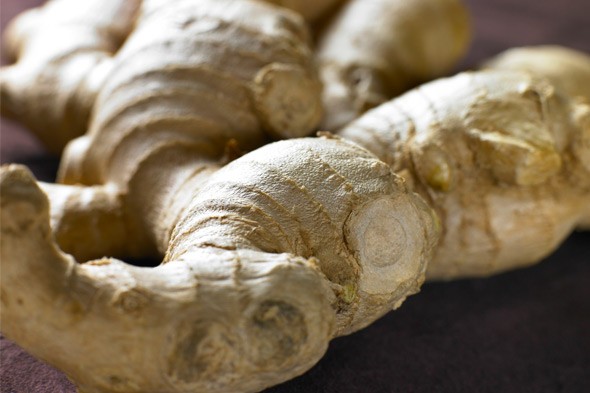
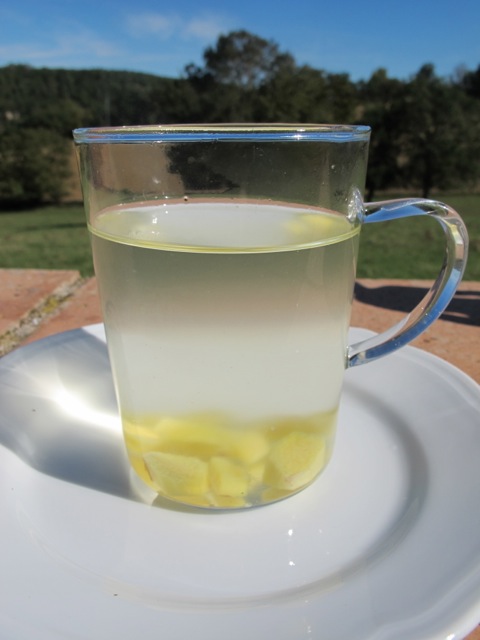
Meredith sat by the log fire last night, sipping a cup of ginger tea* wrapped in woolly jumpers and a blanket.

(*Peel and chop a small knob of ginger, put it in a cup or mug and fill the container with hot water. Let it infuse for a short time.)
IMG_9464

She is developing a cold–no doubt about it!

Today’s she’s in bed.

I bought more ginger this morning and there’ll be chicken broth “on tap”.

Ginger infused in hot water–just that–is delicious and good for relieving the symptoms of colds.

It can also has beneficial effects for people with diabetes.

The British Diabetic Association (Diabetes UK) recently published a piece extolling the virtues of ginger and its uses in connection with the condition:

Ginger can help with glycemic control, insulin secretion and cataract protection

Glycemic control

A study published in the August 2012 edition of the natural product journal Planta Medica suggested that ginger may improve long-term blood sugar control for people with type 2 diabetes.

Researchers from the University of Sydney, Australia, found that extracts from Buderim Ginger (Australian grown ginger) rich in gingerols – the major active component of ginger rhizome – can increase uptake of glucose into muscle cells without using insulin, and may therefore assist in the management of high blood sugar levels.

Insulin secretion

In the December 2009 issue of the European Journal of Pharmacology, researchers reported that two different ginger extracts, spissum and an oily extract, interact with serotonin receptors to reveres their effect on insulin secretion.

Treatment with the extracts led to a 35 per cent drop in blood glucose levels and a 10 per cent increase in plasma insulin levels.

Cataract protection

A study published in the August 2010 edition of Molecular Vision revealed that a small daily dose of ginger helped delay the onset and progression of cataracts – one of the sight-related complications of long-term diabetes – in diabetic rats.

It’s also worth noting that ginger has a very low glycemic index (GI). Low GI foods break down slowly to form glucose and therefore do not trigger a spike in blood sugar levels as high GI foods do.

Other health benefits

Ginger has been used as an herbal therapy in Chinese, Indian, and Arabic medicine for centuries to aid digestion, combat the common cold and relieve pain.

Its powerful anti-inflammatory substances, gingerols, make it an effective pain reliever and it is commonly used to reduce pain and swelling in patients with arthritis and those suffering from other inflammation and muscle complaints.

In fact, ginger is said to be just as effective as nonsteroidal anti-inflammatory drugs, but without the gastro-intestinal side effects.

Other medical uses of ginger include treatment of:

  • Bronchitis

  • Heartburn

  • Menstrual pain

  • Nausea and vomiting

  • Upset stomach

  • Diarrhoea

  • Upper respiratory tract infections (URTI)

Update a day later:

The patient announces she slept better and would like some chicken broth and two eggs scrambled on toast for lunch followed by another infusion of GINGER.

“With pleasure, Madam!”

Hervé’s ancestors…

I finish my walk this morning and begin stretching against the cemetery wall.

I see Hervé our neighbor in the cemetery with a hoe in his hand.

“Just attending to my ancestors before the rain,” he says.

By  November 1st–All Saints Day–the cemetery will be covered in flowers both artificial and fresh.

Chrysanthemums are prominently on display.

IMG_2860

Hervé is turning over the earth of the smaller of two plots–a narrow rectangle with a stone cross at its head.

IMG_9455

“My Grandfather,” he says “died in 1941. I was one year old.”

“And your father?”

He points to the adjacent plot which is twice the size and relatively more recent and has a granite tombstone at its head with clearly visible gold embossed lettering.

“Died 1941–I was two years old.”

“I seem to remember you telling me that he died in an accident…?”

“Yes–hit by a cow.”

“In those days,” he says, “people would go to market in Realmont [a distance of 12 kilometers] or even Albi–[25 kilometers] to buy their cow(s) and walk them back home. Took them the best part of a day.”

“My father had bought his cow for a daily supply of fresh milk–it was the second year of the war in France– and was walking it back to the hammeau [hamlet] when a lorry passed by too close, hurling the cow into my father and killing him. The cow survived. ” Hervé says.

His mother was left with seven children to bring up on her own.

“It was hard.”

Hervé is retired now from the bank in Castres where he spent his working life. He and his wife Maité, live in the house opposite the one in which he and his six siblings grew up.

“Strange isn’t it,” he says “So much less traffic on the roads those days than now and my father died in a traffic accident.”

Ironique…” I say.

Bonne continuation et dit “bonjour” a Maité.”

Le meme a Meredith.”

He was right about the rain–coming down in sheets just before lunchtime.

IMG_9422

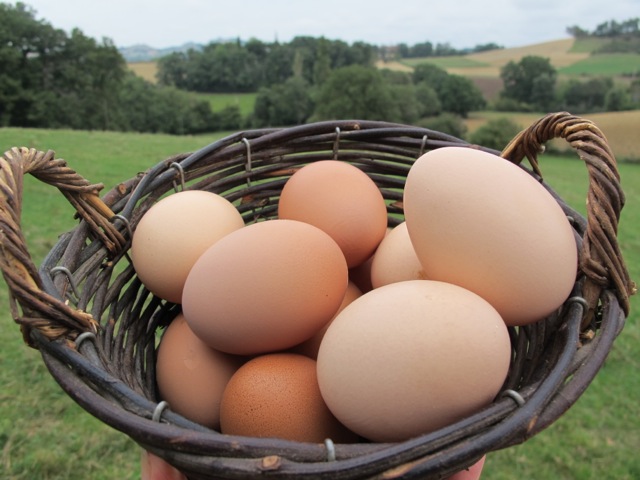
Our neighbour Flo left us eggs and onions in exchange for feeding her cats and hens while she and her husband spend a few well-earned days rest in Corsica.

So, here’s another omelette/scrambled egg thing.  (see courgette eggs).

This time a classic peasant dish from the Basque Country in the southwest corner of France. Sweet local peppers are in season now–late like everything else–piled high on the market stalls. The ones I used were sun-ripened in Pezenas (southeast of us) and sweet–thinner- skinned than their year-round supermarket cousins.

Eggs, peppers and tomatoes (also from Pezenas) make up PIPERADE–plus a pinch of cayenne for PEP.

IMG_9417

Some versions make a purée of this mix before adding the eggs–which is an option.

I favour leaving the vegetables roughly cut to add texture.

Serves 2 / 3

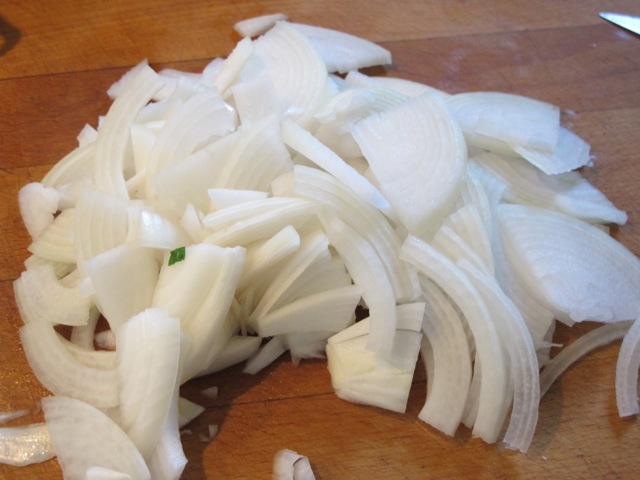
1lb onions–sliced or chopped

IMG_9394

2 tbsp olive oil

1lb tomatoes–skinned if fresh, and roughly-chopped (if tinned [canned] drain the juices)

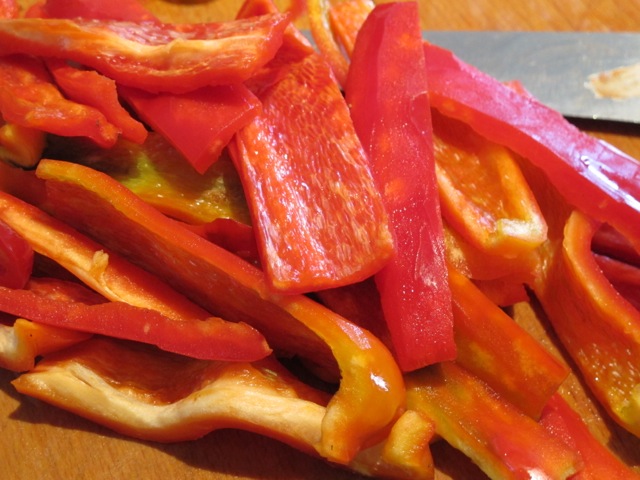
3 medium red peppers–skinned with a peeler (not hard, with a good peeler!)

IMG_9428

…and sliced into strips

IMG_9397

1/3 tsp cayenne pepper–more if you like–a matter of taste

6 eggs

salt and pepper– to taste

  • Heat the oil in a medium pan.
  • Add the onions and cook on a low heat for 20 minutes–they should become soft and pale.
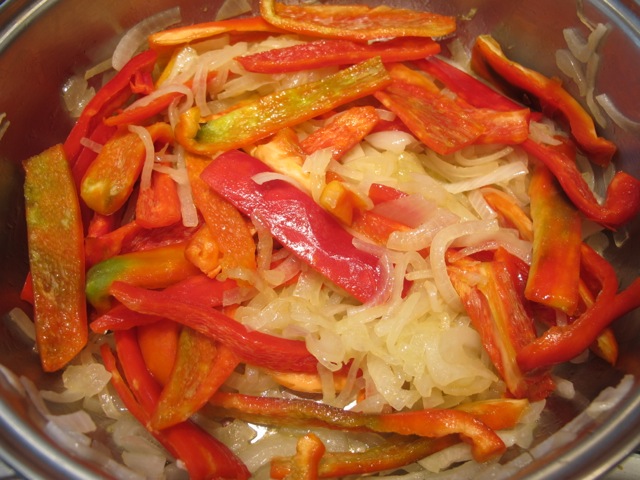
  • Add the pepper strips and turn them over in the onion.

IMG_9398

  • Cover and cook for about ten minutes.
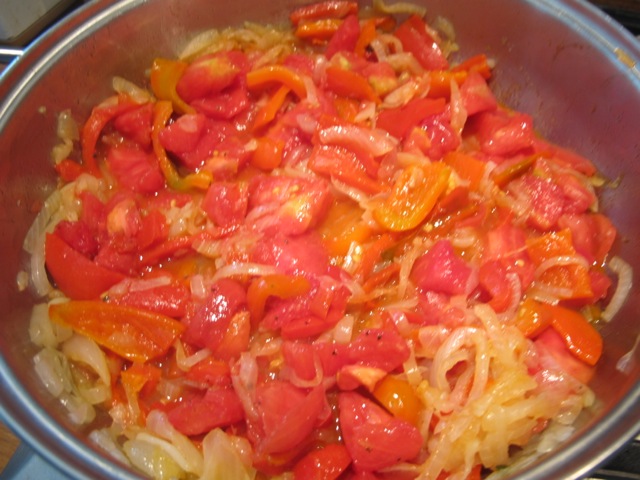
  • Add the tomatoes, cayenne, salt and pepper and mix in.

IMG_9400

  • Cook for 10 minutes covered on the same low temperature; then a further ten uncovered to lift some of the excess liquid.
  • Whisk the eggs together.
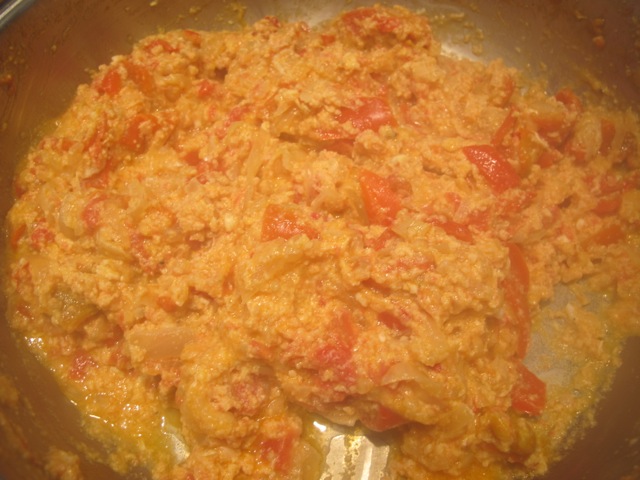
  • Add them to the sauce and turn over gently…

IMG_9409

  • …until the eggs are done to your taste.

IMG_9410

Comfort food!

Served with a green salad it makes a handy light lunch.

IMG_9358

It was a company show in the kitchen last night–the main roles were being played by our friends, Romaine and Mai-Britt–much to my delight!

IMG_9338

I was offered the small but important role of sous chef and general presence!

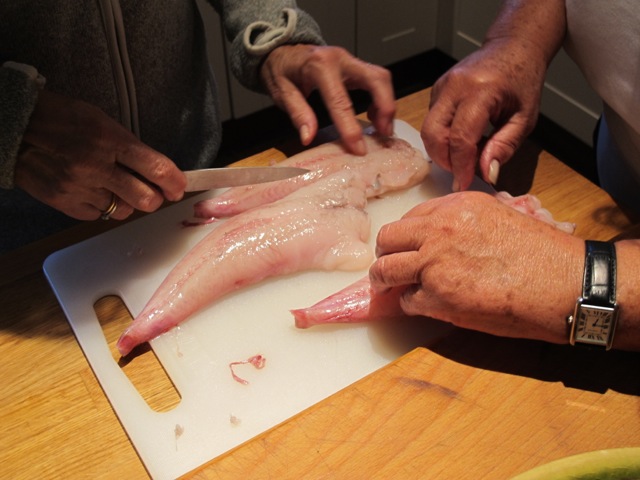
They picked up the pre-ordered fish from M. Gayraud in the market yesterday morning and although the monkfish (lotte) tails had been thoroughly prepared, they meticulously peeled back the thin skein of skin still clinging to the flesh, something I am not always so careful with–their attention to detail paid off.
IMG_9339

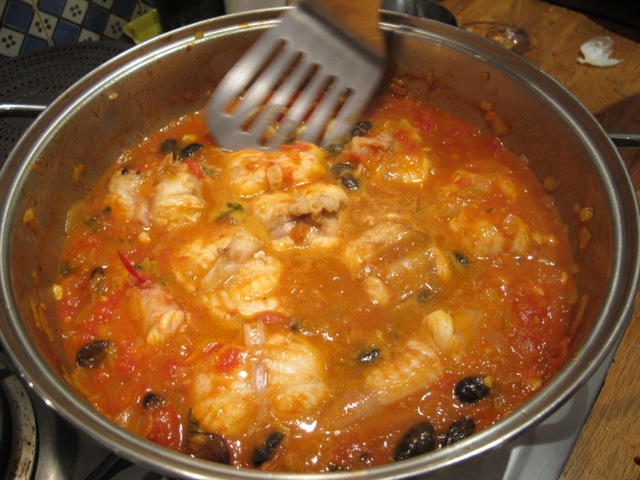
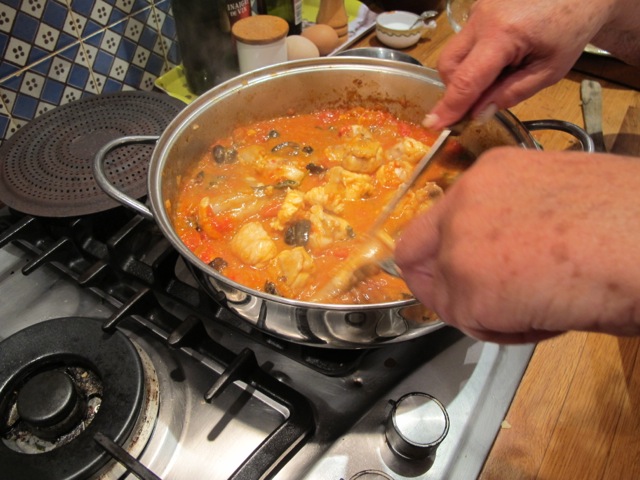
They were cooking this handy dish from the proofs of my NEW book, Healthy Eating for Life (due out in January 2014): Monkfish with black olives in a smoky paprika tomato sauce. 

It is relatively simple–but in any case we had expert “guest cooks”!

The sauce can be prepared beforehand and reheated when you are ready to add the fish.

That’s the beauty of it. Good for entertaining, as most of the work is done ahead of time.

And that’s what my team did–because it was Saturday evening and Strictly Coming Dancing on BBC TV was too tempting to miss–they’d been following it for weeks. With the sauce made and sitting happily melding, hunger proved the only nagging worry–in time drawing the team back to the kitchen.

There was left over roast ratatouille and basmati rice in the fridge to which I added some sautéed courgettes–perfect as an accompaniment.

For four of us last night:

500–700gm/1lb–11/2lb monkfish, cleaned (ready to cook)–cut crosswise through the cartilage in bite size pieces–or other firm-fleshed white fish

3 tbsp olive oil

onion—chopped

2 cloves garlic—chopped

3 large tinned toms or 8oz/200gms fresh ripe toms—chopped small

½ tsp cayenne pepper

½ tsp smoked paprika

sprigs of parsley and thyme and a bay leaf

1 glass dry white wine

1 tsp salt

10 juicy black olives—stoned and halved

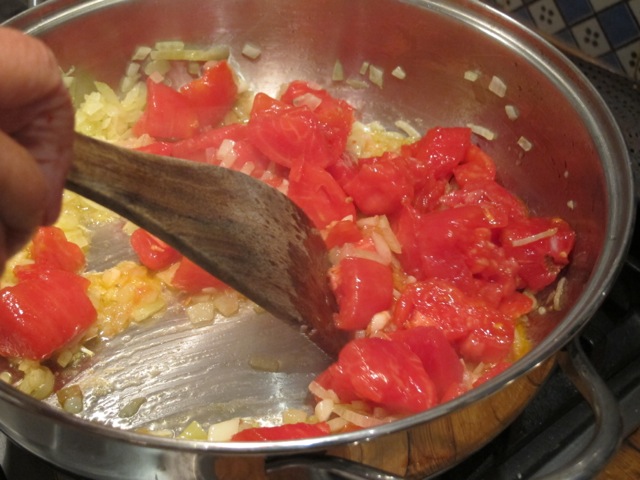
Soften the onion in the oil using a sauté pan large enough to hold the monkfish (later)–about five minutes.

IMG_9347

Add the garlic and cook a further three to four minutes.

Add the tomatoes—which you have broken up–with the spices, herbs and salt.

IMG_9351

Cook these gently for a couple of minutes.

Add the wine and cook another couple of minutes. (Romaine says next time she’d cook the sauce longer–I’m not sure I agree, especially if you are using fresh ripe tomatoes; chacun a son gout!).

This makes the simple base in which to cook the fish.

IMG_9352

A few minutes before you plan to eat, reheat the sauce and add the olives.

Slide the monkfish pieces under the sauce and cook on low heat, covered, for 5 to 10 minutes until the fish is opaque–and you can’t wait any longer!

IMG_9355

(Romaine separated the fish from the cartilage–something I usually leave guests to do for themselves.)

IMG_9359

IMG_4489

Escarole is the mildest mannered member of the chicory family of lettuce, but can claim many healthy components.

Its leaves are brilliant green and floppy on the outside lightening to almost white in the centre. It welcomes the strongly flavored anchovy dressing as does the diced avocado.

This organically-grown beauty was picked young–we ate almost the whole lettuce for lunch–there was very little wastage. A larger more mature specimen might need the damaged outer leaves removing.

Mixing the greens makes for a pretty picture. Add a little darker green rocket to the salad if you have it to hand.

Yesterday our friend Romaine–here for a few days–suggested some diced cucumber might cut the rich mix of anchovy and avocado. I’ll try it today with the last avocado and some rocket.

1 escarole lettuce–washed and spun dry

2 avocados–halved and diced

1 sweet onion or several spring onions/scallions–sliced thin

For the dressing:

garlic clove–peeled and pulped with a little salt in a mortar

anchovy fillets–chopped roughly

2 tblsps red wine vinegar

4 tblsps olive oil

salt to taste–remembering the anchovies are salty and a turn of the pepper mill

mix the dressing:

  • Add the chopped anchovy fillets to the garlic pulp in the mortar and mush and stir them together.
  • Add a little pepper.
  • Mix in the vinegar then whisk in the oil.
  • Taste for salt and add extra if needed.

Arrange the leaves of the escarole as you like in a wide bowl and add the avocado, onion and the rocket (optional!).

Just before serving, whisk the dressing and spoon it over the salad.

IMG_9266

Turn it all over to coat the salad leaves thoroughly.

IMG_9276

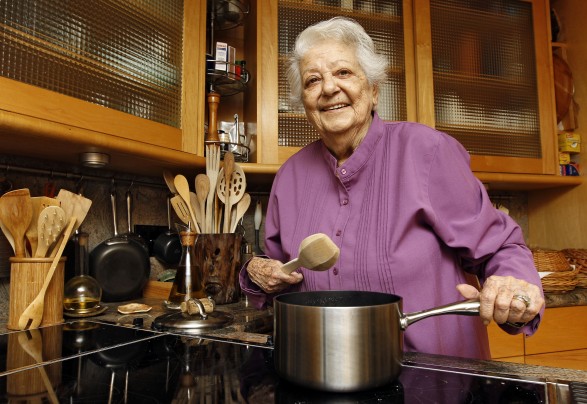
Marcella Hazan

Obit-Hazan-09683

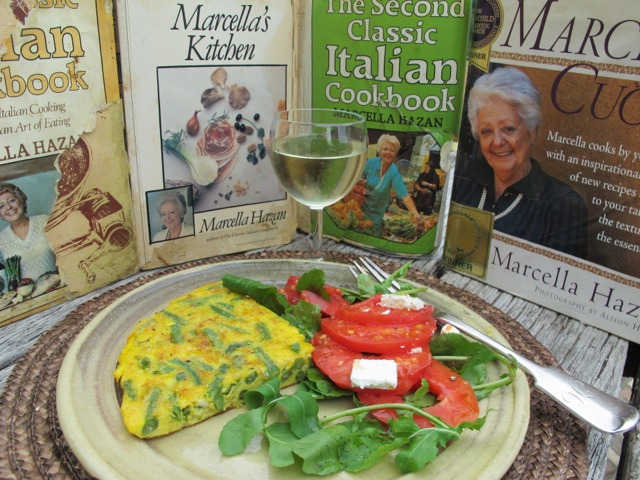
Lunch today is an homage to Marcella Hazan who has died at home in Florida aged 89.

IMG_9201

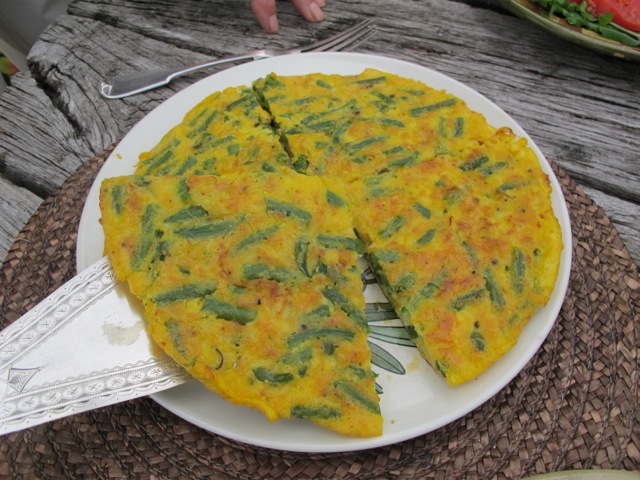
(https://robin-ellis.net/2011/10/10/frittata-with-green-beans/)

A hero passes.

IMG_9204

She was in the line of Julia Child and Elizabeth David–self-taught talents who were cooks rather than chefs.

Marcella wrote in her memoirs:

“Cooking came to me as though it had been there all along, waiting to be expressed; it came as words come to a child when it is time for her to speak.”

Born in Italy, she settled in America with her Italian-American husband, Victor, confessing to no experience in the kitchen–only the memory of the smells from her Grandmother’s kitchen on the east coast of Italy.

She learned fast, built a repertoire of recipes and started running cooking classes in her Manhattan apartment. One day American food writer Craig Claibourne came to lunch.

The rest is history.

Her cooking was classic Italian, recognising the strongly regional nature of that cuisine.  She wrote in Italian–husband Victor translating–and she never lost her Italian accent.

An exigent cook by some accounts (so was Elizabeth David), “tough” was how she described herself in a late interview with Mark Bitman (another hero).

Her cook books are extraordinarily comprehensive and, like Elizabeth David’s, readable. The recipes feel authentically Italian.

Authentic and simple best descibe her cooking, with roots in the kitchen of her nonna, in the village of Cesenatico in Emilia-Romagna, about 120 miles south of Venice.

She has inspired me for nearly 40 years. I love my well-thumbed, stained, patched-up copies of her books.

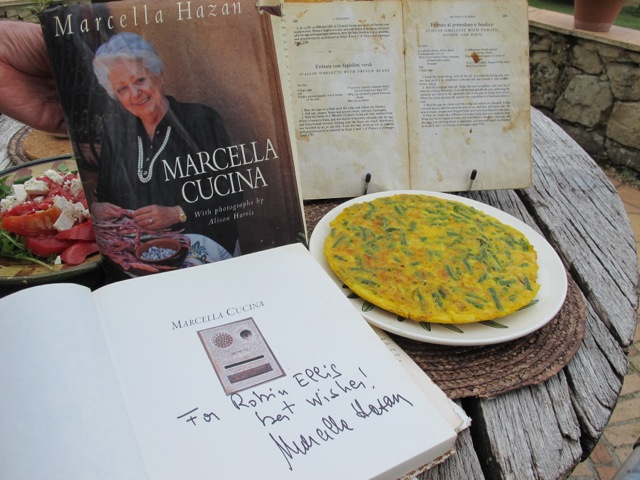
My friend, Marc Urquhart, who knew of my passion for her recipes, surprised me with the gift of her cookbook that he specially arranged to have inscribed by her.

IMG_9200

Grazie tanto, cara Marcella, for the many hours I’ve spent cooking with you in the kitchen and sharing your food ’round our table.

Courgette “eggs”

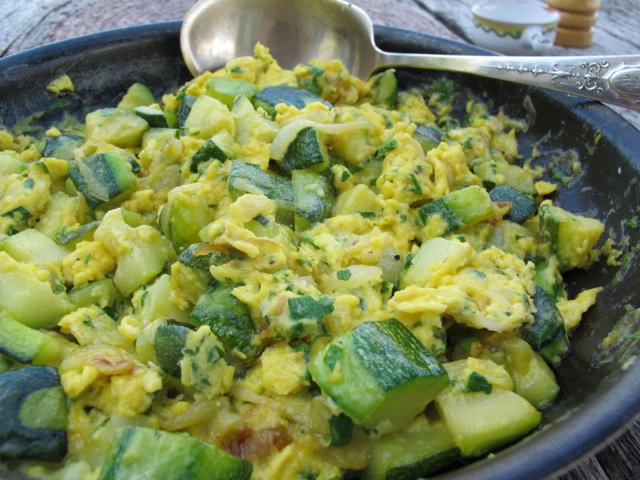
Three medium courgettes from the single plant in the garden and five eggs made up this handy end-of-season dish adapted from Carluccio’s Vegetable book.

IMG_9184

More scrambled eggs than omelette or frittata–it an attractive way to use some of the  courgettes queueing up to be used as the glut develops.

serves 4 as a light lunch

3 medium courgettes

1 onion–sliced thin

3 tbsp olive oil

4 eggs–beaten

50gm/2oz parmesan cheese–grated

2 tbsp parsley–chopped

1 tbsp mint (if available)–chopped

salt and pepper

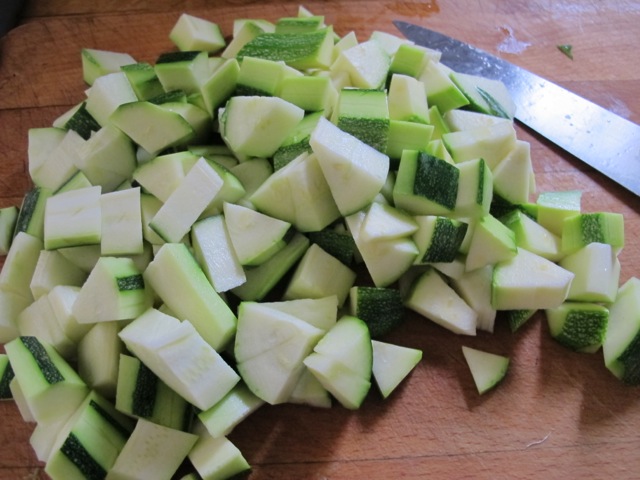
To prepare the courgettes–peel them in stripes, quarter them lengthwise and cut them in dice.

IMG_9175

Sprinkle with salt and leave them to drain in a sieve or colander for an hour or so.

Dry them in kitchen paper or a tea towel.

Heat the oil in a pan big enough to hold all the courgettes in a single layer.

Sauté the onion over a low heat until it softens and then add the courgettes, turning them over  in the oil.

Cook them until they are tender–about 20 minutes.

IMG_9179

Break the eggs into a mixing bowl and whisk them together.

Mix in the parmesan, the parsley and mint (if using), season with salt and pepper–more pepper than salt, bearing in mind the courgettes have been salted already.

Pour the egg mix over the courgettes and start turning it over gently as the eggs solidify.

IMG_9180

This will not take long–it’s ready when the the mix is loosely solid–scambled in fact!

Take care not to cook it too solid!

IMG_9185

Meredith toasted two pieces of wholewheat bread and sprinkled some olive oil over them to eat with these courgette “eggs”.

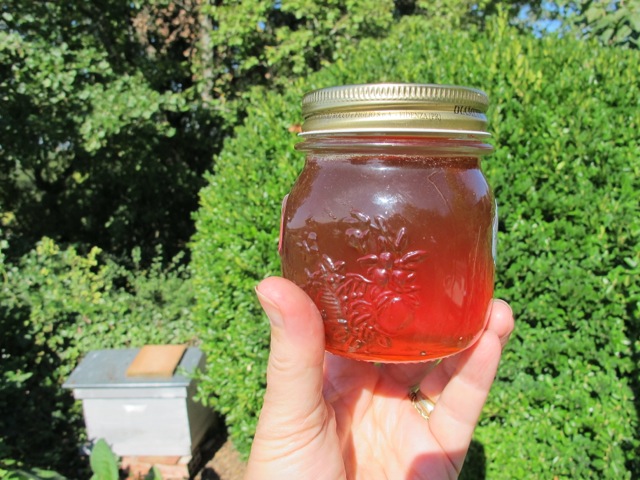
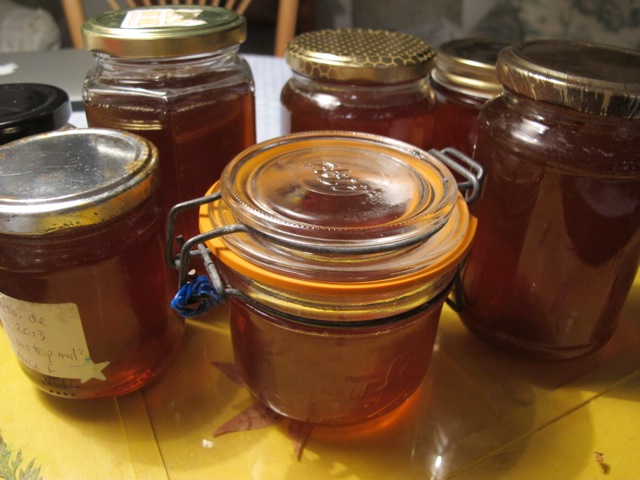
Meredith finished the final honey bottling of the year yesterday.

IMG_9161

Her bees have performed miracles. Alice, our generous neighbour’s harvests haven’t yielded anything like the amount Meredith’s single hive has produced. We’re convinced it’s because Meredith serenades them with earth songs from Findhorn and hits from Broadway musicals at the end of the garden. Alice doesn’t buy it.

IMG_9140

Whatever it takes we say–those workaholic bees need a bit of light relief.

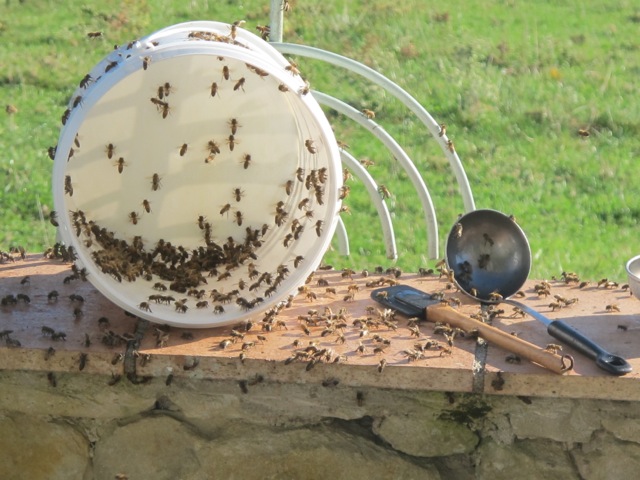
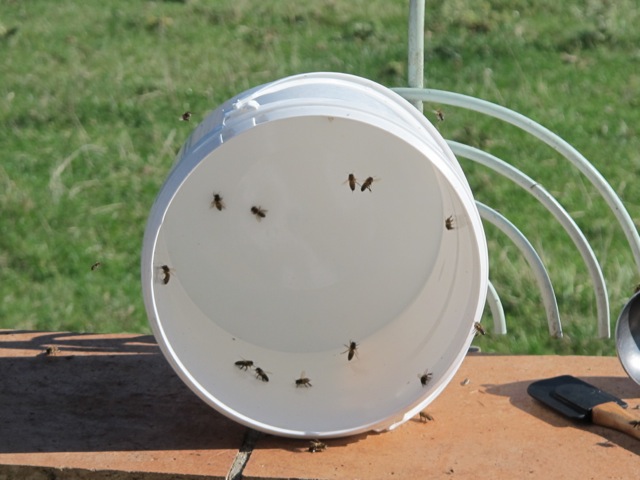
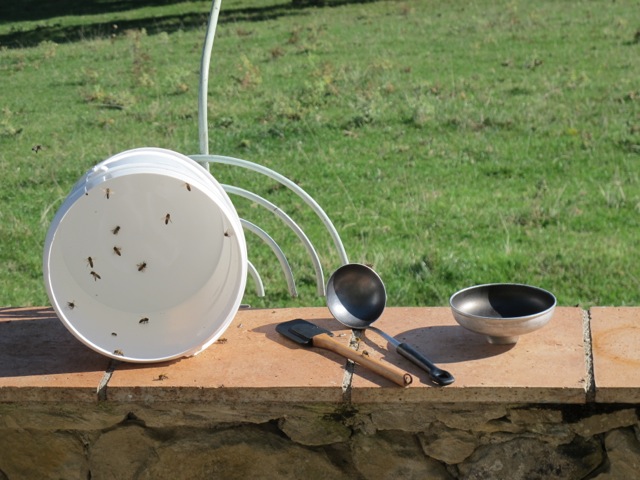
The large white tub that had held the modest yield was empty but very sticky.

I put it outside on the wall, opposite the back door, this warm and sunny morning.

I wasn’t prepared for what I saw the next time I looked.

IMG_9149

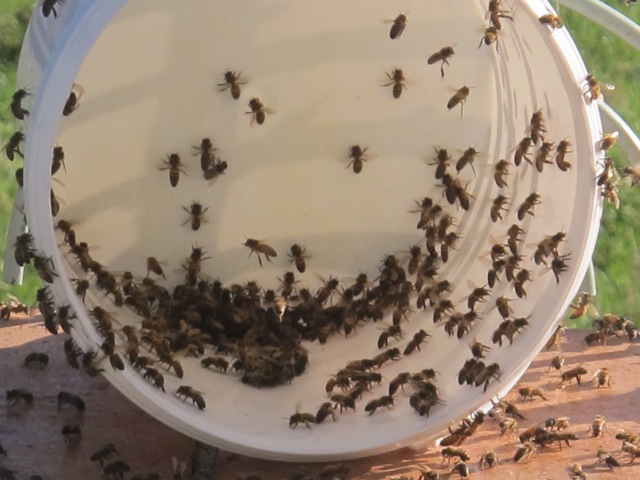
The bees were cleaning-up…

IMG_9146

And how, you might say!

IMG_9155

Remarkable–the work ethic of bees!

IMG_9156

and then?–into the fields and back to work, I guess!

This salad featured regularly at summer lunches, B.D. (Before Diagnosis!)

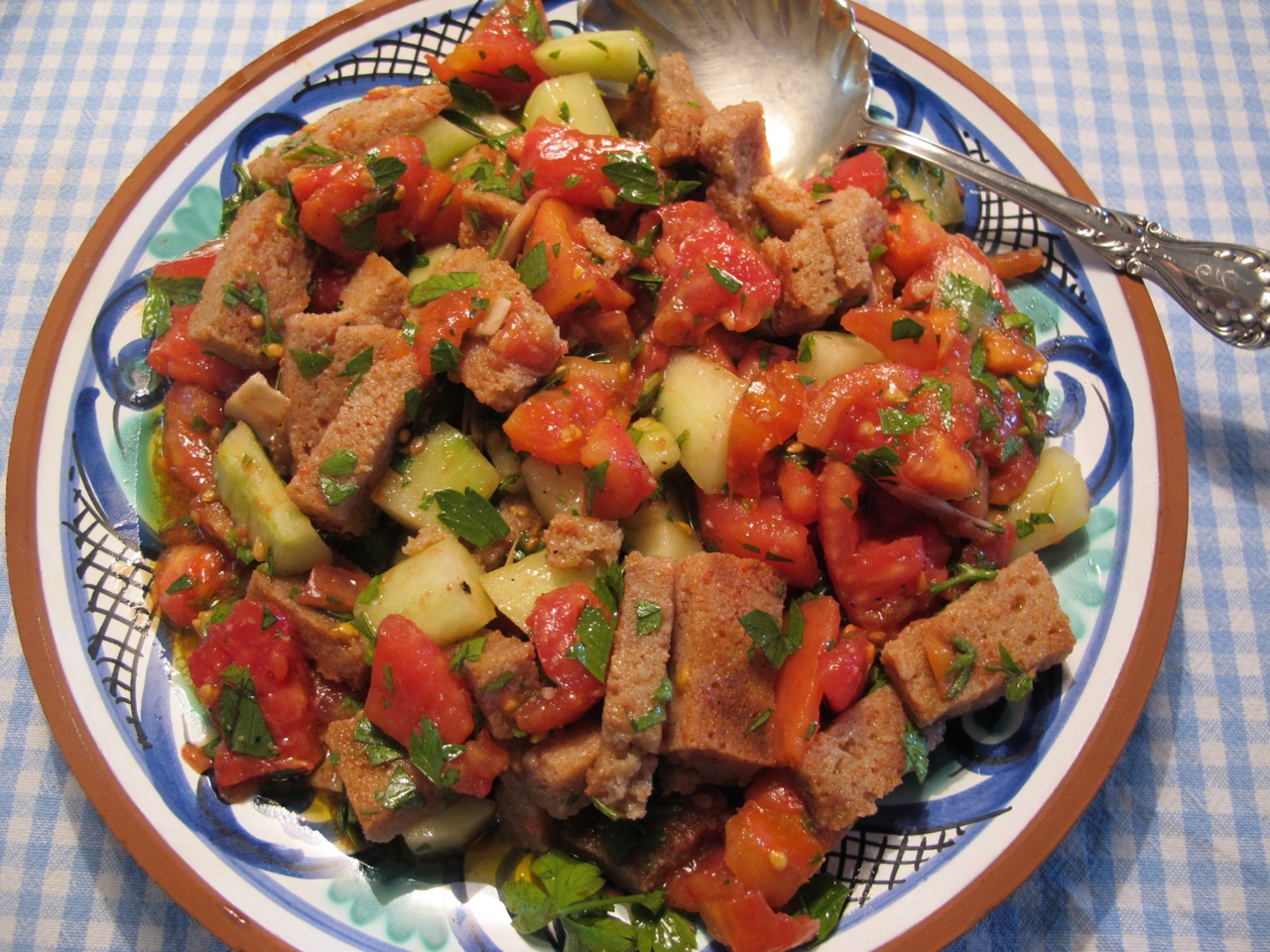
Back then I made it with roughly torn pieces of stale white ciabbata bread and sun-sweet tomatoes bursting with juice, assembled an hour or so before eating, dressed and turned over to let the juices do their work melding the oil and garlic and softening the bread.

It then sat, covered, ready for a proud presentation–convenient, as well as delicious.

But when white bread got the boot I was put off making it.

This week I remembered a version I’d had at La Famiglia (favourite Italian restaurant in London) years ago, made with neatly cut smaller pieces of bread that had been fried in olive oil. At the time I was disdainful of its inauthenticity (pompous thought!).

Reminded of how much I missed it, I tried it with a few neat pieces of the 100% organic rye bread I have for breakfast, dribbled with olive oil and browned in the oven for a few minutes.

It got the nod at lunch!

IMG_9011

Though Meredith insists this is not worth doing with less than ripe tomatoes–je suis d”accord.

It’s a late summer salad–handy if you have a tomato glut.

for 2/3

3 slices of rye/ wholewheat bread–cut into small pieces

1 tbsp olive oil for tossing the bread in

1 lb ripe, sweet, delicious tomatoes–peeled and roughly chopped with their juice

half a cucumber–peeled and seeded and cut into four pieces

IMG_9067

1 fat garlic clove

2 tbsp red wine vinegar

6 tbsp olive oil

salt and pepper

a handful of parsley–chopped

Turn on the oven to 220C/430F

Toss the bread pieces in a tablespoon of olive oil and spread them on a small oven tray and put it in oven as it heats up.

Check after ten minutes to see if the pieces have browned a little.

If so, take them out and let them rest or if not, cook on a few moments more.

IMG_9061

Slice the peeled garlic clove as thin as you can.

IMG_9060

Then add them to the bread.

IMG_9062

Pile on the tomatoes and their precious juice.

IMG_9066

Then the cucumber, in chunks…

IMG_9069

Whisk together the oil, vinegar, salt and pepper and pour the dressing over the salad.

Having dutifully “followed my own instructions” I realised the plate I’d been assembling the salad on, though it looked good, was too small on which to turn the salad over comfortably!

So I slid it into a mixing bowl, turned it over thoroughly and then carefully back onto the plate. (An exercise a sensible forward-thinking person can avoid!)

Finished by sprinkling over with chopped parsley.

Simple Puy lentils

Puy lentils:

IMG_9040

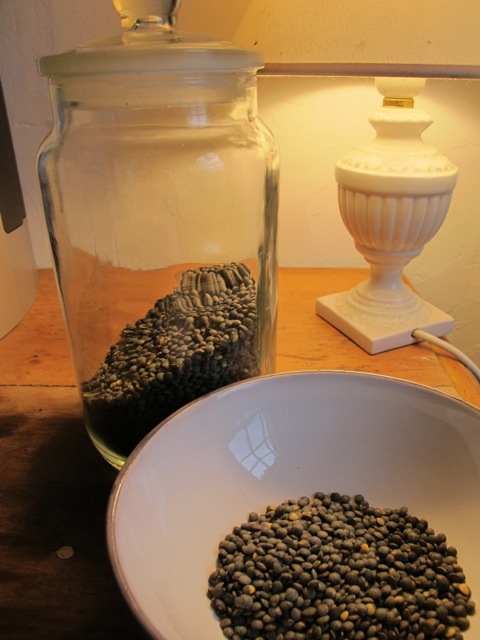
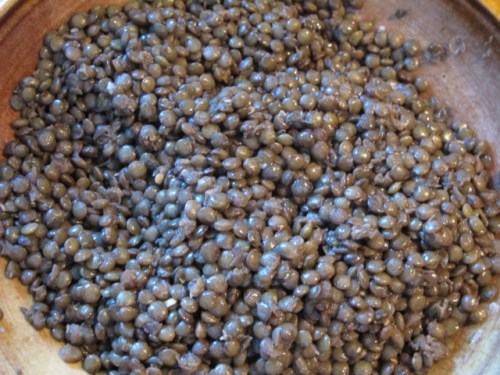
Small, silvery slate-coloured ones originally from the volcanic Auvergne region of central France hold their shape nicely if not overcooked.

IMG_8897

I love lentils–grey/green/orange.

Meredith–not so keen on account of their tendency to cause flatulence; though she tells me now that reading up about the health benefits of these little jewels , she’s begun to change her mind–“I think I should be eating them….” Whoopee!!

I’ll put up with any mild discomfort because the taste and texture is so pleasing.

AND…

…a good source of protein and a healthy vegetarian alternative to meat.

This version is straightforward with little adornment. The vinegar, salt and olive oil is enough to make me keep spooning them onto my plate. You can top them with yogurt, creme fraiche, or with smoky aubergine as I did the other night–suggested by a recipe in Ottolenghi’s brilliant vegetable cookbook, Plenty.

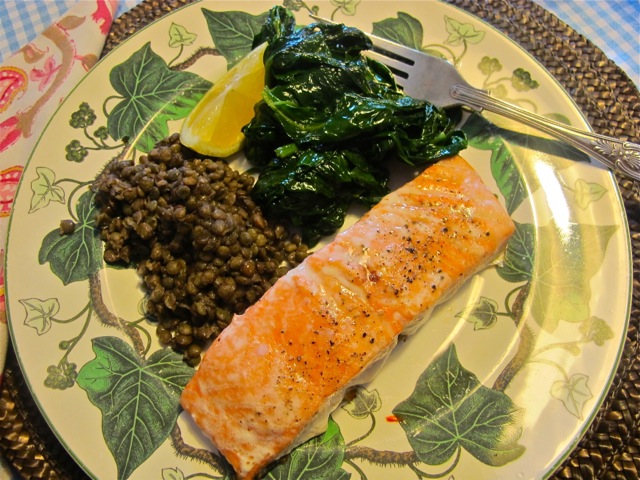
Simply done like this, they look good on the plate next to the orange hue of a slowly sautéed fillet of salmon.

IMG_4740

Add a spoonful of spinach and you have a beautiful dish for all seasons.

plenty for 4

12oz puy or similar lentils–washed and drained

1 medium unpeeled onion (red or yellow)–halved

half an unpeeled garlic bulb

a couple of bay leaves

a sprig of thyme

to finish:

1 tbsp olive oil

a splash (about 1 tbsp) of red wine vinegar

1 tsp salt or to taste

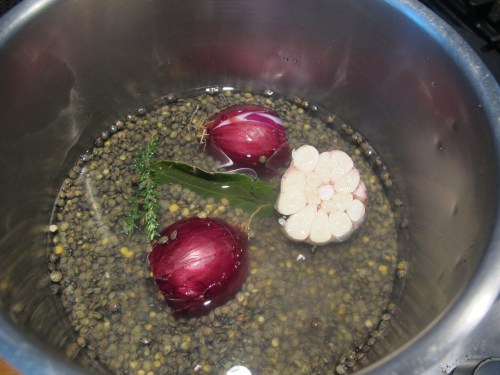
  • Put the lentils into a pan and cover them with cold water.
  • Add the halved onion and garlic bulb, thyme and bay leaves.
  • IMG_8895
  • Bring up to the simmer and cook, covered, until the lentils are just done–soft but with a bite.
  • Drain them thoroughly and empty the lentils into a bowl.
  • Pour the vinegar and oil over them and add salt.
  • Turn the lentils over and mix gently, allowing them to retain their pleasing shape.