Feeds:
Posts
Comments

Archive for the ‘Recipes’ Category

Back in the days when I used to frequent Italian restaurants in London–

(frequent being the operative word, often seen in them in other words“Meesta Ailees–good to see you again!“–so flattering.)

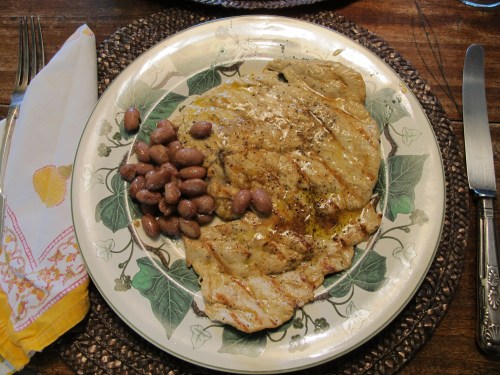
chicken paillard with a side order of spagetti in tomato sauce was a regular choice. The combination felt very Italian though I’m still not sure about that*.

It was a specialty of the chef at La Famiglia in Chelsea,
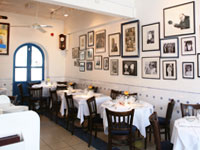
where they also served the quaintly named teenage lamb cutlets–we knew what they meant, but it brought a smile.

It was/is owned by the now legendary Alvaro Maccioni.
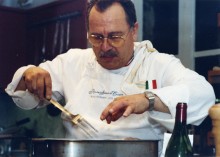
Originally from Vinci, northwest of Florence, Alvaro learned his trade at Mario and Franco’s La Terrazza in Soho and before opening La Famiglia ran a nightclub on the King’s Road in the swinging Sixties.

A lot of Italian restaurants in London have lost touch with their roots. I say to my chefs that if you can cook like your mother then you are a good chef, but if you can cook like your grandmother then you are a great chef.

Sunday night was his night off;  he and his family always watched Poldark–he told me.

I was lunching there one day with Ralph Bates–villainous George Warleggan in the series.

Alvaro approached our table looking grim–offended even.

Whatsa thees?! Thees isa not right–you are ‘ere widge your enemee?”

A couple of weeks later Angharad Rees (aka Demelza) and I were at the same table.

A beaming Alvaro came over and said loudly, “Thatsa bedder–you are widge you’re a whyfe!

 Chicken Paillard

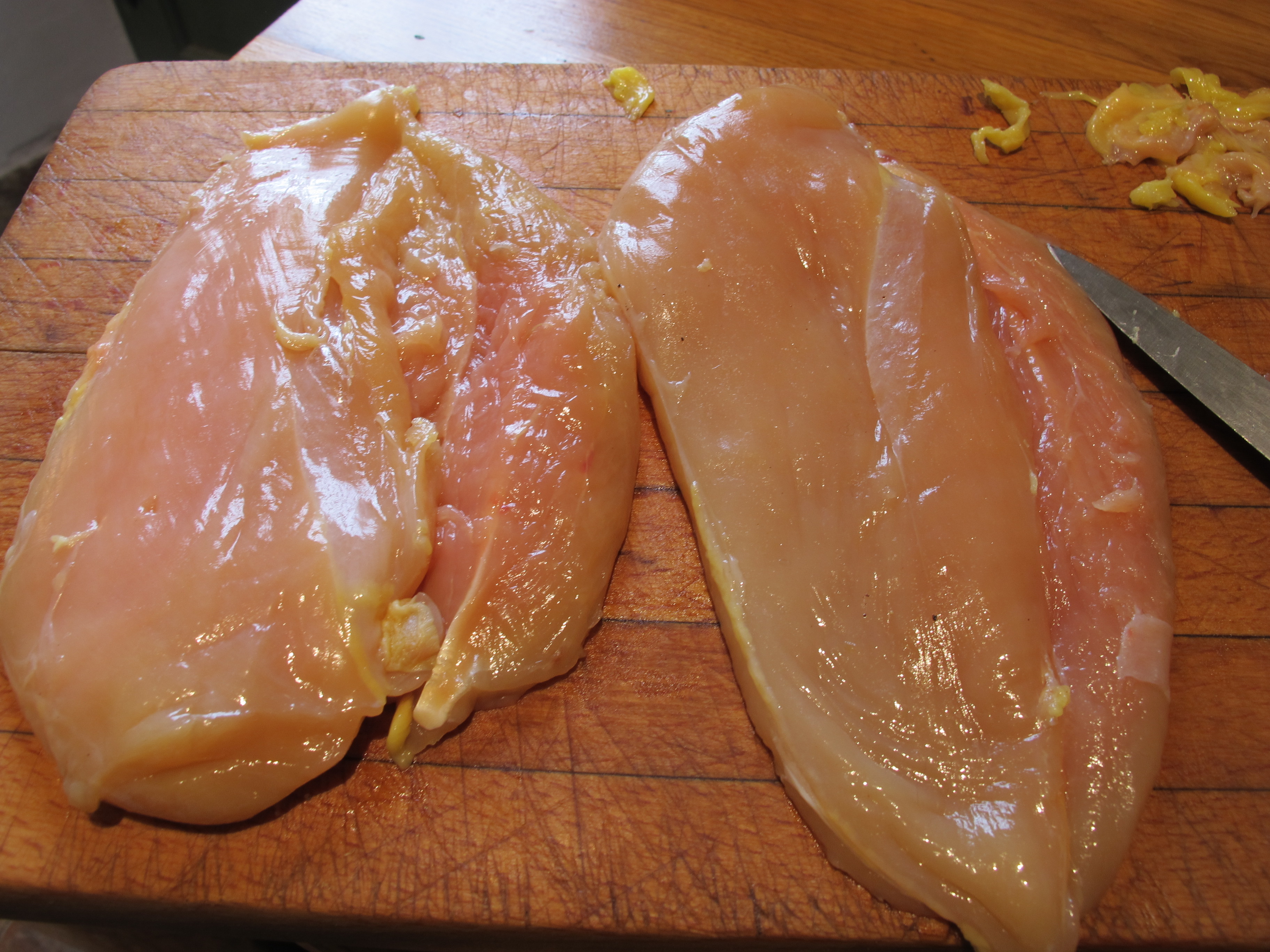
2 chicken breasts–fat removed
for the brief marinade 

2 tablespoons each of  olive oil and lemon juice plus the zest of a lemon–whisked together

salt and pepper

for a simple sauce

Whisk together:

1 tablespoon of lemon juice

3 tablespoons olive oil

salt and pepper

  • On a chopping board, lay out a sheet of clingfilm at least twice the width of the breast you are about to beat.
  • (Putting a folded dish cloth or drying cloth under the board helps to keep it in place).
  • Carefully place a breast in the middle of the sheet.
  • Lay a second sheet of the same size over the breast.
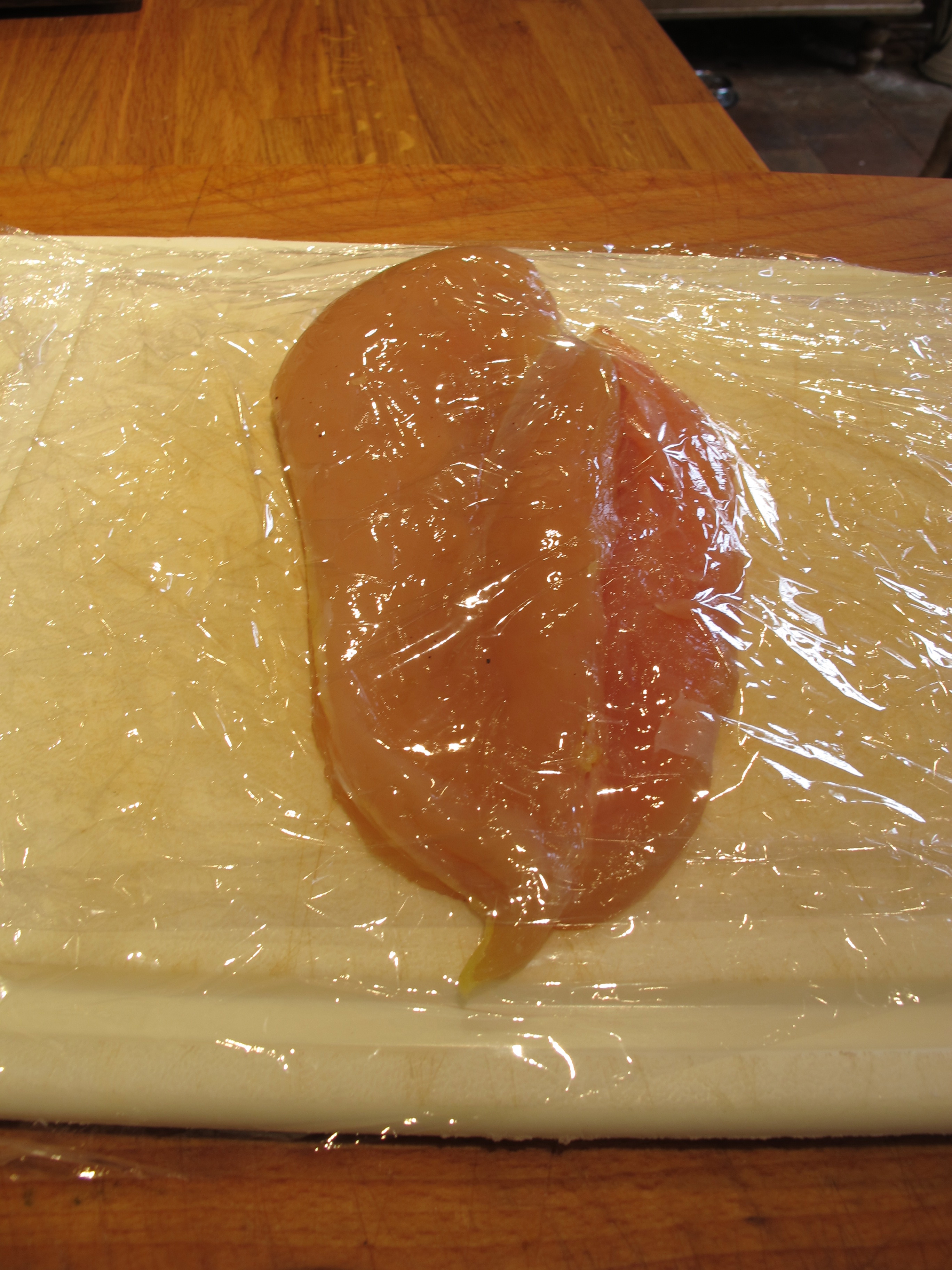
  • Using a rolling pin, mallet or similarly heavy kitchen utensil–beat the breast to flatten and widen it, taking care not to damage it.
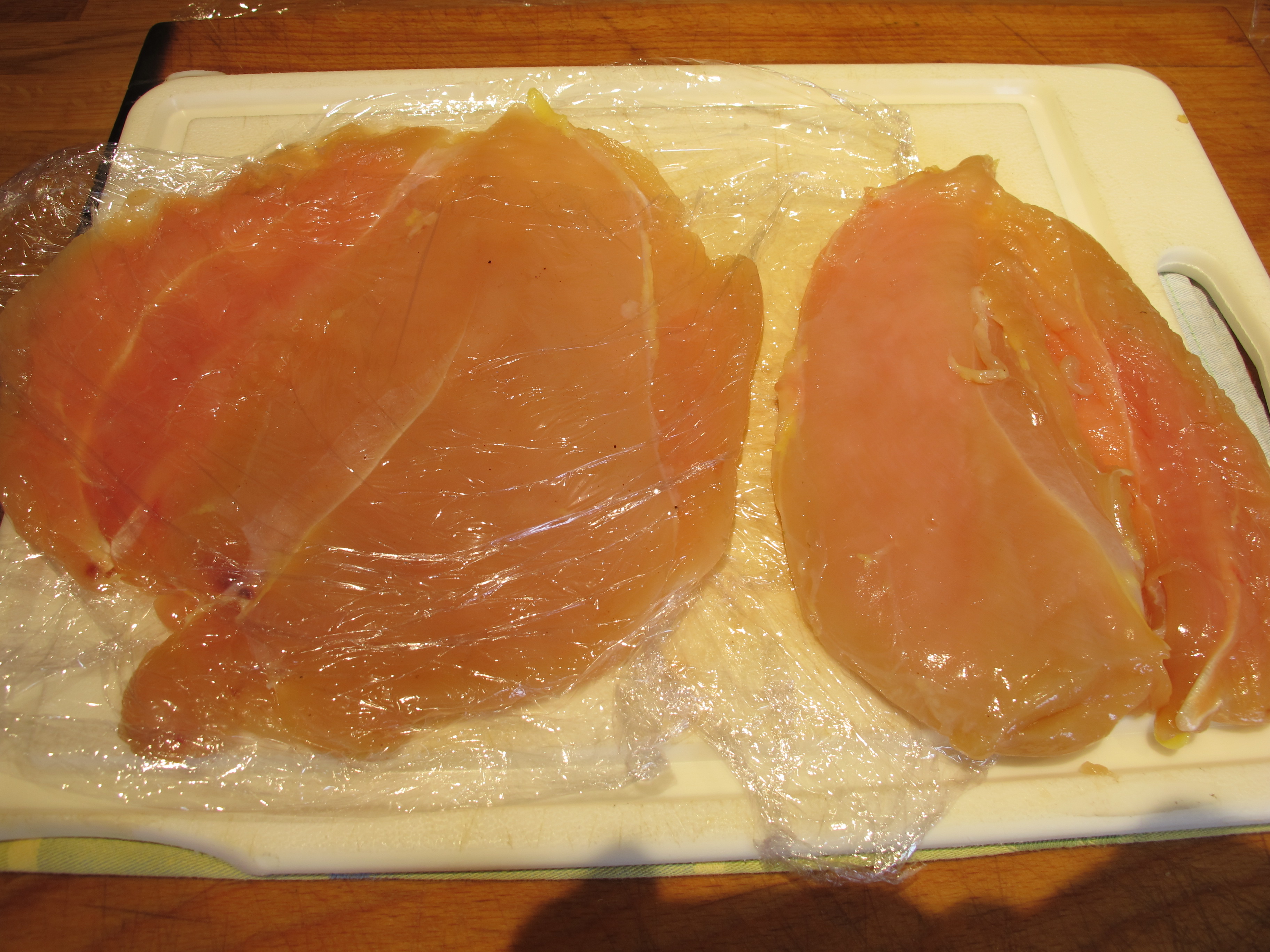
beaten breast next to uneaten breast

  • Repeat the process with the second breast.
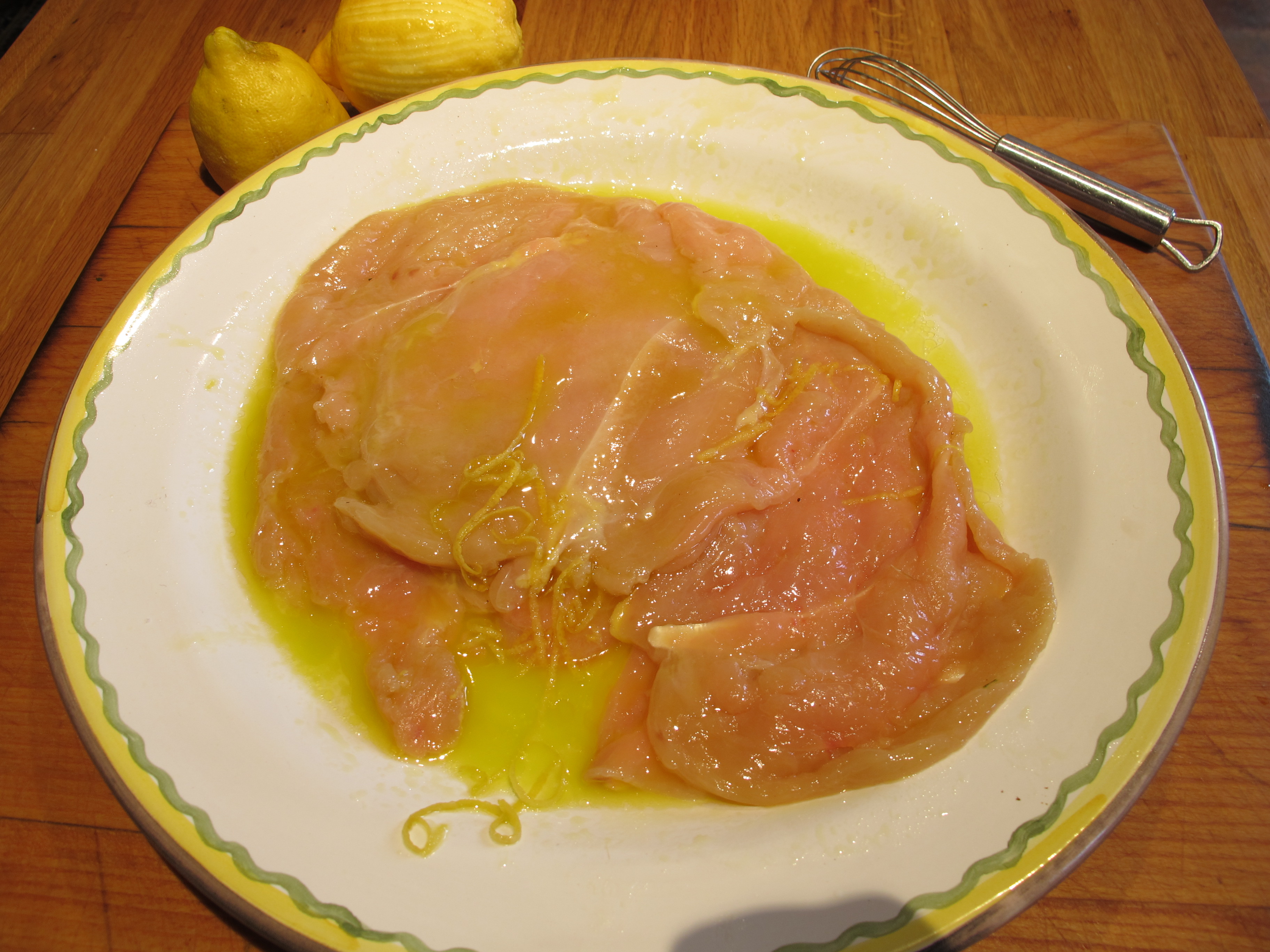
  • Peal back the clingfilm and place the first breast on a large plate.
  • Pour some of the marinade evenly over the chicken.
  • Place the second breast on top and pour over the rest of the marinade.
  • Move the breasts round some to coat them in the mixture and leave for half an hour.
  • Heat a grill pad or large frying pan on top of the stove.
  • Season the breasts and place them on the heat.
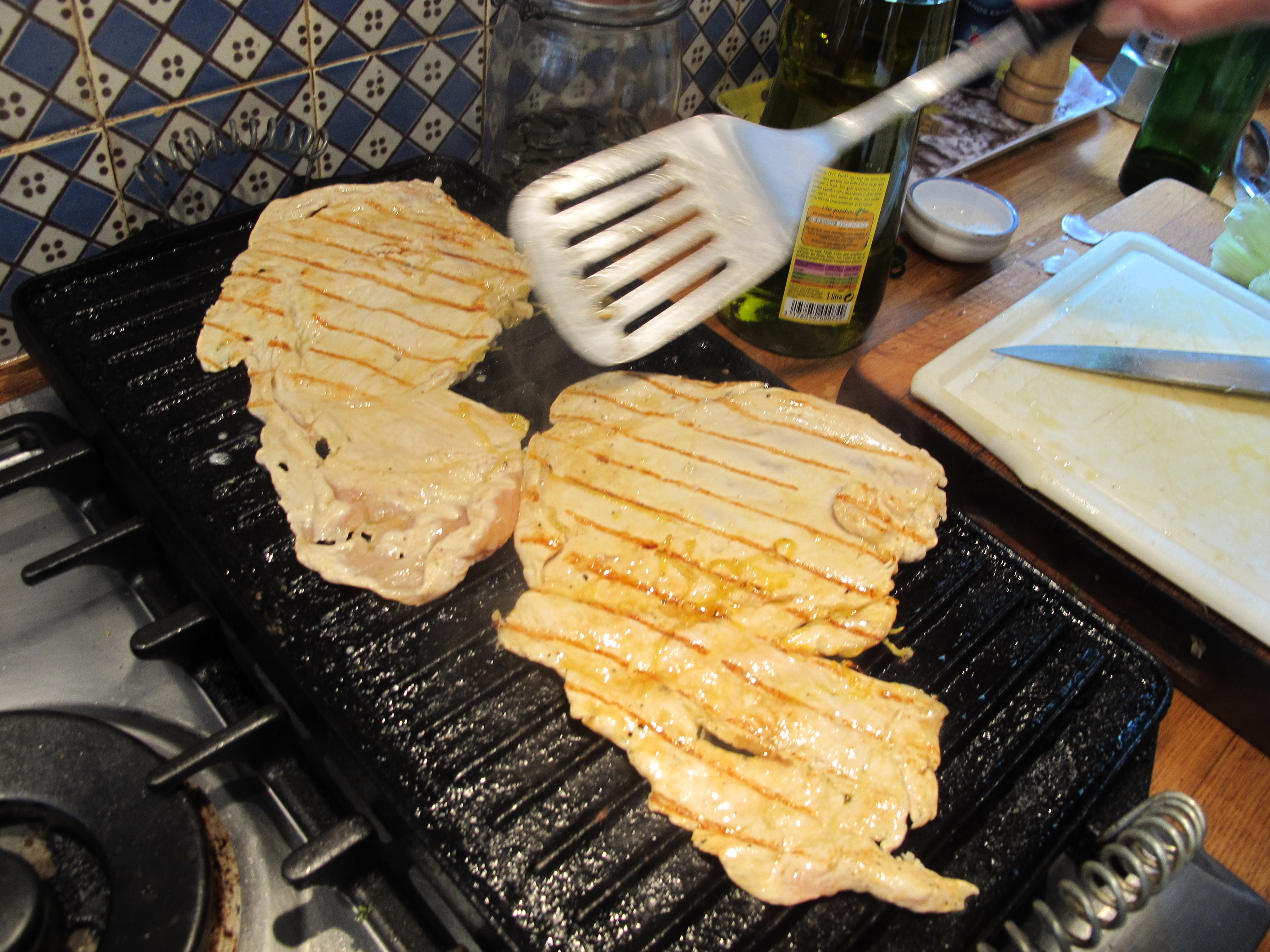
  • Two minutes each side should do it–though it depends on the thinness you’ve achieved, the thinner the quicker…
  • Remove to a serving plate and pour over some of the sauce.

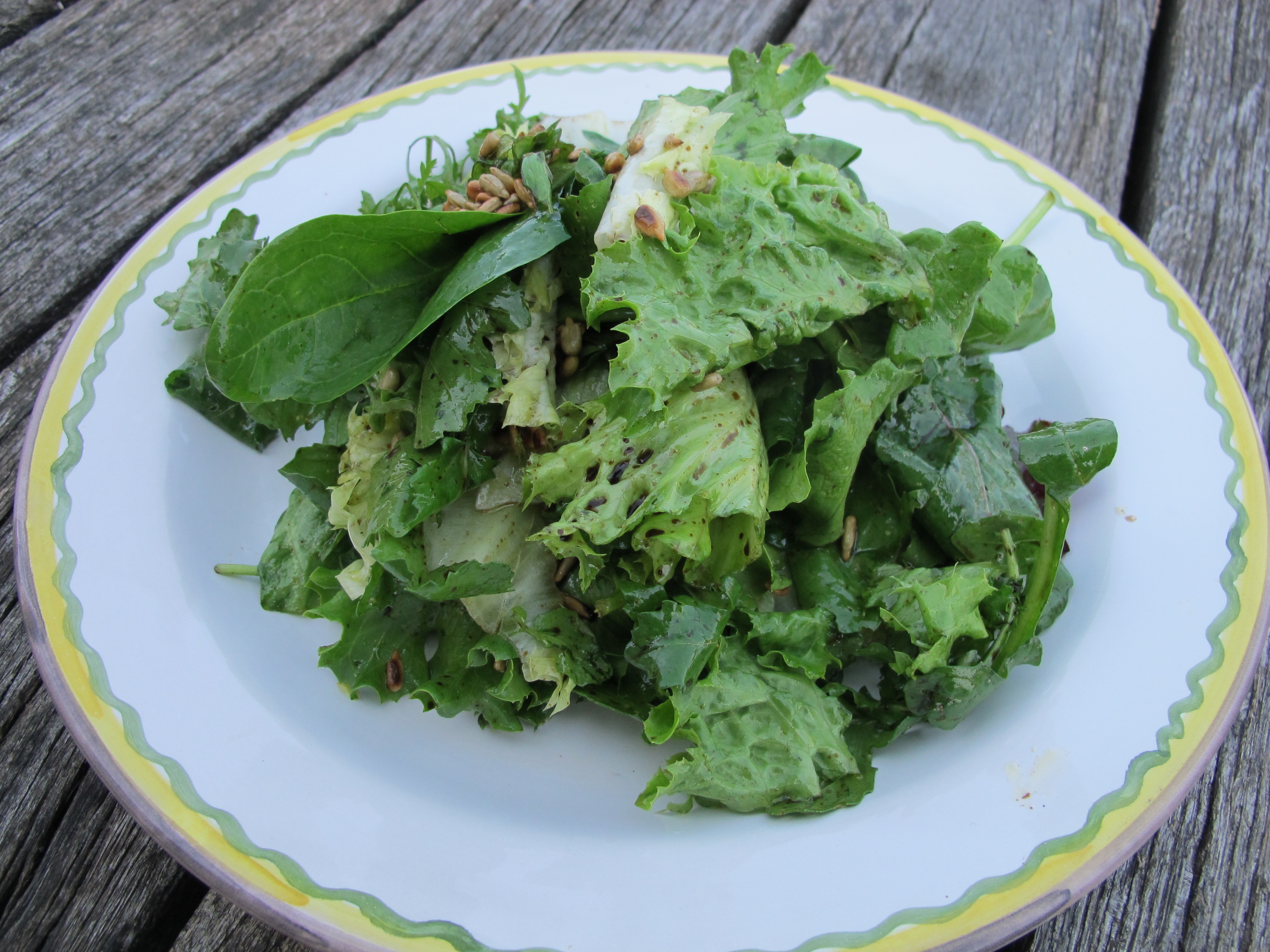
A fresh green salad is a good accompaniment–and/or, as above, some beans.

* This is a question for regular commentator Beatrice Papi to answer perhaps–would this be a strange combination to ask for in Florence, Beatrice?
Read Full Post »

From his stall at Tuesday’s market in Castres, Monsieur Gayraud–the fishmonger–was extolling the virtues of the maigre–a fish called “thin” if you like.

Comme un bar [sea bass] et moins cher [cheaper].”

I bought one large enough to serve two and asked him to leave the scales on but gut it for me.

I had it in mind to cook it as per the recipe for Simple Sea Bass in Delicious Dishes–in the oven at a very high temperature seasoned on a bed of thyme for about 25 minutes.

I looked up the oddly named maigre in Alan Davidson’s Mediterranean Seafood and Jenny Baker’s Simply Fish

and discovered that its name is not the only odd thing about Monsieur Maigre.

It’s also known as a croaker–because of the noise it makes when looking for food–and it eats a lot apparently, presumably to try to put on weight and change its name.

This is almost more than I need to know about a fish I’m about to cook!

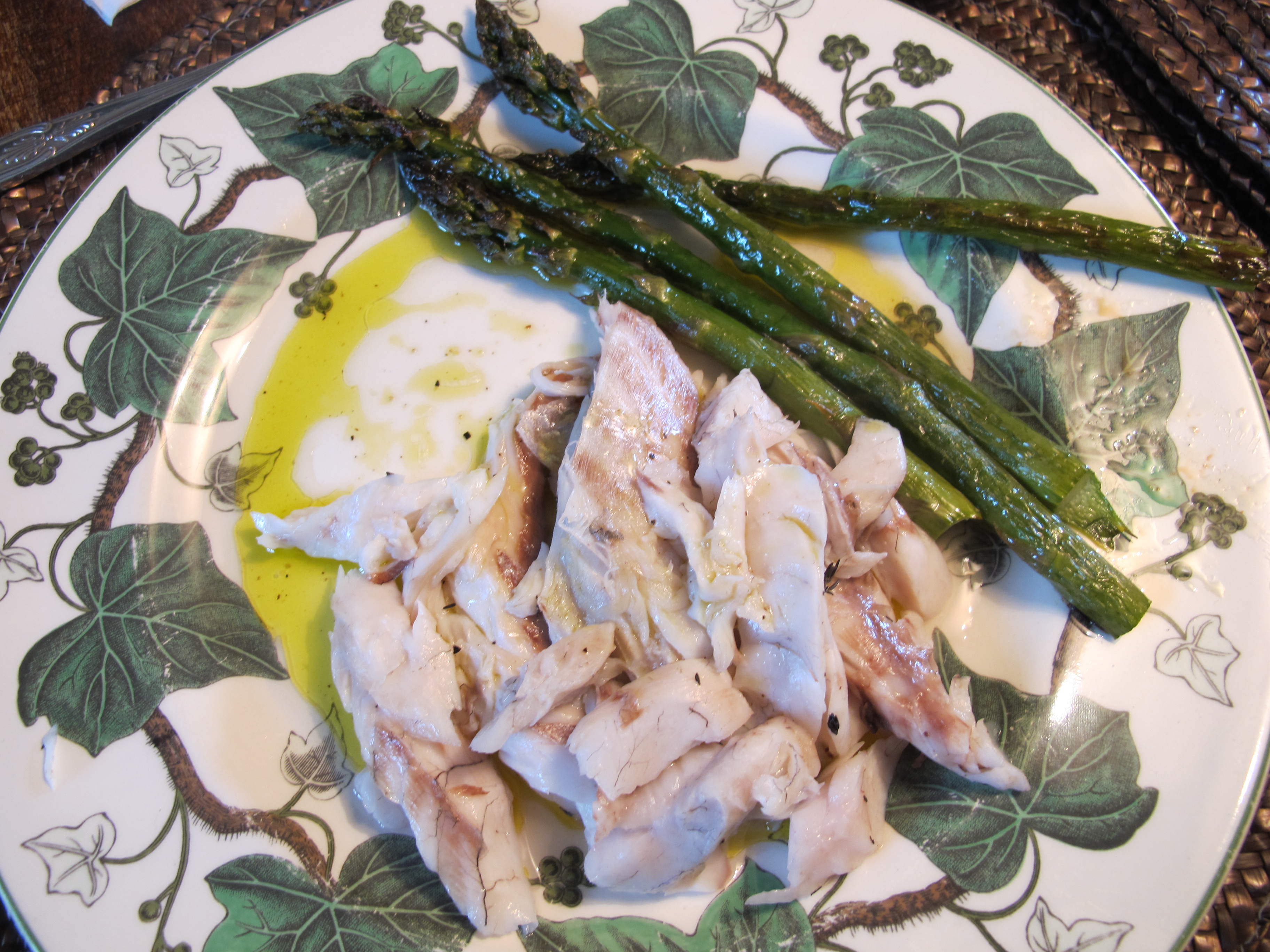
In the oven went M. Maigre/Croaker/Bocca d’Oro (It)/Saiagiz (Turk)/Corvina (Sp)/Mayatico (Gr)… and 20 odd minutes later emerged ready to eat, after its protective scaly skin was peeled carefully back  and the two fillets shared between us.

At the Wednesday market in Realmont, I spied the first asparagus of the season!

I bought enough for the two of us and realized when I got home it would look good on the plate beside the fish; so I put the thin spears, sprinkled with olive oil, on a shallow tray and into the oven, 15 minutes after the fish and they were ready more or less at the same moment–looking crispy and glistening.

A simple dressing of one tablespoon of lemon juice to three of olive oil and seasoning was all we needed for the fish and the asparagus.

What’s in a name? That which we call a maigre

By any other name would taste as sweet.

And call it what you will–it was delicious!

Read Full Post »

Just received this link to my segment on the CBS-TV Morning Show in Chicago.  http://chicago.cbslocal.com/video/6884361-diabetes-can-still-mean-eating-well/

FAST FOOD!

Under two minutes from a whole piece of salmon to a fishcake in the mouth.

Below is the piece I wrote while recovering in a coffee shop, waiting for the wonderful ( i.e. full of wonders) ART INSTITUTE of Chicago to open.

With CBS anchor Kris Gutierrez in Chicago for the early show this morning (as part of their upcoming diabetes awareness program)

Dawn came up as we headed downtown with the early risers this morning–sister-in-law Mary driving us through the light traffic just a little before her normal hour.

The early morning CBS program had invited me to do a brief cooking piece to be aired as part of their ground-breaking Diabetes Awareness campaign–so great they have taken the lead on this important health issue.

It was anchor Kris Gutierrez’s second day on the job–he recently relocated from Dallas–and it was my first ever on-air demo!

So two debutantes “struttin’ with some barbecue“!

Meredith was holding her breath–she gets nervous on occasions like this.

Kris was a delight and made me feel like I knew what I was doing.

I could get a taste for this…

Read Full Post »

My old school friend Rodney is 70 today.

We met in pre-prep school at the age of eight and both feature (butter wouldn’t melt in our mouths) in a photo  of the cast of the first play I acted in– “Colonel Blood’s Plot to Steal the Crown Jewels” –an action packed melodrama that ended badly–for the Colonel!

Our Salad Days–(seems appropriate, given what’s to follow!)

I played the Colonel’s demure-looking wife (mob cap, centre back) and Rodney (mob cap, far right, back row)–his mistress?!

We try to see each other at least once a year and catch up by phone on our birthdays–it’s a fine tradition.

Rodney and I share a life span with another 70-year-old–Old Bay Seasoning.

Same great taste for over 70 years,” it says on the tin.

This Maryland spice mix originates from the Chesapeake Bay area and was kindly given me at the pop-up book signing in New York City by Ann de Saram who brought it up from Baltimore by bus!

It’s widely used to zip up the taste of seafood and chicken–the perfect answer for a jet-lagged cook!

I marinaded two chicken breasts in the mix recommended on the box for an hour this morning:

1/4 cup olive oil

2 tablespoons lemon juice

1 tablespoon  of OLD BAY seasoning 

Several twists of the pepper mill 

I heated a griddle on the stove, cut the breasts in thin strips and grilled them a minute and a half each side.

Served over a green salad, they made for a lazy lunch.

Not sure how far it makes its way out beyond America’s east coast–but here’s a recipe (found on the internet and untried by me!) for mixing your own:

 Makes about 1/4 cup

  • 1 tablespoon ground dried bay leaves
  • 2 teaspoons celery salt
  • 1-1/2 teaspoons dry mustard
  • 1-1/2 teaspoons ground black pepper
  • 1 teaspoon sweet or smoked paprika
  • 1/2 teaspoon ground white pepper
  • 1/2 teaspoon ground nutmeg
  • 1/2 teaspoon ground ginger
  • 1/4 teaspoon crushed red pepper flakes
  • 1/8 teaspoon ground cloves
  • 1/8 teaspoon ground mace
  • 1/8 teaspoon ground cardamon
  • 1/8 teaspoon ground allspice
The taste of celery and paprika seem to predominate.
Many Happy Returns, Rodney!

Read Full Post »

With CBS anchor Kris Gutierrez in Chicago for the early show this morning (as part of their upcoming diabetes awareness program)

Dawn came up as we headed downtown with the early risers this morning–sister-in-law Mary driving us through the light traffic just a little before her normal hour.

The early morning CBS program had invited me to do a brief cooking piece to be aired as part of their ground-breaking Diabetes Awareness campaign–so great they have taken the lead on this important health issue.

It was anchor Kris Gutierrez’s second day on the job–he recently relocated from Dallas–and it was my first ever on-air demo!

So two debutantes “struttin’ with some barbecue“!

Meredith was holding her breath–she gets nervous on occasions like this.

Kris was a delight and made me feel like I knew what I was doing.

I could get a taste for this…

Read Full Post »

Sam Talbot is a well known American chef in his thirties, working now in Montauk, Long Island.

He has Type 1 Diabetes and has written a delightful cookbook illustrating the way he lives, eats and cooks with a nicely ironic title–The Sweet Life.

We vied for numero uno position in the pre-publication list in our category on Amazon.

Well, I say vied— I made it once, I think!

He raves about the increasingly popular South American grain, quinoa, saying he eats it at least three times a week.

In a post in March last year I wrote this about Quinoa:

This seed, one of the oldest known grains, is a useful alternative to rice, takes less time to cook and is very easily digestible.

It is grown high up in the Andes–and no one seems to agree on how to pronounce it!

It serves as a plain canvas on which you can paint what you like. 

Here you can learn more about the benefits of Quinoa–perhaps more than you want to know!

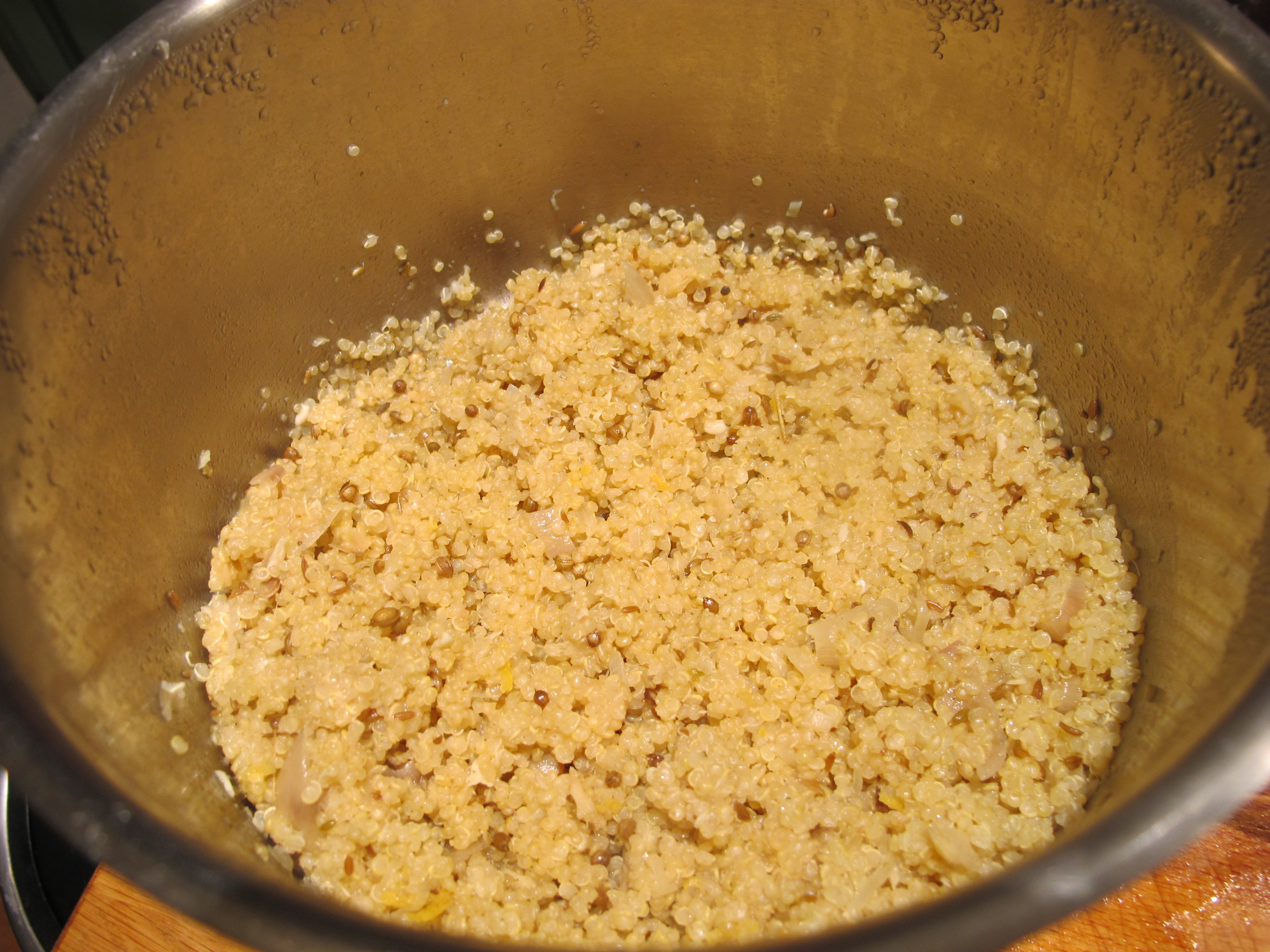
This is Sam Talbot’s recipe–slightly adapted; it’s delicious.

The amount of liquid required is double the volume of the quinoa–easy to remember!

1 cup quinoa

2 tablespoons olive oil

1 shallot–chopped small

1 tablespoon coriander seeds

1 teaspoon cumin seeds–(he leaves the coriander and cumin seeds whole, which you’d think would be tiresome, but it works–giving a nice added crunchiness)

2 tablespoons of fresh ginger–chopped small

garlic cloves–pulped with some salt

zest and juice of a lemon

parsley–chopped

2 cups stock–I use organic vegetable stock cubes

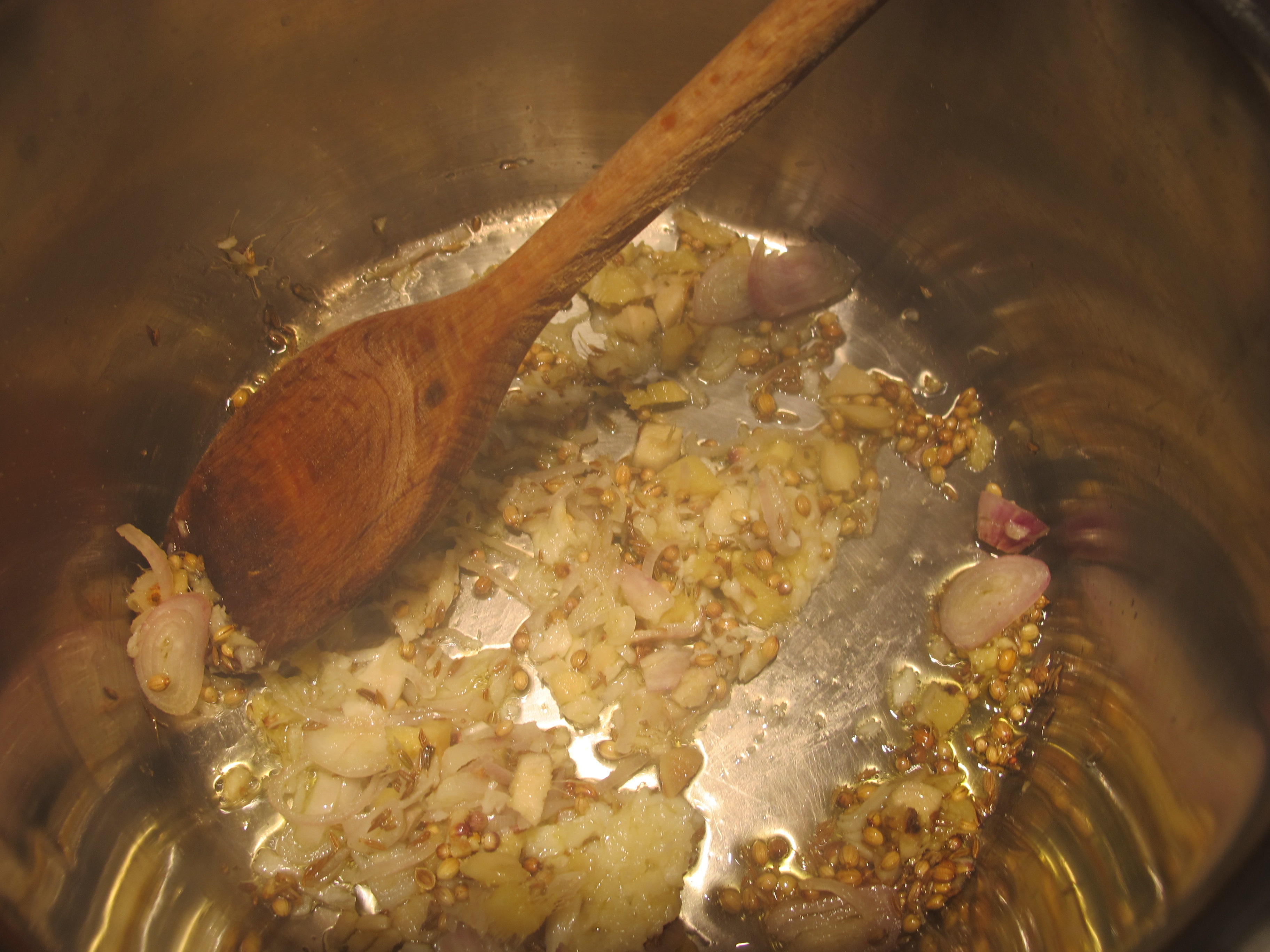
  • Heat the oil in a pan and sauté the shallot and the spices (coriander, cumin, ginger, garlic) for about five minutes to soften them.
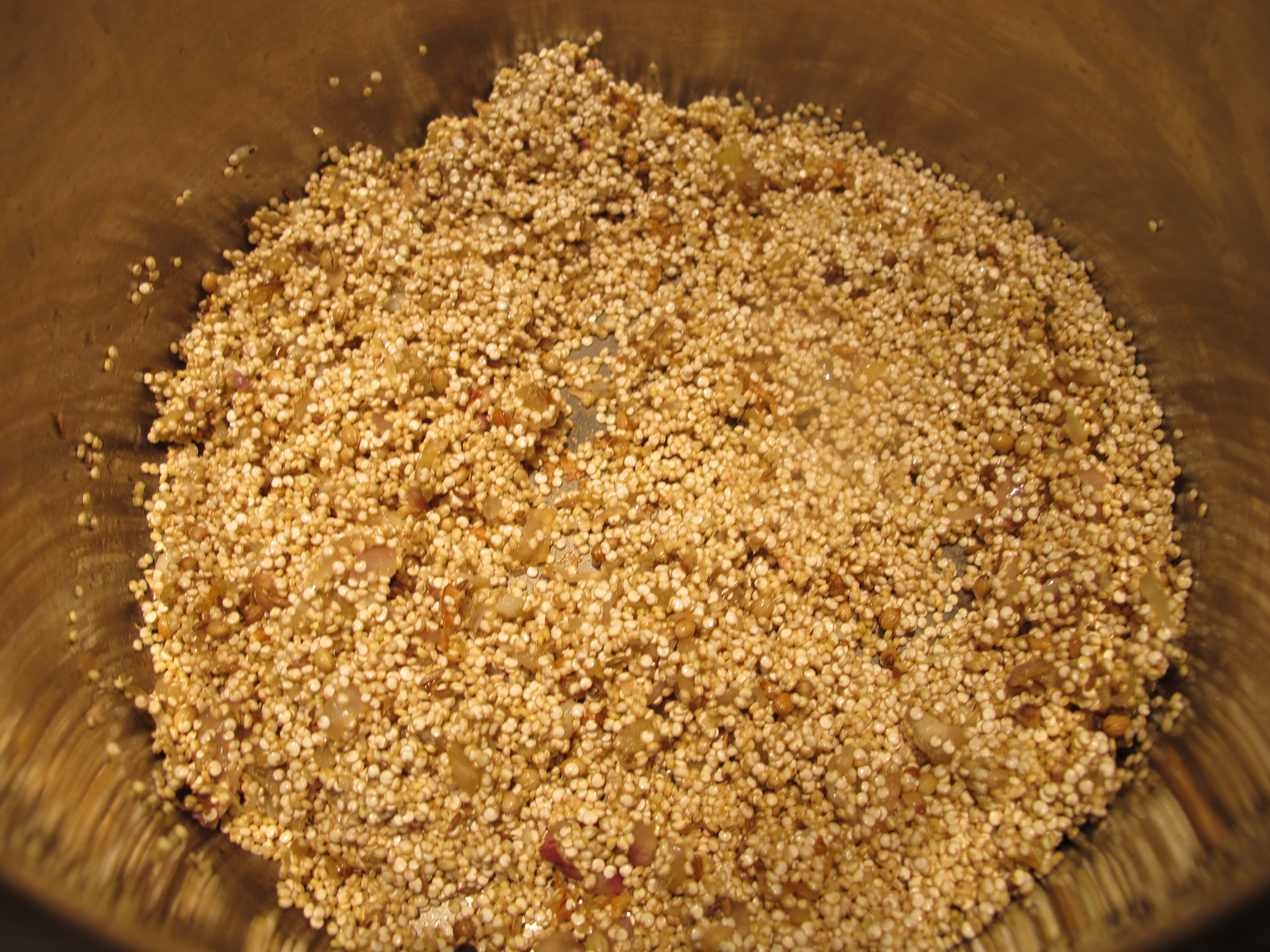
  • Add the quinoa to the pan and turn it over with the spice mix.
  • Add the stock,  the lemon  juice and zest and bring it up to a simmer.
  • Cover the pan and turn the heat down low.
  • Cook for about twenty minutes.
  • Check to see how it’s doing after 15 minutes and give it a stir.
  • The grain should absorb all the liquid by the end of cooking.
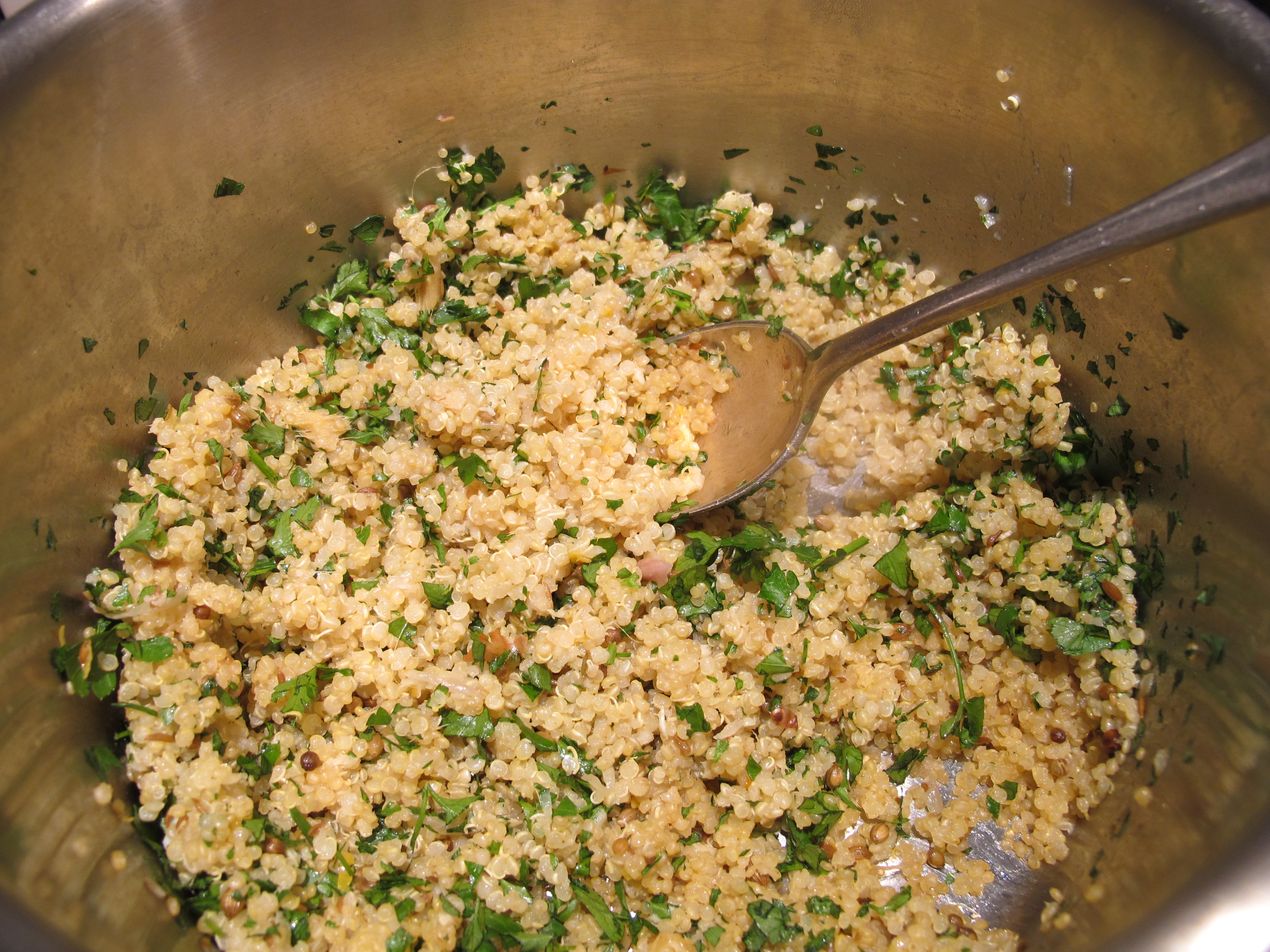
  • Sprinkle the parsley over and fork  it carefully into the  quinoa.

Read Full Post »

Two friends came round for supper last night and I tried out a spicy chicken dish.

It didn’t pass muster with Meredith and our friends were polite but didn’t exactly rave!

I shall try again with it because it’s simple and quick–which of course could be the reason it was disappointing!

I served a yogurt sauce with it, which is I think is useful and tasty.

I noticed Meredith tucking into it this lunchtime with the fennel salad..!

Yogurt sauce for 4

2 x 125ml pots of organic yogurt

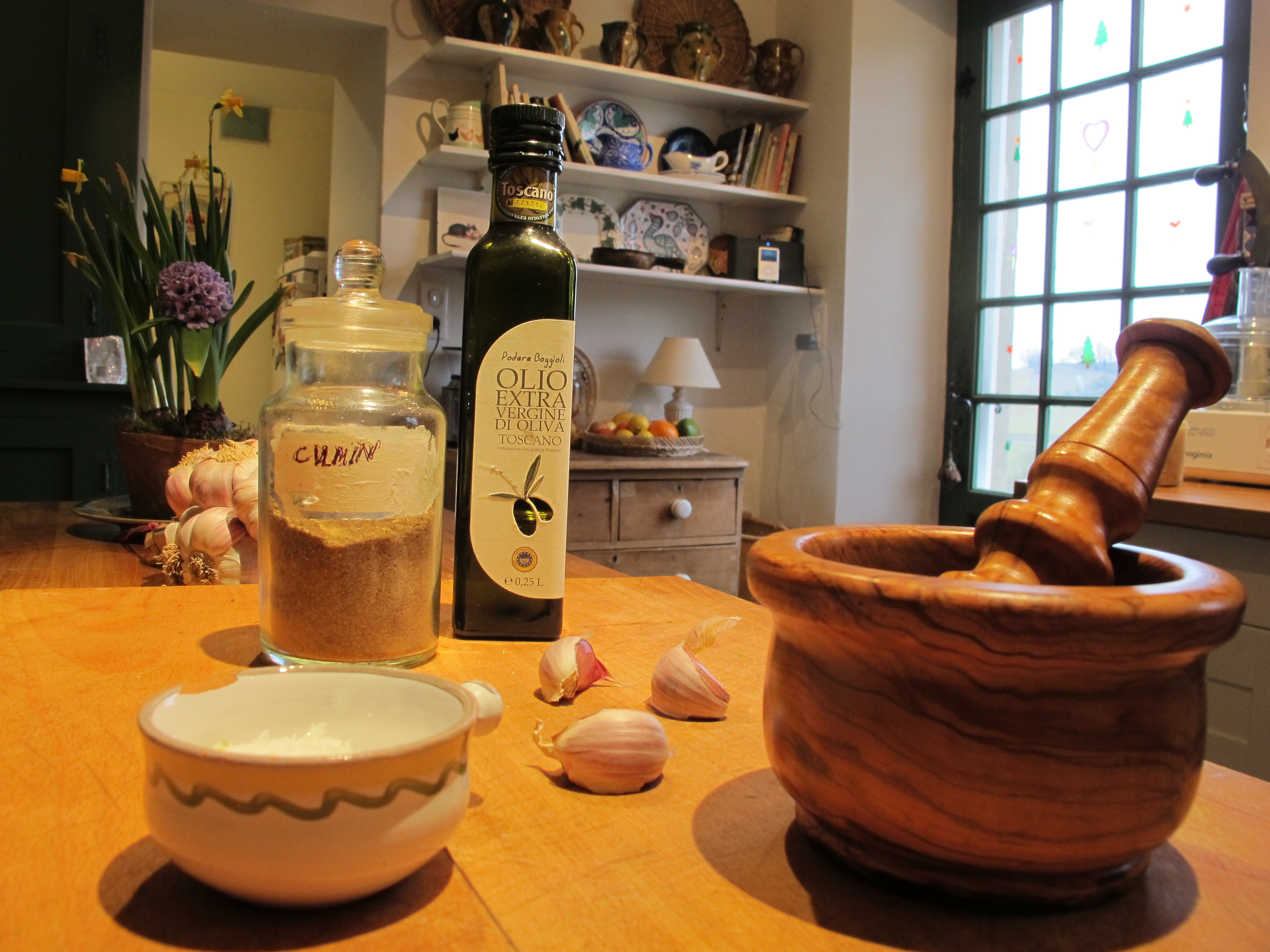
1 teaspoon cumin powder

garlic clove–pulped in half a teaspoon of salt

1 tablespoon olive oil

1/2 a teaspoon salt

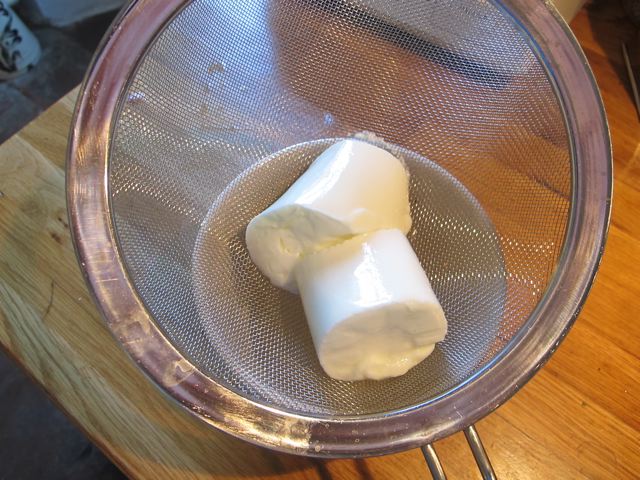
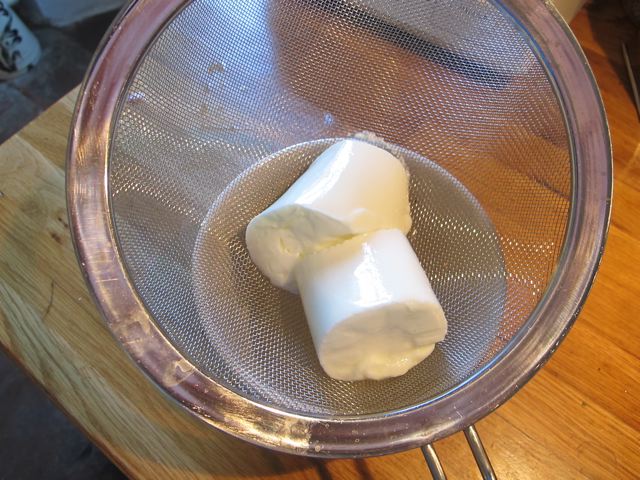
  • Whisk the yogurt smooth–(if you want to make it a bit thicker let it drain through a sieve into a bowl for half an hour or so).
  • Pulp the garlic in the salt in a pestle and mortar.
  • Add the cumin and mix it in thoroughly.
  • Fold in the olive oil.
  • Add this mix to the yogurt and whisk well in.
  • Refrigerate until you are ready to eat.

Read Full Post »

Below I reprise two favourite fishcake recipes that have proved popular. I think it’s worth tying them together because they are closely related–and worth sharing again for newcomers to the site.

They each have an ingredient that nicely replaces the potato normally associated with fishcakes: Smoked haddock for the first,  fresh dill for the second.

The first recipe, with smoked haddock, I once did as a starter on Christmas day–so I associate with winter.

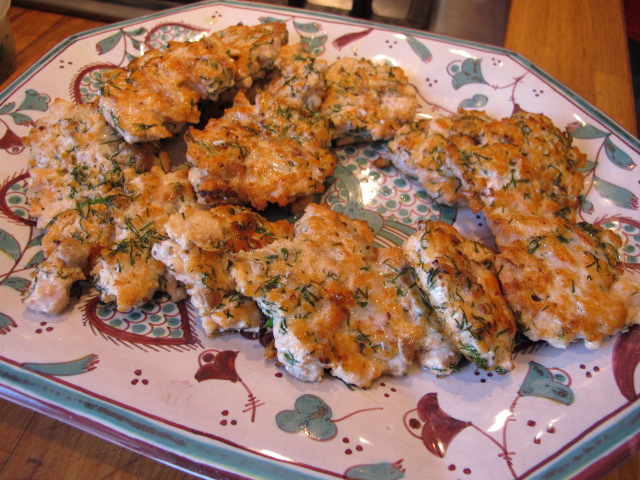
The second recipe, with dill–reprinted from my cookbook,  Delicious Dishes for Diabetics–makes a for a tasty lunch outdoors in summer.

Dill is not always easy to find–even in summer–so I sometimes substitute chopped parsley (but dill is better!).

In truth, I’d willingly gobble either down, no matter the season!

Version 1 (Winter)

Salmon and smoked haddock

I used to love fishcakes–but the usual addition of mashed potato made them ‘off limits’ for me, once I was diagnosed with Type 2 diabetes.  Then I found an alternative–no-potato fish cakes–and no longer felt deprived!

My American wife tells me most Americans will find smoked haddock unfamiliar and maybe even daunting and hard to find–but from starting as a sceptic, she is a complete convert now.

This is adapted from a Gordon Ramsay concept….

for 4/6

1 lb/450 gms salmon fillet–with the skin and little bones removed
1 lb/450 gms smoked haddock–undyed, if possible and skin removed
1 large shallot–grated

egg–whisked

1 tablespoon parsley–chopped

salt and pepper
olive oil for sautéing

yogurt–I use no-fat organic, drained in a sieve for half an hour to thicken it.

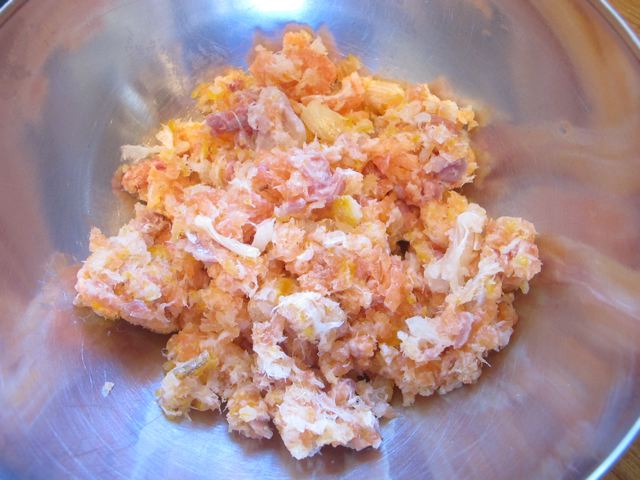
  • Cut the fish into chunks and place into a food processor.
  • Pulse to a coarse mince–not too much or it will become a slurry.
  • In a bowl, mix the fish with the grated shallot, parsley, salt and pepper.
  • Check the seasoning–raw salmon tastes good!
  • Add the whisked egg and mix in thoroughly.
  • Chill in the fridge for an hour if you’ve time.
  • Mold into little flat patties.
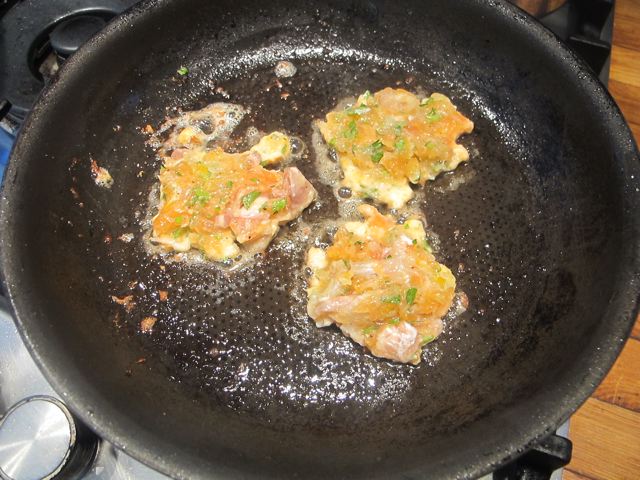
  • Heat the oil in large frying pan.
  • When it’s hot sauté the little cakes for 2 to 3 mins each side.
  • Serve with a small dollop of yogurt sauce (see recipe below); for this version of fishcakes, I’d omit the dill.

Version 2 (Summer)

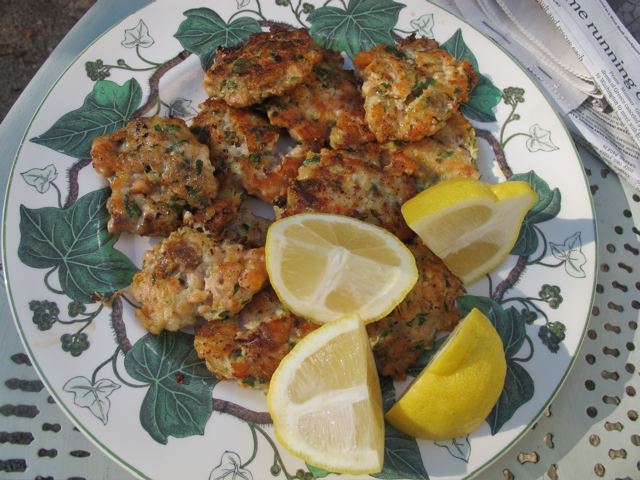
Salmon Fishcakes with dill and grainy mustard

The dill and the grain mustard make the fishcakes special. They can serve as a tasty starter too depending on the size.

If you keep them small and cook them quickly, they’ll be crisp and brown on the outside and still succulent inside.

This version is adapted from one of my favourite British cooks, Nigel Slater.

400 g/1 lb salmon fillet – skinless and checked for bones

white of an egg

1 tbsp chickpea flour – of course, plain flour works as well

1 tsp grain mustard

juice of ½ lemon

bunch of dill – chopped fine

salt and pepper

2 tbsp olive oil

  • Mix all the yogurt sauce ingredients and refrigerate until you are ready to eat.
  • Cut up the salmon fillets in roughly equal-size pieces.
  • Put these in a mixer and pulse three or four times. 
  • Avoid working them too much and producing slush at the end.
  • Put the salmon in a bowl.
  • Turn in the egg white and the flour, then the mustard, lemon juice and dill.
  • Season with salt and pepper.
  • It’s a good idea to taste the mix for seasoning at this point–the dill and the salt should come through.
  • Refrigerate if not using immediately.
  • Heat the oil in a frying pan and using a dessertspoon scoop out a dollop and make a ball.
  • Put this in the pan and flatten it gently.

  • Cook on a medium-high flame, crisping and browning the outside while making sure the interior cooks through.

Yogurt sauce

2 x 125 ml pots low-fat yogurt

1 tsp grain mustard

good pinch of chopped dill

salt

Serve with lemon wedges.

Read Full Post »

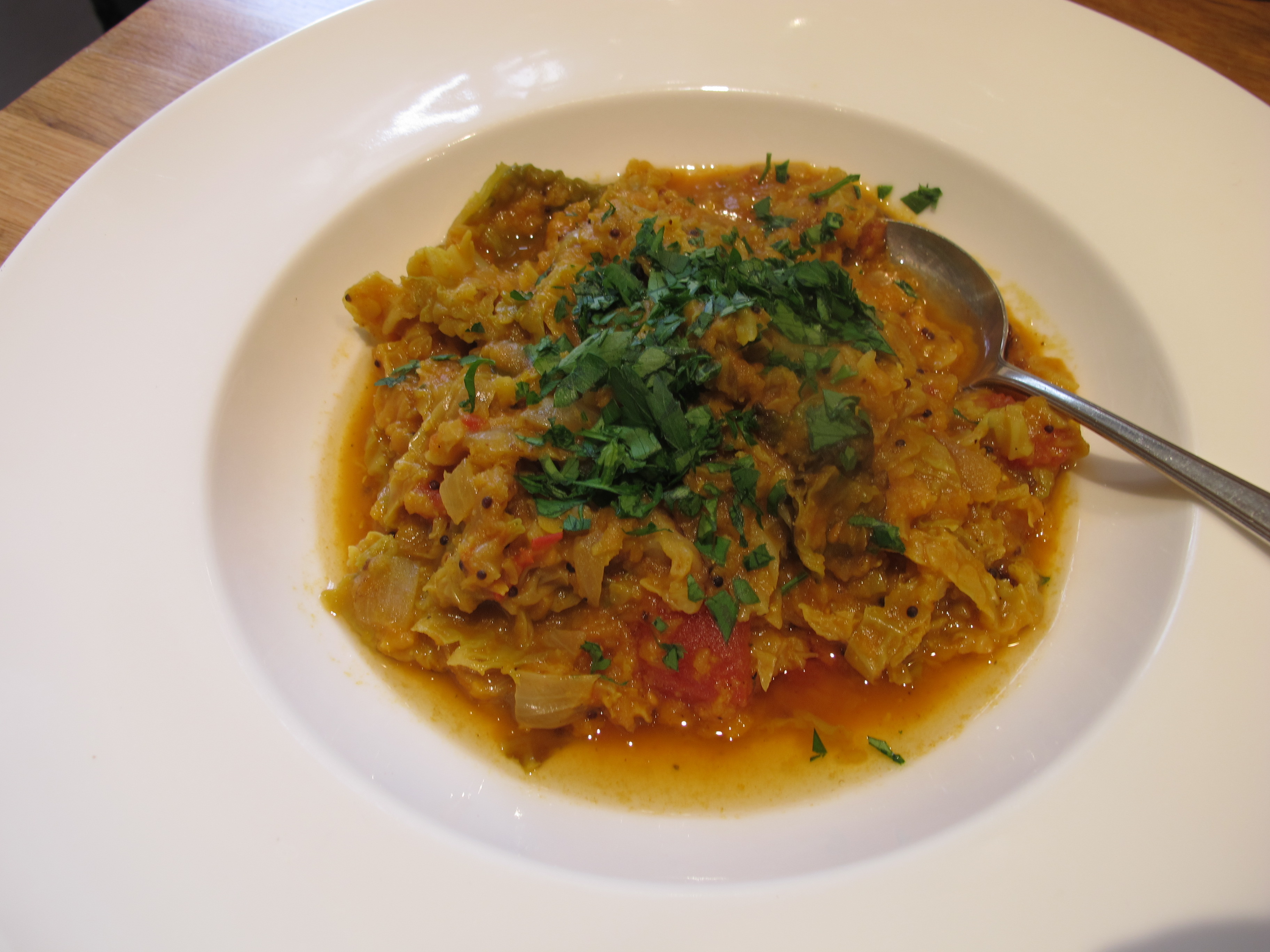
Renown vegetarian cookbook writer, Rose Elliott found this in Julie Sahni’s Classic Indian Vegetarian Cookery and adapted it and I have tweaked it a bit.

It’s a quick excursion to the East.

There was a small cabbage in the fridge and some fenugreek seeds on the shelf in the larder, which I whizzed into powder in a converted coffee grinder!

The fenugreek is optional, but interesting… (as its name implies this herb is found in the mediterranean region and has healing qualities as well as culinary uses.)

Our friend Myriam called in this morning and said it was minus ten last night and would not get warmer until Wednesday, so a bowl of something gently spicy and soupy for lunch might be just the ticket.

for 4

250gms/8oz red lentils

2 1/4 pints/1300ml stock–I use organic vegetable stock cubes

1/3 teaspoon turmeric

375gms/12oz tinned tomatoes–chopped

  • Rinse the lentils thoroughly.
  • Put them in a saucepan with the stock and the turmeric and bring up to the boil.
  • Cook at a gentle simmer for 45 minutes.
  • Add the chopped tomatoes then set aside.

1 tablespoon olive oil

1 1/2 teaspoons black mustard seeds

1/4 teaspoon fenugreek powder (optional)

1 tablespoon curry powder

1 onion–chopped

a small cabbage–outer leaves removed, quartered, cored and shredded

Juice of half a lemon

salt and pepper

Parsley or better still fresh coriander–chopped to sprinkle over

  • Heat the oil in a new pan.
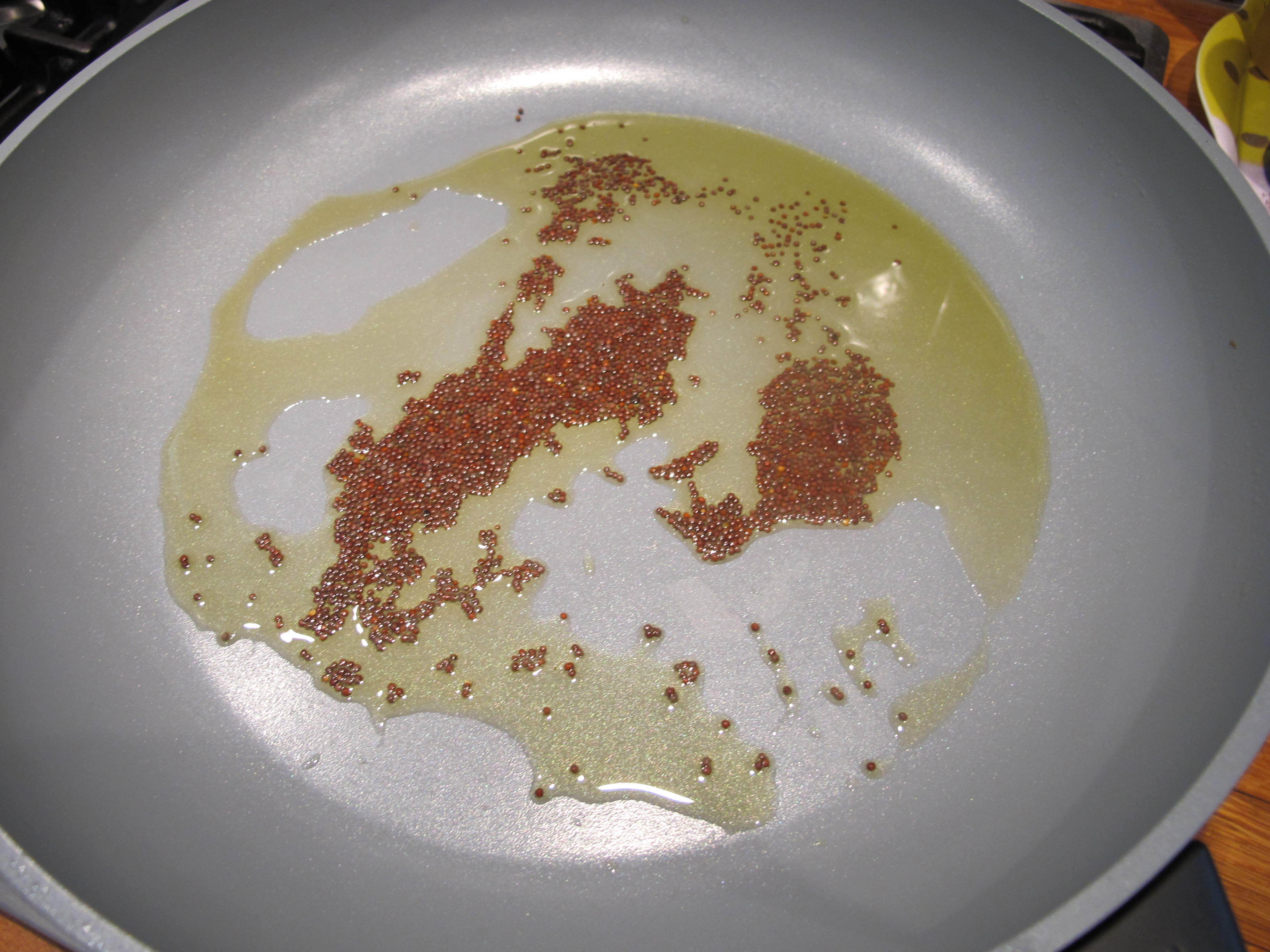
  • Add the mustard seeds and cook them until they start to pop–a couple of minutes; they look brown in the photo but in fact stay black.
  • Mix in the curry powder and the fenugreek (if using) and let them  cook for a few seconds.
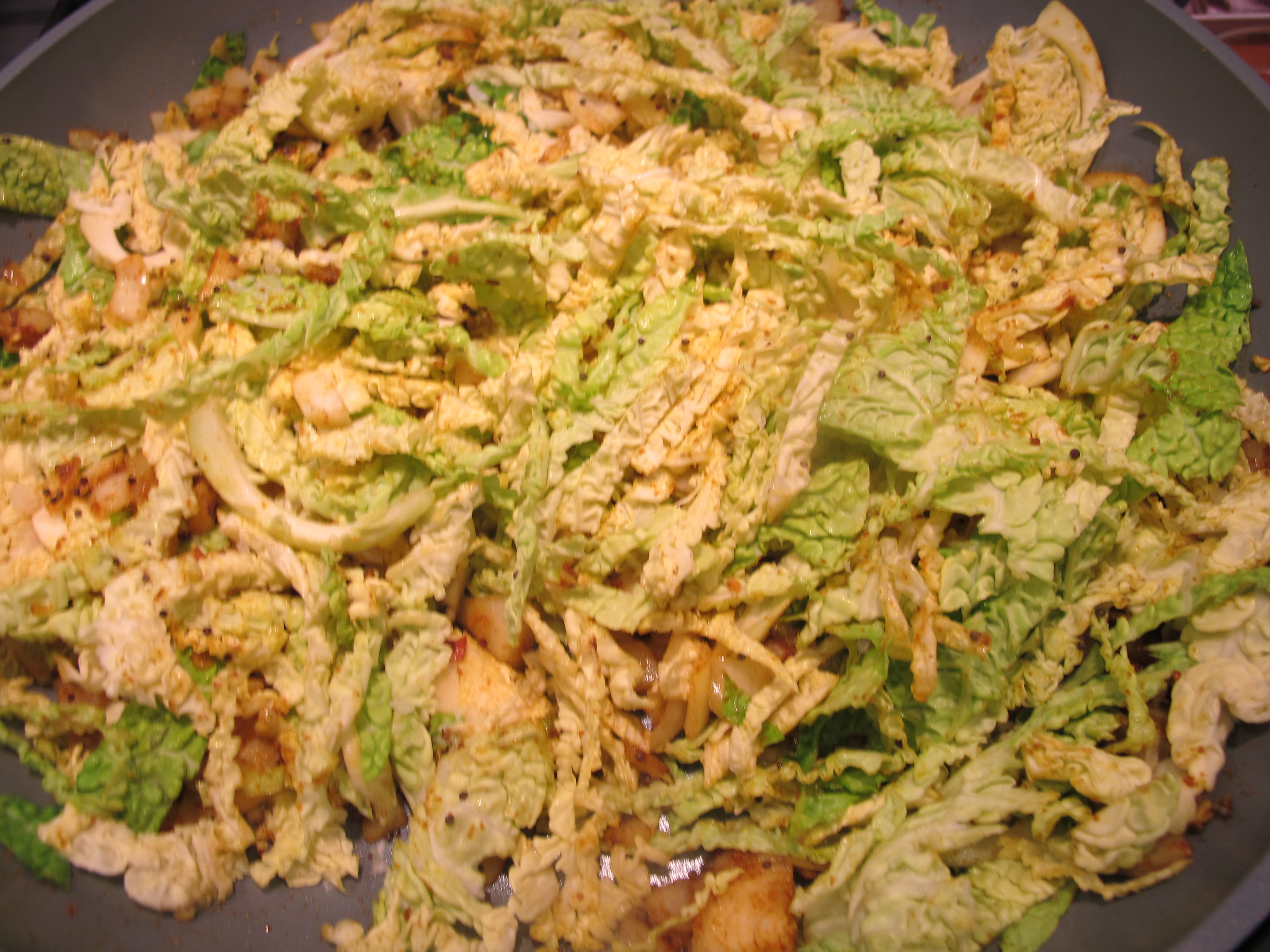
  • Add the onion and the cabbage and mix everything together well.
  • Cover the pan and cook  for 5 minutes.
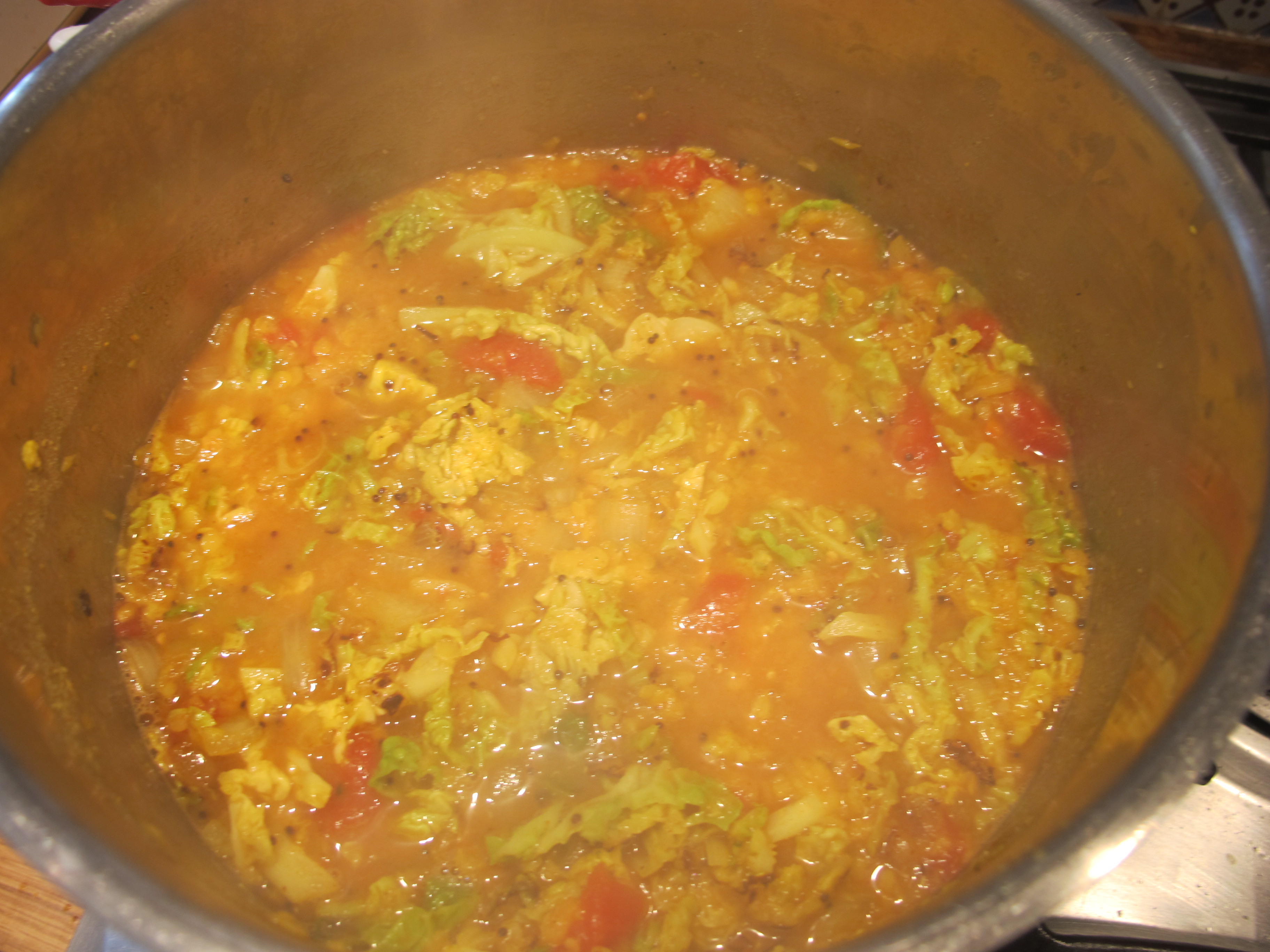
  • Add the wilted cabbage mix to the lentils.
  • Bring the mixture up to the simmer.
  • Leave it to simmer gently for 20 minutes.
  • Season to taste with salt and pepper.
  • Stir in the lemon juice.
  • Sprinkle over the parsley or coriander when you serve.

Read Full Post »

My first posting on this blog was a year ago today–7th of February 2011!

Poaching Eggs–was a homage to one of my food heroines, the formidable Elizabeth David.

I can’t remember exactly the weather that day but it may not have been so different to today’s–which is nose-endangeringly cold.

So a long nod of thanks to everyone that has visited and those that continue to visit and thanks too for  the comments–they are all read and much appreciated.

AND special thanks to my in-house photographer and editor with whom discussion is always lively and from whom I learn a lot!

Here’s a salad to celebrate.

Seasonally crunchy (not much choice from the locals this morning)–with a juicy orange and some sunflower seeds, to put one in mind of seasons to come.

It got the nod at lunch today from Meredith–(though not the mackerel fillet that it accompanied–next time I’ll use less smoked sweet paprika!).

For 2

1 large fennel bulb–outer leaves removed, stood upright and halved through the middle, each cut half laid flat and halved again, then sliced very thinly

celery stalk–sliced thinly

half a small sweet red onion–sliced thinly

1 tablespoon of sunflower seeds–dry roasted in a frying pan on the stove top

1 tablespoon of parsley–chopped

a few shavings of parmesan

1 juicy orange–carefully peeled (lifting off the white pith), halved and sliced thinly

salt for sprinkling

1 tablespoon best quality olive oil for dressing

  • Mix the first seven ingredients together with care in a favorite bowl.
  • Sprinkle with salt and the oil–add more oil if you like.
  • Lightly turn everything over.
  • Check the seasoning and serve.

Read Full Post »

« Newer Posts - Older Posts »