Feeds:
Posts
Comments

Posts Tagged ‘garlic’

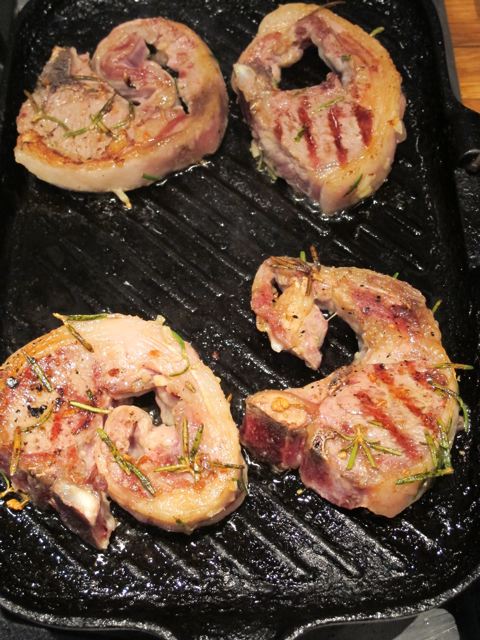
I promised a recipe for pork chops when I posted the red cabbage.

It is bitingly cold here and I found myself heading for the butcher not the fishmonger in Lautrec this morning.
“Bonjour, Monsieur–deux cotes d’échine, s’il vous plait.”

Spare rib chops are tastier and less prone to dry out than loin chops and they are the cheaper cut.

That’s what I settled for after waiting an age for Monsieur Fraisse to finish chatting to his previous customer–the cold was getting to me!

I learned this simple way by watching the irascible but effective chef Gordon Ramsay’s demonstration.

The rosemary needles take on a nice crunchiness and are worth eating with a mouthful of meat. As is the garlic.

Meredith finished off the red cabbage, which she’d missed out on the other day.
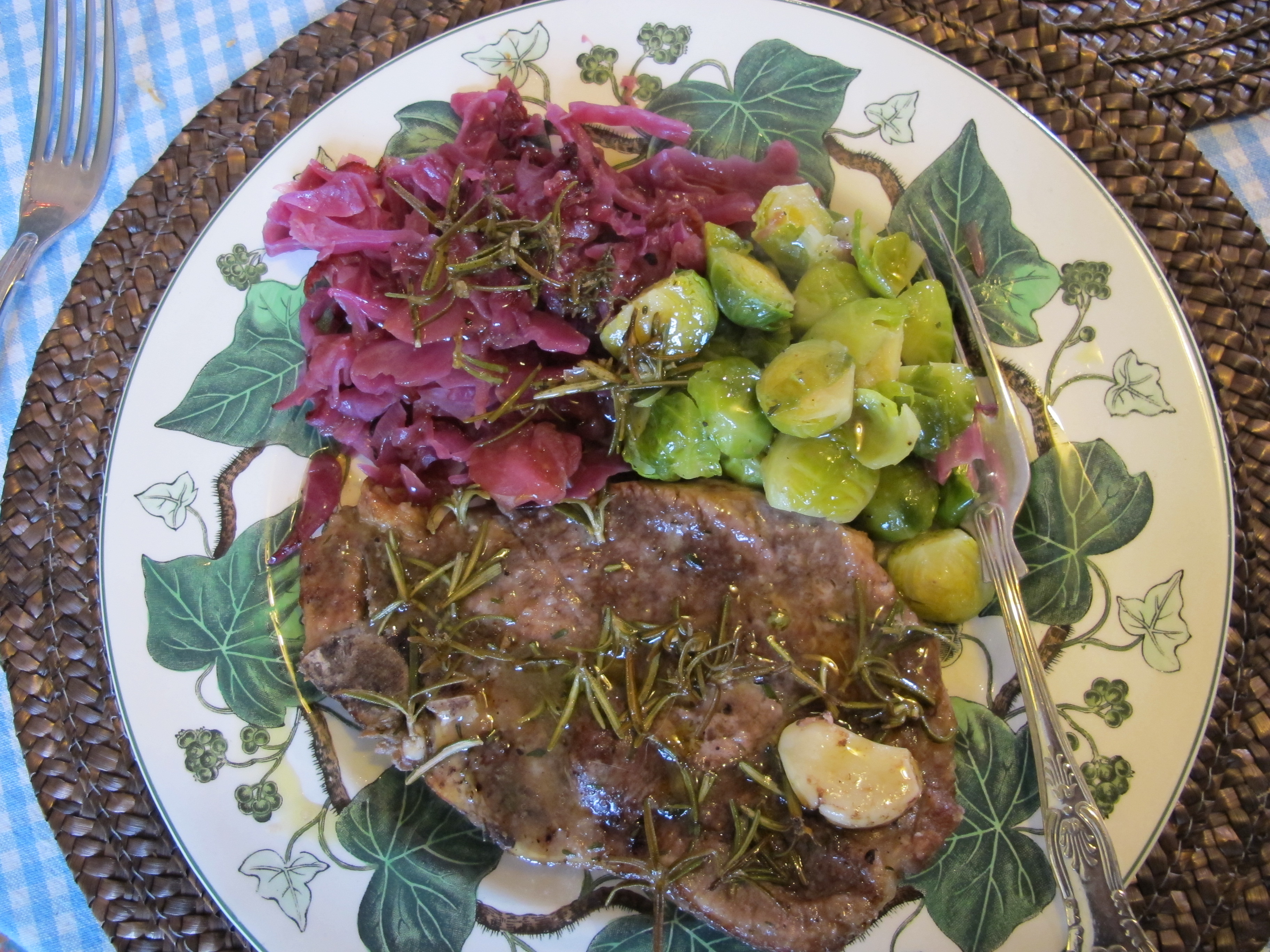
for 2

2 spare rib pork chops

rosemary and thyme

3/4 cloves of garlic–squashed, peeled and halved

olive oil

s&p

heat the oven to 200C/400F

  • Dribble some olive oil and sprinkle some salt on a shallow oven tray.
  • Scatter over a couple of the cloves of garlic.
  • Place the chops on top.
  • Sprinkle them with salt and pepper.
  • Strip the rosemary needles from the stem over the chops.
  • Do the same with the thyme (not so easily done).
  • Dribble more olive oil over the tray.
  • Put it in the higher part of the oven for about twenty minutes.
  • The cooking time depends on the thickness of the chops.
  • Best to cut into them to check–the juices should run clear.
Read Full Post »

Amatriciana and Arrabiata.

Two tomato-based pastas beginning with “A“–and until now I never bothered to find out the difference.

As far as I can gather (my Italian friends might put me right on this) arrabiata is vegetarian and amatriciana is made with pork–but both are fired up with chili–as much or as little heat as you like.

Last night for a Birthday Pasta I made amatriciana with wholewheat penne.

(We always eat wholewheat pasta. Its lower glycemic index makes it healthier–which matters for people with diabetes–and Meredith and I prefer it now. That said, I limit myself to pasta once a week.)

Our friends, Keith and Helen, sent a birthday present of some bold and beautiful Tuscan red wine and it went down a treat with this robust sauce.

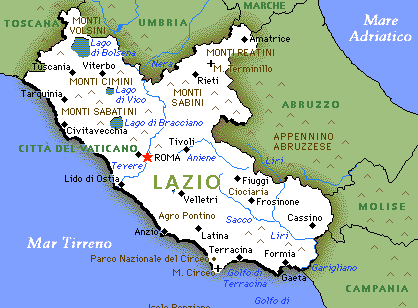
It takes its name  from the town of Amatrice,

in the east of the region of Lazio (Rome’s region) close to the border of Abruzzo and Marche to its north.

for 4

350 grms wholewheat penne

4 tablespoons olive oil

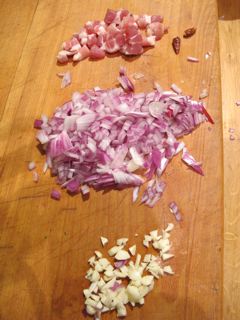
1 red onion–chopped small

2 garlic cloves–chopped small

2 oz/50 grms pancetta or bacon–chopped small

2 small dry red chilis–seeds removed and chopped

2 teaspoons rosemary needles–chopped small

2 tblspoons red wine

1 14-oz can/tin of tomatoes–chopped and drained but retaining 3 tablespoons of its juice

salt and pepper

  • Heat the oil in a sauté pan large enough to contain the cooked pasta at the end.
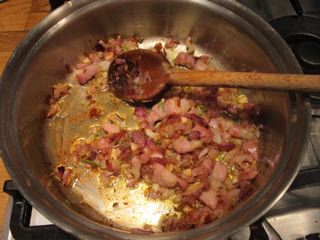
  • Gently brown the onion, bacon and garlic.
  • Take  time to get a nice sticky, slightly caramelised result (but not burnt!).

  • Stir in the chili and rosemary and cook for a couple of minutes.
  • Add the wine and let it bubble a moment to burn off the alcohol.
  • Add the tomatoes and extra juice and mix everything together thoroughly.
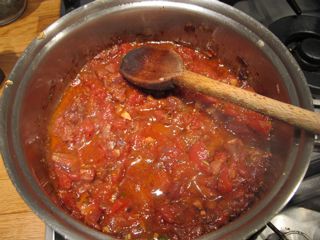
  • Cook this for about 20 minutes to achieve the unctious sauce in the photo at the top.
  • Season with salt and pepper.
  • Bring to a boil a large saucepan of cold water with a teaspoon of salt.
  • Add the pasta to the boiling water and cook to your taste.
  • Drain the pasta thoroughly and add to the sauce; turn it well in and heat through.
  • Serve hot in warmed bowls with parmesan cheese to grate and red wine with a bit of attitude!

Portion control is the only challenge!

Read Full Post »

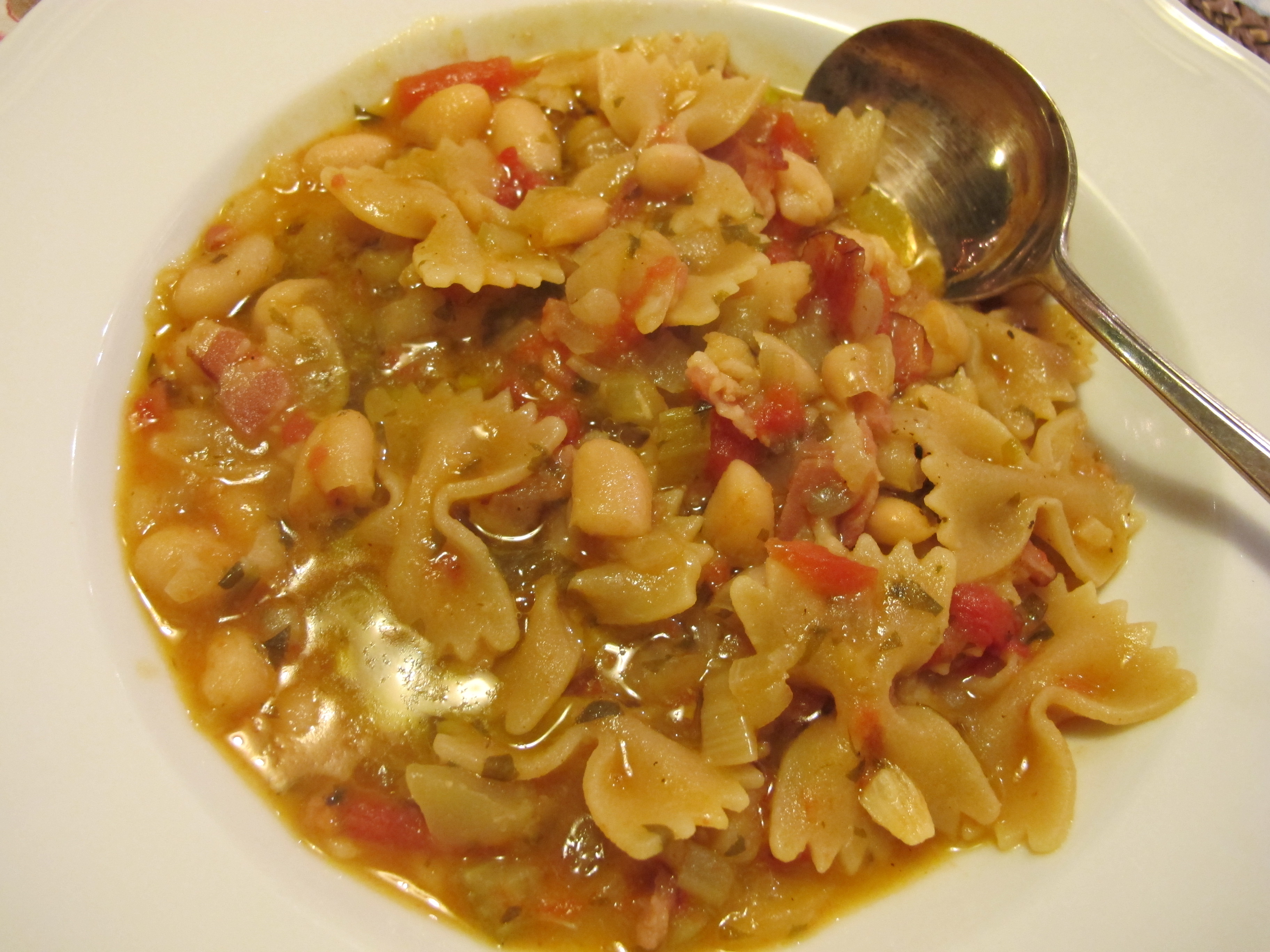
Another bean soup–can’t have too many in my opinion!

Interior insulation for the post prandial walk on a chilly winter day.

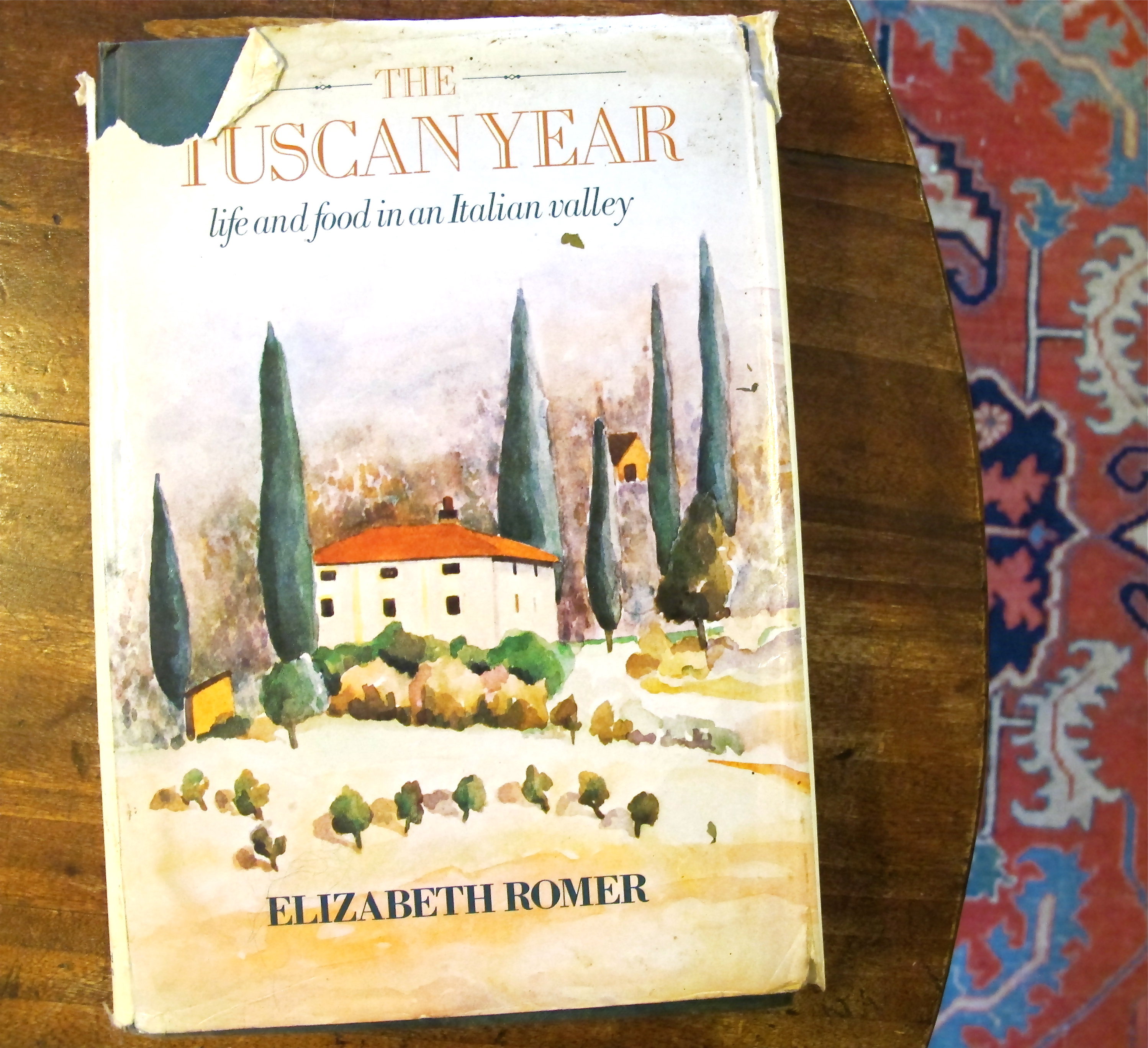
This satisfying soup is based on one in Elizabeth Romer’s lovely book, The Tuscan Year: Life and Food in an Italian Family.

Her account of the Cerroti family’s daily existence is a good read and full of authentic seasonal recipes.

Serves 4

4 tbsp olive oil

2 onions – chopped small

2 sticks of celery – chopped small

3 cloves of garlic – finely chopped

100 g/4 oz smoked bacon/pancetta – use unsmoked if you prefer – chopped small

4 tbsp parsley – chopped

1 x 450 g/16 oz can tomatoes – drained and chopped

350 g/12 oz tinned/jarred white beans – drained, rinsed and puréed–use the best quality beans you can find–it makes a difference

570 ml/1 pint/ vegetable stock – more if you like (I use organic veg. stock cubes)

150 g/6 oz “short” wholewheat pasta – (i.e. penne or farfalle, not spaghetti)

salt and pepper

freshly-grated parmesan

  • Heat the olive oil in a large saucepan.
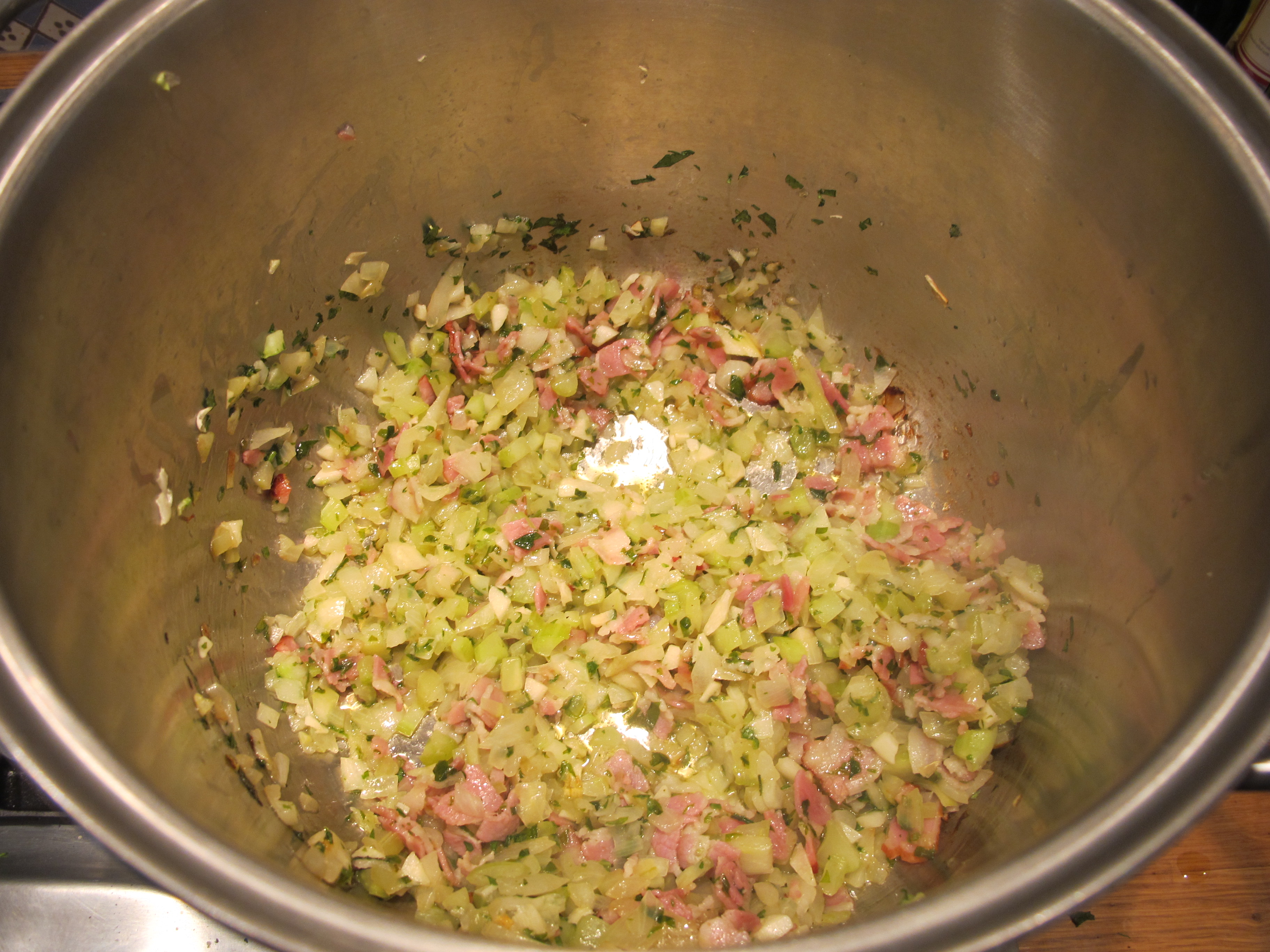
  • Add the onions, celery, garlic, bacon and parsley, and turn them in the oil.
  • Cook them over a gentle heat until the vegetables are tender and the bacon is colouring up – this is the “taste engine” of the soup and needs some time – at least 20 minutes.
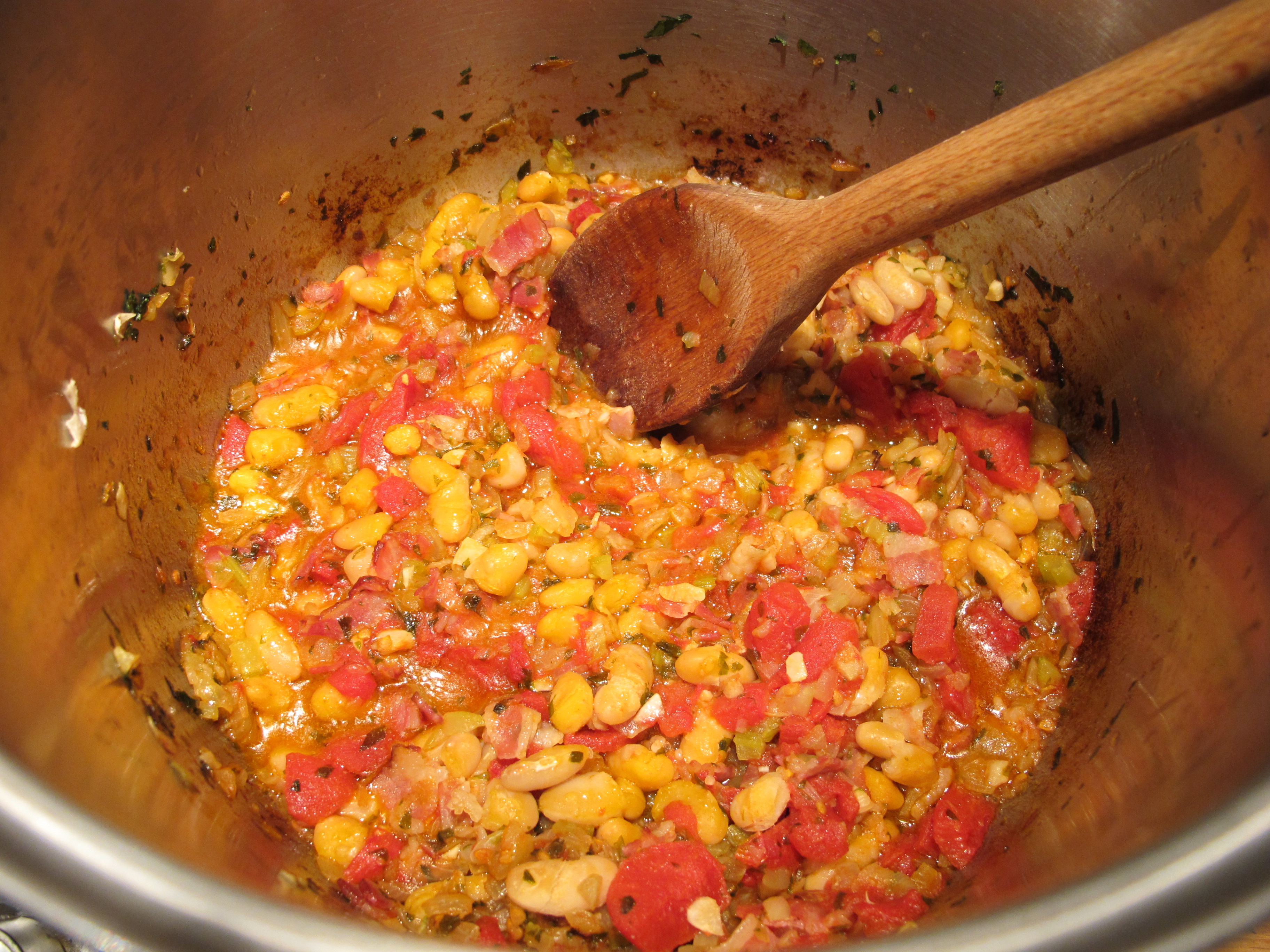
  • Add the tomatoes and mix them in and allow to meld for a good 10 minutes.
  • Add the beans and mix in.
  • Cook gently for 10 minutes.
  • These stages are important for a good depth of flavour and shouldn’t be rushed.
  • The soup should look beautiful now – with a warm glow.
  • Add half the stock and let it meld in.
  • Add the pasta and the rest of the stock and cook the pasta in the soup.
  • It may take a little longer than pasta normally does (I put a lid on at this point to help).
  • Be careful that this thick and unctuous soup does not stick and burn.
  • If you prefer it looser, add more stock and cook on a little to incorporate it.
  • Check the seasoning, adding salt and pepper to taste –remembering that the bacon and stock can be salty.
  • Serve with grated Parmesan cheese and swirls of olive oil.

(This nourishing soup is included in my cookbook–Delicious Dishes for Diabetics–a Mediterranean Way of Eating.)

Read Full Post »

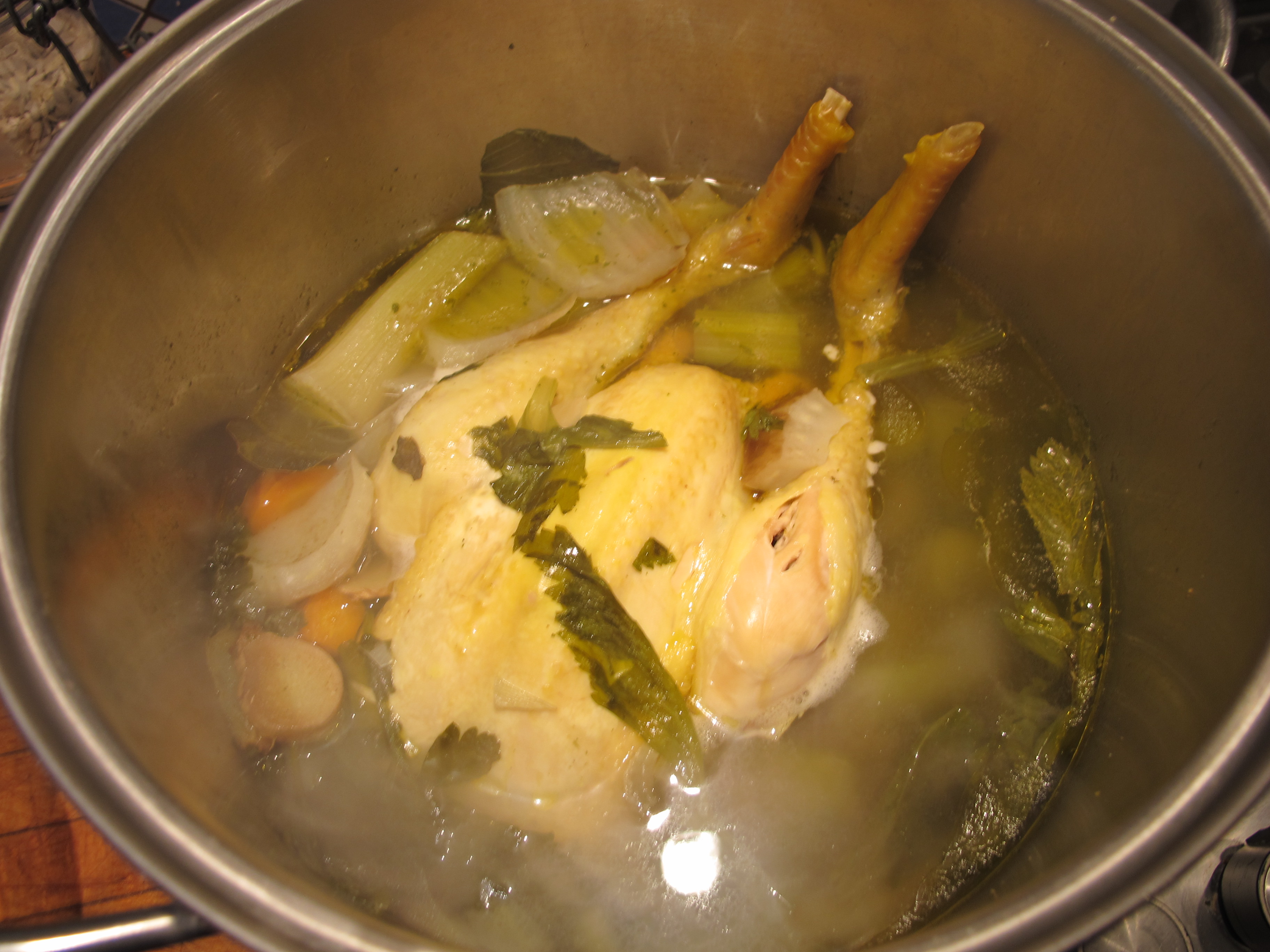
“Horses for courses”–chicken for chills!

“Please–just some broth today!” was the request this morning from the sick bed.

Poor Meredith has been fighting the lurgy since Christmas Day.

Not a person to give in lightly to a tickle in the throat she has been up and back to bed all week.

We were bucked up last night by watching the original Shrek film, which I hadn’t seen.

It is high in the chuckle factor and almost as good a tonic as a bowl of chicken soup.

But this morning after a troublesome night it has to be the real thing–so here goes!

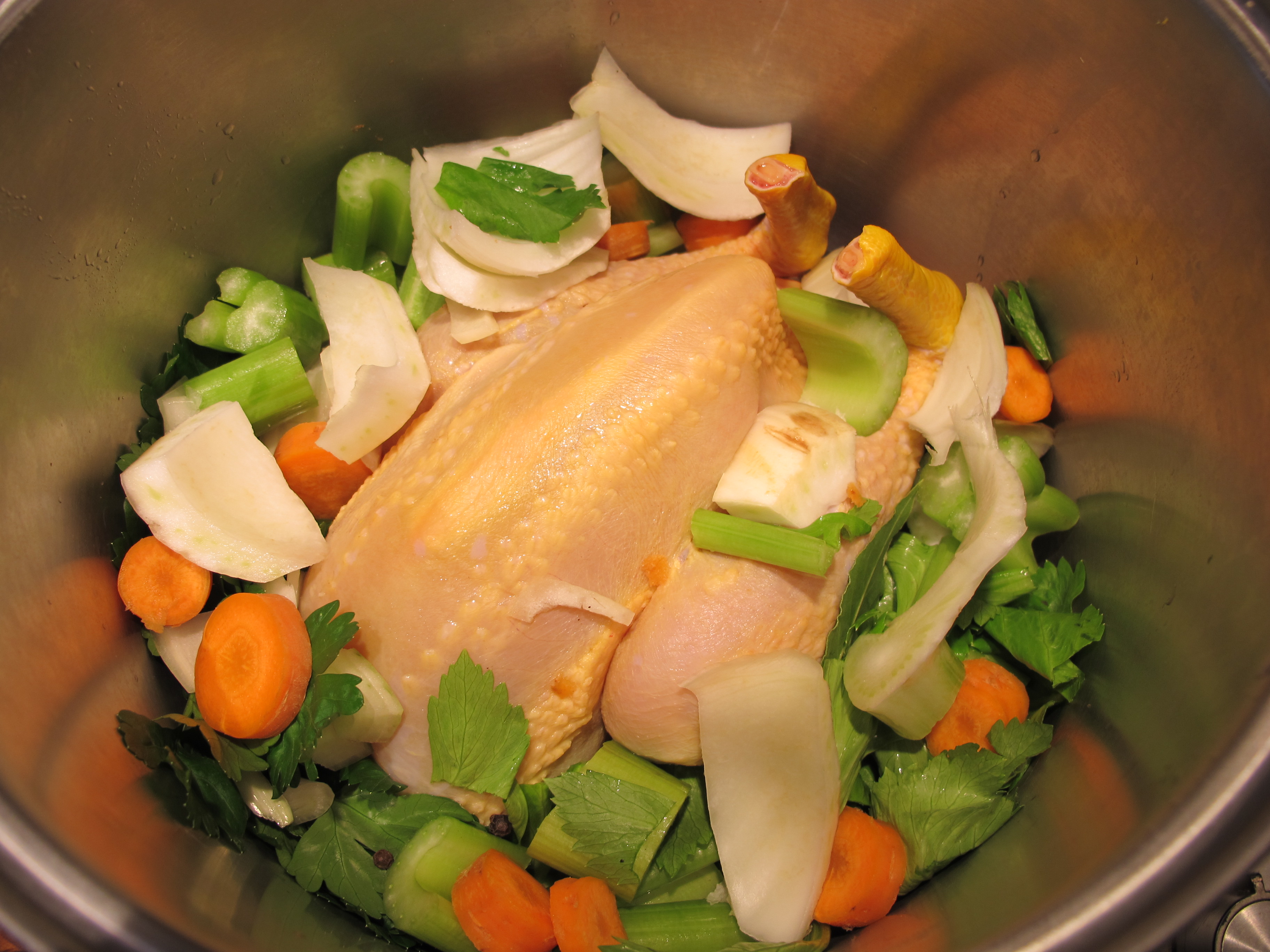
I put in a large pot:

1 chicken–washed

1 carrot

2 sticks of celery–roughly chopped

the outer parts of a fennel bulb–roughly chopped

1 onion–peeled and roughly chopped

1 small garlic bulb–with the top sliced off

3 bay leaves

a couple of parsley sprigs

a couple of slices of fresh ginger

a few peppercorns

3 pints of organic vegetable stock–from cubes and

the kitchen sink (only kidding!).

I bring these slowly up to the simmer–while feeding Beau a little cat milk and reassuring the patient that broth will be ready at the end of a brief snooze–cover it and leave it to bubble for an hour and a half.

Then I remove the cooked(out) vegetables with a slotted spoon and

add a cut up carrot, 

half a cut up fennel bulb and

some broccoli and

cook on until they soften and serve them with the broth.

Now, not meaning any disrespect to “grandma’s”  traditional  cure-all remedy–especially not as in a few days I shall reach the traditional “alloted span” and so must watch my tongue–I always find this broth/soup less than more-ish. So what am I doing wrong?

I notice that in several internet versions tinned chicken broth is used.

Tinned stuff? Really? This seems a bit of a cheat; though anything to lift the spirits I suppose…

As broth is staying on the menu for the next few days–I’m in the market for ideas!

(Our friend Charlotte suggests plenty of leeks and some nutmeg!)

Nevertheless the patient said she was happy with the outcome, but advised that the broth be refridgerated overnight for the fat to rise, be skimmed off and the soup to be reheated.

Read Full Post »

Lamb chops, borlotti beans and broccoli.

We eat relatively little red meat.

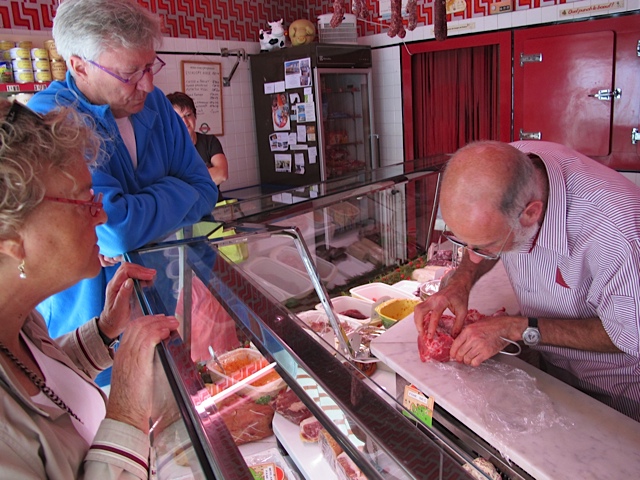
Meredith bought these lamb chops on Tuesday from Monsieur Fraisse, the butcher in Lautrec. “They looked particularly nice….

The beans are from Italy, bought in jars. They grow in beautiful red spotted pods–the beans turn brown when cooked.

The broccoli I bought from the organic market in Castres, yesterday afternoon.

For 2

4 lean lamb chops

3/4 sprigs of rosemary–needles removed

2 garlic cloves

3 tablespoons olive oil–a little more if you need it

salt

—————-

1 tin/jar of beans–drained but the liquid retained (of course these can be white or borlotti)

sprig of sage

a clove of garlic–chopped

1/2 an organic vegetable stock cube

the other 1/2 an organic vegetable stock cube dissolved in 250 ml/1/2 pint of hot water–(use this instead of or in addition to the liquid from the beans)

———–

1/2 lb/ 250 gms  broccoli–washed, stems shortened and cut into eatable florets

salt and pepper

olive oil

  • An hour or two before you eat  “pestle” the rosemary needles up  (i.e. smash up!) with the garlic and a pinch of salt in a mortar and add the oil–this is the marinade for the chops.
  • Pour this fragrant mix over the chops in a bowl and turn everything to coat the chops with the marinade.
  • leave initially in the fridge–covered; then take them out an hour before cooking them.
  • Heat a grill to medium.
  • Season the chops and put them on the grill.
  • Timing depends on your taste and their thickness–3 to 4 minutes a side and they’ll retain some pinkness.
  • While they cook gently sauté the garlic and sage in the olive oil in a small pan until the garlic begins to colour.
  • Add the half stock cube (give it a stir to dissolve in the oil).
  • Add the beans.
  • Stir the mix and add a little of the bean liquid or the stock.
  • Cover and cook on for 5 minutes or so.
  •  In another pan, steam the broccoli covered until tender but not overcooked.
  • Serve with olive oil and salt on the table.

Interested customers watching M. Fraisse working on lamb chops

Read Full Post »

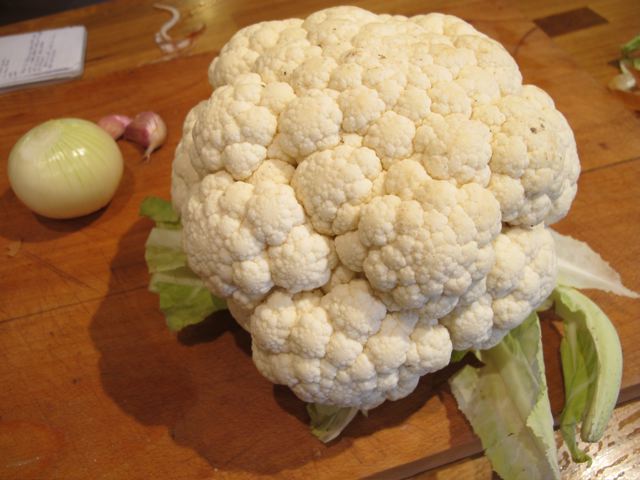
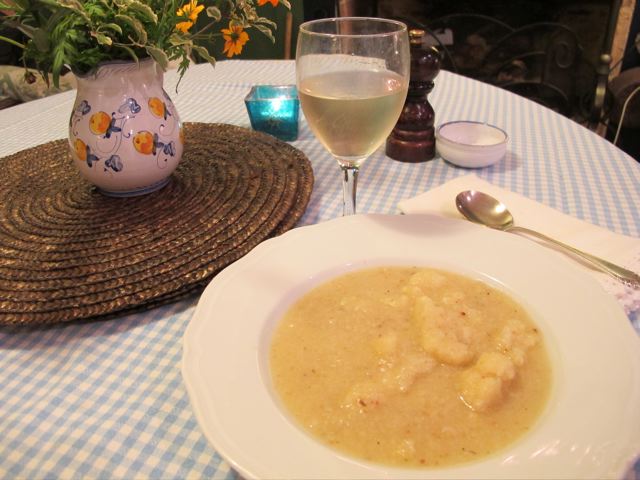
This is pushing it, I know–cauliflowers have been featuring a tad too much lately.

We had this for supper the other night and Meredith said, “What is this, it’s so creamy? It’s not potatoes is it?  It’s delicious.”

Cauliflower soup,”  I said sheepishly. Somehow cauliflower is not a vegetable that’s easy to own!

This recipe is adapted from one by Nigel Slater that I spotted in a newspaper last week.

The key ingredient is smoky bacon.

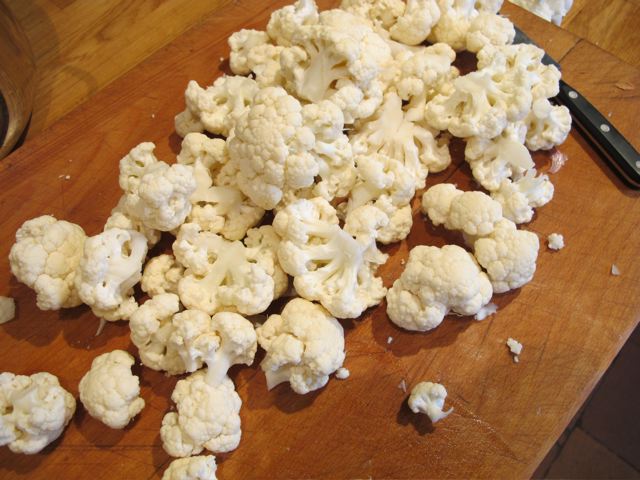
1 large cauliflower--broken into florets

2 cloves of garlic–chopped

1 medium onion–chopped

4 rashers of smoked bacon–chopped

1 tablespoon olive oil

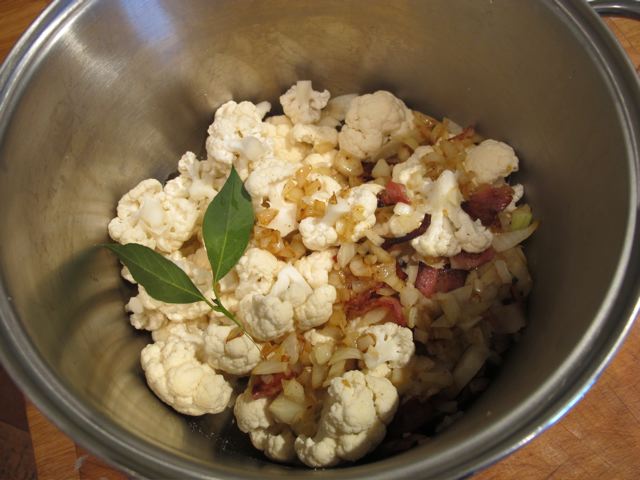
2 bay leaves

1 litre/2 pints stock

salt and pepper

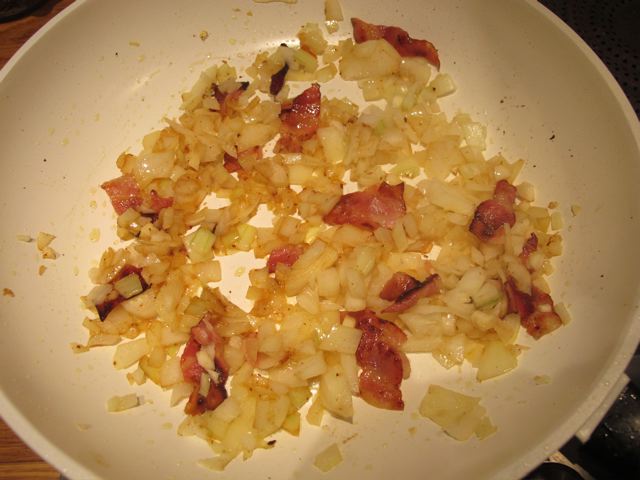
  • Gently heat the oil in a pan and sauté the bacon bits until they colour a bit.
  • Add the garlic and onion.
  • Cook the mix on for five minutes until the onion has softened.
  • While this happens break up the cauliflower into florets and add to a large saucepan.
  • When ready add the onion and bacon mix to the cauliflower pan with the bay leaves and the stock.
  • Cover and bring this mix up to the simmer and cook until the cauliflower is tender.
  • Lift a thirdish of the mix out of the pan and into a bowl with a slotted spoon letting the liquid fall back in the pan
  • Liquidise the contents of the pan and test the seasoning.
  • Add back the set-aside florets and serve the soup hot.

Read Full Post »

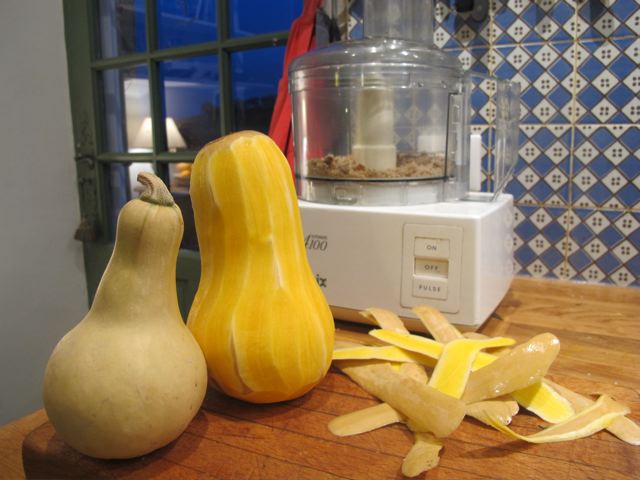
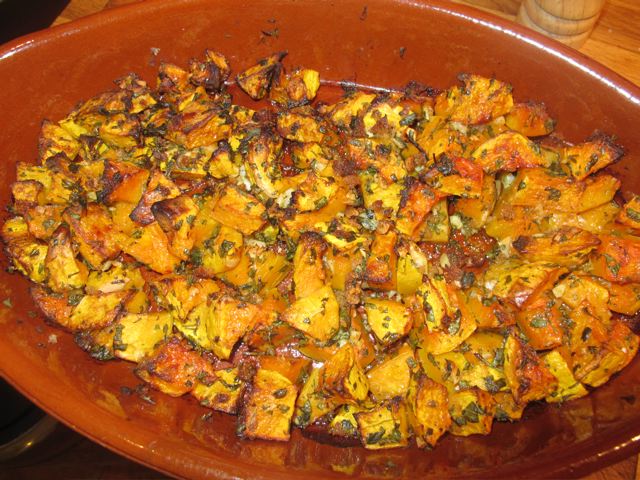
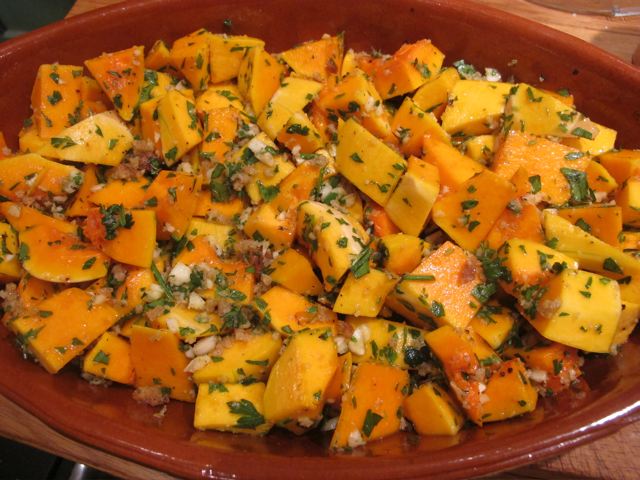
1st Bttrnt Sq. "What'll we be today?"--2nd Bttrnt Sq. "Gratin I think--scary!".

This is delicious–I’ll stick my neck out.

We had it with some seasoned quinoa (sautéed onion, garlic, a small chili and a little steamed broccoli) last night for dinner and nearly finished the lot.

The recipe is adapted from one in the New York Times*, which in turn was adapted  from a recipe in a cookbook by a legendary American food writer*, who most likely adapted it from something he ate in a restaurant in Provence*, which was probably invented by the grandmother of the restaurant owner*–who had passed it on to her daughter*.

In other words it’s a version of a traditional seasonal gratin dish.

It can be eaten as a vegetarian main course as we did last night or as an accompaniment to a roast chicken or some lamb chops–for instance.

for 4

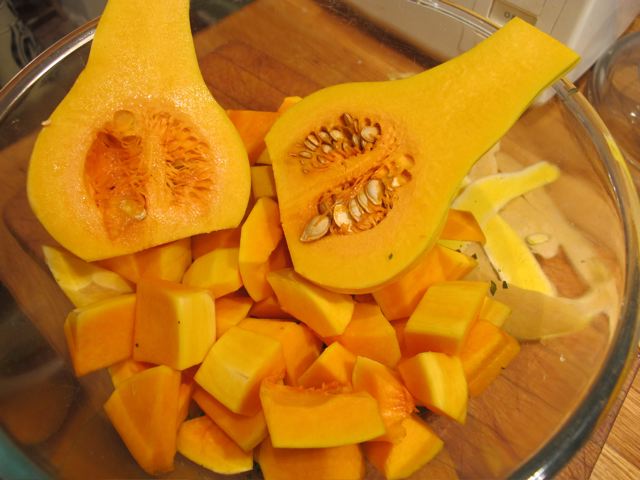
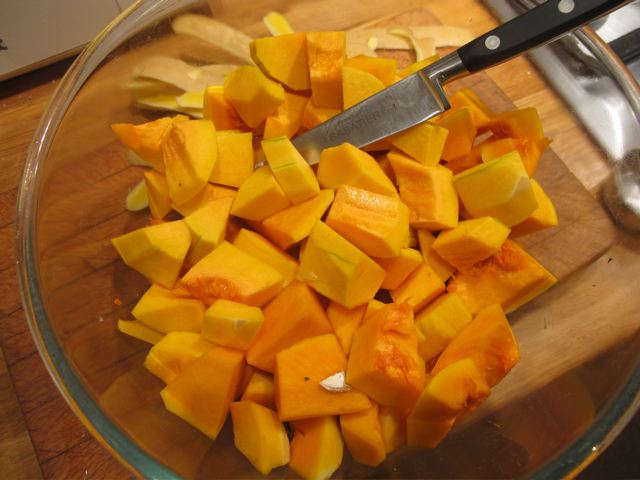
1kilo/2 lbs of butternut squash–peeled, deseeded and cut into small chunks

4 cloves of garlic–peeled and chopped small

1 generous tablespoon of wholewheat/rye breadcrumbs

1 generous tablespoon of parsley--chopped

1 tablespoon of fresh thyme leaves

salt and pepper

3 tablespoons of olive oil

set the oven to 190C/375F

Combine all the ingredients in a large  bowl and turn them over and over mixing them thoroughly together.

Tip into a roasting tray or better still an earthenware ovenproof dish.

Roast in the middle of the oven, for about an hour and a half–so it comes out nicely charred on top.

1*–Martha Rose Shulman

2*–Richard Olney–auther of Simple French Food

3*–All three names lost in the mist of time!

Read Full Post »

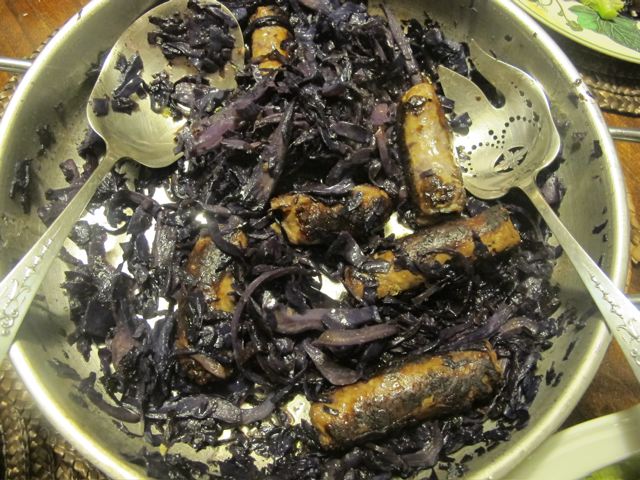
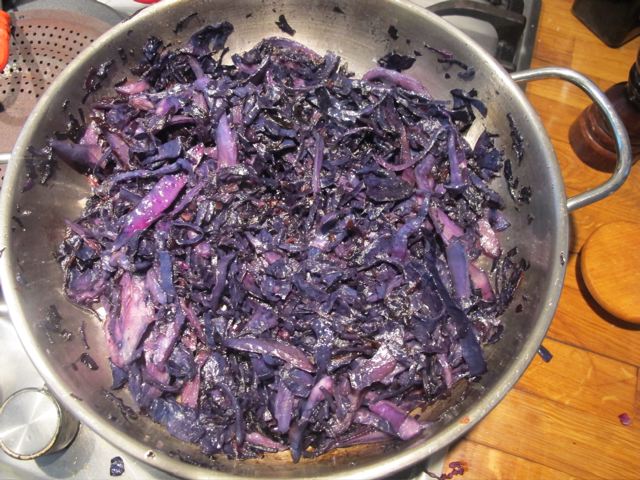
This is very simple to do.

Slow cooked sausages are added to slow cooked strips of red cabbage and are slow cooked on a little, to let them get to know each other!

This is adapted from a recipe in the remarkable Marcella Hazan’s 2nd Classic Italian Cook Book.

For me, her books have been–still are–inspiring treasure troves of  authenticity.

Nothing else is needed here except perhaps a little of your favourite mustard.

for 3/4

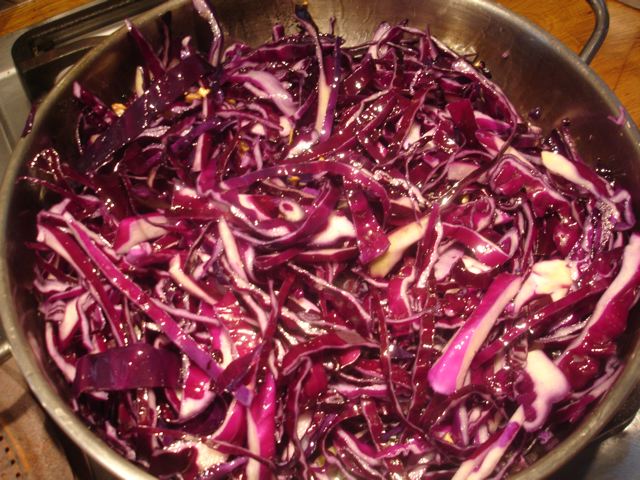
  • 700gms/1.5 lb red cabbage– cored and sliced fine
  • 450 gms/1lb of your favourite pork sausages– cut in 3″/4″ lengths
  • 2 cloves garlic– chopped
  • 6 tablespoons of olive oil
  • salt and pepper
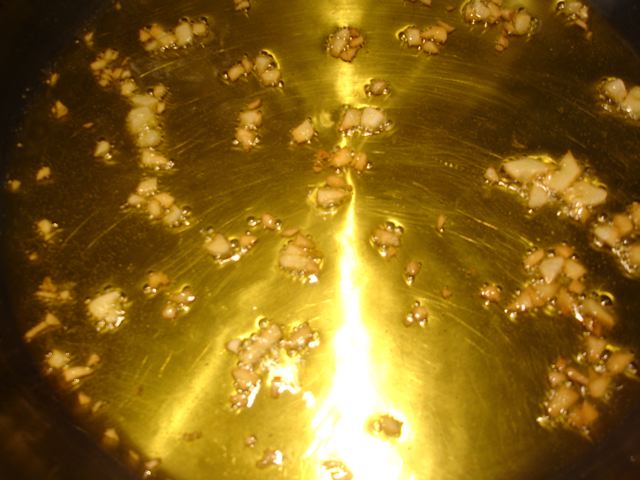
  • Heat the olive oil in a large pan or casserole and gently sauté the garlic until it is golden.
  • Add the cabbage and turn it over well in the oil and garlic.
  • Let it reduce gently–turning it from time to time–for about 20-30 minutes.
  • While the cabbage is cooking–sauté the sausage pieces in a separate pan brushed with a little oil.
  • Brown them gently all over.
  • When the cabbage has reduced, season well with salt and pepper.
  • Tuck the sausages under the gleaming purple cabbage and cook them together for another 20 minutes–turning them from time to time.
We had some lovely steamed  broccoli with it last night–a touch of green on the plate, for colour contrast.
Bon apetit!

Read Full Post »

We tasted this new soup for lunch.

When Dianne P. from New Hampshire posted her memorable photos taken 33 years ago, in autumn of 1978 on the set of The Europeans in New Ipswich, New Hampshire on Flikr last night, it put me in mind of the late Ismael Merchant’s cooking.

He was the producer half of  Merchant/Ivory productions–Jim Ivory is the director of their movies.

I played the frustratingly “unable to commit” Robert Acton, opposite the much lamented and talented Lee Remick, in their film of Henry James’ novella.

Ismael was a wonderful cook and would sometimes use his talent to smooth the ruffled feathers of nervous creditors when the film threatened to overrun.

One of his curry feasts, I remember, bought us enough time to finish the film!

There’s a soup in his book Indian Cuisine called “Claverack Carrot Soup“.

We used to have it often, but after I was diagnosed with type 2 diabetes, it came “off the menu”, because of the potatoes and carrots in it.

I had some fennel and a sweet potato I wanted to use and a nobly piece of ginger–and autumn has  arrived with the clocks going back;  so I thought I’d experiment–with a nod to Ismael and thanks again to Dianne!

1 medium onion–chopped roughly

1 tablespoon of olive oil

12 oz of cleaned and chopped fennel

12 oz of peeled and chopped sweet potato

1 clove of garlic–chopped fine

a thumb-nail size piece of  fresh ginger–peeled and chopped fine

1.5 pints of stock–I use organic vegetable stock

a little single cream or yogurt to swirl on top in each bowl

Salt and pepper

for 4

  • Heat the oil in a large saucepan and add the onion.
  • Soften it for 10 minutes without browning it.
  • Add the fennel and the garlic, mix it in with the onion and gently sweat the mixture–covered–for 15 minutes.
  • Add the sweet potato and the ginger, mix it in and sweat–covered–for a further 15 minutes.
  • Season the mixture–keeping in mind that the stock will have salt in it.
  • Add the stock and cook it for another 10 minutes–uncovered.
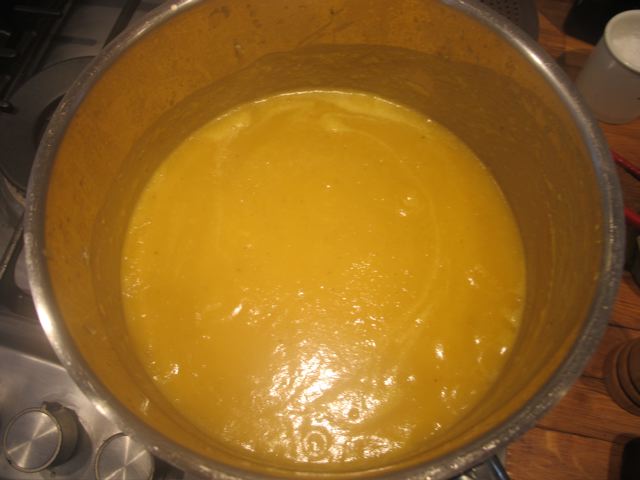
  • Let the soup cool for a few minutes before liquidising it.
  • I use a hand-held liquidiser/blender.
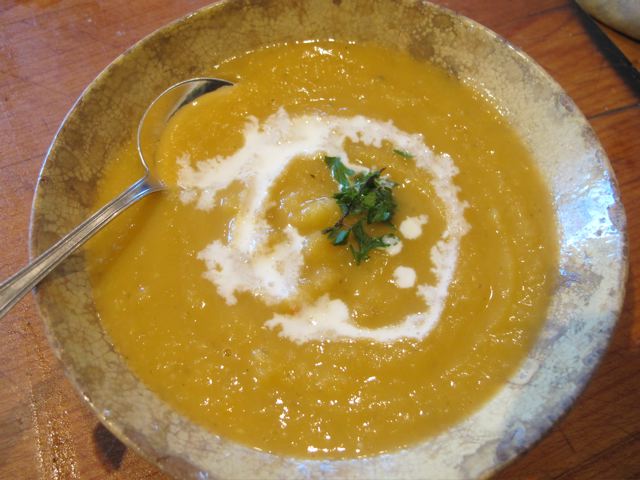
  • Serve hot with a swirl of cream or yogurt on top.
  • Meredith thought a single piece of crispy bacon for each bowl would be good too–we’ll try that next time.

Read Full Post »

We are having this tonight with our friends Andrew and Peggotty who are here for a few days rest and recuperation!

Meredith says it’s not really from the Mediterranean region so what’s it doing in the cookbook?!

She’s right–it’s more Cajun than Med. I think–but it’s healthy and tastes good, so…!

It’s also a good dish for company–easily adapted to feed more than four.

Allow 200 g/7 oz of salmon fillet per person.

Serves 4

800 g/28 oz salmon fillet–skin and small bones removed

2 tablespoons olive oil

more olive oil for sautéing

For the Orange Yogurt Sauce 

4 tbsp/80 ml/3 fl oz olive oil

400 ml/14 fl oz/1½ cups yogurt of choice – whisked smooth (I use no-fat)

zest and juice of 1 large juicy orange 

For the Herb and Spice Mix 

3 teaspoons each–dried thyme, dried rosemary, dried oregano 

3 teaspoons dry roasted cumin seeds – roughly ground

1½ teaspoons each Spanish sweet smoked paprika, cayenne pepper 

3 cloves of garlic–pulped in a mortar with a pinch of salt

3 teaspoon salt

  • Make the sauce by whisking the olive oil into the yogurt, followed by the zest and juice of the orange. Set it aside.
  • Put all the herbs and spices in a bowl and mix them
  • thoroughly.
  •  Run your fingers over the top of the fillets to check that all
  • the small bones have been removed.
  • Cut up the salmon into squares roughly 3 cm/11/2 inch in size – they need to be cooked quite quickly so mustn’t be too large.
  • Put them in a bowl and add the olive oil. Turn the salmon carefully until it is well covered.
  • Tip the salmon into the bowl with the herb and spice mix.
  • Again turn the salmon carefully until all the pieces are well covered in the mix.
  • Pour a couple of tablespoons of oil into a large frying pan.
  • When hot transfer the “blackened” salmon to the pan and fry for 4–5 minutes.
  • Check for doneness, try not to overcook; it’s better that some pieces are slightly underdone – they
  • continue to cook a bit off the heat.
  • Serve over a steaming dish of brown basmati rice.
  • Don’t forget the sauce!

Read Full Post »

« Newer Posts - Older Posts »