
Fish is an important component of the Mediterranean Diet or Way of Eating—the latter being the subtitle of my book Delicious Dishes for Diabetics, and sustainability is the key word. I don’t believe diets are sustainable and neither is the fishing of certain varieties of fish. The former I’ll leave for a later blog.
It’s Friday and I’m off to Lautrec market to buy some fish for lunch–but what should I buy?
The lists of what to avoid to sustain the stocks vary from place to place (pardon the pun).
Whiting, mackerel, trout, pollack, black bream, lemon sole, sardines feature regularly as sustainable varieties.
Those to avoid include cod, halibut, haddock, hake, sea bass and skate.
Sounds simple, but there are exceptions. It can vary depending on where the fish originates.
Here are three useful sites:
Eat more anchovies, herring & sardines to save the ocean’s fish stocks (The Guardian)
Debate Your Plate: What fish is sustainable?
A guide to eating fish the sustainable way (The Guardian)
I’ll settle for mackerel today–if they look good. They must be fresh; but they are inexpensive and one of the oily fish varieties–so a healthy option.
Posted in Food | Tagged fish, sustainable | Leave a Comment »
I was looking for a new way to cook the seasonal cauliflower, patiently waiting its turn in the fridge. The much used cheesy white sauce, though tempting, is not so good for diabetics. It’s a lovely looking thing, the cauliflower, but is one of those “what on earth am I going to do with it this time” vegetables…! A recipe in Delia Smith’s Winter Collection gave me the idea for this, which I tried last night. It was so good, we’ll have it again this evening with a salmon fillet.
I sprinkled some dry roasted sunflower seeds over the finished dish.
For 4 as a vegetable or 2 as a main course
1lb/450gm cauliflower–broken up into florets
1 generous tsp coriander seeds—pounded in a pestle and mortar
2 tblsp olive oil
2 garlic cloves—pulped with a small teaspoon of salt in a mortar and pestle
salt and pepper
Set the oven at 200C/400F/gas mark 6
1 Put the cauliflower florets in a large bowl.
2 Sprinkle over and mix in the crushed coriander seeds.
1. Whisk the crushed garlic and olive oil together.
2. Mix in this little sauce, coating the vegetables thoroughly.
3. Spread the vegetables on a roasting tray in a single layer.
4. Season with salt and pepper.
5. Roast in the oven for about 30 minutes—checking for doneness after 20 minutes; the vegetables should be tender and charred a little.
6. Dry roast the sunflower seeds in a pan on the hob and sprinkle them over the roasted vegetables.
Posted in Food, Recipes | Tagged broccoli, cauliflower, coriander | 4 Comments »
The sovereign invigorator of the body is exercise, and of all the exercises walking is the best.
– Thomas Jefferson
I used to think walking was pedestrian!
I ran—or jogged, or bicycled. Walking took so long.
But then we moved here, where it’s a bit hilly and I was getting older, so I started walking and liked it.
All truly great thoughts are conceived by walking.
– Friedrich Nietzsche
I was walking six times a week, usually for about 40 minutes. I tried to do a circular route, which suited me better.
I am a slow walker, but I never walk backwards.
– Abraham Lincoln
I liked the freedom of it, and starting from home–no time spent travelling to exercise. And there was no equipment needed—just a good pair of shoes and warm clothing. I usually took the same route–which never felt the same two days running–so to speak!– varying with the day’s weather and the changing seasons.
To find new things, take the path you took yesterday.
– John Burroughs
Then one day I overdid it and my left knee felt bad.
I had to stop for a while and was missing it. I used an exercise bike but it wasn’t the same.
Gradually my knee healed and I started walking again, but less. Now it’s 3 or 4 times a week– preserving old knees.
If one keeps on walking everything will be alright.
– Soren Kierkegaard
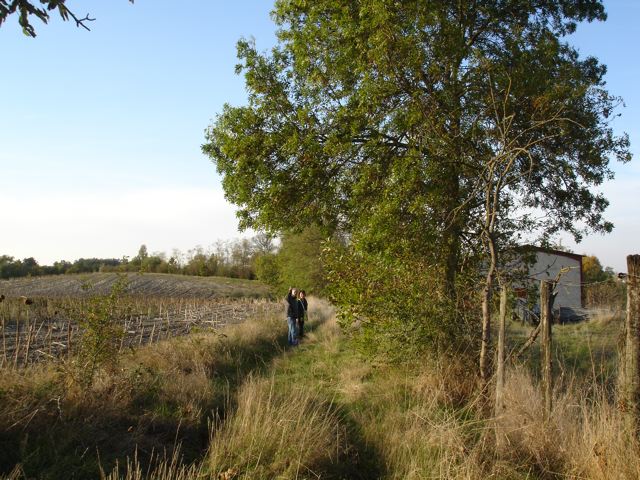
Thoughts come clearly while one walks.
– Thomas Mann
It is not talking but walking that will bring us to heaven.
– Matthew Henry

Straw men don't walk....
Caloric Expenditures Per Mile for Different Bodyweights by Walking at Various Speeds
Posted in Diabetes | Tagged diabetes & exercise | Leave a Comment »
Eye Test
I learned early on, that managing Type 2 Diabetes involves more than watching what you eat—it’s really a head to toe job!
The villain sugar is a ruthless foe. It will take advantage of any weaknesses with alacrity, and insinuate itself into those vulnerable spots like eyes and feet if you drop your guard, causing damage that cannot be reversed.
This is the reason for my visit today to Dr Nguyen’s eye clinic–my annual check-up.

“Put your chin on the strap please and place your forehead against the bar—look straight ahead and don’t move”.
The forced intimacy of doctor and patient is strange. As he leans forward and shines his special torch deep into my eyes, we are eyeball to eyeball. For a moment I feel like the Man in the Iron Mask, receiving a visit.
The short pause before he says “no sign of damage”, is a bit nerve wracking; on occasion I’ve caught myself crossing my fingers under the table—though I forgot this morning!
Phew-another year gone!–it only remains to make an appointment for the same time next year.
Being tested has become part of life again. Just like schooldays.
I see Cyril for feet every three months and have a blood test to check cholesterol and glucose levels as often. No big deal really—when your life depends on it.
Posted in Diabetes | Tagged diabetes, eye tests | Leave a Comment »
In search of salmon fillets for lunch, I set off for the Friday market in Lautrec.
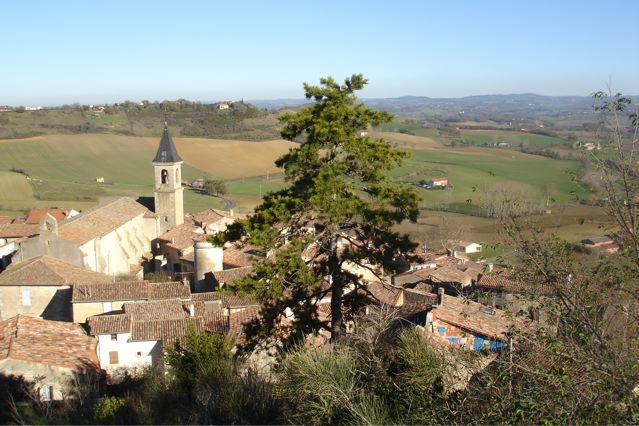
Lautrec
This is a small affair for the people who live in and around the village. There are usually a couple of stalls with fresh local products, a fishmonger, cheese stall and not a lot more. Occasionally a man who makes and sells L’Aligot—a speciality of the region–which we have subtitled “Heart attack on a plate” is there, but not today.
L’Aligot is a sticky mix of melted Chantal cheese and mashed potato, which is turned in a vat with what looks like a paddle; very good with Toulouse sausage, for a not so light lunch! Comfort food, and dangerously delicious! Type Two-ers beware!
As usual there are small groups of people standing around chatting. Market day is an opportunity for locals to meet up and chew over the events of the past week, and all the better if the sun is shining like today.
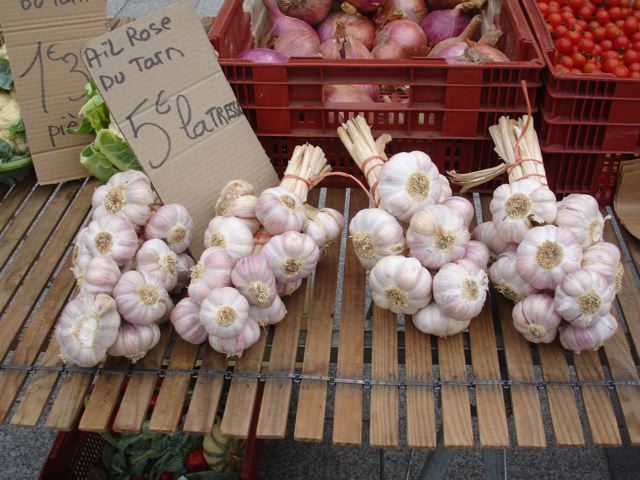
Pink Garlic from the Tarn
I shake hands with our friend Robert and the Monsieur who let us collect fallen walnuts from his garden last year, whose name escapes me. We say “Bonjour—ça va?”, confirm that we are “en forme”, and that all is well “chez nous”, and agree to meet up, “un de ces jours” [one of these days] and on we go. An agreeable culture of politeness.
I change my mind about the salmon and buy two spare rib pork chops from M. Fraise, the butcher, and head home.
Posted in Food | Tagged shopping & France | Leave a Comment »
Frittata
Frittata is an egg tart without the pastry—a handy dish for diabetics, that everyone can enjoy.
It’s an Italian omelette for four to share and, unlike the French version, is cooked slowly. We had it for lunch today, just the two of us– a Valentine’s Day offering. It went down well with the Taster in Chief!
I was a little nervous because the filling was left-over Swiss chard and onions, based on an Indian recipe, and mildly spicy, not Italian; but then you can add whatever you like to the basic cheese frittata or just enjoy as it stands. Here’s it is.
Cheese Frittata
For 4
7 eggs
100gms/3.5 parmesan cheese—grated. This could be a mix–parmesan and swiss gruyere, for a little richer taste.
2 tblsp olive oil
salt and pepper
1. beat the eggs in a bowl, add salt, pepper and the cheese.
2. heat the oil in a 30cm/12” sauté pan.
3. add the egg and cheese mix.
4. turn the heat down to the lowest level.
5. cook until only the surface of the frittata is liquid– about 15 minutes.
6. place the pan under a hot grill for a minute or so, or just slide it carefully onto a plate, place a second plate over the top and turn them over, then slide it back into the pan for a minute or so.
7. The surface should be golden not brown, and the frittata moist.
8. serve with some steamed broccoli –green with the yellow–and your best olive oil sprinkled over it.
I sometimes cut the frittata in strips and serve them over the salad
Posted in Diabetes, Recipes | Tagged eggs | 1 Comment »
GI—what is it?
Well it has nothing to do with the American army, where it stands for “Government Issue” apparently, and not “General Infantry” as often claimed.
The Glycemic Index measures how carbohydrate rich foods effect blood sugar levels in the body.
The GI Foundation neatly sum it up thus:
“Not all carbohydrate foods are created equal, in fact they behave quite differently in our bodies. The glycemic index or GI describes this difference by ranking carbohydrates according to their effect on our blood glucose levels. Choosing low GI carbs – the ones that produce only small fluctuations in our blood glucose and insulin levels – is the secret to long-term health, reducing your risk of heart disease and diabetes and is the key to sustainable weight loss.”
The GI ranks food from 0 to 100, using glucose, with a GI value of 100, as the reference.
The GI has three categories—high (70 to 100), medium (56 to 69) and low (55 and less); these are intended to indicate the speed at which the glucose(sugar) content in the food enters the bloodstream.
So it makes sense for type two-ers, who have less than efficient insulin function, to favour carbohydrates that are in the low to medium bands of GI.
For more information:
Posted in Diabetes | Tagged diabetes, gylcemic index | Leave a Comment »
Socca Pancakes—the recipe below is from my book “Delicious Dishes for Diabetics” (available for pre-order on Amazon.co.uk)

socca pancake
These little discs are handy landing pads for pretty much anything you fancy. Today I had some left over roast chicken (also in the book) in the fridge; which I sautéed with some sweet onion slices, dry roast walnut pieces and some sliced celery in a little walnut and olive oil. The pancake base ( I covered mine with a pancake hat) added a slightly crunchy interest to the chicken filling.
The other day I added the spicy cauliflower recipe from my book—see below–and served a poached egg on the side.
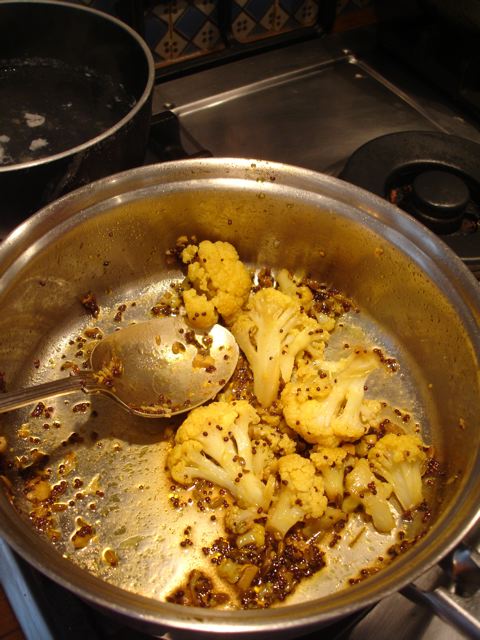
Sauted cauliflower
Farinata or Socca (Pancake)
Serves 4
This is street food and is still sold on the streets of Nice and Marseille in southern France. These pancakes are about 20 cm/8 inches wide and are good for parking things on – a fried egg or some bacon bits or, as I did recently for a light supper, thinly sliced roast tomatoes.*
170 g/6 oz chickpea flour
400 ml/14 fl oz/1½ cups sparkling water
80 ml/2.5 fl oz/ cup olive oil
salt and pepper
1 tbsp rosemary leaves
olive oil
1. Put the flour in a mixing bowl. Add the water and whisk it in until smooth.
2. Add the oil and whisk it in. Add pinches of salt and pepper and the rosemary. You will have roughly half a litre (20 fl oz) of batter. Leave to soak for 20–30 minutes.
3. When you are ready to make the pancake, heat a swirl of olive oil in a 25 cm/10 inch frying pan. When hot, put a tablespoonful of the stirred mixture in the pan and turn the heat down a little. Cook for a few seconds until you can ease the pancake loose with a spatula or fish slice. Now you have to turn it over! Be bold! Practice makes perfect and anyway the first attempt, if not completely successful, will be edible.
Cook the pancake a further few seconds and remove from the pan.
Both sides should be a golden brown. Add a few twists of the pepper mill on each.
* Cook the tomatoes, sprinkled with a little salt and olive oil, for 20 minutes in a low oven (140°C/275°F/Gas Mark 1).
Cauliflower with Mustard Seeds and Fennel
Serves 4
Madhur Jaffrey, the Indian actress and cook, brings a touch of the sub-continent to the Mediterranean. This version of her recipe stands on its own and would be good served on the socca pancake or with the “comfort” lentils, and is excellent as a vegetarian main course.
6 tbsp olive oil
1 tbsp black mustard seeds
2 tsp fennel seeds
3 cloves of garlic – finely chopped
¼ tsp turmeric
¼ tsp cayenne pepper
1 largish cauliflower – dismantled into small florets
4 tbsp hot water
salt to taste
1. Heat the oil in a large sauté pan. Put in the mustard and fennel seeds.
2. As soon as the mustard seeds begin to pop, add the garlic cloves. As they begin to turn colour, add the turmeric and cayenne and stir them in.
3. Add the cauliflower florets and turn them in the oily mixture. Add the water and turn the heat down.
4. Cook on a gentle heat, covered, for 20 minutes or until the cauliflower is just tender.
5. Uncover the pan and let any remaining water evaporate. Add salt to taste.
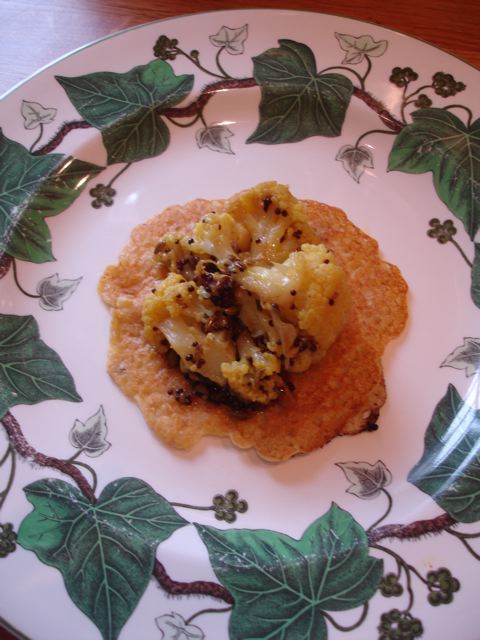
Socca (chick pea) pancake with sauted spicy cauliflower
Posted in Food, Recipes | Tagged chick pea, pancakes, socca | Leave a Comment »
There are no desserts in my cook book, Delicious Dishes for Diabetics–A Mediterranean Way of Eating.
This is because I don’t eat desserts.
Well not the whole truth—Meredith sometimes makes a dessert for company that is so good, that not to try it would be churlish—so I have a sliver.
I’m lucky, I don’t have a sweet tooth and have never had a craving for large portions of exotic “afters”—though I do remember the wonderful tall glassed “Knickerbocker Glories” (ice cream sundaes in the U.S.) at the lunch counter on the top floor of Marshall and Snelgroves, once a famous department store on Oxford Street. One of my grandmother’s regular treats in the early 1950s!
For others it‘s a sacrifice to forgo the third course. It’s true that a good meal needs a grace note at the end, something that rounds it off–a contrast to the savory tastes of the main dish–something to complement the coffee or tea to come. Well, all is not lost…!
The answer, surprisingly, is CHOCOLATE–with a high proportion of cacao.
One square eaten with a good cup of coffee is the perfect end to a meal for me.

I have got used to 90% and find anything lower than 85% too sweet.
The idea has caught on. There often seems to be a choice these days from 70% and upwards in most supermarkets.
This site positively encourages the consumption of high cacao chocolate:
10 Reasons to Eat High Cocoa Content Chocolate
Posted in Diabetes, Food | Tagged chocolate | 2 Comments »
Making Poldark: Memoir
Includes photo from the NEW Poldark series!
Mediterranean Cooking for Diabetics
Healthy Eating for Life
Delicious Dishes for Diabetics: Eating Well With Type-2 Diabetes
Follow Robin on Facebook…
-
Thank you! You can now check your email to confirm your subscription.
-
Recent Posts
Tag Cloud
anchovies angharad rees asparagus broccoli cabbage cats cauliflower celery chicken chickpea chickpeas corfu coriander courgettes cumin Dal Delicious Dishes for Diabetics diabetes Donald Douglas eggs fennel food frittata garlic ginger green beans Healthy Eating for Life honey Ismail Merchant l'ail rose de lautrec Lautrec leeks madhur jaffrey Making Poldark Marcella Hazan Mediterranean Cooking for Diabetics meredith Nigel Slater no potato fishcakes nutmeg olive harvest olive oil onion Ottolenghi parsley Poldark recipe recipes red cabbage red lentils red onion red peppers roast chicken robin ellis rosemary salmon salmon fishcakes socca soup spicy spring summer sweet potato. thyme tomatoes tour de france turmeric Type 2 diabetes vegetarian Walking walnuts white beans winston graham yogurt sauce zucchiniCategories
Twitter Updates
Tweets by RobinPoldarkMeta


 Robin Ellis