Feeds:
Posts
Comments

In yesterday’s post I said we’d stopped eating Ismail Merchant’s Claverack Carrot soup, after I was diagnosed with type 2 diabetes– “because of the potatoes and carrots in it”.

Shelagh, in a comment this morning, asked whether it was the sugar content of the carrots that was the problem.

Twelve years ago, when I started reading up about the effect of certain foods on blood sugar levels, carrots featured in the “better not to eat” column in much of what I read.

I have avoided them ever since.

Shelagh’s question prompted me to do some research this morning and I found that carrots are “off the hook” now, in terms of the glycemic index and glycemic load–which measure the effect of various foods on blood sugar levels.

Debunking the carrot myth
Raw or cooked, carrots are good for you and they won’t send your blood glucose on a roller coaster ride. End of story. Why? Well, not only are they a low GI food (41), they have very few carbs. In fact, to get a hefty portion of carbs from carrots you’d have to crunch through at least 5 cups or 750 g (about 1½ lb) at a sitting – a pretty awesome achievement even for carrot lovers.

[From GI News the newsletter of the Glycemic Foundation]

Their GL–glycemic load or carbohydrate per portion–-is very low.

In other words they are OK for diabetics–-eaten in moderation as with everything!

I have been a bit behind the curve on this and it’s good to catch up!

Regular potatoes though are definitely NOT off the hook–in particular mashed potatoes and chips (fries).

Sadly Ismail’s recipe for carrot and ginger soup is still “off the menu” for me!
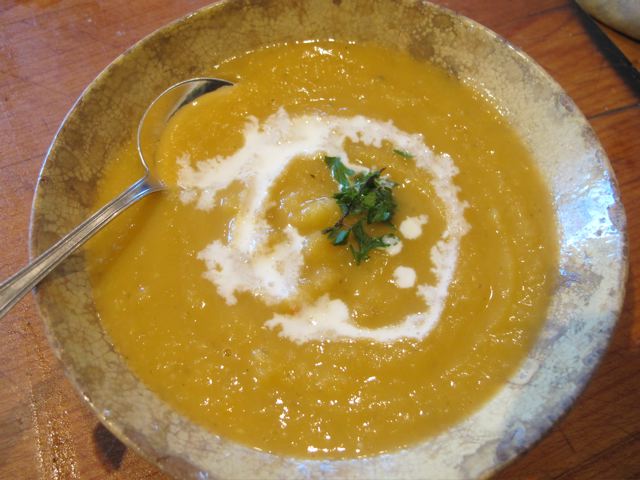

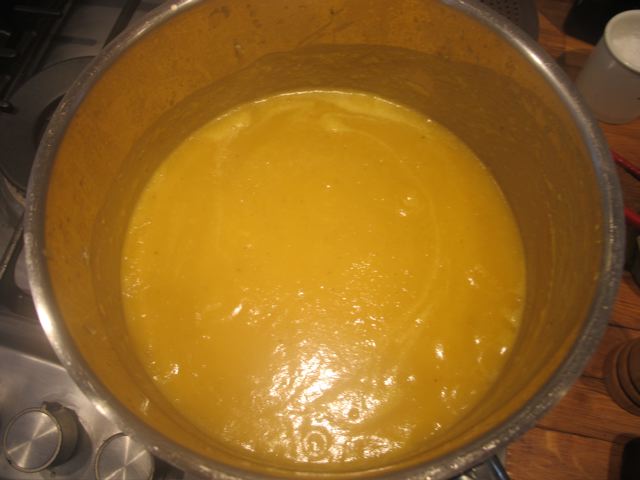
We tasted this new soup for lunch.

When Dianne P. from New Hampshire posted her memorable photos taken 33 years ago, in autumn of 1978 on the set of The Europeans in New Ipswich, New Hampshire on Flikr last night, it put me in mind of the late Ismael Merchant’s cooking.

He was the producer half of  Merchant/Ivory productions–Jim Ivory is the director of their movies.

I played the frustratingly “unable to commit” Robert Acton, opposite the much lamented and talented Lee Remick, in their film of Henry James’ novella.

Ismael was a wonderful cook and would sometimes use his talent to smooth the ruffled feathers of nervous creditors when the film threatened to overrun.

One of his curry feasts, I remember, bought us enough time to finish the film!

There’s a soup in his book Indian Cuisine called “Claverack Carrot Soup“.

We used to have it often, but after I was diagnosed with type 2 diabetes, it came “off the menu”, because of the potatoes and carrots in it.

I had some fennel and a sweet potato I wanted to use and a nobly piece of ginger–and autumn has  arrived with the clocks going back;  so I thought I’d experiment–with a nod to Ismael and thanks again to Dianne!

1 medium onion–chopped roughly

1 tablespoon of olive oil

12 oz of cleaned and chopped fennel

12 oz of peeled and chopped sweet potato

1 clove of garlic–chopped fine

a thumb-nail size piece of  fresh ginger–peeled and chopped fine

1.5 pints of stock–I use organic vegetable stock

a little single cream or yogurt to swirl on top in each bowl

Salt and pepper

for 4

  • Heat the oil in a large saucepan and add the onion.
  • Soften it for 10 minutes without browning it.
  • Add the fennel and the garlic, mix it in with the onion and gently sweat the mixture–covered–for 15 minutes.
  • Add the sweet potato and the ginger, mix it in and sweat–covered–for a further 15 minutes.
  • Season the mixture–keeping in mind that the stock will have salt in it.
  • Add the stock and cook it for another 10 minutes–uncovered.
  • Let the soup cool for a few minutes before liquidising it.
  • I use a hand-held liquidiser/blender.
  • Serve hot with a swirl of cream or yogurt on top.
  • Meredith thought a single piece of crispy bacon for each bowl would be good too–we’ll try that next time.

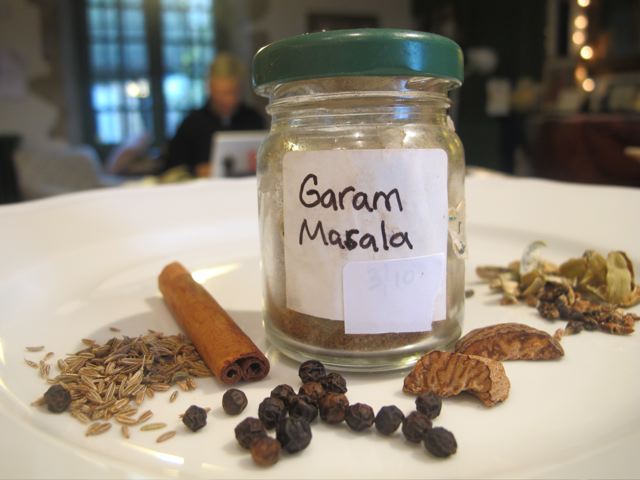
Garam masala is an ingredient in the dal recipe I posted a few days ago (see Gentle Lentils) and was new to some people.

Garam means hot and masala means a spice mix.

The “hot” is not a spicy hot but rather a heat that warms the body (in principle).

I’ve learnt about this subtle and delicate flavouring mix from Kris Dhillon whose cookbook, The Curry Secret, is from the same imprint as Delicious Dishes for Diabetics–i.e. Right Way).

He writes:

“…the theory comes from the Hindu concept of medicine and diet called tridosha, which teaches that some foods have a warming effect on the body while others have a cooling effect. Spices such as cardomans, cloves, cinnamon, and nutmeg are garam constituents of this aromatic mixture.”

Garam masala is usually added towards the end of the cooking process; it can also be sprinkled over cooked food to enhance the flavour.

It is a mixture of spices that has infinite variations. You can buy it (just as you buy curry powder) or you can make your own. This version is from the wonderful Indian actress and food writer Madhur Jaffrey, author of  Indian Cookery.

1 tablespoon cardoman seeds

2″/5 cm stick of cinnamon

1 teaspoon cumin seeds

1 teaspoon whole cloves

1 teaspoon black peppercorns

1/2 a small nutmeg–grated

Whizz the mix to a fine powder in a spice or coffee grinder.

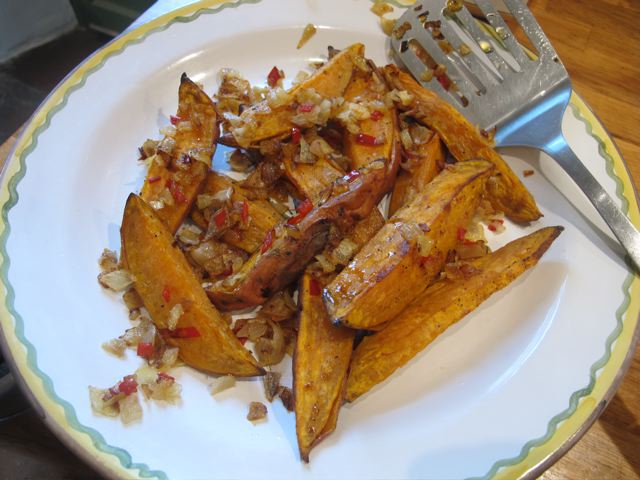
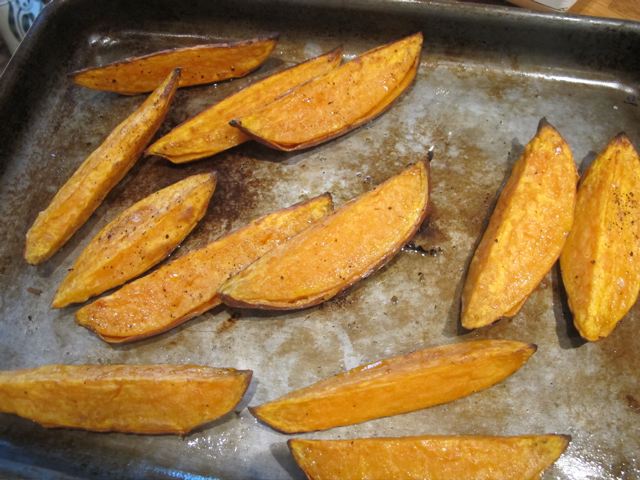
Adapted from an Ottolenghi idea–this accompanied a spatchcocked chicken recipe out of the same stable for dinner with some friends the other night.

(I’d tried it out the night before but forgot the chili!)

Ottolenghi adds some crumbled chevre [goat’s cheese] which would make a good light supper dish with a salad or some broccoli.

for 2–(for 4 add another potato and a small onion to the recipe)

Heat the oven to 220C/425F/gas mark 7.

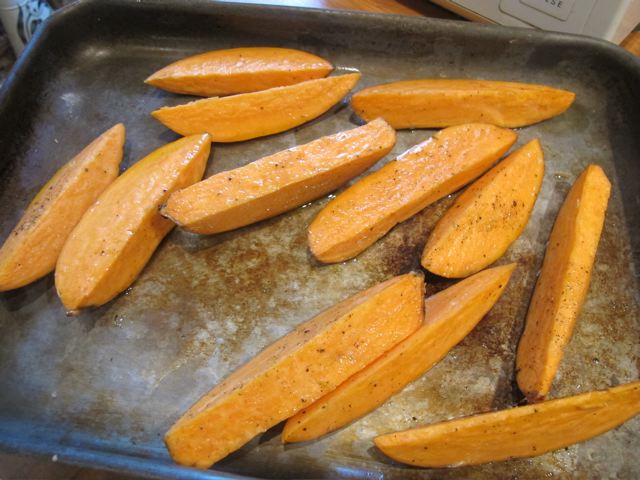
2 medium sweet potatoes–the skin rinsed and brushed clean, cut in half lengthways then each half cut into three long wedges

3 tablespoons of olive oil

salt and  pepper

1 medium onion–chopped

1 fresh red chili–sliced very thin and chopped

  • In a bowl turn the wedges over in 2 tablespoons of the olive oil and season them.
  • Lay the wedges skin side down on a baking tray.
  • Roast them for about 25 minutes–until soft.

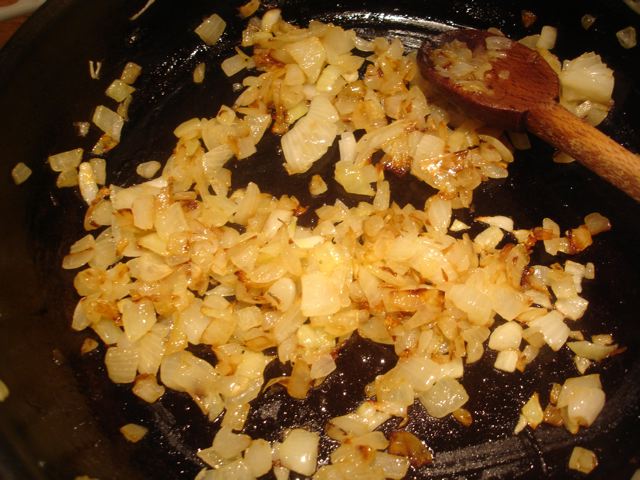
  • While the potatoes are roasting, gently brown the chopped onion in the remaining tablespoon of oil.

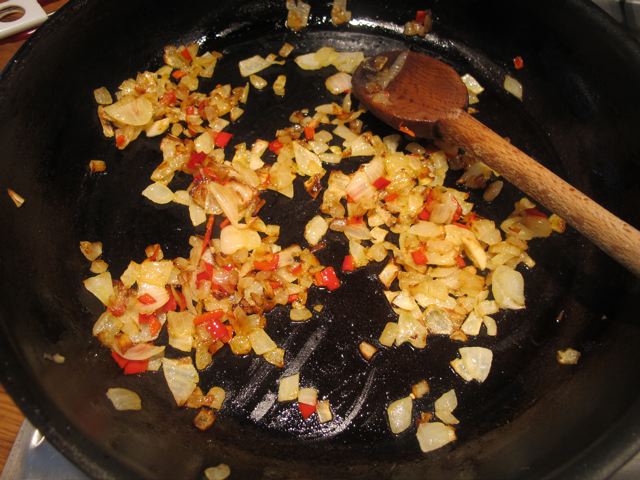
  • Add the chili after about fifteen minutes letting it soften and meld in with onion.

  • Scatter the sautéed onion and chili over the potatoes

We had the left-overs mixed in a salad last night with a handful of dry-roasted pumpkin seeds for added crunch!

Double Rainbow!

When we walked into the courtyard of this house for the first time 21 years ago, there was a double rainbow- it felt auspicious.

Yesterday, a little past the 21st anniversary, this magnificent specimen [caught by Meredith] appeared–reminding us of our luck.

Somewhere over the rainbow,

The skies are blue,

and the dreams that you dare to dream,

really do come true.

This is for our friend Hilton McRae, at present appearing in End of the Rainbow.

My Favourite Pasta…

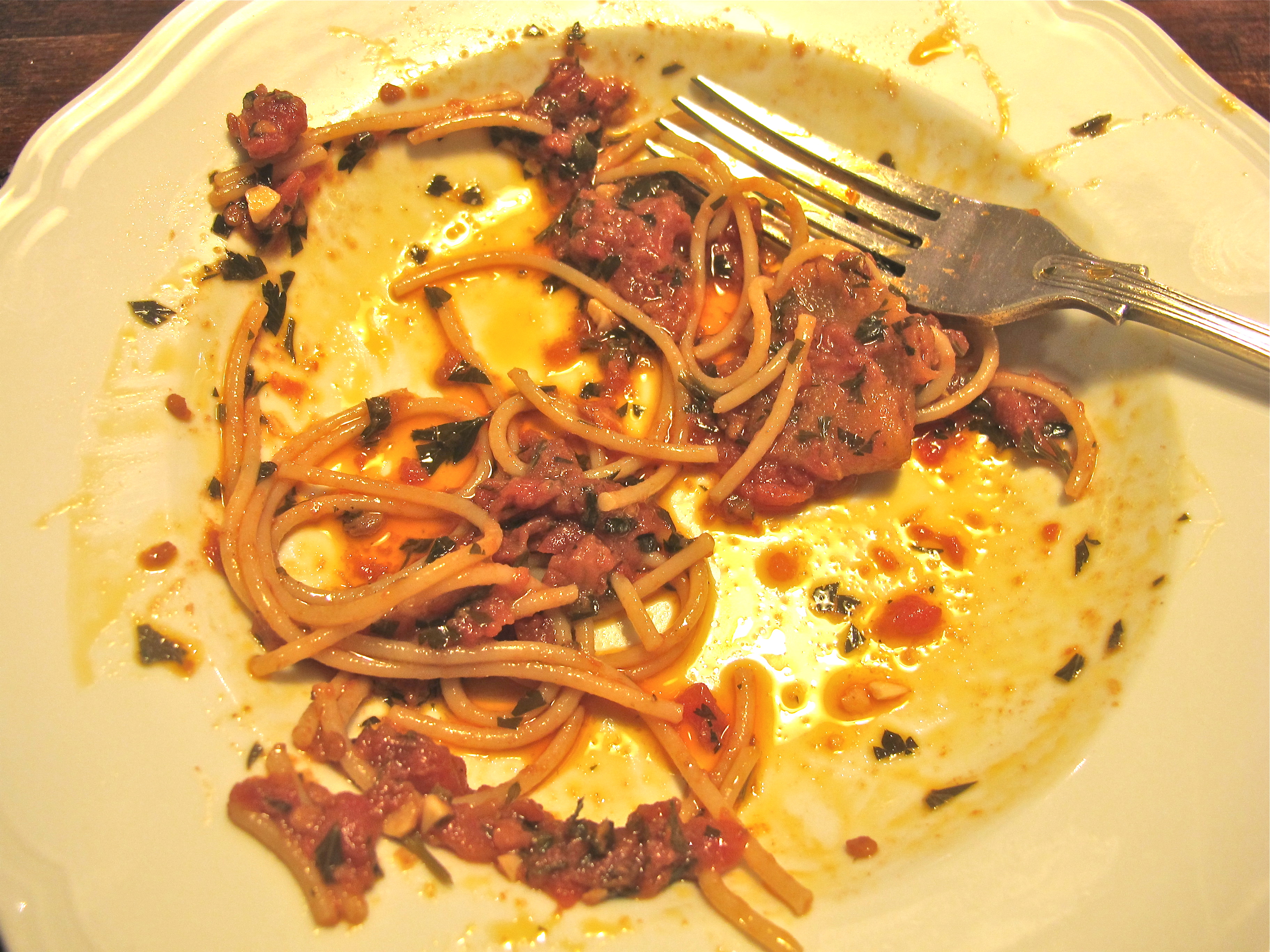
Meredith and I have eaten this a thousand times, usually on a Sunday evening–our once-a-week pasta night.

It is from the matchless Marcella Hazan and is probably my favourite pasta dish of all time–comfort food par excellence!

What makes it so delicious is the anchovies–controversial little fish–not to everyone’s taste.

Here they deepen the taste without dominating.

The ones preserved in salt are best–they dissolve more readily than those in preserved in oil–but it’s a business preparing them for cooking.

Since I was diagnosed with type 2 diabetes we have eaten wholewheat pasta and now we prefer it–it’s on the shelves of most supermarkets these days.

How al dente it’s cooked is a matter of taste.

In Italy you’d think it was an arrestable offence to overcook pasta–they cook it very al dente and it makes for agreeably slower eating.

for 4

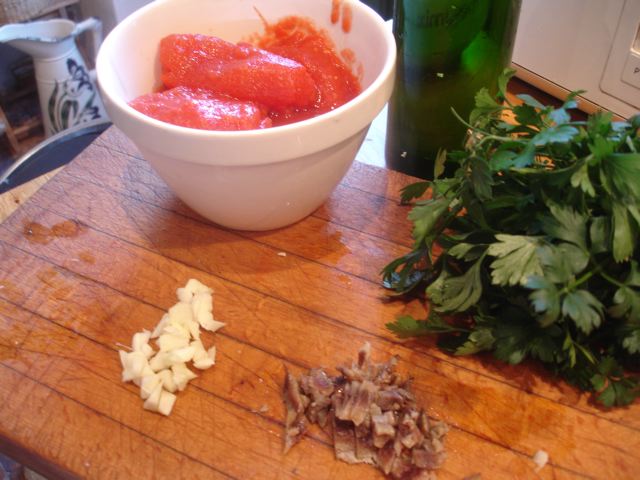
2 medium cloves garlic–chopped

6 tablespoons olive oil

anchovy fillets–chopped fine and pounded into a paste in a mortar with a pestle if you have one

2 good tablespoons parsley–chopped

400 gm tin of tomatoes–chopped with their juice

salt & pepper 

400 gms wholewheat spaghettini

  • Lightly sauté the garlic in small saucepan until it colours.
  • Take the pan off the heat and add the anchovies and parsley– stirring well to dissolve them into the oil
  • Add the tomatoes, the salt and pepper.
  • Cook at a steady simmer for about twenty five minutes, stirring regularly.
  • When ready the sauce will have an unctious consistency and a little pool of oil on top.
  • Cook the spaghettini in plenty of well salted boiling water.
  • Test for your preferred “doneness”.
  • Drain, put in a heated bowl and add the sauce.
  • Mix well and serve.

Teeth!

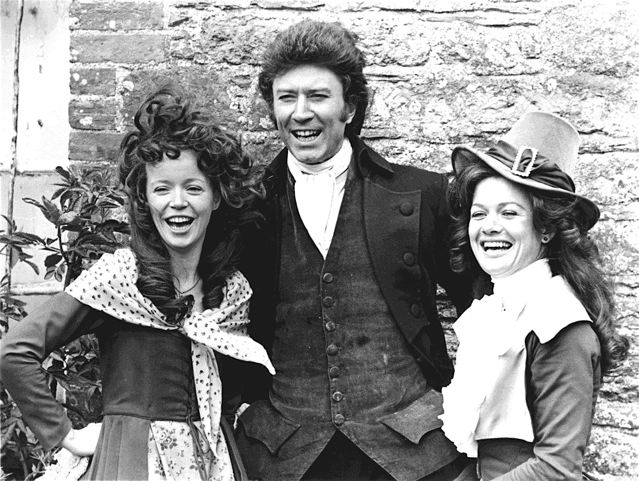
I remember Judy Geeson (who played Caroline Penvenen in the second series of Poldark) once asking me how long I took cleaning my teeth!

Such a question! It must have been nervesanxiety provokes strange conversations.

We were standing around waiting to record a scene at the BBC’s Studios in Birmingham, in 1977.

She was shocked when I told her it usually took me about 20 seconds and that I once had to have 22 fillings after not seeing the dentist for 3 years.

“You must spend at least 3 minutes and floss every time, beforehand.” she told me sternly.

Duly admonished I have followed her advice ever since.

This exchange came to mind when Meredith sent me the link to a website that describes in detail what can happen to a diabetic’s teeth when glucose  levels are unchecked.

It also has useful tips about how to keep your mouth healthy:

People with diabetes are at risk for mouth infections, especially periodontal (gum) disease. Periodontal disease can damage the gum and bone that hold your teeth in place and may lead to painful chewing problems. Some people with serious gum disease lose their teeth. Periodontal disease may also make it hard to control your blood glucose (blood sugar).

By controlling your blood glucose, brushing and flossing every day, and visiting a dentist regularly, you can help prevent periodontal disease.

I brush and floss three times a day.

Thanks Judy!

(We quickly got our teeth into the scene!)

Toothsome threesome--Angharad, Robin and Judy!


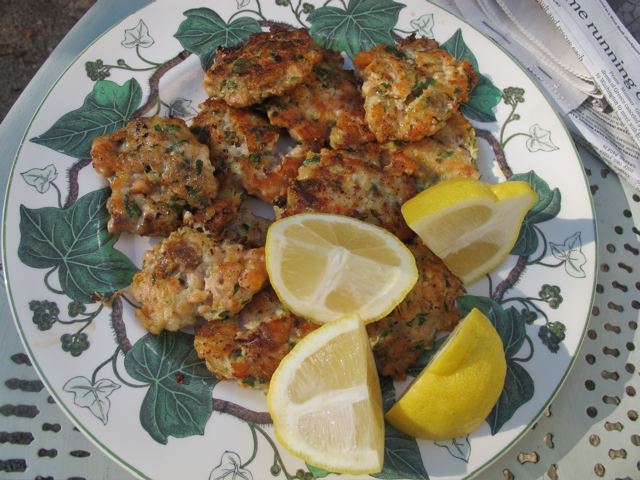
With salmon and smoked haddock .

I used to love fishcakes–but the mashed potato made them “off limits” for me, once I was diagnosed with type 2 diabetes.  Then I found an alternative–“no-potato fish cakes”— and I no longer felt deprived!

This is a variation on that theme.

Adapted from a Gordon Ramsay idea–these are a little heavier than “mark 1”–a winter alternative perhaps? They were lunch yesteday, but could be served as a starter or light supper.

for 4/6

1 lb/450 gms salmon fillet–with the skin and little bones removed
1 lb/450 gms smoked haddock–undyed, if possible, and skin removed
1 large shallot–grated

1 egg–whisked

1 tablespoon parsley–chopped

salt and pepper
olive oil for sautéing

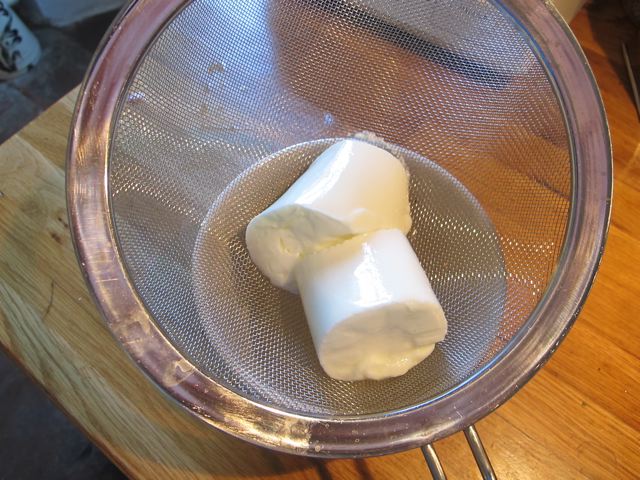
yogurt–I use no-fat organic, drained in a sieve for half an hour to thicken it a little

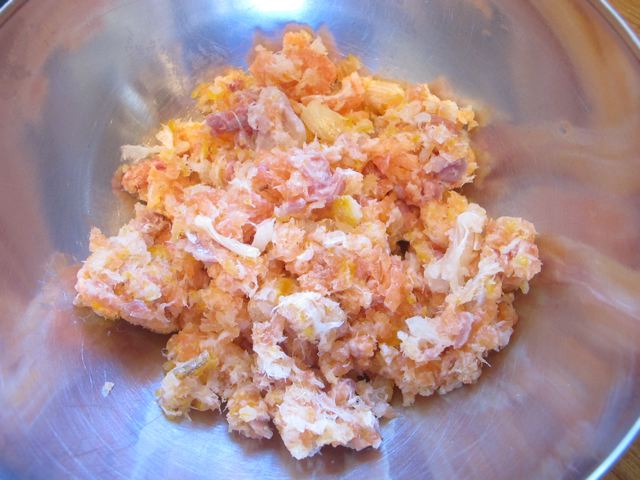
  • Cut the fish into chunks and place into a food processor.
  • Pulse to a coarse mince–not too much or it will become a slurry.
  • In a bowl, mix the fish with the shallot, parsley, salt and pepper.
  • Check the seasoning–raw salmon tastes good!
  • Add the whisked egg and mix in thoroughly.
  • Chill in the fridge for an hour if you’ve time–I didn’t and they were fine.
  • Mold into little flat patties.
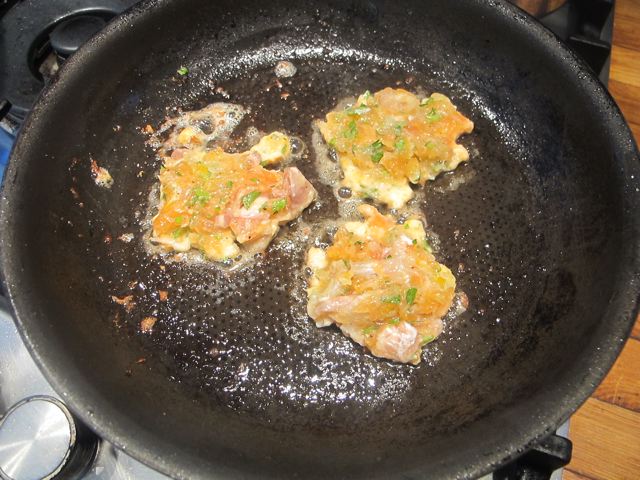
  • Heat the oil in large frying pan.
  • When it’s hot fry the little cakes for 2/3 mins each side.
  • Serve with a small dollop of yogurt on the side.
We had them with some small tomatoes–halved and roasted at 120C/250F for 1h30.

Jabs…

Just had my flu shot in the nurses office in Lautrec this morning.

Here in France those of us of a certain age (over 60) or in high risk groups–like diabetics–get the shot free.

The paperwork comes in the post. I take it to the pharmacist, who supplies the vaccine and then drop by the nurse’s office and she gives me the dreaded jab.

Good system for me.

Our French neighbour, Robert (fellow type-twoer and the same age) was in the pharmacy too today. He told me he never takes up the offer. He’s an independent spirit and looks hail and hearty, so “chacun a son choix” [to each his own]!

My wife, Meredith, chooses to go down a homeopathic route–which has worked for her these past few years.

Madame l’Infirmiere (the nurse) told me that flu was already on the prowl in the district.”Without the jab there’d be an epidemic,” she claimed, as she stuck the needle in my upper arm–doubly demonstrating how good she is at her job–first by distracting me from the shot then by reassuring me I was doing the right thing!

Diabetes Health is giving out this advice to pharmacists:

How Pharmacists Can Help Diabetes Patients During Cold and Flu Season

Patients with diabetes are six times more likely to be hospitalized and three times more likely to die from flu-related complications. With cold and flu season upon us, be sure to spend extra time advising your patients with diabetes on the importance of keeping up-to-date on their vaccinations, what to do if they do become sick, and how to self-treat with over-the-counter (OTC) medications when needed.


This was published a couple of years ago.

It has been a favorite for over thirty years and is a tasty standby for a rainy grey day when going anywhere for supplies is the last thing you feel like doing.

Meredith on her detox for a week mentioned it this morning and we’ll have it tonight, as below, with some of the broccoli I bought yesterday and brown basmati rice.

Dal-otherwise known as Comfort Lentils in our house.

This is from my book Delicious Dishes for Diabetics-out in the UK and officially launched November 1st in the USA.

Our Sikh friend, Tari, affectionately known as the “Carefree Cook”, is an example to all us worry guts.

He never panics when people turn up unexpectedly and have to be fed.

He looks to see how many extra guests are coming through the door and adds more water to the dal accordingly!

We’ll eat these lentils tonight with broccoli, simply steamed, drizzled with a little olive oil (maybe a squeeze of lemon?) and a some brown basmati rice.

[If there’s any dal left over, save it for another occasion! Form the cold dal into little burger shapes, coat with some chickpea or whole wheat flour and fry lightly in some hot oil.]

for 4

500 g/1 lb red lentils

1 litre/1¾ pints/4 cups stock (I use an organic vegetable stock cube per 500 ml of water)

4 tbsp vegetable oil (I use olive oil.)

1 medium onion – chopped

1 tsp coriander seeds – pounded in a mortar and pestle

1½ tsp cumin seeds – pounded in a mortar and pestle

1 tsp garam masala

½ tsp chilli powder

  • Rinse the lentils very thoroughly – until the water shows clear.
  • Put them in a saucepan with the stock and bring gently to the boil.
  • Turn the heat down to low and let them simmer, covered, stirring from time to time.
  • They are done when a small puddle floats on the top.
  • Turn them off.
  • Heat the oil in a small frying pan.
  • Add the onion and fry gently until it colours nicely.
  • Add the spices and mix them in well.
  • Cook for a couple of minutes longer to release the aroma.
  • Add the cooked spices and the onion to the lentils and mix in thoroughly.
  • Heat through and serve.