Feeds:
Posts
Comments

It’s 8 am.

Poor Marmalade–our big eyed ginger cat–doesn’t know it but he’s going on a journey this morning–to the dentist!.

He’s not the only one in for a shock.

Meredith goes into the garage for the cat carrier and hears a mewing.

Must be Blacky–she thinks–one of the outdoor cats, who’s been known to sleep in the garage in winter.

Instead, a little black and white bundle, adorable as only a kitten can be, scampers up to her–mewing and purring a nervous racket.

‘What on earth!? Where did YOU come from!?’

Meanwhile in the kitchen, on the other side of the house, our two other indoor cats are getting more and more agitated, waiting to be fed.

“What time do you call this–it’s nearly 8.30?!”

(They’re having to wait until Marmalade–who can’t eat before the anaesthetic–is out of the house.)

Handsome, arthritic Lucien (an abandoned kitten himself a dozen years ago)  can’t stand intruders; he spots the callow newcomer and starts rehearsing his Bill Sykes routine–lowering his head menacingly, laying back his ears and arching himself for attack.

Pippa–our Head Cat (“and you better believe it!“)–is pacing up and down the kitchen, tut-tutting in cat fashion–twitching her tail.

She’s always grumpy in the morning before she eats, often giving son Marmalade an unwarrented nip and swipe.

All this and barely 8.30!

On the advice of our usual vet, Meredith has booked Marmalade into the dentist for 9 am–that’s the feline dentist–in another town about 25 minutes away.

Poor guy–Marmalade, I mean–has been off colour for months (we thought he was mourning the loss of his sister, Butterscotch–but it turns out he has bad teeth!).

We take bowls of cat food out of the kitchen to distract Pippa and Lucian while Meredith leaves with an unhappy Marmalade–who’s not responding to our assurances that he’s going to feel much better for all this soon.

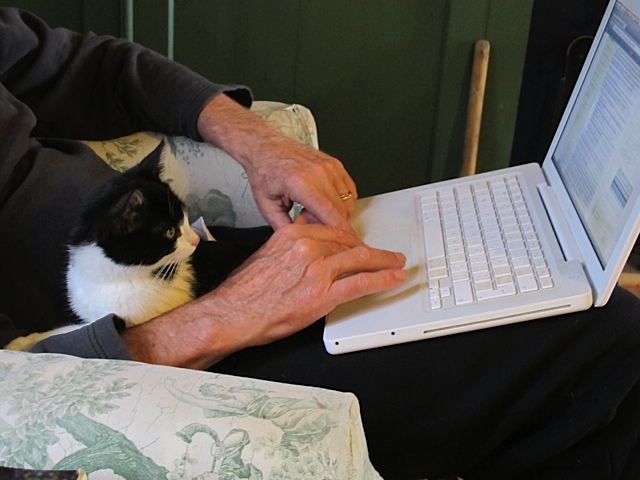
Meanwhile back in the kitchen–I have a new friend.
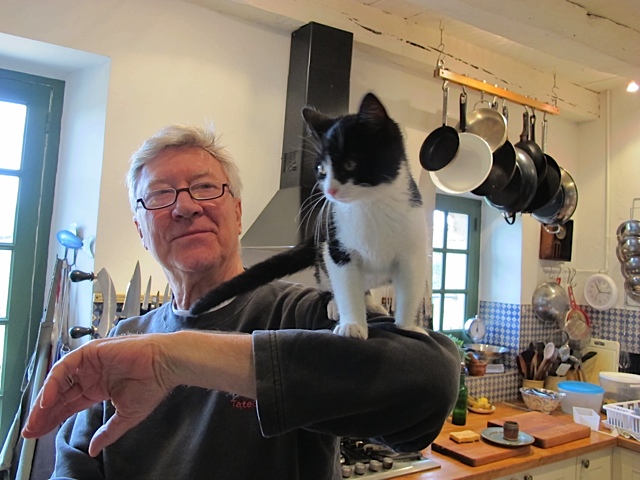
Gradually–after eating from every bowl in the room–the adorable mewing and purring bundle calms down and decides that, as an old friend of ours once put it, it had fallen in the butter dish and that I am the bee’s knees–or the cat’s elbow!
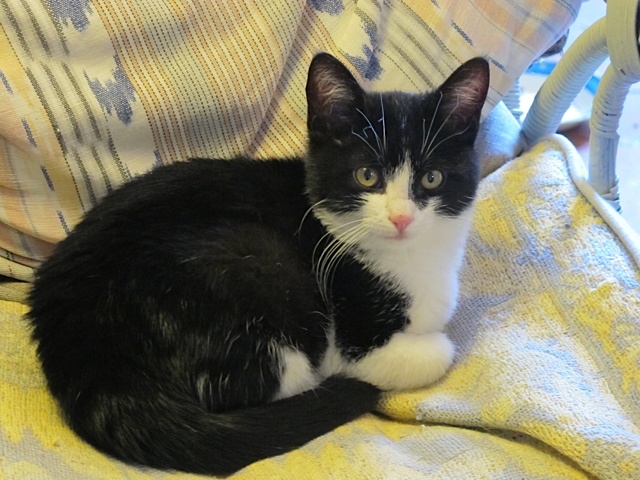
We both settle for a quiet time waiting for the return of the two “Ms”.
It turns out that many of Marmalade’s teeth were damaged and the kindly vet had to extract not a few.

Once back home, Mar is still a bit dozy from the morphine, but it hasn’t dulled his appetite!  He enjoys a late breakfast before retiring to a comfortable cushion to recuperate.
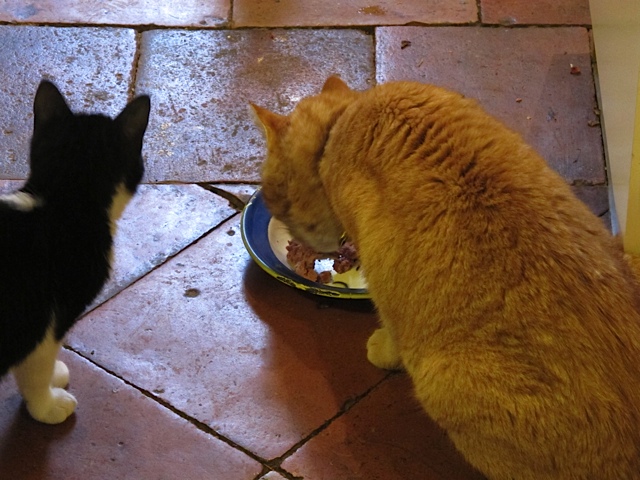
Meanwhile the kitten tries to make friends.

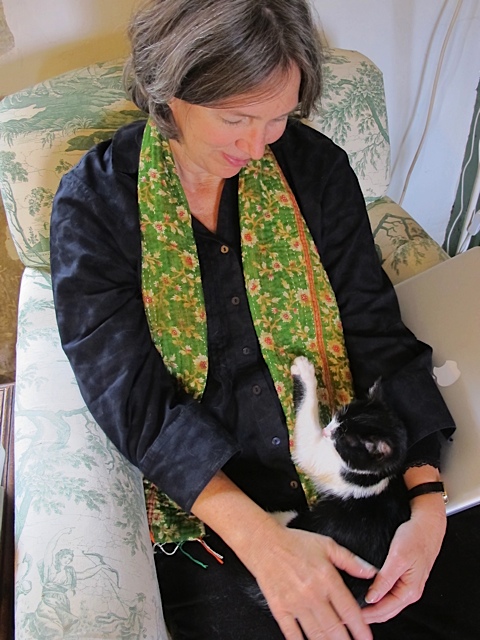
It feels like an early Christmas present–and unless someone calls to claim him, not just for Christmas.
Vanessa wrote a comment/response yesterday to the post: Pinzimonio–olive oil dip.

“What could be better than the best olive oil served with vegetables? The Italians have really got it right.”

…which prompts me to share a simple story (and recipe)  recounted in my cookbook--Delicious Dishes for Diabetics.

Many years ago I had lunch in a tiny worker’s café in the centre of Florence only open at midday. I watched the owner put down a plate of steaming broccoli–that was all there was on the plate–in front of a burly Italian and place a large jug of olive oil and salt & pepper beside it.

The man poured on the oil, seasoned the irresistible plateful and began to eat.

That’s simple eating.

Of course, he may have had a veal chop after I left!

500 g/18 oz broccoli–stems stripped of rough outer layer and cut into bite-size pieces, florets cut

likewise

BBBS--Before Being Bite-Sized!

olive oil

salt pepper

lemon quarters

  • Steam the broccoli until tender, but careful not to overcook it–the colour dulls.
  • Test from time to time with the end of a sharp knife.
  • Transfer to a serving bowl and pour over the oil–be generous.
  • Season to taste and mix carefully.
  • Serve with a small jug of olive oil for those who are never satisfied–and some lemon quarters.

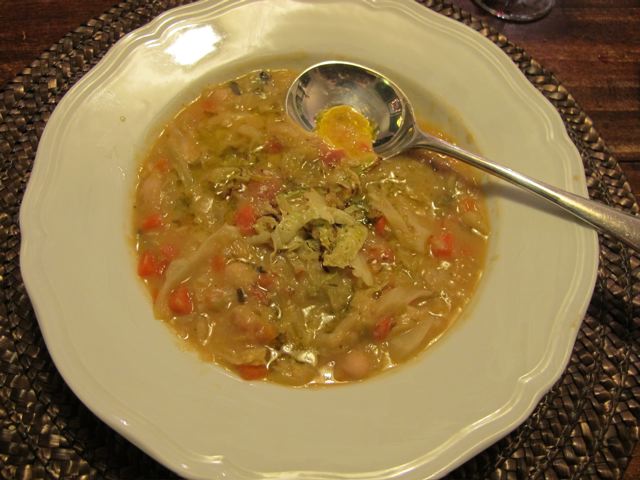
An autumn/winter soup this–with a big presence.

Adapted from Leslie Forbes’ lovely book  A Table in Tuscany.

In the early eighties she had the bright idea of eating her way round Tuscany’s restaurants and watering holes–an arduous task to set oneself.

This soup–one of the best bean soups in Tuscanyshe credits to the restaurant of the Fattoria dei Barbi near Montalcino and the unnamed English cook, married to an Italian, thus providing the important advantage of a Tuscan mother-in-law!  This is 25 years ago mind–things have a habit of changing.

The book remains a gem (used copies available on Amazon for a penny!).

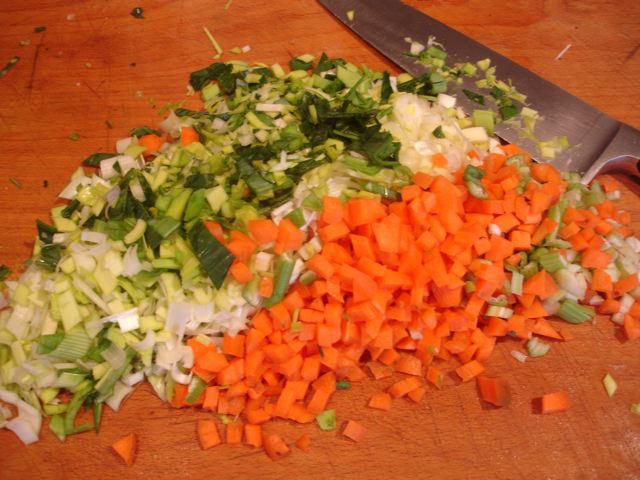
2 carrots--chopped small

2 sticks of celery–chopped small

2 leeks–cleaned and chopped small

6 tablespoons olive oil

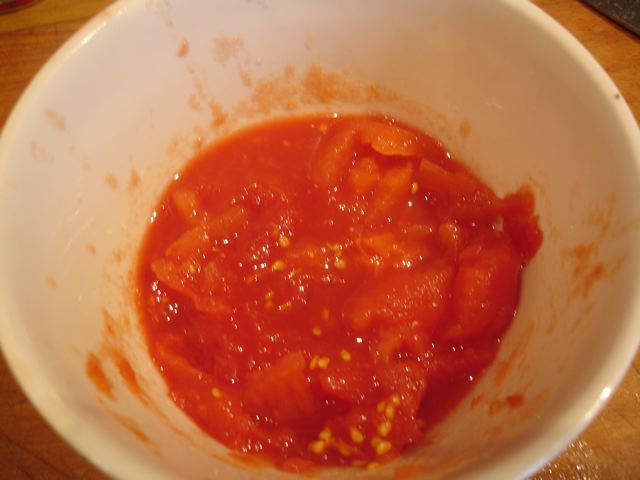
3/4 tinned tomatoes–chopped up with their liquid

A sprig of fresh thyme

1 large garlic clove–pulped

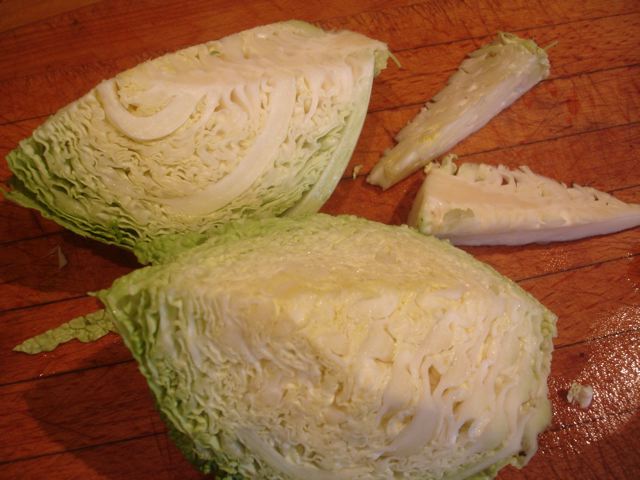
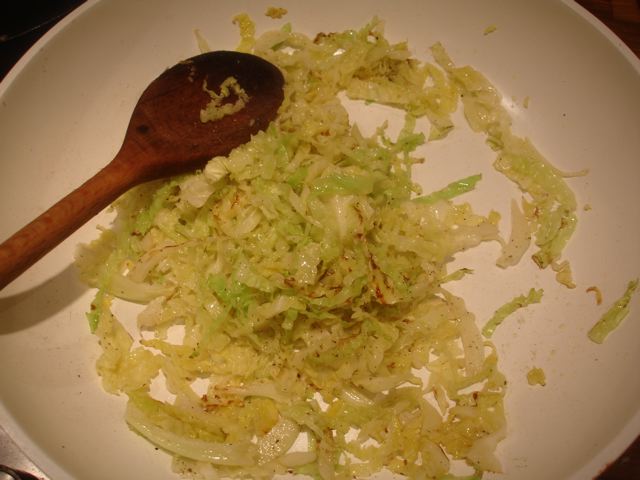
Half a green cabbage–stem removed and shredded

The other half of the cabbage shredded thinly–this for a topping (see below)

1 tablespoon olive oil

About 800 gms/24 oz of cooked white beans [canned or bottled or dried, soaked and cooked]–drained but their liquid retained

1 pint/500ml stock–I use organic vegetable stock cubes
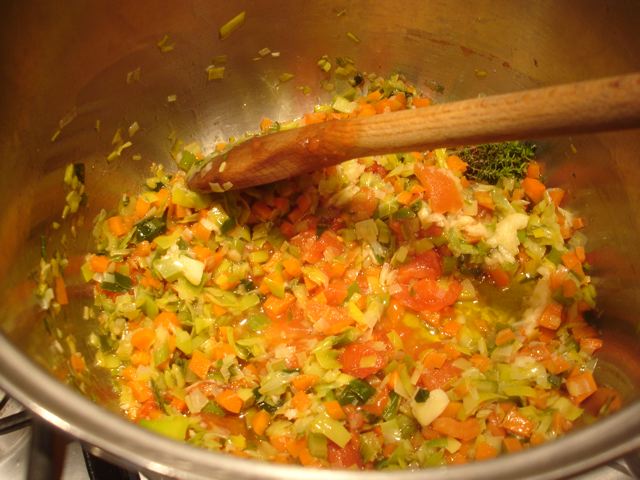
  • Heat the oil in a large saucepan and sweat the celery, leeks and carrots until they are tender–about twenty minutes.
  • Mix in the tomatoes, garlic and thyme and let them cook on for five minutes.
  • Add the cabbage, season with salt & pepper and cook on for ten minutes.
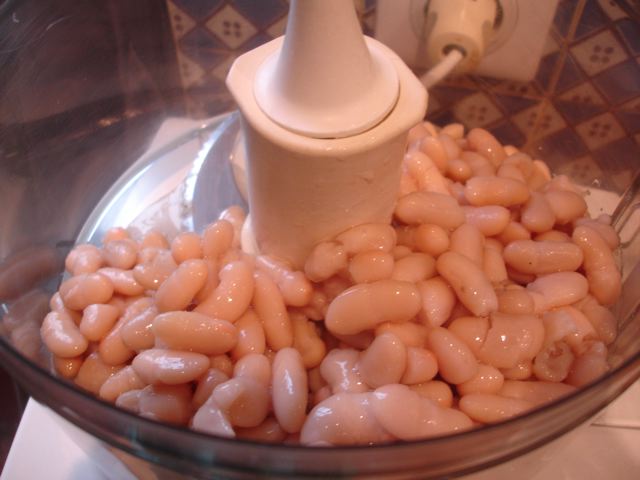
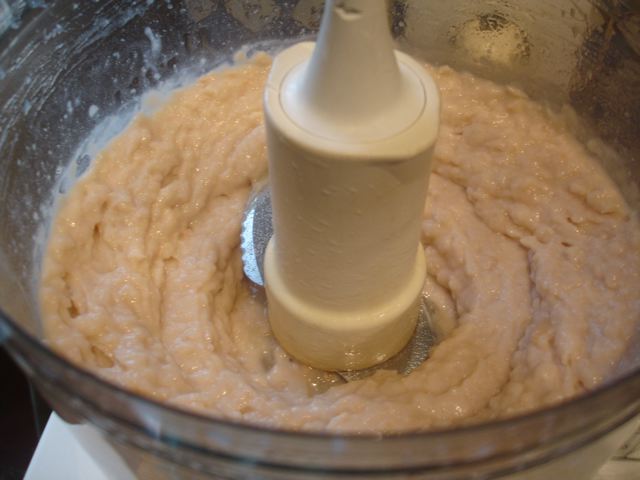
  • Purée three-quarters of the beans in a mixer with a little of their liquid.
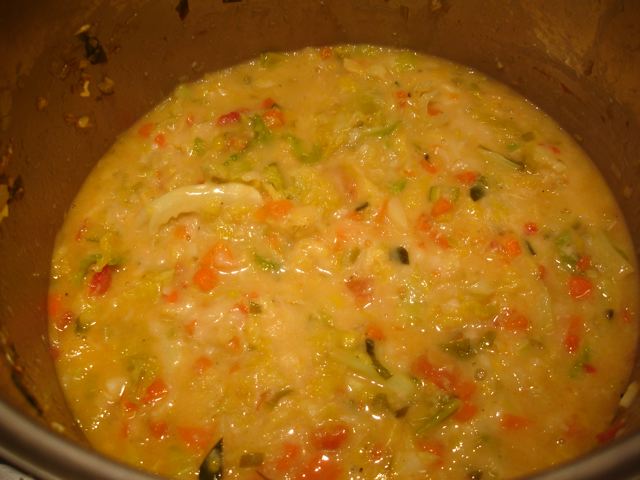
  • Add the bean water and the bean purée and stir it all together.
  • Cook this thick mix for an hour–stirring it regularly to stop it sticking and burning.
  • Add a little of the stock each time you stir it.
  • This is meant to be a thick soup–up to you how loose to make it–just be careful not to dilute the depth of taste.
  • While the soup cooks on sauté the rest of the cabbage to serve as a topping when you present the soup.

  • Keep tasting the soup as you go (you may find yourself doing that anyway!).
  • Serve with a drizzle of good quality olive oil.

Two old favourites

As an appetizer before dinner last night Meredith served our friends Hilton and Lindsay pinzimonio–without quite knowing…!

Pinzimonio, I discover (by a chance re-reading of Lesley Forbes’ lovely book,  A Table in Tuscanyis a Tuscan olive oil dip, best made with the oil from newly-harvested olives.

It’s usually served with raw or lightly-cooked vegetables such as fennel, red and yellow peppers, celery, radishes and artichokes.

Simply pour some beautiful green olive oil on the plate, add a little sea salt and black pepper and dip a slice of vegetable in it.

Sometimes a little lemon juice is added–but this is frowned upon by Tuscans, according to  Wilma Pezzini in her Tuscan Cookbook!

Meredith substituted rough country bread for the vegetables and left out the salt and pepper–‘It didn’t need salt and pepper!,’ she just said disdainfully.

A parsimonious pinzimonio!

I watched in dismay from the stove area as the three of them dipped and dipped–putting away  helping after helping of this simple but morish dish.

You won’t have any appetite left!‘ I cried in vain!

But pinzimonio proved a true appetizer–they all managed some butternut squash soup and a healthy plate of spatchcocked chicken, romanesco broccoli (aka Roman cauliflower), green salad, Italian peccorino cheeses and baked apples!

Balance ” is the in-house magazine of Diabetes UK. It is well produced, readable, informative and is available on-line.

I’m interviewed in the latest edition.

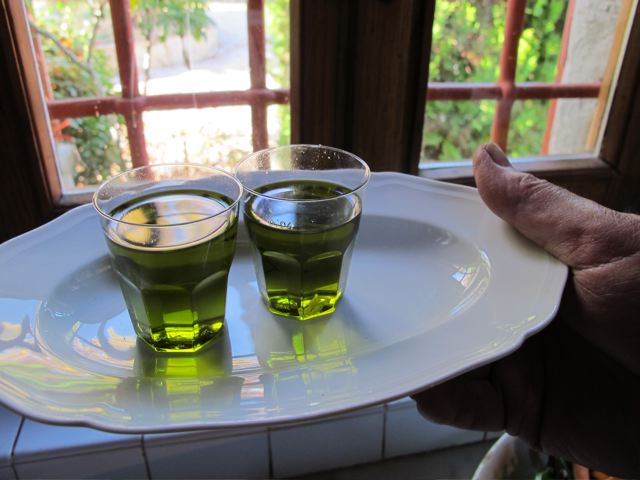
The green “gold” that won 2nd prize at the Fiera dell’Olio in Cavriglia, Tuscany last Sunday.

Our friend Keith has emailed to say their new season olive oil from his Podere [farm]Boggioli won second prize at the local fair this week. A good enough reason, if I needed one, to cook one of Helen’s signature dishes for lunch today.

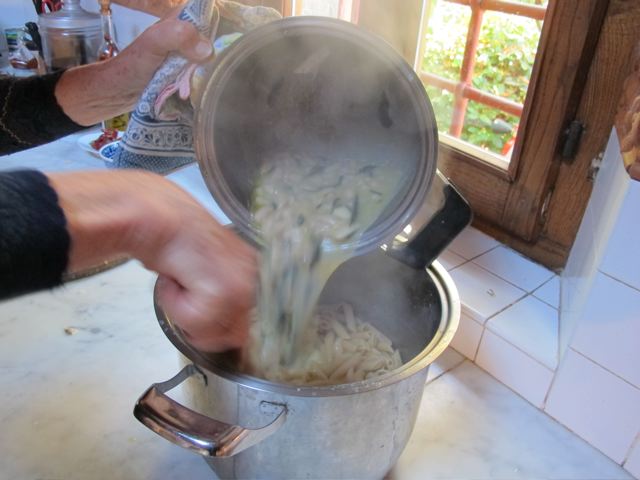
Helen cooked this delicious pasta after the last olive was in the basket and the picking was done for another year.

Two of the team stayed to eat it with us–Lucio and Ivan. Both still had  their own trees to harvest.

I like to think they’d had the dish before and knew it was irresistible.

for 2  [for 4–double up on the beans and their liquid and add 4 oz/100 gms more pasta]

200 gms/8 oz wholewheat penne

4 tablespoons olive oil

8 cloves of garlic–peeled but kept whole

a handful of fresh sage

2 small red (hot) chilies–chopped

1 tin  [about 200 gms drained] of white beans–drained, but their liquid retained

4/5 tablespoons of stock–I dissolved half an organic vegetable stock cube in a mug of hot water

salt

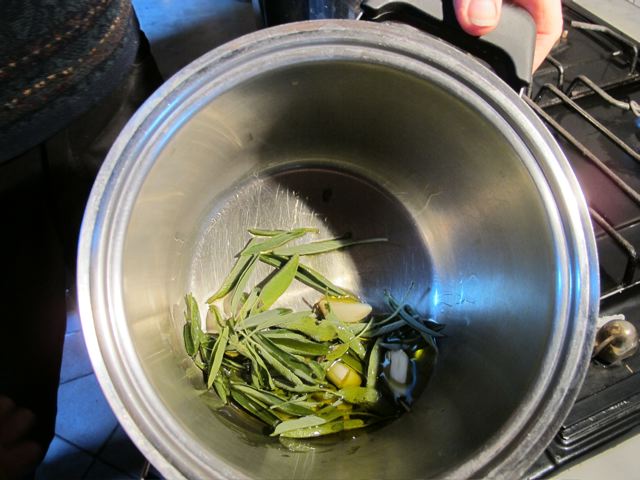
  • Heat the oil in a large saucepan.
  • Add the garlic and let it colour a little.

  • Add the sage and chilis and let them cook on for a few moments.
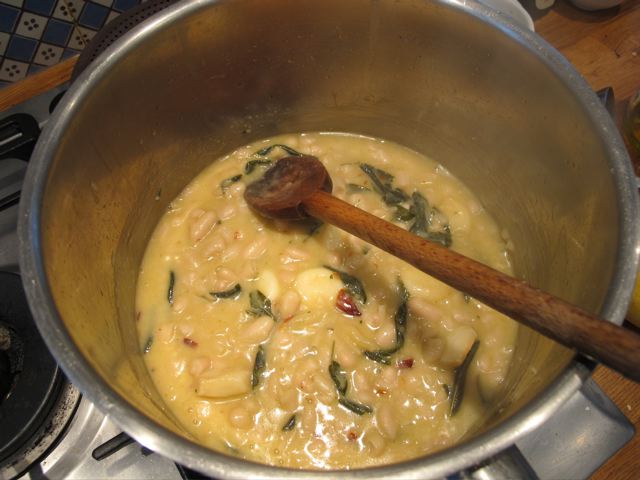
  • Add the beans and cook gently for about fifteen minutes–adding the bean liquid little by little to make a thick runny sauce.
  • I continued cooking the mix a little longer, adding the tablespoons of stock–a couple at a time–to keep the mixture loose without losing the thick viscous quality of the sauce.

  • Some of the beans will melt into the sauce.
  • Season with salt and taste.
  • Cook the penne in plenty of salted water until just tender.
  • Drain the pasta.

  • Add the sauce to the pasta and let it meld in.
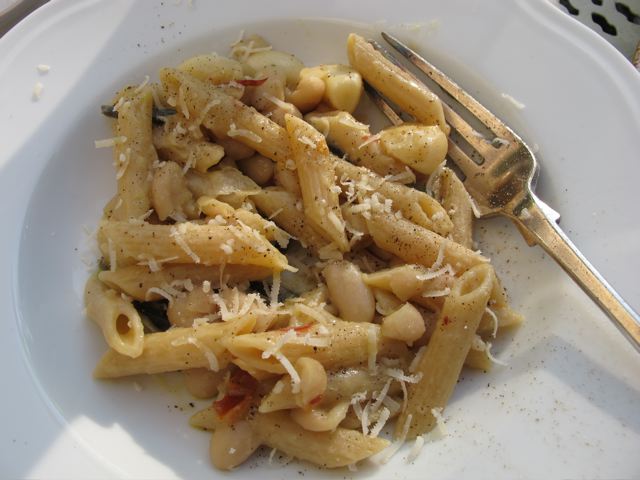
  • Helen doesn’t serve grated parmesan with this pasta–but it’s up to you, of course.
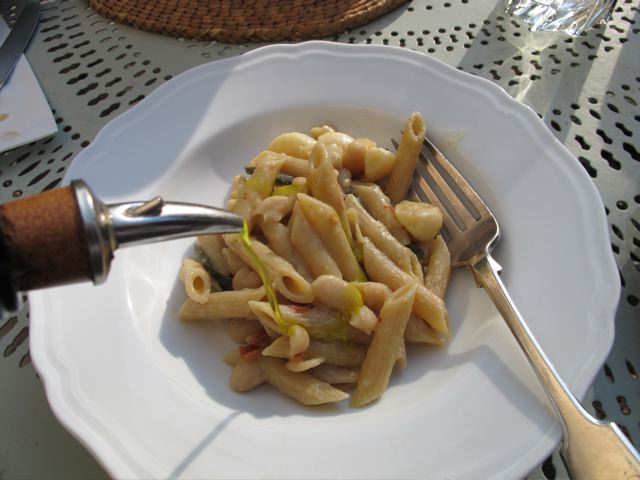
  • I poured over a little of the new olive oil–naturally!

  • Meredith added a little parmesan–that’s marriage for you!
  • We ate it “al fresco” in the late autumn sunshine.

We rolled up from London last night heaving sighs of relief to be back.

The cats were a bit crabby and there was no heat or  hot water–but there’s no place like home, Toto!

Nephew Dominic had kindly laid two fires and we were soon hunkered down in the kitchen, eating plates of rather too al-dente penne in tomato sauce!–a glass or two of Italian red softened us up at least.

Sitting in the larder was a butternut squash– looking a little hurt at being neglected for two weeks.

Well–this evening it will help keep our bodies warm and our  spirits up, transformed into:

Simple Butternut Squash Soup

for 4

1 onion–chopped

2 tablespoons of olive oil

1 butternut squash–peeled and medium diced

leaves from 3/4 sprigs of fresh thyme–chopped

1 small dry red chili

1.5 pints/just over a litre of stock

salt and pepper

a good grating of nutmeg

dry roasted pumpkin seeds–lightly crushed

  • Heat the oil in a large saucepan.
  • Add the onion and sweat on a low heat for 5 minutes until soft.
  • Add the squash, the chili, the thyme and turn the whole mix over.
  • Season with salt and pepper–remembering that the stock will have salt in it.
  • Add the stock, bring it slowly up to the boil and let it simmer until the squash is tender.
  • Remove the chili and let the soup cool a little before liquidising it.
  • Check the seasoning–mine needed more salt.
  • Serve hot with the pumpkin seeds sprinkled on top.

Richard Morant

Richard Morant who played Dr  Dwight Enys in the first series of Poldark has died suddenly in London after a short illness.

Richard as the good Doctor Enys in Poldark 1975


It is desperately sad news. Though we hadn’t met for many years, we’d remained in tenuous touch. He was coming to support the launch of my cookbook in September, but was thwarted by a huge traffic jam on the way out to Chiswick that evening.

Richard had the most life-confirming giggle of anyone I’ve met. He would say something serious and then after a pause, would collapse in self-deprecating laughter–though there was no doubting his sincerity.

In a recent retrospective TV programme about Poldark, he was asked the reason for its continuing success. This was his eloquent and just reply:

“It’s about love—it’s about betrayal—the things that hurt us– the things that give us joy.”

“Like any kind of creation where people you know are going through their emotions, expressing their feelings of love, life and death–it evokes strong attachments, strong passion and you love it.”

“You love them, you love the people, you cherish them, you honour them, you respect them.”

In an email response to the invitation to my book launch, he wrote:

“Someone sent me a link the other day to a YouTube compilation of me in love scenes with Judy Geeson and others… ahhhhh sweet youth. I laughed and felt sad too.  It still surprises me from emails and letters, the feeling shared that we touched so many people’s hearts with our simple story, and continue to do so. I feel our world then was a much more innocent place.

Bless you Richard.  I was lucky to know you.

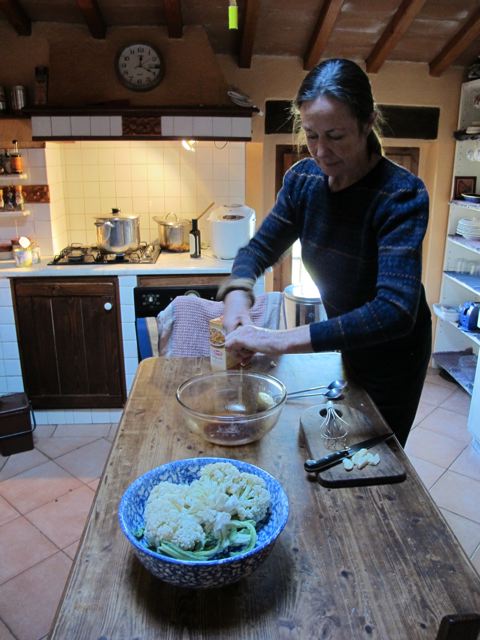
Helen, our hostess here in the Tuscan hills, is an insoucient cook–(a quality I have yet to achieve).

Helen with paprika sauce

She will throw some of this and a little more of that into her tall saucepan and very quickly the aroma of lunch fills her kitchen.

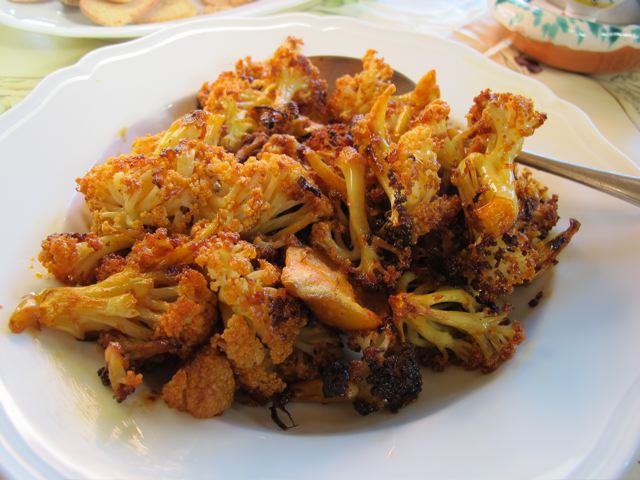
Angelino, one of our host Keith’s expert olive picking team, brought up a very large cauliflower from his garden one morning last week and Helen made a sauce of olive oil, paprika and lemon juice to bathe it in before roasting it in a moderate oven for 40 odd minutes.

She served it with slices of pork fillet roasted with rosemary from her garden the night we arrived.

The cauliflower dish turned out to be one of those you find your fingers sneaking back to when the hostess isn’t looking. Ju-ust one more little piece…uum!

Helen says she’s happy for me to reproduce the recipe here.

1 cauliflower–stem removed and split into smallish florets

2 tablespoons of olive oil

1 teaspoon of paprika–(I’m going to try it with the sweet smoked Spanish stuff back at the ranch)

juice of a lemon plus a little extra water (I noticed Helen fill the squeezed lemon halves with water and squeeze them out again–getting the most out of a lemon!)

salt and pepper

oven at 170C/325F

  • In a large bowl whisk the oil, paprika and lemon juice together into a dark red viscous sauce.
  • Add the cauliflower to the bowl and turn them over and over in the sauce.
  • Sprinkle with salt and pepper.
  • Spread out the cauliflower in a shallow roasting tray.
  • Roast in the oven for about 40 minutes.
  • Don’t expect much left over!!

Meredith, not usually a fan, gave it the thumbs up as the best cauliflower dish she’d ever had.

World Diabetes Day

Today is World Diabetes Day-celebrated on the birthday of Dr Banting one of the team that discovered INSULIN–and Diabetes UK are calling on people with diabetes to take action on the 15 measures of care…and spread the word:

Please pass the checklist on to any family members, friends and colleagues who may have the condition to help us ensure the 2.9 million people with diabetes in the UK receive the care they need to stay healthy.

1

Get your blood glucose levels measured.

You should have an annual HbA1c blood test to measure your overall blood glucose control.

2

Have your blood pressure measured.

You should have your blood pressure taken and recorded at least once a year.

3

Have your blood fats (cholesterol) measured.

You should have an annual blood test to measure your cholesterol level.

4

Have your eyes looked at.

You have the right to have your eyes screened for signs of retinopathy every year.

5

Have your legs and feet checked.

The skin, circulation and nerve supply of your legs and feet should be examined annually.

6

Have your kidney functions monitored.

You should have two tests for your kidneys each year.

A urine test checks for protein – a sign of possible kidney problems – and a blood test measuring the rate at which blood is filtered by the kidneys.

7

Have your weight checked.

You should be weighed and have your waist measured to see if you need to lose weight.

8

Get support if you are a smoker.

You should receive advice and support on how to quit.

Having diabetes already puts people at increased risk of heart disease and stroke and smoking further increases this risk.

9

Receive care planning to meet your individual needs.

You live with diabetes every day so you should have a say about every aspect of

your care.

10

Attend an education course.

You should have the chance to attend an education course to help you understand and manage diabetes. There are courses for Type 1 and Type 2 diabetes, such as DAFNE, DESMOND, X-PERT

and DYFFD.

11

Receive paediatric care if you are a child or young person.

You should get care from specialist diabetes paediatric healthcare professionals. When

the time comes to leave paediatric care, you should know exactly what to

expect so you have a smooth change over to adult health services.

12

Receive high quality care if admitted to hospital.

If you have to stay in hospital, you should still continue to receive high quality diabetes care from

specialist diabetes healthcare professionals, regardless of whether you have been admitted due to your diabetes or not.

13

Get information and specialist care if you are planning to have a baby.

Having a baby means that your diabetes control has to be a lot tighter and

monitored very closely.

14

See specialist diabetes healthcare professionals.

Diabetes affects different parts of the body.

To help you manage your diabetes, you may need to see or be referred to specialist professionals such as an ophthalmologist, podiatrist or dietitian. Diabetes UK believes that you should have the opportunity to see a specialist if and when the need arises.

15

Get emotional and psychological support.

Being diagnosed and living with diabetes can be difficult. You should be able to talk about your issues and concerns with specialist healthcare professionals. Being happy as well as healthy is really important.