Feeds:
Posts
Comments

My copies of Rose Elliot’s vegetarian cookbooks, Not Just a Load of Lentils and The Bean Book, have been on my bookshelves for ages and are much thumbed!
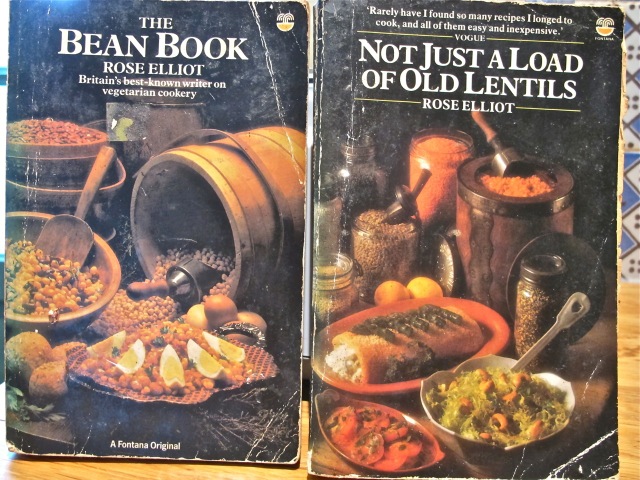
First published in the 1970sher recipes have withstood the test of time–and the ingredients often fit in with my adopted way of eating.

This is adapted from a recipe in The Bean Book. 

I made it in the morning and gently reheated it in the evening–giving the spices time to settle and meld. We had it for supper last night and it was worth the wait.

Meredith is wary of pulses because of their tendency to cause flatulence.

This time the positive outweighed the negative and she gave it the thumbs up–phew!

for 4

1 tablespoon olive oil

1 teaspoon whole cumin seeds

1 small onion–chopped

1 clove of garlic–peeled & chopped

1/2  teaspoon of powdered cumin

1/2 teaspoon of powdered coriander

1/2 teaspoon each of garam masala ( an earlier post), turmeric, ground ginger

1/4 teaspoon cayenne/chili powder

1 teaspoon fresh root ginger–peeled & chopped (optional)

1 large jar of cooked chickpeas–drained (the precise quantity is not critical!)

2 fennel bulbs–outer leaves removed, quartered and chopped

1 large leek–damaged outer parts removed, cut down to the base, washed and sliced

2 tablespoons of parsley or coriander–chopped

1 pint of vegetable stock (I use organic cubes diluted with boiling water.)

  • Heat the oil in a pan.
  • Gently fry the cumin seeds until they start to pop.
  • Add the onion and garlic and soften–about 3 minutes.
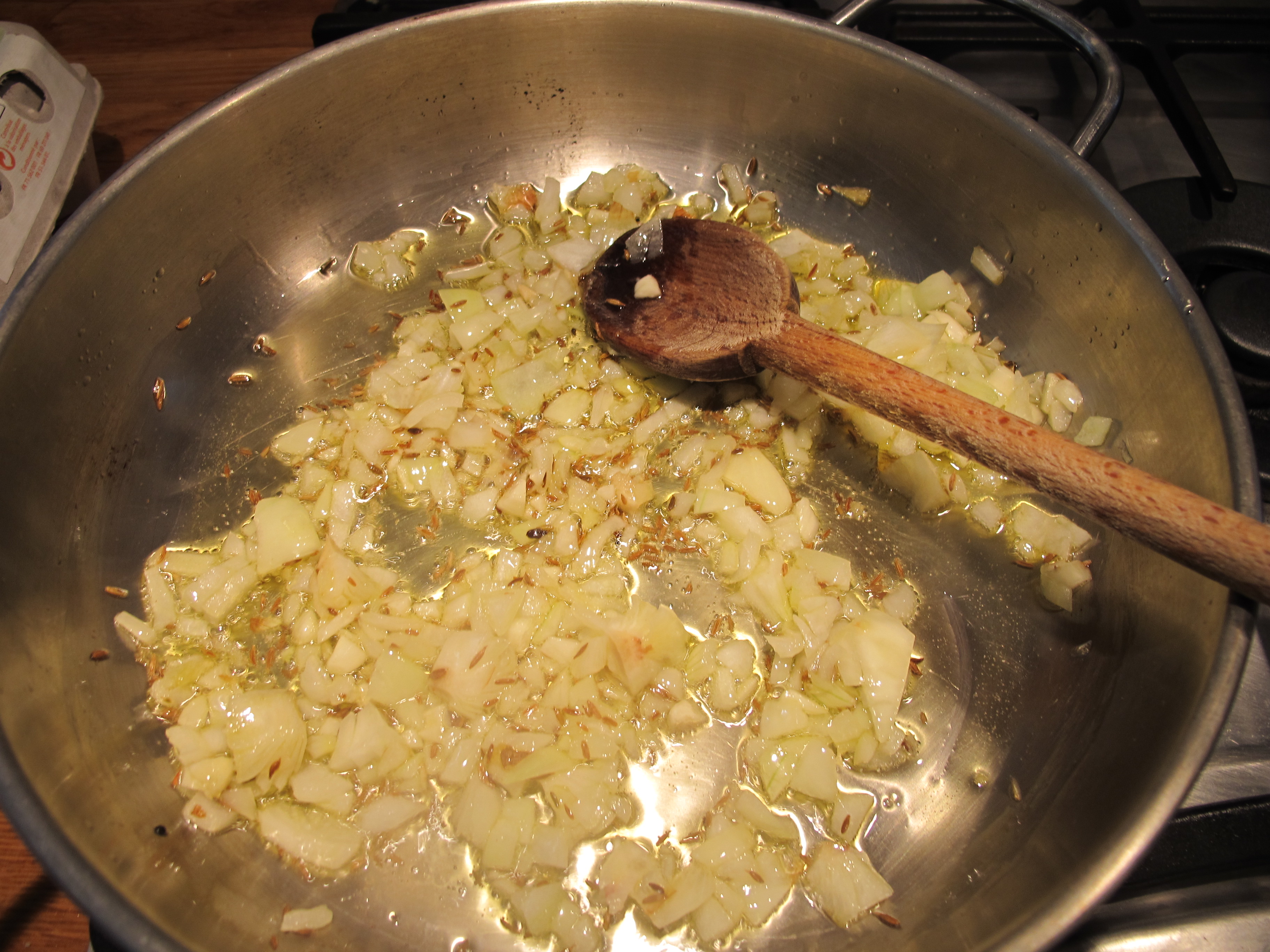
  • Add the spices and mix them in.

  • Add the chickpeas.
  • Add the leeks and fennel and mix.

  • Add the stock–start with half a pint and adjust as needed.
  • Bring the mixture up to boil, then cover the pan and simmer for 20 minutes.
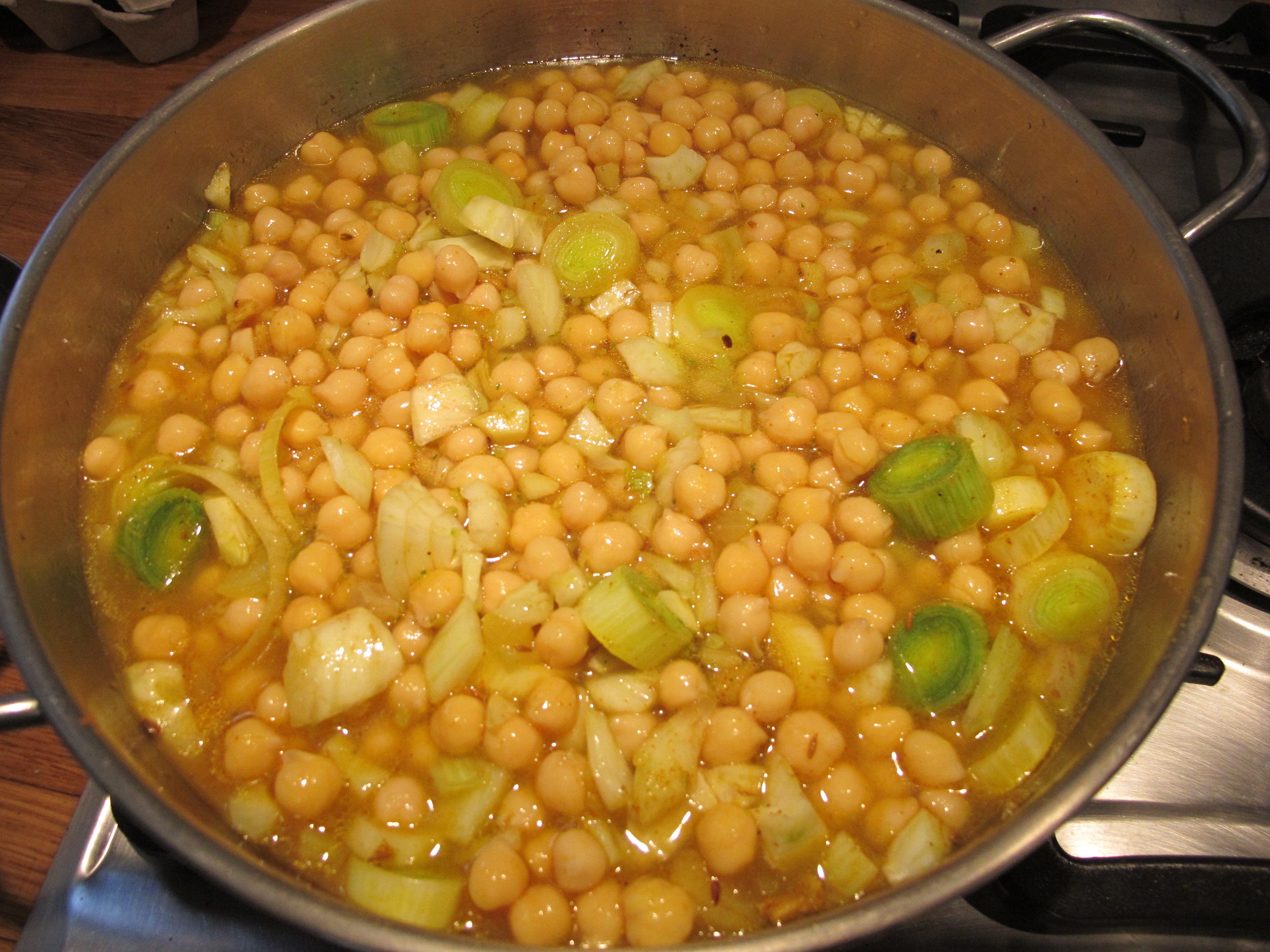
  • Fold in a tablespoon of parsley or coriander.
  • Sprinkle the second  tablespoon of parsley or coriander over the dish when you serve it hot with…
  • Brown basmati rice and yogurt sauce (see the next post).
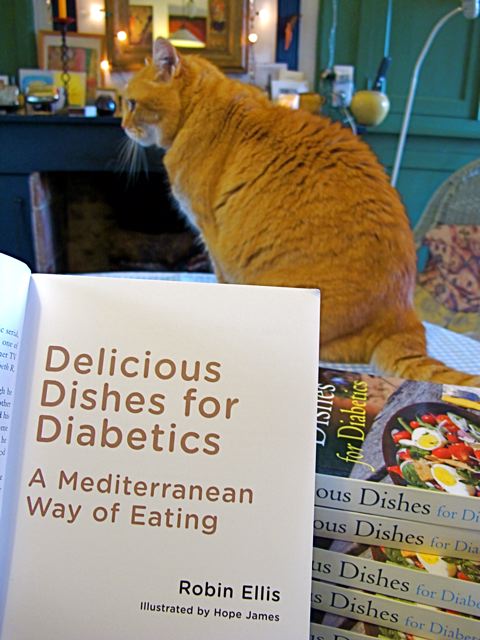
A packet of new books arrived in the post today–the first reprint of the cookbook.

Second printing of the cookbook arrives, this time with a credit to the illustrator

The reprint corrects one important omission: our dear friend, Hope James, the illustrator, now gets a credit for her  evocative watercolour sketches.

Meanwhile the celebrity chef controversy in America has created a window of opportunity (at last) to discuss Type 2 diabetes and the links to what we eat and how we prepare it:

http://tinyurl.com/6pfmvls

http://www.huffingtonpost.com/2012/01/18/paula-deen-diabetes_n_1212614.html


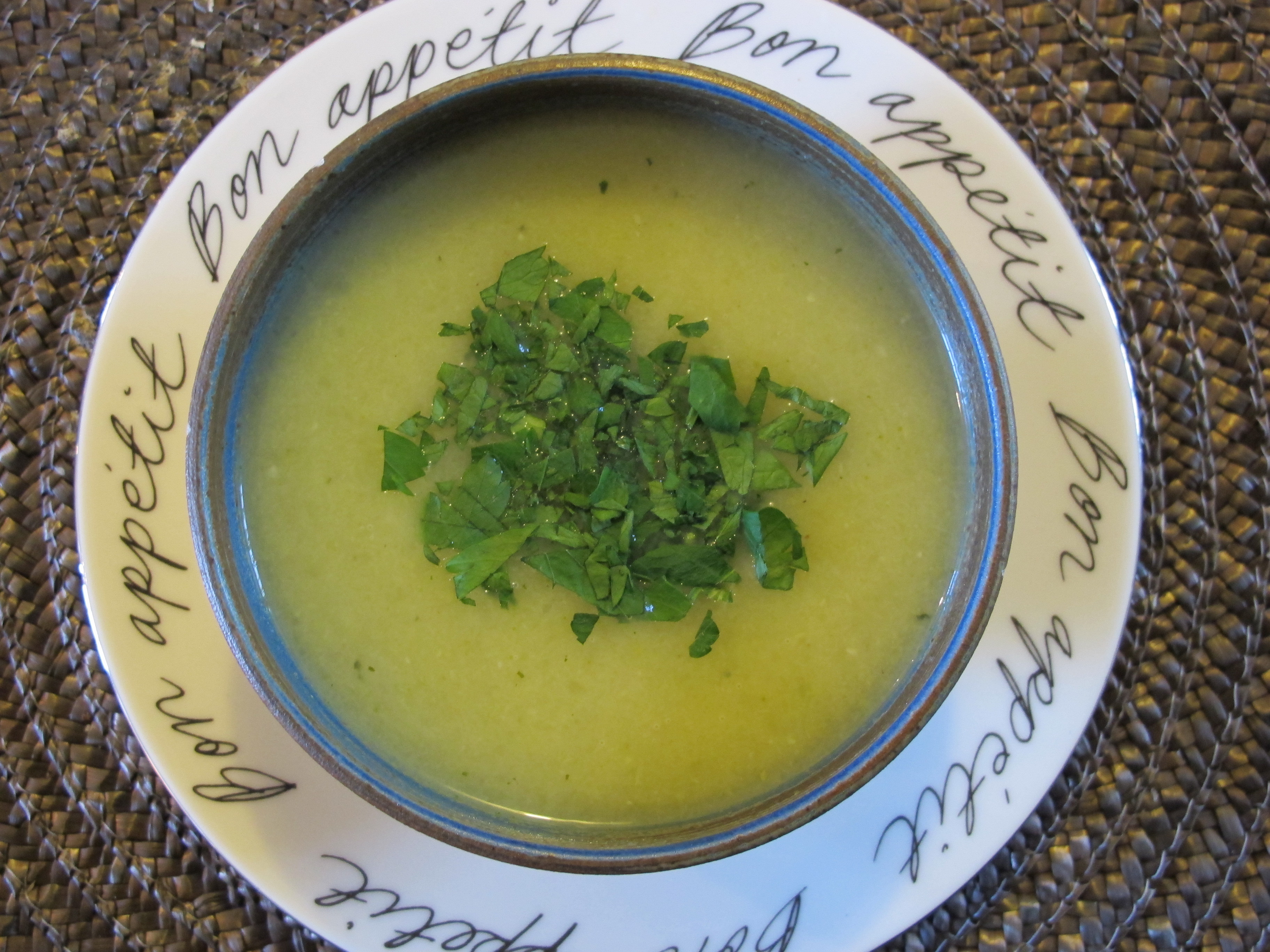
I’ve been wondering about celery soup lately.

I always enjoyed the taste and crunch of raw celery–( it felt like taking a bite of good health!).

It often featured on a plate of cheese at home in the fifties–cutting nicely the richness of a slice of cheddar and cleansing the palate.

Raw fennel serves the same purpose.

In cooking, celery is usually a supporting player–there to help add flavour and depth to soups and stews; though a dish of braised celery topped with a grating of parmesan makes for a tasty vegetarian main course–I might try it later in the week.

I’ve never made celery soup though–until this week.

How well would it work without the usual addition of potato to thicken it?
Other vegetables? I tried a leek and red onion–then settled for just a medium ordinary onion.
What to add to it for flavour?
I tried a couple of things–cider vinegar, yogurt with cumin–then settled for white pepper and nutmeg.
This is the simplest of celery soups!
for 4
1 tbsp olive oil

450g/1lb celery–sliced thinly

1 medium onion--chopped

1 clove of garlic–chopped

1 pint and a half stock–I use organic vegetable stock cubes

a quarter tsp of nutmeg

pinch of white pepper  and salt (to taste)

pinch of chopped parsley for each bowl

  • Heat the oil in a large saucepan.
  • Add the chopped celery, onion and garlic.
  • Turn them all thoroughly in the oil.
  • Sweat (don’t brown) these gently for about five minutes–to soften them.
  • Add the stock and continue cooking uncovered until the vegetables are tender–about 15 minutes.
  • Liquidize the soup (a handheld stick liquidiser saves a lot of washing up!).
  • Stir in the nutmeg and season with salt and white pepper.

Three years ago today Meredith and I were landing at Kennedy Airport, on a flight from London, at precisely the same time a couple of hundred other passengers were experiencing an altogether less agreeable experience of landing in the middle of the Hudson River!

The plane had hit a large flight of birds just after taking off from La Guardia Airport which disabled its engines and forced the pilot to take the perilous decision to use the Hudson River as a “runway”.

Using nearby Newark International Airport wasn’t an option–it was too far.

This is a video reconstruction of the event.*

All 155 people aboard Flight 1549 — 150 passengers and five crew — survived the crash-landing, thanks to the experience and cool of the pilot–Chesley Sullenberger III.

He was hailed as a hero and was interviewed countless times in the media, in the weeks following the crash landing .

In one TV appearance he told Katie Curic of CBS TV:

“One way of looking at this might be that for 42 years, I’ve been making small, regular deposits in this bank of experience: education and training. And on January 15 the balance was sufficient so that I could make a very large withdrawal.”

He retired from US Airways and its predecessor airline after 30 years with them on March 3, 2010.

Captain Chesley B. (Sully) Sullenberger at the Super Bowl XLIII pre-game ceremony on February 1, 2009.

After the trauma of 9/11–a good news story for New York City.

*The New York Times report.

Infusiasm

It is simple to make.

The results are so tasty some people find it hard to believe there’s so little to it.

“It’s just raw  ginger and boiling water?”

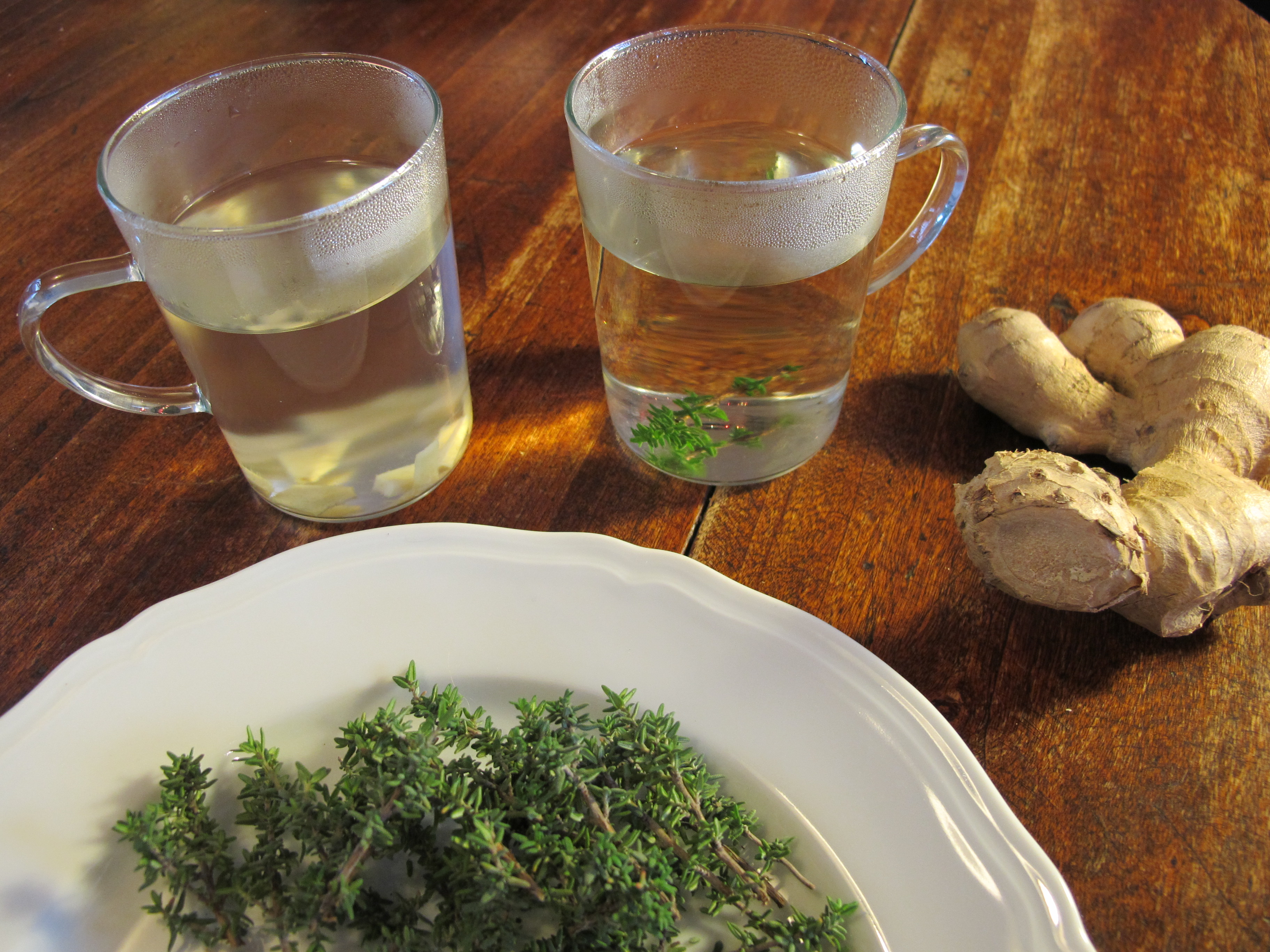
Put a thumbnail piece of raw ginger root, peeled and chopped, in your favorite mug, top it up with boiling water and leave it for a couple of minutes to infuse–the magic word–and  sip it and see!

It works equally well with a sprig of thyme from the pot outside the kitchen door or a single mint leaf from the patch in the garden.

Sage and rosemary too work well though the taste is stronger and may not be to everyone’s liking.

If you have easy access to the herbs it’s fun to ring the changes–seasonally especially.

Our mint patch at the back shows signs of the new growth as early as March and I pounce on the first little bud that peaks out–impatient for a hint of Spring.

As the mint begins to fade in October I start looking for ginger on the stalls eager for a change of season and taste.

Enthusing about infusing is easy once you’ve tried it!

It’s good for you too!*–

(Meredith tells me our doctor Michel recommended she drink thyme tea for her sore throat.)

And in my view it’s so much nicer than a bag!

*more on the possible benefits from drinking– thyme tea

and ginger tea.

A tough old bird!

 The other afternoon we were distracted by the near death experience of our hen.

Madame Arcati!

Meredith answers a knock at the door.

Bonjour… Quoi?…Oh non!…OH NON…!

“What?”

“NON…!”

WHAT?”

“It’s Maurice–he’s says his dog has just killed our hen!”

Our neighbour, Maurice, was walking his dog past the house when his mobile rang; distracted, he didn’t notice his dog slip off into our garden and grab Madame Arcati by the neck.
An understandably distraught Meredith follows Maurice back into the garden.
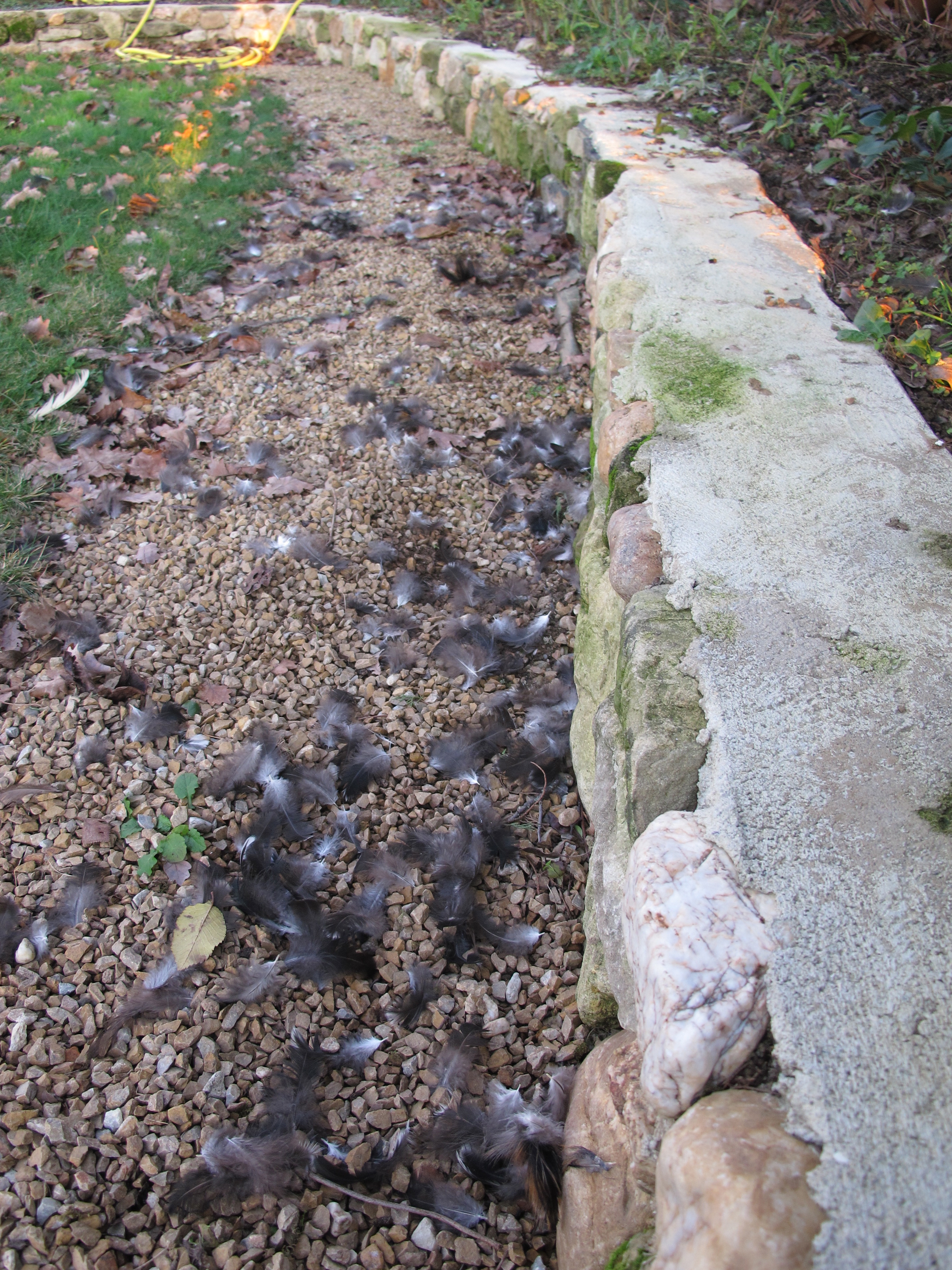
The hen is nowhere to be seen–except for an ominous  sign…
She was was lying there on the grass–dead–I thought…” says Maurice, staring at a trail of feathers.

an ominous trail of feathers....

Maurice apologizes profusely, offers to pay any vet’s bills and leaves with his equally puzzled dog.
Meredith bends down and peers into the bushes hoping against hope….
At this point a stream of strangers stride up the drive heading for the church–
hikers armed with Nordic walking sticks on an afternoon outing, taking advantage of the brilliantly sunny weather.
It is beginning to resemble a film by Jaques Tati.
Bonjour, Monsieur–Bonjour MadameI think that gentleman’s dog just killed my hen!”
Oblivious of the drama playing itself out around them–or choosing not to understand–they barely react to Meredith’s tragic revelation–and walk on to congregate in front of the church.
Meredith leans down again willing the poor bird to be there–and this time hears a familiar clucking sound from deep in the bushes.
She’s alive! But where?
Madame Arcati is a wily bird and a tough old thing–not table material.
Meredith finally spotted her on the other side of the garden wall–how she managed to get there will remain a mystery–needs must when a dog is about to swallow you..!
Gingerly, step by careful step and answering her cluck for cluck, I edged her slowly towards the courtyard where she headed straight for the safety of the pigeonnier.
Apart from a small wound on the bald patch on her neck where the dog had grabbed her, she’s survived unharmed–we sprayed the wound with disinfectant and installed her in her little house to reflect on being the hen with two lives.
We then had to deal with the kitten (fast using up his nine!)–stuck up the fig tree!

Amatriciana and Arrabiata.

Two tomato-based pastas beginning with “A“–and until now I never bothered to find out the difference.

As far as I can gather (my Italian friends might put me right on this) arrabiata is vegetarian and amatriciana is made with pork–but both are fired up with chili–as much or as little heat as you like.

Last night for a Birthday Pasta I made amatriciana with wholewheat penne.

(We always eat wholewheat pasta. Its lower glycemic index makes it healthier–which matters for people with diabetes–and Meredith and I prefer it now. That said, I limit myself to pasta once a week.)

Our friends, Keith and Helen, sent a birthday present of some bold and beautiful Tuscan red wine and it went down a treat with this robust sauce.

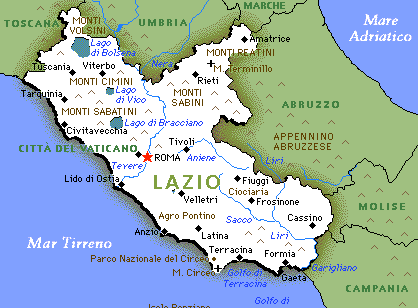
It takes its name  from the town of Amatrice,

in the east of the region of Lazio (Rome’s region) close to the border of Abruzzo and Marche to its north.

for 4

350 grms wholewheat penne

4 tablespoons olive oil

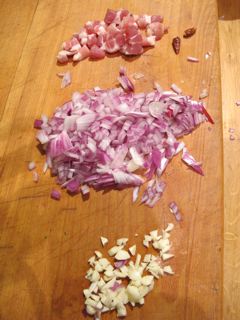
1 red onion–chopped small

2 garlic cloves–chopped small

2 oz/50 grms pancetta or bacon–chopped small

2 small dry red chilis–seeds removed and chopped

2 teaspoons rosemary needles–chopped small

2 tblspoons red wine

1 14-oz can/tin of tomatoes–chopped and drained but retaining 3 tablespoons of its juice

salt and pepper

  • Heat the oil in a sauté pan large enough to contain the cooked pasta at the end.
  • Gently brown the onion, bacon and garlic.
  • Take  time to get a nice sticky, slightly caramelised result (but not burnt!).

  • Stir in the chili and rosemary and cook for a couple of minutes.
  • Add the wine and let it bubble a moment to burn off the alcohol.
  • Add the tomatoes and extra juice and mix everything together thoroughly.
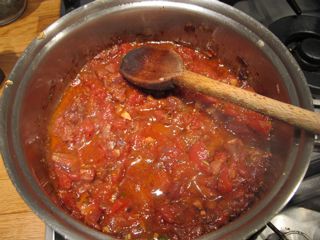
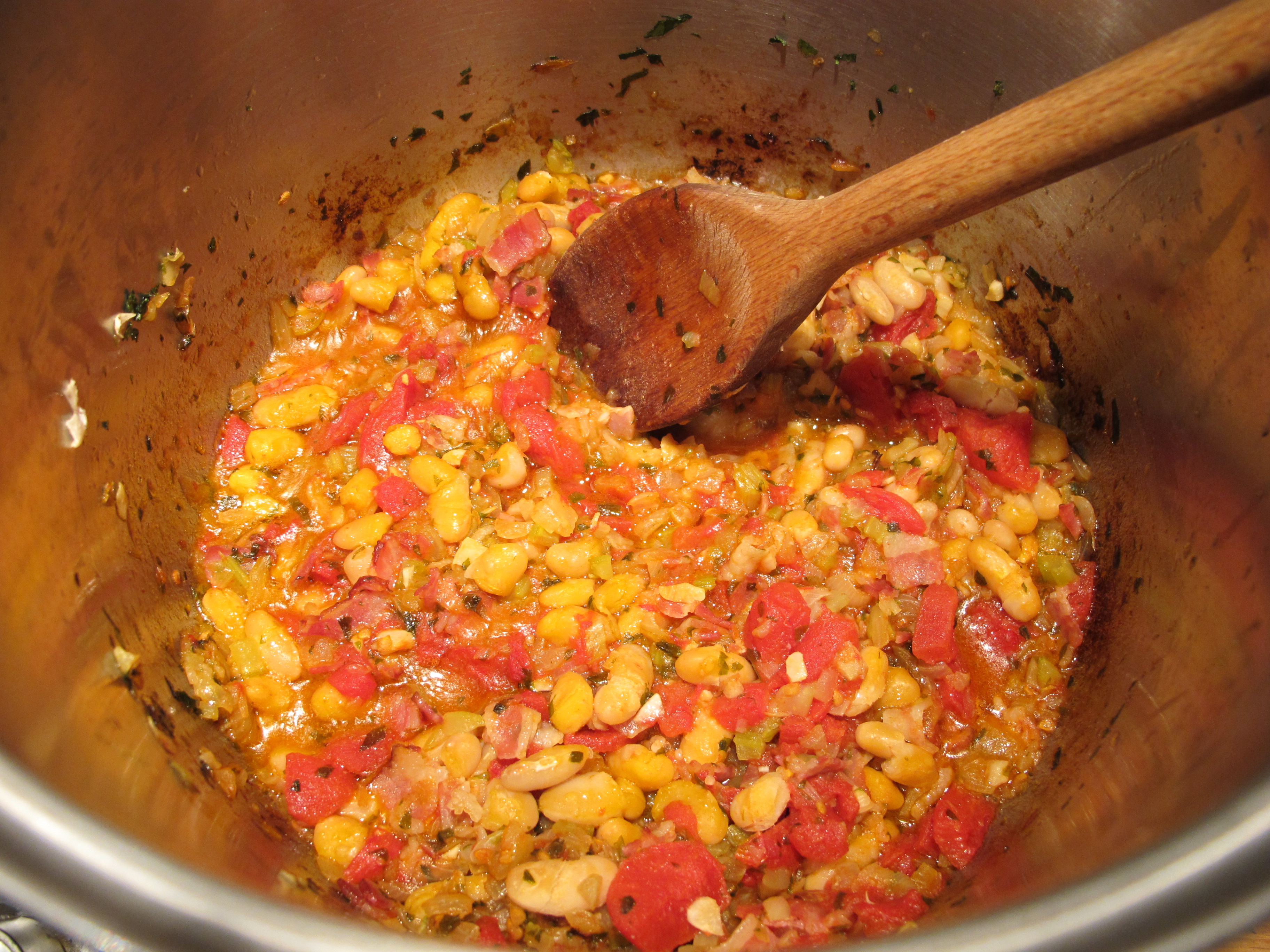
  • Cook this for about 20 minutes to achieve the unctious sauce in the photo at the top.
  • Season with salt and pepper.
  • Bring to a boil a large saucepan of cold water with a teaspoon of salt.
  • Add the pasta to the boiling water and cook to your taste.
  • Drain the pasta thoroughly and add to the sauce; turn it well in and heat through.
  • Serve hot in warmed bowls with parmesan cheese to grate and red wine with a bit of attitude!

Portion control is the only challenge!

70!

I’ll be seventy tomorrow!

OMG!–I don’t believe it–you must be kidding…!

Three score years and ten–the biblical allowance.

(It gives me pause to think that twenty years ago I was 49 and twenty years before that I was 29 and in twenty years–with a bit of luck and a following wind–I’ll be 89!)

I remember not liking reaching 40–it felt like the end of something.

[Forty is the old age of youth–(Hosea Ballou)].

Seventy doesn’t seem so bad–paradoxically.

Could be that I’m enjoying this new found means of expression–more like a beginning than an ending.

It’s a lottery though and as the French say “on ne sait jamais!” [you never know].

My mother Molly died aged 68 and father Tony, eleven months later–the same age.

Brother Peter was only 58–Meredith’s brother Storm was 60, as was her mother, Dodie.

All of them with more to give, all of them too young.

I’m still here.

“Keep on keeping on…”

And resolve to follow Bob Dylan’s advice to try to–Stay Forever Young!–(at heart that is).

!

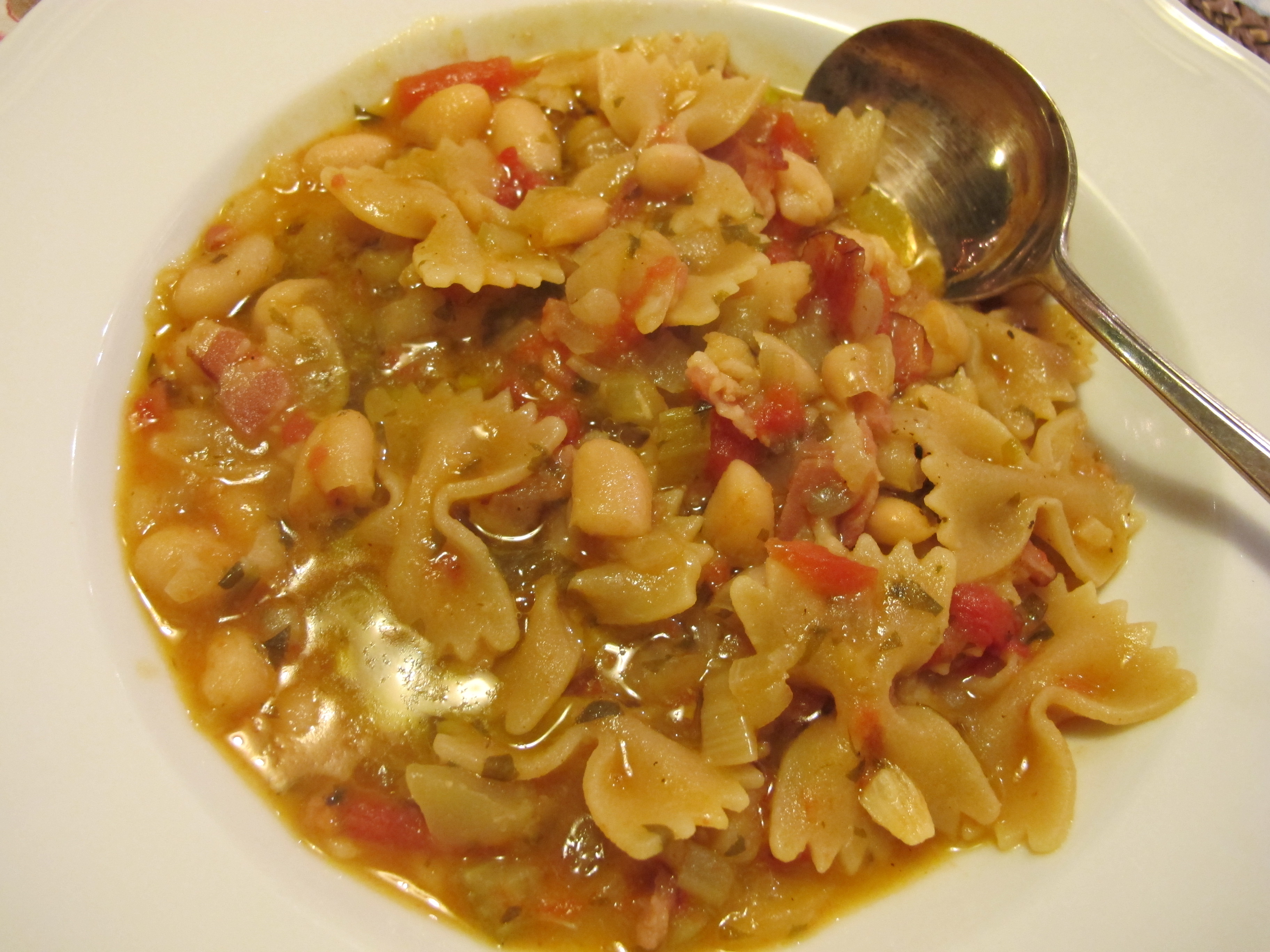
Another bean soup–can’t have too many in my opinion!

Interior insulation for the post prandial walk on a chilly winter day.

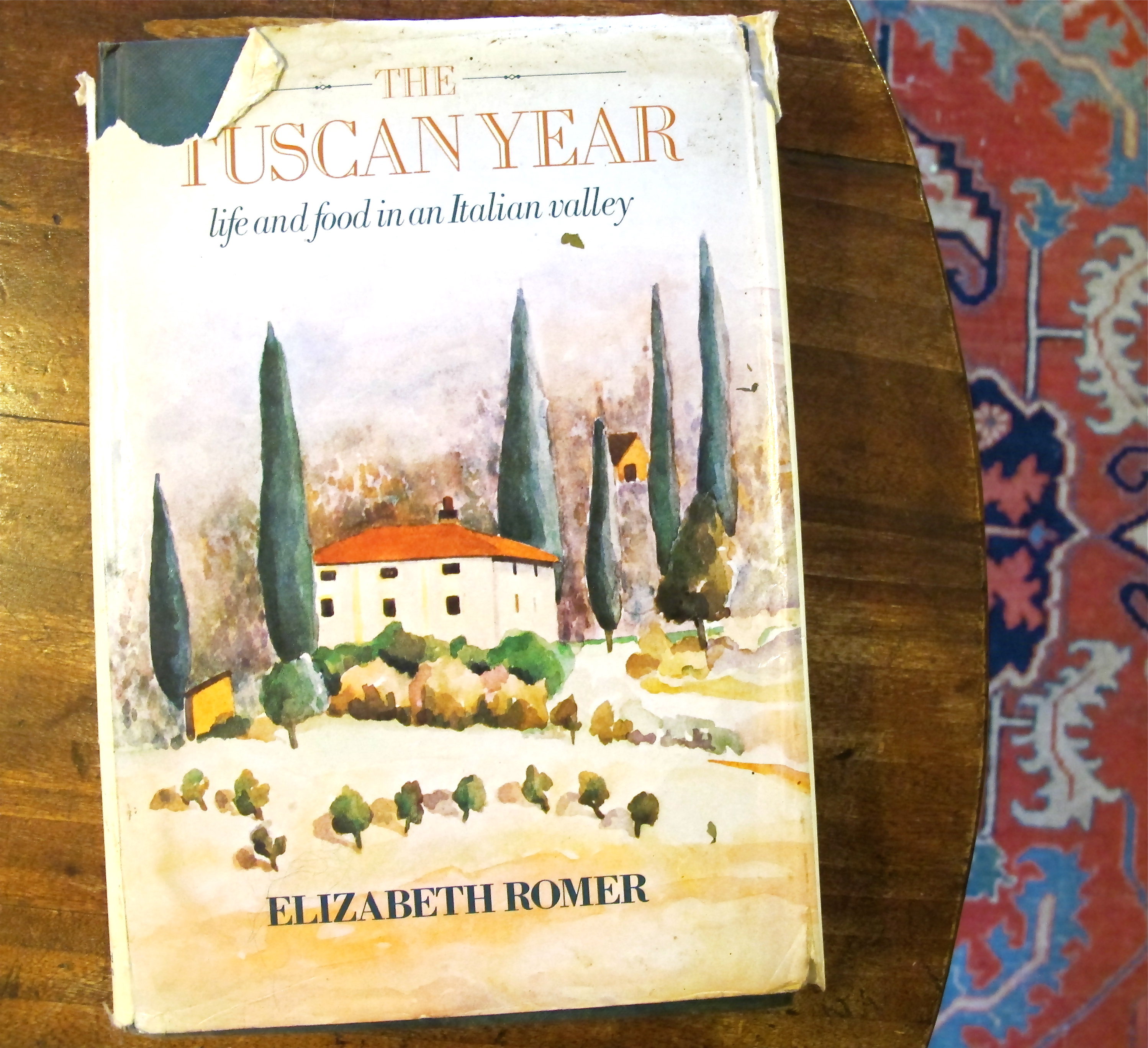
This satisfying soup is based on one in Elizabeth Romer’s lovely book, The Tuscan Year: Life and Food in an Italian Family.

Her account of the Cerroti family’s daily existence is a good read and full of authentic seasonal recipes.

Serves 4

4 tbsp olive oil

2 onions – chopped small

2 sticks of celery – chopped small

3 cloves of garlic – finely chopped

100 g/4 oz smoked bacon/pancetta – use unsmoked if you prefer – chopped small

4 tbsp parsley – chopped

1 x 450 g/16 oz can tomatoes – drained and chopped

350 g/12 oz tinned/jarred white beans – drained, rinsed and puréed–use the best quality beans you can find–it makes a difference

570 ml/1 pint/ vegetable stock – more if you like (I use organic veg. stock cubes)

150 g/6 oz “short” wholewheat pasta – (i.e. penne or farfalle, not spaghetti)

salt and pepper

freshly-grated parmesan

  • Heat the olive oil in a large saucepan.
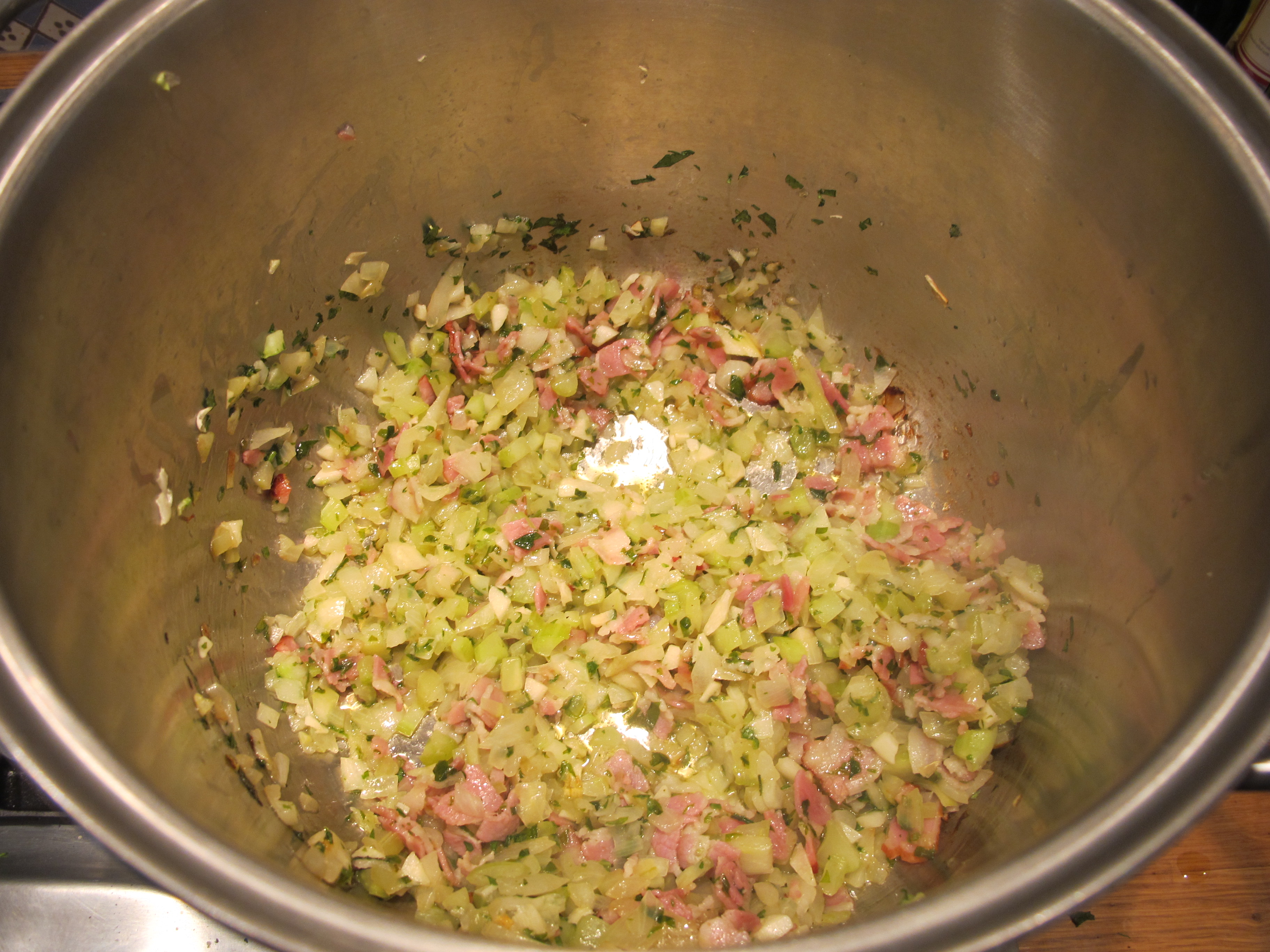
  • Add the onions, celery, garlic, bacon and parsley, and turn them in the oil.
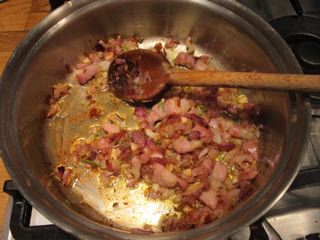
  • Cook them over a gentle heat until the vegetables are tender and the bacon is colouring up – this is the “taste engine” of the soup and needs some time – at least 20 minutes.
  • Add the tomatoes and mix them in and allow to meld for a good 10 minutes.
  • Add the beans and mix in.
  • Cook gently for 10 minutes.
  • These stages are important for a good depth of flavour and shouldn’t be rushed.
  • The soup should look beautiful now – with a warm glow.
  • Add half the stock and let it meld in.
  • Add the pasta and the rest of the stock and cook the pasta in the soup.
  • It may take a little longer than pasta normally does (I put a lid on at this point to help).
  • Be careful that this thick and unctuous soup does not stick and burn.
  • If you prefer it looser, add more stock and cook on a little to incorporate it.
  • Check the seasoning, adding salt and pepper to taste –remembering that the bacon and stock can be salty.
  • Serve with grated Parmesan cheese and swirls of olive oil.

(This nourishing soup is included in my cookbook–Delicious Dishes for Diabetics–a Mediterranean Way of Eating.)

This recipe is adapted from one I spotted in The New York Times a few weeks back.

It is quick and simple to do with an otherwise bland white fish (often a cheaper option).

I found whiting (merlan in France) at the market this morning.

(Tuesday market in Castres today was a sparse affair–everyone’s still in recovery mode I guess!)

The original recipe called for spring onions (scallions), but I couldn’t find them, so I sliced a sweet onion finely and spread it over the fillets bubbling away in the pan. Should work, but it won’t have quite the texture of spring onions.

This dish goes well on a bed of  brown basmati rice (to soak up the juices) and  perhaps a green salad.

A simple lunch for someone else in recovery mode–for not quite the same reason though!*

for 2/4

2 fillets of white fish, about one and a quarter  pounds of fish–cut in four

5 tablespoons mild soy sauce

5 tablespoons water

1 sweet onion–sliced very thin

1 red chili–fresh or dried (whole)

  • Bring the soy and water to a boil.
  • Slip in the fish fillets–flesh side down–followed by the onion and whole chili.
  • Cook for about 5 minutes–the time depends on the thickness and texture of the fillets; mine were ready in 3 minutes.
  • Add more hot water if you like–though the fish doesn’t need to be covered with liquid.
  • Lift them out carefully with a fish slice onto a warm plate.
  • Simmer the remaining liquid in the pan to reduce it by about half.
  • Place the fish on top of a serving of rice.
  • Spoon over some of the sauce and serve.
  • No need for extra seasoning–the soya sauce is salty enough.

In the event Meredith preferred a poached egg on toast! understandably not quite ready for something as savoury as this.