Feeds:
Posts
Comments

My first posting on this blog was a year ago today–7th of February 2011!

Poaching Eggs–was a homage to one of my food heroines, the formidable Elizabeth David.

I can’t remember exactly the weather that day but it may not have been so different to today’s–which is nose-endangeringly cold.

So a long nod of thanks to everyone that has visited and those that continue to visit and thanks too for  the comments–they are all read and much appreciated.

AND special thanks to my in-house photographer and editor with whom discussion is always lively and from whom I learn a lot!

Here’s a salad to celebrate.

Seasonally crunchy (not much choice from the locals this morning)–with a juicy orange and some sunflower seeds, to put one in mind of seasons to come.

It got the nod at lunch today from Meredith–(though not the mackerel fillet that it accompanied–next time I’ll use less smoked sweet paprika!).

For 2

1 large fennel bulb–outer leaves removed, stood upright and halved through the middle, each cut half laid flat and halved again, then sliced very thinly

celery stalk–sliced thinly

half a small sweet red onion–sliced thinly

1 tablespoon of sunflower seeds–dry roasted in a frying pan on the stove top

1 tablespoon of parsley–chopped

a few shavings of parmesan

1 juicy orange–carefully peeled (lifting off the white pith), halved and sliced thinly

salt for sprinkling

1 tablespoon best quality olive oil for dressing

  • Mix the first seven ingredients together with care in a favorite bowl.
  • Sprinkle with salt and the oil–add more oil if you like.
  • Lightly turn everything over.
  • Check the seasoning and serve.
Some people don’t like the idea of eating rabbit–memories of treasured pets linger in the mind. Meredith tells me she had a white rabbit called Honey Bunny growing up in suburban Chicago–which produced little honey bunnies every five weeks after the first batch–born one Easter (clever bunny!).

She is still in two minds about eating rabbit, which she claims is not eaten much in the USA.

Rabbit is tasty, lean meat and makes for a change.

You could try this with chicken.

Serves 4

1 large jar of white beans–cannellini, haricot or other white beans, drained

4 tablespoons  of olive oil

rabbit pieces or more

salt and pepper

1/2 teaspoon of coriander seeds–dry roasted in a small frying pan and crushed

8 cloves of garlic–peeled

bay leaves

100ml/31/2fl oz white wine

300ml/10fl oz water

2 tablespoons of parsley–chopped

heat the oven to 150C/300F/Gas2.

  • Heat the olive oil in a lidded pan or casserole that can go into the oven.
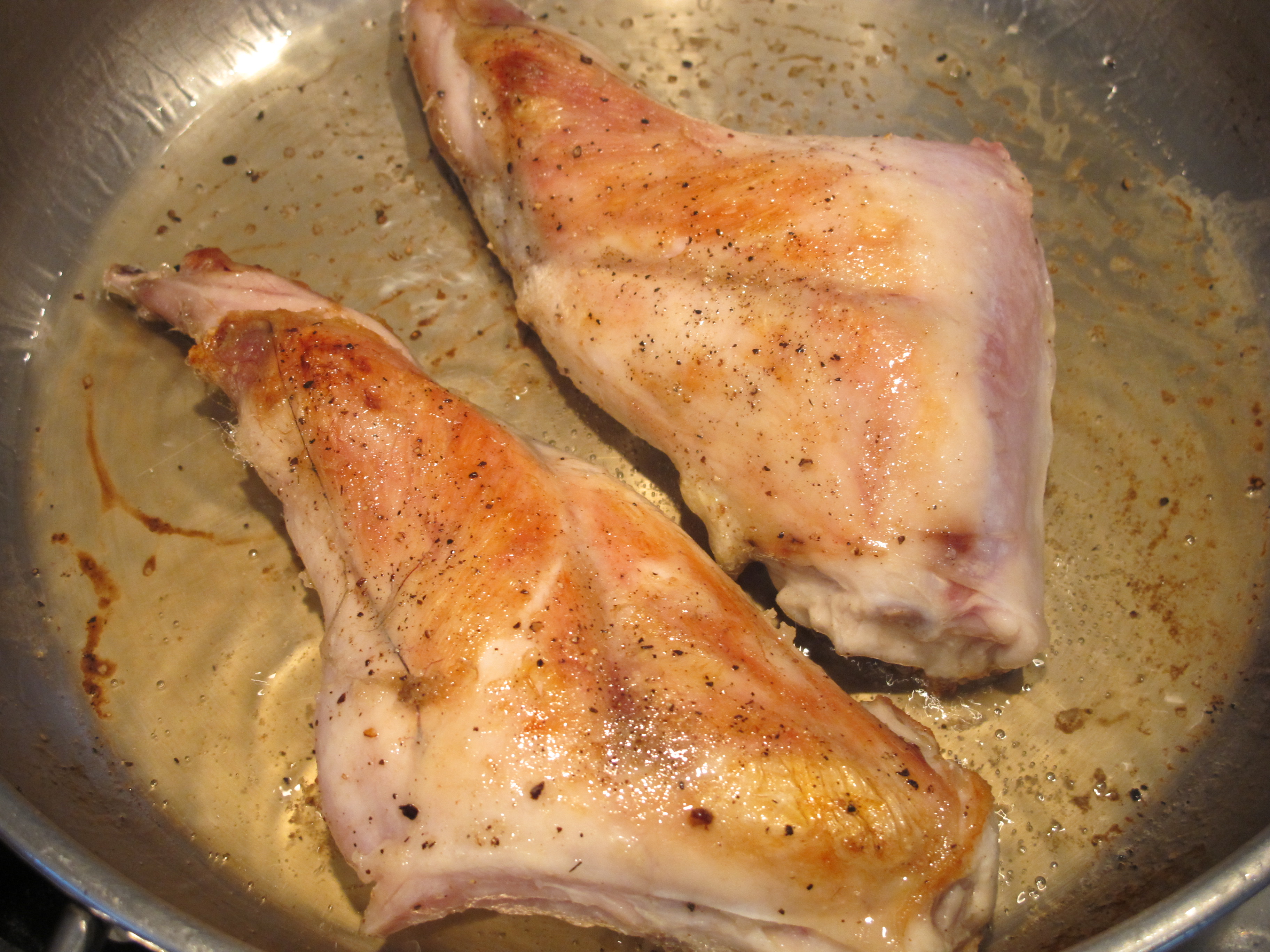
  • Season the rabbit pieces with salt and pepper and brown them gently. (These hind quarter pieces were enough for us)
  • Add the coriander seeds and garlic and turn them over in the oil until the garlic colours a little.
  • Add the bay, the wine, the water and the beans.
  • Cover the pan and cook in a  low oven–(cooking it slowly helps to keep it moist)–for about 30–40 minutes.
  • Check the doneness of the rabbit–the juices should run clear.
  • Sprinkle over the parsley before serving.

“To eat well in England you should have breakfast three times a day.”
W. Somerset Maugham

“All happiness depends on a leisurely breakfast.”
John Gunther

“Oysters are the usual opening to a winter breakfast. Indeed, they are almost indispensable.”
Grimod de la Reyniere (1758-1838)

“Life, within doors, has few pleasanter prospects than a neatly arranged and well-provisioned breakfast table.”
Nathaniel Hawthorne (1804-1864)

“Only dull people are brilliant at breakfast.”
Oscar Wilde

Breakfast is the most important meal of the day”

I’m sure my mother said that a few times!

Breakfast before I set off on my walk this morning was the same as every morning and no sign of an oyster!

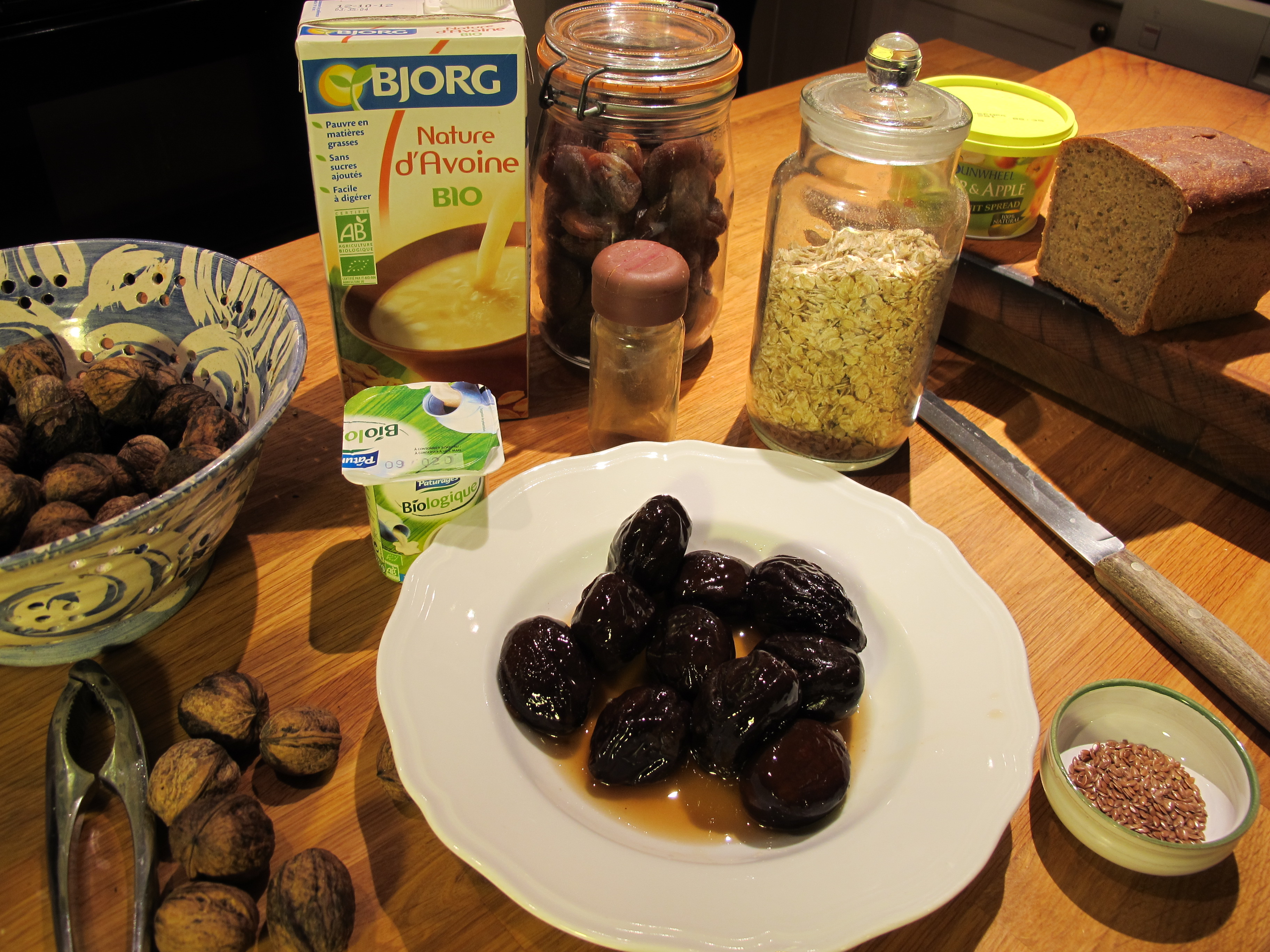
large organic oat flakes mixed with

freshly cracked walnuts,

dried untreated apricot–chopped up

a teaspoon of linseeds

prune,

half a pot of no fat organic yogurt with

cinnamon sprinkled on top

and moistened with oat milk.

Two slices of 100% rye bread with a little butter and pear & apple fruit spread (no added sugar)

The same every morning? Yes!

Dull?

Not for me–I look forward to it–once a day at least!

Maybe we are at our most conservative, most in need of ritual just after waking up, but I find the assembling and eating of this bowl of goodies a daily delight.

Meredith’s breakfast tray rested on a pillow in front of her (see below a summer version).

The fire in the kitchen was established, the dishwasher emptied and lunch planned so why not add to this the pattern of virtuousness with another good deed–a healthful walk!

The first flakes of snow were falling gently and laying, so taking my chance I set out–fortified by this habitual breakfast.
The blacktop was slowly turning white as I walked down the road and the snowy mist descended.
Yesterday’s north wind that had roughed up my cheeks had ceased and it was warmer by several degrees.
There’s was no-one about–just the distant pop of a hunter’s gun somewhere over the fields.
Climbing the slope towards the house forty minutes later I could tell that no car had passed since I’d left and looking back I saw my footprints had clearly made their mark in the deepening white.

All was quiet as I entered the house–a ” leisurely” post breakfast calm had descended.

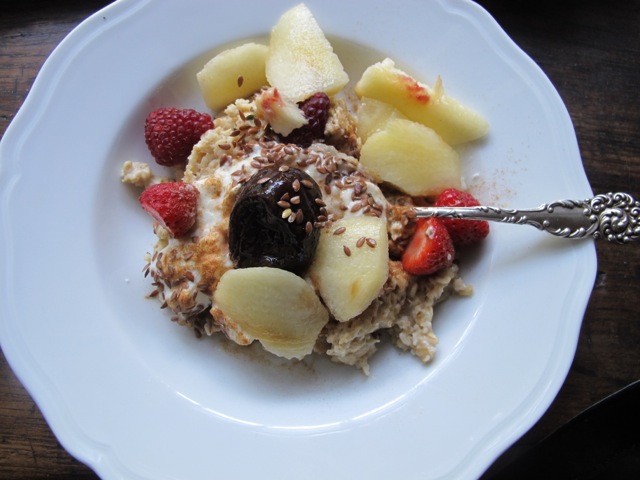
Meredith’s version of breakfast heaven! Porridge (cooked oats–large and small flakes), milk, “no fat” organic yogurt, a prune, seasonal fruit, cinnamon sprinkled over.

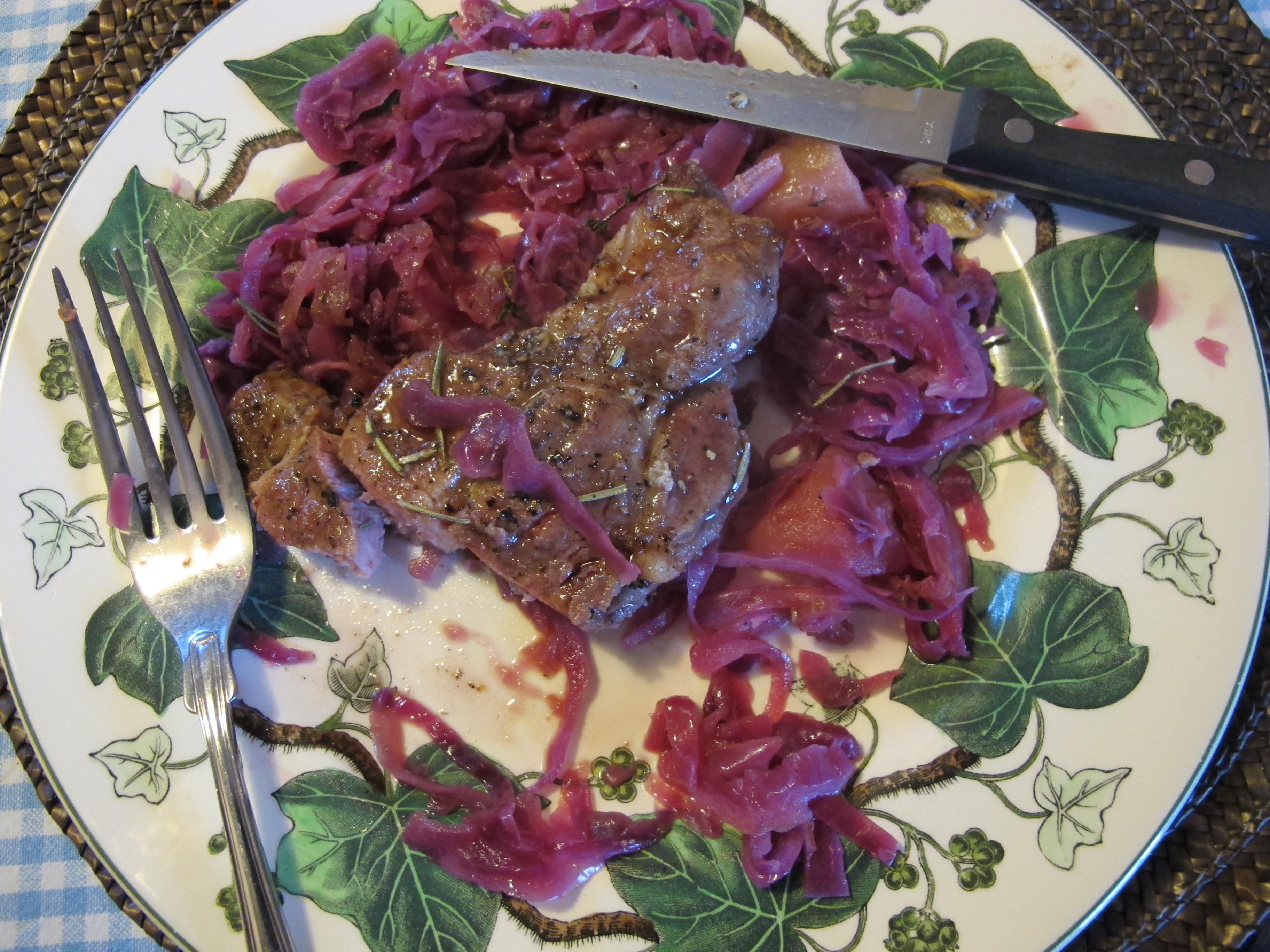
I promised a recipe for pork chops when I posted the red cabbage.

It is bitingly cold here and I found myself heading for the butcher not the fishmonger in Lautrec this morning.

“Bonjour, Monsieur–deux cotes d’échine, s’il vous plait.”

Spare rib chops are tastier and less prone to dry out than loin chops and they are the cheaper cut.

That’s what I settled for after waiting an age for Monsieur Fraisse to finish chatting to his previous customer–the cold was getting to me!

I learned this simple way by watching the irascible but effective chef Gordon Ramsay’s demonstration.

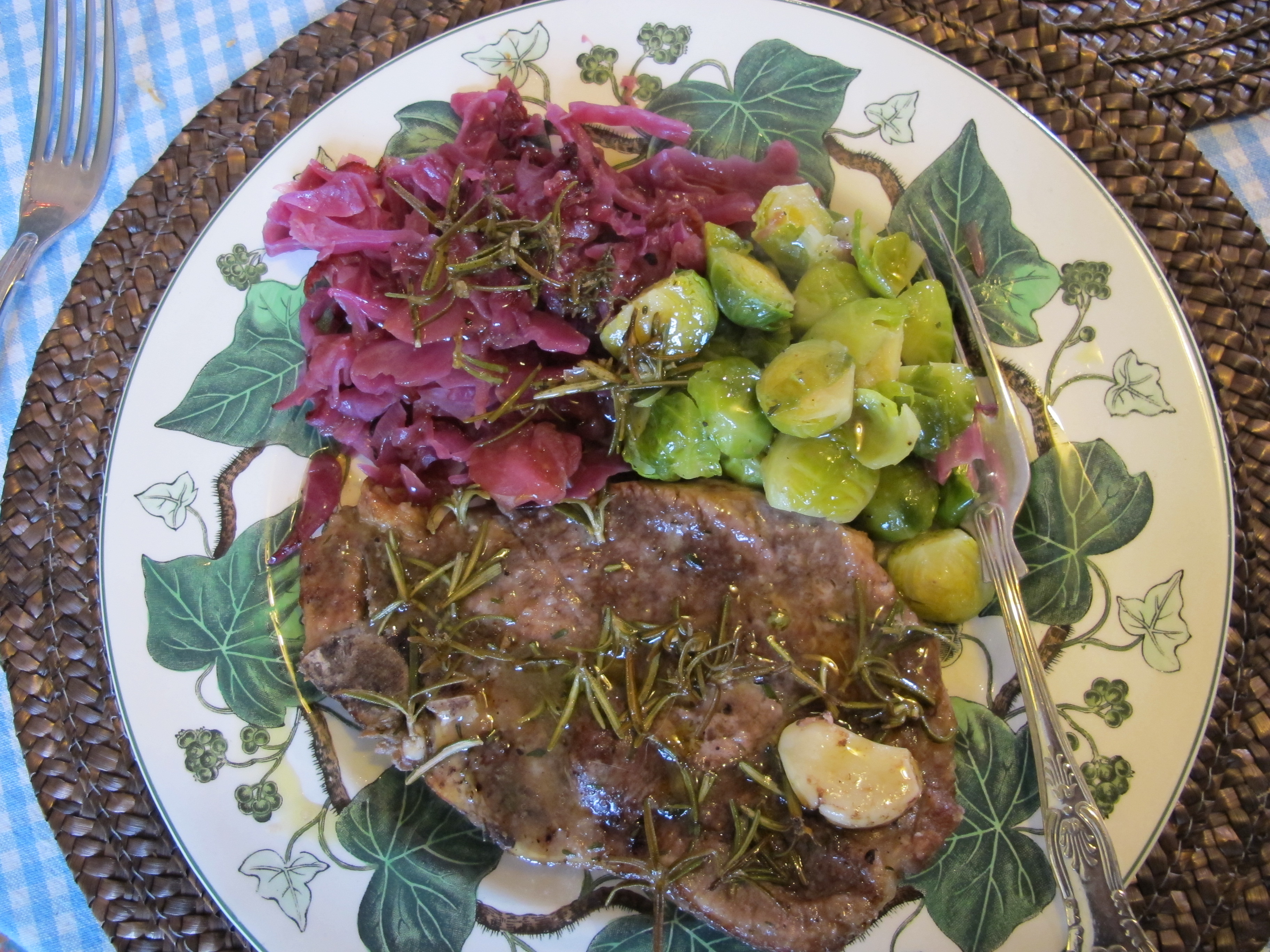
The rosemary needles take on a nice crunchiness and are worth eating with a mouthful of meat. As is the garlic.

Meredith finished off the red cabbage, which she’d missed out on the other day.

for 2

2 spare rib pork chops

rosemary and thyme

3/4 cloves of garlic–squashed, peeled and halved

olive oil

s&p

heat the oven to 200C/400F

  • Dribble some olive oil and sprinkle some salt on a shallow oven tray.
  • Scatter over a couple of the cloves of garlic.
  • Place the chops on top.
  • Sprinkle them with salt and pepper.
  • Strip the rosemary needles from the stem over the chops.
  • Do the same with the thyme (not so easily done).
  • Dribble more olive oil over the tray.
  • Put it in the higher part of the oven for about twenty minutes.
  • The cooking time depends on the thickness of the chops.
  • Best to cut into them to check–the juices should run clear.

I found this in my old paste-in foolscap notebook and have been meaning to try it for a while.

Cabbage has been on my mind since leaving Strasbourg–and pork for that matter!

An example of this brightly colored variety of red cabbage was waiting patiently in the fridge for my return.

So lunch yesterday was a pork chop on a bed of red cabbage.

1 tablespoon olive oil

1 onion–sliced fine

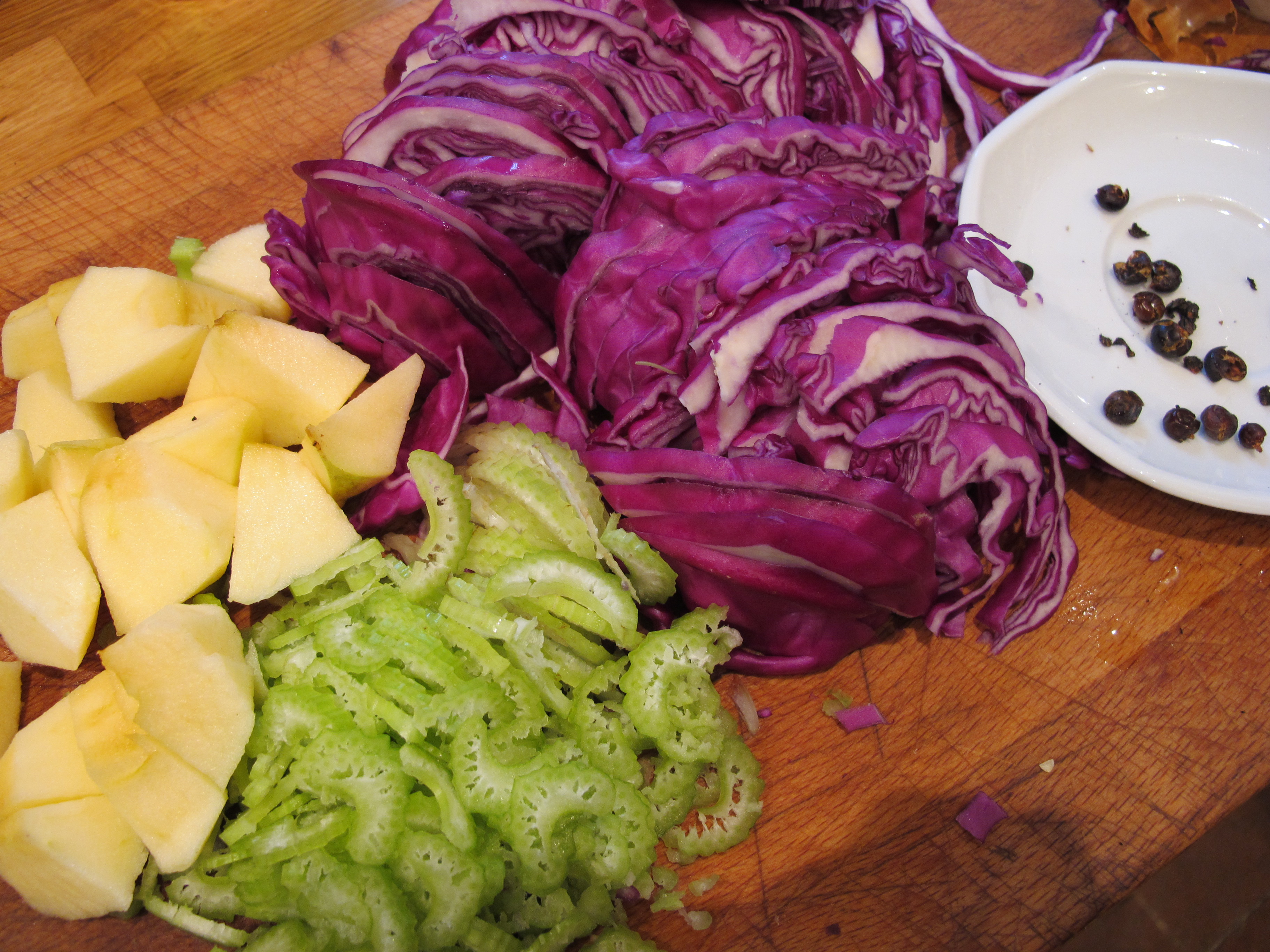
red cabbage–shredded not too fine

2 sticks of celery–sliced fine

1 apple–peeled, quartered, cored and chopped into chunks

10 juniper berries–crushed

Juice of a lemon

Juice of an orange

1 tablespoon cider vinegar

salt

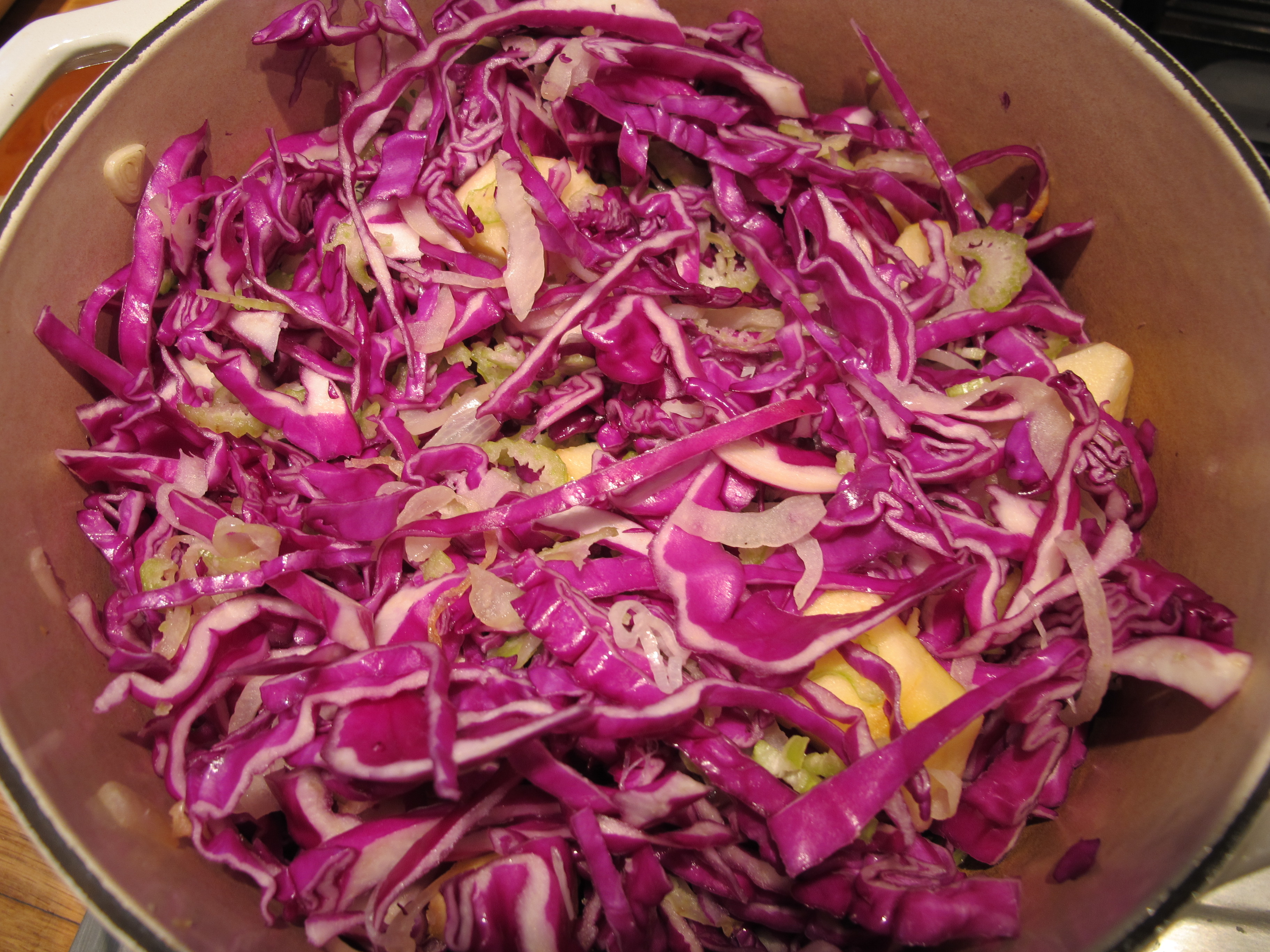
  • In a pan large enough to hold all the ingredients, sauté the onion gently in the oil until it is soft–about 5 minutes.
  • Add the shredded cabbage, the celery and apple and turn these over with the onion and oil.
  • Cook this mix for another 5 minutes until the cabbage begins to wilt.
  • Pour over the two juices, the vinegar and the juniper berries.
  • Add a good pinch of salt.
  • Turn it all over carefully to distribute the liquids.
  • Cover the pan and continue cooking for about 20 minutes–the time depends on the toughness of the cabbage–it should be nicely tender to the bite.
The cabbage and apple married well with the pork.
I’ll write up the simple pork recipe tomorrow.
Next time–red cabbage with a slow cooked fillet of salmon.

It was heartening to spy through the mist from our friends Susan and Jean-Michel’s bathroom window in Strasbourg (AlsaceLorraine in NE France) a sea of allotments stretching a hundred yards to the elevated road on the horizon.

Dotted with little sheds and pockets of green (but no sign of anyone working–well it’s winter!)–they at least were proof that vegetables are grown in this part of France.

Heartening in both senses–good news and good for the heart–after several veg-free meals eaten over a weekend in the restaurants of this ancient regional capital.

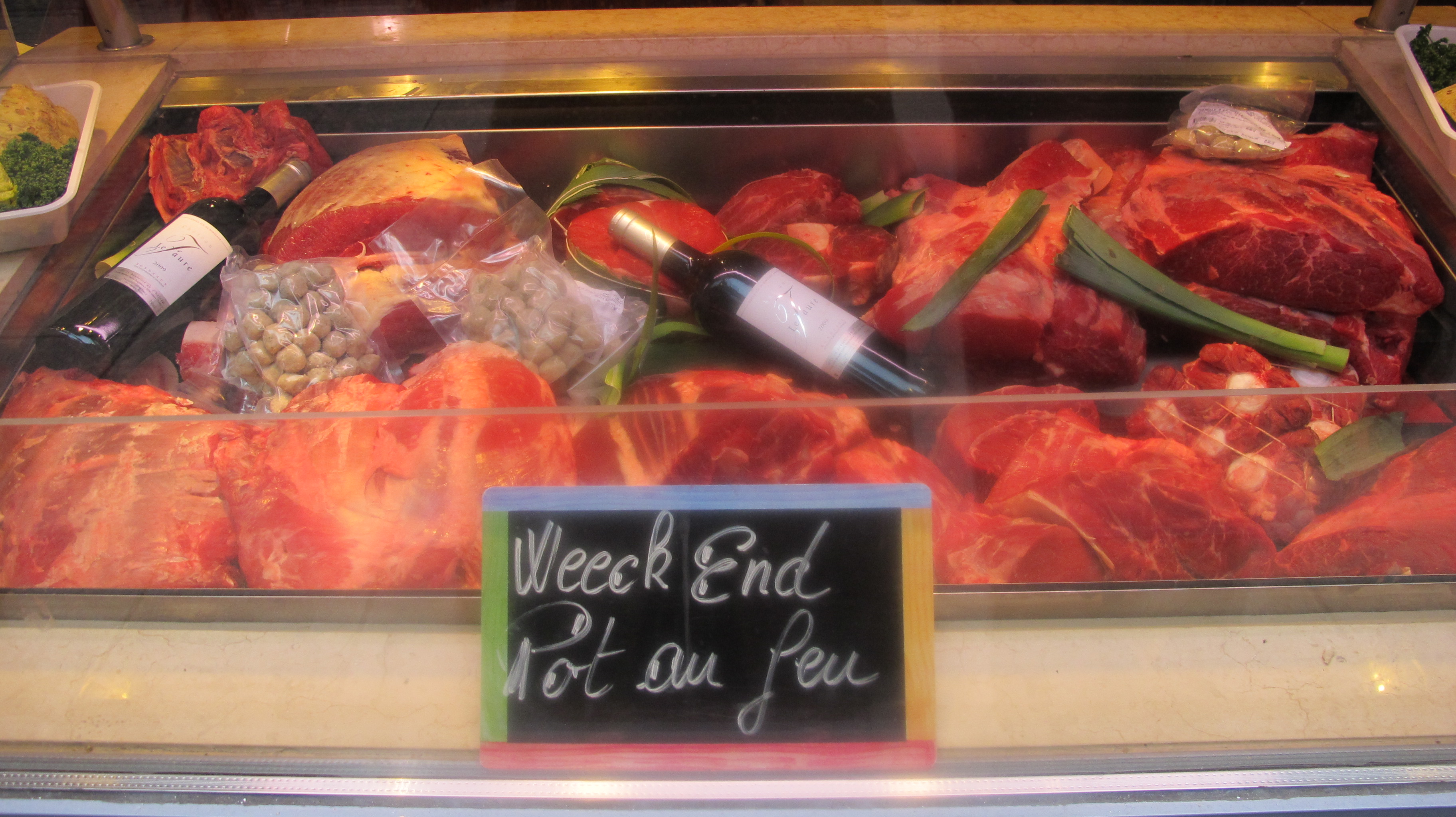
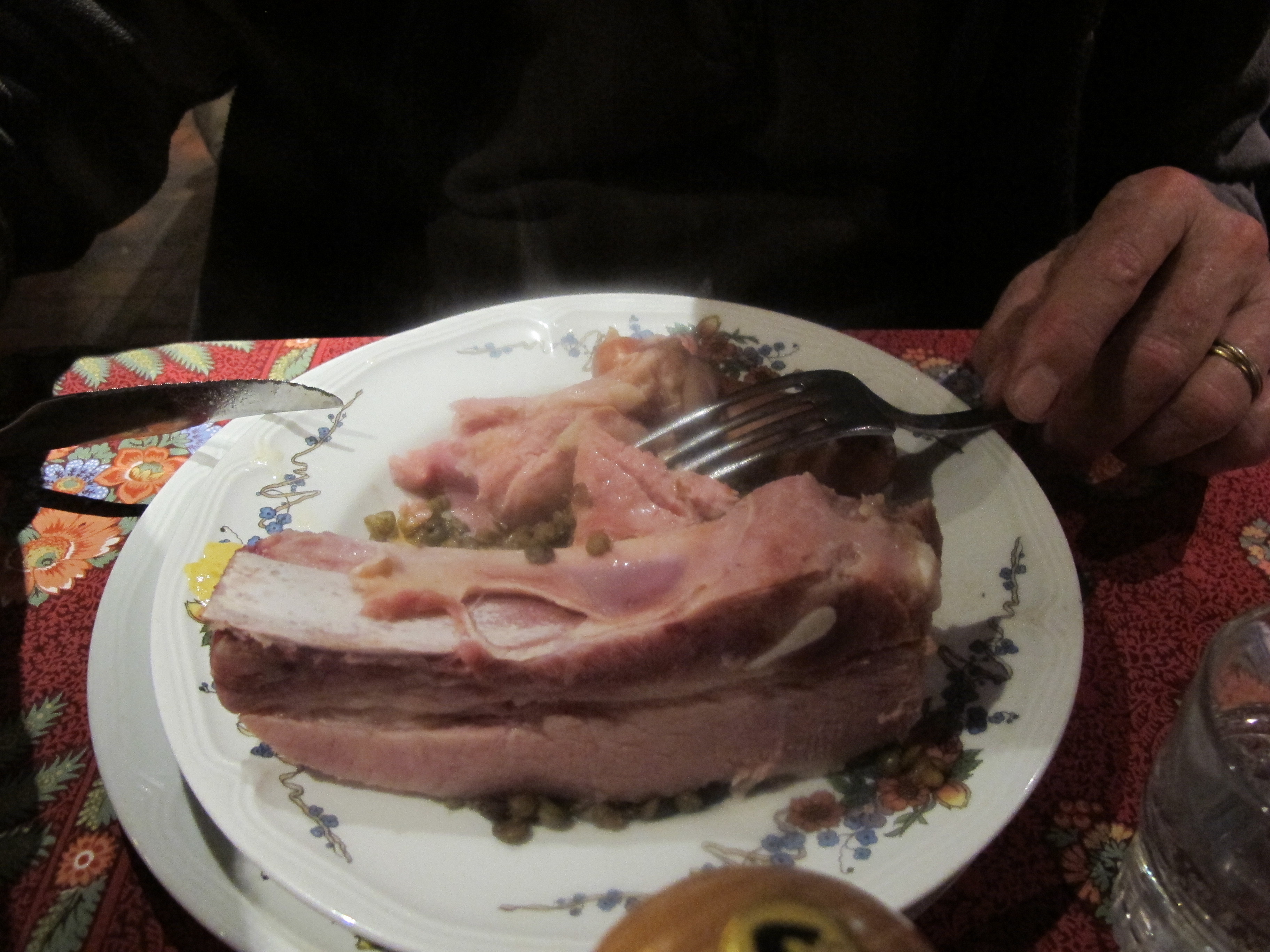
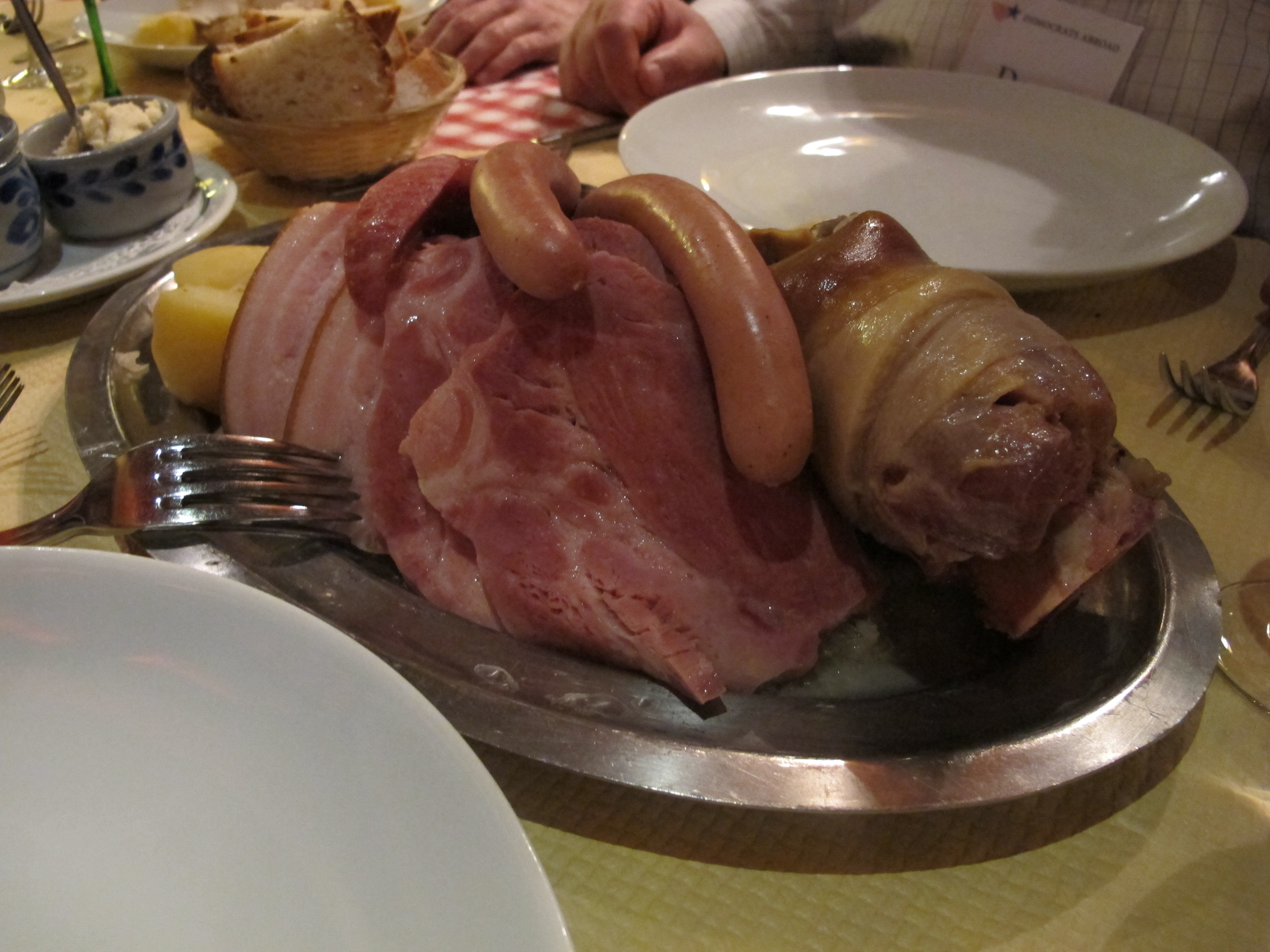
Meat is big here–the displays of it in butchers’ windows are impressive.

And often it seems little else on the plate.
True there is the chou (white cabbage)in the ubiquitous choucroute (sauerkraut) but that is not a fresh vegetable and it’s true there are potatoes but they are not an option for me.

Even white fish is served with sauerkraut here!

Vous allez manger bien la-bas! [You’ll eat well there!] we were assured enthusiastically by our friend and neighbor, Thierry, an amateur [fan] of good food when he heard we were heading to Strasbourg for the weekend.

Heavy–yes but bee-an!

At a reception in the celebrated Wine Cave Historique des Hospices de Strasbourgthe guide casually mentioned that there is more cadiovasular disease and Type 2 diabetes in this region than any other in France!

In a cave underneath the hospital of Strasbourg great casks of local wine are stored--including the oldest cask of drinkable wine in the world--so they say!

Our host in Strasbourg, Jean-Michel–(who by the way cooked me a delicious omelette for lunch on Saturday!)–said this part of France had the lowest life expectancy.

Cause and effect?

QED!

But it made me think how difficult it is to change ingrained habits….

The people of Alsace are clearly proud of their cuisine.

It reflects centuries of tradition and daily consumption, deeply connected with the customs and rural way of life autrefois (in times gone by).

But “in times gone by” the people (peasants) worked hard all day in the fields and the food they ate in this northern climate stoked their boilers.

Times have changed–but not the way of eating it seems.

Come to think of it a couple of days hard digging at the allotment would take care of at least two plates of choucroute–and there’d be some vegetables to see for the effort too!!

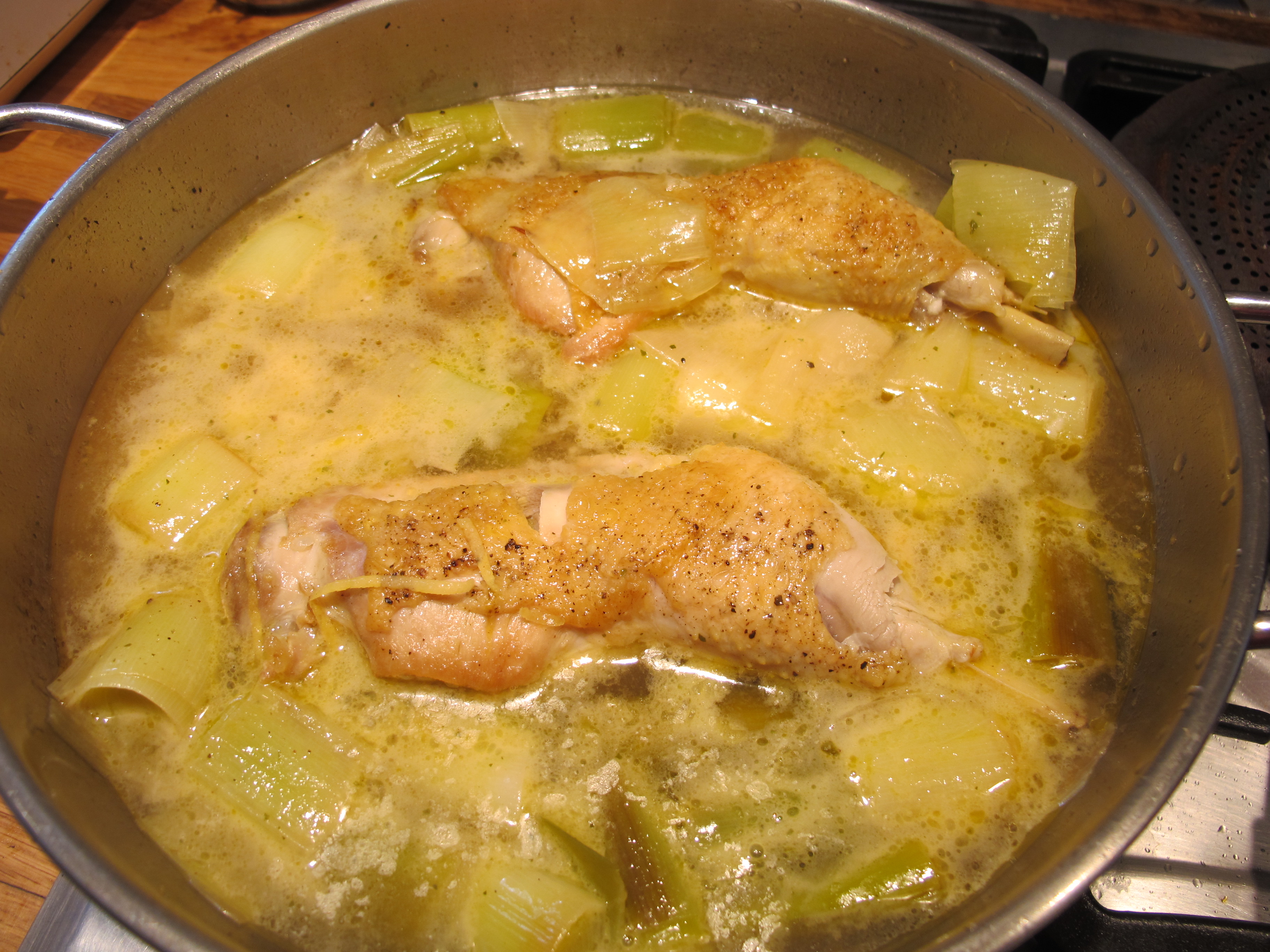
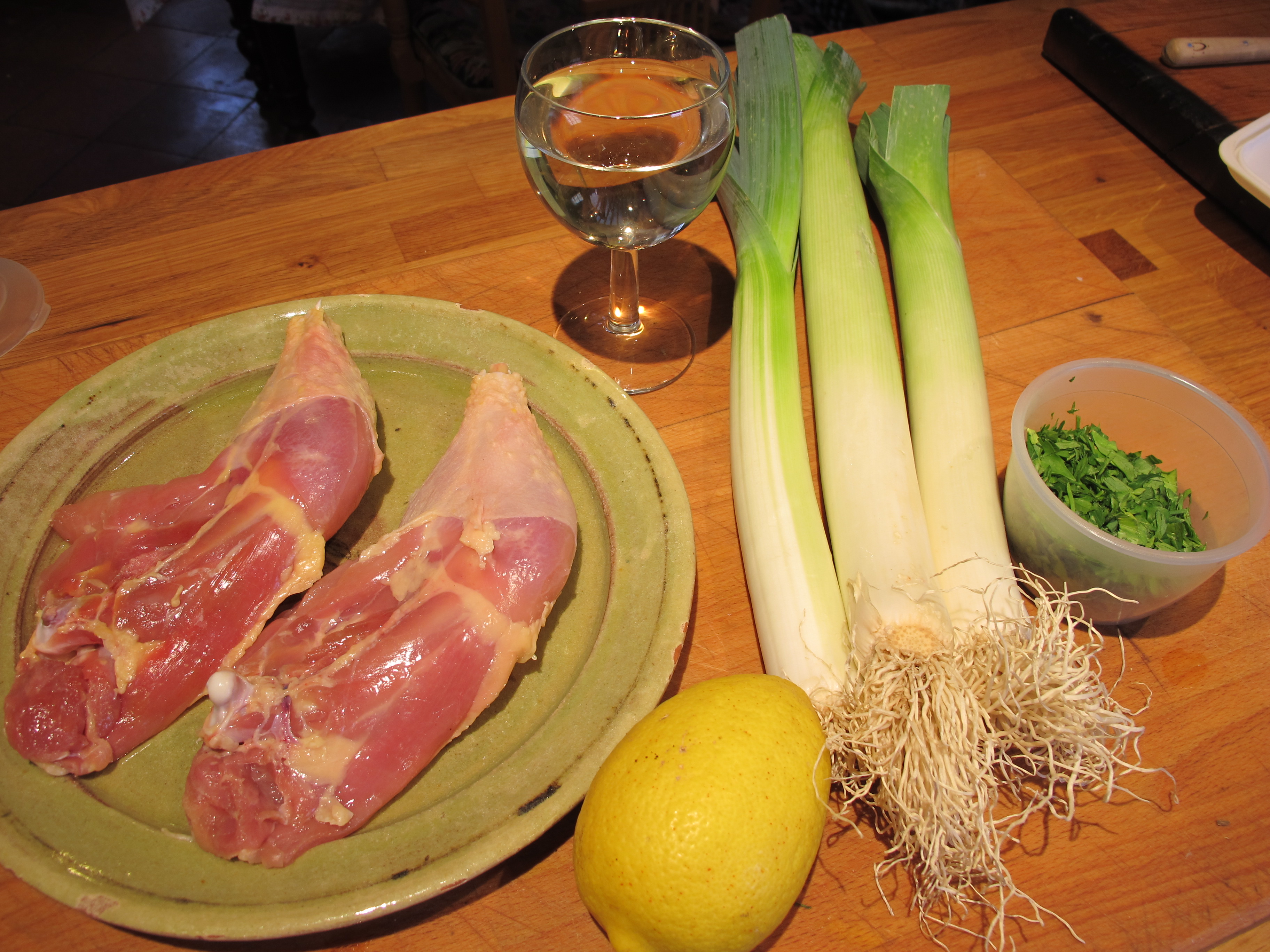
This is  a handy lunch or supper dish–for two here; but for four with the simple addition of two extra pieces of chicken and another leek.

It’s adapted from a recipe in Nigel Slater’s impressive tome Tender–a tour de force of loving care. In it he tells the story of the creation of the vegetable patch in the back garden of his London home, and what pleasure it gives him.

He plants, he tends, he gathers and he cooks.

More than just a book of recipes, it’s an enjoyable account of what can be done with a limited space in the heart of a city.

for 2

2 tablespoon olive oil

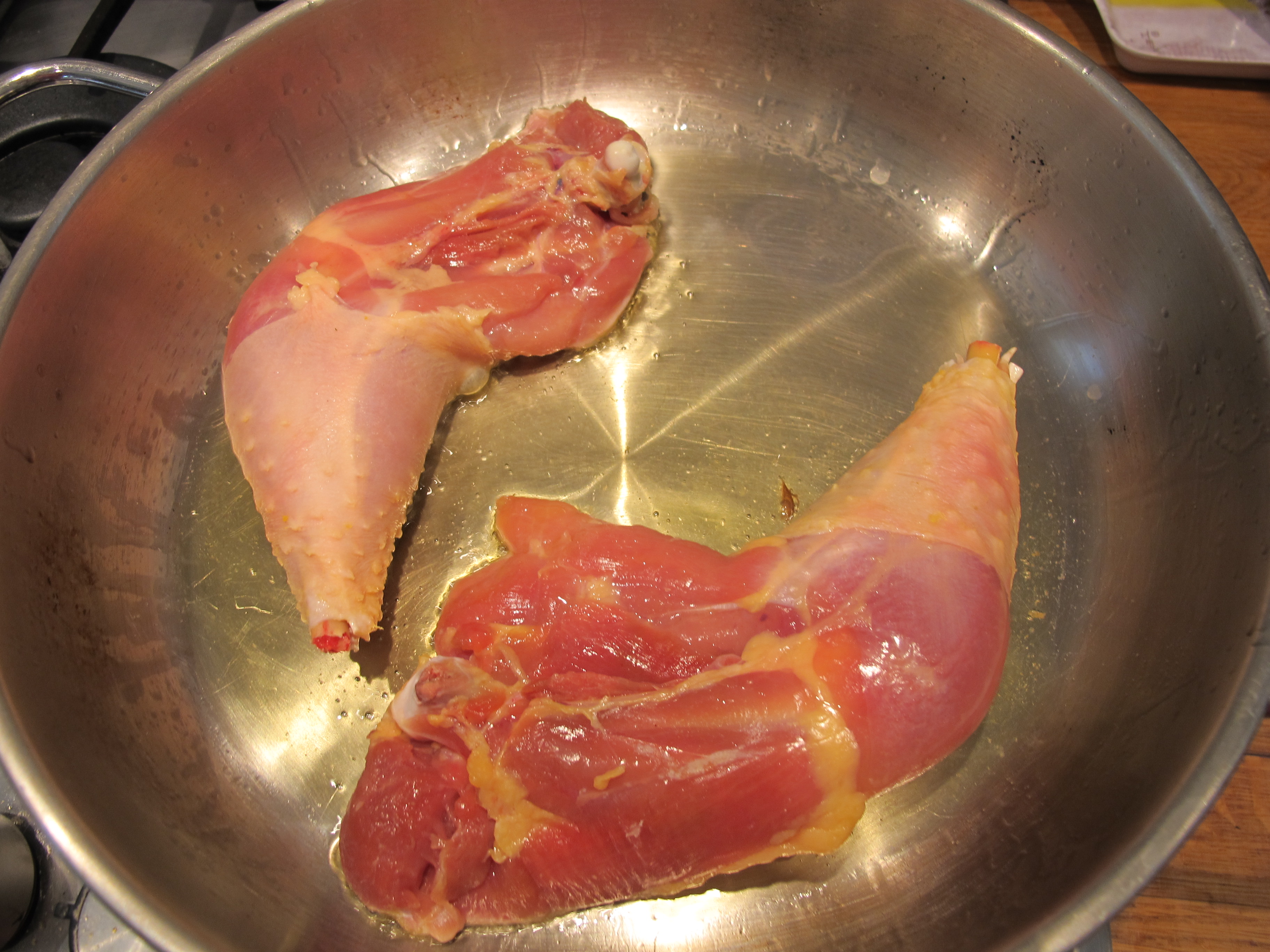
2 leg and thigh pieces of chicken 

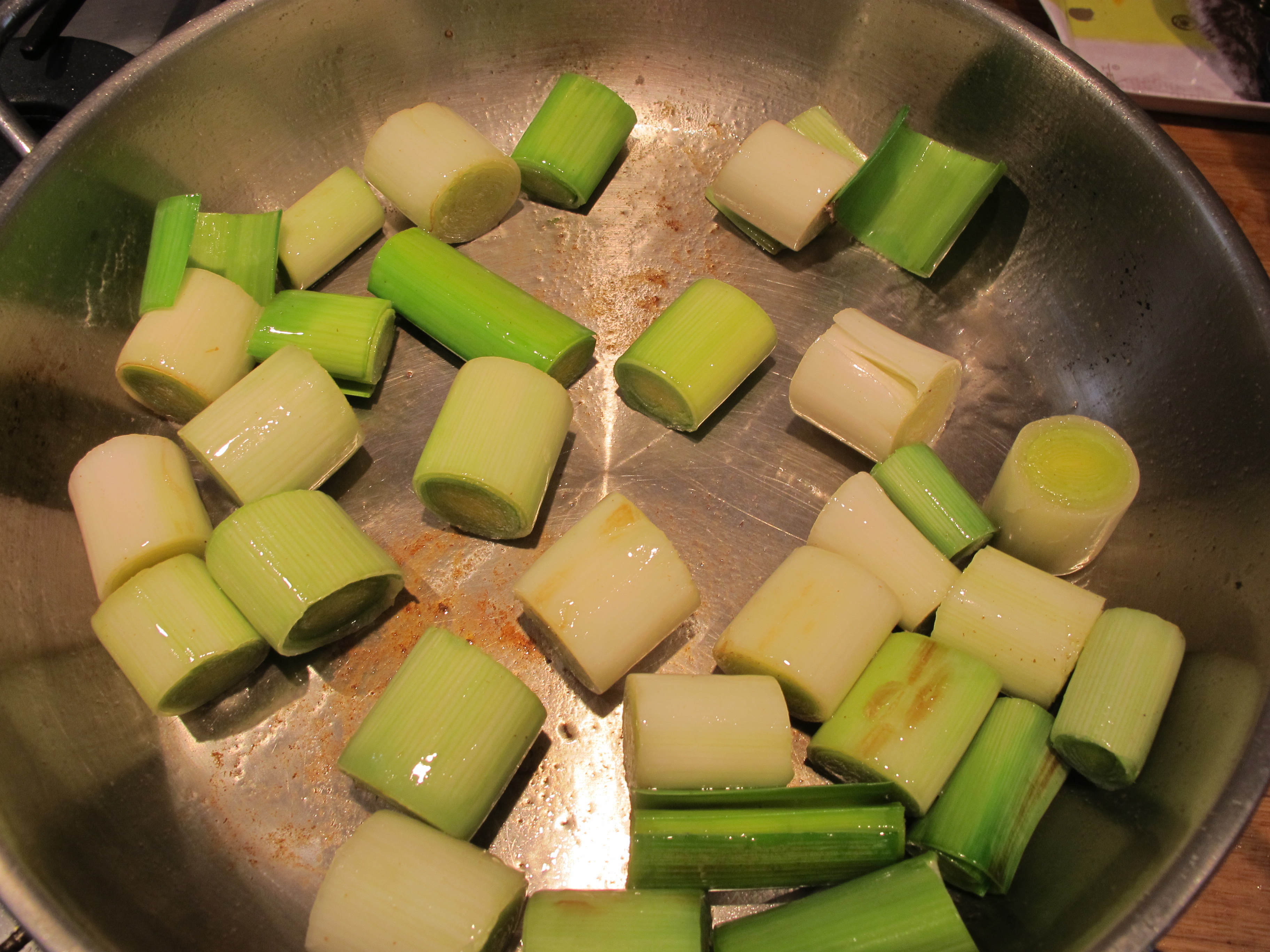
2/3 leeks–outer leaves removed, washed and sliced into 2″ stubs

Juice and zest of a lemon

1 wine glass white wine

500ml stock–I use organic vegetable stock cubes

2 tablespoon parsley–chopped

salt and pepper

ingredients for 2

for 2

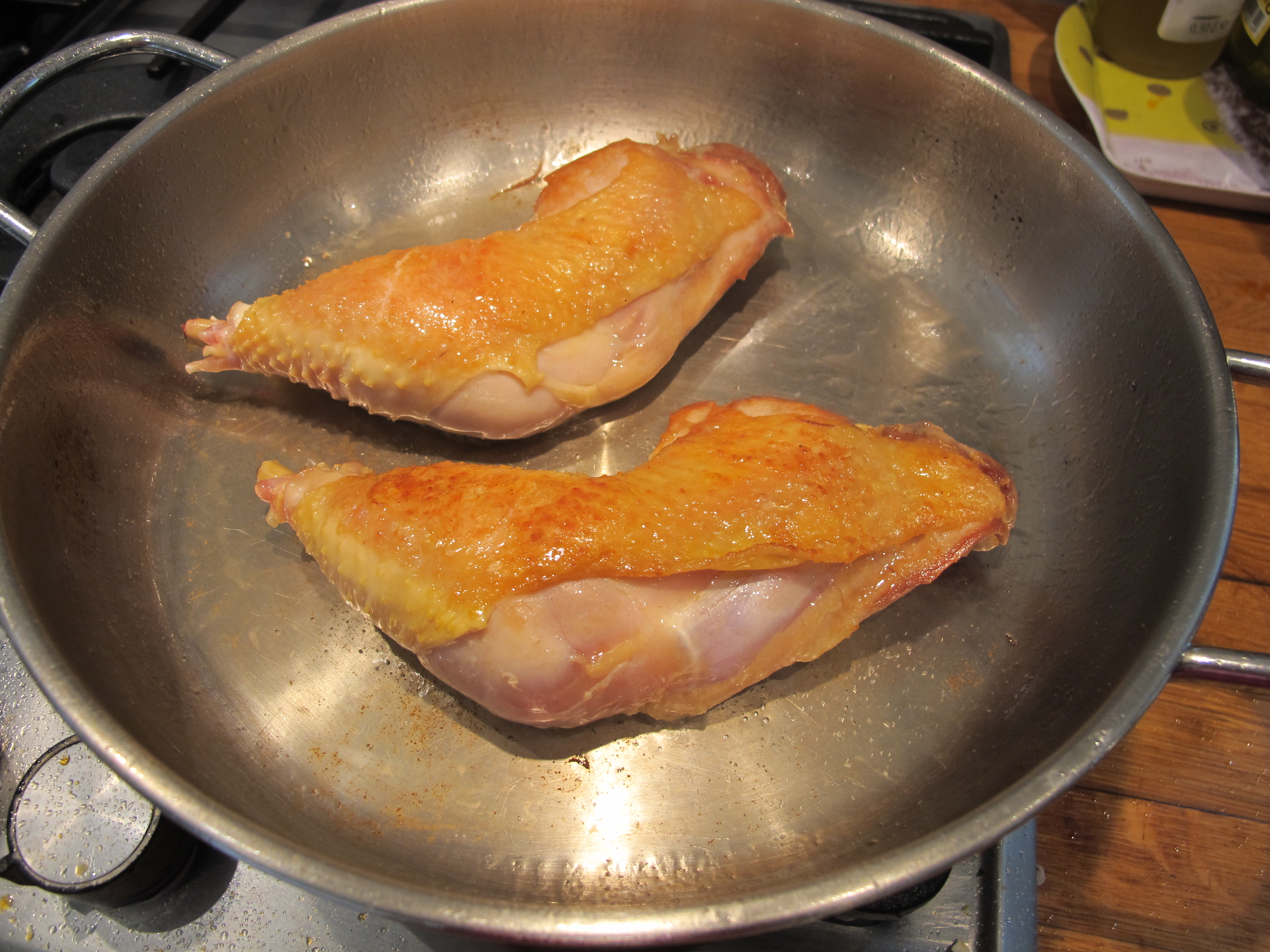
  • Heat the oil in a pan and slip in the chicken pieces.
  • Gently color them on both sides on a low to medium heat–8 to 10 minutes in all.
  • Remove them from the pan.
  • Turn the heat to low.
  • Add the leek stubs to the pan and turn them over in the oil.
  • Cover the pan and cook the leeks until they begin to soften–about five minutes.
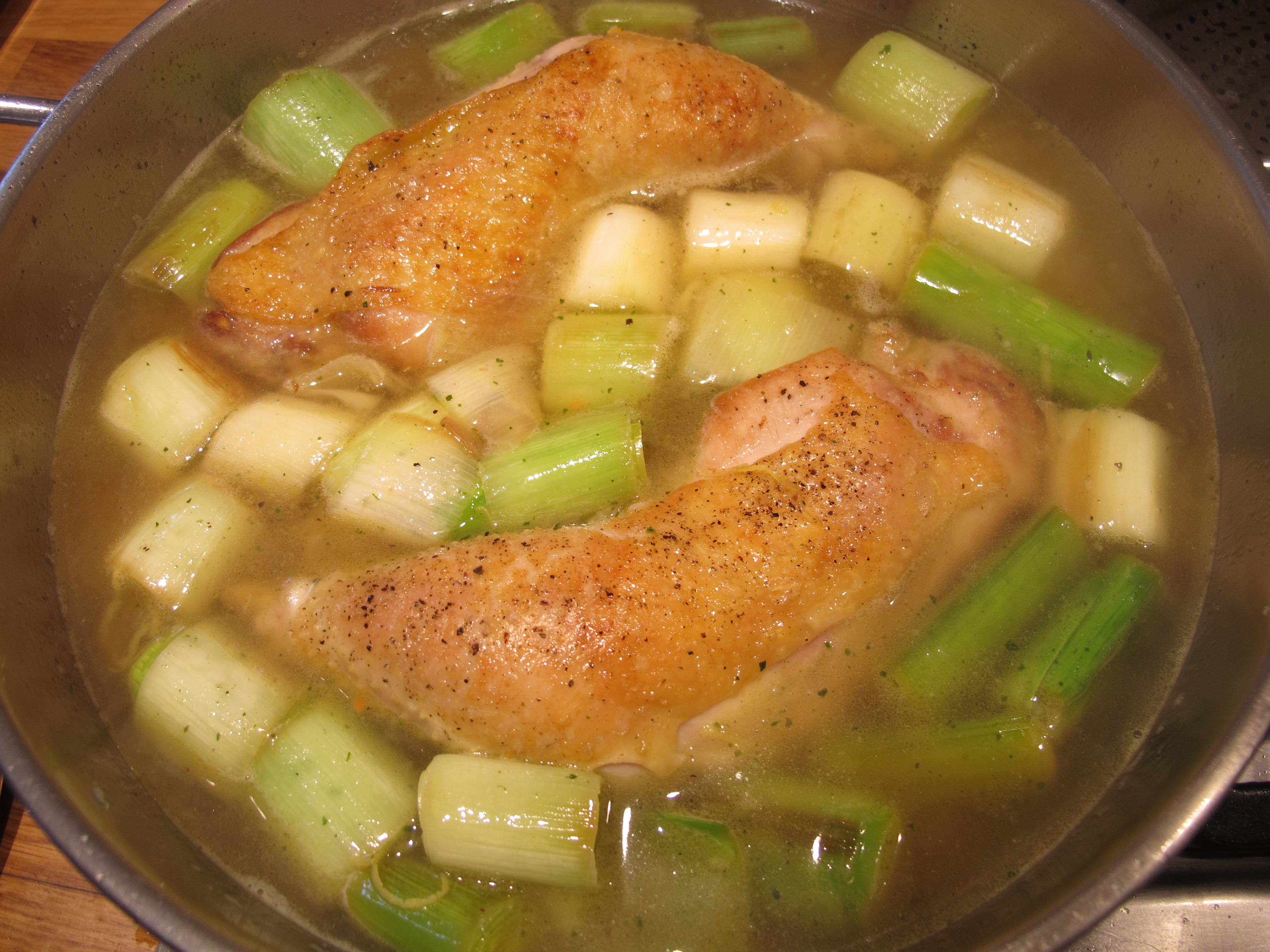
  • Season the chicken pieces and return them to the pan.
  • Add the wine, the lemon zest and juice, a tablespoon of parsley and the stock.
  • Bring the pan up to the boil, turn the heat down low and cover the pan.
  • Cook at a simmer until the juices run clear when you pierce a piece of the chicken–about 20 minutes.
  • Check the seasoning and sprinkle over the remaining parsley.

on “Tenterhooks”

Our friend Deming spotted my misspelling of “Tenterhooks” (tenDerhooks–I put a D for T) in this morning’s post (Testing times) and did some research.

“I knew the word you were looking for was “tenterhooks”, but I had to go to the internet to find the origin.  It comes from the fuller trade in medieval times apparently, when cloth was stretched over a tent-like structure on tenterhooks.  Assuredly an uncomfortable feeling if applied to people!”

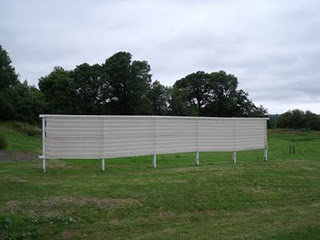
"The tent"

"The tent" 2

Intrigued, I went on the hunt for info myself.

The phrase on tenterhooks first appeared in the 18th century novel Roderick Random by Tobias Smollett.

Laura Thomas (woven textile artist and consultant) contributes this explanation on the warp and weft site:

Ever wondered where the phrase ‘on tenterhooks’ comes from? Once woollen cloth has been woven it needs to have the natural oils present in wool washed out.  After the cloth has been washed it needs to be stretched over a frame so that the cloth dries straightened, uncreased, in a uniform fashion: ie so that the width of the cloth is consistent throughout its length. In times gone by, it would have been a common sight in areas where woollen cloth was produced to see fields full of the wooden ”tenter’ frames with wet cloth stretched and held in place by the metal hooks, drying in the air.

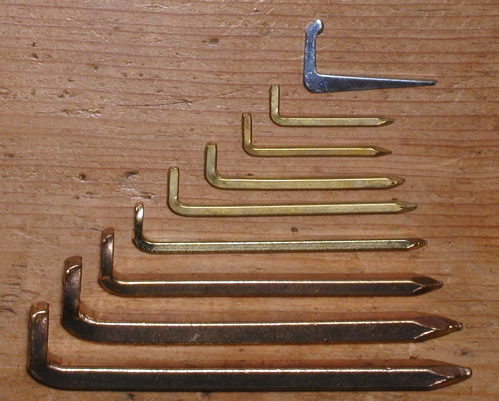
The tenter hooks!

Laura took these pictures at the National Wool Museum in Wales.

tenterhooks on the job!

Tendere the Latin word to stretch is the clue to the metaphorical meaning that’s evolved-to feel stretched with anticipatory anxiety.

I spy a D in there, so I’m having the last word.

I like the word TENDERHOOKS anyway and may go on using it!

At this time of year my body submits to a pretty thorough going over.

Testing times!

For a couple of days last week I was on tenderhooks around noon–the hour the post usually arrives chez nous–waiting for my January test results.

Every three months I have a test to measure hemoglobin A1c (average blood sugar levels) which charts how well these are being controlled.

At the end of year, the list of tests is longer and includes liver, kidneys, blood cells, PSA (prostate), cholesterol–a full service, in car terms!

All the results from this comprehensive check-up are important, but I was most concerned to see the blood sugar average.

The test at the end of October had shown an uncharacteristic spike.

Michel, my doctor here–who has helped me adapt to the condition and been my monitor over the last thirteen years–decided to supplement my daily pill (30mg gliclazide) with something new.

But I had a mind to delay the daily dose of Januvia he’d prescribed–to continue to eat moderately, to watch my weight and to exercise regularly and see if the October result was a rogue reading, before taking another drug to counteract a possible trend.

Michel also prescribed a dose of vitamin D as a boost to my overall well being– 2.5 mg a month.

Vitamin D is in the news as a possible addition to the diabetic’s armoury.

No definitive results have been established yet confirming that the vitamin is effective in reducing insulin resistance, but the evidence is mounting and the general beneficial effects to be gained from regular consumption convinced me that I should go ahead and swallow!

The system works well here. We ring the local nurses’ office the night before and a nurse comes the next morning to take a blood sample. She dispatches it to the clinic for analysis and as often as not we get the results by post the following day–taking the waiting out of worrying.

At noon I was listening for the post van.

By quarter past I knew I had another 24 hours to wait–no envelope.

It arrived the next day, but it didn’t help my anxiety to discover that the clinic had changed the layout and formating–it was not immediately clear where to look!

I found it though and it was GOOD NEWS!–the level had virtually been restored.

Next for the third degree, in ten days time–the eyes!

Serves 2

2 small pots no/low-fat organic yogurt*

2 teaspoons of olive oil

half a clove of garlic – pulped in a mortar with a little salt

half a teaspoon of cumin powder

[*For a thicker sauce–which is how we like it–empty the yogurt into a piece of muslin drapped over a sieve and leave it to drain into a bowl for half an hour in the fridge.

Discard the liquid and carefully empty the yogurt into the bowl.

Or use the yogurt as it comes out of the pot–emptying it into a bowl.]

  • Pulp the garlic in a pinch of salt in a mortar.
  • Whisk in the cumin and the oil.
  • Fold this into the yogurt and whisk it well together.
  • Refrigerate until you’re ready to serve it.