Feeds:
Posts
Comments

Meredith tells me the first time she became aware of lentils, was at the age of 35! They had not been part of her experience growing up in suburban Chicago in the fifties.

One of the first things I cooked for her was a dish I call “comfort lentils” (it’s in my cookbook Delicious Dishes for Diabetics).

Much has changed–Indian restaurants are common place now in the US.

Indian and Chinese restaurants and “take-aways” (my equivalent of MacDonalds–first outlet opened in the UK in 1974!) featured regularly in my life at college and in provincial theatre.

Affordable and open late–just the ticket!

This recipe is hands on for the first half hour or so, as it builds in the taste.

Then it chugs along on a low heat for fifty minutes as the lentils dissolve and the dal forms.

The finish involves sautéing a small amount of onion, garlic and dried red pepper to stir into the mix to lift it.

It’s adapted from a recipe in Ismail Merchant’s excellent and quirky cookbook Indian Cuisine.
IMG_4167

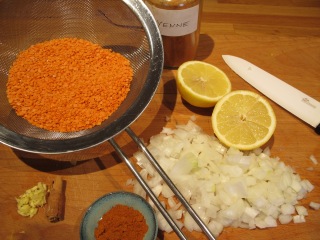
8oz red lentils–rinsed until the water runs clear

1 small onion–chopped

2 tblsps olive oil

a short stick of cinnamon

1 tsp fresh ginger–grated

250ml/1/2 pint stock–I use organic vegetable stock cubes

250ml/1/2 pint hot water

1 tsp cayenne pepper

juice and the shells of a lemon

to finish:

2 tblsps olive oil

1/2 small onion–sliced

1 garlic clove–chopped

1 tsp salt

1 small dried red chili–chopped

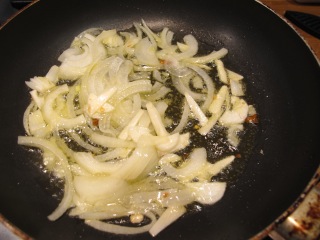
Cook the onion over a low heat in the oil until it is opaque–about five minutes.
IMG_4172

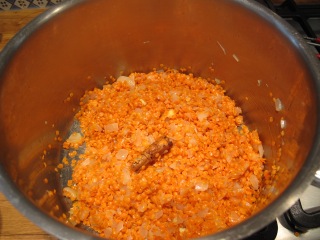
Add the lentils, cinnamon and the ginger and mix in.
IMG_4169

Cook these  together gently for about ten minutes, keeping the heat low and stirring from time to time to avoid them sticking to the bottom of the pan and burning.

A nutty aroma starts to rise from the darkening lentils, as they cook.

Add the stock and hot water, cayenne and salt.

Bring to the simmer.

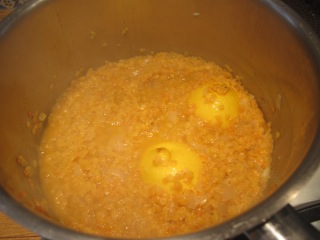
Cook on gently for a further ten minutes, then add the lemon juice and the empty lemon halves and stir it all together.
IMG_4171

Cover the pan and continue cooking on a very low heat–use a heat diffuser if necessary–for 45 minutes, stirring occasionally to avoid sticking.

In a small frying pan heat the tablespoon of olive oil and add the sliced onion.

Let this color for five minutes over a medium heat.

Add the chili and the sliced garlic and continue cooking until the garlic begins to brown.

Add this to the lentils and mix it in.

We ate it yesterday as an accompaniment to spicy marinaded chicken breasts–(recipe soon).

It’ll taste even better today!

Fast-track fish fillet

This fabulously fuss-free fish fillet recipe I found in Leon’s (Restaurant in London) cookbook.

The fillet is cooked fast at the highest temperature the oven can reach.

How can this work without the fillet shriveling to a cinder?

The answer’s a lemon!

IMG_4091

It takes ten minutes and the result is a delicious, succulent piece of fish with a modest “built-in” sauce.

Served on a bed of spinach, swiss chard or a simple side salad of rocket, this is a useful company dish.

for 4

4 thick fish fillets–sustainable fish for preference* (see below)–try ling, hake, pollack or coley

2 tblsps olive oil

A handful of parsley–chopped

1 or two lemons–sliced thick  (you need two/three slices per fillet–how many depends on the size of the lemons.)

salt and pepper

Place an empty oven tray large enough for the number of fillets  you are cooking on the top shelf.

Heat the oven to the  hottest temperature–yes, you’re heating the empty tray!

Meanwhile wash and dry the fillets.

Mix the oil and parsley together and turn the fillets in this mixture.

Season them well.

Gingerly–as it’ll be very hot–take the tray out of the oven and place the fillets on it.

Place the lemon slices on top of the fillets as in the photos.

Put the tray back on top shelf of the oven for ten minutes–less if the fillets are relatively thin.

When they are ready, serve them–suggesting diners press gently down on the hot lemon pieces.

IMG_4094

*Line caught fish–a handy explanation from Greenpeace

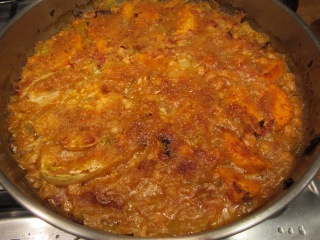
I’m keen to try simple meal-in-a-pot recipes that can be prepared in advance.

This is one inspired by a Nigel Slater recipe from an old newspaper clipping.

We found it hard not to finish it off last night–impossible in fact!

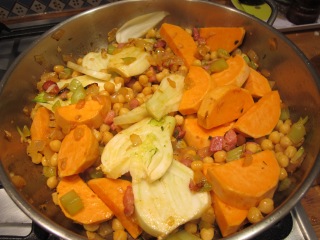
IMG_4069

“Well it’s just one medium sweet potato, a single fennel bulb and some chickpeas.”

(I added smoked paprika and halved the amount of smoked bacon in the original.)

“Oh–go on then!”

So much for moderation.

For 2/3

1 onion–chopped

2 sticks of celery–chopped

2 tblsps olive oil

3 garlic cloves–pulped with a teaspoon of salt

1 tsp rosemary spears–chopped fine

2oz/50gms smoked bacon–cubed

1 tsp smoked paprika

1 medium sweet potato–peeled, sliced into thick rounds and these halved

1 fennel bulb–outer leaves removed and sliced thick on the vertical

1/2 pint stock–I use organic vegetable stock cubes

250gms cooked chickpeas

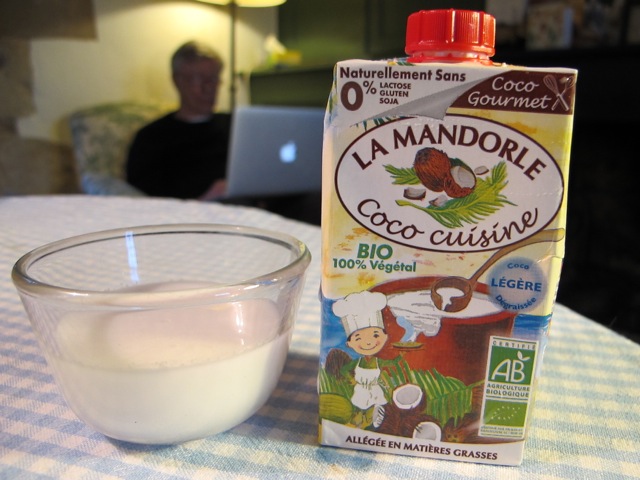
200ml coconut cream*

2 tblsps breadcrumbs

2 tblsps parmesan cheese–grated

  • set the oven to 190C/360F
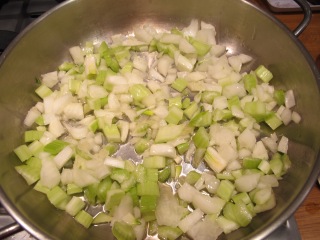
  • Heat the oil in a medium size, shallow sauté pan.
  • Fry the onion and the celery for a couple of minutes over a medium heat–

IMG_4058

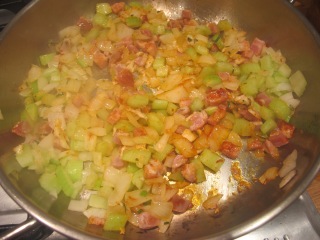
  • then add the garlic, rosemary and bacon and paprika.

IMG_4060

  • Stir these together and continue cooking and stirring as the vegetables begin to soften and the bacon colours–about ten minutes.
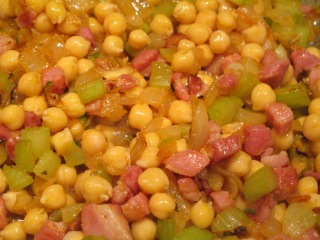
  • Turn the chickpeas into the pan and mix them in.

IMG_4065

  • Add the sweet potato half-rounds and the fennel slices and mix them in.

IMG_4066

  • Ease in the stock and the coconut cream.
  • Season with salt and pepper.
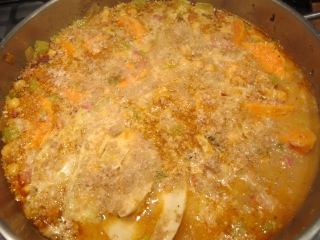
  • Bring it to the boil and sprinkle over the parmesan and breadcrumb mixture.

IMG_4067

  • Place in the middle of the oven for about thirty minutes.
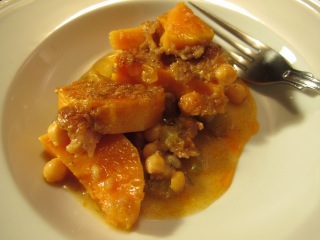
  • From oven to plate and tuck in!

IMG_4073

*The difference between coconut milk/cream and cream of coconut is fully explained here: 

http://www.thekitchn.com/whats-the-difference-coconut-m-75446/

It looks like milk, it is NOT sweetened and it does NOT taste of coconut!

IMG_2292

It’s Oscar time of the year, so categories are on my mind.

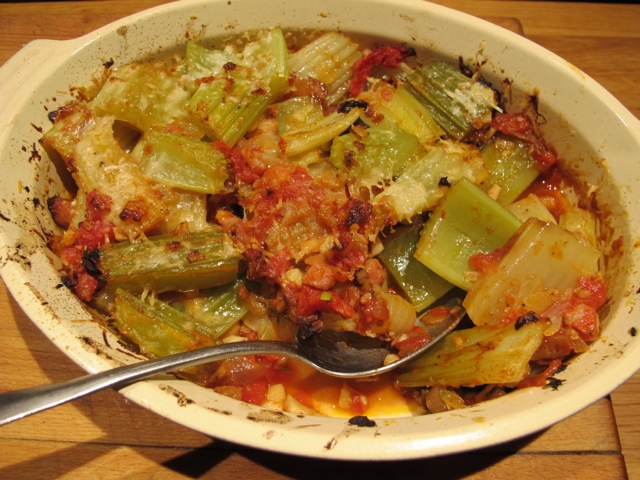
Celery often features chez nous; sometimes in bit parts–literally–as one element of a soffrito or in a supporting role as a dipping stick for sauces like anchoiade, hummus or guacamole.

Here, it comes out of the shadows and into the spotlight to take the lead, the eponymous role even–with a strong supporting cast.
IMG_4036

750 gms/1 1/2 lbs celery, (weight after separating the sticks and disgarding the damaged outer ones)–cut into short pieces

1 tblsp olive oil

onion–chopped

2 cloves garlic–chopped

3 large tinned tomatoes–chopped

1 level tsp cayenne pepper

1 oz smoked bacon–as much fat as possible removed and chopped small

sprigs of thyme and a couple of bay leaves

2 tblsps dry white wine

salt

12 juicy black olives–stoned and halved

  • Steam the celery until it’s tender and set aside.
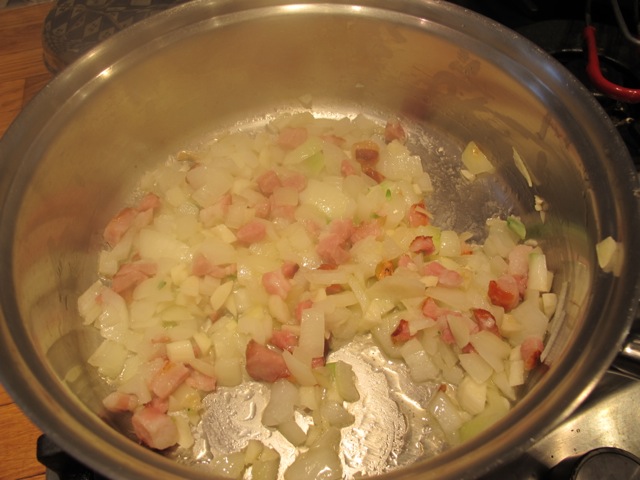
  • Sauté the bacon, onion and garlic in the oil until they start to color.

IMG_4023

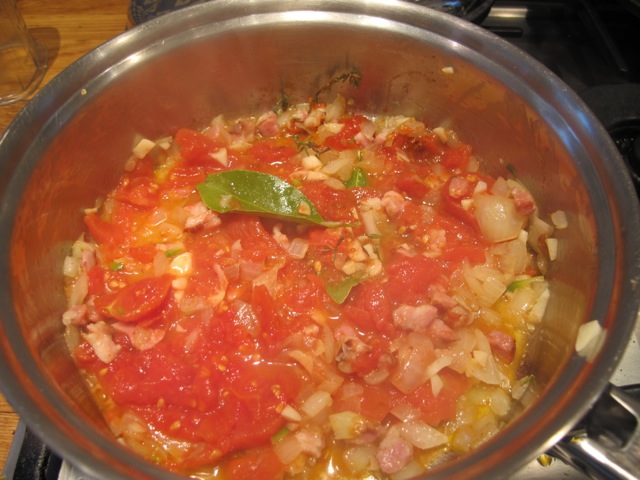
  • Add the chopped tomatoes with the spices, herbs and a pinch of salt.
  • Cook these gently for five minutes.

IMG_4025

  • Add the wine and cook another couple of minutes to let the wine evaporate.
  • Add the olives and cook on for a couple of minutes.
  • Turn off the heat and add the celery,  turning it over thoroughly in the sauce.

IMG_4028

  • Heat the oven to 220C./425F
  • Spread a layer of the celery mix over the base of an oven proof gratin dish.
  • Season and sprinkle over some parmesan.
  • Repeat the process–seasoning and sprinkling cheese over each layer.
  • Finish with a layer of parmesan
  • Place the dish on the highest shelf–checking after 20 minutes.
  • The gratin should come out sizzling with a pleasingly charred look.
  • Let it rest for 15 minutes.

And the winner is…

IMG_4000

Veggie chili.

Our friend Norma, who lives with husband Bill in McClean, Virginia close to Washington DC, has given me permission to reproduce her wonderfully detailed survey of chili traditions.

Tempting one day to cruise the Chili Trail!

Do you know that “Chili” was strictly a “Gringo” invention?  The only chili the Mexicans know is the sauce.  It was the ranchers and cowboys who first started putting together the recipe, mostly to cover up stale meat while out on the trail drive.  They also needed the extra protein while on the long cattle drives north to St. Louis, Kansan City and then Chicago.  People in the southwest don’t add beans to their chili.  That is a Midwest way to do it.  Cincinnati cilli has a dash of cinnamon.
Bar-B-Q:  Texas Bar-B-Q is always dry.  They rub seasonings and spices on the raw meat, put it on a grill and smoke it slowly until it is done.
Memphis and Kansas City Bar-B-Q is “wet” cooked in a sauce until it falls of the bone.  Most of them start with a tomato base sauce.  Also includes vinegar, molasses & paprika.
St. Louis has mustard and brown sugar.
Thanks, Norma!
Anyone care to add other chili wisdom?

Fed up with February!

This phrase occurred to me yesterday–there’s a post, I thought and fully justified.

We are fed up with February and with good reason this year.

We’ve both had heavy lingering colds, the roof is leaking, it snowed on Sunday and has been wretched all week.

The fields are sodden, the firewood’s damp, the chickens complain loudly and the cats stay in all day.

Every mile is two in winter–poet George Herbert got it right.

Then today happened…

IMG_4024

a Spring-like day in the Tarn!

New Yorkers have the perfect phrase–

“Whaddya gonna do about it!”

Meredith tells me these are called kidney beans in America and she didn’t like the ones on offer when she was growing up in Chicago.

With any luck, things have changed!

Adapted from Rose Elliott’s The Bean Book this is a simple solution for people who don’t eat meat but like the look of chilileave out the carne!

After experimenting with variations–the addition of cumin powder and even Dijon mustard–I settled for the simpler the better.

Quickly done–and tastes even better the next day.

Don’t forget the lemon!

IMG_4000

1lb/450gms good quality red beans from a jar or tin–drained and rinsed

1 onion–chopped

1 clove of garlic–chopped

2 tblsps olive oil

1 14oz tin of tomatoes–broken up, with all the juice

1 teaspoon chilli/cayenne powder

juice of half a lemon or more to taste

salt and pepper

  • Soften the onions and garlic gently in the oil–stirring often.

IMG_3997

  • Add the chilli powder and the chopped tomatoes with their juice.
  • Mix these well together, blending in the tomatoes.
  • Add the beans and season with salt and pepper.

IMG_3999

  • Bring gently to the simmer and cook, covered, for fifteen minutes.
  • Pour over the lemon juice and mix in.
  • Serve over some basmati brown rice with perhaps a bowl of yogurt sauce with cumin and garlic on the side.

Pasta e ceci

Old friends reunion weekend.

Delicious Dishes illustrator Hope James comes for a few days sketching for the new book.

IMG_3939

Our friends Tari and Marc keep her company on the flight.

IMG_3945

Visionary gardeners both–they help cheer up a wet and cold February (the weather is atrocious and the fields are under water), with new configurations and plantings in the garden and courtyard.

IMG_3979

Boggle (word game) is played and Fan Tan and I Doubt It! (card games).

Last night after dinner Meredith opened a door at the back of the house to close the shutters and shouted to everyone to take a look.

We did and what we saw was remarkable and unexpected.

A sudden snowstorm had magically transformed the landscape into a white wilderness–in the space of a couple of hours.

(No photo sadly–it was 11pm!)

This morning after a warmer night it had shrunk back to a disappointing near normal.

This evening this thick comforting soup serves as some compensation.

IMG_3792

It has been eaten in Italy since Roman times.

The poet Horace wrote about heading for home and a bowl of leeks, pasta and chickpeas.

There are many variations on the theme of chickpeas and pasta. A constant flavour is rosemary.

 serves 4

450g cooked chickpeas–tinned or bottled

6 tbsp extra virgin olive oil

1 carrot–chopped fine

1 stick of celery–chopped fine

1 small onion— chopped fine

4 garlic cloves–pulped with a teaspoon of salt

1 tbsp tomato concentrate

pinch of cayenne pepper--(optional)

a sprig of rosemary and a sprig of sage

750ml vegetable stock–I use organic vegetable stock cubes

Parmesan rind–(optional)

salt and black pepper

180gms small (tubular) pasta

olive oil to swirl in each bowl

  • Purée two thirds of the cooked chickpeas in a food mixer.
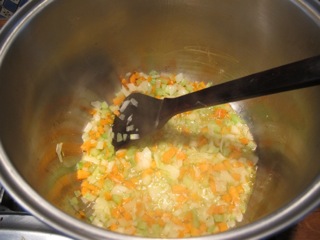
  • In a large pan gently sauté the carrot, celery and onion until they soften–about 10 minutes.

IMG_3994

  • Add the garlic, the cayenne if using and the herbs, mixing them in for a couple of minutes.
  • Stir in the tomato concentrate and cook a further couple of minutes.
  • Stir in the chickpeas and the purée.
  • Add the stock and the parmesan rind if using and bring the soup gently up to the boil.
  • Add the pasta and stir well making sure the purée doesn’t sticking to the bottom of the pan.
  • Season and simmer until the pasta is done–adding more water if it gets too thick.

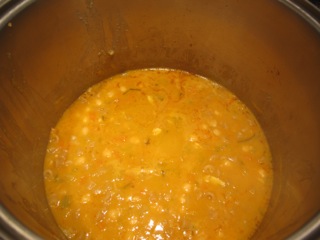
IMG_3995

  • Serve hot.

The round red pumpkins that crowd the market stalls at this time of the year are works of art. Perfect spheres that stand upright, proudly showing off their beauty.

IMG_2735

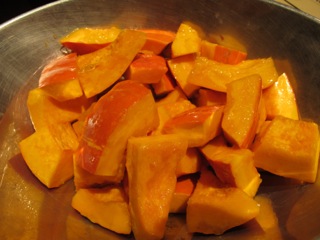
Seems a shame to cut them up and eat them–though they still look a picture when in bits!

IMG_3913

You could make a glowing soup with more or less the same ingredients as below.

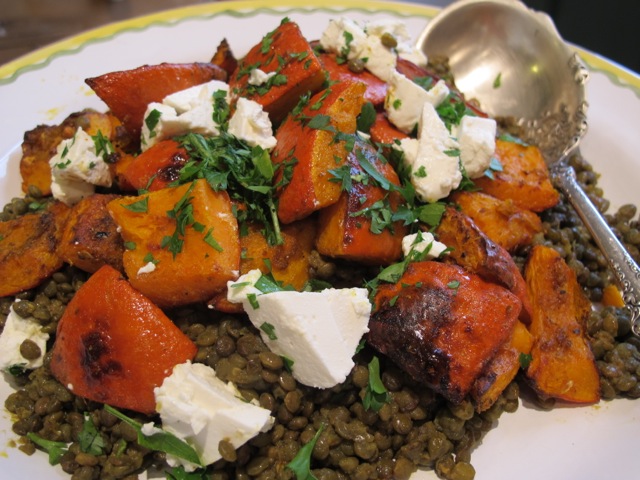
Here the large dice are simply roasted for half an hour in a hottish oven and spread on top of the warm lentil salad I posted a couple of days ago or eaten as an accompanying vegetable.

IMG_3894

for 2

1 small pumpkin or pumpkin slice–about 450gms/1 lb

1 tsp cumin

1/2 teasp coriander

1/2 tsp cayenne

1 tblsp olive oil

salt and pepper

heat the oven to 220C/450F

  • No need to peel the skin of the pumpkin just…
  • …halve the pumpkin ball from top to bottom with a large knife and a great deal of care.
  • Using a serving spoon scoop out the interior leaving the pumpkin flesh.
  • Cut the two halves into bite-size bits and put them in a bowl.
  • Add the oil and the spices and season with salt and pepper.
  • Turn the mix over thoroughly.
  • Spread it out over a shallow oven tray covered in foil–(saves scraping the charred bits off later.)
  • Roast for 30 minutes by which time the bits will have cooked through and charred a little.

IMG_3915

  • Serve as you like.

Just over a year ago a croak went out from a sick bed just after Christmas–for Chicken Broth!

( The bones of Richard the Third may be trying to communicate the same request, after being so rudely disturbed from their place of eternal rest under a car park in Leicester, England–

A broth, a broth my kingdom for a broth!–[Blow the horse!])

Now Meredith is laid up again with a nasty cold–not surprising after our breathless ten days in the States.

As ’tis the very season of snuffles and croaks–here again is last year’s post on a traditional remedy to ease the discomfort.

“Horses for courses”–chicken for chills!

“Please–just some broth today!” was the request this morning from the sick bed.

Poor Meredith has been fighting the lurgy since Christmas Day.

Not a person to give in lightly to a tickle in the throat she has been up and back to bed all week.

We were bucked up last night by watching the original Shrek film, which I hadn’t seen.

It is high in the chuckle factor and almost as good a tonic as a bowl of chicken soup.

But this morning after a troublesome night it has to be the real thing–so here goes!

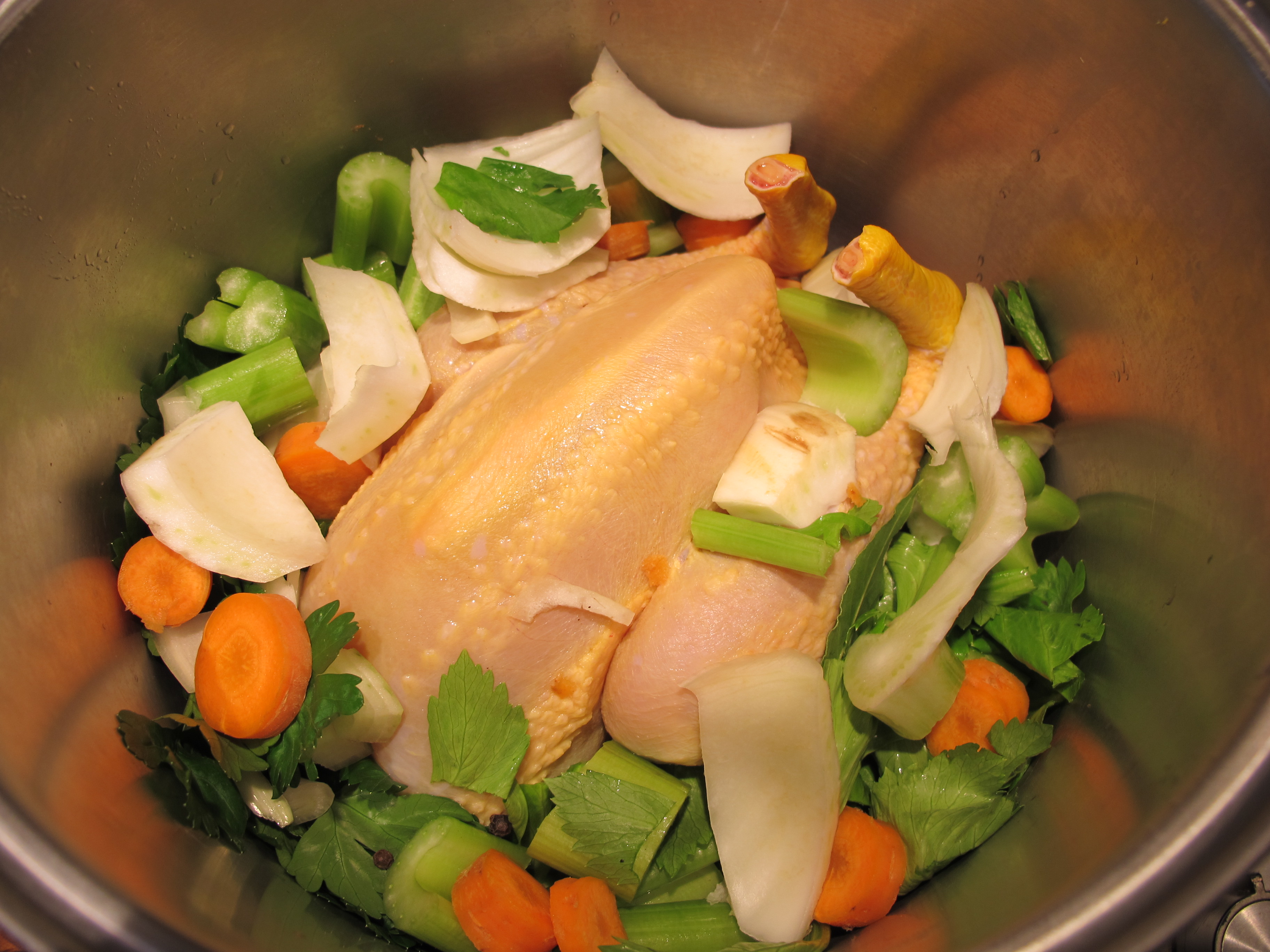
I put in a large pot:

1 chicken–washed

carrot

2 sticks of celery–roughly chopped

the outer parts of a fennel bulb–roughly chopped

onion–peeled and roughly chopped

1 small garlic bulb–with the top sliced off

bay leaves

a couple of parsley sprigs

a couple of slices of fresh ginger

a few peppercorns

3 pints of organic vegetable stock–from cubes and

the kitchen sink (only kidding!).

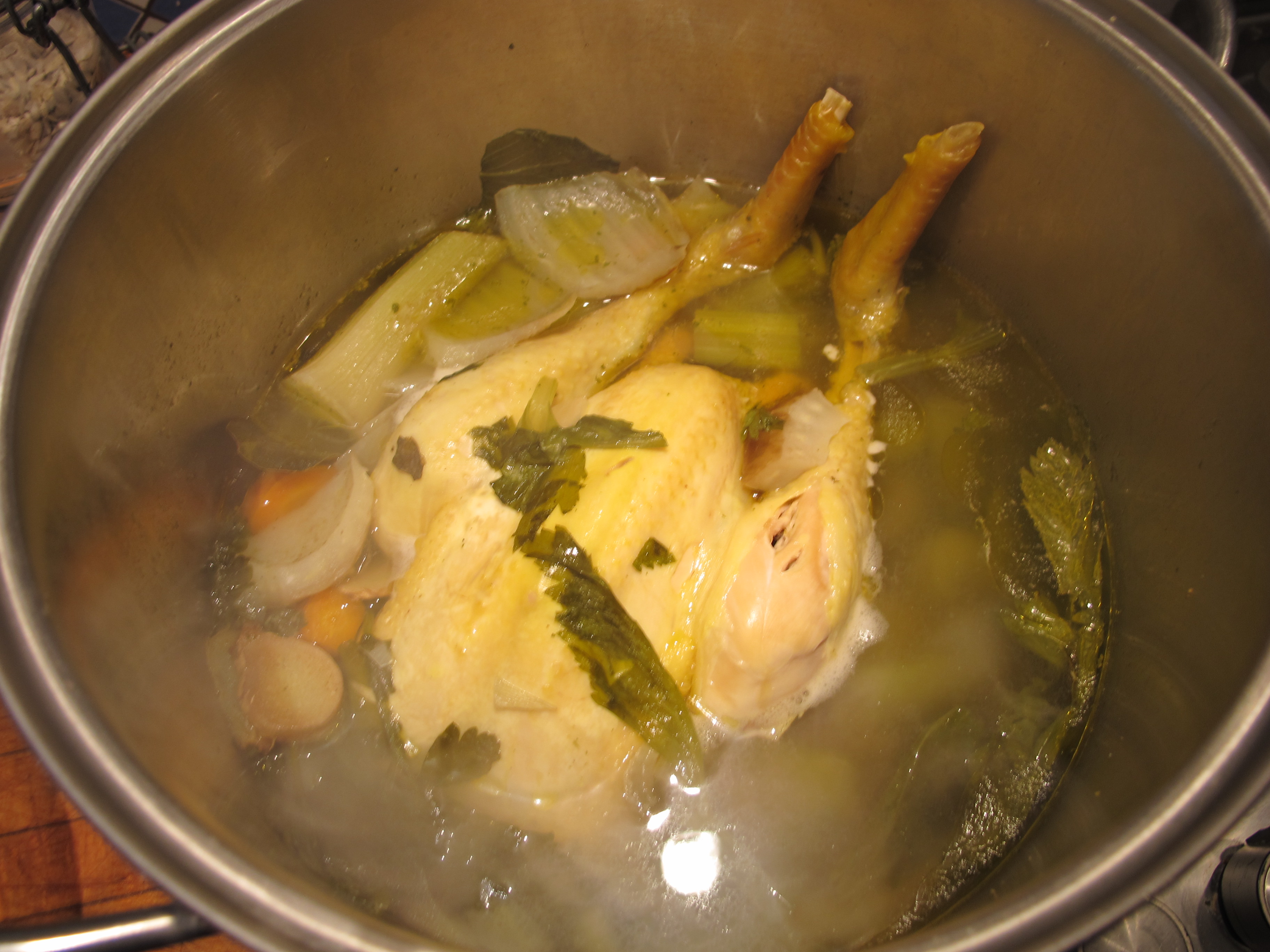
I bring these slowly up to the simmer–while feeding Beau a little cat milk and reassuring the patient that broth will be ready at the end of a brief snooze–cover it and leave it to bubble for an hour and a half.

Then I remove the cooked(out) vegetables with a slotted spoon and

add a cut up carrot, 

half a cut up fennel bulb and

some broccoli and

cook on until they soften and serve them with the broth.

Now, not meaning any disrespect to “grandma’s”  traditional  cure-all remedy–especially not as in a few days I shall reach the traditional “alloted span” and so must watch my tongue–I always find this broth/soup less than more-ish. So what am I doing wrong?

(Our friend Charlotte suggests plenty of leeks and some nutmeg!)

Nevertheless the patient said she was happy with the outcome, but advised that the broth be refridgerated overnight for the fat to rise, be skimmed off and the soup to be reheated.

The pot is coming to a simmer as I write and will be ready, I hope, for a soothing supper for the sufferer.

Good enough for a King too I hope–if he can get himself together!