Meredith points out that this is more North than South–more Normandy than Mediterranean and she’s right. It’s tasty though and it is a one pot dish to go with some brown basmati rice or quinoa. Adapted from Jenny Baker’s handy Kitchen Suppers, this is a flavoursome way to cook an alternative to chicken.
for 4
1 guinea fowl–cut into six pieces ( larger pieces stay moist better)
2 large apples–(cox’s/fuji), peeled, cored and quartered
1 fennel bulb–cut into quarters or eighths if it is large
1oz/25gm butter
1tblsp olive oil
1/2 tsp cinnamon powder
salt & pepper
150ml/1/4 pint dry cider
2 tablespoons no-fat yogurt–whisked smooth (this is optional–it gives the sauce a little more depth)
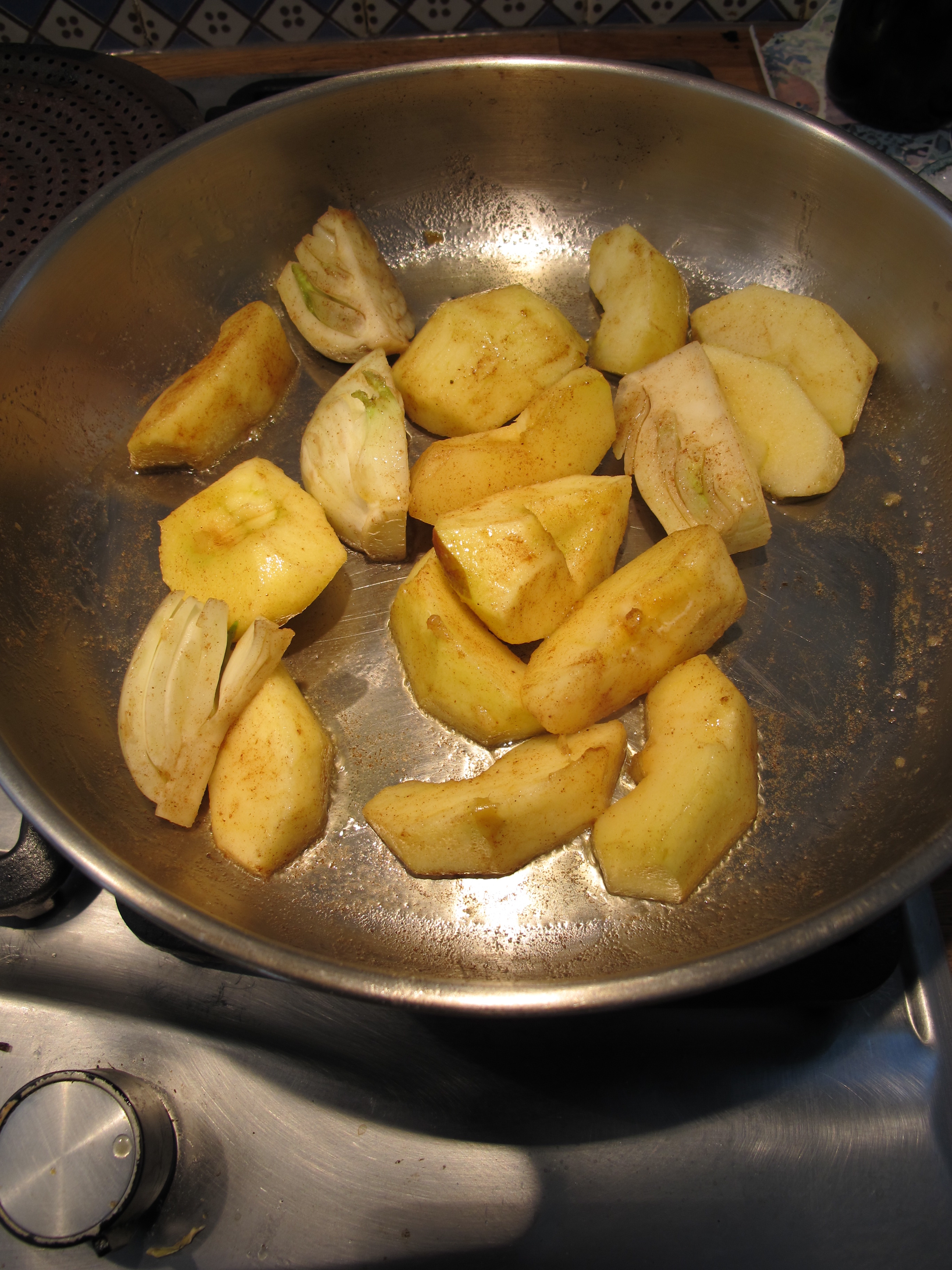
- Fry the apple and fennel pieces, sprinkled with cinnamon, in half the butter and oil for 5 to 10 minutes
- and set aside in a bowl.
- Boil the cider in the pan to reduce it to roughly 3 tablespoons and pour it over the apples.
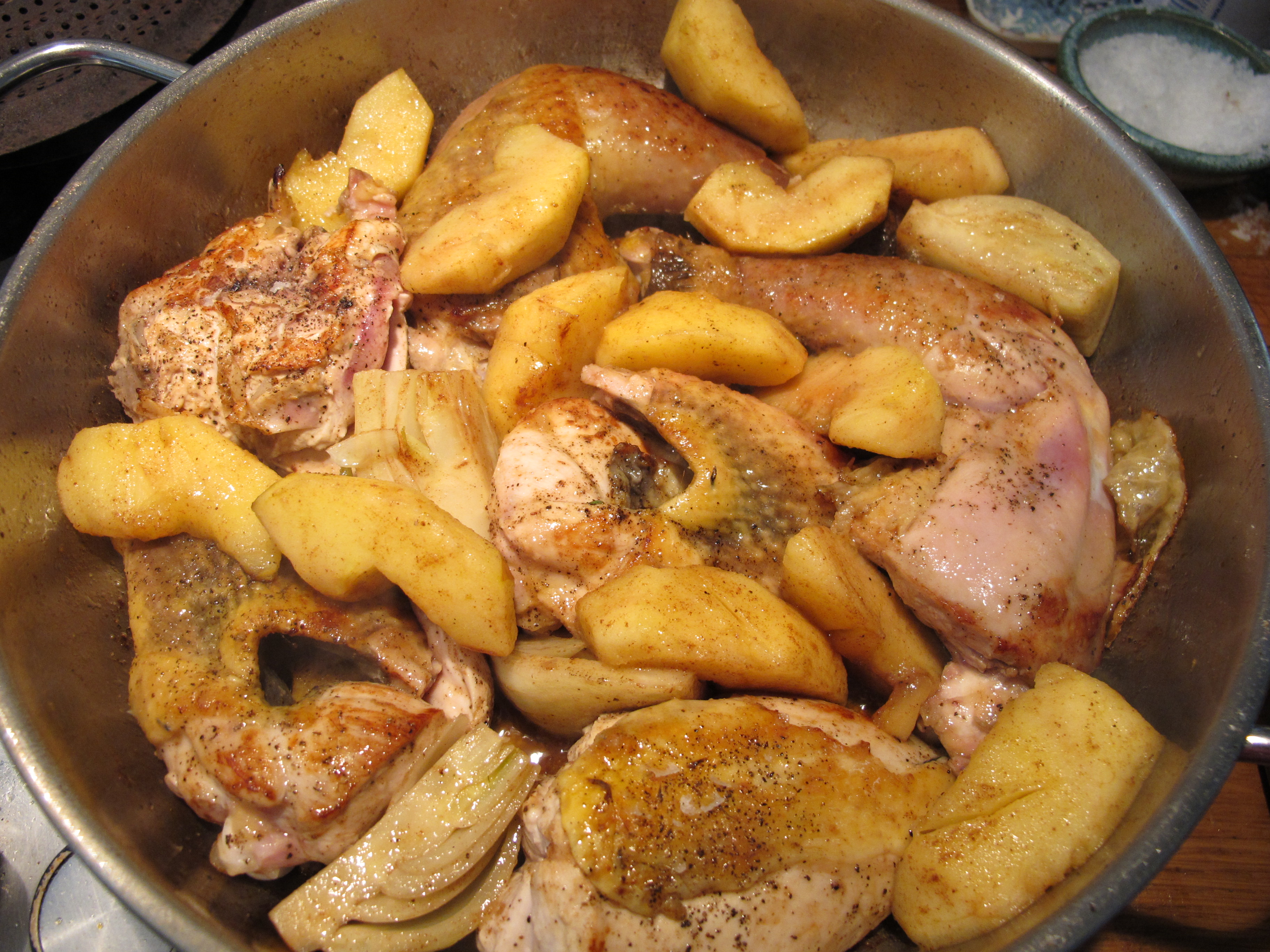
- Brown the guinea fowl pieces on a medium heat in the remaining butter and oil, seasoning them as you turn them over.
- Return apples, fennel and sauce to the pan.
- Cover the casserole and cook on a low heat for half an hour.
- The juices of the guinea fowl should run clear when the thigh is pierced; if they are still pinkish, cook a little longer.
- Remove the guinea fowl pieces, the apples and fennel from the casserole
- Whisk the yogurt into the sauce.
- Carefully pour the sauce into a heated jug.
- Serve with brown basmati rice or quinoa and the apple and fennel pieces.
Archive for the ‘Recipes’ Category
Pot Roast Guinea Fowl with Cider, Fennel and Apples
Posted in Food, Recipes, tagged guinea fowl with apples, guinea fowl with cider, guinea fowl with fennel, guinia fowl, roast guinea fowl on May 12, 2011| 5 Comments »



Sardines on a sad sunny day
Posted in Food, other sides to this life, Recipes, tagged butterflied sardines, pets, sardines, sick cat on May 11, 2011| 21 Comments »
It’s a beautiful pre-summer day and there were some fresh looking sardines at Intermarché in Realmont.
A bit early to be thinking “summer lunches” but we need cheering up, so I bought three each–juicy ones–and butterflied them.
We had them baked with a simple fennel salad which cuts the richness of the sardines.
Butterscotch is still not well–in fact poor mite–she’s worse and so thin.

Butterscotch aka little Mother
She wants to eat and to go on as usual and doesn’t understand why she can’t.
She came out into the garden this morning while we did the exercise routine with our friend Flo and was “with us”–as cats often like to be.
Going over to Flo she did one of those wonderful cat “rolls” they do for you– “it’s a greeting” Meredith says.
She managed it and even did a return roll–that lifted our spirits.
She is twelve now and some systems seem to be failing her.
“On s’attache”–“you grow fond”–of your pets and it’s hard.
Here’s the recipe to cheer you up after reading this!!
For 2
6 firm and fresh sardines–butterflied (see below)
100gms/4 oz wholewheat breadcrumbs
1 tablespoon parsley–chopped
2 garlic cloves–chopped fine
1 tablespoon of capers–chopped
a pinch of dried oregano
3 tablespoons olive oil
salt and pepper
Heat the oven at 180°C/350°F/Gas Mark 4 if using.
Butterfly filleting is a bit of a business but rewarding.You’ll need a
chopping board and plenty of kitchen paper. Have a pair of
scissors to hand and a plate to receive the fillets. Make sure
there are no scales left on the fish, then with the head in your
left hand and the body in your right, gently pull the head off
and as much of the innards as possible from the tail end. Use
the scissors to snip along the belly, then with your left thumb
coax out the rest of the innards. Place the fish, belly down, on
the board and press gently up and down the backbone with
both thumbs. Flatten the fish as much as you can with three
fingers of both hands. Lift and snip off the small fin, then snip
the backbone at the tail end and, with the left hand, draw it
carefully away from the body, taking care not to take too
much of the flesh with it. Voila! You have a butterfly fillet.
- Wash and dry the fillets
- Place a sheet of foil on a shallow baking tray
- Using a brush if you have one it spread it with a tablespoon of oil.
- Place the fillets on the tray.
- In a bowl combine the breadcrumbs, parsley, garlic, capers, oregano and season with the salt and pepper.
- Pour over a tablespoon of olive oil and mix it all together thoroughly.
- Spoon the mixture evenly over the fillets.
- Drizzle over the remaining olive oil adding a little extra if you feel it needs it.
-
before baking
- Bake for 15 minutes.
-

and–after baking

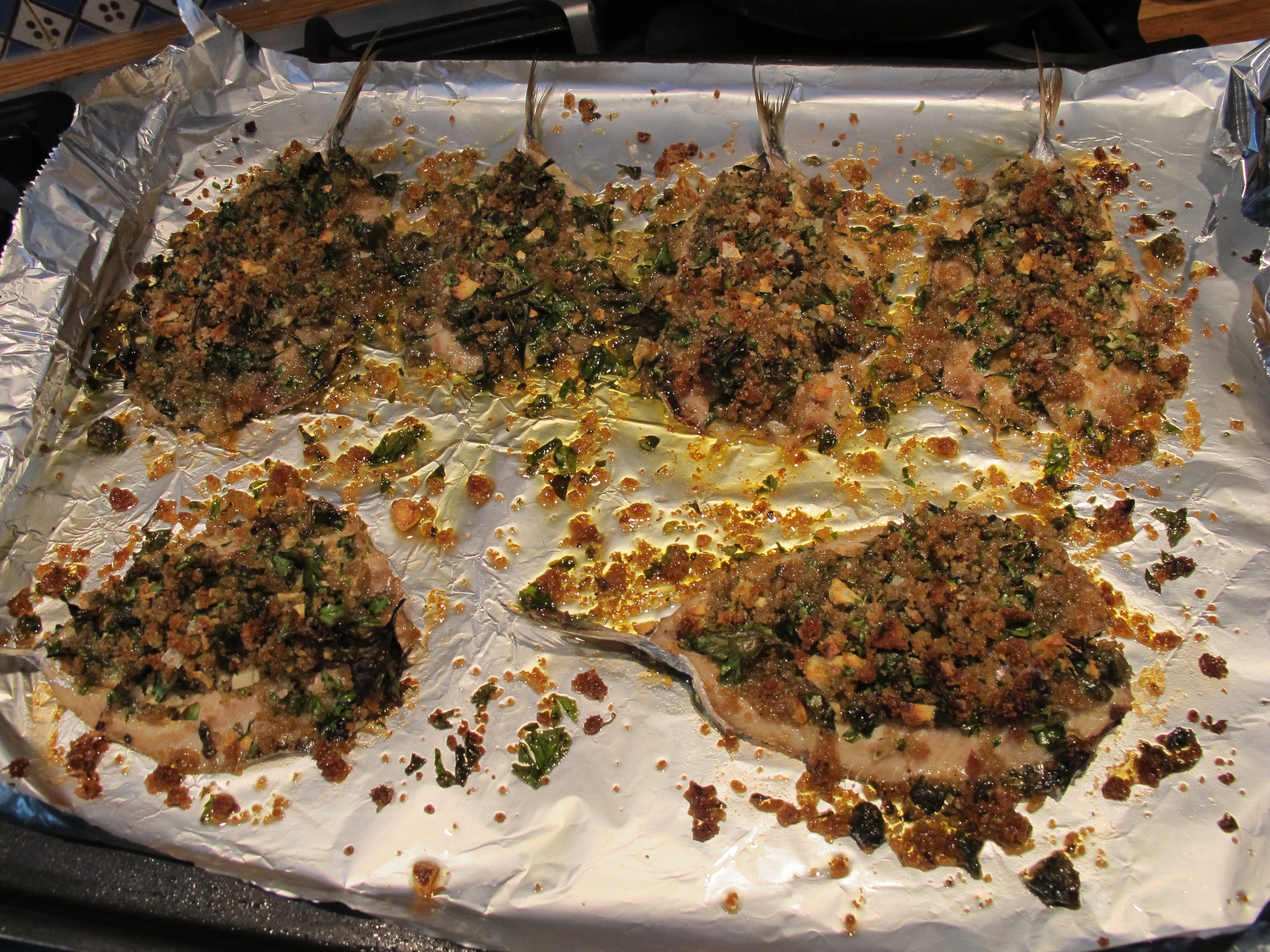
I let them have a minute under a hot grill this morning to finish off.
A flexible lunch and an offer I couldn’t refuse…
Posted in Food, other sides to this life, Recipes, tagged avocado salad, vinaigrette recipe on May 6, 2011| Leave a Comment »
I’d bought fish fillets today for lunch–but wasn’t sure what to do with them–spice ’em up?–have ’em in tomato sauce?–season ’em well, grill ’em and eat them with little gem lettuce and spring onions?
Meredith arrived with ripe avocadoes and a firm penchant for an avocado salad with spring onions, lettuce, lightly sautéed bacon bits, a few juicy black olives and a poached egg on top—-AND she was offering to make it–no contest, win-win, I thought!
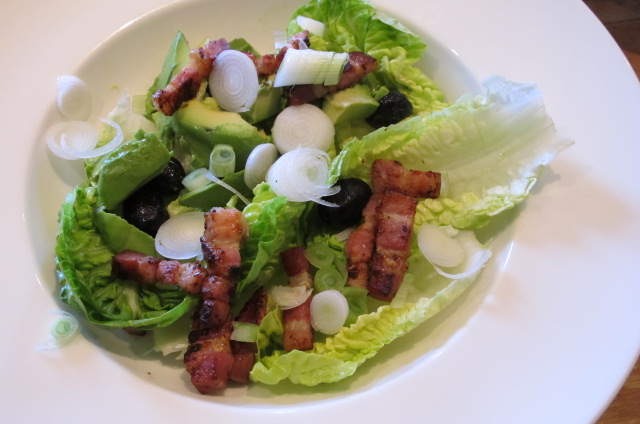
poached egg and dressing to come!
and so it was.
I drizzled some of our best olive oil over the crisp looking salad with a sprinkling of salt; while Meredith added a spoonful or two of the everyday dressing (see below) to hers–and that was lunch.
Gives me time to think what to do tomorrow with the fillets resting in the fridge.
Everyday vinaigrette (from Delicious Dishes for Diabetics)
1 clove garlic–pulped with a pinch of salt
1 tblsp balsamic vinegar
1 tsp dijon mustard
6 tblsps olive oil
- mix the first three ingredients thoroughly
- add the olive oil and whisk to a viscous delight
Chicken Casserole
Posted in Food, other sides to this life, Recipes, tagged chicken casserole, Molly Ellis, Morris dancer on May 5, 2011| 20 Comments »
This recipe–inspired by one we ate at our friends and neighbours Julie and Richard–reminds me of meals round the kitchen table at home in the fifties. It’s simple and inexpensive and would possibly stretch to a second meal–important factors for my mother, with a husband and three children to feed and limited means.
Nevertheless she could be an adventurous cook. The dishes she tasted on the trips to Europe we enjoyed as a family with Dad’s concessionary rail tickets (he worked for the LMS–London Midland and Scotland), encouraged her to experiment in a modest way. Nothing very exotic about this–except its little kick from the chillies and the olives and peppers added at a later stage; comfort food really but none the worse for that.
She would would have celebrated her ninety sixth birthday this Saturday–so this is for her too.

Ma with a Morris dancer!--on 'is way to the 'obby 'oss festival perhaps..
100gm/4 oz bacon/pancetta–diced small
3 sticks or a heart of celery– chopped small
1 medium onion–chopped small
1 clove of garlic–chopped
3 tablespoons olive oil
1 free range chicken–cut into 8-10 pieces and washed and dried
1 sparse tablespoon flour–I use chickpea
125ml/4fl oz white wine
125ml/4fl oz of stock–I use organic vegetable stock cubes
8oz/250gms tinned tomatoes–chopped roughly
3/4 sprigs of rosemary
3 small fresh red chillies
1 red pepper–cut in thin strips
a handful of juicy black olives–stoned if you have the time
a handful of parsley–chopped
set the oven at 160c/320f
- Heat a tablespoon of olive oil in a large frying pan and sauté the onion, celery, bacon, and garlic gently for about 20 minutes allowing them to colour–concentrating the taste. Spoon the mixture into an oven-proof casserole.
- Season the chicken pieces and heat another spoonful of oil in the frying pan.
- Sauté them on a highish heat–turning them as they brown.
- Transfer them to the casserole.
- Tuck in the whole chillies and the rosemary sprigs and pour over the wine and the stock.
- Sprinkle over the flour and add the wine and the stock.
- Turn over the contents, cover the casserole and bring to a simmer on the stove.
- Transfer it to the oven and cook for 30 minutes.
- While this is in the oven, heat the third tablespoon of olive oil in the pan and gently sauté the strips of pepper.
- Add these to the casserole with the olives after 30 minutes and cook, uncovered, for a further 15 minutes in the oven.
- Sprinkle over the parsley and serve over brown basmati rice or quinoa

Pollock steak with rosemary and anchovy
Posted in Food, Recipes, tagged achovy, pollock, rosemary on May 3, 2011| Leave a Comment »
This is a variation on a recipe from The River Café Cookbook Easy.
.
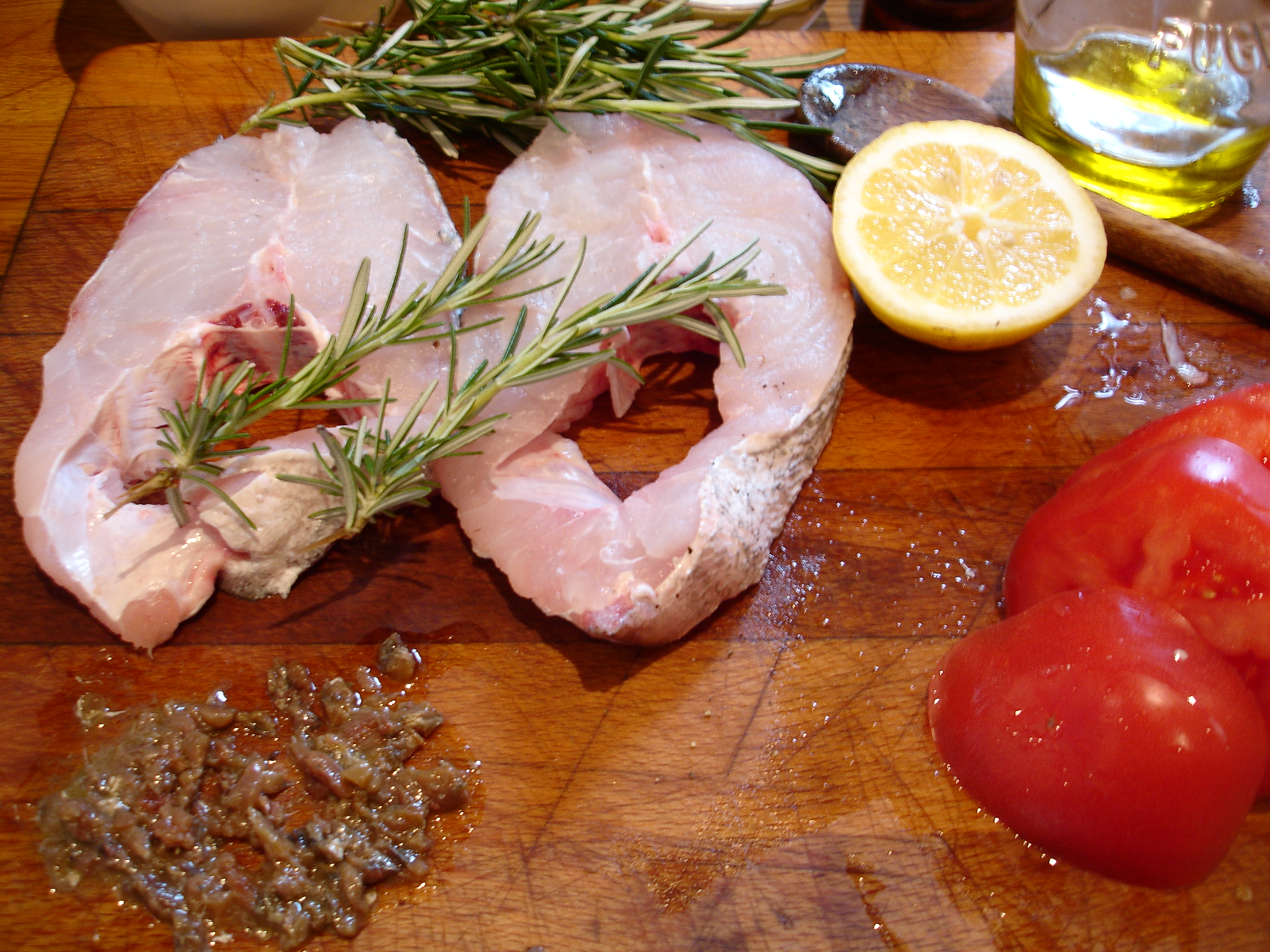
Pollock steaks at the ready!
I’ve substituted pollock for monkfish (it’s on the list of sustainable fish) and added a sliced tomato which melds well with the oil, anchovy and lemon base. In the summer, sweet little cherry tomatoes halved add even more colour and taste.
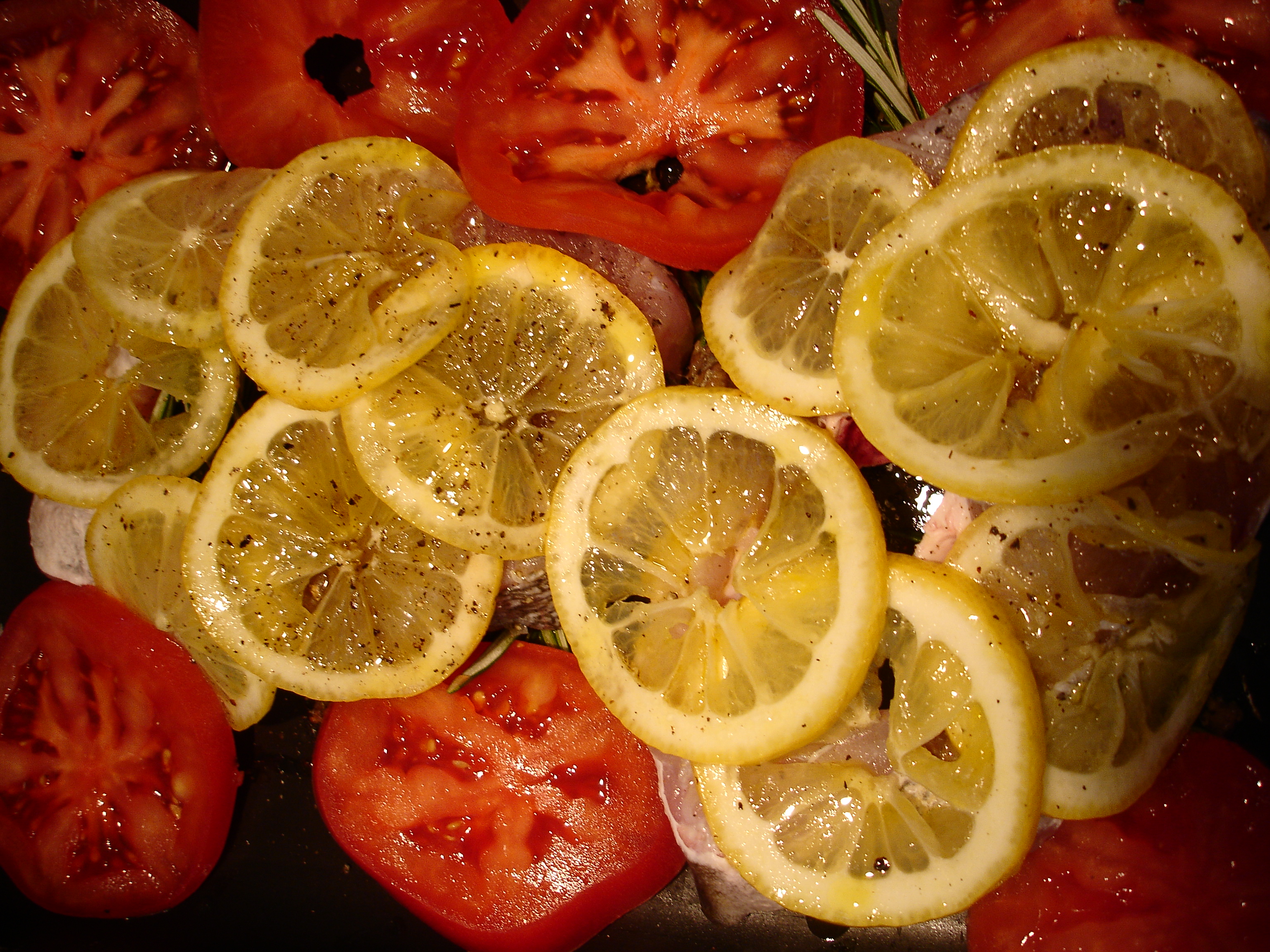
Find the fish!
For 2
2 pollock steaks–rinsed and patted dry (you could try fillets–though the bone in the steaks adds flavour I think)
A good handful of rosemary sprigs
1 lemon–sliced thinly
2 anchovy fillets–mashed to a pulp
1 largish tomato–sliced thinly (you can use a couple of tinned tomatoes–roughly chopped)
3 tablespoons of olive oil
Salt and pepper
Heat the oven to 220c/420f
- Put the lemon slices in a bowl and season them with salt and pepper–add a tablespoon of olive oil and mix carefully but thoroughly.
- In a small, shallow oven tray heat about a tablespoon of olive oil.
- Spread the rosemary over the base.
- Place the fish steaks on top and season lightly.
- Spread half the the anchovy pulp on each and cover them with the lemon slices.
- Arrange the tomato slices round the outside and drizzle the remaining tablespoon of olive oil over them.
- Roast in the middle of the oven for about 10 minutes–the time depends on the thickness of the steaks.
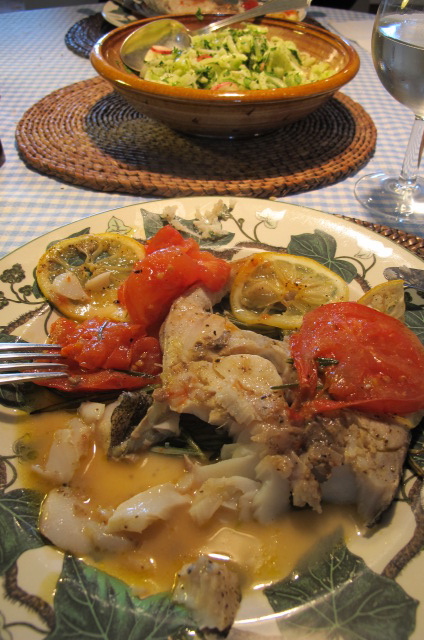
(We had a fennel, radish and celery salad with these for lunch today–dressed with of a tablespoon of lemon juice blended with half a teaspoon of Dijon mustard, seasoned and then mixed with 3 tablespoons of olive oil. Big hit with Meredith.)
A Lazy Lunch with Left-Over Black Bean Soup
Posted in Recipes, tagged black bean soup, black beans on April 30, 2011| Leave a Comment »
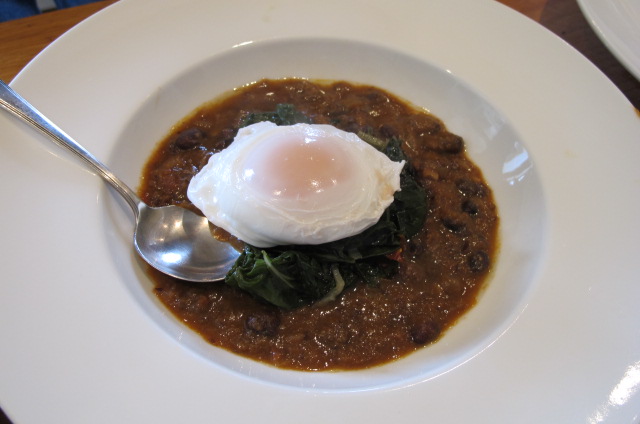
I love left-overs and some things get better with age…!
For 2
1) “Left-over” Black Bean Soup (see my recent post)–heated through–thoroughly.
2) A large handful of Swiss chard leaves (or spinach)–(about 8oz/250gms) washed and most of the water shaken off it, then sautéed in 2 tablespoons of olive oil with 1 clove of garlic sliced very fine.
Heat the oil in a pan with a lid.
Fry the garlic until it starts to colour.
Carefully add the chard, a little salt and turn it in the oil.
Cover the pan and let the chard reduce until it is tender.
Drain any excess liquid.
3) 2 eggs–poached
Assemble as above and…

--Hey presto!
Caponata–Sicilian Aubergine Wonder
Posted in Food, Recipes, tagged aubergines, Caponata, eggplant, Sicily, vegetarian stew on April 29, 2011| 12 Comments »
Caponata has as many versions as there are towns in Sicily, no doubt!
Everyone has their way of cooking this traditional peasant dish.
The English cook Jamie Oliver calls it Incredible Sicilian Aubergine Stew.
It’s a good description; this is adapted from his version.
(There are echoes of the French ratatouille, of course.)
This recipe is in my cookbook, Delicious Dishes for Diabetics, which is published in August in the UK, November in the USA.
for 4
2 large aubergines (aka eggplant)–cut in chunks, salted and left to drain–overnight if you can, but an hour or two anyway (They soak up less oil this way, when cooked.) Dry them thoroughly with kitchen paper.
1 tsp dried oregano
s&p
1 small red onion–chopped fine
2 garlic cloves–sliced fine
1 small bunch parsley– stalks chopped separately very finely–(chop the leaves finely too to scatter over the finished dish)
2 tablespoons of capers–drained and squeezed free of liquid
A handful of green olives–stoned, if you’ve time
2/3 tablespoons herb vinegar (I use tarragon vinegar)–not more or it dominates
5 ripe tomatoes (tinned, if it’s not the season)–roughly chopped
Heat 2 tablespoons of olive oil in a large pan.
Add the aubergine chunks and oregano (do this in two lots if your pan isn’t big enough)
Cook on a highish heat to brown the chunks, turning them as they colour.
(This is the longest part of the cooking.)
When the aubergines are nicely coloured, add the onion, garlic and the parsley stalks.
Cook for a couple of minutes.
Add more olive oil if you feel it needs it.
Add the olives, capers, and herb vinegar.
When vinegar has evaporated, add the tomatoes.
Bring up to a simmer and cook on a gentle heat for 15 to 20 mins, covered for the first 10 minutes, until the aubergines are really melting.
Season with pepper and salt–bearing in mind that you salted the aubergines earlier.
Sprinkle over the parsley.
Serve with extra olive oil on hand.
Tonight we have a vegetarian among the six, so I am serving this as a vegetable with our slow roast shoulder of lamb and as the main dish for the vegetarian.

caponata–tastes better than it looks!
Green Lentils with Chorizo and Smoked Paprika
Posted in Food, Recipes, tagged chorizo, green lentils, lentil soup, smoked paprika on April 27, 2011| 4 Comments »
A dish to see off the winter chill.
This is adapted from a recipe by Australian cookery writer Jody Vassallo and is a relatively quick all-in-one dish for small company.
It took me about 50 minutes from arriving back from the market to turning off the gas under the casserole.
Chorizo–sausage of the moment–to be eaten in moderation of course!
If made earlier in the day, you may need extra water when reheating it, as the lentils will continue to absorb the liquid–but it shouldn’t be swamped.

2 chorizo sausages–I prefer spicy ones–sliced into round chunks
2 tablespoons of olive oil
1 onion–chopped fine
1 carrot–chopped fine
1 stick of celery–chopped fine
1 small fennel bulb–outer casing and core removed–chopped into small chunks
50 gms/2 oz pancetta or bacon–chopped
1 teaspoon of smoked paprika
120 ml/4 fl oz white wine
2 garlic cloves–peeled but left whole
a couple of bay leaves
250 gms/ 8oz green or puy lentils–the small grey-green ones–washed and drained
1 litre of water–with extra to hand
salt and pepper
a small bunch of parsley–chopped
Heat the oil in a medium casserole and fry the sausage and pancetta/ bacon until lightly coloured.
Remove and set aside on kitchen paper.
Add the onion, carrot, celery and fennel and cook these in the same sausage-informed oil for about seven minutes–until they too have lightly coloured.
Return the sausage and bacon to the casserole, sprinkle over the smoked paprika, add the wine, the garlic and the bay leaves.
When the wine has evaporated, add the lentils and the litre of water.
Bring up to the simmer, cover and cook until the lentils are tender, about 20–30 minutes.
Season well and serve in warm bowls with the parsley sprinkled over and a swirl of olive oil perhaps.

steaming bowl of lentils and chorizo!
Mint Sauce with a difference for a Holiday Meal
Posted in Food, other sides to this life, Recipes, tagged apples, cider vinegar, homemade mint sauce, make your own mint sauce, mint sauce on April 23, 2011| 2 Comments »
Homemade MINT SAUCE with apple and onion (goes well with roast lamb or lamb chops):

Meredith and I both grew up in houses in the fifties with mint in the garden.
Chicago and London–little did we know…!
The homemade mint sauce that went with the lamb roast at our house was tasty–my mother was a good cook!
Made with the traditional ingredients, as I remember–fresh mint, sugar and malt vinegar.
In this version an apple (not sugar) provides the sweetness in the sweet-and-sour sauce, which cuts the richness of the lamb.
This is included in my book Delicious Dishes for Diabetics, to be published in the UK in August and the US in November.
Leaves from a large bunch of mint
An apple–peeled, cored and roughly chopped
A small onion–quartered
Mix these ingredients in a food processor–not too finely; it should have texture.
Then add salt and a good splash cider vinegar.
Taste it for balance before leaving it in the fridge to marinade for an hour.
Bring it back to room temperature and taste again before serving.
Spicy Chickpeas–lightly sautéed.
Posted in Food, Recipes, tagged chickpeas, marinated chicken, spicy chickpeas on April 21, 2011| 7 Comments »
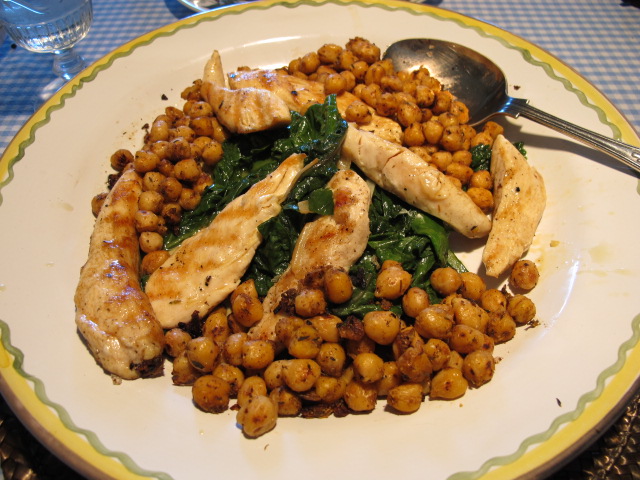
We had these spicy little numbers yesterday for lunch–with grilled strips of marinaded chicken breasts and swiss chard leaves sautéed with garlic and olive oil.
This is adapted from a lovely book of recipes by Australian cookery writer Jody Vassallo, which I found at Café Plum in Lautrec in French (it sells books as well as coffee, and feels Parisien!).
1 16 oz/450 gm tin or bottle of cooked chickpeas–drained, rinsed and dried (it’s important to dry them well– kitchen paper comes in handy here).
1 clove of garlic-crushed to a paste, with a little salt
1 tsp each of smoked paprika, cumin powder, white pepper powder, coriander powder, cayenne powder, dried thyme, dried oregano and salt–(or as many of these as you can muster!)
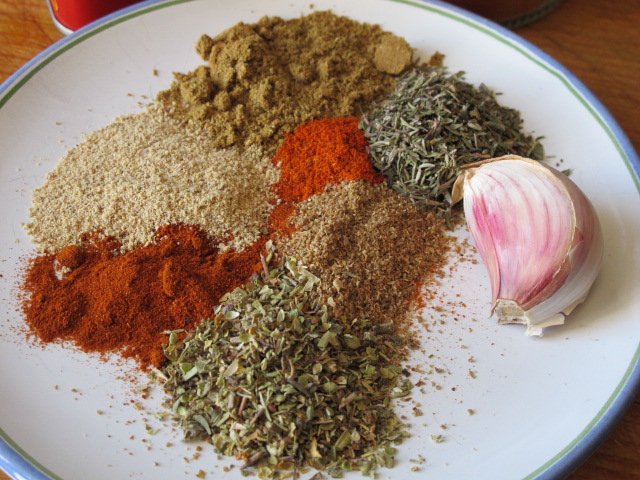
2 tablespoons olive oil
Put the garlic, spices and dried herbs in a bowl and add the salt.
Mix these together thoroughly with a fork.
Add the chickpeas to the bowl and turn them over to coat them in the mixture.
Heat the olive oil in a large frying pan.
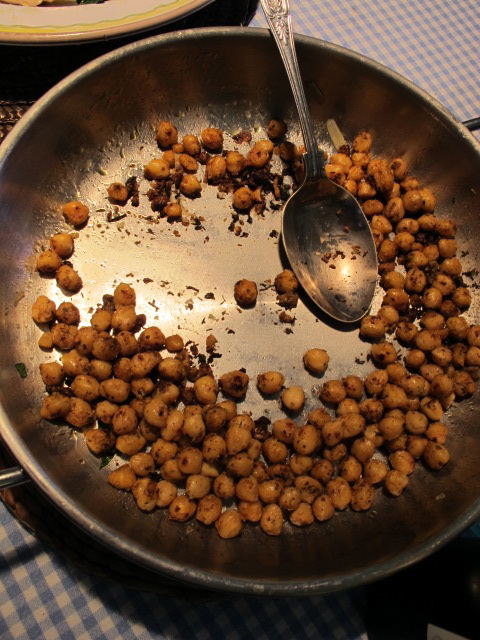
When the oil is hot add the chickpeas and roll them about in the oil–they should ideally lie in one layer.
Cook them over a gentle heat for 10 minutes, until they colour and crisp up.
They were delicious with:
A chicken breast each–cut into thin strips, seasoned and marinaded in olive oil for an hour.
Then cooked on a hot grill plate for a couple of minutes each side.
and
A large handful of swiss chard leaves (or spinach) washed and most of the water shaken off it, then sautéed in 2 tablespoons of olive oil with 1 clove of garlic sliced very fine.
Heat the oil in a pan you can cover.
Fry the garlic until it starts to colour.
Carefully add the chard, a little salt and turn it in the oil.
Cover the pan and let the chard reduce until it is tender.
The excess water makes a little sauce, but if there’s too much just drain it off.
I arranged it all on a single plate and we fought for the last chickpea!
Making Poldark: Memoir
Includes photo from the NEW Poldark series!
Mediterranean Cooking for Diabetics
Healthy Eating for Life
Delicious Dishes for Diabetics: Eating Well With Type-2 Diabetes
Follow Robin on Facebook…
-
Join 1,671 other subscribers
-
Recent Posts
Tag Cloud
anchovies angharad rees asparagus broccoli cabbage cats cauliflower celery chicken chickpea chickpeas corfu coriander courgettes cumin Dal Delicious Dishes for Diabetics diabetes Donald Douglas eggs fennel food frittata garlic ginger green beans Healthy Eating for Life honey Ismail Merchant l'ail rose de lautrec Lautrec leeks madhur jaffrey Making Poldark Marcella Hazan Mediterranean Cooking for Diabetics meredith Nigel Slater no potato fishcakes nutmeg olive harvest olive oil onion Ottolenghi parsley Poldark recipe recipes red cabbage red lentils red onion red peppers roast chicken robin ellis rosemary salmon salmon fishcakes socca soup spicy spring summer sweet potato. thyme tomatoes tour de france turmeric Type 2 diabetes vegetarian Walking walnuts white beans winston graham yogurt sauce zucchiniCategories
Twitter Updates
Tweets by RobinPoldarkMeta


 Robin Ellis