Feeds:
Posts
Comments

Archive for the ‘other sides to this life’ Category

Steadily–in twos at the moment.

Meredith came in from the garden yesterday and offered me two fat strawberries.

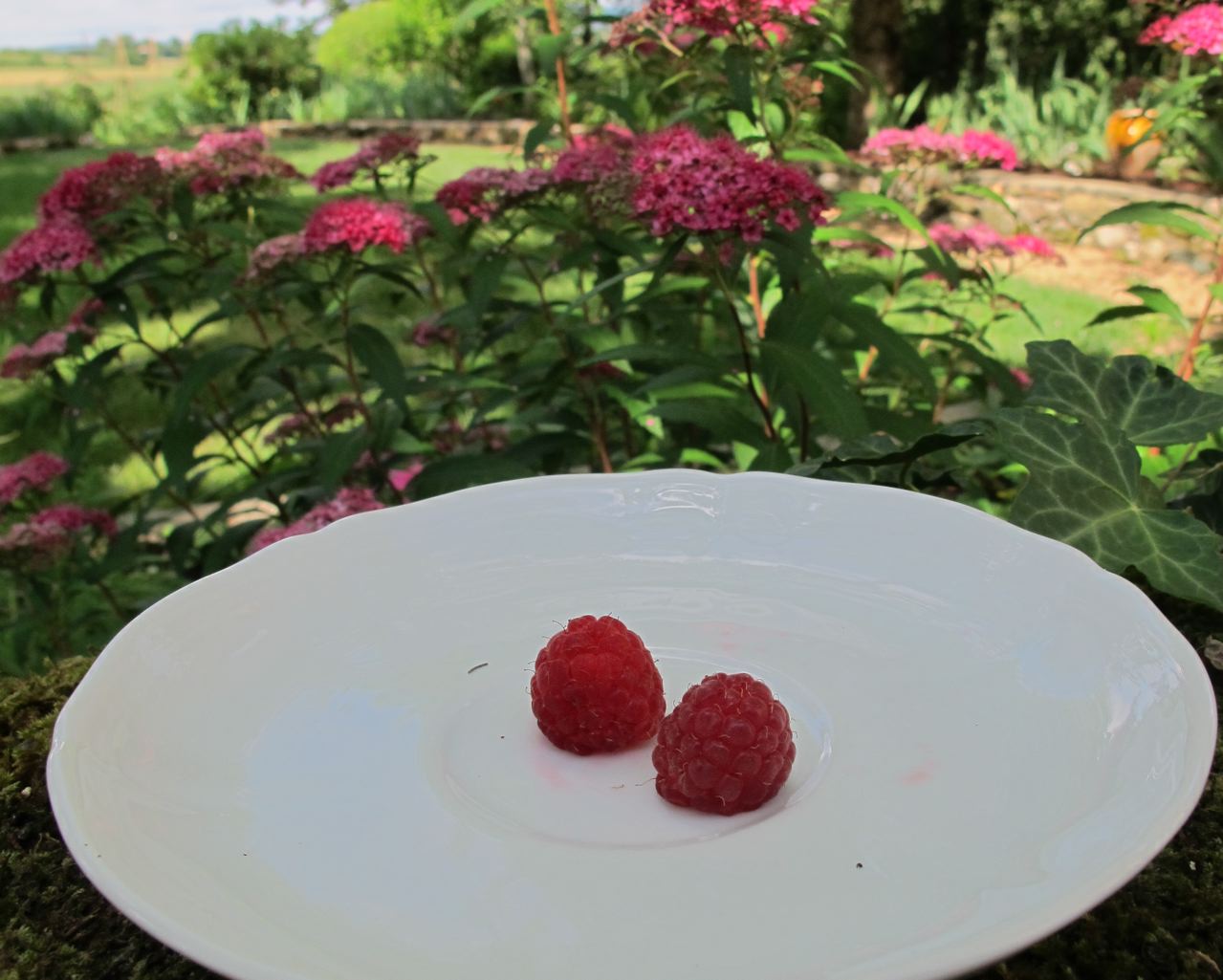
I “harvested” two raspberries this morning.
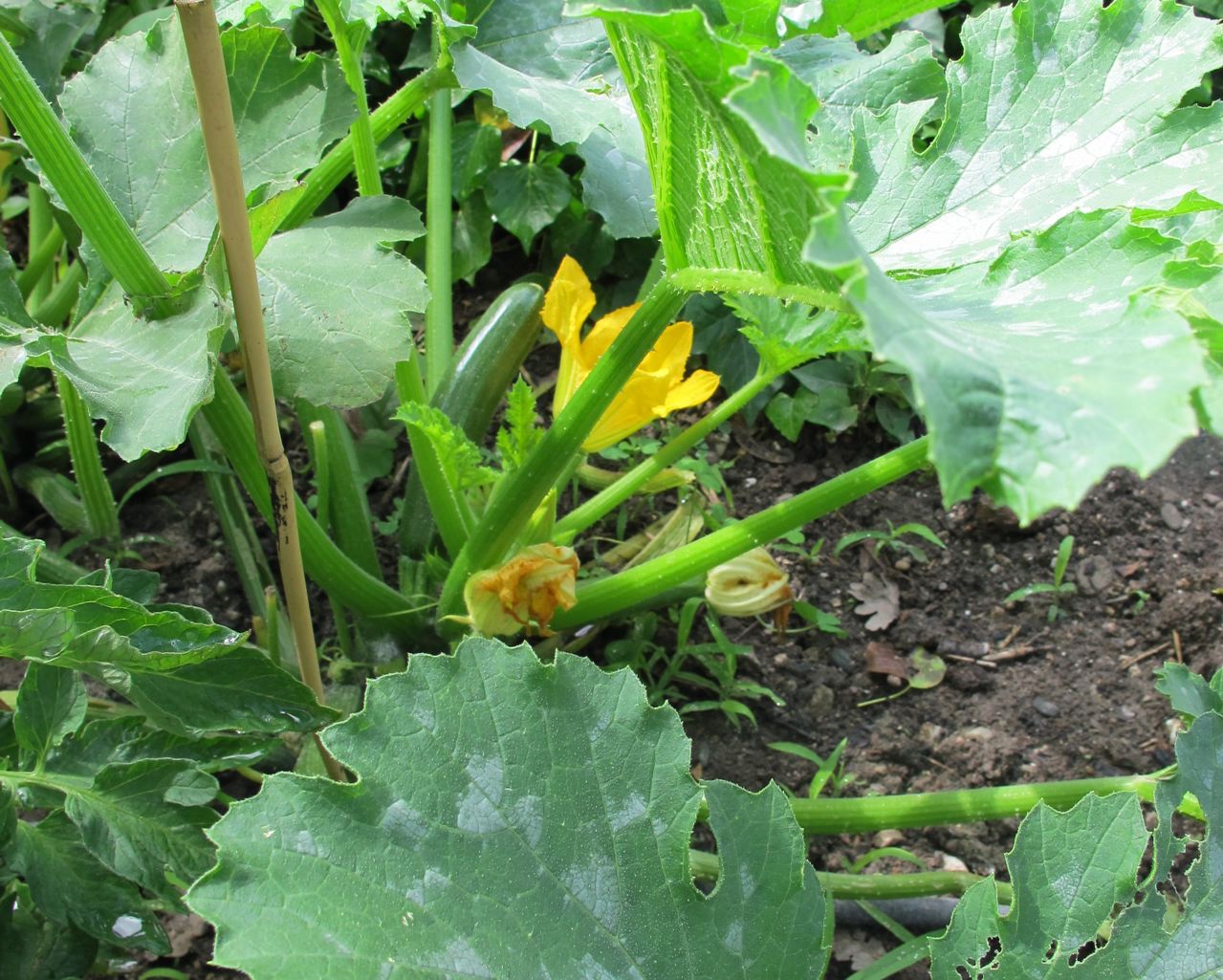
We have already eaten two courgettes.
Tomatoes are small green golf balls–but it’s only the first week of June.

The rain this week and now the sun has made us hopeful.

“Mary Mary quite contrary–” 
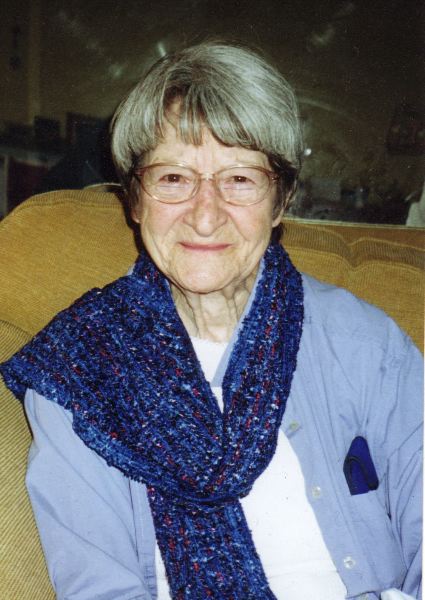
My Aunt Mary was contrary–contrary enough to live to 92–and a talented gardener.

She transformed a long rectangle behind her Suffolk cottage into something magical, with a fishpond at the end. She loved her garden and reigned over her 90th birthday party in it–on a glorious early July day.

She and my father were privately adopted in 1915 by my grandmother, who was 40 and a widow.

Granny taught violin and brought the two children up as a single mother. She lived to 87 and was contrary too–according to my mother!

Young Dad--RAF trainee

My father was an enthusiastic gardener–Dahlias in October, as I recall….He grew vegetables too–important in post war Britain where some food was rationed until 1954!

I have not inhereted the gene.

…with silver bells and cockle shells

And pretty maids all in a row.

This nursery rhyme has nothing to do with gardens, I discover, but disguises a darker theme (http://www.rhymes.org.uk/mary_mary_quite_contrary.htm).
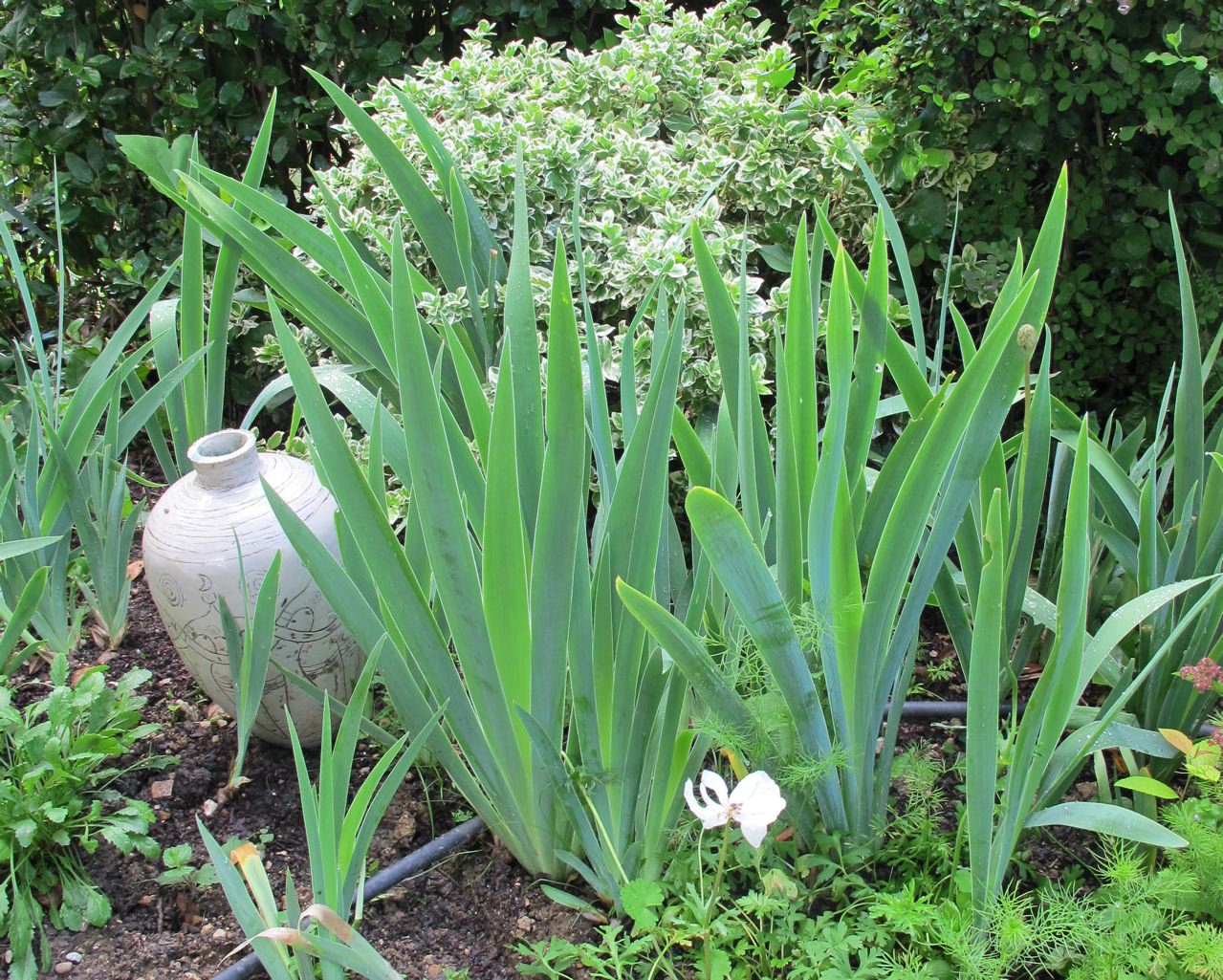
A corner of our garden--no sign of silver bells and cockle shells...just a couple of canoodling snails this morning.

Read Full Post »

It has rained on and off for the last three days and Serge–one of our young farmer neighbours–has a broad smile on his face in Lautrec market.

“J’imagine que vous êtes content…”

“Tous le monde est content!”

I mention the sunflower fields I have just driven past and how they have sprung back to life.

Patchy and arid looking a few days ago they are now returned to almost normal–serried ranks of small green plants standing proud.

He looks to the heavens and grins, miming sunflowers offering their faces to the rain and drinking deep.

I buy his last 6 eggs and remark on the pile of garlic on the stand–it looks new and I pick up a half kilo.

“Je vais te donne”( “a gift”)–I protest–he insists; I put the truss in my basket beside the eggs–everyone is happy!

There is action too in the garlic fields.

Small groups of workers arrive early and–bending low–slowly work their way through the crop, snipping off the flowers that have appeared after the rainfall.

All the plant’s energy must go into the garlic bulb in the couple of weeks remaining before the harvest.

Now the sun comes out.

The biting north wind has dropped and June feels like June at last!

Tous le monde est content…!

Read Full Post »

Sir John Falstaff--see below!

An actor friend–who has type two diabetes and had a tendency to be overweight–told me a couple of days ago that he had taken up walking with hiking poles. He’d lost 10lbs and was feeling all the better for it.

(Meredith bought me a pair a couple of years back but I was too self conscious to use them for long!)

Professor Steven Blair (Arnold School of Public Health, University of South Carolina) writes
in this month’s GI news, that there is now overwhelming evidence that regular physical activity has important and wide-ranging health benefits, including reduced risk of chronic diseases such as heart disease, type 2 diabetes and some cancers.

Fit people come in all shapes and sizes the professor says:

“I often tell people that I was short, fat and bald when I started running, but that after running nearly every day for more than 40 years and covering about 70,000 miles … I am still short, fat, and bald. But I suspect I’m in much better shape than I’d be if I didn’t run.”

Being fit, he believes, means accumulating 150 minutes of moderate intensity exercise, such as walking, each week–a brisk walk of about 40 minutes 4 times a week.

Overall, his data showed about a 50% lower mortality rate in the moderately fit as compared with the unfit.

Professor Blair believes that weight isn’t everything (he would wouldn’t he!) and recommends focusing on good health habits, no matter what number you see on the scales.

  • Give fruits, vegetables and whole grains a major place in your daily diet.
  • Be moderate about fat and alcohol.
  • Don’t smoke.
  • Work on managing stress.
  • Perhaps most important, get out of your chair and start moving for at least 150 minutes/week.

His studies show that a normal weight person who is unfit is twice as likely to die in the next decade as a person who is overweight and fit.

Nevertheless, next time my friend plays Sir John Falstaff--which he has done several times–he’ll have to use artificial padding–and good for him I say!

STEVEN BLAIR
Prof. Steven Blair–who believes that physical inactivity is the biggest public health problem of the 21st century.

Read Full Post »

It rained a couple of nights ago and the morning after–a steady persistant rain that soaked the earth without flooding it–the countryside is absorbing it thankfully.

The emerging sunflowers were struggling with the drought but already look greener and happier.

 ” a box of rain–“

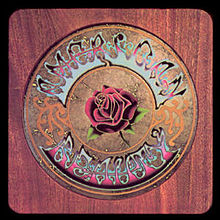
the phrase came into my mind because the rain was gentle and reminded me of the rhythm of a number from “American Beauty”–

a studio album the Grateful Dead recorded in the early Seventies.

…It’s just a box of rain

I don’t know who put it there

Believe it if you need it

or leave it if you dare

But it’s just a box of rain

or a ribbon for your hair

Such a long long time to be gone

and a short time to be there.

The song is upbeat and beautiful–though the circumstances of its creation were sad I discovered…

Bassist Phil Lesh, who wrote the music:

“..at that time, my dad was dying of cancer, and I would drive out to visit with him at the nursing home  and  on the way out there I would practice singing the song. I sort of identified that song with my dad and his approaching death. The lyrics Bob (Robert Hunter) produced were so apt, so perfect. It was very moving for me during the period of my dad’s passing. I felt like singing it in other situations similar to that since then.

asked what the phrase meant, lyricist Robert Hunter replied:-

 By “box of rain,” I meant the world we live on, but “ball” of rain didn’t have the right ring to my ear, so box it became, and I don’t know who put it there.”

Nothing to do with rainfall after all–“but me and the sunflowers” are “grateful” anyway!

Read Full Post »

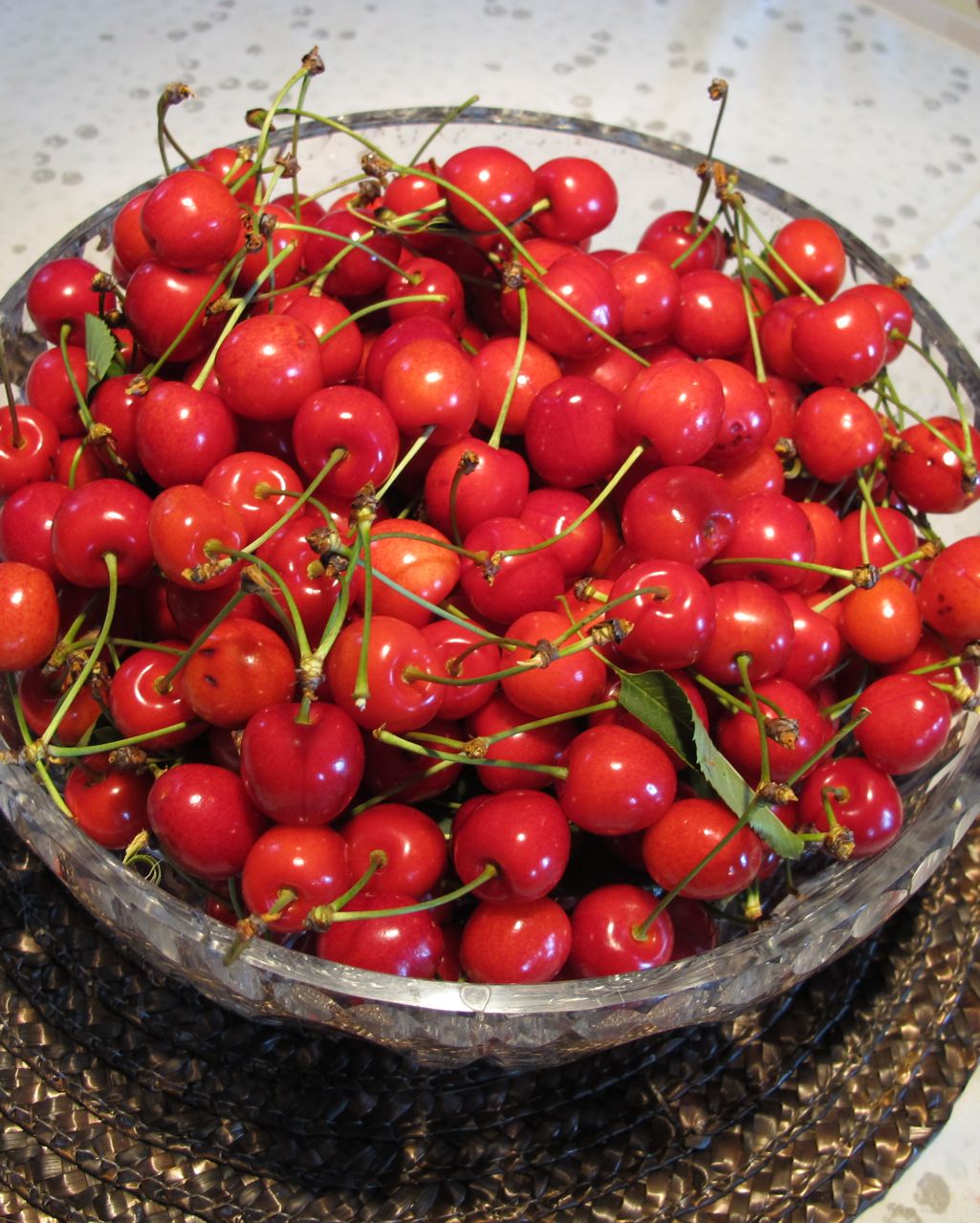
Lyn and Ernie's cherries

….neighbourlyness too!

Our cherry tree upped and suddenly died a month ago.

The poor thing had not been well for a couple of years–it was attacked by an interior blight, leaving an open wound.

It still came up with the goods, yielding a good harvest of ruby red cherries each year.

There were always more than we could deal with, though the birds helped out–there’s a limit to how many clafoutis* you can eat!

Remarkably it flowered this year in the early spring and we were hopeful for another year. It was not to be.

This morning our neighbour Lyn arrived with a large bag of cherries from their tree.

(*Clafoutis–a baked dessert of cherries arranged in a buttered dish and covered with a thick flan-like batter. Not ideal for diabetics!)

Read Full Post »

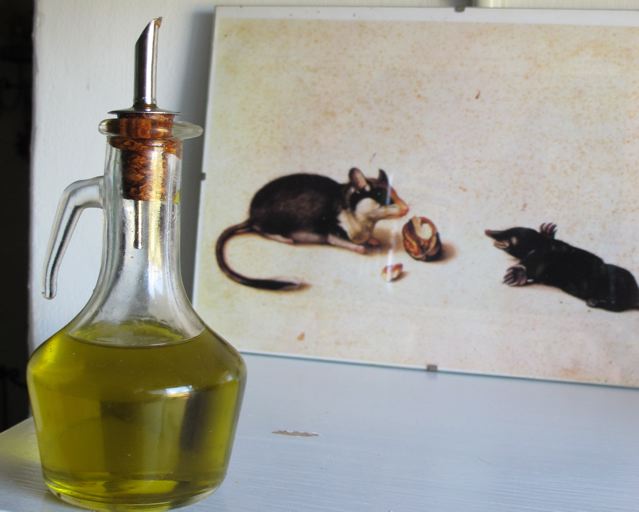
Bottled gold--aka--olive oil

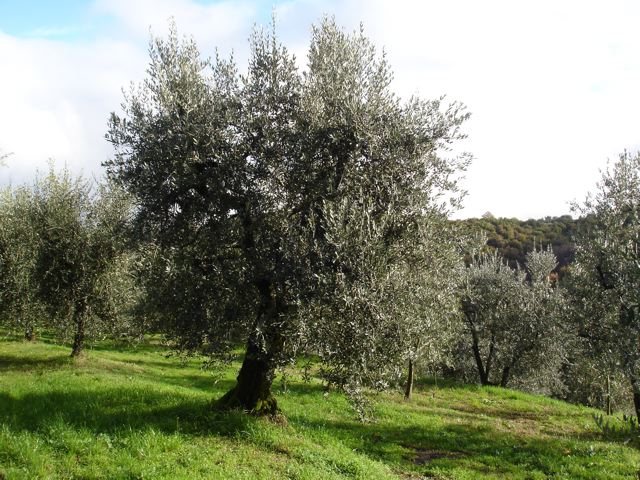
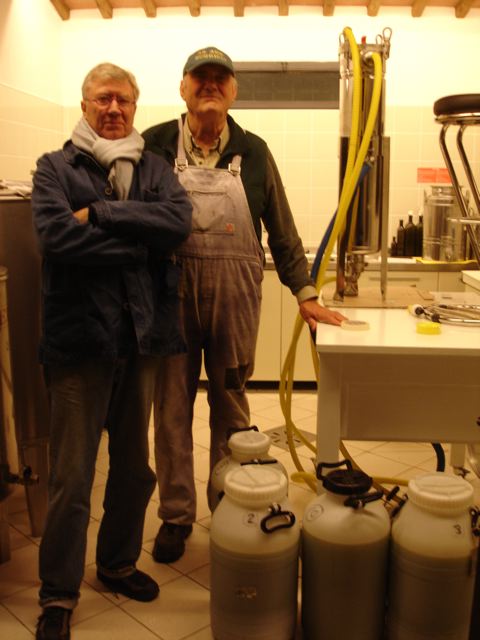
Our friends Helen and Keith just left–heading back to the Tuscan hills where they make world class green-gold nectar from the olives on their farm.

They have a thousand trees high above the valley of the Arno, south east of Florence.

Last November we went to “help” with the harvest.

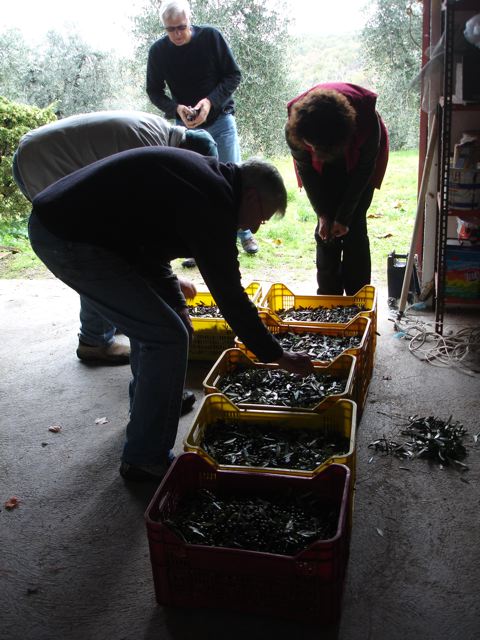
Our job was to sort the leaves and branches from the purple green fruit–

–while trying not to crush the newly fallen olives underfoot, and get in the way of the real workers.

These were five and it took them three weeks–(rain stopped play every other day when we were there, which

gave our backs a chance to recover.)

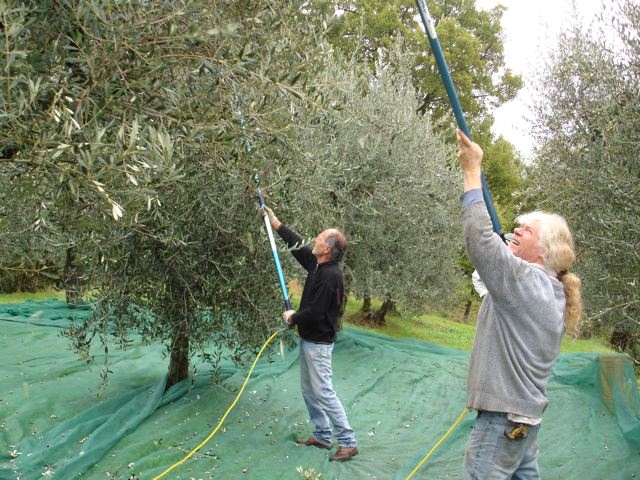
They brush the trees with long poles in downward strokes, teasing the olives onto the nets laid out below.


Fitted to the ends of the poles are what look like pairs of hands, which “clap” pneumatically.

“Well done, olives–but time to go to the press!”

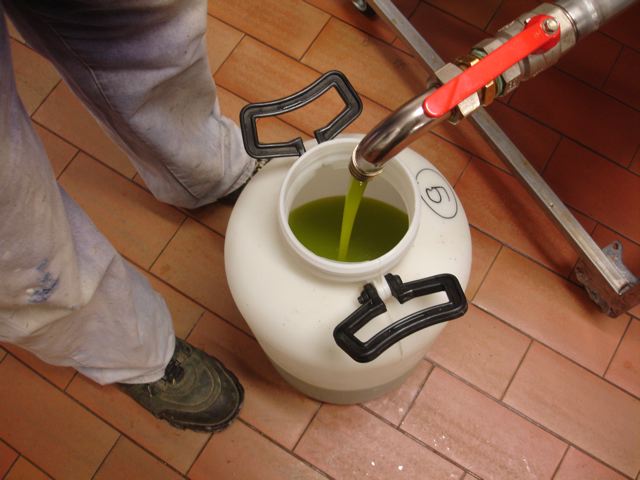
Every two days Keith loads up the van and heads to the frantoio where the olives make the journey from fruit to oil.

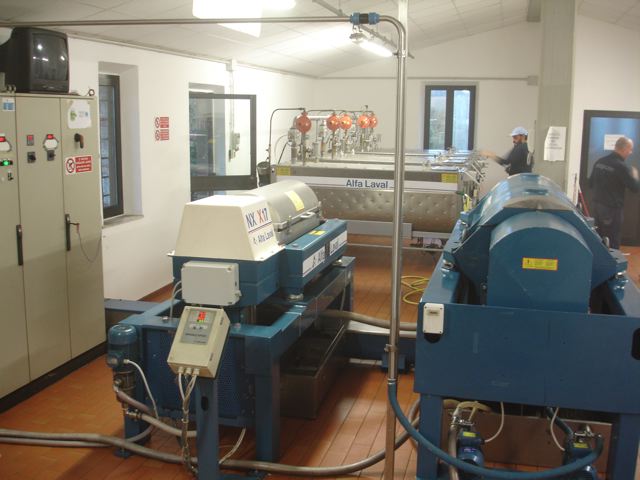
Stone pressing is a thing of the past; now the olives are processed by centrifugation–a horrible word but a cleaner method that produces better quality oil.

The unromantic centrifuge

The liquid gold emerging.

A proud moment–for a beginner!

Proud parvenu!

Keith says he gets about a litre of oil per tree.

Last November’s harvest was his all-time second best–that pleased us!

Read Full Post »

A single poppy spotted under the cemetery wall on a hot day this week.

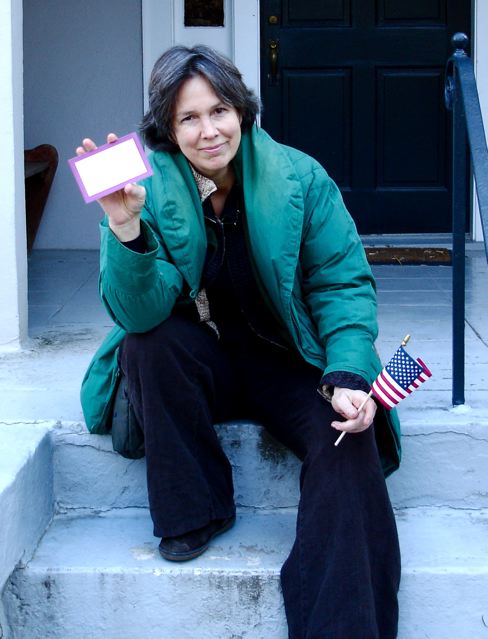
It is Memorial Day weekend in the States.

On the last Monday of May, America honors those service members killed in war–a custom dating back to the Civil War.

Meredith carries the Stars and Stripes at memorial ceremonies here each May and November–much appreciated by the local veteran associations.

Tomorrow in a little mountain village  called Le Rialet, a half hour’s drive from Castres, two members of an American OSS Commando unit–killed in action just outside the village in August 1944–will be remembered with their Resistance comrades, in a ceremony held each year.

The dwindling band of proud French fighters–about ten remain, all in their late eighties–will stand and bear witness. It never fails to move.

The poppy quickly became a symbol of the fallen in the UK after the first World War.  They grew profusely in the torn up ground of northern France and they fade so soon.

We wear them in November–for  remembrance.

In Flanders Fields by John McCrae

It’s thought he wrote the poem on 3 May 1915 , after he witnessed the death of his friend, Lieutenant Alexis Helmer, 22 years old, the day before.

In Flanders fields the poppies blow
Between the crosses, row on row,
That mark our place; and in the sky
The larks, still bravely singing, fly
Scarce heard amid the guns below.

We are the Dead. Short days ago
We lived, felt dawn, saw sunset glow,
Loved and were loved, and now we lie,
In Flanders fields.

Take up our quarrel with the foe:
To you from failing hands we throw
The torch; be yours to hold it high.
If ye break faith with us who die
We shall not sleep, though poppies grow
In Flanders fields.

Poppies grow wild in disturbed earth.

The farmers round us create the perfect environment for them to flourish.

Colonies spring up overnight it seems–splashes of brilliant crimson which could, if you were so minded, recall spilt blood.

Battlefields and cemeteries (where war casualties were buried) too, welcome these poignant flowers.

Read Full Post »

In the middle of filming the second series of Poldark, Angharad and I went on a PBS (Public Broadcasting Service)  promotional tour of the States. The first series had just started to play there. It was late spring 1977.

Boston, New York, Washington, and Dallas.

Five days–four cities; crazy, glamorous and fun.

At nine o’clock, the morning after arriving in Washington, we were given a private tour of Jimmy Carter’s White House–including the Oval Office.

Bleary-eyed and jet-lagged at the time, I recall very little.

Did  “Ross Poldark”–veteran of the losing side in the War of Independence–back in enemy territory, cheekily sit–momentarily–in the seat of power behind the desk?

I sincerely hope not!

Fast forward forty two and half years and I was in Washington again–with Meredith this time, to witness the inauguration of Barack Obama as President.

It was a bitter cold day with a brilliant blue sky and in the streets a solid mass of people were proceeding slowly towards the Mall to hear the new President speak.

There was a palpable feeling of hope and expectation in the air–of healing and renewal.

Meredith was elated–she had a ticket for the enclosure in front of the Capitol.

When I dropped her off at the subway at six a.m., she was clutching her purple ticket in her hand.

Four hours later she called me on the cell phone–in tears–to say there was a problem at the purple gate and it wasn’t looking good.

In the end 10,000 people failed to get through the purple gate!

Poor Meredith joined us at our friend’s club close by, to watch it all on television.

She calls it an inexplicable “snafu”–nobody ever found out exactly what went wrong.

Snafu!

A couple of glasses of champagne and the sight of history being made helped to restore her spirits.

A little over two hundred years after Captain Ross Poldark limped home to Cornwall and  General George Washington became the first President of the then thirteen United States of America, an African American was entering the White House as President–which black slaves had helped to build.

It was a momentous day.

Fast forward againWashington to London yesterday–Stansted to Carcassonne this morning and whoosh–we’re home!

President Obama and the First Lady– forced to curtail their Irish visit by the ash cloud–flew into Stansted last night on their first State visit to the UK.

This morning they met with the present incumbent of “Buck House”, with whom–we’re told–they have very friendly relations.

Buckingham Palace

(George III bought Buckingham House in 1761 for his wife Queen Charlotte–before going on to lose “the Colonies”.)

The world goes around…!

Read Full Post »

“Good afternoon Ladies and Gentlemen, this is train 127 to Waahshington–train 127 to Waahshington”

En route to Washington from NYC by Amtrak–a three hour journey.

We find the “Quiet Coach” (no loud voices–no cell phone use)–perfect.

Meredith starts to read the in-house magazine, which has a photo of Michelle Obama on the cover looking in radiant health. Her mission is to stem the rise in juvenile obesity.

The theme this month is Health and Wellness–no escape.

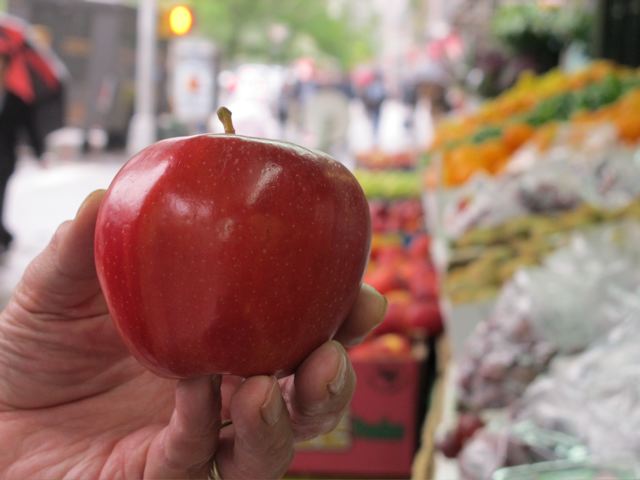
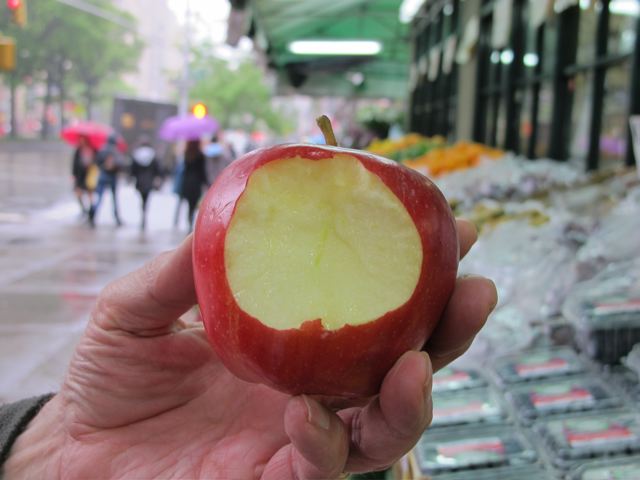
Inside Meredith finds a short article written by Dr. Francis Collins, the director of the NIH–the National Institutes of Health–entitled: “Change your life style and save your life”–no escape.

These days you can’t even take a trip in the “quiet coach”  without being exhorted to examine your lifestyle!

Dr.  Collins  writes that shortly before taking up his post, he took advantage of one of the programmes funded  by the NIH and had a DNA scan designed to look at the hereditory risks of disease.

To his surprise the scan revealed he had a risk of Type 2 diabetes.

“The strategy that caught my eye,” he writes, “was an NIH funded Diabetes Prevention Program which found the the combination of increased physical activity and modest weight loss is a highly effective way to lower the risk of Type 2 Diabetes. When trial participants–all with elevated levels of glucose–exercised 2.5 hours a week and lost 7% of their weight on avereage, many were protected from developing diabetes, with preventive benefits lasting at least a decade.”

He decided to act and started working out. In the first six months of his new routine he lost 25 pounds.

“I’ve never felt fitter, ” he says.

“Taking charge of your health by choosing the right foods and the right exercise programme is among the most important investments you can make in your future”–no escape!!

“Ladies and Gentlemen–15 minutes to New Carrolt’n– New Carrolt’n 15 minutes. Twenty-five minutes to Waahshington, 25 minutes to Waahshington–New Carrolt’n, Maryland is next”.

Read Full Post »

…passing through, on our way to a family celebration in Washington.

Cait–who was the seven-year-old bridesmaid at our wedding–(oh my, how time passes!)–will graduate as a doctor on Sunday from Georgetown.

As we’d approached Newark Airport along the Hudson River, the New York skyline was visible from the plane–never fails to impress.

The Empire State lit up red white and blue–for a Brit, I modestly supposed–and looking slight by comparison but oh-so-elegant–the Chrysler Building, tucked in behind it.

Our friends, John and Helen, met us at the airport–a wonderful luxury–and we drove through the Holland Tunnel into lower Manhattan.

New York’s talent for constant renewal was immediately evident.

As we turned a corner to head up the West Side, John pointed out the light on the fast-growing new building at Ground Zero–“a Phoenix rising from the ashes”– One World Trade Centre.

We passed the Frank Gehry building–all frosted glass–on the West Side Highway, and a spectacular walk of parks along the “mighty Hudson”.

A vast aircraft carrier–the Intrepid–is  permanently “parked” near where the old Queens, Mary and Elizabeth, used to dock to disembark well-heeled passengers–a stone’s throw from their grand mid-town hotels.

That’s another thing about New York, or at least Manhattan–everything seems like a “stone’s throw” away.

I just popped out of the building onto Broadway, for some low-fat yogurt–but I could have bought a pair of shoes or gone to the movies–if I’d had a mind to!

Read Full Post »

« Newer Posts - Older Posts »