Feeds:
Posts
Comments

Archive for the ‘other sides to this life’ Category

A taster from my new cook book Healthy Eating for Life due to be published on January 8th 2014–my birthday!

IMG_8636

We had it for lunch today–with some green beans, as suggested in the recipe–spiced up with a couple of ripe tomatoes and feta.

A traditional North African favourite, this version is adapted from a recent discovery in Ottolenghi’s sumptuous vegetable cookbook, Plenty.

The name means “mixture” in Tunisian–better to stick to Shakshouka I reckon!

It is often served in individual cast iron pans, which I imagine adds to the pleasure–one pan and ALL for ME!

It makes a pretty picture on the plate—a perfect light summer lunch.

IMG_8638


for 2

1/2 tsp cumin seeds–dry roasted in a medium pan

IMG_8619

1 large onion–red or yellow, sliced

60ml/1/4 cup olive oil

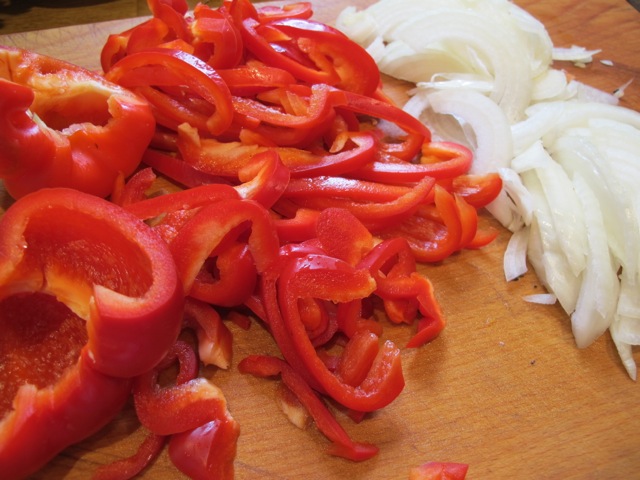
red peppers--washed, deseeded and sliced thin

bay leaf, thyme leaves from a few sprigs, 2 tablespoons of parsley

3 large fresh ripe tomatoes or tinned [canned]–roughly chopped with the juices

IMG_8622

1/4 tsp cayenne pepper and a pinch–a few strands–of saffron (optional)

¼ cup/60 ml water

2 or 4 eggs

salt and pepper

Dry roast in a small frying pan the cumin seeds for a minute or two, taking care not to burn them.

Heat the oil in the pan over a medium-high flame and cook the onion for 5 minutes to soften it.

IMG_8621

Add the peppers and three herbs (bay, thyme and parsley) and turn everything over thoroughly.

IMG_8624

Cover the pan for 5 minutes to start the softening of the peppers.

Cook a further 5 minutes uncovered.

Add the tomatoes, the water, a little at a time to avoid diluting the sauce, the two spices (cayenne pepper and saffron) and season with salt and pepper.

Cook for 15 minutes on a low heat–covering for a short time if you think the peppers need further softening.

The result should be a lightly spicy sauce in which to poach the eggs.

IMG_8626

Carefully break the eggs (2 or 4–your choice) into the sauce–leaving space between them.

IMG_8630

Cover the pan and cook, over a lowish heat, until the eggs are cooked to your taste.

IMG_8632Reluctantly–I shared the pan’s contents with Meredith!

Read Full Post »

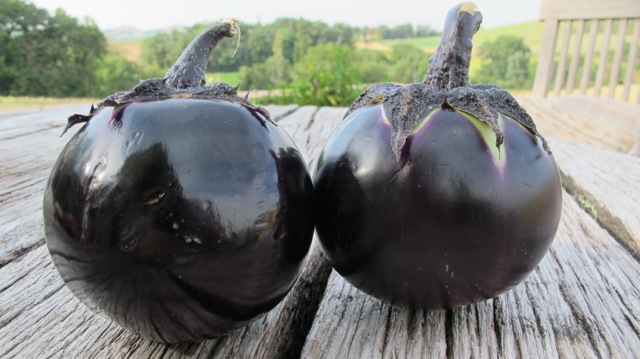
I bought these two beauties at the organic market on Thursday because–well–simply because they were so beautiful. How could you not!?

IMG_8396

I published this photo on Facebook and asked people to guess what they are.

Great responses! Most plumped for aubergines [eggplants]–but  Elaine Adams, with her tongue firmly in cheek, commented:

“It looks like my two favourite things–aubergines and tomatoes–had babies!”

Following the photo showing how they were transformed, several readers asked for the recipe.

IMG_8496_2

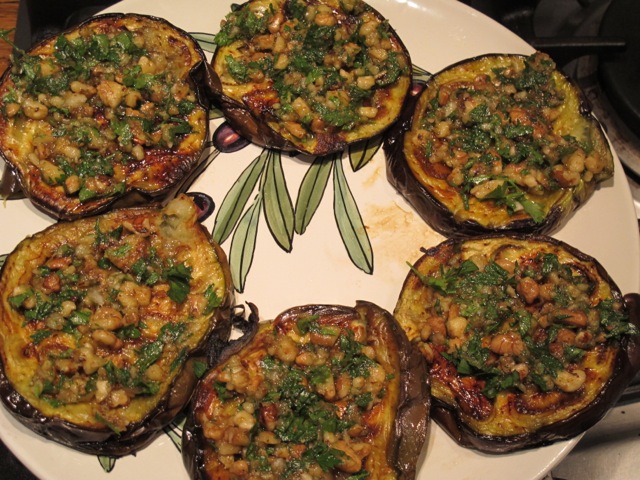
This comes from page 24 of Delicious Dishes for Diabetics.

Serves 4

Can be prepared ahead of time and served warm or tepid.

2 large aubergines

olive oil for brushing the oven tray and the aubergines

salt

2–3 tbsp red/white wine vinegar

Sauce:

3–4 cloves of garlic – crushed with a little salt (the amount of garlic is a matter of taste–the younger/fresher the better though)

60g/2 oz walnuts – shelled (if you do this yourself, take care no pieces of shell get left with the nuts)

2 tbsp olive oil 

handful of parsley–chopped

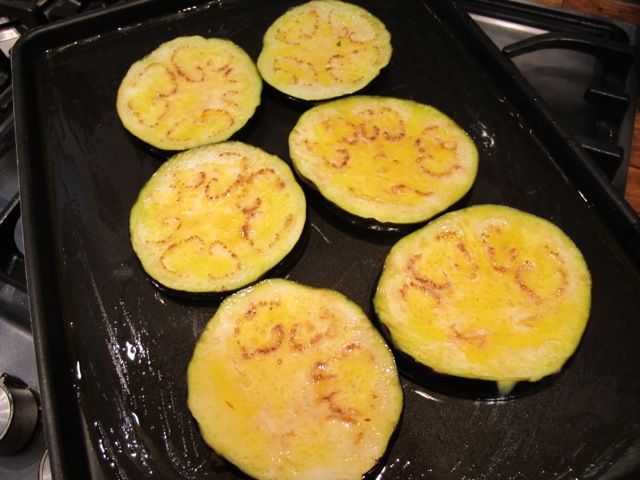
  • Wash and cut the aubergines into about 1.5 cm/1/2 inch slices.
  • Salt them and put them in a colander for an hour or more, to drain off their bitter juice. (wise move, if you have the time–this way they soak up less oil!)
  • Dry them thoroughly and brush generously with olive oil on both sides.
  • Heat the oven to 240°C/475°F/Gas Mark 9.
  • Put the aubergines on a well-oiled shallow oven tray.

IMG_8488

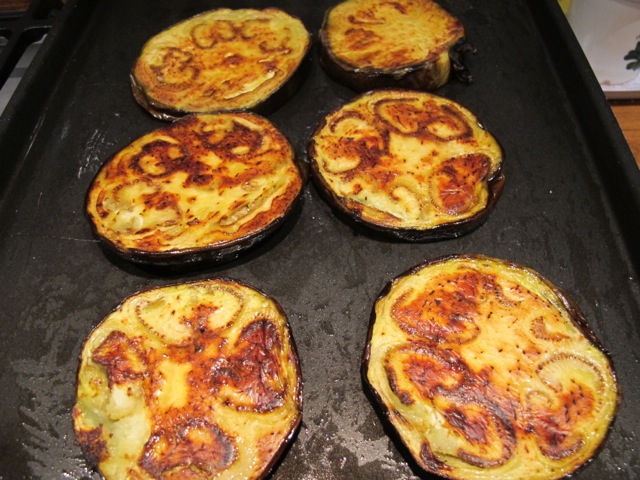
  • Cook them on the top shelf of the oven for about 20 minutes until lightly browned–turning after about 10 minutes.

While the aubergines are in the oven, make the sauce.

  • Mix the crushed garlic with a tablespoon of olive oil.
  • Chop the walnuts in a processor or pound them in a pestle and mortar. (Not too fine!)
  • Combine the chopped walnuts and garlic with the parsley in a bowl and add another tablespoon or so of oil.
  • Mix well and check for salt.

When the aubergines are nicely browned on both sides, remove from the oven.
IMG_8489

  • Transfer them to a serving platter, brush with vinegar, then spread the delicious sauce on top.

IMG_8491

Serve warm or at room temperature.

It’s one of our favorite starters–meaty too…

Here’s an aubergine that thinks it’s an animal!
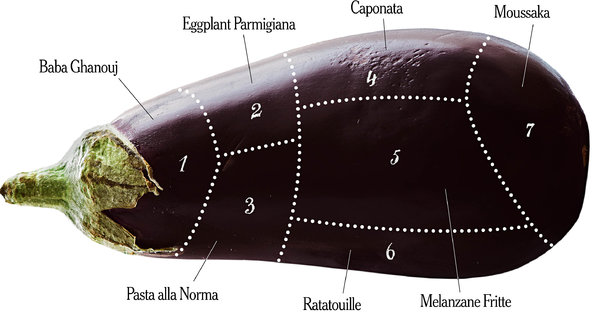
26FLEX-SPAN-articleLarge-v3-2

Read Full Post »

This recipe comes from Delicious Dishes for Diabetics–post publication we’ve dined on it several times at friends’ houses!

It’s a boon for busy people.

IMG_8424

It’s simple to prepare and good for company because you can prepare the sauce ahead of time. Then it’s just a matter of reheating the sauce fifteen minutes before you are ready to eat, slipping in the fish and minutes later–hey presto!

Serves 4

4 tbsp olive oil
1 small onion – chopped
2 cloves of garlic – chopped
2 tbsp chopped parsley
8 tbsp white wine
300 g/12 oz summer ripe tomatoes or good tinned tomatoes and their juice–broken up

800 g/1.8 lb white fish fillet–hake, haddock, cod are good choices–washed, patted dry

salt and pepper

  • Heat the oil in a pan large enough to take all the fish in a single layer.
  • Add the onion and garlic and cook gently until the onion is soft and the garlic begins to colour.
  • Add the parsley and stir in.
  • Turn up the heat and add the wine – let it bubble for a minute or so.
  • Add the tomatoes and fold them in.
  • Turn the heat down and, stirring occasionally, cook gently for 20 minutes.
  • Season for taste.
  • When you are ready to use the sauce, bring it to a simmer.
  • Add the fish and cook gently for about 5 minutes.

IMG_8417

  • Turn the fish pieces over carefully and cook for a further 5 minutes. (Depending on the thickness of your fish, it might take longer.)

We had it with brown basmati rice and green beans for a simple supper at our friend Ann’s the other night, under a starry sky.

Read Full Post »

Seasonal vegetables are at last piled high in the markets now–everything is late this year–and haricot verts [green beans] are perennial favorites here.

Alice, our generous French neighbour, delivered a bagful, freshly picked this morning from her pottage. We’ll eat them today unadorned, apart from a little salt and a swirl of the best olive oil we have.

This is a handy alternative.

Our friend, Jane, made these for us recently and reminded me that the recipe is based on one in the little vegetable book from the River Café collection.

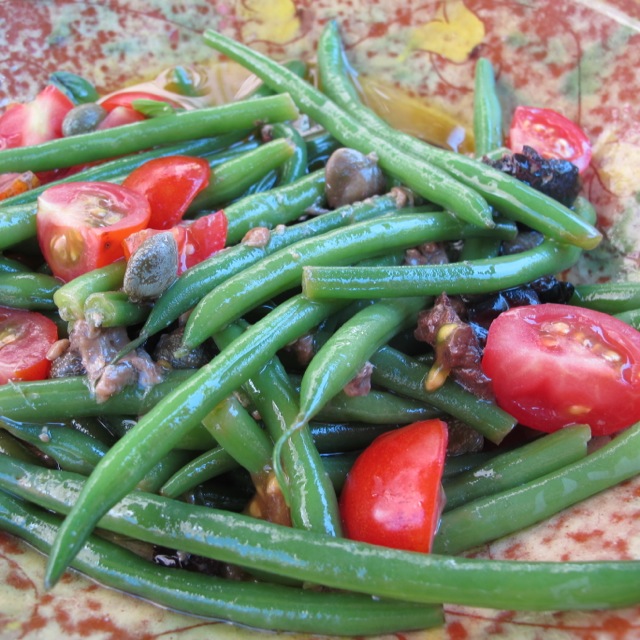
The beans are lightly coated with an anchovy and caper sauce with sweet cherry tomato quarters and basil added. If you are not keen on anchovies, leave them out–it’s still worth doing.

IMG_8316_2

We had them as a starter last night.

for 4

1lb/450gms green beans–the connecting top nipped off

8 anchovy fillets–snipped into bits with a pair of scissors

1 tbsp capers–fat ones are best

4 tblsp olive oil + extra if needed

juice of a lemon

handful nicoise olives–stoned

handful ripe cherry tomatoes–carefully quartered; watch out for your fingers!

basil leaves to scatter

  • Cook the beans in plenty of salted water to just tender.
  • Drain them, put them in a mixing bowl and coat them with two tablespoons of olive oil (best you have available).
  • In another bowl combine the lemon juice and the remaining two tablespoons of olive oil.
  • Snip in the anchovy fillets and add the capers and the stoned olives.
  • Season with black pepper and salt–bearing in mind the saltiness of the anchovies and olives.
  • Add another tablespoon of olive oil, if needed.
  • Spoon this sauce over the beans and mix.
  • Carefully transfer the beans to a favourite serving plate and scatter over the tomatoes and basil.

IMG_8319_2

Read Full Post »

“The most remarkable thing about my mother is that for thirty years she served the family nothing but leftovers. The original meal has never been found.” 
― Calvin Trillin

One suspects–hopes even, that there were other remarkable things about Mr. Trillin’s mum!

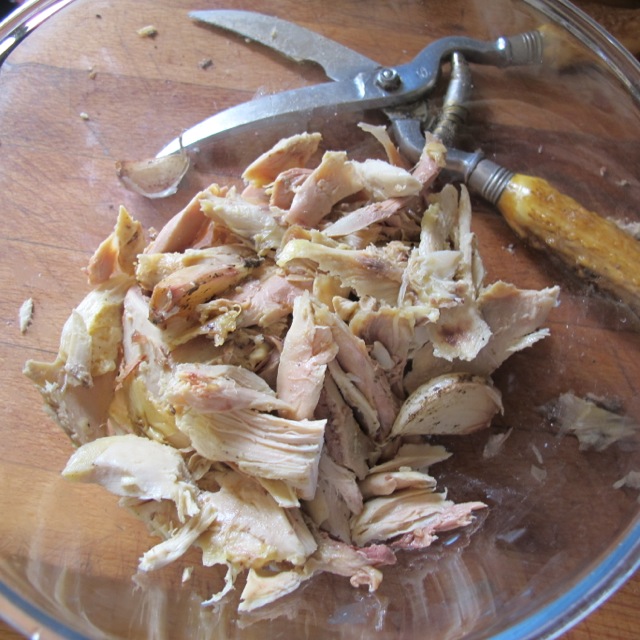
Maybe you have some leftover chicken waiting patiently in the fridge for its turn at table. We had some from niece Alice’s birthday dinner (the original meal!) a couple of nights ago. (She just turned 15.)

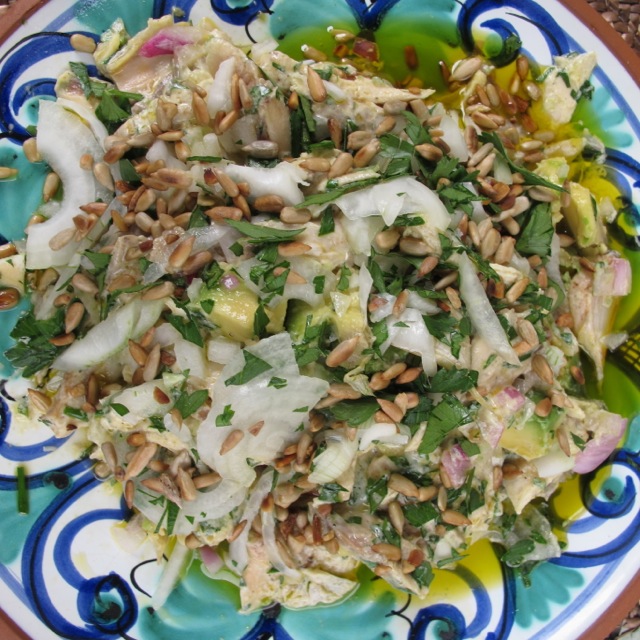
This yogurt and Dijon mustard sauce bathes the bite-size pieces in a lightly piquant sauce flavored with tarragon vinegar.

Add other things you might have left in the fridge and you have an interestingly textured light salad for lunch–and an emptier fridge.

IMG_8313

I used:

left-over chicken–off the bone

IMG_8311

1 tbsp dijon mustard

2tbsp yogurt

2tbsp white wine tarragon vinegar

6tbsp olive oil

1 medium spring onion/scallion

half a ripe avocado–diced

salt and pepper

1tbsp chopped parsley and chives

pan roasted sunflower seeds

  • Whisk the mustard, yogurt and vinegar together.
  • Whisk in the oil tablespoon by tablespoon–taking care it doesn’t curdle.
  • Season to taste and add the herbs.
  • Fold in the onion, avocado and chicken.
  • Turn everything onto a favourite plate and sprinkle over the sunflower seeds.

Other possible additions: radishes and/or half a peeled, seeded, diced, salted and drained cucumber, diced celery, walnuts…

Read Full Post »

Sicilian cart drivers pasta, apparently–in olden times.

Certainly brightens up a person’s day, after a long haul–see “post meal” image below!

carrettiera0-386x273

Long haul–just arrived in town…

Summer fare often made with uncooked ingredients that are in season–new garlic, fresh basil and ripe tomatoes. In winter switch to tinned tomatoes–drained.

IMG_8268

It is simple and quick.

Presumably there were as many versions as there were carts and horses–this time the sauce is cooked for a short time to let the hint of heat kick in and the garlic to meld.

IMG_8272

for 4

  • 6 tblsp olive oil
  • 6 medium garlic cloves–chopped fine
  • a good handful of basil leaves–chopped
  • 1 small red chili–chopped
  • 700gms/1.5lbs fresh tomatoes–skinned and seeded then chopped.
  • salt and pepper
  • 400 gms spaghettini

Heat the oil in a medium pan.

Add the next five ingredients and cook them for fifteen minutes at a simmer.

Turn off the heat.

Bring a large pan of salted water to the boil and add the pasta.

Drain when done to your taste and add to the sauce.

IMG_8273Serve with grated parmesan if you wish (Meredith did); I was happy with the garlic and chili and a swirl of best olive oil.

images-3

my word that was tasty, let’s play some music!

Read Full Post »

Time to “festival”!

IMG_7978

Here for a week in Edinburgh.

IMG_8011

First festival visit for nearly a quarter of a century–hard to believe how quickly the time flies.

We have achieved a modest total–for festival goers–of five plays, a variety show, a stand-up comedian, an art exhibit on the subject of witches and a talk by a lobby correspondent dishing the dirt on politicians, so far.

Meredith can count a visit to the book fair, a visit to the jazz club and ride on the bumper cars on top…

IMG_7990

…while I was taking 24 hours to go to London to be the studio guest on SATURDAY LIVE on BBC Radio 4.

Click below to listen to the programme (just until the end of the week!).

http://www.bbc.co.uk/programmes/b0381fm9

p.s. Oh yes and a whisky tasting too!

IMG_7930

With our host, Steve, at the Scottish Malt Whisky Society Tasting Bar

Read Full Post »

images-2 (more…)

Read Full Post »

diabetes_gymnema1

This World Health Organisation report came out three years ago but is still relevant and contains information and explanations on Diabetes that are handy to have accessible at a simple click.

The italics and colouring are mine!

August 2011

Key facts:

  • 346 million people worldwide have diabetes.
  • In 2004, an estimated 3.4 million people died from consequences of high blood sugar.
  • More than 80% of diabetes deaths occur in low- and middle-income countries.
  • WHO projects that diabetes deaths will double between 2005 and 2030.
  • Healthy diet, regular physical activity, maintaining a normal body weight and avoiding tobacco use can prevent or delay the onset of type 2 diabetes.

What is diabetes?

Diabetes is a chronic disease that occurs either (Type 1): when the pancreas does not produce enough insulin or (Type 2) when the body cannot effectively use the insulin it produces.

Insulin is a hormone that regulates blood sugar.

Hyperglycaemia, or raised blood sugar, is a common effect of uncontrolled diabetes and over time leads to serious damage to many of the body’s systems, especially the nerves and blood vessels.

(Hypoglycaemia [not from the report] dangerously low blood sugar that can lead to coma. My mother had regular scares. She carried sugar cubes in her handbag taking them to stabilize her when she felt an attack coming on.  Occasionally it would happen when she was asleep in the middle of the night. Miraculously each time my father woke up instinctively and called an ambulance.)

Type 2 diabetes

Type 2 diabetes (formerly called non-insulin-dependent or adult-onset) results from the body’s ineffective use of insulin. Type 2 diabetes comprises 90% of people with diabetes around the world, and is largely the result of excess body weight and physical inactivity.

Symptoms may be similar to those of Type 1 diabetes, but are often less marked. As a result, the disease may be diagnosed several years after onset, once complications have already arisen.

Until recently, this type of diabetes was seen only in adults but it is now also occurring in children.

Impaired glucose tolerance (IGT) and impaired fasting glycaemia (IFG)

Impaired glucose tolerance (IGT) and impaired fasting glycaemia (IFG) are intermediate conditions in the transition between normality and diabetes. People with IGT or IFG are at high risk of progressing to type 2 diabetes, although this is not inevitable.

What are common consequences of diabetes?

Over time, diabetes can damage the heart, blood vessels, eyes, kidneys, and nerves.

  • Diabetes increases the risk of heart disease and stroke. 50% of people with diabetes die of cardiovascular disease (primarily heart disease and stroke).
  • Combined with reduced blood flow, neuropathy in the feet increases the chance of foot ulcers and eventual limb amputation.
  • Diabetic retinopathy is an important cause of blindness, and occurs as a result of long-term accumulated damage to the small blood vessels in the retina. After 15 years of diabetes, approximately 2% of people become blind, and about 10% develop severe visual impairment.
  • Diabetes is among the leading causes of kidney failure. 10-20% of people with diabetes die of kidney failure.
  • Diabetic neuropathy is damage to the nerves as a result of diabetes, and affects up to 50% of people with diabetes. Although many different problems can occur as a result of diabetic neuropathy, common symptoms are tingling, pain, numbness, or weakness in the feet and hands.
  • The overall risk of dying among people with diabetes is at least double the risk of their peers without diabetes.

What is the economic impact of diabetes?

Diabetes and its complications have a significant economic impact on individuals, families, health systems and countries. For example, WHO estimates that in the period 2006-2015, China will lose $558 billion in foregone national income due to heart disease, stroke and diabetes alone.

How can the burden of diabetes be reduced?

Prevention

Simple lifestyle measures have been shown to be effective in preventing or delaying the onset of type 2 diabetes. To help prevent type 2 diabetes and its complications, people should:

  • achieve and maintain healthy body weight;
  • be physically active – at least 30 minutes of regular, moderate-intensity activity on most days. More activity is required for weight control;
  • eat a healthy diet of between three and five servings of fruit and vegetables a day and reduce sugar and saturated fats intake;
  • avoid tobacco use – smoking increases the risk of cardiovascular diseases.

Diagnosis and treatment

Early diagnosis can be accomplished through relatively inexpensive blood testing.

Treatment of diabetes involves lowering blood glucose and the levels of other known risk factors that damage blood vessels. Tobacco use cessation is also important to avoid complications.

Interventions that are both cost saving and feasible in developing countries include:

  • moderate blood glucose control. People with type 1 diabetes require insulin; people with type 2 diabetes can be treated with oral medication. [A single 30mg pill in my case] but may also require insulin;
  • blood pressure control; [every three months in my case]
  • foot care. [I visit my chiropodist, Cyril every three months!]

Other cost saving interventions include:

  • screening and treatment for retinopathy (which causes blindness); [Once a year in my case].
  • blood lipid control (to regulate cholesterol levels); [once or twice a year this is included in my three monthly blood tests].  
  • screening for early signs of diabetes-related kidney disease. [once a year].

These measures should be supported by a healthy diet, regular physical activity, maintaining a normal body weight and avoiding tobacco use.

WHO activities to prevent and control diabetes.

The WHO Global strategy on diet, physical activity and health complements WHO’s diabetes work by focusing on population-wide approaches to promote healthy diet and regular physical activity, thereby reducing the growing global problem of overweight and obesity.

For more information, please contact:

WHO Media centre
Telephone: +41 22 791 2222
E-mail: mediainquiries@who.int

Read Full Post »

The UK’s Home Secretary, Theresa May, has revealed that she was recently diagnosed with Type 1 Diabetes.

08-theresa-may-gt

It was a real shock and, yes, it took me a while to come to terms with it,” she said. “It started last November. I’d had a bad cold and cough for quite a few weeks. I went to my GP and she did a blood test which showed I’d got a very high sugar level – that’s what revealed the diabetes.

“The symptoms are tiredness, drinking a lot of water, losing weight, but it’s difficult to isolate things. I was drinking a lot of water. But I do anyway. There was weight loss but then I was already making an effort to be careful about diet and to get my gym sessions in.”

The Home Secretary says she has been told that she will have to inject herself with insulin twice a day for the rest of her life–but she has no fear of needles and intends to carry on in her Cabinet post.

Mrs May’s determination to get on with her life reminds me of my mother, Molly Ellis.

the-ellis

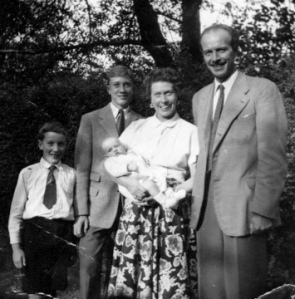
June 1955. Brother Jack in Molly’s arms. Her doctors overcame their doubts about letting her proceed with the pregnancy despite being a Type 1 diabetic.

Molly was diagnosed with Type 1 aged 38 in 1953.

She too injected herself twice a day for the rest of her life.

Eventually she died of a sudden heart attack linked to her condition–but she made it to 67–almost 30 years with Type 1 diabetes–and in those days treatment was not as advanced as it is now.

Molly was not a professional politician–and the cabinet she loved best was hanging in a corner! But she carried on leading a full life, running the household and raising three boys.

The last six years of her life were spent in a Buckinghamshire village called Brill–not too far from Oxford. She and Dad retired there from London. They threw themselves into village life and were much appreciated for it.

I’d wager that not many in the village, apart from her doctor,  John Spence, knew she was diabetic–and few would have understood what it meant.

ma3img_0044_2

Molly relaxing in Brill–after preparing lunch I’d guess!

She never liked to make a fuss.

Her heart attack happened one morning as she was finishing dressing to go shopping. Her heart finally gave up after years of struggle.

Her gift to me was an understanding of how damaging diabetes can be if ignored. When I received my diagnosis of Type 2 diabetes in my mid-fifties, I took it seriously, thanks to witnessing my mother’s journey.

There’s still a shocking ignorance surrounding the condition.

Theresa May’s high profile and very public admission that she is Type 1 helps focus attention on and heighten awareness of this ruthless and insidious menace.

Read Full Post »

« Newer Posts - Older Posts »