Feeds:
Posts
Comments

Archive for the ‘Food’ Category

We returned last night from London.

Out of the car and into the kitchen to turn on the oven–180 C.

Lightly wash and brush the dust off a sweet potato.

Prick with a fork to avoid it bursting.

Then pop the potato into the pre-heated oven. It’ll take about an hour, depending on its size.

Sit down and have a cup of tea!

When revived a little make the simple Red bean chili, below from my new book Mediterranean Cooking for Diabetics.

IMG_2840


Adapted from Rose Elliott’s The Bean Book this is a simple solution for people who don’t eat meat but like the look of chili–leave out the carne!

(Not just for vegetarians either–just as my cook book is not just for diabetics!) 

This recipe is my kind of fast food. Quickly done– tastes even better the next day (except we had no leftovers!).

Don’t forget the lemon!

For two weary home comers:

About 8 oz (a jar or tin [can]) of red beans–rinsed and drained

onion–chopped

1 clove of garlic–chopped

2 tbsp olive oil

8oz of tinned [canned] tomatoes–chopped, with the juice

1/2 tsp chili/cayenne powder (more if you like it really spicy)

juice of half a lemon–or more to taste

salt and pepper

  • Soften the onions and garlic gently in the oil–stirring often for about five minutes.
  • Add the chilli powder and the chopped tomatoes with their juice.
  • Mix together, blending in the tomatoes.
  • Add the beans.
  • Season with salt and pepper to taste.
  • Bring gently to the simmer and cook, covered, for about 15 minutes.
  • Pour over the lemon juice and mix thoroughly.

IMG_2839 - Version 2


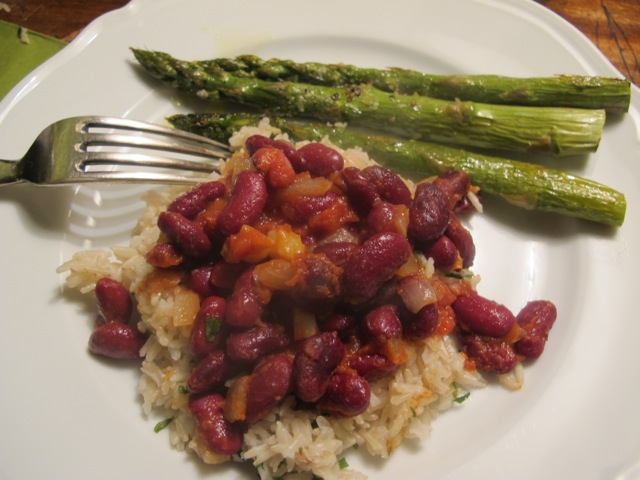
Halve the sweet potato (orange!)on the plate.

Spoon over the beans (red!).

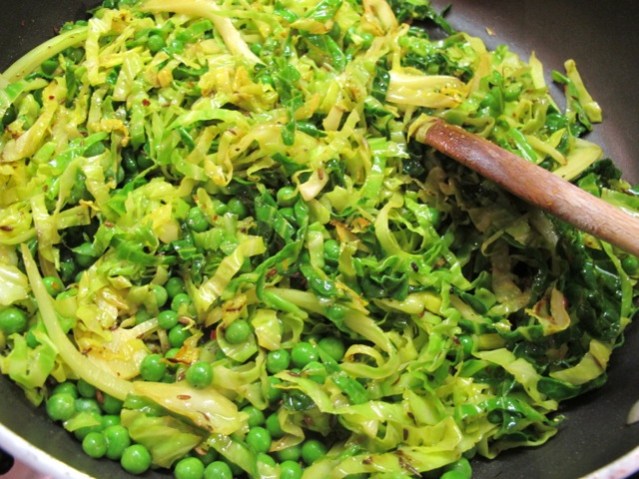
It needed some greenbut couldn’t be bothered to make the Interesting Cabbage from Mediterranean Cooking for Diabetics

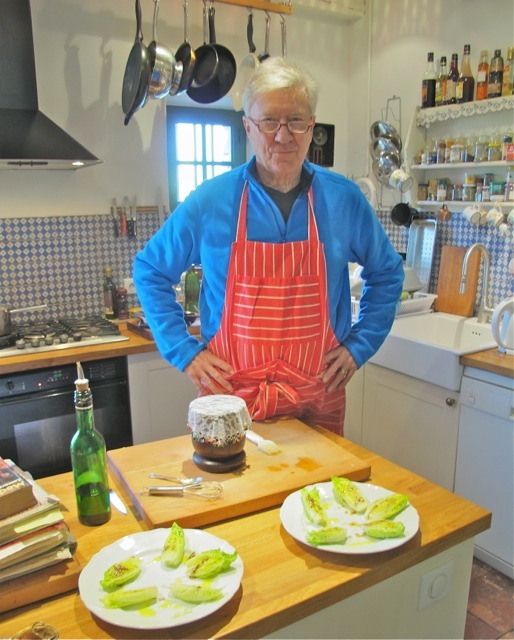
Found three crisp little gem lettuces in the fridge–halved and quartered just one and shared it between the two plates.

Drizzled olive oil and balsamic on each quarter with a pinch of salt.

Orange, red and green–on the plate.

IMG_2844


Different colors, but back in the land of the Tricolour!


Read Full Post »

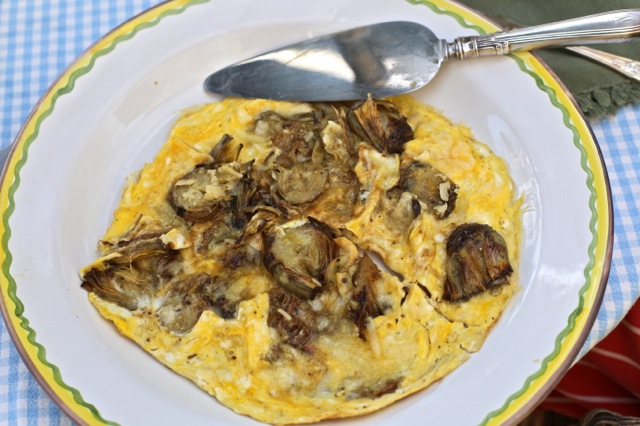
Described as a Catalan omelette by Patience Gray in her beautiful cookbook Honey from a Weed, I am making this for lunch:

IMG_2746

It’s the morning after we return from the launch fortnight in the UK for my new cookbook, Mediterranean Cooking for Diabetics.

A predictably slow morning–I’m heavy-lidded and creaky.

It will thus be the lazy version–made with artichoke hearts from an Italian jar (bounty from a trip to Tuscany)–surprisingly good!

Patience Gray’s version uses fresh artichokes (a lot more work!).

It reminds me of lunches eaten over 40 years at la Sostanza in Florence–discovered by chance on a trip in 1978.

IMG_5200

I always order artichoke omelette–served flat–and a plate of white beans with olive oil.

IMG_5197

In a beauty contest, Sostanza’s omelette (tortino) wins…

Patience says the Catalan version is served folded.

Chose where you are having lunch–in Florence at Sostanza or a little restaurant on the Spanish Costa Brava (Wild Coast)–folded or flat–it is delicious.

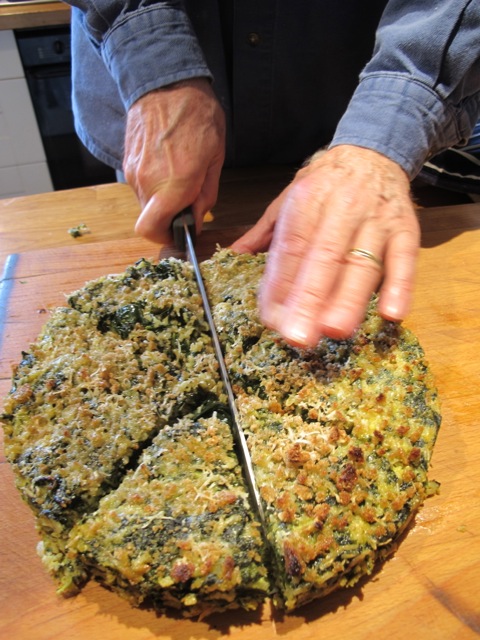
I’m choosing Sostanza and making it as a single omelette to be divided in two.

IMG_2749

For the Look, I might try Patience’s version next time–i.e. folded!

Tasted good like this, though.


Serves 2

1 tin/jar cooked artichokes–drained and sliced on the vertical

2 tbs olive oil

2 tbs parmesan cheese–grated

4 eggs

salt and pepper

Gently fry the artichoke slices in the oil.

Season the egg mixture.

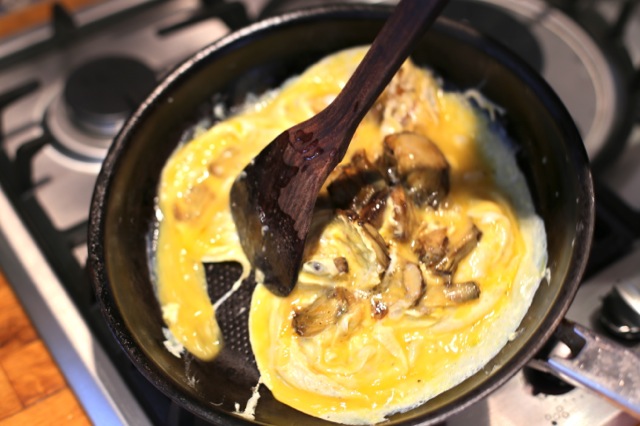
When the artichokes are nicely browned, turn up the heat and add the egg mixture.

IMG_2726

Push back the liquid from the rim of the pan, letting the liquid mixture run into the spaces.

IMG_2734

Sprinkle over the parmesan and slip the omelette out of the pan and onto a plate.

IMG_2738


Read Full Post »

MEDITERRANEAN COOKING for DIABETICS–Delicious dishes to control or avoid diabetes.

Published today in the UK–available from bookstores and on-line and as an ebook.

Here’s a visual tour of some of the recipes you’ll find to cook in the book.

All photos by Meredith Wheeler–(bar one, which she’s in—only fair!)

To know how to eat is to know enough….

~ Old Basque saying

IMG_8450


Robin Ellis Med Cooking 01


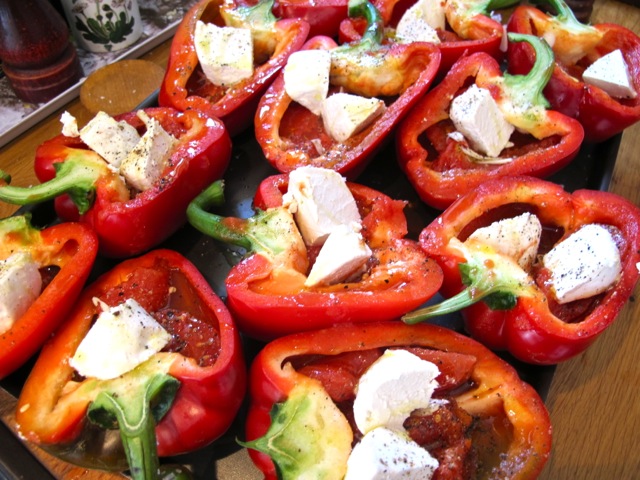
StuffedRedPeppers


IMG_3114 - Version 2

IMG_5123_2

VeganPlate


SeafoodStew

SpinachTort

Spinach&RiceTorte

IMG_2672


IMG_0399


IMG_3520


IMG_2519


IMG_9267


IMG_5123


IMG_5216


IMG_5912


IMG_6721


Image


Chicken


Gazpacho


Image 18_2

IMG_1538


IMG_9782


Bon appétit!

Read Full Post »

IMG_2176

“Big Ears” with Molly and Trike on the Heath Extension

It’s the summer of 1946, approaching 4pm one afternoon, in the kitchen of a house in Hampstead Garden Suburb, north London.

Molly Ellis (age 31) is coming to terms with life as a full-time housewife in post-war Britain, looking after her young son in a bigger house than she’s ever known.

She’s coping– but this afternoon her friend Rita, “Auntie Rita,” is coming to tea–and Molly is not happy about it.

“Just one more thing–the day isn’t long enough; wish Rita wasn’t coming today!”

The front door bell rang and four-year-old Big Ears, goes to open it while Molly takes the scones from the oven.

“Mummy doesn’t want YOU to come to tea today….”

We never saw Auntie Rita again!

*                     *                     *                     *                    *

It’s stressful cooking for a family–however much you enjoy it–and my mother enjoyed it.

She did this for a lifetime–for a family that grew to five.

With younger brother Peter and Jack (a babe in arms).

With younger brother Peter and Jack (a babe in arms).

No sign of pressure, no complaining–regular as clockwork.

(The Auntie Rita episode is the only time I can remember the pressure getting to her.  Maybe she really didn’t like Rita!)

Ma had staying power–the stamina of a professional.

Her duty is how she might have characterized it. Christmas cakes started in September, a little brandy added every month. Home-made marmalade with the bitter oranges from Seville bottled every February. The weekly roast on Sunday stretched ’til Wednesday–cold on Monday, minced on Tuesday. Good home husbandry! I was the admiring sous-chef, specializing in licking out the bowl.

I’m not cooking for a family–but I do cook twice a day.

Of course, I have the time–well usually–and the inclination (usually).

Many people have neither–or maybe one, but not the other.

Shame–they are missing out!

(Not how they might see it, perhaps–“better things to do….”)

As a Type 2 diabetic (my mother was Type 1 and had to inject insulin), cooking puts me in control of what I eat which is a huge advantage.

I like the “day-to-dayness” of it–the regularity.

Perhaps I thrive under the pressure.

Early days as an actor, usually on my way to the unemployment office known as the Labour Exchange, I often thought how much happier I’d be sitting behind a desk, answering the odd phone call–a rosy view of a 9-to-5 job! Or maybe gardening in the fresh air–honest toil.

Then the phone would ring–a job!

Now, I cook twice a day–lunch and dinner.

There’s my pressure.

Enough of this idle musing…

From my about-to-be-published third cookbook, Mediterranean Cooking for DiabeticsDelicious dishes to control or avoid diabetes. (Launching TOMORROW, March 3rd)

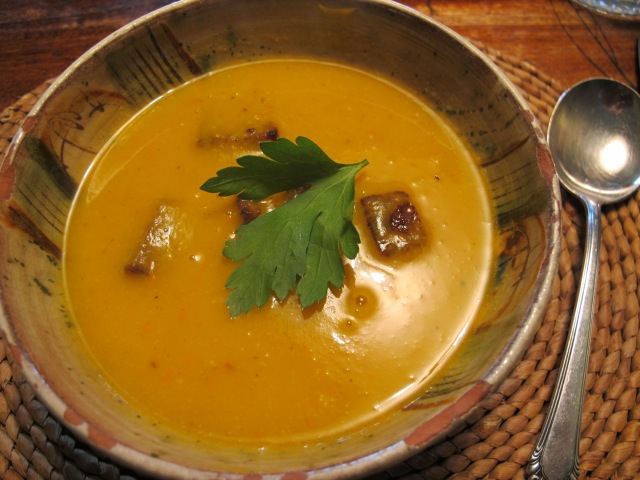
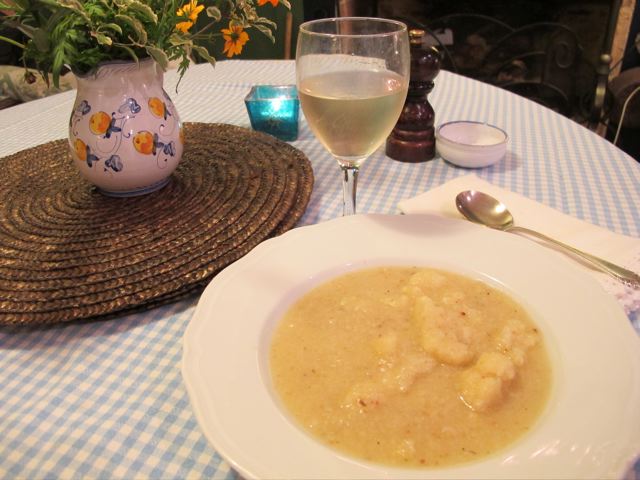
Smoky cauliflower soup

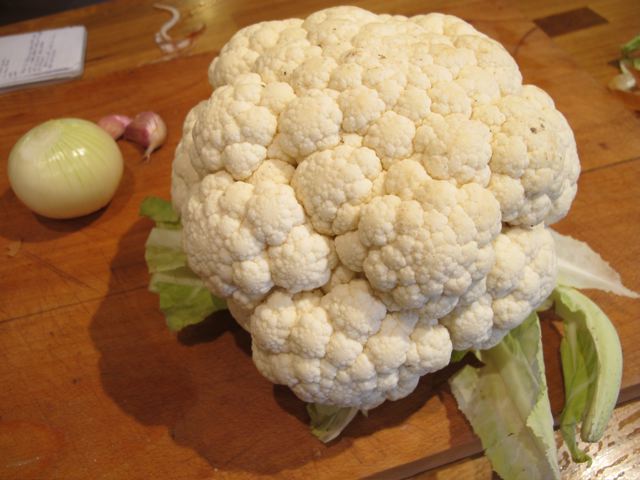
Cauliflower is not everyone’s first choice as a vegetable–let alone as a soup.

But this soup usual wins over even the most doubtful….

We love it– and marvel that something SO delicious comes from such simple ingredients:
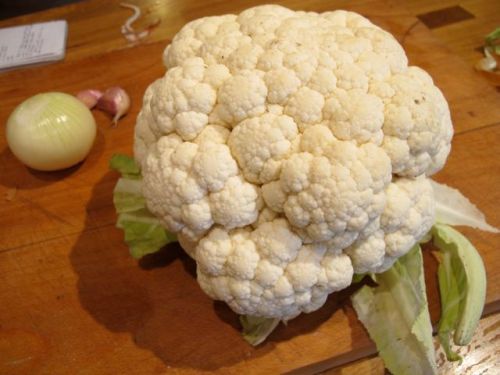
The key ingredient is smoky bacon.

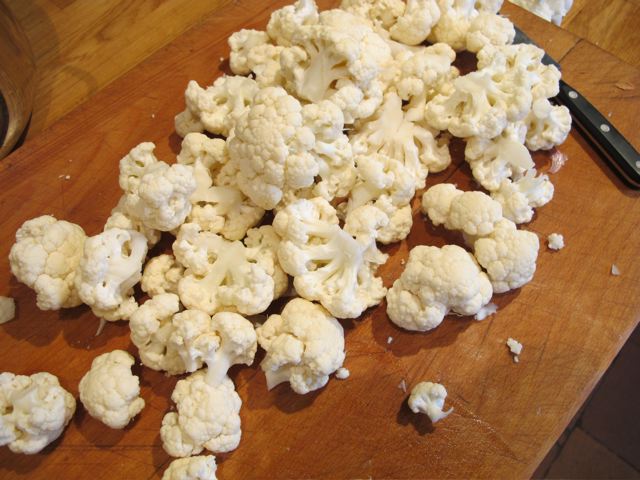
1 large cauliflower--broken into florets

2 cloves of garlic–chopped

1 medium onion–chopped

2 oz smoked bacon–chopped

1 tablespoon olive oil

bay leaves

1 litre/2 pints stock

salt and pepper

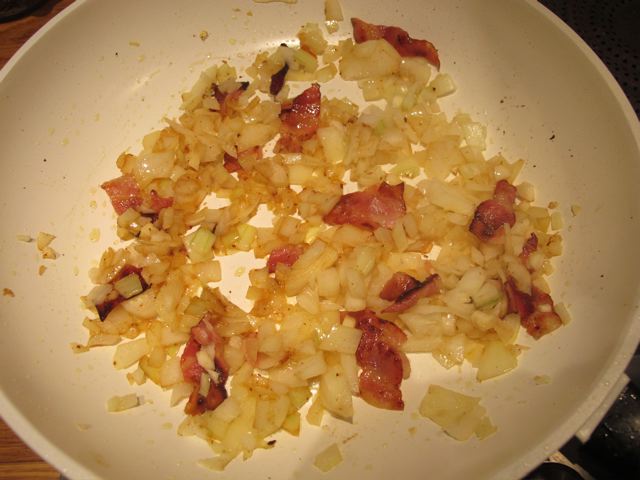
  • Gently heat the oil in a pan and sauté the bacon bits until they colour a bit.
  • Add the garlic and onion.
  • Cook the mix on for five minutes until the onion has softened.
  • While this happens break up the cauliflower into florets and add to a large saucepan.
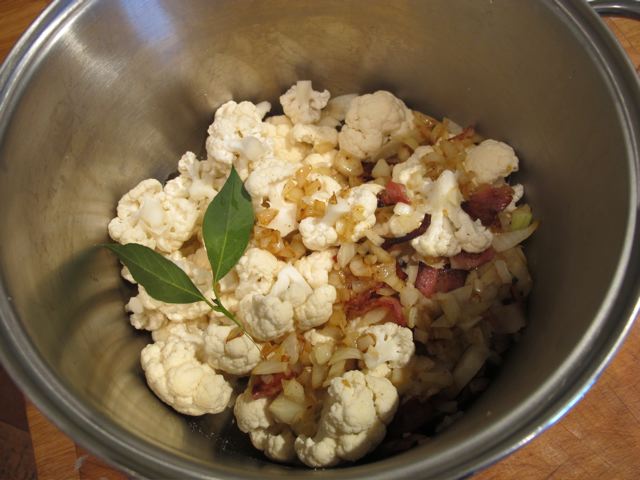
  • When ready add the onion and bacon mix to the cauliflower pan with the bay leaves and the stock.
  • Cover and bring this mix up to the simmer and cook until the cauliflower is tender.
  • Lift a couple of tablespoons of the mix out of the pan and into a bowl with a slotted spoon letting the liquid fall back in the pan
  • Liquidise the contents of the pan and test the seasoning.
  • Use the set-aside florets to garnish the soup and serve hot.
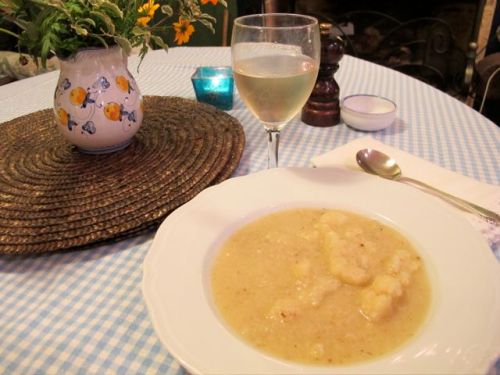
 

Meredith asked, What is this? It’s so creamy? Does it have potatoes in it?”

Cauliflower soup,  I replied, somewhat sheepishly.

(Somehow cauliflower is not a vegetable that’s easy to own….)

It’s delicious!


Read Full Post »

IMG_2673_2

The winter version of the Courgette eggs recipe in my new cook book Mediterranean Cooking for Diabetics (out March 3  in the UK).

And something NEW to do with the not-always-popular Brussels Sprout–poor little mites.

There are usually a few left in a brown paper bag in the fridge and just half a pound of them works well for two people.

IMG_2647

Forgot the parsley for the photo!

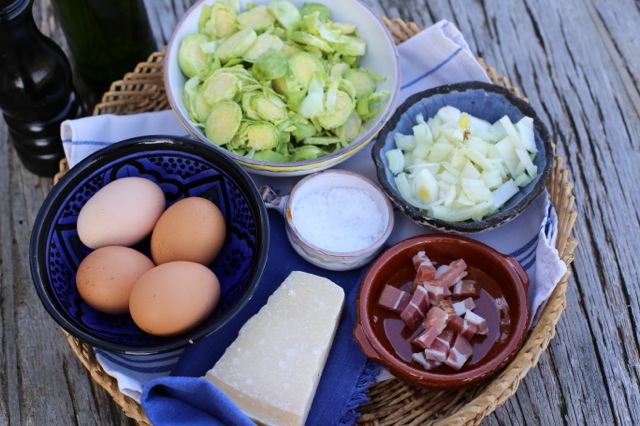
  • 250gm/8oz Brussels Sprouts–outer layers removed and sliced on the horizontal into thinnish slices
  • 1 medium onion–peeled and chopped
  • 1 oz smoky bacon–diced
  • 3 tbs olive oil
  • 2oz parmesan–grated
  • 4 eggs
  • 1 tbs parsley–chopped (if you have some)
  • salt and pepper

Heat the oil in a medium pan and fry the onion and the bacon until the onion softens.

Add the small discs of sprouts and mix the well in.

Cover the pan to allow the sprouts to soften up. Test them after 5 minutes. They need to be tender to match the scrambledness of the eggs.

IMG_2661

Whisk the eggs together and mix in the cheese.

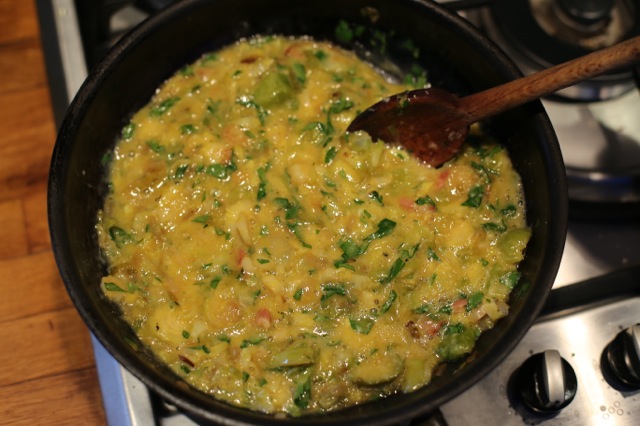
Pour this into the sprout combo and stir constantly as the eggs begin to set over a lowish heat.

IMG_2664

Take care to keep scraping–as the eggs can quickly burn in the pan.

IMG_2675

Test for seasoning–(and fight the temptation to scoff the lot!)

IMG_2671

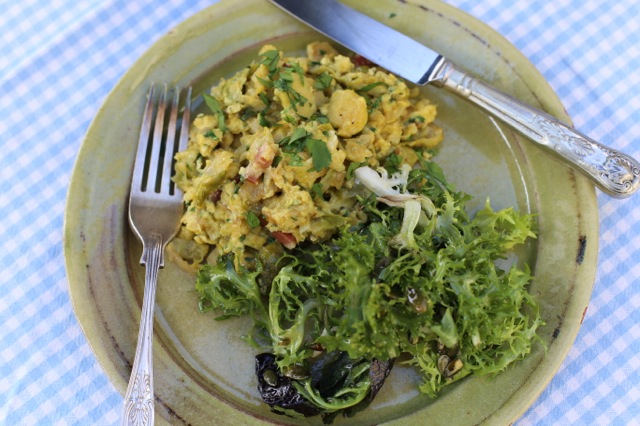
We had this for lunch today (sitting outside in the “spring” sunshine) with a simple salad.

IMG_2677


Read Full Post »

A simple marriage this, arranged by Elizabeth David–who seems surprised in the original recipe that her matchmaking is a success.

IMG_2613

We had these tonight with roasted cabbage slices and flageolet beans in a tomato sauce.

The three made good company rather than a crowd!

IMG_2614


Serves 4

4 medium leeks

3 tbs olive oil

1 glass of red wine

2 or 3 tbs stock (I use organic vegetarian stock cubes.)

salt and pepper


Cut off the root ends of the leeks and pull off the damaged outer layers.

Peel back the tops a little to make sure the soil is cleaned away.

Slice the leeks into stubby lengths.

IMG_2588

Place the stubs in a single layer in a suitable pan that has a cover.

IMG_2593

Add the oil and a pinch of  salt.

IMG_2598

and cook over a medium heat until they start to brown.

IMG_2603

A touch overdone–some. Next time turn a tidge earlier.

Turn them and add the wine and stock. There’ll be a spluttering–be careful!

IMG_2608

Cover the pan and cook on a medium heat until the leeks are tender and the sauce silkily viscuous–about 10 to 15 minutes.

(Add a little more stock, if needed.)

IMG_2610


Read Full Post »

IMG_1510_2

An air of resignation? Fishmonger comes on Friday…

Our walk round the lake last Sunday reminded me of trout and that we have not eaten much fish this winter–just haven’t fancied it.

I checked a list of recipes to try this morning and found trout featuring strongly.

So a visit to our Friday market fishmonger in Lautrec–the more reliable Pascal–yielded two very fresh (clear-eyed) trout from the Pyrenees.

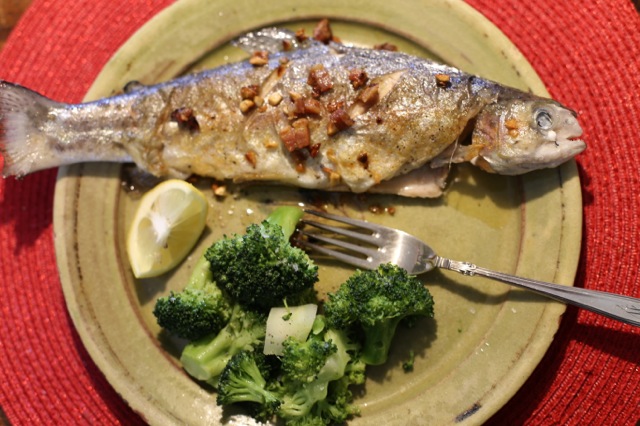
Home James!–and get out the organic bacon from the fridge–an ounce per trout suffices, sliced into dice!

The smokiness of the bacon nicely informs the finished taste.

IMG_2576


2 fresh-as-fresh-can-be trout–kept whole, cleaned (innards removed) and patted dry with kitchen paper

2 oz smoked bacon (you could use unsmoked, of course)

1 tbs olive oil

2 garlic cloves–peeled and chopped

2 tbs chickpea flour or wholewheat flour

salt and pepper

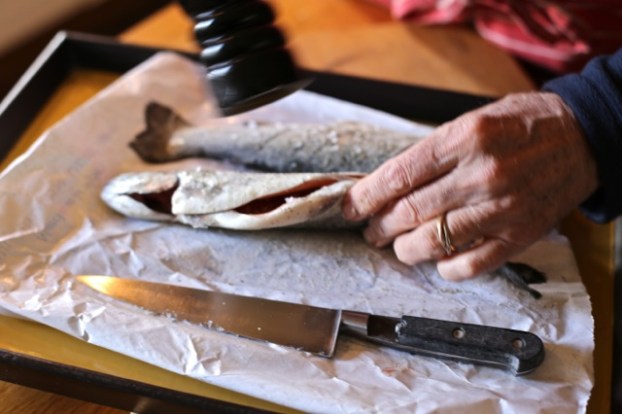
With a sharp knife make three short slashes through the skin each side of each trout–taking care not to cut the flesh.

IMG_2554_2

Spread the flour on a large plate and season it with salt and pepper.

Turn each fish in the flour and shake off any residual flour–season the cavity with pinches of salt and pepper.

IMG_2561_2


They are ready to cook.

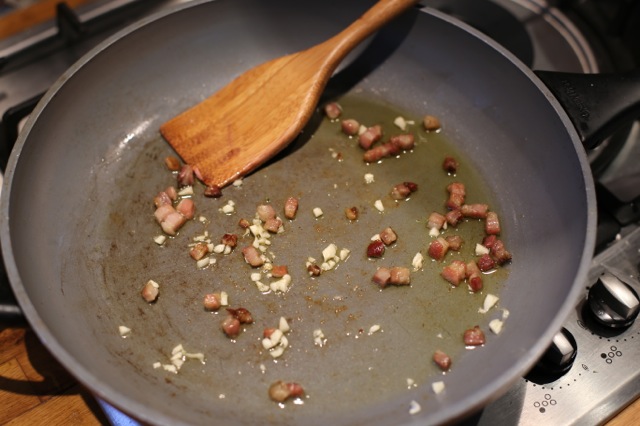
Heat the oil in a fry pan large enough to take the trout and add the bacon.

Sauté over a low heat until it yields some fat and starts to color and crisp a little.

Add the garlic.

IMG_2556

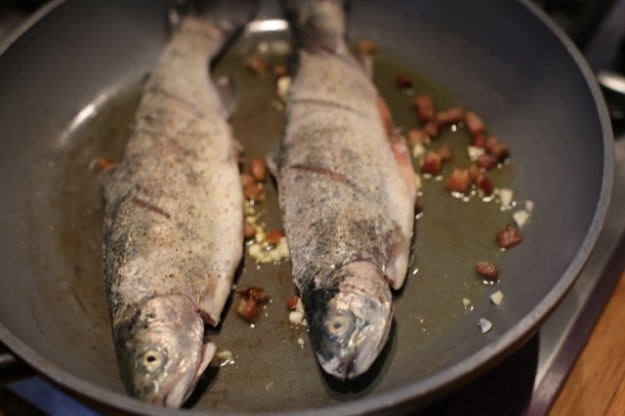
Place the trout on top of the bacon bits and the garlic.

IMG_2564

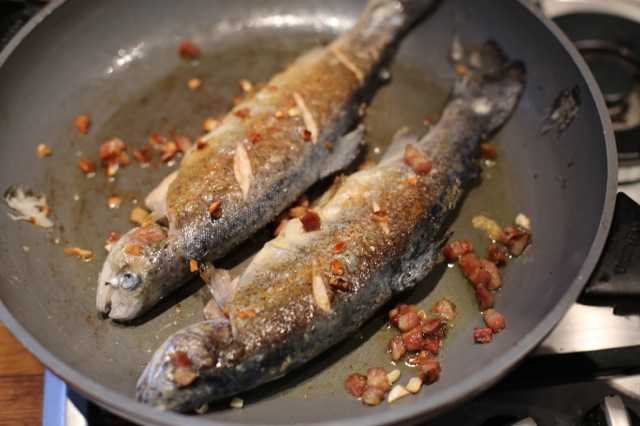
Cook on a lowish heat for about six minutes each side–depending on the size of the fish.

IMG_2565


IMG_1510_2


Meanwhile,  back at the lake….


Read Full Post »

IMG_2505_2

Adapted from a Martha Rose Shulman recipe, this went down a treat with a distracted Meredith, a moving target the other day with her mind  on the Bells of St. Martin and their imminent relocation.

I like both the convenience and look of Gratins.

They often involve pre-cooked ingredients so the final stage is a simple matter of heating through which means you can do an assembly job beforehand, heat the oven and hey presto!

There’s a section on them in my new cookbook, Mediterranean Cooking for Diabetics, out March 3rd in the UK, August 3rd in the USA. 

Robin Ellis Med Cooking 01

(Photos by Meredith, Available for pre-order)

The juicy black olives lend depth and mystery to this simple dish.

“You are kidding me–cauliflowers bring mystery?!”

OK then–“lend an exotic twist.…”

1 medium cauliflower–broken up into bite size florets

3 tbs olive oil

1 medium onion–chopped

2 cloves garlic–pulped with a pinch of salt

a dozen or so, juicy black olives preserved in oil–stoned and halved

2 tbs parsley–chopped fine

4 tbs grated parmesan OR 2tbs each of parmesan and pecorino (if you  use pecorino, keep in mind that it is quite salty.)

2 tbs wholewheat breadcrumbs


Preheat oven to 190c

Steam the cauliflower florets to your taste in tenderness–I like them a bit firm.

Set aside.

Heat the oil in a frying pan and sauté the onion until soft and browned a little–about five minutes

Add the pulped garlic and the parsley and cook for another couple of minutes.

Turn off the heat and mix in the olives.

Add the cauliflower to the pan and turn it over in the mix–seasoning as you go with salt and pepper.

Sprinkle over half the cheese and turn it over.

Taste for seasoning.

Turn this into a shallow gratin dish.

Mix the remaining cheese with the breadcrumbs and sprinkle over a tablespoon of olive oil

Uncooked

Uncooked

Place in the middle of the oven for about 20 minutes.

It should come out sizzling quietly and nicely browned on top.

We had it with sautéed brussel sprouts.

Not the most photogenic dish, but scores high on taste and suitable for vegetarians.

IMG_2510_2

Read Full Post »

IMG_2438

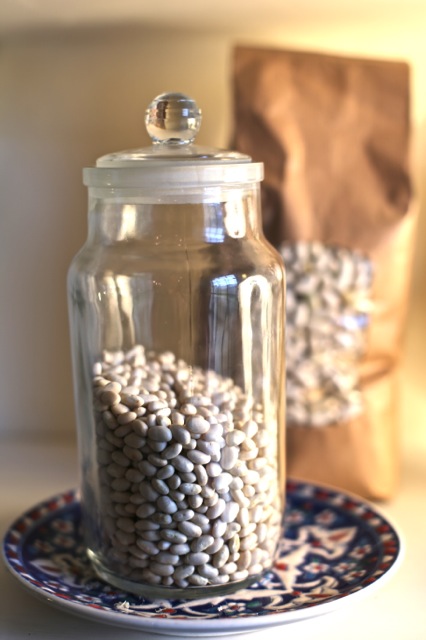
These little pearls are half the size of their better known cousins, cannellini beans, but are cooked the same way.

These were a gift from Polly Wessel–a “Braveheart” (a cooking workshop alumni) last year–kindly brought from Rome.

They have sat on the shelf patiently waiting. Now they are in the spotlight–and I’m appreciating them.

They are called Fagioli del Purgatorio and come from Gradoli–a town 60 miles north west of Rome in Lazio.

Traditionally served at lunch on Ash Wednesday (today), which marks the beginning of Lent in the Christian calendar–a time to purge one’s sins by giving up something one enjoys.

(I remember dreading it as a child in the fifties! No chocolate and or sweets for seven weeks–purgatory!)

One definition of PURGATORY has it as

“…a temporary condition of torment or suffering.” *

When it comes to eating beans Meredith would agree–and would willingly give them up for longer than Lent!

She said today that if she were to take over in the kitchen–something she is capable of doing–she’d cook more or less like I do–except NO beans!

(Meredith grew up near Chicago–the Windy City–perhaps she’s had her fill of wind! The only beans she saw were the long green ones from the family garden–and those she likes!)


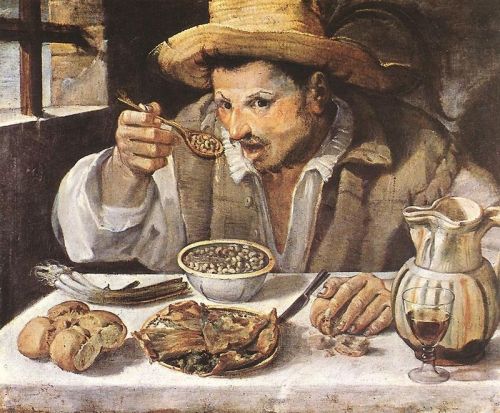
the_bean_eater

Annibale Caracci’s The Bean Eater

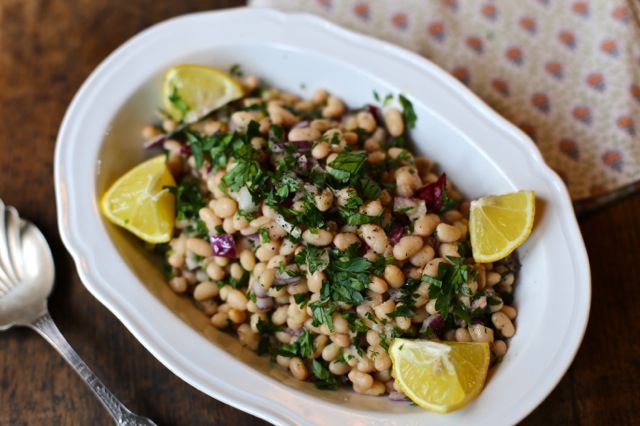
The size of the beans suits this little salad but use any white bean.


8oz dry white beans–soaked in water eight or more hours or overnight (evening of Pancake Tuesday!)

1 carrot–halved lengthwise

stick of celery–chopped in two

1 onion–halved

sprig of rosemary

for the dressing;

4 tbs olive oil

2 tbs red wine vinegar

1 garlic clove–pulped in a little salt

1 smallish red onion–diced small

2 to 3 tbs parsley–chopped

salt and pepper to taste

a lemon quartered to squeeze over for perfection!

oven at 170c

  • Put the first five ingredients in a saucepan and top by two inches or more with water.
  • Bring gently to the boil.
  • Spoon off any white froth that has collected on the surface.
  • Cover the pan and place in the middle of the oven and cook for an hour.
  • Test the beans for softness.
  • If they still seem a little crunchy cook on until they are soft.
  • This depends on the age of the beans–the older they are, the longer they cook.
  • When you are happy with their tenderness–drain them and pour into a pretty serving bowl.
  • Mix the oil, vinegar, garlic, salt and pepper into a vinaigrette and pour over the beans while they are still warm.
  • Add the onion and parsley and carefully turn it all over.

IMG_2472


A fuller definition of PURGATORY is:

an intermediate state after death for expiatory purification; specifically :  a place or state of punishment wherein according to the souls of those who die in God’s grace may make satisfaction for past sins and so become fit for heaven

Well, I’d be happy to take my punishment–I love beans!

Wind or no wind!


Read Full Post »

IMG_2407

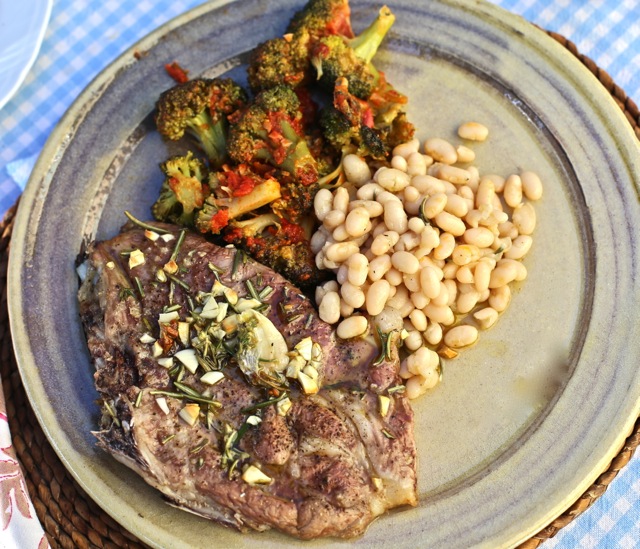
These little white beans are called purgatory beans

I originally published this recipe (I’d watched Gordon Ramsay demonstrate it on YouTube), four years ago almost to the day.

It was a bitingly cold February back in 2012.

My, what a difference four years makes!

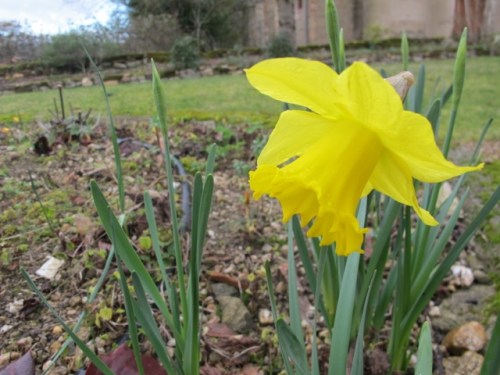
We are eating this in a sunny courtyard with the first daffodil peeking round the corner, looking as surprised as we are.

IMG_3725

Faux Printemps is all very well but one has to be a little anxious.

IMG_3727

Jack Frost can be a patient fellow….

IMG_3724

“Bonjour, Madam–deux cotes d’échine, s’il vous plait.”

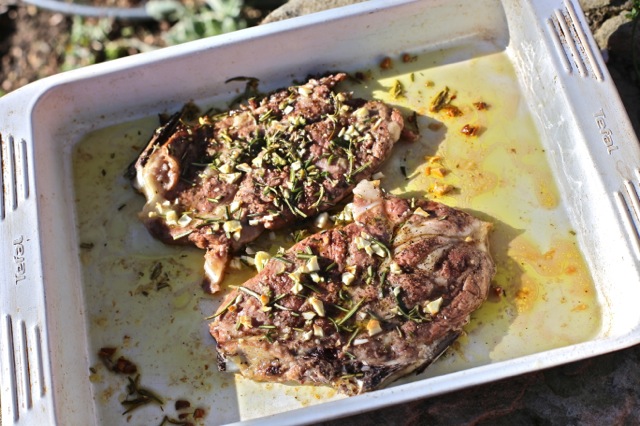
Spare rib chops are tastier and less prone to dry out than loin chops–and they are the less expensive cut.

IMG_2399

These two cost under 3€ (about $3.30 or £2.40).

“Elles sont trop cher, Madam!”

Our Lautrec Friday market pork butcher looked confused--until she heard the woman next to me laugh.

The rosemary needles take on a nice crunchiness and are worth eating, as is the garlic.

for 2

2 spare rib pork chops

Sprigs of rosemary and thyme

3/4 cloves of garlic–squashed, peeled and halved

olive oil

salt and pepper

heat the oven to 200C/400F

  • Dribble some olive oil and sprinkle some salt on a shallow oven tray.
  • Scatter over a couple of the cloves of garlic.
  • Place the chops on top.
  • Sprinkle them with salt and pepper.
  • Strip the rosemary needles from the stem over the chops.
  • Do the same with the thyme (not so easily done).
  • Dribble more olive oil over the tray.
  • Put it in the higher part of the oven for about 20 minutes.
  • (The cooking time depends on the thickness of the chops.)
  • Best to cut into them to check–the juices should run clear.

IMG_2404

Read Full Post »
« Newer Posts - Older Posts »