Feeds:
Posts
Comments

Archive for the ‘Food’ Category

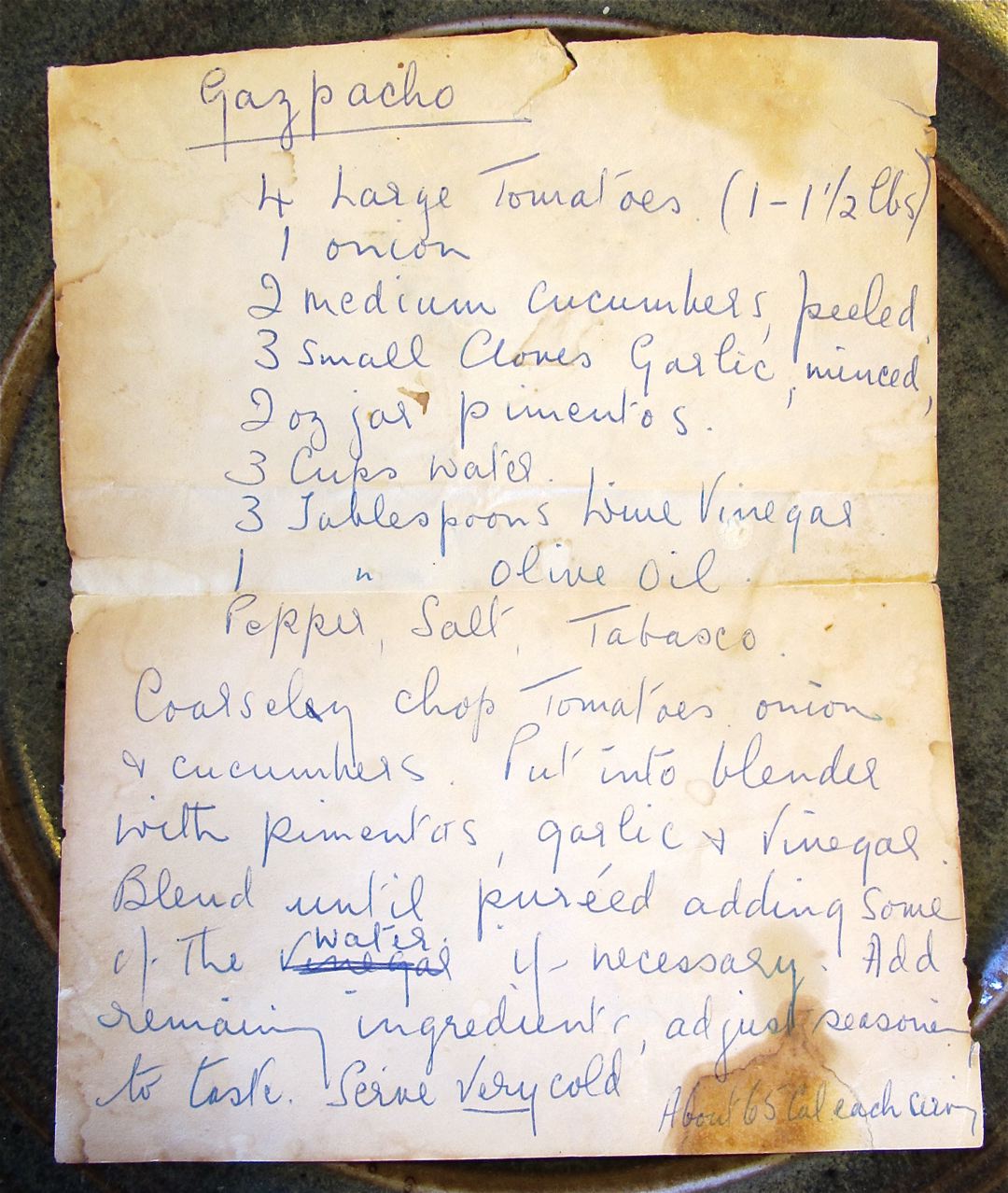
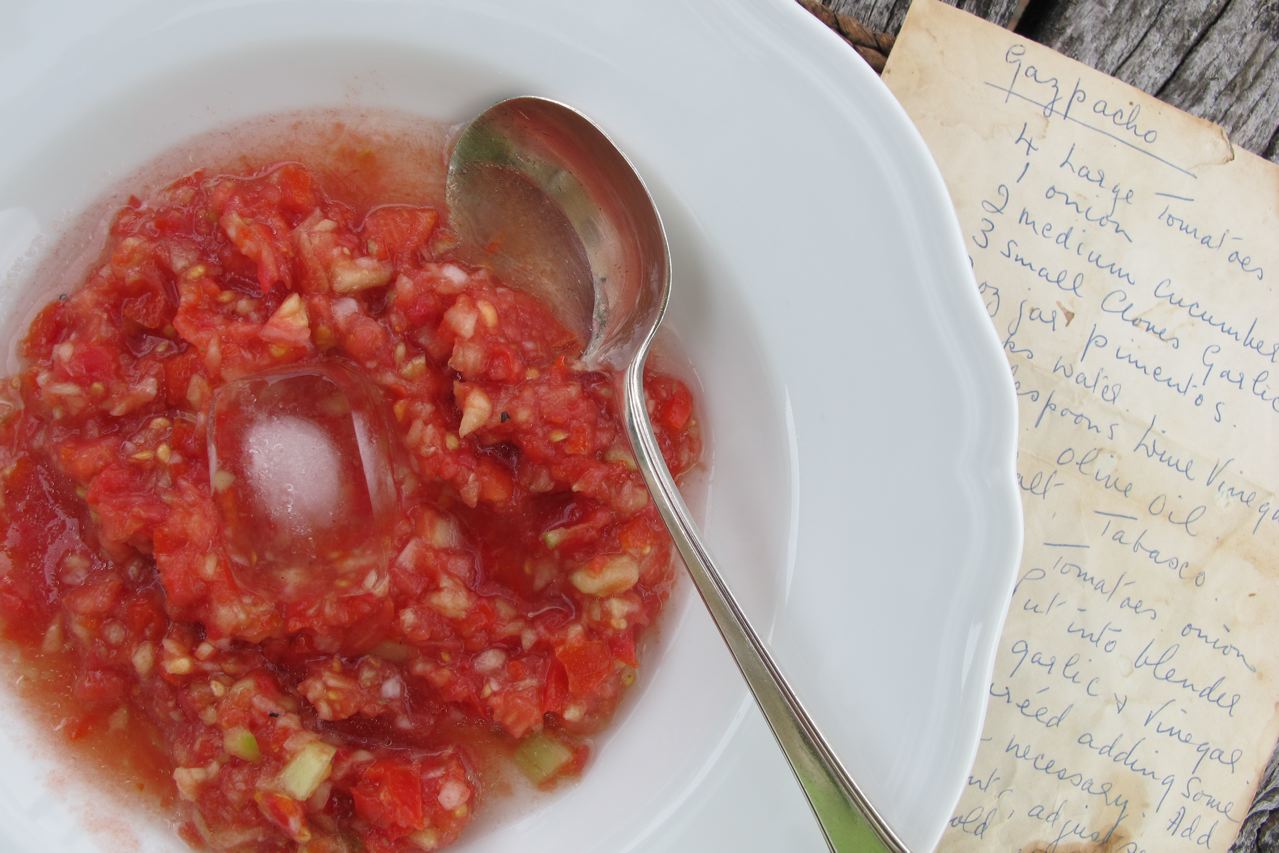
It’s a fair bet my Mother first tasted this traditional summer soup from Andalusia in 1953–when my parents took brother Peter and me to the Costa Brava for a two week holiday. Dad worked for British Railways and got a certain amount of concessionary travel in Europe.

There were five hotels at that time in Lloret del Mar (five hundred plus now!).

We stayed in one of them with a pretty courtyard–twenty yards from the beach.

I don’t remember the soup but the egg fried in olive oil I can taste to this day!

Franco’s military police, patrolling the beach in funny hats and holding not-so-funny machine guns, also made an impression. No such thing at on the sands at Woolacombe!
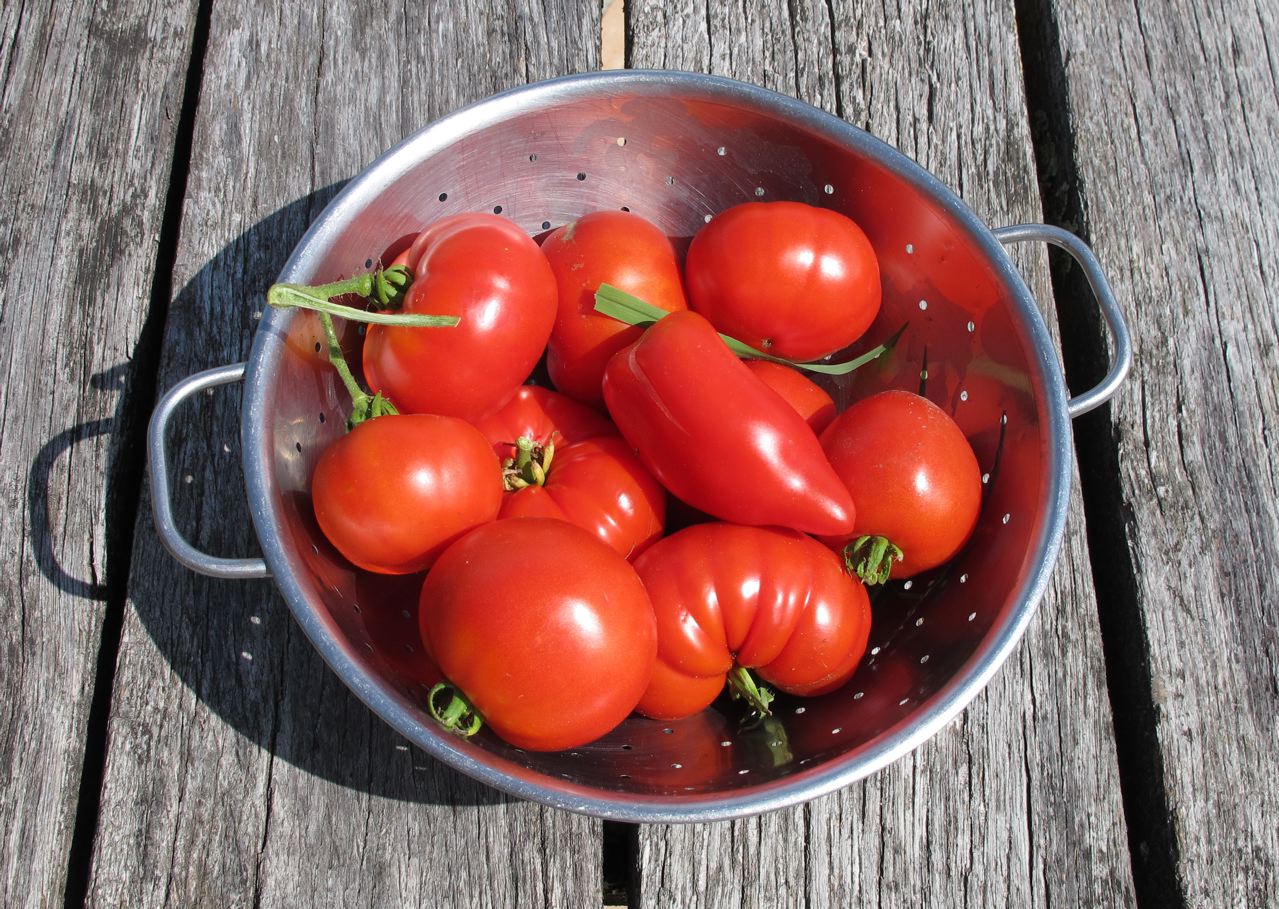
About a kilo collected this morning--a little more than the recipe.

Molly Ellis’ Recipe (slightly adapted!)

Chop the tomatoes roughly–and put them in the food processor.

Chop up half a large, peeled cucumber and half a large,  red pepper–seeded–(she calls them pimentoes) and add them to the processor.

I add a couple of spring onions (scallions)–chopped. (Ma adds a yellow onion–which I’ll try next time).

Mash up 3 cloves of garlic, as she does, with a little salt–and add them to the processor.

Pulse the contents–not too smooth a finish.

Empty this already tasty mix into a bowl and adjust the seasoning with salt and pepper.

Stir in 3 tablespoons of red wine vinegar and two tablespoons of olive oil.

A few drops of Tabasco–as she suggests–a matter of taste.

(At lunch today I added an ice cube to each bowl instead of water.)

Chill for a couple of hours.

We found a ladle each is enough–with a whirl of olive oil to finish?
Read Full Post »

Things don’t always grow to plan in the vegetable patch…!


Read Full Post »

“Percy Piper picked a peck of pickled peppers;
A peck of pickled peppers Percy Piper picked;
If Percy Piper picked a peck of pickled peppers,
Where’s the peck of pickled peppers Percy Piper picked?” 

(It’s Peter in the original tongue twister, and it’s just as difficult with Percy!)

The “Percy” in the title is a friend of a friend.

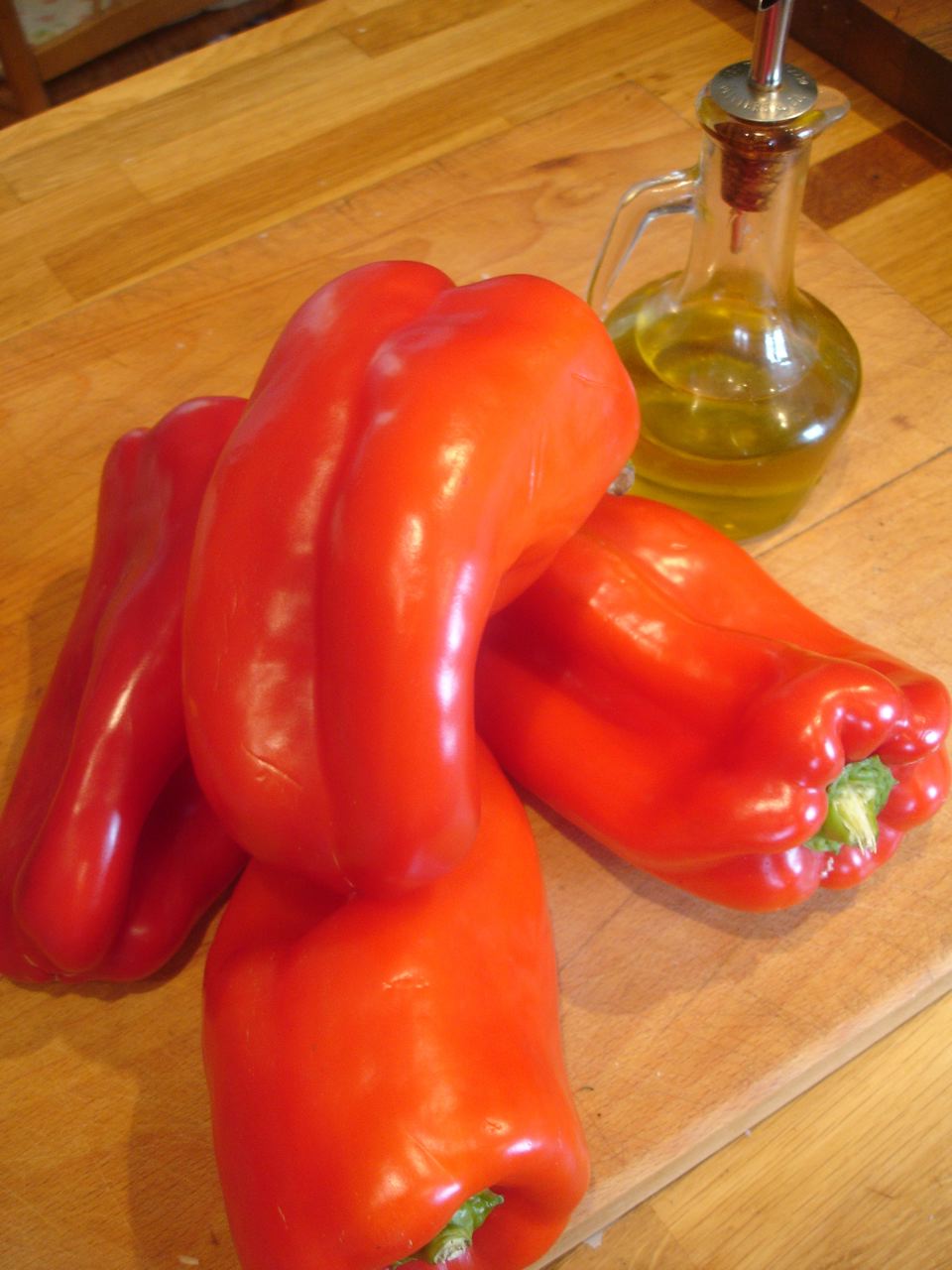
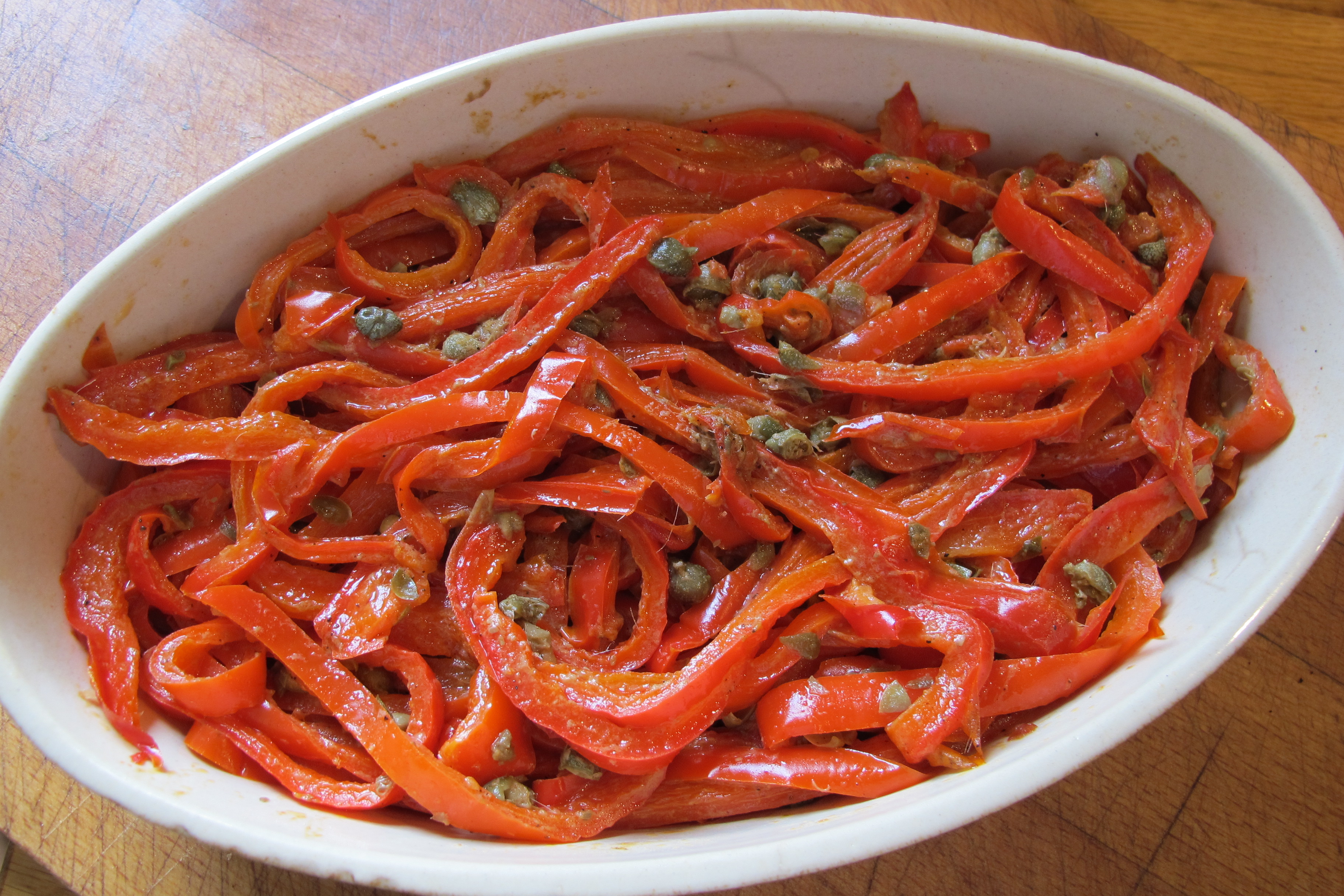
These peppers have a delicious savoury taste, a lovely look, and help to cheer up a dull unseasonal day…

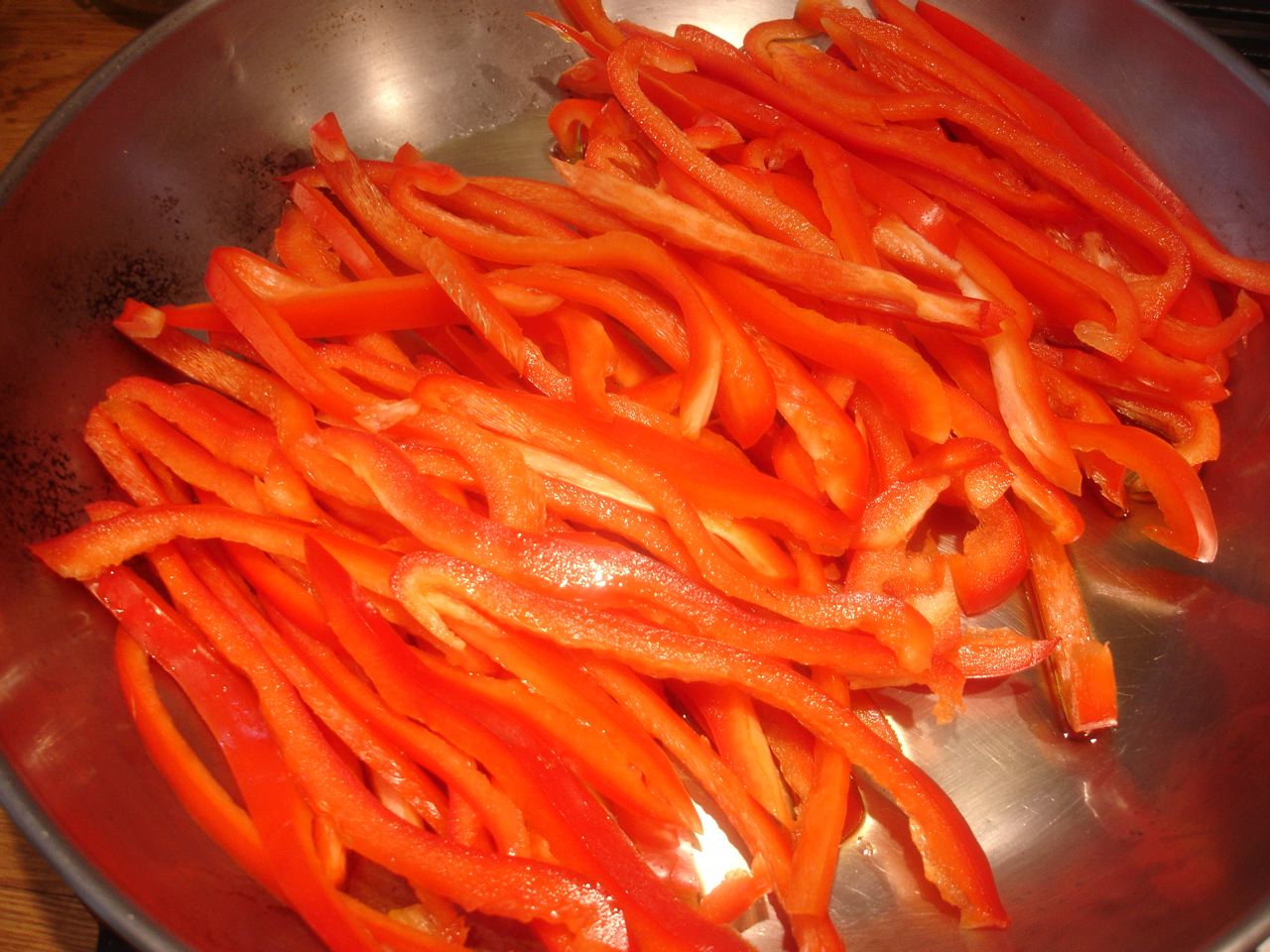
The secret is to take care slicing them thin and then sautéeing them slow and long.

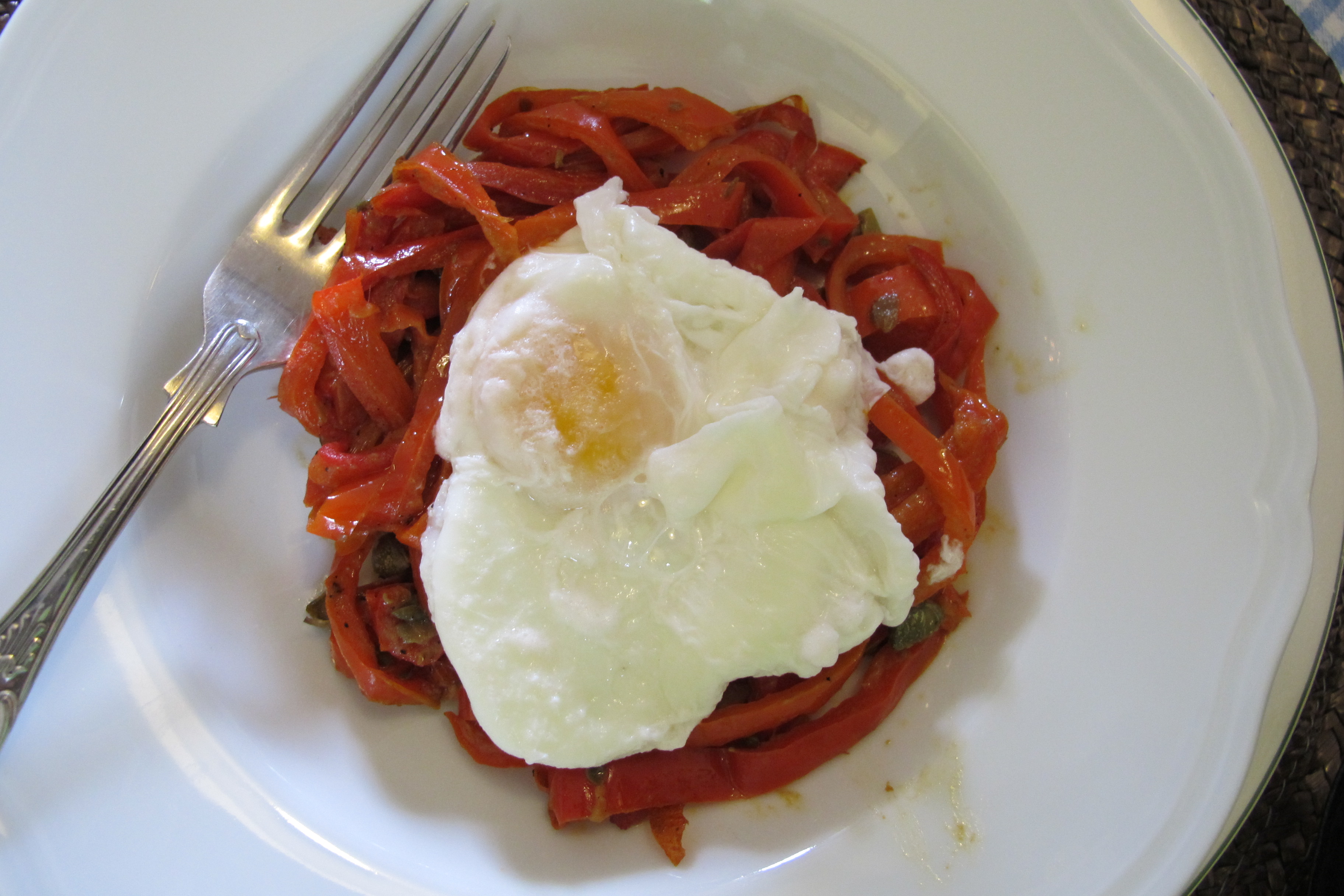
We had them yesterday for lunch with a poached egg on top and a fennel salad.

for 4

4 red peppers— sliced finely–lengthwise

10 anchovy fillets–pulped with a pinch of salt

1 tablespoon of  capers–roughly chopped

3 tablespoons olive oil

generous twists of  black pepper

  • Heat the olive oil in a large sauté pan and soften the peppers gently over a low heat.
  • It’s worth taking the time to do this–at least an hour.
  • Stir in the anchovies–without breaking up the peppers–until they melt.
  • Heat the oven to 180˚
  • Stir the capers into the peppers and season with black pepper.
  • Fold them into a pleasing ovenproof dish and heat them through for about 10 minutes
  • Serve them warm with more olive oil drizzled over (and the egg on top if you like.)

Read Full Post »

I am just about to spread the “no-added-sugar fruit paste” on my regular 2 pieces of 100% rye this morning with a bone-handled dessert knife, when I’m minded to look more closely at the blade.

This prompts a memory surge going back 60 years.

The knife has seen better days; the bone handle is split, but still feels comfortable in the hand.

The name of the shop it came from–Bravingtons–is clearly visible on the small broad blade–which spreads the fruit paste nicely.

I always liked the knives from this set–probably a wedding present for my parents from Ma’s uncle Harry, back in April 1938.

They were in everyday use when I was a boy–perhaps helping to establish my pernickity taste in cutlery. My enjoyment of food is always affected by what I am eating it with.

Great Uncle Harry Weakford, worked at the Bravingtons in Knightsbridge, selling silver to the posh.

He was my mother’s father’s brother.

This branch–just down from Harrods–had the familiar black-marbled, silver-lettered banner front–favoured by pre-war jewellery shops.

The Bravingtons shops proudly displayed the Royal Coat of Arms–as the official supplier of cutlery to the Queen.

Uncle Harry was a jovial cove who lived with his wife in Norbury, south London, where my mother was born & raised.

Once we visited for tea in the Fifties. I remember watching Leslie Howard in The Scarlet Pimpernel (1934) on their telly. We didn’t have a set at home, and I recall being swept up in the brave romance of it all. (Little did I know that years later I’d be rescuing French aristos in the guise of Ross Poldark!)

Uncle Harry, like my mother, had diabetes–and these thoughts about the knife make me want to know more about him and

remind me how “family inheritance” can be a mixed blessing!

Read Full Post »

Meredith is pursuing one of her passions–teaching circle dancing–today.

She’s invited to lead and teach at a Quaker retreat in the Pyrenean foothills tonight.

So–I can have chicken wings for supper without pause.

Meredith is not so keen on this fingerlicking special treat.

There’s a recipe for them in my book that uses lots of black pepper.

This is a different one with garlic, allspice, cinnamon, and a little cayenne–we’ll see.

I’m reckoning on four for each person.

chicken wings–washed and dried

enough marinade for 16 wings
12 cloves of garlic-– peeled and pulped with a pinch of salt
juice of a lemon
3 tablespoons olive oil
1/4 teaspoon cinnamon
3/4 teaspoon allspice
i/4 teaspoon cayenne
good grinding of black pepper and salt 

  • Combine all the marinade ingredients in a bowl.
  • Put in the wings and turn them over until they are thoroughly coated in it.
  • Leave them to marinade for at least an hour.
  • Heat the oven to 180C/350F
  • Cover a shallow oven tray with foil and brush it with oil.
  • Lay the wings out on the tray.

I couldn't resist five...

  1. Roast them for 45 minutes.
  2. Turn up the heat to 200C/400F.
  3. Continue roasting for a further 5 minutes–then take them out of the oven.

I’m told that home-made mayonnaise goes very well with them–but I couldn’t possibly comment.

Read Full Post »

…the book!

an early chapter introduction...

with one of the twelve lovely sketches in the book by our friend Hope James–and…

... a seasonal recipe.

Read Full Post »

Our  houseguest, Romaine, says she has a penchant for meat these days.

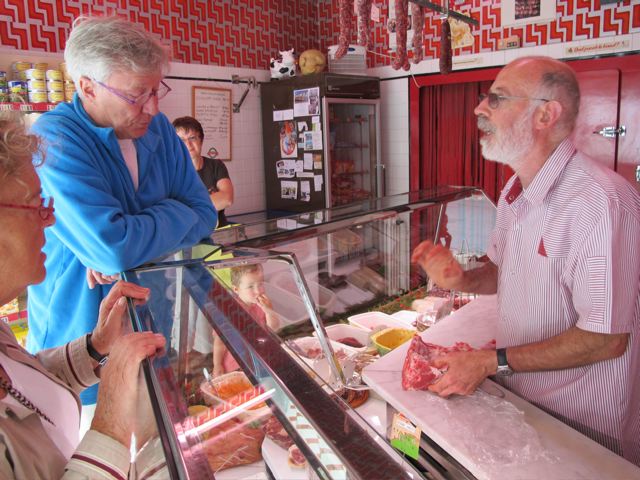
So off to visit Monsieur Fraisse, our butcher in Lautrec, in search of fillet of lamb for a marinade I’ve found.

Meredith and I don’t eat meat that often. My knowledge of the finer points of French boucherie is limited.

“Filet?–ça n’existe pas!”

“Aah….”

Monsieur Fraisse knows his meat. Like his father before him, he selects and buys locally.

M. Fraisse explains...

But our friend Romaine says she used to cook it in Cheshire, many moons ago–with Elizabeth David as a guide.

As far as she remembers the fillet was a boned loin of lamb.

It was sliced into neat nuggets she calls noisettes–a French word apparently not used in a French boucherie–at least not by Monsieur Fraisse.

The English, the French and the Americans all have their traditional ways of cutting up meat–and their own terminology.

It’s confusing, though from the way Monsieur Fraisse describes the cote de filet [chop] boned, it sounds much the same.

Anyway…

“when in Rome….”!

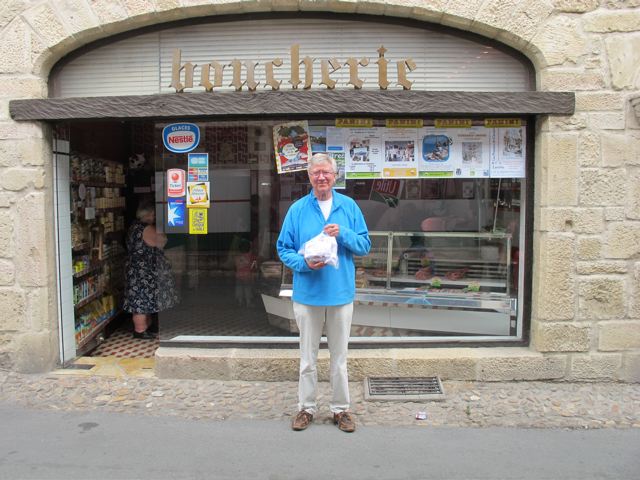
We walk out–still confused–but clutching a bag of lamb to marinade and looking forward to dinner!

Happy Roman

A tasty marinade for 

4 lamb chops or other small cuts!

A good handful of mint leaves

4 tablespoons olive oil

4 large garlic cloves–pulped with a pinch of salt

50g/2 oz anchovy fillets–pulped

Whizz the last four ingredients together in a mixer and coat the chops in it in a bowl.

Leave to marinade for a couple of hours.

Heat a griddle to hot and grill the chops for a couple of minutes both sides–the time will depend on your taste and the thickness of the chops.

Seasonal vegetables like green beans or grilled tomatoes would go well with the chops.

Read Full Post »

Our friend Romaine arrives today and I know she likes houmous.

the ingredients

I do too–and this version has a bit of a kick to it.

ready to whizz...

There’s garlic, cumin and cayenne in this mix–with olive oil and lemon juice to loosen it.

whizzed and ready to spread!

8 oz cooked chickpeas–I prefer the kind in jars

3 cloves of garlic–peeled and chopped

1/2 teaspoon salt

3 tablespoons tahini

1 teaspoon cumin powder

1/2 teaspoon cayenne

2 tablespoons olive oil

juice of 2 lemons

Put all the ingredients except the lemon in a food mixer and whizz smooth.

Add half the lemon juice  and taste.

Add the rest of the lemon juice as you like.

I just made it with all the juice of 2 lemons and it tastes right –it depends on the size and juiciness of the lemons.

Read Full Post »

Pistou is Provençal for pounded. 

Pestare means  to pound or crush in Italian.

Hence--pestle–the pounder part of  a pestle and mortar.

Pesto is a basil-based sauce and a wonder for summer.

Lovely and garlicky, it’s a quick sauce for pasta and good to drizzle on grilled vegetables.

It can also be stirred into a soup of young vegetables.

This recipe makes a decent amount.

100 g/4 oz basil leaves

4 cloves of garlic – crushed

25 g/1 oz pine nuts – optional

10 tbsp olive oil

salt and pepper

100 g/4 oz Parmesan cheese – grated

  • Put the basil, garlic and pine nuts in a processor.
  • Whizz, adding the oil until you have a smoothish sauce.
  • Season and transfer to a bowl.
  • Fold in the Parmesan and taste. Add more if you feel it needs it.
I’d bought three good bunches of basil at Castres market early Saturday morning–for 1 euro each.
I made the sauce in the afternoon, so just had to boil the wholewheat spagettini and hey presto!
Pesto pasta for dinner last night.
Summer’s here we thought–then it started raining…!

Read Full Post »

The GI news [http://ginews.blogspot.com/] arrived yesterday as always on the first of the month.

Diabetes and its treatment through lifestyle and diet, is central to its raison d’etre.

Based in a research unit at the University of Sydney, Australia, it’s an excellent monthly newsletter–easy to sign up for and free.

It includes discussion of current attitudes to health issues related to diet, with the concept of GI–Glycemic Index as a base.

Articles this month include: “Reduced fat intake may reduce diabetes risk without weight loss” and Prof Jennie Brand-Miller, a leading authority on GI, oninsulin sensitivity”.

There ‘s a recipe feature included each month.

Dr Alan Barclay [http://ginews.blogspot.com/2011/07/gi-symbol-news-with-dr-alan-barclay.html], the resident medical expert, expresses his view of the recent study by a research team at Newcastle University in the UK, which was the subject of one of my recent posts [https://robinellisdotnet.wordpress.com/wp-admin/post.php?post=2365&action=edit].

The study had been headlined in the press as a “Cure for Diabetes” through a restricted diet. Dr. Barclay is sceptical.

I enjoy receiving this newsletter  and usually find something helpful in it.

Read Full Post »

« Newer Posts - Older Posts »