Feeds:
Posts
Comments

Archive for the ‘Food’ Category

Making Poldark has been Nooked at last!

Nick it on NOOK–it’s a steal!

It’s available now on NOOK.

Making Poldark: Memoir of a BBC/Masterpiece Theatre Actor
by Robin Ellis
This revised version came out in April 2012 and is greatly expanded–including new photos from Winston Graham’s personal Poldark photo album.
And while we are at it…
Delicious Dishes for Diabetics
Delicious Dishes for Diabetics 

Read Full Post »

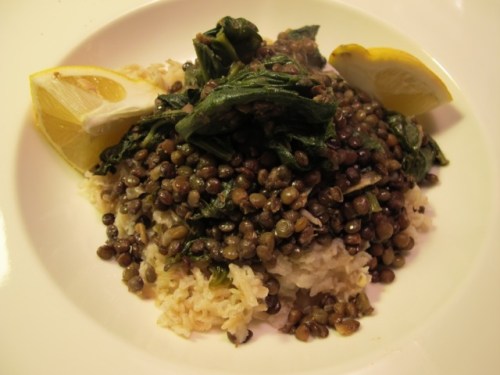
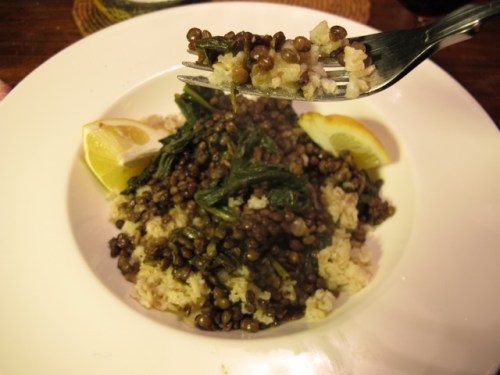
Meredith’s Ayervedic consultant gave lentils the thumbs up yesterday.

A break for me–I love all lentils.

Meredith’s not so keen, though she likes the tastetheir tendency to “airify” is not so agreeable.

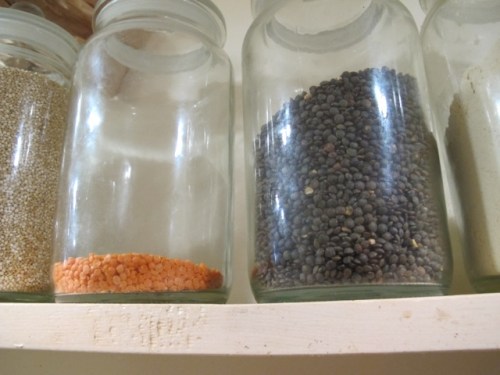
There’s a big glass jar of green/grey Puy-type lentils on the shelf in the larder that’s seen no action for months, so…

inspired by a recipe in Rose Elliott’s Bean Book that combines lentils and spinach (and remembering the pound plus of beautiful organic spinach in the fridge)–I gleefully took it down last night.

This and is another one pot meal–though some brown basmati rice makes for a good companion !

for 4

8oz green/grey lentils–washed thoroughly, but no need to soak them

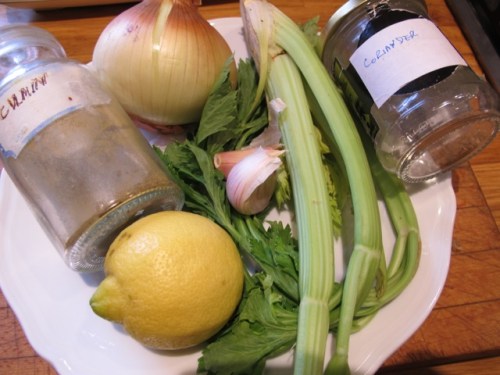
2 celery sticks–washed

1 clove garlic–peeled

half a large onion–peeled

water to cover the lentils by an inch or a bit more

the other half of the onion–chopped

1 clove garlic–pulped with half a teaspoon of salt

1 teaspoon cumin powder

1 teaspoon coriander powder

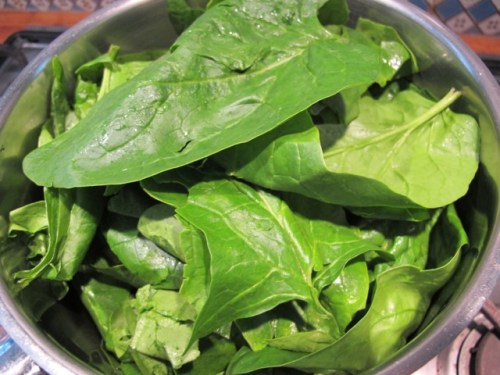
450gms/1lb spinach–washed and drained. (Use frozen if you like–thawed and squeezed)

a couple of pinches of salt

juice of a lemon

  • Put the lentils in a pan with the water and add the celery, onion and garlic.
  • Bring to the boil, turn the heat to low and cook covered until the lentils are tender–try not to overcook them to mush.  The time depends on the age of the lentils–about 25 minutes; check them from time to time.
  • While the lentils are cooking–heat a tablespoon of oil in a sauté pan and add the chopped onion and garlic.
  • Cook gently until they are soft and beginning to colour.
  • Add the cumin and coriander and cook for a minute or two longer.
  • Remove the celery, onion and garlic from the lentils and drain them of most of the excess liquid.
  • Add the spiced onion and garlic mix and turn it all over to coat the lentils.
  • While this is proceeding find time to put the spinach in a large saucepan with a couple of pinches of salt snuck in between the leaves–no extra water is needed.

  • Cook on the lowest heat, covered–until it has wilted.
  • Drain it of excess water but don’t squeeze it.
  • Add it to the lentils and squeeze over the lemon juice
  • Turn it over carefully–and serve with some rice on the side and a couple of lemon quarters on the plate.

Evidence of a change of mind!

Read Full Post »

I like a plate of beans–with olive oil swirled over them.

Plate of white beans and olive oil at La Sostanza, Firenze. An aside to their famous artichoke omelette.

There are good quality beans available now in glass jars. Quickly  heated up and plated.

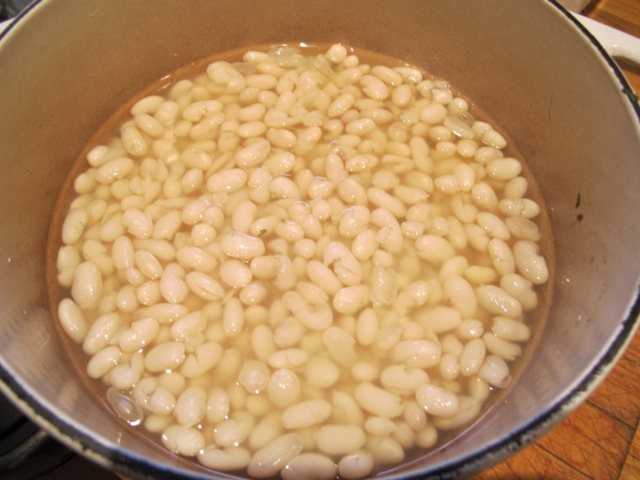
But perhaps you have a packet of dry white beans that may have spent some time on a shelf–daring you to do something about them?

Ever present, silently reproachful, waiting for some action–they can be intimidating!

The sooner they are treated the better and it’s simple this way.

Put half a pound of dry beans in a bowl and cover them with cold water.

Leave to soak overnight.

Heat the oven to 170C/340F.

Drain the beans and rinse them.

Put them into a medium casserole/pot/pan and cover them again with a top-of- the-thumb joint of cold water.

Cover the casserole and bring it to the boil.

Place it on the middle shelf of the oven and leave for 40 minutes.

Test for softness, leaving it longer if necessary–the older the beans, the longer it will take.

Add a teaspoon of salt to the casserole and leave to cool in the liquid.

When you are ready to eat, reheat them in a little of their liquid, adding half an organic vegetable stock cube, crumbled.

Drain the beans and serve them hot. Season to taste with salt and pepper, adding a swirl of the best olive oil you have.

The plate of beans I can do, but the high-sided omelette filled with crispy roasted artichokes still eludes me.

Un de ces jours! 

Read Full Post »

I bought some impressive looking fennel at the organic market.

It sat on the kitchen island demanding attention.

I sliced one to eat raw at lunch after pasta–with a piece of parmesan or pecorino and some of the new olive oil. We had enjoyed doing this in Tuscany–cleanses the palate (and helps avoid flatulance, according to my researcher–aka Meredith!)

It was tenderly crunchy–not in the least stringy.

Fennel gratin I thought–supper with a sweet potato and tarator sauce.

I’d never cooked it before and my search for guidance led me to the Riverford Farm Cookbook.

Rosemary and garlic was suggested with cream and parmesan.

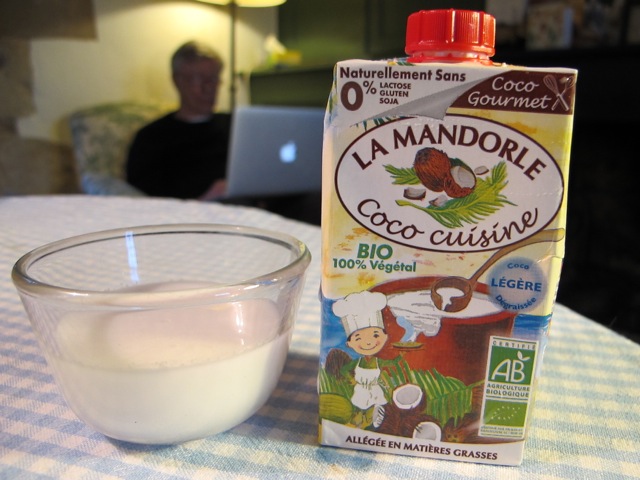
I have substituted coconut cream (see below if you are unfamiliar with this ingredient) and added more parmesan.

Serves 2 as a main course–4 as an accompanying vegetable.

4 largish fennel bulbs–cleaned, cored and sliced vertically in half inch pieces

1 pint/450ml stock to blanch the fennel–I use organic vegetable stock cubes

3 garlic cloves–peeled and crushed with a knife

1 teaspoon rosemary needles–chopped fine

160ml coconut creamthe difference between coconut milk/cream and cream of coconut is fully explained here: http://www.thekitchn.com/whats-the-difference-coconut-m-75446/. It looks like milk, it is NOT sweetened and it does NOT taste of coconut!

1/2 tablespoon parmesan to mix in with the cream+ more for the topping–a tablespoon perhaps.

(The version below is fat free.)

salt and pepper

  • Bring the stock to the boil in a wide shallow pan.
  • Add the fennel and cook for about 5 minutes–until it’s beginning to soften.

  • Remove it to a bowl with a draining spoon and let it cool a little.

This looks uncooked–but it is!

  • Combine the coconut cream with the garlic and rosemary in a small pan and gently bring to the boil.
  • Turn off the heat.

  • Season this mix and add half the cheese.
  • Pour it on the fennel and turn it all over thoroughly.
  • Put the gratin mix in an oven proof dish–it is oven-ready now.
  • This can be prepared beforehand and set aside, covered with foil.
  • An hour or so before you are planning to eat…
  • Heat the oven to 180C/360F
  • Cook it in the oven for 30 minutes.
  • Take it out and lift off the foil.
  • Sprinkle over parmesan to cover and put it back uncovered in the oven for a further 15 minutes.
  • It will have browned nicely on top.

Read Full Post »

Our olive farmer friend, Keith, just asked when we’re moving to Italy!

He is in high spirits. The harvest is over (1000 trees!) and while he was initially pessimistic, it ended up a bumper year.

Well, as much as I love Italy and Italians, I’m reminded that moving house along with divorce and death are the three most stressful life events.

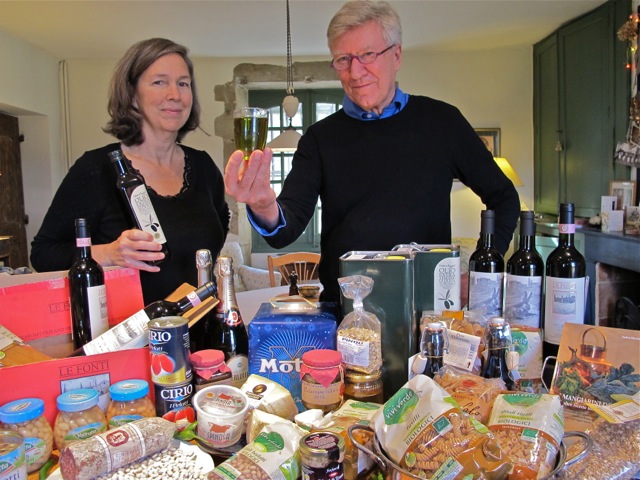
However, we did our best to transport Italy to France!

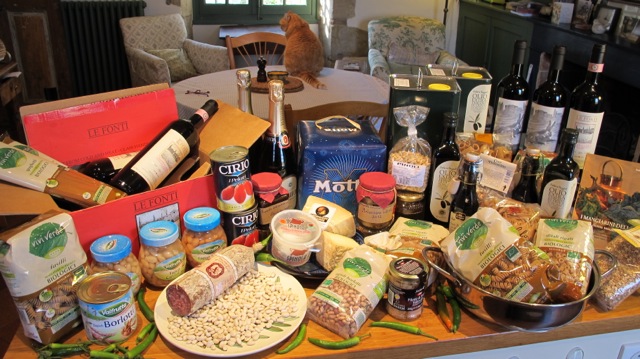
Still life–“Italian goodies with one disapproving French ginger cat (Pippa).”

This haul–

pecorino cheese, borlotti beans, prosecco wine, chianti classico, wholewheat pasta, Helen’s homegrown green chilis, new season olive oil, dry white cannellini beans, dried chickpeas, buffalo mozzarella, dried wheat berries, Cirio tinned tomatoes, parmigiano reggiano, wild boar salami and delicious, unexpected gifts from our friends Beatrice and Maria Gracie, whom we met in Florence–

will keep me busy for weeks and ease our passage back to rural France.

Vive La Difference!--I say.

A soupçon of green gold (2012 vintage)–freshly made in Tuscany.

A fruitful trip!

Read Full Post »

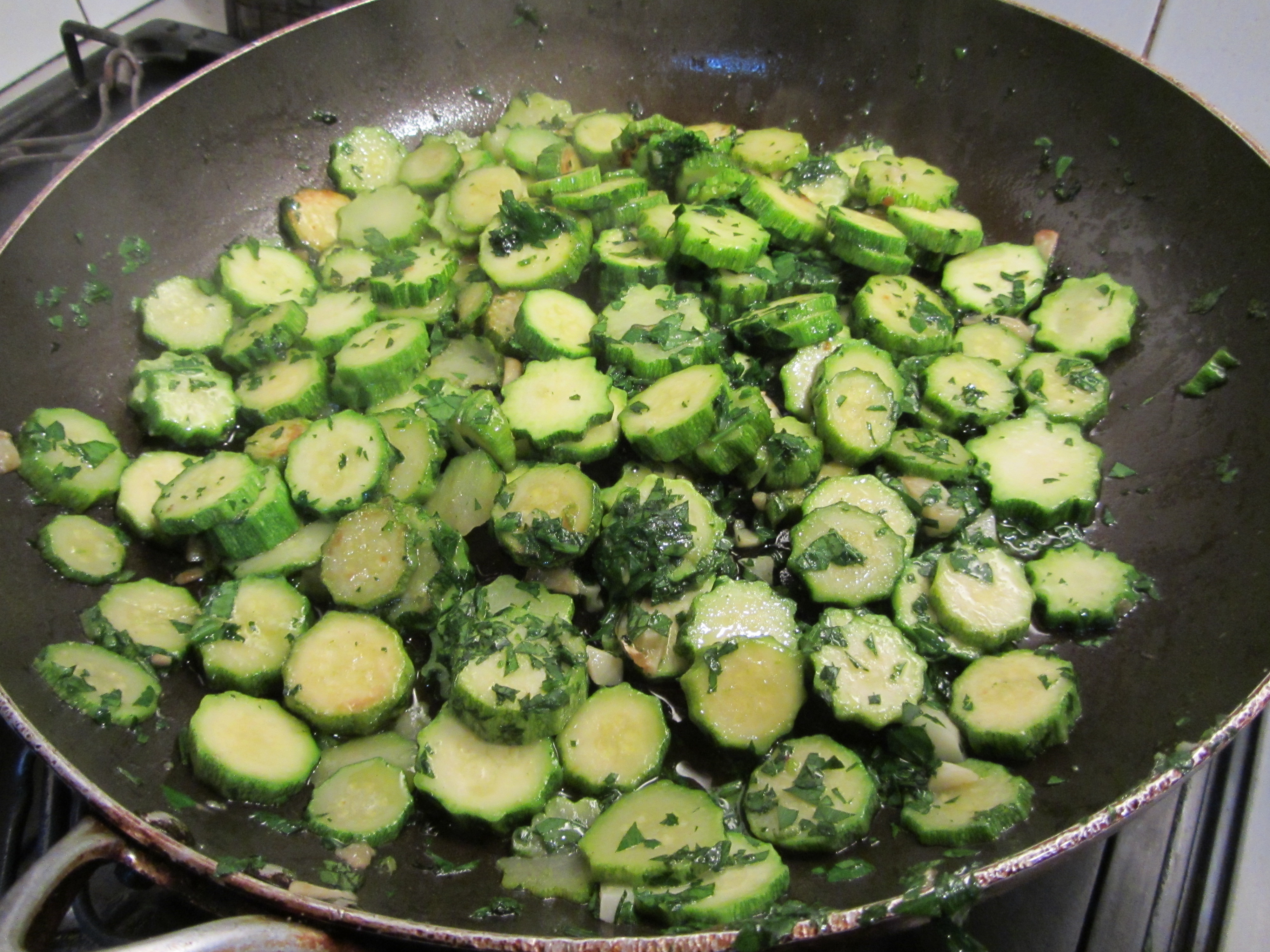
Our friend Helen is a natural cook.

She rarely uses recipe books; rather she builds a dish from the ingredients to hand–throwing in this and that from time to time with an instinctive sense of when it’s right.

I love watching her cook.

She prepared this pasta on our visit last year–a reviving lunch after a morning working in the olive grove.

It was creamily delicious–hard not to take another spoonful! It seems to get better and better just sitting on the table. How did she managed to make it turn out that way?

I asked her to cook it again for us this November–while I took notes.

She uses a variety of courgette/zucchini that is paler than those I find here and has raised ridges–ideal for catching the garlicky olive oil sauce.

No matter–I shall try this at home with the common dark green variety.

Here’s what she did:

for 4

a pound and a half/750gms zucchini/courgettes–sliced evenly

3 tblsps olive oil (their own!)

2 garlic cloves–peeled, crunched under a knife and roughly chopped

a pinch of chili powder–(Helen adds more when her son Lucio is expected for lunch. Sometimes she doesn’t add any when it’s just her and Keith.)

hot water

salt

A handful of chopped parsley

400gms/16oz–wholewheat spiral pasta (or other shapes)

parmesan cheese to grate for those that like it

  • Helen sets plenty of water to boil for the pasta.
  • Then she heats the oil in a large sauté pan and adds the garlic, letting it take on some color.
  • Next she adds the courgettes and a tablespoon of hot water; she shakes the pan to coat the courgettes in the oil and sprinkles over some salt.

  • She leaves the mixture to cook gently on a lowish flame, jiggling it from time to time, for about 20 to 25 minutes.
  • A little more salt and the parsley is added towards the end.

  • She cooks the pasta just before al dente, then drains it–saving some of the hot water.
  • She adds that water to the courgettes in the pan.

(Those additional tablespoons of hot pasta water prevent the dish from tasting too dry. )

  • She covers the pan until the moment of serving so the pasta stays moist and warm.
  • We enjoyed it with some grated parmesan–Helen leaves it as it is.

Read Full Post »

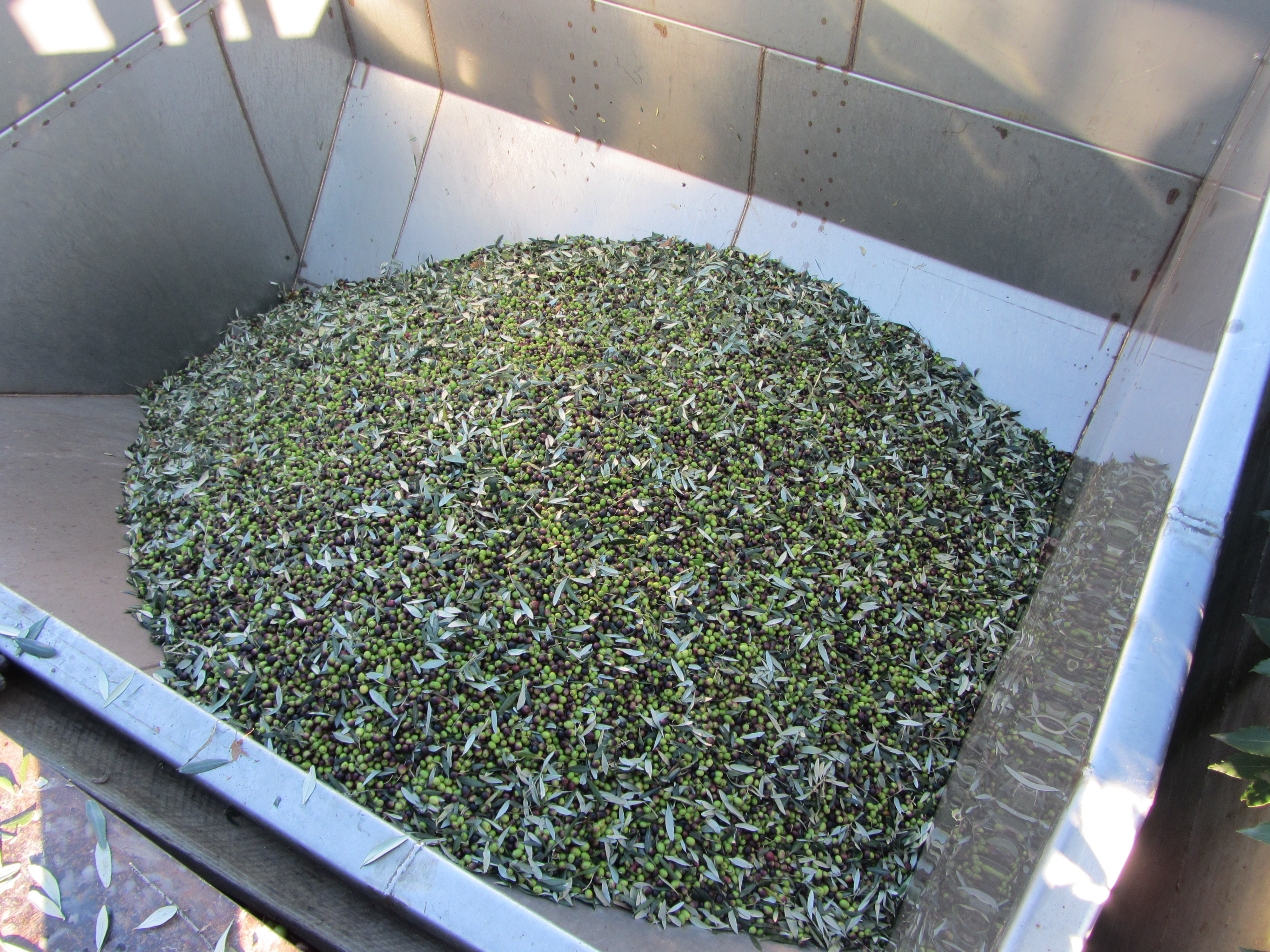
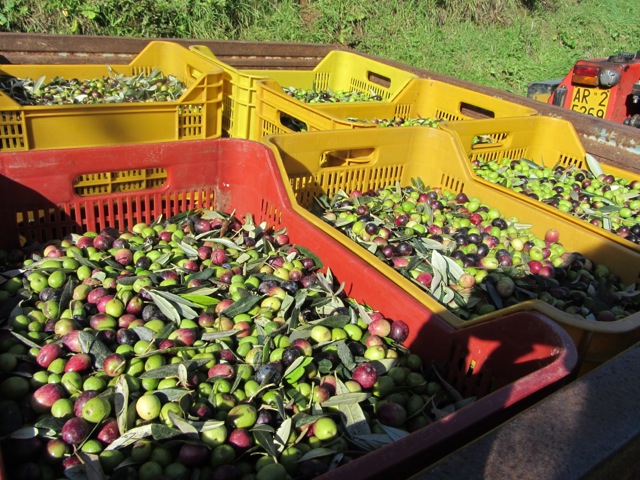
Keith is driving the white van loaded with red and yellow crates brimming with the last two days olive harvest.

We’re bunched in beside him–Meredith finishing off her oat flake breakfast as the sun begins to warm the hillside vines and olive groves.

It is 8.30 in the morning, at the start of a long day.

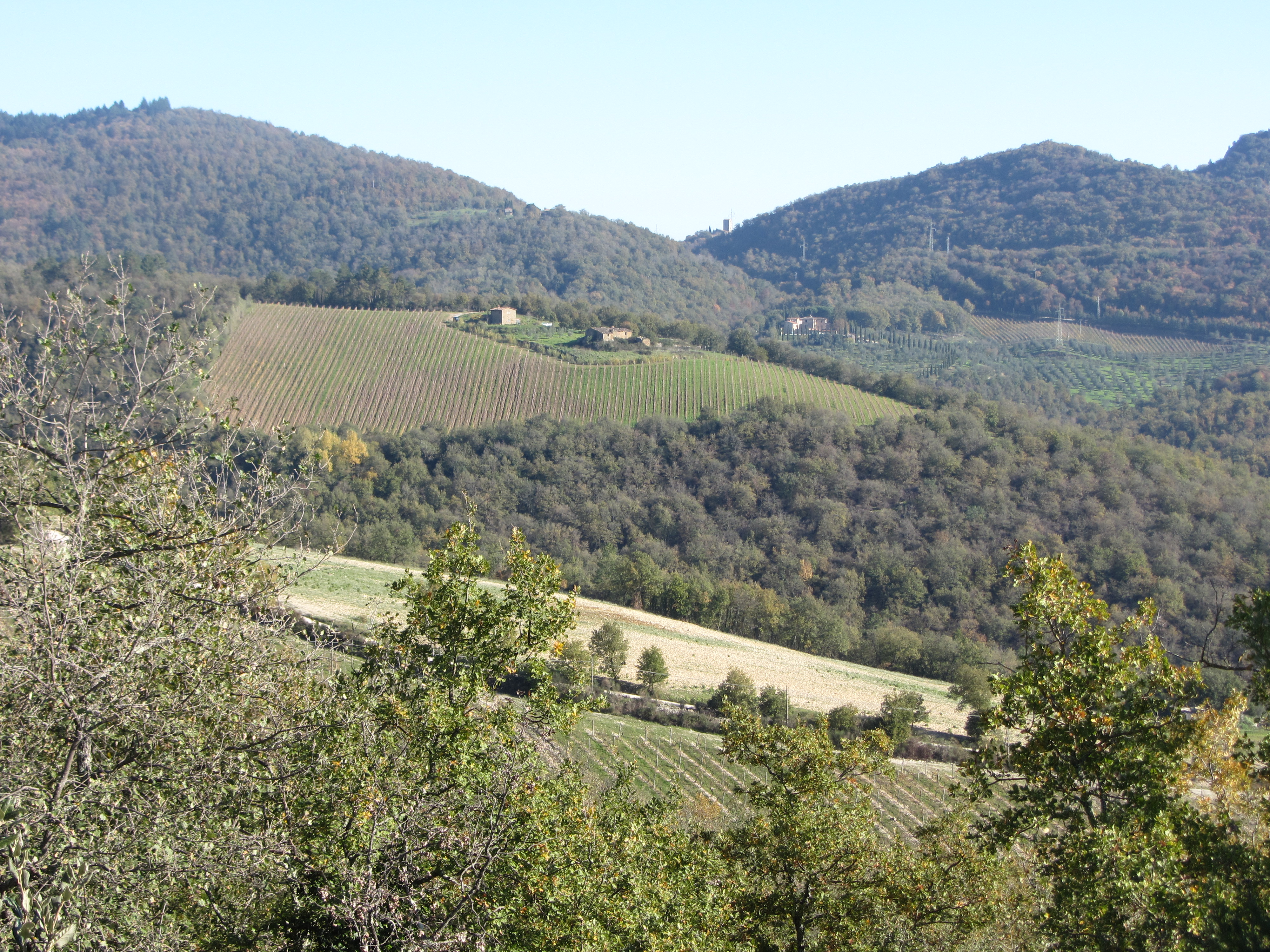
Through the windows of the van as it negotiates the holes in the unmade-up road–the central Tuscan hills come into historic perspective.

What’s that tower up there?
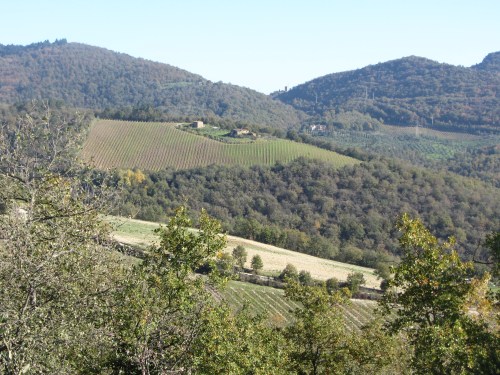
Tuscan hills with the tower in the dip between.

Dates back to 800AD.

The hills are smirking in the shade–they’ve been here a lot longer.

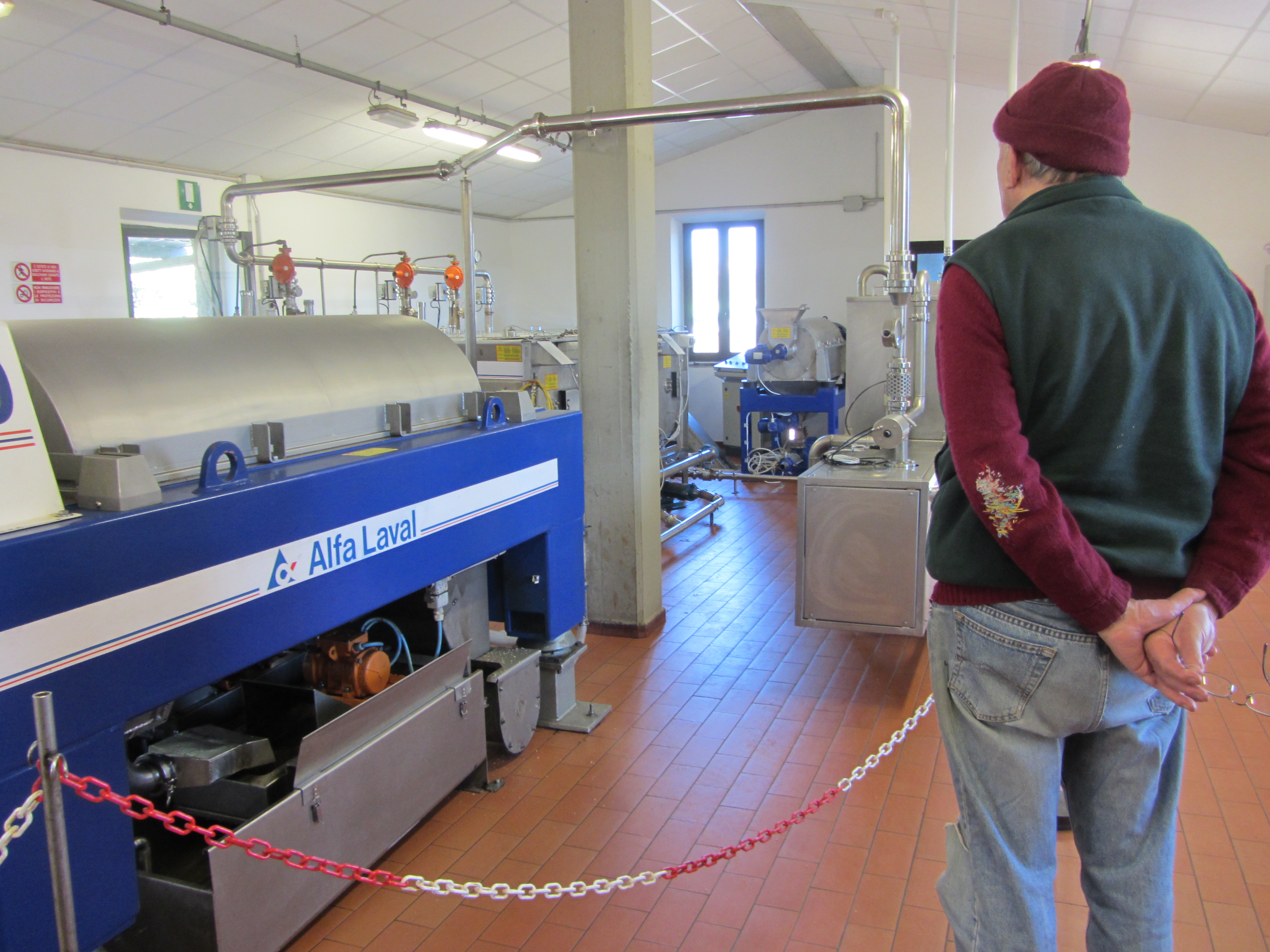
By nine we are at the Frantoio.

By 9:15am the olives have been emptied into the steel shute and are in the system, soon to come out as liquid gold–as we thought.
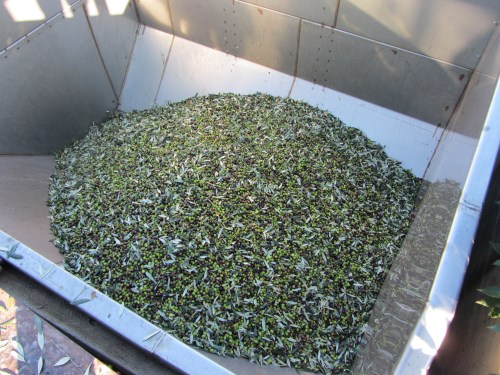
We wait in the sunny waiting room, reading.

After half-an-hour Keith comes in looking daggers.

There’s a fault in the heating mechanism–they don’t know how long it’ll take.

This is a problem for us–we have to be in Florence by lunchtime.

Meredith spotted a conference being held over the weekend at the New York University Florence campus analyzing the recent American elections.

(She spent six months at Stanford University’s campus in Florence in her student days–so this kind of event resonates.)

I’ll take you back home and check train times.

Keith, keeping his good temper but worried about his olive oil, ferries us back through the sunny hills.

Within an hour we are on a train to Florence.

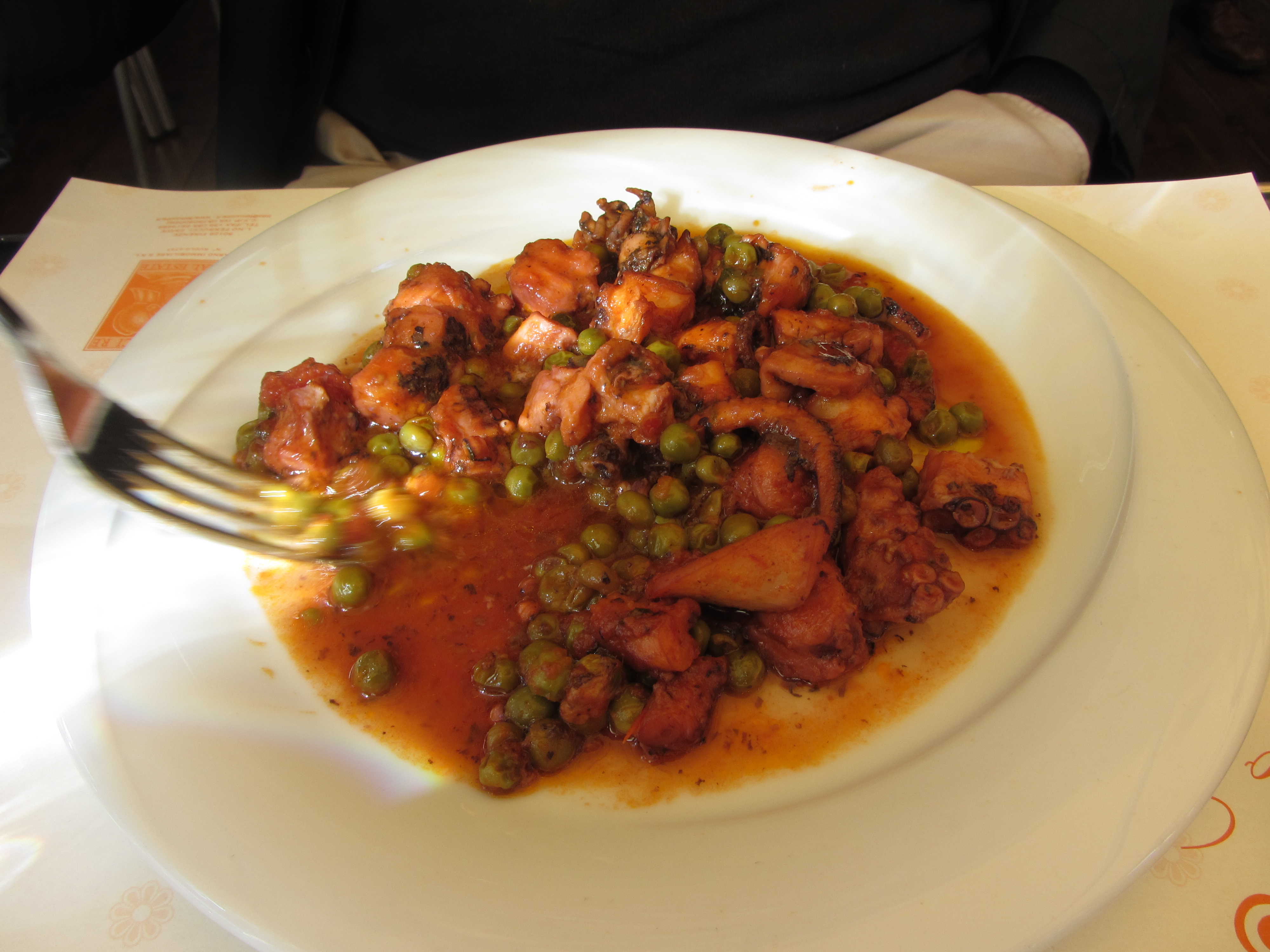
Soon after we manage a quick lunch (research!) before heading to the event.
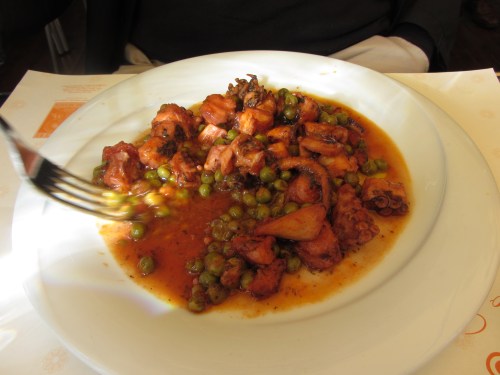
Polpo e piselli (octopus and peas)

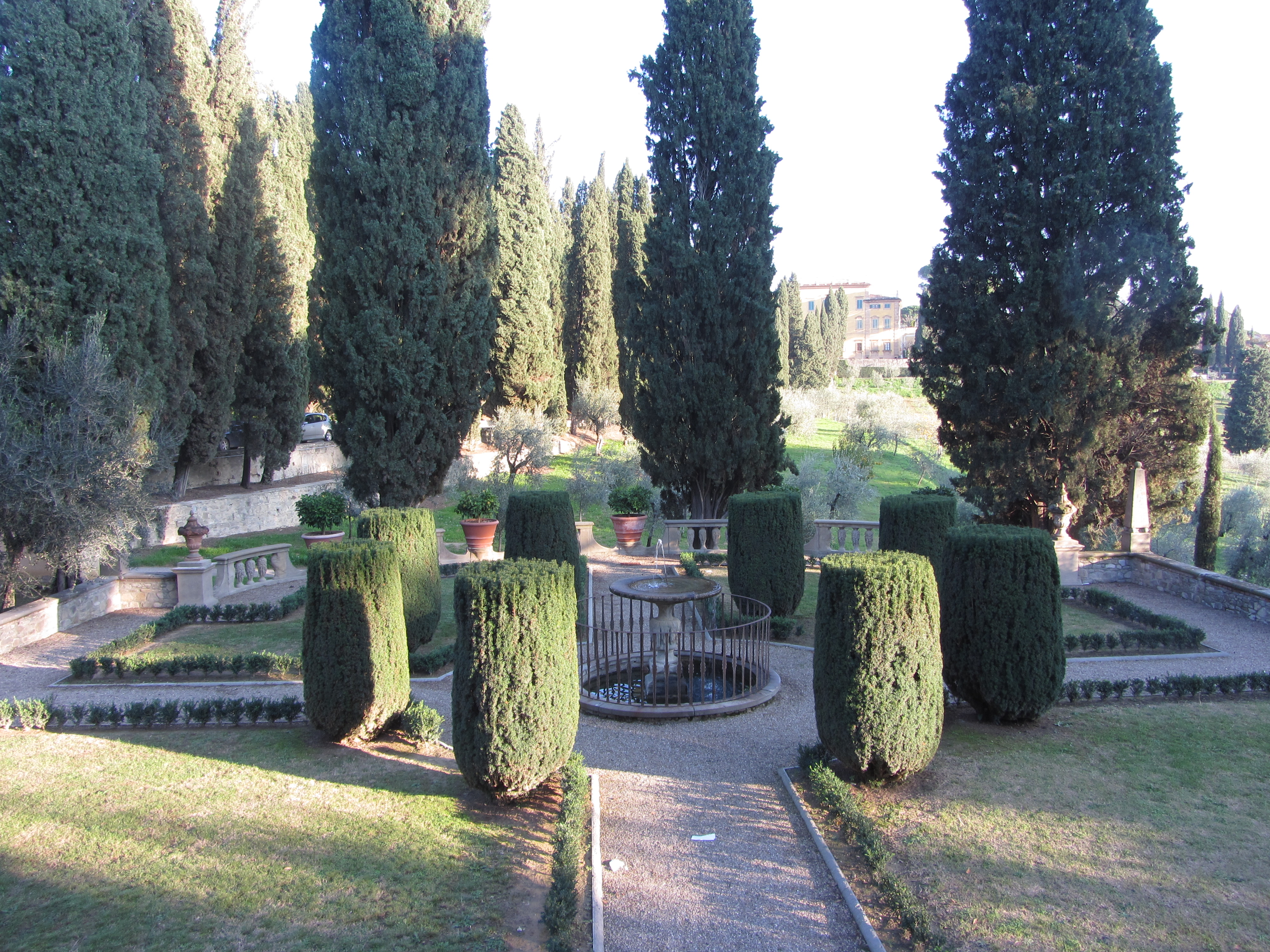
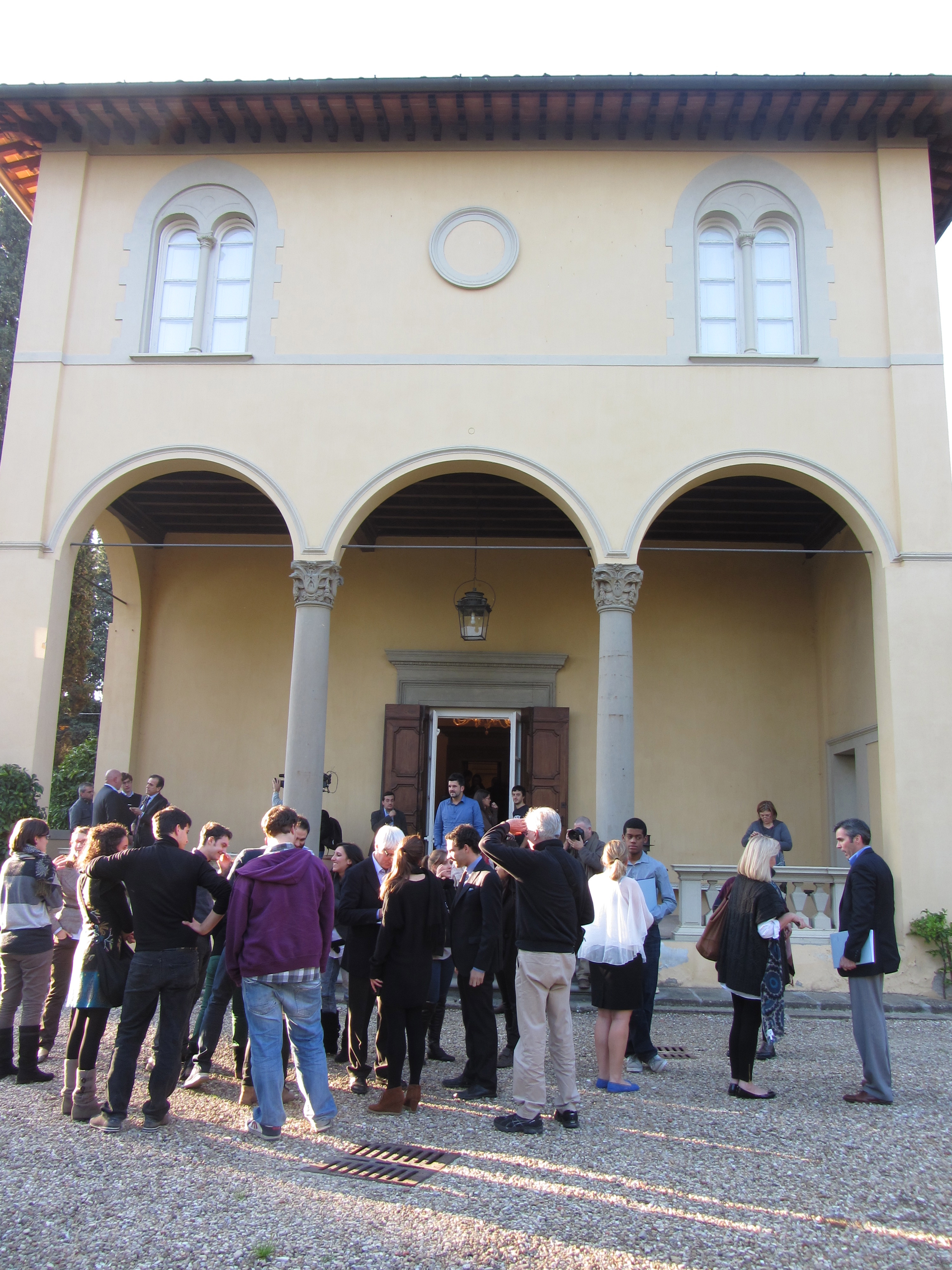
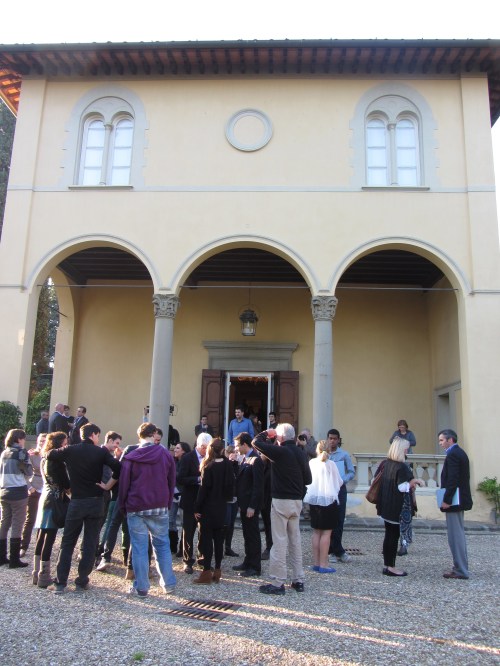
The conference is being held at the magnificent Villa Pietra up in the hills north of Florence.
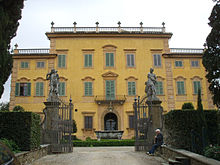
(Sir Harold Acton was born and lived there most of his life. It is now the NYU campus in Florence.)
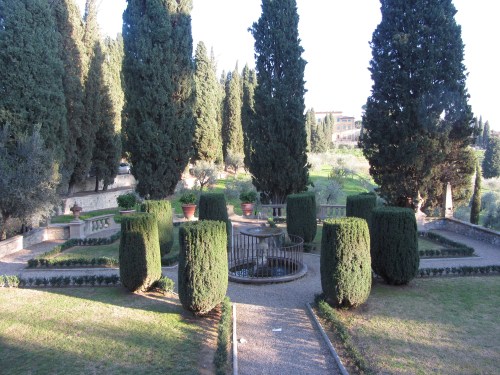
Pollsters, pundits and campaign managers from both sides sit on panels and talk amicably about what happened on November 6th, why and how the parties will adjust to the result.
(One afternoon’s talking shop does for me and I’m able to watch the following morning from the comfort of the hotel room as it’s streamed live over the internet.

From the low drone of garroulous expertise a voice arises that I recognise! Delighted I turn up the volume to hear my wife making a succinct point to the room while the large panel of experts look on in wonder!)

Late afternoon, now, we make our way back into Florence and catch our first sight of the Duomo this trip.

It sits benign and vast in the centre of the city as the evening lights come on round it.

We check into our hotel down by the river and think about dinner!

La Sostanza is a short walk away and they have room at 7.30.
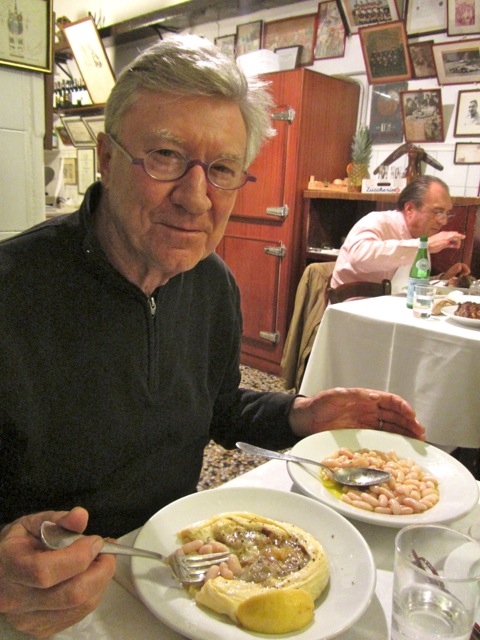
Tortino carciofi (artichoke omelette) and fagioli e olio (beans and oil) and a happy punter!

I discovered this modest restaurant by chance in 1977 and have been a regular ever since.

It serves simple fare at communal tables in an unassuming room.

The cooking is done on a wood fire in a kitchen the size of a postage stamp.

Same photos and paintings on the walls–and two of the waiters are sons of ones I met on my first visit!

We are weary, but happy to have heard from Keith that the machinery at the frantoio
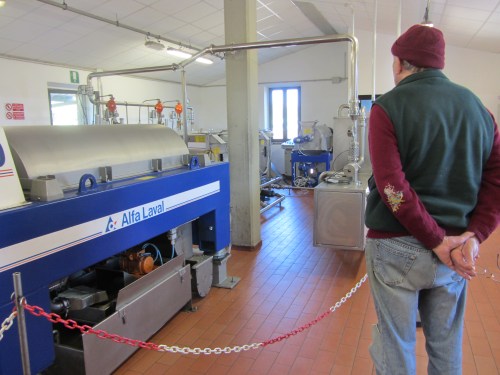
was fixed quicker than expected and no harm done to the olives already being processed.

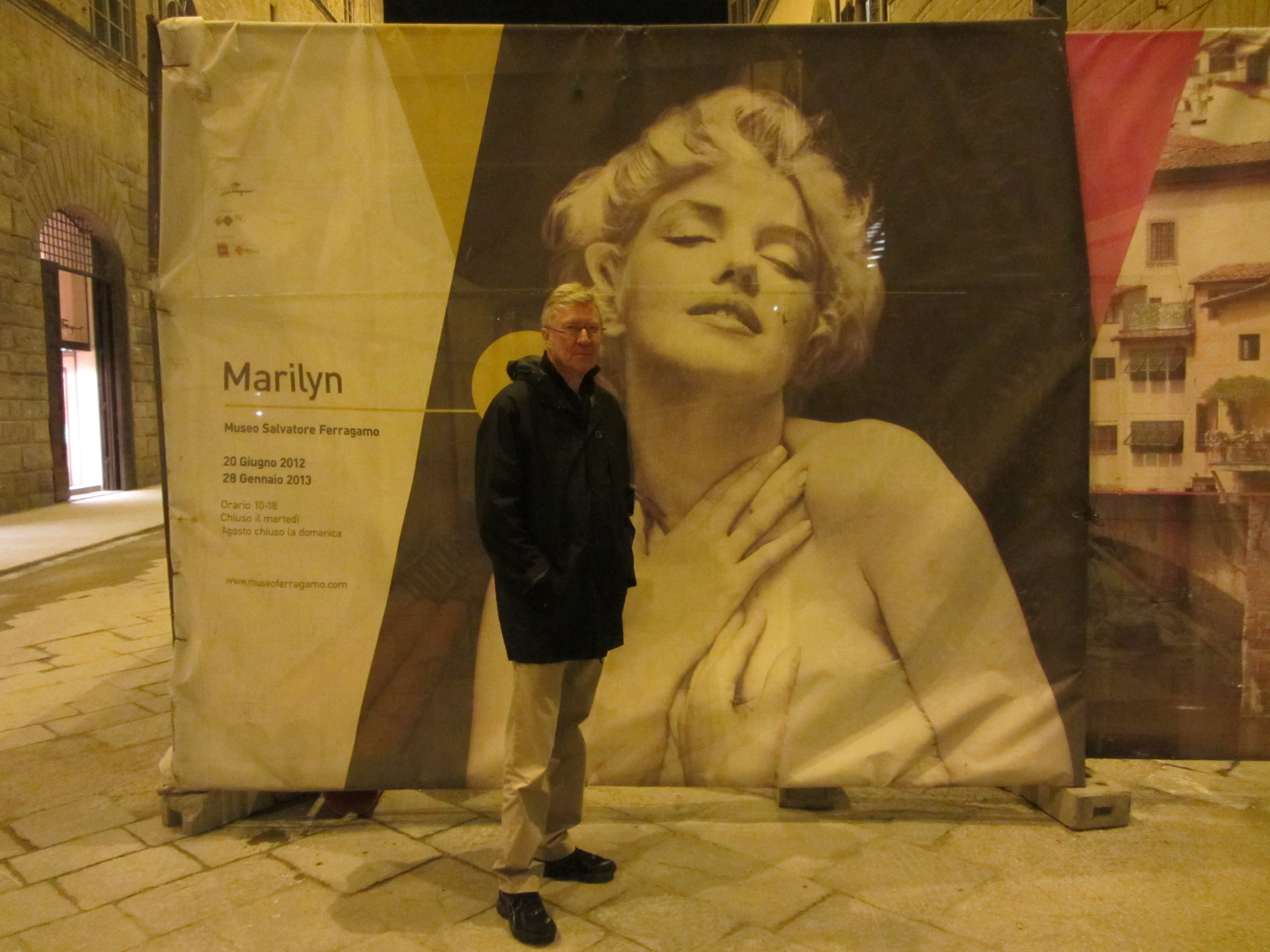
End of a day and a half and back to the hotel and a final photo op.
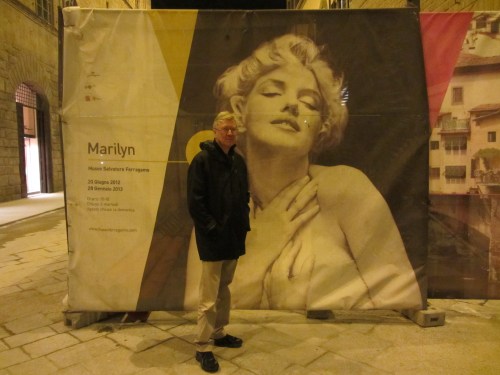
Closest I’ll get now! RIP Marilyn.

Read Full Post »

Olive picking resumed yesterday, Wednesday, after rain stopped play for two days–(sounds like the English cricket season!)

We arrived here Sunday night after driving down the Ligurian coast in a storm.

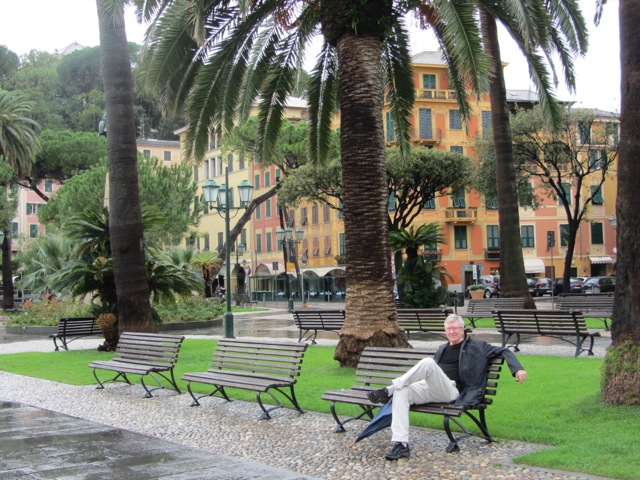
A brief and beautiful pause in Santa Margherita Liguria, Sunday morning–

soon proved one of Mother Nature’s teases as the rain began in earnest again on the road to Florence.

Footage of flood devastation on the Tuscan coast reminded us of America’s East Coast troubles–still terrible for many.

Our friend, Keith, didn’t apologize for the uncharacteristic Tuscan gloom.

You brought the rain and wind with you–from home!

It’s true, it tagged onto our coattails in Provence and followed us all the way.

But today all that is forgotten as autumn returns to its golden glory.

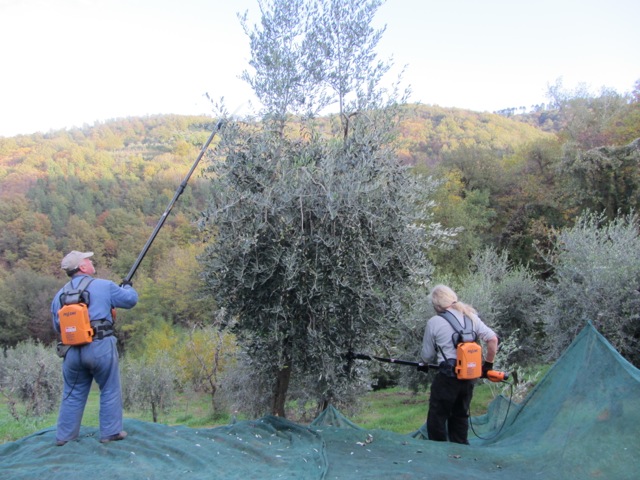
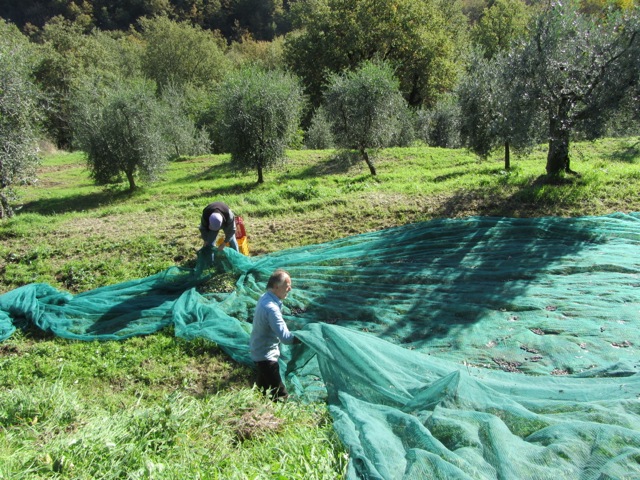
Keith’s team of five work their tough eight hour day on the steep terraces–the clickity-clacking of the picking poles playing constantly in their ears as the pretty little olives, green and all shades of purple, rain down from the trees and onto the nets.

A tree yields a litre of oil, roughly–Keith says.

He has a thousand trees. It takes a couple of weeks to harvest his crop, depending on the weather.

Then our job begins.

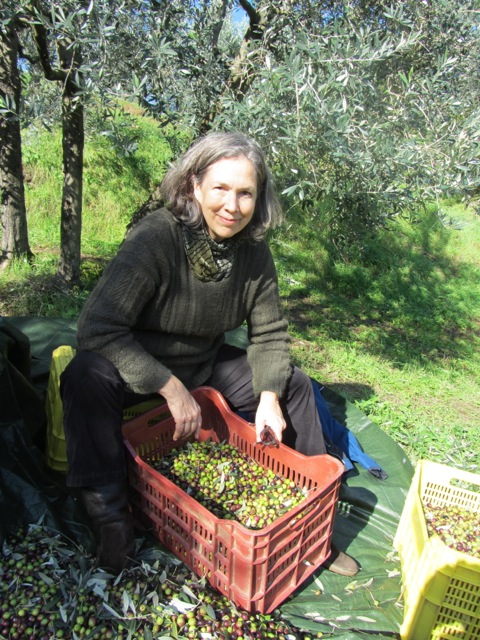
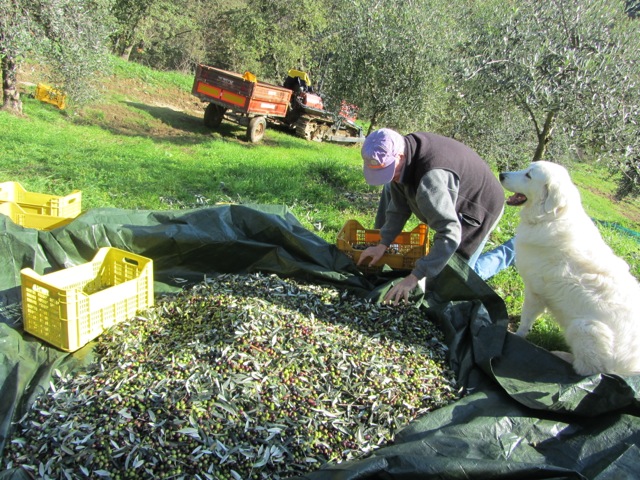
Gently lifting up the nets after the trees have yielded up their treasures, we help guide the olives into piles.

We pull out any twigs and small branches that have fallen and gather the olives into the plastic paniers, ready to go to the frantoio to be processed  in the morning.

Alba–a willing helper.

They had four good days last week though the rain has lowered the percentage of oil in the olives, plumping them up with water.

It doesn’t affect the overall quality of the oil–just the yield.

The liquid gold seems even better than last year.

My hands I notice smell of sea water–that slightly salty tang.

Must ask the master about this.

Exhausted olive worker, is now retiring to the shower!

Read Full Post »

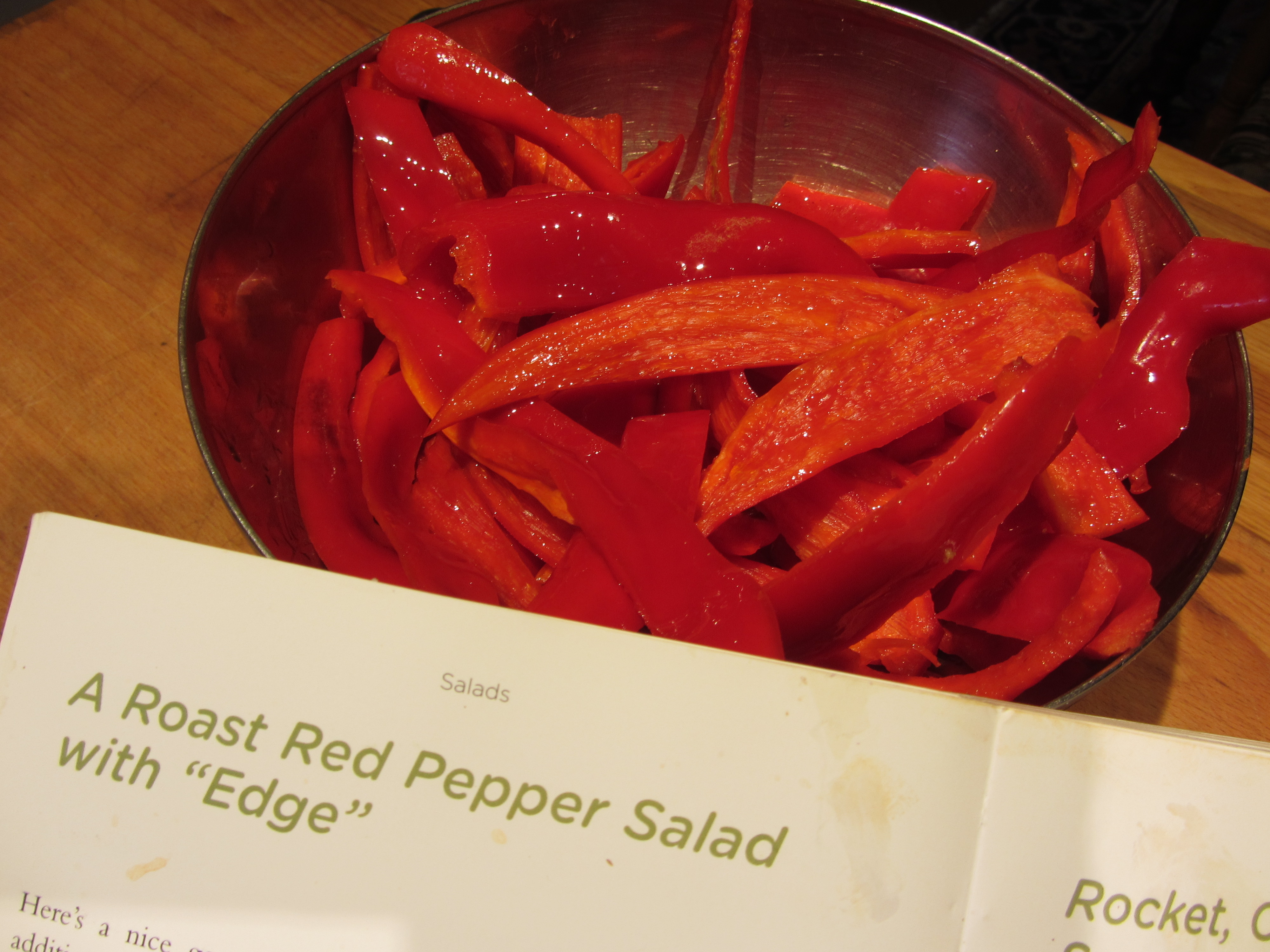
This is from Delicious Dishes for Diabetics.

Our friend Mark tried this the other day and wrote to me afterwards saying:

the peppers and onion you did for us – “salad with an edge” – delicious, but mine was way overcooked. So either my oven is hot, or yours is cool. Have you got a reliable thermometer to check it?

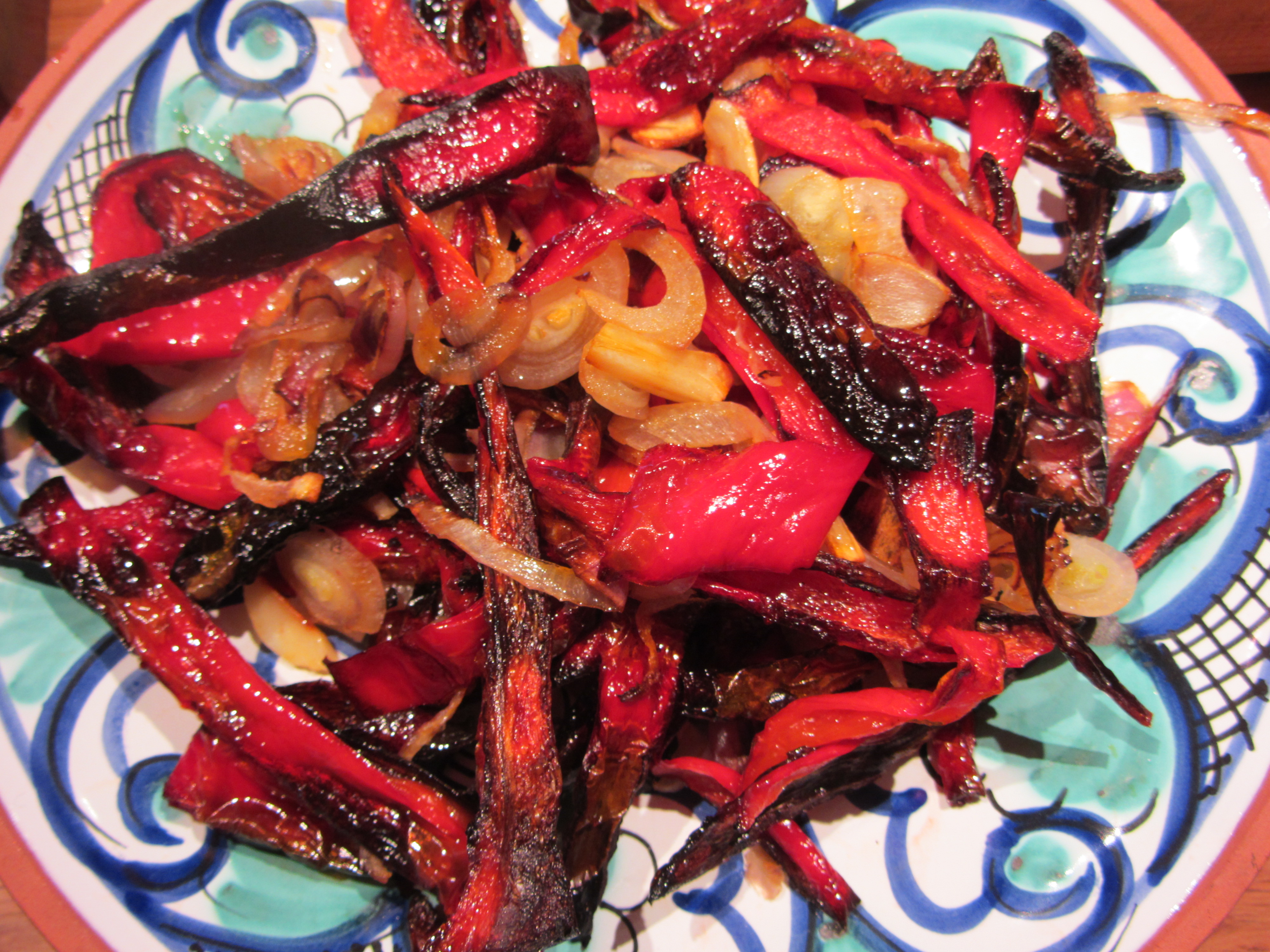
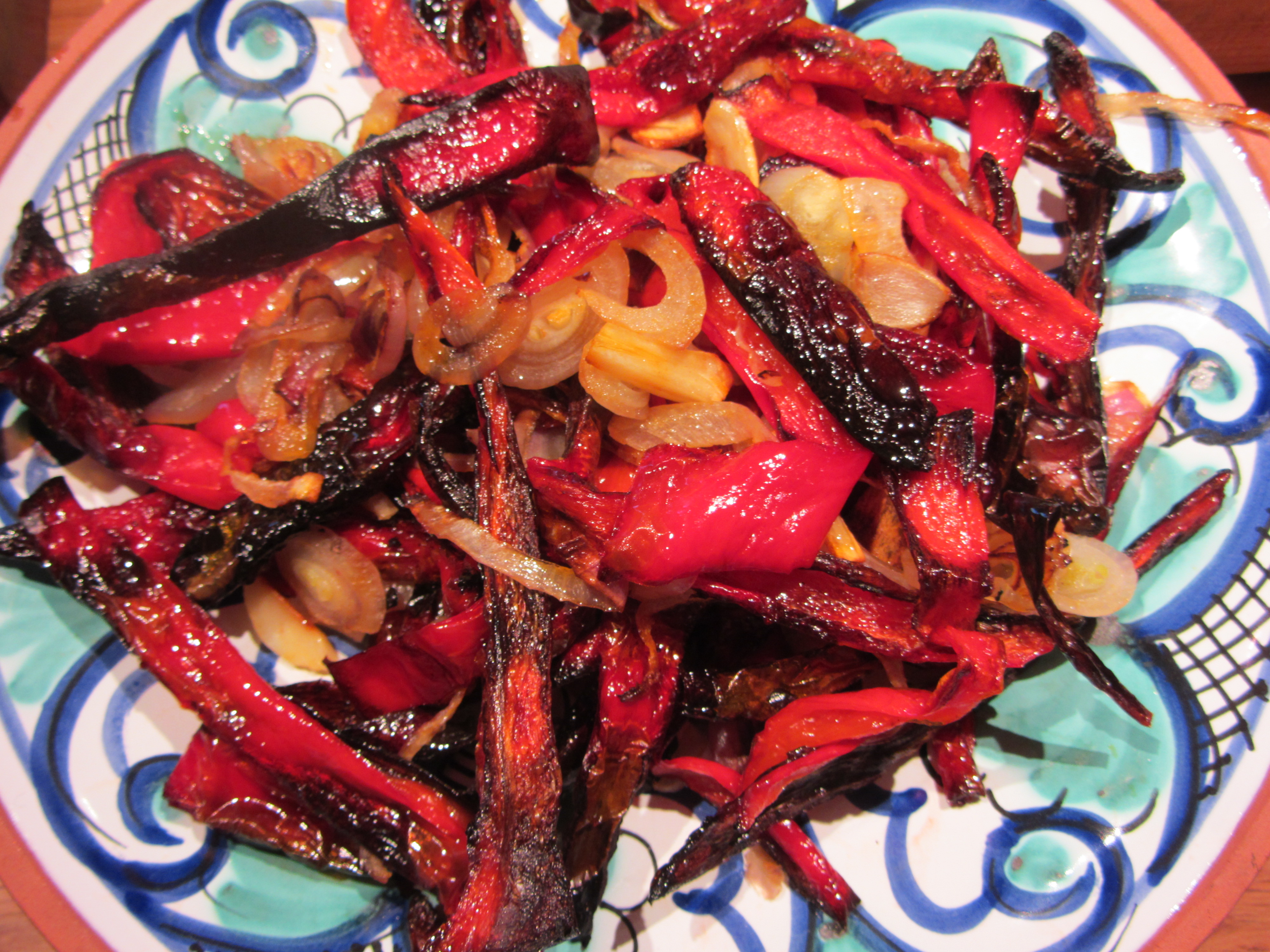
So I did it again a couple of days ago and reduced the oven time to 15 minutes–but kept the same temperature. Meredith thought they were still too charred–not for me though!

The thickness of the peppers is a factor.

These below are a thinner, cone-shaped variety grown locally.

The recipe asks for 220C –which I normally reduce by 10 degrees because I have a convection oven (fan-assisted).

(Next time I cook these, I’ll try them at 200C (fan-assisted) for 20 minutes.)

Thanks Mark–useful feedback!

Serves 4

Here’s a nice gooey slightly piquant salad that profits from the addition of some flaked very fresh feta or goat’s cheese.You could also add a few slices of thin pancetta for the last 10 minutes of cooking.

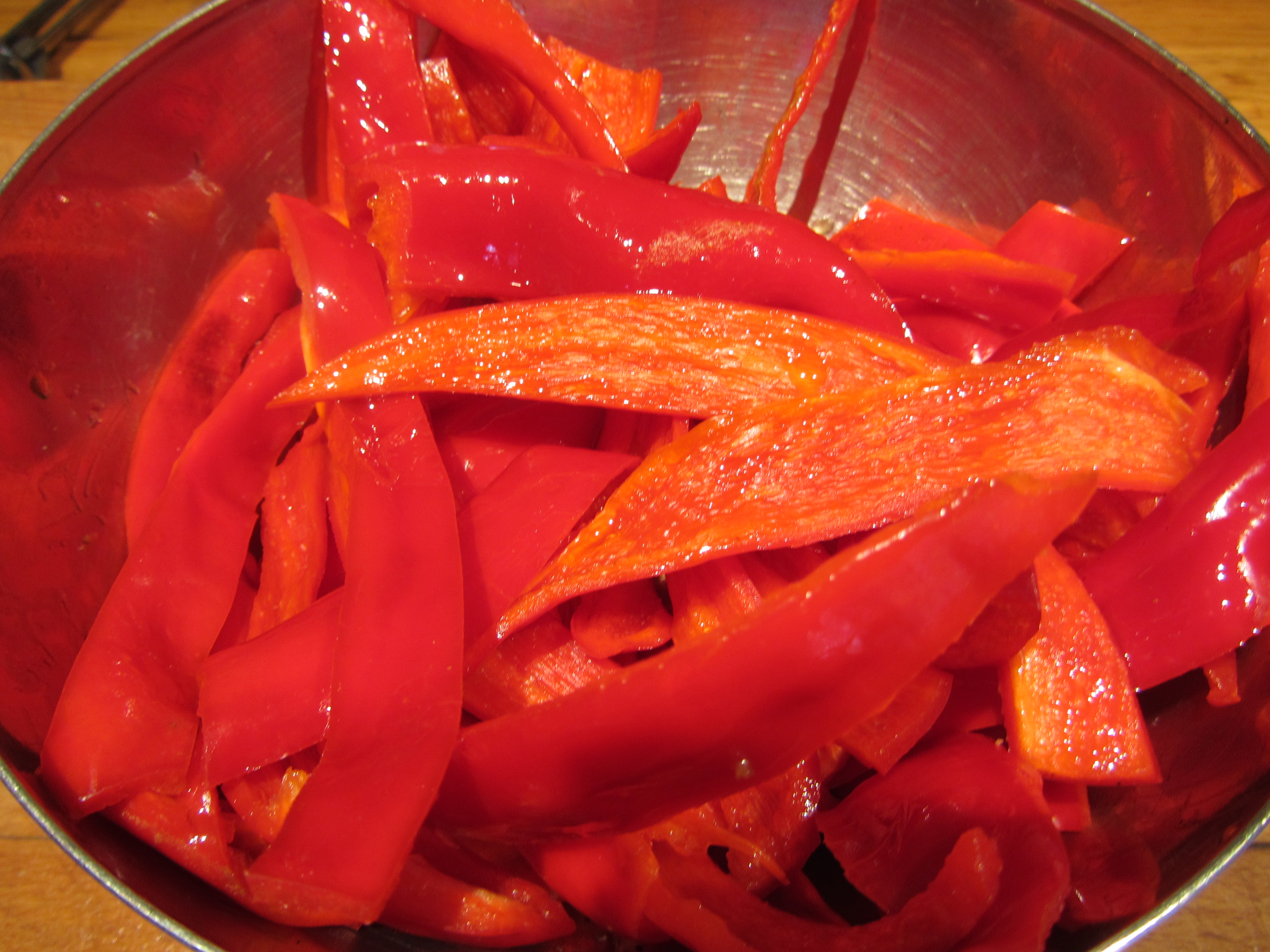
4 red peppers–cut in half lengthwise, deseeded and cut into strips

1 fresh red chili–not too hot, deseeded and cut into strips
4 tbsp olive oil
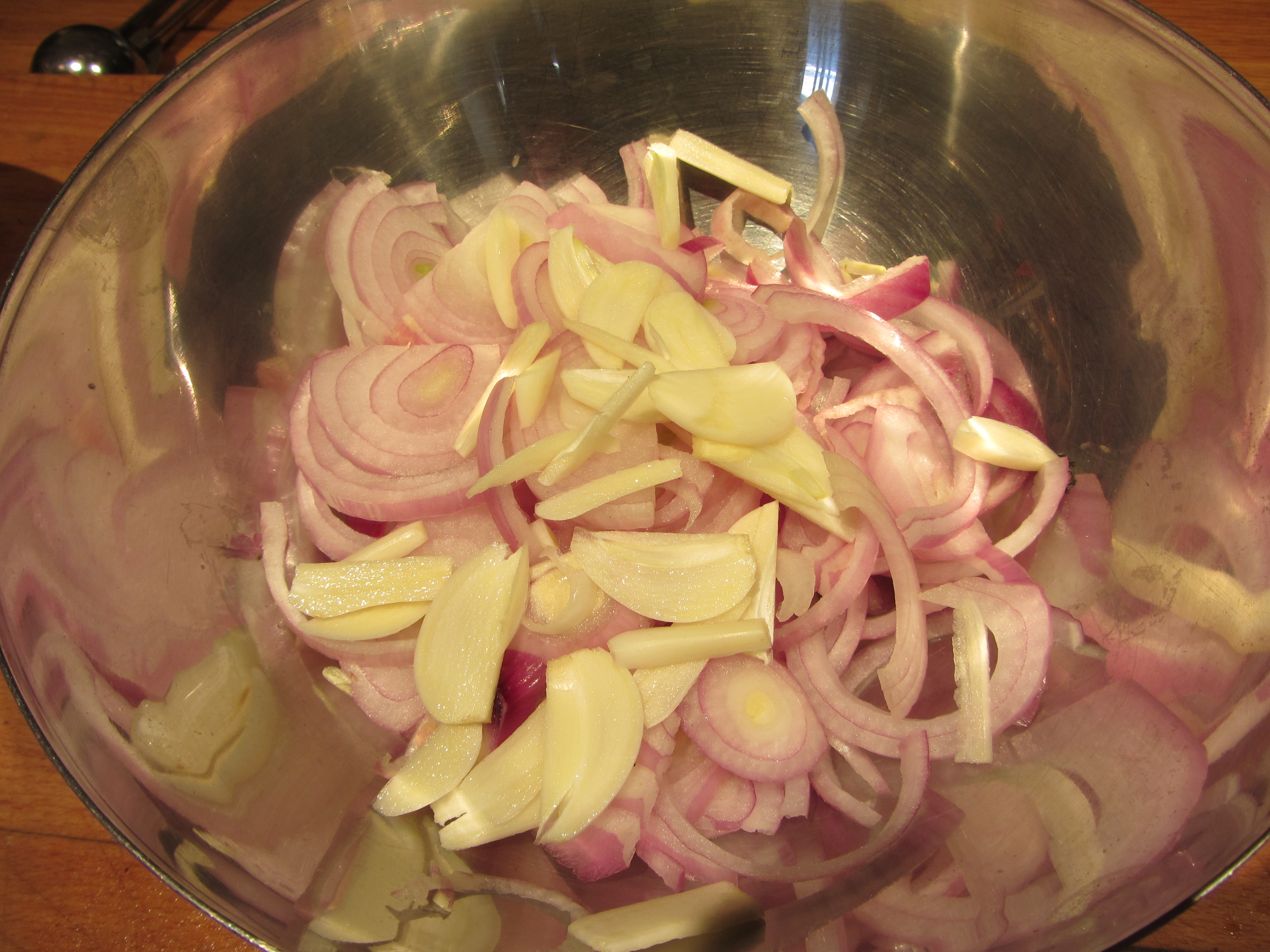
1 large or 2 medium red onions--peeled, cut in half and thickly sliced

2 cloves of garlic–peeled and sliced

2 tbsp balsamic vinegar

fresh basil–chopped (if available)

Heat the oven at 210°C (normal oven–this is a CHANGE from the recipe in my book!)/425°F/Gas Mark

  • Put the peppers and the chili in a bowl and dribble over 3 tablespoons of oil.
  • Turn over and coat them thoroughly in the oil.
  • Line a shallow medium-sized oven tray with foil and brush with oil.
  • Spread the peppers and chili evenly over the tray.
  • Leave in the oven for 20 minutes before spreading over the onion and garlic and cooking for a further 20 minutes.
  • Everything should be lightly charred in a nice way, i.e. edible!
  • Sprinkle over the balsamic, the torn basil and more olive oil if you like.

Read Full Post »
TARAT!  TARAAHH!!–a sauce for all seasons–TARATOR!

Discovered this sauce while looking for an alternative to yogurt.

Meredith is cutting out dairy products for a few weeks while she takes advice from an ayurvedic practitioner in Albi.

We’ve been we eating mainly vegetarian–and more lightly in the evenings.

It is a challenge for me and I’m enjoying it.

New Directions I’m calling it and it will be a chapter in the new book Healthy Eating for life.

Tarator is variously described as a yogurt soup from Bulgaria and a sauce from Lebanon.

My version of this tahini based sauce is loose, lemony and lightly garlicky, to be enjoyed with meat or vegetables.

For lunch today I’m revisiting a salad from Delicious Dishes-Roast Red Pepper Salad with an edge–(recipe tomorrow).

We had the sauce with it and enjoyed it.

for 2

3 tblsps tahini

2 tblsps lemon juice

1 garlic clove–peeled and pulped in 1/2 teaspoon salt

1/3 teaspoon cumin powder

4 tblsps water

1 tblsp parsley–chopped

  • Put the first five ingredients in mixer and whizz to a smooth runny consistency.
  • Stir in the parsley
  • Add more salt to your taste.

Read Full Post »

« Newer Posts - Older Posts »