Feeds:
Posts
Comments

Archive for the ‘Food’ Category

I wasn’t thinking of trout when I went to the market early Friday morning in Lautrec–I’ve got out of the habit of cooking it.

Rather, dorade (sea bream) perhaps or mackerel. When I approached the stall, which is usually packed with a good selection of fish,

IMG_2161

it was covered in a white sea of ice but virtually no fish–except a small shoal of lonely-looking trout and an organic salmon–an unusual sight.

I’d noticed as I turned into the village that the road to Graulhet (fifteen minutes northwest of Lautrec) was blocked by two police vehicles and three determined looking gendarmes. I quickly decided my usual trick of not going fully round the roundabout but taking a sharp left into the village–strictly illegal but handy–was not a good idea!

Puzzled and dismayed by the absence of seafood I asked the unusually subdued fishmonger what was happening.

Qu’est ce que se passe, Monsieur?

Il y avait un accident avec le camion, il est en retard. [The fish wagon’s been delayed by an accident.]

Road blocked–gendarmes present–diversion signs–no fishmystery solved–trout for lunch!

La Depeche du Midi (regional daily newspaper) carried the story the next day, with a graphic photo of the scene.

201306221620-full-1

Mangled car in the ditch.

The young man in the car survived and is recovering in hospital. According to the report it took the rescue team two hours to free him. The lorry driver escaped with minor injuries.

It’s a safe bet that trout and salmon, obviously sourced elsewhere, remained the only fish on sale in Lautrec that morning!

This is what I did with the trout.

IMG_7379

2 trout–gutted and cleaned

IMG_7374

a handful of fresh thyme sprigs

olive oil

salt and pepper

Wash the trout and pat dry.

With a sharp knife, carefully make two shallow diagonal slits in the fish’s flesh each side.

Brush the fish top to tail with olive oil–(this helps to prevent them sticking to the griddle pad).

Rub salt and pepper into the slits.

Stuff the thyme into the cavities and season with salt and pepper.

Heat a griddle pad to hot–or use a sauté pan large enough to hold the fish.

Oil the surface.

Lay the fish on the pad and cook each side for about five minutes–testing for doneness by lifting the cavity and checking near the backbone. The cooking time depends on the size of the fish. (If pink/red, needs a little more time.)

IMG_7375

Serve with green beans or a simple green salad.
Read Full Post »

Not a recipe that normally springs to mind in the middle of June but this isn’t a normal June.

Perhaps it’s new normal June!

Normally (!) we would be eating supper outside–sun going down–cats on the wall–cows in the field–pale blue sky streaked with high-flying plane tracers–and remarking on how lucky we are!

Instead we enjoyed this in the warmth of the kitchen, in nodding agreement that this was indeed not normal.

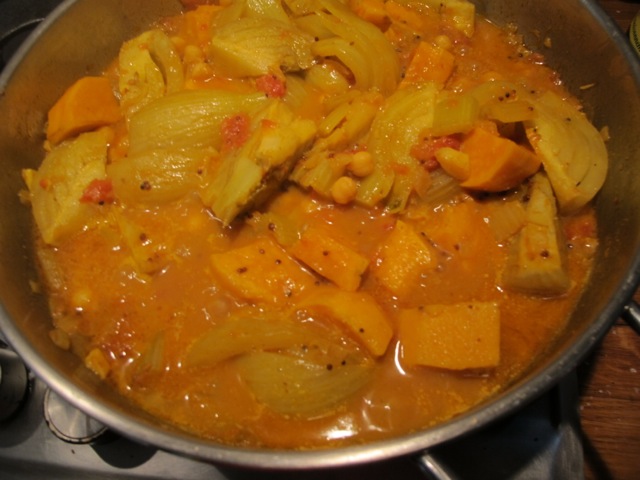
IMG_7361

1 onion–chopped small

2 garlic cloves–chopped

2 tbs olive oil

1 tsp black mustard seeds

1 tsp (each) turmeric, cumin powder, powdered ginger

1/2 tsp (each)  coriander powder, cayenne powder

8oz tinned [canned] or fresh tomatoes–chopped

1 pint/500 ml stock (You probably won’t need it all!)

2 celery sticks–sliced in small (wine cork) size

1 smallish sweet potato–peeled and cubed

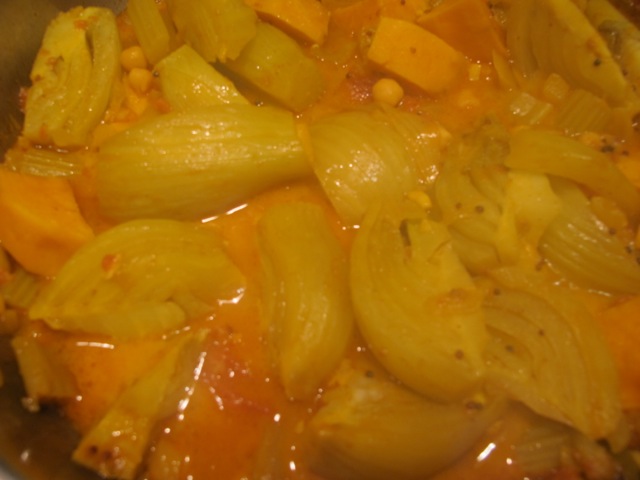
3 fennel bulbs–outer leaves removed, cored, cut in half vertically and each half cut thrice (i.e. six pieces in all–the ones in the photo are a tad too large)

3 tbs cooked chickpeas

salt to taste–bearing in mind there is salt in the stock

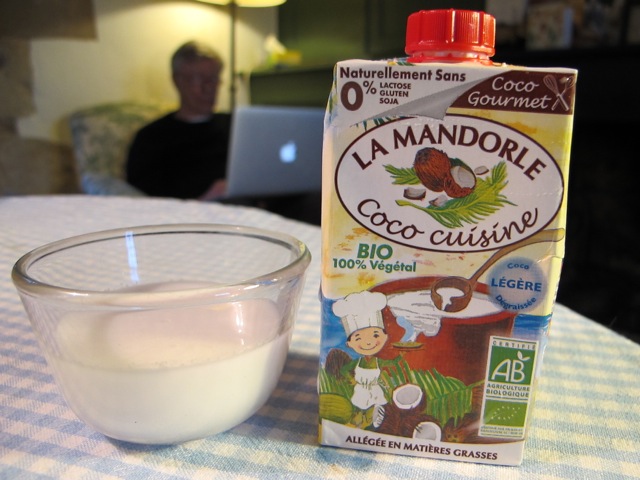
3 tbs coconut cream* or whisked smooth low fat yogurt

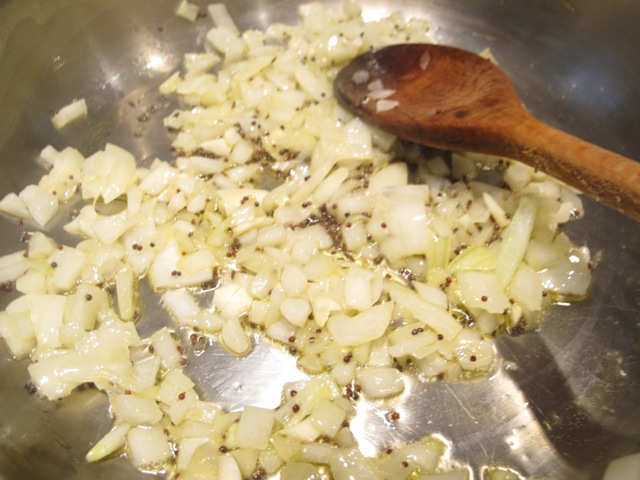
  • Heat the oil in a medium pan and add the mustard seeds.
  • When they start to pop add the onions and garlic, mix them in and sweat them until they soften and begin to colour.

IMG_7355

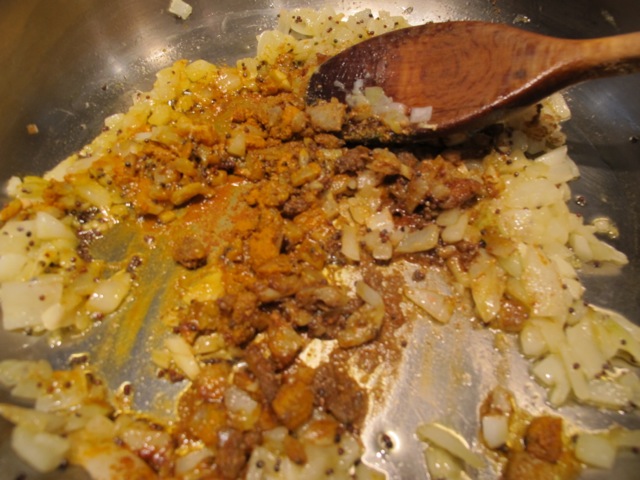
  • Add the rest of the spices, the salt and mix in.

IMG_7356

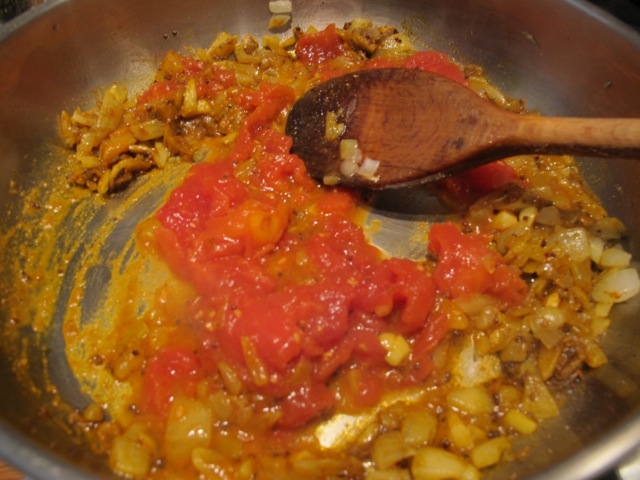
  • Add the tomatoes and cook on for five minutes to let them form a sauce.

IMG_7357

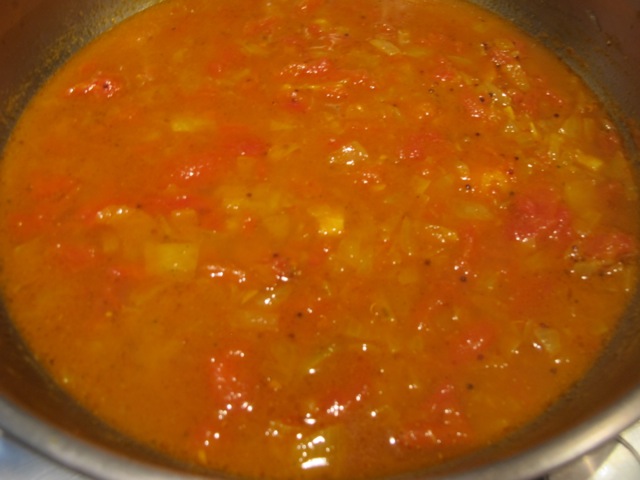
  • Add half the stock and cook on for 5 minutes.

IMG_7358

  • Add the cut up vegetables and mix in.
  • Cover and cook for 30 minutes–checking now and then that it doesn’t dry up (as it very nearly did for me!).
  • Add more stock as you need and cook on.
  • Turn off the heat and let it cool down.
  • When you are ready to eat, stir in three tablespoons coconut cream or whisked low fat yogurt and gently reheat.

IMG_7362

*The difference between coconut milk/cream and cream of coconut is fully explained here: 

http://www.thekitchn.com/whats-the-difference-coconut-m-75446/

It looks like milk, it is NOT sweetened and it does NOT taste of coconut!

IMG_2292

Read Full Post »

IMG_7320

I was surprised to see locally grown green peppers–(they are lighter and thinly fleshed)–in the market yesterday, nudging small white peaches on a new stall.

Everything is so late this year.

IMG_7351

I remembered a recipe I used to do years ago from Antonio Carluccio’s Vegetables book. Very Italian–simple and different.

The peppers are cooked whole in olive oil. They collapse, charring nicely and are finished in a quickly cooked tomato sauce.

If these particular peppers are unavailable use thicker fleshed ones–deseeded and cut into largish pieces.

500gm/1lb green peppers–tops and seeds removed

6 tbsp olive oil

3 garlic cloves–chopped

14oz/400gm tin of tomatoes–drained of their juice and roughly chopped (fresh sun -ripe tomatoes, skinned and seeded would be good too)

salt and pepper

Heat the oil in a deepish pan.

When the oil is hot carefully slide in the peppers–you may have to do this in two batches.

Turn them as they collapse and brown, for about 5 minutes–they should be tender.

Set them aside and spoon off four tablespoons of the oil–(I used this oil for sautéing later).

Slip the garlic into the oil.

When it starts to colour, mix in the chopped tomatoes.

Cook these over a high heat for five minutes to form a sauce.

Season with salt and pepper.

Stir in the peppers and cook on for another five minutes.

We ate these for supper last night served on lightly sautéed (in the excess oil) slices of leftover chickpea “bread” .

IMG_7329

A recipe remembered and reclaimed.

Read Full Post »

Just back from an unexpectedly extended London visit–thanks to a strike by air traffic controllers in France. In fact the extra days (4) were a blessing. A chance to catch up with brother Jack who flew in from Japan the day before we were supposed to leave and nephew Theo, who plays bass guitar in Wolf Alice–burgeoning indy band about to hit the big time.

IMG_7240

Brothers as the backing group to the new kid on the block!

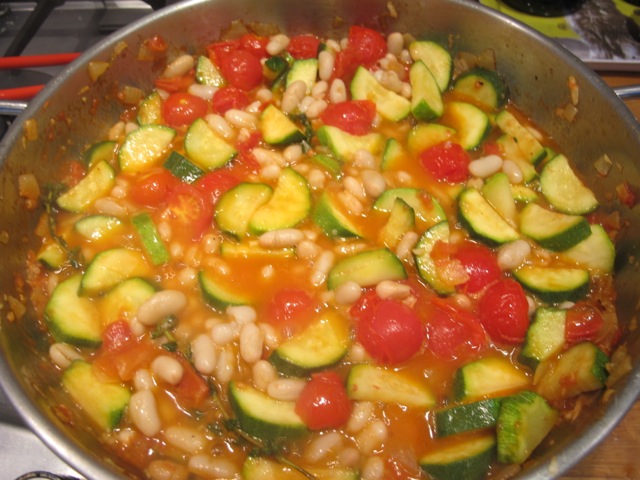
Now back in France and a stew with SUMMER  in its DNA–though the seasonal sweetness of fresh tomatoes  may not yet be fully expressed–and enough comfort factor to lift the spirits after a wet and wretched May here–not to mention the tempest raging outside today!

IMG_6629

It’s inspired by a Martha Rose Shulman recipe in The New York Times.

Few ingredients, simple to do and a pleasing look–just the ticket!

1 medium onion–chopped

2 tbsp olive oil

3 garlic cloves–mashed with half a teaspoon of salt

3 medium courgettes/zucchini–cut in centimeter rounds

3 tbsp chopped tomatoes–tinned [canned] at this time of year

200gm/8oz cherry tomatoes–halved

250gms cooked white beans, tinned or jarred–(the best you can find–I favour jarred)

3 sprigs of thyme

salt and pepper

Sweat the onion in the oil until soft; then tip in the garlic and sauté for a few seconds.

Add the courgettes/zucchini and turn them over in the mix.

Cook until they too start to soften–about 5 minutes.

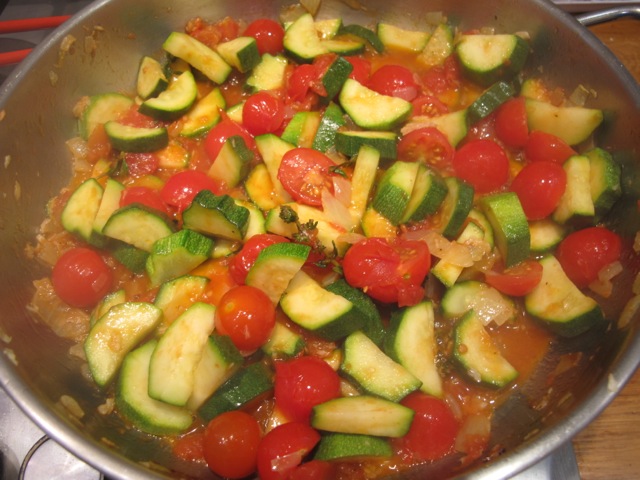
Add all the tomatoes, thyme sprigs and a seasoning of salt and pepper and cook for 10 minutes until the cherry tomatoes start to soften.

IMG_6627

Add the beans and their liquid and/or a couple of tablespoons of water.

Cook for a further 15 minutes.

Check the seasoning for salt and pepper.

We are having the stew spooned over a baked sweet potato tonight.

Read Full Post »

This is a recipe from my new cookbook–Healthy Eating for Life–due out in early January 2014.

It’s simple to do–no fuss and can be made anytime of year.

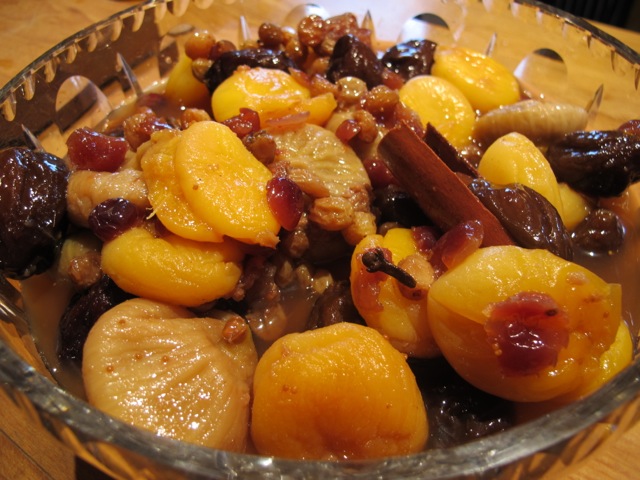
I don’t as a rule eat dessert but when Meredith hands me a small bowl of this with a dollop of yogurt–I find it hard to resist.

Yellow apricots lighten the colours but the darker untreated ones taste as good.

These amounts can serve at least ten people but as it tastes even better the next day and the day after having sat in the fridge any left over will serve well over the following few days.

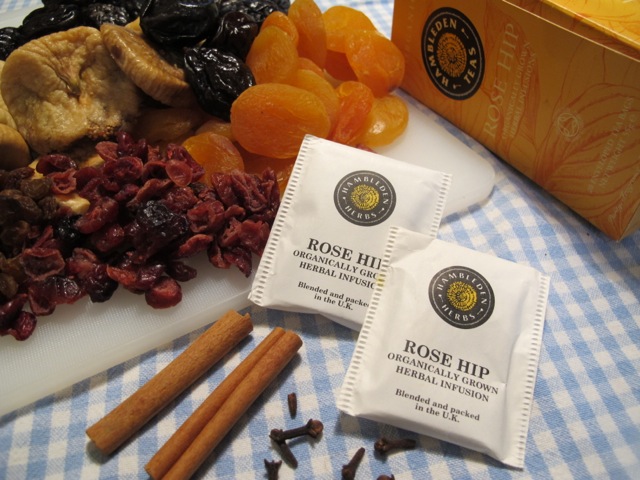
IMG_6667

serves 10

400gms prunes

250gms dried apricots

350gms dried figs

50gms raisins

25gms dried cranberries

1500ml water

2 rosehip tea bag

7 cloves

2 cinnamon sticks

25gms flaked almonds

yogurt or creme fraiche

  • Wash the fruit.
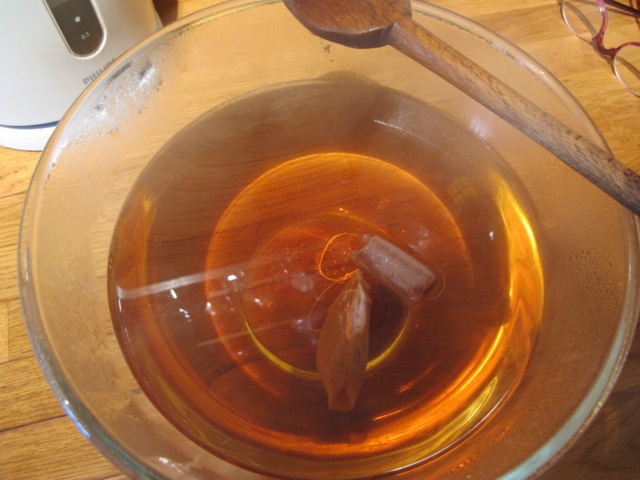
  • Boil the water and pour it over the teabags in a china bowl—leave for 10 minutes.

IMG_6671

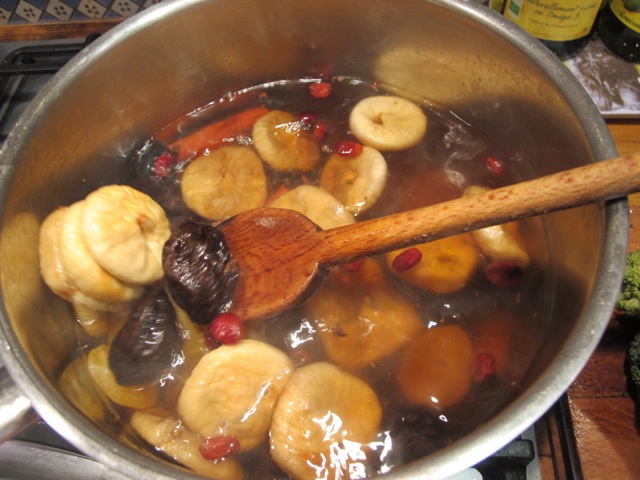
  • Remove the teabag and pour the liquid into a pan.
  • Add the dried fruit, cloves and cinnamon sticks and simmer 15 minutes.

IMG_6677

  • Leave to cool.

IMG_6715

  • Serve with flaked almonds and yogurt or creme fraiche.

Read Full Post »

Few spring vegetables on the stalls yet.

Asparagus and spring onions, yes–but where are the broad beans?

The rain continues to pour and it’s still cold–making it near impossible for local vegetable growers.

(Our neighbour, Serge’s younger brother told me in Lautrec market this morning that there was a year in the Fifties–he’s too young to remember which–when it rained until September!)

Brainwave!

I buy a couple of fat courgettes (Spanish, no doubt) and think to grill them in thick slices on the griddle and top them with scallions/spring onions done the same way.

Could make a pretty picture…

IMG_6681

… and go well with the salmon fillets I just bought.

2 plump courgettes–carefully sliced lengthwise, not too finely, lightly salted and left to drain for an hour

1 or 2 plump scallions/spring onions–sliced similarly

2 long chilis–sliced lengthwise

olive oil

salt and pepper

  • Heat the griddle to hot.
  • Mix the the courgettes slices with a tablespoon of olive oil.
  • Mix the onions and chili with a little less olive oil.
  • Place the courgettes slices on the griddle and leave for five minutes to char and soften.
  • Turn over and repeat the process.
  • When you judge they are done sufficiently remove to a serving plate and grind over some pepper.

IMG_6679

  • Distribute the onion and chili mix over the griddle.

IMG_6680

  • Grill for about five minutes to soften and char these too.
  • Remove them to the serving plate, season and serve.

IMG_6685

  • This lunchtime they made a nice contrast with the salmon fillet cooked slow (see recipe in Delicious Dishes for Diabetics!).

Read Full Post »

Easing back into the flow and with one foot–so to speak–still in Italy, I go to my comfort zone for guidance and authenticity.

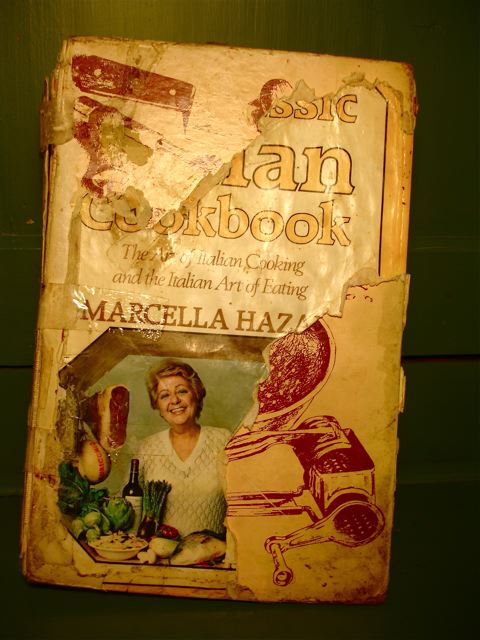
my culinary Bible

my culinary Bible

Marcella Hazan’s first cookbook–still usable, though much patched-up and thumbed.

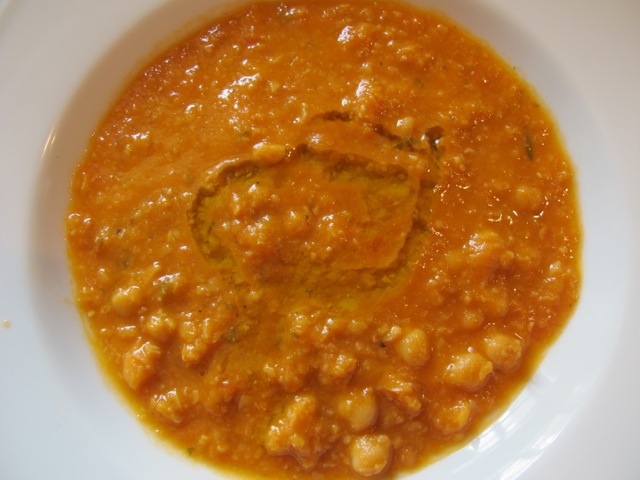
She doesn’t purée this nourishing and warming soup–though some do, she says.

I’ll go with roughly 1/4  whole chickpeas to 3/4  puréed.

I’ve also added a hint of fire! A couple of small dry red chilis left in the cooking tomatoes for five minutes and then fished out; or leave them in–but careful you don’t swallow them later.

I’ve used twice the liquid she suggests. Italians like to eat their soup almost solid.

3 garlic cloves–peeled but left whole

6 tbsp olive oil

2 tsp rosemary needles–chopped fine

8oz/200gm tinned (canned) tomatoes–chopped with the juice

14oz/400gm can cooked chickpeas–drained

450ml/1 pint stock–I use organic vegetable stock cubes

salt and pepper

  • Heat the oil in a large saucepan and sauté the garlic until it is well browned.
  • Take it out; it’s job–infusing the oil–is done.
  • Throw in the rosemary and stir once, then add the tomatoes with their juice.
  • Cook these down to a sauce–about 20 minutes, stirring often to avoid it burning.
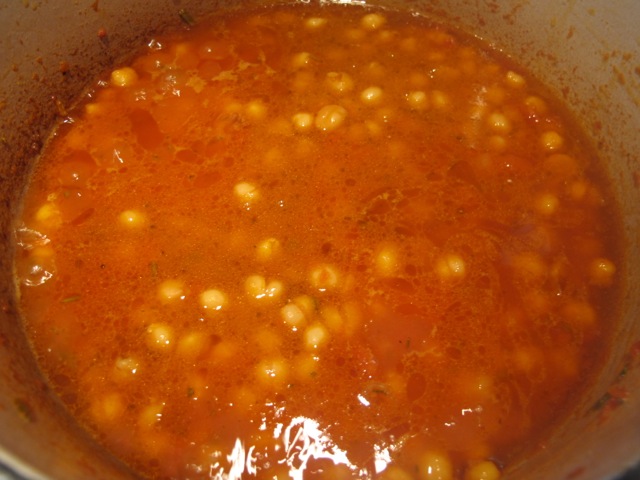
  • Add the chickpeas and stir these around for five minutes to inform them with the tomato sauce.
  • Add three-quarters of the stock and stir it in.

IMG_6645

  • Season with salt and pepper.
  • Cover the pan and cook for fifteen minutes.
  • Take off the lid, stir well and taste for salt.
  • Add more stock if you like.
  • Serve it piping hot with a swirl of best olive oil.

IMG_6647

Read Full Post »

Guests are arriving for lunch.

We are hoping to eat outside shaded from the May sunshine (ha! ha!) by the new parasol.

No chance!

However…

Yesterday I made a soup from half a kilo of asparagus, as an experiment–keen to find something different to do with it during the season.

It is raining today and cold–time for soup?

Meredith tasted it this morning–

Just enough for five–she said–it’ll warm everyone up on a chilly day!

We could have some roasted spears on the side–I said.

YES!– she said

and no need for a sauce!–I said, always looking to cut down the workload!

2 leeks–cleaned and chopped roughly

1tbsp olive oil

1lb/450gm asparagus–the tough ends removed, chopped roughly

1 litre/2 pints stock–I use organic vegetable stock cubes

1 tbsp fresh tarragon–chopped fine

salt and pepper

1 tbsp creme fraiche

  • Sweat the leeks in the olive oil over a gentle heat, in a covered saucepan–five minutes.
  • Add the asparagus and stock.
  • Bring to a simmer and cook until the asparagus is just tender.
  • Season carefully.
  • Liquidize–best done with a hand held stick liquidizer (if you have one).
  • Fold in the creme fraiche and tarragon.
  • Gently reheat to serve–with roasted spears on the side if you like.

ps–off to Italy tomorrow for a short break, a change of scenery and a recharging of the culinary batteries?

IMG_6355

Ciao!!

14333412-italian-vintage-car

Read Full Post »

Rachel Lucas just left a comment following the post on Keith Richmond’s olive oil:

I prefer olive oil to butter on everything…currently on steamed English asparagus at almost every meal!….

It inspires me to reproduce the recipe for Roast Asparagus from Delicious Dishes for Diabetics.

IMG_7838

We are eating a lot of asparagus at the moment; it’s hard not to–it’s the season and the poor weather has meant the changes that should be happening now are unusually slow in arriving.
Roasting it for a short time at a high temperature makes for a different taste and texture.
We just had some for lunch with a simple new fish recipe for plaice which I’ll post soon.

Asparagus is wonderful, but even in its short season it can get a bit repetitive! This is a handy alternative way; quick and easy with the thinner type.The addition of thyme comes from the River Café.

2 tbsp olive oil
500 g/1 lb asparagus

2 tbsp fresh thyme leaves

salt

1. Heat the oven at 220°C/425°F/Gas Mark 7.
2. Heat the oil in a shallow baking tray.
3. Turn the asparagus in it and sprinkle over the thyme and

some salt. The roasting time depends on the thickness of the asparagus: about 5 or 6 minutes for thin and a bit longer for the fatter size. It should crisp up a bit.


Read Full Post »

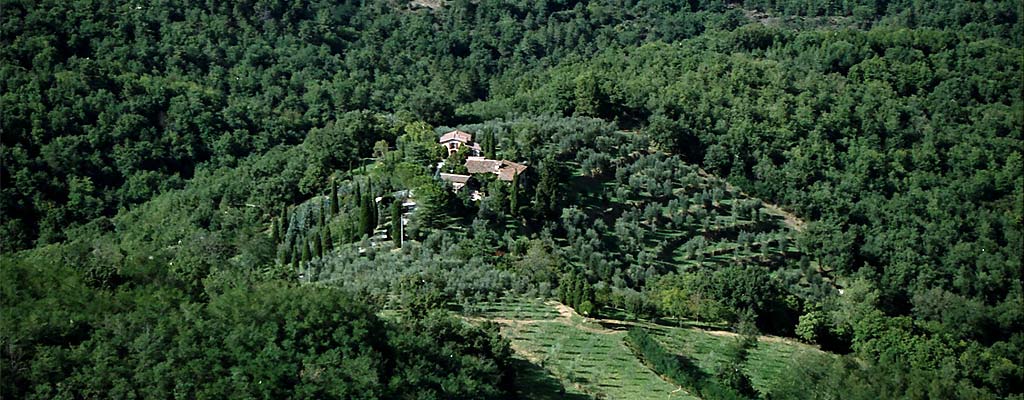
logo-Boggioli
slide-1

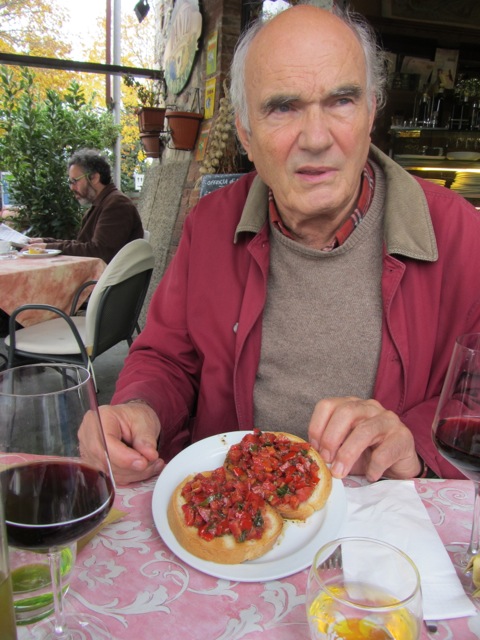
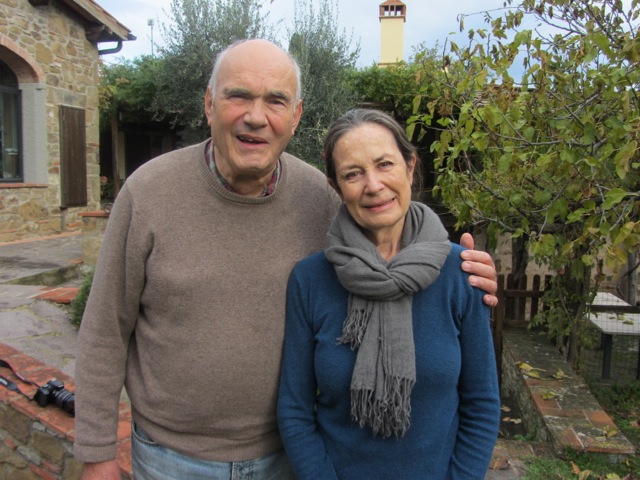
Our friend Keith Richmond has a thousand olive trees in the Tuscan hills, south east of Florence.

IMG_3130

Keith shows off tomato bruscetta at a local restaurant in Radda in Chianti.

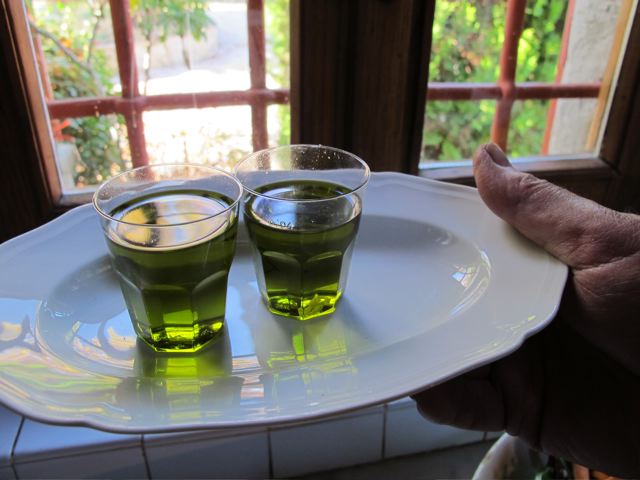
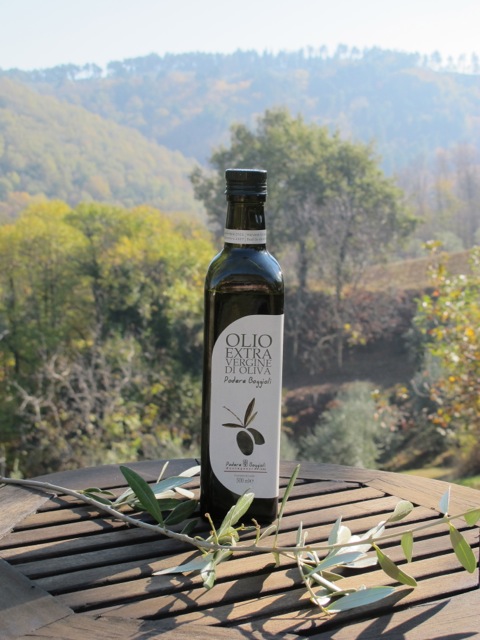
Every November he harvests his olives and wins prizes with the rich green oil they produce.

new olive oilMG_4997

He recently picked up a gold medal in Los Angeles and another important prize in Germany.

We first met him at an olive oil tasting demo in Florence and were smitten with his passion for this miraculous product and his beguiling way of expressing it.

He knows his subject.

I thought I’d ask him to write a brief note about the tricky task of choosing a good olive oil.

He obliged with this:

It occurs to me that, since you mention extra virgin olive oil so often in your recipes and recently extolled the virtues of the Mediterranean diet in your blog, some of your readers may like to have some pointers on how to select an olive oil of good quality.

IMG_5320

The supermarket shelves are loaded with olive oils of questionable quality, many of which may be suitable, I imagine, for frying or cooking in general. Price is certainly an important first indicator: cheap oil is, well, cheap oil – and you get what you pay for!

When taste and flavour are indispensable you have to go to the top of the range. Ideally you should know the grower and how the olives are processed. Obviously that is seldom possible, so the best alternative is to head for the more expensive olive oils on the shelf. You are more likely to find an olive oil of good or even exceptional quality in that way, especially if the label indicates that the olive oil is organic (‘biologico’ in Italian, for example) and that it is (for Italian olive oils at least) IGP or DOP, a sort of appellation controllée. This means that the olive oil has passed rigorous olfactory and chemical tests and is reliable.

Pay attention to the ‘best by’ date. This should never exceed 18-24 months after the year of production. Oils can still taste good after that date but will have gradually lost most of the characteristics beneficial to health. Also, you have no idea how the olive oil has been stored, so keep your distance from ‘old’ olive oils.

Your readers in North America would do well to consult a web site and blog run by Tom Mueller (www.truthinoliveoil.com). He gives a lot of sensible advice on a variety of oils that are available in the US especially.

I’ll be happy to answer any queries. Keep cookin’, best, Keith

This is meant as an introduction to his excellent site–which is worth a visit.

http://www.boggioli.com/

IMG_3506

Keith and Helen Richmond also offer excellent holiday accommodation on the farm.

http://www.boggioli.com/the-farm/hospitality/


IMG_3123

Consulting the oracle…

Read Full Post »

« Newer Posts - Older Posts »