Feeds:
Posts
Comments

Archive for the ‘Diabetes’ Category

Farmhouse cupboard fare: Olive oil, garlic, tomatoes, chilis, pasta and parmesan–that simple!

IMG_4369

A classic example of the Mediterranean way of eating, which is in the news–again!.

It has barely been out of the news–stories of people living to very advanced ages on Greek islands crop up with annoying regularity on the health pages; annoying in the sense that you immediately want to go there and get a slice of the action–and can’t!

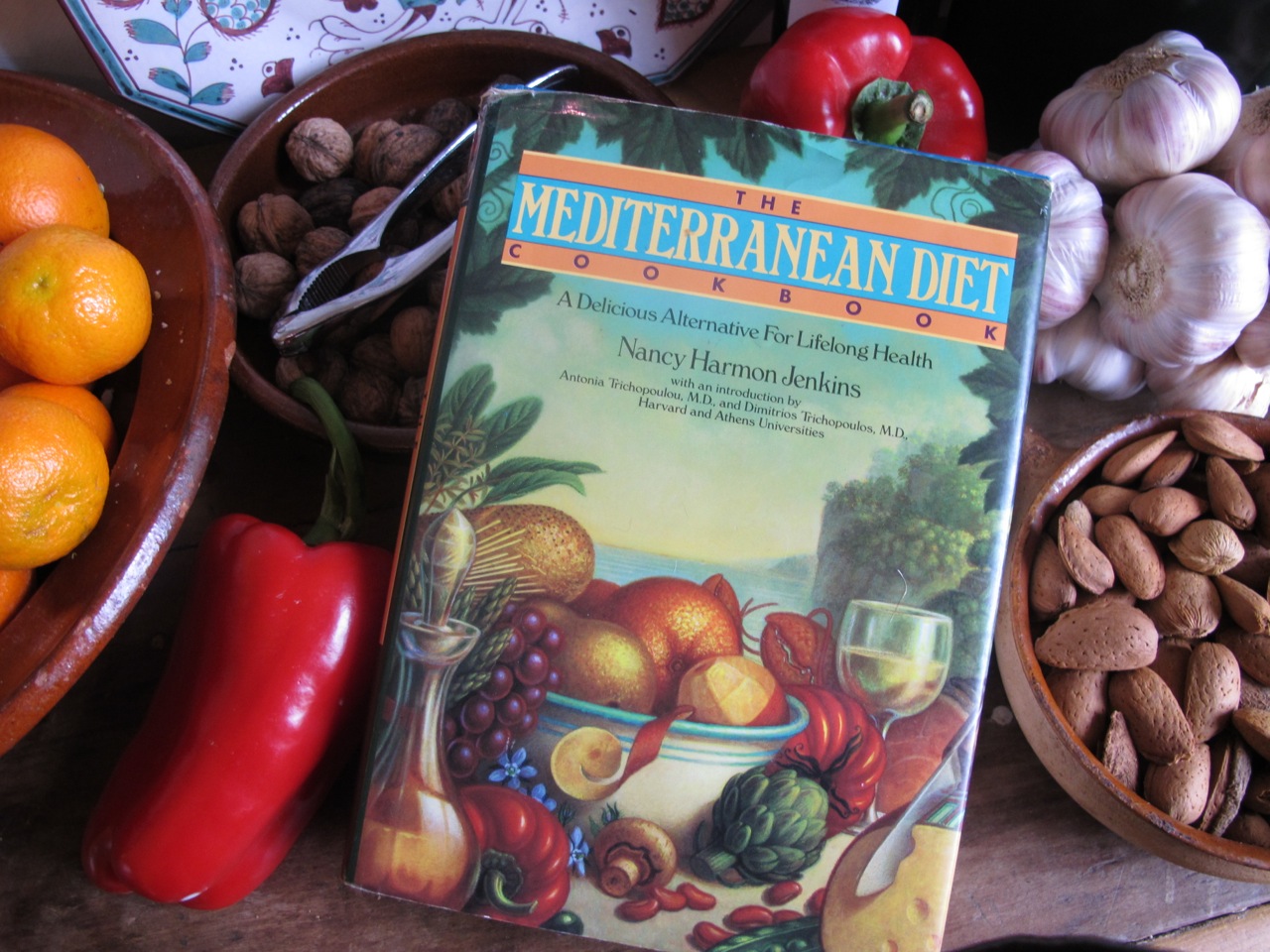
You could though get a copy of food writer Nancy Harmon Jenkins’ wonderful book–The Mediterranean Diet Cookbook–20th anniversary of its publication coming up next year.

She has been trumpeting the “Med” way of eating for years.

This was Sunday night supper chez nous–inspired by the recipe in her book.
IMG_4428

for 4

1 large tin [can] 800g of tomatoes–chopped with its liquid

3 large garlic cloves–pulped in a mortar or press

4 tbls olive oil

4 small dried red chili–chopped with their seeds–(less or more depending on your tolerance and taste, but this is called “angry” [arrabiata] penne!)

25 gms/12oz penne rigate–the ridged kind (it picks up the sauce better)–ideally whole wheat/integral–which is increasingly available

salt and pepper

  • Gently heat the oil in a pan large enough to take the pasta too.
  • Slip in the pulped garlic and let it colour lightly.

IMG_4374

  • Add the chili and the chopped-up tomatoes.

IMG_4380

  • Cook until the sauce thickens–about 30 minutes–stirring regularly.
  • It should be an unctuous pool of red glory.

IMG_4381

  • Taste for heat/spicinessadd more if you like.
  • Bring a large saucepan of water to the boil and add a teaspoon of salt.
  • Add the penne, stir to stop the pasta sticking to the base of the pan and bring back to the boil.
  • Cook until it is just tender.
  • Drain well and add the penne to the sauce and turn it to coat the pasta thoroughly.

IMG_4385

  • Serve with grated parmesan if that suits–and a glass of red wine?

IMG_4389

Read Full Post »

… a way of life!

The very word DIET is open to interpretation.

A Latin meaning has it as daily food allowance; in classical Greek diaita means way of living!

Last week in its Health section, The New York Times reported on a remarkable new study of the Mediterranean Diet conducted in Spain and published in the highly respected New England Journal of Medicine:

About 30 percent of heart attacks, strokes and deaths from heart disease can be prevented in people at high risk if they switch to a Mediterranean diet rich in olive oil, nuts, beans, fish, fruits and vegetables, and even drink wine with meals, a large and rigorous new study has found.

Nice to hear about the virtues of red wine! Also dark chocolate gets a nod!

(A square of 90% cacao chocolate and a dried fig make a nice finish to lunch and dinner!)

In the UK, my cookbook is subtitled, Delicious Dishes for Diabetics–a Mediterranean Way of Eating. (The American publisher changed the subtitle!)

IMG_9659

Person showing interest in the Mediterranean way of eating!

The benefits of a diet based on olive oil, garlic and tomatoes have been debated–and some American heart specialists insist the vegan diet is superior–no animal products whatsoever. But not everyone wants to follow that way of eating.

Our friend John in Washington D.C. who builds dry stone walls and massive earth dikes and stoneworks is relishing the Paleo diet which involves eating large helpings of red meat–even at breakfast!

Each to his own.

I suspect most people, at some point in their lives, willingly go on a diet-to lose weight, for medical reasons or for a general clean out–to feel better.

In the early eighties, I remember astonishing my dinner hostess in London by bringing my own dinner with me–a three pound bag of raw onions–which I proceeded to cook and eat at the table while all the other guests sensibly and politely ate her lovingly prepared meal.

It amazes now me that I could have been so obsessed that I lost all sense of manners!

I can’t remember how long I stuck with the onion diet; I hope I gave it up the following morning, from shame!

The faddishness of diets is well known.

There are always many to choose from and they are usually embarked on with gusto–missionary zeal evenwhich has a tendency to fade….The Mediterranean Diet certainly has staying power!

http://www.nytimes.com/video/2013/02/25/health/100000002085482/the-benefits-of-olive-oil.html

Mark Bitman of The New York Times says of the Mediterranean Diet:

This is real food, delicious food, mostly easy-to-make food. You can eat this way without guilt and be happy and healthy.

The study is receiving–by and large–a good reaction:

“Really impressive,” said Rachel Johnson, a professor of nutrition at the University of Vermont and a spokeswoman for the American Heart Association.

IMG_0051
 
Mediterranean BLUE–shameless promotion of a Mediterranean Way of Living! 

mediterranean_diet_pyramid

EXPLANATION of the Food Pyramid

Read Full Post »

Just managed to fit in a cooking no-potato fishcakes session on Fox’s Channel 5 here in Washington with host Holly Morris, before we head for the airport.

IMG_3629

Another recipe based on a Nigel Slater recipe. I have always loved fishcakes – must be the comfort food factor kicking in – but these days of course the fact they usually contain 50 per cent potato causes trouble for me as a diabetic.This recipe solves the problem by leaving the potato out! The dill and the grain mustard make the fishcakes special and they sometimes serve as a tasty starter. If you keep them small and cook them quickly, they’ll be crisp and brown on the outside and still succulent inside.

Yogurt sauce

2 x 125 ml pots low-fat yogurt
1 tsp grain mustard
good pinch of chopped dill (from the main bunch) salt

The Fishcakes

400 g/1 lb salmon fillet – skinless and checked for bones

white of an egg
1 tbsp chickpea flour – of course, plain flour works as well

1 tsp grain mustard

juice of 1⁄2 lemon
small bunch of dill – chopped fine salt and pepper (parsley will substitute though dill goes well with the salmon)

2 tbsp olive oil


  • Mix all the yogurt sauce ingredients and refrigerate until you are ready to eat.
  • Cut up the salmon fillets in roughly equal-size pieces.
  • Put these in a mixer and pulse three or four times.
  • Avoid working them too much and producing slush at the end.
  • You could just cut them up in small pieces if this suits better.
  • Put the salmon in a bowl.
  • Turn in the egg white and the flour, and then the mustard, lemon juice, and the dill.
  • Season with salt and pepper.
  • It’s a good idea to taste the mix for seasoning at this point – the dill and the salt should come through.
  • Refrigerate if not using immediately.
  • Heat the oil to hot in a frying pan and using a dessertspoon scoop out a dollop and make a ball.
  • Put this carefully in the pan and flatten it gently.
  • Cook on a medium-high flame, crisping and browning the outside while making sure the interior cooks through–about a minute each side, taking care not to burn them.
  • Serve with the mustardy yogurt dipping sauce on the side.


Read Full Post »

18CONS-articleInline-v2

This is sad.

Grapefruit as villain. What a turn-up!

The evidence is strong–grapefruit juice may cause some prescribed drugs to malfunction– in some cases with life threatening effect.

This beautiful oversized “orange”–colored like a lemon.

So sweet–and comes with white or pink interiors.

My parents had half a one each for breakfast, carefully separated into segments with a serrated knife.

The serrated knife with the annoying curve at the end–annoying if you wanted to use it for any other purpose–but satisfying if you hit the joins just right and made a good job of segment separation.

These ’50’s grapefruit put me off! They were white and sour! Sugar required.

A long gap to the haven/heaven of pink grapefruit.

It makes a sweet and comforting wake-up drink.

For years we’d squeeze the juice–half a fruit each–into mugs in the morning and fill  up with boiling water.

But a trip to Florida opened my eyes to the authentic grapefruit experience.

We were in Orlando at Meredith’s parents home.

At the front of the house there were two grapefruit trees–one with white fruit, one pink.

The grapefruit hung from them like enormous coloured canonballs–how could the trees support the weight?!

I was doubtful of the white fruit until I cut one in half and squeezed a little juice into a glass and sipped.

My mouth is watering now with the memory.

That’s how it will have to stay–a glorious memory.

This benign giant of a fruit is no longer benign for some like me who take a daily dose of drugs–hard to accept!

A slice of lemon in hot water with have to suffice.

Read Full Post »

It’s a while since I posted a Diabetes update.

diabetes_gymnema1

Recipes and cat tales are so much more uplifting.

But given my recent history, this new study deserves an airing.

After analyzing the medical records of almost two million people in the UK, the National Diabetes Audit found that people with diabetes have almost a 50% higher risk of a heart attack.

About 22,000 people with diabetes in England and Wales died prematurely in 2010/11, the report says.

“The finding that people with diabetes are almost 50 per cent more likely to have a heart attack is shocking; this is one of the main reasons many thousands of people with the condition are dying before their time,” said Barbara Young, Chief Executive of Diabetes UK.

About seven weeks ago, my cardiologist at the excellent local clinic wasn’t a hundred percent happy with the results of a couple of my stress test results.

(These were routine tests suggested by my G.P.–given my Type 2 diabetes.)

The local cardiologist sent me to the Clinique Pasteur in Toulouse, where late one Tuesday afternoon in October I found myself flat on my back, naked, in what felt suspiciously like an operating theatre.

(This isn’t my preferred theatre experience!)

Shortly after sensing something creeping up the inside of my right arm, a masked face pushed through the hygienic barrier, regarded me with two quietly friendly eyes and uttered words I shall never forget:

“Vous avez un blocage de l’arterie principale coronaire.”

[You have a blockage of the coronary artery.]

His tone was so reasonable, I heard myself replying in a similar tone:

“C’est sérieux, Monsieur?”.

He remained calm in spite of what he had just heard, and didn’t shout:

OF COURSE IT’S SERIOUS YOU IDIOT!!“.

Instead I was relieved to hear him say he was going to insert three stents–then and there.

The seriousness of the situation only registered fully with me the following afternoon just before we left for home.

The doctor showed us a video of my heart and arteries BEFORE and AFTER.

Oh my word!

For the procedure my blood had been dyed to show up as black.

In the BEFORE version, a black (blood-rich) artery snakes across the screen to the rhythm of the heart–black except for a small section where the FAT black snake became a very THIN black snake running through an otherwise pale (no blood) tube.

Le blocage–a narrowed artery!

In the AFTER video–three stents in place–the black snake is restored to its glorious fatness.

I had none of the usual symptoms of narrowed arteries— shortness of breath while walking, pains in the chest.

I asked the Quietly Spoken One why?

He said diabetes masks cardiac symptoms–numbing the nerves.

So, j’avais de la chance, je crois!

[I reckon I was lucky!]

Read Full Post »

Making Poldark has been Nooked at last!

Nick it on NOOK–it’s a steal!

It’s available now on NOOK.

Making Poldark: Memoir of a BBC/Masterpiece Theatre Actor
by Robin Ellis
This revised version came out in April 2012 and is greatly expanded–including new photos from Winston Graham’s personal Poldark photo album.
And while we are at it…
Delicious Dishes for Diabetics
Delicious Dishes for Diabetics 

Read Full Post »

TARAT!  TARAAHH!!–a sauce for all seasons–TARATOR!

Discovered this sauce while looking for an alternative to yogurt.

Meredith is cutting out dairy products for a few weeks while she takes advice from an ayurvedic practitioner in Albi.

We’ve been we eating mainly vegetarian–and more lightly in the evenings.

It is a challenge for me and I’m enjoying it.

New Directions I’m calling it and it will be a chapter in the new book Healthy Eating for life.

Tarator is variously described as a yogurt soup from Bulgaria and a sauce from Lebanon.

My version of this tahini based sauce is loose, lemony and lightly garlicky, to be enjoyed with meat or vegetables.

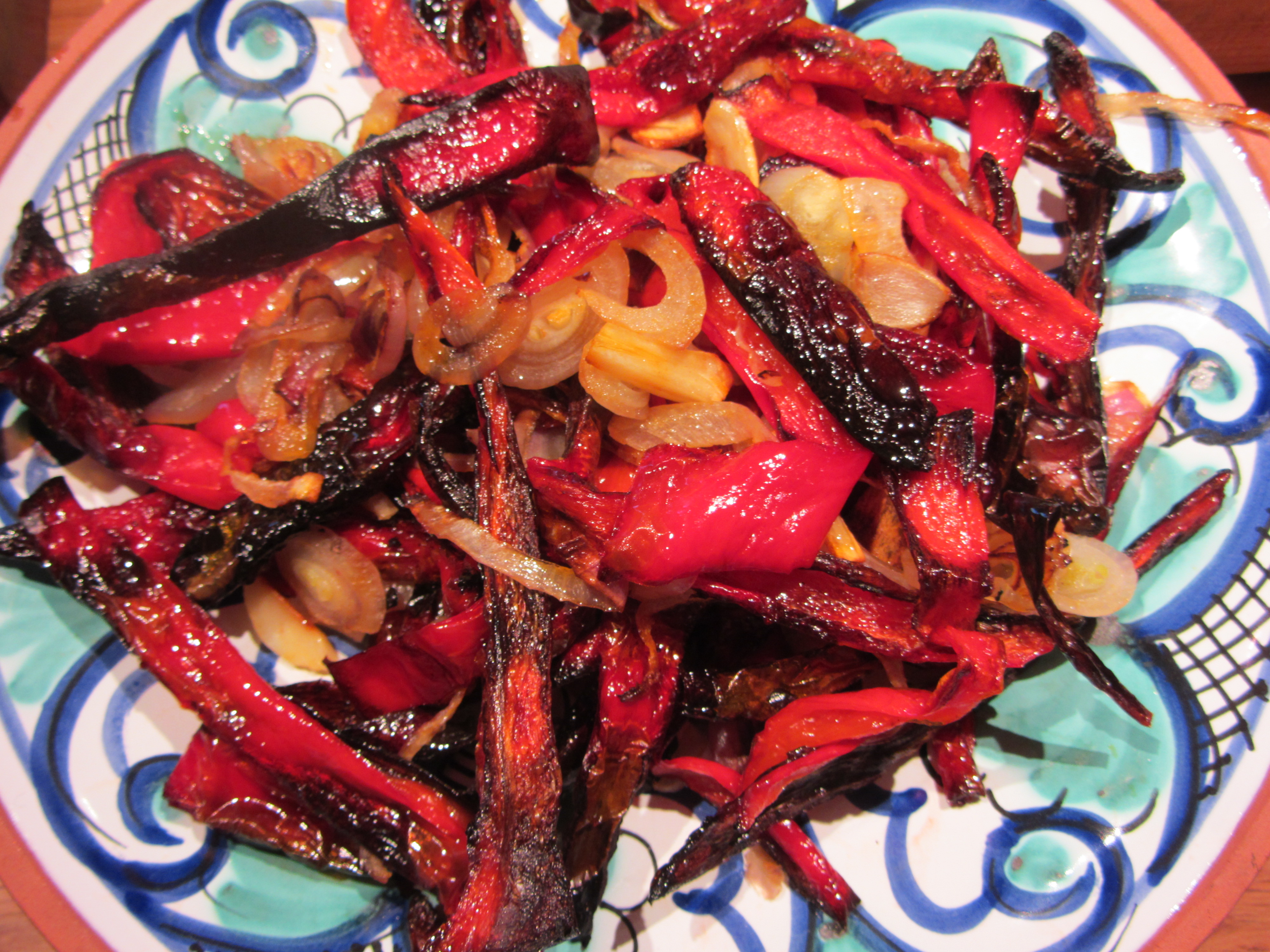
For lunch today I’m revisiting a salad from Delicious Dishes-Roast Red Pepper Salad with an edge–(recipe tomorrow).

We had the sauce with it and enjoyed it.

for 2

3 tblsps tahini

2 tblsps lemon juice

1 garlic clove–peeled and pulped in 1/2 teaspoon salt

1/3 teaspoon cumin powder

4 tblsps water

1 tblsp parsley–chopped

  • Put the first five ingredients in mixer and whizz to a smooth runny consistency.
  • Stir in the parsley
  • Add more salt to your taste.

Read Full Post »

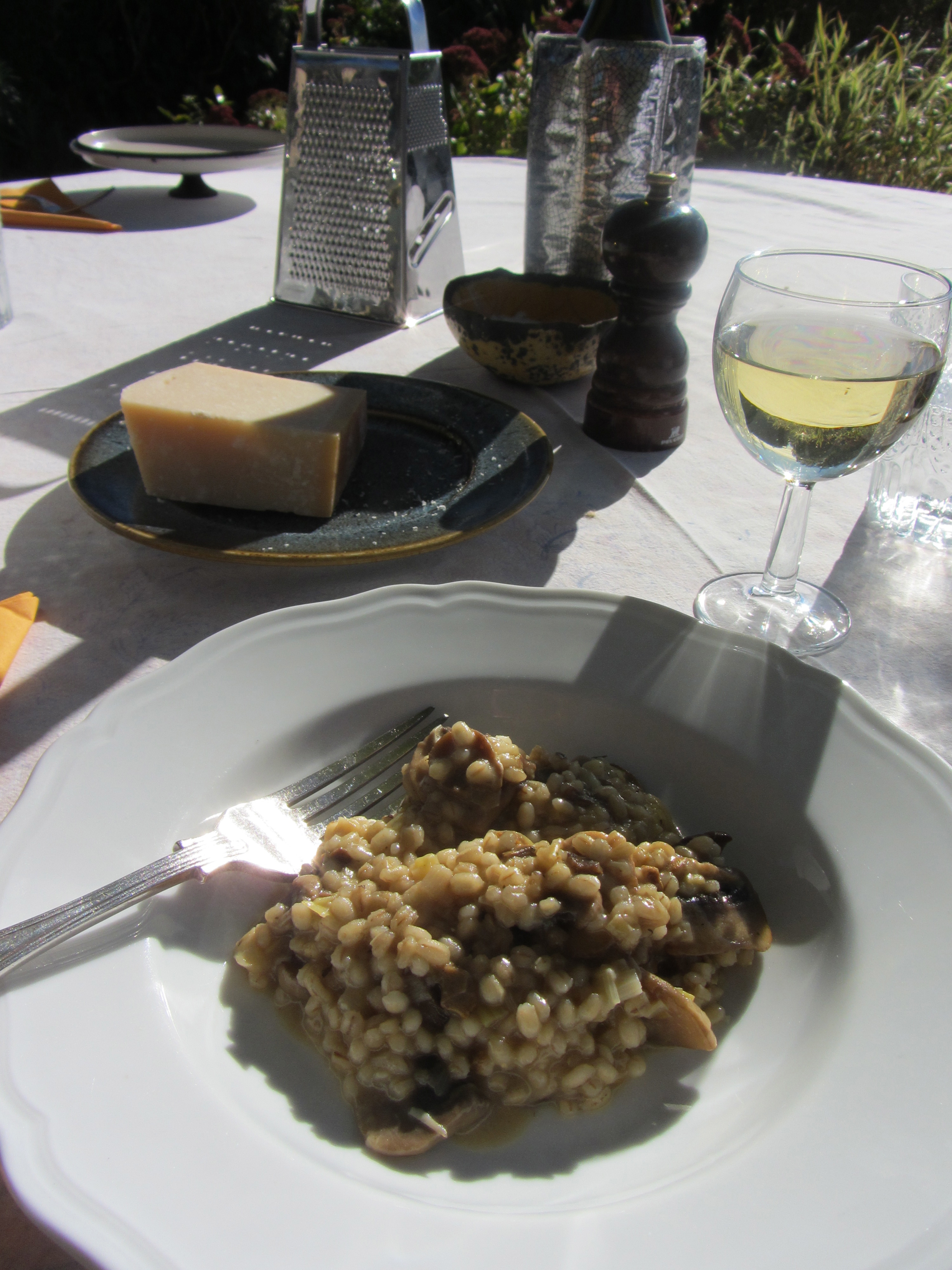
Traditionally risotto is made with Italian arborio rice–a round variety that plumps up well as it absorbs liquid, while still retaining a bite at its centre.

As white rice–a carbohydrate converting more quickly to sugar–it’s not ideal for those with diabetes.

Pearl barley is an acceptable substitute. It has a delicious nuttiness all it own while modestly hosting the mushrooms and leeks (in this case).

This takes a little time but when you come to cook it, the zen of making risotto (!) kicks in and it becomes a quiet meditation followed by a satisfying chew.

Risotto has the virtue of being a meal-in-one dish–eventually!

As with omelettes, you add the the subject to the base and serve it in one.

This is adapted from an original recipe by Emma Booth who won a prize with it in Stylist.co.uk magazine!

for 2/3

2  garlic heads–cloves separated but skin left on

4 tbsps olive oil

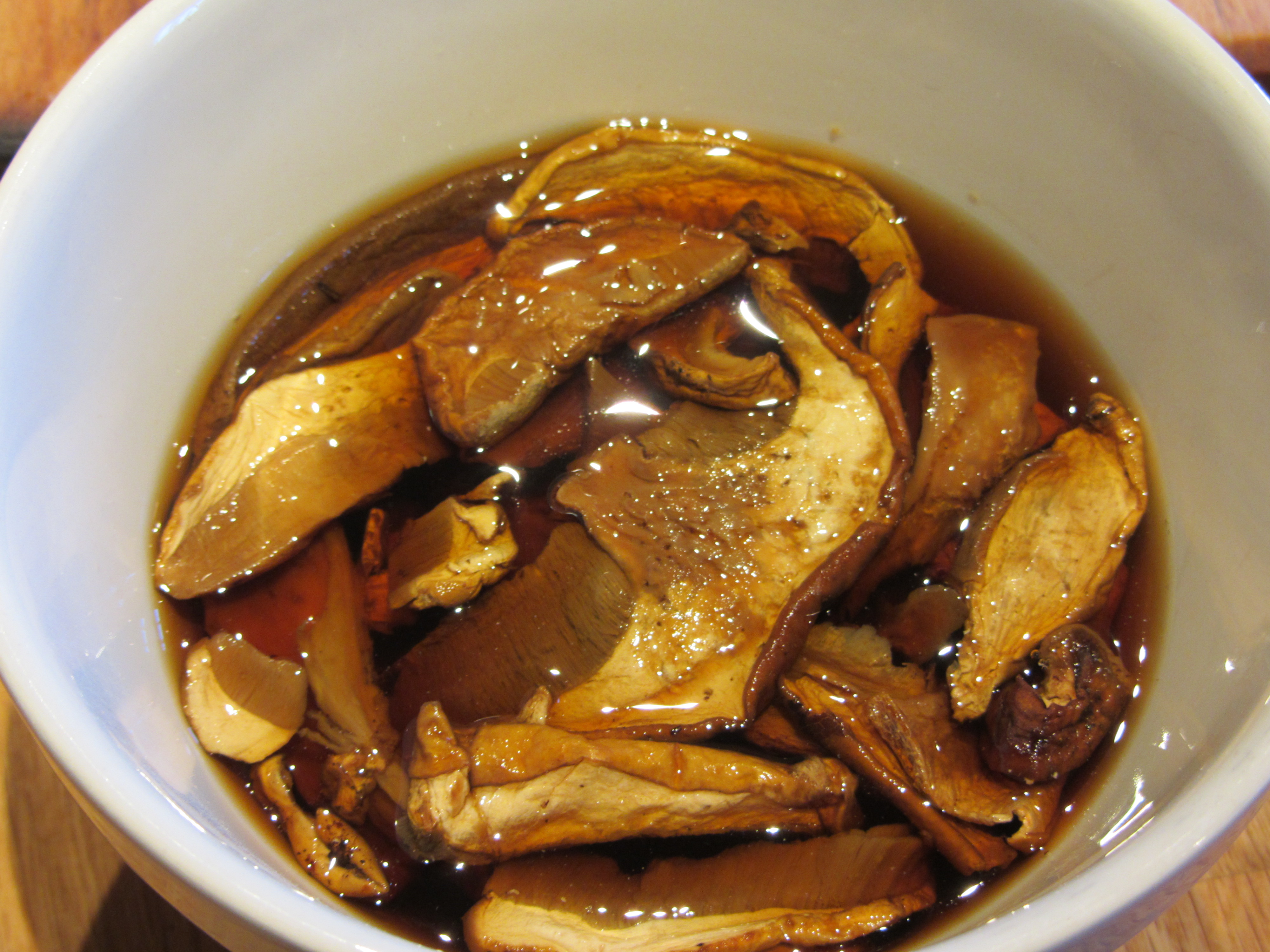
1 oz dried mushrooms–soaked in 200ml warm water.

(These are not always easy to find but they’re a good taste engine, adding depth to the dish.)

(If you can’t get dried mushrooms, just use the 200ml warm water!)

200g fresh mushrooms–sliced thin

11/2 leeks–chopped fine

200g pearl barley–rinsed thoroughly until the water runs clear

1 tsp fresh thyme–chopped

600ml stock–I use organic vegetable stock cubes

2 tblsps white wine

50g/2oz Parmesan–grated

black pepper and salt

heat the oven to 190C/380F

  • Put the dried mushrooms in a bowl and pour over 200ml hot water–leave to soften for 20 minutes.

  • Then strain into a bowl, reserving the liquid.
  • Chop the mushrooms ready for use.
  • Put the garlic cloves in a bowl and mix with a tablespoon of olive oil.

  • Empty them onto a shallow oven tray.
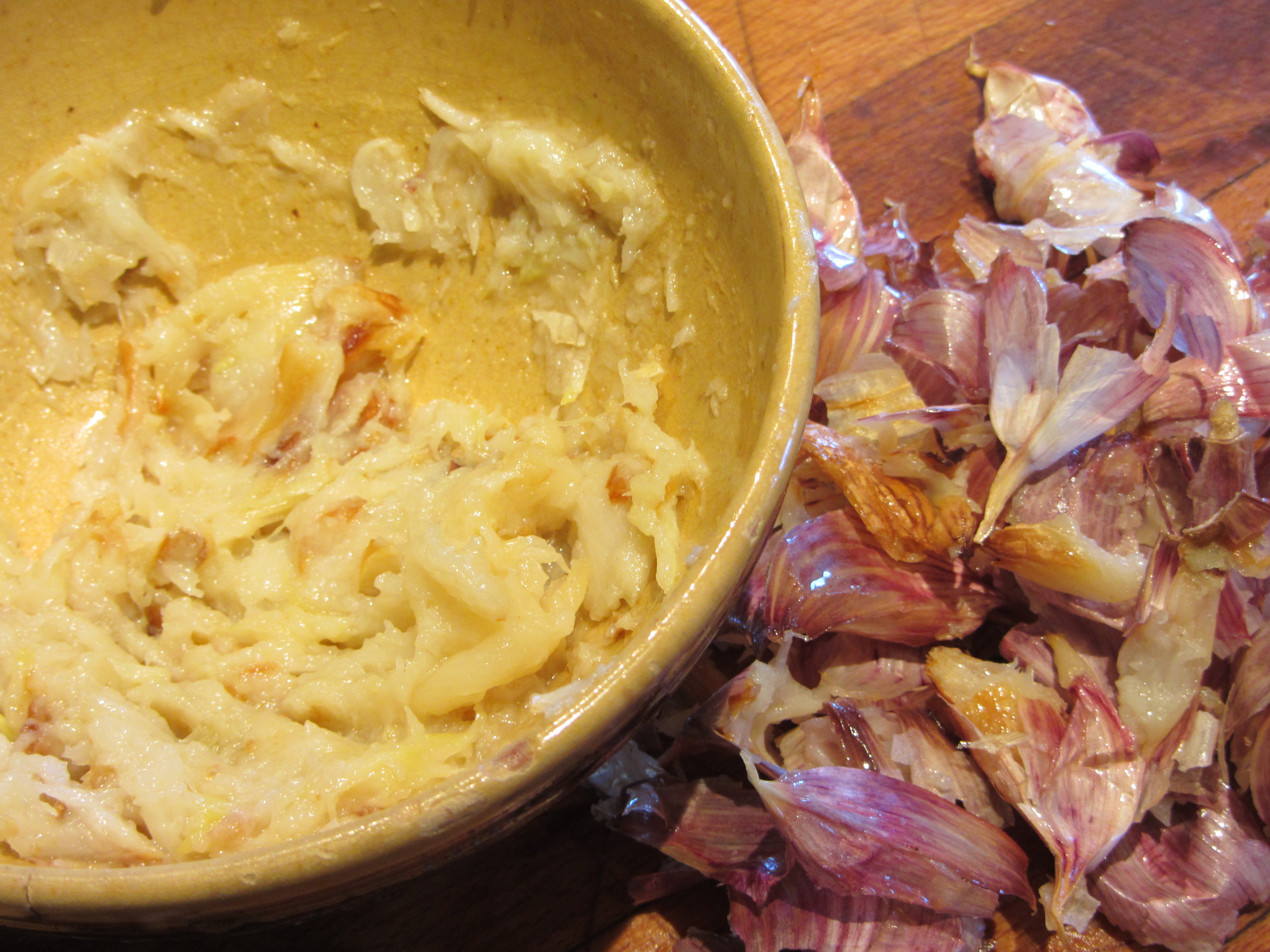
  • Bake for about 15 to 20 minutes until they are soft–and set aside to cool.
  • Peel them and fork them into a mush–this is a messy business but it ends with a satisfying licking of the fingers.

  • Heat two tablespoons of oil in a pan and sauté the mushrooms until they start to colour (this happens after they have released their moisture), then set aside.

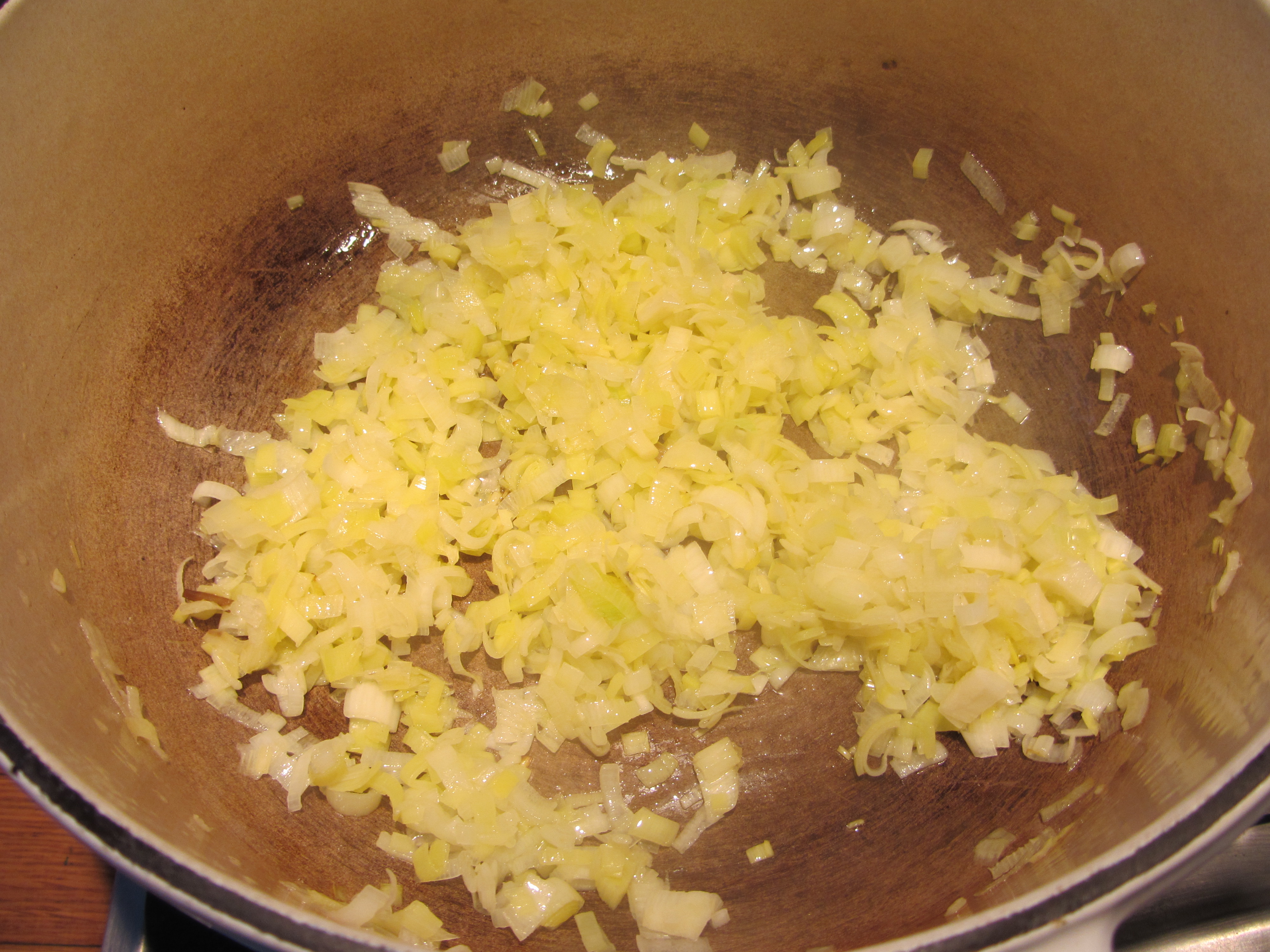
  • Heat the last tablespoon of oil in a medium casserole (the one in which you will serve the risotto) and sauté the leeks over a medium heat until they soften and colour a little.

  • Add the wine and let it evaporate, stirring the while.
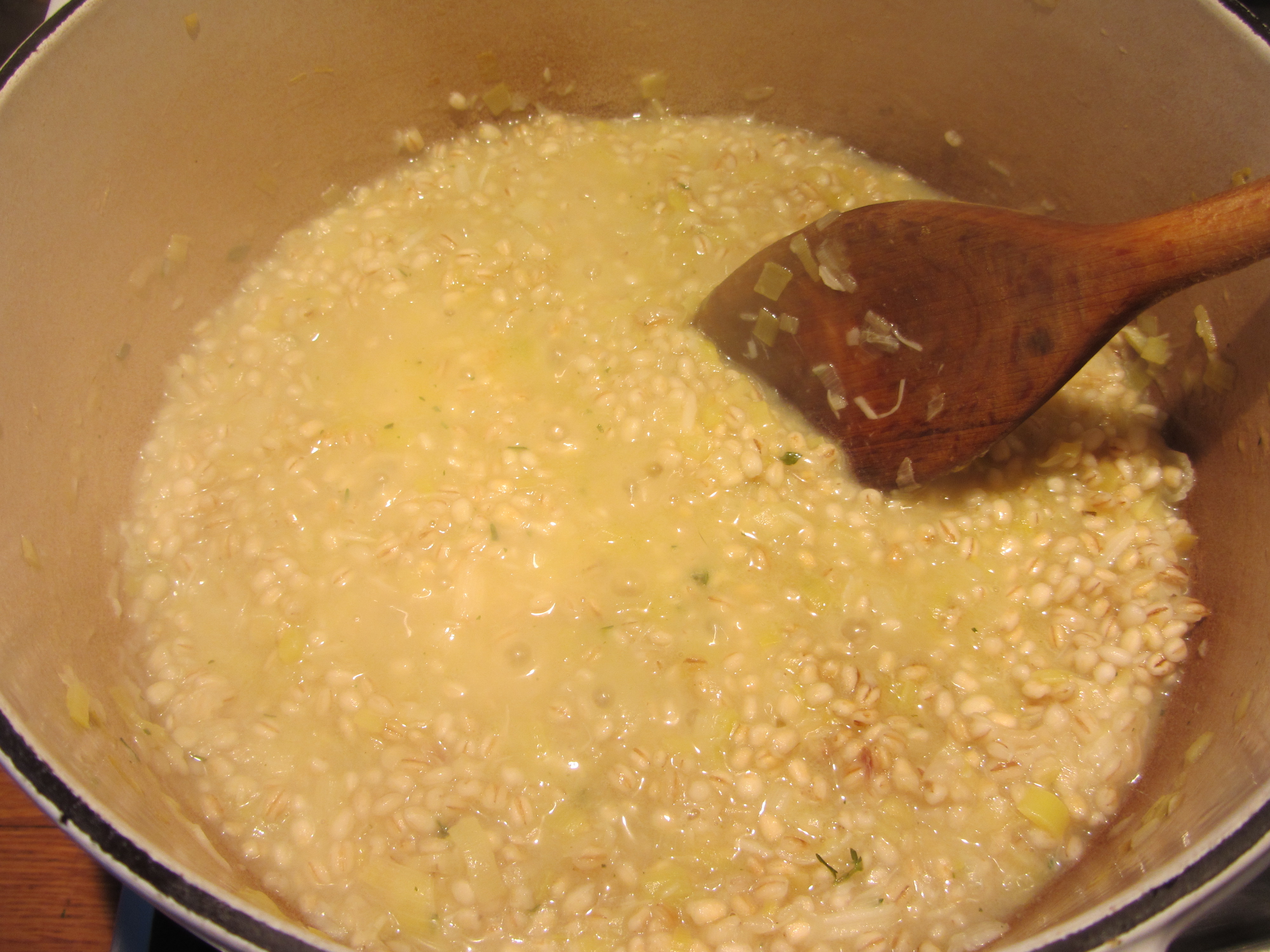
  • Mix in the pearl barley, thyme and cooked garlic mush.

  • Have the stock in a pan close by–simmering on a low heat.
  • Add the stock a ladle at a time, stirring often, taking care the mix  doesn’t catch.

  • Followed by the mushroom water–if you are using dried mushrooms–or warm water if not.
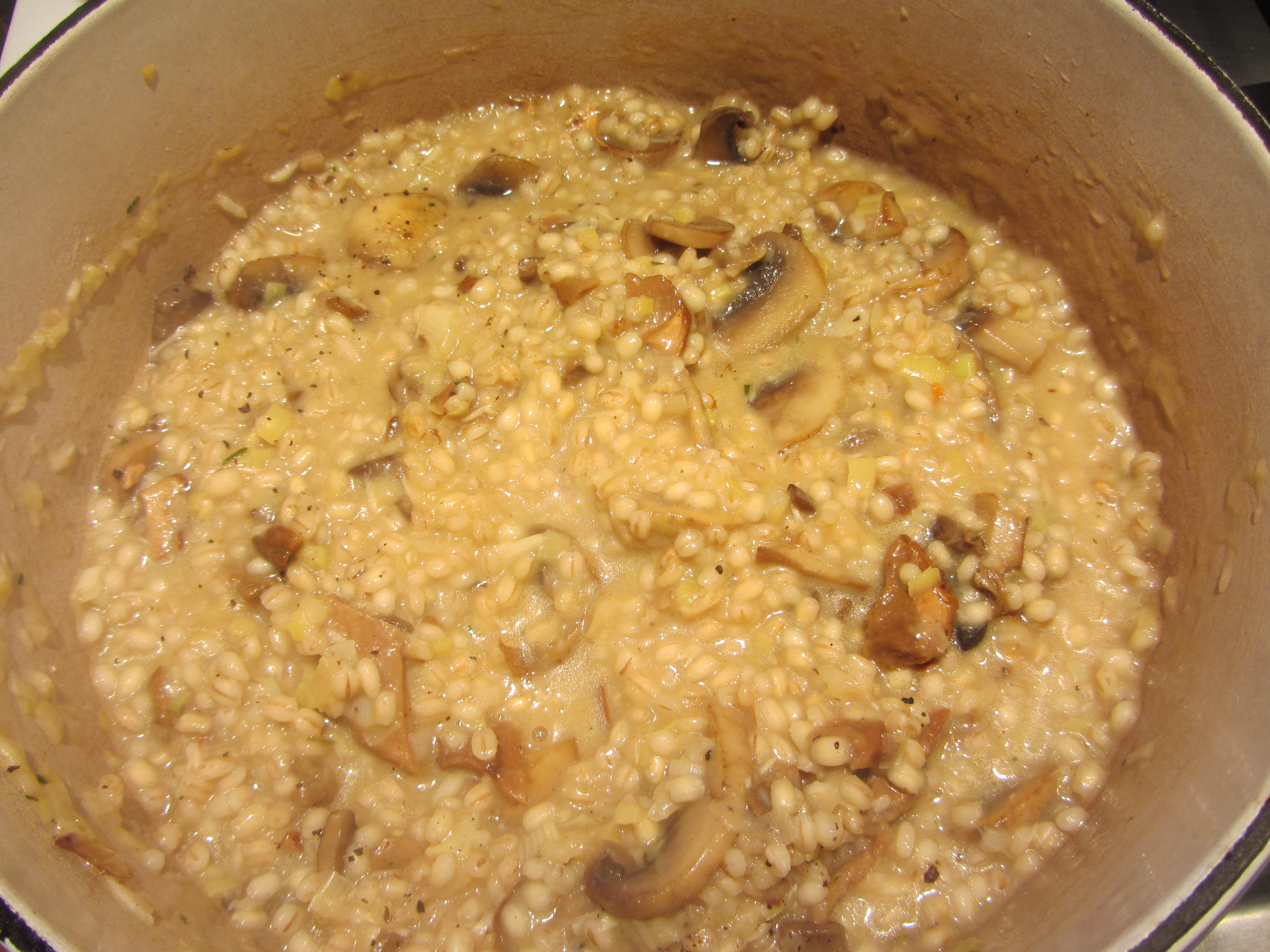
  • When the barley is soft but still has a little bite in the centre–this took about 20 minutes this morning–the risotto is ready for the mushrooms–dry and fresh.
  • Add them and stir in, followed by the parmesan cheese.

  • Season with black pepper and salt.
  • Meredith recommended a sprinkling of parsley at the finish–and she’s right!

Read Full Post »

We had simple salmon fillet for supper the evening that we returned from the clinic.

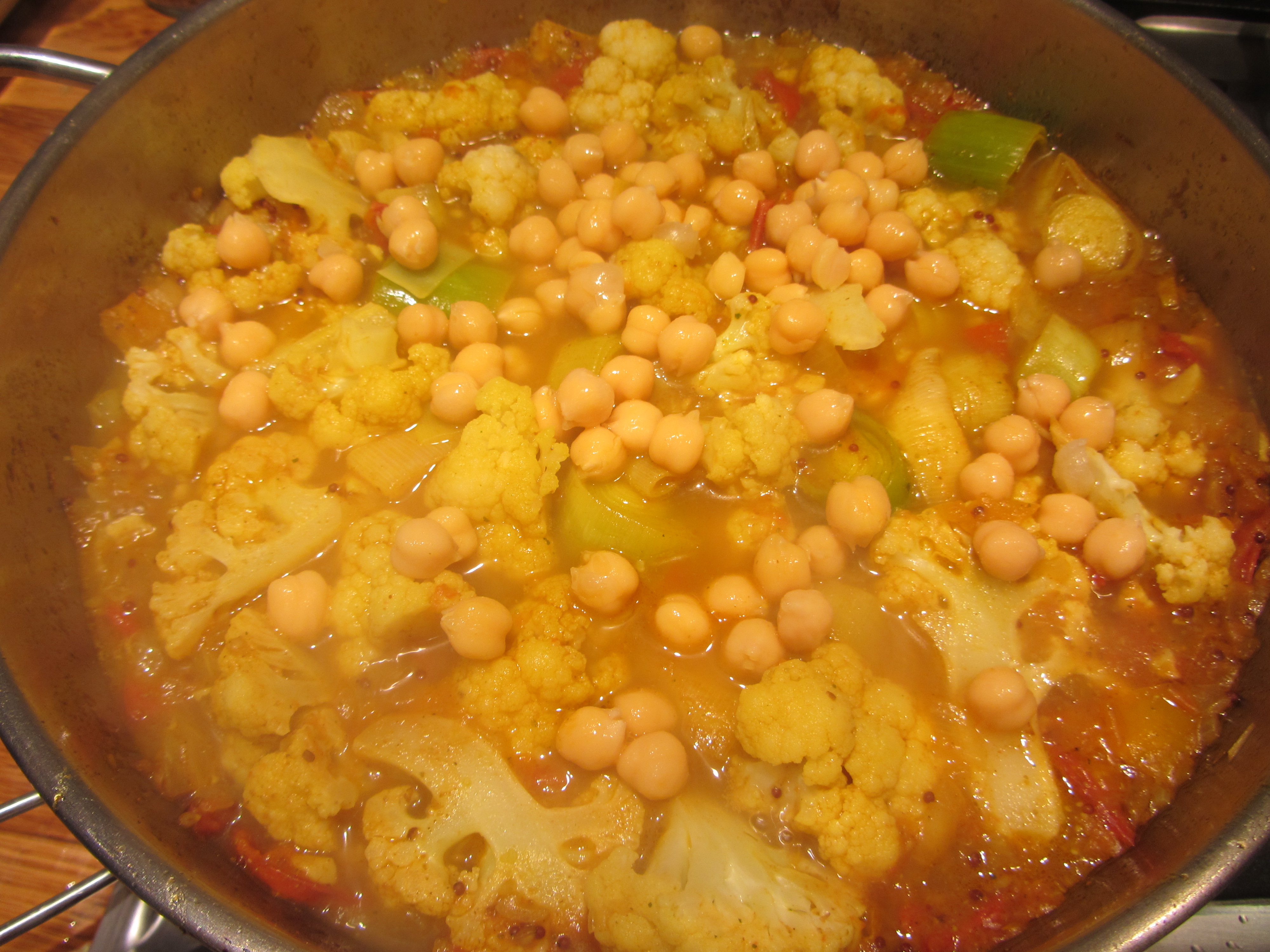
The next night I felt a little more adventurous, but in need of something easy and preferably from a single pot–a ladleful of taste over some basmati brown rice; comfort food that cooks itself.

I looked in the fridge and found a cauliflower in good condition, a leek and a bottle of chickpeas on the shelf in the larder and I knew there were a few small tomatoes left to gather at the end of the garden–perfect!

I love buying cauliflowers–their tight white heads look so tempting and beautiful.

However sometimes they stay in the fridge–not exactly forgotten, but requiring some thought.

What am I going to do with that cauliflower?!

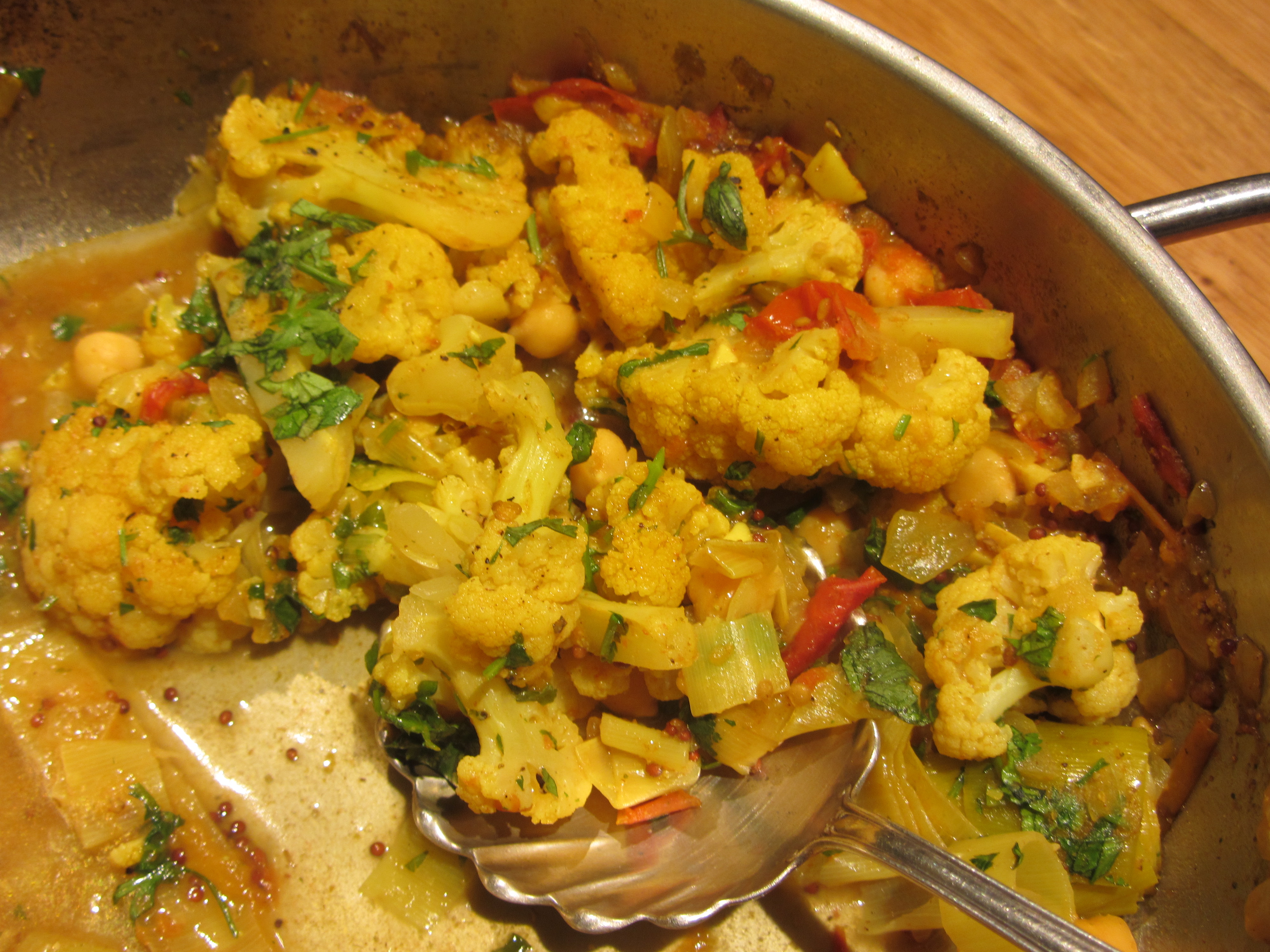
Cosy cauliflower curry–why not?

Here goes…!

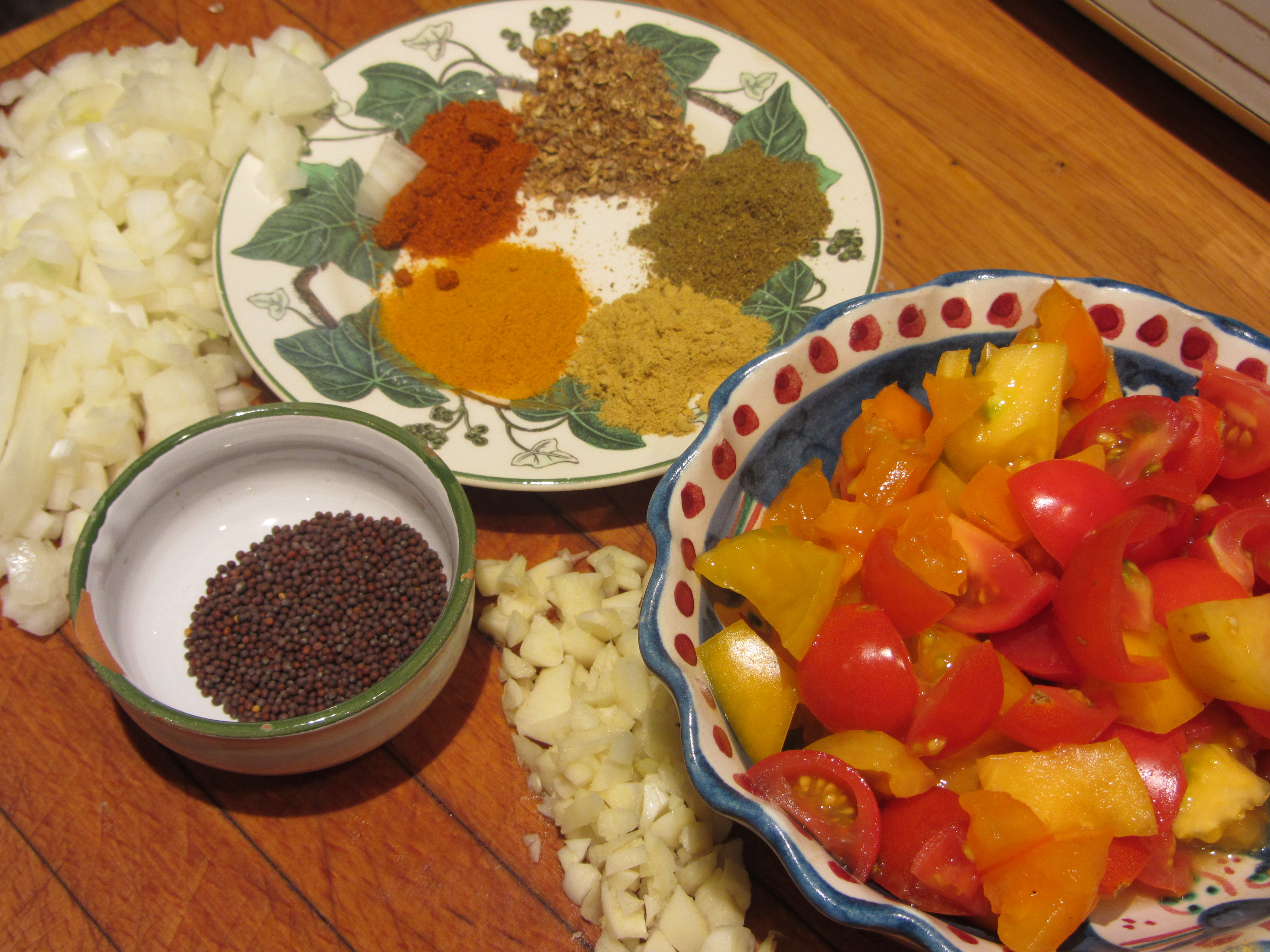
1 onion--chopped small

2 garlic cloves–chopped

2 tblsps olive oil

1 tsp black mustard seeds

1 tsp each of turmeric, cumin powder and ginger powder

1/2 tsp each of coriander powder, cayenne powder

8oz tomatoes–chopped roughly

1 pint/450 ml stock–I use organic vegetable stock cubes

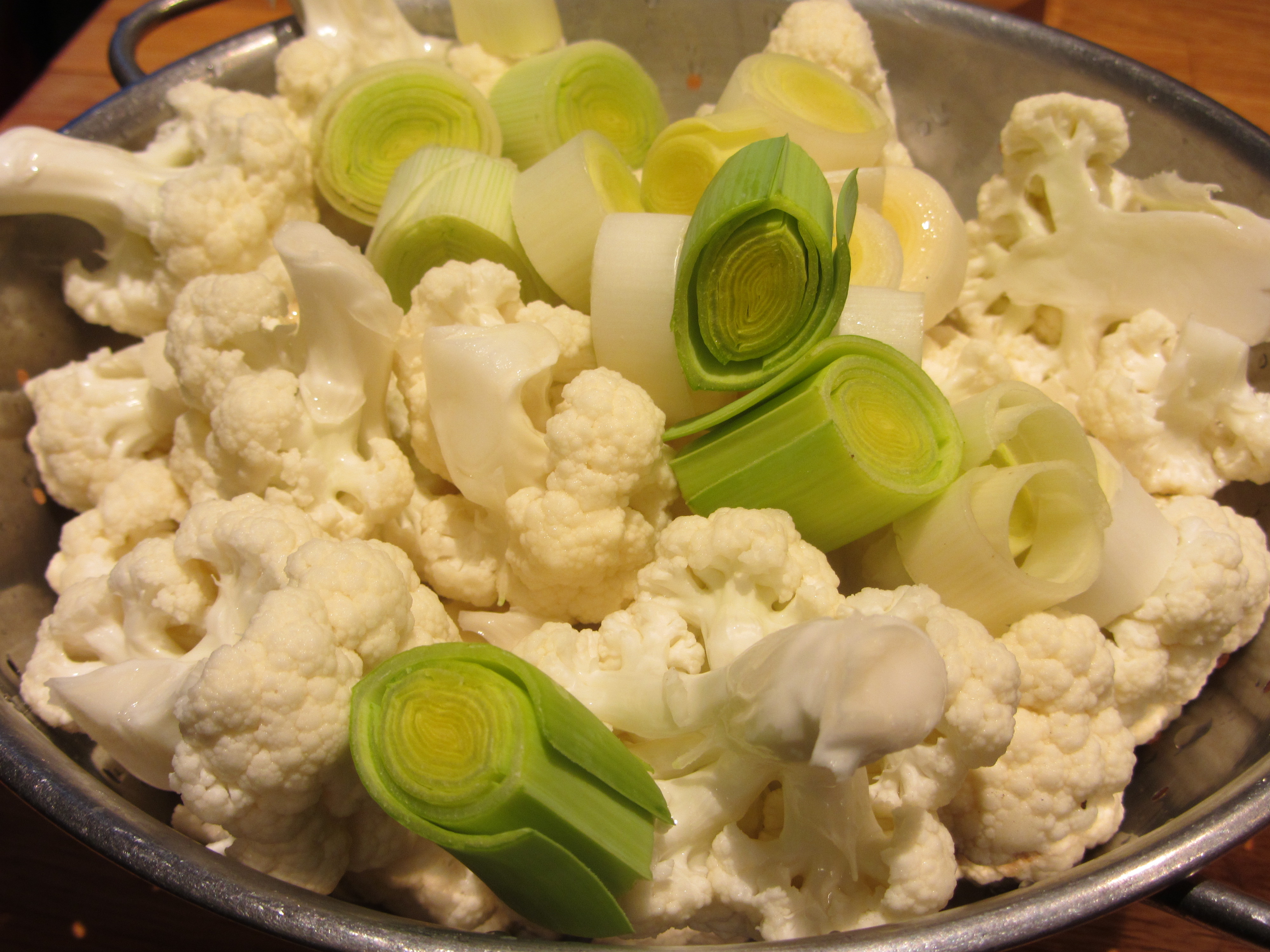
1 cauliflower–separated into bite-size florets

1 leek–cleaned and sliced

3 tblsps cooked chickpeas (from a tin [a can] or bottle–you may not need the whole tin. Spoon out the required amount and drain off any liquid–but no need to rinse.)

salt and pepper

2 tblsps of whisked low/no fat yogurt or coconut cream (my new discovery; more on that in future posts)

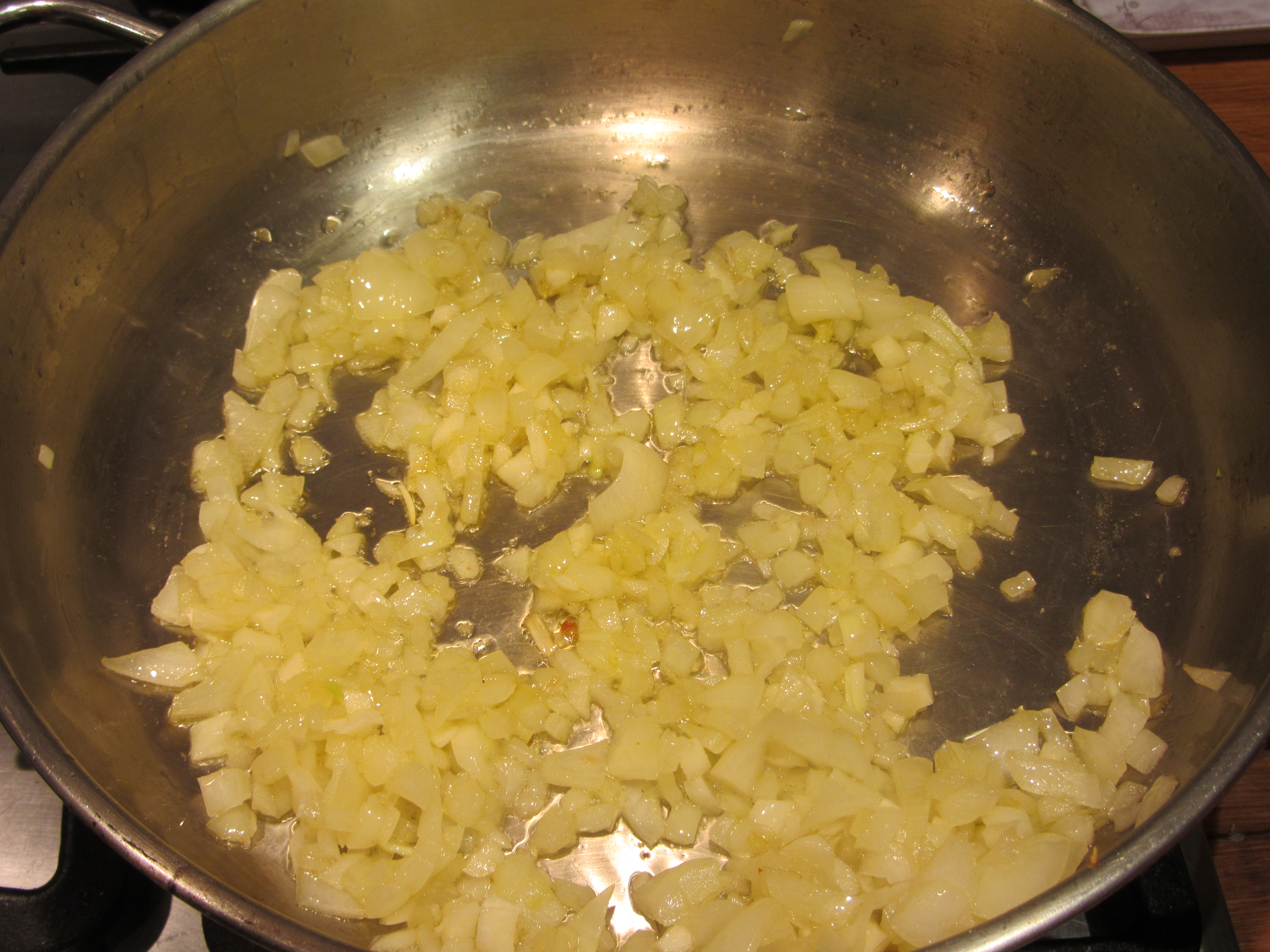
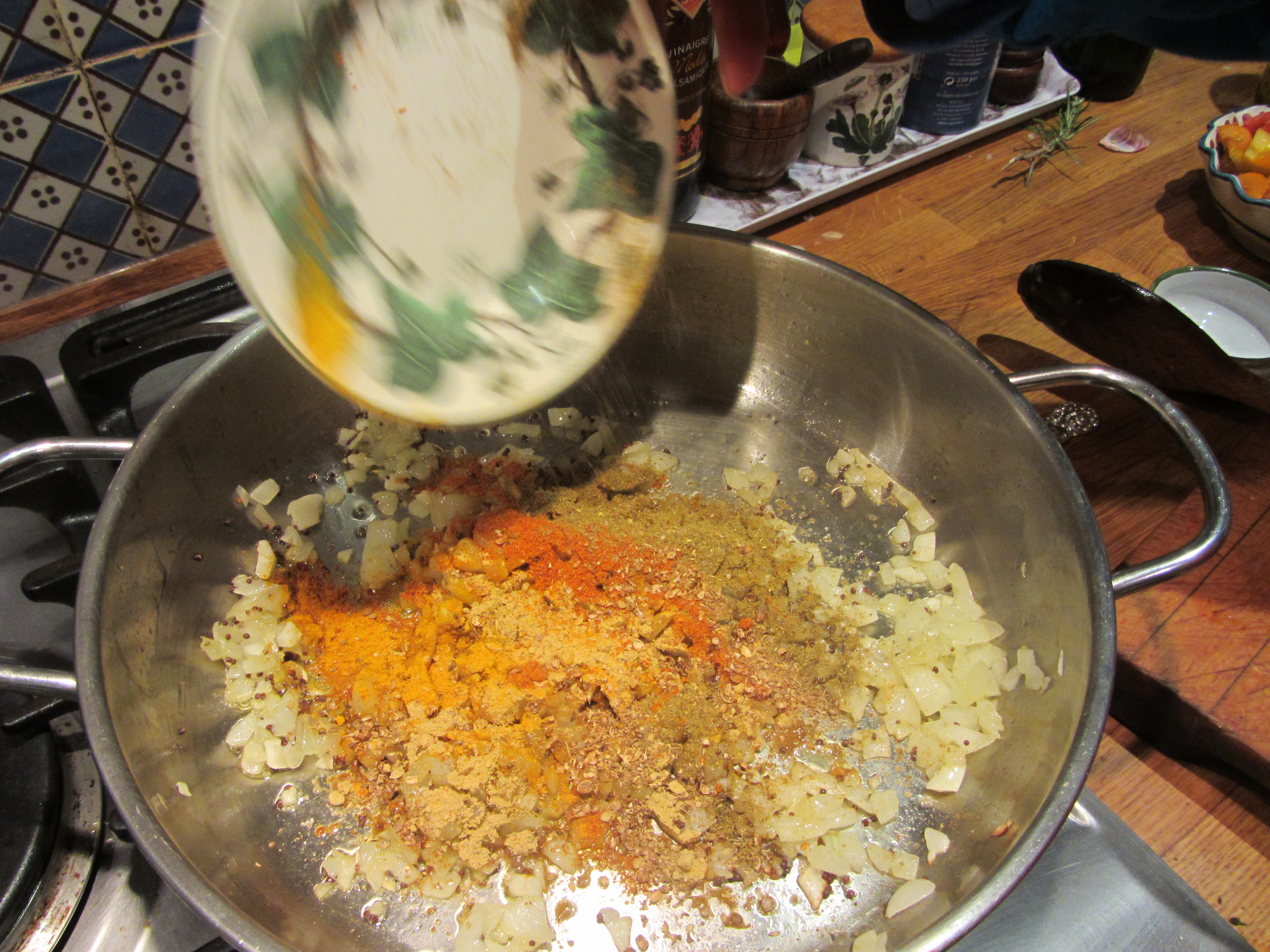
  • Sweat the onion and garlic in the olive oil until they soften and begin to colour.

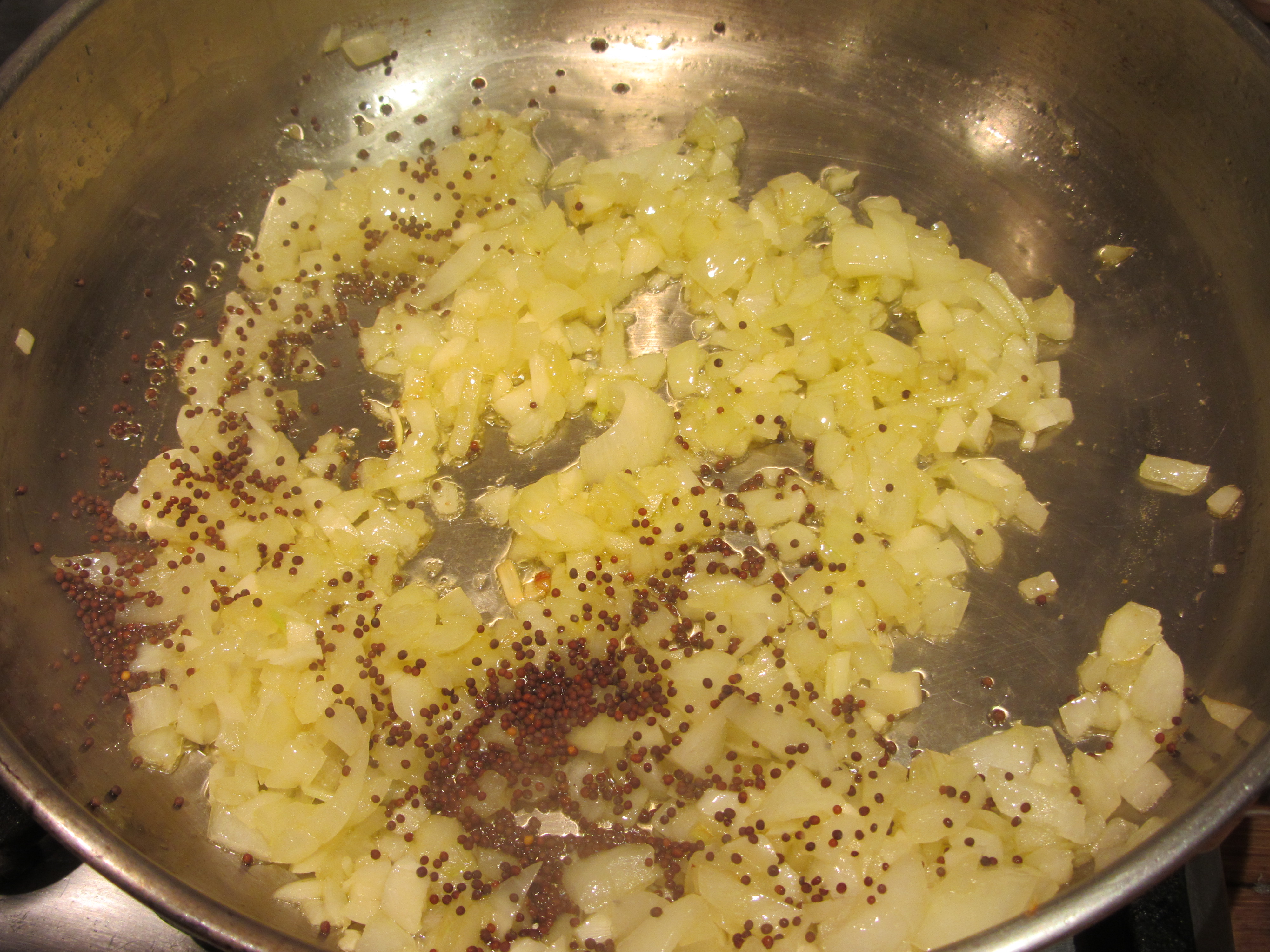
  • Add the mustard seeds and let them cook for a minute.

  • Add the rest of the spices and mix them in.

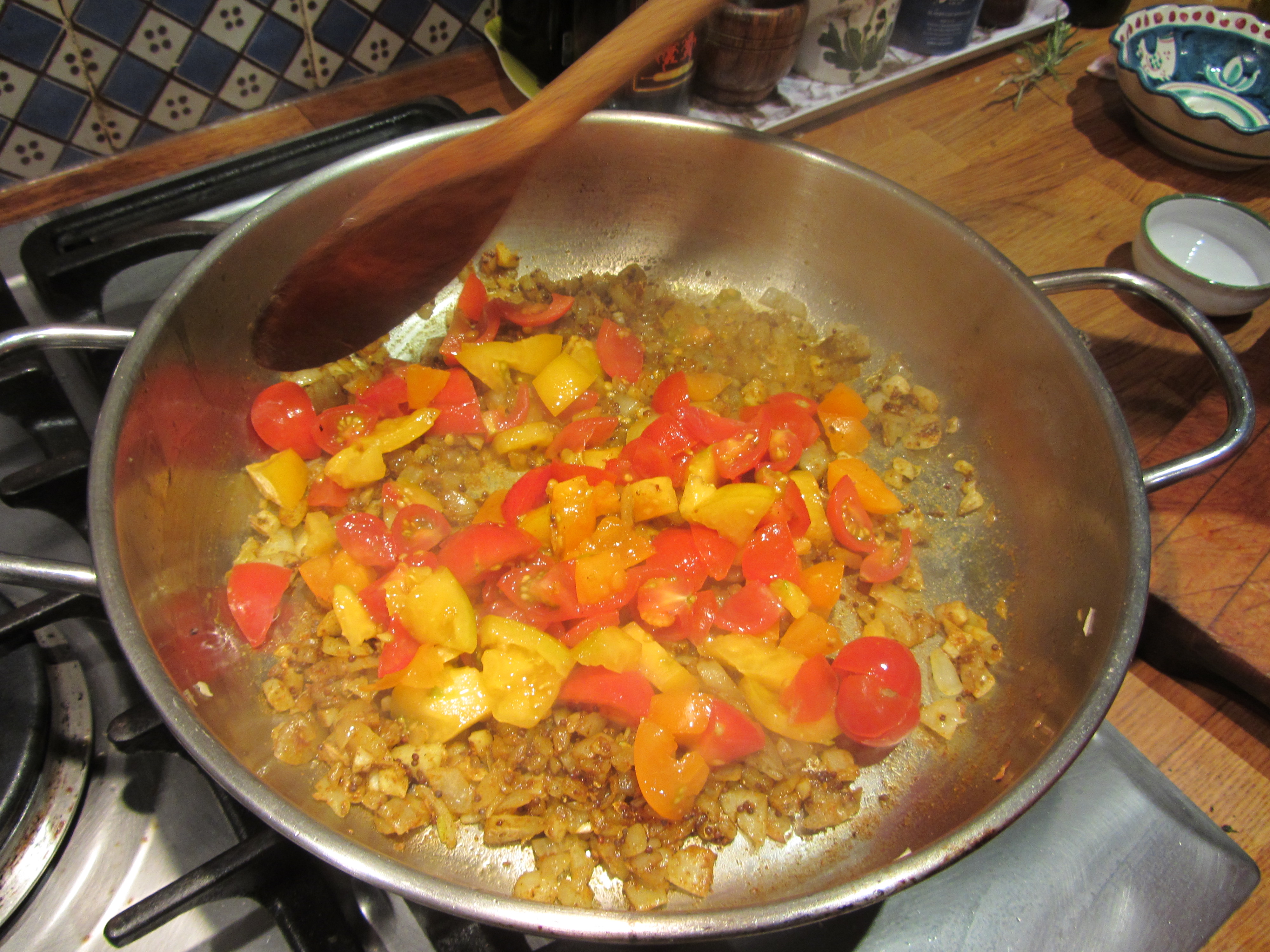
  • Add the tomatoes, stirring them into the spice mix and cook for five minutes to break them down a little and form a sauce.

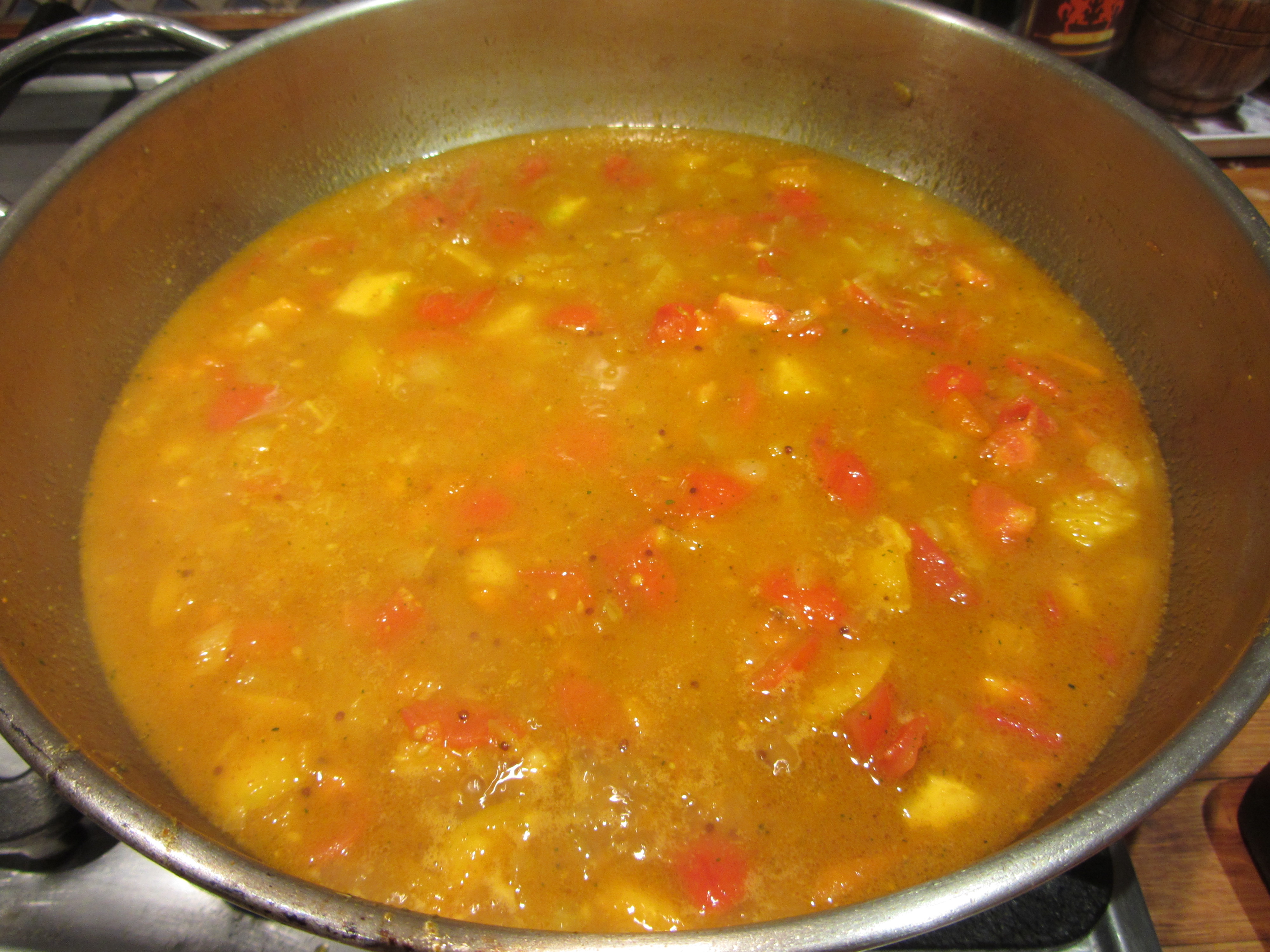
  • Add half the stock and cook for a further 5 minutes–reducing it a little.

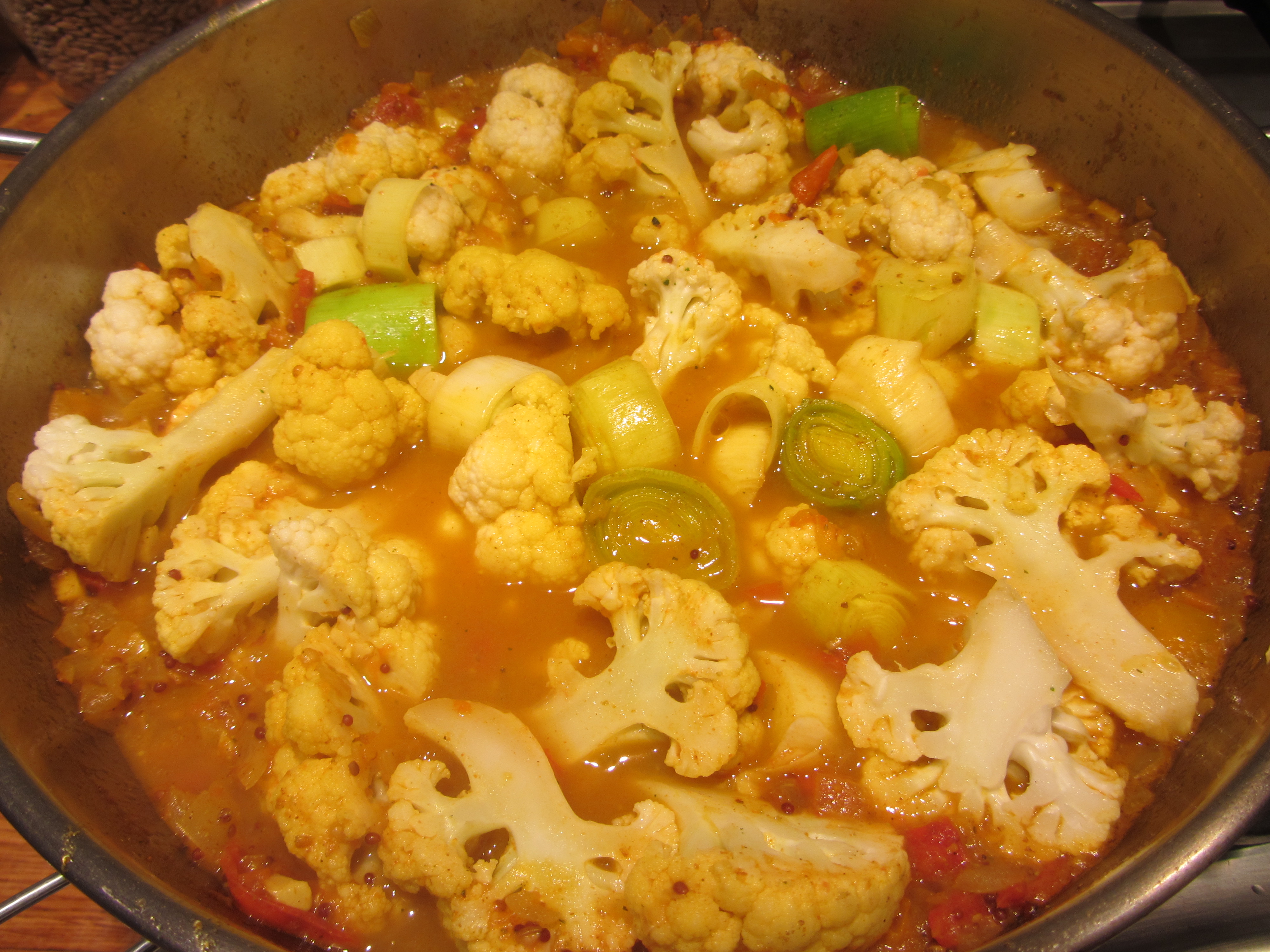
  • Mix in the sliced leeks and the broken up cauliflower–you may find you only need half the head–making sure the vegetables are immersed in the liquid.

  • Cover and cook on a low heat for 30 minutes–checking now and then in case it’s drying up–as it very nearly did for me!
  • (Add more stock as you need and cook on.)
  • Add the chickpeas and cook a further five minutes.

  • When the vegetables are tender, turn off the heat and let it cool down.
  • Fold in the yogurt or coconut cream.
  • Gently reheat to serve over some basmati brown rice.
  • There was a thumbs-up from Meredith as she helped herself to a spoonful more (see above)!

Read Full Post »

Today I sing the praises of the French Health System.

Pre-intervention–ignorance is bliss!

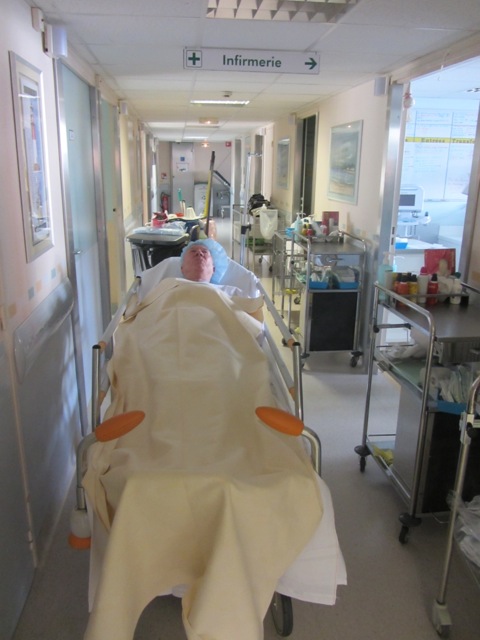
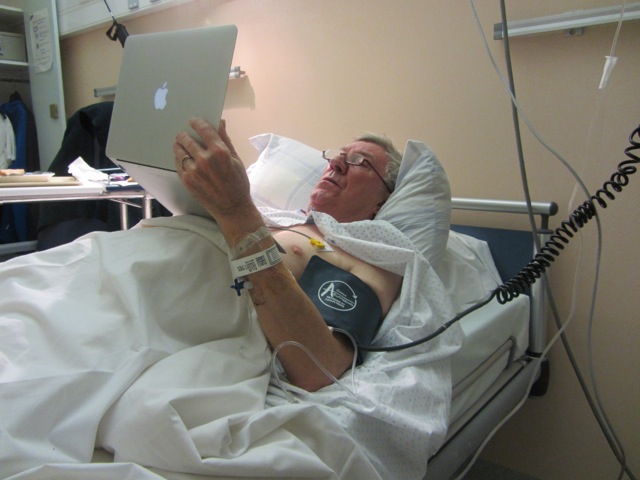
I had an intervention late Tuesday afternoon at the remarkable Clinique Pasteur* in Toulouse and arrived back home, little the worse for wear, just a bit weary–early Wednesday evening.
I was a lucky fellow, though….
The recent cardio stress tests I underwent locally had shown that all was not as it should be–though the extent of what was wrong was not clear on their apparatus.
So Docteur Lefevre, my cardiologist in Castres, decided to send me to Toulouse, where they can insert a solution in the relevant arteries and scan for blockage or damage.

On my way to the theatre–but not the one I’m most familiar with!

This happened early Tuesday evening as I lay naked on a slab, like an oven ready chicken, my right hand tied firmly to the spot, in the cardio theatre of the clinic.
With automatic cameras constantly shifting position over me (like an old fashioned studio shoot for Poldark back in the seventies!) Dr. Assoun made his assessement of the possible problem(s).
After an age–so it seemed–a masked face, with two big eyes, appeared through the sanitary barriers and Dr. Assoun announced quietly that I had a partial blockage in the main artery and two more in subsidiaries and that as I was “presenting well” he was going to insert stents, there and then, to free the blockage and allow the blood to run freely.
Whoopee! I thought–at least I won’t have to go through the tedious indignity of being “prepared for the table” a second time.
Fully conscious, I was determined to remain calm and not move a muscle!
The clanking cameras were on the move again as he started the process of guiding the stents one by one up the artery from my right wrist with the aid of a catherter.
The mind boggles at how medical advances have made this possible.

Well that wasn’t so bad!

Later that evening Docteur Assoun came to my room to reassure me that all had gone to plan.
(The dear fellow blushed when I said what a fantastic job he had done.)
It was only yesterday afternoon just before we left for home that I saw the video, recorded on the clanking cameras, playing out on the TV screen in Docteur Assoun’s office.
There’s my main artery in the “before” version.
A squiggly black tube snaking its way towards the heart. (The black is how the blood shows up.)
Dr. Assoun then points to the “problem”–a small section that was crimped and pale, with a thin black line running through it–a narrowing–a partial  blockage–a danger!
When/if that had closed up–heart attack!
The “after” pictures show a healthy black tube with no pale section.
Why then had I not felt something was wrong?
I had had none of the usual signs–breathlessness on walks or pain in the chest.
The original visit to Docteur Lefevre a month ago was for a ROUTINE check-up.
(Something I had been meaning to do but perhaps unconsciously putting off.)
I am a lucky fellow!
The problem for diabetics, Dr. Assoun says, is that the condition can mask vascular/arterial problems.
This I will investigate with Michel, my G.P. and Docteur Lefevre.
For now this experience has brought home to me the importance of making regular service visits to the heart doctor–just as I do for my eyes and my feet.

Now for a  full bloodied rendition …! (honouring too the staff of the Clinique Pasteur who do Le Systeme Medical Francais proud with their positive, friendly and reassuring manner.)  

Allons Enfants de la Patrie,

Le jour de la gloire est arrivé!                   

[Arise, children of the homeland 

The day of glory has arisen!]

* This quote from Louis Pasteur is the mission statement of the Clinique and is printed on the front of their brochure.

“On ne demande pas d’un malheureux: de quel pays ou de quelle religion es-tu?”

On lui dit: “Tu souffres, cela me suffit. Je te soulagerai.”

(We don’t ask an ill person what country they are from or what is their religion.

We say: “You are suffering, that’s all we need to know–we will ease that suffering.”)


Read Full Post »

« Newer Posts - Older Posts »