Feeds:
Posts
Comments

Archive for the ‘Diabetes’ Category

I’ve decided on single word resolutions for 2012–which beckons.

My first is SIMPLIFY!

Something simple–for New Year’s Eve perhaps…?
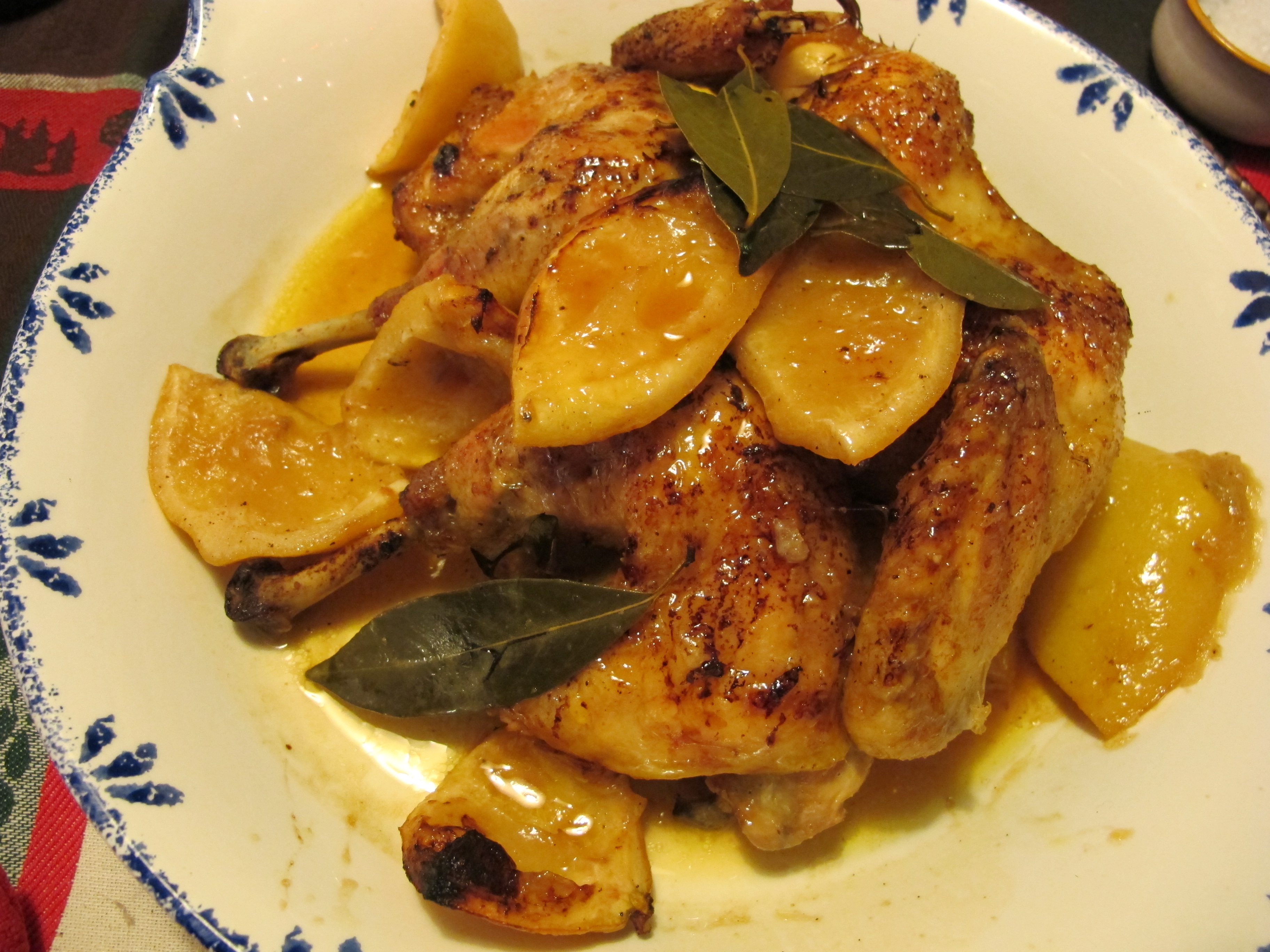
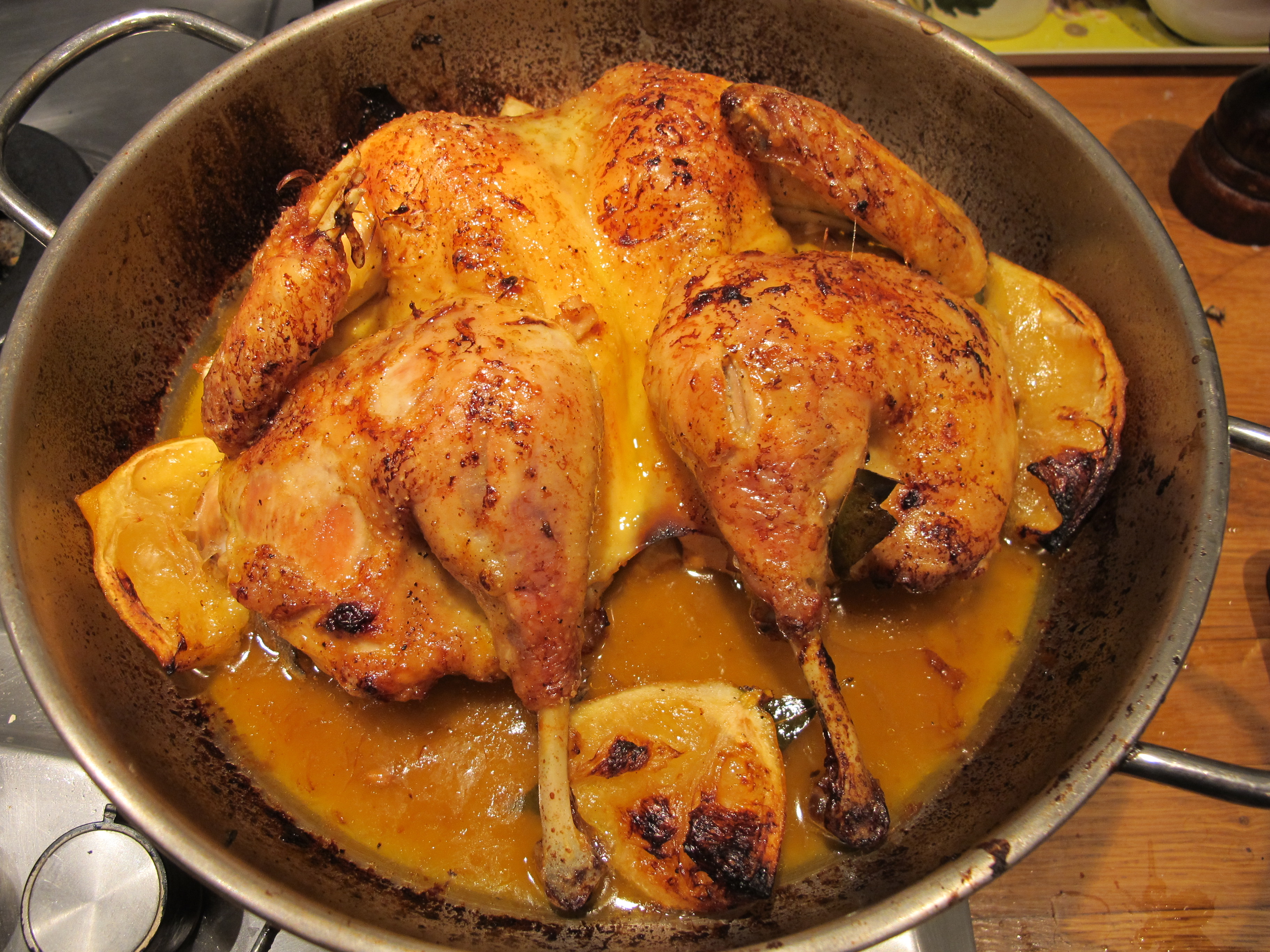
I’m spatchcock-crazy at the moment.

To spatchcock or spattlecock or butterfly is to remove the back and breastbones of a chicken (simply and effectively demonstrated in this video) or any other bird (I just watched someone spatchcock a turkey!) in order to open it up and flattened it out–as you might do a book. This allows the bird to cook more quickly and evenly.

Spatchcocking is an easy and oddly satisfying technique. All you need is a pair of poultry shears or strong scissors and the nerve to try it!  (Or your friendly butcher might do it for you….)

Earlier this week I had two spatchcocked birds in the fridge–a chicken and a guinea fowl–and two recipes I wanted to try.

I took  the guinea fowl out to make this dish–inspired by a recipe in The River Café Classic Italian Cookbook .

We ate it thinking “How good this spatchcocked guinea fowl tastes!“.

The next day I went to the fridge to get the chicken, to marinade it overnight for the other recipe–and found the guinea fowl!

We’d eaten the chicken thinking it was guinea fowl!

I put it down to Christmas fever.

Ideal for serving four people–the bird (whichever comes to hand!) divides easily into quarters thus dispensing with the need to carve.

You could use chicken or guinea fowl quarters instead.

1 chicken--spatchcocked

2 lemons–halved

3 tblsps olive oil

6 bay leaves

salt and pepper

set oven to 200C

While the oven is heating–

  • Squeeze the juice from two lemon halves into a pan, halve them and leave the quartered lemon in the pan with the bay leaves.
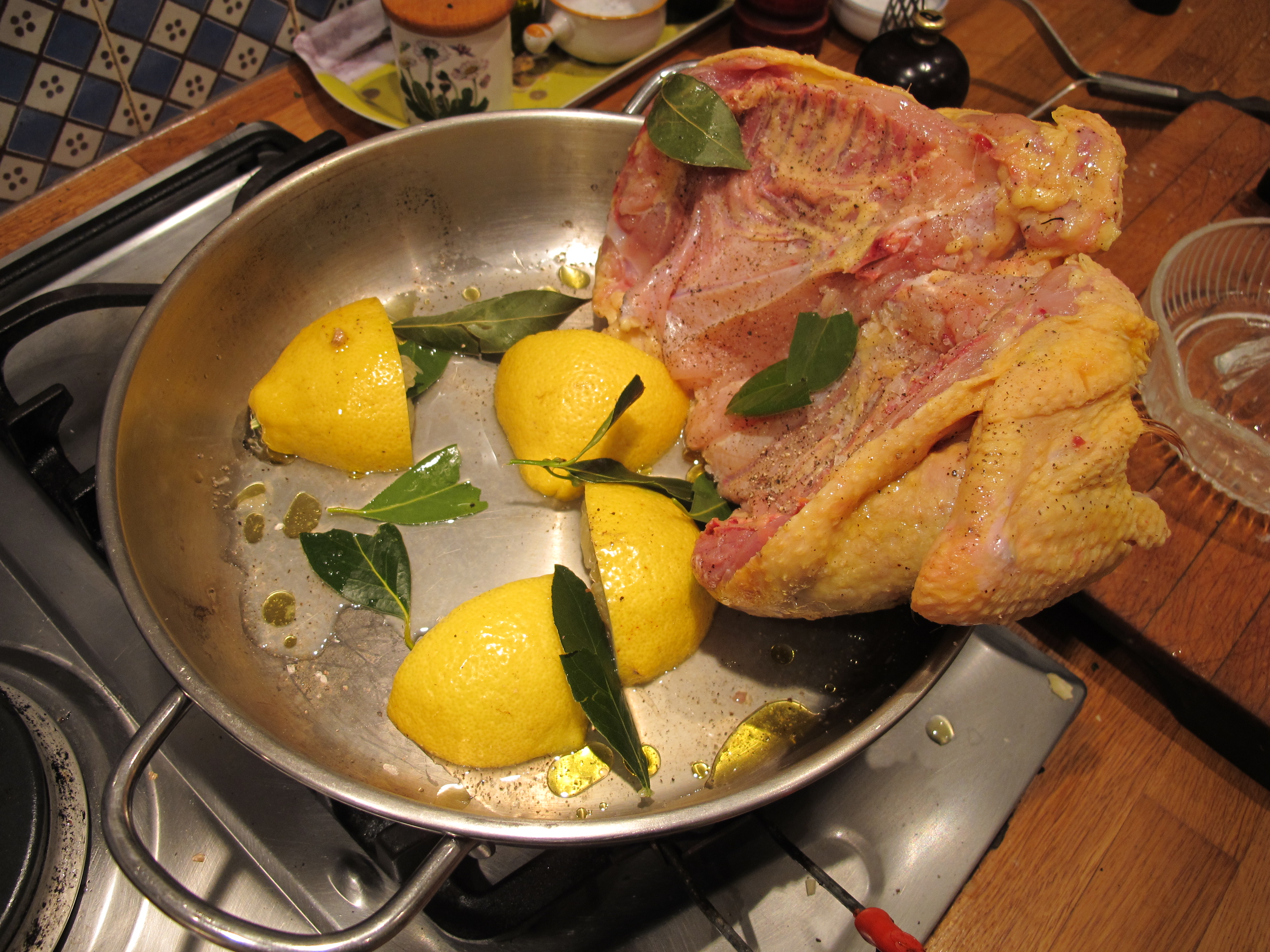
  • Rub the skin of the chicken with the two remaining lemon halves.
  • Lower the spatchcocked chicken over the lemon halves and the bay.
  • Season well and spoon the oil over the chicken.
  • Add the other two lemon halves to the pan.
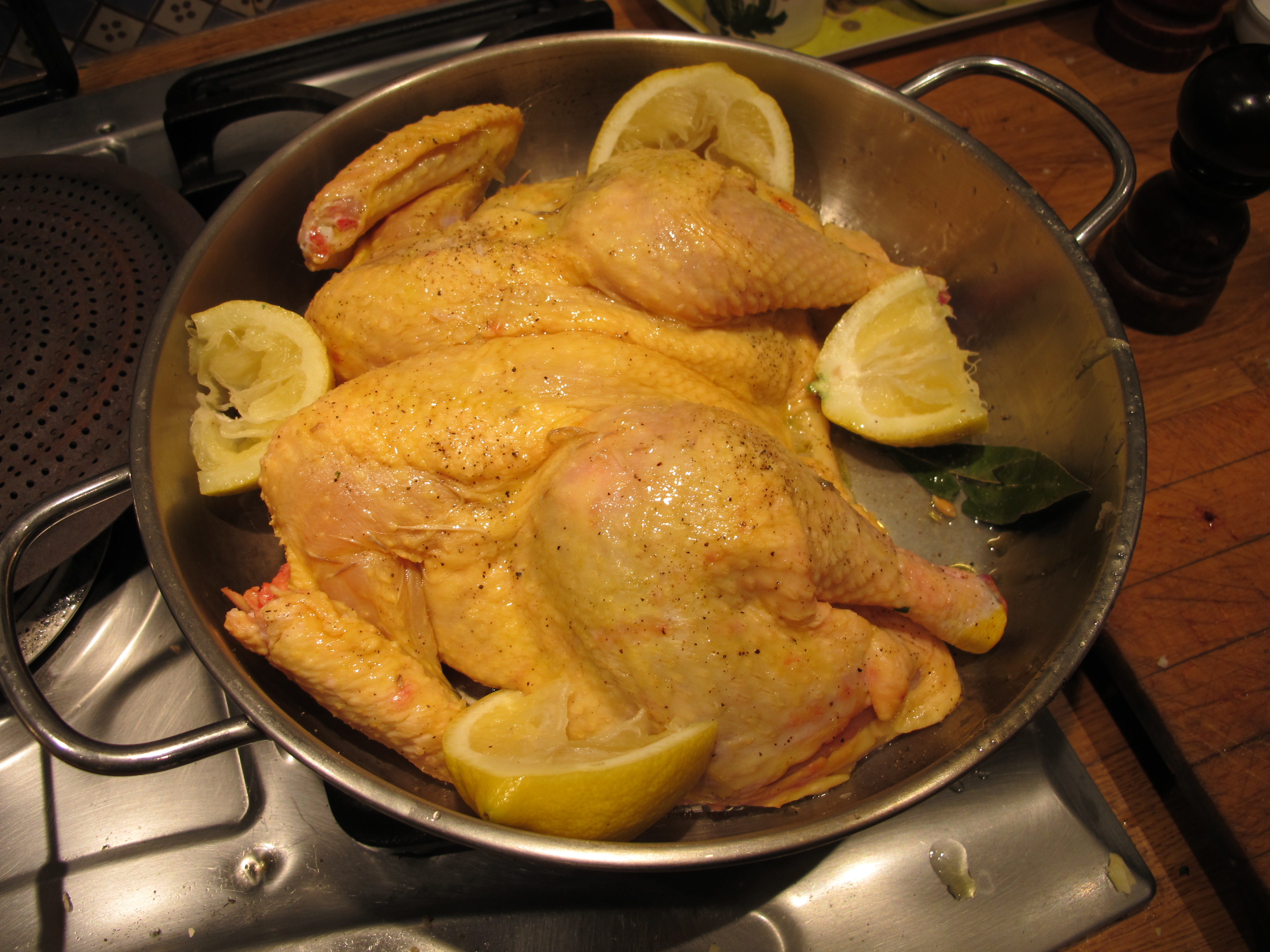
  • Cook–covered–on a low flame for 30 minutes.
  • Uncover, spoon over some of the juice and place in the upper part of the pre-heated oven.
  • Cook on for 40 minutes–checking and basting a couple of times.
Read Full Post »

Read Full Post »

It was the lead story Wednesday morning on BBC Radio 4’s The Today Programme and headlined in the British broadsheet newspapers.


A devastating new report says diabetics in Britain are dying far too early due to poor management of their condition.

This includes not receiving basic diabetic health checks on the NHS,  unhealthy lifestyles and not properly understanding how to take prescribed medication.

The new report urges better education and support for people with diabetes.

Teaching people how to  manage their condition (including exercising and improving one’s diet) reduces the risk of complications.

Education is vital–not just for people with diabetes, but also for friends and loved ones, if they are to provide the necessary support.

 For example,  persuading loved ones to recognise that they are at risk may be problematical:
Fit as a fiddle me–maybe a bit overweight; got to get exercising and cut out the extra chips–going to start tomorrow, honest! Don’t worry about me.
Denial is an easy option and with Type 2 diabetes–not just for the diabetic, but for family and friends–as there are seldom obvious signs and symptoms early on.
With no family history of the condition, for instance, why would you go for a blood test when you feel more or less “on form”?  Why put yourself through the stress?
Well, an estimated 800,000 (!!) Brits have diabetes but DON’T KNOW IT!
You could be one of them.
A simple blood test will tell.
None of this is easy on one’s own.
Family and friends can play a vital role.

I was lucky–I was diagnosed with Type 2, inadvertently one could say, thanks to a friend.

An old schoolmate convinced me to have a blood test for prostate cancer, after he’d been diagnosed with it.

My blood test was clear for cancer–but it turned up higher than normal glucose (sugar) levels in my blood. A second test six months later confirmed the diagnosis of Type 2 diabetes.

In a way I was doubly lucky.

My mother had Type 1 diabetes (injecting) for 30  years; I knew from watching her struggle that I had to take my own predicament seriously.

The support of friends and family is important.

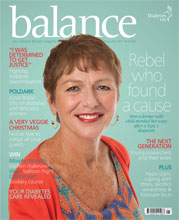
In a recent interview for Diabetes UK‘s Balance Magazine I was asked :

What would you do if you were head of NHS Diabetes Services for a day?

I’d have a day for the partners of people with diabetes. There’s a lot of ignorance around and more people need to learn about the condition.

Read Full Post »

Balance ” is the in-house magazine of Diabetes UK. It is well produced, readable, informative and is available on-line.

I’m interviewed in the latest edition.

Read Full Post »

World Diabetes Day

Today is World Diabetes Day-celebrated on the birthday of Dr Banting one of the team that discovered INSULIN–and Diabetes UK are calling on people with diabetes to take action on the 15 measures of care…and spread the word:

Please pass the checklist on to any family members, friends and colleagues who may have the condition to help us ensure the 2.9 million people with diabetes in the UK receive the care they need to stay healthy.

1

Get your blood glucose levels measured.

You should have an annual HbA1c blood test to measure your overall blood glucose control.

2

Have your blood pressure measured.

You should have your blood pressure taken and recorded at least once a year.

3

Have your blood fats (cholesterol) measured.

You should have an annual blood test to measure your cholesterol level.

4

Have your eyes looked at.

You have the right to have your eyes screened for signs of retinopathy every year.

5

Have your legs and feet checked.

The skin, circulation and nerve supply of your legs and feet should be examined annually.

6

Have your kidney functions monitored.

You should have two tests for your kidneys each year.

A urine test checks for protein – a sign of possible kidney problems – and a blood test measuring the rate at which blood is filtered by the kidneys.

7

Have your weight checked.

You should be weighed and have your waist measured to see if you need to lose weight.

8

Get support if you are a smoker.

You should receive advice and support on how to quit.

Having diabetes already puts people at increased risk of heart disease and stroke and smoking further increases this risk.

9

Receive care planning to meet your individual needs.

You live with diabetes every day so you should have a say about every aspect of

your care.

10

Attend an education course.

You should have the chance to attend an education course to help you understand and manage diabetes. There are courses for Type 1 and Type 2 diabetes, such as DAFNE, DESMOND, X-PERT

and DYFFD.

11

Receive paediatric care if you are a child or young person.

You should get care from specialist diabetes paediatric healthcare professionals. When

the time comes to leave paediatric care, you should know exactly what to

expect so you have a smooth change over to adult health services.

12

Receive high quality care if admitted to hospital.

If you have to stay in hospital, you should still continue to receive high quality diabetes care from

specialist diabetes healthcare professionals, regardless of whether you have been admitted due to your diabetes or not.

13

Get information and specialist care if you are planning to have a baby.

Having a baby means that your diabetes control has to be a lot tighter and

monitored very closely.

14

See specialist diabetes healthcare professionals.

Diabetes affects different parts of the body.

To help you manage your diabetes, you may need to see or be referred to specialist professionals such as an ophthalmologist, podiatrist or dietitian. Diabetes UK believes that you should have the opportunity to see a specialist if and when the need arises.

15

Get emotional and psychological support.

Being diagnosed and living with diabetes can be difficult. You should be able to talk about your issues and concerns with specialist healthcare professionals. Being happy as well as healthy is really important.

Read Full Post »

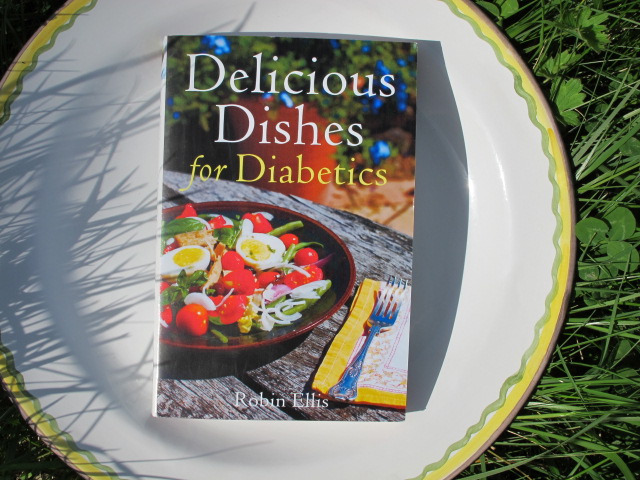
This blog, was set up at the end of January 2011 to help promote my book of recipesDelicious Dishes for Diabeticswhich was published on the 4th of August in The UK and on November 1st in the USA.

Today I’m publishing my 200th post!

To mark the  occasion, here’s a review of the book we discovered yesterday on an interesting site targeted at book lovers:

Delicious Dishes for Diabetics

Robin Ellis (Author)

Better known for his role as the dashing Captain Ross in the 1970s BBC series ofPoldark, the writer having been diagnosed with Type 2 diabetes was determined to manage his condition through life style changes rather than medication.

This is a very well written, visually attractive, concise cookbook, which appeals to diabetics and non-diabetics alike. It is organised in clear sections, from Soups in Section 1, through to Grains and Pulses in Section 11.

Instead of the usual photos of dishes, there are enchanting illustrations instead.

The recipes are tantalizing; Farinata (Pancake), Comfort Lentils and Caponata, to name just a few. My only criticism is that a few healthy puds or cakes could have been included as there is no sweet section.

The book is based on the ‘Mediterranean’ diet; plenty of fresh fruit and vegetables, whole grains, fish etc.

It really appealed to me, firstly being vegan vegetarian and secondly with Type 2 diabetes in my family. This book would make an ideal gift.

Reviewed by: Alison B-Hill – Bradford

How did I come to write a cookbook?

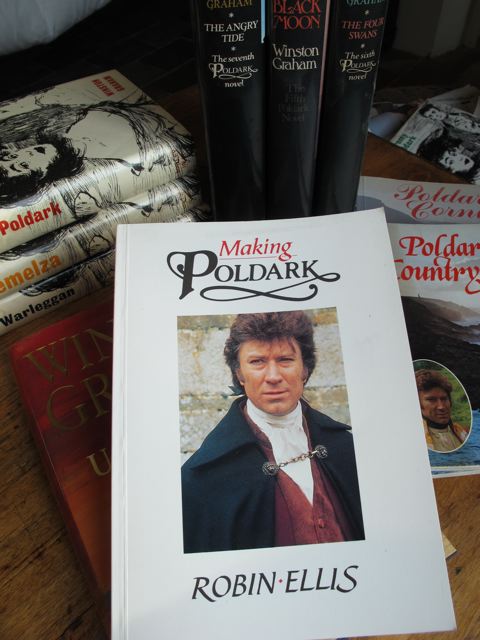
I tell that story in my updated memoir, Making Poldark.

That slim volume is being republished later this year, to coincide with the release in American of the boxed set of Poldark dvds by Acorn Media. I thought I’d share an excerpt of the new chapter with my blog readers….

“Why don’t you write a cookbook Robin?”.

A cookbook? That’s a bit of a leap!

I liked to cook—in fact that’s mainly what I did now.

Twice a day I cooked (still do)—lunch and dinner–and did the marketing.

But a cookbook…?

Weren’t there too many cooks writing too many cookbooks?

And I wasn’t a professional.

It was flattering that friends suggested it though.

My resistence stayed firm for some time–for a few years in fact. I was happy cooking for Meredith and friends who came to visit.

I continued collecting recipes and pasting them in a red foolscap notebook—Ma had done the same in a blue one. We clearly shared a compulsive urge to look for recipes that work.

Brother Jack and sister-in-law Christine kept my bookshelves up-to-date with the newest cookbooks—as did friends who knew I’d be delighted with any new addition.

The pressure was growing though!

When Meredith noticed me writing up a few recipes for the fun of it, she began to say at lunch and dinner tables, “Robin’s writing a cookbook”!

“Really–what a good idea!”

“Um—yes. I’m enjoying it—we’ll see….”

Then on subsequent visits the first question to me was:

“How’s the cookbook going, Robin?”

“Um–fine thanks–slowly.”

About four years ago I’d started working with a laptop—more practical than the desktop in my office.

One afternoon I found myself sitting in the shade under the trees in the garden, experimenting with an introduction to the putative book!

Clearly I had started believing in the idea myself.

The following summer a friend emailed me from her home in the Basque country asking for recipes. She knew I liked to cook, and was too busy working to do much searching for new dishes.

It was a tipping point.

I realised I had a range of interesting recipes ready to send off.

These later formed the basis of the collection that Meredith packaged up to send to potential publishers, testing the waters.

The response was friendly but unproductive.

Unless you are a TV chef/cook or have a current celebrity profile, it is hard to interest that cash-strapped world.

It is tough out there.

Meredith then had a brainwave. It was obvious in a way, but one doesn’t always see clearly what is staring you in the face. 

There was nothing in the proposed book that I didn’t eat on a daily basis and I had been diagnosed 10 years earlier with type 2 diabetes. Meredith ate the same meals as me and didn’t feel deprived. This could be a book of everyday eating for diabetics that the entire family could enjoy too.

The title came later.

Delicious Dishes for Diabetics.

Read Full Post »

In 1981  (30 years ago) The AJCN

The American Journal of Clinical Nutrition

published a paper by Canadian Dr.  David Jenkins  (University of Toronto), which was to have a profound effect on the ability of people living with diabetes to make better choices of what they eat on day to day basis.

It established the Glycemic Index a measure, on the scale of 1 to 100, ranking carbohydrates according to their effect on our blood glucose levels and thus their post-meal impact on a malfunctioning system.

It was followed by the Glycemic Load which is a measure of the impact of the glucose in a single portion of food.

Dr Jenkins is interviewed in the latest newsletter of GI news.

Dr Alan Barclay charts in the same news letter the progress made in studies of GI and GL since 1981 .

GI started a world-wide glucose revolution, he states, as it clearly showed that carbs didn’t affect our blood glucose levels the way we thought they did–freeing people with diabetes from overly restrictive diets.

Despite controversial beginnings, the GI is now widely recognized as a reliable, physiologically based classification of foods according to their postprandial glycemic effect.

I have found the GI and the GL essential guides to everyday eating. Though I now take a pill a day, I credit them with allowing me to control the condition for six years without medication. 

Read Full Post »

HOORAY!

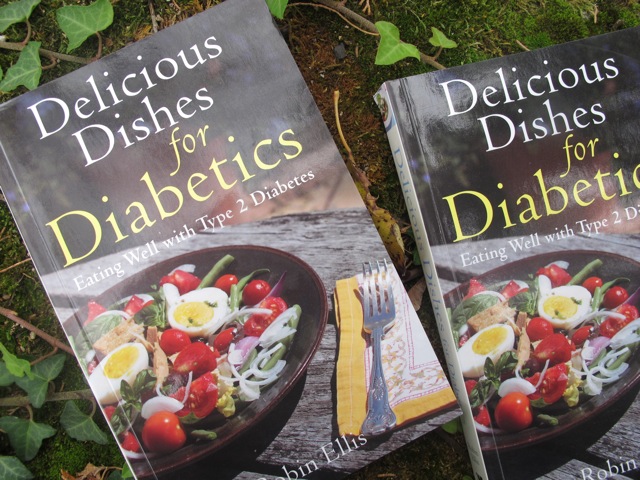
Delicious Dishes for Diabetics is launched officially in America today, with a different subtitle:

Eating well with Type 2 Diabetes.

If you have no local bookstore you like to support–you can find it

Read Full Post »

In yesterday’s post I said we’d stopped eating Ismail Merchant’s Claverack Carrot soup, after I was diagnosed with type 2 diabetes– “because of the potatoes and carrots in it”.

Shelagh, in a comment this morning, asked whether it was the sugar content of the carrots that was the problem.

Twelve years ago, when I started reading up about the effect of certain foods on blood sugar levels, carrots featured in the “better not to eat” column in much of what I read.

I have avoided them ever since.

Shelagh’s question prompted me to do some research this morning and I found that carrots are “off the hook” now, in terms of the glycemic index and glycemic load–which measure the effect of various foods on blood sugar levels.

Debunking the carrot myth
Raw or cooked, carrots are good for you and they won’t send your blood glucose on a roller coaster ride. End of story. Why? Well, not only are they a low GI food (41), they have very few carbs. In fact, to get a hefty portion of carbs from carrots you’d have to crunch through at least 5 cups or 750 g (about 1½ lb) at a sitting – a pretty awesome achievement even for carrot lovers.

[From GI News the newsletter of the Glycemic Foundation]

Their GL–glycemic load or carbohydrate per portion–-is very low.

In other words they are OK for diabetics–-eaten in moderation as with everything!

I have been a bit behind the curve on this and it’s good to catch up!

Regular potatoes though are definitely NOT off the hook–in particular mashed potatoes and chips (fries).

Sadly Ismail’s recipe for carrot and ginger soup is still “off the menu” for me!


Read Full Post »

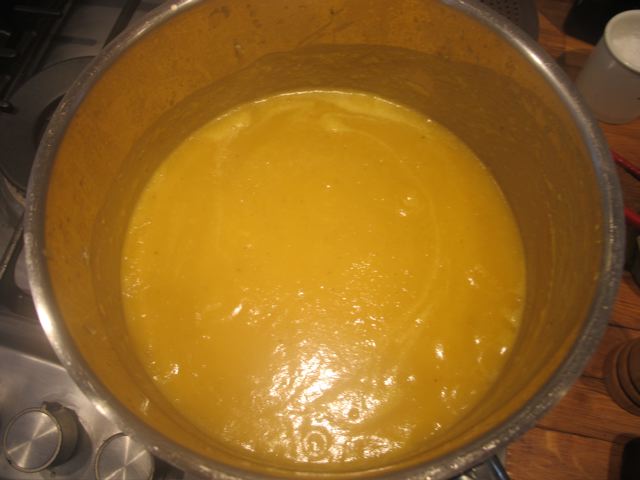
We tasted this new soup for lunch.

When Dianne P. from New Hampshire posted her memorable photos taken 33 years ago, in autumn of 1978 on the set of The Europeans in New Ipswich, New Hampshire on Flikr last night, it put me in mind of the late Ismael Merchant’s cooking.

He was the producer half of  Merchant/Ivory productions–Jim Ivory is the director of their movies.

I played the frustratingly “unable to commit” Robert Acton, opposite the much lamented and talented Lee Remick, in their film of Henry James’ novella.

Ismael was a wonderful cook and would sometimes use his talent to smooth the ruffled feathers of nervous creditors when the film threatened to overrun.

One of his curry feasts, I remember, bought us enough time to finish the film!

There’s a soup in his book Indian Cuisine called “Claverack Carrot Soup“.

We used to have it often, but after I was diagnosed with type 2 diabetes, it came “off the menu”, because of the potatoes and carrots in it.

I had some fennel and a sweet potato I wanted to use and a nobly piece of ginger–and autumn has  arrived with the clocks going back;  so I thought I’d experiment–with a nod to Ismael and thanks again to Dianne!

1 medium onion–chopped roughly

1 tablespoon of olive oil

12 oz of cleaned and chopped fennel

12 oz of peeled and chopped sweet potato

1 clove of garlic–chopped fine

a thumb-nail size piece of  fresh ginger–peeled and chopped fine

1.5 pints of stock–I use organic vegetable stock

a little single cream or yogurt to swirl on top in each bowl

Salt and pepper

for 4

  • Heat the oil in a large saucepan and add the onion.
  • Soften it for 10 minutes without browning it.
  • Add the fennel and the garlic, mix it in with the onion and gently sweat the mixture–covered–for 15 minutes.
  • Add the sweet potato and the ginger, mix it in and sweat–covered–for a further 15 minutes.
  • Season the mixture–keeping in mind that the stock will have salt in it.
  • Add the stock and cook it for another 10 minutes–uncovered.
  • Let the soup cool for a few minutes before liquidising it.
  • I use a hand-held liquidiser/blender.
  • Serve hot with a swirl of cream or yogurt on top.
  • Meredith thought a single piece of crispy bacon for each bowl would be good too–we’ll try that next time.

Read Full Post »

« Newer Posts - Older Posts »