Feeds:
Posts
Comments

Archive for the ‘Recipes’ Category

…Meredith says, as she comes into the kitchen from the courtyard, clutching a plastic flower pot with 4 eggs nestling at the bottom.

“Omelettes!”.

“Where did you find them?”

“In the pigeonnier!”
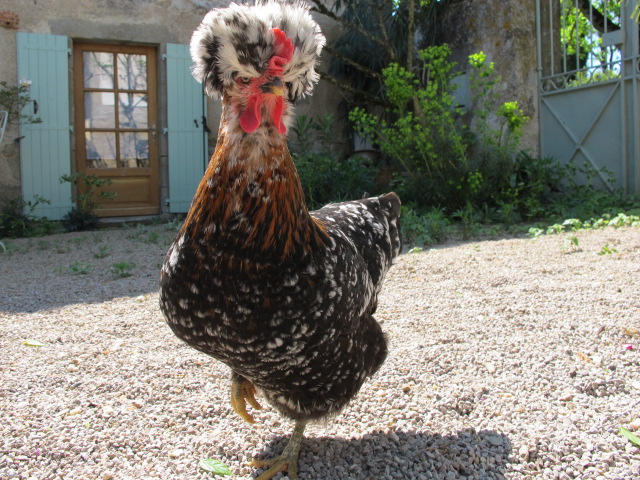
Madame Arcarti*, our eccentric-looking hen,

has been keeping her ‘laying’ spot a secret since she ended her brooding marathon a couple of weeks ago. She’d sat on potentially fertile eggs brought over by our neighbour Flo for well over a month–to no avail.

This instinct to hatch out the young chicks is impressive, but borders on the obsessive. In the end–fearing for her well being (she barely took time out to eat)–Meredith gradually reduced the number of eggs available until there were none and our hen resumed her other instinct–which is indiscriminate weeding in the garden.

We began to wonder where she was laying, since there was no sign of an egg in the little hen house, one of her usual dropping zones!

Sketch by Hope James, illustrator of my cookbook

The pigeonnier, on the corner of the courtyard, is where three visiting hens, parked with us over the winter, had done their laying.

They are now happily relocated a few miles up the road, but Madame Arcati hadn’t forgotten!

Omelette with cheese and herbs

( from my book Delicious Dishes for Diabetics)

for 1

2 free range eggs

a little olive oil or butter if you prefer

1 tablespoon freshly grated parmesan

a pinch of fresh herbs–chopped fine; parsley, sage, rosemary, thyme, mint, tarragon, chives–any one of these or a mixture

salt & pepper to taste

Heat your omelette pan gently before adding the oil or butter.

It should be hot when you add the eggs.

Whisk the eggs lightly in a bowl.

Add a little salt and pepper and a pinch of the herbs.

When you are ready to make the omelette add the oil or butter to the hot pan. (I always use olive oil.)

Add the egg mix and cook over a high heat.

With a wooden spoon tack round the circumference of the egg mix, releasing a little of the liquid each time to build a quilt-like texture to the cooking omelette.

Sprinkle on the cheese

Take the pan off the heat when you have a creamy and scrummy looking item that looks just cooked.

Fold it over as you like, sprinkle extra parmesan over it and serve immediately.

A green salad is all you need with it.

* Madame Arcarti is named after the meddling medium from Noel Coward’s play Blithe Spirit–played so memorably in the film by Margaret Rutherford.

Read Full Post »

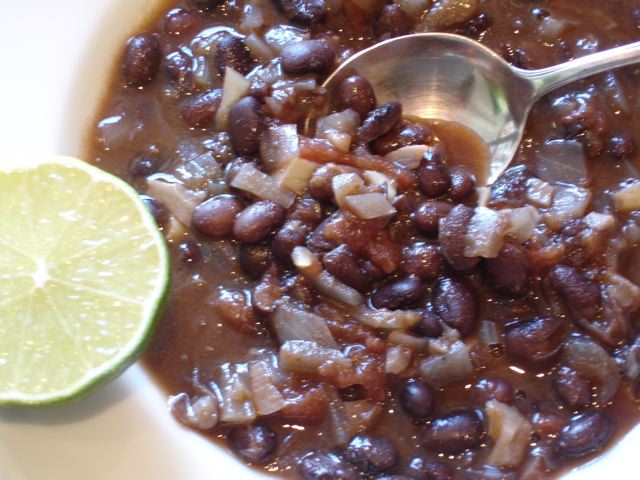
I ate my first bowl of black bean soup here in February 1974.

Joe Allen restaurant, 326 West 46th St. NYC

The Actors Company (http://www.mckellen.com/stage/index6.htmwas performing at the Brooklyn Academy of Music (BAM) for five glorious but freezing weeks. After the performance each night we would get on the subway at Flatbush Avenue and ride back into Manhattan to eat late.

Joe Allen in the theatre district was a favourite stop. It was reasonably priced and at that time of night packed with fellow actors, noisily “coming down” from “the show”. It was heaven!

Their french fries and the black bean soup were favourites; they were cheap and helped restore the energy level after a three hour performance.

 The version below of this classic soup is adapted from one presented by the British food writer, campaigner and cook, Hugh Fearnley-Whittingstall.

1/2 lb black beans–soaked for 8 hours (discard water afterwards)

(Soaking the dry beans doubles their weight–so if you’re using tinned beans, you need 1 lb/400 gm.)

If you have time it’s worth using dried beans; the water they cook in makes a tasty base for the soup stock.

serves 6

1 tablespoon olive oil

2 onions–chopped small

4 garlic cloves–peeled and chopped

1 small fresh red chili–seeds removed and chopped

1 teaspoon cumin powder

1 teaspoon coriander powder

16 oz/4oo gm tin of tomatoes–chopped with their juice

1 pint/500 ml of the bean water, to which you add an organic vegetable stock cube dissolved in 4 floz/100 ml of water or 600 ml organic vegetable stock

salt and pepper

Juice of a lime–if you have one

Drain and rinse the beans.

Put them in a saucepan with enough water to cover by a couple of inches.

Bring to the boil and cook at a simmer until tender–about 30 minutes.

Meanwhile, heat the oil in a saucepan and sweat the onions for about 10 minutes until they are soft.

Drain the beans (saving the water for later).

Add the beans, garlic, chilli and the spices to the onions and cook on for a couple of minutes.

Mix in the tomatoes and the stock.

Bring the soup to the boil and let it simmer gently, covered (it can become too thick if left uncovered), for 30 minutes.

Season well with salt and freshly ground black pepper.

I’m going to leave it unliquidised this time –but you can liquidise it all to a smooth finish or liquidise just half of it.

Add a squeeze of lime instead of the more traditional sour cream or yogurt to finish.

Read Full Post »

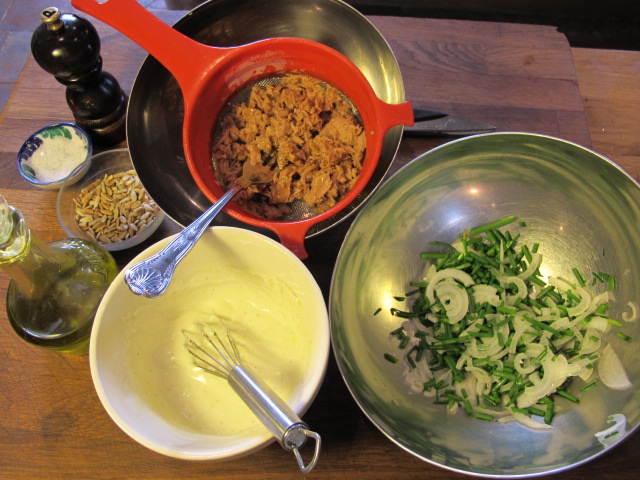
the ingredients--I forgot the sunflower seeds!

This is based on an early Nigel Slater recipe, and is a good standby for lunch–we had it yesterday, when I found very little else in the fridge!


2 small/125 gm pots of non-fat yogurt

1 dessertspoon (for Americans, a scant tablespoon) Dijon mustard

1 dessertspoon white wine vinegar–if you can find it with tarragon all the better

2 dessertspoons olive oil

A small bunch of chives–chopped

A dessertspoonful of spring onions (scallions)–chopped

salt and pepper

190 gm tin of tuna–drained and broken up with a fork–(the amount of tuna is a matter of choice; I reckon about 75 gms each)

1 tablespoon dry roasted sunflower seeds (gently brown the seeds in a small frying pan [with no fat] )

There are two ways of making the non-fat yogurt thicker and more interesting.

If you have a square of muslin, place it in a sieve and the sieve over a bowl.

yogurt in muslin

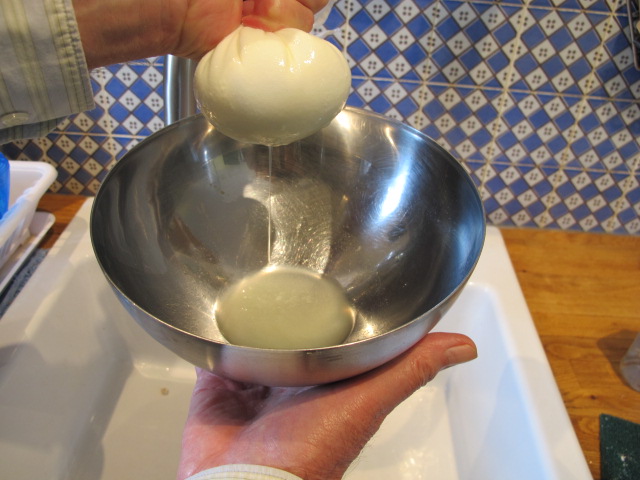
Carefully empty the yogurt into it and–as in the photo–

yogurt ball

gather the material together and gently squeeze out about 60 ml of whey (liquid).

If there’s no muslin to hand, empty the yogurt straight into the sieve placed over a bowl and let the whey slowly drip out for about an hour. (Leave the bowl in the fridge while this happens.)

Meanwhile, empty the tuna into a bowl, add the herbs, the spring onion, the sunflower seeds, a scant tablespoon of olive oil and a twist or two of pepper.

Mix these ingredients together.

When you are ready, discard the whey and put the thickened  yogurt into the empty bowl.

Whisk in the mustard, combining it well with the yogurt.

Add a scant tablespoon of olive oil and the vinegar–blending well.

Season lightly with salt and pepper.

ready to mix...

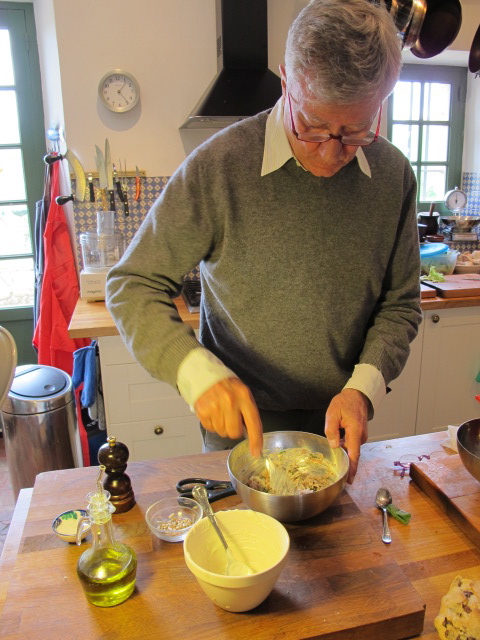
Fold the tuna mix into the yogurt and combine well.

Adjust the seasoning, before

...and mixing.

serving with a green salad.

tuna salad --ready to serve!

Read Full Post »

…which is published on August 4th in the UK and in November in the USA, comes this recipe adapted from one of my favourite British cooks, Nigel Slater.
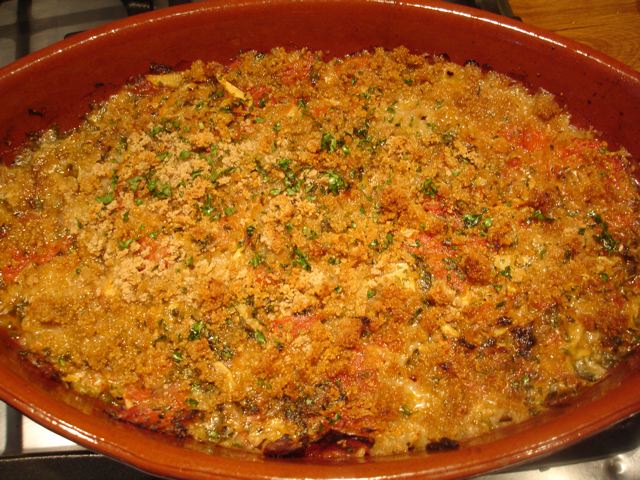
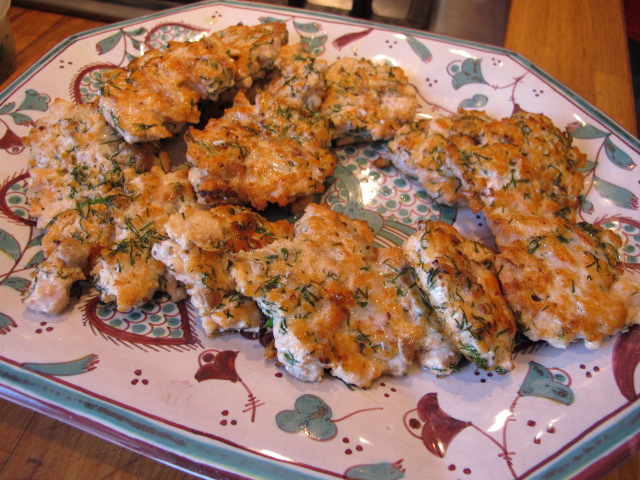
Salmon Fishcakes with dill and grainy mustard

I have always loved fishcakes. Must be the comfort food factor kicking in–but they usually contain 50 per cent potato, not ideal for those like me with type 2 diabetes. This recipe solves the problem by leaving the potato out! The dill and the grain mustard make the fishcakes special. They sometimes serve as a tasty starter, but today with our friend Mitch–who is working here to fix the drainage system at the back of the house–we’ll have them as a light lunch as it’s hot.

If you keep them small and cook them quickly, they’ll be crisp and brown on the outside and still succulent inside.

Yogurt sauce

2 x 125 ml pots low-fat yogurt

1 tsp grain mustard

good pinch of chopped dill (from the main bunch)

salt

The Fishcakes

400 g/1 lb salmon fillet – skinless and checked for bones

white of an egg

1 tbsp chickpea flour – of course, plain flour works as well

1 tsp grain mustard

juice of ½ lemon

bunch of dill – chopped fine

salt and pepper

2 tbsp olive oil

1. Mix all the yogurt sauce ingredients and refrigerate until you

are ready to eat.

2. Cut up the salmon fillets in roughly equal-size pieces. Put

these in a mixer and pulse three or four times. Avoid working

them too much and producing slush at the end. You could

just cut them up in small pieces if this suits better.

3. Put the salmon in a bowl. Turn in the egg white and the flour,

and then the mustard, lemon juice, and the dill. Season with

salt and pepper.

4. It’s a good idea to taste the mix for seasoning at this point –

the dill and the salt should come through.

5. Refrigerate if not using immediately.

6. Heat the oil in a frying pan and using a dessertspoon scoop

out a dollop and make a ball. Put this in the pan and flatten

it gently.

Cook on a medium-high flame, crisping and

browning the outside while making sure the interior cooks

through.

7. Serve with a fennel salad and the mustardy yogurt

dipping sauce on the side.

Meredith goes for the fennel salad!

Read Full Post »

Alice–our mushroom supplier earlier this week–just arrived with a hive full of displaced bees.

“You’d better stay inside, Robin, you might get stung!”

I’m happy to continue having my honey-free breakfast in the kitchen.

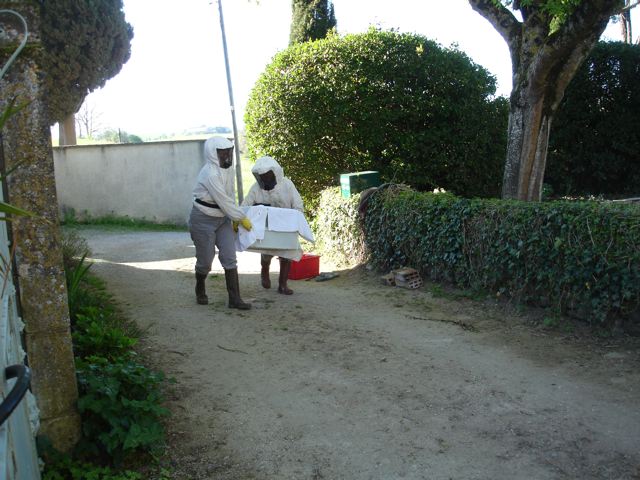
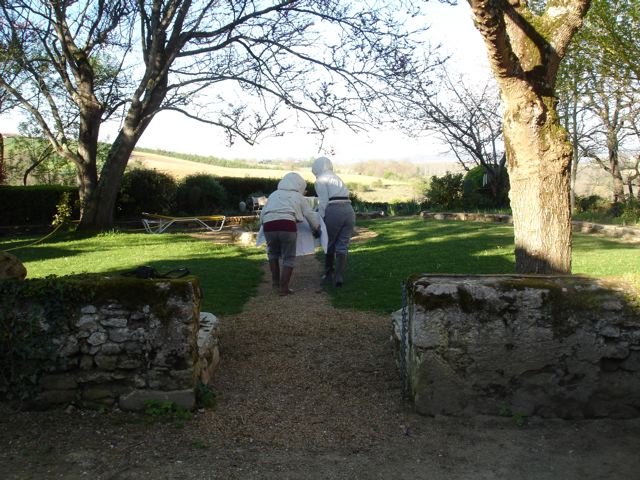
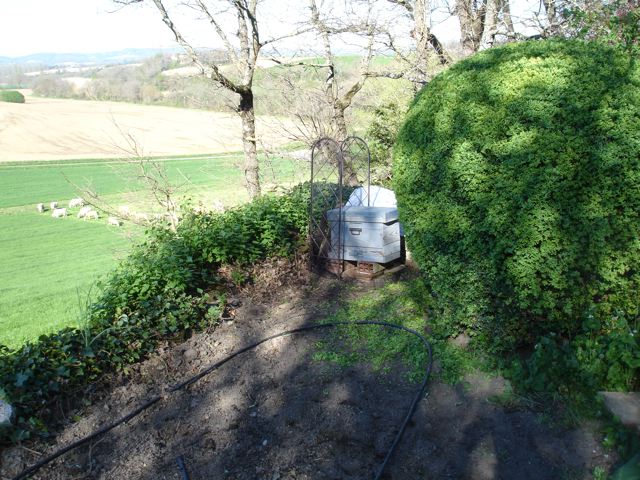
Meredith and Alice, dressed in their protective costumes, carry the box of bees out to the end of the garden.

!

Alice seems confident they will be happy in their new setting–and she is often right about things.

Yesterday she’d brought round another bag of morel mushrooms–‘miffed’ perhaps that I had not followed her advice about using creme fraiche in the cooking of the first lot. (I didn’t have any.)

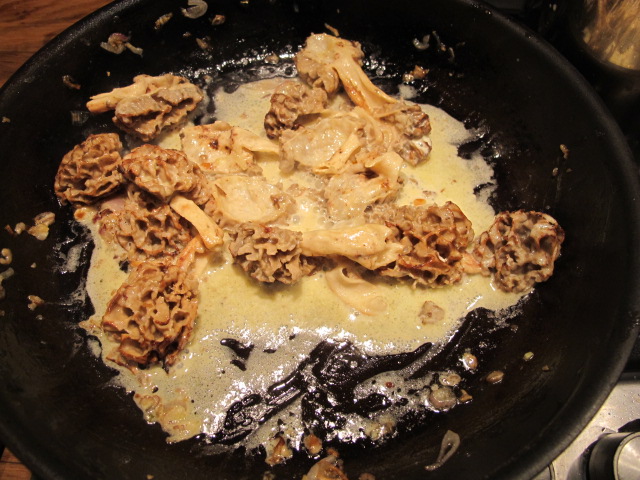
“Has he bought creme fraiche?” she asked. Meredith nodded in the affirmative.”Eh voila!” and left the second bag for supper last night. She was right–they taste good with a tablespoon of cream amd a twist of fresh ground black pepper added to the pan.

morels with cream

She thinks the field across the road will be a rich source of nectar for them this year, with much buzzing contentment.

“The fascinating process of making honey begins when the bees feast on flowers, collecting the flower nectar in their mouths. This nectar then mixes with special enzymes in the bees’ saliva, an alchemical process that turns it into honey. The bees carry the honey back to the hive where they deposit it into the cells of the hive’s walls. The fluttering of their wings provides the necessary ventilation to reduce the moisture’s content making it ready for consumption.”*

Happy bees would be better than discontented bees when I’m working in the tomato patch close by, in a month or two.

The danger zone?

“The vexed question”

Honey promoting web sites are keen to be positive about the vexed question of honey and diabetes, pointing out that it is a better option than sugar and sugar substitutes.

Because honey is generally thought to be health promoting, a little everyday is a good idea–even for people with diabetes, they argue.

* more than you need to know perhaps about HONEY–but useful nonetheless.

Read Full Post »

Trout Escabeche

A hot weather dish–it was 22C/71F in the courtyard today.
This is adapted from a cook-heroine of mine,  Marcella Hazan.
An elegant starter or a light lunch with a salad.
A good dish for company as it is prepared beforehand.
“Escabeche” —explained

Ingredients 

4  fresh medium trout–gutted and cleaned

8 tablespoons olive oil

4 tablespoons flour–I use chickpea (avoiding processed white flour)

for the marinade:

The peel of an orange–chopped

Half a pint/250ml white wine

Juice of 2 oranges

Juice of one lemon

Half a medium onion–chopped small

2 tablespoons of parsley–chopped

Salt and pepper

unsuspecting trout

Wash and thoroughly dry the trout.

trout--floured for frying

Spread the chick pea flour on a large plate and turn the trout in it to coat well. Tap the excess flour off the fish.

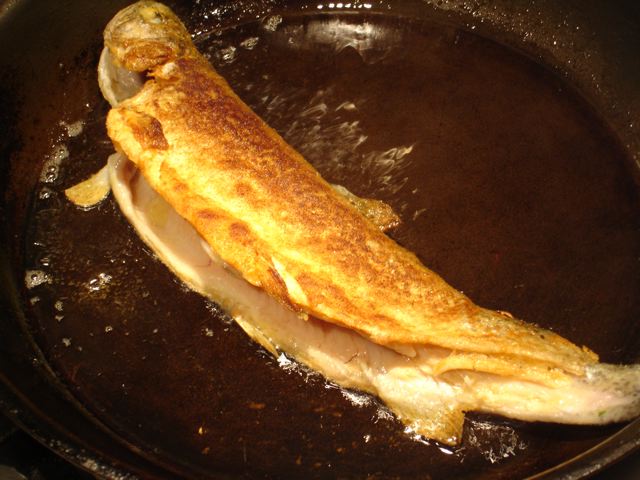
trout--frying

Heat the oil in a large frying pan and fry the trout  for about 5 minutes on one side and a minute less on the second side. Then lift it carefully out of the pan and into the marinading bowl.

bowled trout waiting for the marinade

Cut through the skin in two places on each side, without damaging the flesh.

To assemble the marinade:

In the same oil in which you fried the fish, sauté the onion until it colours.

Add the wine and chopped orange peel;  let this boil for a few seconds.

Add the two juices, the salt and pepper and the parsley. Let this simmer for a few seconds before carefully pouring the contents of the pan over the trout.

trout--bathing after frying

The trout should bathe in the sauce overnight if possible, or at least for a few hours–to let the flavours mingle and inform.

trout-- prét à manger

Bring it back to room temperature if it’s been in the fridge and gingerly remove the skin on both sides–preserving the wholeness of the fish with its head and tail–for the look.

Read Full Post »

One of my mother’s favourite phrases was “when at first you don’t succeed, try, try again!”

For my first go at this very simple soup a couple of days ago I used the popular French Caribbean curry powder called colombo.

It is very mild and gives a beautiful light yellow finish, but it didn’t taste quite right.

I tried Madras curry powder yesterday, which worked better–but was still too bland.

So–“third time lucky?”–another mantra from my youth.

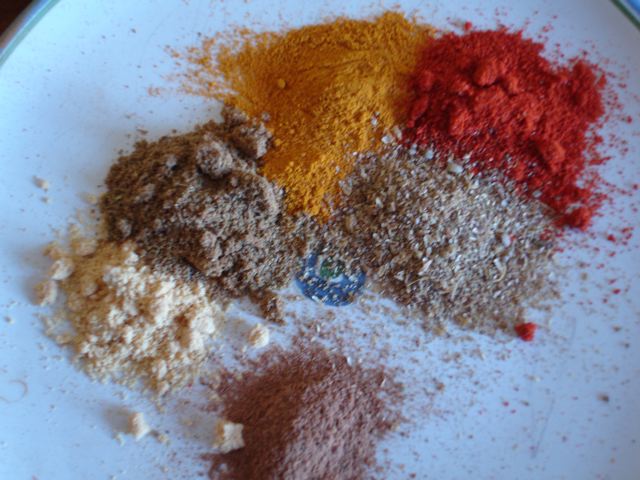
Here goes–with a mix of individual spices!

Let’s hope it has more of a kick–more of “a back story”– than the previous two efforts.

for 4

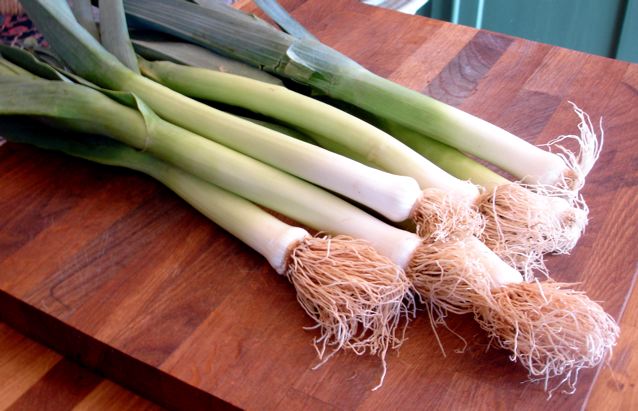
.75k/1.5 lbs–leeks–using mainly the white and pale green parts

1 tablespoon olive oil

1 oz butter

Half a teaspoon each of:

cumin, coriander, English mustard powder (substitute a little more cayenne if you don’t have it), turmeric and a pinch of cinnamon, cayenne and salt.


1 litre/1.75 pints vegetable stock–I use organic stock cubes

Prepare the leeks by cutting away the damaged brown tops and trimming the root ends.

To wash them effectively, cut them down centrally from the top to just above the root and wash thoroughly to clear any muddy residue.

Slice them finely.

Heat the butter and oil in a large saucepan.

Add the sliced leeks (keeping back a small handful for the topping) and turn them over in the oil and butter.

Sweat them gently for 5 minutes.

Sprinkle over the spices, mix them in and cook on for a couple of minutes.

Add the stock and bring it to the boil.

Simmer gently for 15 minutes.

Let the soup cool a little before liquidizing into a smooth finish.

Gently sauté the  handful of leeks you kept back in a little oil or butter.

Drop a small spoonful of cream, creme fraiche or beaten yoghurt in each bowl, topped off with a pinch of the sautéed leeks.

We had this third version for lunch. Not as beautiful as the two earlier attempts, but markedly  tastier.

The verdict was positive!

Read Full Post »

Meredith has been out with with our neighbour Alice, in search of a beehive that Alice had promised to lend her.

As they come into the kitchen, Meredith says “Look , Robin, Alice has brought you something really special”.

Alice then comes into the kitchen clutching a paper bag. She handles it with such care that I’m convinced there’s a puppy dog inside it.

Thoughts tumble round my head:

We have seven cats inside and out;

Where will we keep it? Do I want a dog after all these years of doglessness!

Alice carefully puts the paperbag in my arms and I quickly realise it’s not a dog.

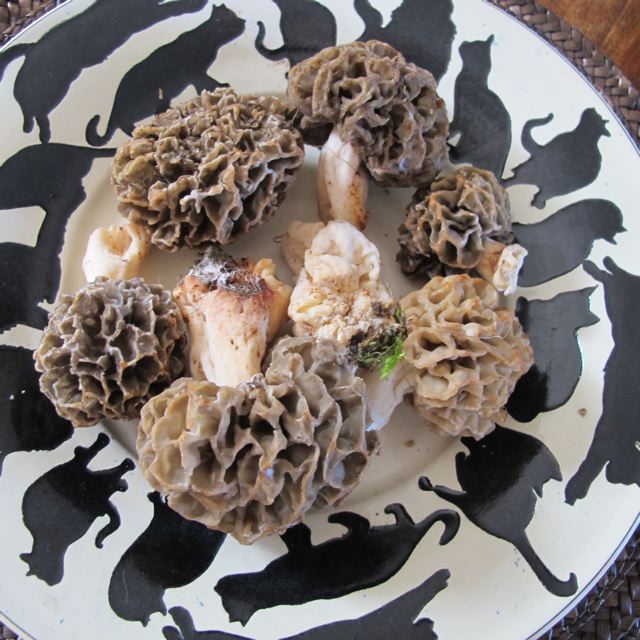
It is some wonderfully strange shaped mushrooms.

They look like dirty sponges on small white feet.

Alice says reverentially–“Ils sont des morilles”

“Ah oui?–Merci beaucoup Alice, c’est trés gentille.”


“Where did you find them” I ask her (in French).

“C’est un secret,” she replies, with a broad grin on her face.

She then tells me how she cooks them:

Sauté very gently in butter with chopped onions perhaps, then fold in some creme fraiche.

I ask about garlic.

“No garlic”–then, after a moment’s thought, she says you could add a little with some parsley in a persillade.

Morels along with cepes are the most sought after mushrooms she tells us, and are usually the first of the season.

Then she  says, rather surprisingly, that they don’t have a lot of taste–which accounts for the butter, cream and onions I suppose.

Anyway, it is a great honour to be given something so prized and we will have them tonight, on a piece of rye toast.

Read Full Post »

The Pyrénées just visible this morning from the ramparts of Lautrec.

The name is not attractive–sounds a bit like what afflicted Michael Gambon in a Dennis Potter film some years ago.

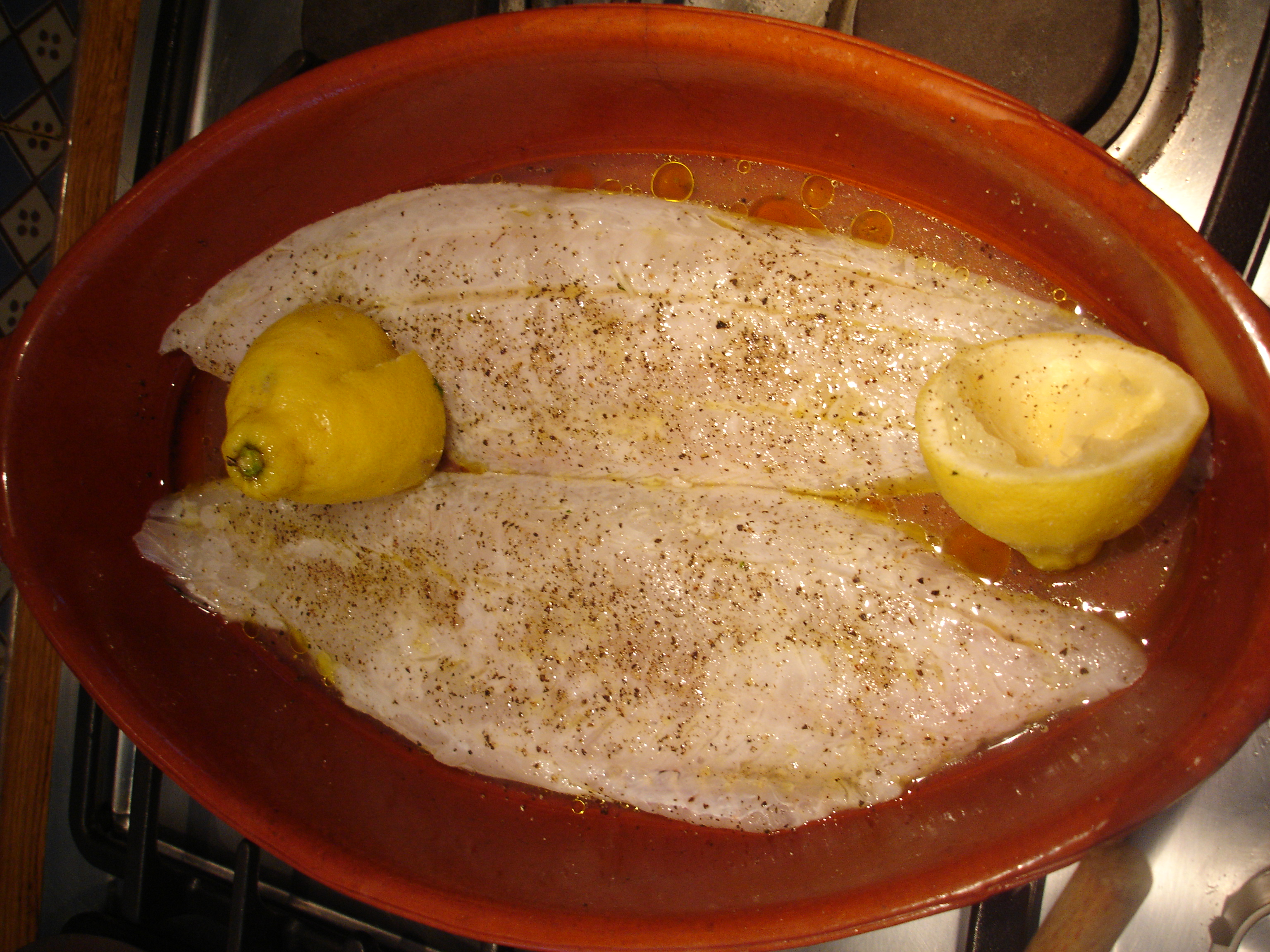
It actually means fish cooked with a lot of garlic.

This is a classic Greek village dish–traditionally taken to the local  bakery’s oven in the morning, to be ready by lunchtime.

Rena Salaman, in her book Greek Food, says the fish you chose was determined by the importance of the occasion.

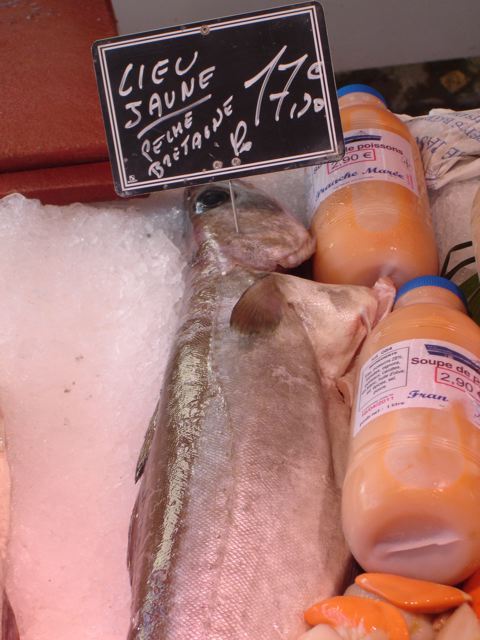
It’s just the two of us tonight, so when I saw that the Friday fishmonger in Lautrec was selling pollacklieu jaune–for 11 euros a kilo, I figured this was the moment to try this eco-friendly fish.

The fish stall in Lautrec this morning

I asked him to fillet it, which he did in a trice.

I complimented him: “Vous avez le savoir -faire, Monsieur!”  He has the proper knife too.

(You can cook the fish whole, of course.)

A whole pollack on the stall

This is adapted from Rena Salamon’s excellent book.

The fillets weigh just over 8oz/250gms each.

for 2

2 pollack fillets– about half a pound each. You could choose haddock, cod, monkfish, red or grey mullet or other firm-fleshed white fish

juice of a lemon

3 tablespoons olive oil

2 medium onions–finely sliced

1 stick of celery–finely sliced

4 cloves of garlic–finely sliced

1lb/450gms tin of tomatoes–drained of juice and broken up

2 tablespoons parsley–finely chopped

1 small wine glass of white wine

salt and freshly milled black pepper

2 tablespoons wholewheat/rye breadcrumbs

Oil a baking dish that will hold the fillets with a tablespoon of the oil.


Lay the fillets–cut into pieces or whole–in the dish.

Pour over the lemon juice and season with salt and pepper.

Leave to marinate for about an hour.

Heat the oven to 180C/350F.

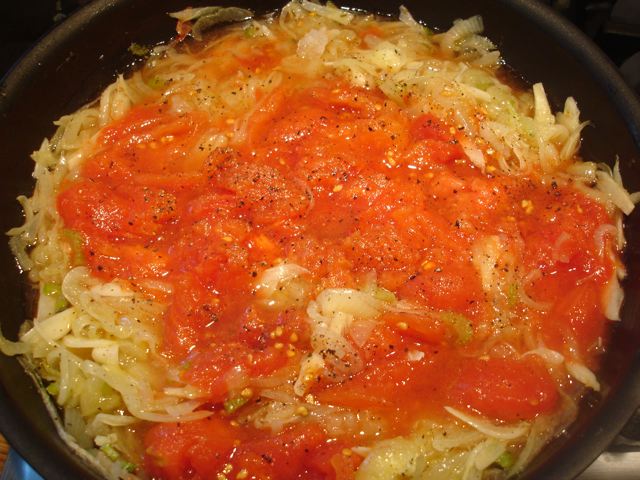
Gently sauté the onions, garlic and celery  until they collapse–being careful not to brown them.

Add the tomatoes and the wine to the onions, garlic and celery.

Mix and season well.

Cook this gently for 15-20 minutes.

Add the parsley and cook for a further few minutes.

Spoon this mixture over the fish and sprinkle with breadcrumbs.

Bake in the centre of the oven for 30-40 minutes.

Read Full Post »

This is my 50th post and it’s dedicated to my mother Molly [Weakford] Ellis–whose cooking on a small budget in the late forties and fifties was resourceful and inventive. From her I learned that it was worth spending a little time in the kitchen–not least because I got to lick the bowls!

The Ellis Family under the flowering cherry 1955

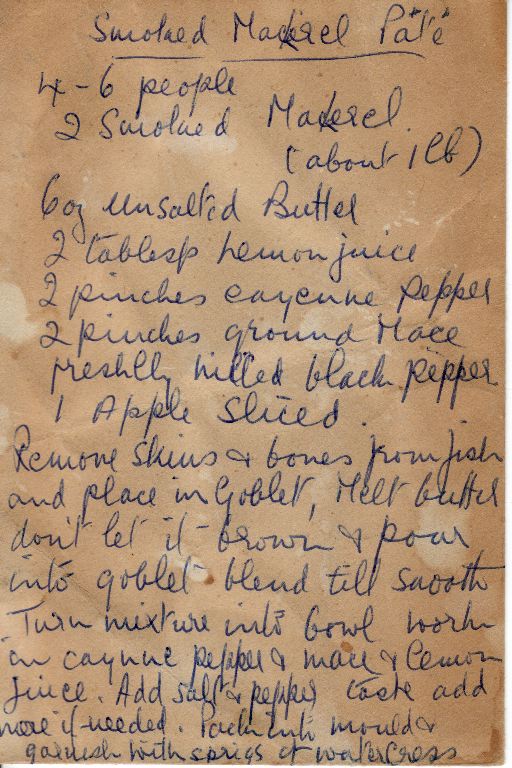
Her smoked mackerel paté has a fair amount of melted butter in it, but the oily mackerel is a healthy counter to it.

I like it best served on toasted rye bread.

She wrote the recipe out for me on the back of an envelope and miraculously I still have it.

Her flowing round hand is unmistakeable to me. Few of her written recipes survive, so I treasure this one.

It is very simple.

I made it this morning with the 8oz/250gms of mackerel bought last Saturday at the London Farmers’ market and reduced the other ingredient quantities accordingly….

(Tasting it for balance is a legitimate perk of the cook!)

The apple slices cut the richness of the paté.

Watch out though–it is more-ish!

Serve with lemon wedges.

It’s Mother’s Day this weekend–so “Thanks Ma!”

Read Full Post »

« Newer Posts - Older Posts »