Feeds:
Posts
Comments

Archive for the ‘Recipes’ Category

Adapted from an Ottolenghi idea–this accompanied a spatchcocked chicken recipe out of the same stable for dinner with some friends the other night.
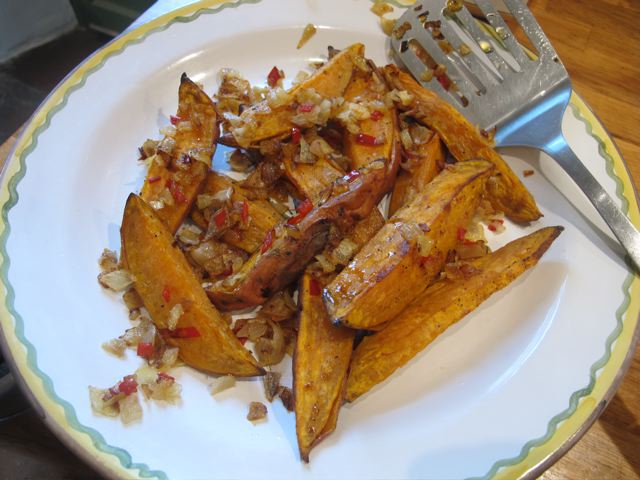
(I’d tried it out the night before but forgot the chili!)

Ottolenghi adds some crumbled chevre [goat’s cheese] which would make a good light supper dish with a salad or some broccoli.

for 2–(for 4 add another potato and a small onion to the recipe)

Heat the oven to 220C/425F/gas mark 7.

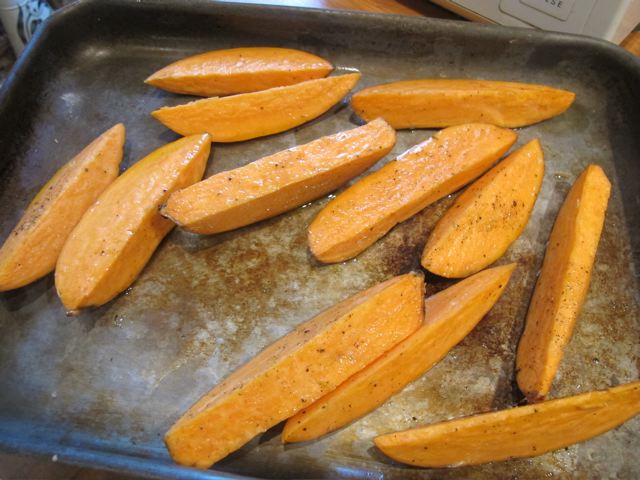
2 medium sweet potatoes–the skin rinsed and brushed clean, cut in half lengthways then each half cut into three long wedges
3 tablespoons of olive oil

salt and  pepper

1 medium onion–chopped

1 fresh red chili–sliced very thin and chopped

  • In a bowl turn the wedges over in 2 tablespoons of the olive oil and season them.
  • Lay the wedges skin side down on a baking tray.
  • Roast them for about 25 minutes–until soft.
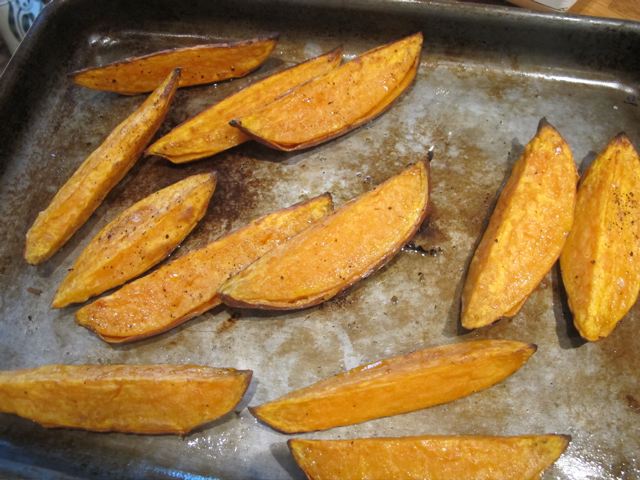
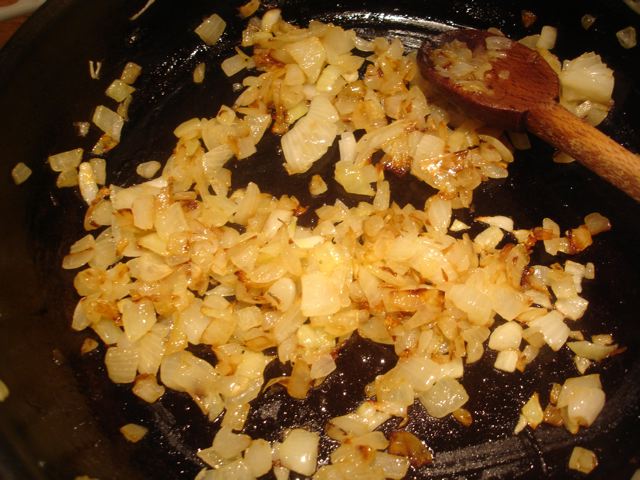
  • While the potatoes are roasting, gently brown the chopped onion in the remaining tablespoon of oil.
  • Add the chili after about fifteen minutes letting it soften and meld in with onion.
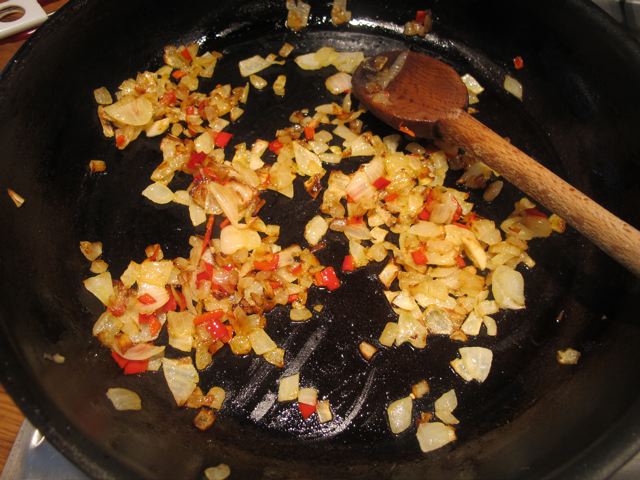
  • Scatter the sautéed onion and chili over the potatoes

We had the left-overs mixed in a salad last night with a handful of dry-roasted pumpkin seeds for added crunch!
Read Full Post »

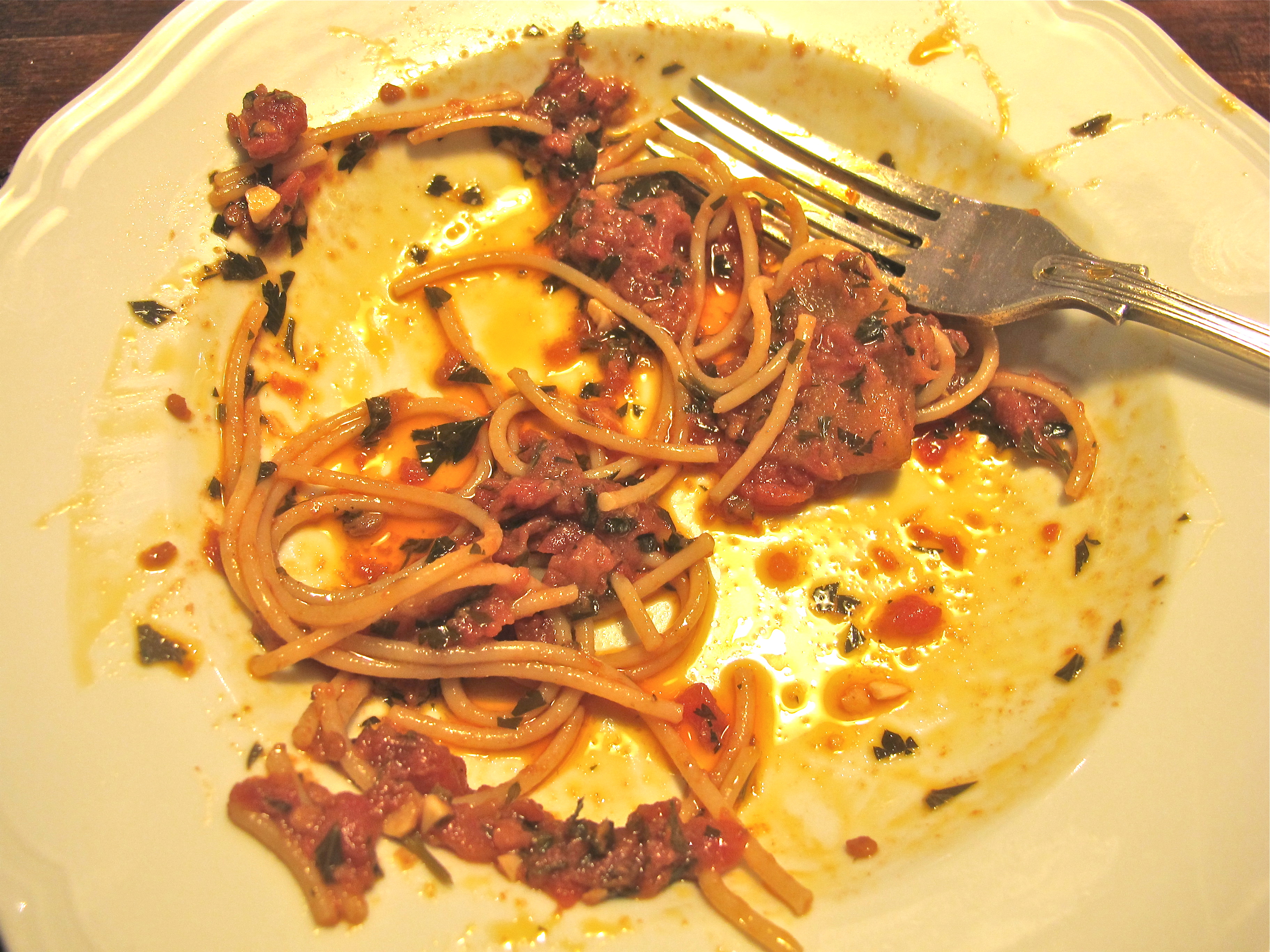
Meredith and I have eaten this a thousand times, usually on a Sunday evening–our once-a-week pasta night.

It is from the matchless Marcella Hazan and is probably my favourite pasta dish of all time–comfort food par excellence!

What makes it so delicious is the anchovies–controversial little fish–not to everyone’s taste.

Here they deepen the taste without dominating.

The ones preserved in salt are best–they dissolve more readily than those in preserved in oil–but it’s a business preparing them for cooking.

Since I was diagnosed with type 2 diabetes we have eaten wholewheat pasta and now we prefer it–it’s on the shelves of most supermarkets these days.

How al dente it’s cooked is a matter of taste.

In Italy you’d think it was an arrestable offence to overcook pasta–they cook it very al dente and it makes for agreeably slower eating.

for 4

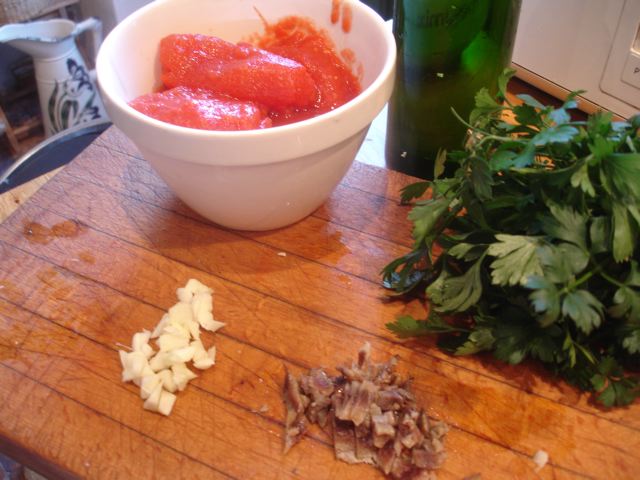
2 medium cloves garlic–chopped

6 tablespoons olive oil

anchovy fillets–chopped fine and pounded into a paste in a mortar with a pestle if you have one

2 good tablespoons parsley–chopped

400 gm tin of tomatoes–chopped with their juice

salt & pepper 

400 gms wholewheat spaghettini

  • Lightly sauté the garlic in small saucepan until it colours.
  • Take the pan off the heat and add the anchovies and parsley– stirring well to dissolve them into the oil
  • Add the tomatoes, the salt and pepper.
  • Cook at a steady simmer for about twenty five minutes, stirring regularly.
  • When ready the sauce will have an unctious consistency and a little pool of oil on top.
  • Cook the spaghettini in plenty of well salted boiling water.
  • Test for your preferred “doneness”.
  • Drain, put in a heated bowl and add the sauce.
  • Mix well and serve.

Read Full Post »

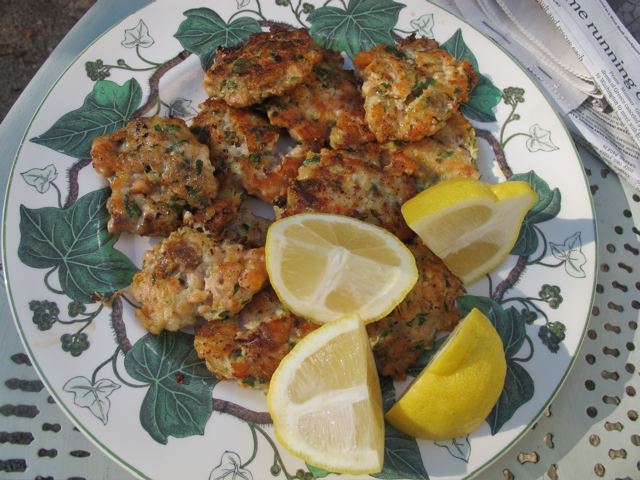
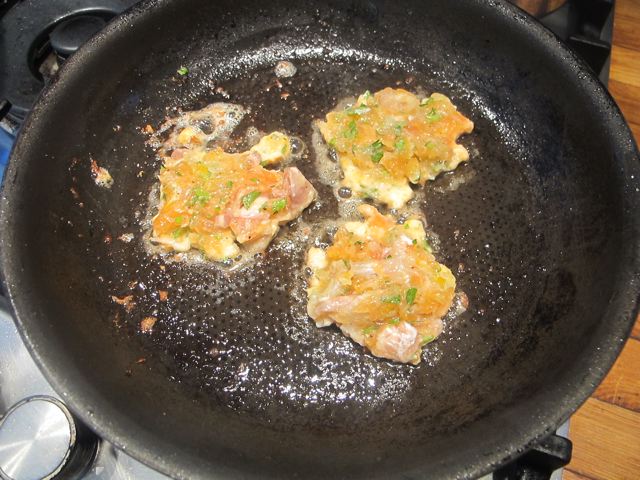
With salmon and smoked haddock .

I used to love fishcakes–but the mashed potato made them “off limits” for me, once I was diagnosed with type 2 diabetes.  Then I found an alternative–“no-potato fish cakes”— and I no longer felt deprived!

This is a variation on that theme.

Adapted from a Gordon Ramsay idea–these are a little heavier than “mark 1”–a winter alternative perhaps? They were lunch yesteday, but could be served as a starter or light supper.

for 4/6

1 lb/450 gms salmon fillet–with the skin and little bones removed
1 lb/450 gms smoked haddock–undyed, if possible, and skin removed
1 large shallot–grated

1 egg–whisked

1 tablespoon parsley–chopped

salt and pepper
olive oil for sautéing

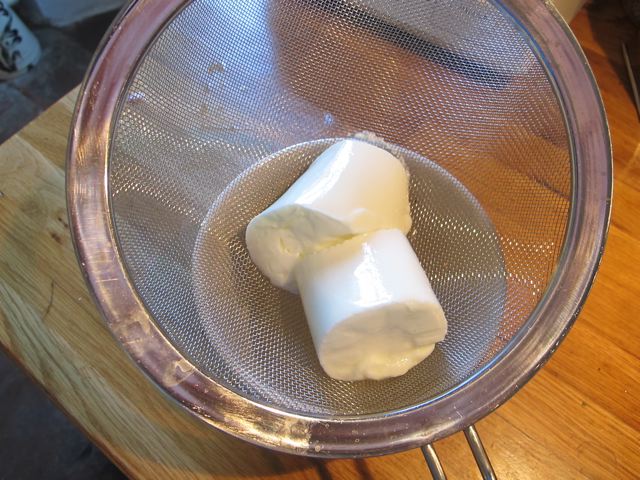
yogurt–I use no-fat organic, drained in a sieve for half an hour to thicken it a little

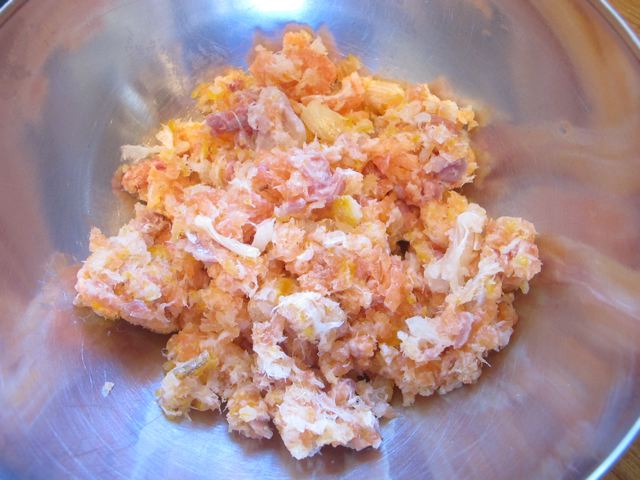
  • Cut the fish into chunks and place into a food processor.
  • Pulse to a coarse mince–not too much or it will become a slurry.
  • In a bowl, mix the fish with the shallot, parsley, salt and pepper.
  • Check the seasoning–raw salmon tastes good!
  • Add the whisked egg and mix in thoroughly.
  • Chill in the fridge for an hour if you’ve time–I didn’t and they were fine.
  • Mold into little flat patties.
  • Heat the oil in large frying pan.
  • When it’s hot fry the little cakes for 2/3 mins each side.
  • Serve with a small dollop of yogurt on the side.
We had them with some small tomatoes–halved and roasted at 120C/250F for 1h30.

Read Full Post »

This was published a couple of years ago.

It has been a favorite for over thirty years and is a tasty standby for a rainy grey day when going anywhere for supplies is the last thing you feel like doing.

Meredith on her detox for a week mentioned it this morning and we’ll have it tonight, as below, with some of the broccoli I bought yesterday and brown basmati rice.

Dal-otherwise known as Comfort Lentils in our house.

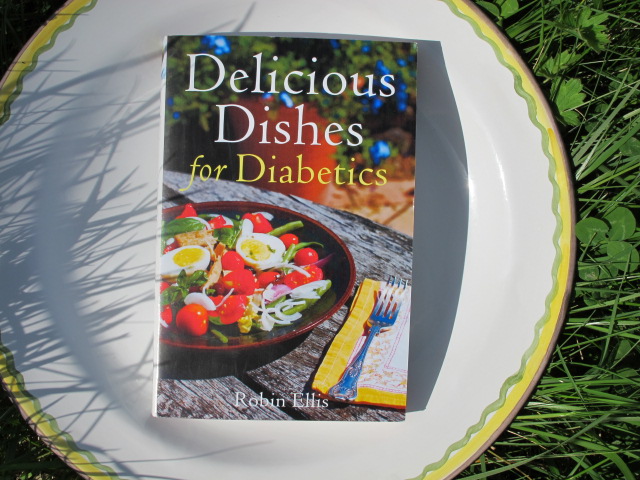
This is from my book Delicious Dishes for Diabetics-out in the UK and officially launched November 1st in the USA.

Our Sikh friend, Tari, affectionately known as the “Carefree Cook”, is an example to all us worry guts.

He never panics when people turn up unexpectedly and have to be fed.

He looks to see how many extra guests are coming through the door and adds more water to the dal accordingly!

We’ll eat these lentils tonight with broccoli, simply steamed, drizzled with a little olive oil (maybe a squeeze of lemon?) and a some brown basmati rice.

[If there’s any dal left over, save it for another occasion! Form the cold dal into little burger shapes, coat with some chickpea or whole wheat flour and fry lightly in some hot oil.]

for 4

500 g/1 lb red lentils

1 litre/1¾ pints/4 cups stock (I use an organic vegetable stock cube per 500 ml of water)

4 tbsp vegetable oil (I use olive oil.)

1 medium onion – chopped

1 tsp coriander seeds – pounded in a mortar and pestle

1½ tsp cumin seeds – pounded in a mortar and pestle

1 tsp garam masala

½ tsp chilli powder

  • Rinse the lentils very thoroughly – until the water shows clear.
  • Put them in a saucepan with the stock and bring gently to the boil.
  • Turn the heat down to low and let them simmer, covered, stirring from time to time.
  • They are done when a small puddle floats on the top.
  • Turn them off.
  • Heat the oil in a small frying pan.
  • Add the onion and fry gently until it colours nicely.
  • Add the spices and mix them in well.
  • Cook for a couple of minutes longer to release the aroma.
  • Add the cooked spices and the onion to the lentils and mix in thoroughly.
  • Heat through and serve.

Read Full Post »

The smoky paprika and saffron flavours in this dish, adapted from the marvellous Moro stable, are subtle and light, and make it hard not to finish the lot in one go–(which is what happened last night!).

for two

450 gms/1 lb monkfish–fresh as can be, skinned, cleaned, spine removed and the thin membrane too, as far as possible–cut into chunks

4 good prawns–unpeeled.

250 gms/8 oz mussels–cleaned

4 tablespoons olive oil

1 large sweet/mild onion–chopped

2 garlic cloves–chopped

1 tablespoon fresh rosemary–very finely chopped

1 lb /450 gms tomatoes–skinned and chopped or a 425 ml tin of tomatoes, drained and chopped

half a teaspoon smoked paprika [pimenton]

3 bay leaves

a good pinch of saffron threads–soaked in four tablespoons of hot water

150 ml/6 fl oz white wine

100 ml/4 fl oz stock–I used half an organic vegetable stock cube

4 oz/ 100 gms blanched almonds–blitzed into powder or use powdered almonds–to thicken the sauce

Salt and pepper

A shallow sauté pan you can present at table, would be best for this all-in-one dish.

  • Fry the onions in the oil until they are nicely coloured–it’s worth the time involved–about fifteen minutes–as this is the engine room of the dish.
  • Add the garlic, rosemary and bay leaves and cook for a further five minutes.
  • Mix in the tomatoes and the paprika and cook until the tomatoes have dissolved into a sauce–about ten more minutes.
  • Add the wine and give it a minute or two before stirring in the saffron water and the stock.
  • Bring it all up to a gentle simmer then stir in the powdered almonds.
  • Fold in the fish, the mussels and the prawns–[last night I used uncooked prawns; if you use cooked ones add them a couple of minutes later]
  • Cover the pan and cook a further 5-10 minutes turning everything over in the sauce from time to time. Make sure the mussels open up.

We ate it spooned over some basmati brown rice and the word moderation wasn’t mentioned..!

Read Full Post »

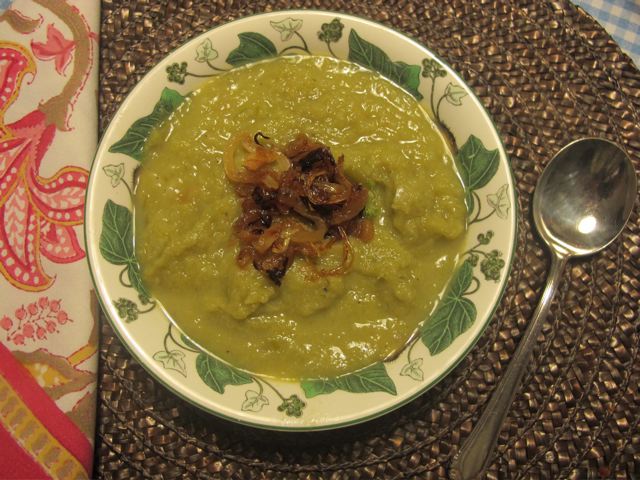
The last few days have been unbelievably beautiful — warm, with soft golden light, and the leaves which have just begun to color slowly drifting to the ground. More of the same is predicted for tomorrow and the next day. Not really soup weather at all. However, cold and rainy weather is out there somewhere in our not too distant future and I look forward to making this again.


Exactly how I’m feeling–I found this quote by chance on a lovely looking site called Kitchenography– Life in my Kitchen.

SERENDIPITY! 

Soup is what I’m feeling like tonight.

The days are summer days–the evenings and nights are autumn.

So that’s why I have a yen for soup–I understand–often you have to put it into words and then it becomes clear.

I’d bought some leeks and fennel and I’m starting with an onion.

for 2

1 medium onion–peeled and chopped

1lb/450 gms leeks–cleaned and chopped

1 medium fennel bulb–cleaned and chopped

1 tablespoon olive oil

1 pint/525 ml vegetable stock–I use an organic stock cube

  • Sweat the onion for a couple of minutes.
  • Add the leeks and fennel and sweat all three for ten minutes, covered, until they soften.
  • Season well with pepper and a little salt.
  • Add a pint of vegetable stock.
  • Simmer gently for twenty minutes.
  • Liquidise the soup and check the seasoning.
  • If you feel the soup is to thick add a little extra water.
  • Serve hot.

I topped it tonight with sautéed onion:

1 tablespoon olive oil

Half a medium onion–peeled and sliced thin

  • Sauté the onion in the oil until it is nicely browned.
  • Twirl a little on each bowlful of soup.

I put a sweet potato in the oven and we  had a half each after the soup with some new season broccoli.

[Which makes it a five vegetable meal to boot!!]

Read Full Post »

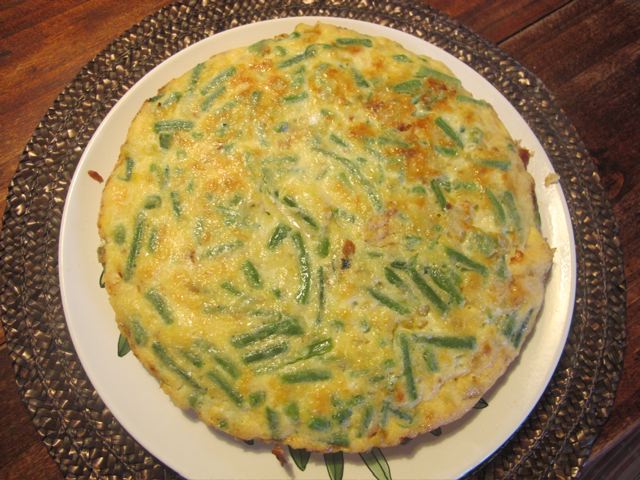
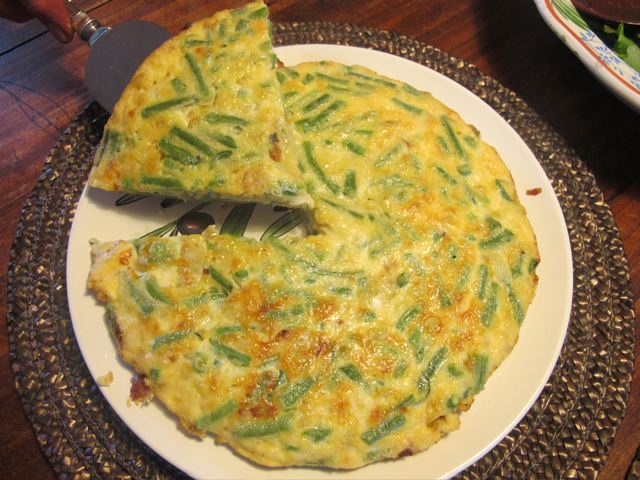
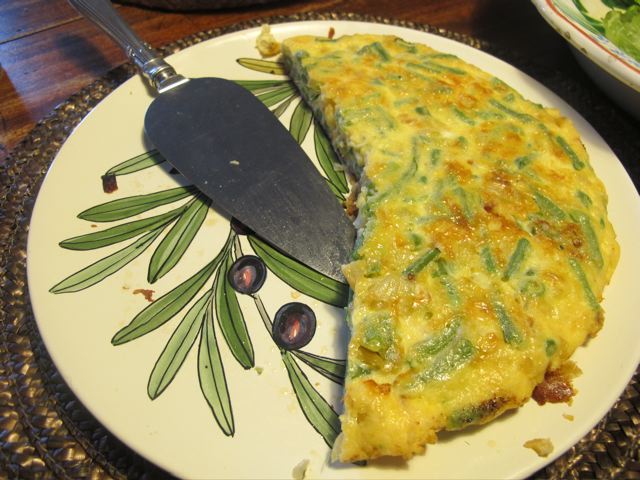
“Just when you thought you’d had enough green beans for a while…” Meredith sighed at lunchtime, as she bit into a piece of this green and yellow discus–a frittata with green beans.

Discus-like thing

Frittata is an Italian omelette–made the opposite way to a French omelette.

I’ve been guided in their making by the incomparable Marcella Hazan–the queen of Italian home cooking.

The “trick” is in the time it takes.

It’s cooked over the lowest heat, for about 15 minutes–a French omelette over the highest heat, for probably less than a minute!

The French version is fluffy–the Italian firm, but not dry; more like a pastry-less quiche–served in slices.

What they have in common, apart from eggs, is that you can fill them–frittatas or omelettes–with pretty much what you fancy.

In this version, green beans and onion:

1 onion–peeled and chopped

2 tablespoons olive oil

8 oz/250 gms green beans–cooked to tender, drained, and plunged into a bowl of cold water, then patted dry and cut into short lengths, ready to go into the frittatta mix

2 0z/50 gms parmesan cheese–grated

6 eggs

salt and pepper

a thumb-size knob of butter and a little more olive oil

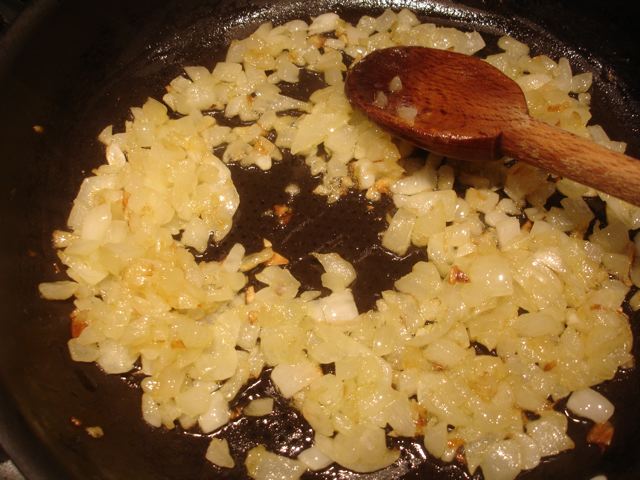
  • Sauté the onion in the olive oil until it colours nicely–set aside to cool.
  • Break the eggs into a bowl and whisk them lightly to combine the yolk and the white.
  • Whisk in the grated cheese.
  • Season with salt and pepper.
  • Add the beans and the onions to the bowl and mix them in.
  • Heat the butter and the extra oil in a medium sauté pan [10 inch/26 cm] to hot.
  • Fold in the egg mixture and turn the heat down to the lowest available–even use a heat diffuser too if you have one [the object being to keep the frittata moist through slow cooking].
  • Cook for about fifteen minutes until there is just a little lake of liquid left on top.
  • Heat the grill to hot and place the pan under it for a couple of minutes, just to firm it up.

“Great finish to the bean season,” acknowledged Meredith, after helping herself to a second slice….

Read Full Post »

We are having this tonight with our friends Andrew and Peggotty who are here for a few days rest and recuperation!

Meredith says it’s not really from the Mediterranean region so what’s it doing in the cookbook?!

She’s right–it’s more Cajun than Med. I think–but it’s healthy and tastes good, so…!

It’s also a good dish for company–easily adapted to feed more than four.

Allow 200 g/7 oz of salmon fillet per person.

Serves 4

800 g/28 oz salmon fillet–skin and small bones removed

2 tablespoons olive oil

more olive oil for sautéing

For the Orange Yogurt Sauce 

4 tbsp/80 ml/3 fl oz olive oil

400 ml/14 fl oz/1½ cups yogurt of choice – whisked smooth (I use no-fat)

zest and juice of 1 large juicy orange 

For the Herb and Spice Mix 

3 teaspoons each–dried thyme, dried rosemary, dried oregano 

3 teaspoons dry roasted cumin seeds – roughly ground

1½ teaspoons each Spanish sweet smoked paprika, cayenne pepper 

3 cloves of garlic–pulped in a mortar with a pinch of salt

3 teaspoon salt

  • Make the sauce by whisking the olive oil into the yogurt, followed by the zest and juice of the orange. Set it aside.
  • Put all the herbs and spices in a bowl and mix them
  • thoroughly.
  •  Run your fingers over the top of the fillets to check that all
  • the small bones have been removed.
  • Cut up the salmon into squares roughly 3 cm/11/2 inch in size – they need to be cooked quite quickly so mustn’t be too large.
  • Put them in a bowl and add the olive oil. Turn the salmon carefully until it is well covered.
  • Tip the salmon into the bowl with the herb and spice mix.
  • Again turn the salmon carefully until all the pieces are well covered in the mix.
  • Pour a couple of tablespoons of oil into a large frying pan.
  • When hot transfer the “blackened” salmon to the pan and fry for 4–5 minutes.
  • Check for doneness, try not to overcook; it’s better that some pieces are slightly underdone – they
  • continue to cook a bit off the heat.
  • Serve over a steaming dish of brown basmati rice.
  • Don’t forget the sauce!

Read Full Post »

This is taken from my book: Delicious Dishes for Diabetics which was published in August and is being reprinted–(hooray!).

Based on a recipe from Richard Olney’s Simple French Food, it’s useful company for pork or chicken. It can also serve as a vegetarian main course with some white beans or chickpeas.

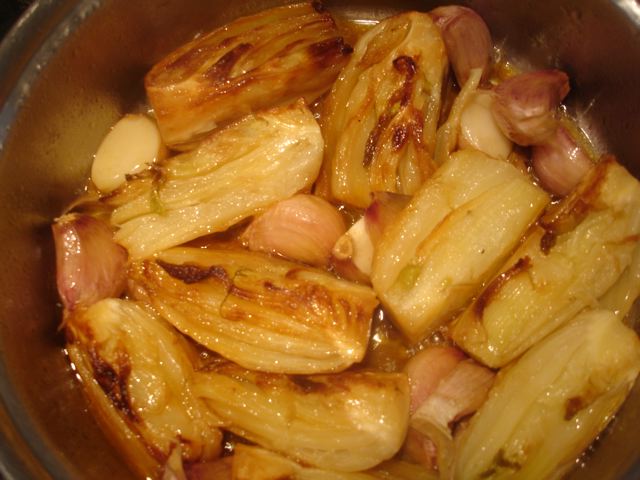
The initial cooking helps to caramelize the fennel lightly–so it’s worth taking the time.

Serves 4

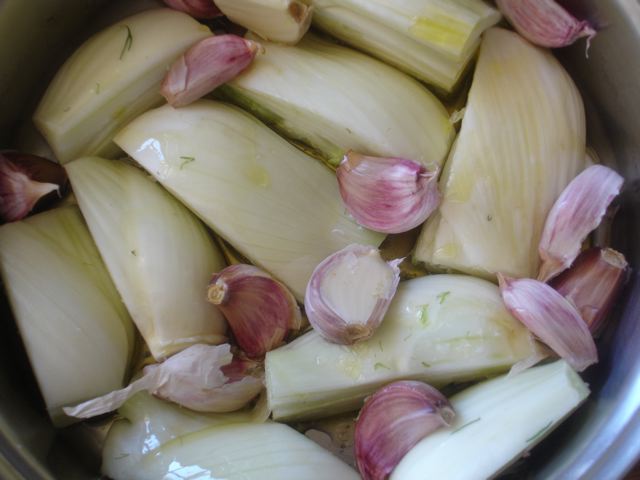
2 large or 4 medium fennel bulbs – tough outer part removed, cleaned up and quartered or cut into eighths, if the bulbs are very large

6 or more cloves of garlic – unpeeled, hooray!

3 tablespoons of olive oil 

salt and pepper 

6 tablespoons of water 

  • Put the fennel and the garlic in a pan large enough to hold all the quarters in a single layer.
  • Add the olive oil and a little salt.
  • Cook, uncovered, on a medium-low heat for 20 minutes, turning as the fennel colours–it should be nicely caramelized by the end.
  • Add the water, cover the pan and cook slowly until the fennel is super tender–about 30–40 minutes.
  • The quarters should hold their shape and be infused with a deliciously mild taste of the garlic.
  • Adjust the seasoning and serve.

Read Full Post »

On our last day in London our friends Prue and Michael invited us to lunch–a treat.

We ate a delicious monkfish dish followed by Prue’s Mango Surprise--thought up by a thoughtful Prue with me in mind, i.e. something she hoped a type 2 diabetic could enjoy.

A dessert–my word!–and it was delicious!

Mangoes have been controversial.

On our return I did a bit of research.

The news is encouraging.

This from the GI Index:

Mangoes are one of the few tropical fruits with a low GI (51) so they’ll deliver sustained energy without spiking those blood glucose levels (in modest portions).
They are also an excellent source of vitamin C, high in the soluble fibre pectin that helps in controlling blood cholesterol, a good source of vitamin E, rich in beta-carotene which the body converts to vitamin A, and loaded with compounds called polyphenols which have strong antioxidant properties protecting against heart disease and cancer. So you really don’t need an excuse to grab one.

Further reassurance and encouragement comes from the ygov site–Are mangoes good for diabetics??:

As usual, the message is “in moderation”.

Difficult in terms of Prue’s dessert!

Here it is:

500 gms/ 16oz (four small pots) yogurt--drained for 1/2 hour in a sieve to thicken it (spoon carefully into a fine sieve and leave to drain off the whey over a bowl in the fridge)

300 gms/10 oz ripe mango flesh–whizzed to a rough purée in a food mixer

the zest of an orange and a squeeze of its juice

  • Whisk the three ingredients together in a bowl.
  • Refrigerate for a couple of hours before eating.
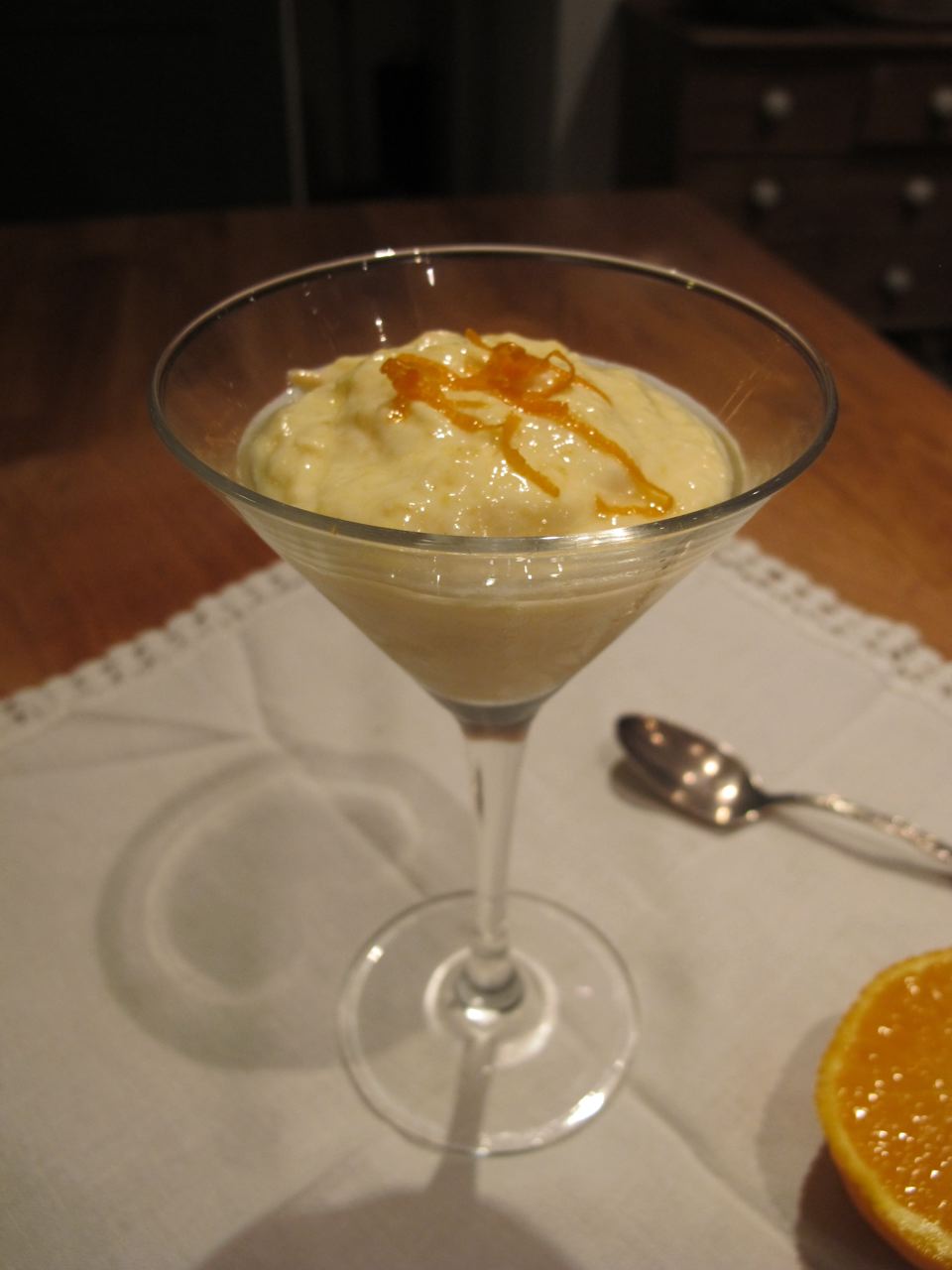
  • Serve in a small glass–with perhaps a finger waifer biscuit for non diabetics and a few strands of the zest/thin rind for the look of it.
Lacking a sweet tooth, I don’t much miss desserts–does anyone have other healthy options for those that do?

Read Full Post »

« Newer Posts - Older Posts »