Feeds:
Posts
Comments

Archive for the ‘Recipes’ Category

Our neighbor Alice came round yesterday afternoon with a small plastic bag of mushrooms–a present for me, she said.

Mousserons she called them–I asked her to write it down, I had never heard of them.

They were delicate looking–white on top and underneath.

If I’d seen them in a field I would have avoided them; I’m wary of wild mushrooms.

Merci beaucoup, Alice–on les cuisine comment? [How do you cook them?]

With a bechamel sauce or a sauce made from veal bones.

“Ah,” I said,  thinking, “Not quite my style!”

Then sprinkled with parmesan and browned in the oven.

“Ah–oui?” I was surprised that Alice–French countrywoman that she is– would think of using Italian cheese in her cooking.

Mousserons have a short season, Alice said, and grow in (fairy) circles.

She knows where to look for mushrooms. Last year she brought us some delicious morels–pretty, brown and conically shaped.

We had the mousserons last night, cooked less ambitiously: sautéed in olive oil and served on a piece of toast brushed with garlic.

Alice then suggested to Meredith it was time to check on the bees.

The colza crop in the fields nearby is coming to an end and the acacia trees are about to bloom.

The honeycombs are full in our hive and need clearing to make room for the new harvest.

Alice had brought her togs and the two of them got ready to go to work.

Meredith asked me to take photos of the scene.

Untogged so to speak, I followed them out to the edge of the garden where our single hive sits.

The worker bees were busy coming and going with their gatherings.

Meredith  pumped the smoke gun to calm them and Alice lifted the first comb.

I was standing with the camera at a safe distance–I thought. (In any case, I’m not scared of bees, wasps or even hornets–ho hum!)

As I leant towards the hive, struggling to get a better angle on what was happening, I suddenly sensed one of the worker bees buzzing round my head.

“Get away! get away!” I spluttered–trying to shoo it off with my free hand while the camera-holding hand graphically recorded the moment of panic.

Unlike a fly or mosquito or any other self-respecting insect that would have taken the hint, this bee was clearly on a mission and having none of it. It continued to harass  me.

Inelegantly climbing over the just-bloomed iris, I whipped off my glasses, bending down to put them and the camera on the ground, while trying to fend off  the determined bee.

On your fleece!–on your fleece!” cried Alice.

Expecting to feel a sharp pain at any moment I pulled the blue fleece over my head, catching sight of the bee clinging to the collar.

I ignominiously exited the garden on the run, pursued by a bee not a bear,

Triumphant bee!

as the much quoted stage direction in Shakespeare’s A Winters Tale has it!

Read Full Post »

Food writer Hugh Fearnley-Whittingstall wrote about this  simple and delicious idea a couple of weeks back.

Not easy to use up all the spring onions/scallions in a bunch and this makes handy use of the stragglers in the fridge.

How many you do depends on the size of your grill–a bunch at a time on an average grill perhaps.

A warning though–once you start eating them it’s hard to stop picking at the pile on the serving plate.

for 2

a couple of bunches of spring onions/scallions

1 tblsp olive oil

salt

a squeeze of lemon juice

a sprinkling of olive oil

salt and pepper

  • Heat an iron grill pad gently to hot.
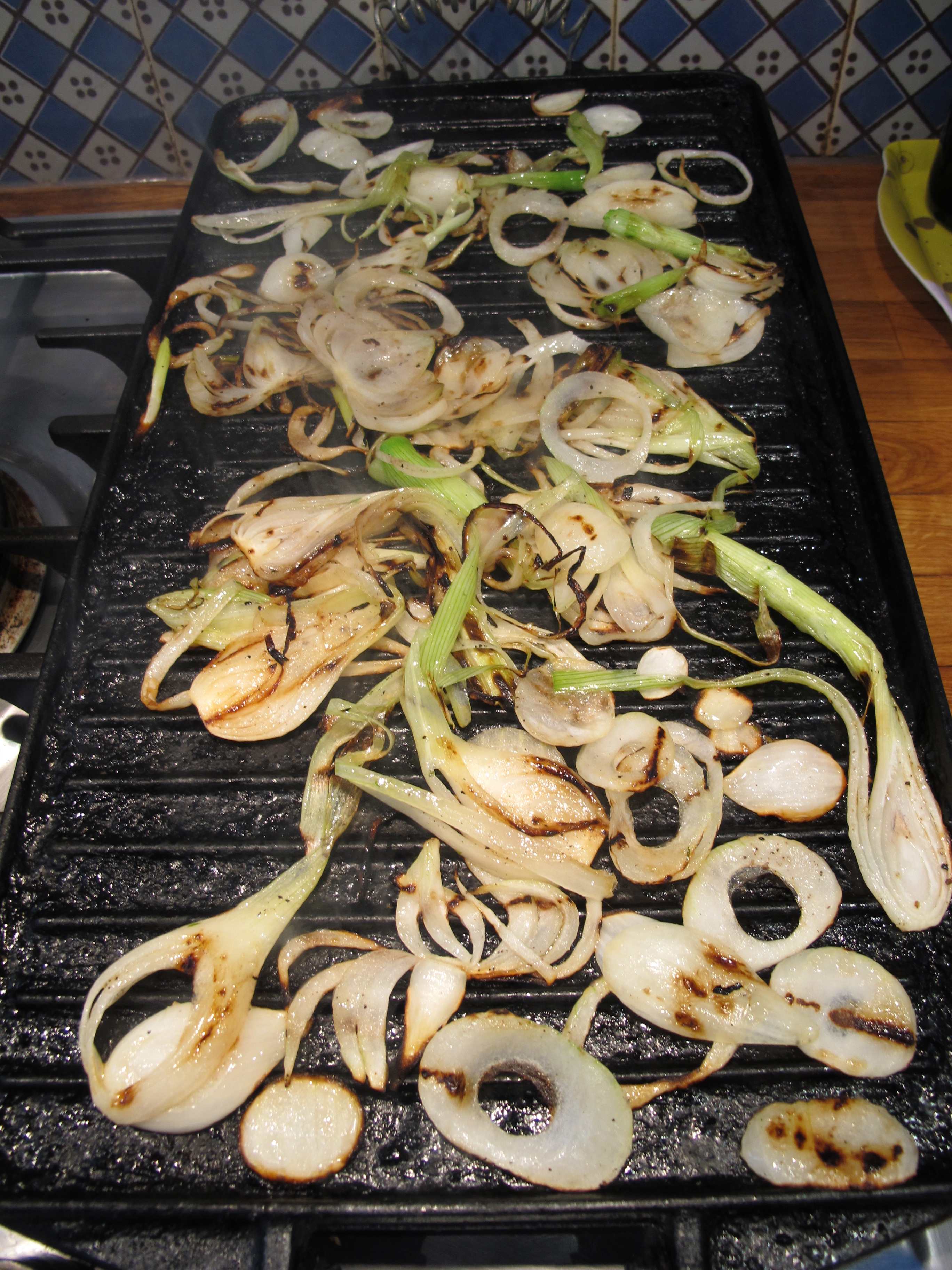
  • Slice the onions lengthwise fairly thinly–taking care not to include a finger in the process.
  • Put them in a bowl and add the tablespoon of olive oil.
  • Turn the onions over in the oil to coat them nicely.
  • Add a pinch of salt.
  • When the pad is hot, tip the onions over it and spread them out evenly so they all get a chance to char a little.
  • Turn them and rearrange them as they color up and soften.
  • About five to seven minutes should do it but it depends on the grill and how many onions you are cooking at one go.
  • Transfer the onions back to the bowl, sprinkle with salt and pepper, a little more olive oil and the squeeze of lemon juice.

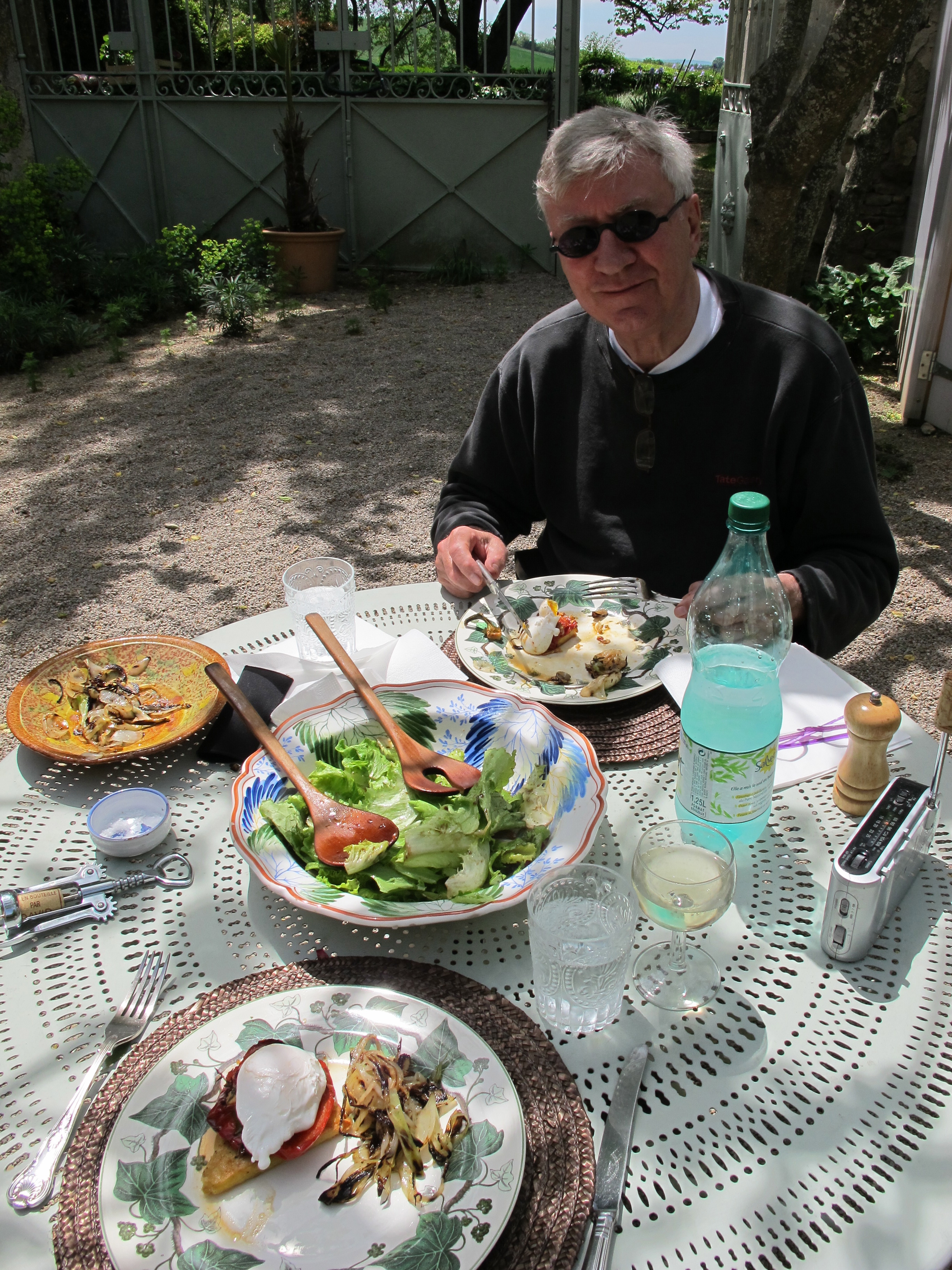
A tasty addition to a lunch plate of left-over roasted red pepper with a poached egg on top…

Read Full Post »

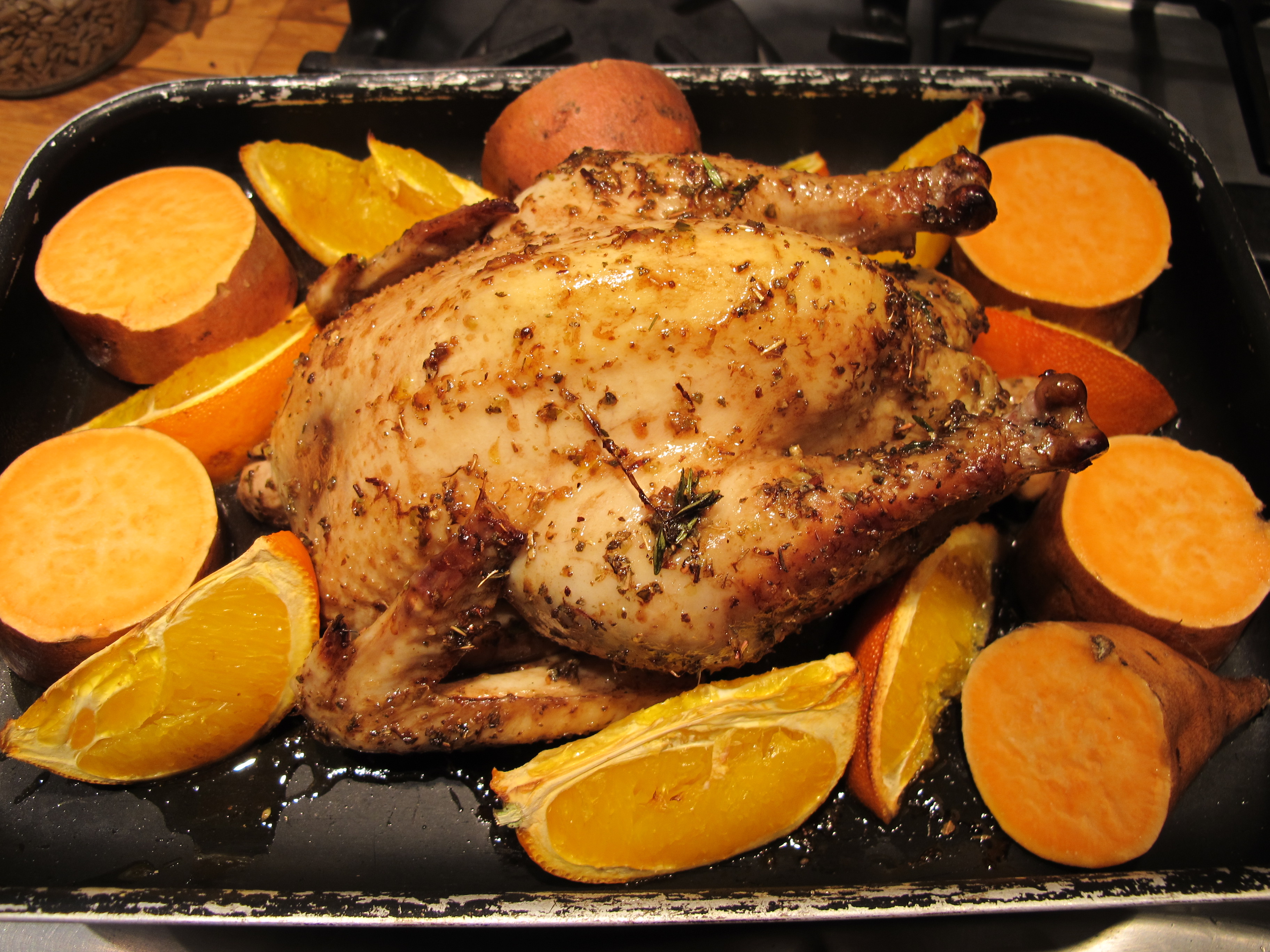
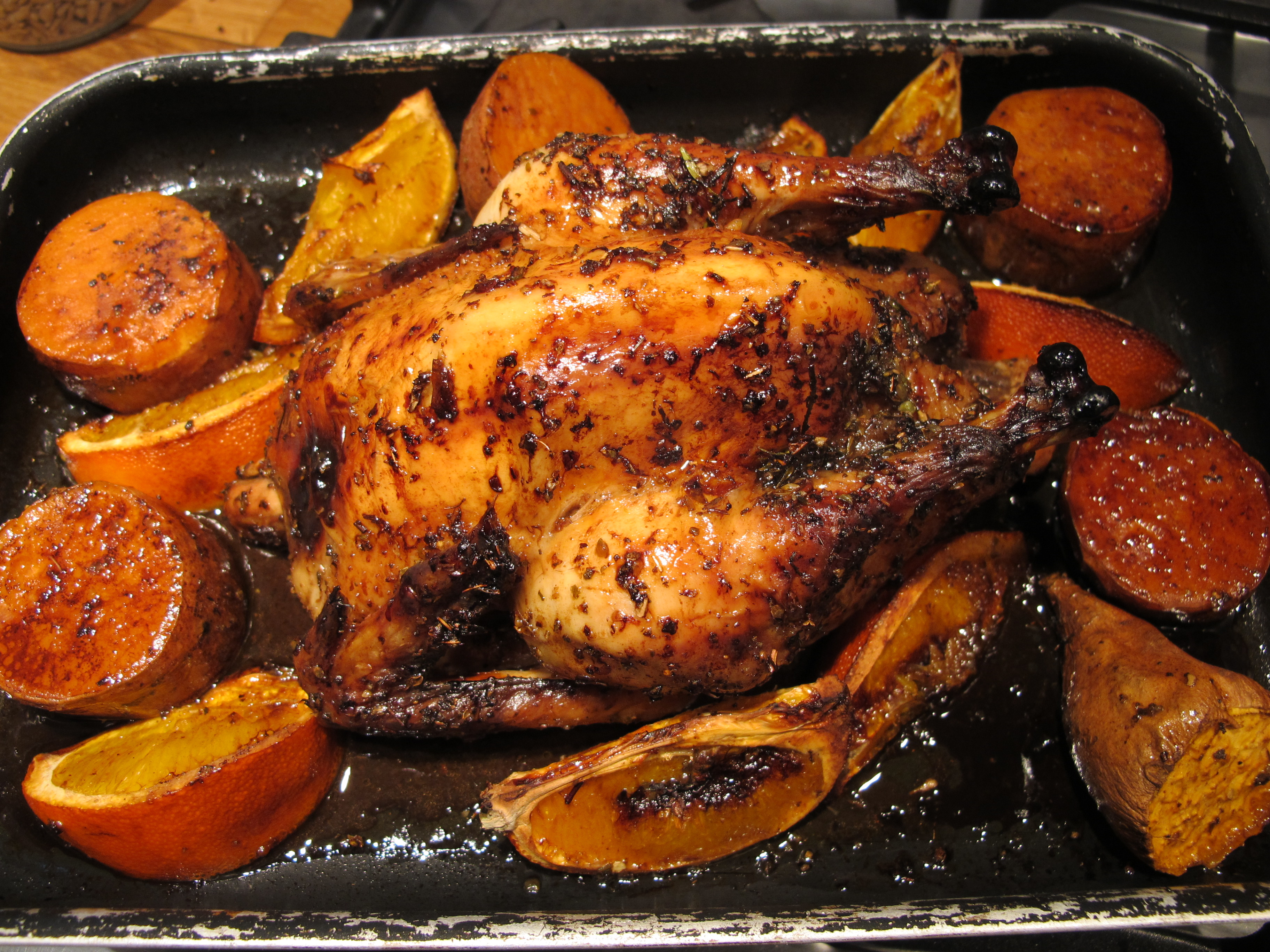
I was later to the market than usual on Saturday and my favorite chicken stall had sold out of medium sized birds. There remained very large ones to feed a family or these neat little numbers she called coquelets. 

coquelet is a small chicken, aka a poussin–(though I read that an American poussin is larger*).

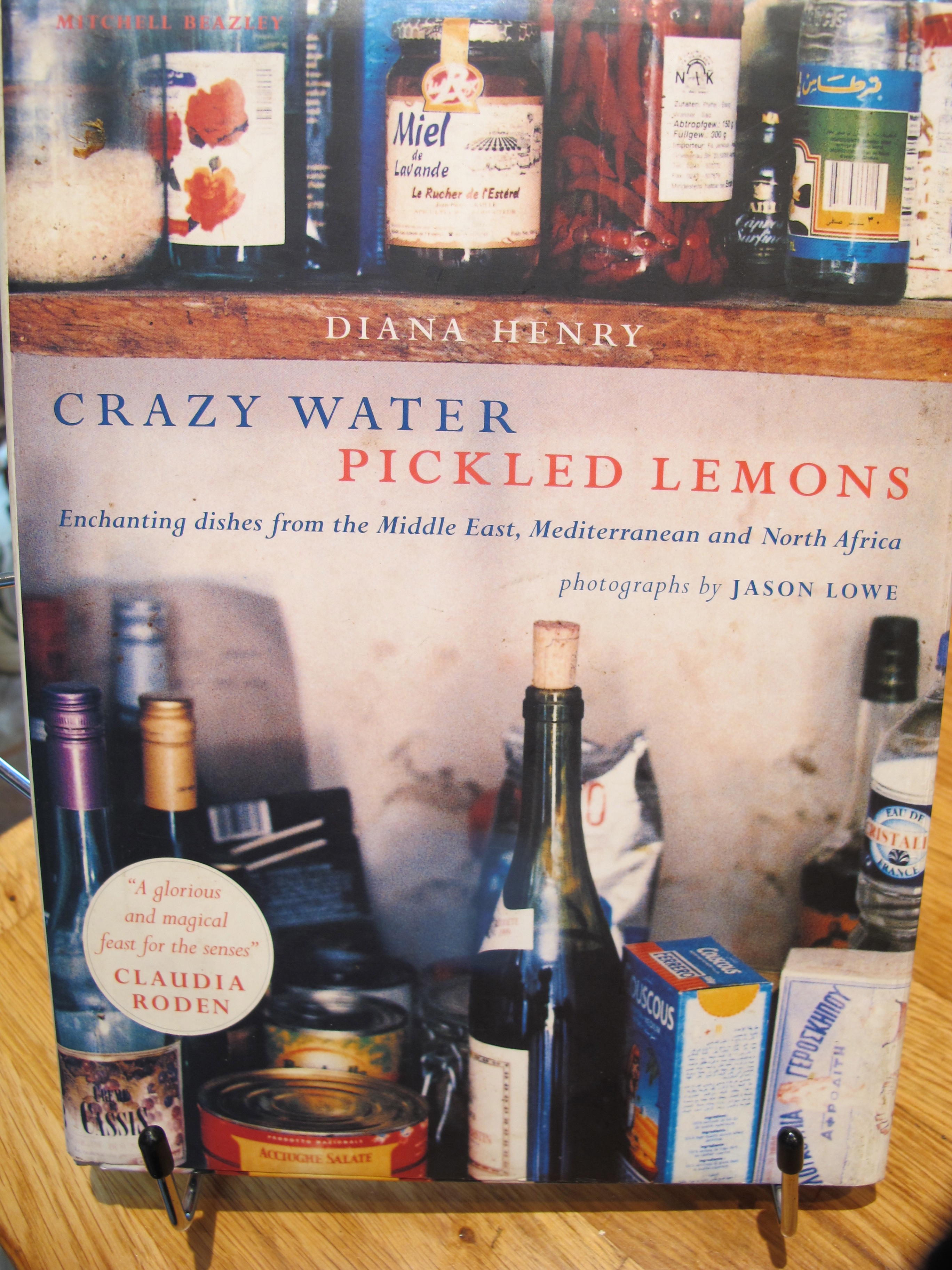
The one I bought on Saturday morning weighed two pounds, perfect for the recipe I remembered in Diana Henry’s lovely and unusual book Crazy Water and Pickled Lemons.

A simple marinade and a quick roast made this an agreeable and easy supper for the two of us–a treat in fact, with the oranges and lemon/lime twist in the marinade.

for 2

*1 small chickencoquelet-poussin–(if you can’t find a small chicken, a larger one could be spatchcocked to cut the cooking time)

2 oranges–quartered and then each quarter, halved

1 sweet potato--sliced in rounds (optional)

the marinade:

juice of 2 oranges + the rind of one**

juice of a lemon or lime + the rind

2 tblsps balsamic vinegar

2 garlic cloves–peeled and crushed

2 tblsps olive oil

2 tblsps dried oregano

a few thyme sprigs

salt and pepper

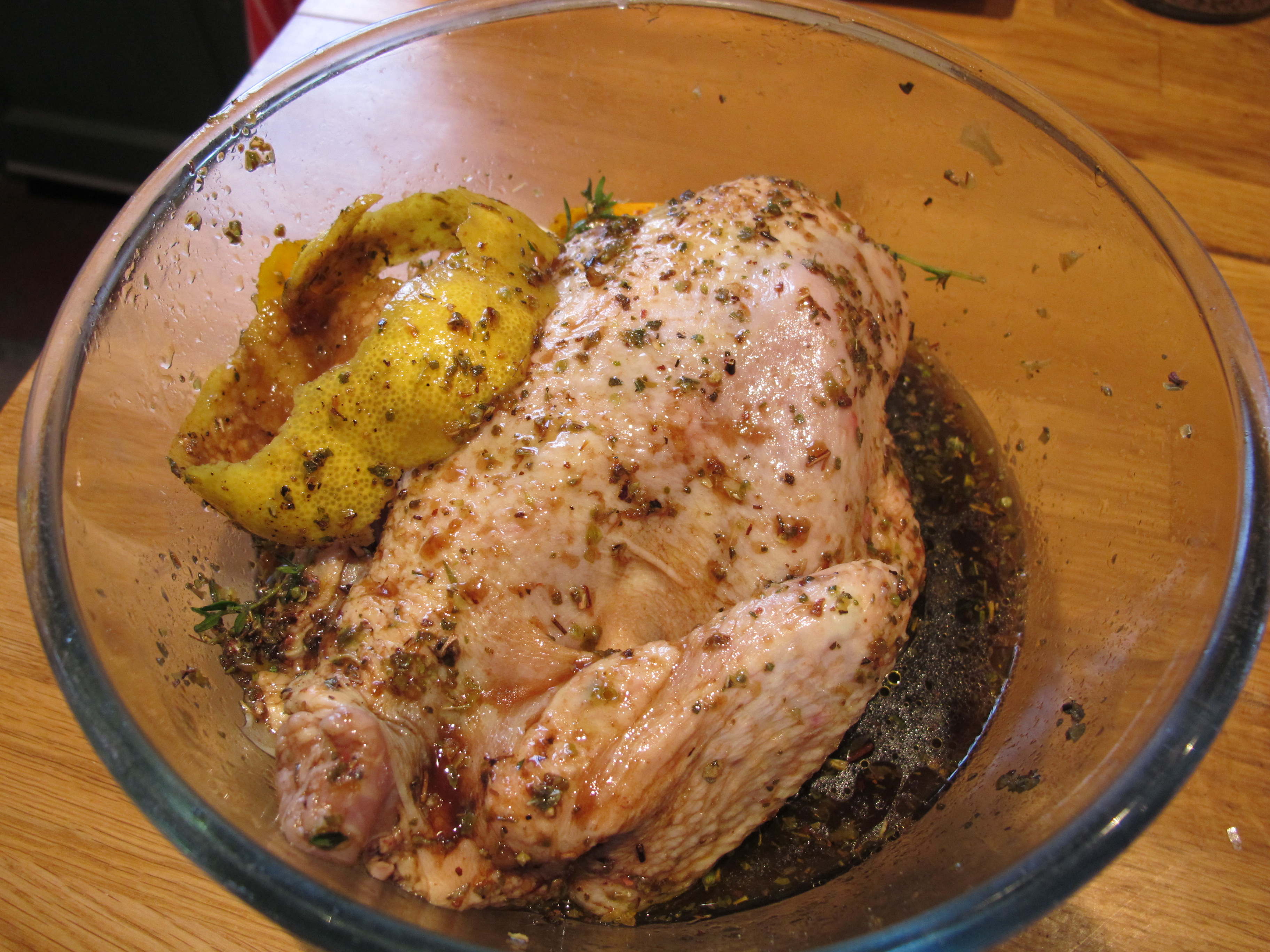
Mix the marinade ingredients together in a bowl.

Put in the chicken, breast side down and let it rest in the mixture, for 3 or 4 hours in our case–overnight if you can.

set the oven to 180C/350F

  • Put the chicken in a roasting tin surrounded snugly by the orange pieces and sweet potato slices (if using).
  • Pour a little of the marinade over the chicken.
  • Roast in the oven for an hour or more–depending on the size of the chicken.
  • Baste with the marinade two or three times.
  • Let the chicken rest a little, keeping it warm under a sheet of foil.
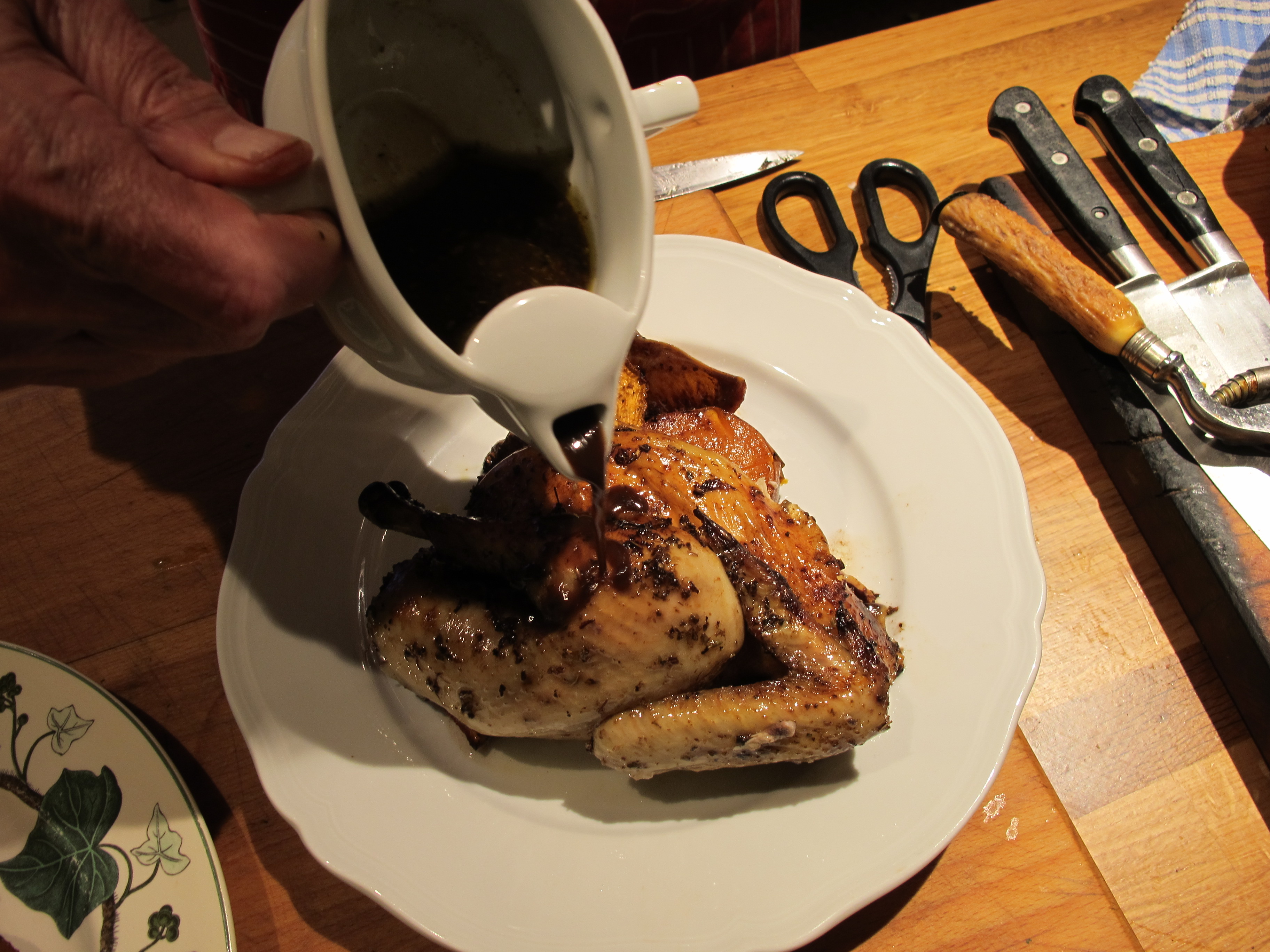
  • Halve the bird from front to back, along the breast bone and the back bone–best done with kitchen sheers.
  • Remove the orange slices and the sweet potato slices to a warm dish.
  • Deglaze the pan with a couple of tablespoons of water, scraping off the sticky bits to dissolve them in the liquid.
  • Heat the gravy through gently, while stirring.
  • Pour over the plated half-a-chicken and sweet potatoes.

**(Meredith wasn’t sure what the rind is and how it differs from the pith.  Same thing but the first is solid and obtained by carefully running a knife under the skin/rind, lifting it from the orange with as little of the white as you can. The second (pith) is scraped from the orange with a scraper/pither or a  call- it- what-you-willer!)

Read Full Post »

Our neighbor Richard, at the market this morning, enthused about the sound of swifts round the barn and the big blue sky.

On the drive home a hare peeked out to sniff the air–checking on Spring and whether it was safe to cross the road.

The bees are buzzing and beginning to busy themselves around the Judas tree.

The donkey up at the farm just eee-awed.

The walnut trees are leafing out at last.

Something is happening here (and you don’t know what  it is–do you Mr Jones!*)–and it’s about time!

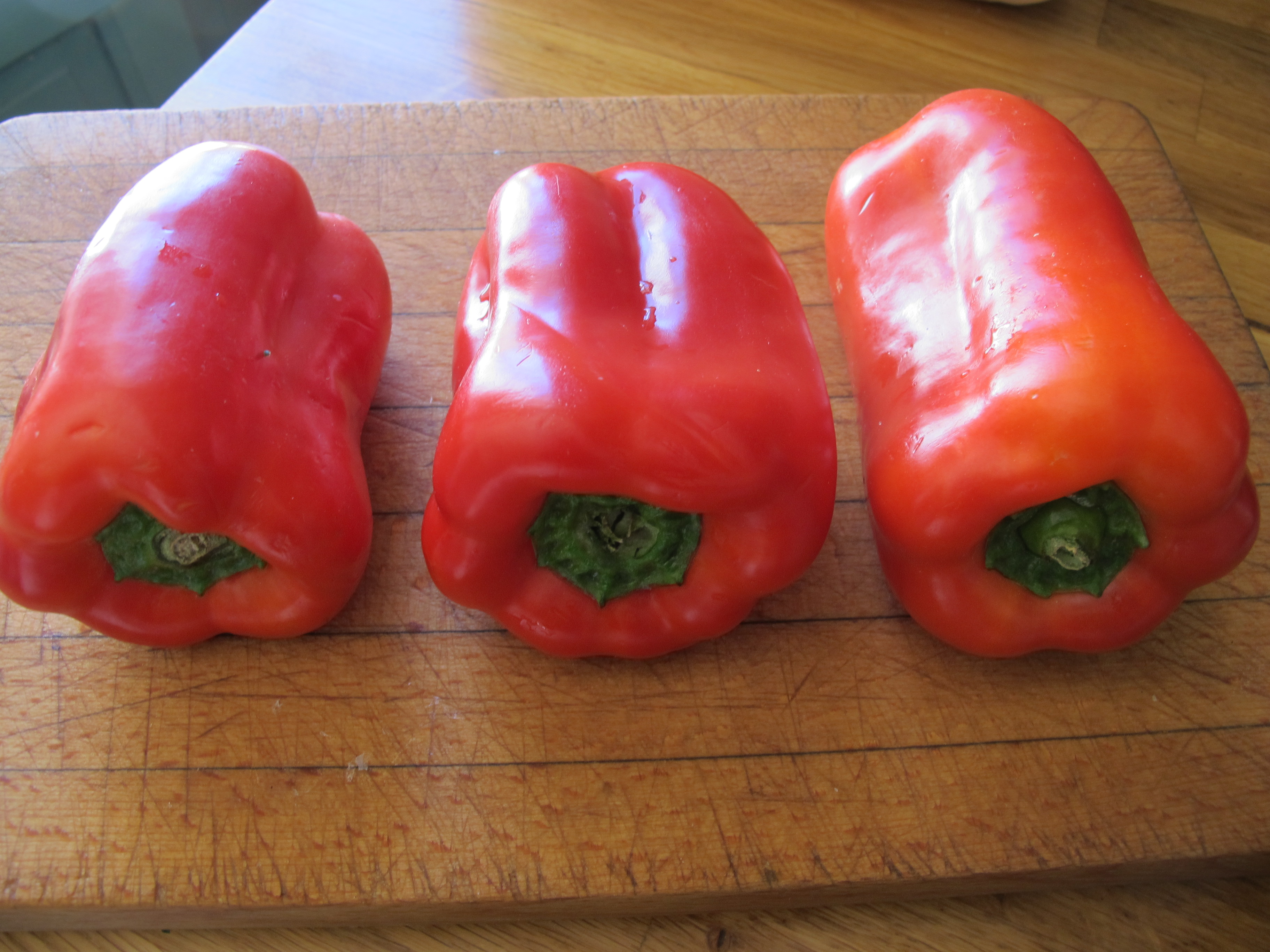
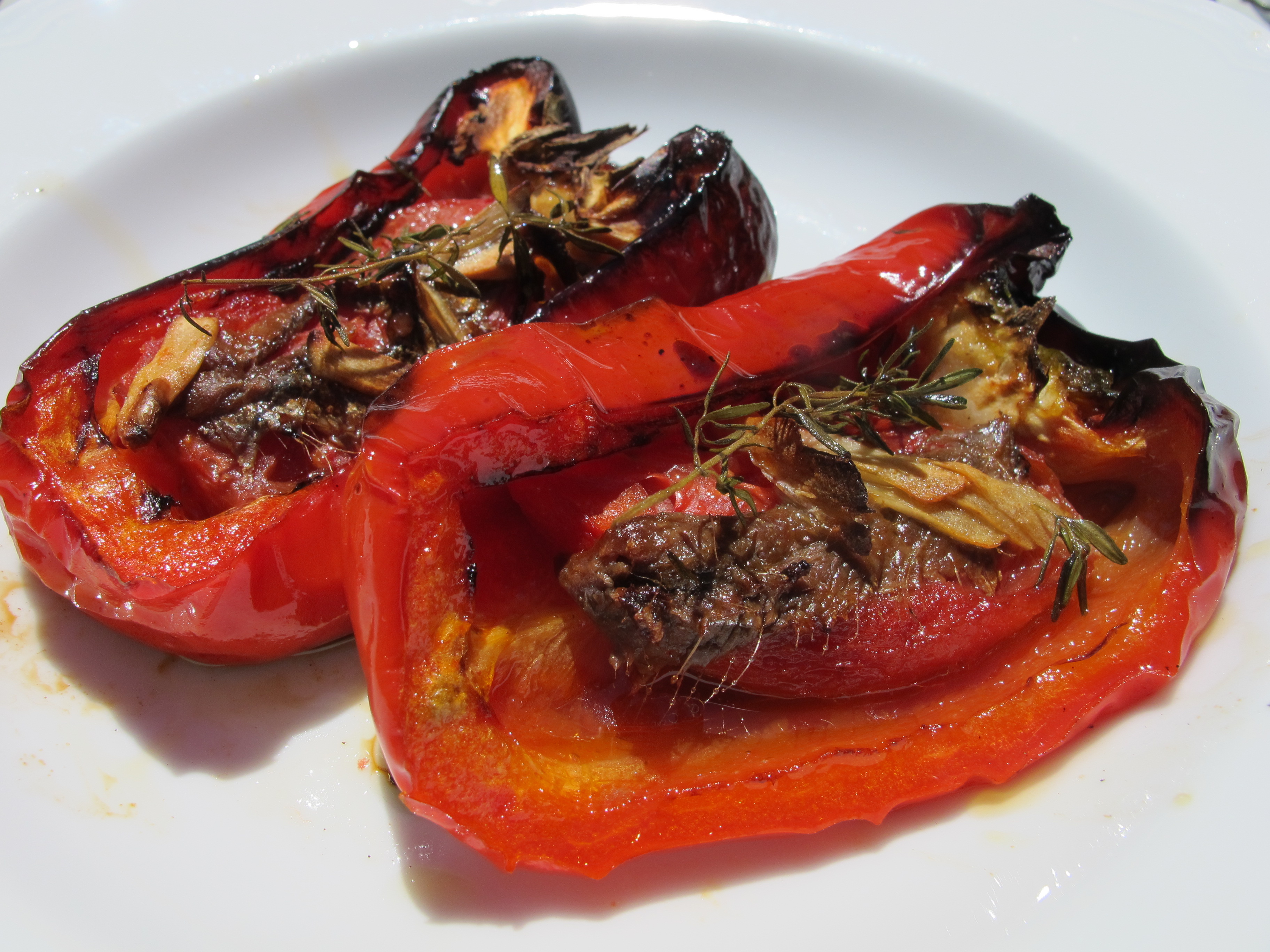
A good day–perhaps–to tempt fate with an early summer lunch dish–roast red pepper halves.

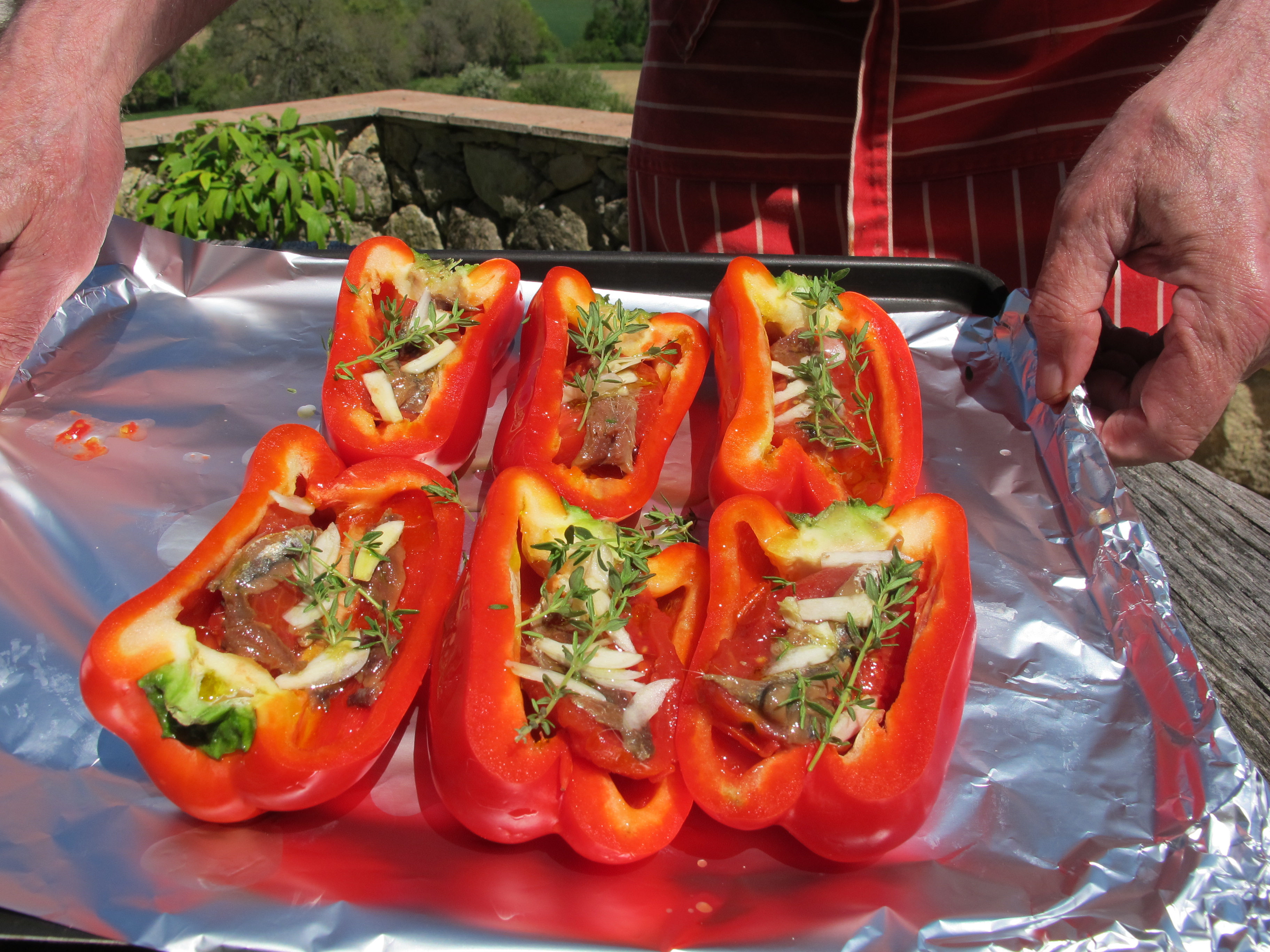
I see they featured just over a year ago with chèvre(goat’s cheese); todays’ will be with the thinnest slivers (easier to do than say fast!) of garlic and anchovies, melting into the tomato juices.

for 2

2/3 red peppers–carefully halved so they sit level on the baking tray

6 tinned (canned) tomatoes–halved

2 garlic cloves–sliced as thin as can be

4 anchovy fillets

olive oil

salt and pepper

a few thyme stems

set oven to 200C/400F

  • Cover a baking tray with foil–(saves time scraping after the tray has been in a hot oven).
  • Brush with olive oil to avoid the peppers sticking.
  • Place the peppers side by side on the tray.
  • Fill each half with tomato pieces, three or four slithers of garlic and an anchovy fillet on each.
  • Season well with salt and pepper.
  • Drizzle a tablespoon of olive oil over each half.
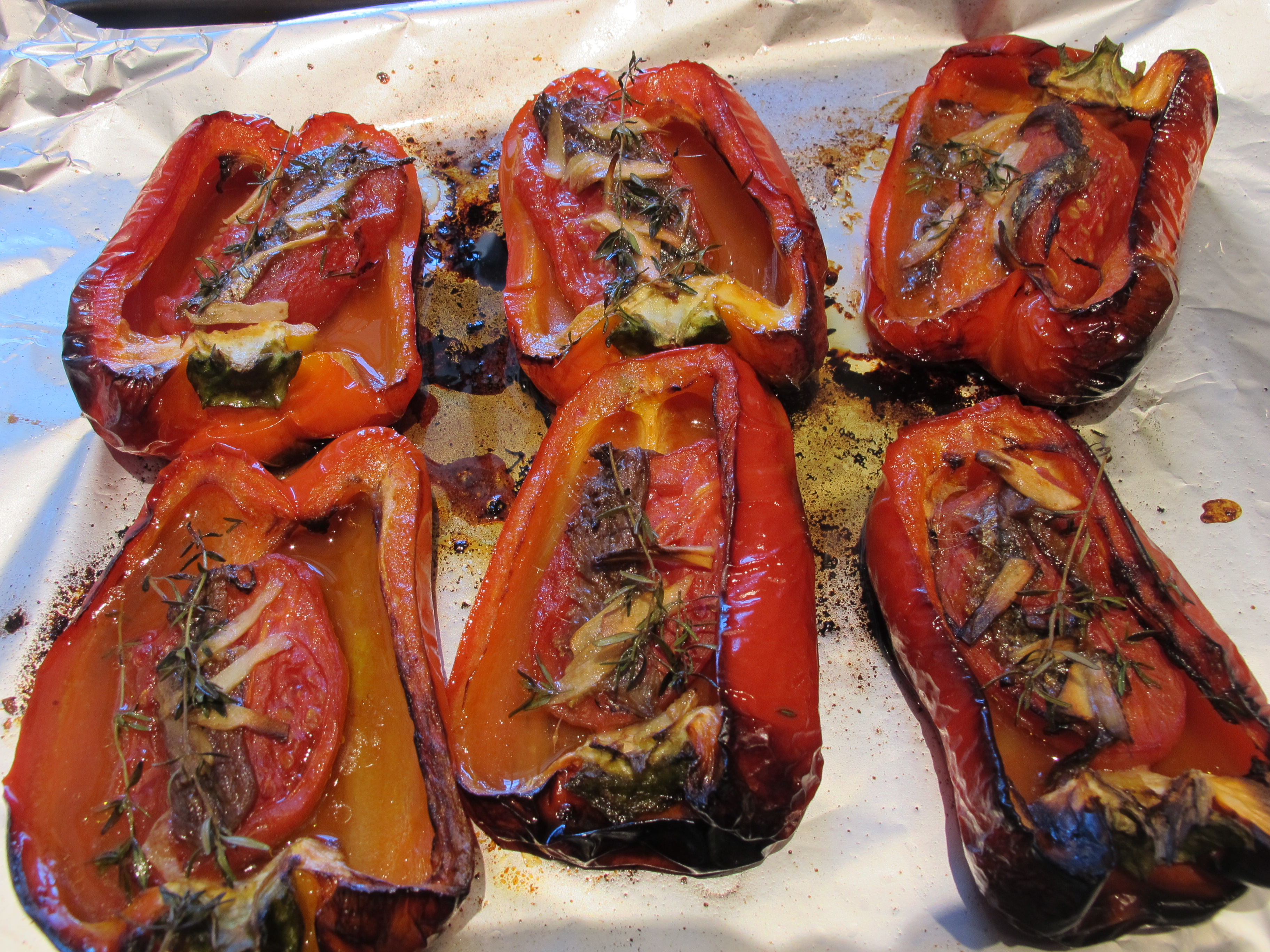
  • Bake in the hot oven for 3/4 hour–checking after half an hour–but they need to be thoroughly tender to be delicious.
And a simple green salad to serve.

from Ballad of a Thin Man by Bob Dylan-lyrics

Read Full Post »

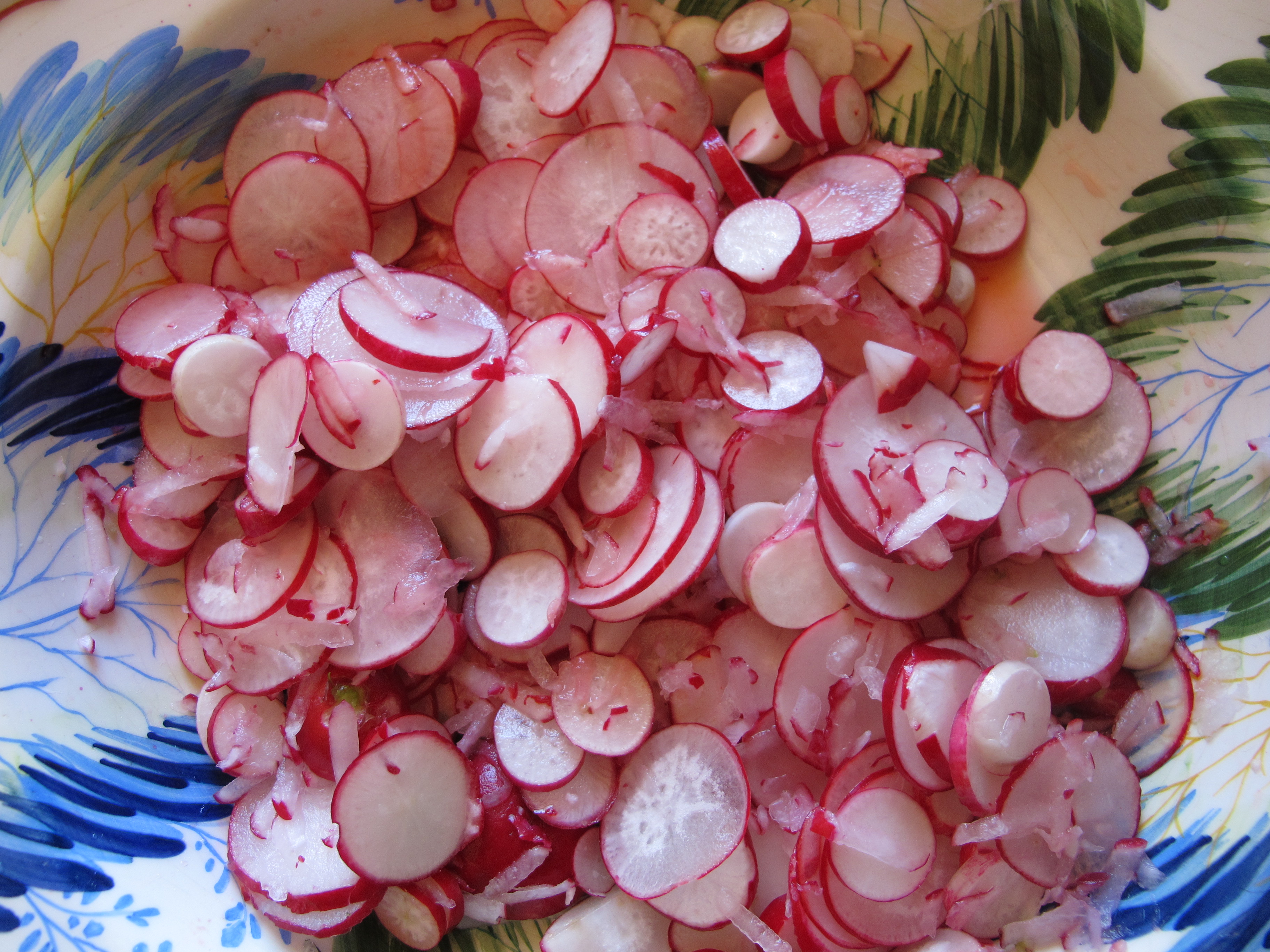
I like radishes–the fresher the better and we had them coming out of our ears after everyone bought them at the market on Saturday–about five bunches of munchies.

However there is a limit to how many sharp little explosions in the mouth one can take–even if, as it’s said, they are good for the digestion.

Our guests took a fortifying bunch with them on their travels on Sunday morning, but there was still a pile left in the fridge yesterday.

What to do with them..?

I consulted  Nancy Harmon Jenkins’ book–The Mediterranean Diet Cookbook (a gift from our friend Helen in Tuscany, after we’d helped with the olive harvest last November )

and found the perfect lunch for a sunny Bank Holiday (May 1st):

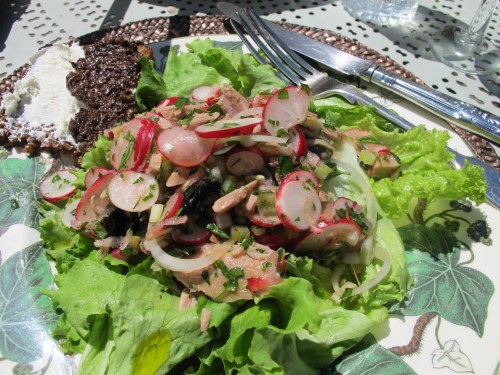
Radish, spring onion and tuna salad

1lb of radishes–washed, trimmed and sliced any-which-way that suits (grating some into the bowl makes for a pretty picture)

juice of 1/2 a lemon 

1 teaspoon of salt

2/3 tablespoons parsley–chopped fine

2 sticks of celery–diced fine

2/3 spring onions/scallions, mainly the white part–chopped fine

4oz jar of good tuna in olive oil–forked into flakes

10/12 juicy black olives–stoned and halved

3 tablespoons of the best olive oil you have

salt

  • Mix the radishes with the lemon juice and salt in a bowl.
  • Add the parsley, diced celery and spring onions.
  • Add the tuna flakes.
  • Sprinkle over the olives and the olive oil.
  • Admire it’s beauty for a moment-
  • before turning it over carefully but thoroughly.

A  green salad,  some soft local goats cheese and a spoonful of the tapinade I’d made on Saturday, went well with it at lunch.

Read Full Post »

Under the weather–perfect English euphemism for the annoying cold that isn’t exactly ‘flu that has confined me to bed, for almost a week now.

Meredith and Pippa have been exemplary carers though–(Meredith up and down stairs with trays and tinctures and Pippa lying there on the bed, willing me better)

Pippa(r) with two student carers.

–and it has given me some reading time.

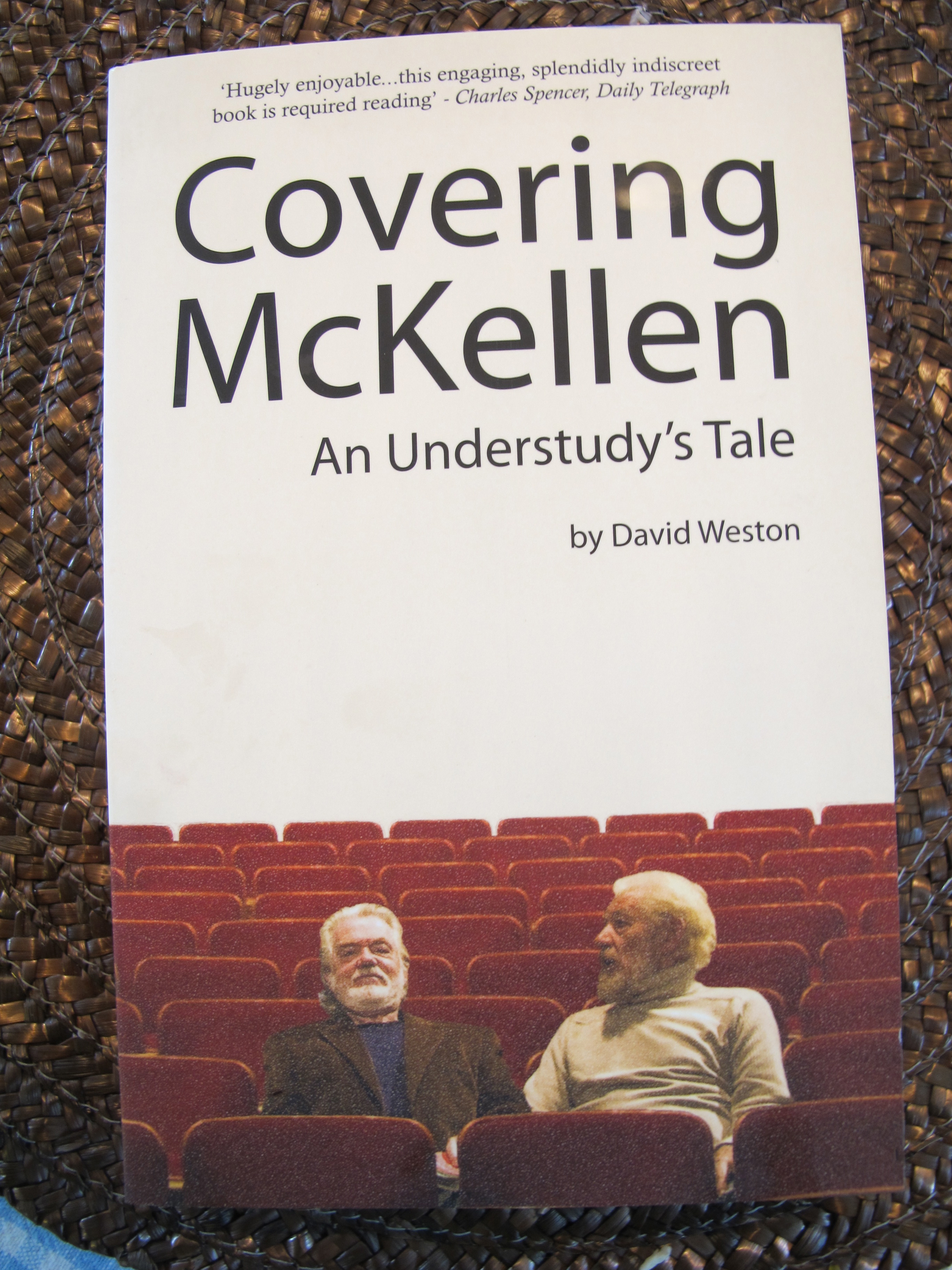
David Weston’s book “Covering McKellen” arrived the day I was struck down.

It relates, in the form of a diary, the troubled but entertaining backstage story of the 2007 Royal Shakespeare Company’s World Tour of Shakespeare’s King Lear–starring Ian McKellen.

David Weston understudied Sir Ian and played the supporting role of “Gentleman” in the production.

He prefers to call the job “covering”–hence the title.

I was in the National Youth Theatre with David in 1960 and The Actors’ Company between 1972 and 1974 with Ian–hence my interest.

The book has proved therapeutic and enjoyable.

It has also reminded me of the danger understudies can pose to a principal–they might be rather good!

Lunch yesterday, for instance, was grilled lamb chops and asparagus–provided by my understudy/cover.

Perfectly cooked–nicely pink without being bloody, seasoned to a “T”with salt and black pepper and with a hint of olive oil, garlic and rosemary from the short marinading–I ate them with relish, not quite understanding the faint feeling of unease I was experiencing with each bite.

Then I remembered David’s book and resolved to get better–asap!

Read Full Post »

When a hero dies (Levon Helm) it’s comforting  to hear of other heroes or in this case heroines, flourishing.

Two such are revered veteran  food writers and cooks  Claudia Roden

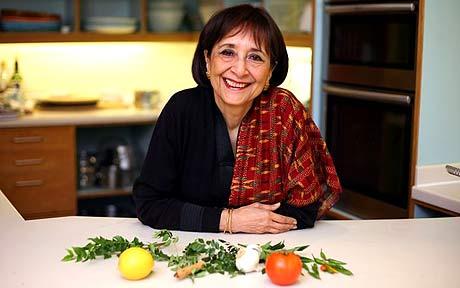
and Madhur Jaffrey

They are both in their  70’s and both have new projects.

Claudia Roden (75) is publishing  The Food of Spain and Madhur Jaffrey (78) is relaunching herself on the Good  Food TV Channel with a new series to accompany her new book, Curry Nation.

Madhur Jaffrey had come to mind when I felt a yen for something with an Indian flavor for supper tonight–but couldn’t find a focus for the fancy, until I spotted a nest of cauliflowers offering themselves on the small table stall of a local grower early this morning.

I was pretty sure Madhur Jaffrey had a good recipe for cauliflower in her book  Indian Cookery; so I bought the middling sized one and headed home for breakfast.

Here it is–adjusted a little:

for 2--as a main course:

1 medium cauliflower–the head separated into small bite size florets

3 tablespoons olive oil

1/2 teaspoon fennel seeds

1 teaspoon black mustard seeds

2 cloves of garlic–chopped fine

1/4 teaspoon turmeric

1/4 teaspoon cayenne pepper

1 teaspoon salt

  • Soak the cauliflower in water for a half hour–then drain the florets.
  • Heat the oil in a pan large enough to hold the florets in a single layer.
  • Add the fennel and mustard seeds and sauté until they start popping.
  • Add the turmeric and the cayenne.
  • Add the garlic to the pan and let it colour lightly.
  • Add the drained florets, salt and 3 tablespoons of water.
  • Cover and cook for 10 minutes–or until the cauliflower is almost tender.

Brown basmati rice, red lentil dhal and yogurt sauce accompanied it–my yen was satisfied!

Read Full Post »

Birthday week, in a double significant Birthday year.

Today Meredith continues the celebrations with a small lunch for four after her weekly chi-gong class.

She has engaged a caterer, because naturally she can’t be expected to cook and chi-gong in the same morning.

The caterer was asked to prepare an italian torte from a relatively new cookbook provided by Meredith.

She’s confident, she told the caterer, that if they stick to the instructions in the book, all will be well; there’ll be enough for four even after a hungry making chi-gong class and her friends will be delighted by the delicious dish presented to them.

(The caterer, not without a soupçon of pride, would like it to be known that there’s a small hint in the previous sentence as to the identity of said caterer–just in case any reader might consider the book for purchase*.)

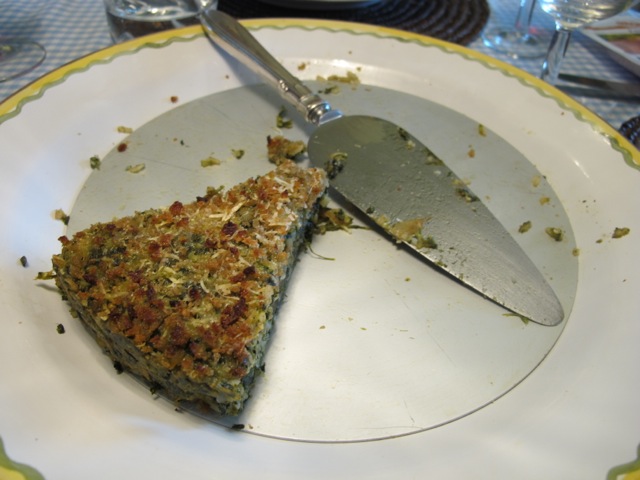
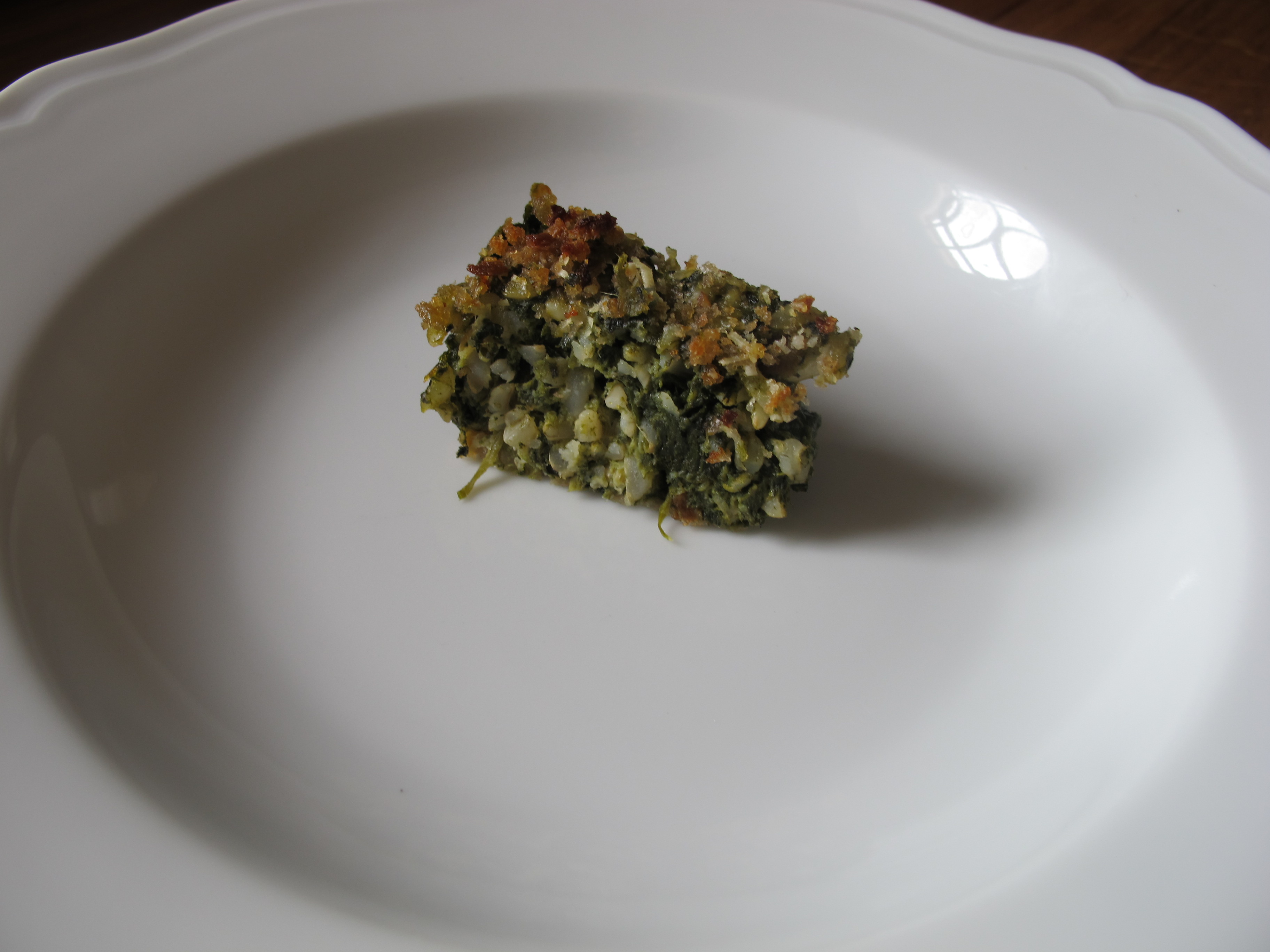
Rice and Spinach Torte

Serves 4 as lunch or more as a starter

Based on Marcella Hazan’s version of a classic, this is very useful as there is no pastry.

You can cook the spinach, rice and onions well in advance, the night before even; then it turns into an assembly job and as such is therapeutic!

1 kg/21⁄4 lb spinach – washed carefully

200 g/7 oz basmati long-grain rice
1 medium onion – chopped
25 g/1 oz butter

4 tbsp olive oil

1⁄4 tsp grated nutmeg
50 g/2 oz grated Parmesan cheese
salt and pepper
4 eggs
25 g/1 oz breadcrumbs – rye or 100 per cent wholewheat

Heat the oven at 230°C/450°F/Gas Mark 8.

  • Cook the spinach in the water clinging to it after washing, covered, over a gentle heat – until it has wilted completely –about 10 minutes.
  • When it’s cool enough, gently squeeze as much water out of it as you can and roughly chop it.
  • Cook the rice in a saucepan, in 570 ml/1 pint/21/2 cups ofwater, covered and over a low heat – it will take about 25 minutes.
  • Test it for tenderness; drain and leave to cool.
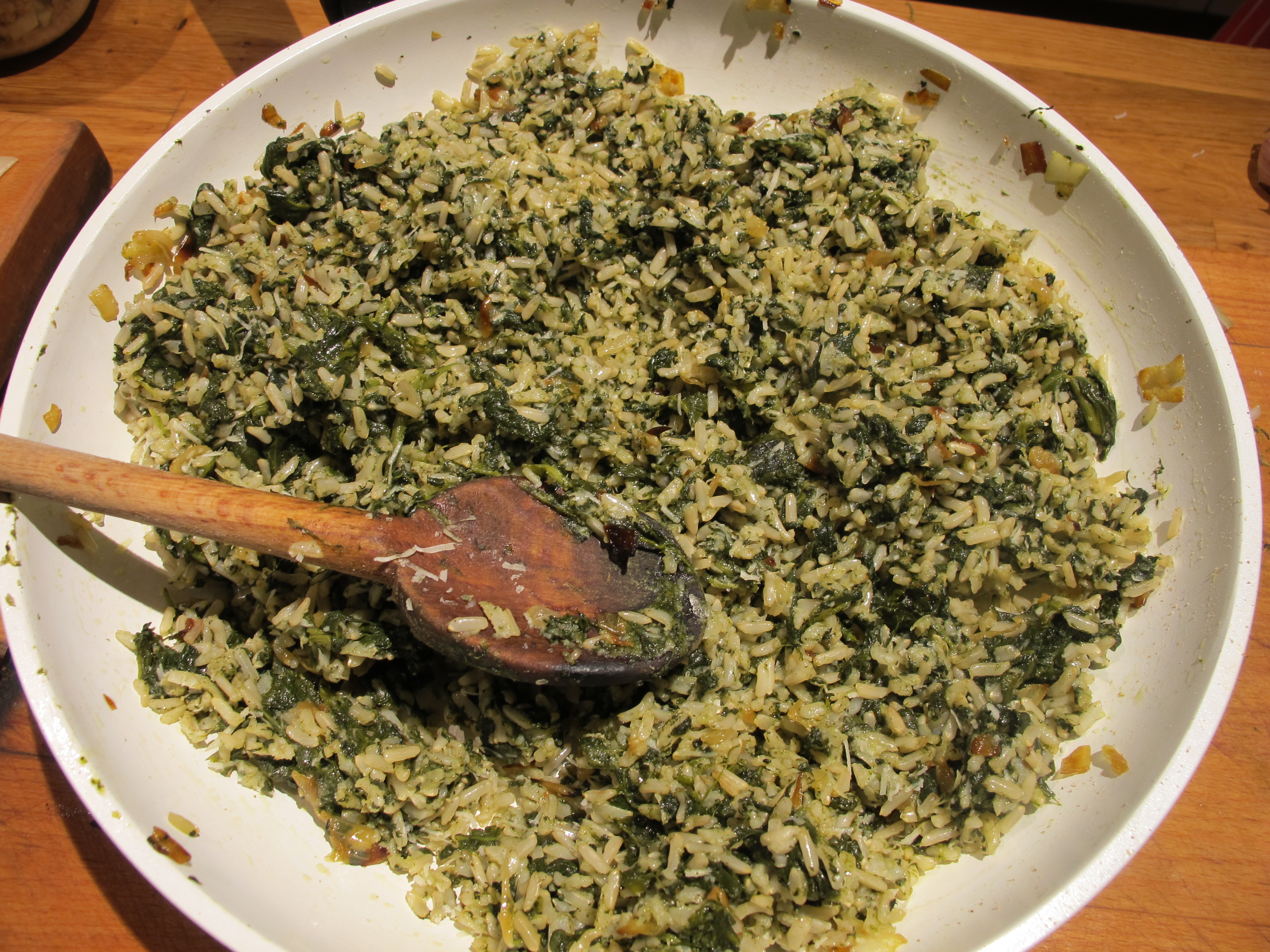
  • Cook the onion in the butter and oil in a large sauté pan overa medium heat until it is a lively brown.
  • Add the cooled spinach and rice to the onion and cook on low heat for about 4 minutes, turning to mix and coat well with the oil and butter. Leave to cool.
  • Add the nutmeg and half the cheese.
  • Season this mix carefully with salt and pepper – tasting and turning as you go – the salt should just come through.
  • Turn in the eggs singly.
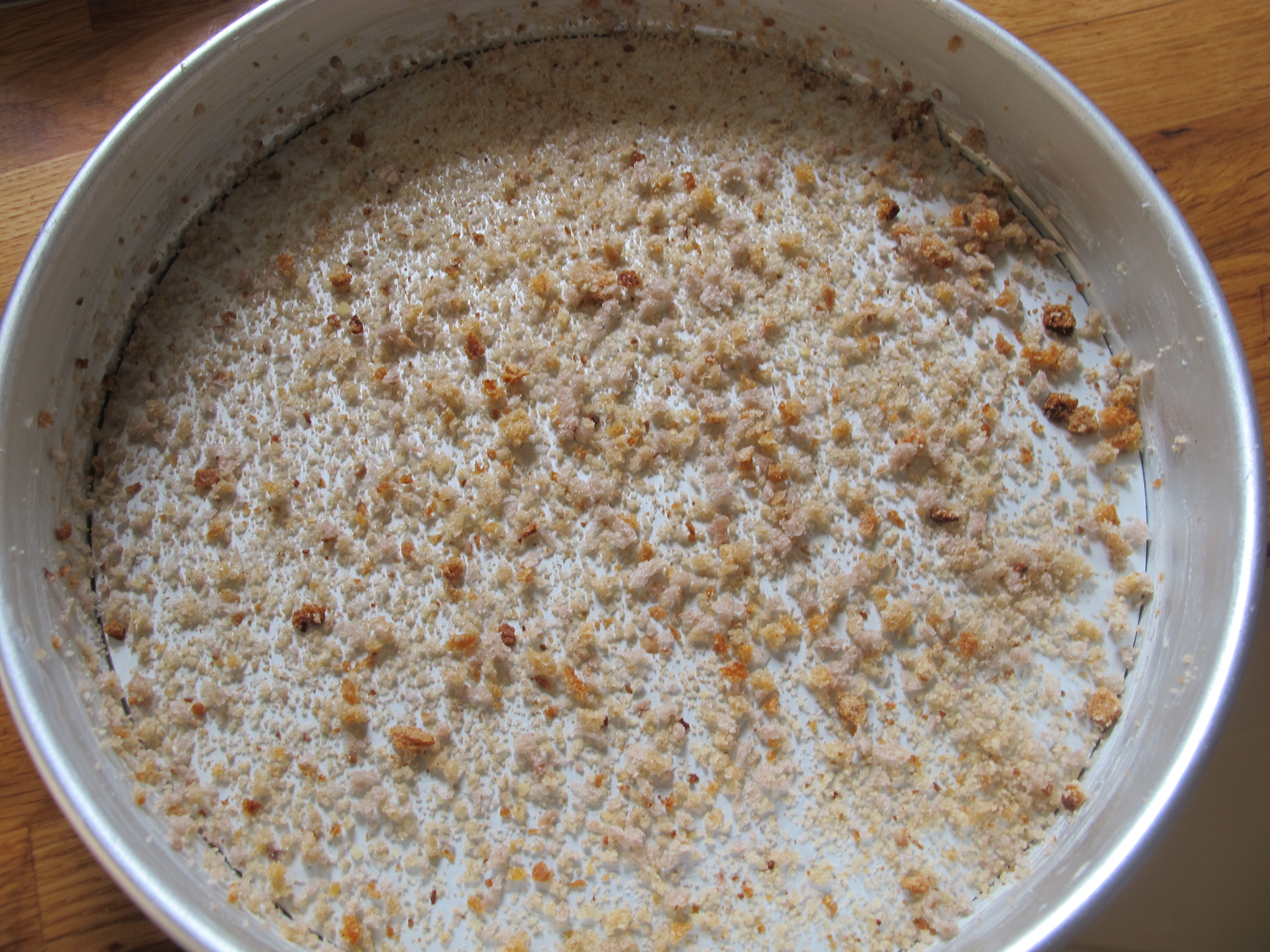
  • Butter or oil the torte tin and sprinkle half the breadcrumbs in the base.
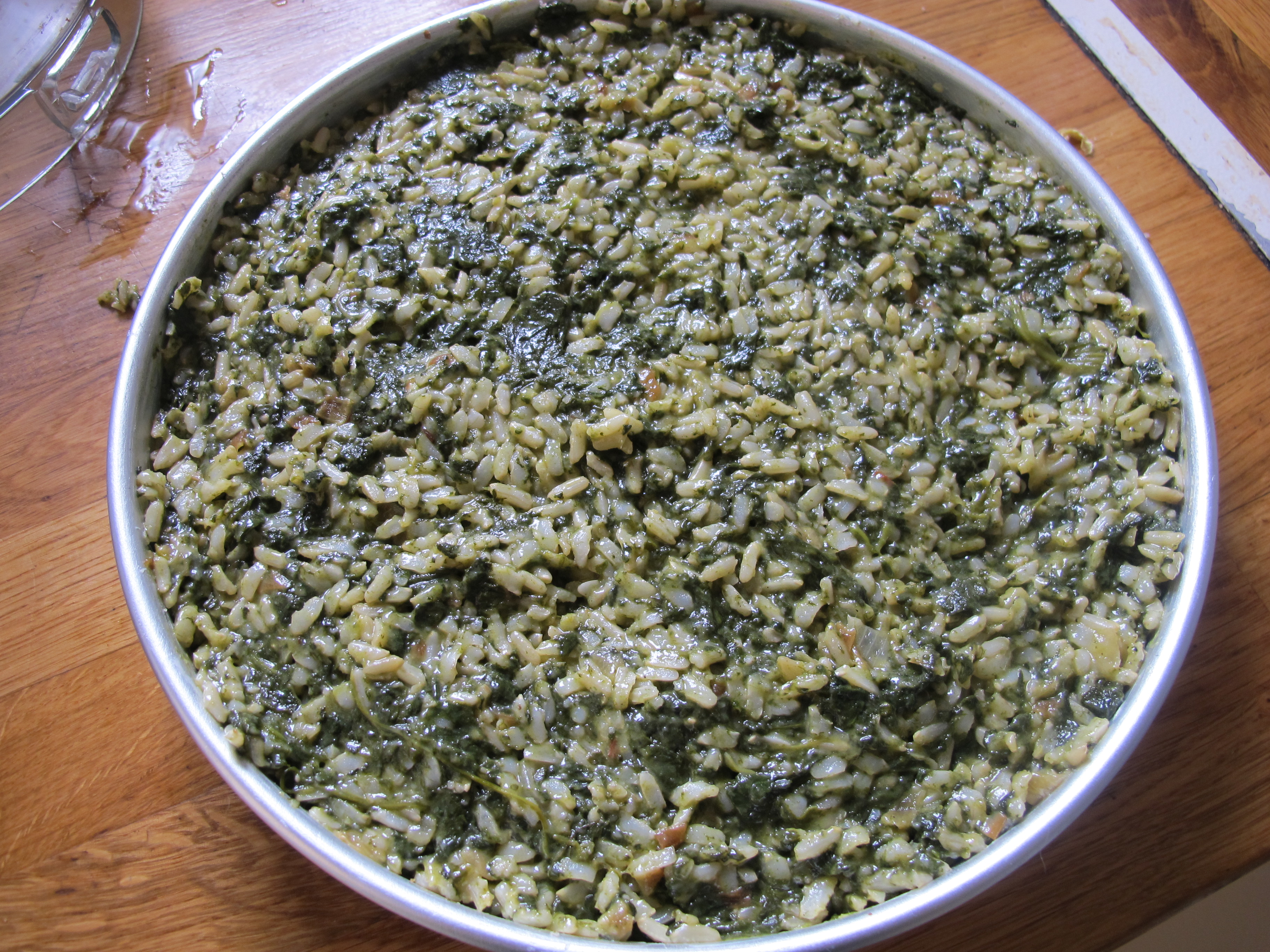
  • Now turn the mix into it and smooth over the surface.
  • Mix the remaining crumbs and cheese and sprinkle them over the surface.
  • Dribble olive oil over this.
  • Bake in the top of the oven for 15 minutes.
  • Serve tepid–with perhaps a green salad.

(*Delicious Dishes for Diabetics–to save possible confusion!)

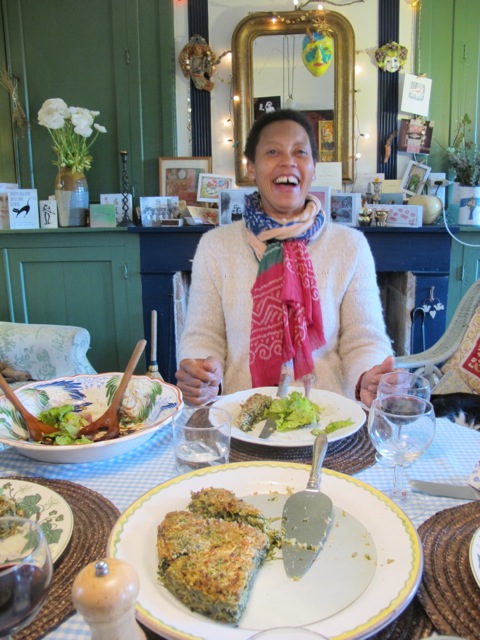
Sonia & the torte, going, going....

What was left!

together with a restored chi-gong class and a happy caterer!

Read Full Post »

“You say endive and I say chicory—let’s NOT call the whole thing off!”

This is the vegetable in question:

Here in France they call it endive and this is chicorée

In the UK it’s the reverse–perversely.

Oh well–Vive la difference!

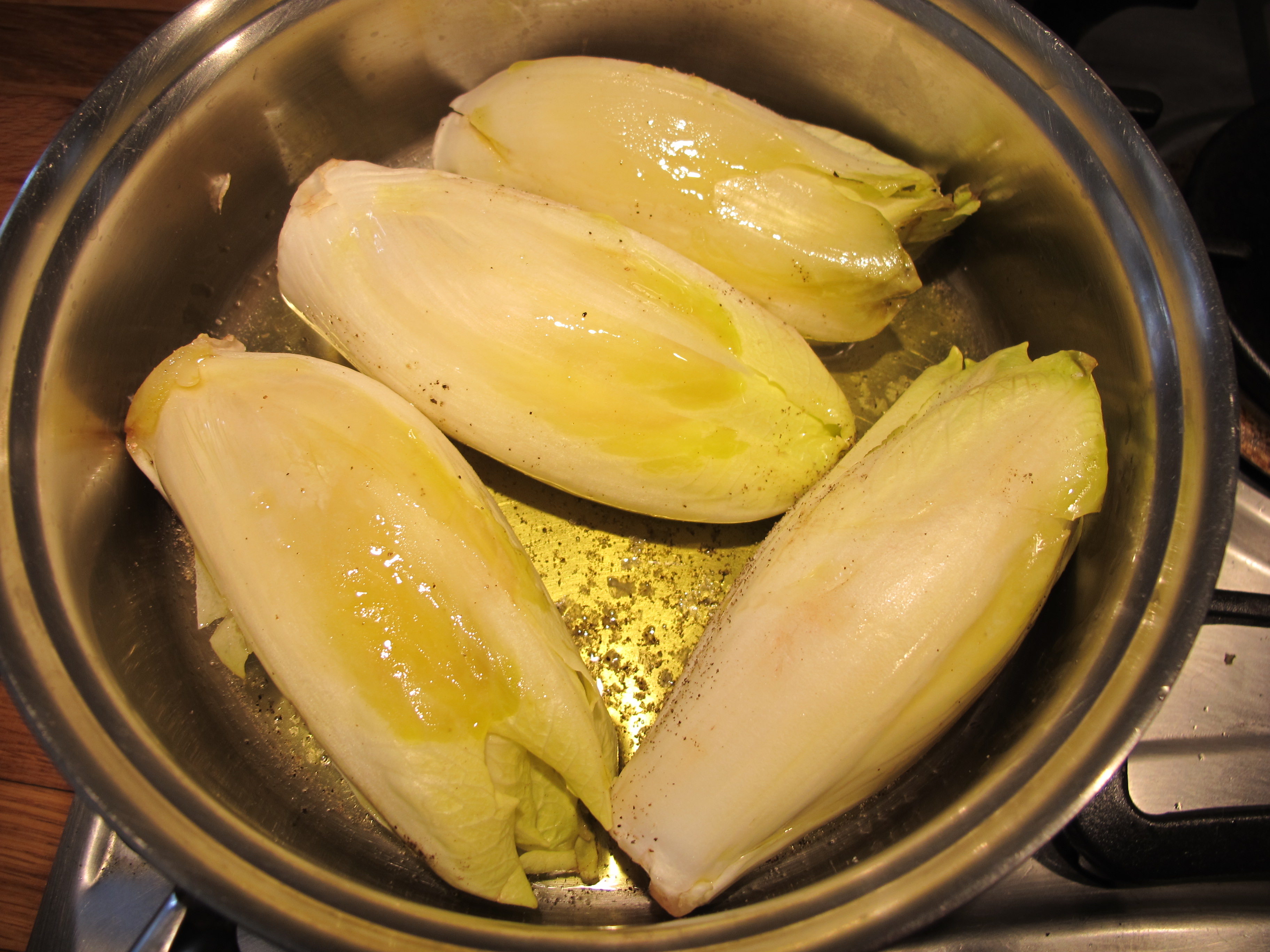
This simple method comes from an early Simon Hopkinson book–Roast Chicken and Other Stories.

The bulbs are cooked in a low oven for two hours and emerge with “eat me!” written all over them.

Two medium endive each went well with the chicken last night.

for 2

4 medium endive/chicory bulbs–outer leaves removed, bases sliced off and the bitter little cone carefully  removed with the tip of a sharp knife.

2/3 tablespoons olive oil

salt and pepper

juice of a lemon

  • Heat the oven to 170C/340F/fan oven 160C
  • Heat the oil in a pan with a lid, that can go into the oven.
  • Place the bulbs in the pan and season with salt and pepper.
  • Turn them in the oil over a medium low flame to color them.
  • Add the lemon juice and let it bubble a moment.
  • Cover the pan and put it in the oven for two hours.
  • Wise to check them now and again–add a little water if necessary.
  • It proved popular in-house!–encore! was heard…

Read Full Post »

This is adapted from the simple recipe in Simon Hopkinson’s latest book The Good Cook.

He uses butter and vermouth. I’m trying it with olive oil and white wine–fits in better with my way of eating.

It’ll be different–but if the salmon and the spinach are good….

The single pot and the short cooking time make it a useful quick lunch–

for two.

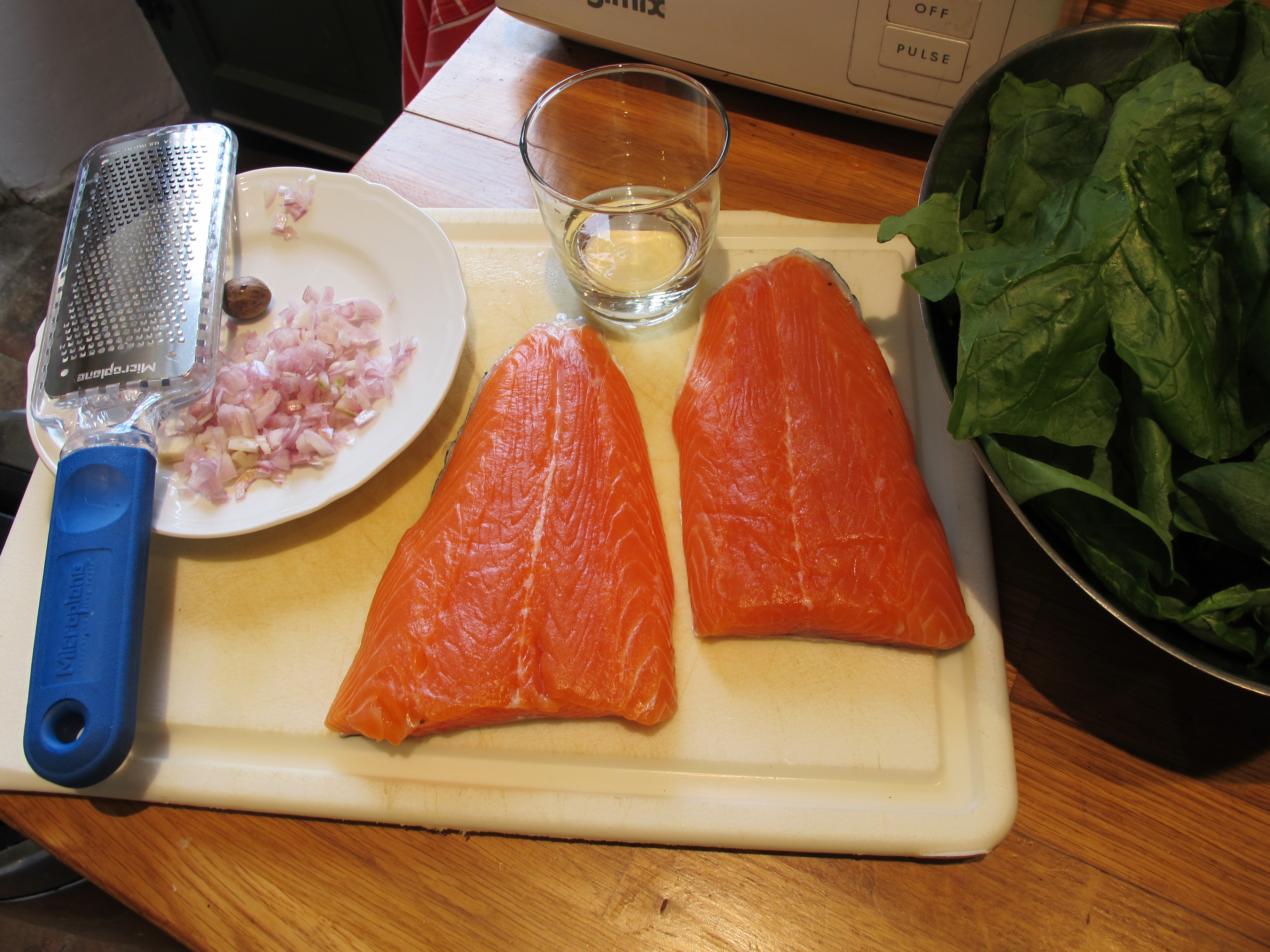
2 salmon fillets–skin left on

1 shallot–chopped fine

300gms/10oz spinach–washed, de-spined and spun free of water

2 tablespoons olive oil

2 tablespoons white wine

a grating of nutmeg

salt and pepper

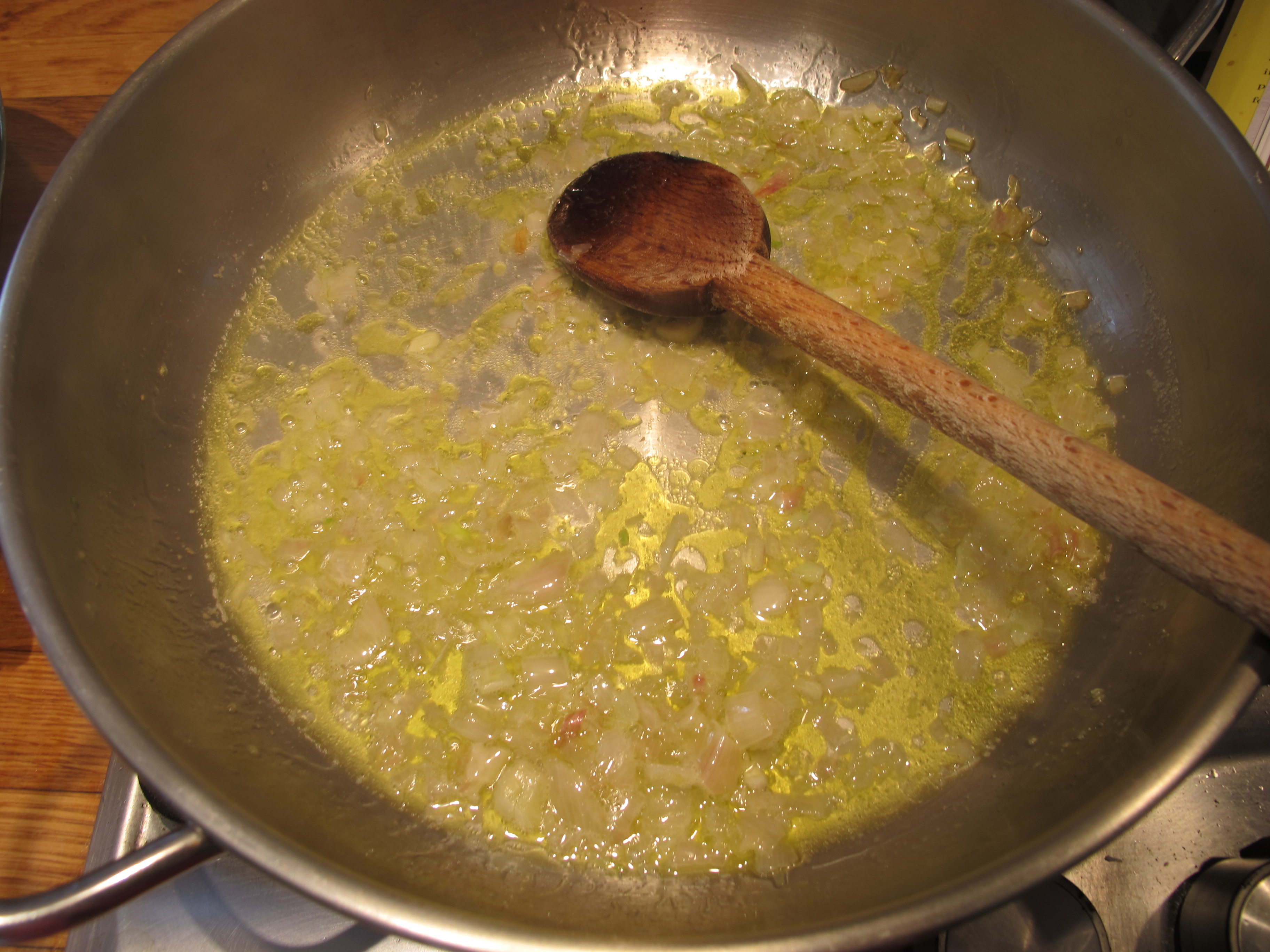
  • Heat a tablespoon of oil in a pot with a top.
  • Sauté the shallot for a couple of minutes to soften it.
  • Add the wine and leave it to bubble a moment or two.
  • Lay a third of the spinach in the pan and place the salmon fillets over it.
  • Sprinkle over some salt and pepper and a grating of nutmeg.
  • Cover the salmon with the rest of the spinach.
  • Scatter the remaining tablespoon of oil over the spinach and cover the pan.
  • Cook for seven minutes over a low heat.
  • Turn the heat off and leave the pan covered for ten minutes before serving.
  • These timings can vary depending on the thickness of the salmon fillets.

Less rich than the original might have been, but we enjoyed it.

Meredith suggests I be a bit bolder with the nutmeg next time.

Read Full Post »

« Newer Posts - Older Posts »