Feeds:
Posts
Comments

Archive for the ‘Recipes’ Category

Our friend, Romaine Hart–a wise counsellor–was adamant last night that we were not getting enough PROTEIN!

Our tales of how long it’s taking to shake off the virus that has been a companion (on and off) for nearly three weeks was all the proof she needed.

So we agreed that a couple of lamb chops for lunch today would be a step in the right direction.

Vegetable soups–all very well, but they need backing-up!

We are eating meat less frequently now.

This is reflected in the meat section of my new book,  Healthy Eating for Life (to be published January 8th–my birthday!).

I awake this morning intending to visit Lautrec’s Friday market, pick up some lamb chops from the local butcher and see what’s up. 

It’s a chilly, grey November day and I light the fire.

My determination wavers and I start to think, “Maybe chops tomorrow–how about a heartwarming vegetable soup?”.

Then I remember this soup from my first book–and rationalize: White beans are a good protein source!

I picture it steaming in a bowl with a swirl of the new, green olive oil and thoughts of driving to Lautrec disappear in the mist!

IMG_0073

for 4

1 clove of garlic – peeled and chopped

8 tbsp olive oil

2 tbsp parsley – chopped
1 kg/36 oz canned or–preferably–bottled white beans – drained and rinsed

salt and pepper

250 ml/1⁄2 pint/1 cup vegetable stock

toasted wholewheat bread with a little olive oil

for 4

Sauté the garlic in the oil gently until it colours.

Add the parsley and stir a couple of times.

Mix in the beans, salt and pepper.

IMG_0066

Cover and cook gently for about 5 minutes to warm through.

IMG_0067

Purée a quarter of the beans in a mixer and return with the stock to the pan.

IMG_0070

Simmer for another 5 minutes.

IMG_0069

Check the seasoning.

Serve over the toast with a swirl of olive oil in each bowl.

Optional: Sprinkle chopped parsley over the top before serving.

Read Full Post »

Chickpea flour is also known as Besan and gram. A good substitute for wheat flour for those with gluten intolerance, it has other nutritional virtues and it tastes delicious.

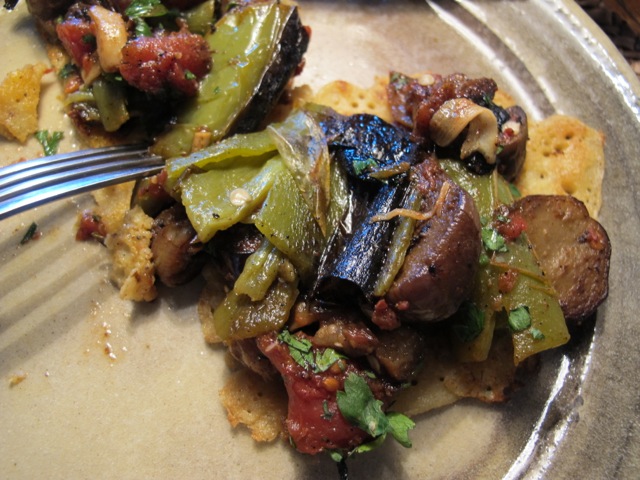
This is street food and is still sold on the streets of Nice and Marseille in southern France. The pancakes are about 20 cm/8 inches wide and are good for parking things on – a fried egg or some bacon bits or as I did recently a spoonful of leftover green pepper and aubergine ratatouille.

IMG_9674

170 g/6 oz chickpea flour

400 ml/14 fl oz/1½ cups sparkling water

60 ml/2 fl oz cup olive oil

salt and pepper

1 tbsp rosemary leaves

olive oil for frying

  • Shake the flour gently through a sieve into a mixing bowl.
  • Add the water and whisk it in until you have a smooth runny paste.
  • Add the oil and whisk in.
  • Add pinches of salt and pepper plus the rosemary.
  • Leave to soak for 20–30 minutes.
  • When you are ready to make the pancake, heat a swirl of olive oil in a 25 cm/10 inch frying pan.
  • When the oil is hot, put a tablespoonful of the stirred mixture in the pan and let it spread.
  • Cook for a few seconds until you can ease the pancake loose with a spatula.
  • Now you have to turn it over–be bold!
  • Practice makes perfect and anyway the first attempt, if not completely successful, will be edible.
  • Cook the pancake a further few seconds and remove from the pan.
  • Both sides should be a golden brown.
  • Add a few twists of the pepper mill on each.
  • Add what you will and serve with a green salad.

Read Full Post »

Betsy Webber–who attended my cooking workshop in May–recently commented that this was one of her favorite dishes. Thanks Betsy for reminding me!

We are having it for lunch–I had just enough tomato sauce left over to make it work.

I’ve been looking forward to trying it again for a couple of weeks.

It heralds the new season we are glorying in here.

Comfort food for the new chill.

An autumn/winter replacement for the Italian classic–Parmigiana Melanzane.

Here it is with a slice of sweet potato and some baba ganoush.

450gms/1lb broccoli–broken up into florets

4 tblsps tomato sauce*

parmesan cheese–freshly grated

salt and pepper

  • Steam the broccoli florets until they soften–but retain a bit of crunchiness.
  • Put them in a bowl and pour over two tablespoons of olive oil and season.
  • Heat a grill pad to hot.

  • Char the the florets lightly and remove.

  • Oil a shallow oven proof dish and spread some tomato sauce over the base.
  • Cover this with a layer of broccoli florets and season with salt and pepper.
  • Sprinkle over some parmesan.
  • Repeat the process finishing with a layer of parmesan.

  • Dribble olive oil over the top.
  • Heat the oven to 200C/400F.
  • Pop in the dish and bake for 15 minutes.

  • It should come out sizzling!

*Tomato sauce

3 cloves of garlic – peeled and finely sliced

4 tbsp olive oil

2 x 800 g/28 oz tins tomatoes – drained of their juice

salt and pepper

  • Fry the garlic gently in 2 tablespoons of olive oil in a large pan but do not let it brown.
  • Add the broken up tomatoes and the salt and pepper.
  • Cook on a high heat, stirring frequently to prevent burning, and watch out for splattering!
  • (Use the biggest wooden spoon you have!)
  • Cooking time is about 20 minutes.
  • When little red pock marks appear, making it look as though the surface of the moon has turned red, you know it is almost there.
  • The sauce will have reduced considerably and thickened, with very little liquid left.
  • Add the last two tablespoons of olive oil, taste and check the seasoning.


We decided that Betsy’s right–it’s delicious!

Read Full Post »

IMG_9604


Yesterday I found myself fancying chickpea soup.

There was a bottle of chickpeas three-quarters (300gms) full in the fridge.

We had plenty of onions, a couple of carrots, some celery and two  fennel bulbs in the crisper.

I put a third of the chickpeas in the small blender bowl with some of their liquid and whizzed them smooth.

Soffrito/battuto (what’s the difference?!*) next–the engine room of the soup–to give it some oomph.

So I chopped up 2 smallish onions, a couple of garlic cloves into small dice and sweated them in four tablespoons of olive oil in a medium saucepan for 20 minutes.

While the soffrito was softening I chopped the fennel into larger dice.

I added the chickpeas–mashed and whole–to the pan and stirred it well together.

Then in went the fennel dice and added a small stem of fresh thyme.and two bay leaves

I squeezed a scant tablespoon of tomato concentrate from a tube in the fridge, stirred it into the mixture and added a pint/500ml of vegetable stock and a tablespoon of chopped parsleynext time I’d add this to the soffrito.

Seasoned well with salt and freshly ground black pepper, brought it all up to the simmer and nearly forgot to add a small piece of the rind of parmesan cheese–cooked it all on for about 20 minutes until the fennel had softened.

We swirled some olive oil into our bowls, ate it slowly and sighed!

*A battuto is a pile of chopped raw ingredients, in this case just vegetables but sometimes it involves smoked or green bacon.

It becomes a soffrito when the pile is cooked slowly in oil, fat or butter as the base of a soup or a casserole.

This serves 2/3 or 4 at a pinch.

Read Full Post »

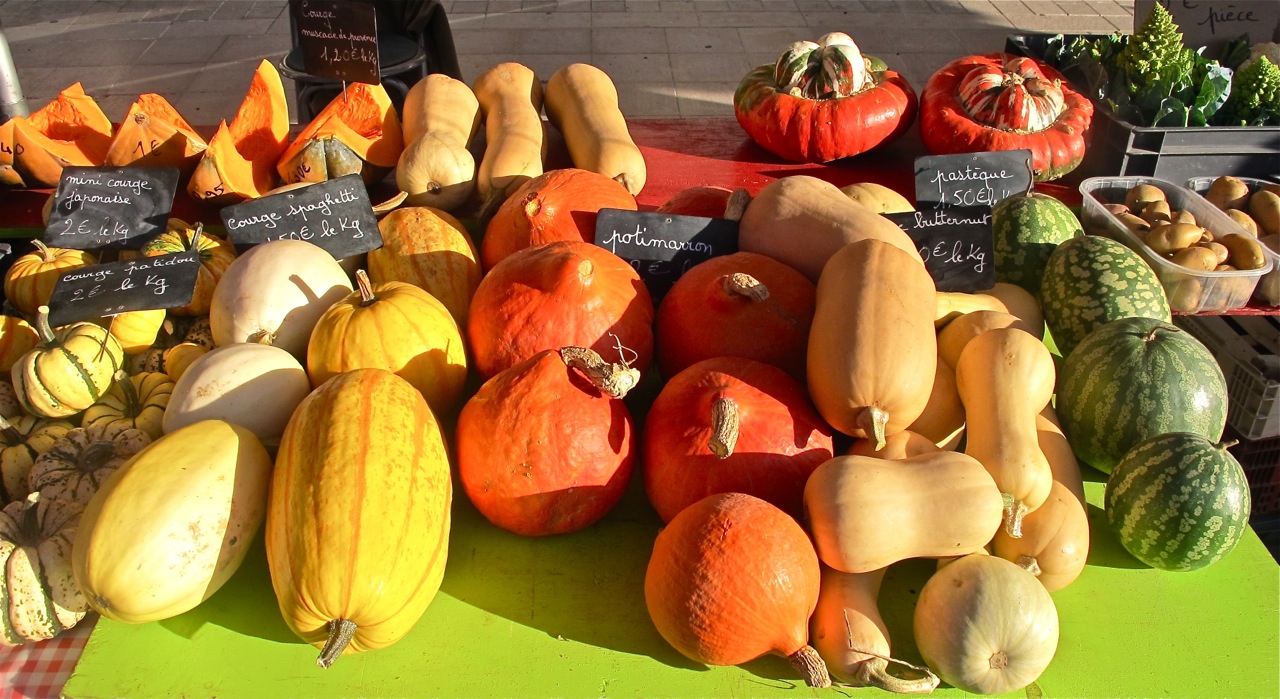
Autumn is the season of squash.

IMG_4325

This is an early post I found on a mining the past exercise last week.

I cooked it again and the recipe didn’t disappoint–in fact we finished the lot as we’d done way back in February 2011.

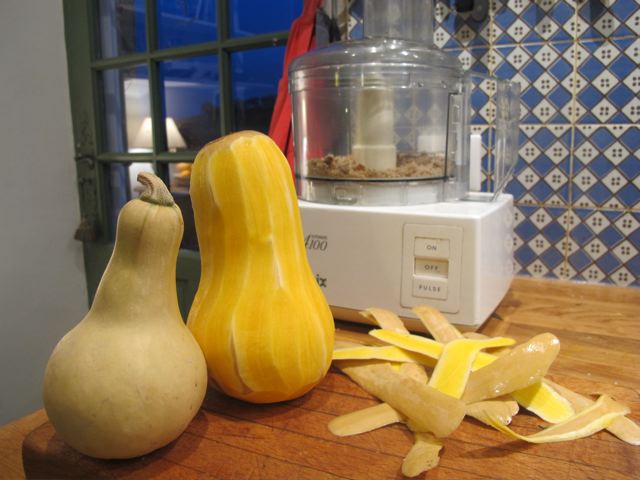
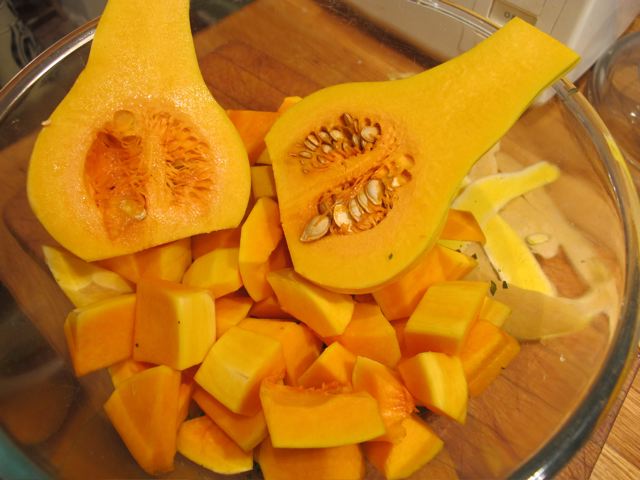
Butternut squashes dress modestly in light fawn leaving their showier cousins in orange and red to hog the limelight around this time of year–Halloween and Toussaint.

Under the skin though they show their true colors.

IMG_9540

A wonderful autumn glow emerges, mustardy yellow–warming heart and body–as in the soup below (recipe here).

squash4img_5430-1

“What’s on the menu today?”
“Gratin of one of us”
“Scary–after you, ClaudeI”

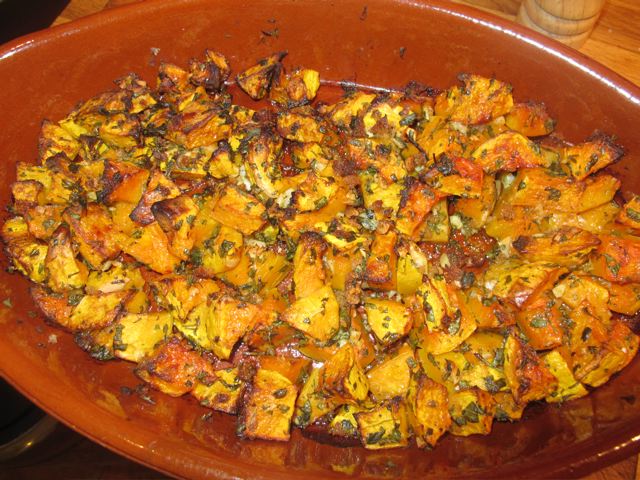
This is delicious–I’ll stick my neck out.

We had it with some seasoned quinoa (sautéed onion, garlic, a small chili and a little steamed broccoli) last night for dinner and finished the lot.

The recipe is adapted from one in The New York Times*, which in turn was adapted from a recipe in a cookbook by a legendary American food writer**, who most likely adapted it from something he ate in a restaurant in Provence***, which was probably invented by the grandmother of the restaurant owner****–who had passed it on to her daughter*****.

In other words it’s a version of a traditional seasonal gratin dish.

It can be eaten as a vegetarian main course as we did last night or as an accompaniment to a roast chicken or lamb chops–for instance.

for 4

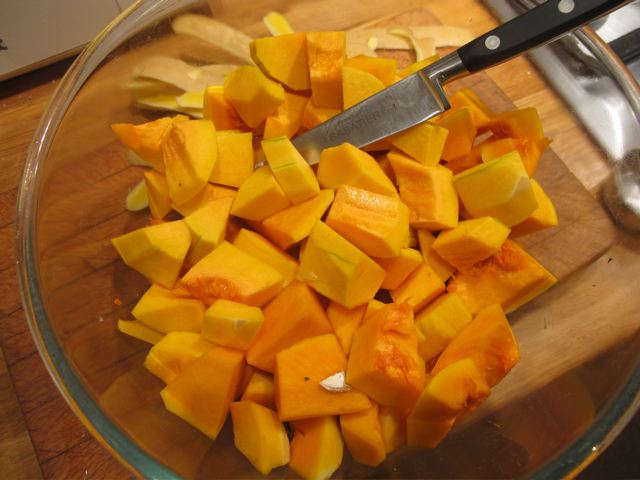
1kilo/2 lbs of butternut squash–peeled, deseeded and cut into small chunks

4 cloves of garlic–peeled and chopped small

1 generous tablespoon of wholewheat breadcrumbs

1 generous tablespoon of parsley--chopped

1 tablespoon of fresh thyme leaves

salt and pepper

3 tablespoons of olive oil

set the oven to 190C/375F

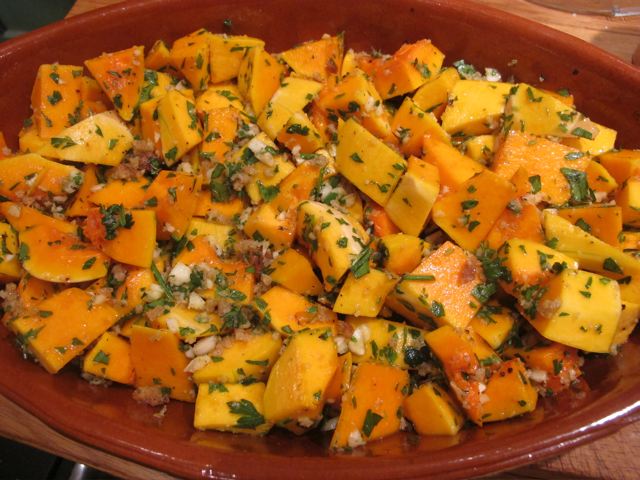
Combine all the ingredients in a large bowl and turn them over and over mixing them thoroughly together and remembering to season well with the salt and pepper.

Tip into a roasting tray or better still an earthenware ovenproof dish.

Roast in the middle of the oven, for about an hour and a half–(the time depends on the size of the chunks)–so it comes out nicely charred on top.

Martha Rose Shulman

** Richard Olney–author of Simple French Food

***, ****, ***** All three names lost in the mists of time!

Read Full Post »

Another last “hurrah” for the courgette-zucchini!


IMG_8924

Two of the three I used for this dish came from our vegetable patch–even in mid-October the last surviving zucchini plant is turning out courgettes–and perfect specimens they are. Almost a pity to cook them!

However they made a light and creamy lunch!

IMG_9491

This is adapted from a recipe in the excellent Italian Vegetarian Cookery by Paola Gavin.

4 eggs

6 tbsp olive oil

2 cloves of garlic–peeled and chopped

1tbsp parsley–chopped

salt and pepper

3 medium courgettes/zucchini–passed through the thin slicer of a food processor.

1oz/25gm wholewheat breadcrumbs

1 oz/25gm parmesan–grated

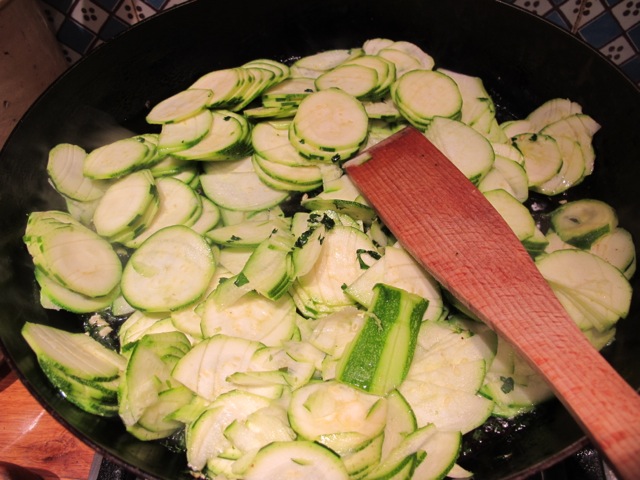
Heat the oil in a large pan.

Add the garlic and parsley and cook, stirring, for less than a minute.

IMG_9481

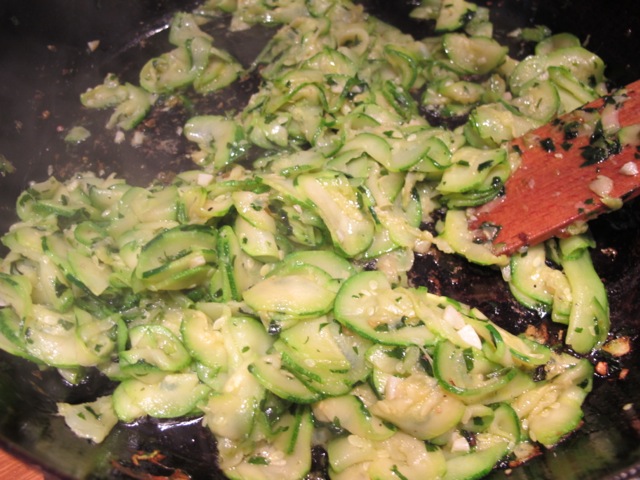
Mix in the courgettes…

IMG_9483

and cook until they wilt and take on a bit of color.

IMG_9485

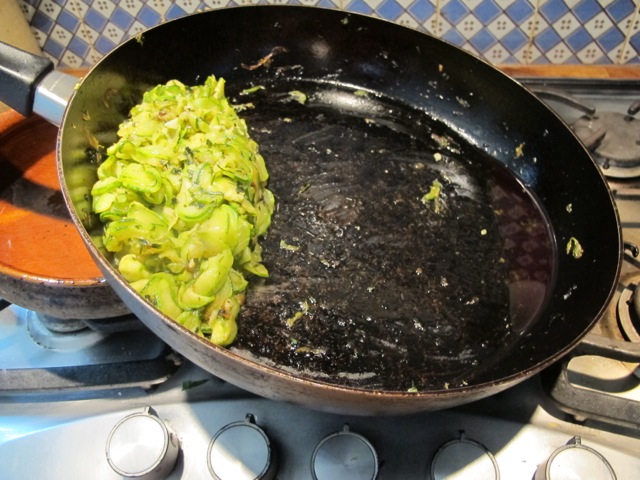
Turn off the heat and let them cool.

Tip the pan a little to drain off some of the oil.

Heat the oven to 190c/375f

IMG_9486

Break the eggs into a bowl and whisk.

Add the breadcrumbs and grated cheese and mix thoroughly.

Season well with salt and pepper.

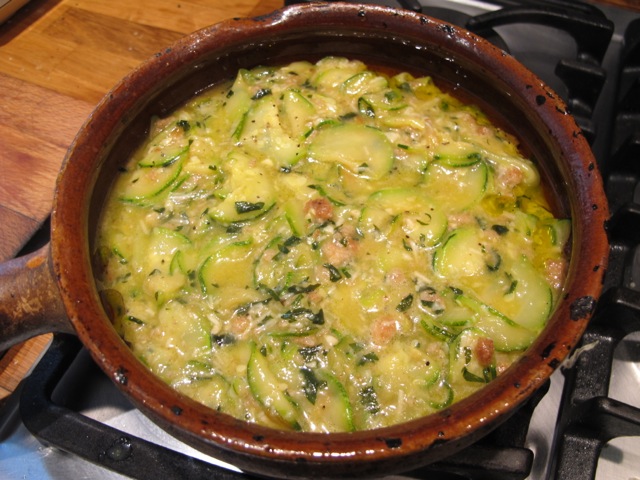
Add the courgettes to the egg mixture and blend carefully.

IMG_9487

Oil an oven dish and pour in the mixture.

IMG_9489

Cook in the middle of the oven for about 25 minutes.

It should be nicely browned on top; but check after 20 minutes–ovens vary and you don’t want to lose the creamy interior; inserting a knife through the top, will help you judge.

This was taken half-way through lunch!

IMG_9492

We had it with new season’s broccoli–lightly steamed.

A friendly meeting of summer and autumn.

Read Full Post »

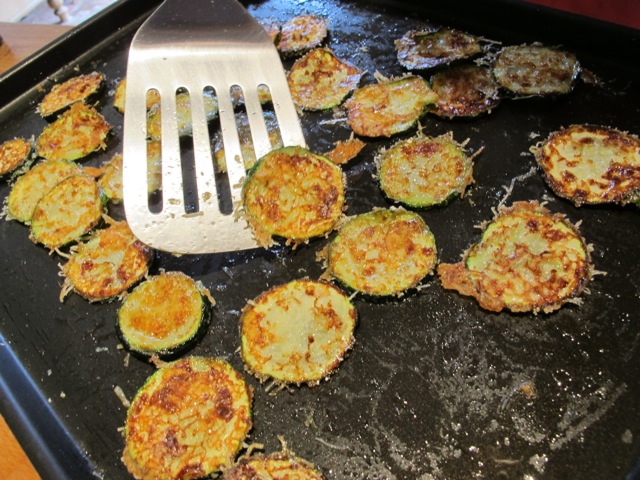
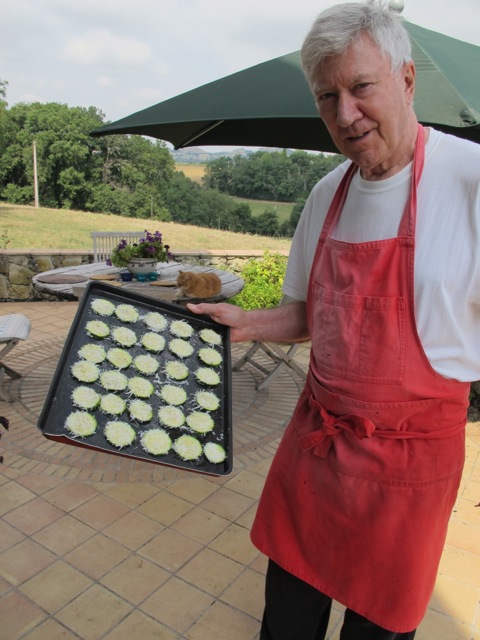
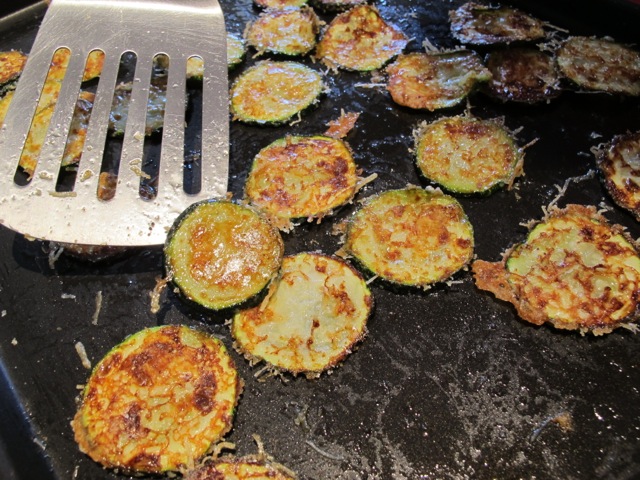
These little discs disappear as quickly as cash in your hand.

IMG_8879

In other words it’s hard to stop eating them!

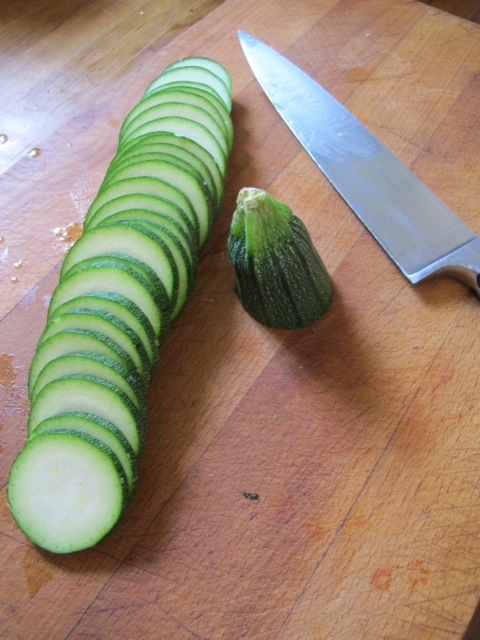
It’s surprising how many one can slice from a single medium courgette–enough for a pre-lunch treat for two anyway.

If you have time it’s worth lightly salting them and letting them drain for an hour before coating them with egg white and parmesan.

I spotted this recipe on a well-known food blog–smittenkitchen–and adapted it a little.

1 medium to long courgette (or more if you have a mind), sliced thin–1/4 inch

IMG_9020

1 egg white with a teaspoon of water added and whisked in a shallow bowl

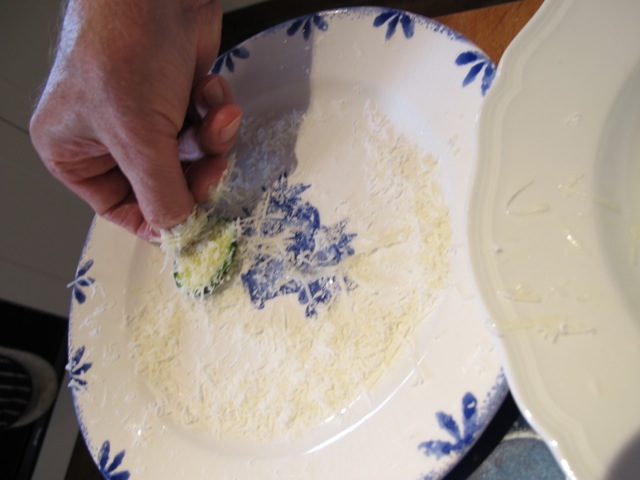
50gm/2oz parmesan cheese–grated onto a plate

salt and pepper

heat the oven to 220C/430F

Brush a shallow oven tray with some olive oil.

Dry the courgette coins, if you have salted them.

Lightly salt and pepper the parmesan and mix the seasoning in.

Pass each disc through the egg white…

IMG_8857

then the parmesan

IMG_8858

coating both sides.

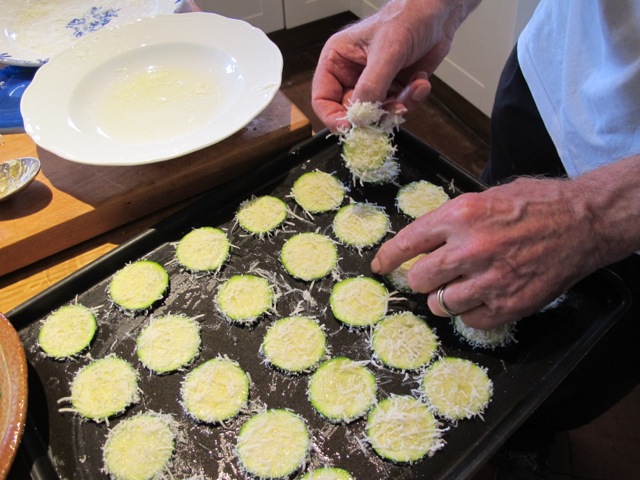
Place them side by side on the oven tray.

IMG_8859

A satisfyingly symmetrical effect.

IMG_8864

Then slip them onto the top shelf of the heated oven.

Check after five minutes and if they are brown on the underside turn them over

IMG_8880

and return to the oven for a further five minutes or until they are nicely browned.

Then it’s everyone for themselves!

(I have found that those on the outside of the tray tend to brown more easily–but it may be the vagaries of my oven.)

Read Full Post »

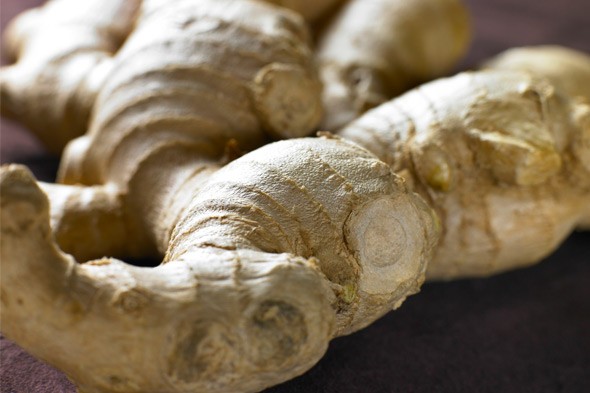
ginger-getty-590tm-220811

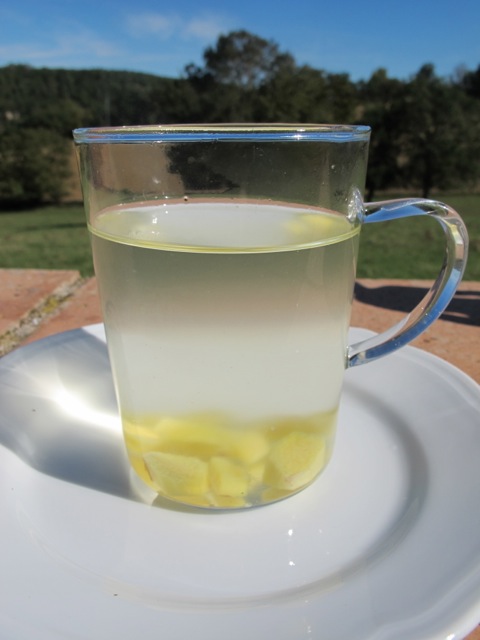
Meredith sat by the log fire last night, sipping a cup of ginger tea* wrapped in woolly jumpers and a blanket.

(*Peel and chop a small knob of ginger, put it in a cup or mug and fill the container with hot water. Let it infuse for a short time.)

IMG_9464

She is developing a cold–no doubt about it!

Today’s she’s in bed.

I bought more ginger this morning and there’ll be chicken broth “on tap”.

Ginger infused in hot water–just that–is delicious and good for relieving the symptoms of colds.

It can also has beneficial effects for people with diabetes.

The British Diabetic Association (Diabetes UK) recently published a piece extolling the virtues of ginger and its uses in connection with the condition:

Ginger can help with glycemic control, insulin secretion and cataract protection

Glycemic control

A study published in the August 2012 edition of the natural product journal Planta Medica suggested that ginger may improve long-term blood sugar control for people with type 2 diabetes.

Researchers from the University of Sydney, Australia, found that extracts from Buderim Ginger (Australian grown ginger) rich in gingerols – the major active component of ginger rhizome – can increase uptake of glucose into muscle cells without using insulin, and may therefore assist in the management of high blood sugar levels.

Insulin secretion

In the December 2009 issue of the European Journal of Pharmacology, researchers reported that two different ginger extracts, spissum and an oily extract, interact with serotonin receptors to reveres their effect on insulin secretion.

Treatment with the extracts led to a 35 per cent drop in blood glucose levels and a 10 per cent increase in plasma insulin levels.

Cataract protection

A study published in the August 2010 edition of Molecular Vision revealed that a small daily dose of ginger helped delay the onset and progression of cataracts – one of the sight-related complications of long-term diabetes – in diabetic rats.

It’s also worth noting that ginger has a very low glycemic index (GI). Low GI foods break down slowly to form glucose and therefore do not trigger a spike in blood sugar levels as high GI foods do.

Other health benefits

Ginger has been used as an herbal therapy in Chinese, Indian, and Arabic medicine for centuries to aid digestion, combat the common cold and relieve pain.

Its powerful anti-inflammatory substances, gingerols, make it an effective pain reliever and it is commonly used to reduce pain and swelling in patients with arthritis and those suffering from other inflammation and muscle complaints.

In fact, ginger is said to be just as effective as nonsteroidal anti-inflammatory drugs, but without the gastro-intestinal side effects.

Other medical uses of ginger include treatment of:

  • Bronchitis

  • Heartburn

  • Menstrual pain

  • Nausea and vomiting

  • Upset stomach

  • Diarrhoea

  • Upper respiratory tract infections (URTI)

Update a day later:

The patient announces she slept better and would like some chicken broth and two eggs scrambled on toast for lunch followed by another infusion of GINGER.

“With pleasure, Madam!”

Read Full Post »

IMG_9422

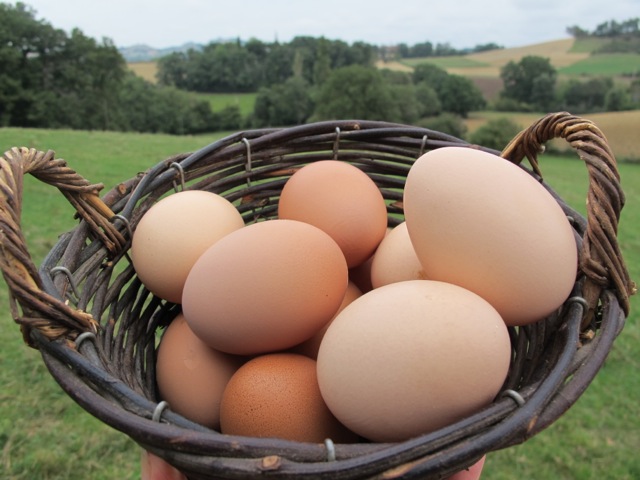
Our neighbour Flo left us eggs and onions in exchange for feeding her cats and hens while she and her husband spend a few well-earned days rest in Corsica.

So, here’s another omelette/scrambled egg thing.  (see courgette eggs).
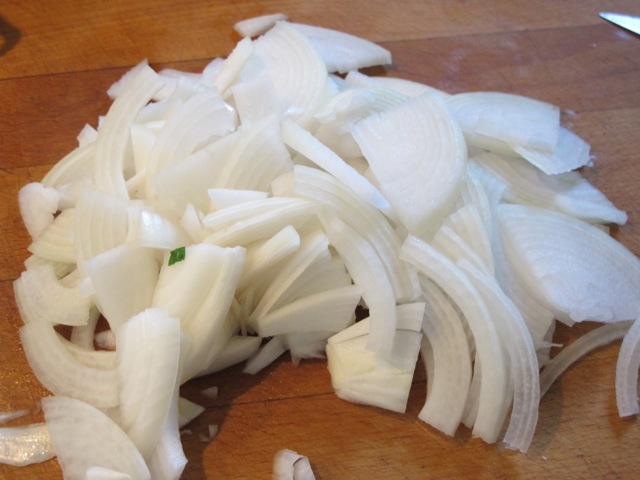
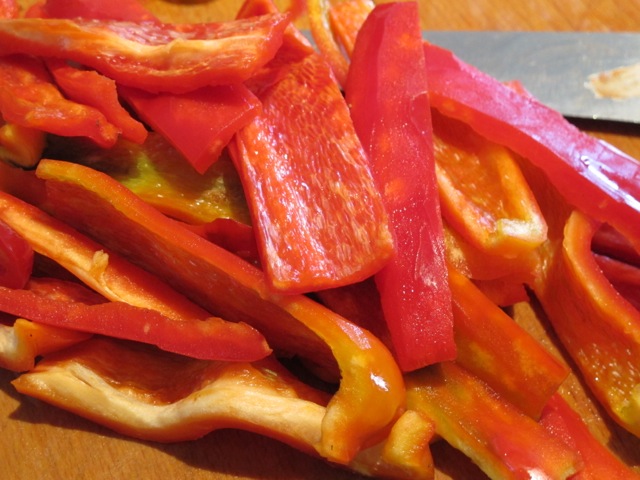
This time a classic peasant dish from the Basque Country in the southwest corner of France. Sweet local peppers are in season now–late like everything else–piled high on the market stalls. The ones I used were sun-ripened in Pezenas (southeast of us) and sweet–thinner- skinned than their year-round supermarket cousins.

Eggs, peppers and tomatoes (also from Pezenas) make up PIPERADE–plus a pinch of cayenne for PEP.

IMG_9417

Some versions make a purée of this mix before adding the eggs–which is an option.

I favour leaving the vegetables roughly cut to add texture.

Serves 2 / 3

1lb onions–sliced or chopped

IMG_9394

2 tbsp olive oil

1lb tomatoes–skinned if fresh, and roughly-chopped (if tinned [canned] drain the juices)

3 medium red peppers–skinned with a peeler (not hard, with a good peeler!)

IMG_9428

…and sliced into strips

IMG_9397

1/3 tsp cayenne pepper–more if you like–a matter of taste

6 eggs

salt and pepper– to taste

  • Heat the oil in a medium pan.
  • Add the onions and cook on a low heat for 20 minutes–they should become soft and pale.
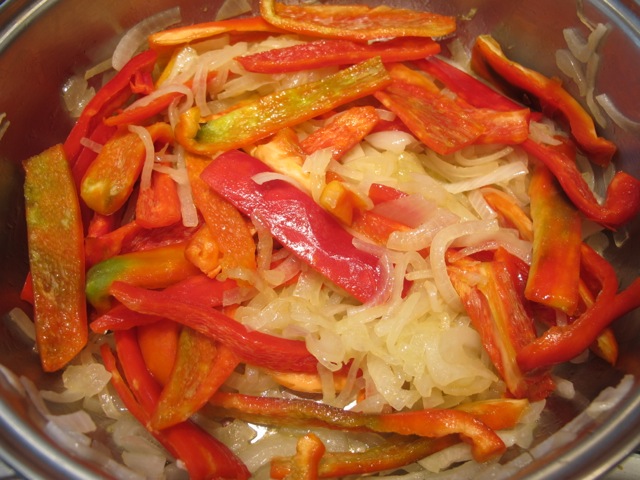
  • Add the pepper strips and turn them over in the onion.

IMG_9398

  • Cover and cook for about ten minutes.
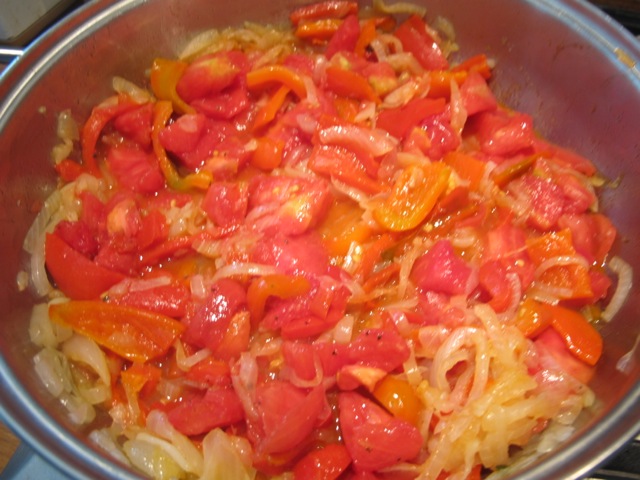
  • Add the tomatoes, cayenne, salt and pepper and mix in.

IMG_9400

  • Cook for 10 minutes covered on the same low temperature; then a further ten uncovered to lift some of the excess liquid.
  • Whisk the eggs together.
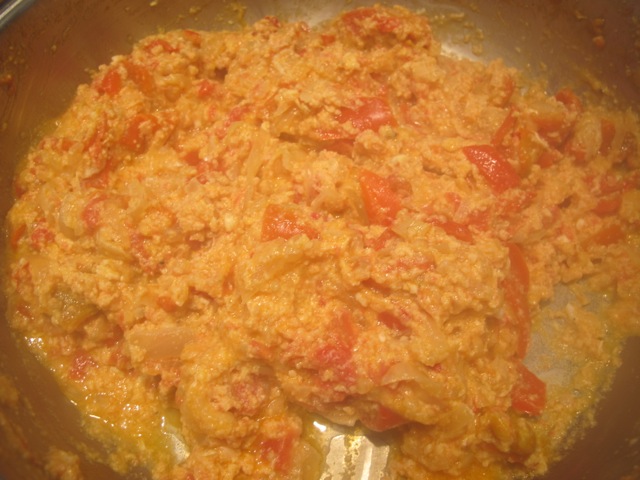
  • Add them to the sauce and turn over gently…

IMG_9409

  • …until the eggs are done to your taste.

IMG_9410

Comfort food!

Served with a green salad it makes a handy light lunch.

Read Full Post »

IMG_9358

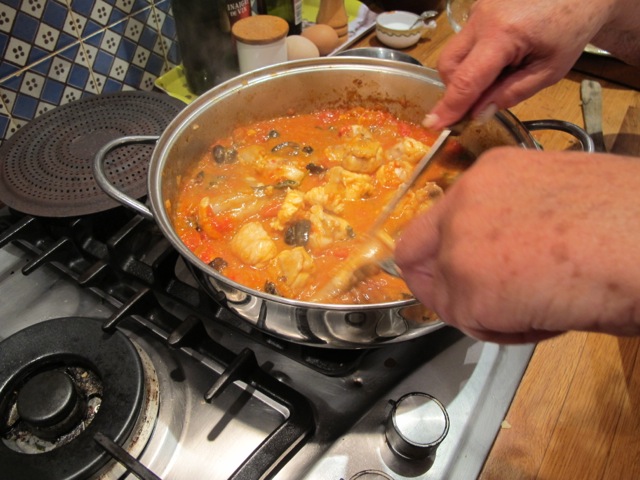
It was a company show in the kitchen last night–the main roles were being played by our friends, Romaine and Mai-Britt–much to my delight!

IMG_9338

I was offered the small but important role of sous chef and general presence!

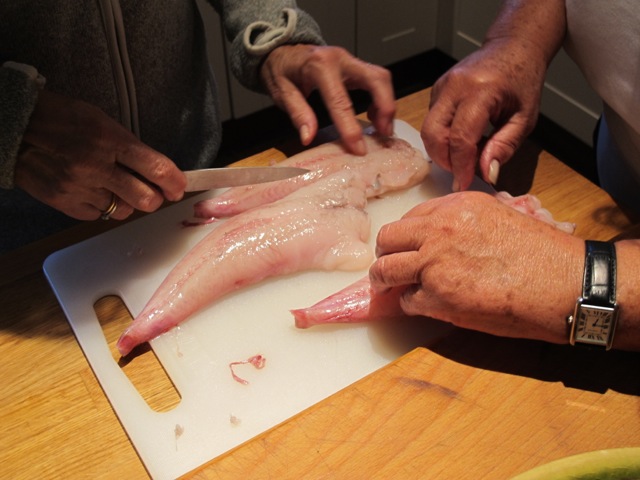
They picked up the pre-ordered fish from M. Gayraud in the market yesterday morning and although the monkfish (lotte) tails had been thoroughly prepared, they meticulously peeled back the thin skein of skin still clinging to the flesh, something I am not always so careful with–their attention to detail paid off.
IMG_9339

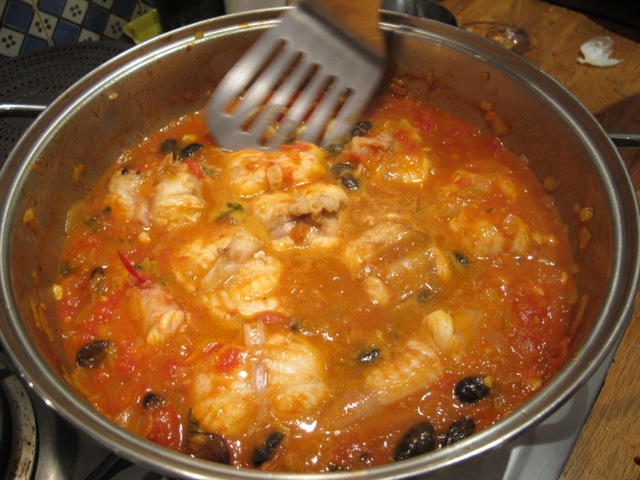
They were cooking this handy dish from the proofs of my NEW book, Healthy Eating for Life (due out in January 2014): Monkfish with black olives in a smoky paprika tomato sauce. 

It is relatively simple–but in any case we had expert “guest cooks”!

The sauce can be prepared beforehand and reheated when you are ready to add the fish.

That’s the beauty of it. Good for entertaining, as most of the work is done ahead of time.

And that’s what my team did–because it was Saturday evening and Strictly Coming Dancing on BBC TV was too tempting to miss–they’d been following it for weeks. With the sauce made and sitting happily melding, hunger proved the only nagging worry–in time drawing the team back to the kitchen.

There was left over roast ratatouille and basmati rice in the fridge to which I added some sautéed courgettes–perfect as an accompaniment.

For four of us last night:

500–700gm/1lb–11/2lb monkfish, cleaned (ready to cook)–cut crosswise through the cartilage in bite size pieces–or other firm-fleshed white fish

3 tbsp olive oil

onion—chopped

2 cloves garlic—chopped

3 large tinned toms or 8oz/200gms fresh ripe toms—chopped small

½ tsp cayenne pepper

½ tsp smoked paprika

sprigs of parsley and thyme and a bay leaf

1 glass dry white wine

1 tsp salt

10 juicy black olives—stoned and halved

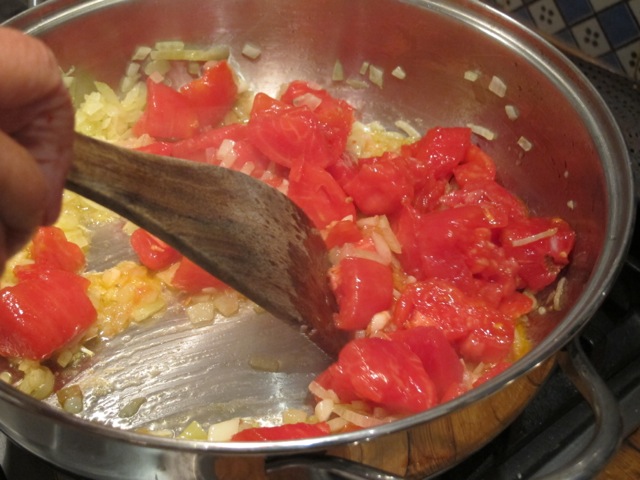
Soften the onion in the oil using a sauté pan large enough to hold the monkfish (later)–about five minutes.

IMG_9347

Add the garlic and cook a further three to four minutes.

Add the tomatoes—which you have broken up–with the spices, herbs and salt.

IMG_9351

Cook these gently for a couple of minutes.

Add the wine and cook another couple of minutes. (Romaine says next time she’d cook the sauce longer–I’m not sure I agree, especially if you are using fresh ripe tomatoes; chacun a son gout!).

This makes the simple base in which to cook the fish.

IMG_9352

A few minutes before you plan to eat, reheat the sauce and add the olives.

Slide the monkfish pieces under the sauce and cook on low heat, covered, for 5 to 10 minutes until the fish is opaque–and you can’t wait any longer!

IMG_9355

(Romaine separated the fish from the cartilage–something I usually leave guests to do for themselves.)

IMG_9359

Read Full Post »

« Newer Posts - Older Posts »