Feeds:
Posts
Comments

Archive for the ‘other sides to this life’ Category

I ring our neighbour Alice, who delivered the magnificent tresses of garlic yesterday, thank her for the thrilling present, and ask if she’d be willing to show me how she makes her version of garlic soup.

She says she’d be delighted and we fix for us to go over to the farm at 3pm.

In her kitchen she’s put out the ingredients ready on the counter.

I thank her for agreeing to this and she says the pleasure is all hers.

Garlic, eggswater— the simple ingredients for this traditional peasant soup– “La recette de Maman”–says Alice.

She prefers bread–a day or two old [rassi-stale]–to go into the cooked soup; some people put pasta like vermicelli in it, she says, but her brother René doesn’t like it.

The pain de campagne comes from the oldest boulangerie in Castres.

She’s sad because it’s closing–the owners couldn’t find anyone to take it over.

The same thing happened to my favourite fish shop–I say.

She fills a saucepan with about 700 ml of cold water, puts the lid on and lights the flame.

While the water is heating she peels 8 to 10 cloves of garlic.

Through the window of the kitchen across the courtyard there’s a young woman working upstairs in the barn.

She is preparing the tresses of garlic for drying out in one of the barns.

Celine and her husband have rented the farm for 25 years from Alice and her brother–who retired a couple of years ago.

Later I ask Alice if she misses this labour intensive working of the garlic.

“Pas de tout” she says emphatically–smiling.

The water boils and Alice puts in a large teaspoon of salt and the garlic.

She carefully cracks an egg and juggles the white into the pan,
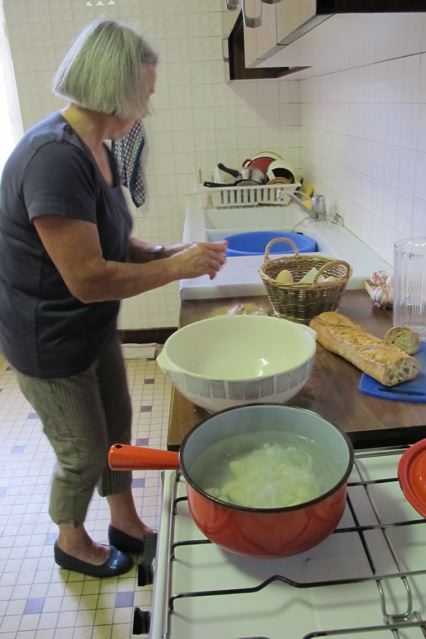
depositing the yoke in the  bowl in which she’ll later make the mayonnaise. She repeats this with a second egg.

While the garlic is softening, she makes the mayonnaise and talks.

In the Gers–the other side of Toulouse–they brown the garlic in a little oil and add it to stock rather than water, she says.

She and her brother have a vegetable soup at midday with a little meat and a salad. Soup again in the evening–and salad.

I ask about cheese. Only at breakfast, she says.

She makes the mayonnaise by first adding a big pinch of pepper to the egg yokes in the bowl.

Then she whisks a teaspoon of Dijon mustard into the yolks.

She favours peanut oil but opens a bottle of olive oil when I say I prefer it.

She pours the oil–very slowly to start–into the mixture, whisking steadily to avoid it separating.

The steadiness of the whisking process helps her sustain it

.

It’s hard to tell how much oil she uses–she just knows when it’s ready.

Now she makes the soup. She ladles the garlicky water carefully into the mayonnaise– stirring with each ladle and adding the cloves of garlic and egg white bits at the end.

Finally she slices some stale country bread and adds it to the runny soup.

Voilà la soupe a L’ail!”– she announces with a theatrical flourish!

The tasting:
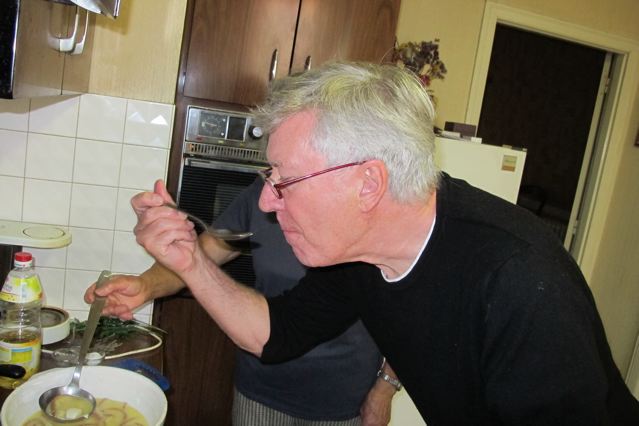
and approving….”

–though when I try it at home, a little less salt and some small wholewheat pasta in place of the bread, will be my choice.

Thank you, Alice!


Read Full Post »

our neighbours go about it...

On my morning walk and heading home, I spot a  group of people gathered at the edge of a field of garlic.

It is 8 o’clock and the sun is already promising a hot day–time to start lifting the garlic.

In the beginning...

L’ail rose de Lautrec.

(The pink garlic of Lautrec  [http://www.ailrosedelautrec.com/en_growing-lautrec-s-pink-garlic_13.php].)

The harvest happens in two stages.

In late May I noticed similar groups of people early one morning–more warmly dressed–who spent the day slowly making their way through the field, painstakingly snipping off the scapes of the plants.

(Scapes are flowering stems that grow out of the plant; these must be cut off so that the plant uses its energy to make a bigger bulb instead of making a bigger plant.)

They make good eating–if you can find them–in a salad or an omelette.

The plants are then left a month to allow the bulbs to swell before the harvest.

Our friend, Sophie, tells me the white is lifted [arraché] first, then the violet and last the pink–which is the best she says (she would, she’s a Lautrecoise!).

Some years ago l’ail rose de Lautrec achieved Label Rouge status, which officially  guarantees a level of excellence.

Not long after buying the house–we took some to California, where Meredith’s green fingered brother-in-law planted it and latr won first prize in the Marin County Fair!

[The sheaths were white not pink–it’s the local earth that turns it pink.]

We told the story to the farmer in the next hamlet, thinking he might be amused.

After a long pause and looking like thunder, he growled—“C’est interdit!”[It’s forbidden!].

Don’t mention the garlic!”–[apologies to Fawlty Towers].

In sleepy Lautrec, on the first Friday in August–the annual Garlic Festival–ten thousand people teem slowly through the narrow streets heading for the main square and a bowl of delicious garlic soup [soupe à  l’ail]–ladled out FREE at noon.

and--the end result...

Stop Press: Our French friend, Myriam, calls by.  Her mother she says buys l’ail forain or l’ail bio [organic]–and it tastes better.

I shall enjoy the research!

Read Full Post »

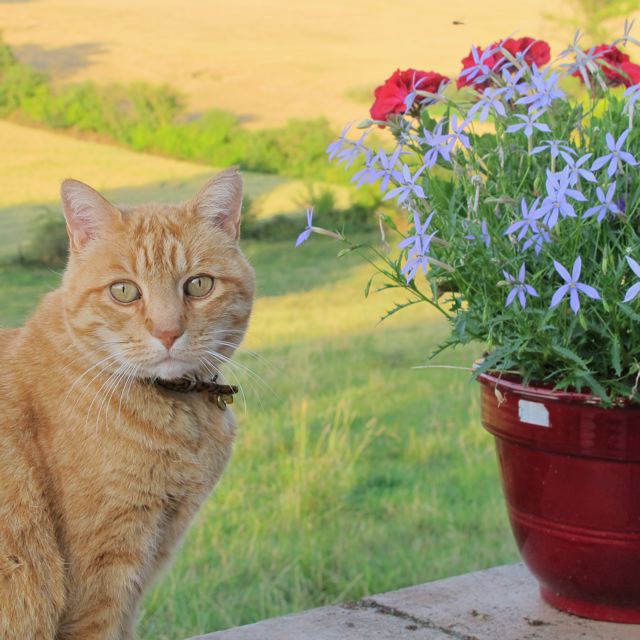
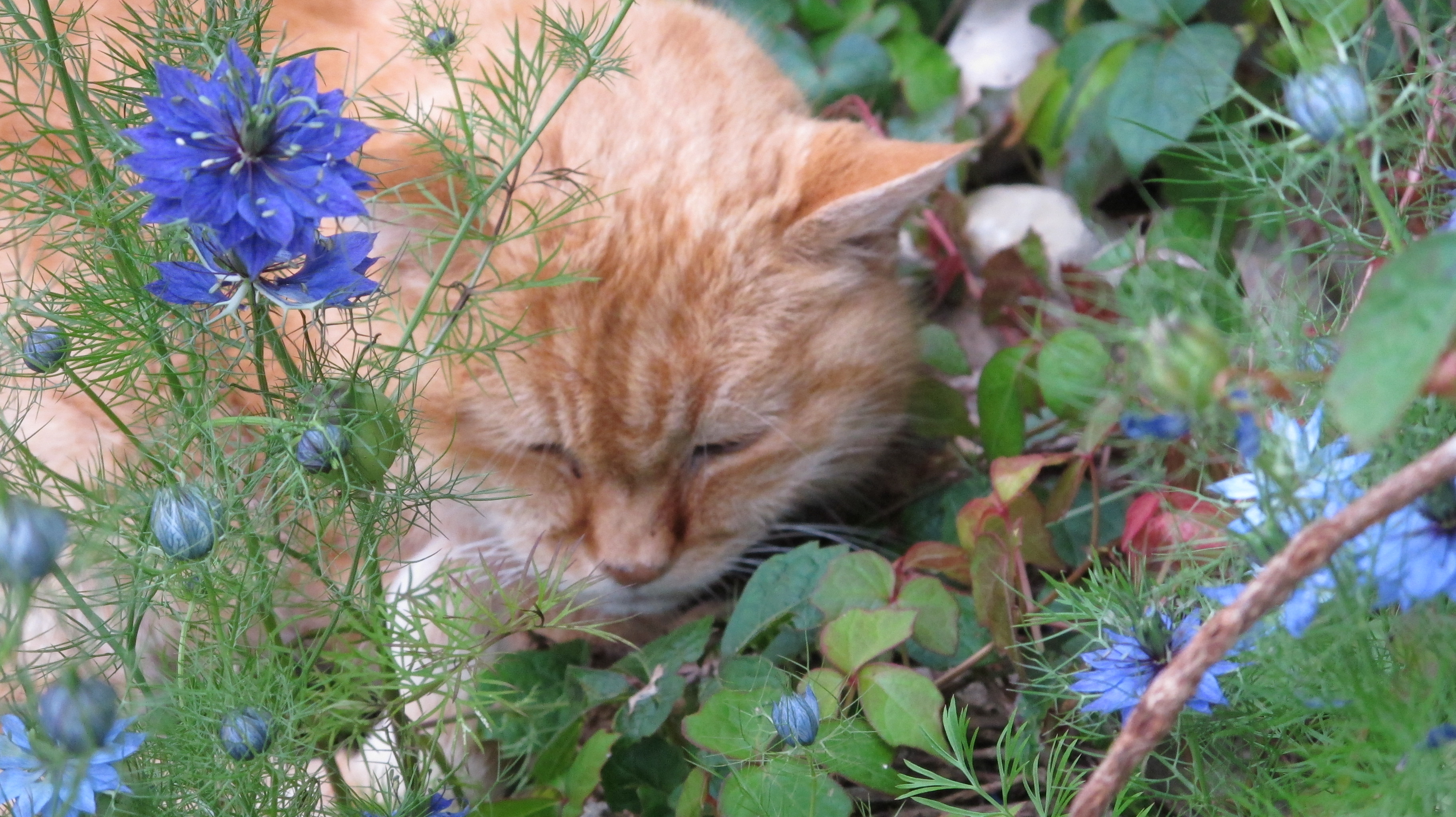
Marmalade says: “You’ll never guess what’s happening behind me…

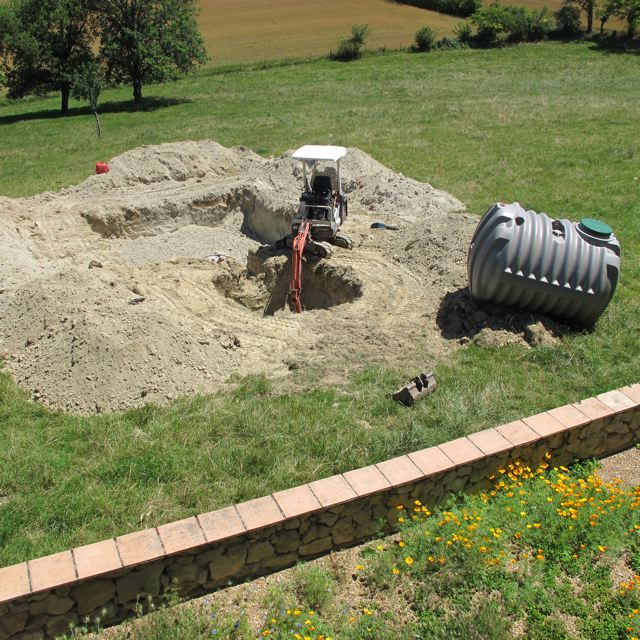
…it’s been going on for over a week now–a man has been digging a hole in the meadow behind the house–and the hole has got bigger and bigger!–what’s going to happen when a cow falls in it?”

Enough of that–Marmalade can be over-anxious sometimes!

Here’s the story…

The work is being carried out, not because we had a tip off about where to find the lost treasure of St Martin–although we’ve fantasised about its existence for twenty years–but sadly for less romantic reasons.

There is a new drive to implement a European directive on the subject of septic tanks and we’ve  heard the inspectors are out and about and keen.

We have insufficient space at the back of the house to carry out the work as the regulations require; so have had to ask our neighbours, Alice and René, if they’d mind us digging what looks like an olympic swimming pool size hole in their meadow!

They kindly agreed for us to go ahead–sight unseen.

Thinking big!

The “EU Waste Framework Directive“–attempts to ensure that waste is disposed of without endangering human health or harming the environment. It was passed in 1975 and aimed at turning the EU into a recycling society.

sunk

We are doing our bit.

Read Full Post »

Here’s a recipe to celebrate the first day of summer.


SOL–sun    STICE--still

The day the sun is so high it appears to stand still; the longest day in the Northern Hemisphere.

And a song to hum while preparing the vegetable salad–(watch out for the end of the seventh line though, if you’re singing the words with company!)

Inspired by and adapted from a book with an unusual title and many wonderful recipes:

Crazy Water Pickled Lemons  by Diana Henry

Roasted Aubergine [eggplant] slices with Feta and a mint vinaigrette.

for 4

2 large aubergines [eggplant]

I used the purple speckledy ones this time.

–cut crosswise or lengthwise into thickish slices (2cm/3/4″), lightly salted and left for an hour or so to drain through a sieve or collander

olive oil for brushing the foil and the aubergines

salt and pepper

a small slab of feta cheese to crumble on the top of the salad (optional)

The Vinaigrette

1 teaspoon white wine or cider vinegar

1 tablespoon balsamic vinegar

2 garlic cloves pulped with a little salt

2 fl oz olive oil

a large handful of mint leaves–roughly chopped

  • Heat the oven to hot–240C/450F.
  • Lightly brush the aubergines slices with olive oil.
  • Cover shallow oven trays (you may need two or to repeat the process) with foil.
  • Brush the foil with oil to prevent the slices sticking.
  • Spread the slices on the trays.
  • Place the trays in the upper part of the oven for 10 minutes–
  • then take the tray(s) out of the oven and turn the slices over–
  • return them to the oven for a further 10 minutes.*
  • Make sure the aubergine is done by piercing the thickest part with the tip of a knife–
  • Underdone aubergine is uneatable.
  • Take them out of the oven and spread them on a serving plate.
  • Whisk the vinaigrette ingredients together and pour it over the slices while they are still warm.
  • Flake the feta–if you are using it– over the top.
  • Serve at room temperature–leaving a little time for the flavours to meld.

* alternatively, you could griddle the slices–which gives them a slightly smoky taste.

Read Full Post »

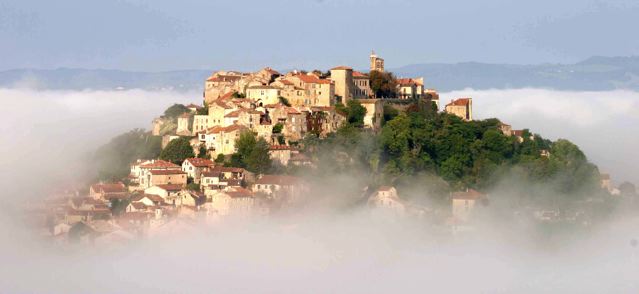
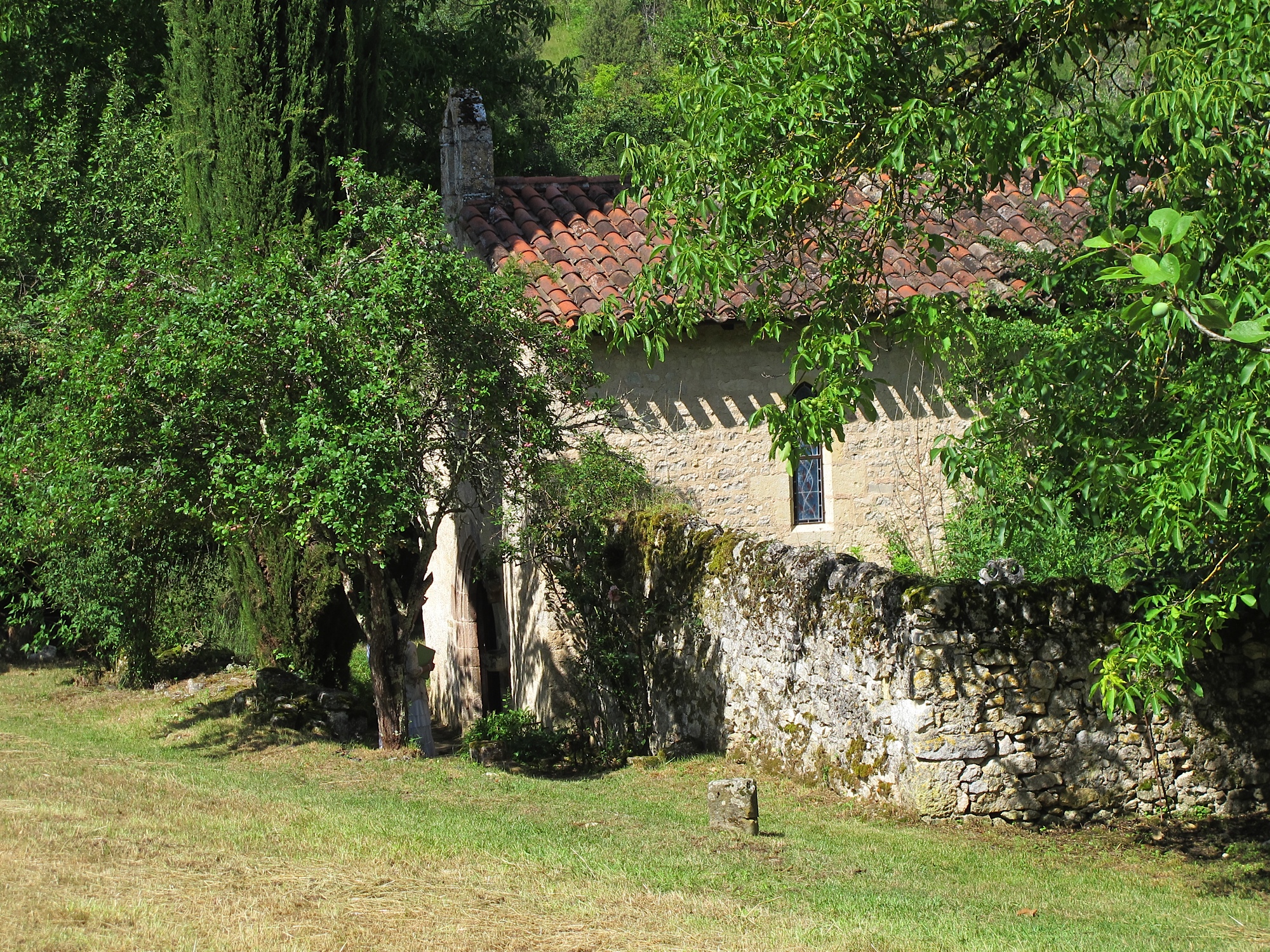
A Blessing Ceremony in the tiny chapel of  St. Jean in the valley beneath the medieval hill town of Cordes sur Ciel….

Donald Douglas’* daughter Eliza’s marriage to James in Michigan, is being blessed here–for friends and family this side of the Atlantic.

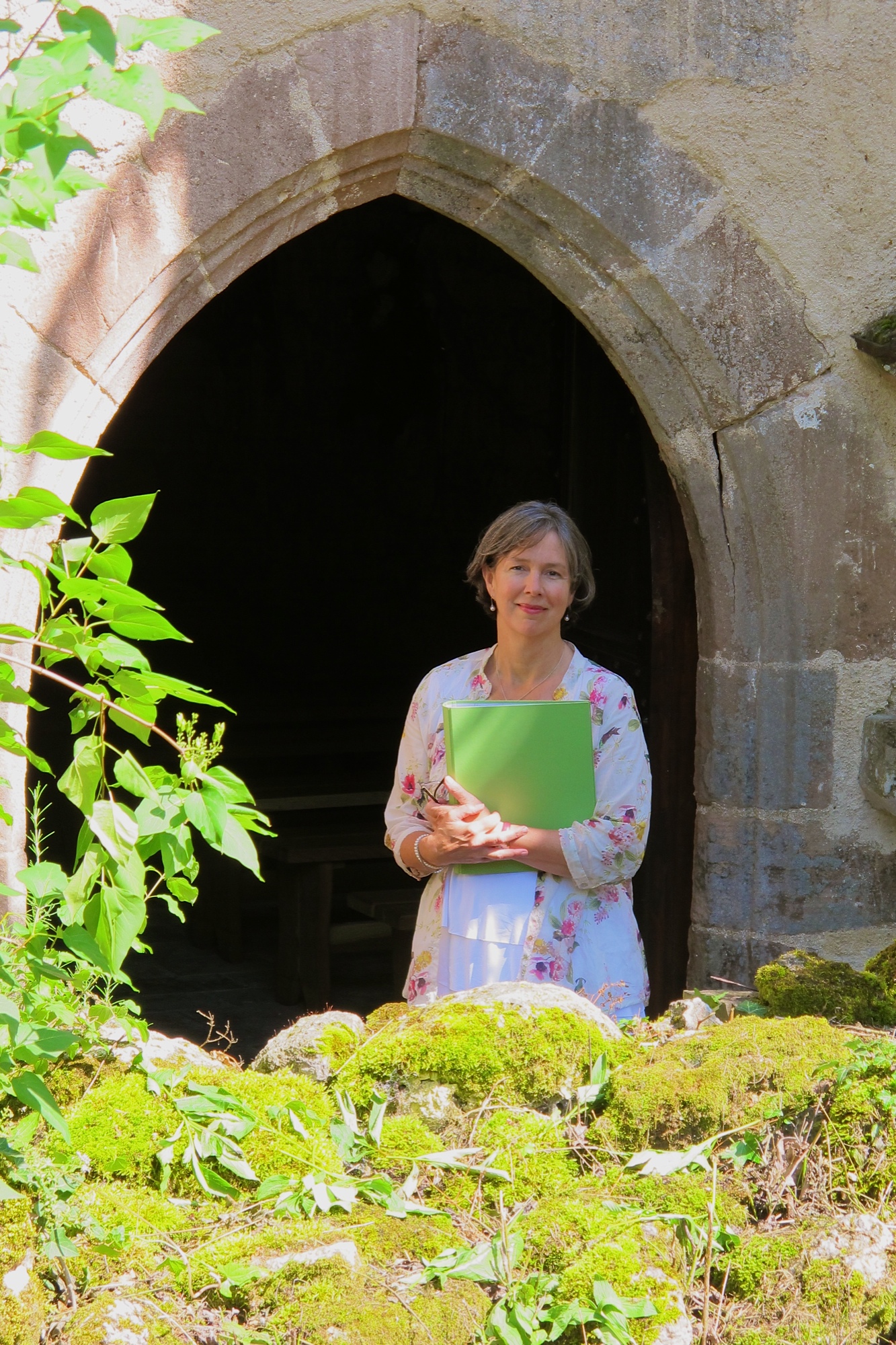
Eliza has asked Meredith to be the “Celebrant“.

Meedith is nervous–it’s yet another “first” for her and there has been no rehearsal.

We arrive early at the chapel–founded in 1224 near a place of safety from the plagues that hit the unhealthy walled Cité high above it.

There is minimal light for reading, which adds to the anxiety and the hour approaches.

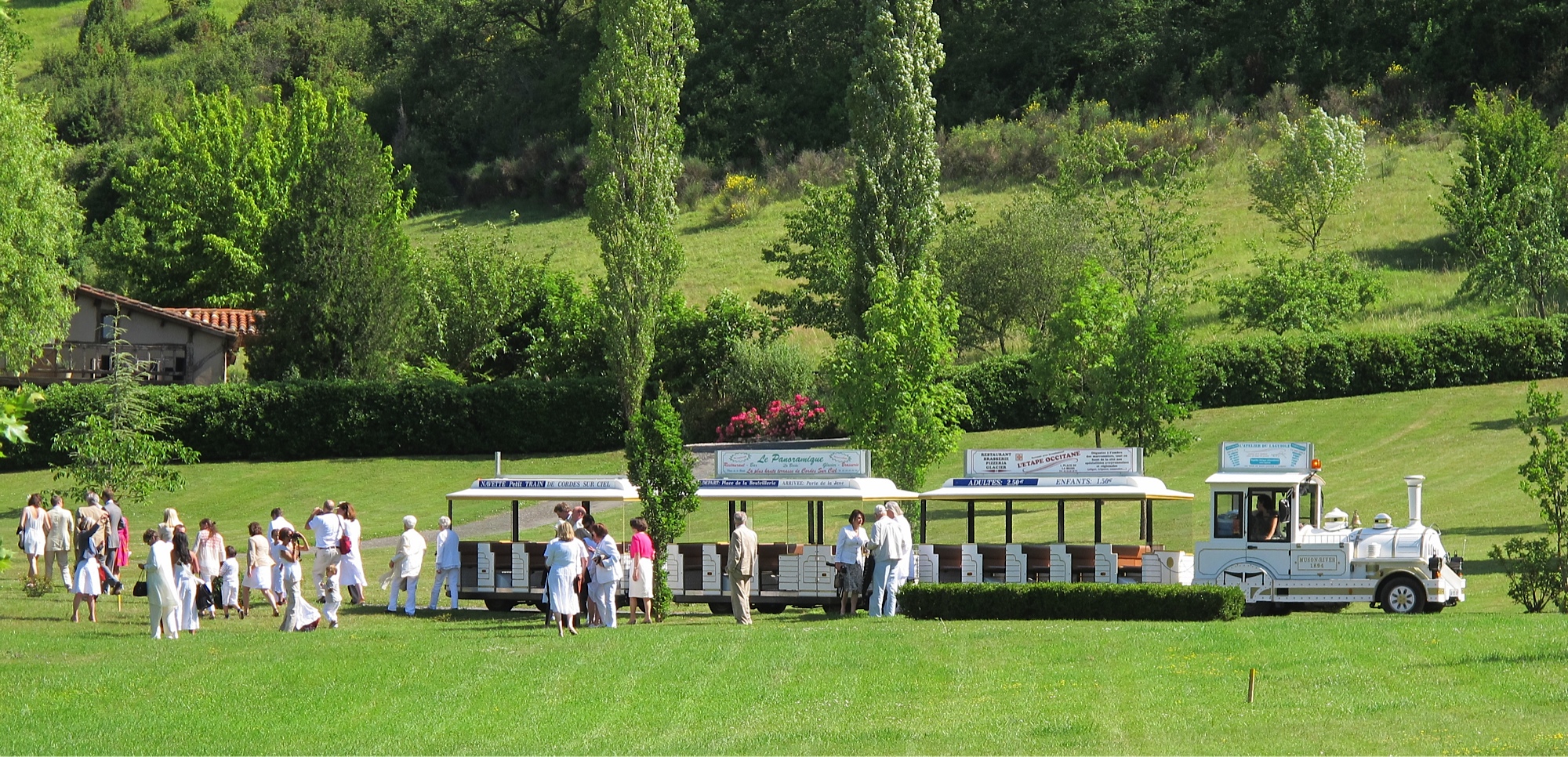
But by the time the guests arrive–all decked out in white (the couple’s request)–by “Le Petit Train”  from Cordes…

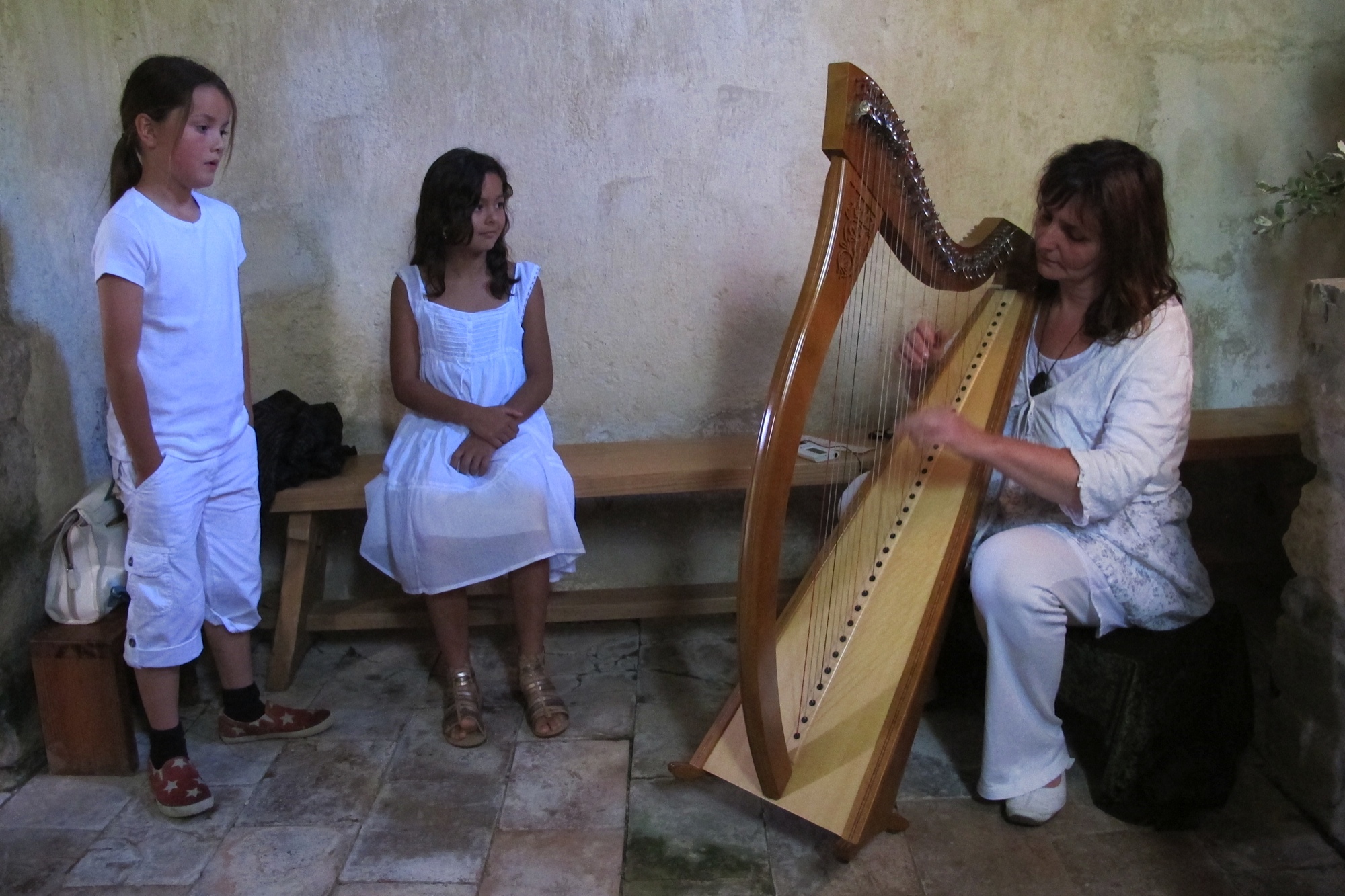
–more light has been shed inside (candles lit) and on the words (a few run-throughs) and Veronique is spreading calm from the strings of her celtic harp.

The chapel–decked out with white flowers–and  Meredith, are ready to welcome the buzzing crowd–about fifty adults and children–to this ancient site.

The bride approaches on her father’s arm and the ceremony begins.

It goes off beautifully, of course–Meredith performing her priestess-like duties perfectly with clear-voiced sincerity.

Poems–chosen by the couple–including Shakespeare’s 116th Sonnet (“Let me not to the marriage of true minds…”) are thoughtfully read.

Donald sings in his broadest Scots brogue, “The Braes O’ Birniebouzle“, so splendidly, we all burst into spontaneous applause.

As everyone files out our aptly named friend, Puck, whispers in my ear: “You know that from now on you’ll be known as the Vicar’s wife!”

*(Captain McNeil in Poldark)

Read Full Post »

“—It’s going to be a busy night” to paraphrase Bette Davis in All About Eve

rounded off by a lunar eclipse (http://www.guardian.co.uk/science/2011/jun/15/lunar-eclipse-moon-red).

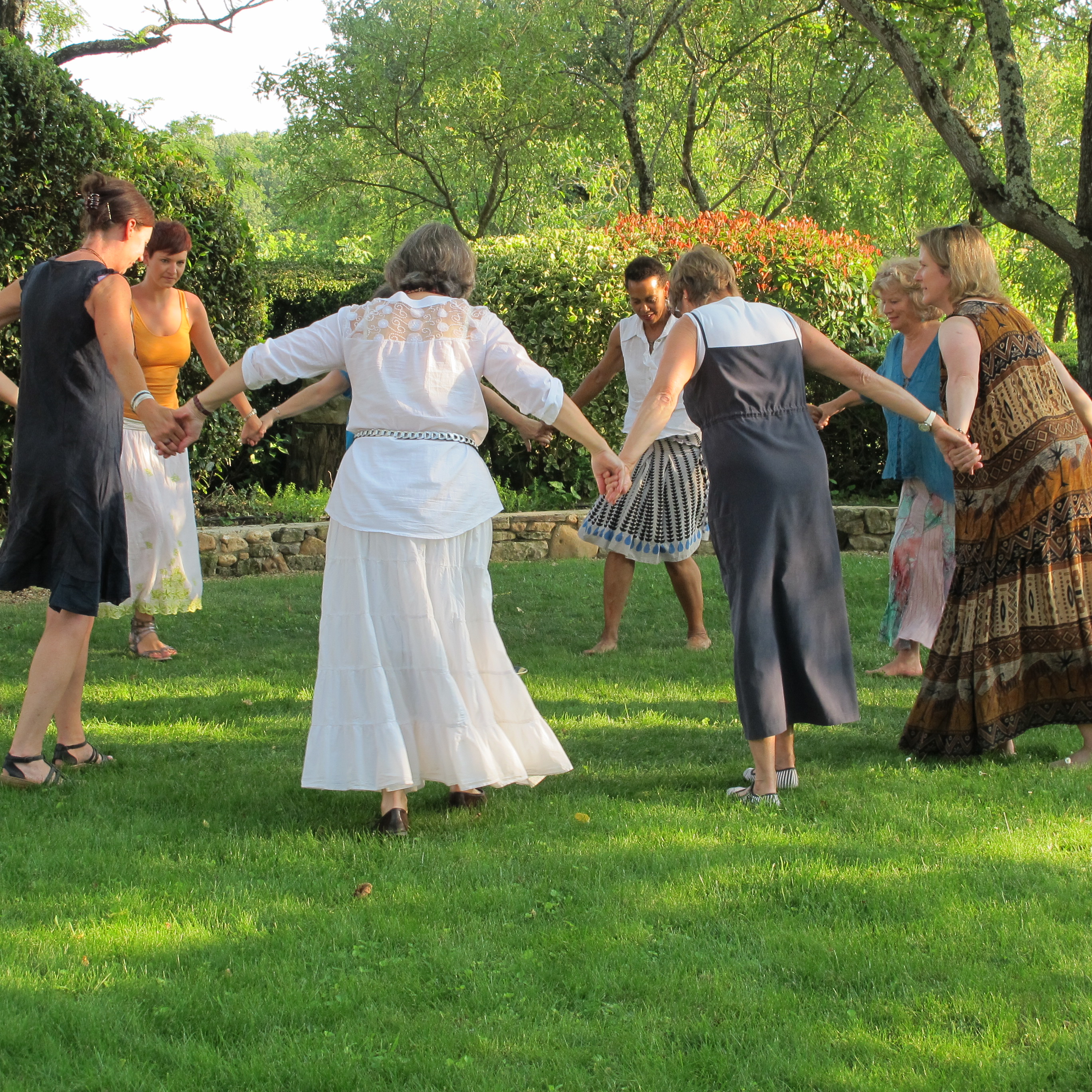
Meredith’s passion–Circle Dancing (http://www.findhorn.org/)aka Sacred Dancing–learned at the Findhorn Foundation(http://www.findhorn.org/) north of Inverness in Scotland.

She has a regular circle of enthusiasts, who dance each month on the night of the full moon for a couple of hours.

in full swing…

John–honourable retiree.

Everyone brings a dish to share after the dance.

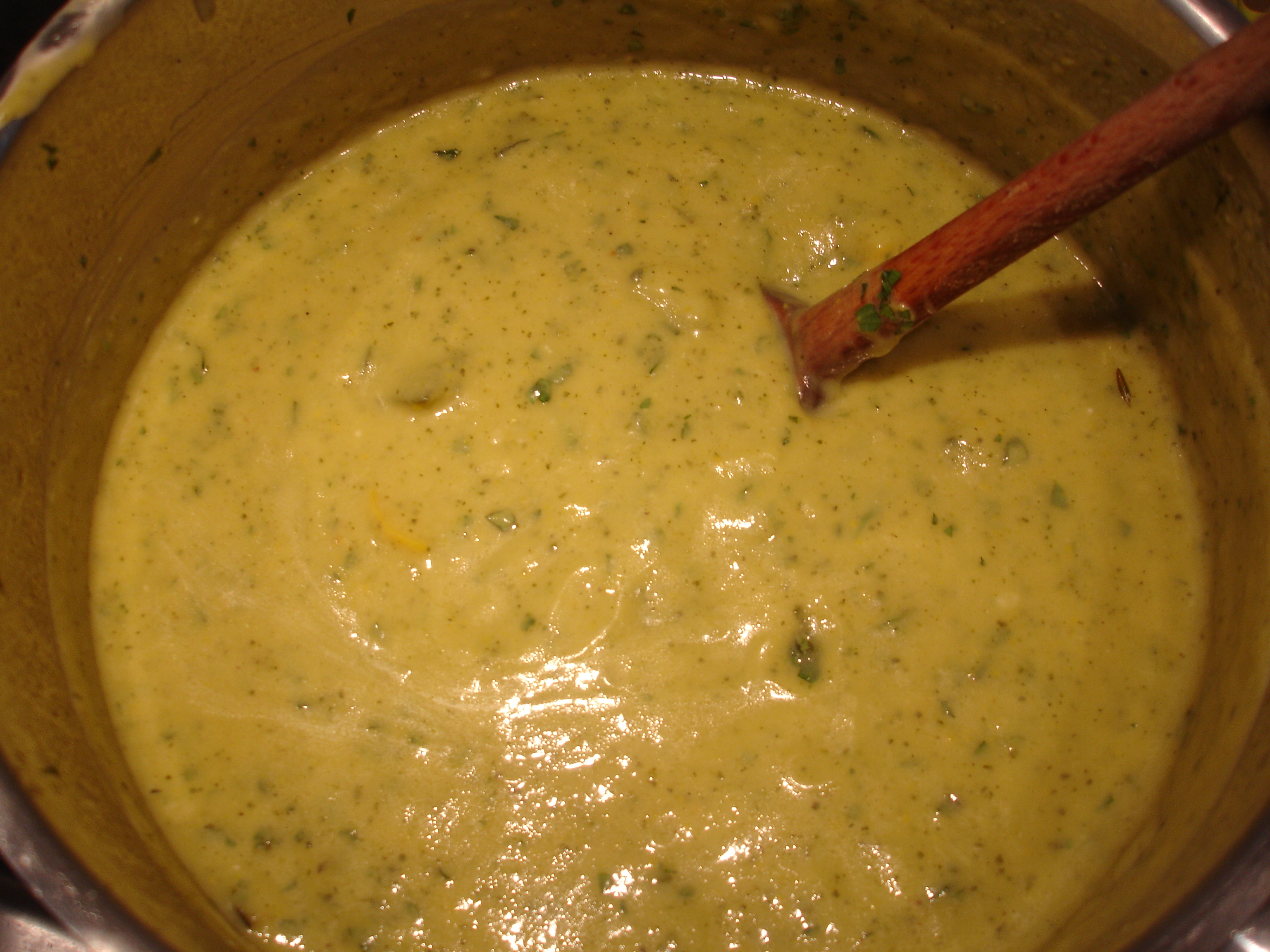
My contribution–Courgette soup— is adapted from the River Cafe’s recipe.

It was spotted by our friend and fellow dancer, Sonia,

who grows courgettes herself and brings us a shining green handful from time to time.

It is simple and satisfying, with a light green hue and creamy texture.

for 4

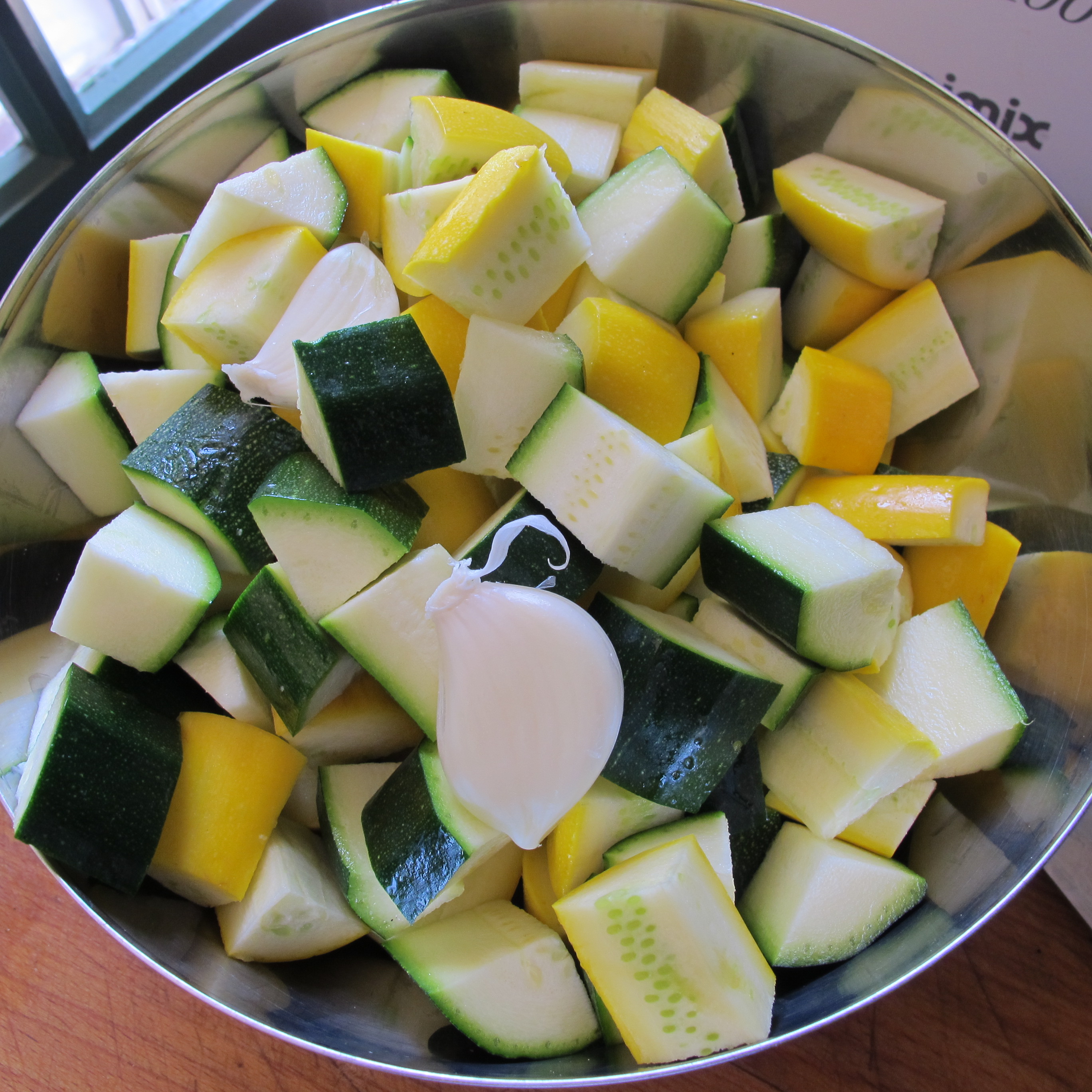
1 kilo courgettes/zucchini–fresh as possible–cut into 1″ square pieces


2 tablespoons olive oil
2 cloves of garlic–chopped
500ml/1 pint stock–I use organic vegetable stock cubes
1 small pot/125gms low/no fat yogurt
50gms grated parmesan— add more to your taste
salt & pepper

a handful each of chopped parsley and chopped basil

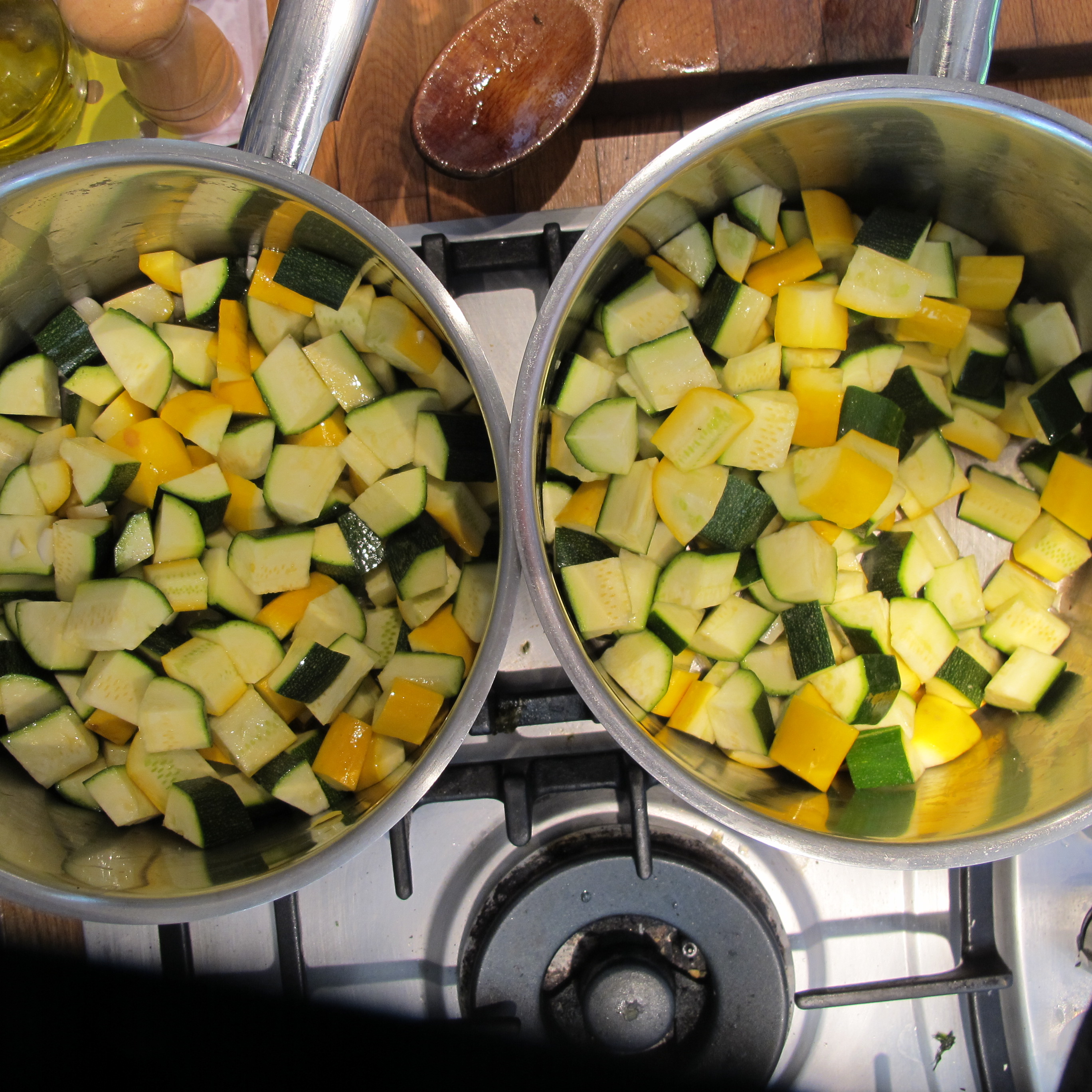
  • Fry the courgettes and garlic in the oil until they are very tender and browned a little–about 30 minutes.

a double batch

  • Add the stock and bring to a gentle simmer for 5 minutes.
  • Season with salt and pepper– taking care with the salt assuming there is salt in the stock.
  • Let the soup cool a little.
  • Remove a quarter of the courgette pieces and liquidise the rest with a food mixer or handheld liquidiser.
  • Return the whole courgette pieces to the soup.
  • Stir in the cheese and yogurt followed by the parsley and basil.
  • Reheat gently.
  • Check the seasoning and bring up to a simmer.
  • Serve in warm bowls.
–there’ll be no need for seat belts* though!
(B Davis’ famous line in the film–“Fasten your seat belts–it’s going to be a bumpy night!”)

Read Full Post »

This is the cover of last week’s edition of the New Yorker magazine, which arrived in the post this morning.

Along the bottom of the stocks it reads:

NYC Dept. of  MORAL GUIDANCE       NO FEEDING   BACKSLIDERS

Is the backlash under way–is this the “Ancient Régime” fighting back?!

Any theories?

Read Full Post »

Keith's bleu "hot rod"--2CV

Last week, by one of those lovely serendipities, I came across the site “A Taste of Garlic”.

My appetite/interest was whetted–any good Lautrecois’ would be, (L’ail rose [pink garlic] de Lautrec has its own appellation controllée)– by the title, and tickled by the lights-flashing exhaust-puffing 2CV logo.

Indeed this extra-ordinary site’s founder and inspiration–Keith Eckstein,  a Cornish polymath--is passionate about garlic and a lot else besides: Elvis, football (soccer), Johnny Depp, mushrooms, pigs, Johnny Halliday, IT support and web design, writing, reading and so on.

He writes delightful funny pieces and promotes other peoples books and blogs.

“Here, at  A Taste of Garlic, I review, share and promote other people’s Life in France experiences.”

I contacted him and, belying the laid back “deux chevaux” image, he’s a speedy worker.

A few days later he published an interview with me and today he writes a witty and comprehensive review of the blog.

Merci beaucoup–Keith!

Read Full Post »


Butterscotch

Butterscotch, also known as Little Mother or Mo, died yesterday.

She was thirteen and had a tumor in her lung.

We buried her in the garden, close to where we buried Beauty last October.

Nina, from whom we bought our house, rang by chance an hour before the vet arrived.
She said the garden was full of cats, from her 25 years here.
Beauty was pure white, blue eyed and rangy. (We thought he was female, until the vet put us right.)

He was 4 when he died of a respiratory illness.

Meredith had owned a large sheep dog when she was living in New York and had grown up in a house full of pets.

I had never owned an animal until after we bought this house 21 years ago.

My mother had found a cat for me at the end of the 1940’s.
I called her Mary, after my aunt who had gone to Africa.

I was fond of Aunt Mary–she’d taken me to Lords in 1948 to see Bradman bat for the Australians, which won’t mean much to people now, but was tremendous for a cricket-mad six-year-old.

All I remember about Mary–the cat–was that she was black and white.

I didn’t realize then that all cats are different and have singular personalities and foibles.

Little Mo was a rather solitary figure, who sought out quiet spots away from the general hubbub of the house.

We’d find her comfortably curled up in a large bowl or shopping basket or buried under a bedcover in a spare room–a visible lump, gently rising and falling with each breath.

Perhaps she was hiding from Lucien–our orphan Tabby–who is roughly the same age and her unrequited suitor.

Poor Lucien never stood a chance–she was disdainfully uninterested.

Kids though, she loved. Meredith says she’s the only cat she’s known who approached children and paid no heed when they unwittingly treated her roughly.

She seemed fearless–remaining unconcernedly on her chair while the hoover wailed round her, or unmoved while swapping curious looks with a troupe of cows surrounding her, in the field behind the house.

Her step was an unhurried plod and she thought long before leaping, like an athlete preparing for the high jump.

Just occasionally–and not so much recently–she would surprise us on a short walk with a sudden burst of speed–a sort of exlposive expression of joy–and then revert back into “plod mode”.

On my return from the market, she’d “plod” towards me, her tail would go up and she slowly rolled over.

I felt flattered–singled out for special treatment.

She was more social in the evenings, watching TV with us–from the comfort of a convenient thigh.

But she reserved for Meredith her most open show of affection, often settling down for the night flat out on Meredith’s chest.

We loved her. She’s at peace now and life goes on.

We spotted this young fellow at lunchtime. We rarely see hedgehogs here –and we’ve never seen one as young as this.

For Meredith it was a sign that all was well with Mo.

Read Full Post »

Our friend Florence arrives just before nine this morning to do “the exercises”.

We call them Yoga for Softies.

They last 35 minutes and are a mix of disciplines including pilates, yoga, tai chi, and various others learned over years, which have gelled into a sequence.

They are hardly taxing–hence the title–but the three of us always feel better for doing them–certainly more virtuous.

Meredith and I then have breakfast and Flo, who has been up betimes seeing to her goats, joins for  coffee and chat.

Flo tells us it’s St Médard’s day today–June 8th. If it rains today it will–according to legend–rain for 40 days.

St. Médard not having much luck.

I anxiously look out of the window, and remember what they say about St. Swithin’s day (July 15th) in the UK:

St Swithun’s day if thou dost rain

For forty days it will remain

St Swithun’s day if thou be fair

For forty days ’twill rain nae mare

or less poetically:

If on St Swithun’s day it really pours

You’re better off to stay indoors.

Further research (Wikipedia) reveals that:

There is a scientific basis to the legend of St Swithun’s day.”

“Around the middle of July, the jet stream settles into a pattern which, in the majority of years, holds reasonably steady until the end of August.”

“When the jet stream lies north of the British Isles then continental high pressure is able to move in; when it lies across or south of the British Isles, Arctic air and Atlantic weather systems predominate.” (bringing bad weather).

By mid-afternoon Myriam arrives and says all is not lost even if it rains today.

The French version has a “get out” clause in the shape of St Barnabé (June 11th).

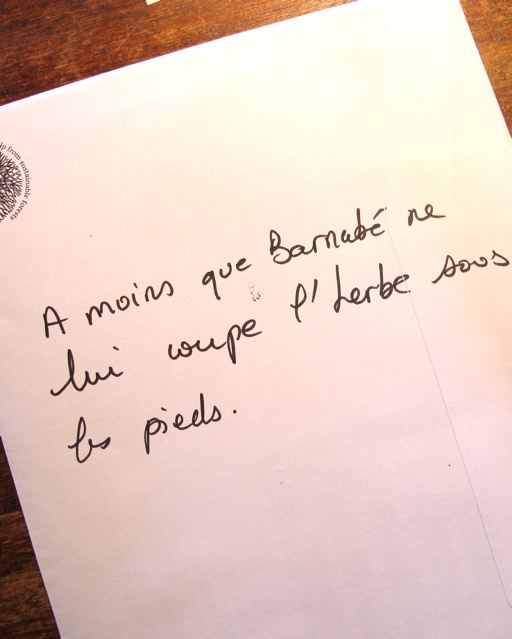
She writes it down:

“A moins que Barnabé ne lui coupe l’herbe sous les pieds.”

[“Unless Barnabas gives him a kick!”]

In other words, if the sun shines this Saturday, all will be well!

St. Barnabas a.k.a. the Cavalry!

It’s late afternoon now and still no need of Barnabé!

Read Full Post »

« Newer Posts - Older Posts »