Feeds:
Posts
Comments

Archive for the ‘Food’ Category

This recipe is from my book–Delicious Dishes for Diabetics– to be published in August.

It is adapted from a favourite recipe of Quentin Blake, the illustrator of children’s books.

It’s very simple but a bit scary because the fish is cooked at such a high temperature it doesn’t seem possible it will survive the heat, but the scales protect it.

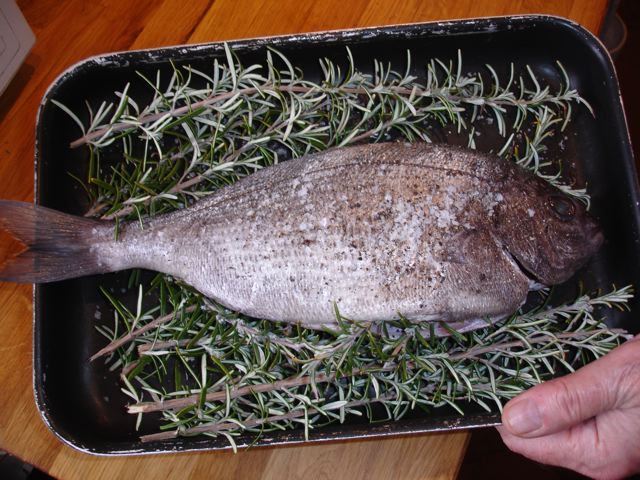
This fish looked good on the stall in Castres market on Saturday morning. It weighed in at 1.25lb–perfect for 2.

M. Gayraud, the fishmonger, gutted it but left the scales on. He pulled back the head to show me the brilliant freshness of the gills.

I collected a large bunch of rosemary from the overgrown bush in the driveway;

Back in the kitchen, I set the oven to 240C/450F

and arranged the rosemary in a small roasting tray;

I washed the fish, being careful not to wipe off the scales, and dried it thoroughly;

salted the cavity and stuffed it with two or three sprigs of rosemary.

Then I laid the fish on top of the rosemary and seasoned it with salt and pepper.

It went into the middle of the oven and cooked for 15 to 20 minutes, the time depends on the size of the fish.

It’s worth checking.

Peel back the skin a little –the flesh should be white and succulent.

When you are satisfied, peel off the skin and carefully separate the fillets.

Serve with this simple sauce.

3 tablespoons of olive oil.

1 tablespoon of lemon juice.

Salt and pepper.

Put the juice in a bowl and add the seasoning.

whisk in the olive oil.

Read Full Post »

https://www.oldwayspt.org/sites/all/files/MedPyramid_1000x1294.jpg

Read Full Post »

Fish for lunch?

Fish is an important component of the Mediterranean Diet or Way of Eating—the latter being the subtitle of my book Delicious Dishes for Diabetics, and sustainability is the key word. I don’t believe diets are sustainable and neither is the fishing of certain varieties of fish. The former I’ll leave for a later blog.

It’s Friday and I’m off to Lautrec market to buy some fish for lunch–but what should I buy?

The lists of what to avoid to sustain the stocks vary from place to place (pardon the pun).

Whiting, mackerel, trout, pollack, black bream, lemon sole, sardines feature regularly as sustainable varieties.

Those to avoid include cod, halibut, haddock, hake, sea bass and skate.

Sounds simple, but there are exceptions. It can vary depending on where the fish originates.

Here are three useful sites:

Eat more anchovies, herring & sardines to save the ocean’s fish stocks (The Guardian)

Debate Your Plate: What fish is sustainable?

A guide to eating fish the sustainable way (The Guardian)

Fish on Line

I’ll settle for mackerel today–if they look good. They must be fresh; but they are inexpensive and one of the oily fish varieties–so a healthy option.

Read Full Post »

I was looking for a new way to cook the seasonal cauliflower, patiently waiting its turn in the fridge. The much used cheesy white sauce, though tempting, is not so good for diabetics. It’s a lovely looking thing, the cauliflower, but is one of those “what on earth am I going to do with it this time” vegetables…!  A recipe in Delia Smith’s Winter Collection gave me the idea for this, which I tried last night. It was so good, we’ll have it again this evening with a salmon fillet.

I sprinkled some dry roasted sunflower seeds over the finished dish.


For 4 as a vegetable or 2 as a main course


1lb/450gm cauliflower–broken up into florets

1 generous tsp coriander seeds—pounded in a pestle and mortar

2 tblsp olive oil

2 garlic cloves—pulped with a small teaspoon of salt in a mortar and pestle

salt and pepper

Set the oven at 200C/400F/gas mark 6

1  Put the cauliflower florets in a large bowl.

2   Sprinkle over and mix in the crushed coriander seeds.

1.  Whisk the crushed garlic and olive oil together.

2.  Mix in this little sauce, coating the vegetables thoroughly.

3.  Spread the vegetables on a roasting tray in a single layer.

4.  Season with salt and pepper.

5.  Roast in the oven for about 30 minutes—checking for doneness after 20 minutes; the vegetables should be tender and charred a little.

6.  Dry roast the sunflower seeds in a pan on the hob and sprinkle them over the roasted vegetables.

Read Full Post »

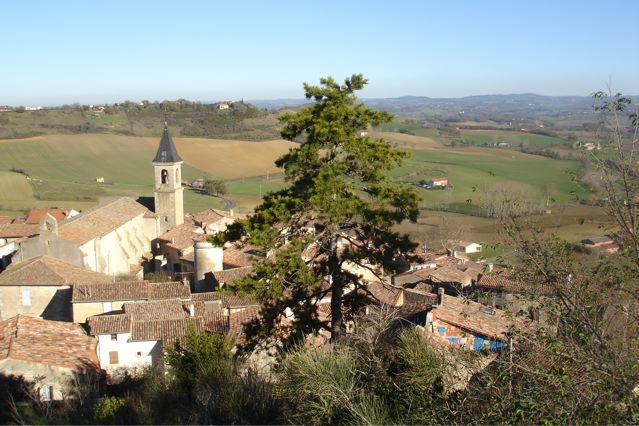
In search of salmon fillets for lunch, I set off for the Friday market in Lautrec.

Lautrec

This is a small affair for the people who live in and around the village. There are usually a couple of stalls with fresh local products, a fishmonger, cheese stall and not a lot more. Occasionally a man who makes and sells L’Aligot—a speciality of the region–which we have subtitled  “Heart attack on a plate” is there, but not today.

L’Aligot is a sticky mix of melted Chantal cheese and mashed potato, which is turned in a vat with what looks like a paddle; very good with Toulouse sausage, for a not so light lunch!  Comfort food, and dangerously delicious!  Type Two-ers beware!

As usual there are small groups of people standing around chatting. Market day is an opportunity for locals to meet up and chew over the events of the past week, and all the better if the sun is shining like today.

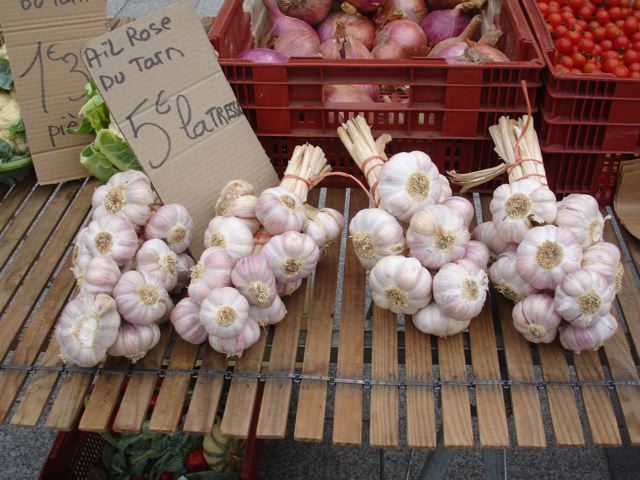
Pink Garlic from the Tarn

I shake hands with our friend Robert and the Monsieur who let us collect fallen walnuts from his garden last year, whose name escapes me. We say “Bonjour—ça va?”, confirm that we are “en forme”, and that all is well “chez nous”, and agree to meet up, “un de ces jours” [one of these days] and on we go. An agreeable culture of politeness.

I change my mind about the salmon and buy two spare rib pork chops from M. Fraise, the butcher, and head home.

Read Full Post »

Socca Pancakes—the recipe below is from my book “Delicious Dishes for Diabetics” (available for pre-order on Amazon.co.uk)
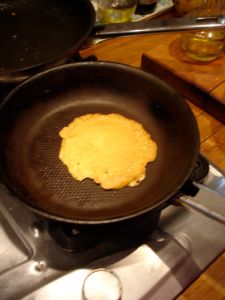
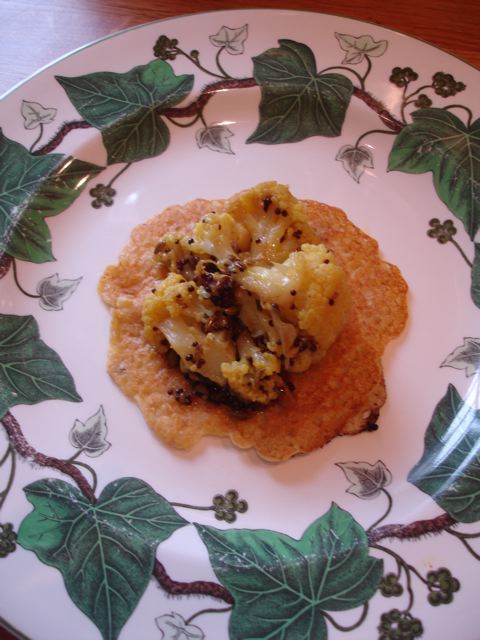
socca pancake

These little discs are handy landing pads for pretty much anything you fancy. Today I had some left over roast chicken (also in the book) in the fridge; which I sautéed with some sweet onion slices, dry roast walnut pieces and some sliced celery in a little walnut and olive oil. The pancake base ( I covered mine with a pancake hat) added a slightly crunchy interest to the chicken filling.

The other day I added the spicy cauliflower recipe from my book—see below–and served a poached egg on the side.
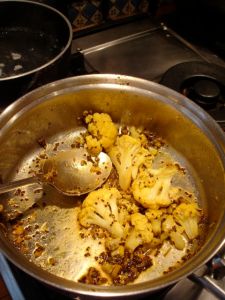
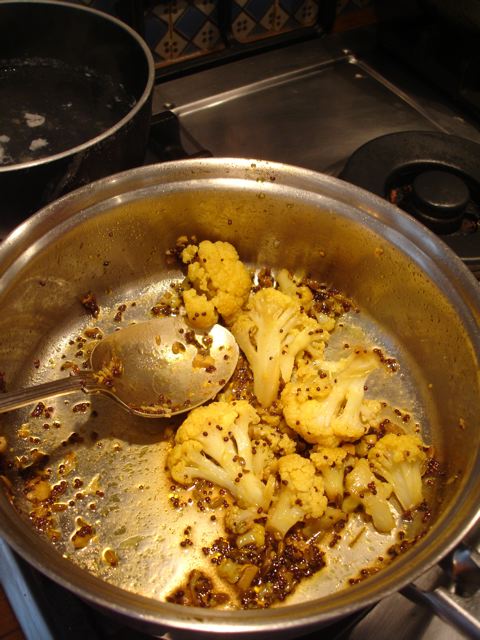
Sauted cauliflower

Farinata or Socca (Pancake)

Serves 4

This is street food and is still sold on the streets of Nice and Marseille in southern France. These pancakes are about 20 cm/8 inches wide and are good for parking things on – a fried egg or some bacon bits or, as I did recently for a light supper, thinly sliced roast tomatoes.*

170 g/6 oz chickpea flour

400 ml/14 fl oz/1½ cups sparkling water

80 ml/2.5 fl oz/ cup olive oil

salt and pepper

1 tbsp rosemary leaves

olive oil

1. Put the flour in a mixing bowl. Add the water and whisk it in until smooth.

2. Add the oil and whisk it in. Add pinches of salt and pepper and the rosemary. You will have roughly half a litre (20 fl oz) of batter. Leave to soak for 20–30 minutes.

3. When you are ready to make the pancake, heat a swirl of olive oil in a 25 cm/10 inch frying pan. When hot, put a tablespoonful of the stirred mixture in the pan and turn the heat down a little. Cook for a few seconds until you can ease the pancake loose with a spatula or fish slice. Now you have to turn it over! Be bold! Practice makes perfect and anyway the first attempt, if not completely successful, will be edible.

Cook the pancake a further few seconds and remove from the pan.

Both sides should be a golden brown. Add a few twists of the pepper mill on each.

* Cook the tomatoes, sprinkled with a little salt and olive oil, for 20 minutes in a low oven (140°C/275°F/Gas Mark 1).

Cauliflower with Mustard Seeds and Fennel

Serves 4

Madhur Jaffrey, the Indian actress and cook, brings a touch of the sub-continent to the Mediterranean. This version of her recipe stands on its own and would be good served on the socca pancake or with the “comfort” lentils, and is excellent as a vegetarian main course.

6 tbsp olive oil

1 tbsp black mustard seeds

2 tsp fennel seeds

3 cloves of garlic – finely chopped

¼ tsp turmeric

¼ tsp cayenne pepper

1 largish cauliflower – dismantled into small florets

4 tbsp hot water

salt to taste

1. Heat the oil in a large sauté pan. Put in the mustard and fennel seeds.

2. As soon as the mustard seeds begin to pop, add the garlic cloves. As they begin to turn colour, add the turmeric and cayenne and stir them in.

3. Add the cauliflower florets and turn them in the oily mixture. Add the water and turn the heat down.

4. Cook on a gentle heat, covered, for 20 minutes or until the cauliflower is just tender.

5. Uncover the pan and let any remaining water evaporate. Add salt to taste.

Socca (chick pea) pancake with sauted spicy cauliflower

Read Full Post »
Just no desserts…!

There are no desserts in my cook book, Delicious Dishes for Diabetics–A Mediterranean Way of Eating.

This is because I don’t eat desserts.

Well not the whole truth—Meredith sometimes makes a dessert for company that is so good, that not to try it would be churlish—so I have a sliver.

I’m lucky, I don’t have a sweet tooth and have never had a craving for large portions of exotic “afters”—though I do remember the wonderful tall glassed “Knickerbocker Glories” (ice cream sundaes in the U.S.) at the lunch counter on the top floor of Marshall and Snelgroves, once a famous department store on Oxford Street. One of my grandmother’s regular treats in the early 1950s!

For others it‘s a sacrifice to forgo the third course. It’s true that a good meal needs a grace note at the end, something that rounds it off–a contrast to the savory tastes of the main dish–something to complement the coffee or tea to come. Well, all is not lost…!

The answer, surprisingly, is CHOCOLATE–with a high proportion of cacao.

One square eaten with a good cup of coffee is the perfect end to a meal for me.

I have got used to 90%  and find anything lower than 85% too sweet.

The idea has caught on. There often seems to be a choice these days from 70% and upwards in most supermarkets.

This site positively encourages the consumption of high cacao chocolate:

10 Reasons to Eat High Cocoa Content Chocolate


Read Full Post »

Poaching eggs

A tip on egg poaching from Elizabeth David

Our guest hens are laying an egg a day; and with Madame Arcati—our own—that adds up to four.

So I am looking for new ways with eggs for lunch.

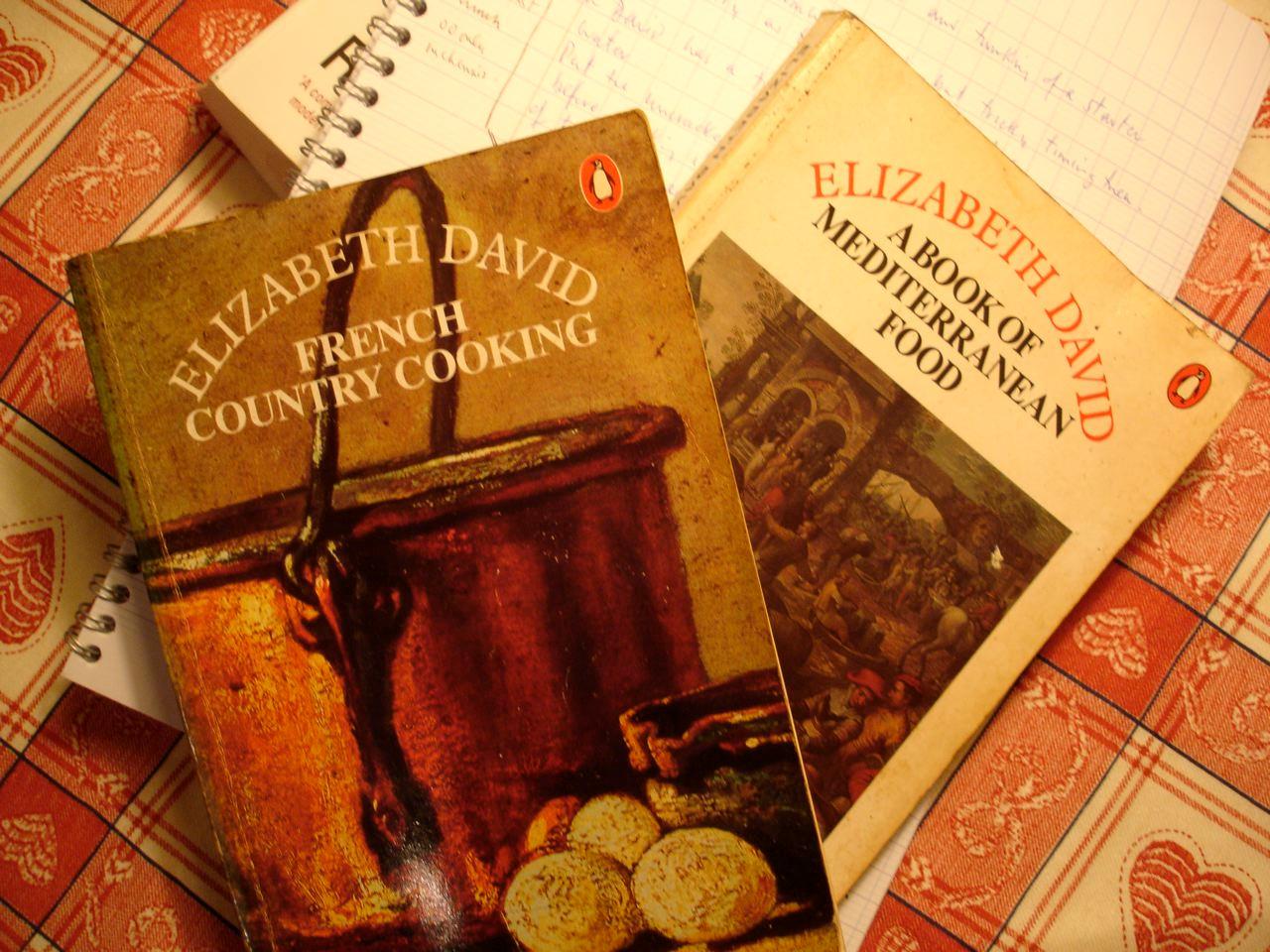
Elizabeth David — doyenne of English food writers, whose first volume  A Book of Mediterranean Food appeared in 1950—is always worth revisiting—for recipes certainly, but also for an entertaining, an informative read.

All her books are still in print.

In her second, French Country Cooking, she writes a page-long essay on poached eggs!

She confesses that she learned all she knows about poaching eggs from a cookery book published by the Buckinghamshire Women’s Institute (!).

Here’s the tip–and it works.

Lower each egg, still in its shell, into a saucepan of boiling water, for about 20 seconds; then retrieve it.

This has the effect of coating the egg neatly in its own white, and avoiding the swirling chaos that can occur.

To poach the egg—put a little wine vinegar in the boiling water, crack the egg into a small bowl and carefully lower it into the water. Encourage the egg to turn over, and after a minute or so, gingerly lift it out.

Read Full Post »

« Newer Posts