Feeds:
Posts
Comments

Archive for the ‘Food’ Category

We are having this tonight with our friends Andrew and Peggotty who are here for a few days rest and recuperation!

Meredith says it’s not really from the Mediterranean region so what’s it doing in the cookbook?!

She’s right–it’s more Cajun than Med. I think–but it’s healthy and tastes good, so…!

It’s also a good dish for company–easily adapted to feed more than four.

Allow 200 g/7 oz of salmon fillet per person.

Serves 4

800 g/28 oz salmon fillet–skin and small bones removed

2 tablespoons olive oil

more olive oil for sautéing

For the Orange Yogurt Sauce 

4 tbsp/80 ml/3 fl oz olive oil

400 ml/14 fl oz/1½ cups yogurt of choice – whisked smooth (I use no-fat)

zest and juice of 1 large juicy orange 

For the Herb and Spice Mix 

3 teaspoons each–dried thyme, dried rosemary, dried oregano 

3 teaspoons dry roasted cumin seeds – roughly ground

1½ teaspoons each Spanish sweet smoked paprika, cayenne pepper 

3 cloves of garlic–pulped in a mortar with a pinch of salt

3 teaspoon salt

  • Make the sauce by whisking the olive oil into the yogurt, followed by the zest and juice of the orange. Set it aside.
  • Put all the herbs and spices in a bowl and mix them
  • thoroughly.
  •  Run your fingers over the top of the fillets to check that all
  • the small bones have been removed.
  • Cut up the salmon into squares roughly 3 cm/11/2 inch in size – they need to be cooked quite quickly so mustn’t be too large.
  • Put them in a bowl and add the olive oil. Turn the salmon carefully until it is well covered.
  • Tip the salmon into the bowl with the herb and spice mix.
  • Again turn the salmon carefully until all the pieces are well covered in the mix.
  • Pour a couple of tablespoons of oil into a large frying pan.
  • When hot transfer the “blackened” salmon to the pan and fry for 4–5 minutes.
  • Check for doneness, try not to overcook; it’s better that some pieces are slightly underdone – they
  • continue to cook a bit off the heat.
  • Serve over a steaming dish of brown basmati rice.
  • Don’t forget the sauce!
Read Full Post »

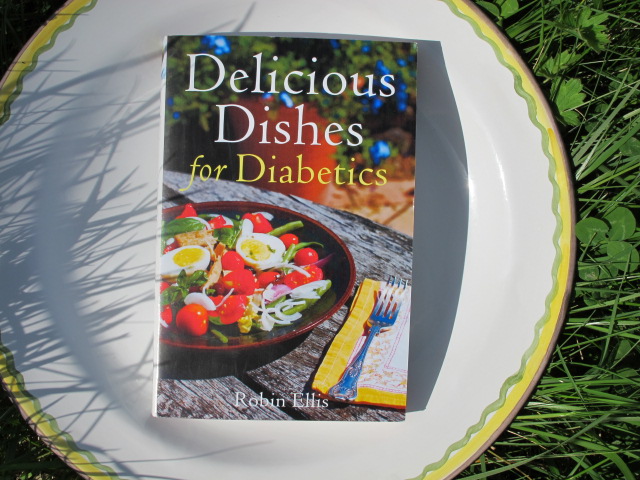
This is taken from my book: Delicious Dishes for Diabetics which was published in August and is being reprinted–(hooray!).

Based on a recipe from Richard Olney’s Simple French Food, it’s useful company for pork or chicken. It can also serve as a vegetarian main course with some white beans or chickpeas.

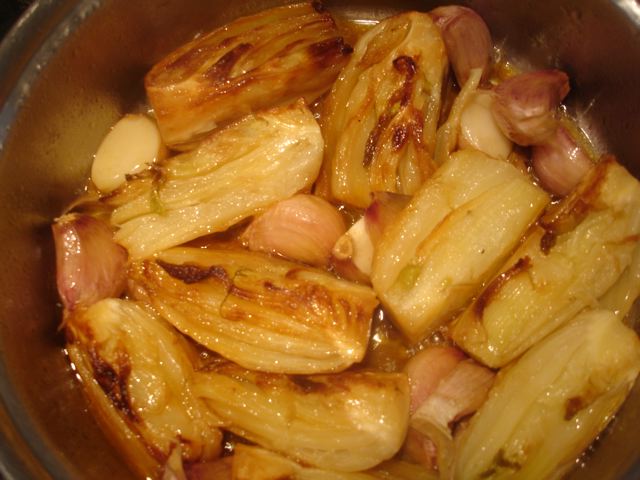
The initial cooking helps to caramelize the fennel lightly–so it’s worth taking the time.

Serves 4

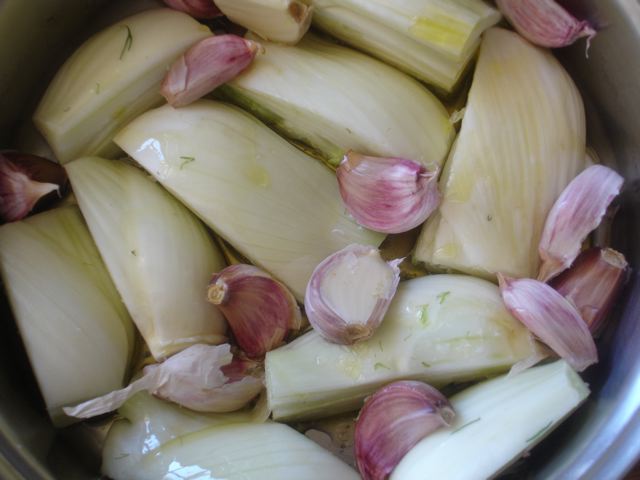
2 large or 4 medium fennel bulbs – tough outer part removed, cleaned up and quartered or cut into eighths, if the bulbs are very large

6 or more cloves of garlic – unpeeled, hooray!

3 tablespoons of olive oil 

salt and pepper 

6 tablespoons of water 

  • Put the fennel and the garlic in a pan large enough to hold all the quarters in a single layer.
  • Add the olive oil and a little salt.
  • Cook, uncovered, on a medium-low heat for 20 minutes, turning as the fennel colours–it should be nicely caramelized by the end.
  • Add the water, cover the pan and cook slowly until the fennel is super tender–about 30–40 minutes.
  • The quarters should hold their shape and be infused with a deliciously mild taste of the garlic.
  • Adjust the seasoning and serve.

Read Full Post »

On our last day in London our friends Prue and Michael invited us to lunch–a treat.

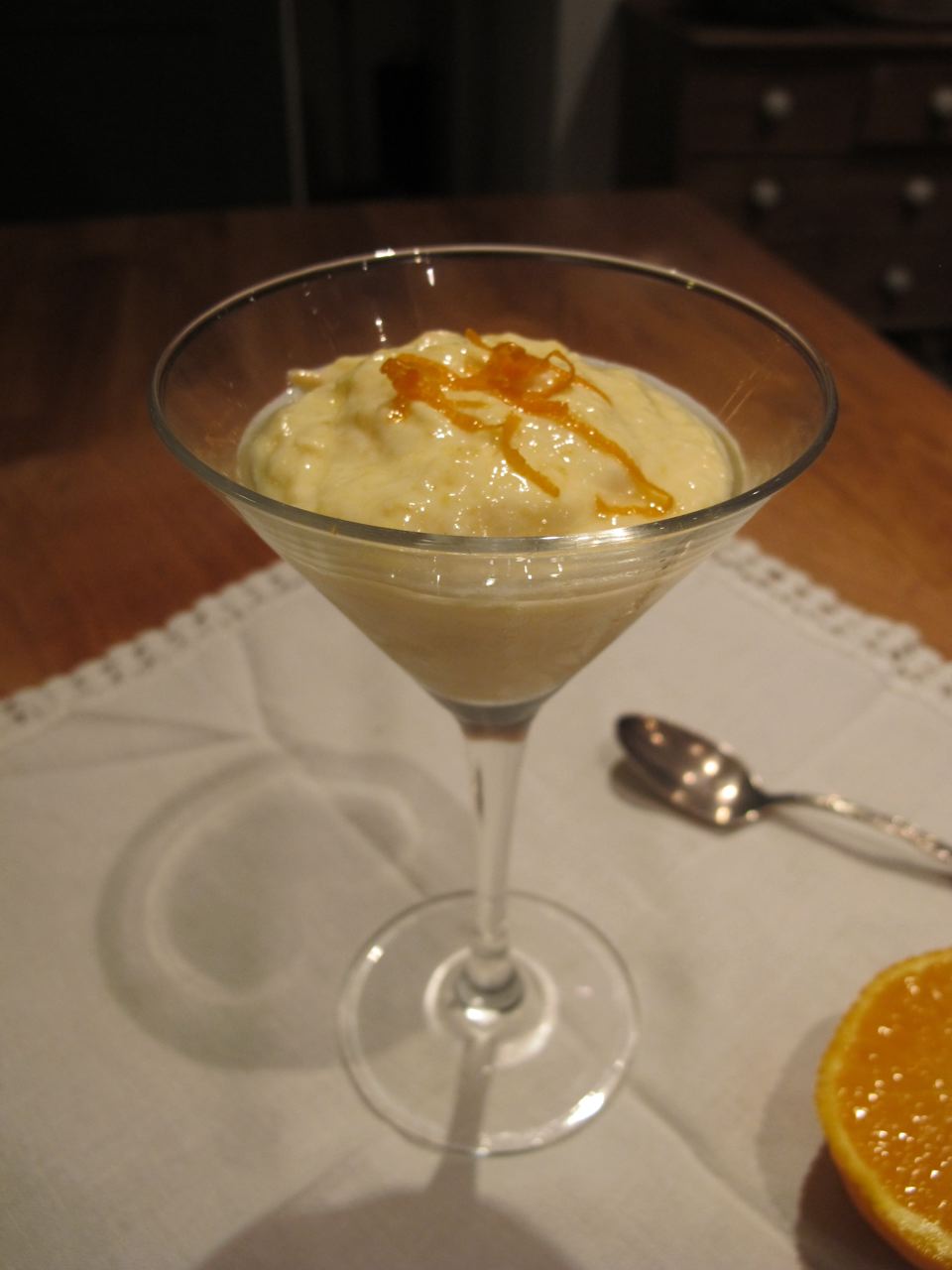
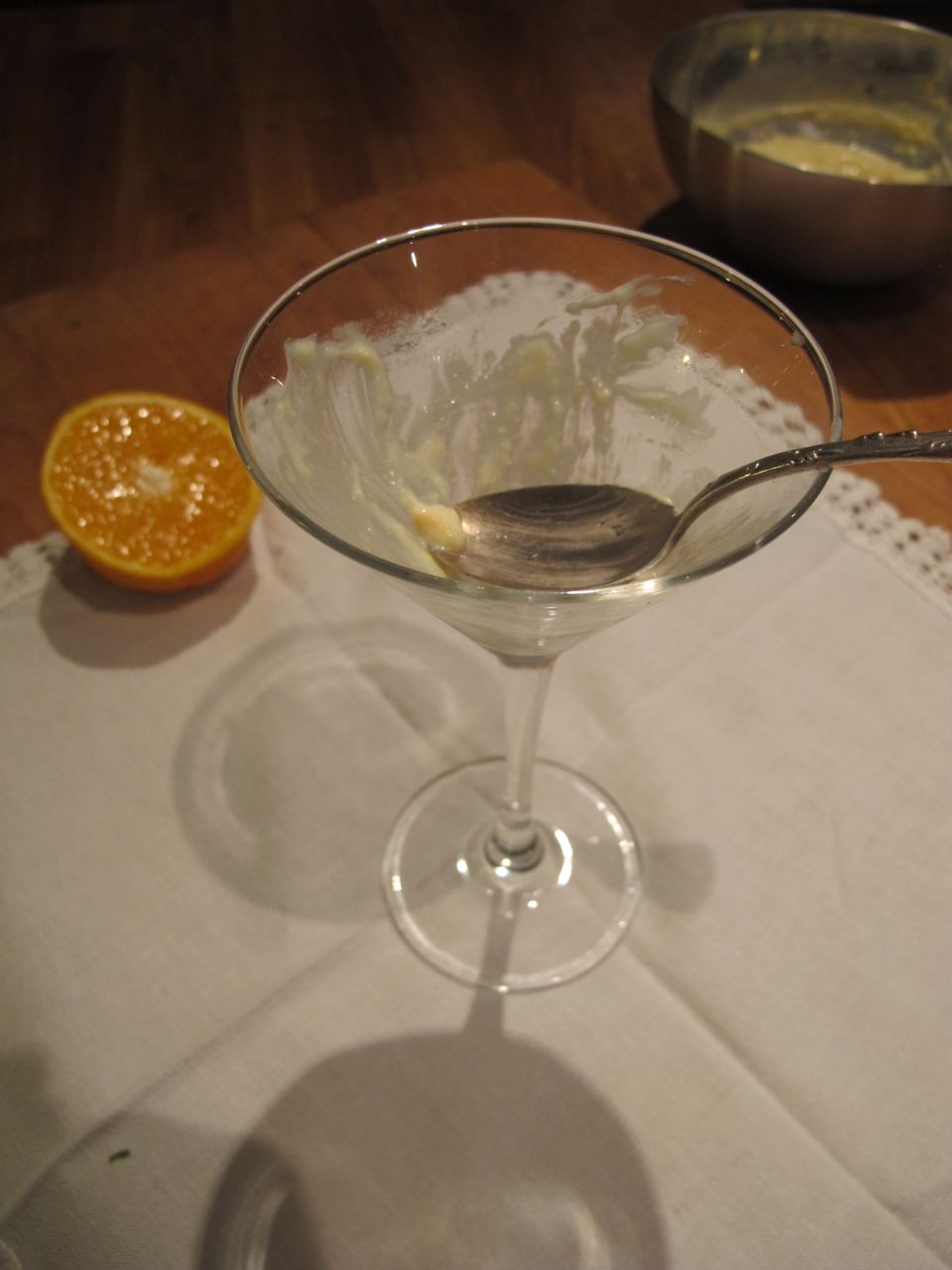
We ate a delicious monkfish dish followed by Prue’s Mango Surprise--thought up by a thoughtful Prue with me in mind, i.e. something she hoped a type 2 diabetic could enjoy.

A dessert–my word!–and it was delicious!

Mangoes have been controversial.

On our return I did a bit of research.

The news is encouraging.

This from the GI Index:

Mangoes are one of the few tropical fruits with a low GI (51) so they’ll deliver sustained energy without spiking those blood glucose levels (in modest portions).
They are also an excellent source of vitamin C, high in the soluble fibre pectin that helps in controlling blood cholesterol, a good source of vitamin E, rich in beta-carotene which the body converts to vitamin A, and loaded with compounds called polyphenols which have strong antioxidant properties protecting against heart disease and cancer. So you really don’t need an excuse to grab one.

Further reassurance and encouragement comes from the ygov site–Are mangoes good for diabetics??:

As usual, the message is “in moderation”.

Difficult in terms of Prue’s dessert!

Here it is:

500 gms/ 16oz (four small pots) yogurt--drained for 1/2 hour in a sieve to thicken it (spoon carefully into a fine sieve and leave to drain off the whey over a bowl in the fridge)

300 gms/10 oz ripe mango flesh–whizzed to a rough purée in a food mixer

the zest of an orange and a squeeze of its juice

  • Whisk the three ingredients together in a bowl.
  • Refrigerate for a couple of hours before eating.
  • Serve in a small glass–with perhaps a finger waifer biscuit for non diabetics and a few strands of the zest/thin rind for the look of it.
Lacking a sweet tooth, I don’t much miss desserts–does anyone have other healthy options for those that do?

Read Full Post »

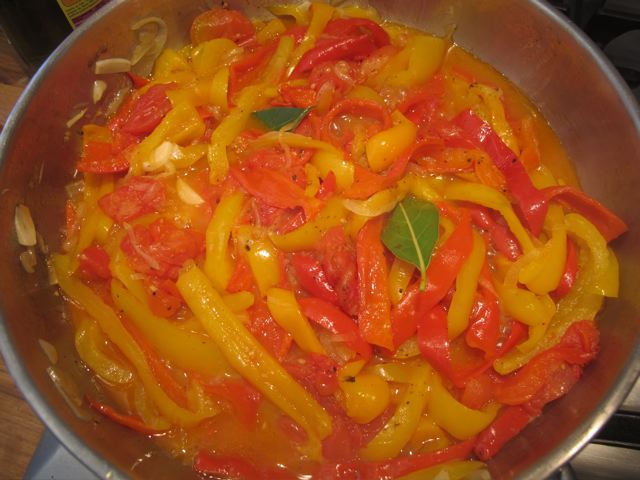
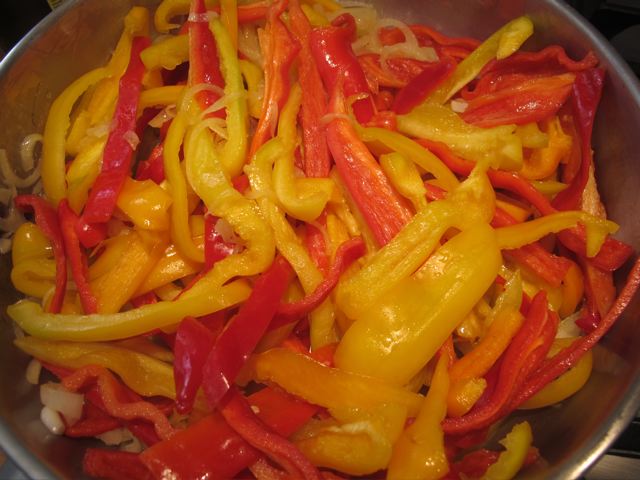
Peperonata

Worth trying just for the beauty of it!

It is the perfect time.

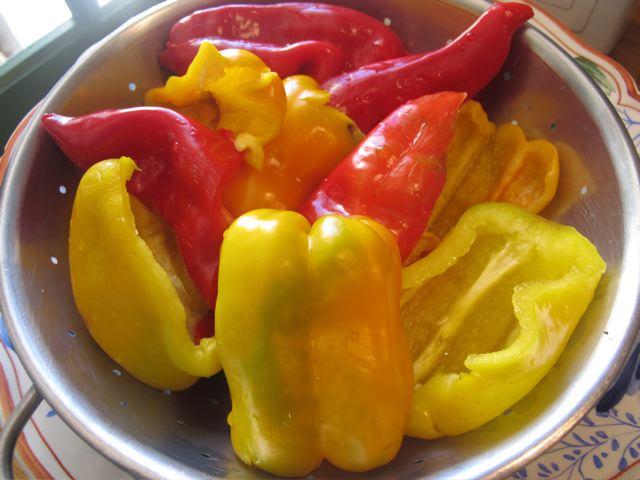
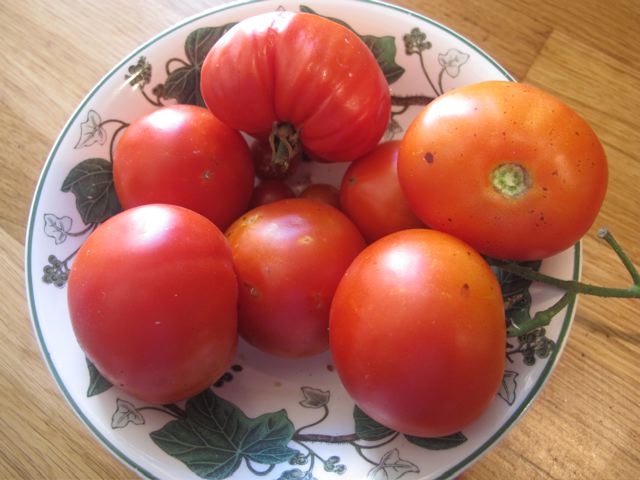
The markets have red and yellow late summer peppers on the stalls and the tomatoes are sweet end of season numbers.

The last few from the garden

This will be lunch today served on a piece of rye toast (for me–wholewheat for Meredith) with a poached egg perched on top.

750gms/1.5 lbs red and yellow peppers (or just red if you can’t find yellow)–seeded and sliced in strips

1 tablespoon olive oil

350 gms/12 oz ripe tomatoes–peeled and chopped

1 medium onion–sliced thinly

2 cloves of garlic–sliced

2 bay leaves

1 teaspoon balsamic vinegar

salt and pepper

  • Heat the oil in a medium pan you can cover.
  • Sauté the onion to soften it for five minutes then add the sliced garlic; turn it in the onion and oil and cook for a couple more minutes.
  • Add the pepper slices and the bay leaves, turning these over in the mixture.
  • Cover the pan and cook for 15 minutes to soften the peppers, turning them a couple of times.
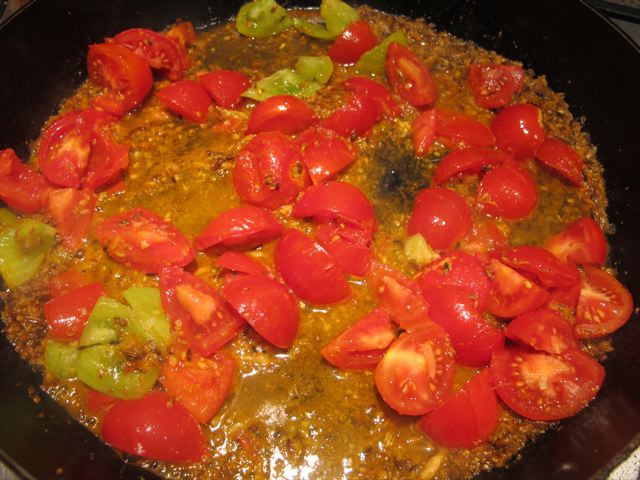
  • Add the tomatoes, some salt and pepper, mix them in and cover the pan again–let this cook gently for 20 minutes.
  • If he mix is a little too liquid, cook it another 5 minutes or so uncovered.
  • Add the teaspoon of balsamic and mix in well.
  • A spoonful of tapinade makes a nice contrast with the colours of Catalonia (to the south of us here)

The flag of Catalonia!

  •  and cuts the sweetness of the peppers–but then you have to make the tapinade!
  • For us now it’s a poached egg.

Read Full Post »

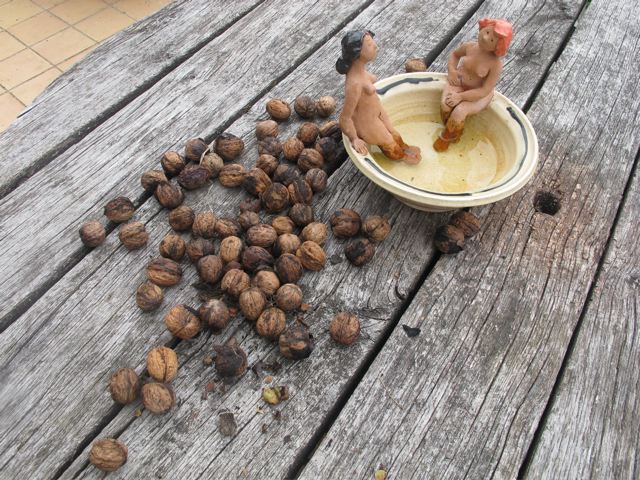
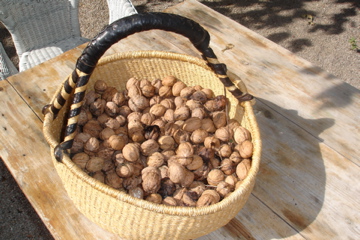
I set off on the long walk for walnuts yesterday afternoon.

It lasts from now to early November and involves a lot of bending down.

Good exercise–and usually good results.

We still over two full boxes left from last year’s harvest. The slim pickin’s from yesterday–just under a kilo–are on the slatted table drying out. And are clearly a subject for conversation!

I know, but listen–have you heard about…?”

The modest almond and its benefits to health have been in the news.

 Diabetes.co.uk reported yesterday that:
Two new studies into the potential health benefits of eating almonds have supported evidence that they can help people with type 2 diabetes to maintain their blood glucose and cholesterol levels.
 One of the studies, published in the journal Metabolism, showed that consuming an ounce of almonds straight before eating a high-starch meal brought a 30 per cent reduction in post-meal glucose levels for patients with type 2 diabetes….”
I just measured out an ounce and counted about thirty nuts–about what I eat as a snack in the late afternoon. I was reminded of an earlier post called Peckishness“:

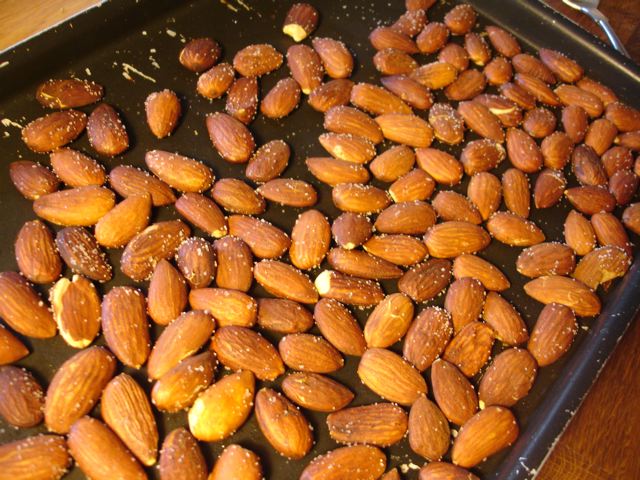
” Almonds are my prefered nut at the moment–roasted with a little salt. Pistachios preceded them until my nails started to split with opening them. Both have good health properties. Eaten in moderation, one doesn’t have to feel guilty about snacking.

Home-roasted almonds

About 8oz/250gm almonds

1 teaspoon olive oil

fine salt

  • heat the oven to 180C/375F
  • Put the almonds in a bowl and tip the teaspoon of oil over them.
  • Turn them over in the oil until they are well covered.
  • Add a couple of sprinklings of salt and flip them over and over until the salt is well distributed.
  • Spread  the nuts on a shallow baking tray and roast in the middle of the oven for about 10 minutes. There’s no pain in testing them for doneness–except perhaps briefly to the fingers!
The only drawback–they are more-ish..!

Read Full Post »

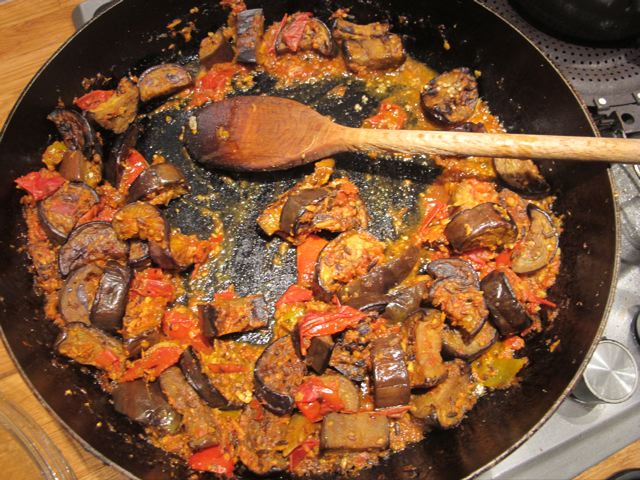
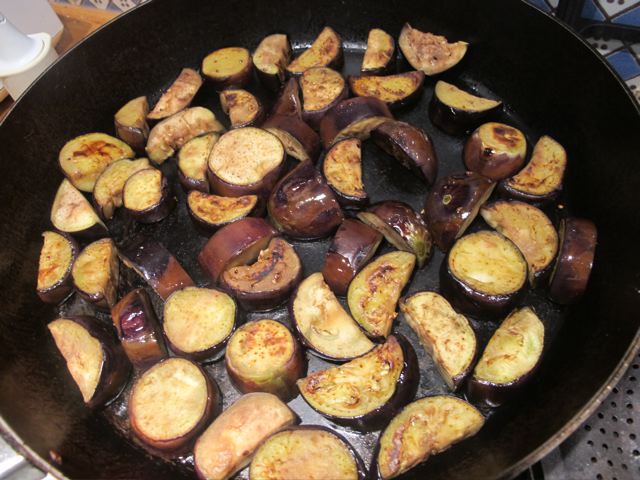
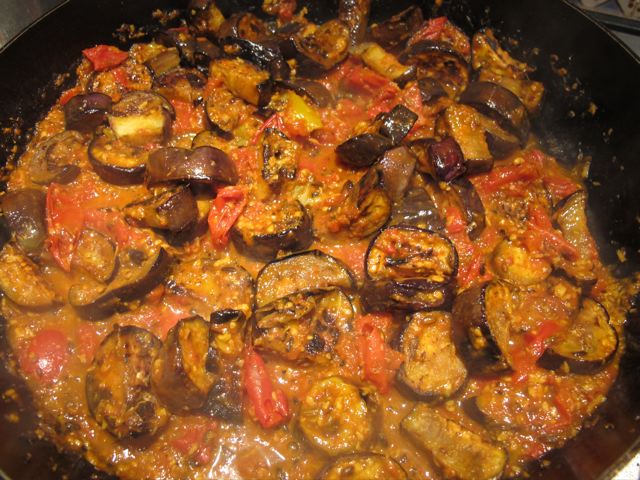
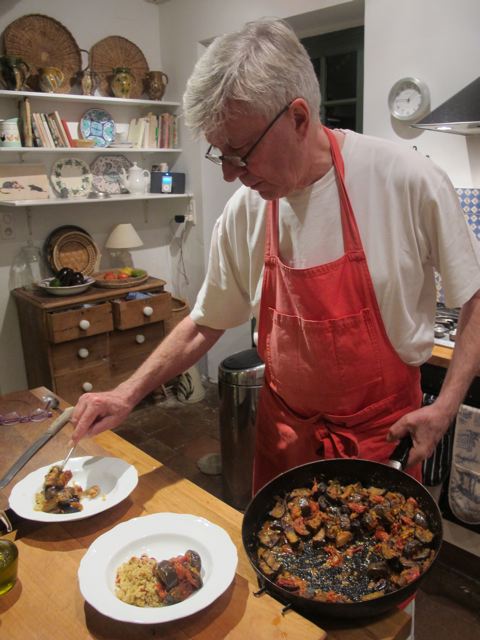
We had these last night with quinoa, plain green beans, and garlicky yogurt sauce.

It’s adapted from a recipe by Rick Stein–known as the uncrowned king of Cornwall.

When we were filming Poldark in Cornwall 35 years ago, eating out in the county was very different from what we experienced last weekend and Rick Stein has a lot to do with it.  His fish restaurants in Padstow have set a benchmark. Things have improved!

We tried to reserve a table at one of Rick’s places a couple of weeks before our trip but they were all booked–sad for us but “Hooray” for Cornwall!

for 2+

500gms/1lb aubergines–cut up into smallish pieces (quicker to sauté), lightly salted and left in a sieve or colander for an hour to drain off their liquid, then dried ready for the pan. (This seems tedious to do but they absorb less oil this way.)

4 tablespoons olive oil

1” square piece of fresh ginger--chopped fine

3 garlic cloves–pulped with half a teaspoon of salt

1 tablespoon of water

2 tablespoons whole fennel seeds

1 tablespoon whole cumin seeds

1 tablespoon whole coriander seeds–crushed

1 teaspoon turmeric powder

1 teaspoon chili powder

500gms/1lb tomatoes–chopped with their juice (or use tinned)

3 more tablespoons of water

  • whizz the ginger and garlic in a tablespoon of water to form a loose paste.
  • heat a tablespoon of olive oil in a large sauté pan that you can cover.
  • when hot, add a single layer of  the dry aubergine pieces.
  • turn them in the oil and sauté on all sides until nicely browned–a pair of cooking tongs comes in handy here–then set aside. (It’s worth taking your time to make sure the aubergine is cooked through.)
  • continue the process until all the aubergine pieces are cooked, adding more oil as needed.
  • let the pan cool a little before heating two tablespoons of oil and adding the fennel and cumin seeds.
  • let them colour for a few seconds before adding the ginger and garlic paste.
  • cook this gently for a minute or two before adding the coriander, turmeric and chili powder.
  • cook this gently for a minute before adding the tomatoes and the extra water.
  • turn the lovely looking mix over and cook on a low heat for ten minutes to form a sauce.
  • add the aubergine pieces turning everything over thoroughly before covering the pan and cooking for a further 5 to 10 minutes.
  • test the doneness of the aubergines, cooking them a little more if necessary, adding a little more water if  needed.
  • check the seasoning and sprinkle some chopped mint, fresh coriander, or parsley over the dish before serving.

Read Full Post »

I was back in Cornwall last weekend for the first book signing session at Waterstone’s in Truro.

The county is in fine form and this cathedral town was buzzing on Saturday morning.

Bev–who with her husband had driven all the way from Nottingham–made me feel a little underdressed!

Here’s my interview with the excellent and sympathetic Martin Bailie at BBC Radio Cornwall last Friday–me trying to avoid the “errs” and “ums”!.

"On the spot" at BBC Radio Cornwall!

PS–according to an email received today from the US publisher (Skyhorse)–the book is now available in the States…!

Read Full Post »

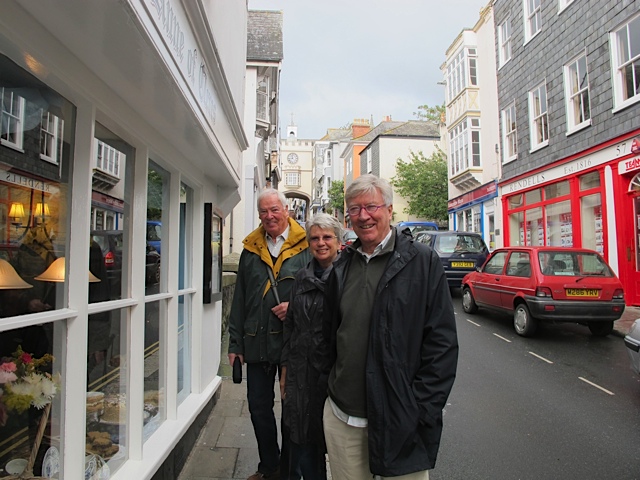
On our way back from the book signing we spend Saturday night in Totnes–old hippy haunt and medieval town on the the river Dart in Devon.

After visiting the Sunday market–(every third Sunday in the month)

we have lunch at a bistro with our friends Maj-Britt and Lars.

“What’s in the Tomato soup–it’s delicious?–would you ask the chef.”

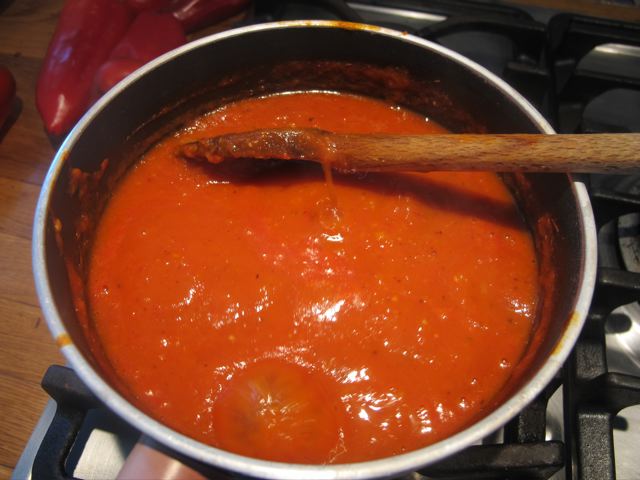
“Roasted tomatoes, red pepper, onion, and garlic–he says.”

So this morning–a little bleary eyed (we returned yesterday)–I head for Realmont market and a stall of home grown tomatoes and peppers.

The market in this medieval town is every Wednesday; retired farmers talk about the weather and old times–and there’s even a hippy or two!

Hearing Grace Slick and the Jefferson Airplane‘s Somebody to love–blasting out over the normally detested civic sound system, transports me back and puts a spring in my step.

Then back home to have a go at the soup.

Oven set to 230C/450F

Cover a shallow oven tray with foil and brush it with olive oil.

800 grms/1lb 12ozs tomatoes–cut up in large chunks

250/ grms/8oz red peppers–deseeded and chopped in large chunks

1 medium onion–peeled and chopped in large chunks

3 garlic cloves–peeled and chopped

300ml vegetable stock–I use half a stock cube in hot water

  • gather these in a bowl and pour over a tablespoon of olive oil.
  • season with salt and pepper and mix well.
  • tip this mix into the oven tray and spread it evenly.
  • put it into the hot oven for 30 minutes.
  • it comes out nicely singed.
  • let it cool a little then tip it all in a food processor and whizz to a roughish finish.
  • (I don’t mind the bits of tomato and pepper skin but there’s the option of lifting these off after the cooling period).
  • after tasting it I add a couple of teaspoons of cider vinegar–it seems to need something.
  • pour the soup into a saucepan and add the stock.
  • stir it well and heat through.
  • check the seasoning.
  • we have a small glass of it for lunch
–with a little fresh basil sprinkled on top and swirl of olive oil–could be creme fraiche though!

Read Full Post »

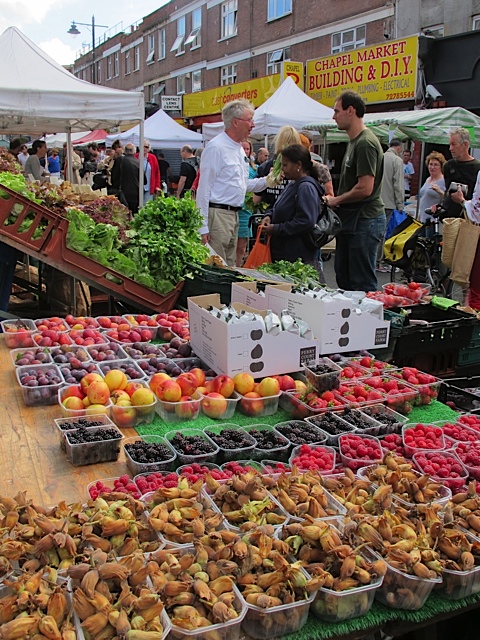
To Borough Market–as Sam Pepys might say–Saturday morning in search of the perfect tomato.

They grow them on the Isle of Wight–there’s a micro climate there.

I plan to make Ma’s Gazpacho for the London launch of the cookbook–can’t have too many launches!

 The Saturday farmers’ market in Southwark by the Thames, in the shadow of the Cathedral’s tower–

used to be great. Growers and producers arriving from all over to sell their stuff to enthusiastic foodies.  A meeting place of like minds with complementary needs.

No more–sadly.

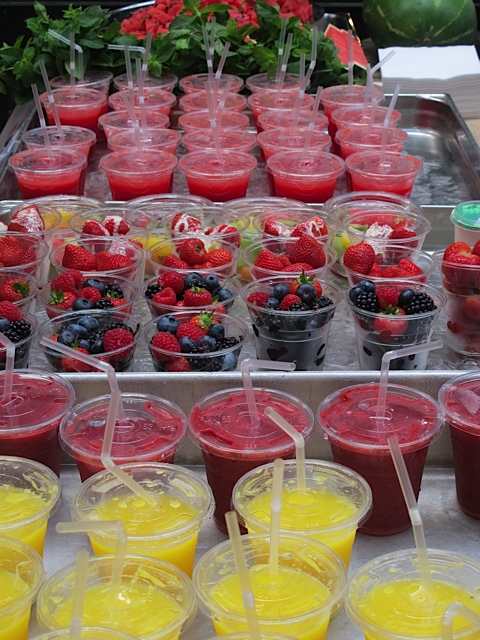
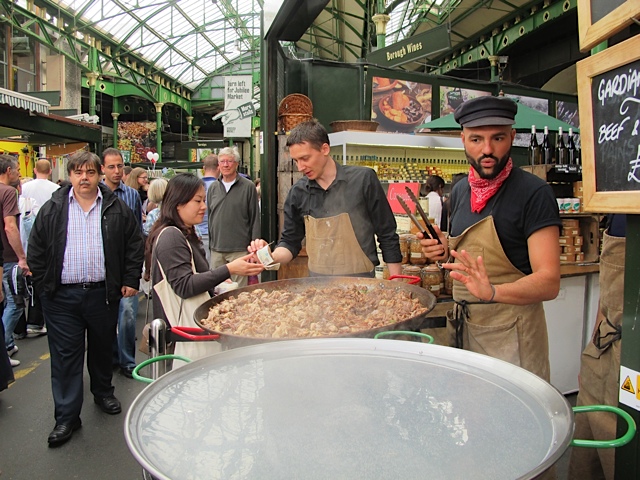
There are still a few stalls selling produce from out of town but it is now firmly on the tourist trail–nicely situated between the Tower of London and the South Bank. More a fun fair of food–and nothing wrong with that–with stall after stall selling healthy fast food–

to eat mainly on the hoof–while checking out what else is on offer.

Quest stalled and this cook fast realising how spoiled he is by the French markets he’s accustomed to–boo-hoo…

Back to Waterloo (where we are staying) to think again–in search of inspiration now.

I suddenly remember a Sunday market in Islington and google it–of course.

There it is–still going– but “moved to Chapel Market–every Sunday 8am to 2pm.”

Sometimes you want to kiss the Internet!

Whoopee and off we go this morning.

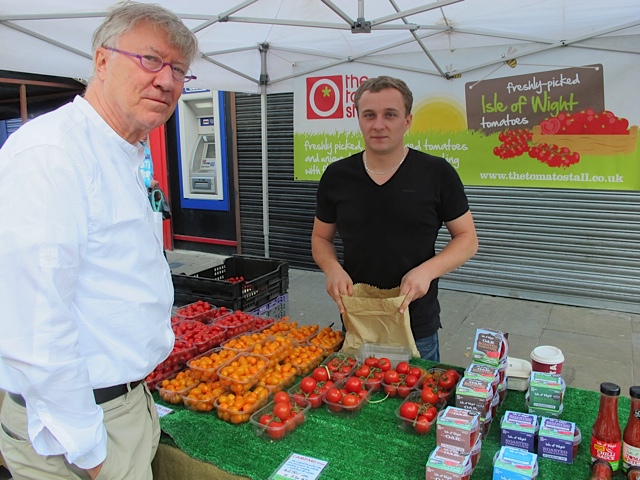
“Freshly picked Isle of Wight Tomatoes” says the sign! Quest over.

And sold by the grower, a delightful fresh-faced young man from…Poland! (Not famed, as far as I know, for its tomato crop).

He knew his tomatoes though–they’re tasty.

Delighted, relieved, ladened down (5 Kilos)–I go to two more stalls and find the remaining ingredients.

Search over–now to make it.

Read Full Post »

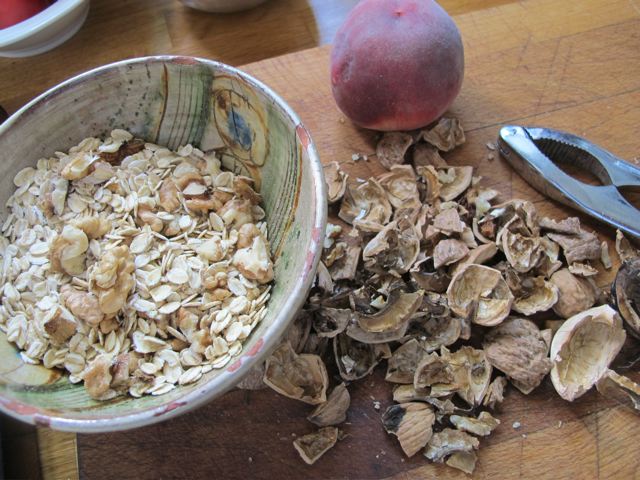
Breakfast in the making

As I was climbing the first hill on my walk this morning a single nut dropped with a thud on the road in front of me–missing my head by a whisker.

I picked it up and turn it round in my hand.

It was a perfectly formed walnut–freed from its green casing.

A small opening had been made in the shell through which I could see the white flesh of the unripe kernel.

On it was written this message:

“Keep off my patch!”–only kidding!

In effect that was the message intended by the red squirrel who thought he’d spotted another walnutter.

He had and I am, but not today–it is too early by about three weeks–they are still green.

No matter–walnut harvest time approaches and the trees look promising.

From late September to early November each year I collect them in basketfuls

and hang them out a while to dry in the breeze, before storing them away, like the squirrel, for chillier days to come.

According to local rules: “When they fall on public paths or on the  roadside verges, anyone can harvest them.”

No harm in repeating their wonderful healthly qualities, confirmed in these two studies:

The original Walnut Study from Loma Linda University was published in the New England Journal of Medicine. They were the first to find that walnuts in a controlled diet reduced LDL (bad) cholesterol and heart disease risk significantly more than the diet then recommended by the American Heart Association In other words – they proved, scientifically, that food really can be your medicine.

In April 2000, another landmark walnut report was published in the Annals of Internal Medicine.  Researchers had 49 men and women with high cholesterol incorporate walnuts into a healthy Mediterranean diet, substituting a handful of walnuts a day for some of the mono-unsaturated fat in the diet.  Participants lowered their “bad” LDL cholesterol by almost 6 per cent and heart disease risk by 11 per cent beyond what would be expected from the Mediterranean diet alone.

and in this:- walnuts


Read Full Post »

« Newer Posts - Older Posts »