Feeds:
Posts
Comments

Archive for the ‘Food’ Category

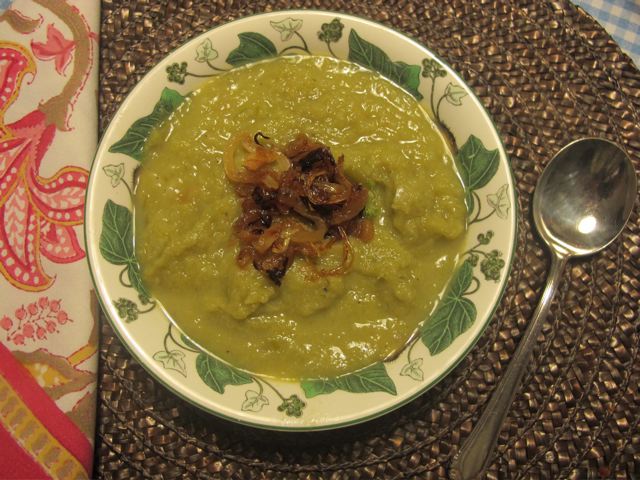
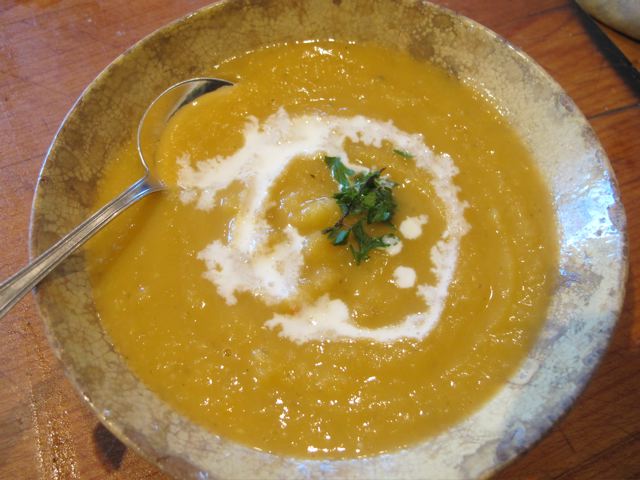
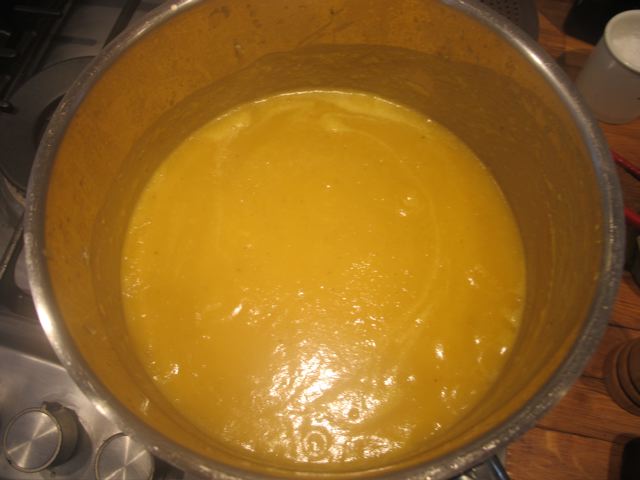
We tasted this new soup for lunch.
When Dianne P. from New Hampshire posted her memorable photos taken 33 years ago, in autumn of 1978 on the set of The Europeans in New Ipswich, New Hampshire on Flikr last night, it put me in mind of the late Ismael Merchant’s cooking.

He was the producer half of  Merchant/Ivory productions–Jim Ivory is the director of their movies.

I played the frustratingly “unable to commit” Robert Acton, opposite the much lamented and talented Lee Remick, in their film of Henry James’ novella.

Ismael was a wonderful cook and would sometimes use his talent to smooth the ruffled feathers of nervous creditors when the film threatened to overrun.

One of his curry feasts, I remember, bought us enough time to finish the film!

There’s a soup in his book Indian Cuisine called “Claverack Carrot Soup“.

We used to have it often, but after I was diagnosed with type 2 diabetes, it came “off the menu”, because of the potatoes and carrots in it.

I had some fennel and a sweet potato I wanted to use and a nobly piece of ginger–and autumn has  arrived with the clocks going back;  so I thought I’d experiment–with a nod to Ismael and thanks again to Dianne!

1 medium onion–chopped roughly

1 tablespoon of olive oil

12 oz of cleaned and chopped fennel

12 oz of peeled and chopped sweet potato

1 clove of garlic–chopped fine

a thumb-nail size piece of  fresh ginger–peeled and chopped fine

1.5 pints of stock–I use organic vegetable stock

a little single cream or yogurt to swirl on top in each bowl

Salt and pepper

for 4

  • Heat the oil in a large saucepan and add the onion.
  • Soften it for 10 minutes without browning it.
  • Add the fennel and the garlic, mix it in with the onion and gently sweat the mixture–covered–for 15 minutes.
  • Add the sweet potato and the ginger, mix it in and sweat–covered–for a further 15 minutes.
  • Season the mixture–keeping in mind that the stock will have salt in it.
  • Add the stock and cook it for another 10 minutes–uncovered.
  • Let the soup cool for a few minutes before liquidising it.
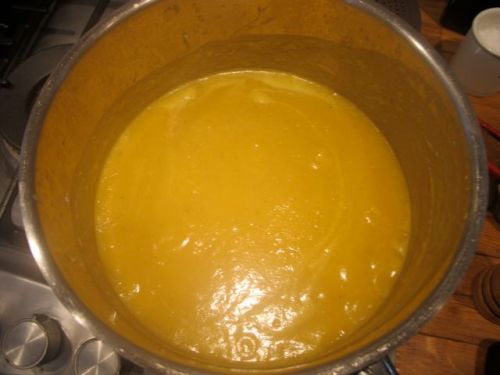
  • I use a hand-held liquidiser/blender.
  • Serve hot with a swirl of cream or yogurt on top.
  • Meredith thought a single piece of crispy bacon for each bowl would be good too–we’ll try that next time.
Read Full Post »

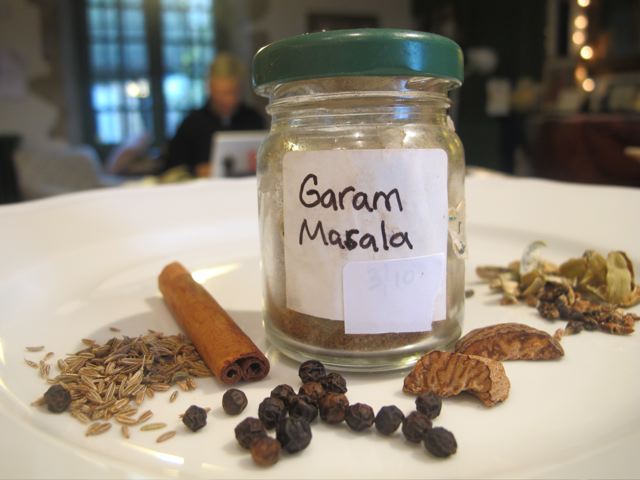
Garam masala is an ingredient in the dal recipe I posted a few days ago (see Gentle Lentils) and was new to some people.

Garam means hot and masala means a spice mix.

The “hot” is not a spicy hot but rather a heat that warms the body (in principle).

I’ve learnt about this subtle and delicate flavouring mix from Kris Dhillon whose cookbook, The Curry Secret, is from the same imprint as Delicious Dishes for Diabetics–i.e. Right Way).

He writes:

“…the theory comes from the Hindu concept of medicine and diet called tridosha, which teaches that some foods have a warming effect on the body while others have a cooling effect. Spices such as cardomans, cloves, cinnamon, and nutmeg are garam constituents of this aromatic mixture.”

Garam masala is usually added towards the end of the cooking process; it can also be sprinkled over cooked food to enhance the flavour.

It is a mixture of spices that has infinite variations. You can buy it (just as you buy curry powder) or you can make your own. This version is from the wonderful Indian actress and food writer Madhur Jaffrey, author of  Indian Cookery.

1 tablespoon cardoman seeds

2″/5 cm stick of cinnamon

1 teaspoon cumin seeds

1 teaspoon whole cloves

1 teaspoon black peppercorns

1/2 a small nutmeg–grated

Whizz the mix to a fine powder in a spice or coffee grinder.

Read Full Post »

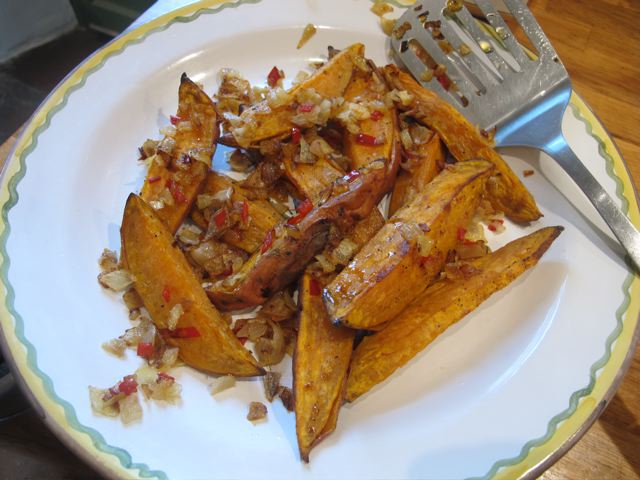
Adapted from an Ottolenghi idea–this accompanied a spatchcocked chicken recipe out of the same stable for dinner with some friends the other night.

(I’d tried it out the night before but forgot the chili!)

Ottolenghi adds some crumbled chevre [goat’s cheese] which would make a good light supper dish with a salad or some broccoli.

for 2–(for 4 add another potato and a small onion to the recipe)

Heat the oven to 220C/425F/gas mark 7.

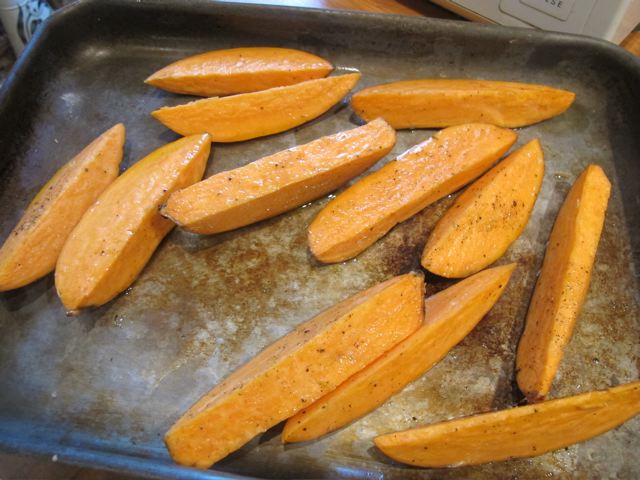
2 medium sweet potatoes–the skin rinsed and brushed clean, cut in half lengthways then each half cut into three long wedges

3 tablespoons of olive oil

salt and  pepper

1 medium onion–chopped

1 fresh red chili–sliced very thin and chopped

  • In a bowl turn the wedges over in 2 tablespoons of the olive oil and season them.
  • Lay the wedges skin side down on a baking tray.
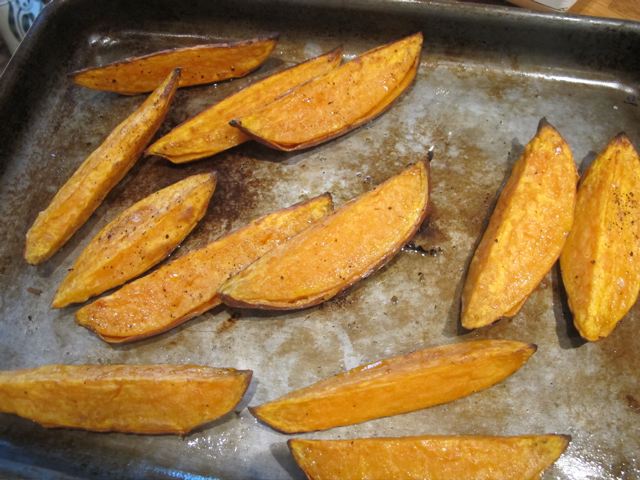
  • Roast them for about 25 minutes–until soft.

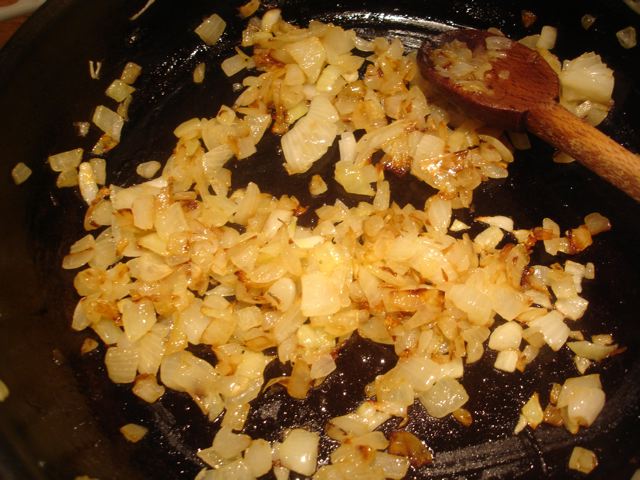
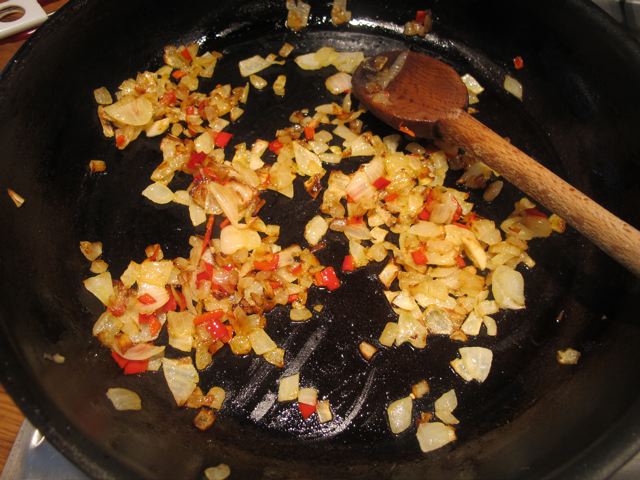
  • While the potatoes are roasting, gently brown the chopped onion in the remaining tablespoon of oil.

  • Add the chili after about fifteen minutes letting it soften and meld in with onion.

  • Scatter the sautéed onion and chili over the potatoes

We had the left-overs mixed in a salad last night with a handful of dry-roasted pumpkin seeds for added crunch!

Read Full Post »

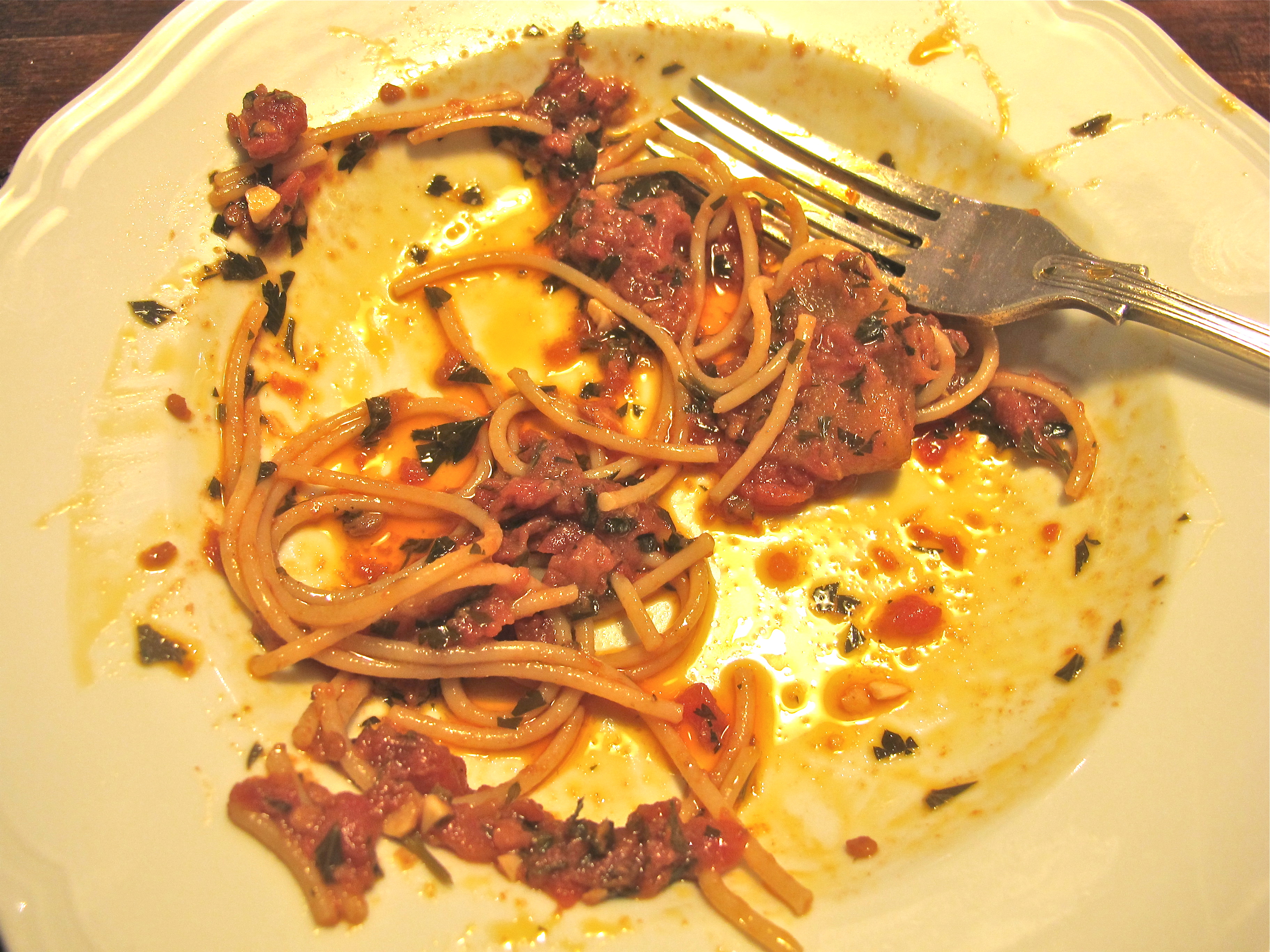
Meredith and I have eaten this a thousand times, usually on a Sunday evening–our once-a-week pasta night.

It is from the matchless Marcella Hazan and is probably my favourite pasta dish of all time–comfort food par excellence!

What makes it so delicious is the anchovies–controversial little fish–not to everyone’s taste.

Here they deepen the taste without dominating.

The ones preserved in salt are best–they dissolve more readily than those in preserved in oil–but it’s a business preparing them for cooking.

Since I was diagnosed with type 2 diabetes we have eaten wholewheat pasta and now we prefer it–it’s on the shelves of most supermarkets these days.

How al dente it’s cooked is a matter of taste.

In Italy you’d think it was an arrestable offence to overcook pasta–they cook it very al dente and it makes for agreeably slower eating.

for 4

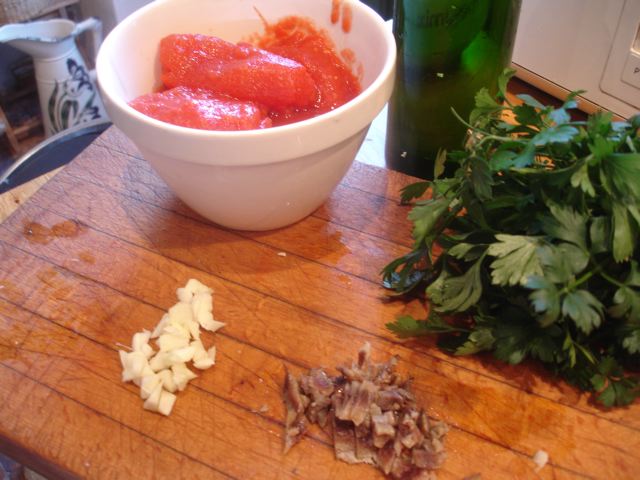
2 medium cloves garlic–chopped

6 tablespoons olive oil

anchovy fillets–chopped fine and pounded into a paste in a mortar with a pestle if you have one

2 good tablespoons parsley–chopped

400 gm tin of tomatoes–chopped with their juice

salt & pepper 

400 gms wholewheat spaghettini

  • Lightly sauté the garlic in small saucepan until it colours.
  • Take the pan off the heat and add the anchovies and parsley– stirring well to dissolve them into the oil
  • Add the tomatoes, the salt and pepper.
  • Cook at a steady simmer for about twenty five minutes, stirring regularly.
  • When ready the sauce will have an unctious consistency and a little pool of oil on top.
  • Cook the spaghettini in plenty of well salted boiling water.
  • Test for your preferred “doneness”.
  • Drain, put in a heated bowl and add the sauce.
  • Mix well and serve.

Read Full Post »

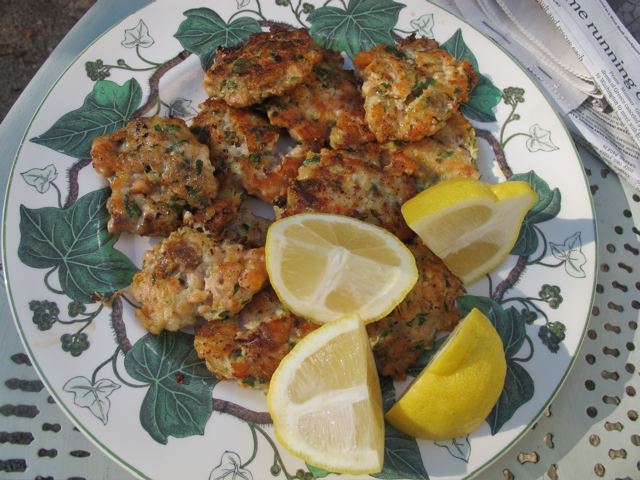
With salmon and smoked haddock .

I used to love fishcakes–but the mashed potato made them “off limits” for me, once I was diagnosed with type 2 diabetes.  Then I found an alternative–“no-potato fish cakes”— and I no longer felt deprived!

This is a variation on that theme.

Adapted from a Gordon Ramsay idea–these are a little heavier than “mark 1”–a winter alternative perhaps? They were lunch yesteday, but could be served as a starter or light supper.

for 4/6

1 lb/450 gms salmon fillet–with the skin and little bones removed
1 lb/450 gms smoked haddock–undyed, if possible, and skin removed
1 large shallot–grated

1 egg–whisked

1 tablespoon parsley–chopped

salt and pepper
olive oil for sautéing

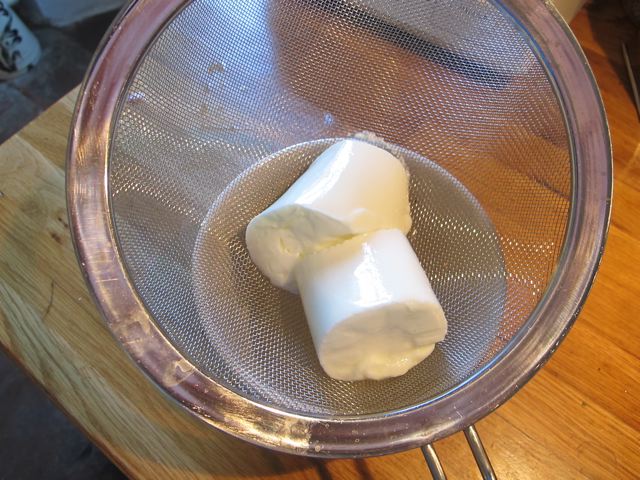
yogurt–I use no-fat organic, drained in a sieve for half an hour to thicken it a little

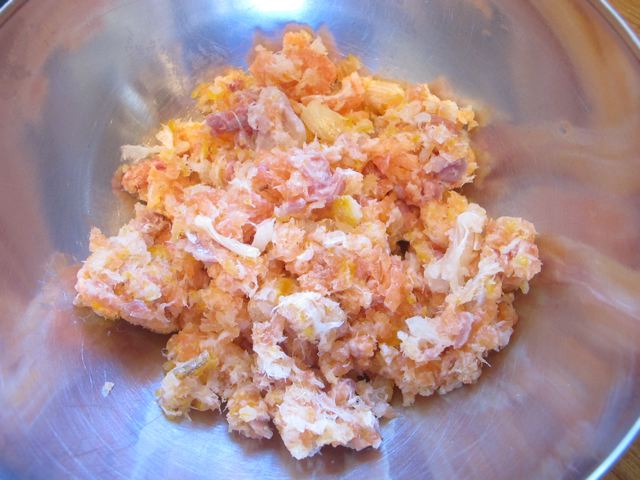
  • Cut the fish into chunks and place into a food processor.
  • Pulse to a coarse mince–not too much or it will become a slurry.
  • In a bowl, mix the fish with the shallot, parsley, salt and pepper.
  • Check the seasoning–raw salmon tastes good!
  • Add the whisked egg and mix in thoroughly.
  • Chill in the fridge for an hour if you’ve time–I didn’t and they were fine.
  • Mold into little flat patties.
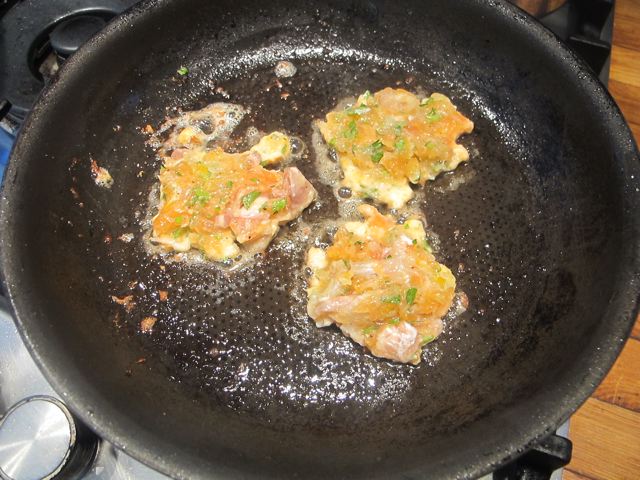
  • Heat the oil in large frying pan.
  • When it’s hot fry the little cakes for 2/3 mins each side.
  • Serve with a small dollop of yogurt on the side.
We had them with some small tomatoes–halved and roasted at 120C/250F for 1h30.

Read Full Post »

This was published a couple of years ago.

It has been a favorite for over thirty years and is a tasty standby for a rainy grey day when going anywhere for supplies is the last thing you feel like doing.

Meredith on her detox for a week mentioned it this morning and we’ll have it tonight, as below, with some of the broccoli I bought yesterday and brown basmati rice.

Dal-otherwise known as Comfort Lentils in our house.

This is from my book Delicious Dishes for Diabetics-out in the UK and officially launched November 1st in the USA.

Our Sikh friend, Tari, affectionately known as the “Carefree Cook”, is an example to all us worry guts.

He never panics when people turn up unexpectedly and have to be fed.

He looks to see how many extra guests are coming through the door and adds more water to the dal accordingly!

We’ll eat these lentils tonight with broccoli, simply steamed, drizzled with a little olive oil (maybe a squeeze of lemon?) and a some brown basmati rice.

[If there’s any dal left over, save it for another occasion! Form the cold dal into little burger shapes, coat with some chickpea or whole wheat flour and fry lightly in some hot oil.]

for 4

500 g/1 lb red lentils

1 litre/1¾ pints/4 cups stock (I use an organic vegetable stock cube per 500 ml of water)

4 tbsp vegetable oil (I use olive oil.)

1 medium onion – chopped

1 tsp coriander seeds – pounded in a mortar and pestle

1½ tsp cumin seeds – pounded in a mortar and pestle

1 tsp garam masala

½ tsp chilli powder

  • Rinse the lentils very thoroughly – until the water shows clear.
  • Put them in a saucepan with the stock and bring gently to the boil.
  • Turn the heat down to low and let them simmer, covered, stirring from time to time.
  • They are done when a small puddle floats on the top.
  • Turn them off.
  • Heat the oil in a small frying pan.
  • Add the onion and fry gently until it colours nicely.
  • Add the spices and mix them in well.
  • Cook for a couple of minutes longer to release the aroma.
  • Add the cooked spices and the onion to the lentils and mix in thoroughly.
  • Heat through and serve.

Read Full Post »

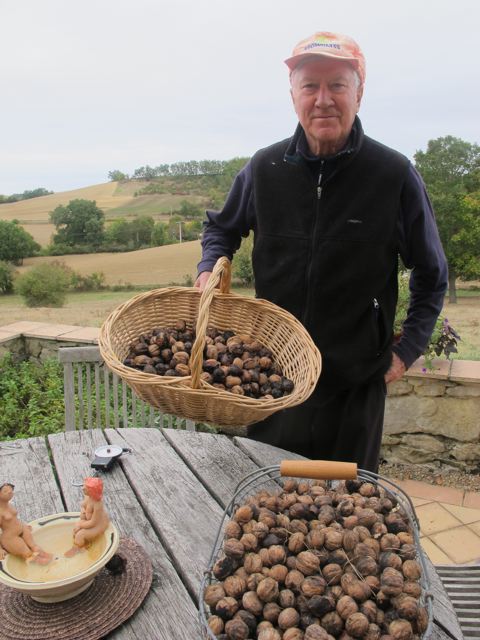
It’s a peculiar year for a walnut hunter.

Normally now, in mid-October, the ground would be thick with freshly released clean-looking nuts–asking to be collected. After rainfall is an especially good time–the raindrops knocking the nuts out of the tree.

It’s a pleasing pastime–with rich pickin’s!

Not this year.

There’s no lack of walnuts but they are falling late–often after the leaves, giving the trees a rather spooky look.

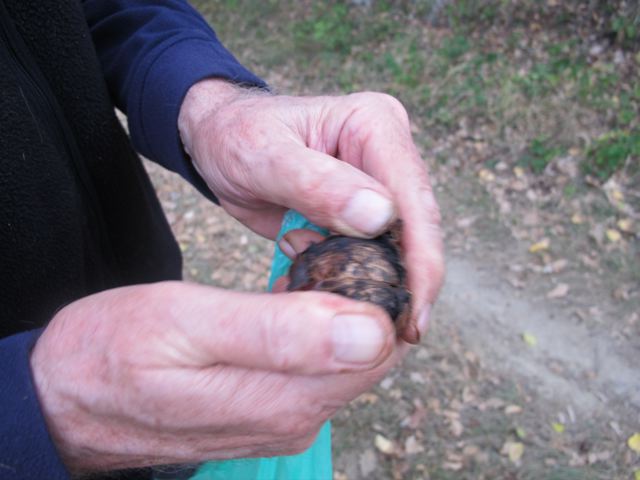
When they fall the nuts are staying untidily in their casings.

I come home from walnuting with tell-tale fingers–stained brown from trying to prise out the nuts.

A give-away–if I were doing something wrong.

This reminds me of  a mulberry tree in Delphi, Greece in 1961!

The summer of that year my school friend Chris Fordyce and I were hitching round Europe for nine weeks before going to university.

We’d been dropped on a corner just outside the then unspoilt town (the youth hostel was half built!)–under the shade of a mulberry tree laden with berries–ripe for the picking. We were hungry and given the setting–decided it was a gift from Apollo.

We reached up to feast on this glorious fruit but soon realised as the mulberry juice ran over our outstretched fingers and up our arms, staining them red, that if challenged by the owner of the tree we would find it impossible to deny the self-evident truth–that we’d been stealing his fruit.

Fast forward to the present and local wisdom has the lack of rain’s to blame for this unusual walnut year.

Not enough moisture rising in the tree to pop open the casing cleanly and push the nuts out for me to scoop up gratefully.

It’s taking the fun out of it.

None the less–I shouldn’t be complaining!

"It's that man again--collecting his nuts!"

Read Full Post »

The smoky paprika and saffron flavours in this dish, adapted from the marvellous Moro stable, are subtle and light, and make it hard not to finish the lot in one go–(which is what happened last night!).

for two

450 gms/1 lb monkfish–fresh as can be, skinned, cleaned, spine removed and the thin membrane too, as far as possible–cut into chunks

4 good prawns–unpeeled.

250 gms/8 oz mussels–cleaned

4 tablespoons olive oil

1 large sweet/mild onion–chopped

2 garlic cloves–chopped

1 tablespoon fresh rosemary–very finely chopped

1 lb /450 gms tomatoes–skinned and chopped or a 425 ml tin of tomatoes, drained and chopped

half a teaspoon smoked paprika [pimenton]

3 bay leaves

a good pinch of saffron threads–soaked in four tablespoons of hot water

150 ml/6 fl oz white wine

100 ml/4 fl oz stock–I used half an organic vegetable stock cube

4 oz/ 100 gms blanched almonds–blitzed into powder or use powdered almonds–to thicken the sauce

Salt and pepper

A shallow sauté pan you can present at table, would be best for this all-in-one dish.

  • Fry the onions in the oil until they are nicely coloured–it’s worth the time involved–about fifteen minutes–as this is the engine room of the dish.
  • Add the garlic, rosemary and bay leaves and cook for a further five minutes.
  • Mix in the tomatoes and the paprika and cook until the tomatoes have dissolved into a sauce–about ten more minutes.
  • Add the wine and give it a minute or two before stirring in the saffron water and the stock.
  • Bring it all up to a gentle simmer then stir in the powdered almonds.
  • Fold in the fish, the mussels and the prawns–[last night I used uncooked prawns; if you use cooked ones add them a couple of minutes later]
  • Cover the pan and cook a further 5-10 minutes turning everything over in the sauce from time to time. Make sure the mussels open up.

We ate it spooned over some basmati brown rice and the word moderation wasn’t mentioned..!

Read Full Post »

The last few days have been unbelievably beautiful — warm, with soft golden light, and the leaves which have just begun to color slowly drifting to the ground. More of the same is predicted for tomorrow and the next day. Not really soup weather at all. However, cold and rainy weather is out there somewhere in our not too distant future and I look forward to making this again.


Exactly how I’m feeling–I found this quote by chance on a lovely looking site called Kitchenography– Life in my Kitchen.

SERENDIPITY! 

Soup is what I’m feeling like tonight.

The days are summer days–the evenings and nights are autumn.

So that’s why I have a yen for soup–I understand–often you have to put it into words and then it becomes clear.

I’d bought some leeks and fennel and I’m starting with an onion.

for 2

1 medium onion–peeled and chopped

1lb/450 gms leeks–cleaned and chopped

1 medium fennel bulb–cleaned and chopped

1 tablespoon olive oil

1 pint/525 ml vegetable stock–I use an organic stock cube

  • Sweat the onion for a couple of minutes.
  • Add the leeks and fennel and sweat all three for ten minutes, covered, until they soften.
  • Season well with pepper and a little salt.
  • Add a pint of vegetable stock.
  • Simmer gently for twenty minutes.
  • Liquidise the soup and check the seasoning.
  • If you feel the soup is to thick add a little extra water.
  • Serve hot.

I topped it tonight with sautéed onion:

1 tablespoon olive oil

Half a medium onion–peeled and sliced thin

  • Sauté the onion in the oil until it is nicely browned.
  • Twirl a little on each bowlful of soup.

I put a sweet potato in the oven and we  had a half each after the soup with some new season broccoli.

[Which makes it a five vegetable meal to boot!!]

Read Full Post »

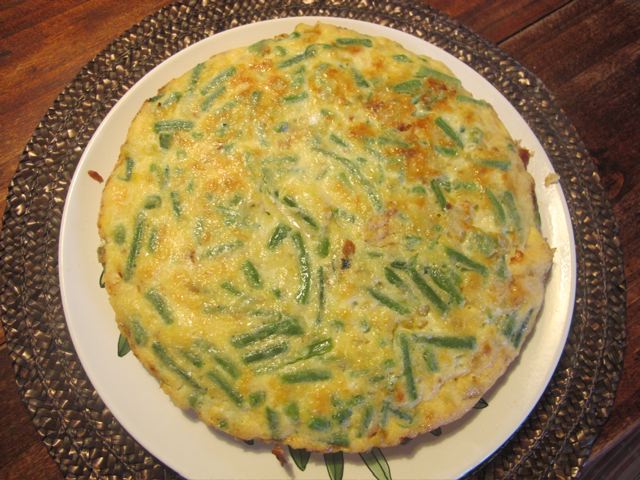
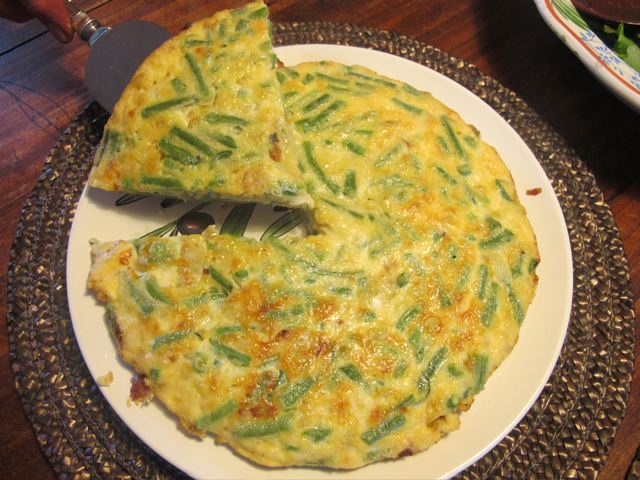
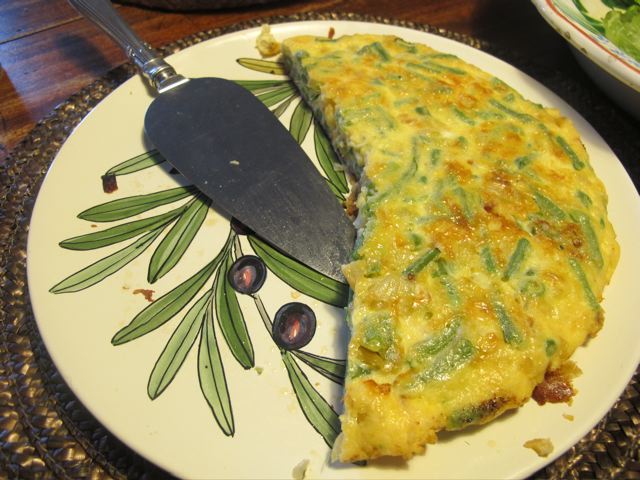
“Just when you thought you’d had enough green beans for a while…” Meredith sighed at lunchtime, as she bit into a piece of this green and yellow discus–a frittata with green beans.

Discus-like thing

Frittata is an Italian omelette–made the opposite way to a French omelette.

I’ve been guided in their making by the incomparable Marcella Hazan–the queen of Italian home cooking.

The “trick” is in the time it takes.

It’s cooked over the lowest heat, for about 15 minutes–a French omelette over the highest heat, for probably less than a minute!

The French version is fluffy–the Italian firm, but not dry; more like a pastry-less quiche–served in slices.

What they have in common, apart from eggs, is that you can fill them–frittatas or omelettes–with pretty much what you fancy.

In this version, green beans and onion:

1 onion–peeled and chopped

2 tablespoons olive oil

8 oz/250 gms green beans–cooked to tender, drained, and plunged into a bowl of cold water, then patted dry and cut into short lengths, ready to go into the frittatta mix

2 0z/50 gms parmesan cheese–grated

6 eggs

salt and pepper

a thumb-size knob of butter and a little more olive oil

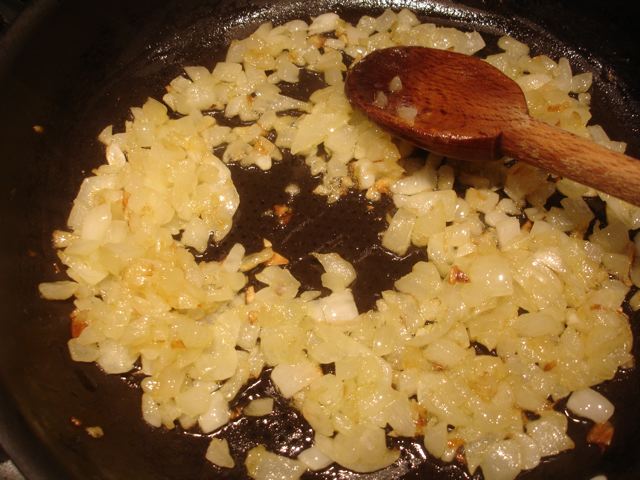
  • Sauté the onion in the olive oil until it colours nicely–set aside to cool.
  • Break the eggs into a bowl and whisk them lightly to combine the yolk and the white.
  • Whisk in the grated cheese.
  • Season with salt and pepper.
  • Add the beans and the onions to the bowl and mix them in.
  • Heat the butter and the extra oil in a medium sauté pan [10 inch/26 cm] to hot.
  • Fold in the egg mixture and turn the heat down to the lowest available–even use a heat diffuser too if you have one [the object being to keep the frittata moist through slow cooking].
  • Cook for about fifteen minutes until there is just a little lake of liquid left on top.
  • Heat the grill to hot and place the pan under it for a couple of minutes, just to firm it up.

“Great finish to the bean season,” acknowledged Meredith, after helping herself to a second slice….

Read Full Post »

« Newer Posts - Older Posts »