A picture’s worth a thousand words.
This is Meredith’s lovely montage.
She not only takes great photos but she puts them together beautifully to tell many stories on the way.
Shows more summer than winter–no harm in whetting the appetite though…!
Posted in Food, other sides to this life, Poldark, Robin Ellis on February 21, 2012| 18 Comments »
A picture’s worth a thousand words.
This is Meredith’s lovely montage.
She not only takes great photos but she puts them together beautifully to tell many stories on the way.
Shows more summer than winter–no harm in whetting the appetite though…!
Posted in Food, other sides to this life, Recipes, tagged cumin, garlic, olive oil, yogurt sauce on February 17, 2012| 27 Comments »
Two friends came round for supper last night and I tried out a spicy chicken dish.
It didn’t pass muster with Meredith and our friends were polite but didn’t exactly rave!
I shall try again with it because it’s simple and quick–which of course could be the reason it was disappointing!
I served a yogurt sauce with it, which is I think is useful and tasty.
I noticed Meredith tucking into it this lunchtime with the fennel salad..!
Yogurt sauce for 4
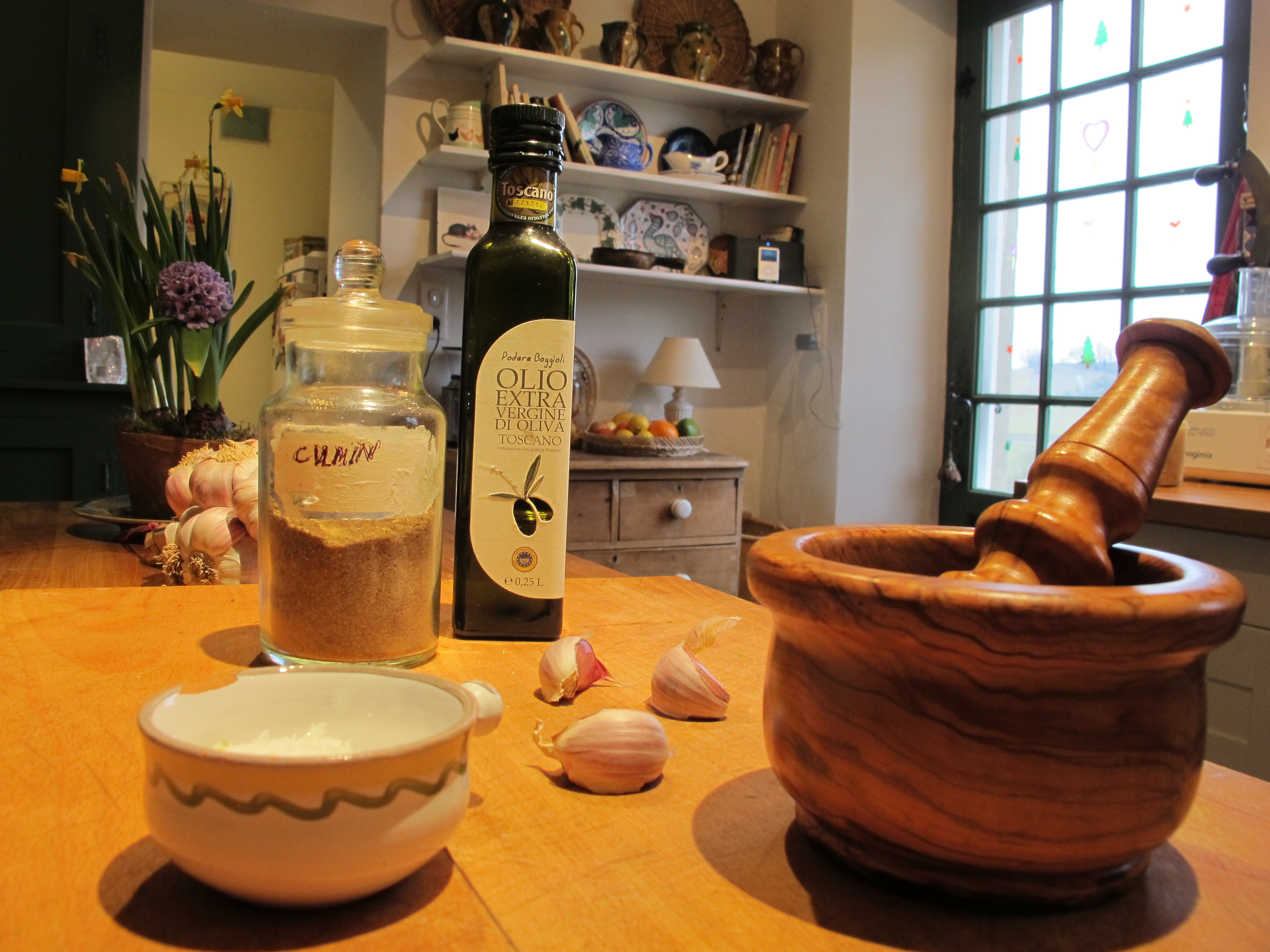
2 x 125ml pots of organic yogurt
1 teaspoon cumin powder
1 garlic clove–pulped in half a teaspoon of salt
1 tablespoon olive oil
1/2 a teaspoon salt
Posted in Diabetes, Food, other sides to this life, Recipes, tagged dill, fishcakes, food, grain mustard, no potato fishcakes, no-fat organic yogurt, parsley, recipes, salmon, shallot, smoked haddock, Type2 diabetes on February 14, 2012| 26 Comments »

Below I reprise two favourite fishcake recipes that have proved popular. I think it’s worth tying them together because they are closely related–and worth sharing again for newcomers to the site.
They each have an ingredient that nicely replaces the potato normally associated with fishcakes: Smoked haddock for the first, fresh dill for the second.
The first recipe, with smoked haddock, I once did as a starter on Christmas day–so I associate with winter.
The second recipe, with dill–reprinted from my cookbook, Delicious Dishes for Diabetics–makes a for a tasty lunch outdoors in summer.
Dill is not always easy to find–even in summer–so I sometimes substitute chopped parsley (but dill is better!).
In truth, I’d willingly gobble either down, no matter the season!
Version 1 (Winter)
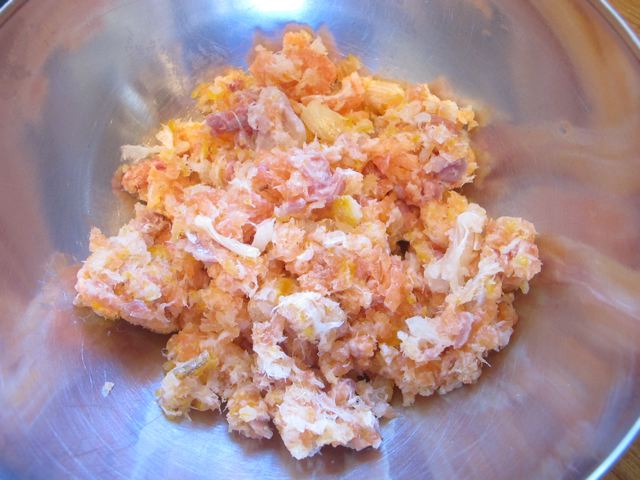
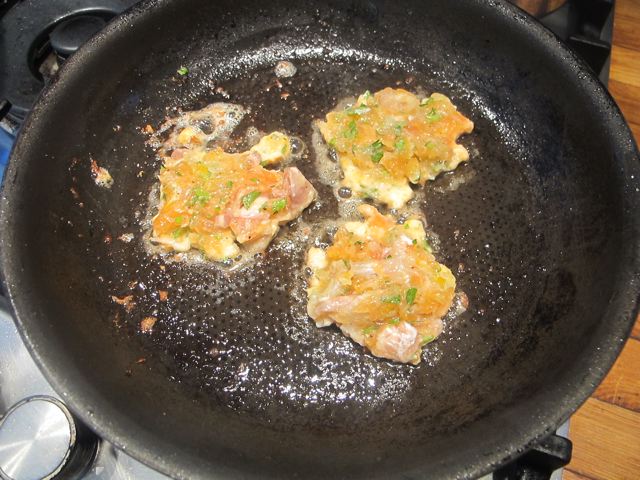
Salmon and smoked haddock
I used to love fishcakes–but the usual addition of mashed potato made them ‘off limits’ for me, once I was diagnosed with Type 2 diabetes. Then I found an alternative–no-potato fish cakes–and no longer felt deprived!
My American wife tells me most Americans will find smoked haddock unfamiliar and maybe even daunting and hard to find–but from starting as a sceptic, she is a complete convert now.
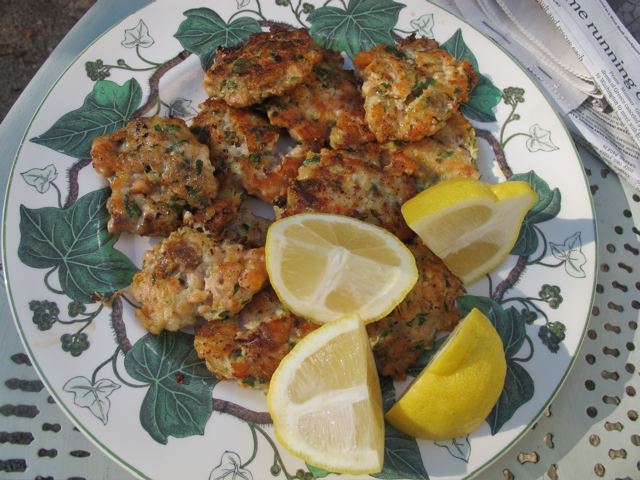
This is adapted from a Gordon Ramsay concept….
for 4/6
1 lb/450 gms salmon fillet–with the skin and little bones removed
1 lb/450 gms smoked haddock–undyed, if possible and skin removed
1 large shallot–grated
1 egg–whisked
1 tablespoon parsley–chopped

salt and pepper
olive oil for sautéing
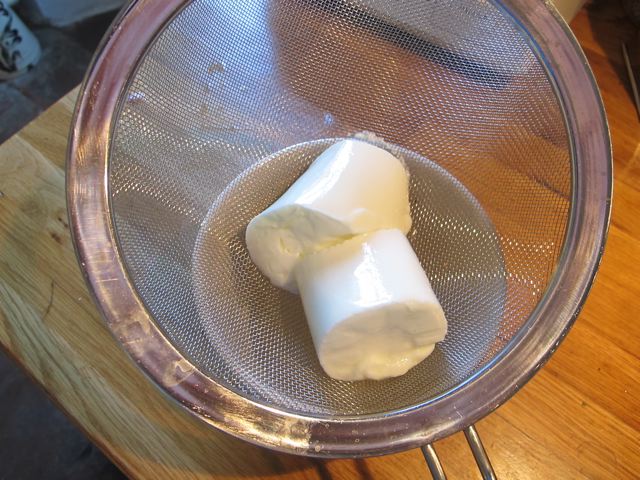
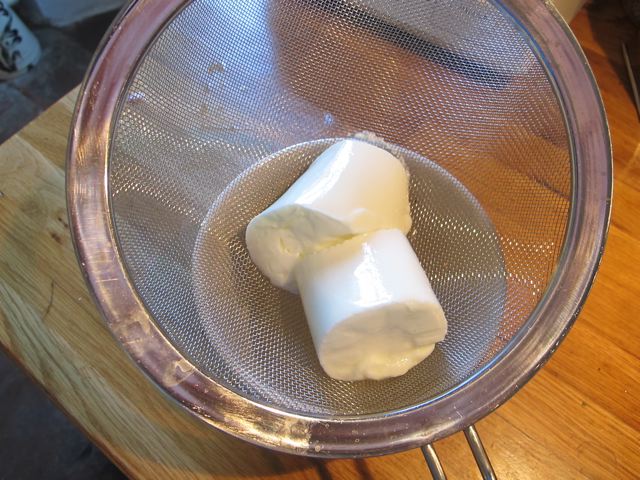
yogurt–I use no-fat organic, drained in a sieve for half an hour to thicken it.
Version 2 (Summer)
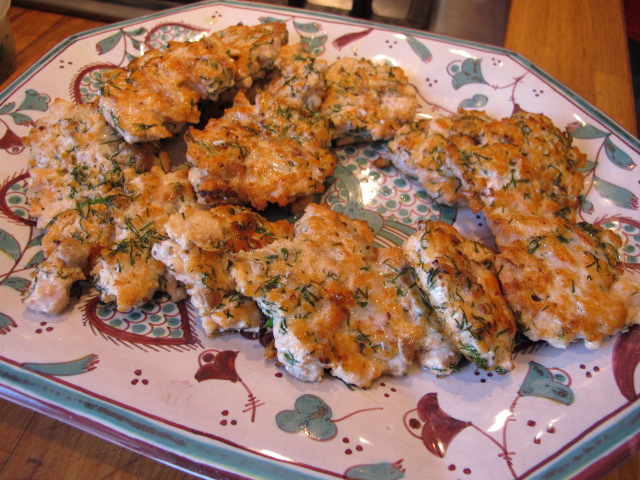
Salmon Fishcakes with dill and grainy mustard
The dill and the grain mustard make the fishcakes special. They can serve as a tasty starter too depending on the size.
If you keep them small and cook them quickly, they’ll be crisp and brown on the outside and still succulent inside.
This version is adapted from one of my favourite British cooks, Nigel Slater.
400 g/1 lb salmon fillet – skinless and checked for bones
white of an egg
1 tbsp chickpea flour – of course, plain flour works as well
1 tsp grain mustard
juice of ½ lemon
bunch of dill – chopped fine
salt and pepper
2 tbsp olive oil

Yogurt sauce
2 x 125 ml pots low-fat yogurt
1 tsp grain mustard
good pinch of chopped dill
salt
Serve with lemon wedges.
Posted in Food, other sides to this life, Recipes, tagged black mustard seeds, cabbage soup, coriander, curried soup, curry powder, fenugreek, food, lentil soup, onion, organic vegetable stock cube, parsley, recipes, small cabbage, soup, spicy soup, turmeric on February 13, 2012| 6 Comments »
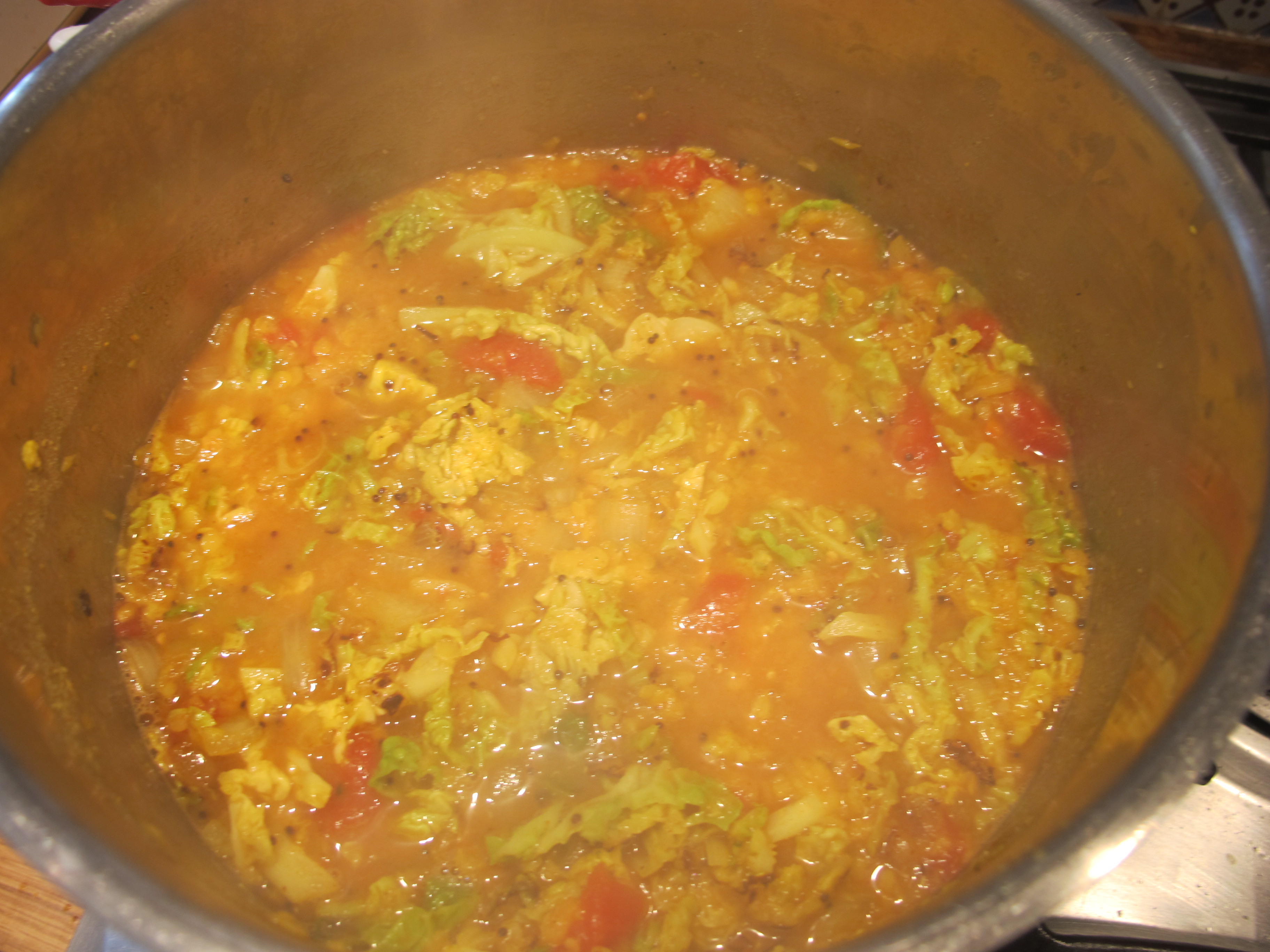
Renown vegetarian cookbook writer, Rose Elliott found this in Julie Sahni’s Classic Indian Vegetarian Cookery and adapted it and I have tweaked it a bit.
It’s a quick excursion to the East.
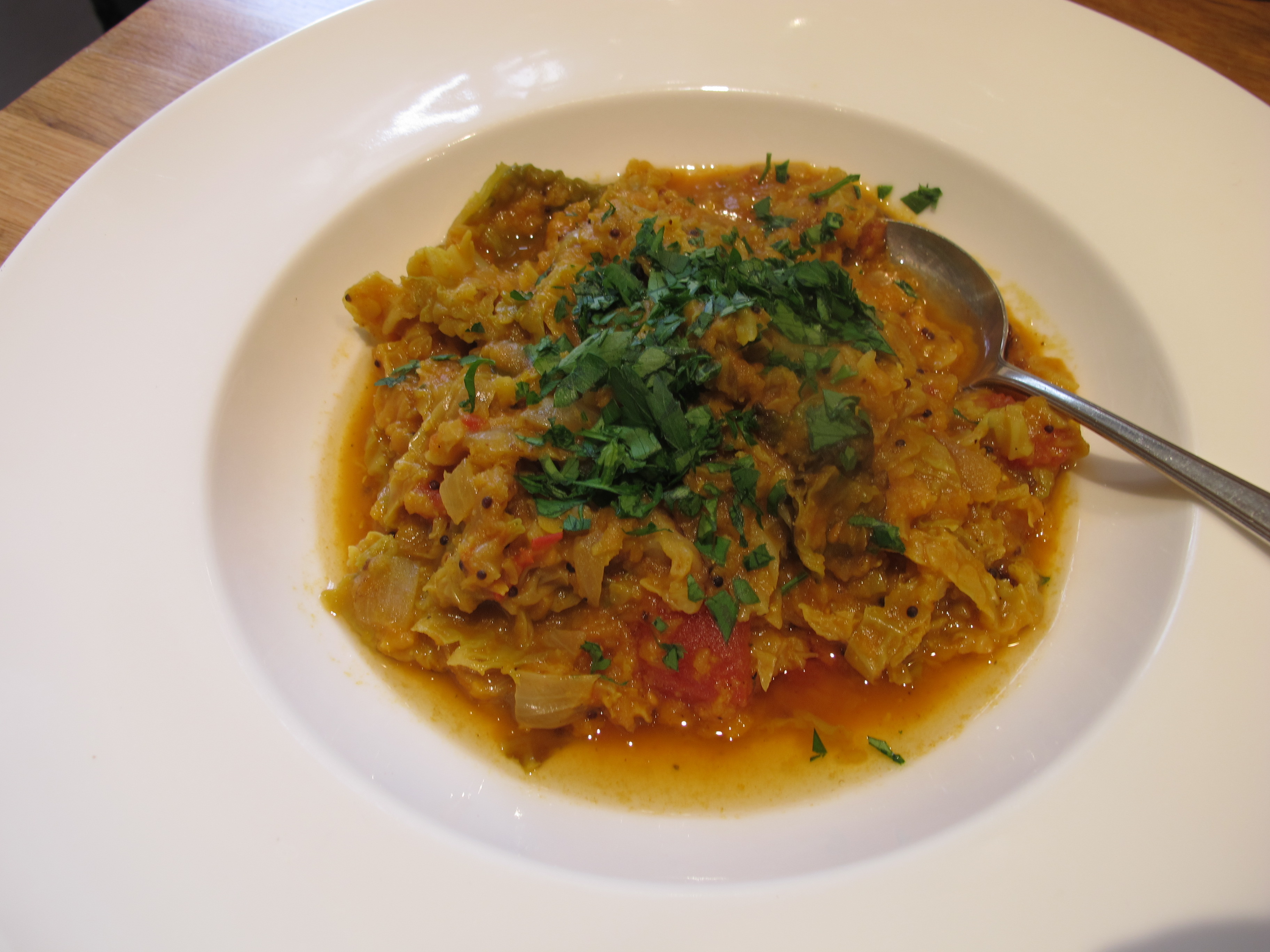
There was a small cabbage in the fridge and some fenugreek seeds on the shelf in the larder, which I whizzed into powder in a converted coffee grinder!
The fenugreek is optional, but interesting… (as its name implies this herb is found in the mediterranean region and has healing qualities as well as culinary uses.)
Our friend Myriam called in this morning and said it was minus ten last night and would not get warmer until Wednesday, so a bowl of something gently spicy and soupy for lunch might be just the ticket.

for 4
250gms/8oz red lentils
2 1/4 pints/1300ml stock–I use organic vegetable stock cubes
1/3 teaspoon turmeric
375gms/12oz tinned tomatoes–chopped
1 tablespoon olive oil
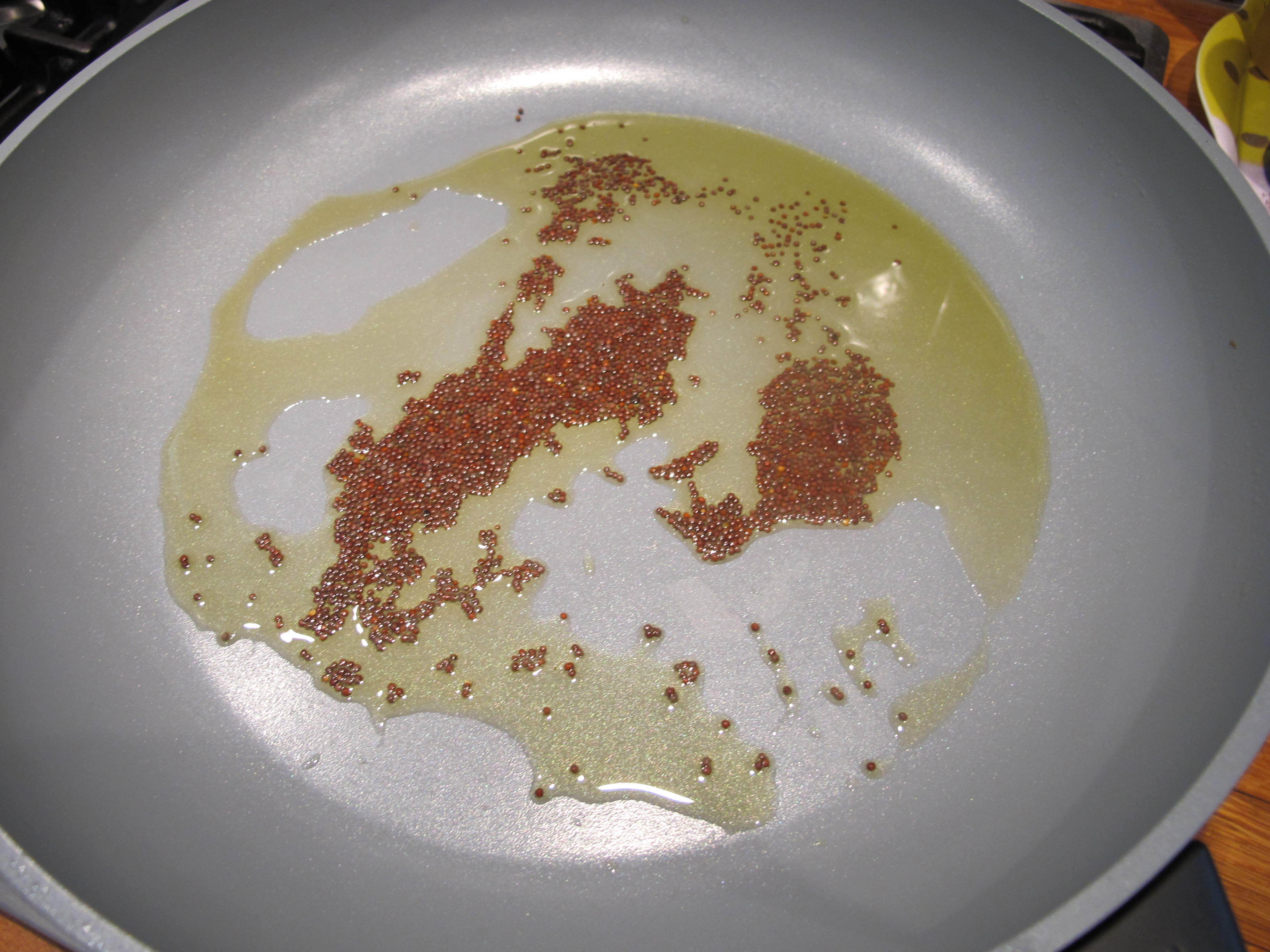
1 1/2 teaspoons black mustard seeds
1/4 teaspoon fenugreek powder (optional)
1 tablespoon curry powder
1 onion–chopped
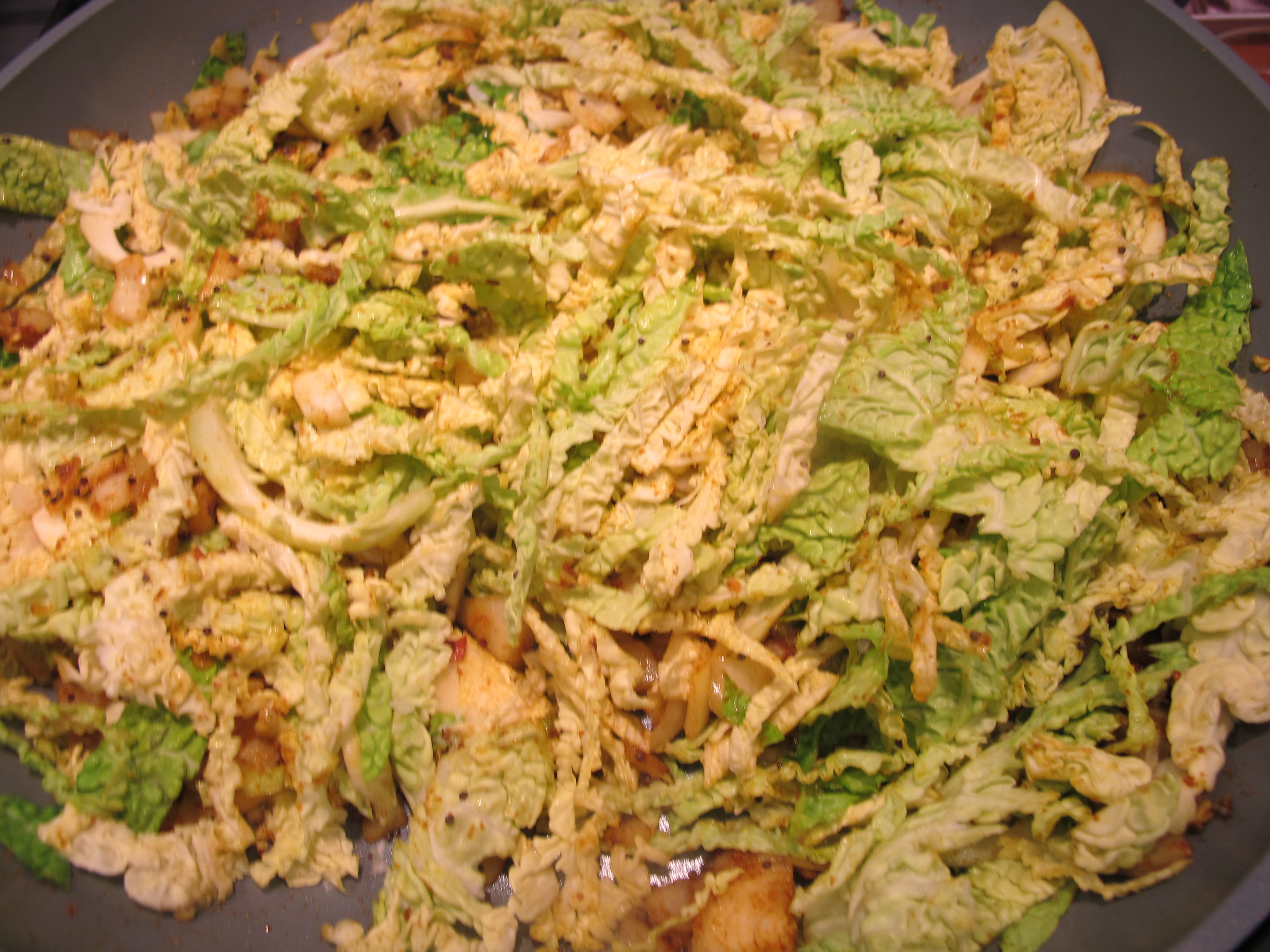
a small cabbage–outer leaves removed, quartered, cored and shredded
Juice of half a lemon
salt and pepper
Parsley or better still fresh coriander–chopped to sprinkle over

Posted in Food, other sides to this life, Recipes, tagged celery, fennel, fennel salad, olive oil, orange, parmesan, parsley, recipes, red onion, winter salad on February 7, 2012| 47 Comments »
My first posting on this blog was a year ago today–7th of February 2011!
Poaching Eggs–was a homage to one of my food heroines, the formidable Elizabeth David.
I can’t remember exactly the weather that day but it may not have been so different to today’s–which is nose-endangeringly cold.
So a long nod of thanks to everyone that has visited and those that continue to visit and thanks too for the comments–they are all read and much appreciated.
AND special thanks to my in-house photographer and editor with whom discussion is always lively and from whom I learn a lot!
Here’s a salad to celebrate.

Seasonally crunchy (not much choice from the locals this morning)–with a juicy orange and some sunflower seeds, to put one in mind of seasons to come.
It got the nod at lunch today from Meredith–(though not the mackerel fillet that it accompanied–next time I’ll use less smoked sweet paprika!).
For 2
1 large fennel bulb–outer leaves removed, stood upright and halved through the middle, each cut half laid flat and halved again, then sliced very thinly
1 celery stalk–sliced thinly
half a small sweet red onion–sliced thinly
1 tablespoon of sunflower seeds–dry roasted in a frying pan on the stove top
1 tablespoon of parsley–chopped
a few shavings of parmesan
1 juicy orange–carefully peeled (lifting off the white pith), halved and sliced thinly
salt for sprinkling
1 tablespoon best quality olive oil for dressing

Posted in Food, other sides to this life, Recipes, tagged braised rabbit, cooking rabbit, garlic, parsley, rabbit, recipe, white beans, white wine on February 6, 2012| 11 Comments »

Some people don’t like the idea of eating rabbit–memories of treasured pets linger in the mind. Meredith tells me she had a white rabbit called Honey Bunny growing up in suburban Chicago–which produced little honey bunnies every five weeks after the first batch–born one Easter (clever bunny!).
She is still in two minds about eating rabbit, which she claims is not eaten much in the USA.
Rabbit is tasty, lean meat and makes for a change.
You could try this with chicken.
Serves 4
1 large jar of white beans–cannellini, haricot or other white beans, drained
4 tablespoons of olive oil
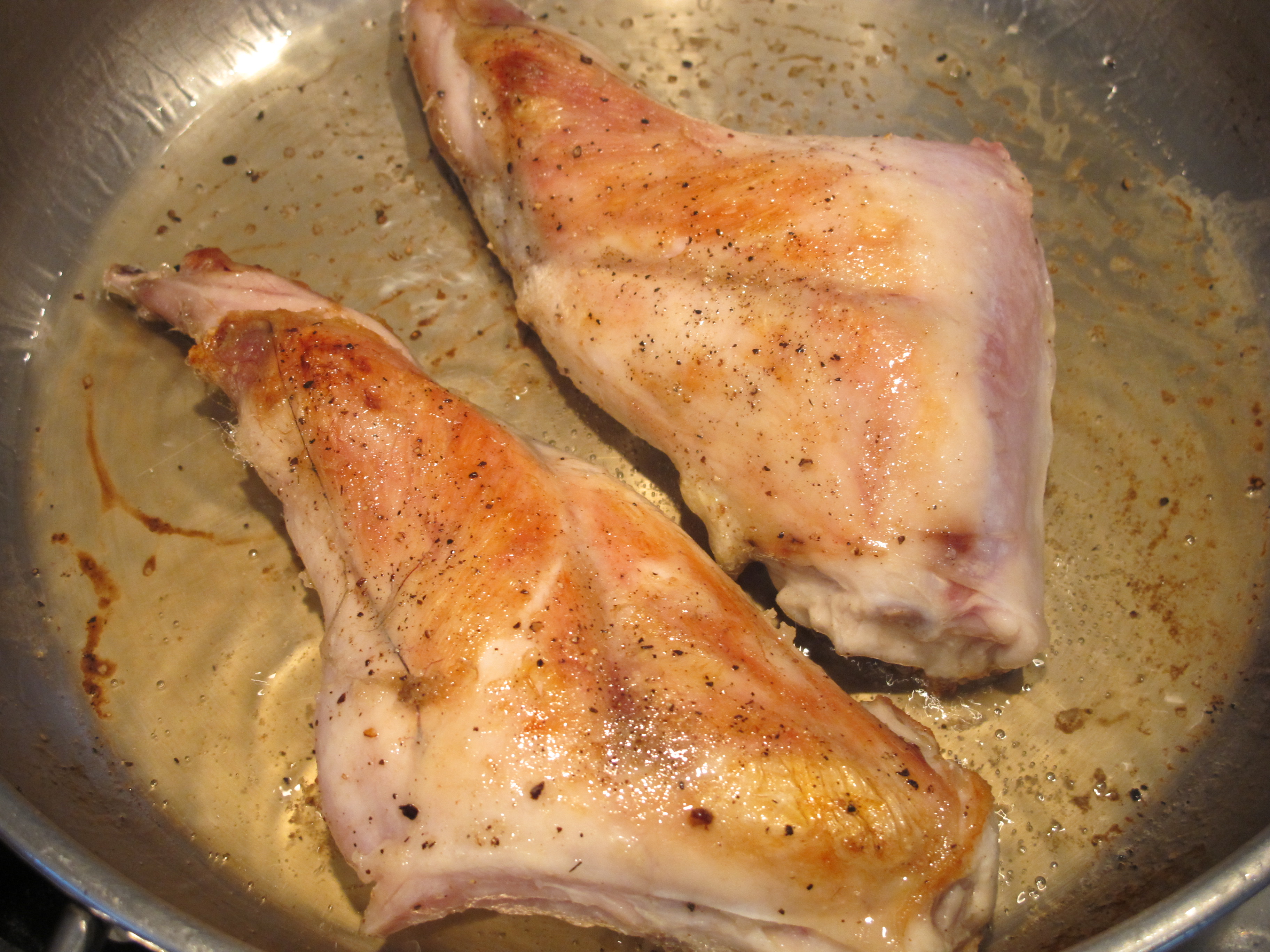
4 rabbit pieces or more
salt and pepper
1/2 teaspoon of coriander seeds–dry roasted in a small frying pan and crushed
8 cloves of garlic–peeled
2 bay leaves
100ml/31/2fl oz white wine
300ml/10fl oz water
2 tablespoons of parsley–chopped
heat the oven to 150C/300F/Gas2.


Posted in Food, other sides to this life, Recipes, tagged breakfast, breakfast ideas, cinnamon, fruit spread, healthy breakfast, linseeds, morning walk, oats, organic 100% rye, organic yogurt, oscar wilde, porridge, prunes, snow, somerset maugham, untreated dry apricot, walnuts on February 5, 2012| 18 Comments »
“To eat well in England you should have breakfast three times a day.”
W. Somerset Maugham
“All happiness depends on a leisurely breakfast.”
John Gunther
“Oysters are the usual opening to a winter breakfast. Indeed, they are almost indispensable.”
Grimod de la Reyniere (1758-1838)
“Life, within doors, has few pleasanter prospects than a neatly arranged and well-provisioned breakfast table.”
Nathaniel Hawthorne (1804-1864)
“Only dull people are brilliant at breakfast.”
Oscar Wilde
“Breakfast is the most important meal of the day”
I’m sure my mother said that a few times!
Breakfast before I set off on my walk this morning was the same as every morning and no sign of an oyster!
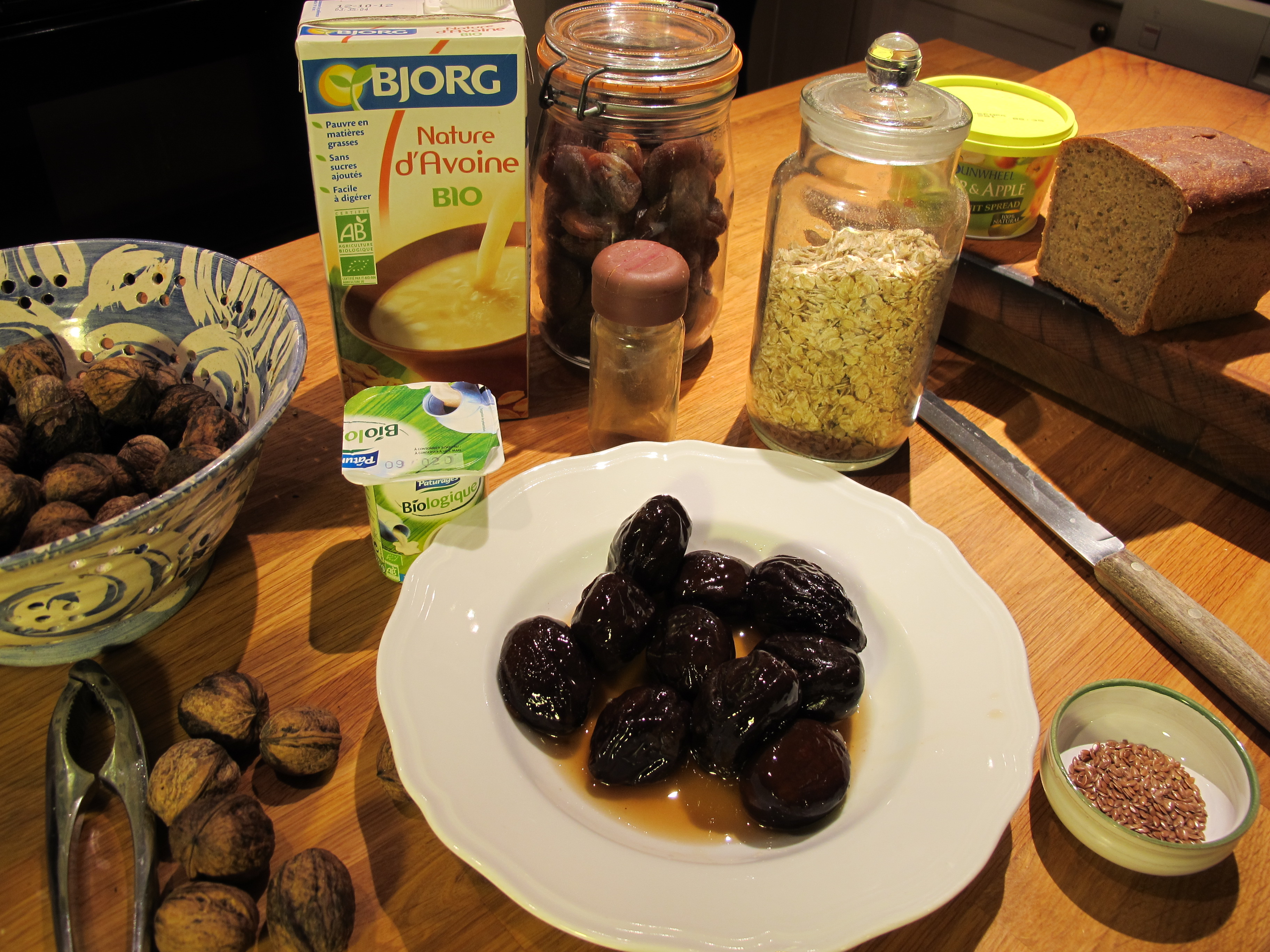
large organic oat flakes mixed with
freshly cracked walnuts,
a dried untreated apricot–chopped up
a teaspoon of linseeds
a prune,
half a pot of no fat organic yogurt with
cinnamon sprinkled on top
and moistened with oat milk.
Two slices of 100% rye bread with a little butter and pear & apple fruit spread (no added sugar)
The same every morning? Yes!
Dull?
Not for me–I look forward to it–once a day at least!
Maybe we are at our most conservative, most in need of ritual just after waking up, but I find the assembling and eating of this bowl of goodies a daily delight.
Meredith’s breakfast tray rested on a pillow in front of her (see below a summer version).
The fire in the kitchen was established, the dishwasher emptied and lunch planned so why not add to this the pattern of virtuousness with another good deed–a healthful walk!

All was quiet as I entered the house–a ” leisurely” post breakfast calm had descended.
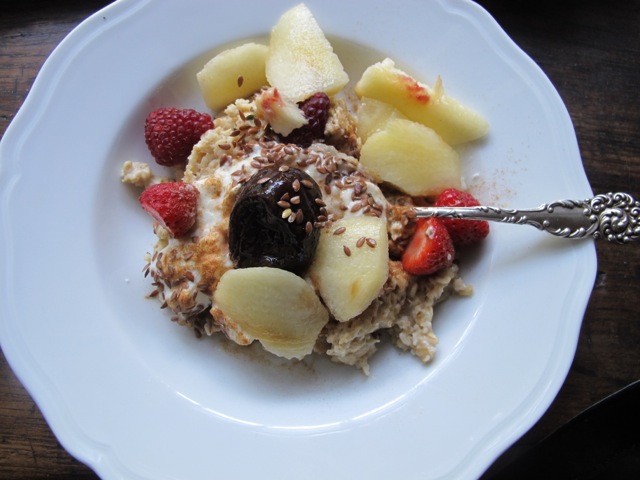
Meredith’s version of breakfast heaven! Porridge (cooked oats–large and small flakes), milk, “no fat” organic yogurt, a prune, seasonal fruit, cinnamon sprinkled over.
Posted in Food, other sides to this life, Recipes, tagged garlic, pork chops, recipes, rosemary, spare rib chops, thyme on February 3, 2012| 4 Comments »
I promised a recipe for pork chops when I posted the red cabbage.
It is bitingly cold here and I found myself heading for the butcher not the fishmonger in Lautrec this morning.
“Bonjour, Monsieur–deux cotes d’échine, s’il vous plait.”
Spare rib chops are tastier and less prone to dry out than loin chops and they are the cheaper cut.
That’s what I settled for after waiting an age for Monsieur Fraisse to finish chatting to his previous customer–the cold was getting to me!

I learned this simple way by watching the irascible but effective chef Gordon Ramsay’s demonstration.
The rosemary needles take on a nice crunchiness and are worth eating with a mouthful of meat. As is the garlic.
Meredith finished off the red cabbage, which she’d missed out on the other day.
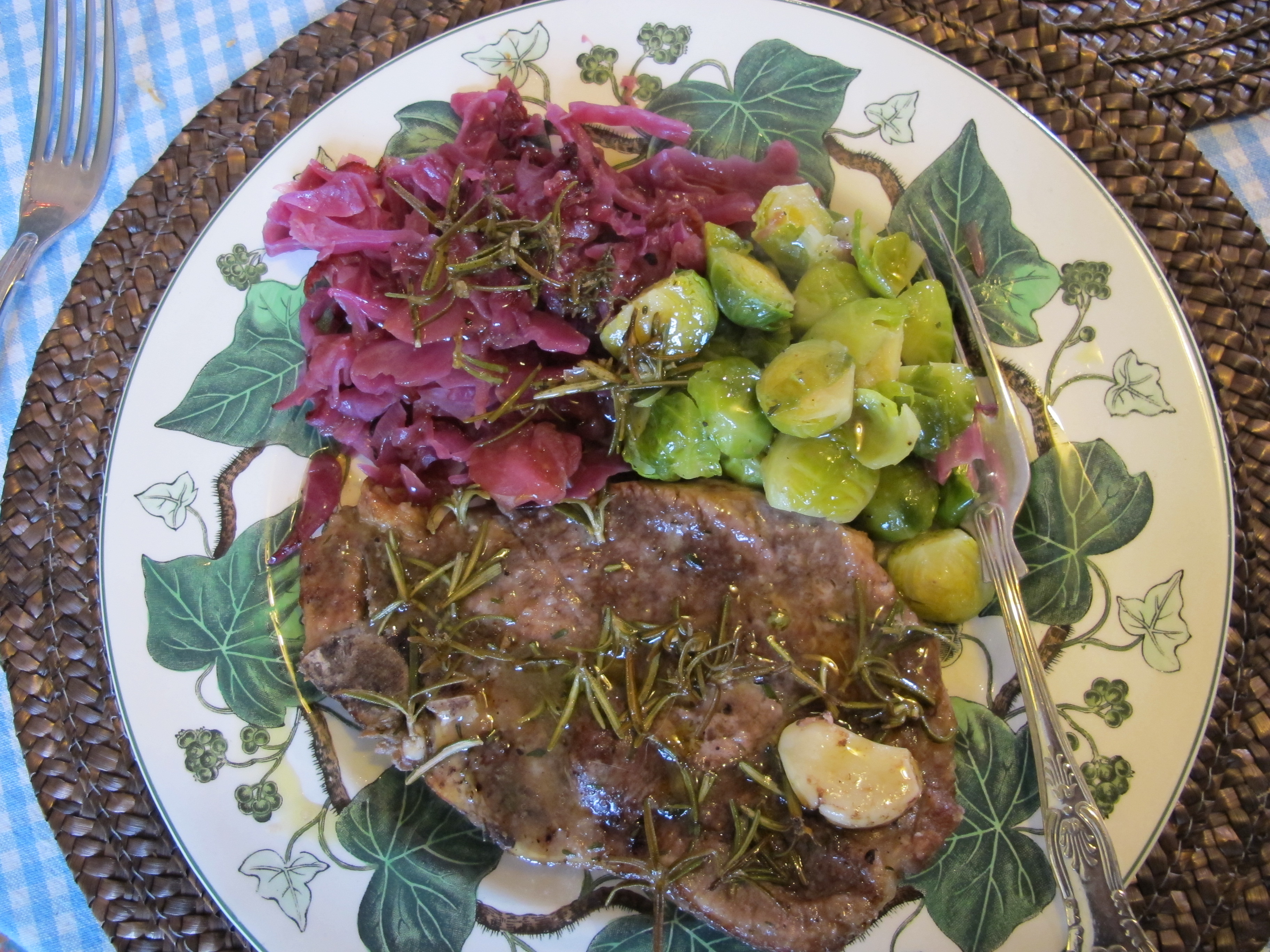
for 2
2 spare rib pork chops

rosemary and thyme
3/4 cloves of garlic–squashed, peeled and halved
olive oil
s&p
heat the oven to 200C/400F
Posted in Food, Recipes, tagged apple, cabbage, cabbage and orange juice, celery, cider vinegar, juice of a lemon, juice of orange, juniper berries, onion, recipe, red cabbage on February 1, 2012| 18 Comments »
I found this in my old paste-in foolscap notebook and have been meaning to try it for a while.

Cabbage has been on my mind since leaving Strasbourg–and pork for that matter!
An example of this brightly colored variety of red cabbage was waiting patiently in the fridge for my return.
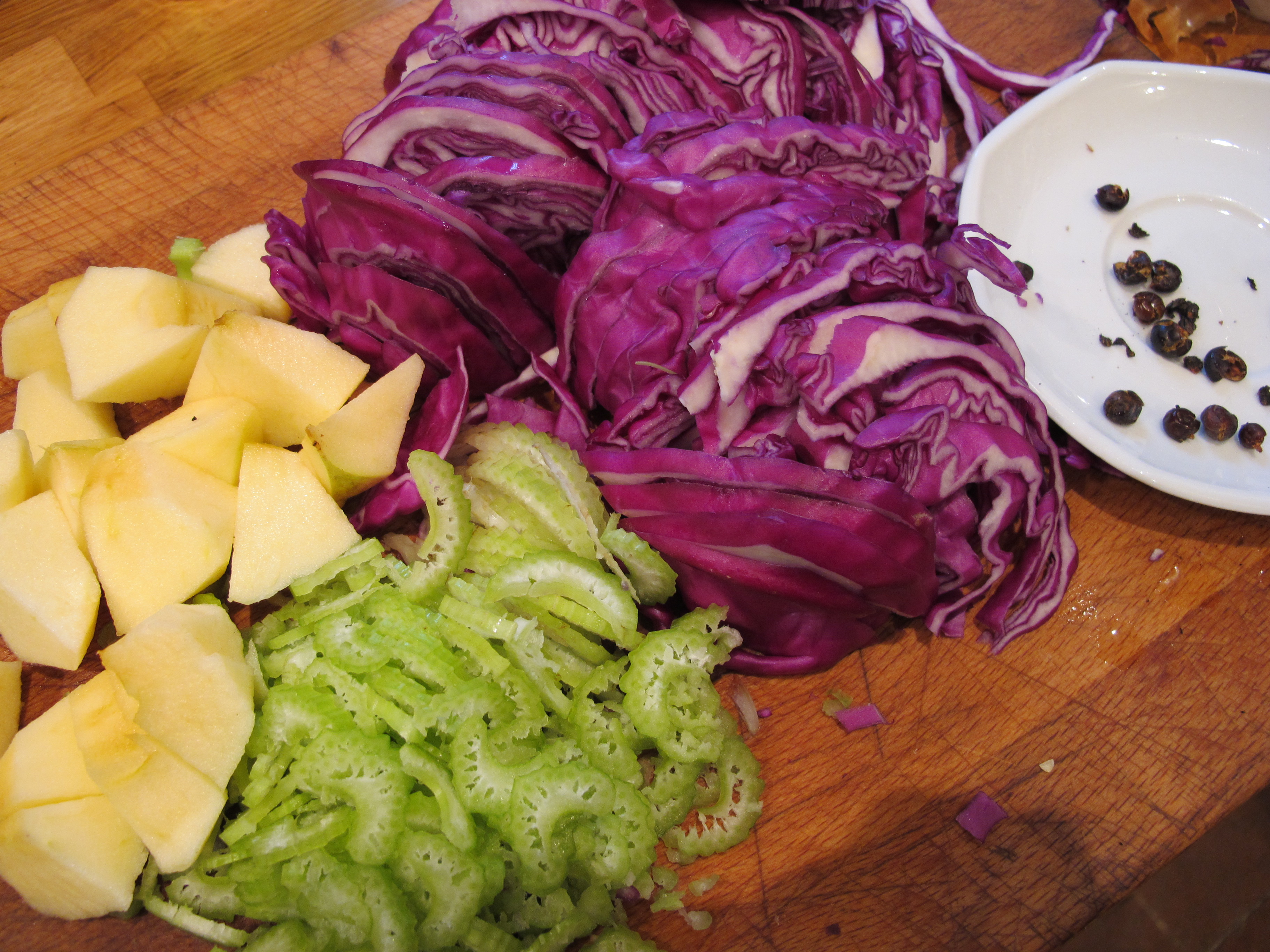
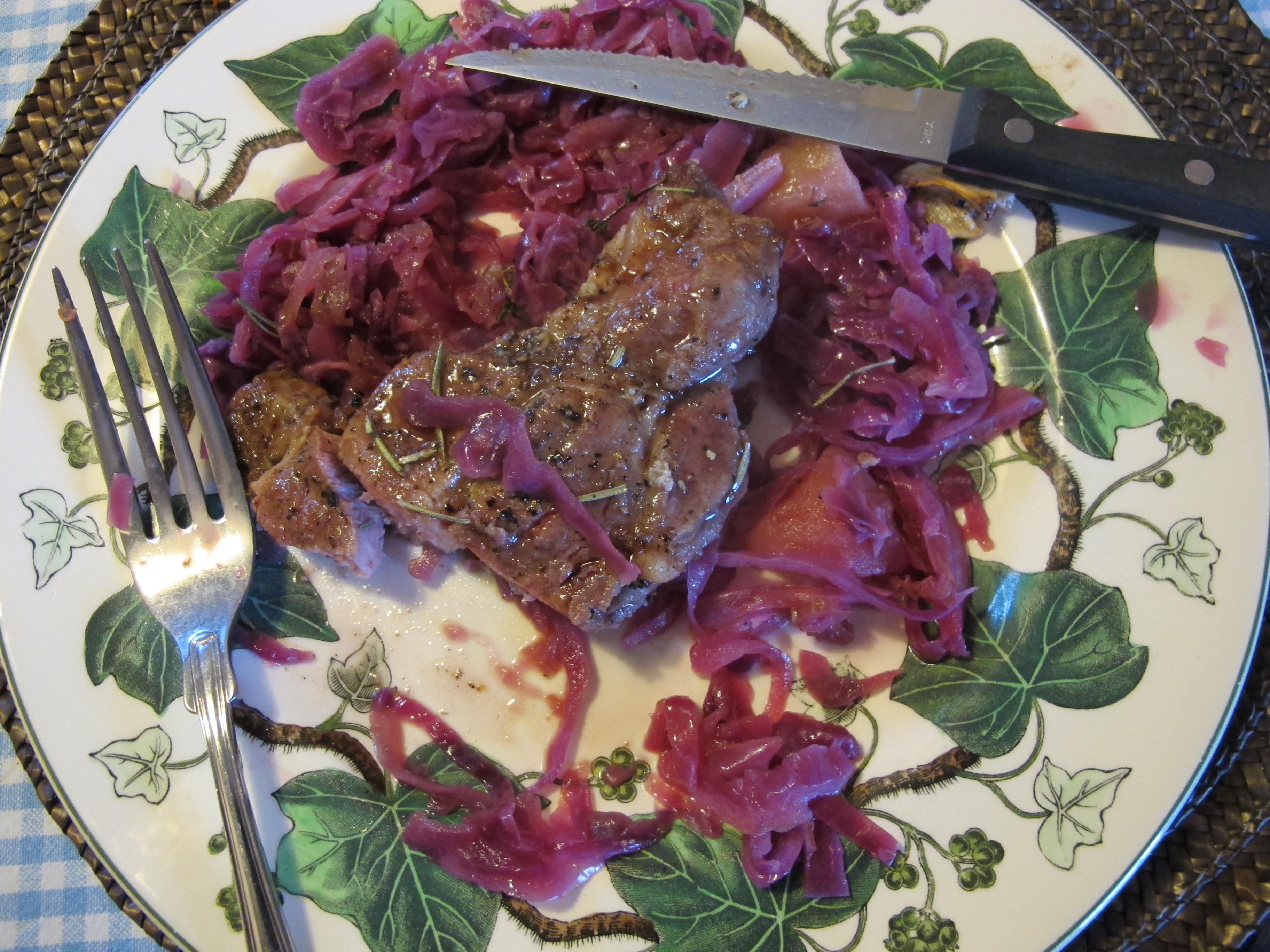
So lunch yesterday was a pork chop on a bed of red cabbage.
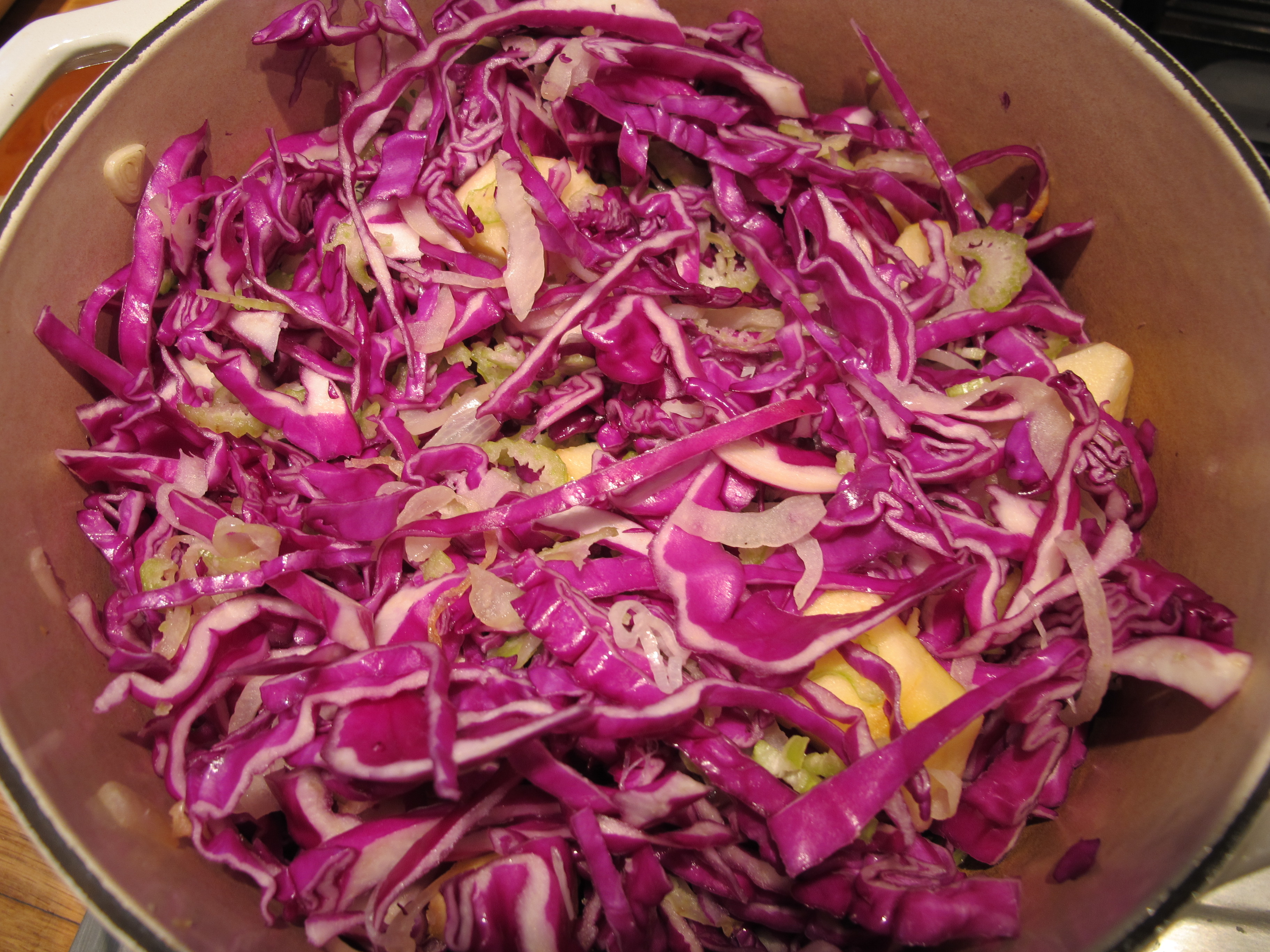
1 tablespoon olive oil
1 onion–sliced fine
I red cabbage–shredded not too fine
2 sticks of celery–sliced fine
10 juniper berries–crushed
Juice of a lemon
Juice of an orange
1 tablespoon cider vinegar
salt
 The cabbage and apple married well with the pork.
Posted in Diabetes, Food, other sides to this life, tagged allotments, alsace-lorraine, Alsacian food, cardiac, choux-croute, diabetes, meat, sauerkraut, strasbourg, vegetables on January 30, 2012| 8 Comments »
It was heartening to spy through the mist from our friends Susan and Jean-Michel’s bathroom window in Strasbourg (Alsace–Lorraine in NE France) a sea of allotments stretching a hundred yards to the elevated road on the horizon.
Dotted with little sheds and pockets of green (but no sign of anyone working–well it’s winter!)–they at least were proof that vegetables are grown in this part of France.

Heartening in both senses–good news and good for the heart–after several veg-free meals eaten over a weekend in the restaurants of this ancient regional capital.
Meat is big here–the displays of it in butchers’ windows are impressive.

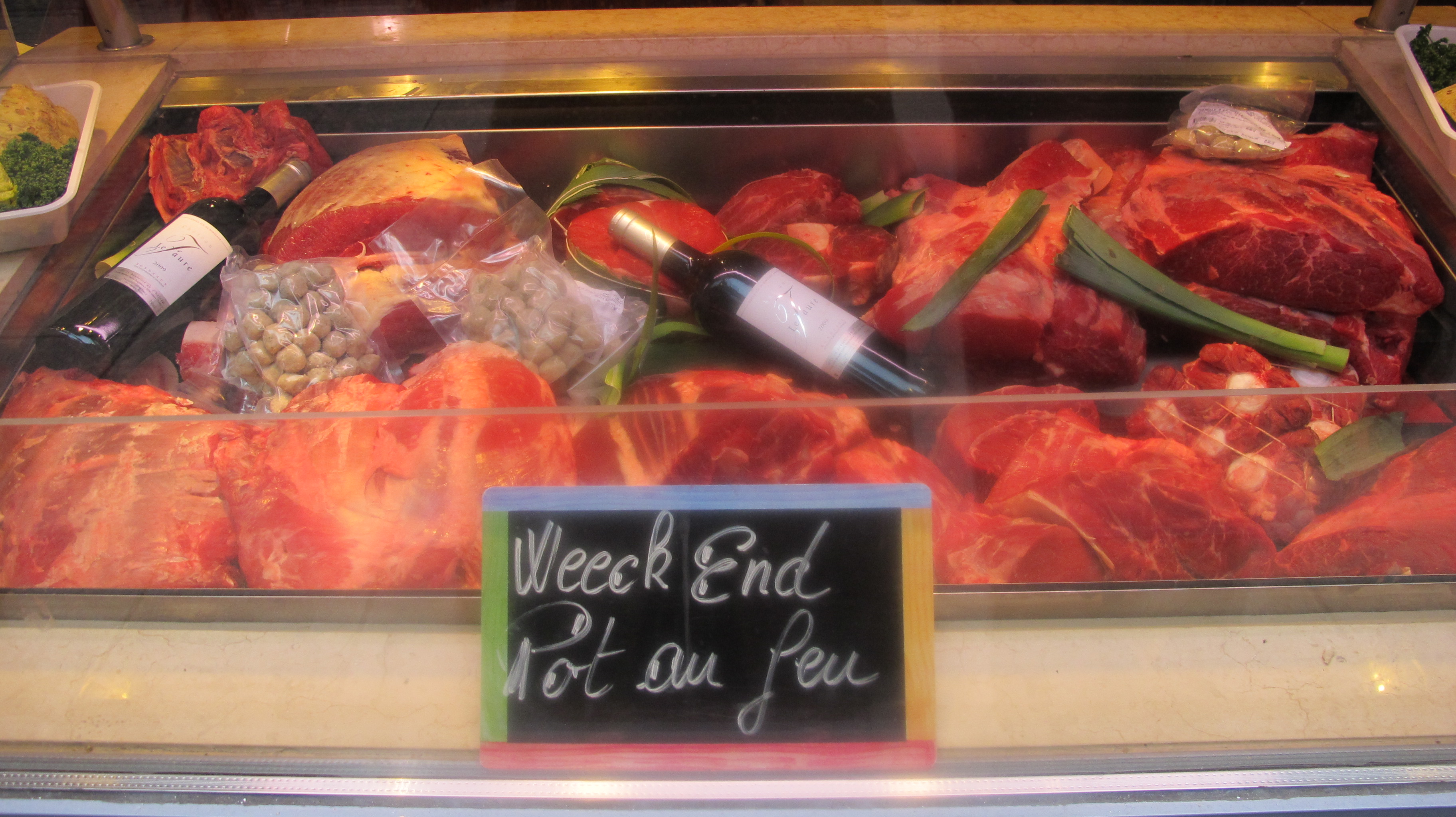
And often it seems little else on the plate.
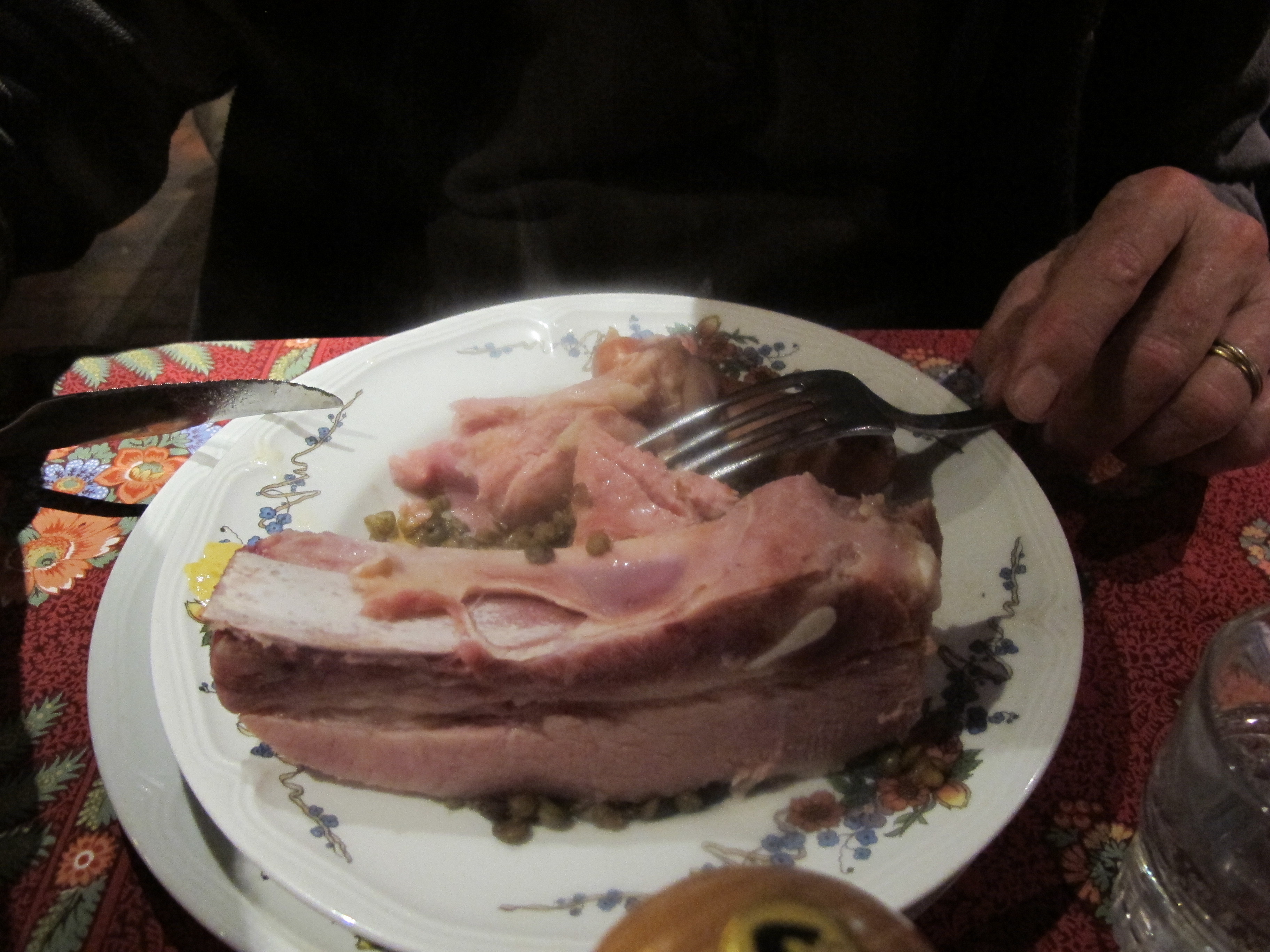
True there is the chou (white cabbage)in the ubiquitous choucroute (sauerkraut) but that is not a fresh vegetable and it’s true there are potatoes but they are not an option for me.

Even white fish is served with sauerkraut here!
Vous allez manger bien la-bas! [You’ll eat well there!] we were assured enthusiastically by our friend and neighbor, Thierry, an amateur [fan] of good food when he heard we were heading to Strasbourg for the weekend.
Heavy–yes but bee-an!
At a reception in the celebrated Wine Cave Historique des Hospices de Strasbourg, the guide casually mentioned that there is more cadiovasular disease and Type 2 diabetes in this region than any other in France!

In a cave underneath the hospital of Strasbourg great casks of local wine are stored--including the oldest cask of drinkable wine in the world--so they say!
Our host in Strasbourg, Jean-Michel–(who by the way cooked me a delicious omelette for lunch on Saturday!)–said this part of France had the lowest life expectancy.
Cause and effect?
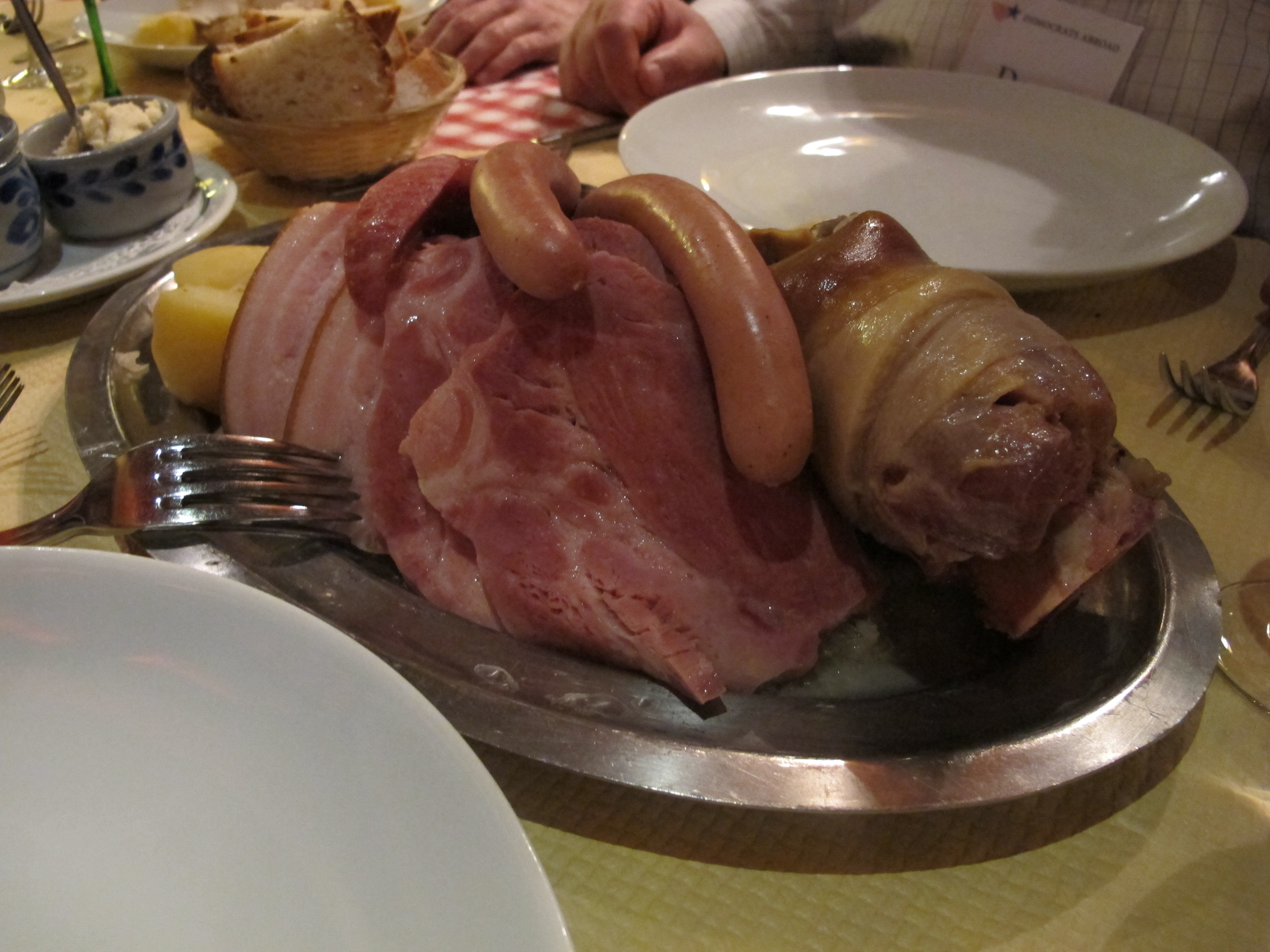
QED!
But it made me think how difficult it is to change ingrained habits….
The people of Alsace are clearly proud of their cuisine.

It reflects centuries of tradition and daily consumption, deeply connected with the customs and rural way of life autrefois (in times gone by).
But “in times gone by” the people (peasants) worked hard all day in the fields and the food they ate in this northern climate stoked their boilers.
Times have changed–but not the way of eating it seems.
Come to think of it a couple of days hard digging at the allotment would take care of at least two plates of choucroute–and there’d be some vegetables to see for the effort too!!
Includes photo from the NEW Poldark series!


 Robin Ellis