Feeds:
Posts
Comments

Archive for the ‘Diabetes’ Category

I remember Judy Geeson (who played Caroline Penvenen in the second series of Poldark) once asking me how long I took cleaning my teeth!

Such a question! It must have been nervesanxiety provokes strange conversations.

We were standing around waiting to record a scene at the BBC’s Studios in Birmingham, in 1977.

She was shocked when I told her it usually took me about 20 seconds and that I once had to have 22 fillings after not seeing the dentist for 3 years.

“You must spend at least 3 minutes and floss every time, beforehand.” she told me sternly.

Duly admonished I have followed her advice ever since.

This exchange came to mind when Meredith sent me the link to a website that describes in detail what can happen to a diabetic’s teeth when glucose  levels are unchecked.

It also has useful tips about how to keep your mouth healthy:

People with diabetes are at risk for mouth infections, especially periodontal (gum) disease. Periodontal disease can damage the gum and bone that hold your teeth in place and may lead to painful chewing problems. Some people with serious gum disease lose their teeth. Periodontal disease may also make it hard to control your blood glucose (blood sugar).

By controlling your blood glucose, brushing and flossing every day, and visiting a dentist regularly, you can help prevent periodontal disease.

I brush and floss three times a day.

Thanks Judy!

(We quickly got our teeth into the scene!)

Toothsome threesome--Angharad, Robin and Judy!

Read Full Post »

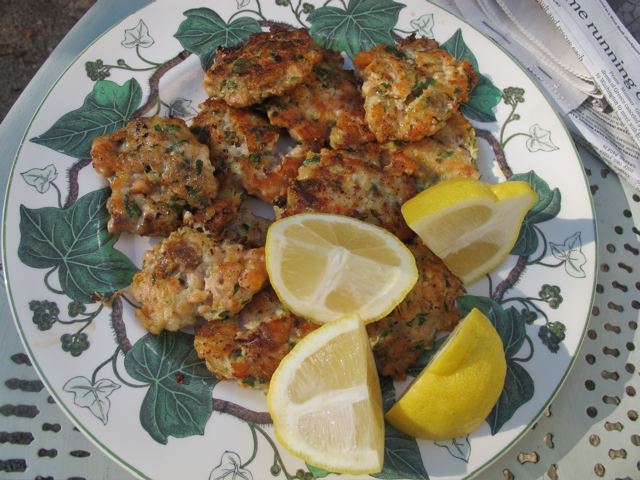
With salmon and smoked haddock .

I used to love fishcakes–but the mashed potato made them “off limits” for me, once I was diagnosed with type 2 diabetes.  Then I found an alternative–“no-potato fish cakes”— and I no longer felt deprived!

This is a variation on that theme.

Adapted from a Gordon Ramsay idea–these are a little heavier than “mark 1”–a winter alternative perhaps? They were lunch yesteday, but could be served as a starter or light supper.

for 4/6

1 lb/450 gms salmon fillet–with the skin and little bones removed
1 lb/450 gms smoked haddock–undyed, if possible, and skin removed
1 large shallot–grated

1 egg–whisked

1 tablespoon parsley–chopped

salt and pepper
olive oil for sautéing

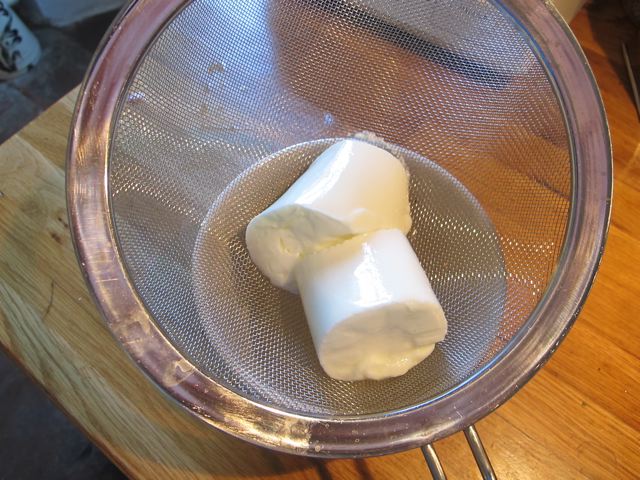
yogurt–I use no-fat organic, drained in a sieve for half an hour to thicken it a little

  • Cut the fish into chunks and place into a food processor.
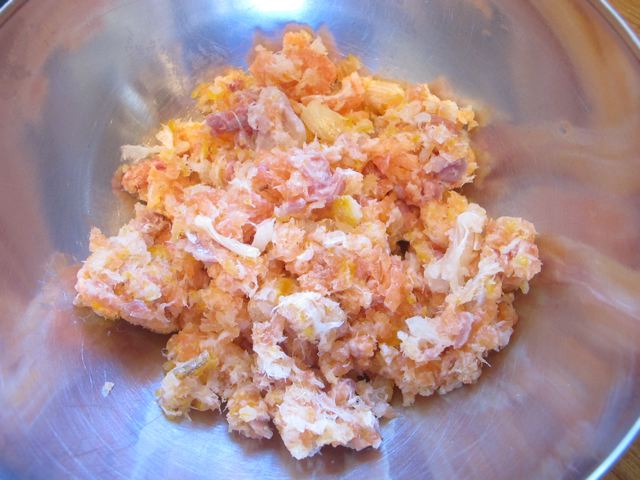
  • Pulse to a coarse mince–not too much or it will become a slurry.
  • In a bowl, mix the fish with the shallot, parsley, salt and pepper.
  • Check the seasoning–raw salmon tastes good!
  • Add the whisked egg and mix in thoroughly.
  • Chill in the fridge for an hour if you’ve time–I didn’t and they were fine.
  • Mold into little flat patties.
  • Heat the oil in large frying pan.
  • When it’s hot fry the little cakes for 2/3 mins each side.
  • Serve with a small dollop of yogurt on the side.
We had them with some small tomatoes–halved and roasted at 120C/250F for 1h30.

Read Full Post »

Just had my flu shot in the nurses office in Lautrec this morning.

Here in France those of us of a certain age (over 60) or in high risk groups–like diabetics–get the shot free.

The paperwork comes in the post. I take it to the pharmacist, who supplies the vaccine and then drop by the nurse’s office and she gives me the dreaded jab.

Good system for me.

Our French neighbour, Robert (fellow type-twoer and the same age) was in the pharmacy too today. He told me he never takes up the offer. He’s an independent spirit and looks hail and hearty, so “chacun a son choix” [to each his own]!

My wife, Meredith, chooses to go down a homeopathic route–which has worked for her these past few years.

Madame l’Infirmiere (the nurse) told me that flu was already on the prowl in the district.”Without the jab there’d be an epidemic,” she claimed, as she stuck the needle in my upper arm–doubly demonstrating how good she is at her job–first by distracting me from the shot then by reassuring me I was doing the right thing!

Diabetes Health is giving out this advice to pharmacists:

How Pharmacists Can Help Diabetes Patients During Cold and Flu Season

Patients with diabetes are six times more likely to be hospitalized and three times more likely to die from flu-related complications. With cold and flu season upon us, be sure to spend extra time advising your patients with diabetes on the importance of keeping up-to-date on their vaccinations, what to do if they do become sick, and how to self-treat with over-the-counter (OTC) medications when needed.


Read Full Post »

This was published a couple of years ago.

It has been a favorite for over thirty years and is a tasty standby for a rainy grey day when going anywhere for supplies is the last thing you feel like doing.

Meredith on her detox for a week mentioned it this morning and we’ll have it tonight, as below, with some of the broccoli I bought yesterday and brown basmati rice.

Dal-otherwise known as Comfort Lentils in our house.

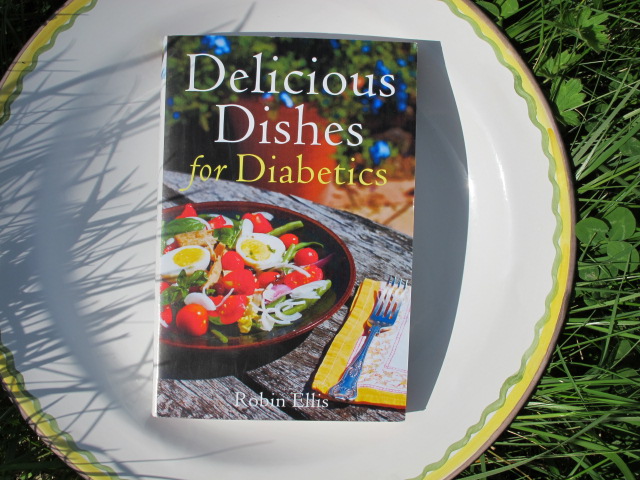
This is from my book Delicious Dishes for Diabetics-out in the UK and officially launched November 1st in the USA.

Our Sikh friend, Tari, affectionately known as the “Carefree Cook”, is an example to all us worry guts.

He never panics when people turn up unexpectedly and have to be fed.

He looks to see how many extra guests are coming through the door and adds more water to the dal accordingly!

We’ll eat these lentils tonight with broccoli, simply steamed, drizzled with a little olive oil (maybe a squeeze of lemon?) and a some brown basmati rice.

[If there’s any dal left over, save it for another occasion! Form the cold dal into little burger shapes, coat with some chickpea or whole wheat flour and fry lightly in some hot oil.]

for 4

500 g/1 lb red lentils

1 litre/1¾ pints/4 cups stock (I use an organic vegetable stock cube per 500 ml of water)

4 tbsp vegetable oil (I use olive oil.)

1 medium onion – chopped

1 tsp coriander seeds – pounded in a mortar and pestle

1½ tsp cumin seeds – pounded in a mortar and pestle

1 tsp garam masala

½ tsp chilli powder

  • Rinse the lentils very thoroughly – until the water shows clear.
  • Put them in a saucepan with the stock and bring gently to the boil.
  • Turn the heat down to low and let them simmer, covered, stirring from time to time.
  • They are done when a small puddle floats on the top.
  • Turn them off.
  • Heat the oil in a small frying pan.
  • Add the onion and fry gently until it colours nicely.
  • Add the spices and mix them in well.
  • Cook for a couple of minutes longer to release the aroma.
  • Add the cooked spices and the onion to the lentils and mix in thoroughly.
  • Heat through and serve.

Read Full Post »

In today’s GUARDIAN– 

–writer Jon Henley interviews Barbara Young–Chief Executive of Diabetes UK, the country’s leading diabetes charity. It’s a sobering piece.

In the article Baroness Young is quoted as saying:

“Diabetes is becoming a crisis. The crisis. It’s big, it’s scary, it’s growing and it’s very, very expensive. It’s clearly an epidemic, and it could bring the health service to its knees. Something really does need to happen.”

She backs up that statement with some astonishing figures:

  • The condition is now nearly four times as common as all forms of cancer combined.
  • 2.8m people in the UK have been diagnosed with it.
  • An estimated 850,000 more probably have type 2 diabetes but don’t yet know.
  • By the year 2025, more than 5m people in this country will have diabetes.
  • In north America, one in five men over 50 have the condition.

At the end of the interview there are three case histories. Here’s an edited version of 38 year old Peter Clitheroe’s  inspiring story—

“I’m 6ft 2in and by the time I’d left uni in 1997 I was affectionately known as Big Pete – I weighed 23st 10lbs. I tried to lose weight, tried everything, and nothing worked. The only thing I didn’t try was sorting my head out.”

For several years Clitheroe’s weight fluctuated wildly; 18st when he got married in 2003, back up to 23st by the time his son was born four years later.

In November 2008 he went to the doctor with eye problems; a blood sugar test showed 14.7.Clitheroe joined WeightWatchers, stuck at it for a year, and wound up at 15st 2lb. “I’m in control now,” he says. He cycles 16 miles to work and back four days a week; Last year he did the Manchester 10km run, raising £700 for diabetes research.

“My blood sugar is down at 6.2, and my cholesterol has fallen from 7.8 to 3.4,” he says. “In fact, if I hadn’t already been diagnosed I wouldn’t actually have diabetes now.”

Perversely, Peter says, being diagnosed was “about the best thing that could have happened to me. It got me back on track; gave me a second chance.” [my italics]

He still loves his food: “I’d love to go to some TV chef and say: ‘Make something that really tastes good, but is genuinely low-fat.’ And how come the low-fat dishes in the supermarket are always more expensive than the others? But it’s your head you have to get sorted out.” [my italics]

Read Full Post »

On our last day in London our friends Prue and Michael invited us to lunch–a treat.

We ate a delicious monkfish dish followed by Prue’s Mango Surprise--thought up by a thoughtful Prue with me in mind, i.e. something she hoped a type 2 diabetic could enjoy.

A dessert–my word!–and it was delicious!

Mangoes have been controversial.

On our return I did a bit of research.

The news is encouraging.

This from the GI Index:

Mangoes are one of the few tropical fruits with a low GI (51) so they’ll deliver sustained energy without spiking those blood glucose levels (in modest portions).
They are also an excellent source of vitamin C, high in the soluble fibre pectin that helps in controlling blood cholesterol, a good source of vitamin E, rich in beta-carotene which the body converts to vitamin A, and loaded with compounds called polyphenols which have strong antioxidant properties protecting against heart disease and cancer. So you really don’t need an excuse to grab one.

Further reassurance and encouragement comes from the ygov site–Are mangoes good for diabetics??:

As usual, the message is “in moderation”.

Difficult in terms of Prue’s dessert!

Here it is:

500 gms/ 16oz (four small pots) yogurt--drained for 1/2 hour in a sieve to thicken it (spoon carefully into a fine sieve and leave to drain off the whey over a bowl in the fridge)

300 gms/10 oz ripe mango flesh–whizzed to a rough purée in a food mixer

the zest of an orange and a squeeze of its juice

  • Whisk the three ingredients together in a bowl.
  • Refrigerate for a couple of hours before eating.
  • Serve in a small glass–with perhaps a finger waifer biscuit for non diabetics and a few strands of the zest/thin rind for the look of it.
Lacking a sweet tooth, I don’t much miss desserts–does anyone have other healthy options for those that do?

Read Full Post »

“Myth versus Fact”

This simple piece from the Los Angeles Times, busting a few myths about diabetes, is worth posting on its own–in full.

Learning about Type 2 diabetes and the risk factors involved can help a person detect the disease early or know what he or she needs to do to minimize their risk. Type 2 diabetes, which used to be called adult-onset diabetes, is becoming more common, especially in children and young adults. Here are common myths associated with Type 2 diabetes:

1. Type 2 diabetes is not a serious disease. 

Because Type 2 diabetes tends to develop slowly over time, many people believe it is not a serious disease. According to the American Diabetes Assn., diabetes kills more people each year than AIDS and breast cancer combined. 

2. Only overweight people develop Type 2 diabetes. 

Though being overweight or obese is a risk factor, it is not the only one. There are other risk factors to consider, such as family history. If you have immediate family members who have developed Type 2 diabetes, you have a greater risk of developing it. 

Ethnicity also plays a role. African Americans, Hispanics and Native Americans are more likely to develop Type 2 diabetes than Caucasians. 

3. There’s only one dangerous kind of diabetes.

Not true. Diabetes refers to a group of diseases — all of which require serious attention — that have in common the body’s inability to properly convert glucose from food into energy, leading to a high level of sugar in the blood. The main types of diabetes include Type 1 (formerly known as juvenile-onset diabetes), Type 2 and gestational (which occurs only during pregnancy). Managing any type of diabetes requires balancing food, physical activity and, if needed, medications.

4. People with diabetes must eat a special diet.

A healthful diet for someone with diabetes is the same as a healthful diet for anyone else. A good meal plan is based on whole-grain foods, lean protein, vegetables and fruit. Such a diet is low in fat (particularly saturated and trans fats), salt and simple sugars. 

5. Only older people develop Type 2 diabetes. Type 2 diabetes used to be an adult disease, developing primarily in people over 40 who were overweight or obese. Sedentary lifestyles, combined with being overweight, have led to an increase in the diagnosis of Type 2 diabetes in children as young as 10. 

If you would like to learn more about diabetes, go to http://www.diabetes.org.

Read Full Post »

I set off on the long walk for walnuts yesterday afternoon.

It lasts from now to early November and involves a lot of bending down.

Good exercise–and usually good results.

We still over two full boxes left from last year’s harvest. The slim pickin’s from yesterday–just under a kilo–are on the slatted table drying out. And are clearly a subject for conversation!

I know, but listen–have you heard about…?”

The modest almond and its benefits to health have been in the news.

 Diabetes.co.uk reported yesterday that:
Two new studies into the potential health benefits of eating almonds have supported evidence that they can help people with type 2 diabetes to maintain their blood glucose and cholesterol levels.
 One of the studies, published in the journal Metabolism, showed that consuming an ounce of almonds straight before eating a high-starch meal brought a 30 per cent reduction in post-meal glucose levels for patients with type 2 diabetes….”
I just measured out an ounce and counted about thirty nuts–about what I eat as a snack in the late afternoon. I was reminded of an earlier post called Peckishness“:

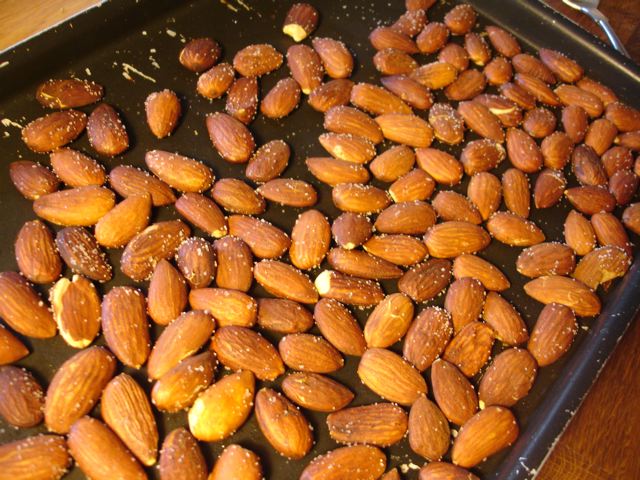
” Almonds are my prefered nut at the moment–roasted with a little salt. Pistachios preceded them until my nails started to split with opening them. Both have good health properties. Eaten in moderation, one doesn’t have to feel guilty about snacking.

Home-roasted almonds

About 8oz/250gm almonds

1 teaspoon olive oil

fine salt

  • heat the oven to 180C/375F
  • Put the almonds in a bowl and tip the teaspoon of oil over them.
  • Turn them over in the oil until they are well covered.
  • Add a couple of sprinklings of salt and flip them over and over until the salt is well distributed.
  • Spread  the nuts on a shallow baking tray and roast in the middle of the oven for about 10 minutes. There’s no pain in testing them for doneness–except perhaps briefly to the fingers!
The only drawback–they are more-ish..!

Read Full Post »

I was back in Cornwall last weekend for the first book signing session at Waterstone’s in Truro.

The county is in fine form and this cathedral town was buzzing on Saturday morning.

Bev–who with her husband had driven all the way from Nottingham–made me feel a little underdressed!

Here’s my interview with the excellent and sympathetic Martin Bailie at BBC Radio Cornwall last Friday–me trying to avoid the “errs” and “ums”!.

"On the spot" at BBC Radio Cornwall!

PS–according to an email received today from the US publisher (Skyhorse)–the book is now available in the States…!

Read Full Post »

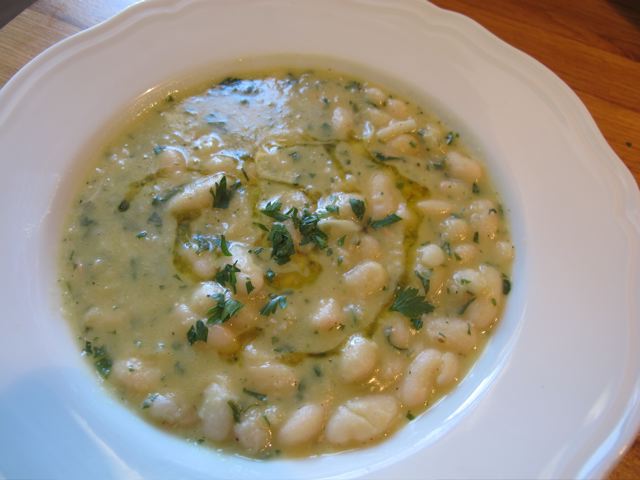
This is my version of a “serious” white bean soup from the great Italian-American cook, Marcella Hazan.

It is in my newly published book–Delicious Dishes for Diabetics–a Mediterranean Way of Eating.

The smooth and creamy consistency make it a comfort soup par excellence –and popular here with nieces and nephews when they come to visit. Meredith says it reminds her of her home town–Chicago, “the Windy City”!

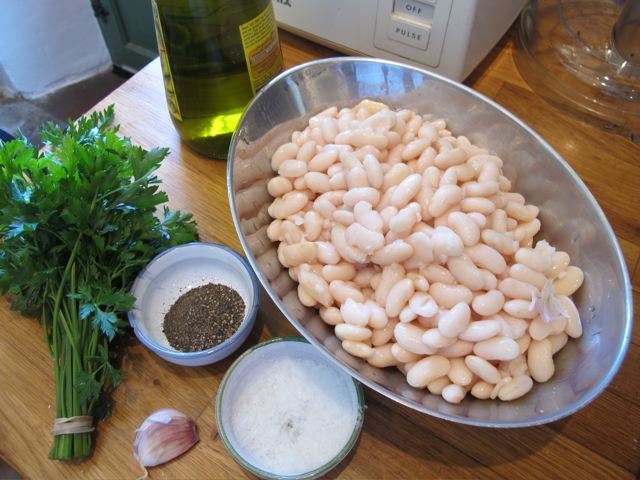
The simple makings

Serves 4

1 clove of garlic – peeled and chopped

8 tablespoons olive oil

2 tablespoon flat leaf parsley – chopped

1 kg/36 oz canned or, preferably, bottled cannelini /white beans – drained and rinsed

salt and pepper

250 ml/½ pint/1 cup vegetable stock –[I use organic vegetable stock cubes]

toasted wholewheat/rye bread with a little olive oil

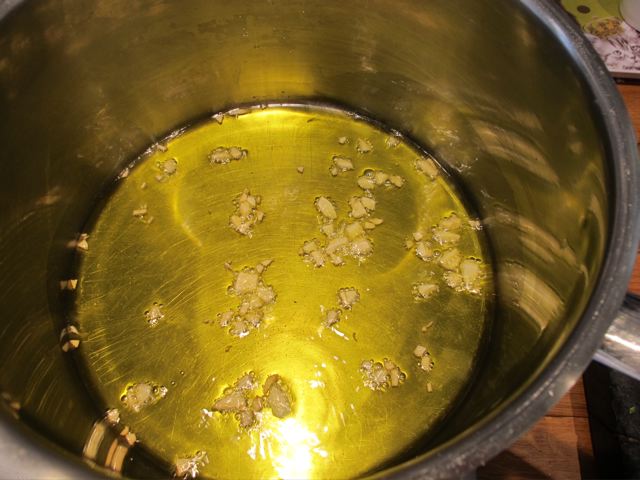
  • Sauté the garlic in the oil gently until it colours.
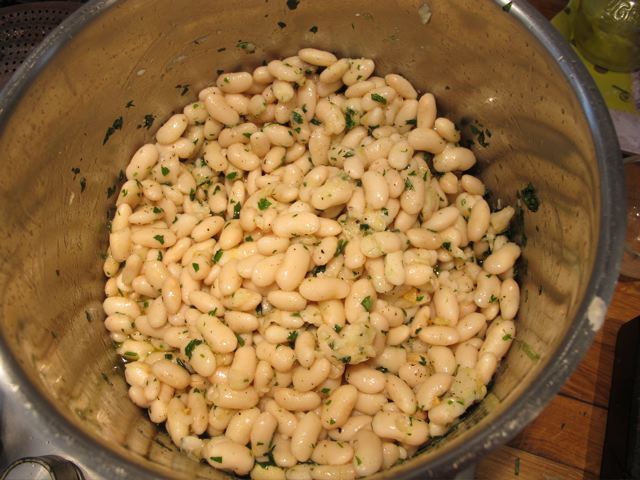
  • Add the parsley and stir a couple of times.
  • Mix in the beans, salt and pepper.
  • Cover and cook gently for about 5 minutes to warm through.
  • Purée a quarter of the beans in a mixer and return with the stock to the pan.
  • Simmer for another 5 minutes.
  • Check the seasoning.
  • Serve over the toast with a swirl of olive oil in each bowl.

Read Full Post »

« Newer Posts - Older Posts »