Feeds:
Posts
Comments

IMG_9649

This simple North African lamb stew, spotted years ago in Frances Bissell’s The Pleasures of Cookery (great title), is a handy winter dish for companybut I haven’t made it for a while.

Six French friends are coming to lunch tomorrow so I’m preparing it today. That way the taste should deepen while the panic levels lighten in the morning.

I once cooked this and was puzzled by the reduced volume–much less than usual. Then I spotted the bowl of beans hiding in full view on the counter–I’d forgotten to put them in!
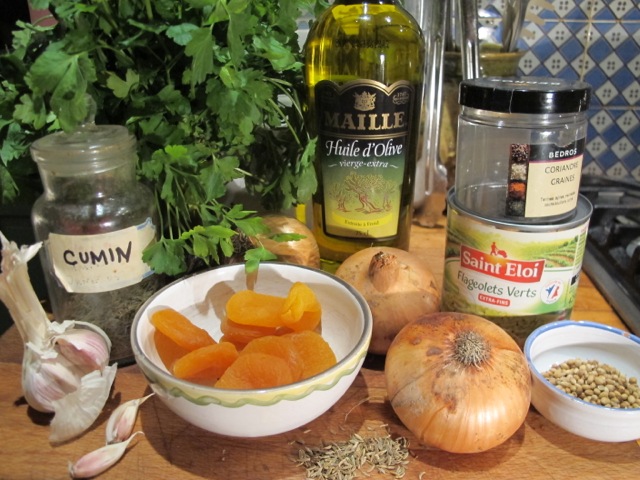
All the ingredients, save the meat, looking eager to get started.

for 8

1 boned lamb shoulder (about 2k/4lb meat)–cut up into bite size (1″ish) pieces
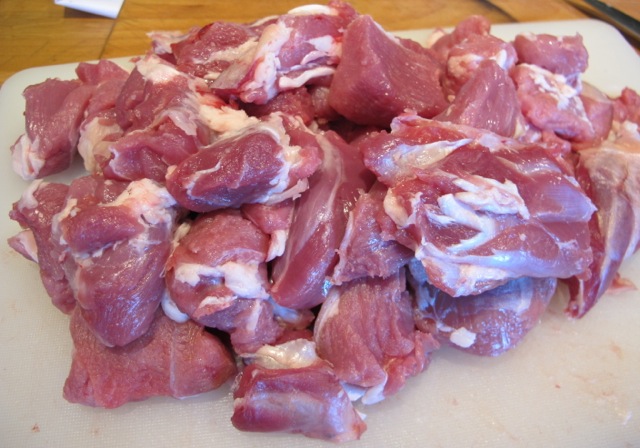
lamb

3 tbs olive oil

4 garlic cloves–peeled & chopped

3 onions–sliced

1 1/2 tsp each whole cumin seeds

1 1/2 whole coriander seeds

24 dried apricots*–halved (the yellow ones show up prettier than the untreated variety I normally like)

1 1/2 pints stock–I use organic vegetable cubes

2 large tins (cans) of flageolet beans (little green ones)–drained

salt and pepper

A bunch of fresh coriander (or parsley)–chopped

Heat the oven at 160°C/325°F/Gas Mark 3.

Seal the meat in the hot olive oil, using a large frying pan–(you will probably have to do this in batches).
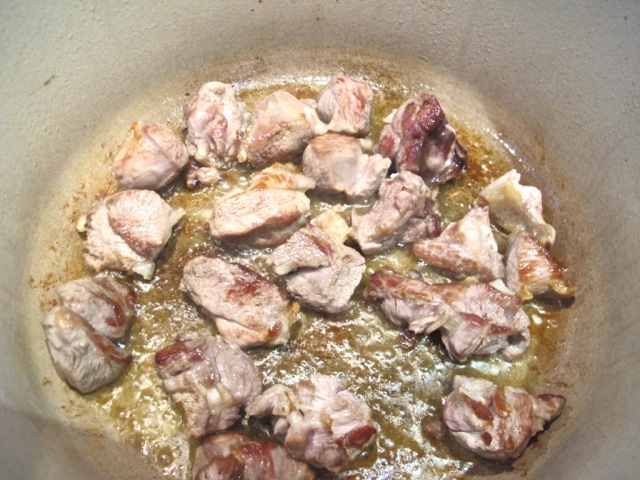
cooked lamb

When nicely browned, remove it to the ovenproof casserole from which you will serve it.

Gently fry the onions and garlic in the fat and oil left in the pan, without browning them.
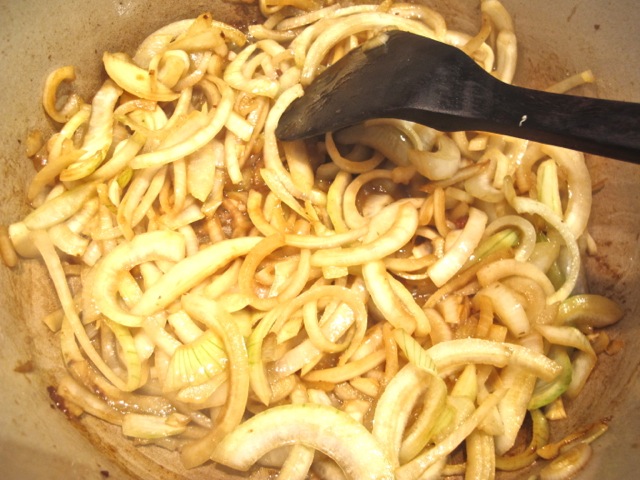
onions
Fold in the whole spices and let them cook a little.
Add almost all the stock and let it reduce a bit.

Add the apricots.

Season this mixture well, with salt and pepper and pour it into the casserole.

Add a handful of coarsely chopped parsley or coriander.

In a separate pan heat the drained beans with the remaining  stock.

When hot, add the beans with the stock to the casserole and turn everything over carefully.

Bring it all to a simmer on the top of the stove, then cover and place the casserole on a low shelf in the oven.

Cook for about 2 hours, checking after an hour to see if it needs topping up with stock—being careful not to lose the intensity of the sauce.

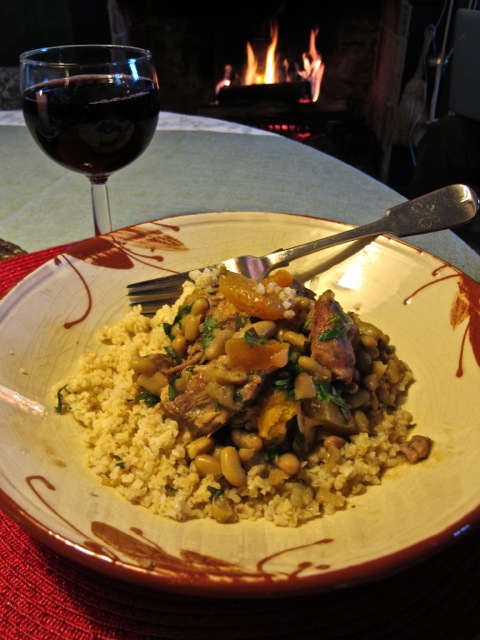
Serve over bulgar wheat–or if you prefer, cous cous or basmati brown rice.
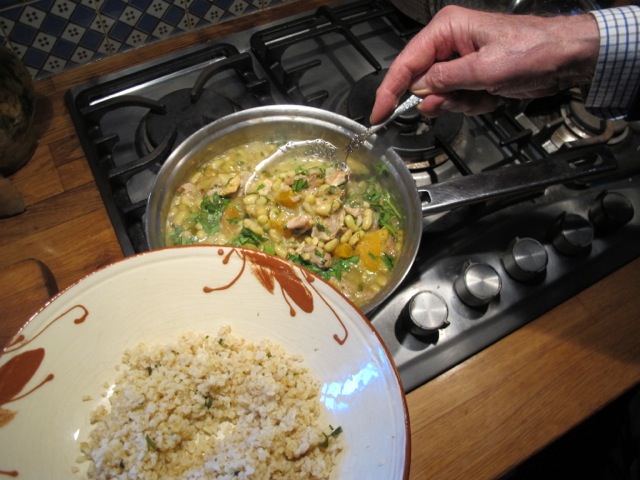
IMG_9629

Remembered the beans this time!

* Dried apricots are especially suitable for anyone, like me, watching blood sugar levels. http://healthyeating.sfgate.com/apricots-blood-sugar-9889.html


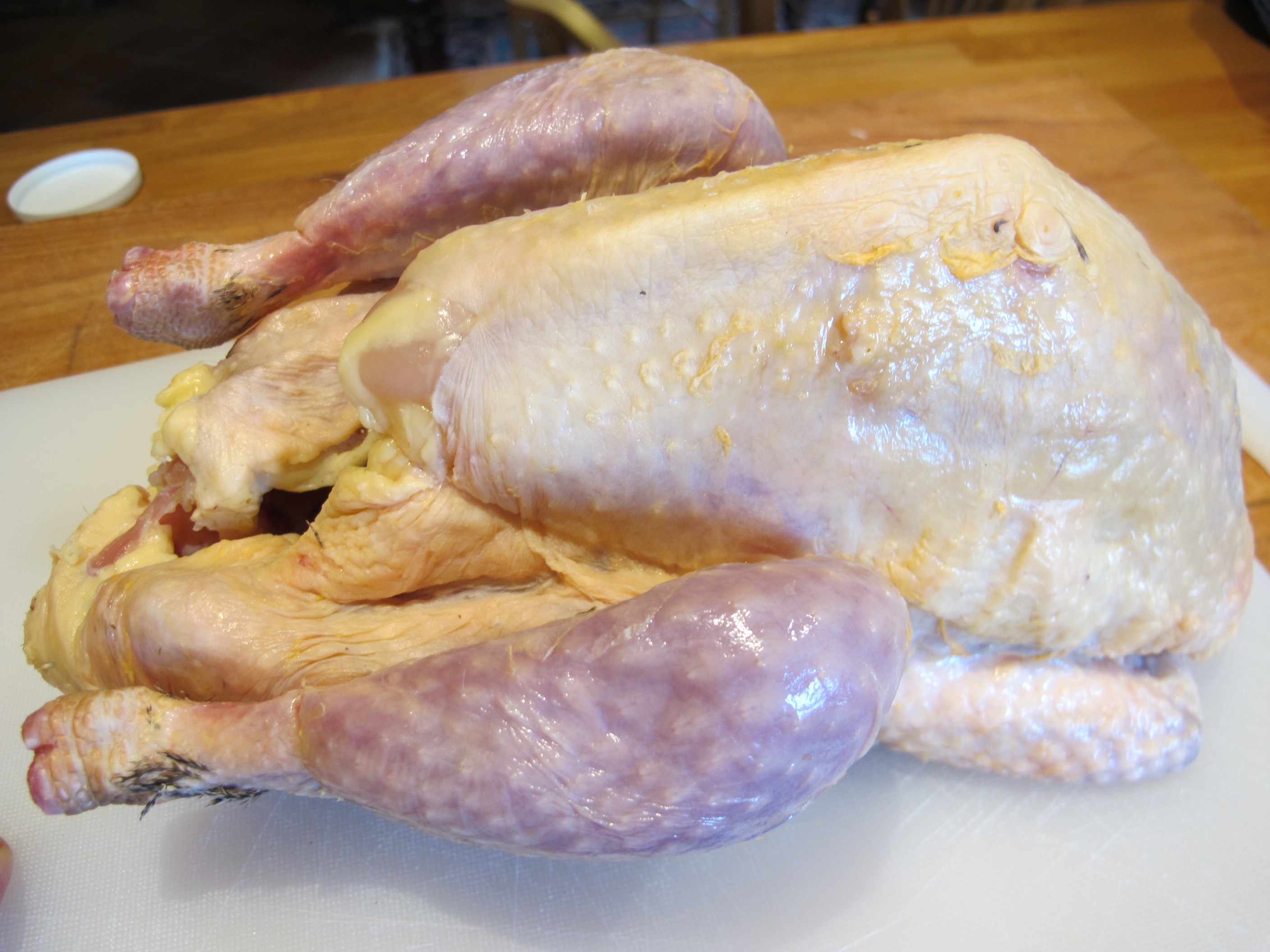
guinea-fowl-2

Guinea fowl stepping out in her high heels and lipstick.
Guinea Fowl (UK), Cornish Game Hen (US), Pintade (Fr).

Introduced to Britain by the Romans (apparently).

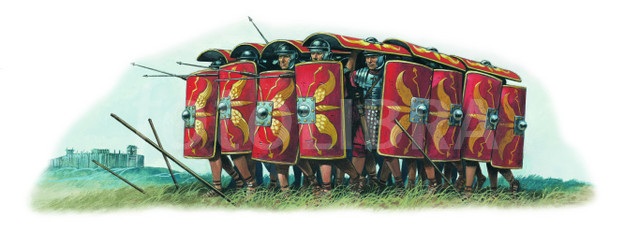
This is odd because I once saw a flock of these nervy birds, moving as one in a tightly packed phalanx (safety in numbers) that reminded me of the testedo–the Roman military formation.

As they approached a target, a platoon of legionnaires would use their shields to protect themselves top and sides, moving as one. The images relieved the tedium and frustration of Latin lessons at school!

ROMAN SOLDIERS IN TESTUDO FORMATION-ILLUSTRATION

“Left a bit, lads! Close-up, close-up! Not so fast at the front! Steady boys, steady!”

The testedo of guinea fowl–perhaps equally unsure of their fate–made a heck of a panicky row.

IMG_9464

The combination here of anchovies melted into a classic sauce of olive oil, lemon juice and capers works well with the gamier taste of the guinea fowl. It makes a nice change from chicken.

This recipe comes from Jenny Baker’s excellent Simple French Cuisine cook book.

IMG_9449

1 guinea fowl–cut up into quarters

IMG_9450

1 tbsp olive oil

1 onion–chopped

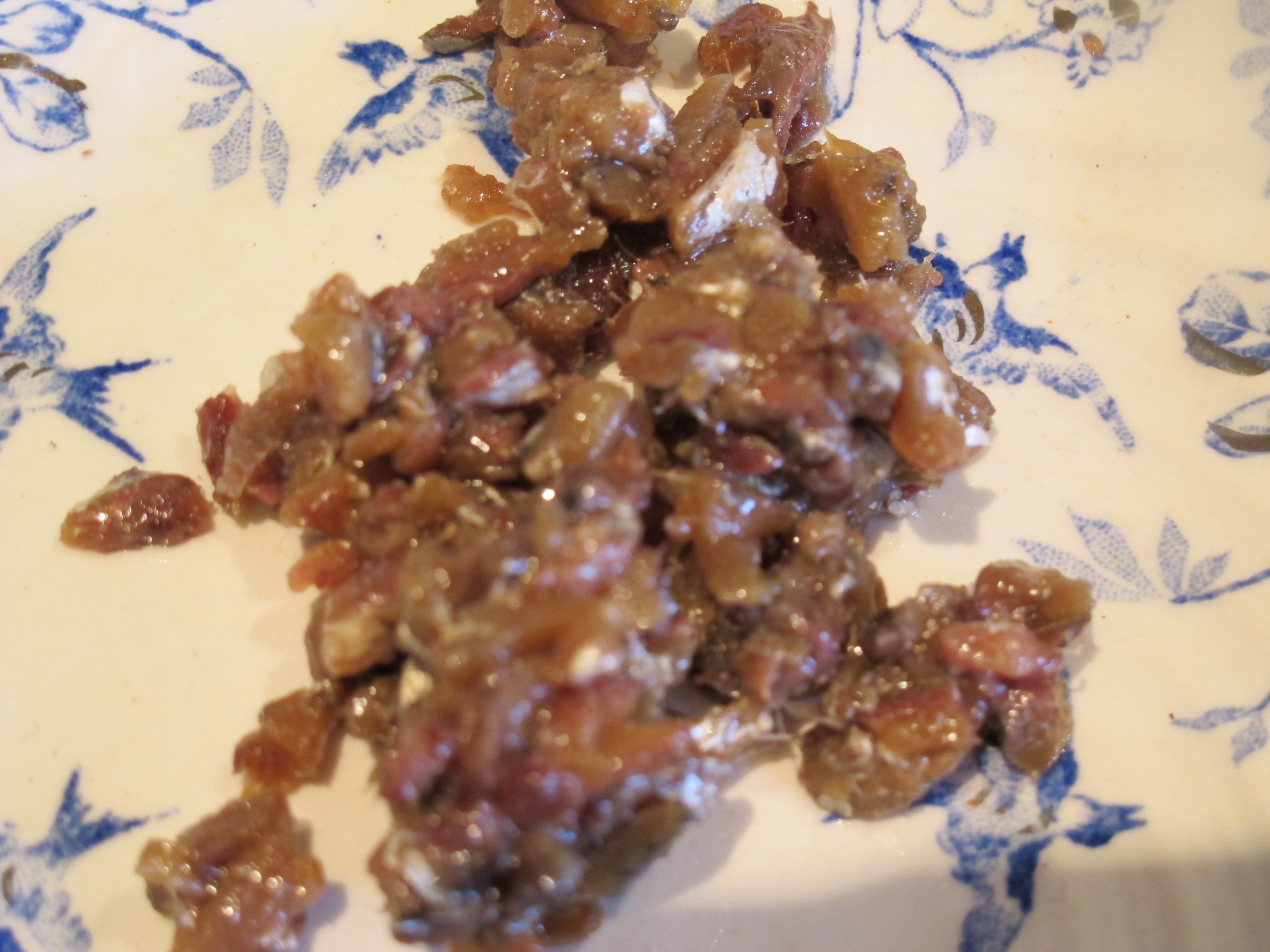
4 anchovy fillets–chopped into a mash

IMG_9454

1 glass white wine

1 tbsp capers

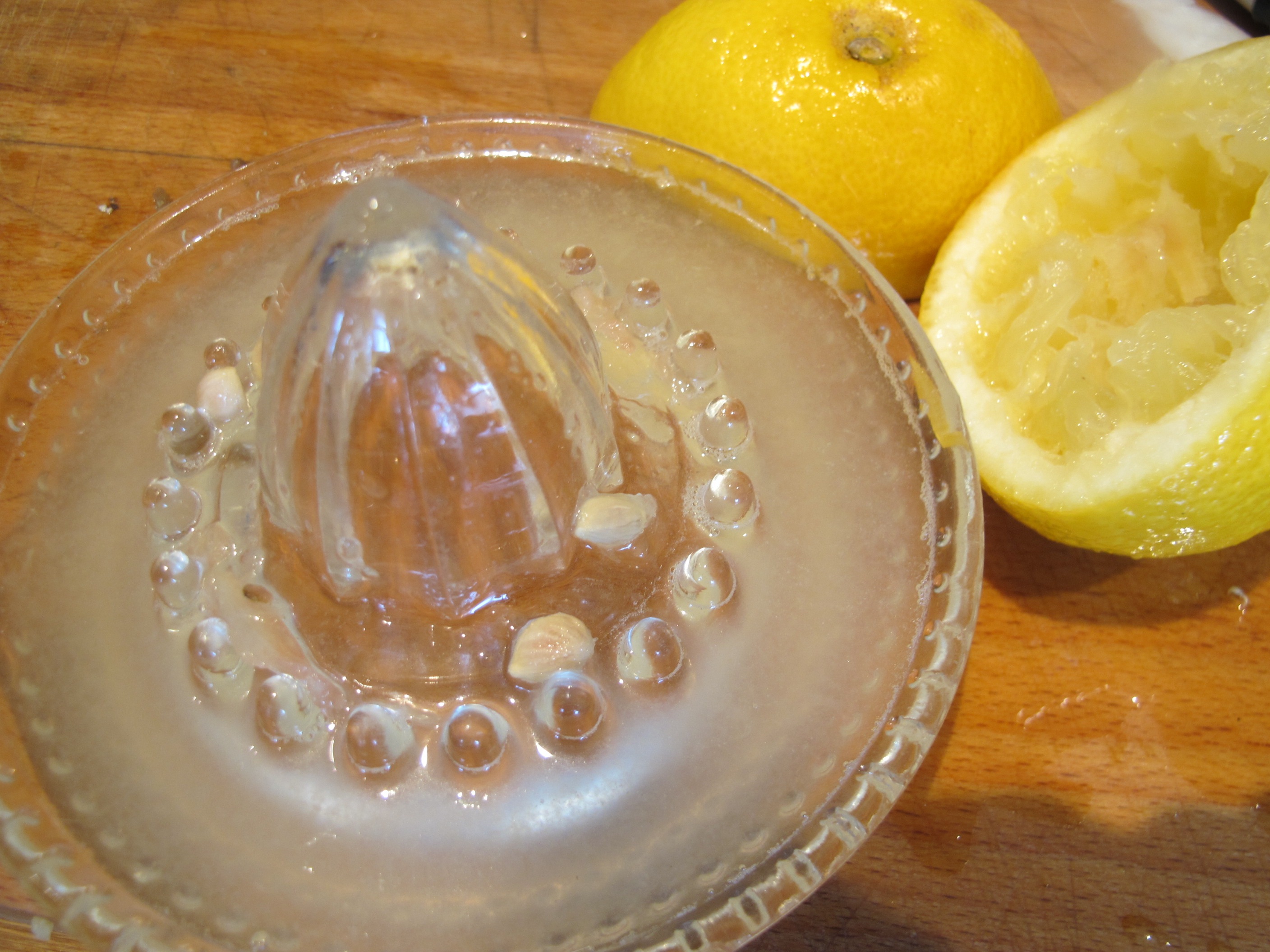
juice of a lemon

IMG_9460

salt and pepper

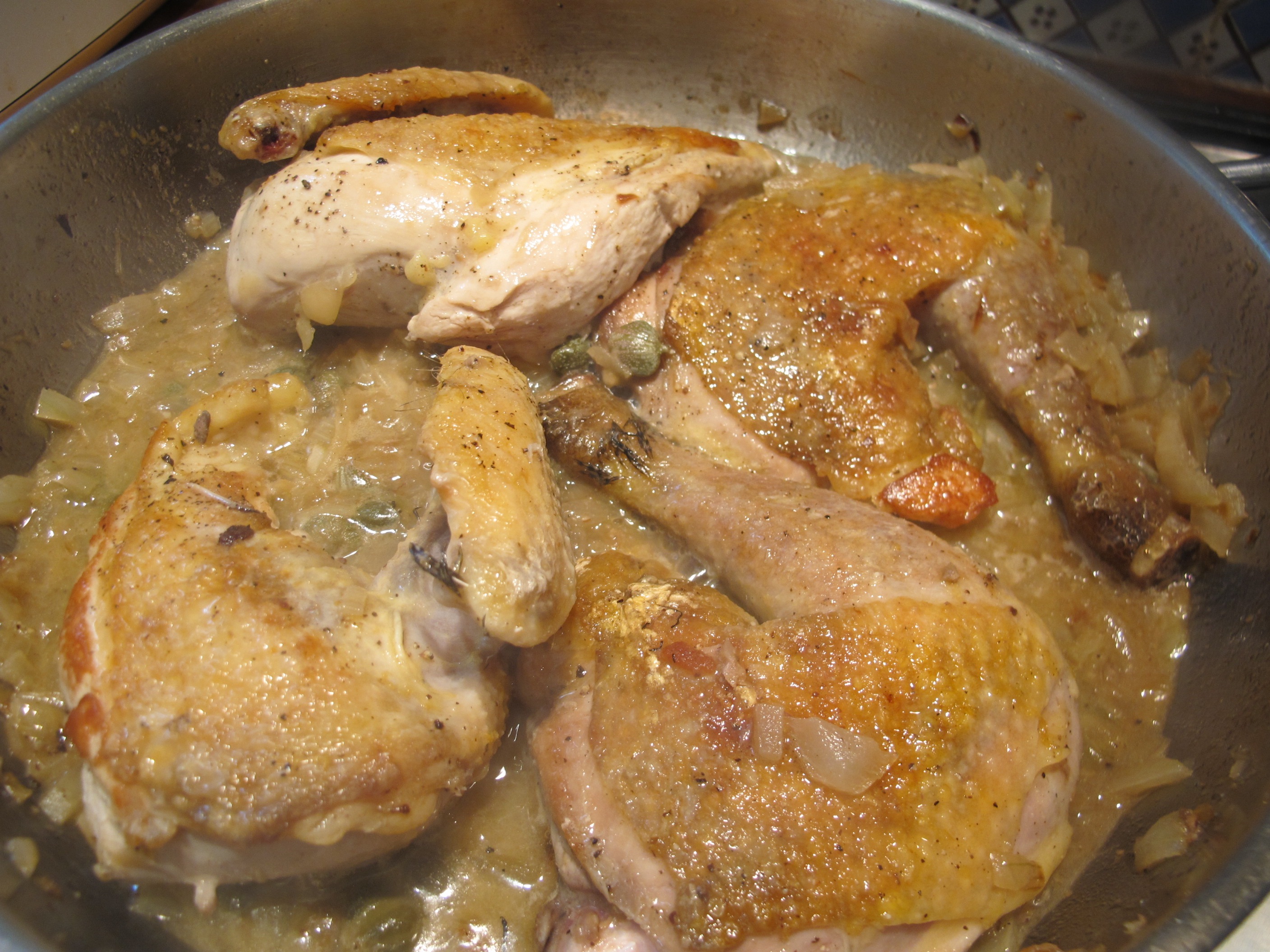
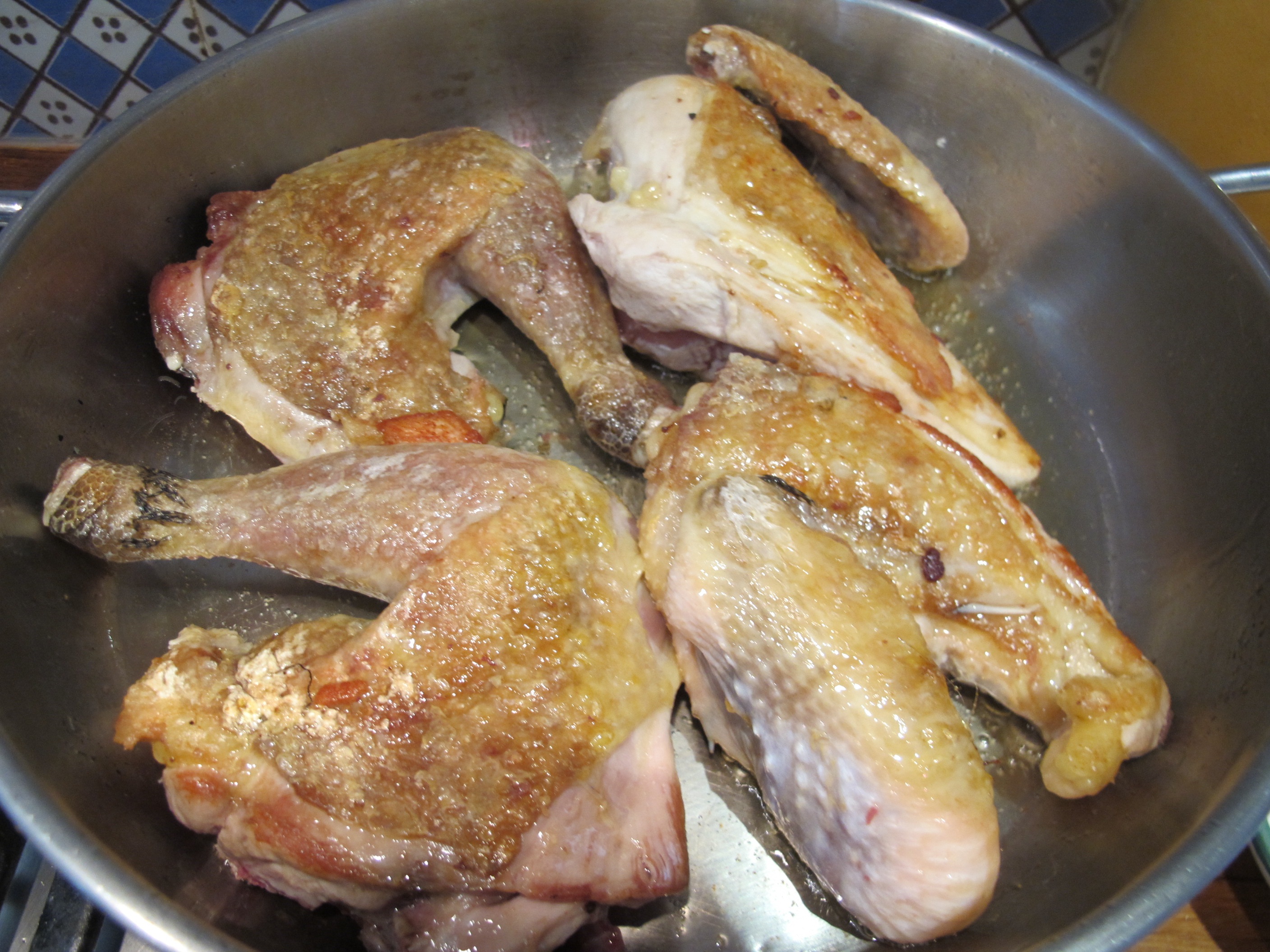
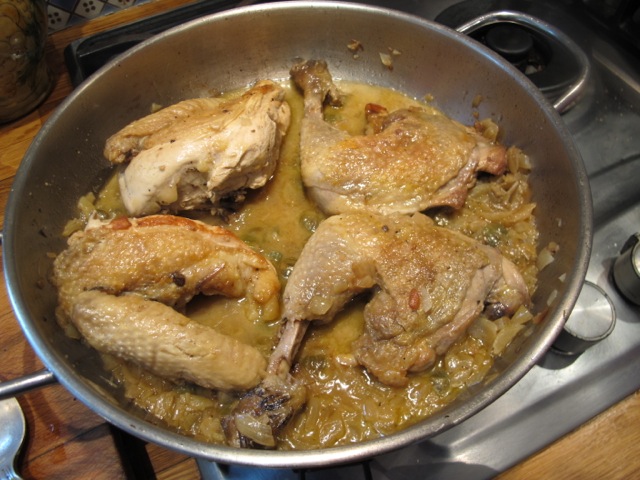
Heat the oil until hot in a pan large enough to cook the entire bird. Then add the guinea fowl pieces and brown, turning occasionally.

IMG_9452

Take them out of the pan and set them aside.

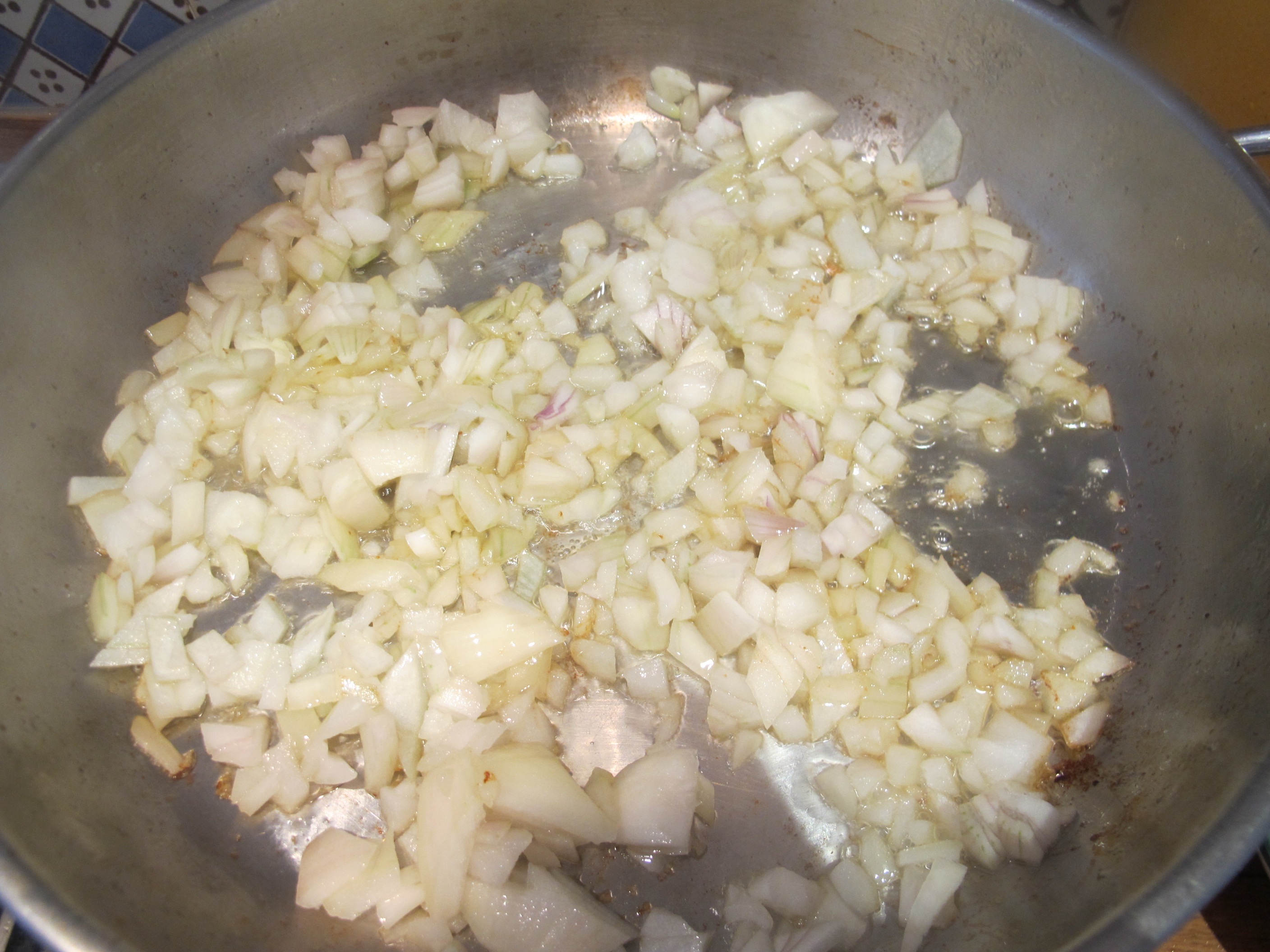
Soften the onion in the same pan–turning often.

IMG_9453

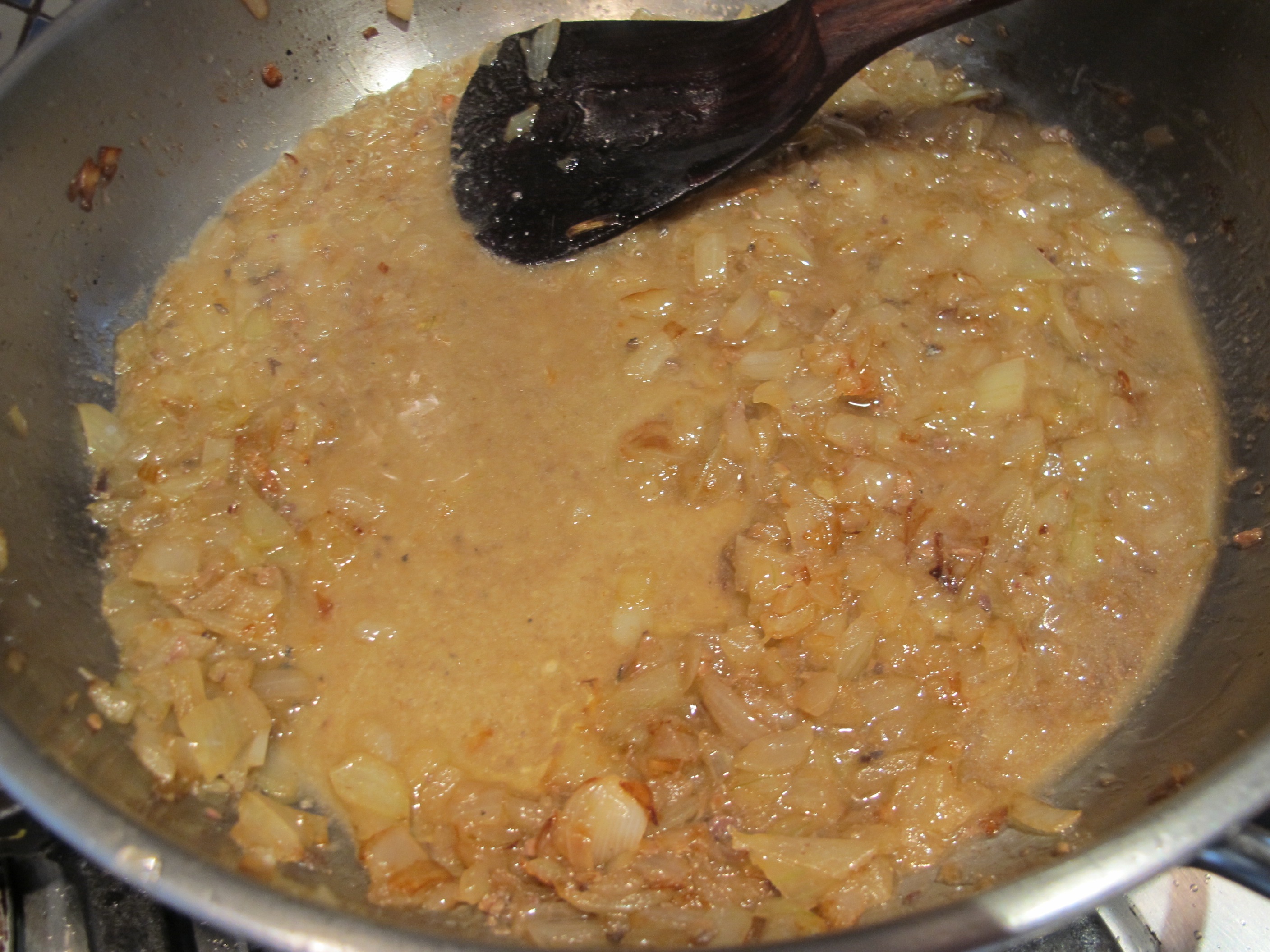
Mix in the anchovies–giving them time to melt into the oil-coated onions.

IMG_9458

Add the wine and bring the mixture up to a gentle bubble.

Add the guinea fowl pieces, the capers and the lemon juice and season with salt and pepper.

Bring back to a bubble (Meredith thinks I should say that a bubble is more than a simmer but less than a boil!), turn down the heat and cover the pan.

Cook for about 30 minutes until the meat pieces run clear when pierced–being careful not to over cook them.

IMG_9473

(Guinea fowl can be dry.)

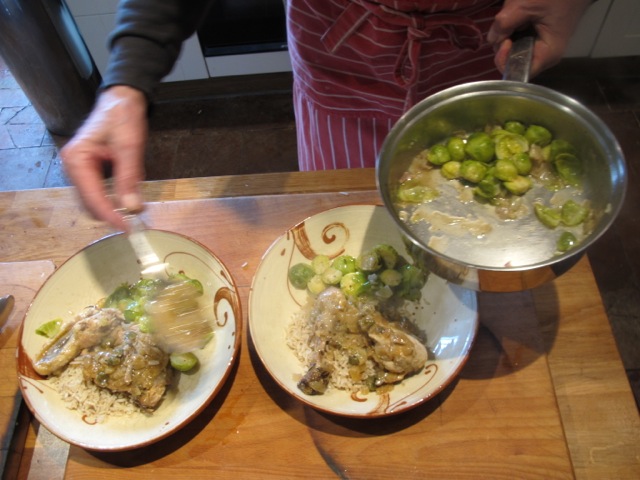
Served with brussels sprouts and brown basmati rice.

IMG_9479


Roman_Legionaries_Advancing

Right lads–it’s shields down–time out–and off to the canteen for a tasty dish of numididae*!

*Latin for guinea fowl


Diabetes Logo

This week marks the end of the testing season–feet, heart, liver, kidneys, prostate, skin–you name it!

On Monday it was the annual love fest with Dr Nguyen Ngoc Luong, my opthamologist.

A man of few words, Dr Luong sits on a swivel chair with an alarming revolving table to his right.

At the push of a button this table goes in to action, swinging round to position a new chin rest at eye level between me and the good Doctor. This happens three times in the course of the test.

Then comes the checking of my long sight.

Reading off the numbers or letters projected on the wall opposite, as Dr Luong slips different lenses in and out of the “pince-nez” he fastens onto my nose.

eye-charts-358x338

I feel like a schoolboy keen to answer teacher’s questions correctly.

Now it’s time for the most intimate moment of the session.

We both shift nervously on our chairs preparing to stare into one another’s eyes for a few breathless moments.

My freshly shaved chin juts towards his as he points a penetrating light at my pupils–shining  it into every corner of my cornea and beyond.

Breaking the spell, he leans back and utters three precious words. To my relief–a few days short of Valentine’s Day–not “I Love You” but…

“Pas de diabétes!”

I uncross my fingers–and feel foolish again for indulging in the Superstition Game.

Another year CLEAR!


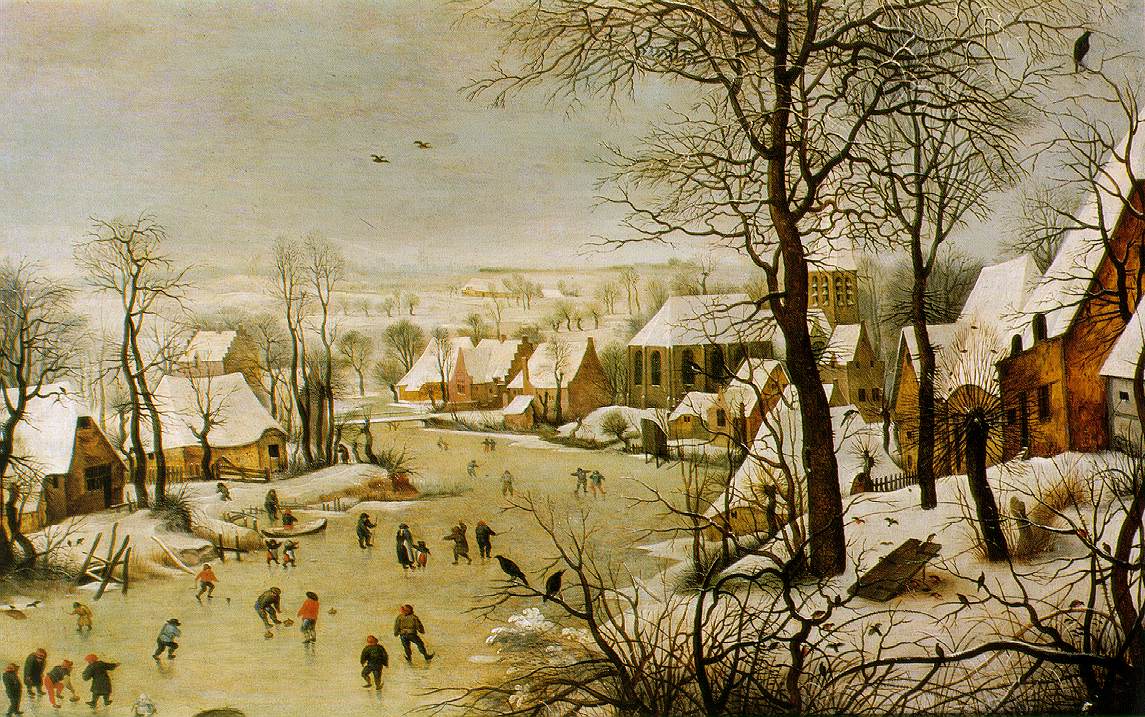
Meredith shows me a Breugel 16th century winter scene reminiscent of the world outside our windows at the moment–except for the skating.

Pieter_Bruegel_d._Ä._107

It leads her into thinking of other artists’ depiction of winter.

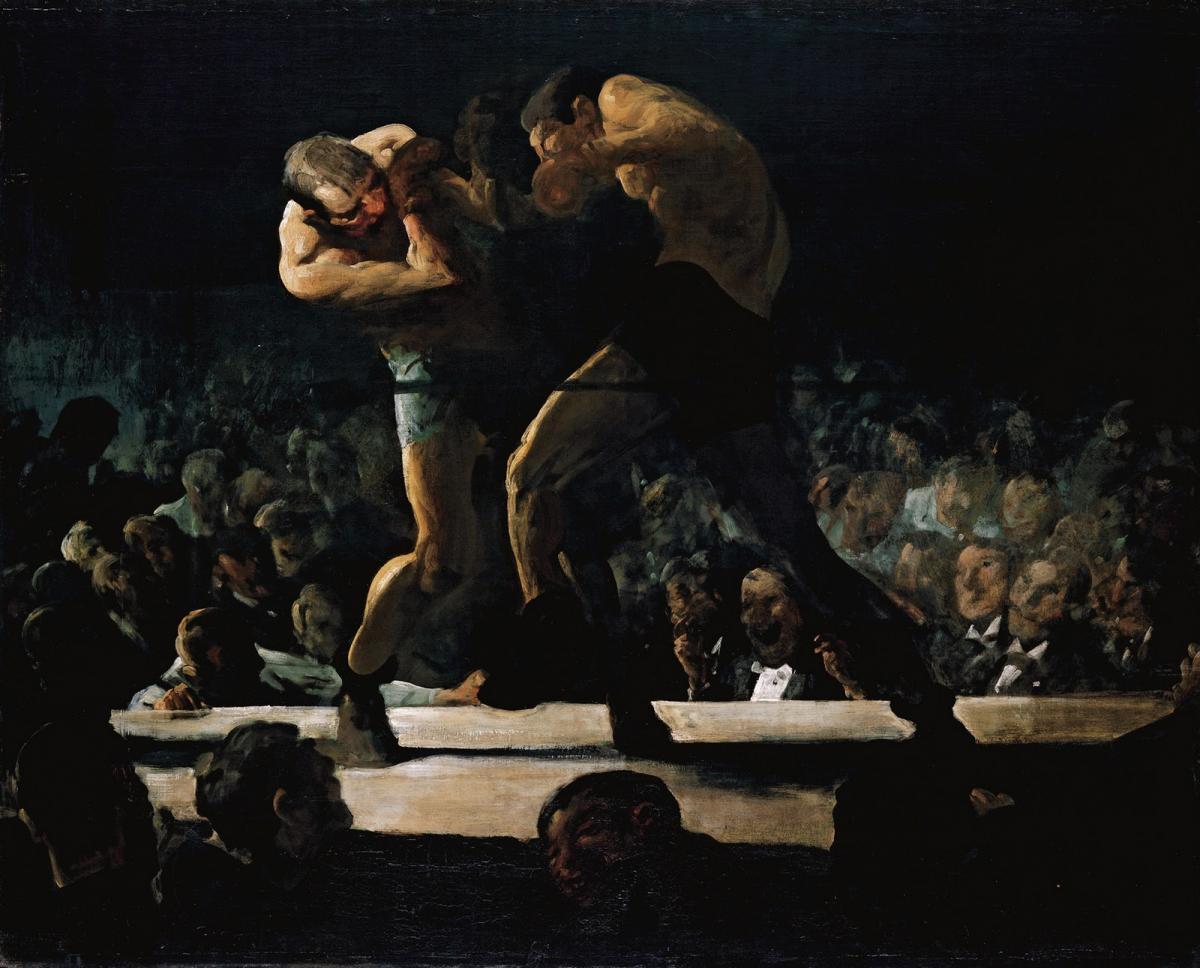
“Who was that painter we liked at the Metropolitan after we saw that Matisse exhibit a few years back? Industrial landscapes and the boxers. Remember?”

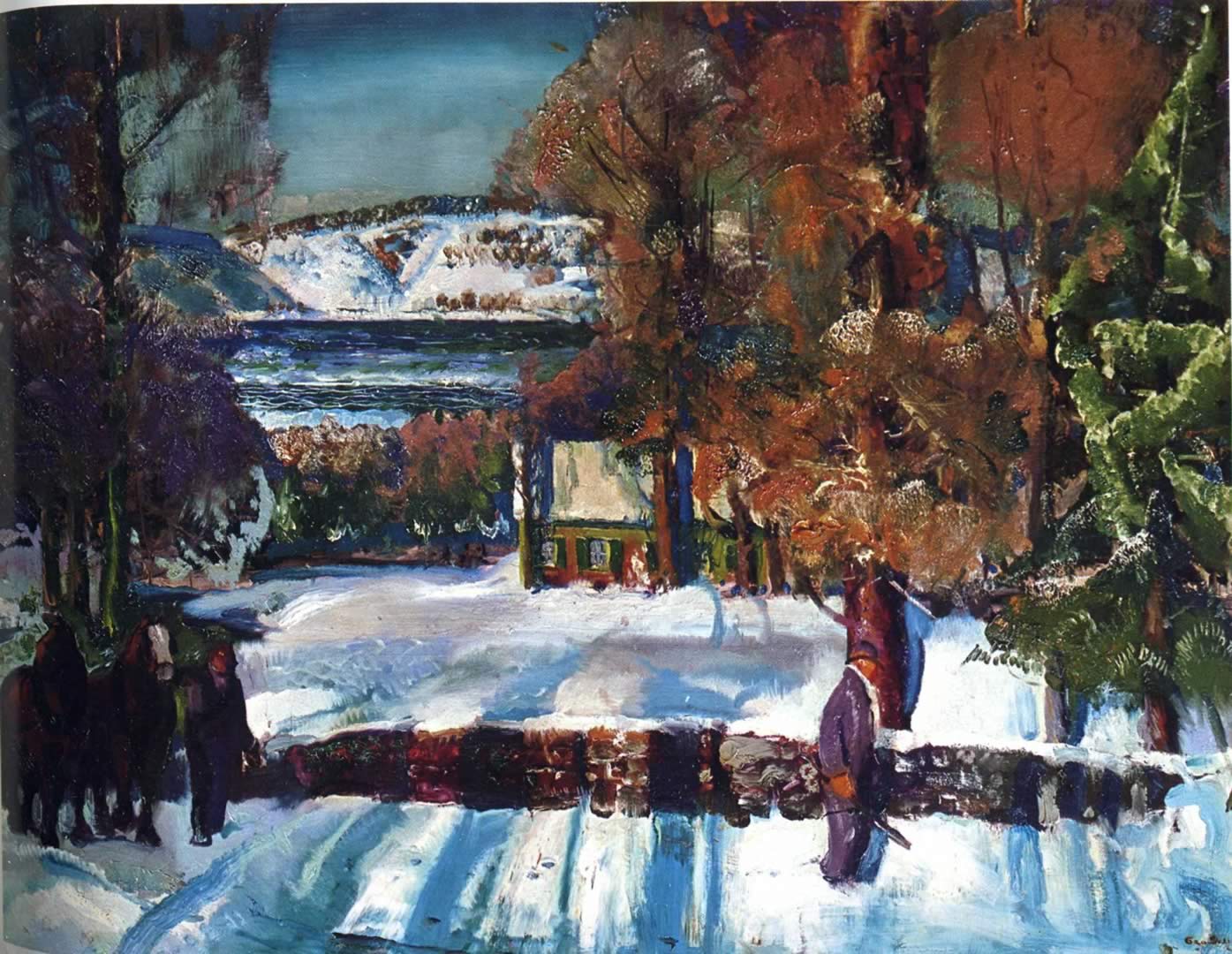
Club Night by George Bellows

“B-B-B-Be…”

I use my hands to mime the thing that fans a fire into life.

“Be-Be-Bel-Bello-BELLOWS!”

“George Bellows–brilliant realist painter–died too young–42, he was. Painted winter–town and country.”

winter-road

6a00e553f70d5b8834017ee9cd908c970d-pi

Screen Shot 2015-02-09 at 7.20.01 PM

“Wow!” says Meredith. “Nothing wrong with your memory!”

Next day this article appeared in the newspaper–explaining why…!

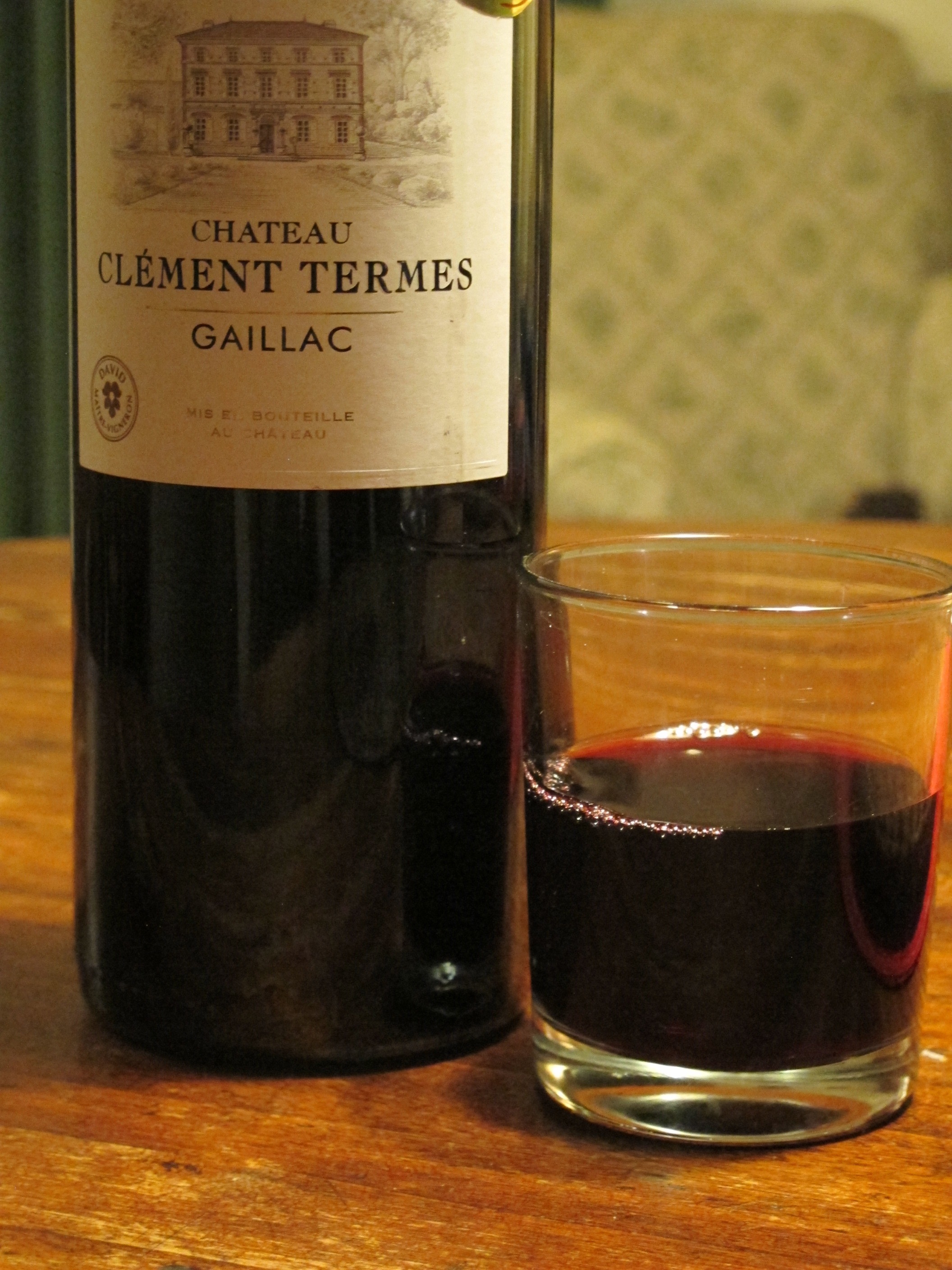
Apparently the antioxidant, resveratrol, found in the skin of red grapes, some berries and peanuts, has a positive effect on the hippocampus–the part of the brain vital to memory, learning and mood.

IMG_9424


Cheers! Santé! Good health! Chin chin! Salud! Prost!

Now what did I say was for supper…?!

A touch of heat in a consoling casserole for a cold night.

Inspired by a recipe in the River Café Pocket Vegetable Book.

IMG_9412

(Speak it softly but you could have a couple of sausages on the side–we did tonight!*)

IMG_9418

I love beans and especially white beans and I have a penchant for fennel, cooked or raw.

Garlic is a staple here–Lautrec’s pink garlic is grown under our feet–so to speak.

Adding tomatoes coalesces everything into a delicious dish.

for 2

IMG_9266

1 tbs olive oil

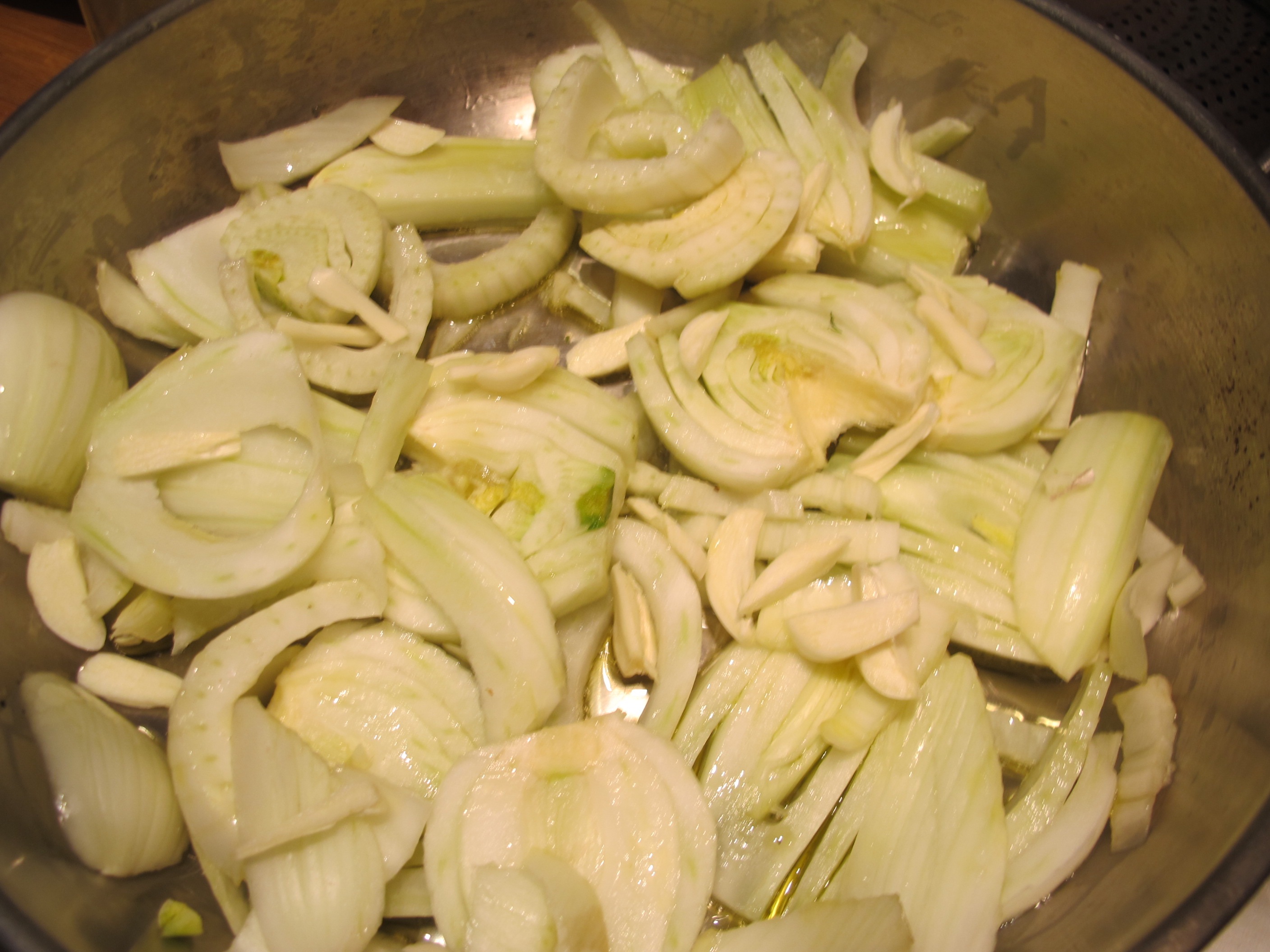
2 fennel bulbs–outer bruised parts removed and cut in thickish vertical slices

3 garlic cloves–peeled and sliced

2 small dried chilis–chopped

1 tsp fennel seeds–pounded in a mortar

8oz tinned (canned) tomatoes–drained and chopped

8oz white beans tinned (canned)–drained

salt and pepper

juice of a lemon

1 tbs olive oil (a second!)


In a shallow pan heat a tablespoon of olive oil.

Add the fennel and cook for a couple of minutes, turning the fennel over in the oil.

IMG_9268

Add the garlic, fennel seeds and chili and cook on for five minutes.

IMG_9269

Add the tomatoes and mix them well in.

IMG_9271

Add a tablespoon of water and mix again.

Check after five minutes to see if you need another tablespoon of water–I did.

Cover the pan and cook for fifteen minutes or until the fennel is tender.

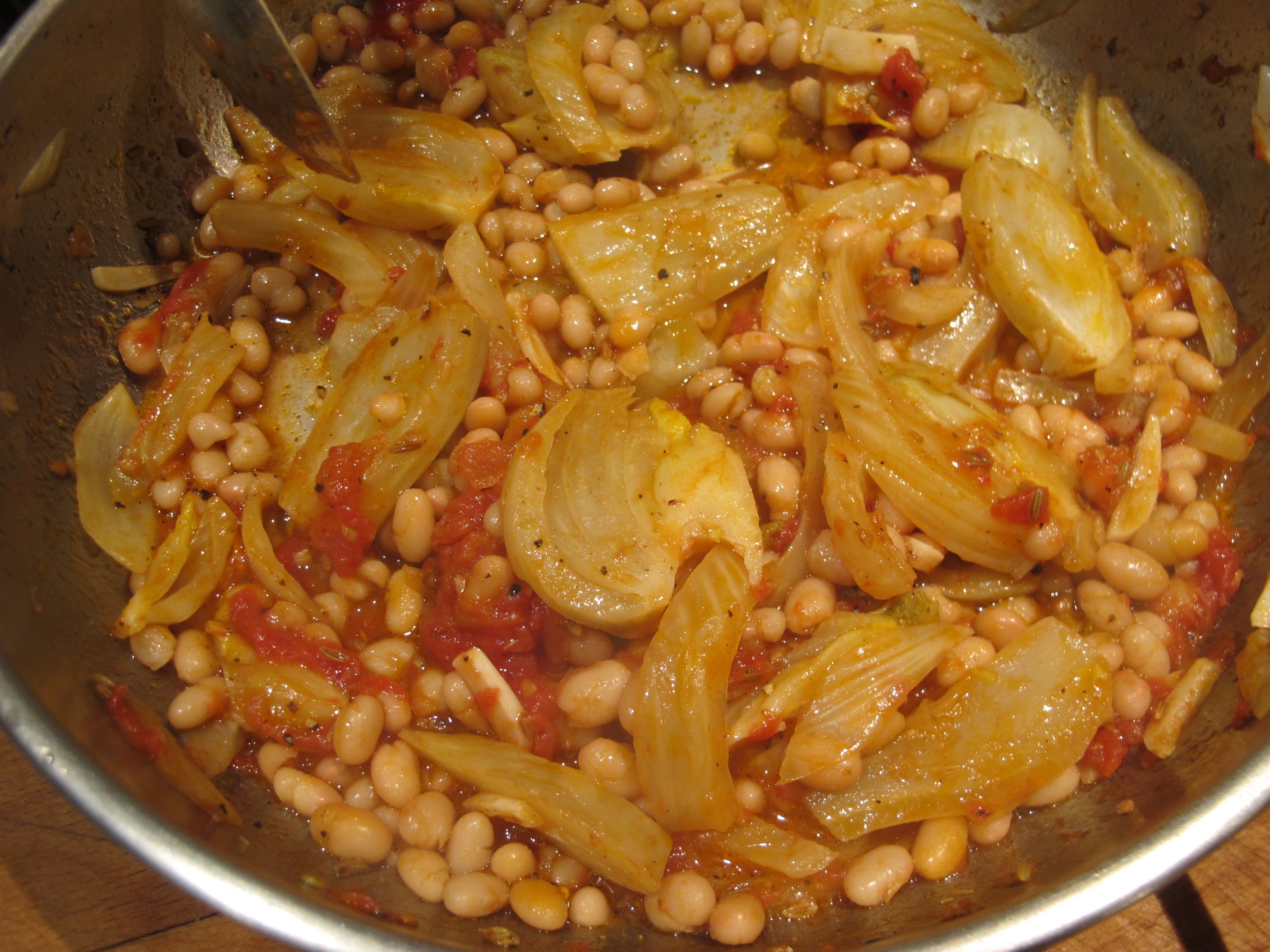
Mix in the beans and season with salt and pepper.

IMG_9412

Re-cover and cook for another ten minutes.

IMG_9274

Add the lemon juice and the tablespoon of olive oil.


*The sausages–sshh!

Heat the oven to 190C (375 F)

Put the sausages in an oven pan with a splash of olive oil and sprigs of rosemary.

Cook for thirty minutes–shaking the pan occasionally.

Add a broken up bulb of garlic unpeeled.

Cook on for twenty minutes or longer to turn the sausages nicely brown.

IMG_9414

Serve with Dijon mustard.

IMG_9419


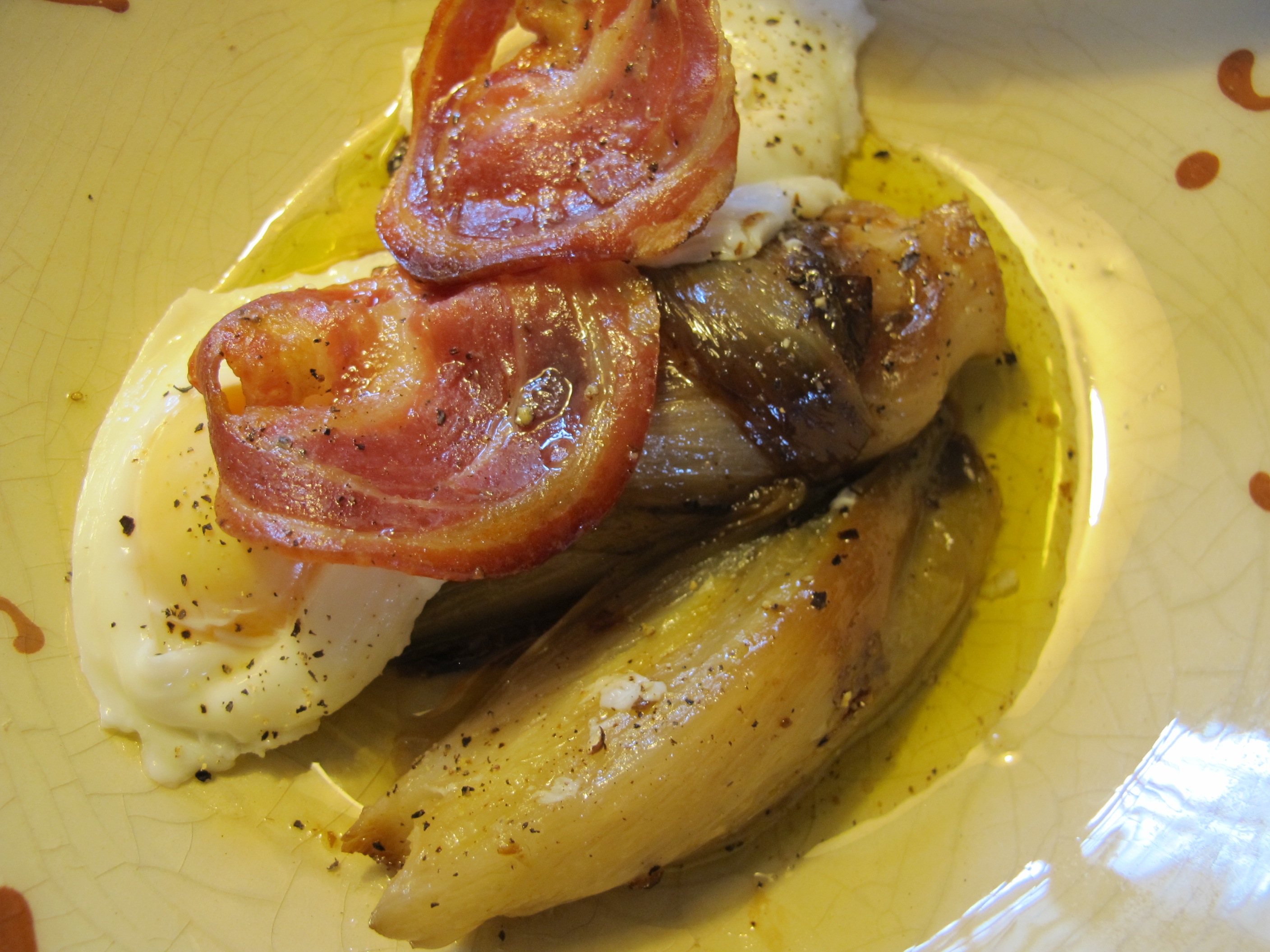
Endive/chicory are not just good for salads–they are delicious slow braised with a couple of additions if you like…

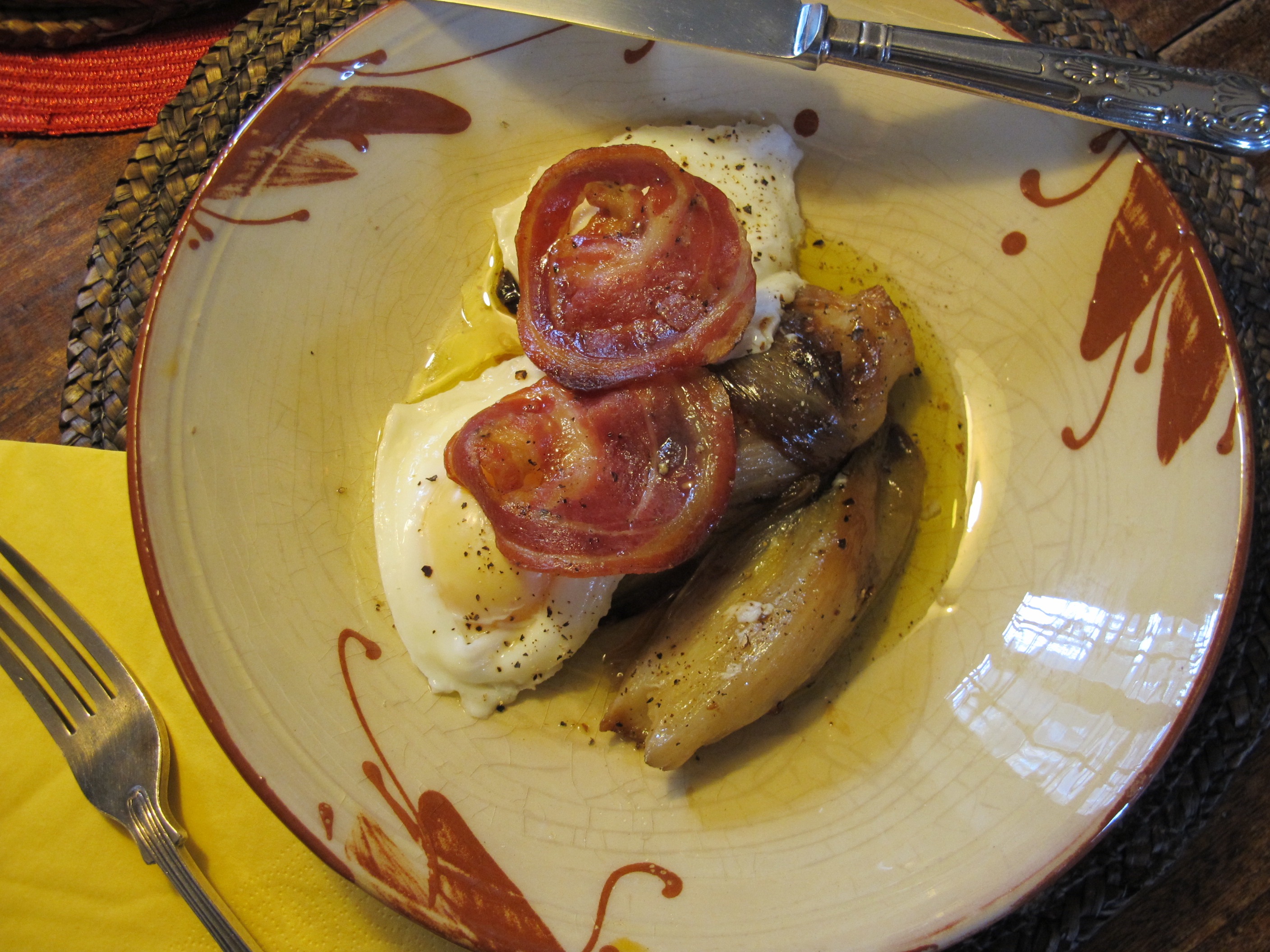
This was lunch and made a pretty picture.

IMG_9261

It was also light and a bit exotic.

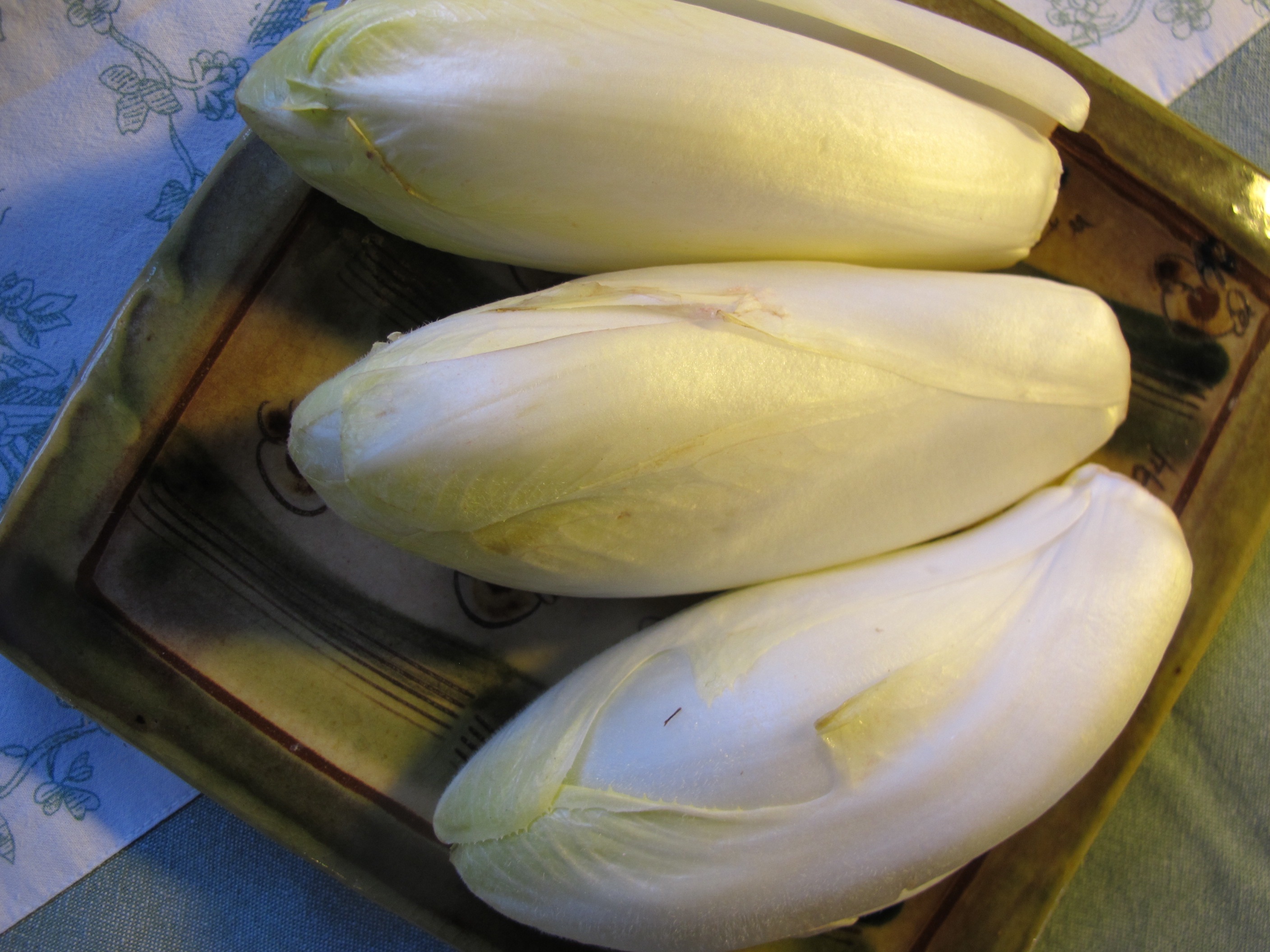
This time of year there’s a local grower of these white torpedoes selling only them in Castres market on Saturdays.

IMG_9369

I chose fat ones for the long slow cooking that reduces them nicely into a super-soft state.

A poached egg (or two) on top and a couple of small discs of pancetta, crisped in the still hot oven, meld with the little sauce of lemon and olive oil.

for 2

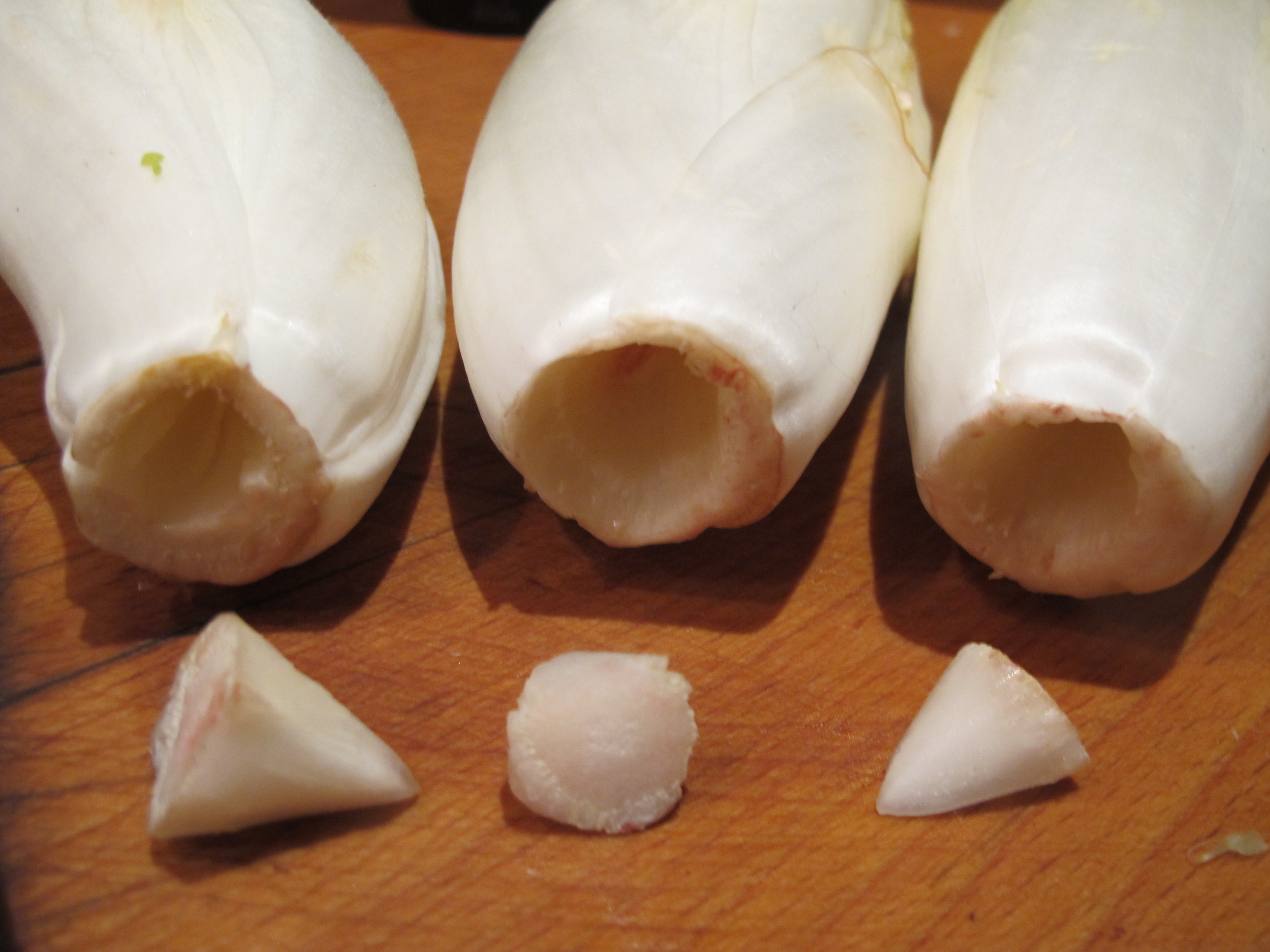
3/4 fat endives–bruised outer leaves removed and the bitter root end skewered out.

IMG_9376

3 tbsp olive oil

juice of a lemon

4 eggs

4 thin slices pancetta

salt and pepper

Heat the oven to 170C

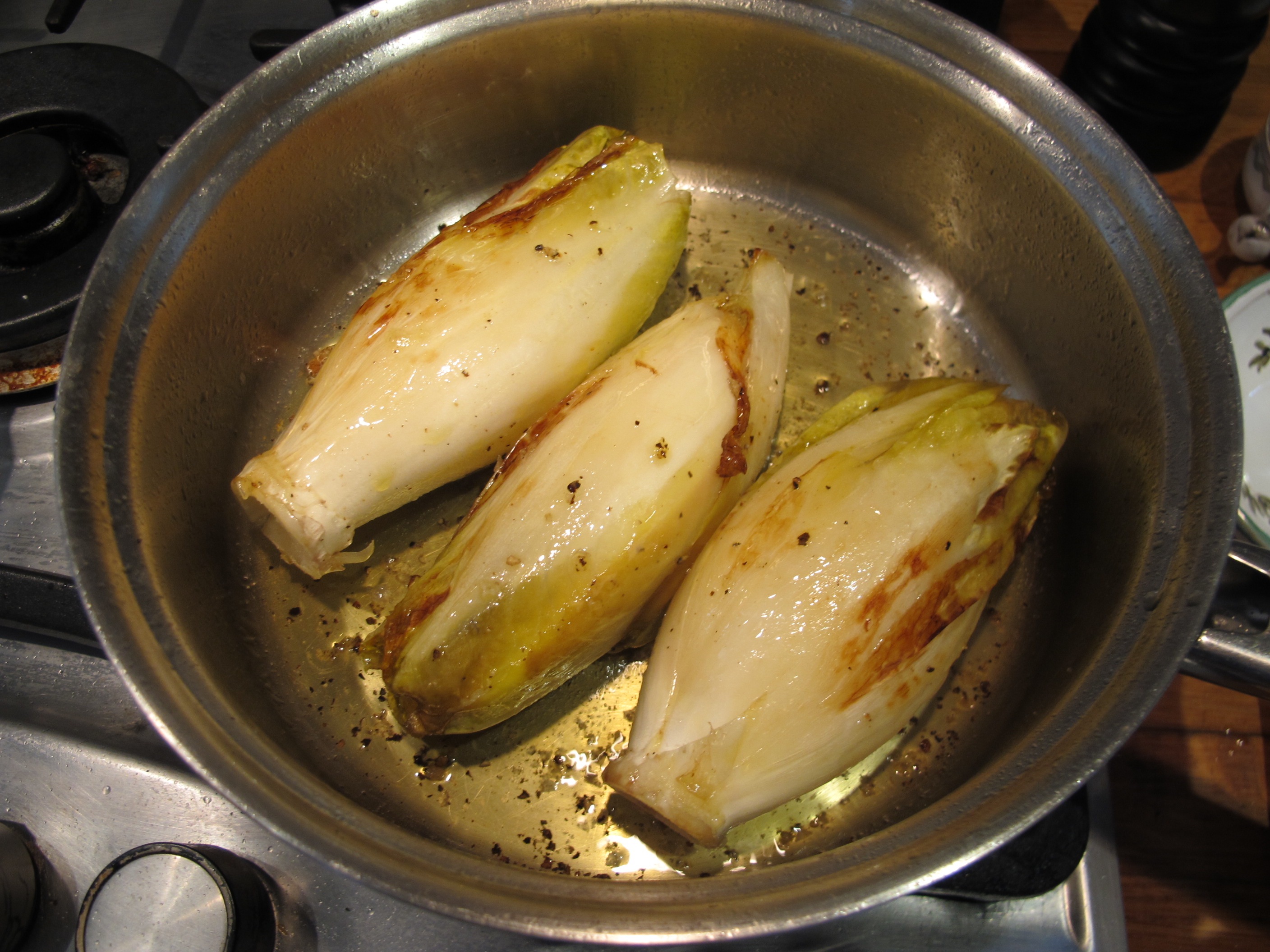
Heat the oil in an ovenproof pan with a lid.

Lay in the endive and season well with a teaspoon of salt and several twists of the pepper mill.

Turn the endive [confusingly it’s called chicory in the UK] in the oil and seasoning.

Let them color and caramalise a little.

IMG_9242

Pour over the lemon juice and cover.

Place in the middle of the oven and cook for two hours.

Check after an hour that all is well and turn them–taking care to keep them in one piece.

After about two hours take them out of the oven and let them rest, covered with foil.

Turn up the oven temperature to 200C and crisp up the pancetta pieces–about ten minutes.

Poach the eggs in simmering hot water to which you have added a splash of red/white vinegar.

The vinegar, in principal, will encourage the whites of the eggs to act in a more orderly fashion–doesn’t always work!

Arrange the endive on two plates and…

when you judge the eggs are done as you like them lift them out with a slotted spoon and place them decoratively on the endives.

Finish the plate off with the pancetta.

IMG_9260

“DING!”– said the chief taster!


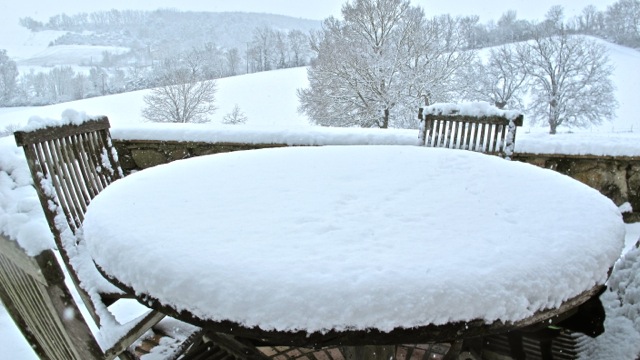
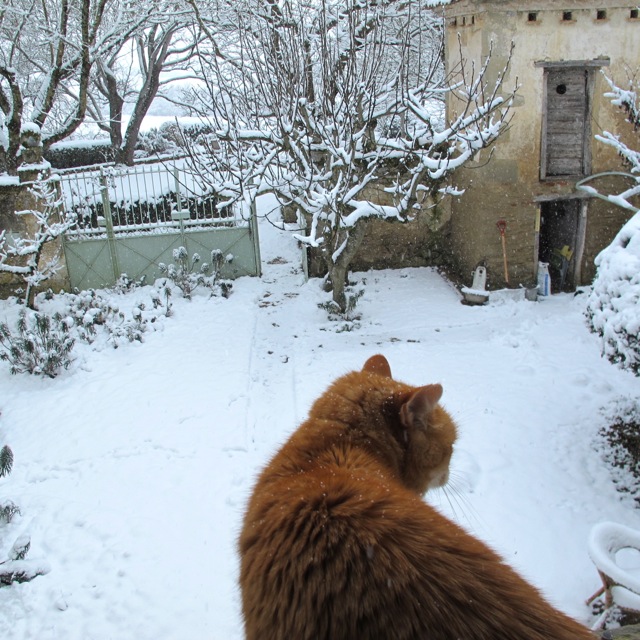
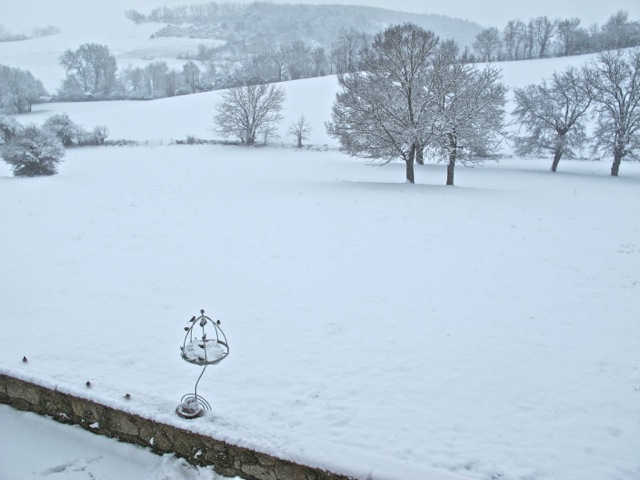
SNOW!

White out in the Tarn!

IMG_9294

Back…

and…

IMG_9292

…front!

IMG_9319_2

“Bird Sanctuary”

IMG_9308_2

No “al fresco” dining today!

IMG_9324_2

“Snow?–seen it before; no big deal” Queen mum cat; Pippa not impressed. The other three–“What IS THAT!?”

Our friend Valerie took her young son, Guilhaume, to school this morning before the snow started to fall.

“What are we going to do this afternoon? How can we fetch him home?” she asked her partner, Bernard, soon after she got home. “By tractor,” he replied, “the ancient one in the shed.”

Imagine four-year-old Guilhaume’s delight when Dad turns up at school on the tractor!

“You’ll have to take all the other kids home too,” we added. “We’ll have to start calling you, Saint Bernard,” joked Valérie.

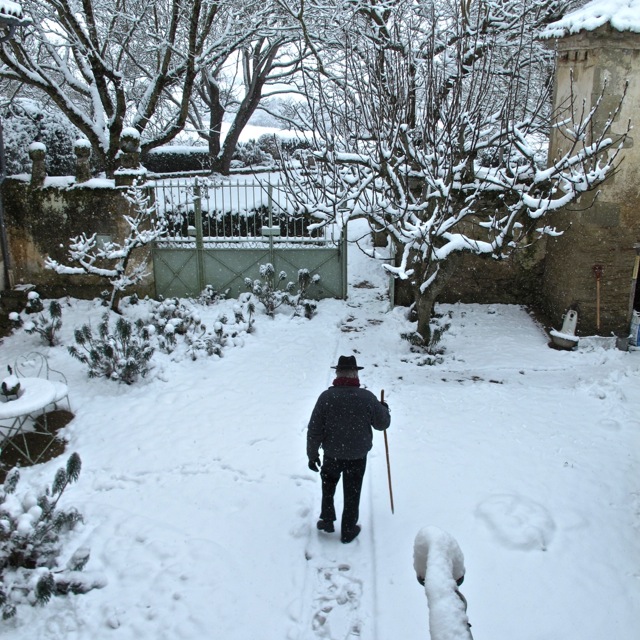
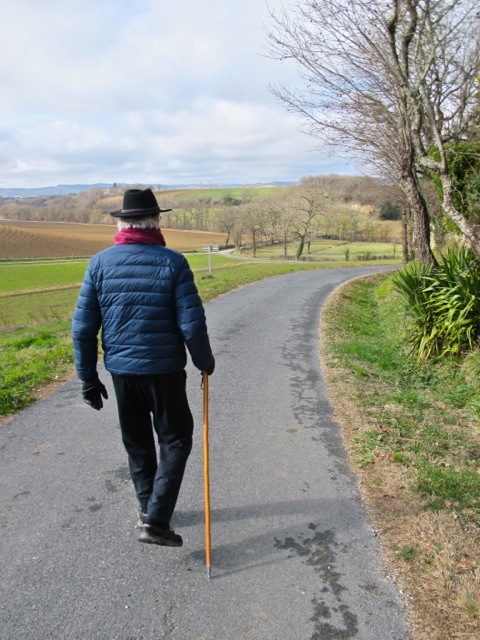
No change in my walking programme…

IMG_9325_2

…”Captain Intrepid…or silly old fool!”

Walking…

IMG_6870

I used to think walking was pedestrian!

I ran or jogged, or bicycled–walking took so long.

But then we moved here to rural France, where it’s a bit hilly. As I was getting older, I started walking.

Six times a week–usually for about 40 minutes–usually the same route, which never felt the same two days running (so to speak)!

Then one day I OVERDID it–and my left knee “went”.

I stopped for a while and tried the exercise bike– but it wasn’t the same.

Gradually my knee healed and I started walking again, but less–three or four times a week.

I settled into a routine of roughly 40 minutes every other day.

Three times 40 equals 120--so some weeks I was 30 minutes shy of the 150 minutes recommended aerobic exercise per week.

Recently I changed my routine again: Now I walk every day but for less time–a little over 20 minutes.

So that ring ups the magic 150.

And I feel good on it. “Ah, that’s done!

Exercising each day–but not TOO long–lifts my spirits without becoming a burden.

One is less likely to throw in the towel.

(Also I’m thinking of my knees.)

I’m in good company…


If I could not walk far and fast, I think I should just explode and perish.

~Charles Dickens

 The sovereign invigorator of the body is exercise and of all the exercises, walking is the best.

~Thomas Jefferson

 I am a slow walker, but I never walk backwards.

~Abraham Lincoln

 To find new things, take the path you took yesterday.  

~John Burroughs (American naturalist)

Thoughts come clearly while one walks.

~Thomas Mann

The best remedy for a short temper is a long walk.

~Jacqueline Schiff  (poet)


IMG_9246


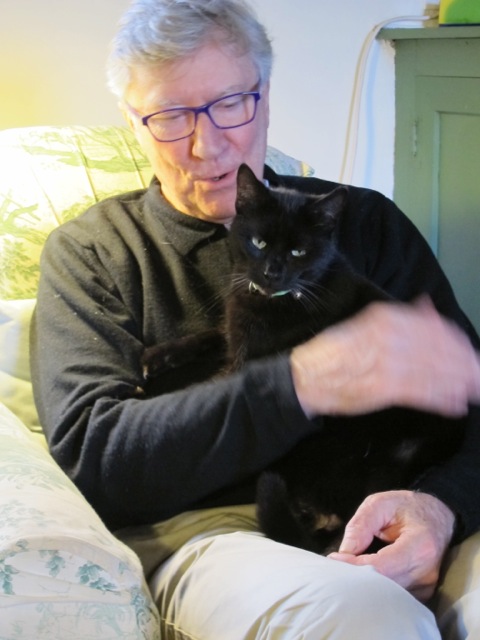
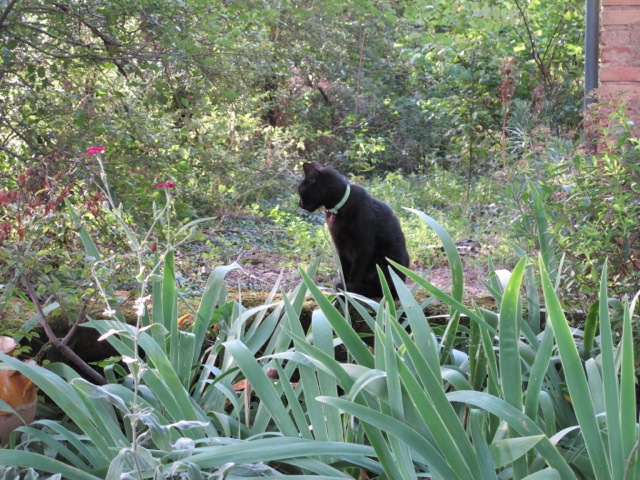
Our black cat, Ben…

IMG_8834

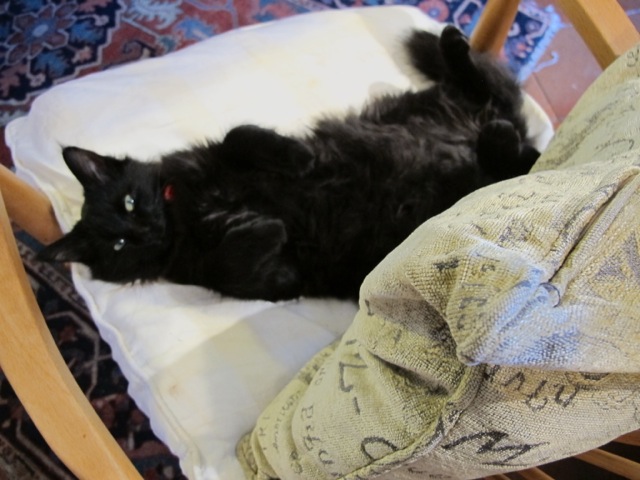
For the past few months–it seemed to us to date roughly from the unexpected arrival of the youngster Midnight–we’ve been concerned about Ben, our mercurial black cat.

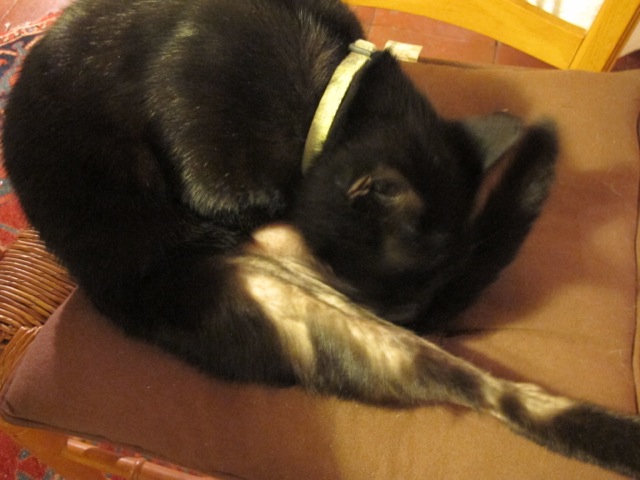
He licks and cleans himself obsessively and has rendered the back of his long wonderful legs almost furless.

IMG_9175

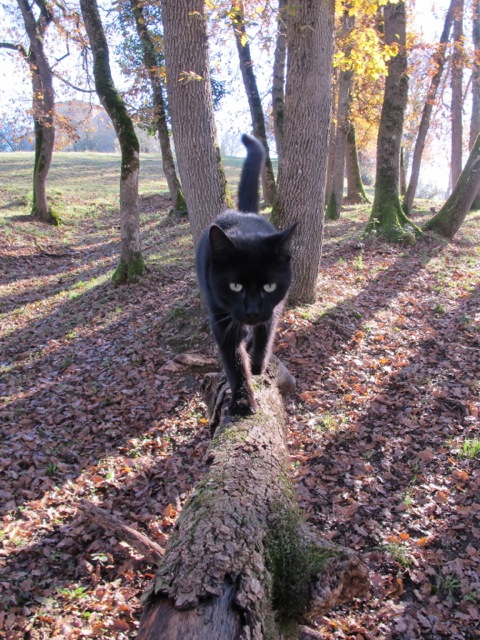
Ben is a busy boy–

IMG_9178

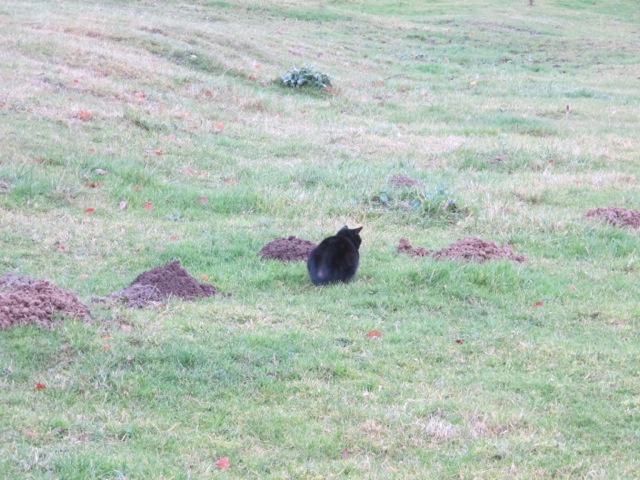
–on mole patrol this morning…

and when he’s not busy he can be perfectly still and seem to be meditating.

IMG_5452_2

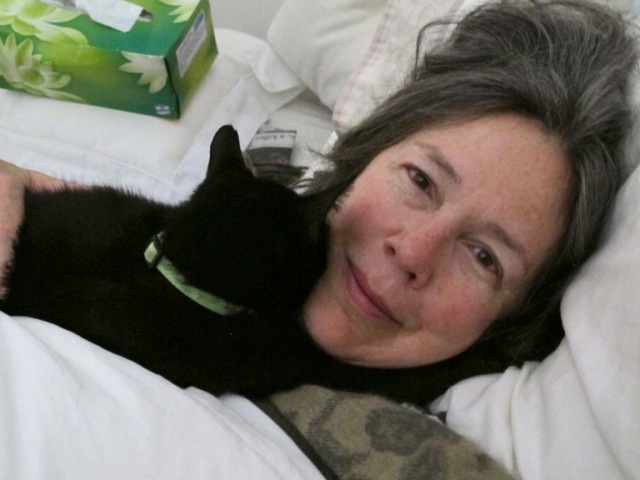
He can also be loving

IMG_5040

appearing out of nowhere to curl himself round your neck as you lie in bed.

IMG_3722

He comes into the kitchen at his customary fast trot–pit stop for fuel– looking shiny sleek from the front.

A black thoroughbred:

 “…always on the move that man–never without ‘is passport.” *

IMG_8558

Always in the moment.

He never demands food; he clocks what’s on offer and circles, letting his nose make the choice and when he likes the message it’s sending he settles back on his haunches, leans forward, head close to the bowl and starts to eat.

He has a penchant for sleeping black on black–disappearing into the material; you can walk past him and not notice he’s there.

But after the fluffy bundle arrived around midnight one night…

midnight with a touch of entitlementIMG_7572

Midnight exhibiting a certain entitlement.

…Ben took umbrage and started to sleep in the garage. It seemed he couldn’t deal with the playfulness of the newcomer who just wanted to rumble.

I worried that he might be depressed. The traveling vet, who comes to the house, thought it might be anxiety and prescribed pills.

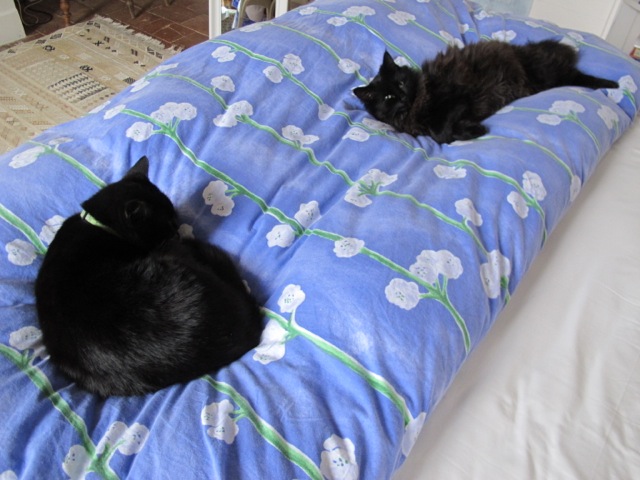
Big Beau just stood his ground and let the youngster bounce off him.

IMG_6073

Beau “sitting his ground”!

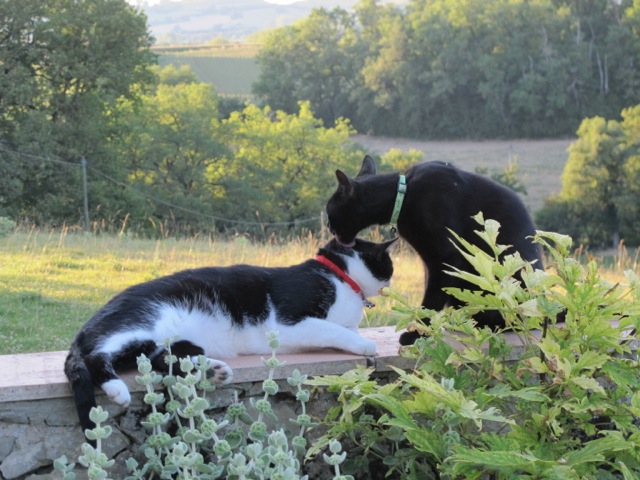
Beau and Ben had bonded and I missed their wild chases over and under the furniture.

The mad leaps, the somersaults and the arched backed stand-offs.

By retreating, Ben had lost his playmate. His thunder had been stolen.

He protested all the way to the new vet–but now we know what the problem is.

It’s a wretched little mite called michrosporum canis (round worm).

I’m relieved to learn it’s not the wretched little fluffy mite I suspected.

We now wrap Ben in a towel, then TRY to syringe a tasteless liquid between his gritted teeth– which can cause a smidgen of spousal tension–of minor importance when the goal is to get the magical Ben back on top form…

IMG_2931

ps; Things have calmed down down between Mr Midnight and our Ben…

IMG_9067

*Mick’s speech from a favorite play: Harold Pinter’s The Caretaker.

“You remind me of my uncle’s brother. He was always on the move, that man. Never without his passport. Has an eye for the girls. Very much your build. Bit of an athlete. Long-jump specialist. He had a habit of demonstrating different run-ups in the drawing-room round about Christmas time…”


The name alone makes this sauce from Argentina worth a try.

The taste is fresh and piquant.

IMG_9129

According to Wikipedia, the origin of the name dates from the arrival of Basque immigrants to Argentina in the 19th century–at least that’s one theory!

Tximitxurri was a Basque sauce loosely translated as “a mixture of several things–in no particular order!”.

It’s appealingly vague–and has the ring of truth.

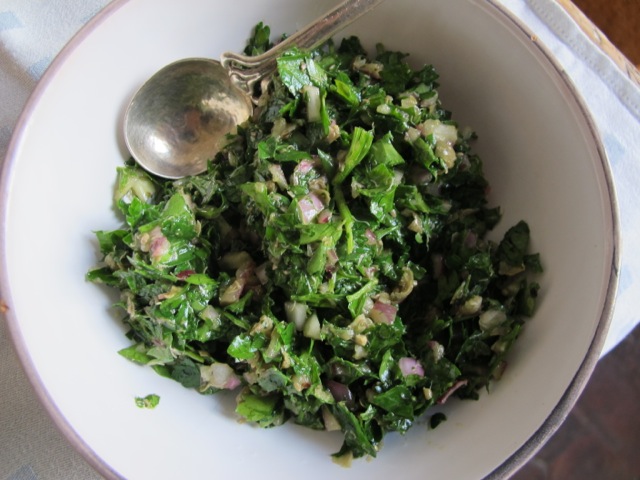
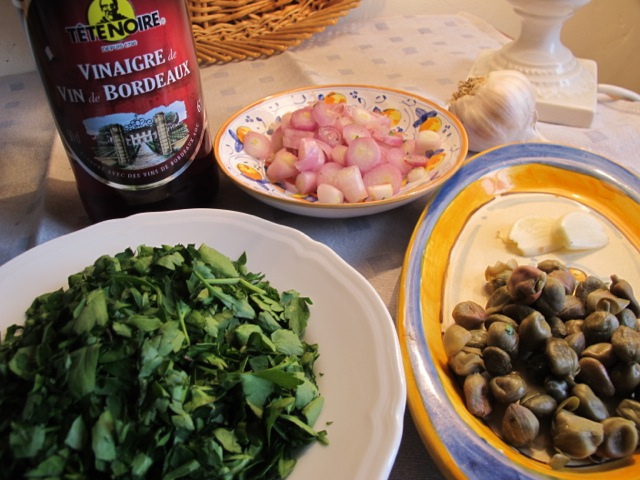
I had some parsley to spare and a good supply of capers in the fridge–add red or white wine vinegar, olive oil, red onion or shallots and garlic–in no particular order and…

I tried it with the mackerel at lunch.

Meredith thought it overpowered the fish but I enjoyed it–made up a bit for the disappointing mackerel.

IMG_9093

Ingredients–(INPO!)

1 tbsp capers

2 tbsp red onion or shallots–chopped

1 tbsp red or white wine vinegar

1 clove of garlic–chopped

4 good handfuls of parsley–chopped a couple of times by hand;

3 tbsp olive oil

salt and pepper to taste

Put first four ingredients in a food mixer and add the olive oil, spoon by spoonful, after each pulse.

The parsley retains its brilliant green better if the leaves aren’t too bashed about.

Season and pulse once more before decanting the sauce into a favorite serving bowl.

Lamb chops with chimichuri or indeed chimichuri with lamb chops next time!