Feeds:
Posts
Comments

Archive for the ‘Recipes’ Category

Another bean soup–can’t have too many in my opinion!
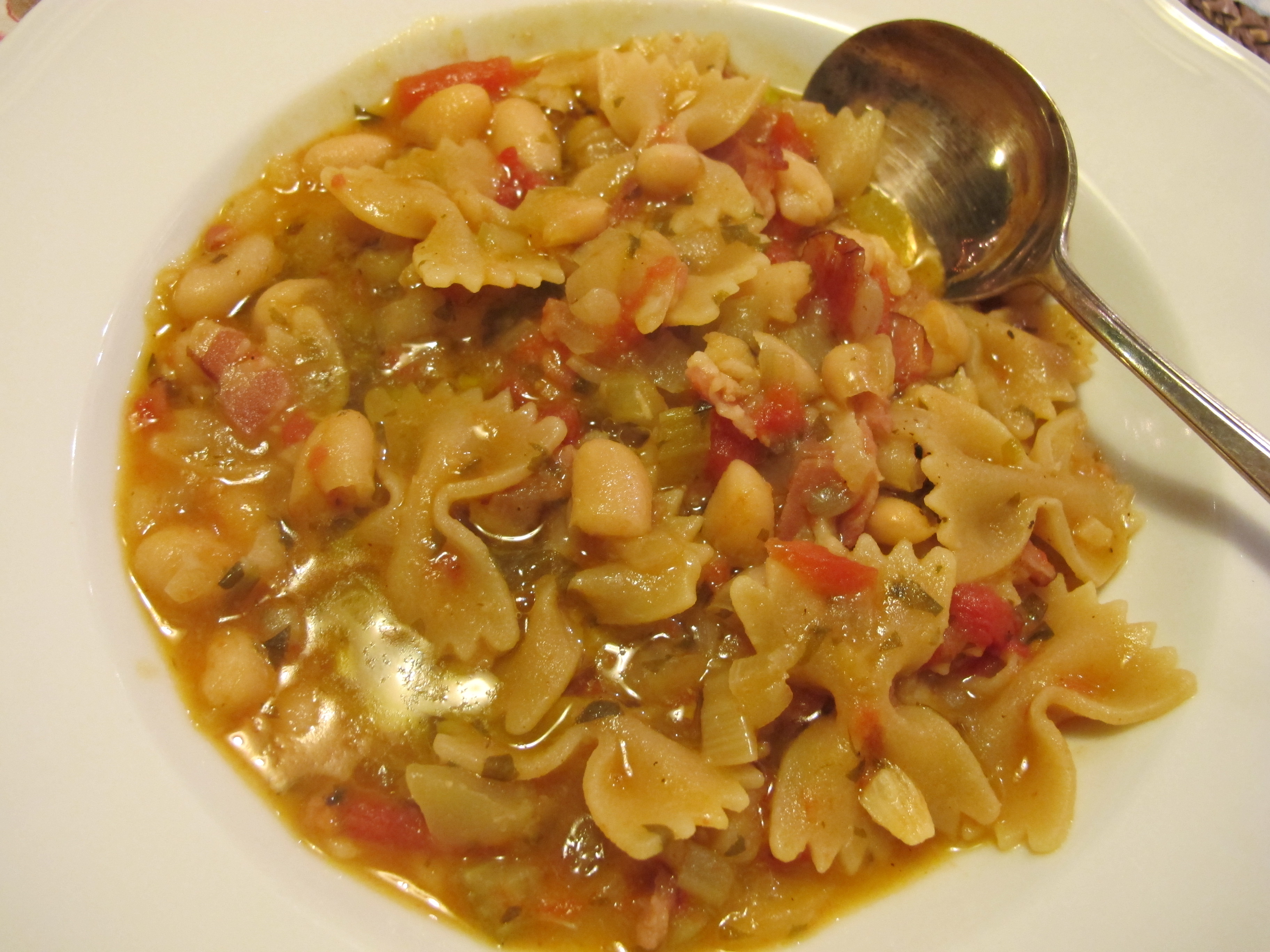
Interior insulation for the post prandial walk on a chilly winter day.

This satisfying soup is based on one in Elizabeth Romer’s lovely book, The Tuscan Year: Life and Food in an Italian Family.
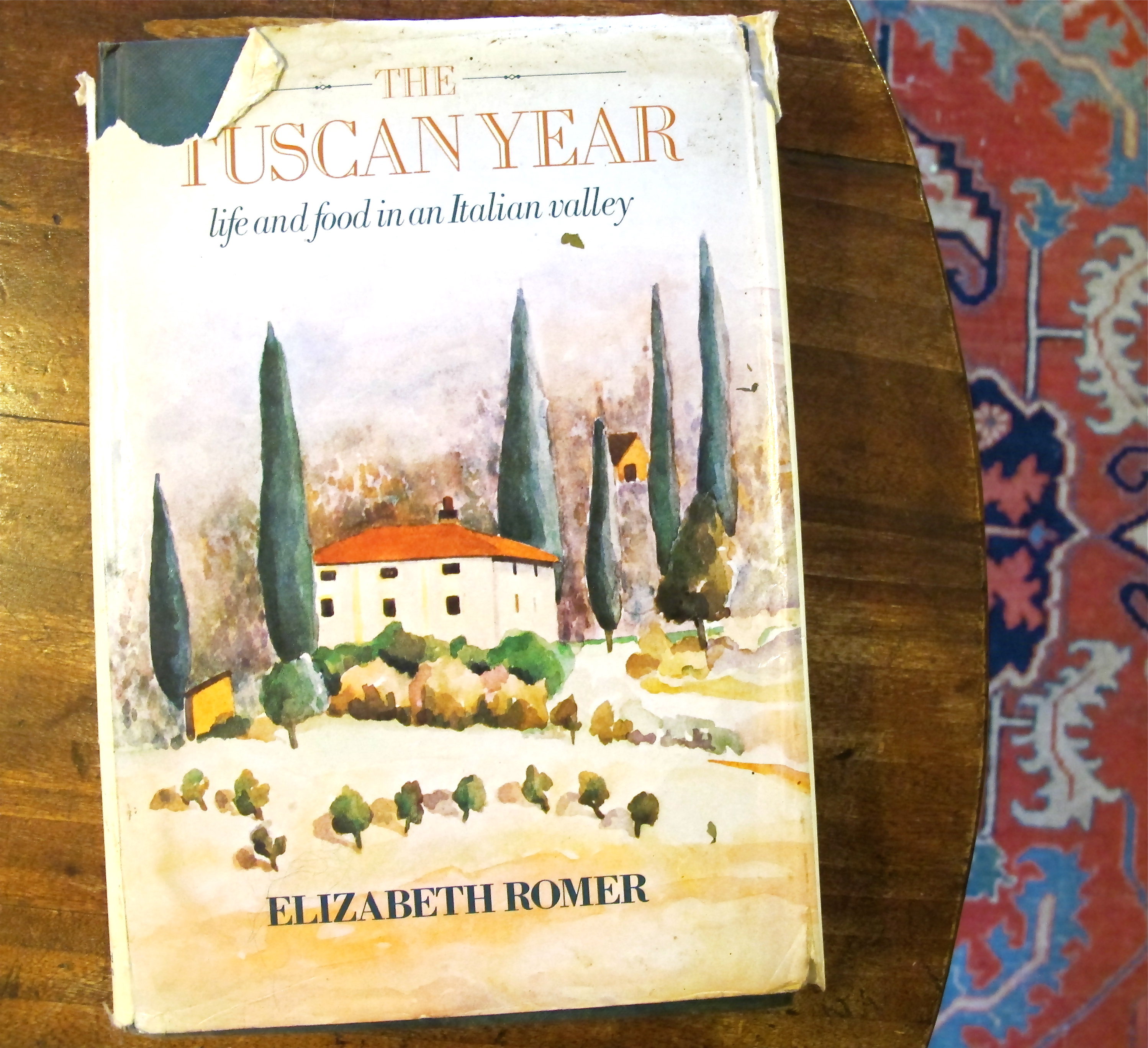
Her account of the Cerroti family’s daily existence is a good read and full of authentic seasonal recipes.

Serves 4

4 tbsp olive oil

2 onions – chopped small

2 sticks of celery – chopped small

3 cloves of garlic – finely chopped

100 g/4 oz smoked bacon/pancetta – use unsmoked if you prefer – chopped small

4 tbsp parsley – chopped

1 x 450 g/16 oz can tomatoes – drained and chopped

350 g/12 oz tinned/jarred white beans – drained, rinsed and puréed–use the best quality beans you can find–it makes a difference

570 ml/1 pint/ vegetable stock – more if you like (I use organic veg. stock cubes)

150 g/6 oz “short” wholewheat pasta – (i.e. penne or farfalle, not spaghetti)

salt and pepper

freshly-grated parmesan

  • Heat the olive oil in a large saucepan.
  • Add the onions, celery, garlic, bacon and parsley, and turn them in the oil.
  • Cook them over a gentle heat until the vegetables are tender and the bacon is colouring up – this is the “taste engine” of the soup and needs some time – at least 20 minutes.
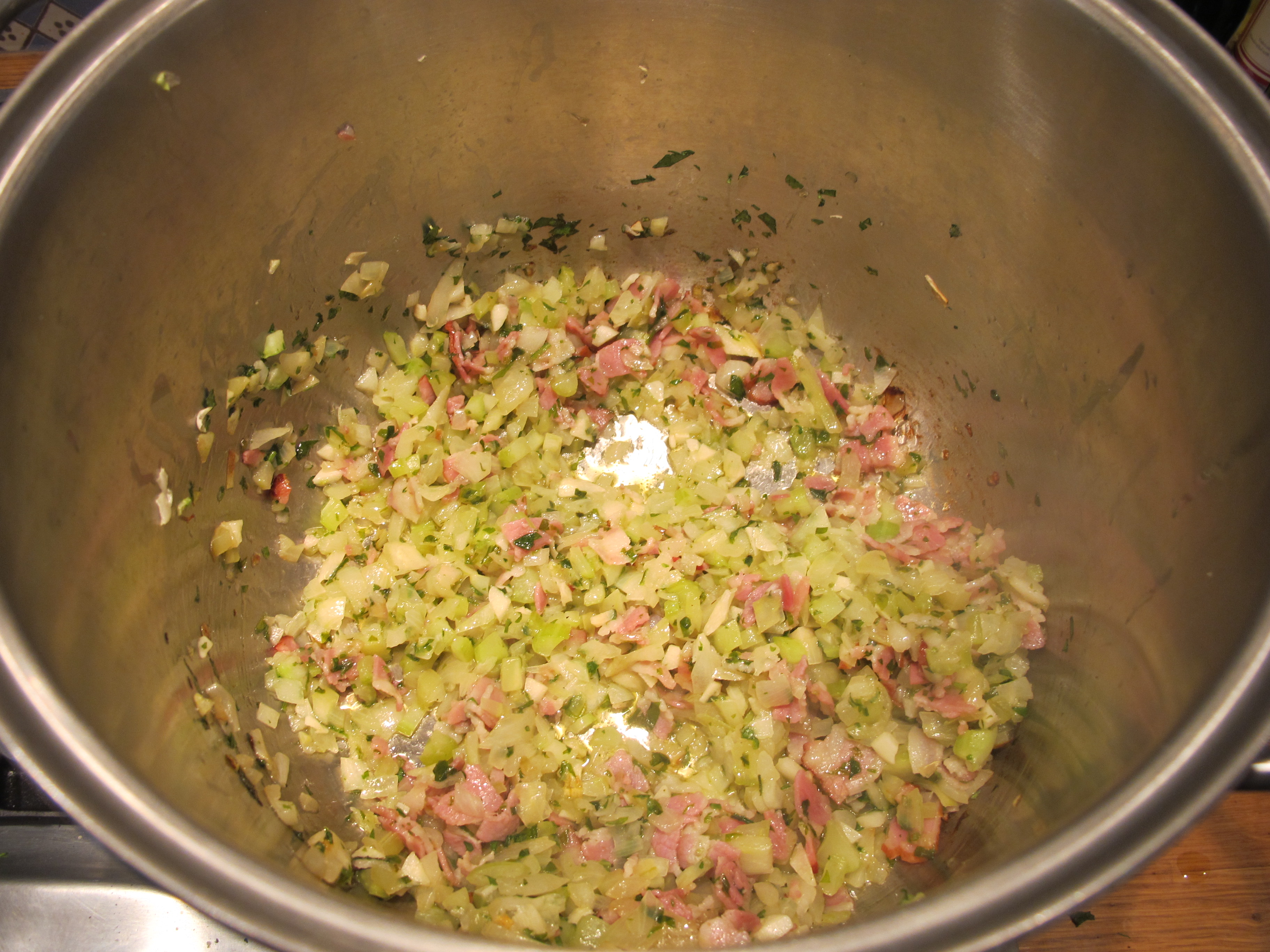
  • Add the tomatoes and mix them in and allow to meld for a good 10 minutes.
  • Add the beans and mix in.
  • Cook gently for 10 minutes.
  • These stages are important for a good depth of flavour and shouldn’t be rushed.
  • The soup should look beautiful now – with a warm glow.
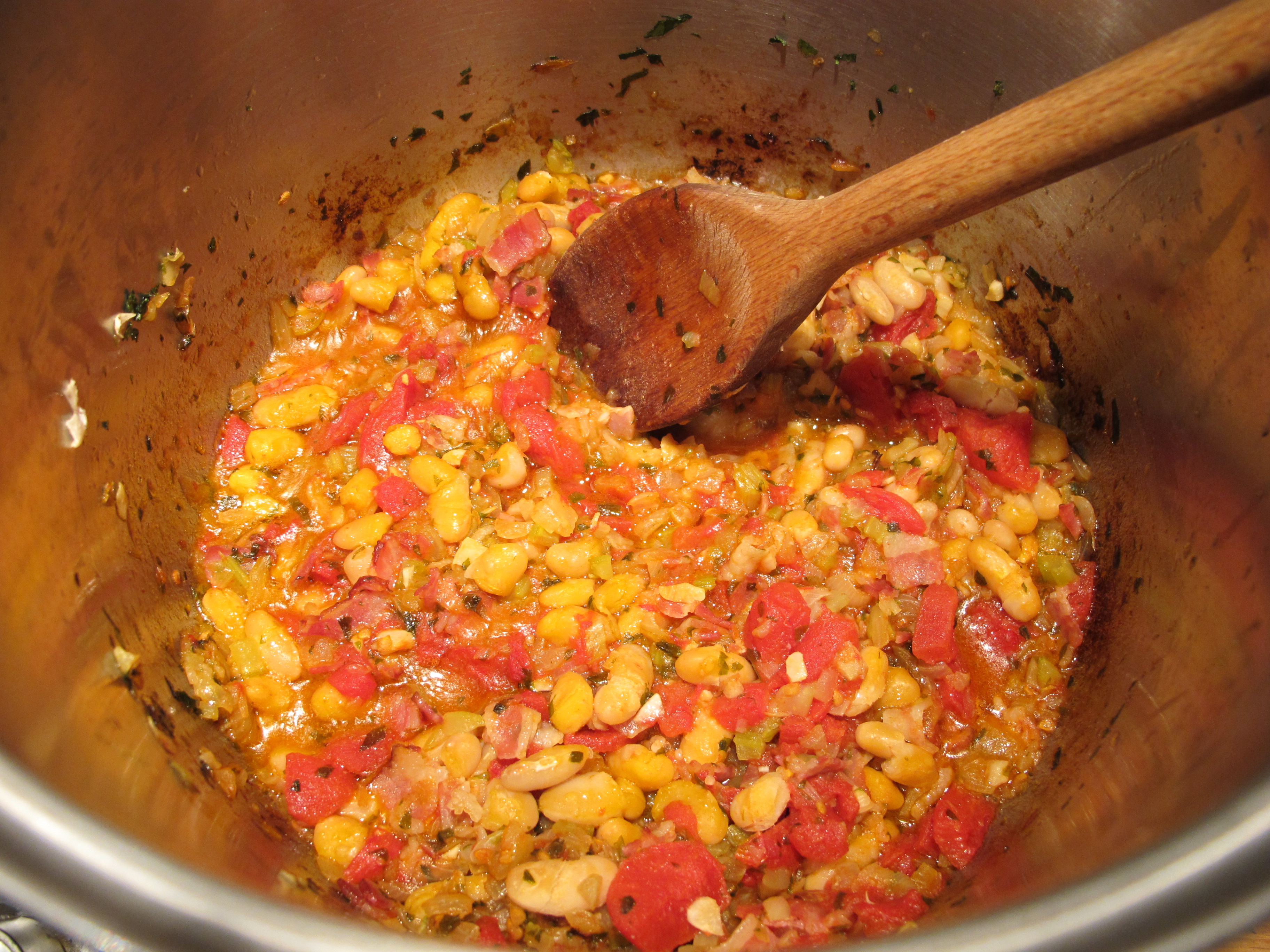
  • Add half the stock and let it meld in.
  • Add the pasta and the rest of the stock and cook the pasta in the soup.
  • It may take a little longer than pasta normally does (I put a lid on at this point to help).
  • Be careful that this thick and unctuous soup does not stick and burn.
  • If you prefer it looser, add more stock and cook on a little to incorporate it.
  • Check the seasoning, adding salt and pepper to taste –remembering that the bacon and stock can be salty.
  • Serve with grated Parmesan cheese and swirls of olive oil.

(This nourishing soup is included in my cookbook–Delicious Dishes for Diabetics–a Mediterranean Way of Eating.)

Read Full Post »

This recipe is adapted from one I spotted in The New York Times a few weeks back.

It is quick and simple to do with an otherwise bland white fish (often a cheaper option).

I found whiting (merlan in France) at the market this morning.

(Tuesday market in Castres today was a sparse affair–everyone’s still in recovery mode I guess!)

The original recipe called for spring onions (scallions), but I couldn’t find them, so I sliced a sweet onion finely and spread it over the fillets bubbling away in the pan. Should work, but it won’t have quite the texture of spring onions.

This dish goes well on a bed of  brown basmati rice (to soak up the juices) and  perhaps a green salad.

A simple lunch for someone else in recovery mode–for not quite the same reason though!*

for 2/4

2 fillets of white fish, about one and a quarter  pounds of fish–cut in four

5 tablespoons mild soy sauce

5 tablespoons water

1 sweet onion–sliced very thin

1 red chili–fresh or dried (whole)

  • Bring the soy and water to a boil.
  • Slip in the fish fillets–flesh side down–followed by the onion and whole chili.
  • Cook for about 5 minutes–the time depends on the thickness and texture of the fillets; mine were ready in 3 minutes.
  • Add more hot water if you like–though the fish doesn’t need to be covered with liquid.
  • Lift them out carefully with a fish slice onto a warm plate.
  • Simmer the remaining liquid in the pan to reduce it by about half.
  • Place the fish on top of a serving of rice.
  • Spoon over some of the sauce and serve.
  • No need for extra seasoning–the soya sauce is salty enough.

In the event Meredith preferred a poached egg on toast! understandably not quite ready for something as savoury as this.

Read Full Post »

“Horses for courses”–chicken for chills!

“Please–just some broth today!” was the request this morning from the sick bed.

Poor Meredith has been fighting the lurgy since Christmas Day.

Not a person to give in lightly to a tickle in the throat she has been up and back to bed all week.

We were bucked up last night by watching the original Shrek film, which I hadn’t seen.

It is high in the chuckle factor and almost as good a tonic as a bowl of chicken soup.

But this morning after a troublesome night it has to be the real thing–so here goes!

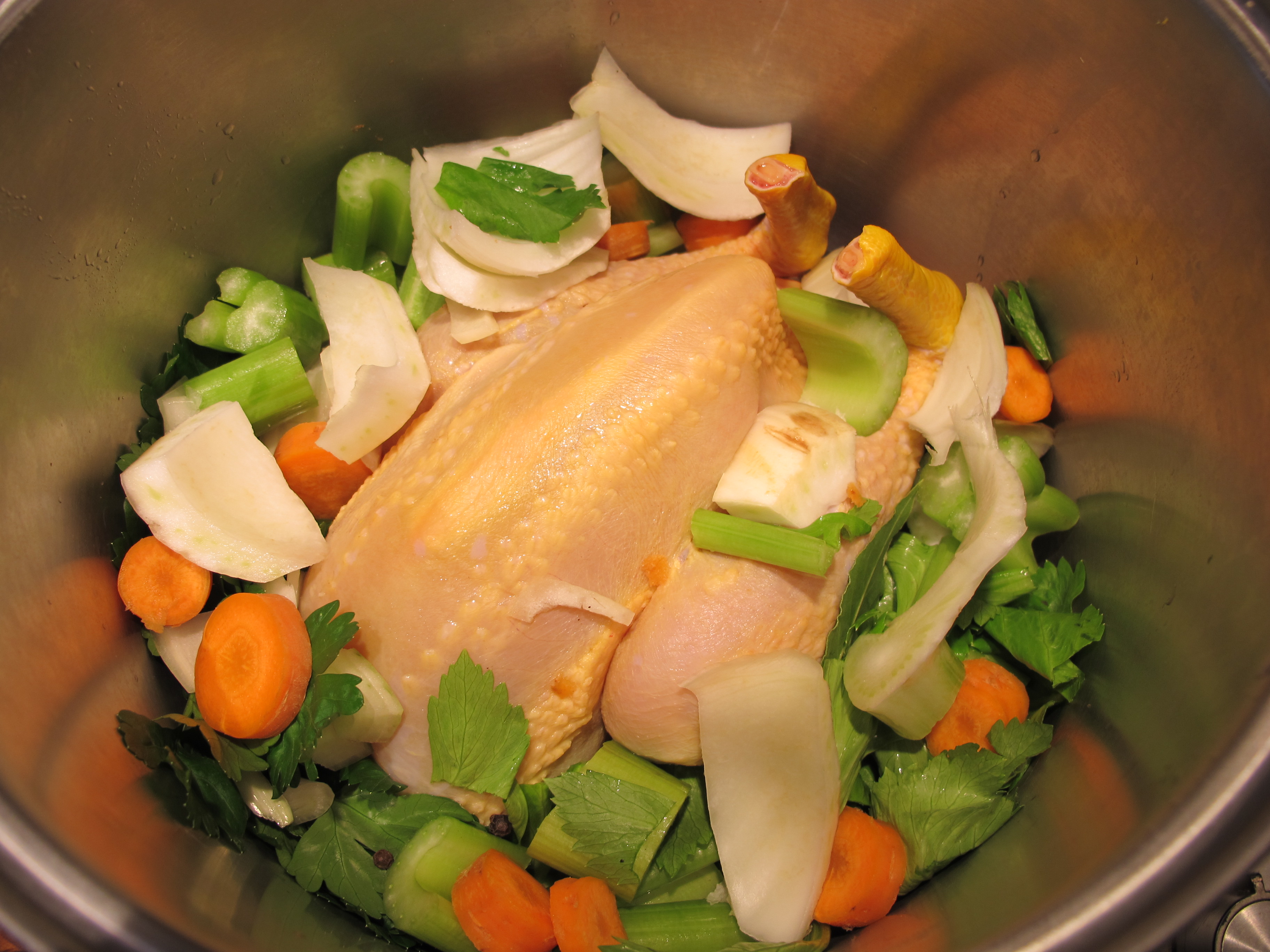
I put in a large pot:

1 chicken–washed

1 carrot

2 sticks of celery–roughly chopped

the outer parts of a fennel bulb–roughly chopped

1 onion–peeled and roughly chopped

1 small garlic bulb–with the top sliced off

3 bay leaves

a couple of parsley sprigs

a couple of slices of fresh ginger

a few peppercorns

3 pints of organic vegetable stock–from cubes and

the kitchen sink (only kidding!).

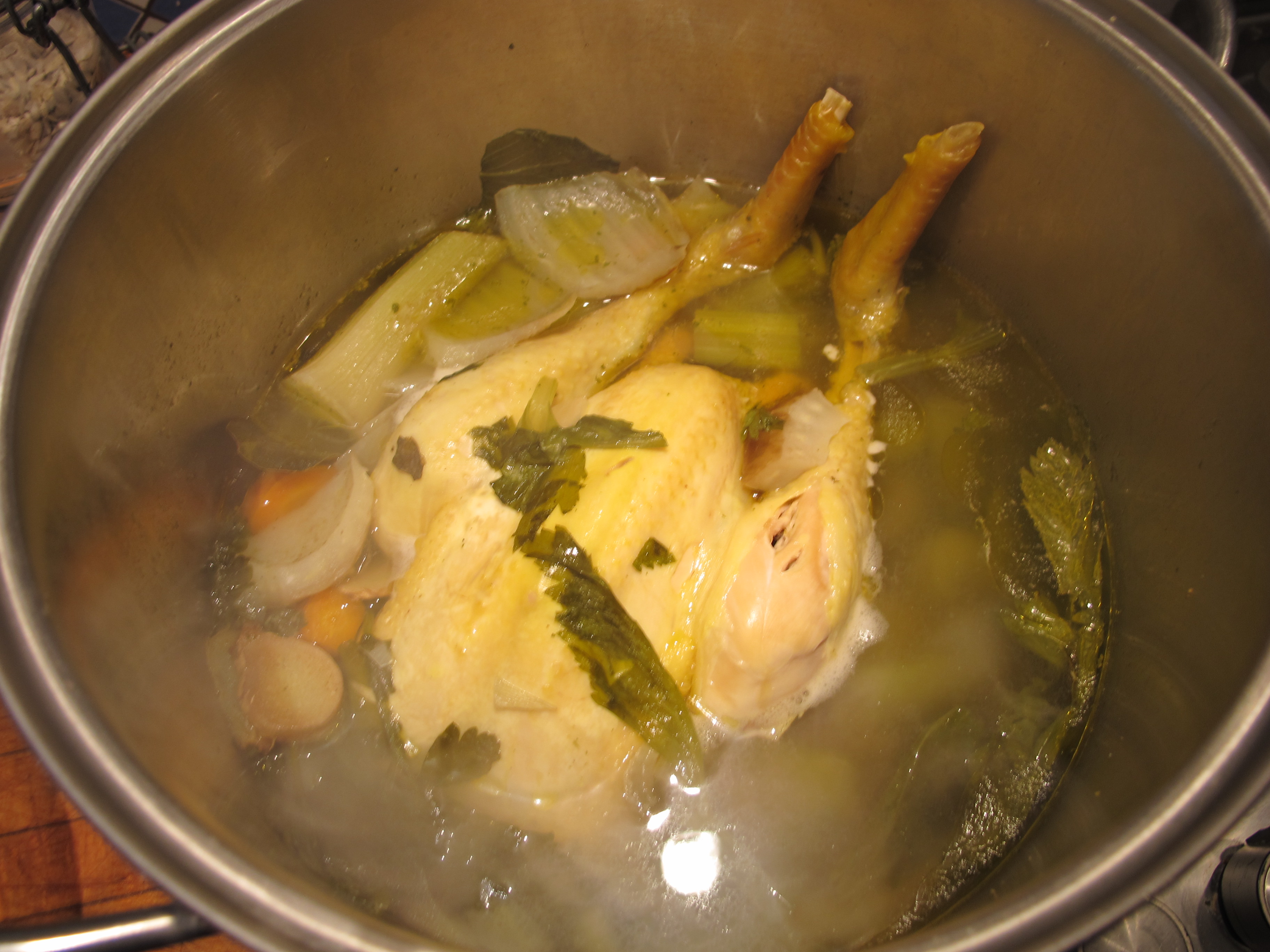
I bring these slowly up to the simmer–while feeding Beau a little cat milk and reassuring the patient that broth will be ready at the end of a brief snooze–cover it and leave it to bubble for an hour and a half.

Then I remove the cooked(out) vegetables with a slotted spoon and

add a cut up carrot, 

half a cut up fennel bulb and

some broccoli and

cook on until they soften and serve them with the broth.

Now, not meaning any disrespect to “grandma’s”  traditional  cure-all remedy–especially not as in a few days I shall reach the traditional “alloted span” and so must watch my tongue–I always find this broth/soup less than more-ish. So what am I doing wrong?

I notice that in several internet versions tinned chicken broth is used.

Tinned stuff? Really? This seems a bit of a cheat; though anything to lift the spirits I suppose…

As broth is staying on the menu for the next few days–I’m in the market for ideas!

(Our friend Charlotte suggests plenty of leeks and some nutmeg!)

Nevertheless the patient said she was happy with the outcome, but advised that the broth be refridgerated overnight for the fat to rise, be skimmed off and the soup to be reheated.

Read Full Post »

I’ve decided on single word resolutions for 2012–which beckons.

My first is SIMPLIFY!

Something simple–for New Year’s Eve perhaps…?

I’m spatchcock-crazy at the moment.

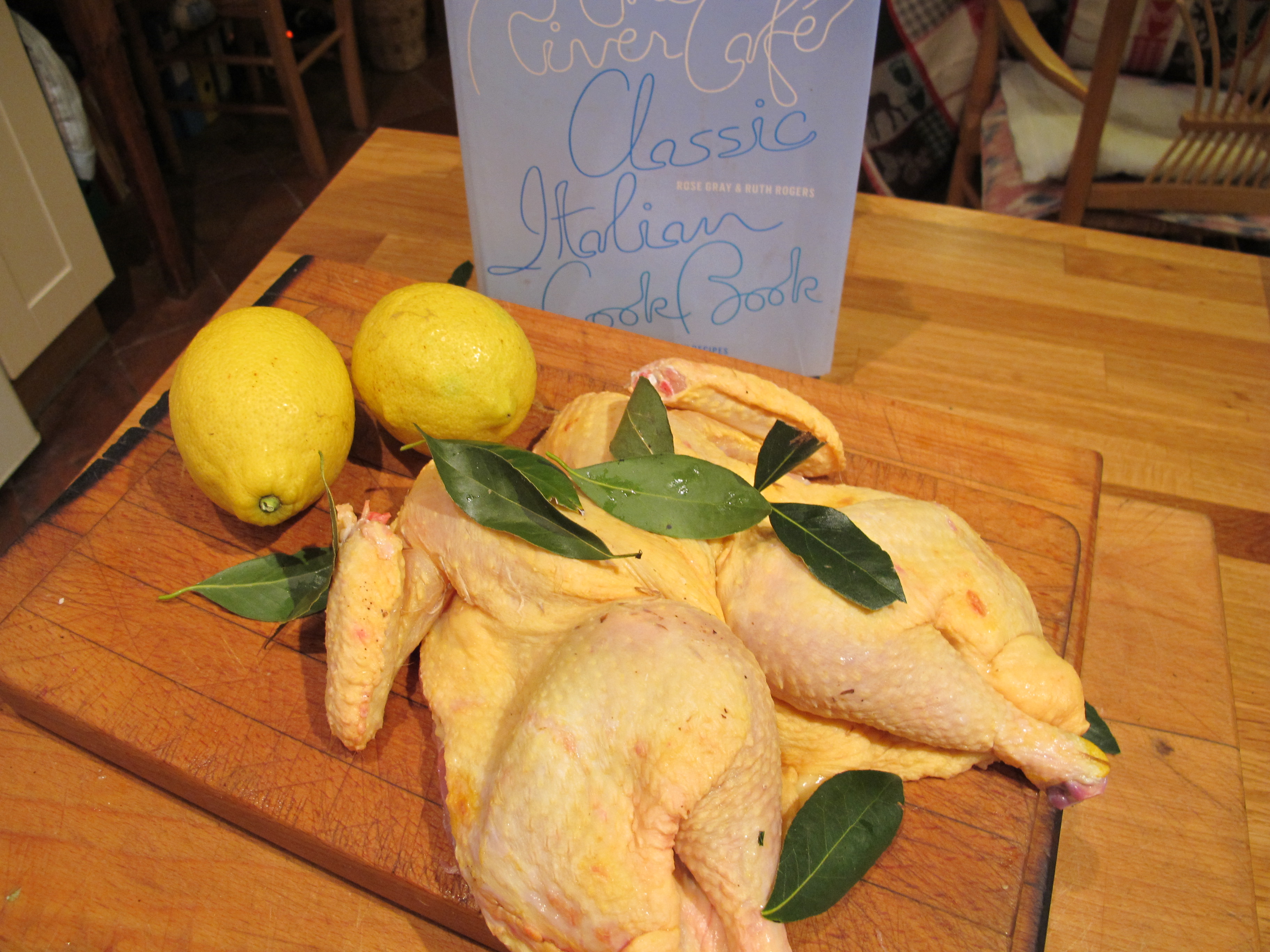
To spatchcock or spattlecock or butterfly is to remove the back and breastbones of a chicken (simply and effectively demonstrated in this video) or any other bird (I just watched someone spatchcock a turkey!) in order to open it up and flattened it out–as you might do a book. This allows the bird to cook more quickly and evenly.

Spatchcocking is an easy and oddly satisfying technique. All you need is a pair of poultry shears or strong scissors and the nerve to try it!  (Or your friendly butcher might do it for you….)
Earlier this week I had two spatchcocked birds in the fridge–a chicken and a guinea fowl–and two recipes I wanted to try.

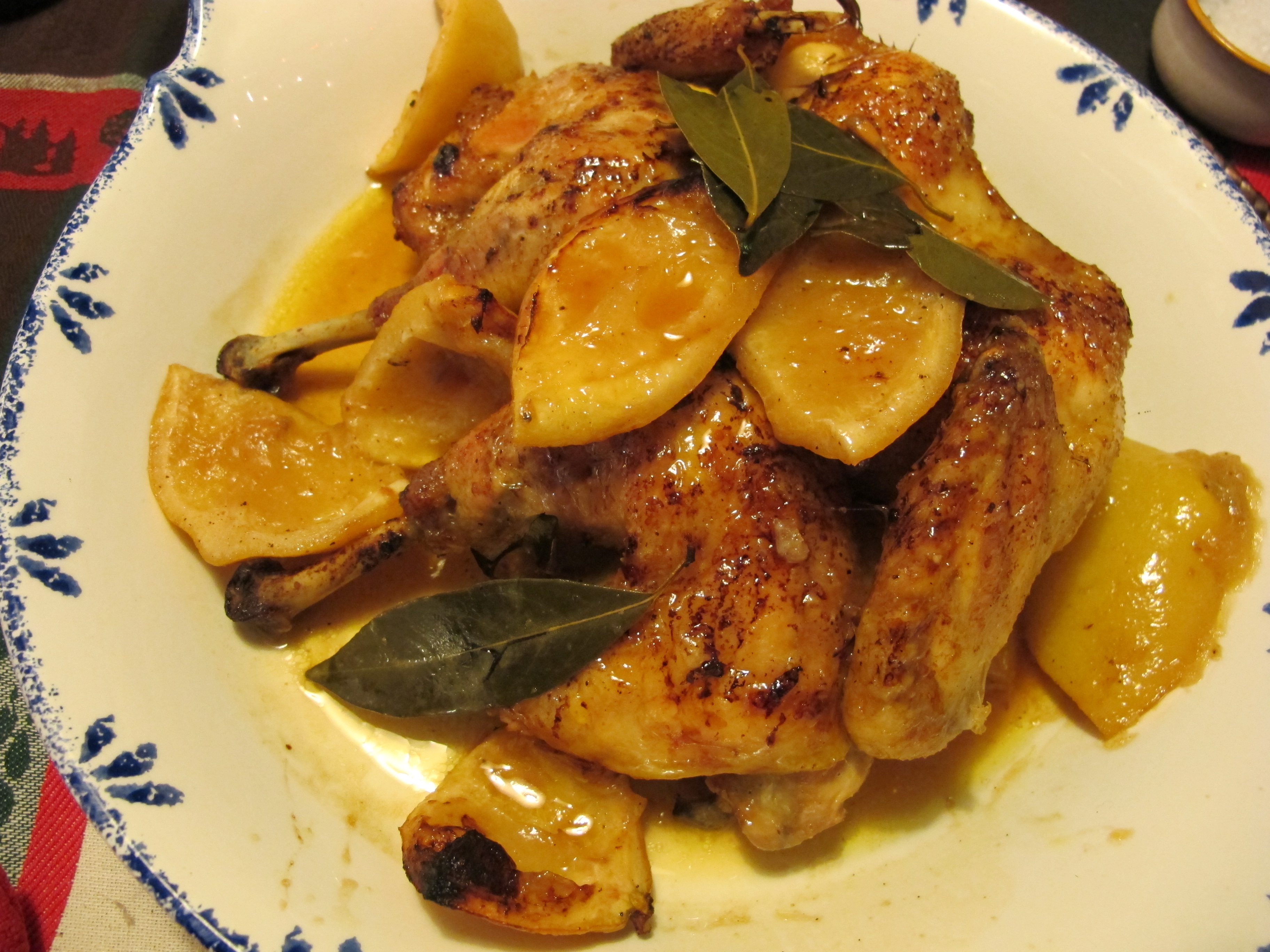
I took  the guinea fowl out to make this dish–inspired by a recipe in The River Café Classic Italian Cookbook .

We ate it thinking “How good this spatchcocked guinea fowl tastes!“.

The next day I went to the fridge to get the chicken, to marinade it overnight for the other recipe–and found the guinea fowl!

We’d eaten the chicken thinking it was guinea fowl!

I put it down to Christmas fever.

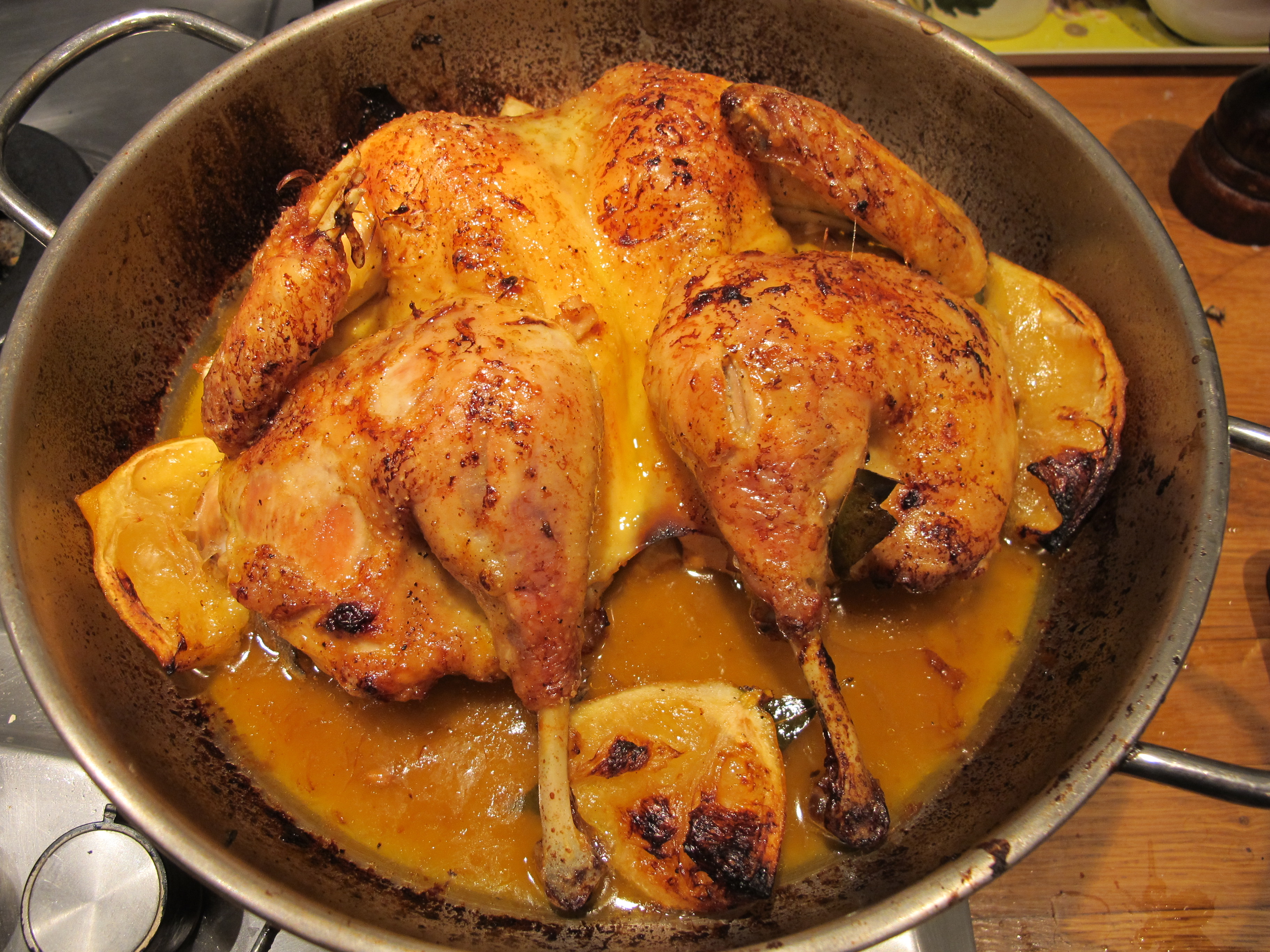
Ideal for serving four people–the bird (whichever comes to hand!) divides easily into quarters thus dispensing with the need to carve.
You could use chicken or guinea fowl quarters instead.

1 chicken--spatchcocked

2 lemons–halved

3 tblsps olive oil

6 bay leaves

salt and pepper

set oven to 200C

While the oven is heating–

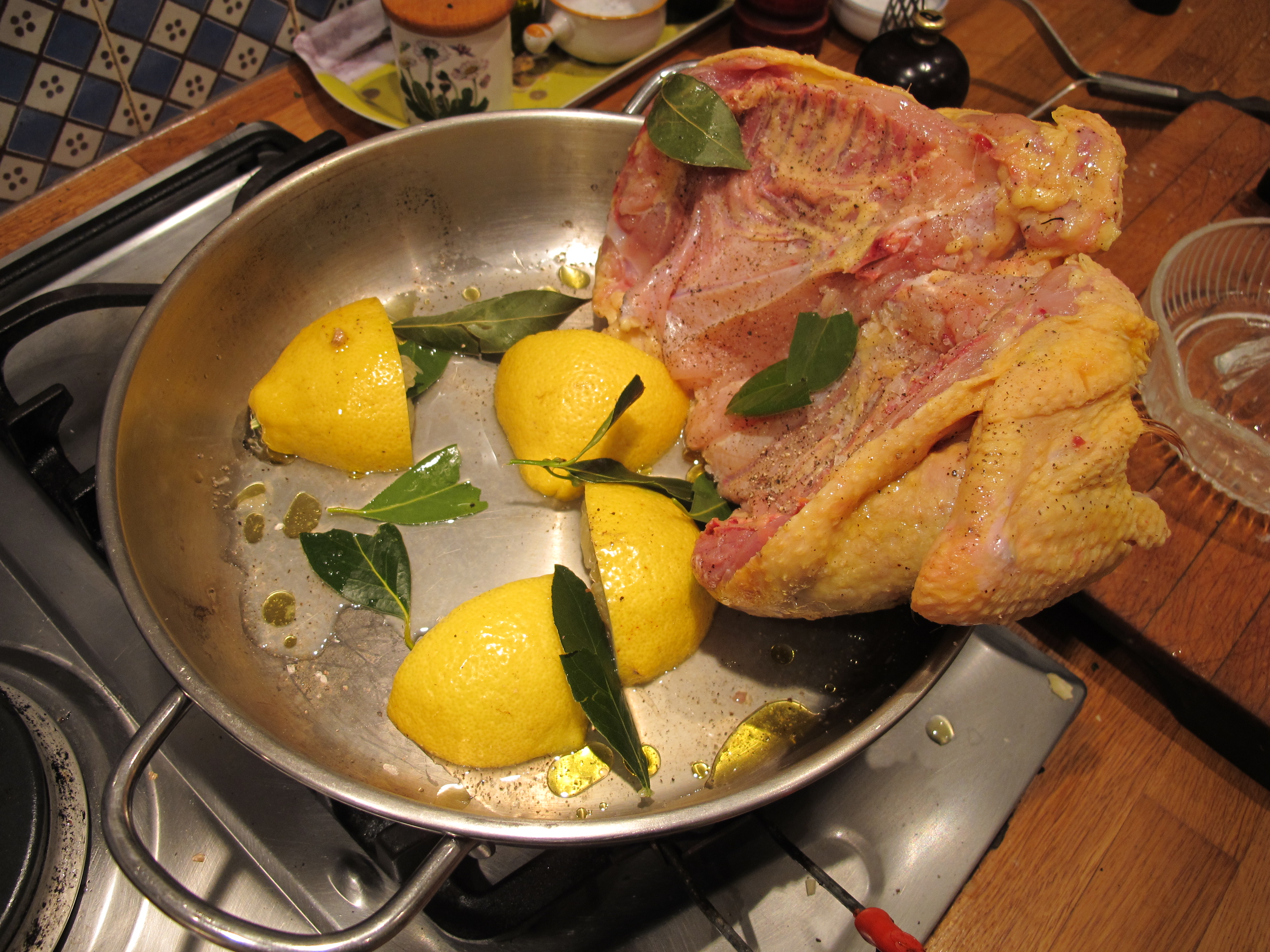
  • Squeeze the juice from two lemon halves into a pan, halve them and leave the quartered lemon in the pan with the bay leaves.
  • Rub the skin of the chicken with the two remaining lemon halves.
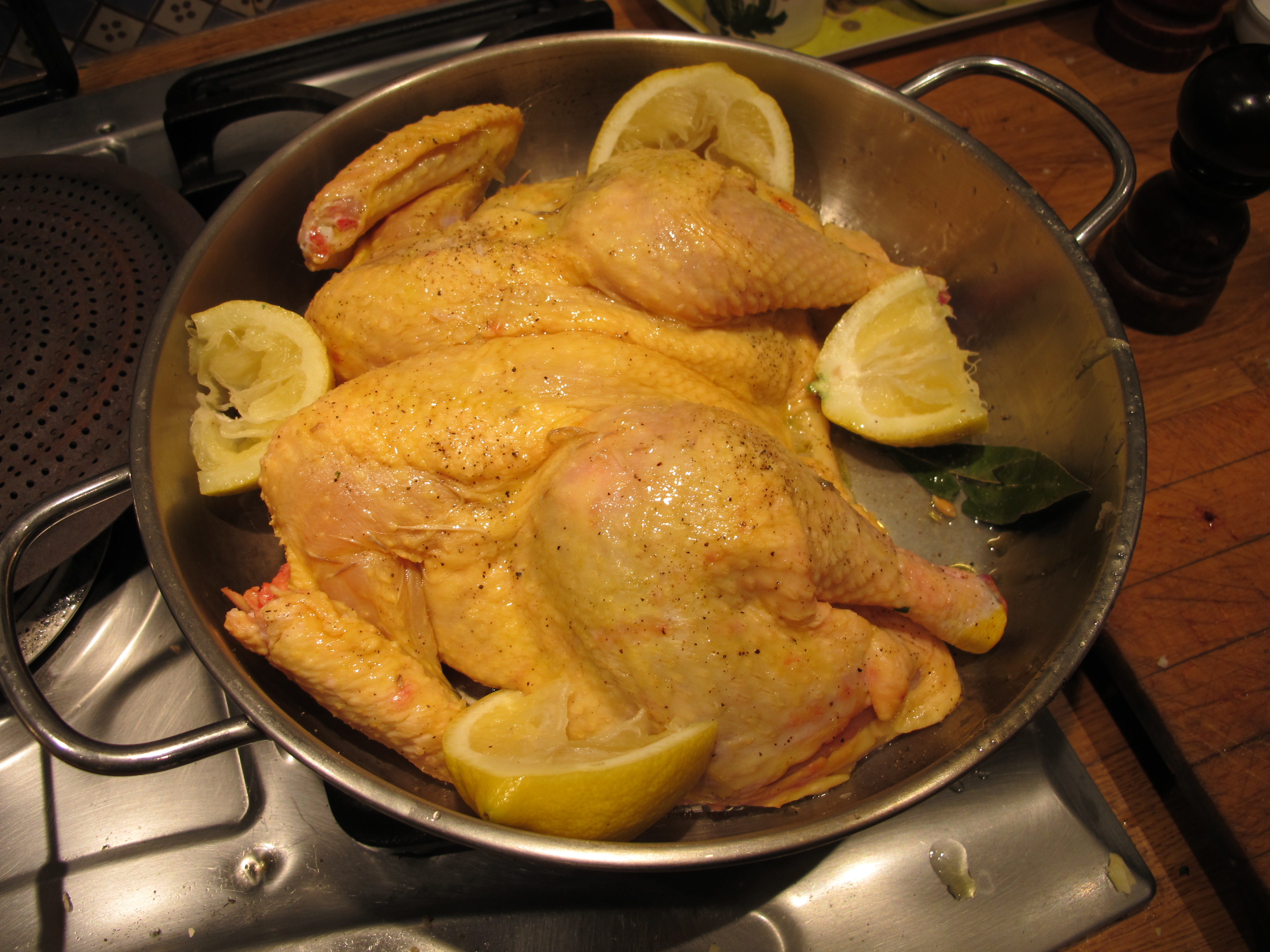
  • Lower the spatchcocked chicken over the lemon halves and the bay.
  • Season well and spoon the oil over the chicken.
  • Add the other two lemon halves to the pan.
  • Cook–covered–on a low flame for 30 minutes.
  • Uncover, spoon over some of the juice and place in the upper part of the pre-heated oven.
  • Cook on for 40 minutes–checking and basting a couple of times.

Read Full Post »

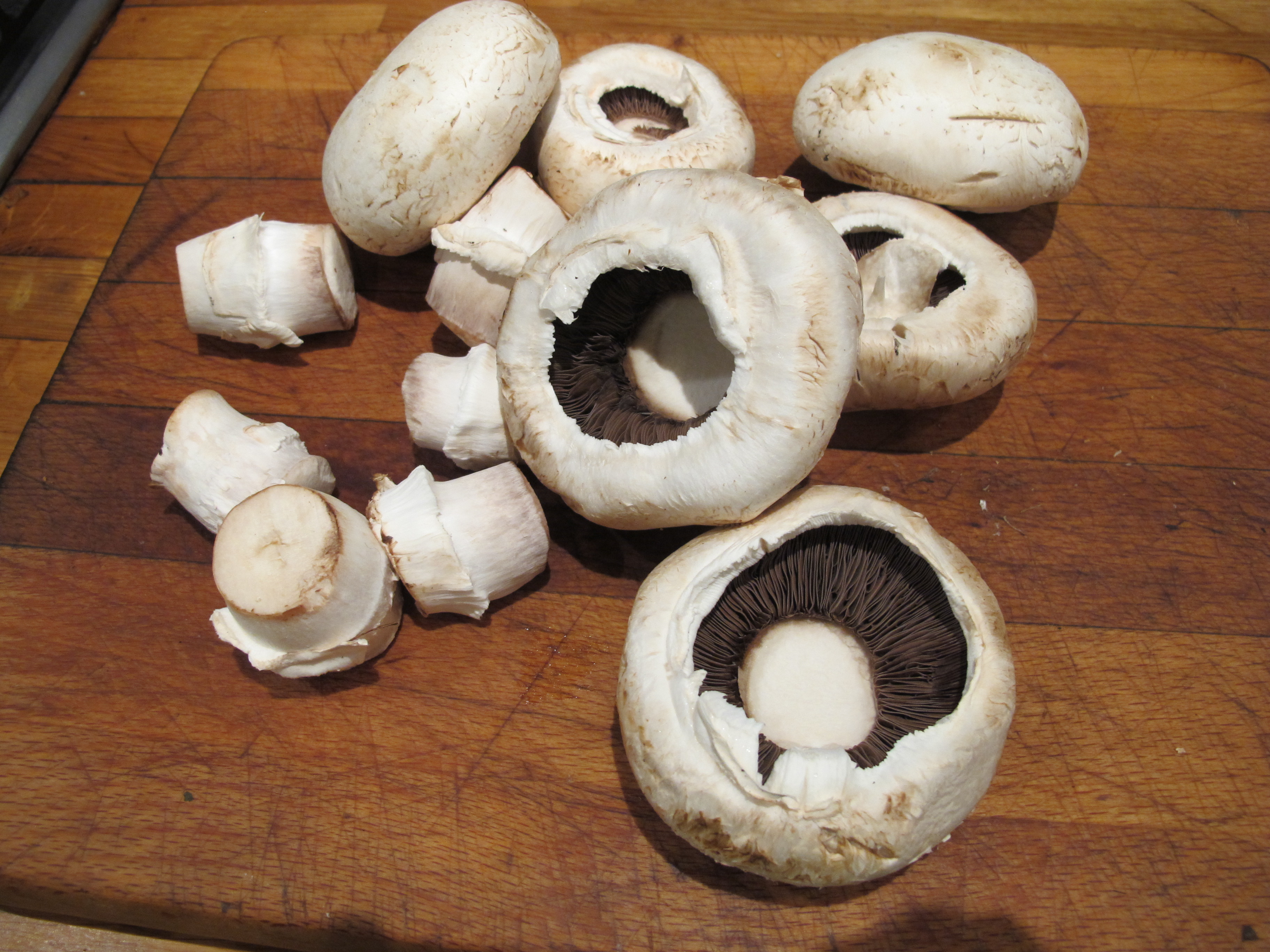
The meatiness of mushrooms makes them ideal for making soup.

Not much else is needed, though the hint of nutmeg chimes nicely with the festive season.

This is adapted from a recipe in Carolyn McCrum’s still very handy The Soup Book, published over 30 years ago.

Mushrooms, garlic and parsley with a sprinkling of nutmeg and seasoning.

It’s simple, quickly done and very tasty.

Ideal for Christmas evening perhaps?

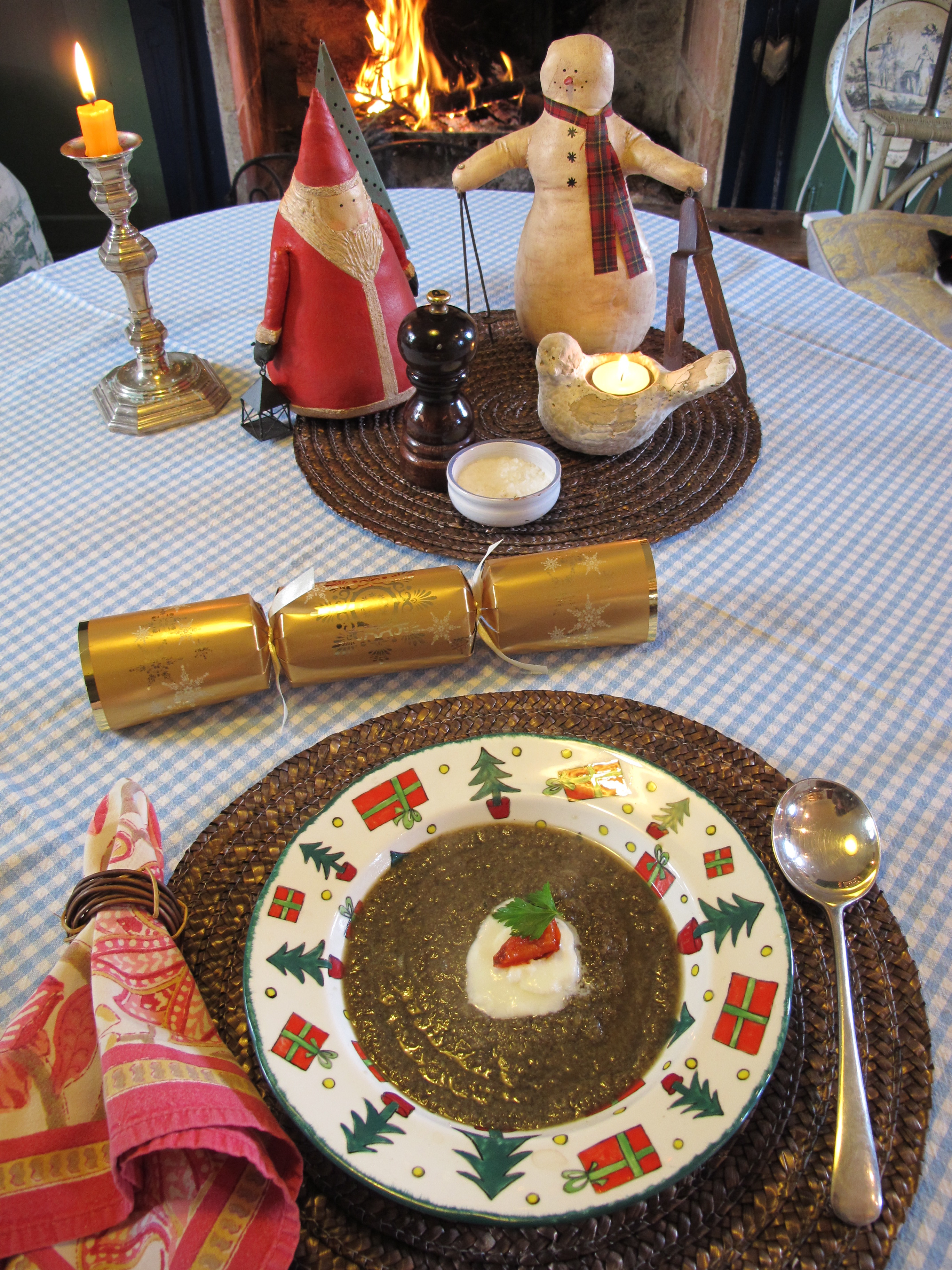
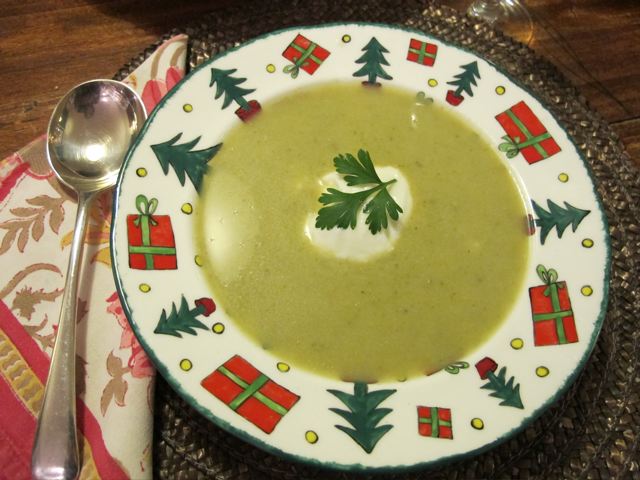
Meredith makes the very best of a less than photogenic soup!

(It has the added advantage of not having a hint of cauliflower or brussel sprout !)

for 4

1lb/500 gms mushrooms–wiped cleaned with a damp piece of kitchen paper and chopped roughly

1 tblsp olive oil

1 garlic clove–chopped

2 tblsps parsley–chopped

1/2 tsp grated nutmeg

salt and pepper

2 pints/1l stock–I use an organic vegetable stock cube

  • Heat the oil in a large saucepan.
  • Add the mushrooms and stir thoroughly–the oil will quickly be absorbed.
  • Cook over a low heat until the mushrooms start to release their liquid.
  • Add the garlic, parsley and nutmeg.
  • Season with pepper and a little salt.
  • Add the stock and bring to a simmer.
  • Cook gently for 15 minutes.
  • Let it cool a little before liquidising and check the seasoning.
  • Sprinkle each bowl with a pinch of parsley.
  • (Christmas pix below is garnished with a teaspoon of yogurt and a small piece of cooked red pepper that was handy at the time of the shoot!)
  • The pictured version was a tad too thick we decided–add a little more stock if you like.

Read Full Post »

I’ve always liked Brussel sprouts–they were on the winter menu in the fifties. Clearly Ma knew not to overcook them and I have a memory of mushing them with the gravy from the Sunday roast. She added chestnuts to them at Christmas–even better!

Preparing them for the pan was often my job on a Sunday morning.

“Cut across the base, peel away the outer leaves and make a cross–(“Why?”)–to make them cook more quickly”

This delicious and surprising soup is quick to prepare and has a pleasing light green colour.

It’s not a thick soup but nourishing on a winter night.

for 4

2 medium onions–chopped

500gms trimmed brussel sprouts--trim the bottoms, remove the outer leaves and cut the sprouts in half

1 tblsp olive oil

1 tsp of butter

750ml/1 1/2 pints vegetable stock— (I use organic vegetable stock cubes.)

1/2 tsp ground nutmeg

salt and pepper

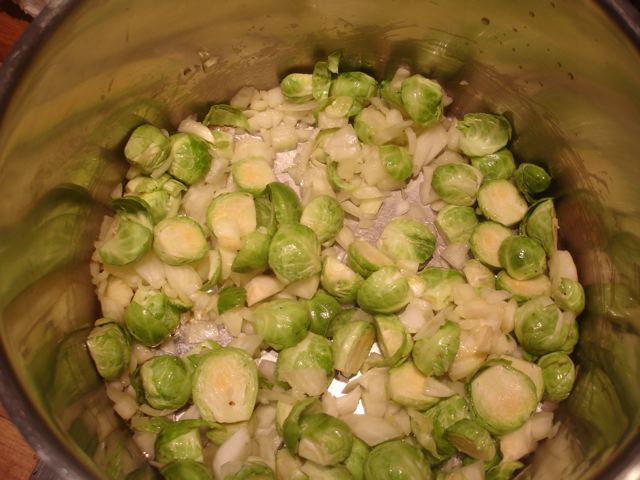
  • In a saucepan gently sweat the onions and sprouts in the oil and butter for about 10 minutes.
  • Add the stock and bring to simmer.
  • Simmer gently for 20 minutes–the sprouts need to soften.
  • Liquidize (a handheld food mixer comes in handy here) and check the seasoning.
  • Season lightly with salt (remembering the stock cube may have salt in it), plenty of pepper and the nutmeg.
  • Serve hot with a teaspoon of low fat yogurt (or cream if you dare!).

Read Full Post »

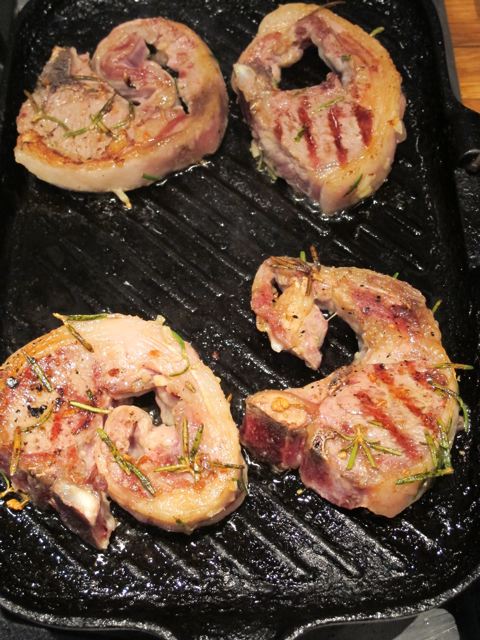
Lamb chops, borlotti beans and broccoli.

We eat relatively little red meat.

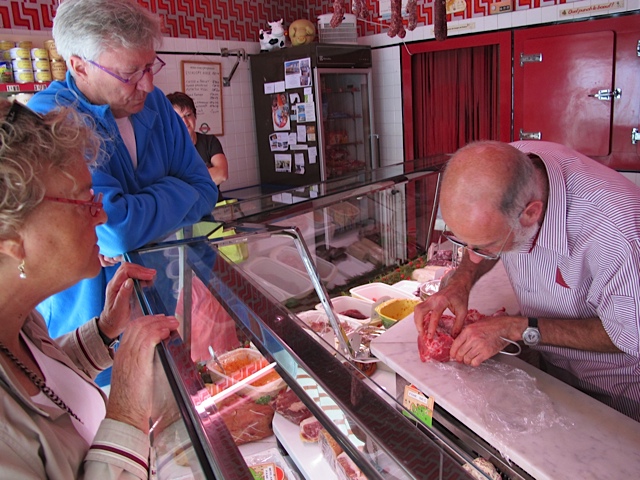
Meredith bought these lamb chops on Tuesday from Monsieur Fraisse, the butcher in Lautrec. “They looked particularly nice….

The beans are from Italy, bought in jars. They grow in beautiful red spotted pods–the beans turn brown when cooked.

The broccoli I bought from the organic market in Castres, yesterday afternoon.

For 2

4 lean lamb chops

3/4 sprigs of rosemary–needles removed

2 garlic cloves

3 tablespoons olive oil–a little more if you need it

salt

—————-

1 tin/jar of beans–drained but the liquid retained (of course these can be white or borlotti)

sprig of sage

a clove of garlic–chopped

1/2 an organic vegetable stock cube

the other 1/2 an organic vegetable stock cube dissolved in 250 ml/1/2 pint of hot water–(use this instead of or in addition to the liquid from the beans)

———–

1/2 lb/ 250 gms  broccoli–washed, stems shortened and cut into eatable florets

salt and pepper

olive oil

  • An hour or two before you eat  “pestle” the rosemary needles up  (i.e. smash up!) with the garlic and a pinch of salt in a mortar and add the oil–this is the marinade for the chops.
  • Pour this fragrant mix over the chops in a bowl and turn everything to coat the chops with the marinade.
  • leave initially in the fridge–covered; then take them out an hour before cooking them.
  • Heat a grill to medium.
  • Season the chops and put them on the grill.
  • Timing depends on your taste and their thickness–3 to 4 minutes a side and they’ll retain some pinkness.
  • While they cook gently sauté the garlic and sage in the olive oil in a small pan until the garlic begins to colour.
  • Add the half stock cube (give it a stir to dissolve in the oil).
  • Add the beans.
  • Stir the mix and add a little of the bean liquid or the stock.
  • Cover and cook on for 5 minutes or so.
  •  In another pan, steam the broccoli covered until tender but not overcooked.
  • Serve with olive oil and salt on the table.

Interested customers watching M. Fraisse working on lamb chops

Read Full Post »

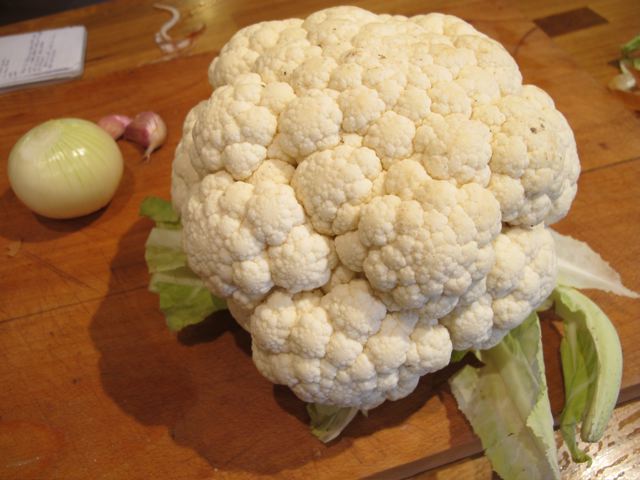
This is pushing it, I know–cauliflowers have been featuring a tad too much lately.

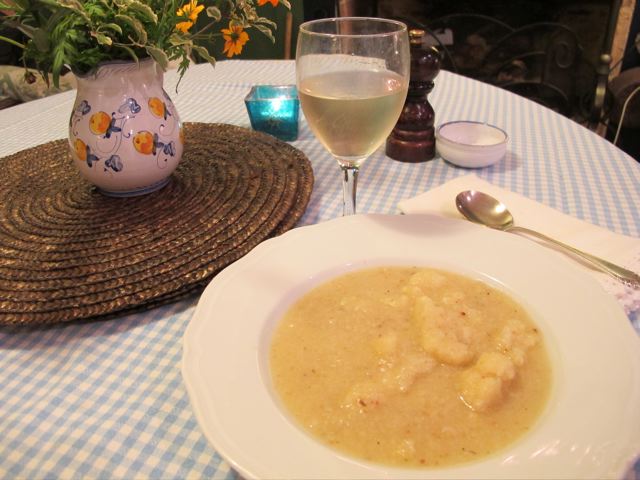
We had this for supper the other night and Meredith said, “What is this, it’s so creamy? It’s not potatoes is it?  It’s delicious.”

Cauliflower soup,”  I said sheepishly. Somehow cauliflower is not a vegetable that’s easy to own!

This recipe is adapted from one by Nigel Slater that I spotted in a newspaper last week.

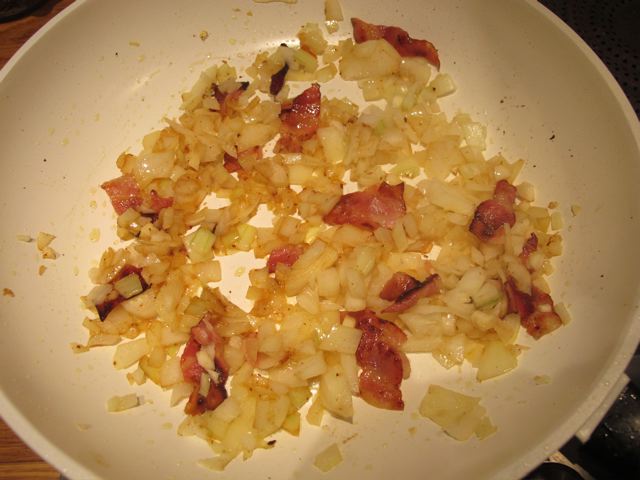
The key ingredient is smoky bacon.

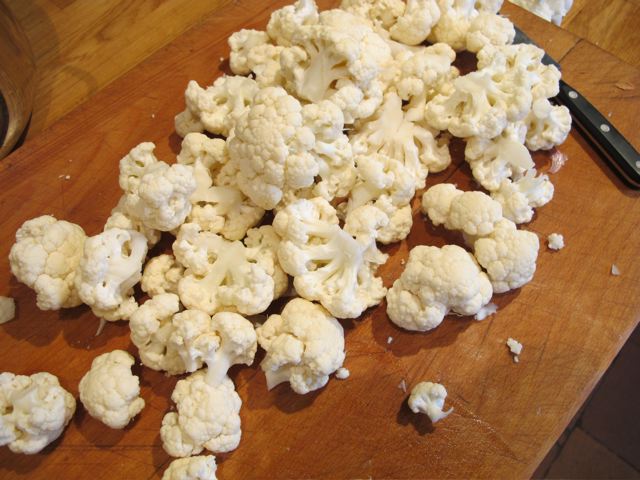
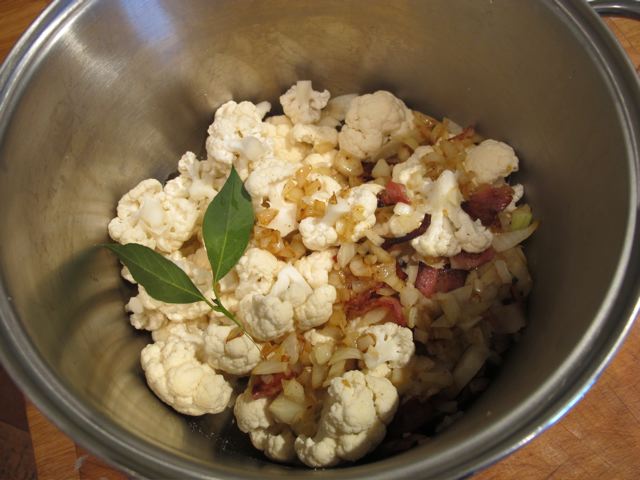
1 large cauliflower--broken into florets

2 cloves of garlic–chopped

1 medium onion–chopped

4 rashers of smoked bacon–chopped

1 tablespoon olive oil

2 bay leaves

1 litre/2 pints stock

salt and pepper

  • Gently heat the oil in a pan and sauté the bacon bits until they colour a bit.
  • Add the garlic and onion.
  • Cook the mix on for five minutes until the onion has softened.
  • While this happens break up the cauliflower into florets and add to a large saucepan.
  • When ready add the onion and bacon mix to the cauliflower pan with the bay leaves and the stock.
  • Cover and bring this mix up to the simmer and cook until the cauliflower is tender.
  • Lift a thirdish of the mix out of the pan and into a bowl with a slotted spoon letting the liquid fall back in the pan
  • Liquidise the contents of the pan and test the seasoning.
  • Add back the set-aside florets and serve the soup hot.

Read Full Post »

Vanessa wrote a comment/response yesterday to the post: Pinzimonio–olive oil dip.

“What could be better than the best olive oil served with vegetables? The Italians have really got it right.”

…which prompts me to share a simple story (and recipe)  recounted in my cookbook--Delicious Dishes for Diabetics.

Many years ago I had lunch in a tiny worker’s café in the centre of Florence only open at midday. I watched the owner put down a plate of steaming broccoli–that was all there was on the plate–in front of a burly Italian and place a large jug of olive oil and salt & pepper beside it.

The man poured on the oil, seasoned the irresistible plateful and began to eat.

That’s simple eating.

Of course, he may have had a veal chop after I left!

500 g/18 oz broccoli–stems stripped of rough outer layer and cut into bite-size pieces, florets cut

likewise

BBBS--Before Being Bite-Sized!

olive oil

salt pepper

lemon quarters

  • Steam the broccoli until tender, but careful not to overcook it–the colour dulls.
  • Test from time to time with the end of a sharp knife.
  • Transfer to a serving bowl and pour over the oil–be generous.
  • Season to taste and mix carefully.
  • Serve with a small jug of olive oil for those who are never satisfied–and some lemon quarters.

Read Full Post »

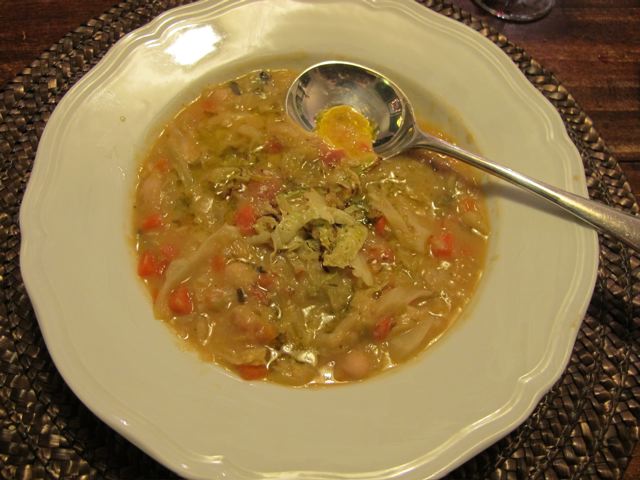
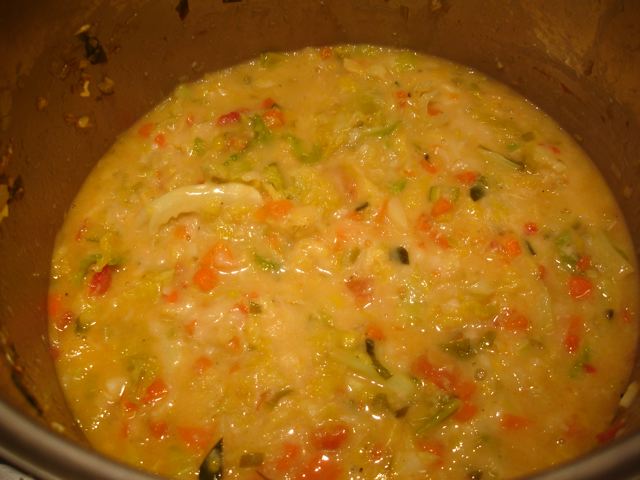
An autumn/winter soup this–with a big presence.

Adapted from Leslie Forbes’ lovely book  A Table in Tuscany.

In the early eighties she had the bright idea of eating her way round Tuscany’s restaurants and watering holes–an arduous task to set oneself.

This soup–one of the best bean soups in Tuscanyshe credits to the restaurant of the Fattoria dei Barbi near Montalcino and the unnamed English cook, married to an Italian, thus providing the important advantage of a Tuscan mother-in-law!  This is 25 years ago mind–things have a habit of changing.

The book remains a gem (used copies available on Amazon for a penny!).

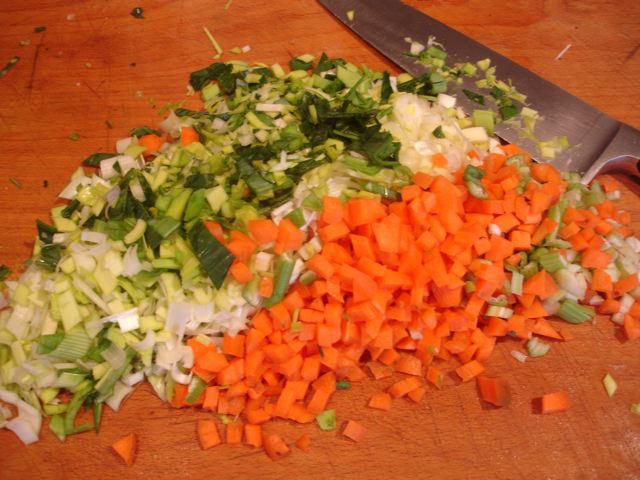
2 carrots--chopped small

2 sticks of celery–chopped small

2 leeks–cleaned and chopped small

6 tablespoons olive oil

3/4 tinned tomatoes–chopped up with their liquid

A sprig of fresh thyme

1 large garlic clove–pulped

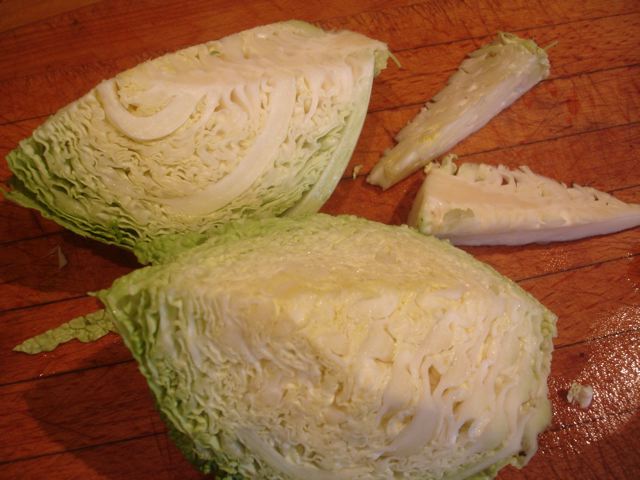
Half a green cabbage–stem removed and shredded

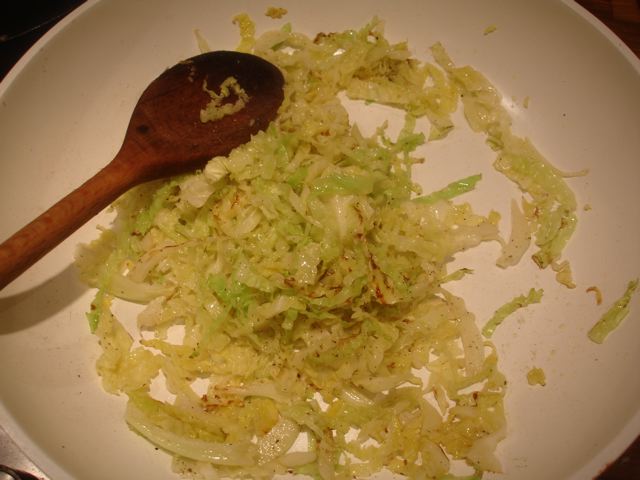
The other half of the cabbage shredded thinly–this for a topping (see below)

1 tablespoon olive oil

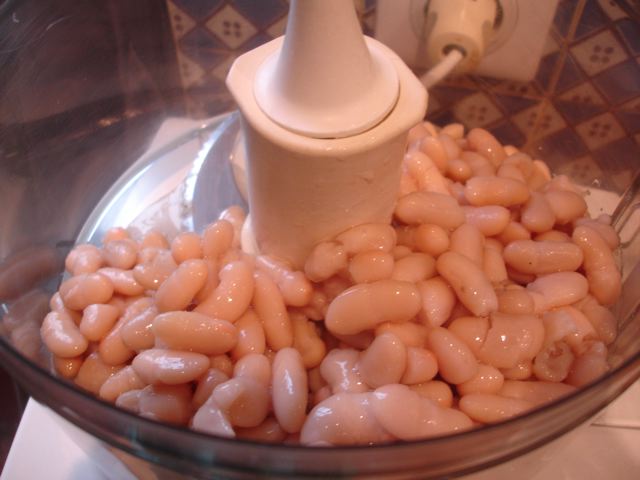
About 800 gms/24 oz of cooked white beans [canned or bottled or dried, soaked and cooked]–drained but their liquid retained

1 pint/500ml stock–I use organic vegetable stock cubes
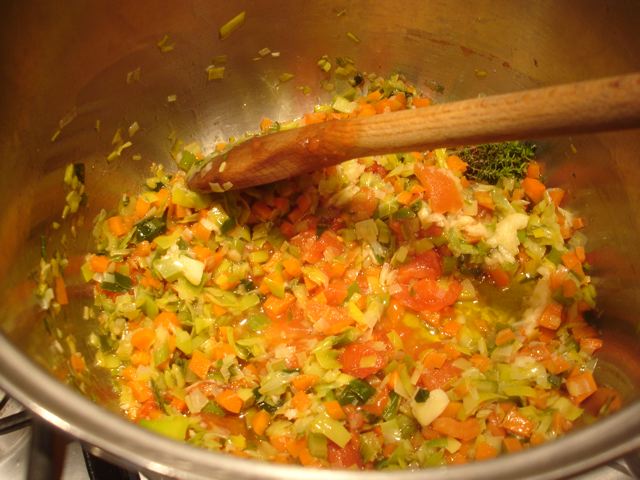
  • Heat the oil in a large saucepan and sweat the celery, leeks and carrots until they are tender–about twenty minutes.
  • Mix in the tomatoes, garlic and thyme and let them cook on for five minutes.
  • Add the cabbage, season with salt & pepper and cook on for ten minutes.
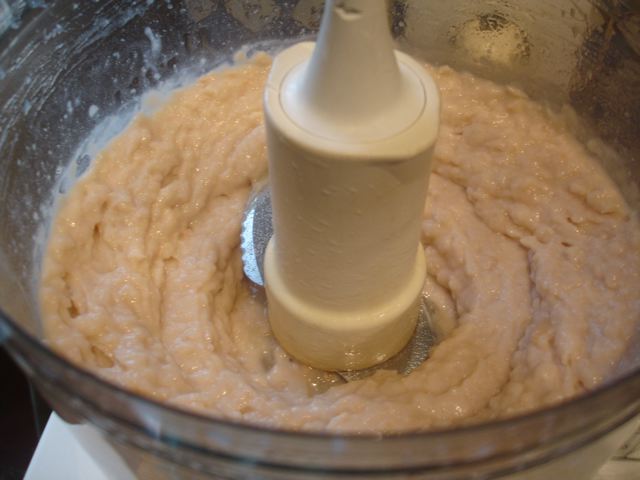
  • Purée three-quarters of the beans in a mixer with a little of their liquid.
  • Add the bean water and the bean purée and stir it all together.
  • Cook this thick mix for an hour–stirring it regularly to stop it sticking and burning.
  • Add a little of the stock each time you stir it.
  • This is meant to be a thick soup–up to you how loose to make it–just be careful not to dilute the depth of taste.
  • While the soup cooks on sauté the rest of the cabbage to serve as a topping when you present the soup.

  • Keep tasting the soup as you go (you may find yourself doing that anyway!).
  • Serve with a drizzle of good quality olive oil.

Read Full Post »

« Newer Posts - Older Posts »