Feeds:
Posts
Comments

Archive for the ‘Recipes’ Category

Some people don’t like the idea of eating rabbit–memories of treasured pets linger in the mind. Meredith tells me she had a white rabbit called Honey Bunny growing up in suburban Chicago–which produced little honey bunnies every five weeks after the first batch–born one Easter (clever bunny!).

She is still in two minds about eating rabbit, which she claims is not eaten much in the USA.

Rabbit is tasty, lean meat and makes for a change.

You could try this with chicken.

Serves 4

1 large jar of white beans–cannellini, haricot or other white beans, drained

4 tablespoons  of olive oil

rabbit pieces or more

salt and pepper

1/2 teaspoon of coriander seeds–dry roasted in a small frying pan and crushed

8 cloves of garlic–peeled

bay leaves

100ml/31/2fl oz white wine

300ml/10fl oz water

2 tablespoons of parsley–chopped

heat the oven to 150C/300F/Gas2.

  • Heat the olive oil in a lidded pan or casserole that can go into the oven.
  • Season the rabbit pieces with salt and pepper and brown them gently. (These hind quarter pieces were enough for us)
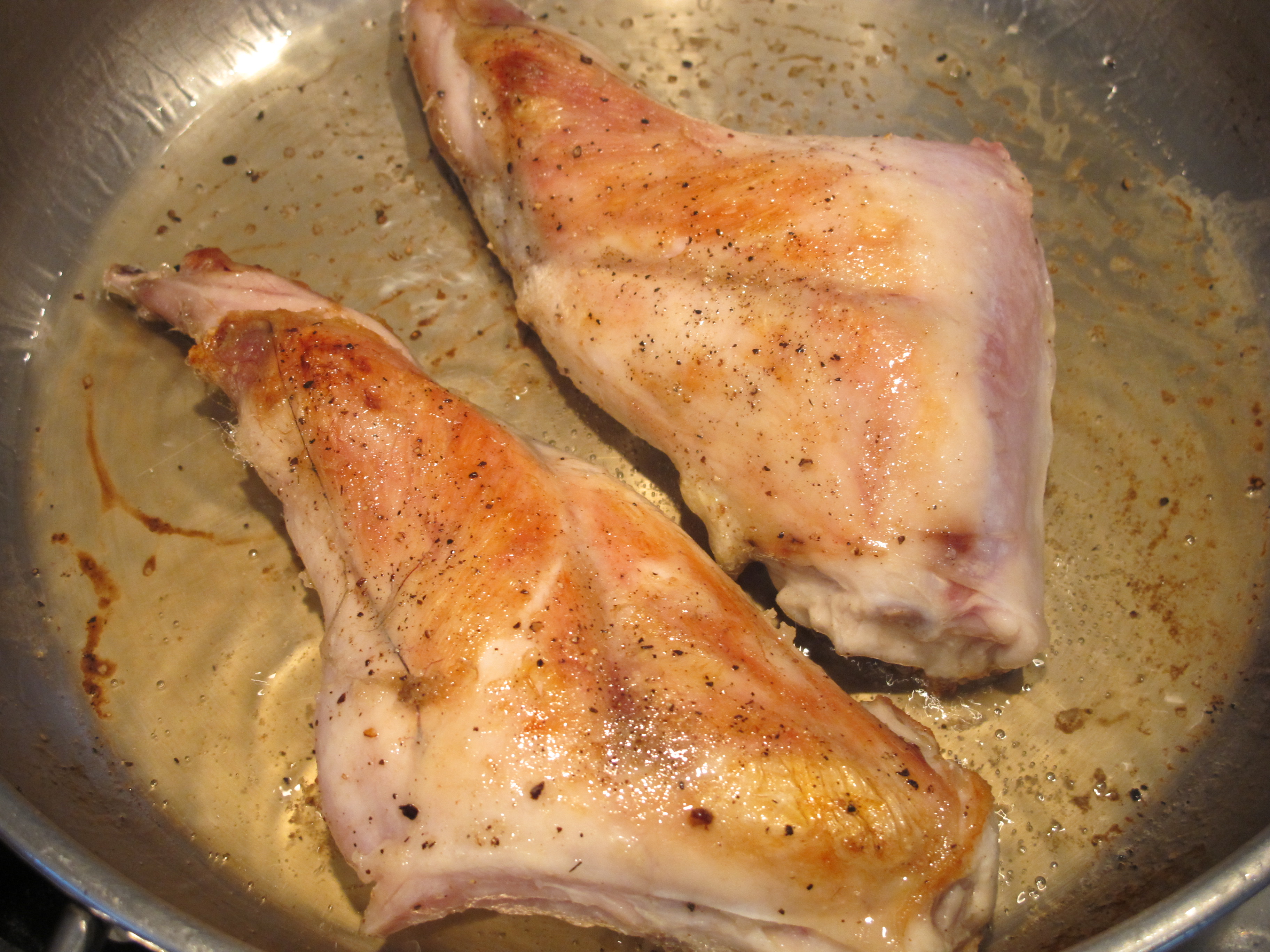
  • Add the coriander seeds and garlic and turn them over in the oil until the garlic colours a little.
  • Add the bay, the wine, the water and the beans.
  • Cover the pan and cook in a  low oven–(cooking it slowly helps to keep it moist)–for about 30–40 minutes.
  • Check the doneness of the rabbit–the juices should run clear.
  • Sprinkle over the parsley before serving.

Read Full Post »

“To eat well in England you should have breakfast three times a day.”
W. Somerset Maugham

“All happiness depends on a leisurely breakfast.”
John Gunther

“Oysters are the usual opening to a winter breakfast. Indeed, they are almost indispensable.”
Grimod de la Reyniere (1758-1838)

“Life, within doors, has few pleasanter prospects than a neatly arranged and well-provisioned breakfast table.”
Nathaniel Hawthorne (1804-1864)

“Only dull people are brilliant at breakfast.”
Oscar Wilde

Breakfast is the most important meal of the day”

I’m sure my mother said that a few times!

Breakfast before I set off on my walk this morning was the same as every morning and no sign of an oyster!

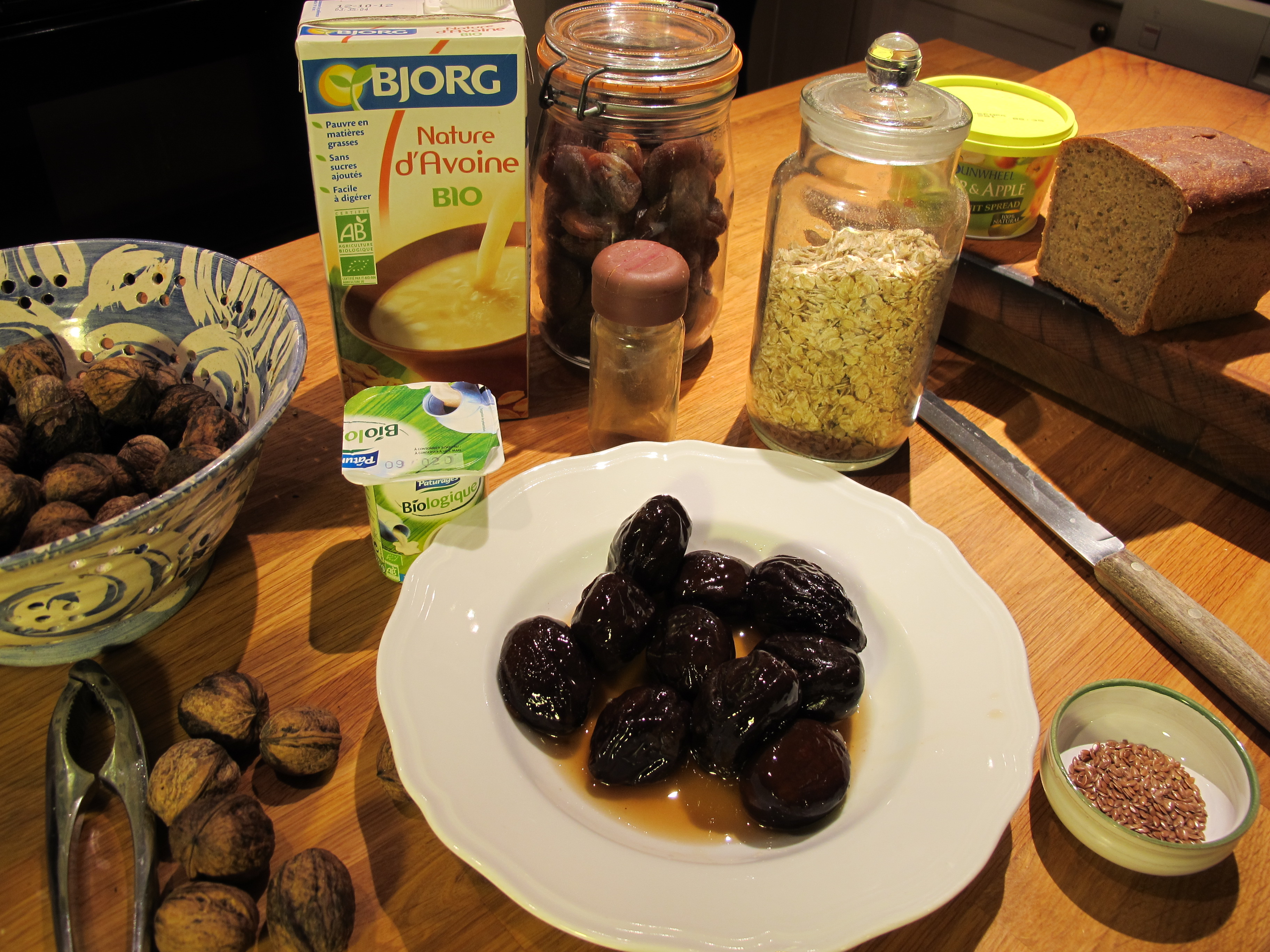
large organic oat flakes mixed with

freshly cracked walnuts,

dried untreated apricot–chopped up

a teaspoon of linseeds

prune,

half a pot of no fat organic yogurt with

cinnamon sprinkled on top

and moistened with oat milk.

Two slices of 100% rye bread with a little butter and pear & apple fruit spread (no added sugar)

The same every morning? Yes!

Dull?

Not for me–I look forward to it–once a day at least!

Maybe we are at our most conservative, most in need of ritual just after waking up, but I find the assembling and eating of this bowl of goodies a daily delight.

Meredith’s breakfast tray rested on a pillow in front of her (see below a summer version).

The fire in the kitchen was established, the dishwasher emptied and lunch planned so why not add to this the pattern of virtuousness with another good deed–a healthful walk!

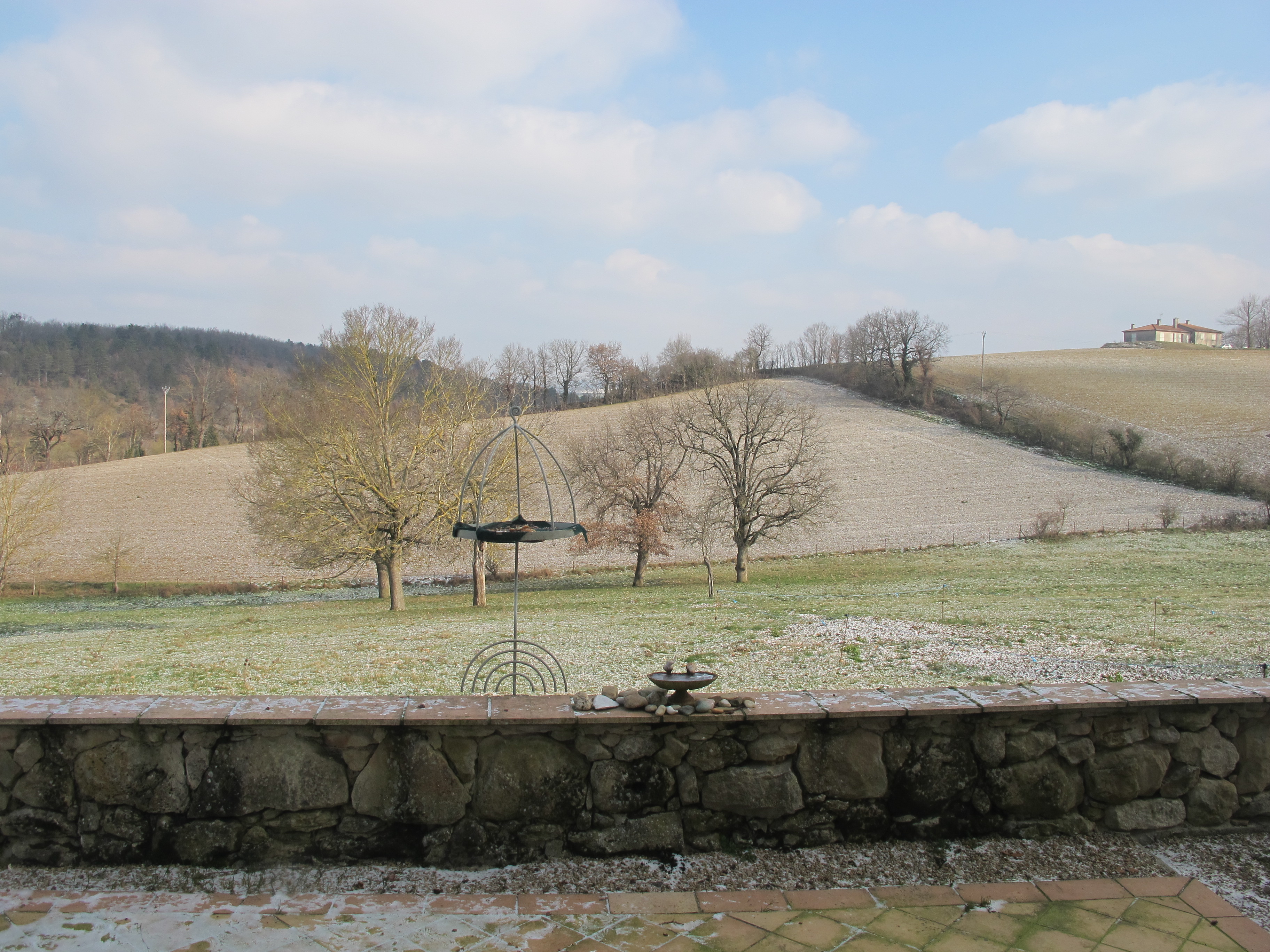
The first flakes of snow were falling gently and laying, so taking my chance I set out–fortified by this habitual breakfast.
The blacktop was slowly turning white as I walked down the road and the snowy mist descended.
Yesterday’s north wind that had roughed up my cheeks had ceased and it was warmer by several degrees.
There’s was no-one about–just the distant pop of a hunter’s gun somewhere over the fields.
Climbing the slope towards the house forty minutes later I could tell that no car had passed since I’d left and looking back I saw my footprints had clearly made their mark in the deepening white.

All was quiet as I entered the house–a ” leisurely” post breakfast calm had descended.

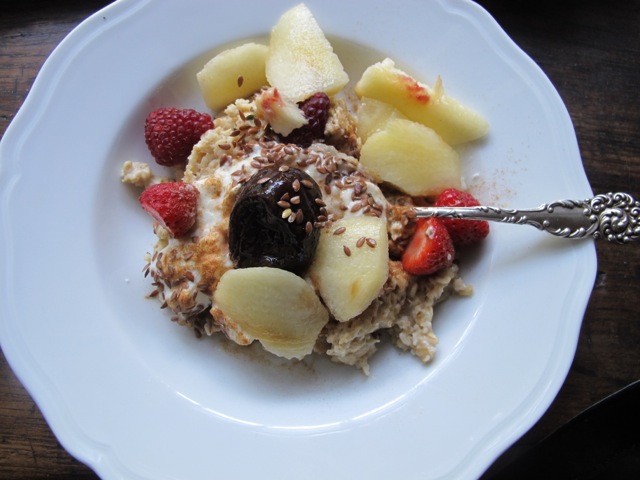
Meredith’s version of breakfast heaven! Porridge (cooked oats–large and small flakes), milk, “no fat” organic yogurt, a prune, seasonal fruit, cinnamon sprinkled over.

Read Full Post »

I promised a recipe for pork chops when I posted the red cabbage.

It is bitingly cold here and I found myself heading for the butcher not the fishmonger in Lautrec this morning.
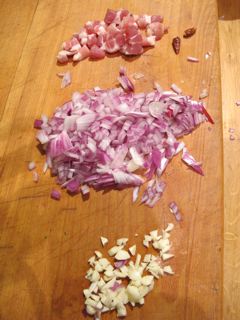
“Bonjour, Monsieur–deux cotes d’échine, s’il vous plait.”

Spare rib chops are tastier and less prone to dry out than loin chops and they are the cheaper cut.

That’s what I settled for after waiting an age for Monsieur Fraisse to finish chatting to his previous customer–the cold was getting to me!

I learned this simple way by watching the irascible but effective chef Gordon Ramsay’s demonstration.

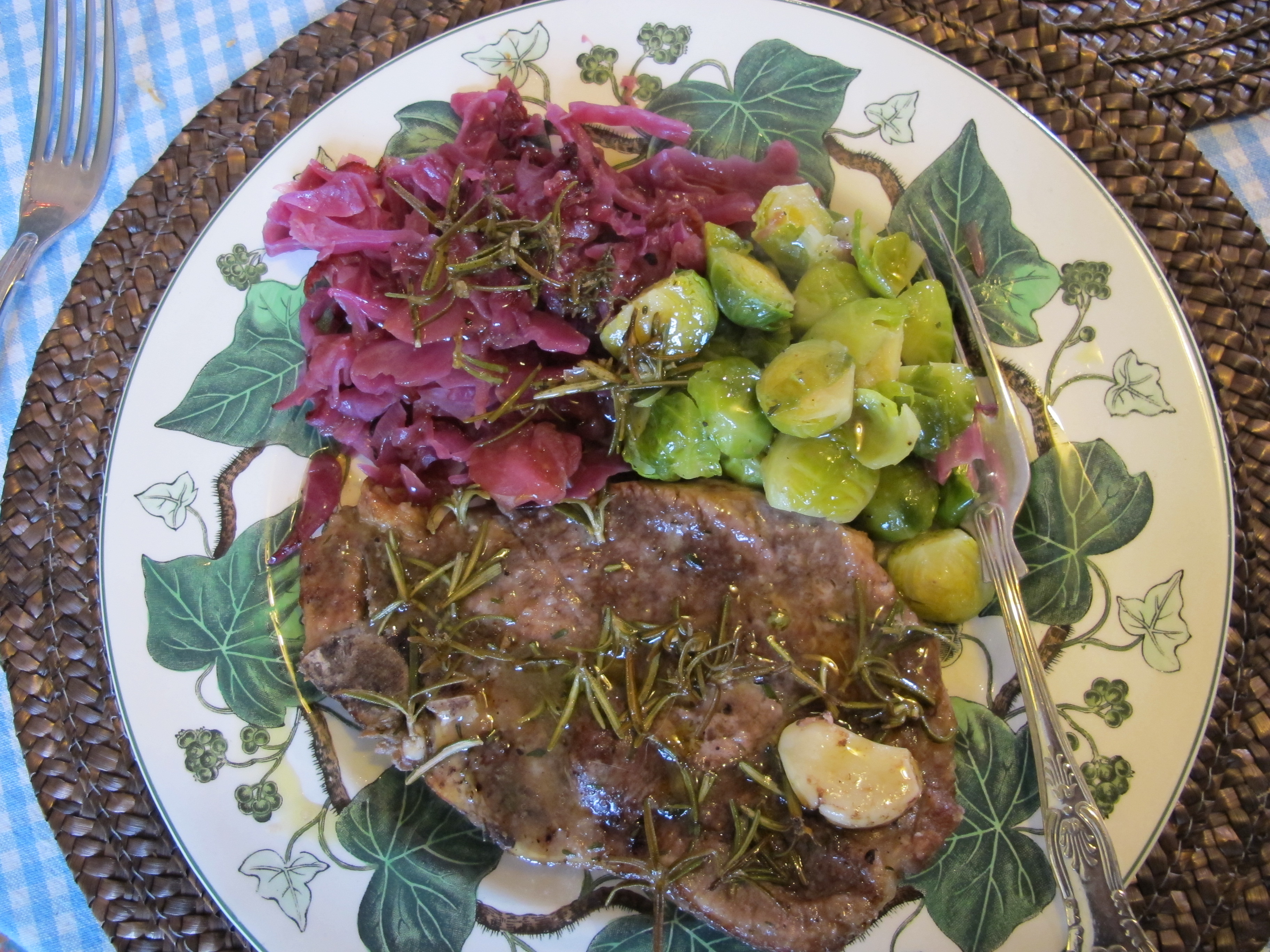
The rosemary needles take on a nice crunchiness and are worth eating with a mouthful of meat. As is the garlic.

Meredith finished off the red cabbage, which she’d missed out on the other day.

for 2

2 spare rib pork chops

rosemary and thyme

3/4 cloves of garlic–squashed, peeled and halved

olive oil

s&p

heat the oven to 200C/400F

  • Dribble some olive oil and sprinkle some salt on a shallow oven tray.
  • Scatter over a couple of the cloves of garlic.
  • Place the chops on top.
  • Sprinkle them with salt and pepper.
  • Strip the rosemary needles from the stem over the chops.
  • Do the same with the thyme (not so easily done).
  • Dribble more olive oil over the tray.
  • Put it in the higher part of the oven for about twenty minutes.
  • The cooking time depends on the thickness of the chops.
  • Best to cut into them to check–the juices should run clear.

Read Full Post »

I found this in my old paste-in foolscap notebook and have been meaning to try it for a while.

Cabbage has been on my mind since leaving Strasbourg–and pork for that matter!

An example of this brightly colored variety of red cabbage was waiting patiently in the fridge for my return.

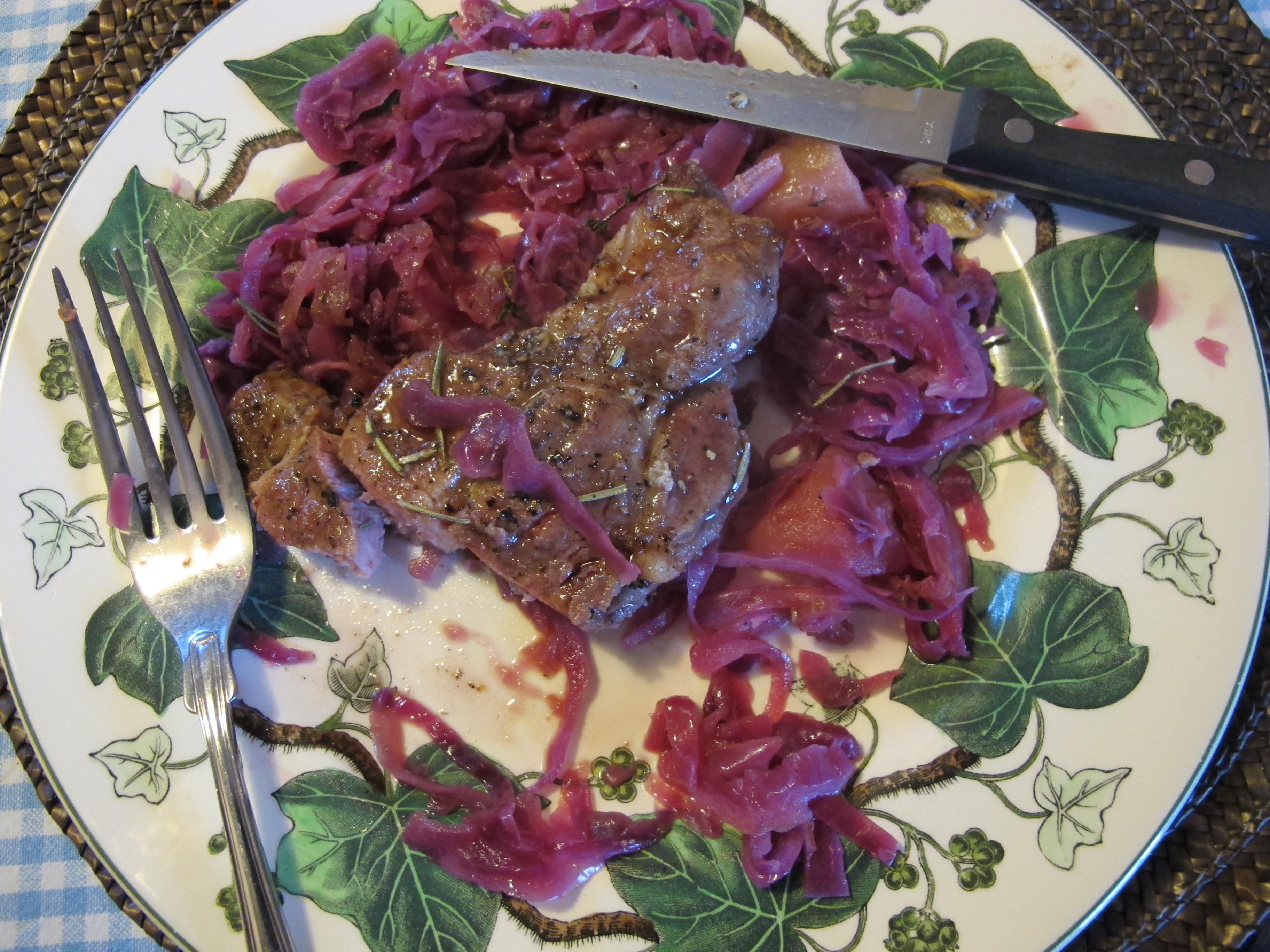
So lunch yesterday was a pork chop on a bed of red cabbage.

1 tablespoon olive oil

1 onion–sliced fine

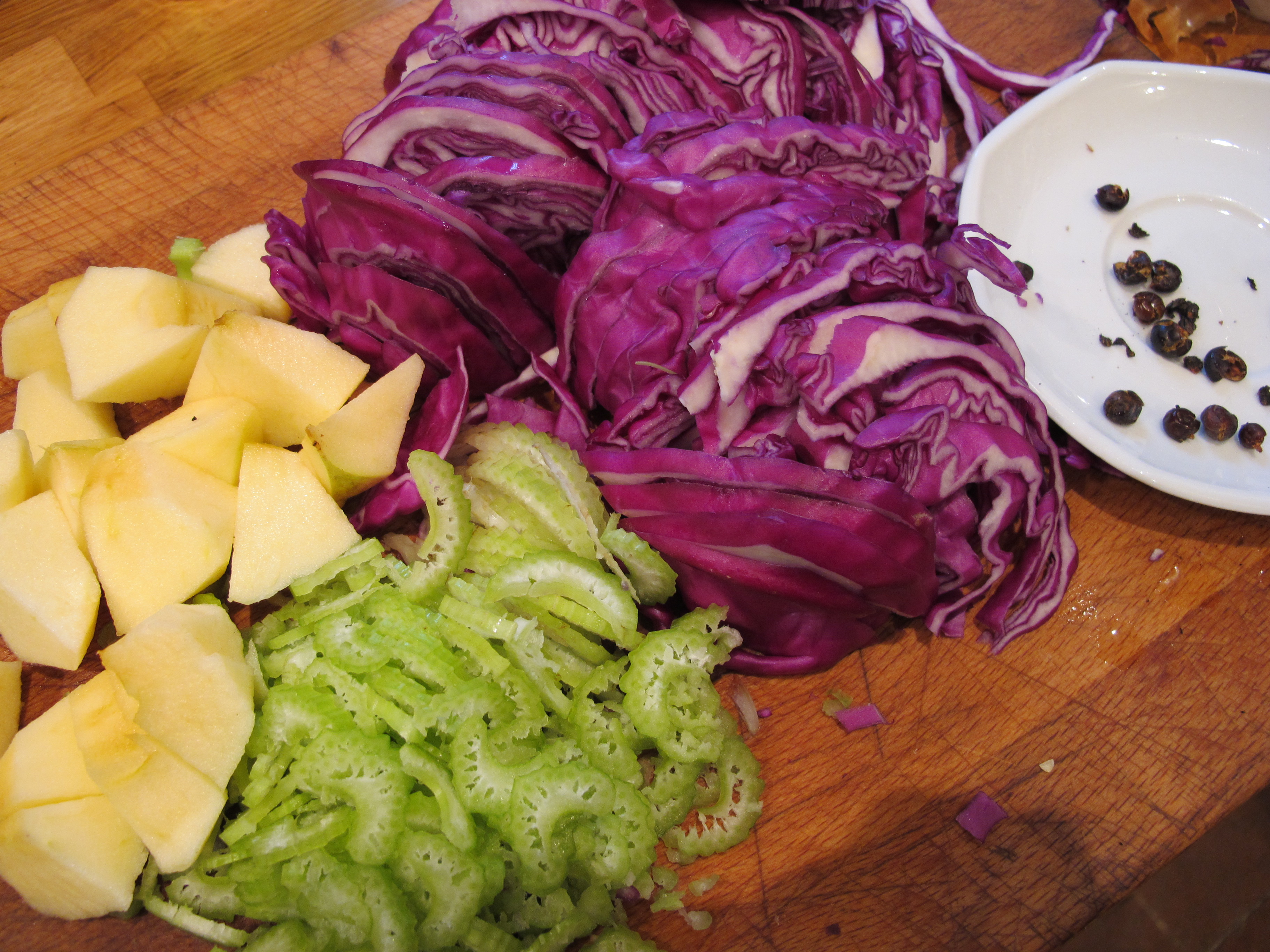
red cabbage–shredded not too fine

2 sticks of celery–sliced fine

1 apple–peeled, quartered, cored and chopped into chunks

10 juniper berries–crushed

Juice of a lemon

Juice of an orange

1 tablespoon cider vinegar

salt

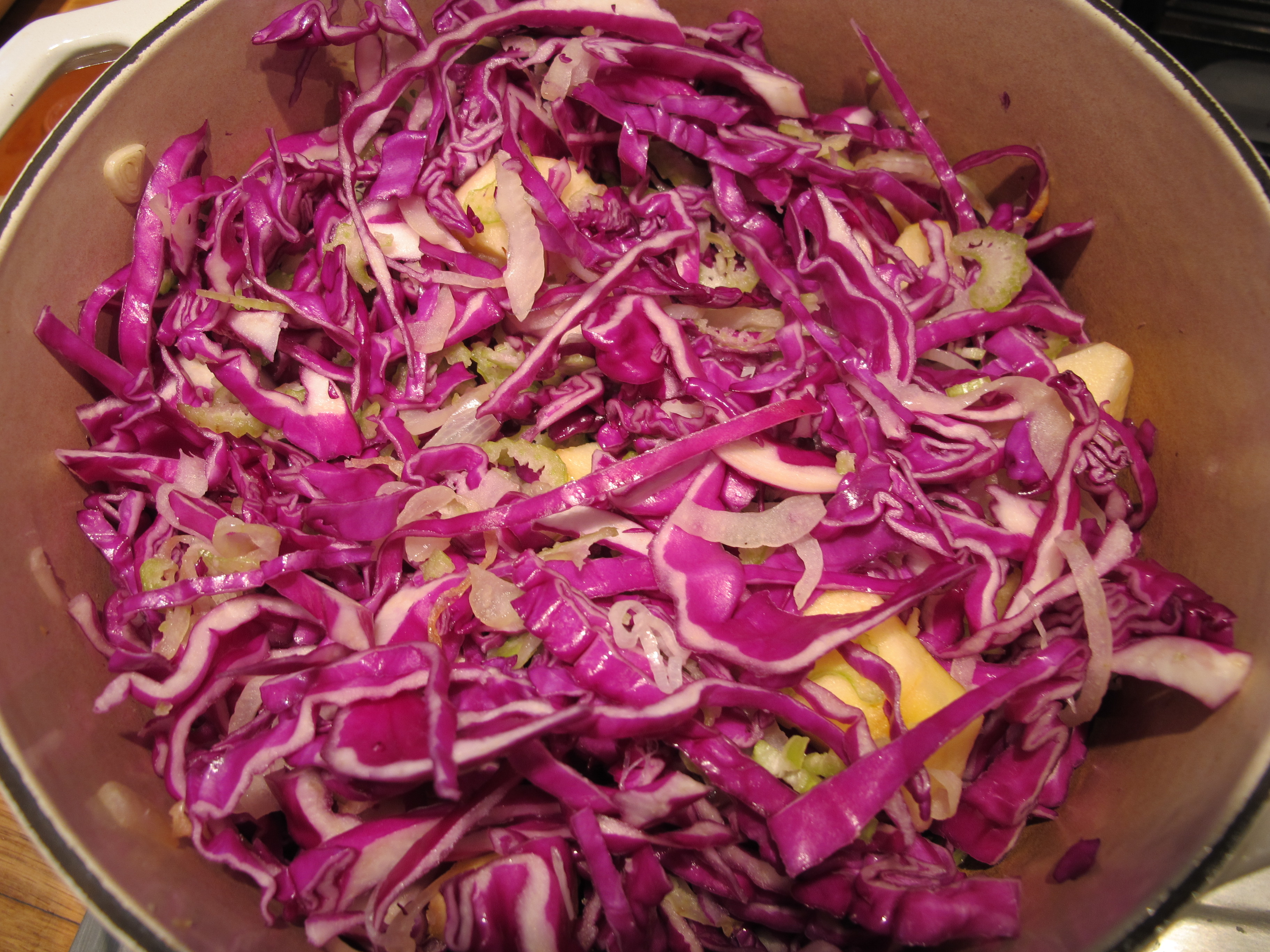
  • In a pan large enough to hold all the ingredients, sauté the onion gently in the oil until it is soft–about 5 minutes.
  • Add the shredded cabbage, the celery and apple and turn these over with the onion and oil.
  • Cook this mix for another 5 minutes until the cabbage begins to wilt.
  • Pour over the two juices, the vinegar and the juniper berries.
  • Add a good pinch of salt.
  • Turn it all over carefully to distribute the liquids.
  • Cover the pan and continue cooking for about 20 minutes–the time depends on the toughness of the cabbage–it should be nicely tender to the bite.
The cabbage and apple married well with the pork.
I’ll write up the simple pork recipe tomorrow.
Next time–red cabbage with a slow cooked fillet of salmon.

Read Full Post »

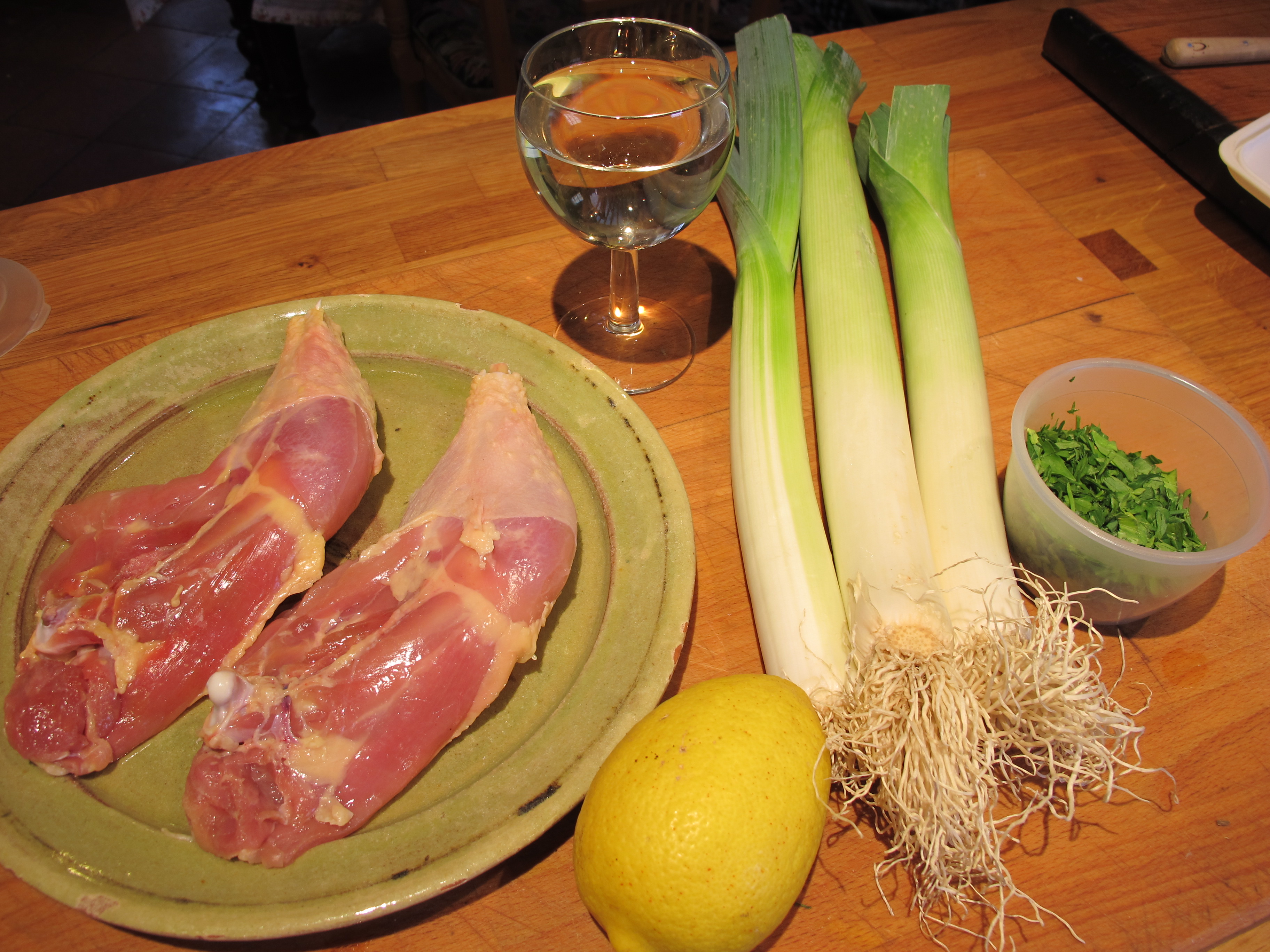
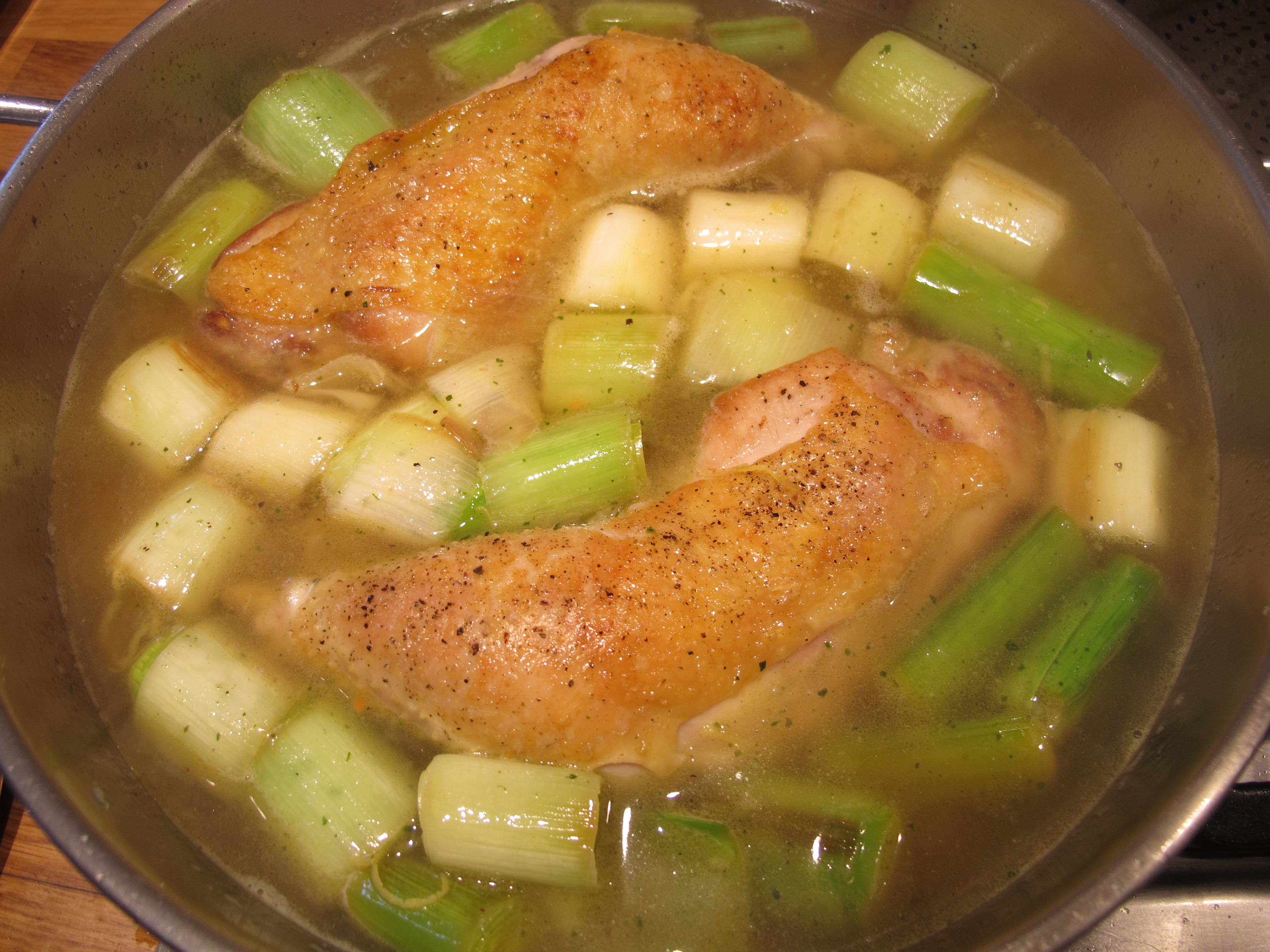
This is  a handy lunch or supper dish–for two here; but for four with the simple addition of two extra pieces of chicken and another leek.

It’s adapted from a recipe in Nigel Slater’s impressive tome Tender–a tour de force of loving care. In it he tells the story of the creation of the vegetable patch in the back garden of his London home, and what pleasure it gives him.

He plants, he tends, he gathers and he cooks.

More than just a book of recipes, it’s an enjoyable account of what can be done with a limited space in the heart of a city.

for 2

2 tablespoon olive oil

2 leg and thigh pieces of chicken 

2/3 leeks–outer leaves removed, washed and sliced into 2″ stubs

Juice and zest of a lemon

1 wine glass white wine

500ml stock–I use organic vegetable stock cubes

2 tablespoon parsley–chopped

salt and pepper

ingredients for 2

for 2

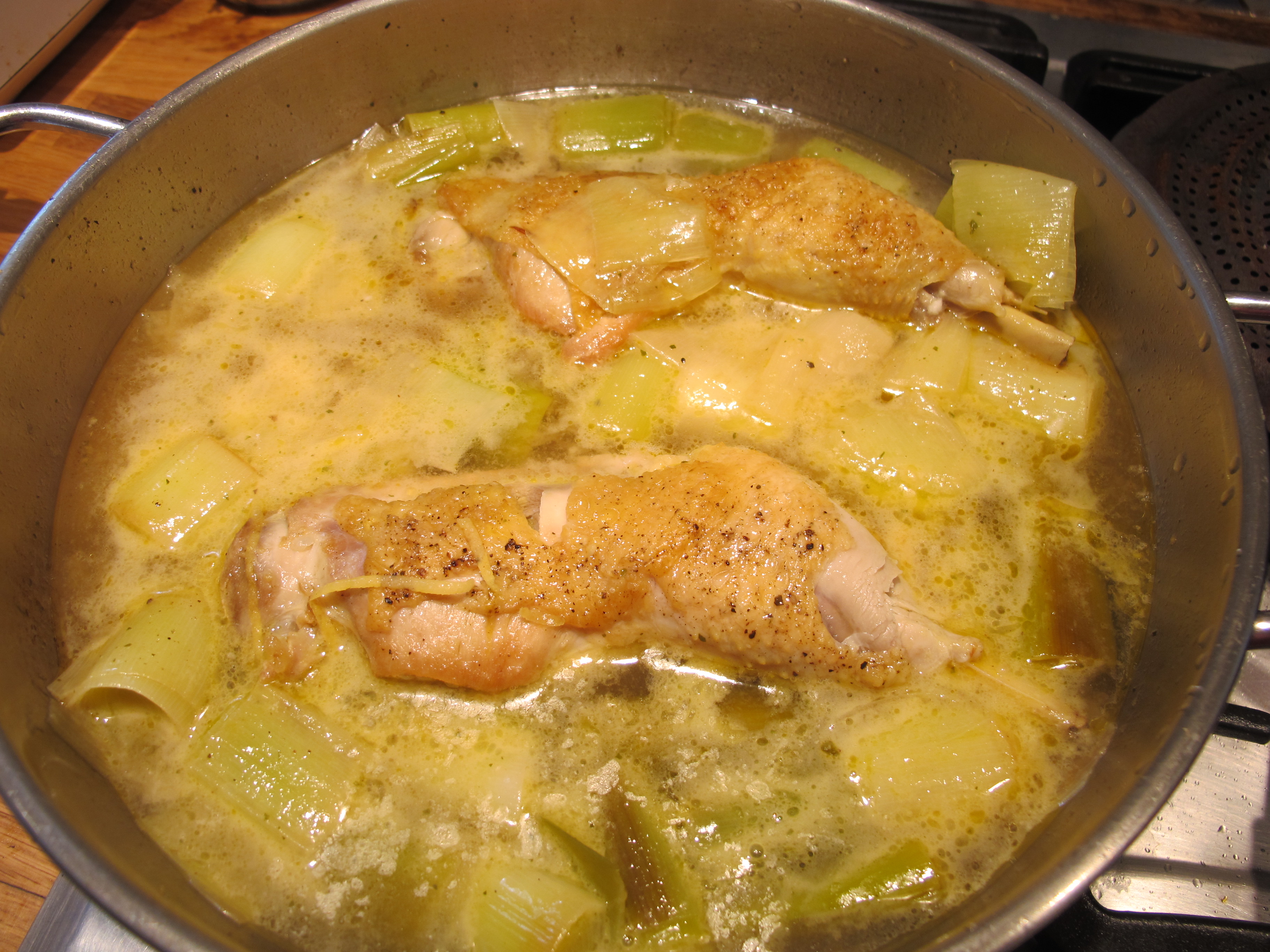
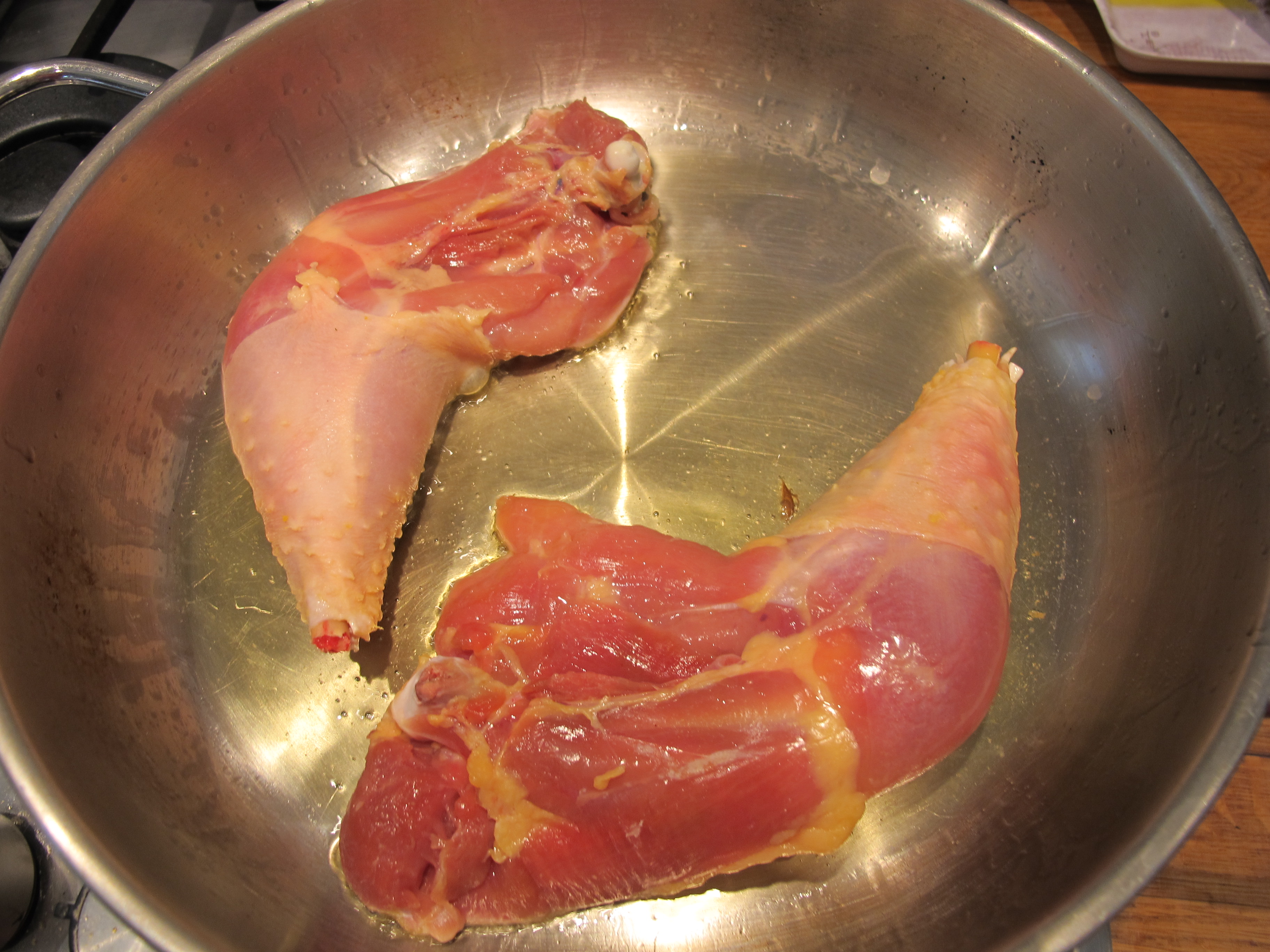
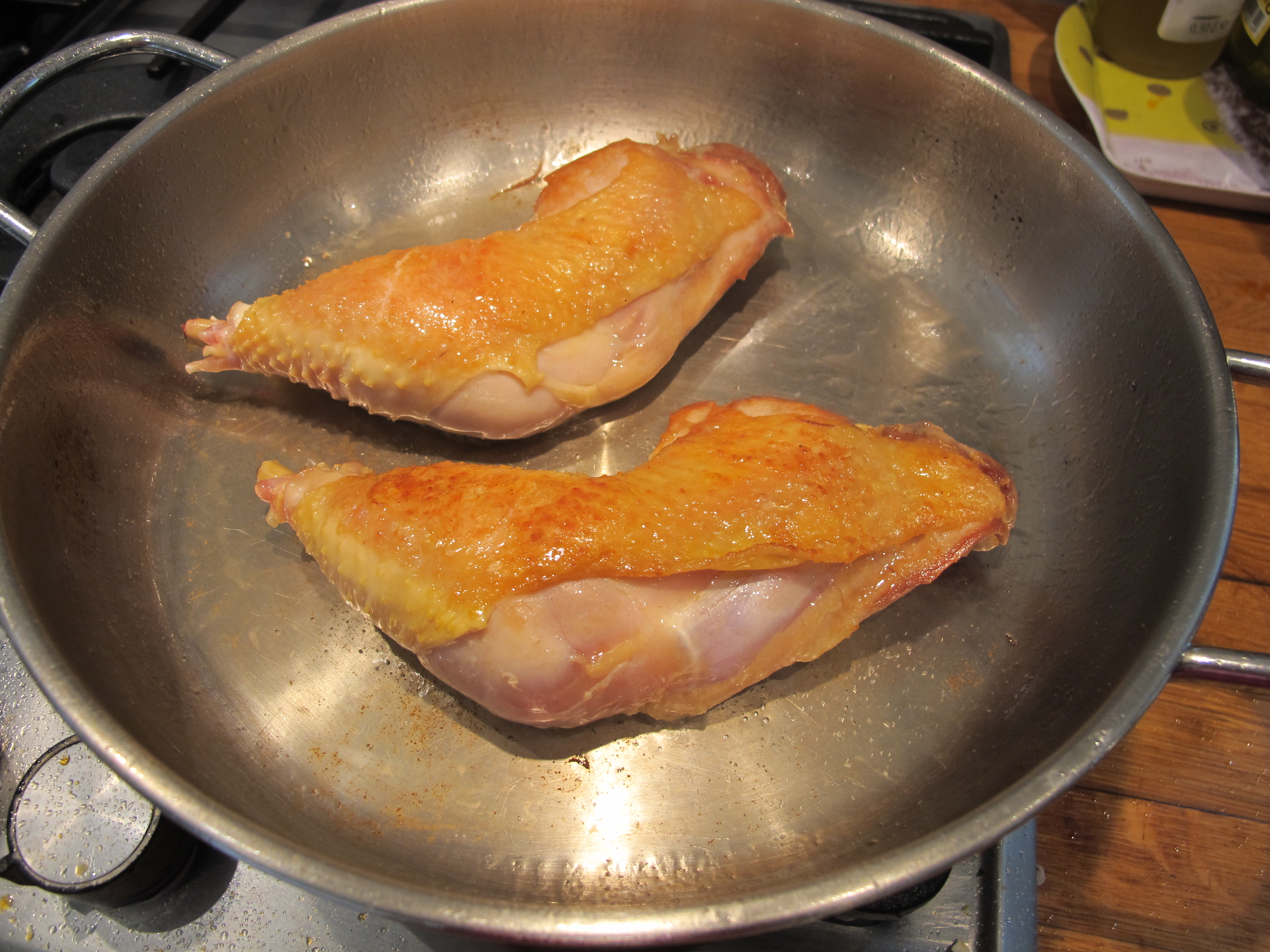
  • Heat the oil in a pan and slip in the chicken pieces.
  • Gently color them on both sides on a low to medium heat–8 to 10 minutes in all.
  • Remove them from the pan.
  • Turn the heat to low.
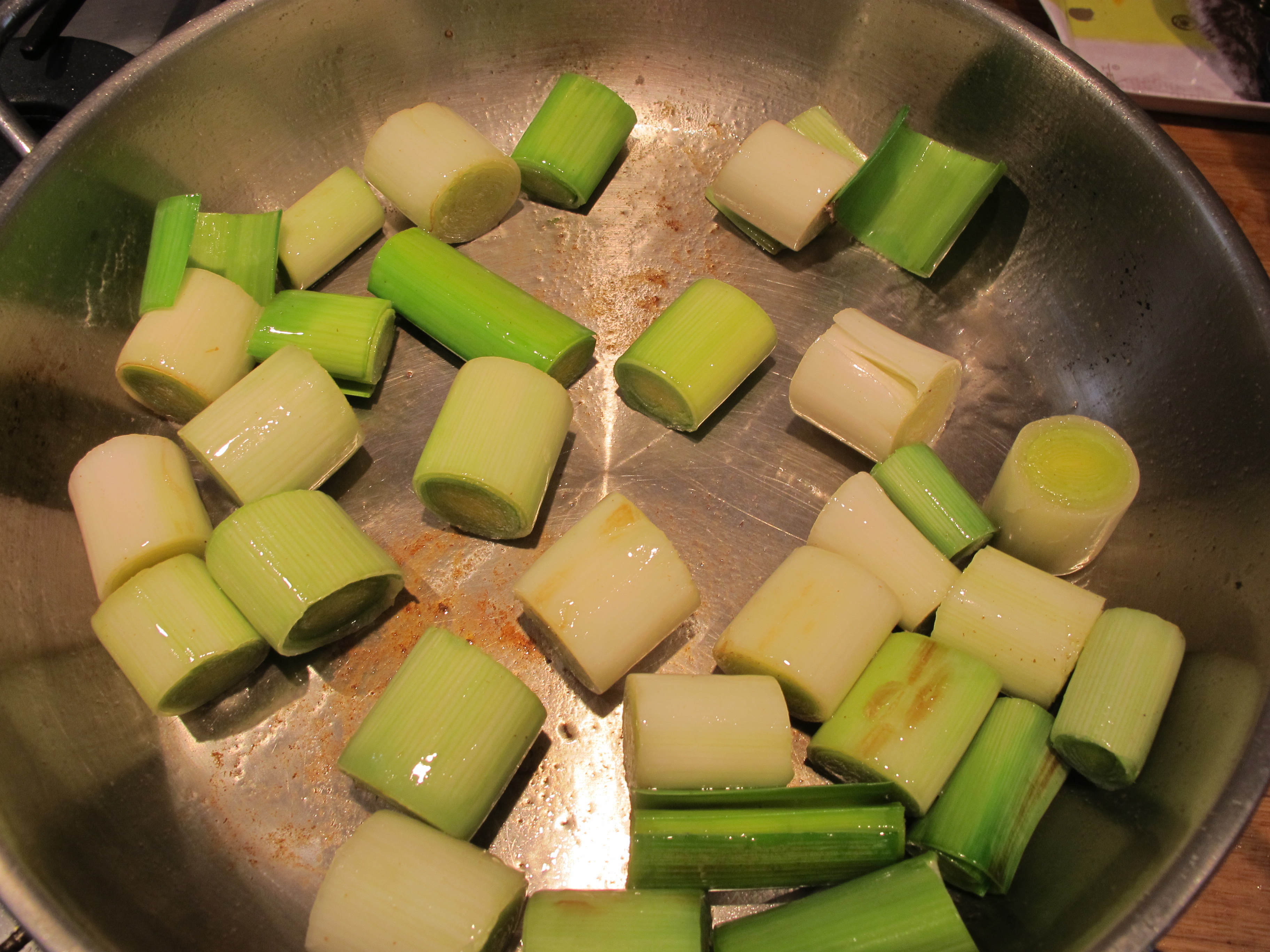
  • Add the leek stubs to the pan and turn them over in the oil.
  • Cover the pan and cook the leeks until they begin to soften–about five minutes.
  • Season the chicken pieces and return them to the pan.
  • Add the wine, the lemon zest and juice, a tablespoon of parsley and the stock.
  • Bring the pan up to the boil, turn the heat down low and cover the pan.
  • Cook at a simmer until the juices run clear when you pierce a piece of the chicken–about 20 minutes.
  • Check the seasoning and sprinkle over the remaining parsley.

Read Full Post »

Serves 2

2 small pots no/low-fat organic yogurt*

2 teaspoons of olive oil

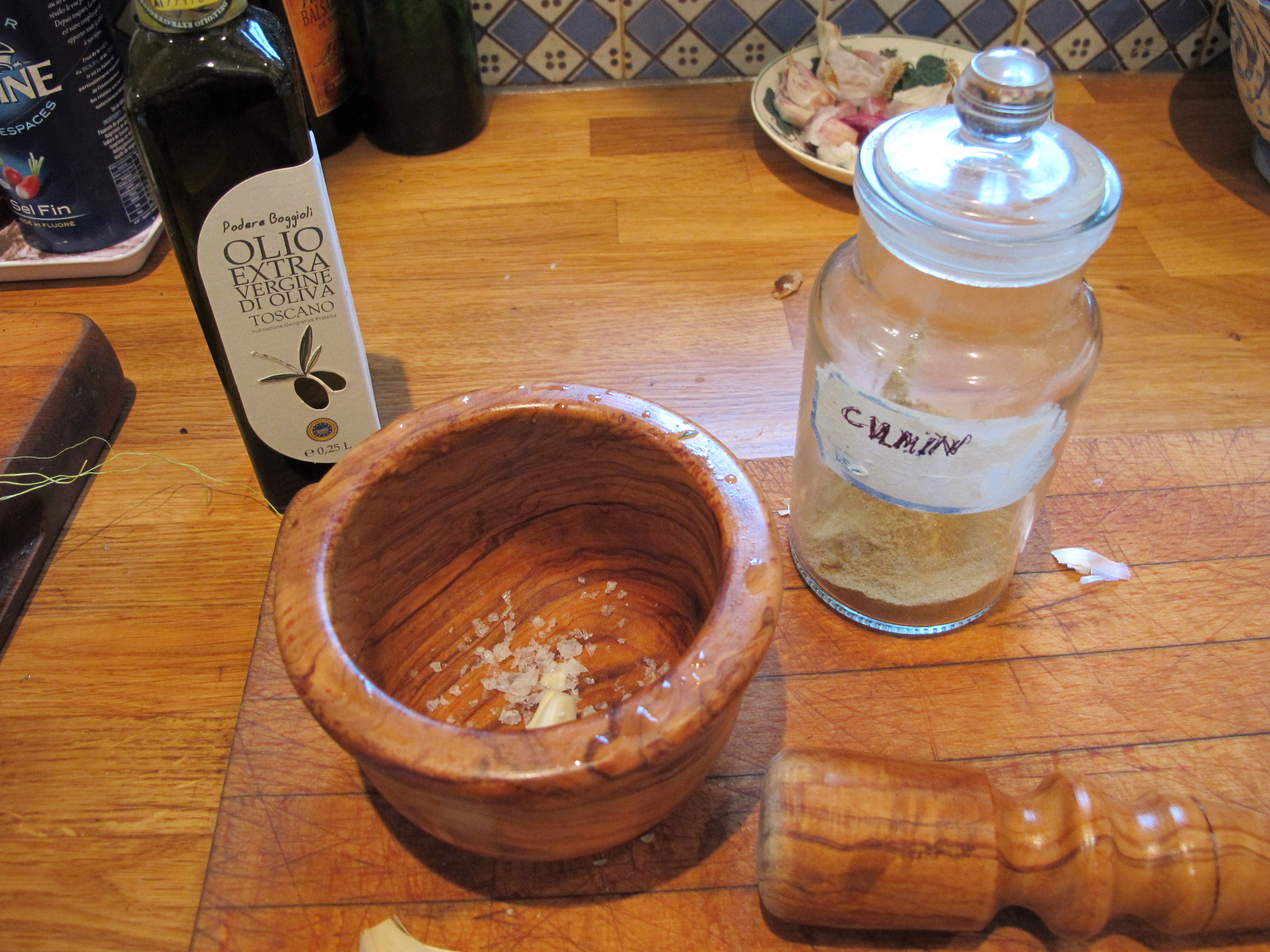
half a clove of garlic – pulped in a mortar with a little salt

half a teaspoon of cumin powder

[*For a thicker sauce–which is how we like it–empty the yogurt into a piece of muslin drapped over a sieve and leave it to drain into a bowl for half an hour in the fridge.

Discard the liquid and carefully empty the yogurt into the bowl.

Or use the yogurt as it comes out of the pot–emptying it into a bowl.]

  • Pulp the garlic in a pinch of salt in a mortar.
  • Whisk in the cumin and the oil.
  • Fold this into the yogurt and whisk it well together.
  • Refrigerate until you’re ready to serve it.

Read Full Post »

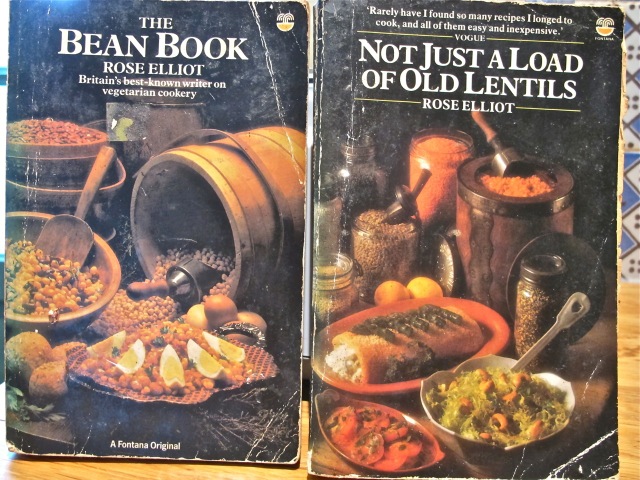
My copies of Rose Elliot’s vegetarian cookbooks, Not Just a Load of Lentils and The Bean Book, have been on my bookshelves for ages and are much thumbed!

First published in the 1970sher recipes have withstood the test of time–and the ingredients often fit in with my adopted way of eating.
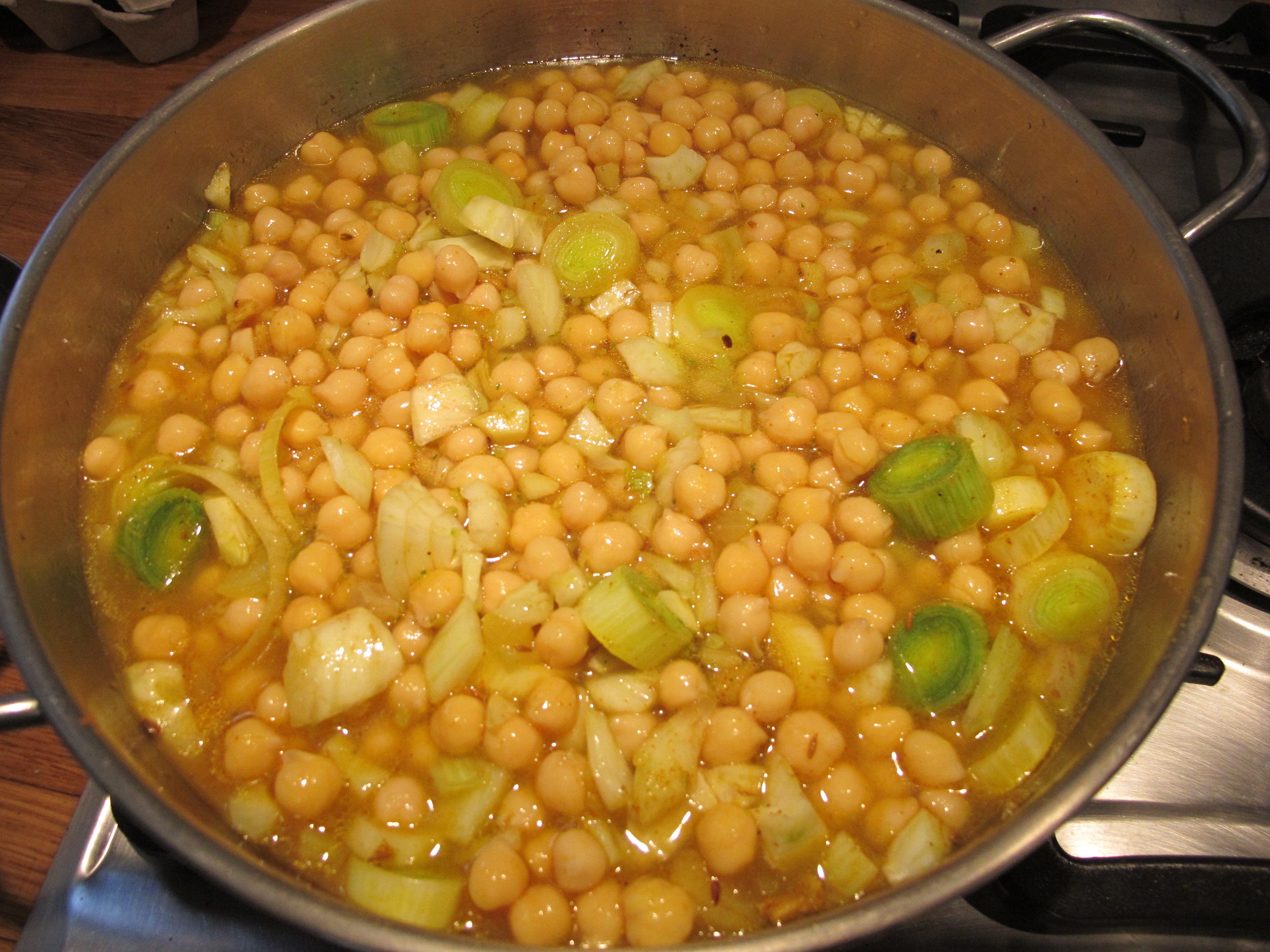
This is adapted from a recipe in The Bean Book. 

I made it in the morning and gently reheated it in the evening–giving the spices time to settle and meld. We had it for supper last night and it was worth the wait.

Meredith is wary of pulses because of their tendency to cause flatulence.

This time the positive outweighed the negative and she gave it the thumbs up–phew!

for 4

1 tablespoon olive oil

1 teaspoon whole cumin seeds

1 small onion–chopped

1 clove of garlic–peeled & chopped

1/2  teaspoon of powdered cumin

1/2 teaspoon of powdered coriander

1/2 teaspoon each of garam masala ( an earlier post), turmeric, ground ginger

1/4 teaspoon cayenne/chili powder

1 teaspoon fresh root ginger–peeled & chopped (optional)

1 large jar of cooked chickpeas–drained (the precise quantity is not critical!)

2 fennel bulbs–outer leaves removed, quartered and chopped

1 large leek–damaged outer parts removed, cut down to the base, washed and sliced

2 tablespoons of parsley or coriander–chopped

1 pint of vegetable stock (I use organic cubes diluted with boiling water.)

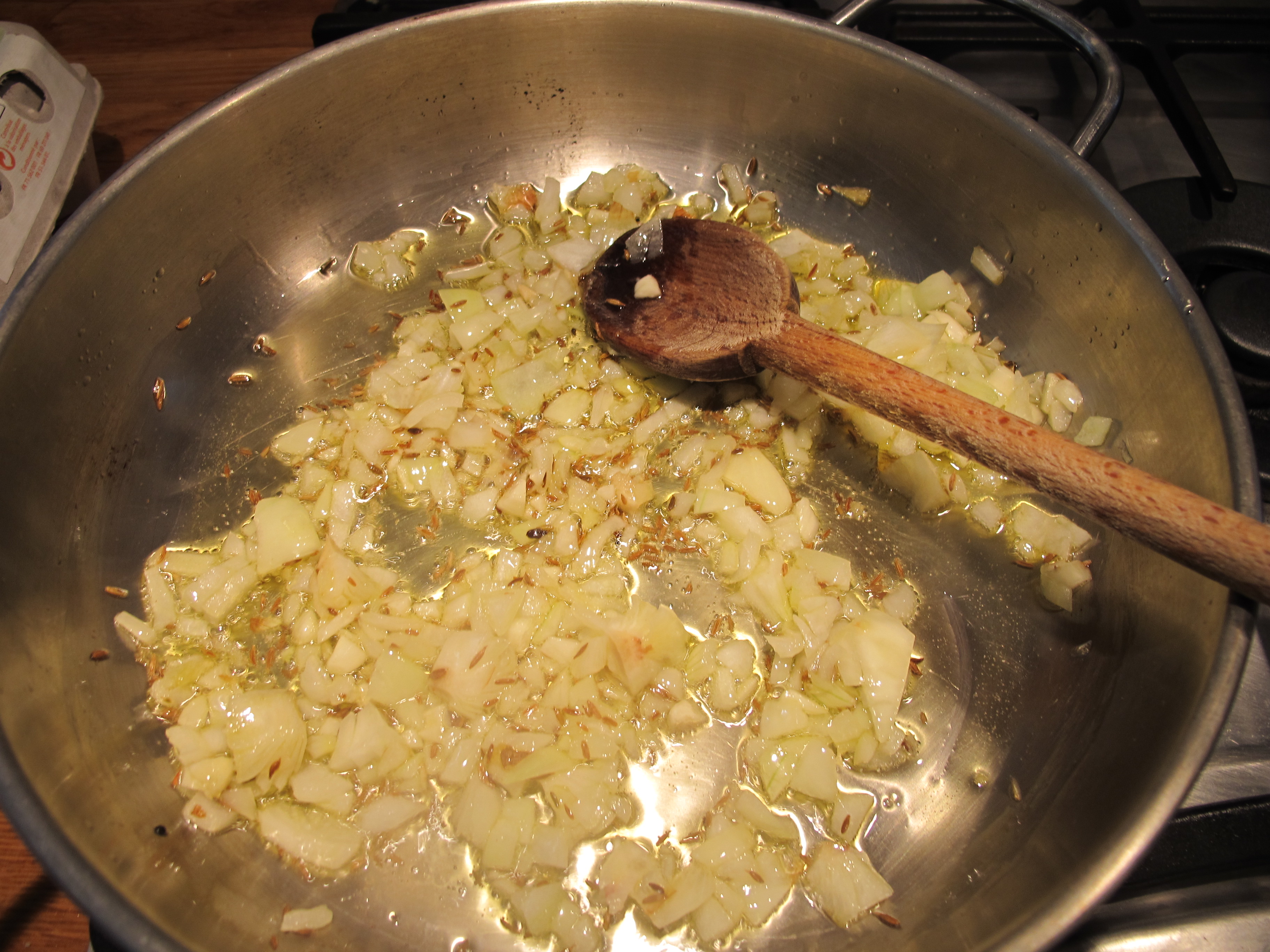
  • Heat the oil in a pan.
  • Gently fry the cumin seeds until they start to pop.
  • Add the onion and garlic and soften–about 3 minutes.

  • Add the spices and mix them in.

  • Add the chickpeas.
  • Add the leeks and fennel and mix.

  • Add the stock–start with half a pint and adjust as needed.
  • Bring the mixture up to boil, then cover the pan and simmer for 20 minutes.

  • Fold in a tablespoon of parsley or coriander.
  • Sprinkle the second  tablespoon of parsley or coriander over the dish when you serve it hot with…
  • Brown basmati rice and yogurt sauce (see the next post).

Read Full Post »

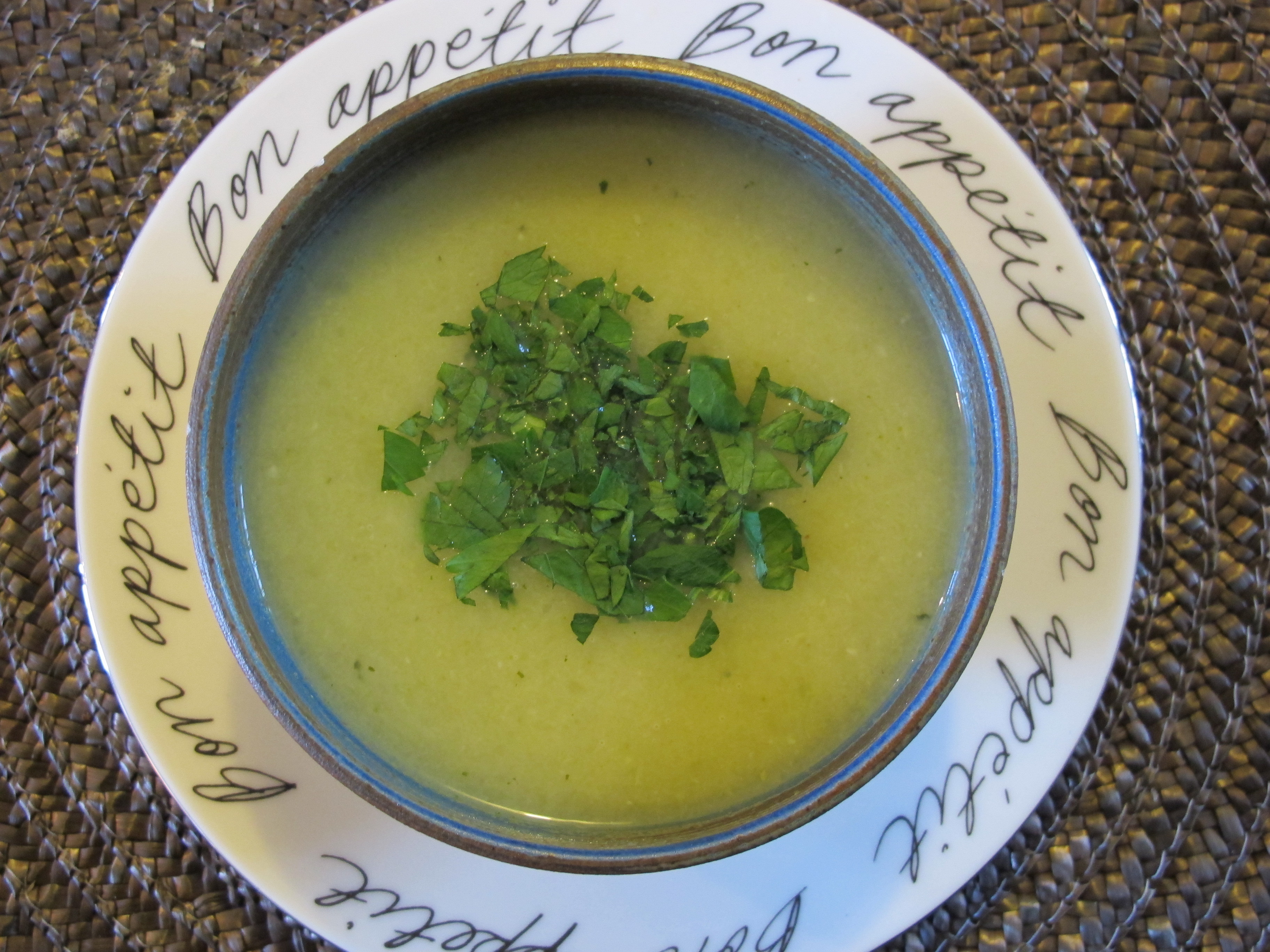
The simplest of celery soups

I’ve been wondering about celery soup lately.

I always enjoyed the taste and crunch of raw celery–( it felt like taking a bite of good health!).

It often featured on a plate of cheese at home in the fifties–cutting nicely the richness of a slice of cheddar and cleansing the palate.

Raw fennel serves the same purpose.

In cooking, celery is usually a supporting player–there to help add flavour and depth to soups and stews; though a dish of braised celery topped with a grating of parmesan makes for a tasty vegetarian main course–I might try it later in the week.

I’ve never made celery soup though–until this week.

How well would it work without the usual addition of potato to thicken it?
Other vegetables? I tried a leek and red onion–then settled for just a medium ordinary onion.
What to add to it for flavour?
I tried a couple of things–cider vinegar, yogurt with cumin–then settled for white pepper and nutmeg.
This is the simplest of celery soups!
for 4
1 tbsp olive oil

450g/1lb celery–sliced thinly

1 medium onion--chopped

1 clove of garlic–chopped

1 pint and a half stock–I use organic vegetable stock cubes

a quarter tsp of nutmeg

pinch of white pepper  and salt (to taste)

pinch of chopped parsley for each bowl

  • Heat the oil in a large saucepan.
  • Add the chopped celery, onion and garlic.
  • Turn them all thoroughly in the oil.
  • Sweat (don’t brown) these gently for about five minutes–to soften them.
  • Add the stock and continue cooking uncovered until the vegetables are tender–about 15 minutes.
  • Liquidize the soup (a handheld stick liquidiser saves a lot of washing up!).
  • Stir in the nutmeg and season with salt and white pepper.

Read Full Post »

It is simple to make.

The results are so tasty some people find it hard to believe there’s so little to it.

“It’s just raw  ginger and boiling water?”

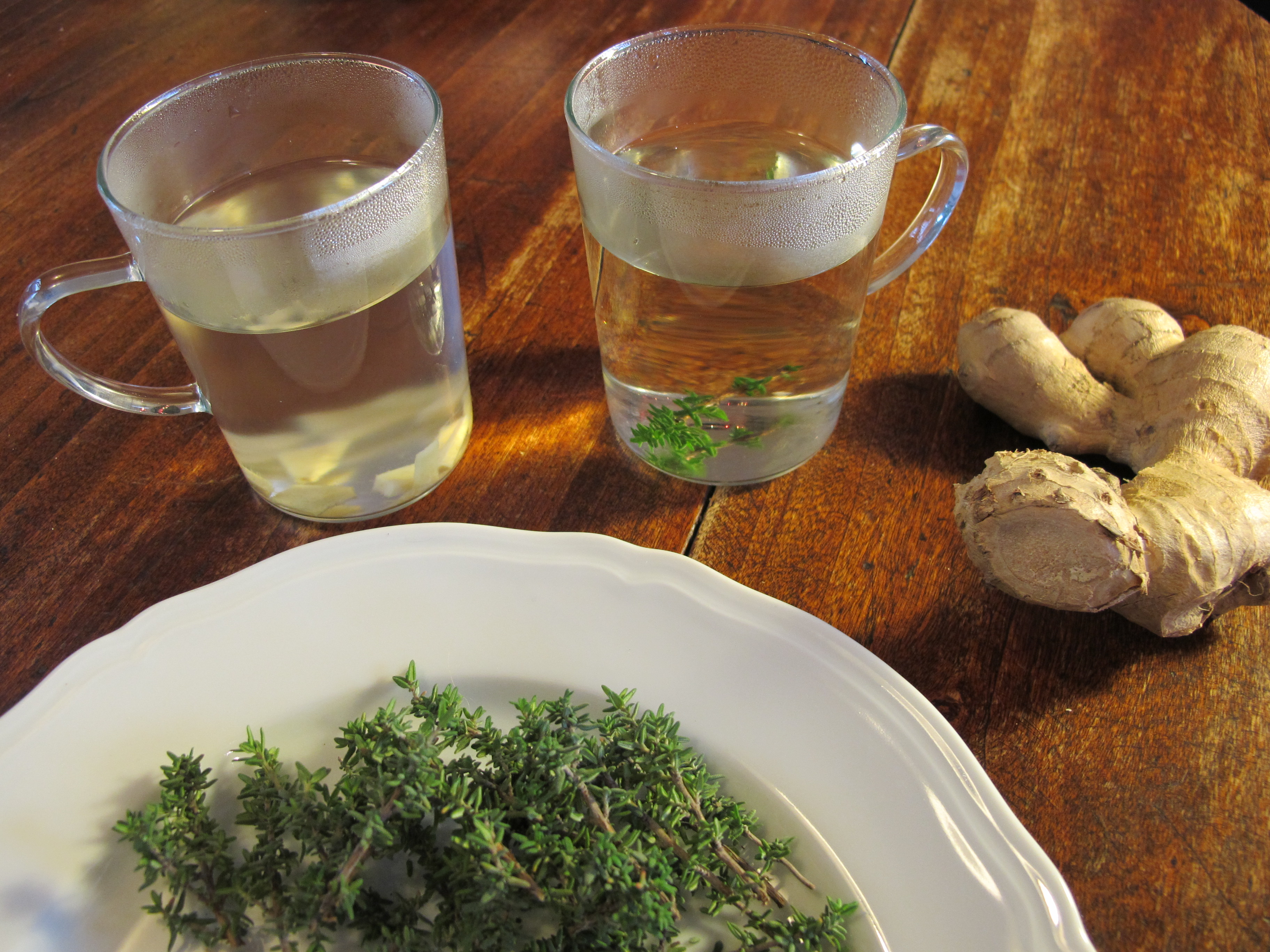
Put a thumbnail piece of raw ginger root, peeled and chopped, in your favorite mug, top it up with boiling water and leave it for a couple of minutes to infuse–the magic word–and  sip it and see!

It works equally well with a sprig of thyme from the pot outside the kitchen door or a single mint leaf from the patch in the garden.

Sage and rosemary too work well though the taste is stronger and may not be to everyone’s liking.

If you have easy access to the herbs it’s fun to ring the changes–seasonally especially.

Our mint patch at the back shows signs of the new growth as early as March and I pounce on the first little bud that peaks out–impatient for a hint of Spring.

As the mint begins to fade in October I start looking for ginger on the stalls eager for a change of season and taste.

Enthusing about infusing is easy once you’ve tried it!

It’s good for you too!*–

(Meredith tells me our doctor Michel recommended she drink thyme tea for her sore throat.)

And in my view it’s so much nicer than a bag!

*more on the possible benefits from drinking– thyme tea

and ginger tea.

Read Full Post »

Amatriciana and Arrabiata.

Two tomato-based pastas beginning with “A“–and until now I never bothered to find out the difference.

As far as I can gather (my Italian friends might put me right on this) arrabiata is vegetarian and amatriciana is made with pork–but both are fired up with chili–as much or as little heat as you like.

Last night for a Birthday Pasta I made amatriciana with wholewheat penne.

(We always eat wholewheat pasta. Its lower glycemic index makes it healthier–which matters for people with diabetes–and Meredith and I prefer it now. That said, I limit myself to pasta once a week.)

Our friends, Keith and Helen, sent a birthday present of some bold and beautiful Tuscan red wine and it went down a treat with this robust sauce.

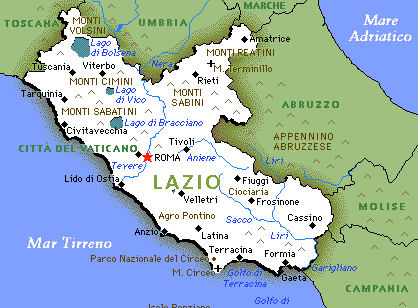
It takes its name  from the town of Amatrice,

in the east of the region of Lazio (Rome’s region) close to the border of Abruzzo and Marche to its north.

for 4

350 grms wholewheat penne

4 tablespoons olive oil

1 red onion–chopped small

2 garlic cloves–chopped small

2 oz/50 grms pancetta or bacon–chopped small

2 small dry red chilis–seeds removed and chopped

2 teaspoons rosemary needles–chopped small

2 tblspoons red wine

1 14-oz can/tin of tomatoes–chopped and drained but retaining 3 tablespoons of its juice

salt and pepper

  • Heat the oil in a sauté pan large enough to contain the cooked pasta at the end.
  • Gently brown the onion, bacon and garlic.
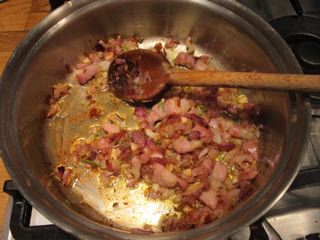
  • Take  time to get a nice sticky, slightly caramelised result (but not burnt!).

  • Stir in the chili and rosemary and cook for a couple of minutes.
  • Add the wine and let it bubble a moment to burn off the alcohol.
  • Add the tomatoes and extra juice and mix everything together thoroughly.
  • Cook this for about 20 minutes to achieve the unctious sauce in the photo at the top.
  • Season with salt and pepper.
  • Bring to a boil a large saucepan of cold water with a teaspoon of salt.
  • Add the pasta to the boiling water and cook to your taste.
  • Drain the pasta thoroughly and add to the sauce; turn it well in and heat through.
  • Serve hot in warmed bowls with parmesan cheese to grate and red wine with a bit of attitude!

Portion control is the only challenge!

Read Full Post »

« Newer Posts - Older Posts »