Feeds:
Posts
Comments

Archive for the ‘Food’ Category

Something to do on a slow day.

Today for example!

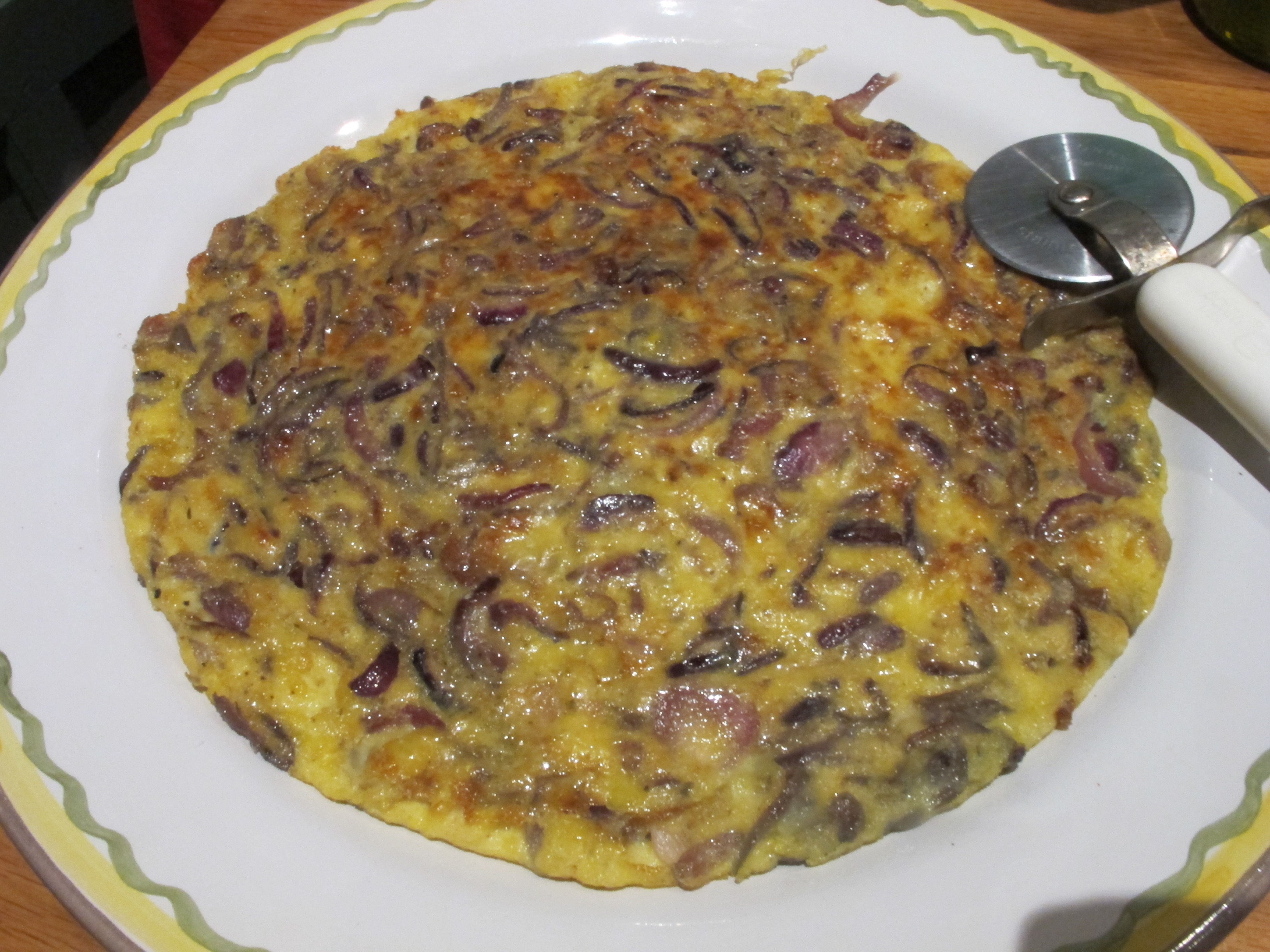
Up ’til late watching the Olympic closing ceremony last night–lazy morning catching up on life with house guests–sunny but mild outside–prospect of more talk and lunch under the fig tree–slices of fritatta with a green salad and a plate of brilliant red tomatoes, sliced, with olive oil and torn up basil leaves, setting us all up nicely for an afternoon siesta.

Patience is the extra ingredient that makes the difference between dry and moist frittatas.

In this case patience to melt the sliced onion slowly and not to rush the cooking of the omelette.

A simple classic frittata from one of my favorite old cookbooks: Marcella Hazan’s 2nd Classic Italian Cookbook.

6 tblsps olive oil

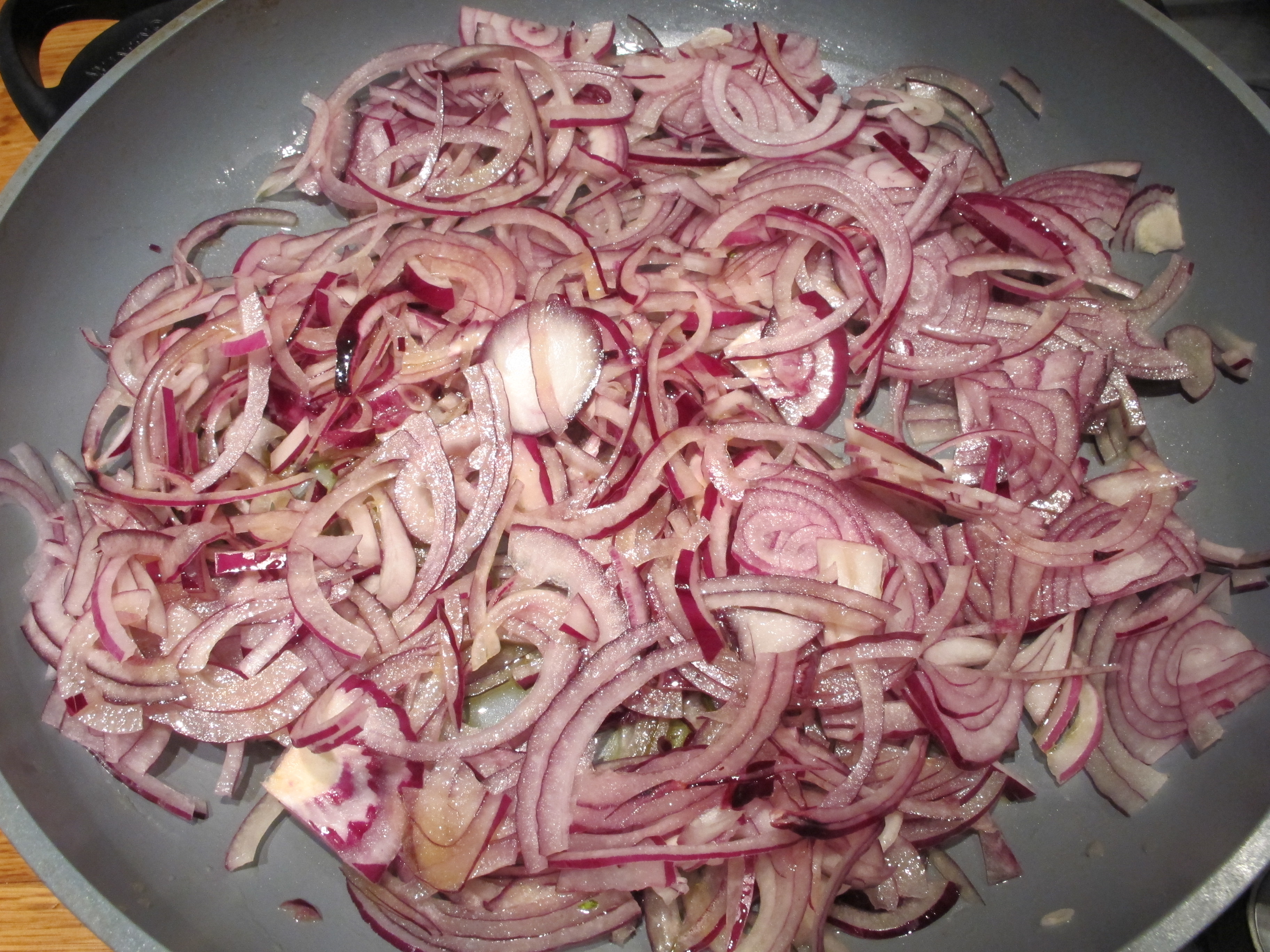
450gms/1lb red onions–sliced thin
5 eggs

50gms/2oz parmesan–freshly grated is best

salt and pepper

  • Heat the oil in a large frying pan and add the onion.
  • Sauté over a low heat until the onion starts to caramelise and that pleasing scent wafts over the kitchen.
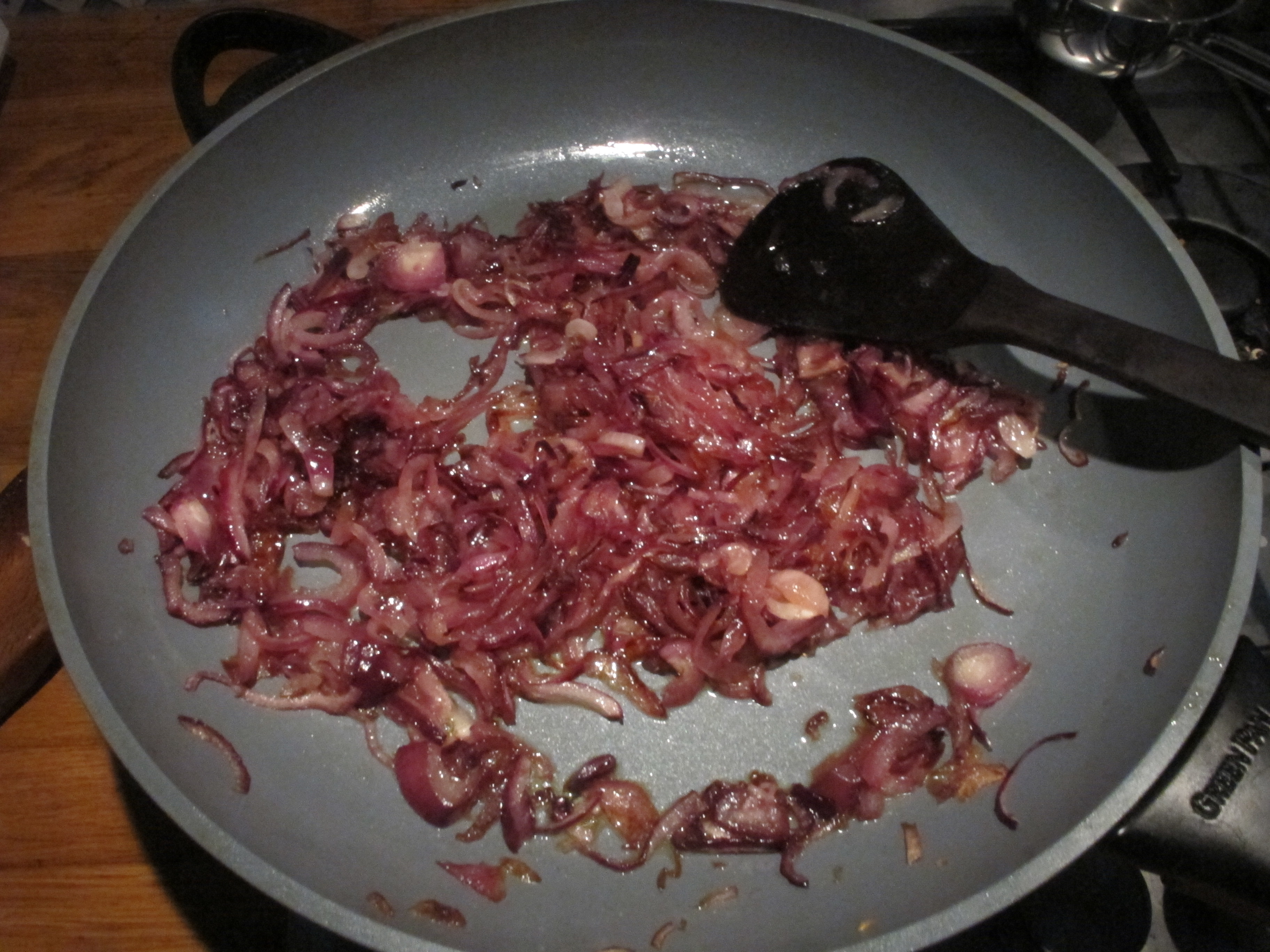
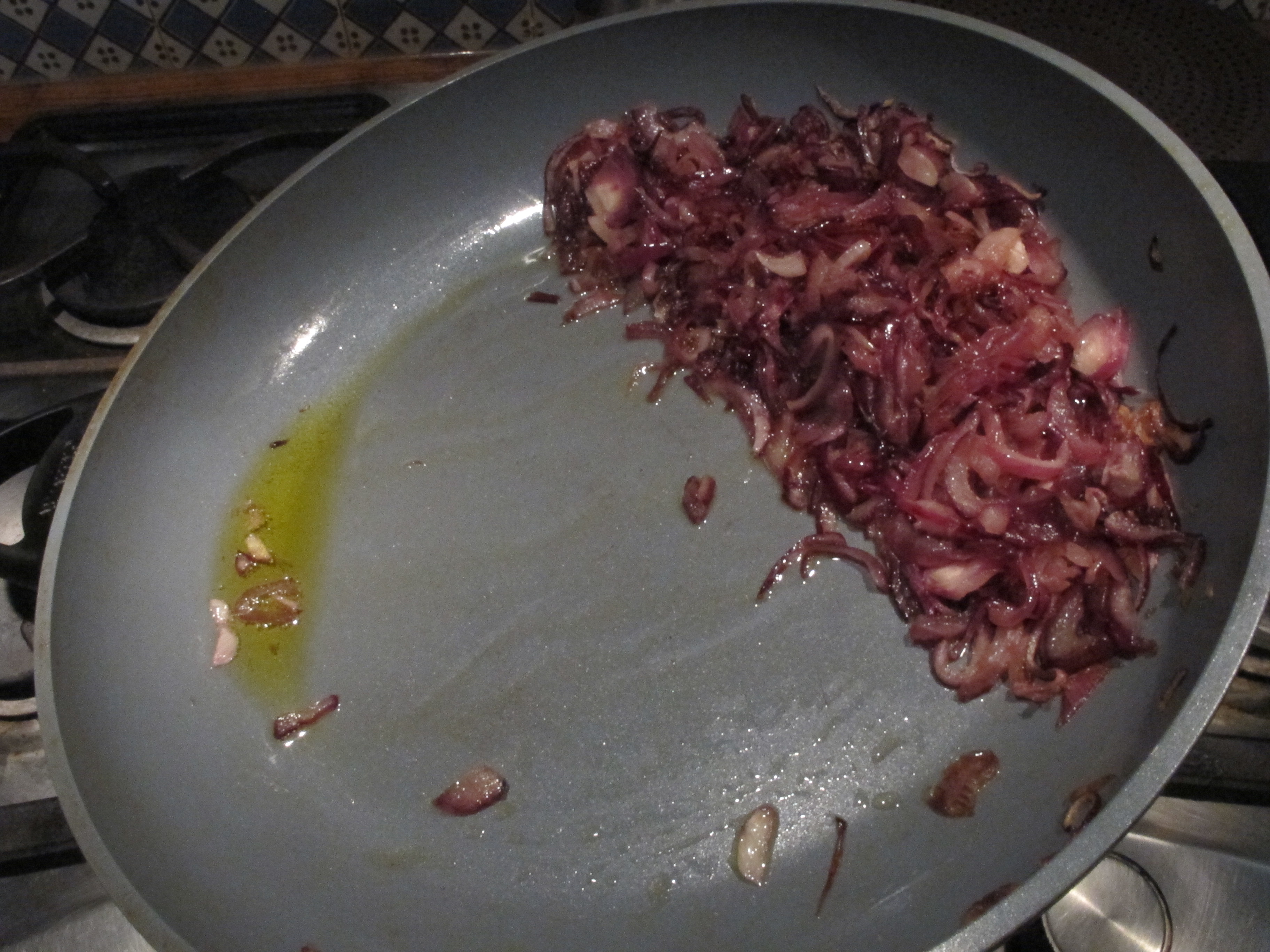
  • Turn off the heat and prop up the pan at an angle to allow some of the oil to drain off.
  • Choose a 10″/26 cm pan that goes under a grill to make the omelette.
  • Spoon out the drained oil (probably about 2 spoonfuls) into the pan.
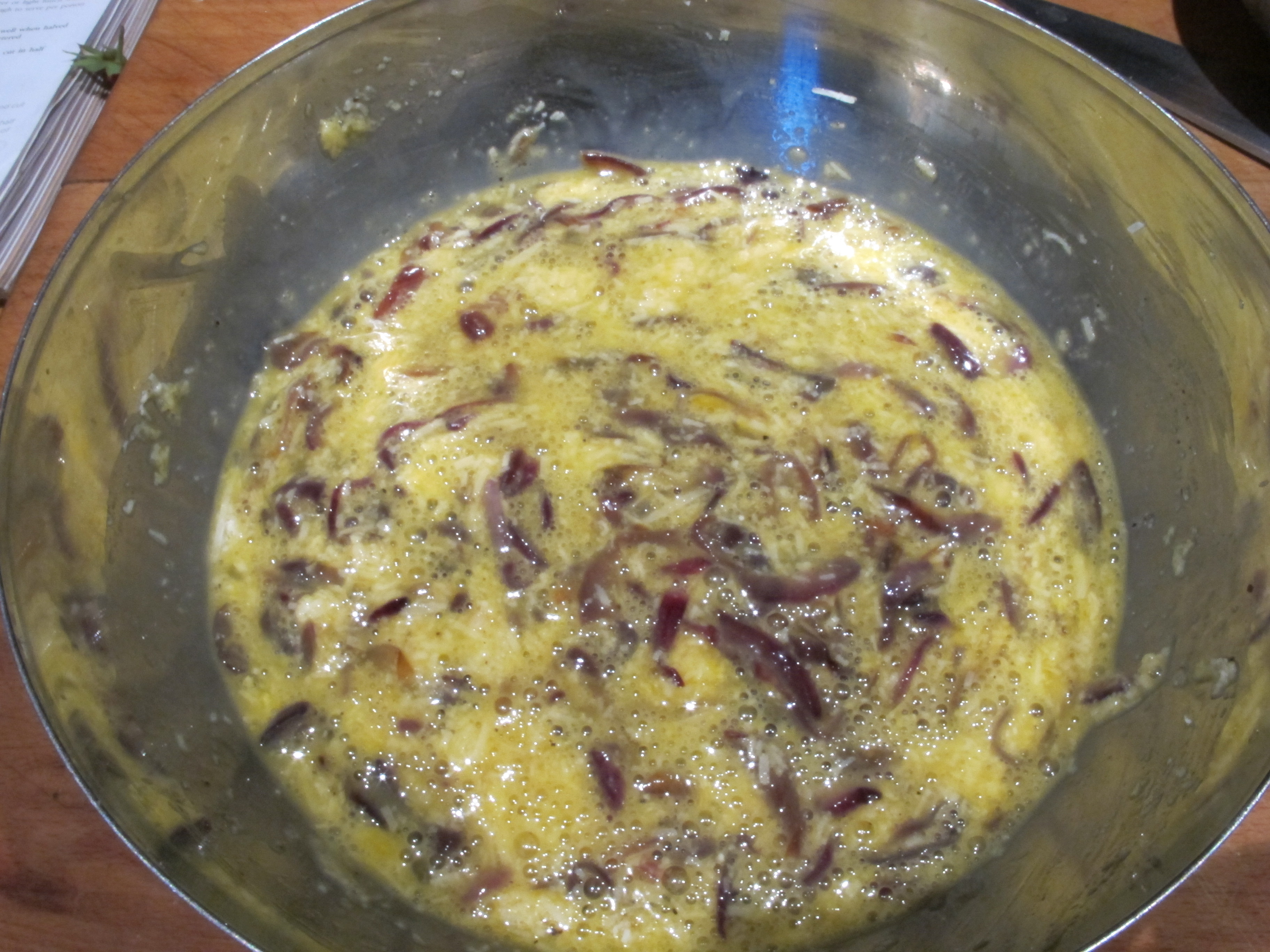
  • Whisk the eggs together in a bowl.
  • Add the cooled down onion and parmesan to the egg mix.
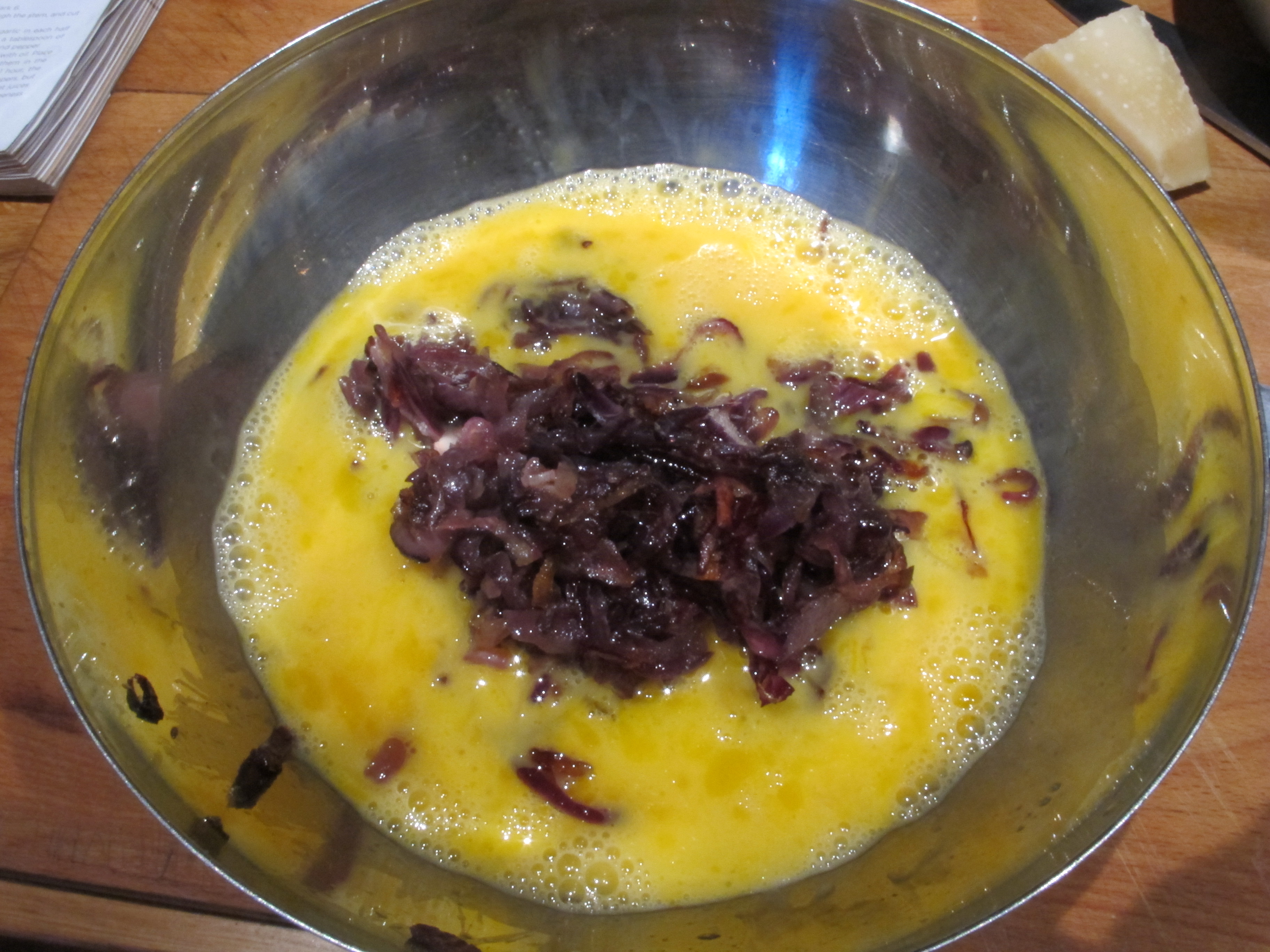
  • Mix and season well.

  • Heat the saved oil in the pan–(2 tablespoons is what you need to cook the omelette, so add a little extra if there’s not enough of the saved.)
  • Add the eggs and spread the mix out evenly in the pan.
  • Turn the heat to the lowest (use a heat diffuser or two if you need to) and cook for about half-an-hour.
  • Heat the oven grill to hot.
  • When there is just a pool of loose egg mix left on top, place the pan under the grill for about a minute.
  • The top should be lightly colored.
  • Ease a spatula under and round the omelette and slide it on to a serving plate.
  • Slice as needed.
Read Full Post »

Volunteers–how would the Olympics manage without them?!

This is not about people though, it’s about Mother Nature.

Each year we are surprised and delighted by unexpected guests–volunteers.

Hollyhocks called Henry and Californian poppies…

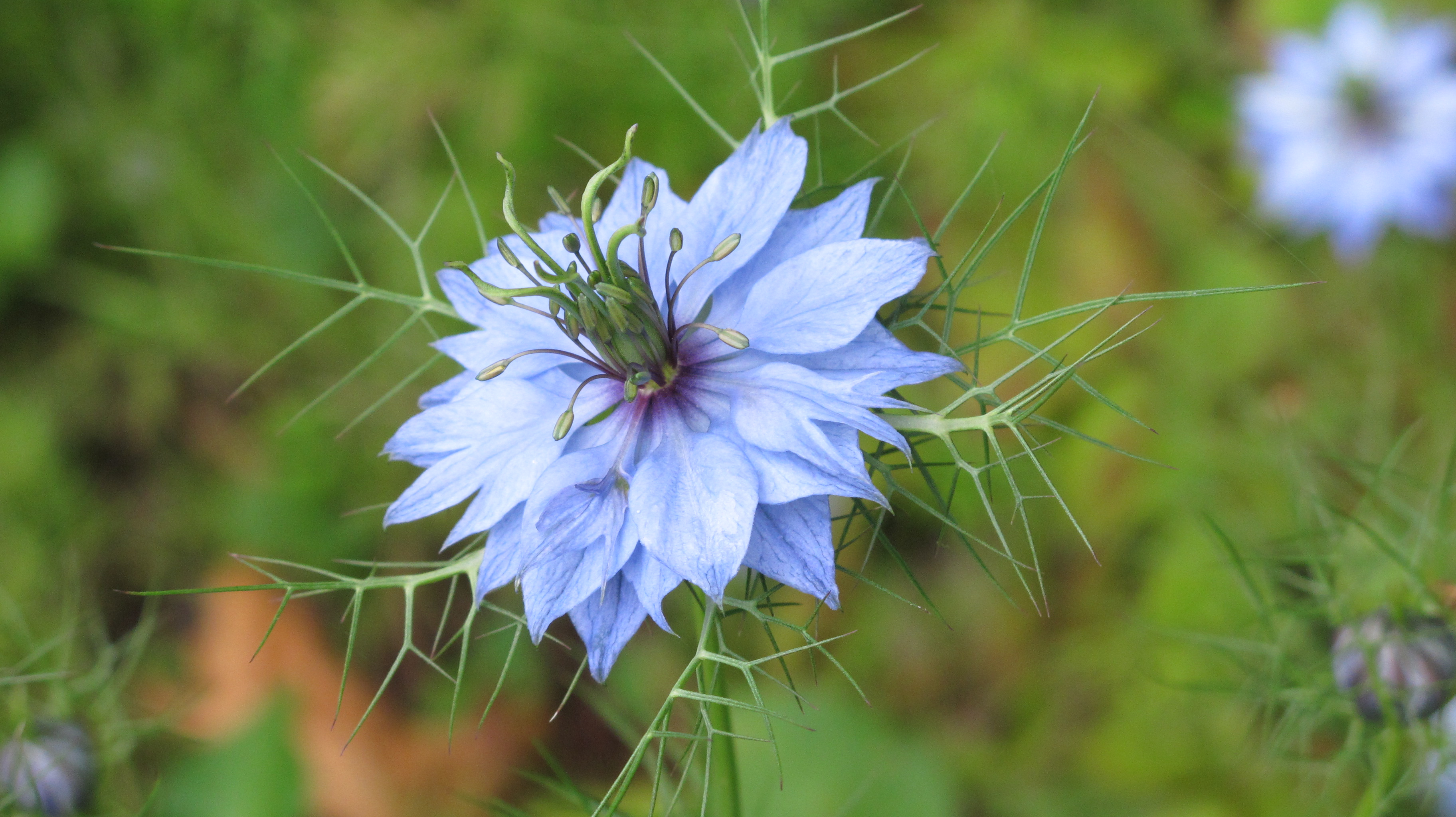
…wild strawberries and  Love-in-the-Mist (aka Nigella).

Some, after an initial scattering of seeds, make their seasonal re-visitations–like the swallows on Corfu–adding to the color and general well-being around here.

Mysterious and miraculous are these return visits to the ignorant–like me.

Bring them on–I say–you’re welcome anytime–see you next year!

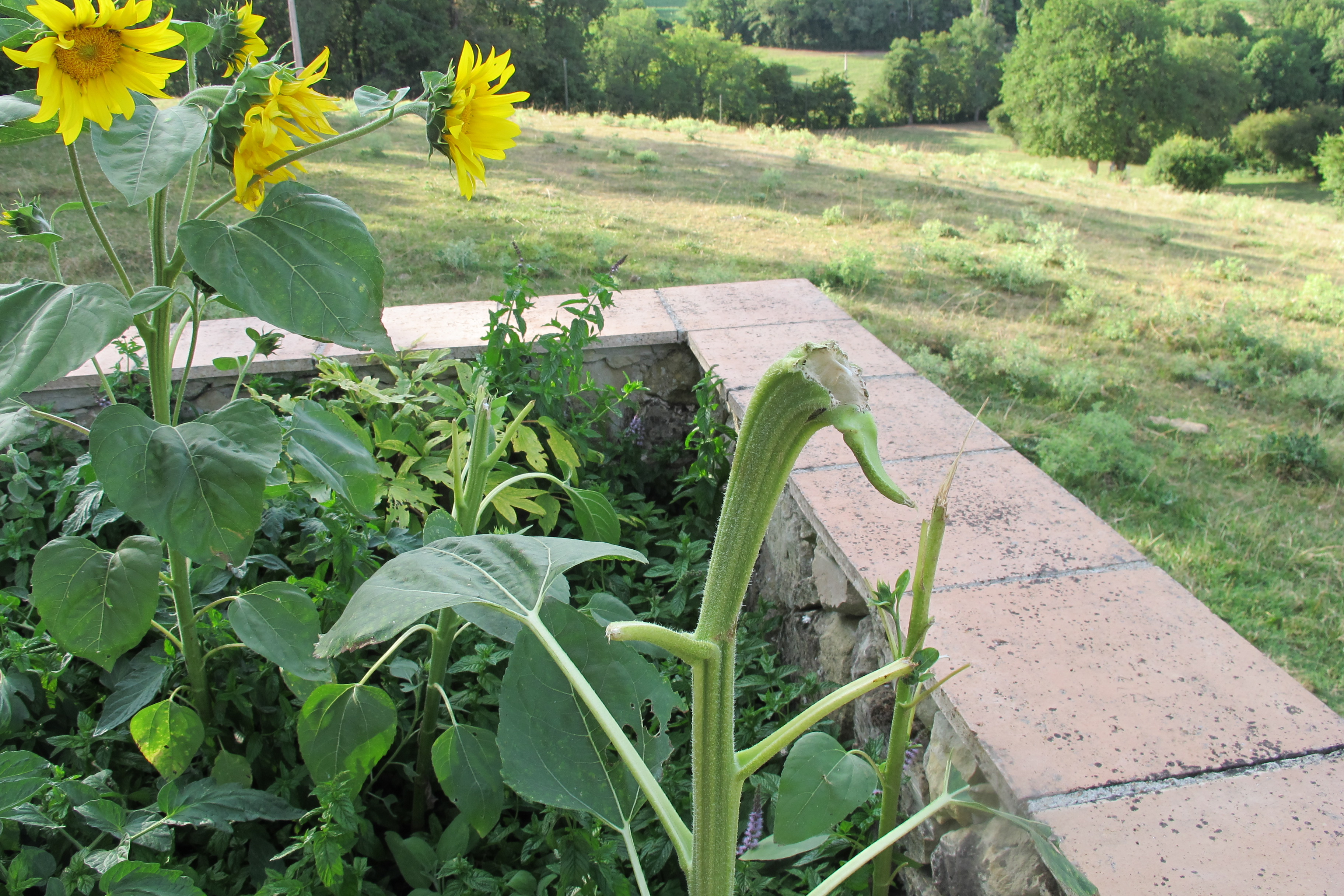
This year the sunflowers were first in the mint patch–attracting the attention of the mystery muncher.*

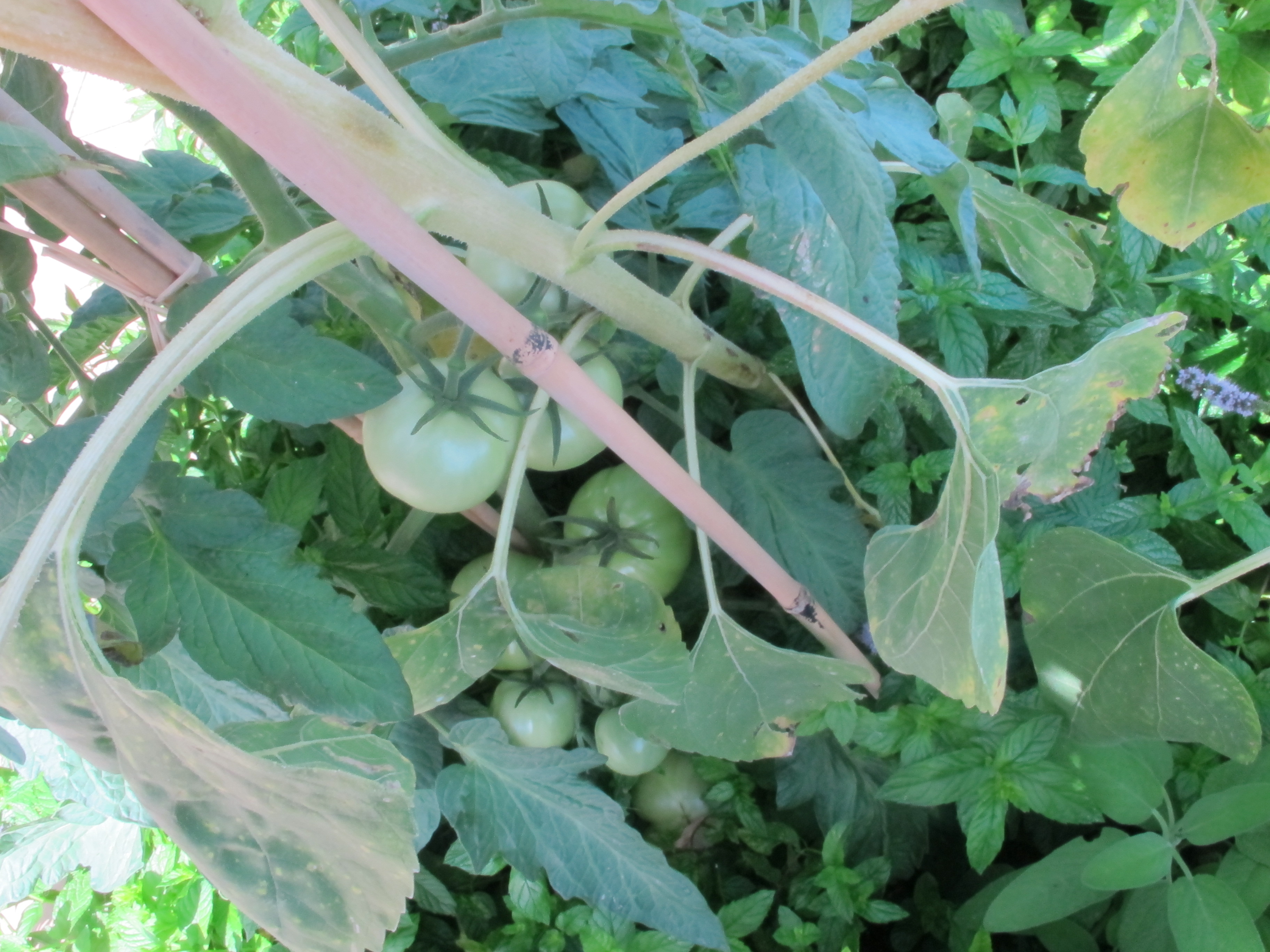
They were followed, closely, by two strong tomato plants–the real thing rather than the tiny cherry variety that pop up everywhere–with big green bunches ripening soon (we hope!).

There are the volunteers who like it so much here they decide to dig in and stay en permanence–sometimes raising a family too.

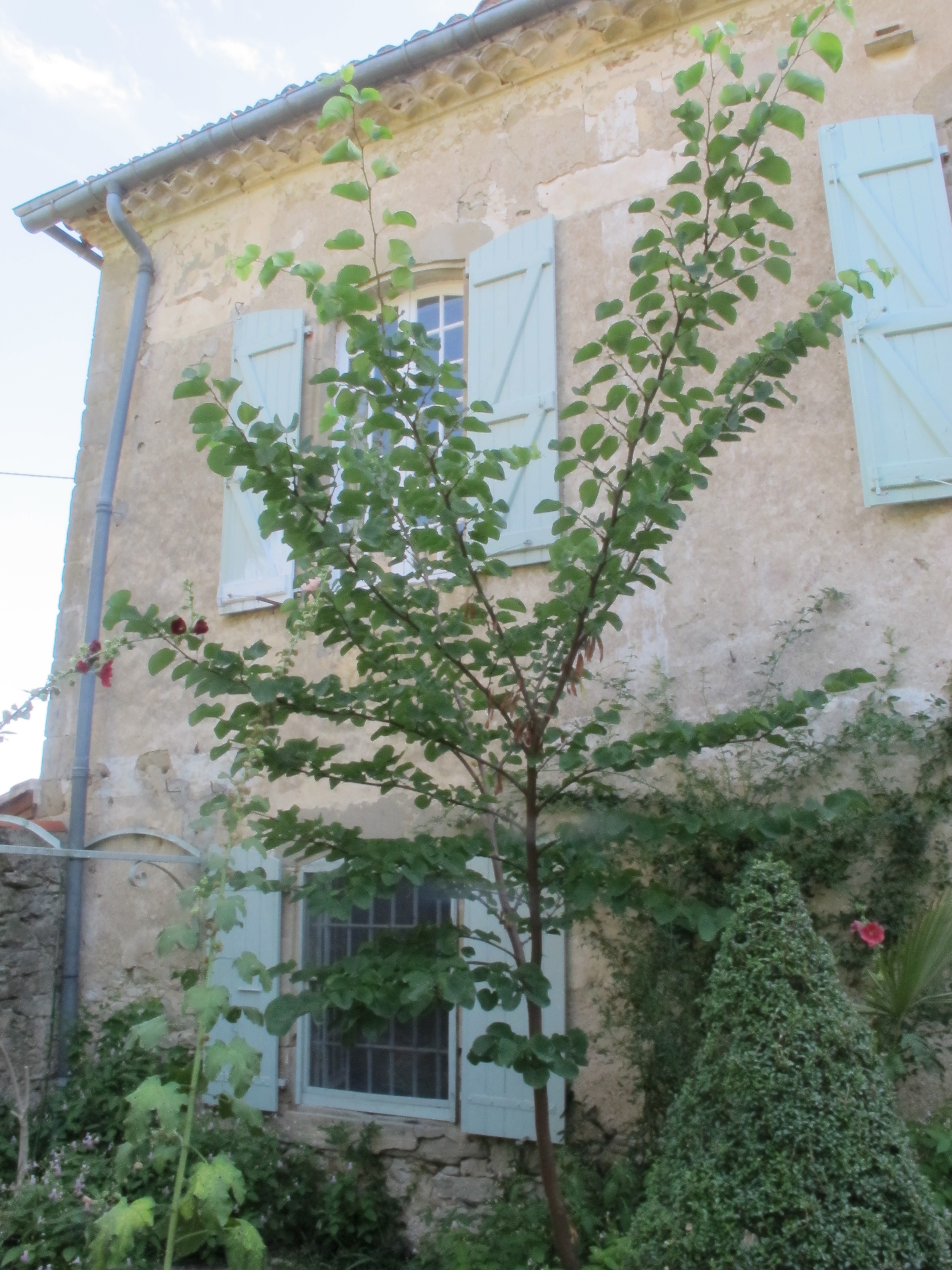
The self-planted Judas (Redbud) tree close to the house in the courtyard is growing apace and will soon provide us with an emergency exit from the first floor in case of fire!

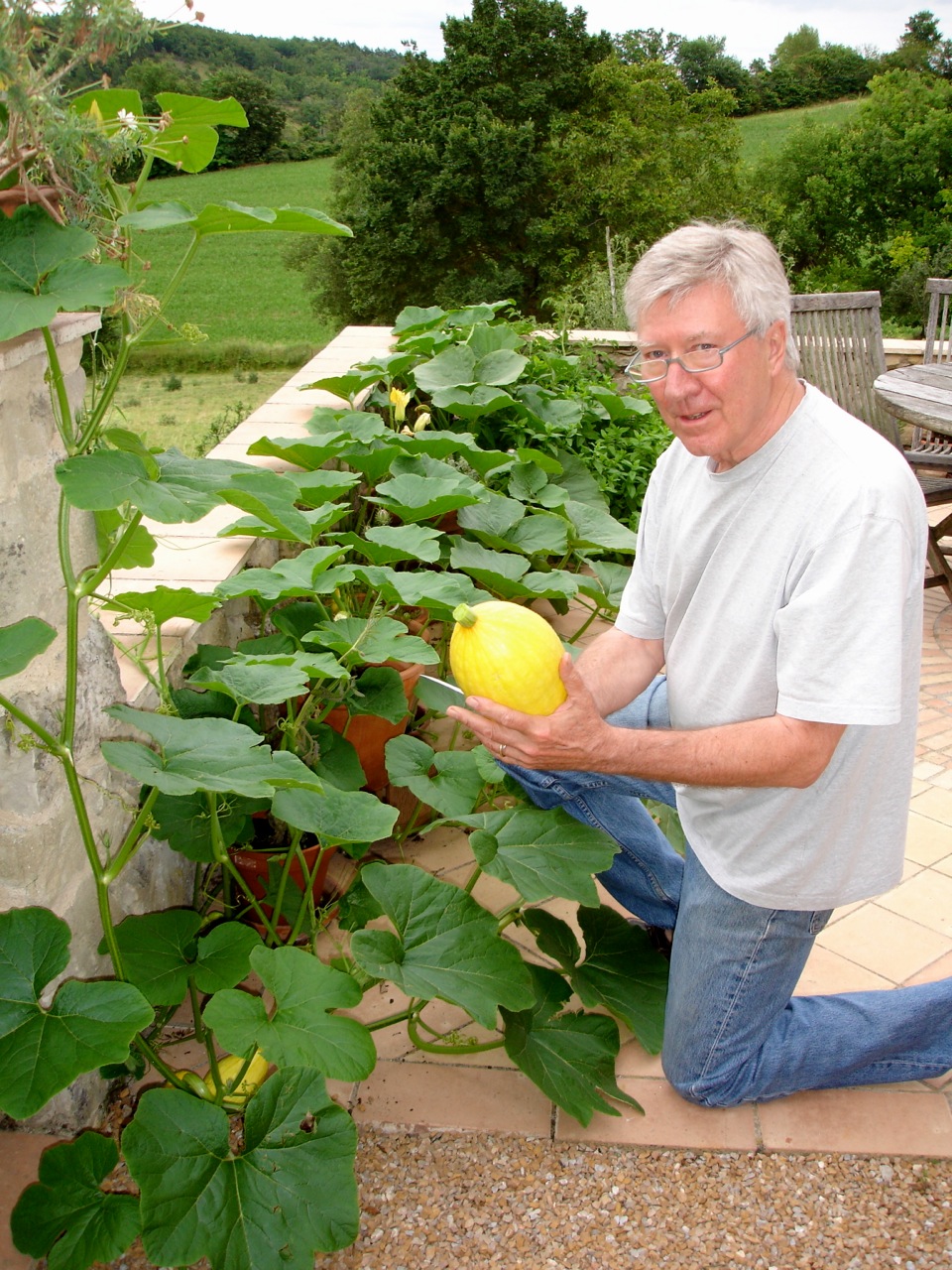
Three years ago, a “thing” grew out of the mint patch and started heading for the compost heap.

Charting it’s progress we laid bets on how far it would reach. Then–wonder–it started having offspring.

Beautiful yellow marrow-like fruit appeared at regular intervals.

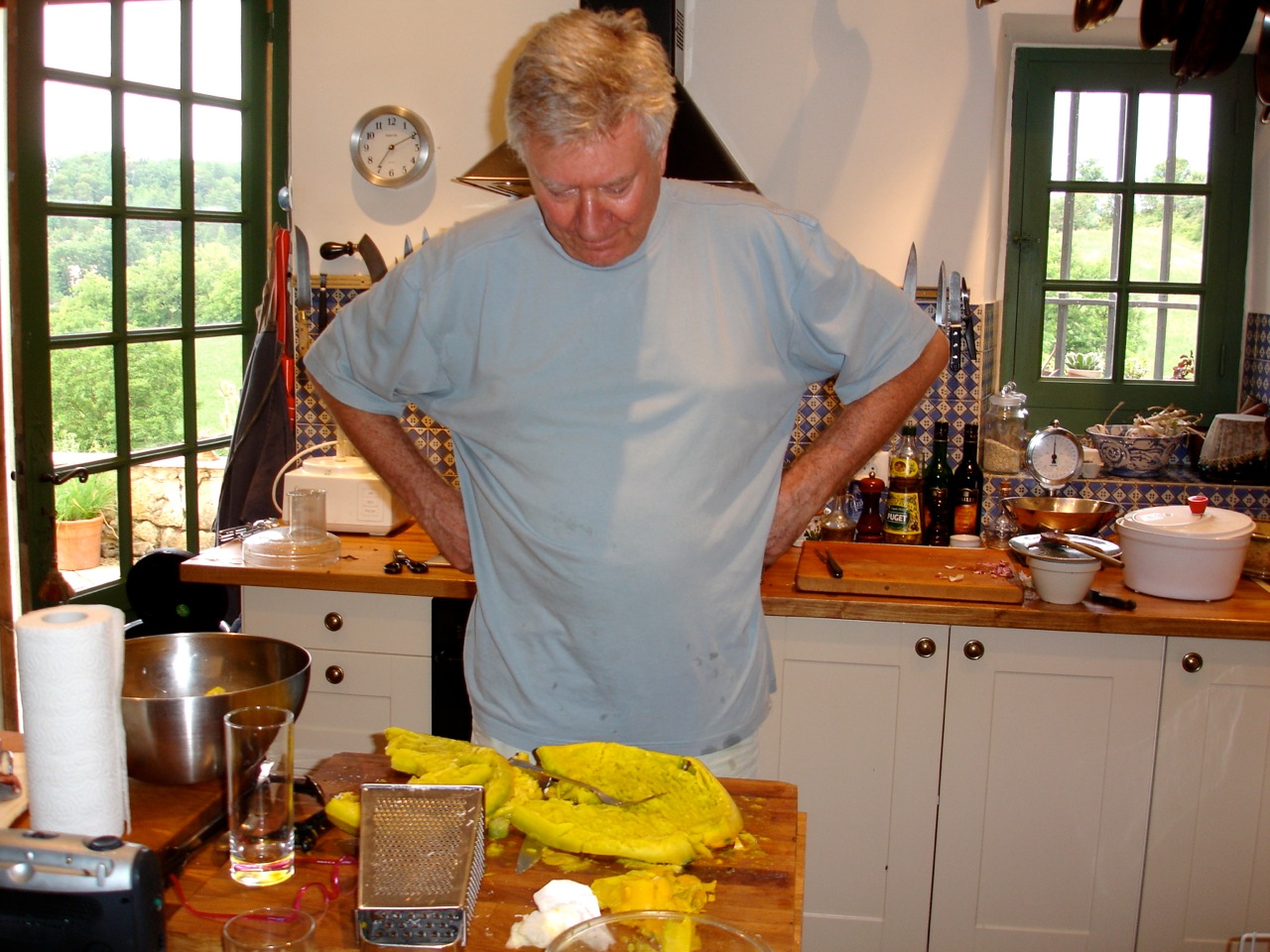
I tried to make a dish with one, but it collapsed.

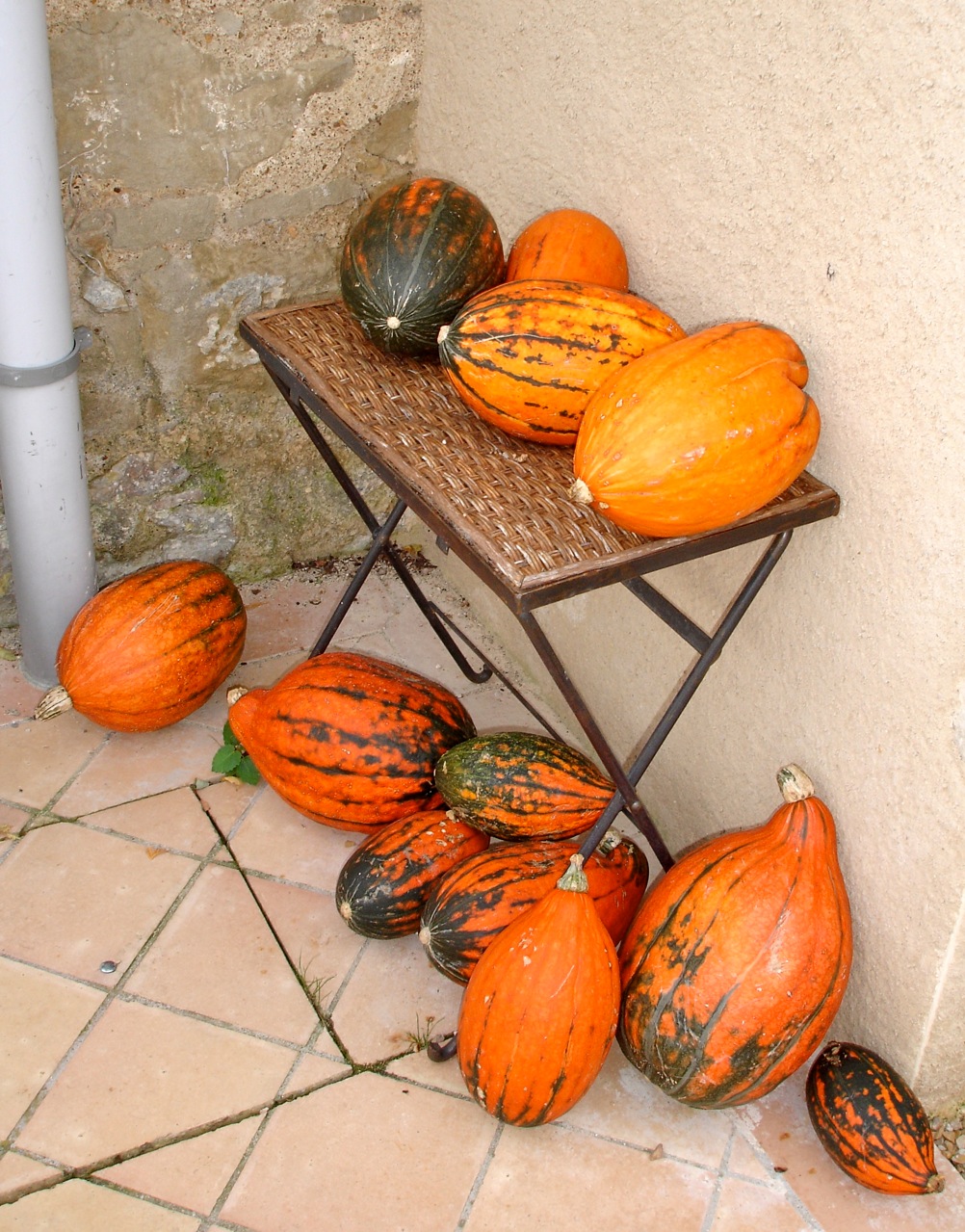
They made a pretty picture against the wall though.

Yellow mellowed into burnished orange as these courge aged.

The following year, it reappeared, travelling in the opposite direction from compost heap to the mint patch–throwing off fruit like the year before.

Welcome–volunteers!

* Our friend and neighbor Alice thinks it was a hungry cow who was the mystery muncher of the sunflowers. I was hoping for something more exotic!

Read Full Post »

Turmericthe brilliant yellow spice, has anti-inflammatory and antioxidant properties–important weapons in the battle to stay on top of diabetes. (Cuminanother spice in this souphas these beneficial properties too.)

It also has a world class, gold medal ability to stain anything that comes into contact with it–so handle with care–or rather with a spoon is the rule!

It helps give this stunning summer soup–suggested almost as an afterthought in the lovely Riverford Farm Cook Book–its luminous colour.


Which apples to use?

I used Fuji last time, which are a favorite apple for me.

Next time I want to try Granny Smith.

You could try a mix too.

for 4

3 large apples–peeled, cored and chopped up

1 medium onion–chopped

25 gms/1 oz butter

1 tsp each turmeric, cumin, coriander, mustard powder (I use English mustard powder. Whizzing some seeds in a grinder is another option–or simply leave it out!)

1/4 tsp cayenne pepper

1/4 tsp cinnamon

1 pint/450ml stock (I use organic vegetable stock cubes)

salt and white pepper

juice of half a lemon

creme fraiche or yoghurt (for garnish)

mint leaves (for garnish)

  • Melt the butter in a pan.
  • Add the onion and sauté gently to soften.
  • Add the apple pieces and the spices and mix in.
  • Add the stock and simmer gently for fifteen minutes.

  • Liquidise to a smooth texture, using a food blender or hand mixer.
  • A ladle and a half per bowl is perfect.
  • Top with a teaspoon of creme fraiche or yoghurt and a leaf of mint for garnish (if you have it).

We asked guests at lunch a couple of days ago to guess what soup they thought it was–it puzzled a few!

Serve it hot in the new apple season to come too!

Read Full Post »

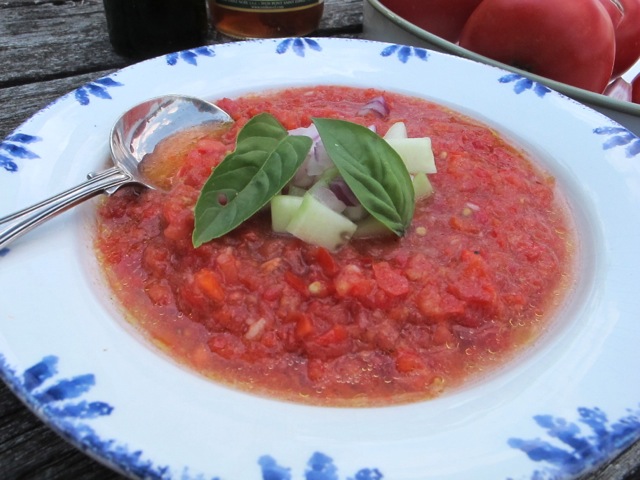
It’s worth waiting for the sun to work its magic on the tomatoes before making this simple garlicky version of the classic summer soup–served cold.

A few whizzes of the food mixer then the addition of oil and vinegar and it’s done.

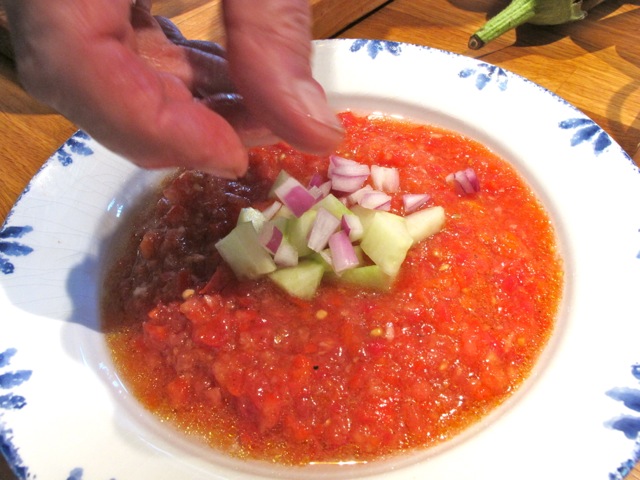
Chill it for as long as possible–if you can make it the day before all the better–and serve it with some finely diced peeled cucumber and spring onion (scallions to our north American friends).

Best served on a hot, sunny day.

Best eaten in the shade.

for 6

800gms/4lbs ripe tomatoes–chopped with their juice

a medium size red pepper–chopped coarsely ready to put in the mixer

3 cloves of garlic— crushed with a teaspoon of salt

  • Mix these in a food mixer–but not too smoothly.
  • Transfer to a serving bowl and add:

3 tablespoons olive oil

4 tablespoons cider vinegar–organic if you can get hold of it

salt and pepper to taste

  • Chill for 4 to 5 hours–or overnight.
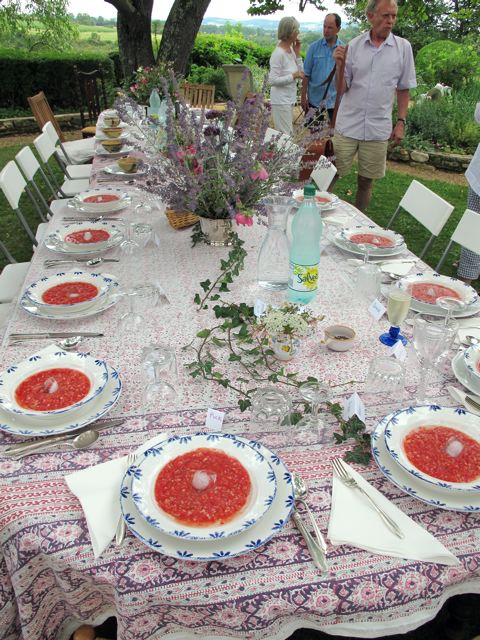
  • Serve with an ice cube in each bowl (optional)
  • A garnish of cucumber and red/spring onion–diced small–in bowls on the side for people to add as they please.

  • You might chill the empty bowls in the fridge two hours before serving–for perfection!

The level of acidity varies with the tomatoes and the vinegar.

You could start with 3 tablespoons of both oil and vinegar, then add more vinegar if it needs it.

(I did today–an extra tablespoon!)

Read Full Post »

A package arrived in the post a couple of days ago.

In it were three sample copies of the new hardback edition of my cook book,  Delicious Dishes for Diabetics!

It’s a year to the day since our launch party in the garden, though the timing is purely coincidental.
(We served gazpacho as the first course--recipe to be posted tomorrow!)
This hardback is no coffee table tome with lavish photos–the kind that are too heavy to be of practical use in the kitchen.
It is a LARGE PRINT edition for people who forget where they’ve put their spectacles!
(My answer to that problem is to have MANY spare pairs–some of which I can find– sometimes….)
This new version (in black & white) is available via  Amazon.com/.

Read Full Post »

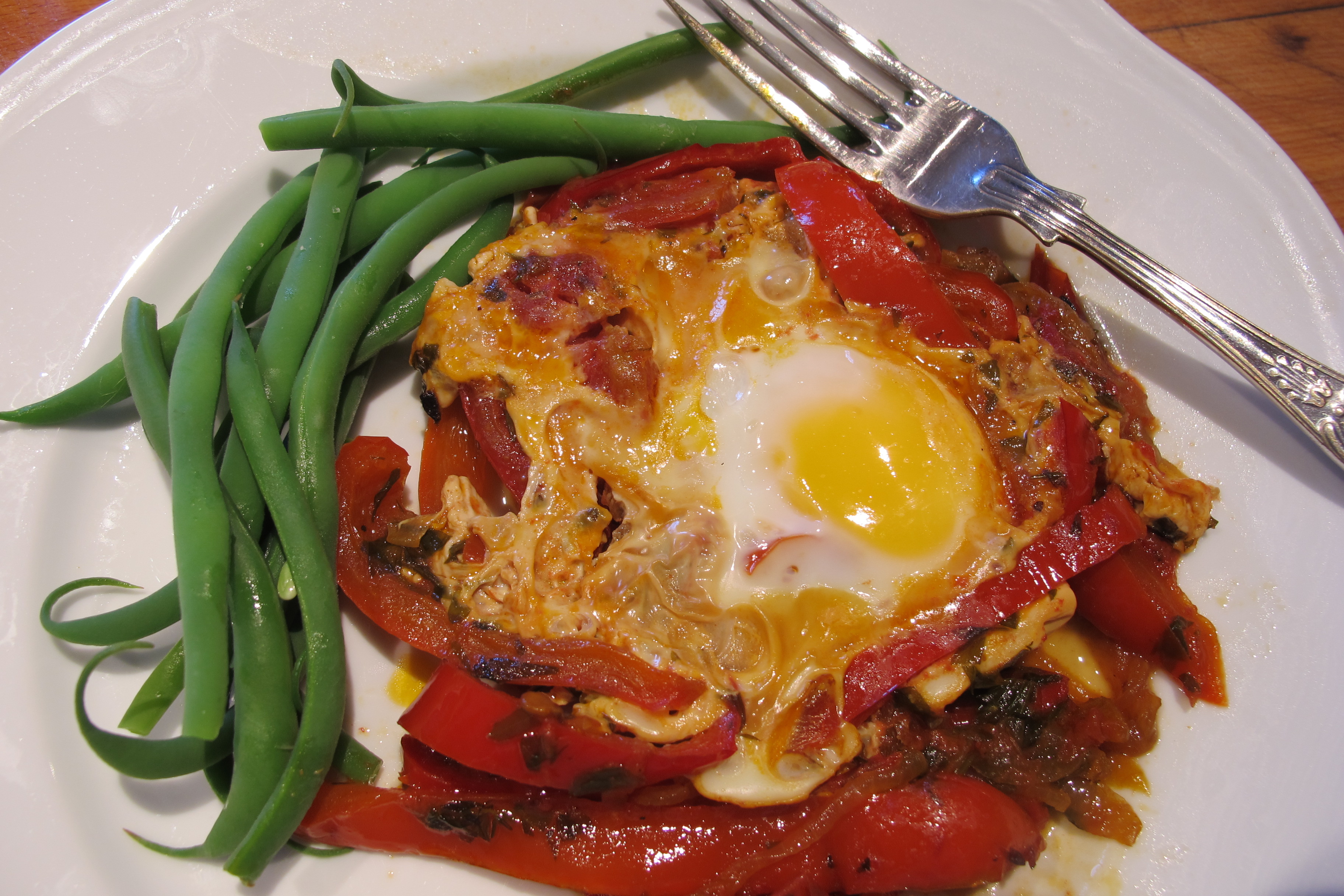
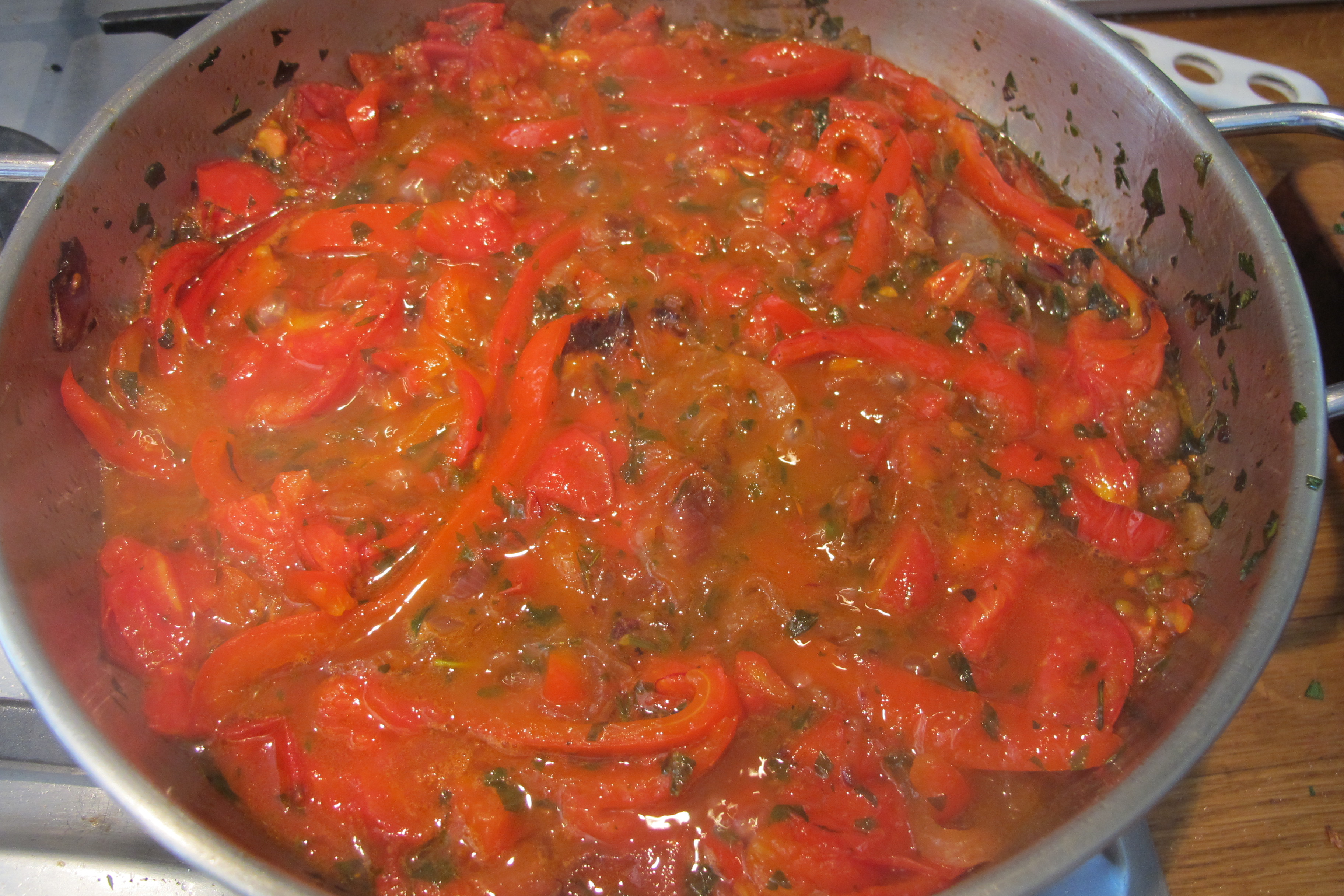
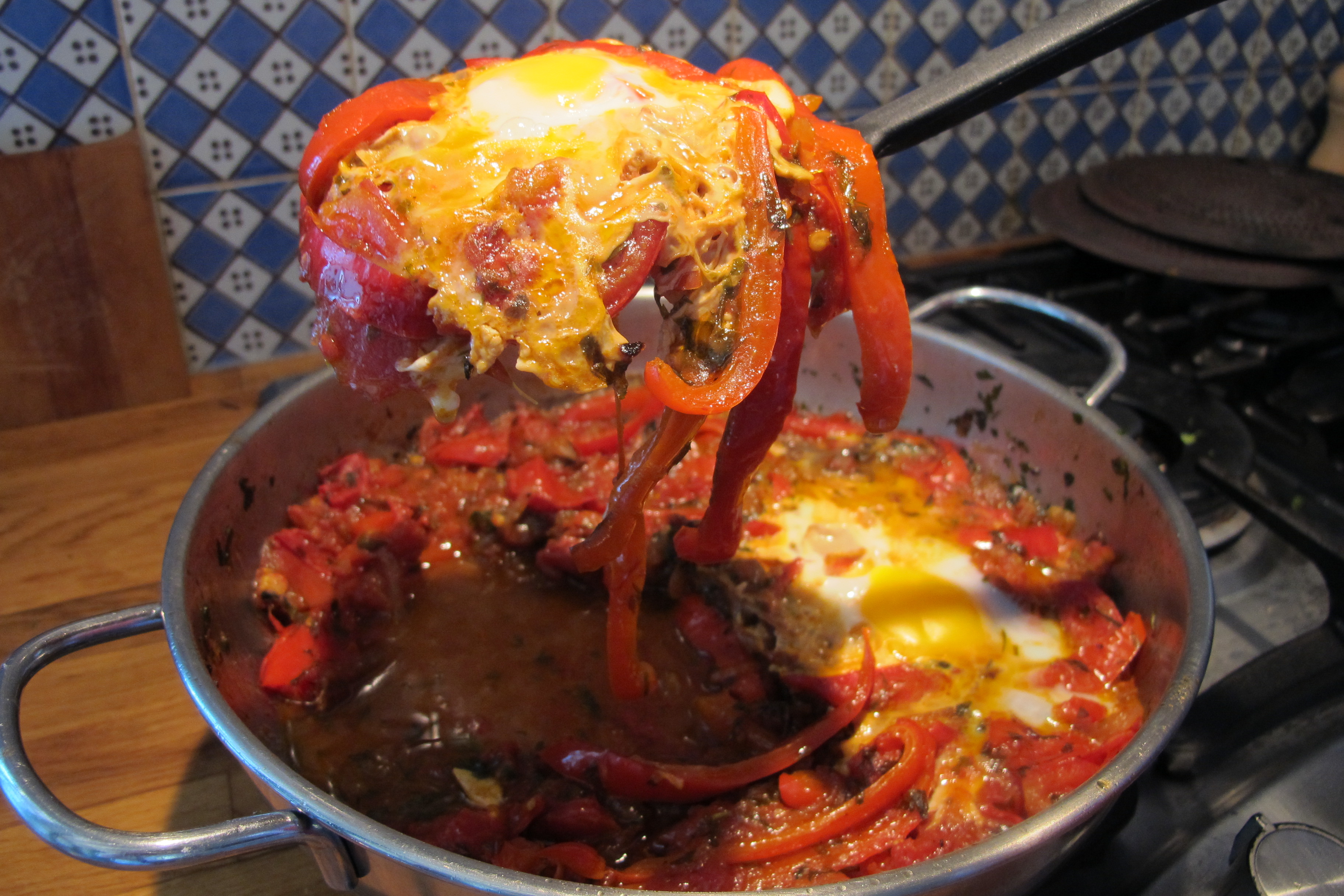
Recently discovered this traditional North African favourite in Ottolenghi’s sumptuous vegetable cookbook  Plenty.

It is commonly served in individual cast iron pans, which I imagine adding to the pleasure–one pan and ALL for ME!

It makes a pretty summer picture on the plate with a few green beans (gift from our neighbours, Hervé and Maite) to the side.

for 2

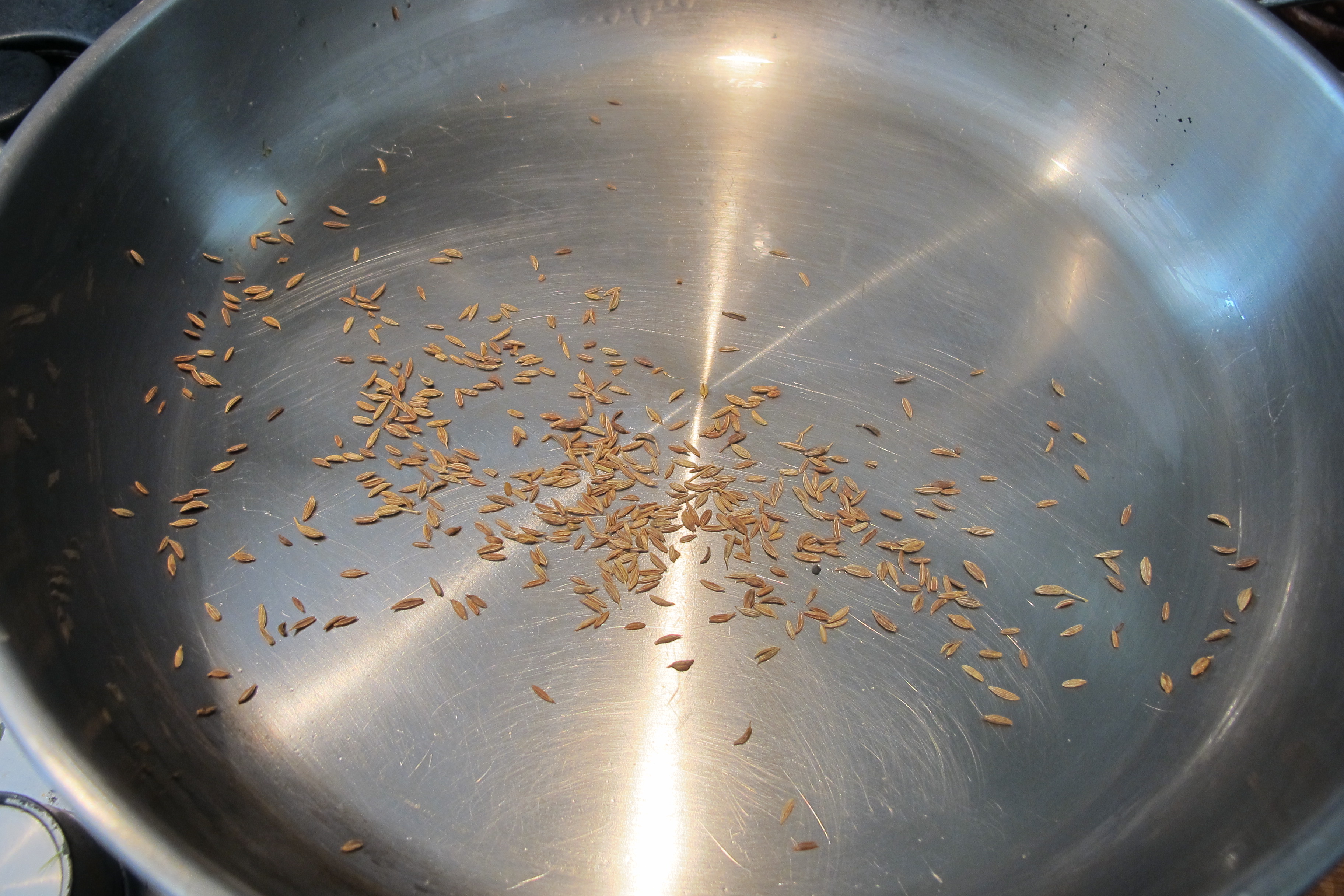
1/2 teaspoon cumin seeds–dry roasted in a medium pan

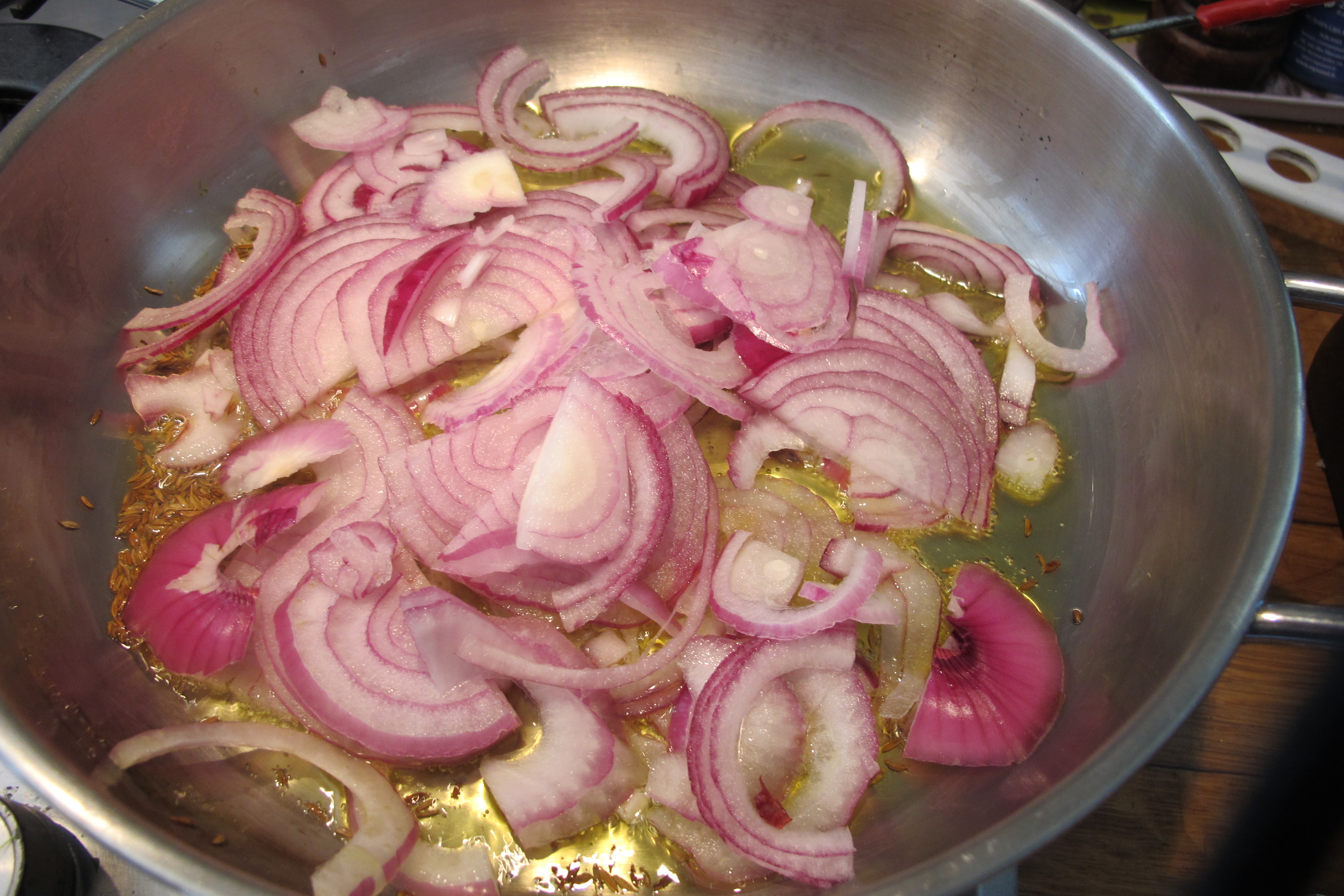
1 large onion–red or yellow–sliced

80ml/1/4 cup olive oil

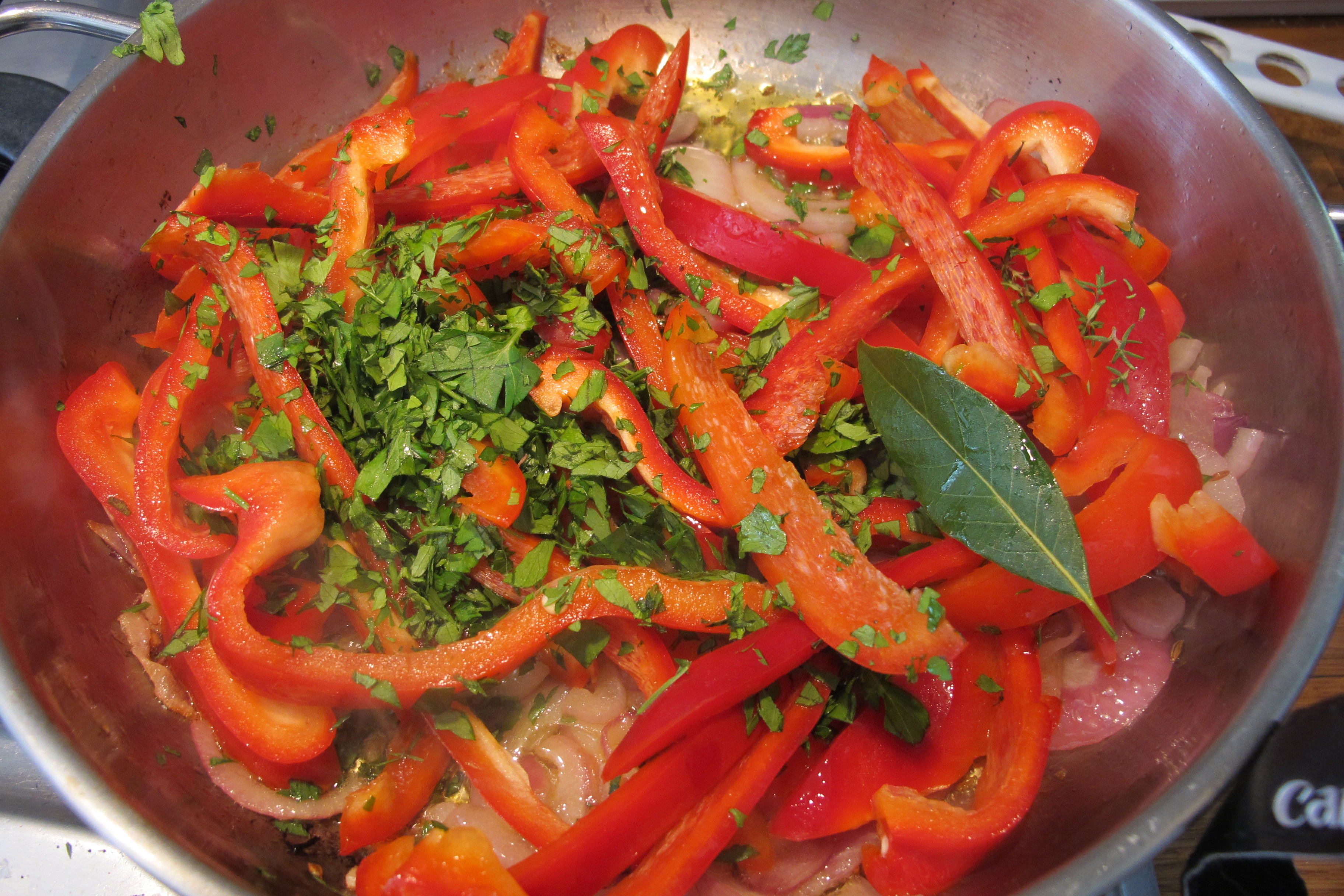
2 red peppers--washed, deseeded and sliced thin

1 bay leaf, thyme leaves from a few sprigs, 2 tablespoons of parsley

3 large fresh ripe tomatoes or tinned–roughly chopped with the juices

1/4 teaspoon cayenne pepper and a pinch–a few strands–of saffron

1/4 cup/60 ml water

2 or 4 egg 

salt and pepper

  • Dry roast the cumin seeds for a minute or two, taking care not to burn them.
  • Add the oil to the pan, then the onions and over a medium high heat cook them for 5 minutes to soften them.

  • Add the peppers and the three herbs, turn everything over thoroughly.

  • Cover the pan for 5 minutes to start the softening of the peppers.

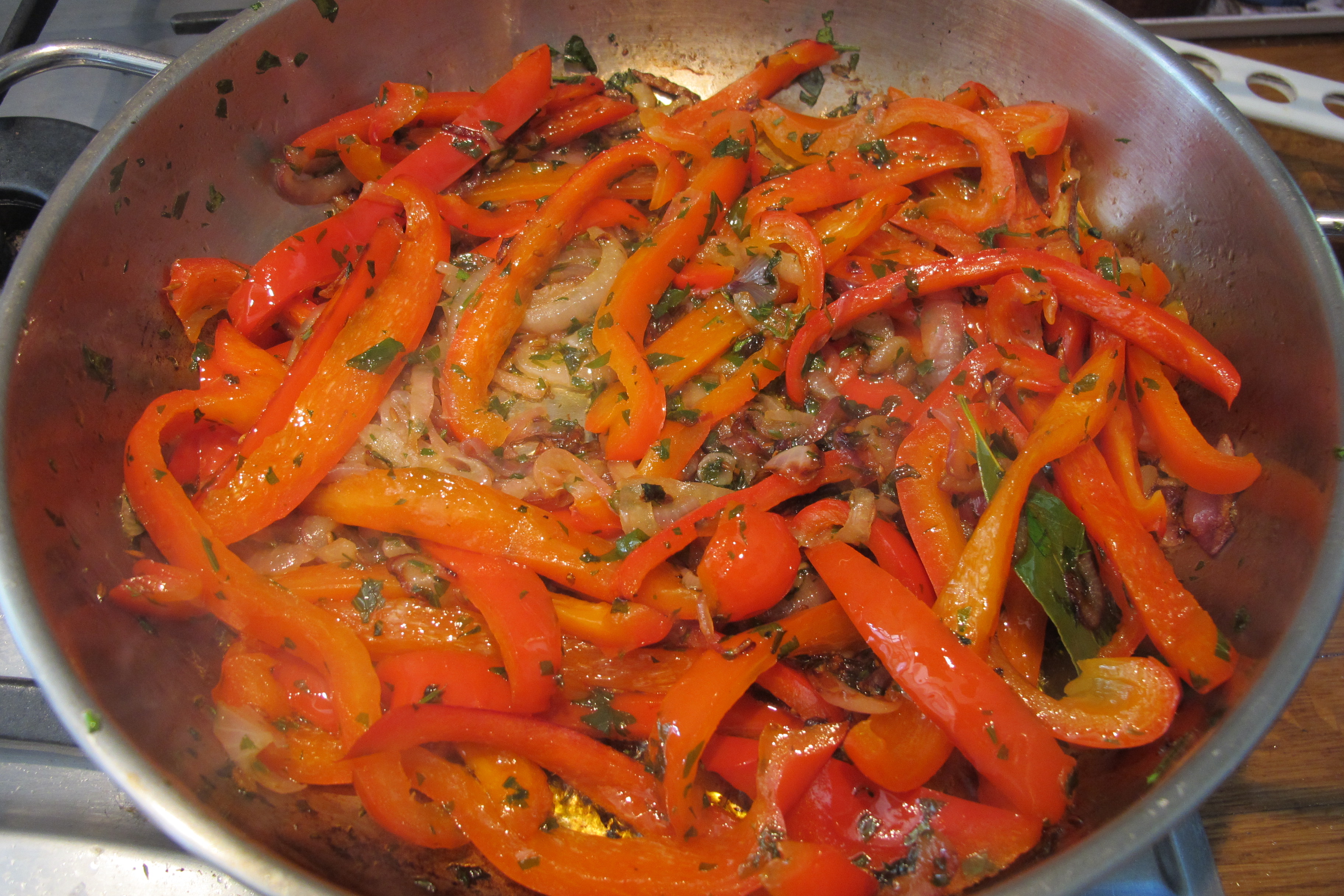
  • Cook a further 5 minutes uncovered.
  • Add the tomatoes, the water–little by little to avoid diluting the sauce–and the two spices and season with salt and pepper.
  • Cook for 15 minutes on a low heat–covering for a short time if you think the peppers need further softening.
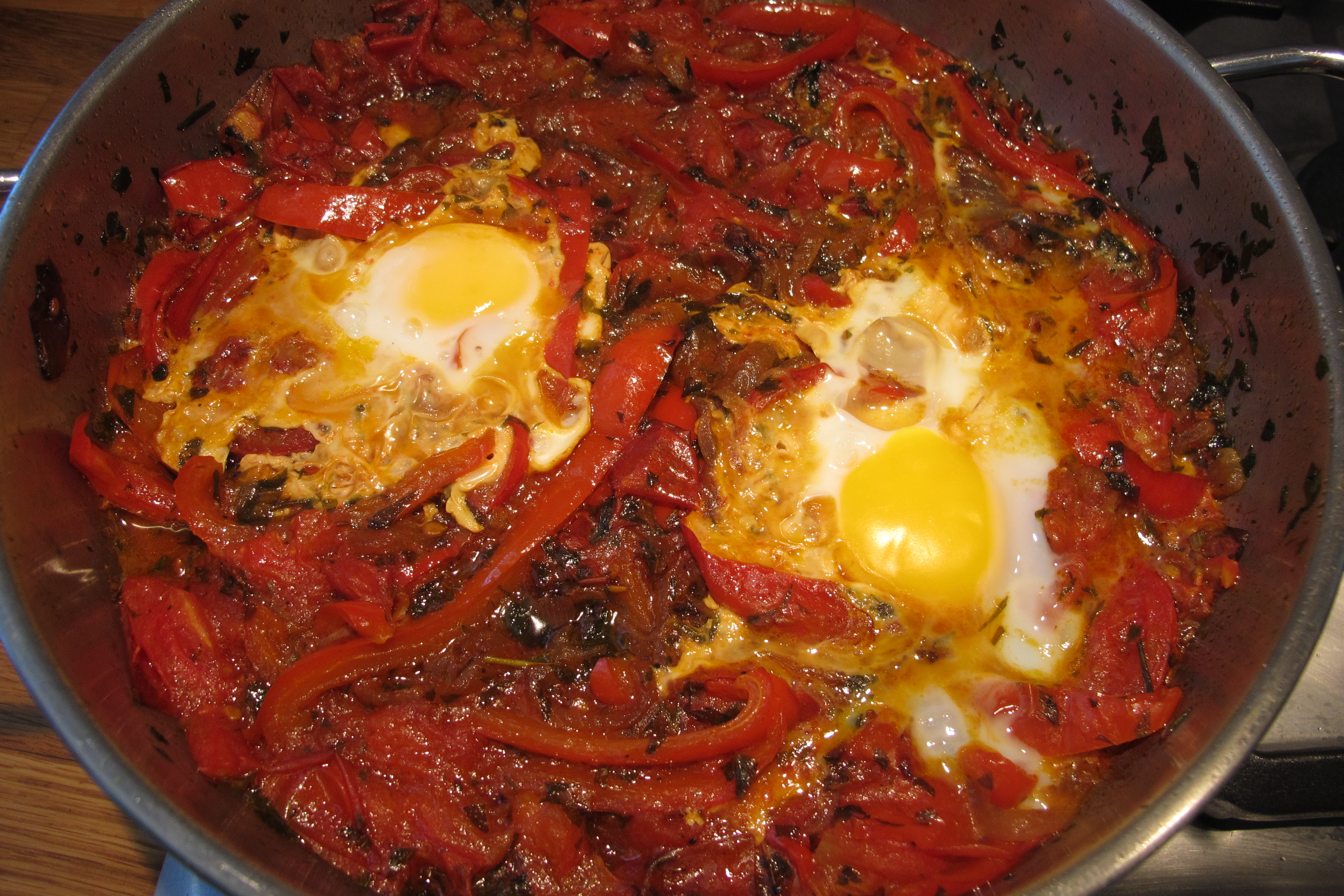
  • The result should be a lightly spicy sauce in which to poach the eggs.

  • Carefully break the eggs ( 2 or 4–your choice) into the sauce–leaving space between them.

  • Cover the pan and cook, over a lowish heat, until the eggs are cooked to your taste.

Read Full Post »

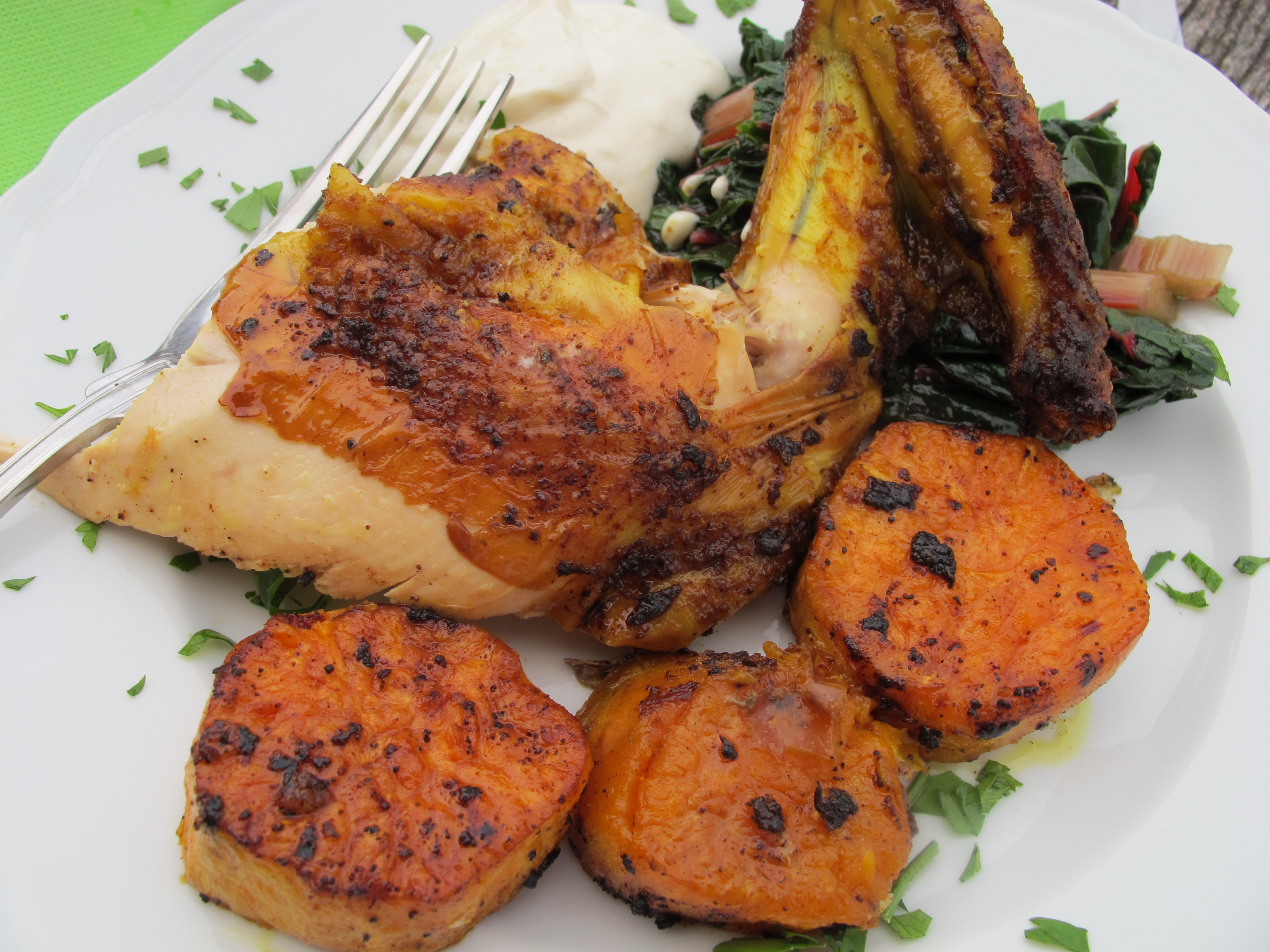
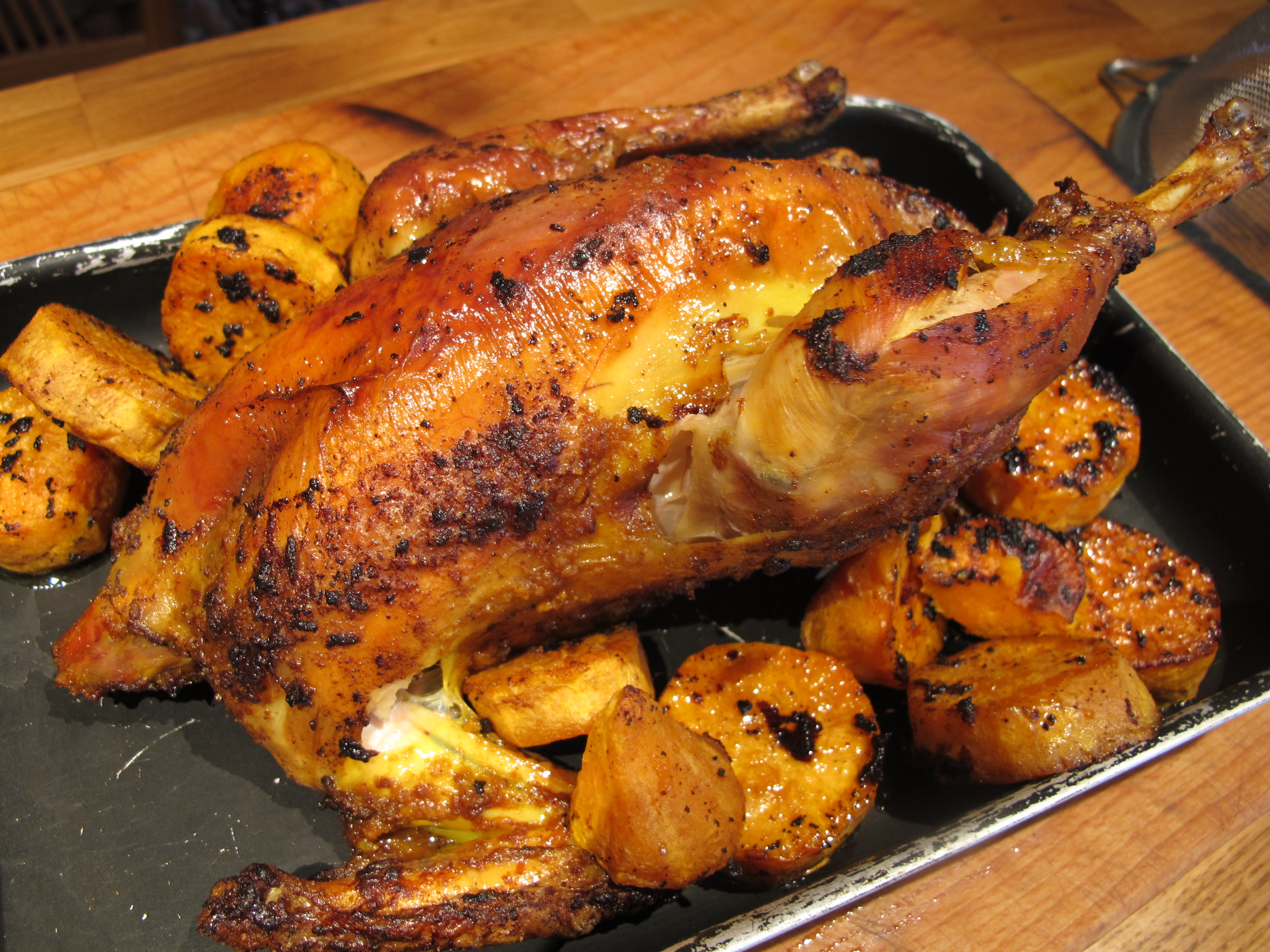
Our friend Julie put me onto this recipe–which originated from Jocelyn Dimbleby.

slices of peeled sweet potato roasted with the chicken for its last half hour in the oven.

The marinade has the spices turmeric and cumin whose anti-inflammatory and antioxident qualities are a plus for diabetics.

The smell wafts through the kitchen and whets the appetite.

Marinade the bird for a few hours in the fridge and roast it for an hour and a quarter.

for the marinade

Juice of a large lemon

2 tablespoons olive oil

2 cloves of garlic–crushed

1 teaspoon turmeric

2 teaspoons cumin powder

1 free range/organic chicken (weighing about 1.4k/3lb)

For the sauce

glass of white wine

  • Mix the marinade ingredients in a small bowl.
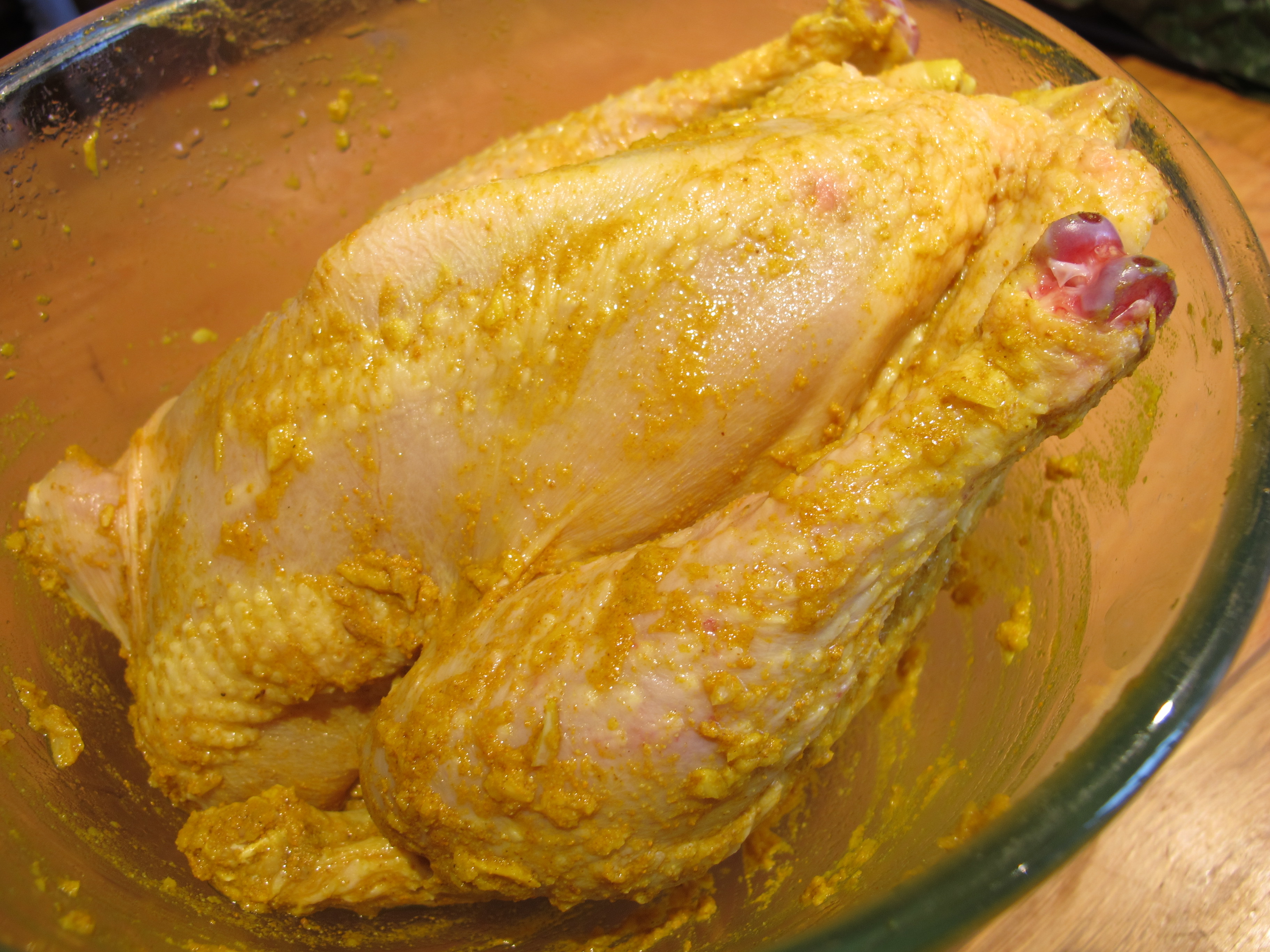
  • Put the chicken in a large bowl and pour/brush/smooth over the marinade.
  • Turn the bird in the marinade.
  • Leave for a few hours–covered–in the fridge.

not pretty but effective!

Heat the oven to 180C/350F

  • Sprinkle some salt over the bird.
  • Place it, breast down, in a large roasting pan.
  • Pour any marinade remaining in the bowl over the chicken.
  • Add a further tablespoon of olive oil.
  • Place in the middle of the oven.
  • Roast for 3/4 of an hour–basting it from time to time with the juices.
  • Turn the bird over for the remaining half hour.
  • Let the chicken rest while you make a sauce from the juices.

  • Tip the pan and spoon out all but a tablespoon of the fat.
  • Add a glass of white wine and stir–dissolving the “bits” into a sauce over a low heat.
  • A garlicky yogurt sauce goes well with it.

Read Full Post »

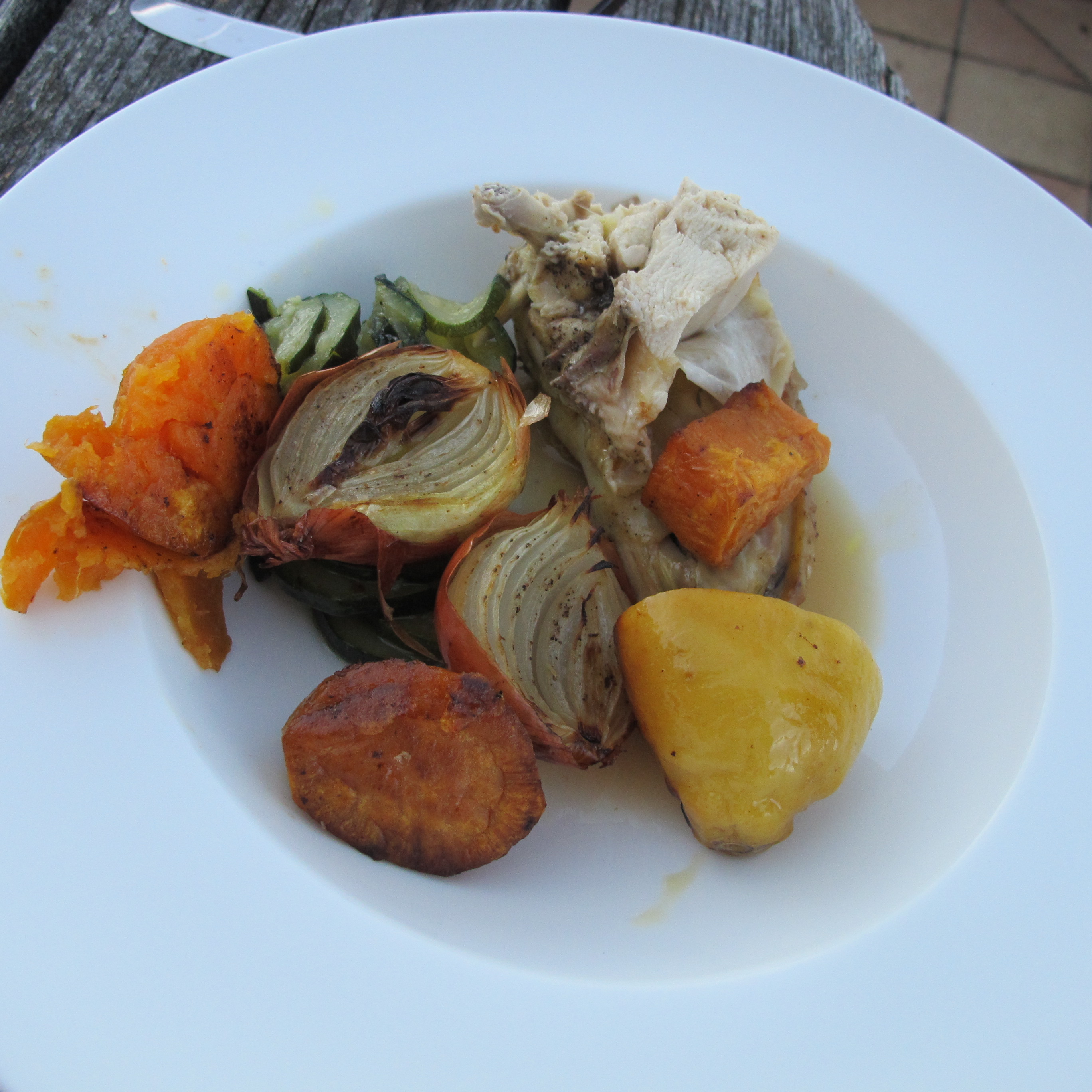
Spatchcocked chicken, roasted onion and sweet potato and a new courgette/zucchini dish

Joy!

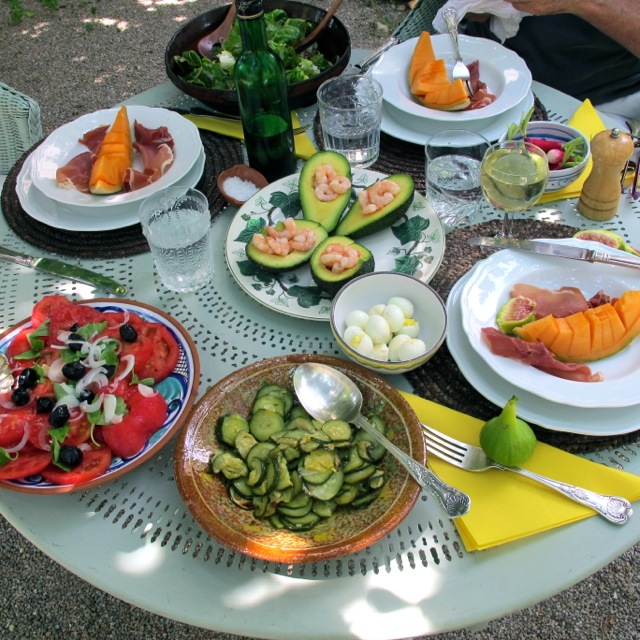
We sat on the terrace last night and ate this simple meal, while Beau played tag with the cows…

and the harvesters were hard at it in the field beyond the road.

Just the three of us–our friend Romaine came back with us from London.

The chicken she and Meredith bought would serve six and there were more onions and an extra sweet potato in the basket for unexpected guests.

The kilo of courgettes–slow cooked and melting–would easily stretch to six.

Happy to be home–we tucked in.

The courgettes/zucchini recipe is from Skye Gyngell’s version in her book  How I Cook.

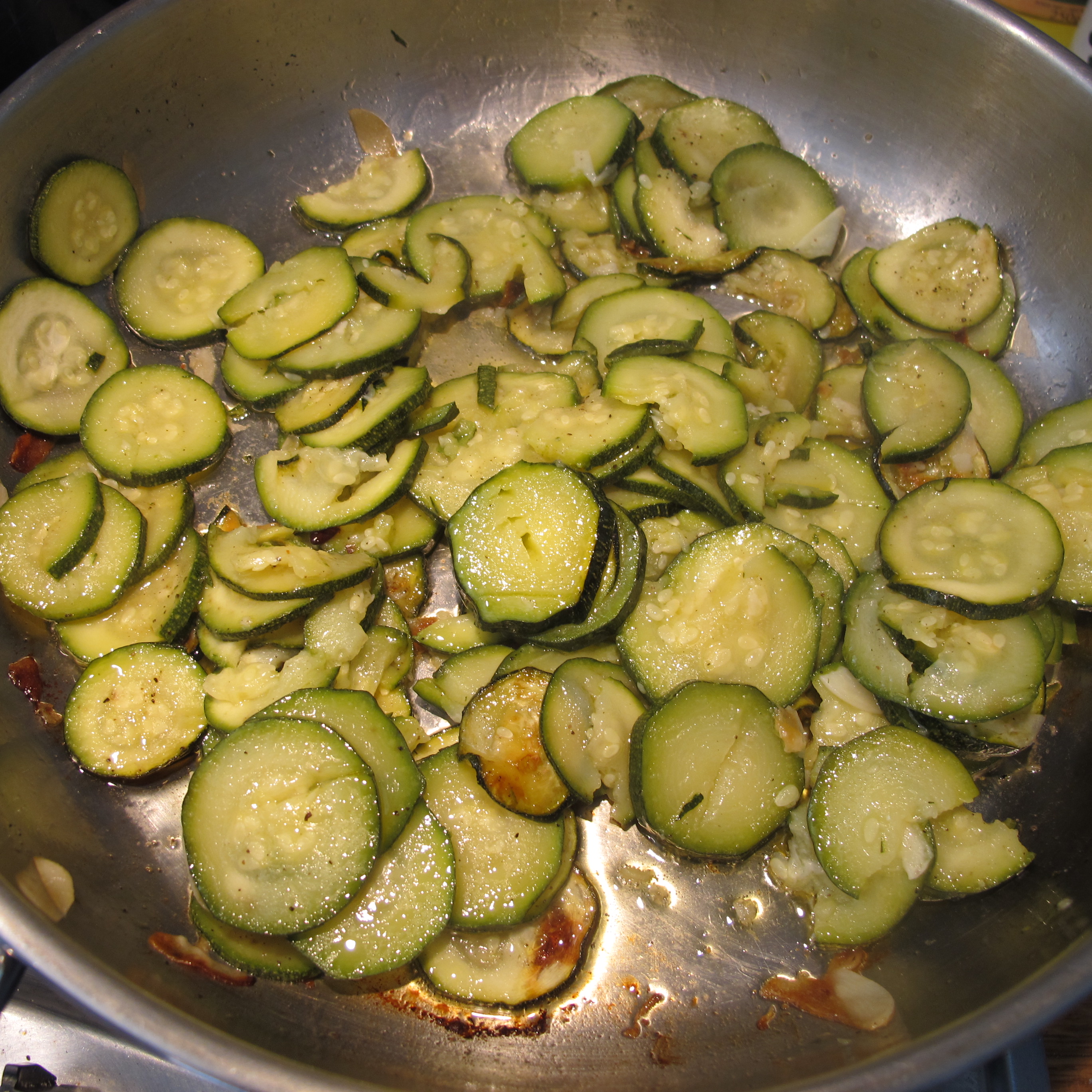
It is cooked slow and is mushily delicious with a little kick from the chili.

 Slow cooked courgettes/zucchini with garlic and mint.

for 4 

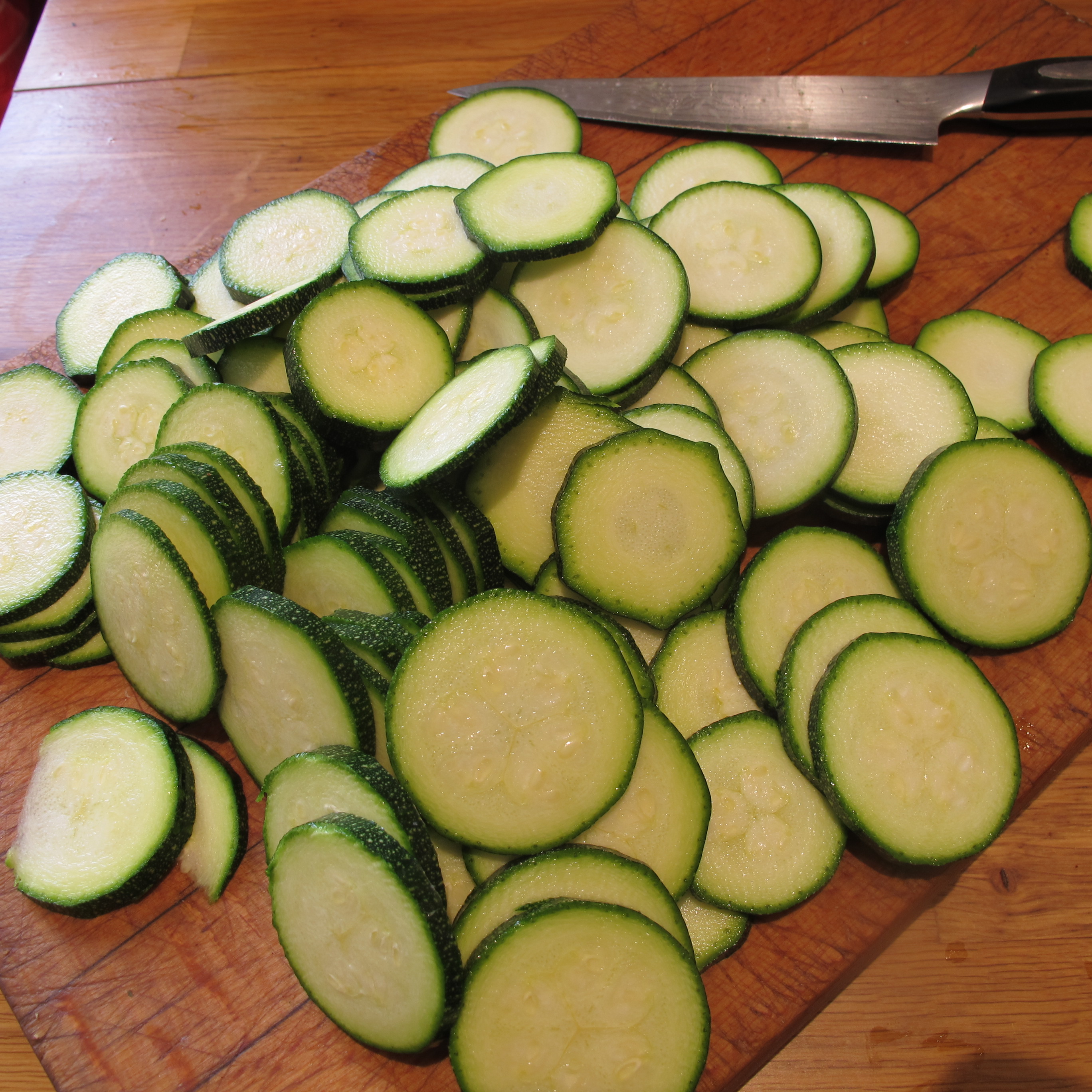
1 lb courgettes/zucchini--sliced thin

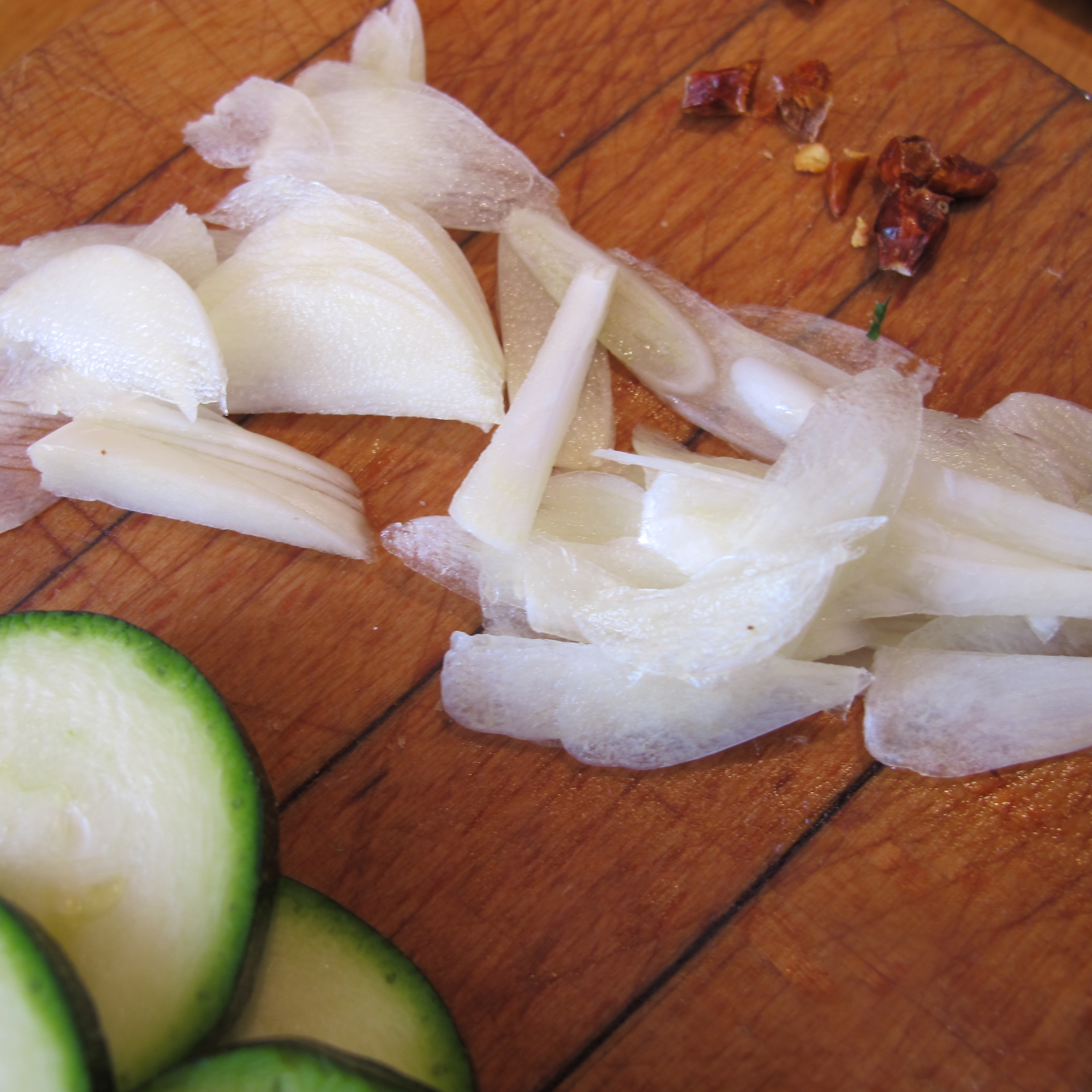
2 garlic cloves–sliced thin

1 small dried red chili–chopped

a handful of mint (if you have it)-chopped

salt and pepper

1 tblsp olive oil

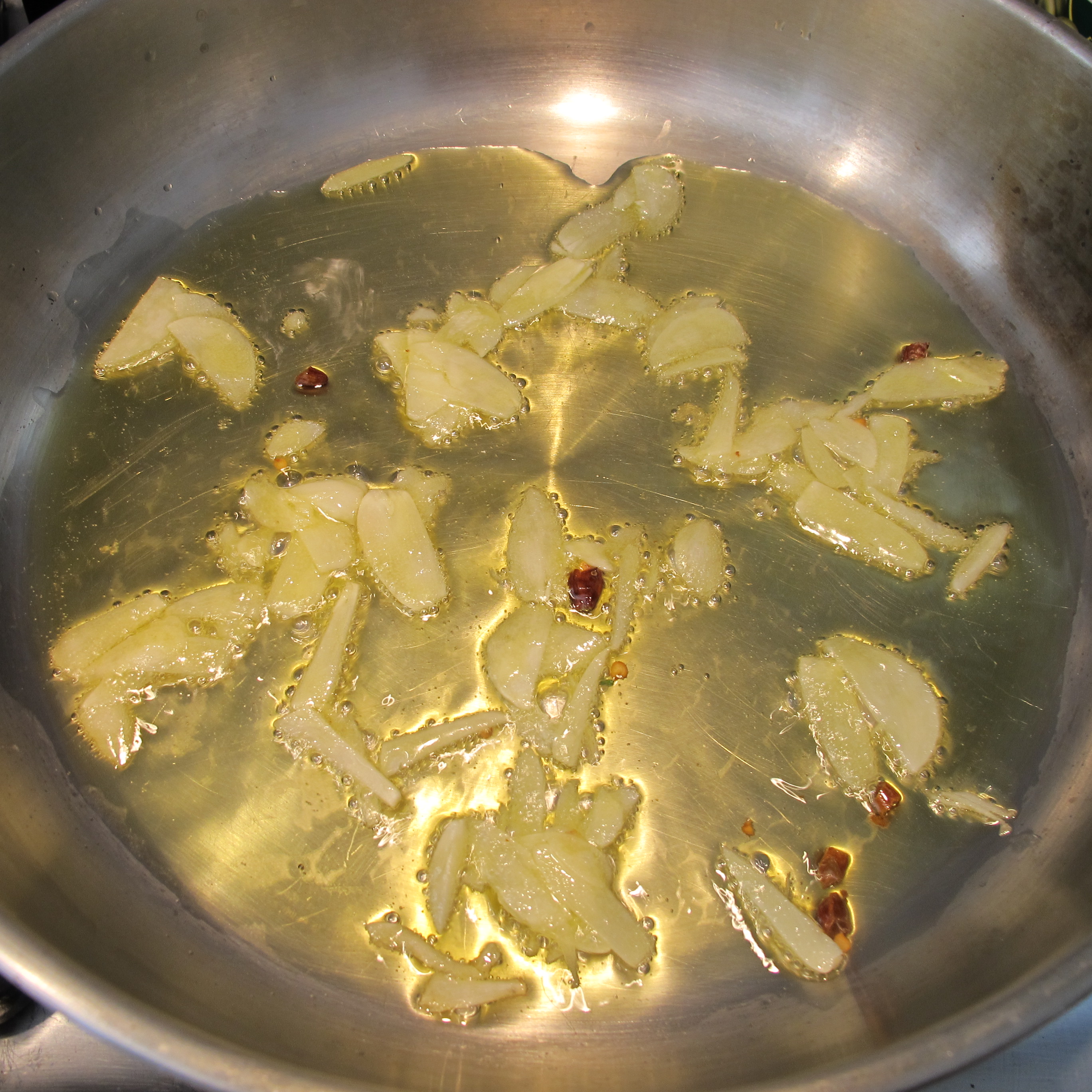
  • In a medium pan,  gently soften the garlic and chili in the oil.

  • Add the sliced courgettes/zucchini and turn them over in the oil to coat them thoroughly.
  • Season generously with salt and pepper.
  • Turn again to distribute the seasoning.
  • Cover the pan and cook for forty minutes on a very low heat.
  • Uncover and fold in the mint, if you have it–which we have, but I forgot it!

I made it again today with a pound (500 grams) of the courgettes and we enjoyed it tepid as a salad.

Read Full Post »

I couldn’t think of the French word for “butterfly” at Monsieur Fraise’s, our Lautrec butcher, the other day.  The word was as elusive as the insect. Pamplemousse kept fluttering around my mind, which means grapefruit!

Papillon is the word!

When I tried to demonstrate with my hands, starting them in the praying position then opening out like a butterfly, the butcher looked flummoxed.

I don’t blame him.

The idea of slicing a pork chop almost in half horizontally was new to me when I read about it recently in the Food Section of The New York Times.

After more elaborate miming, he understood–and was game to have a go.

  • He carefully cut round the bone, freeing up the meat.

(Meredith’s photos below show me having a go….)

  • With his left hand holding the boneless fillet down, he sliced into the meat with a sharp knife working it through to leave a quarter of an inch uncut.
  • He folded back the two halves–still connected–to reveal the “butterfly”.
Below is the professional’s effort.  (Monsieur Fraise gets the Gold Medal I’d say!)
The advantage–apart from making a single chop go further–is that it cooks quickly–three minutes each side–retaining a juiciness that sometimes escapes when cooking pork longer.

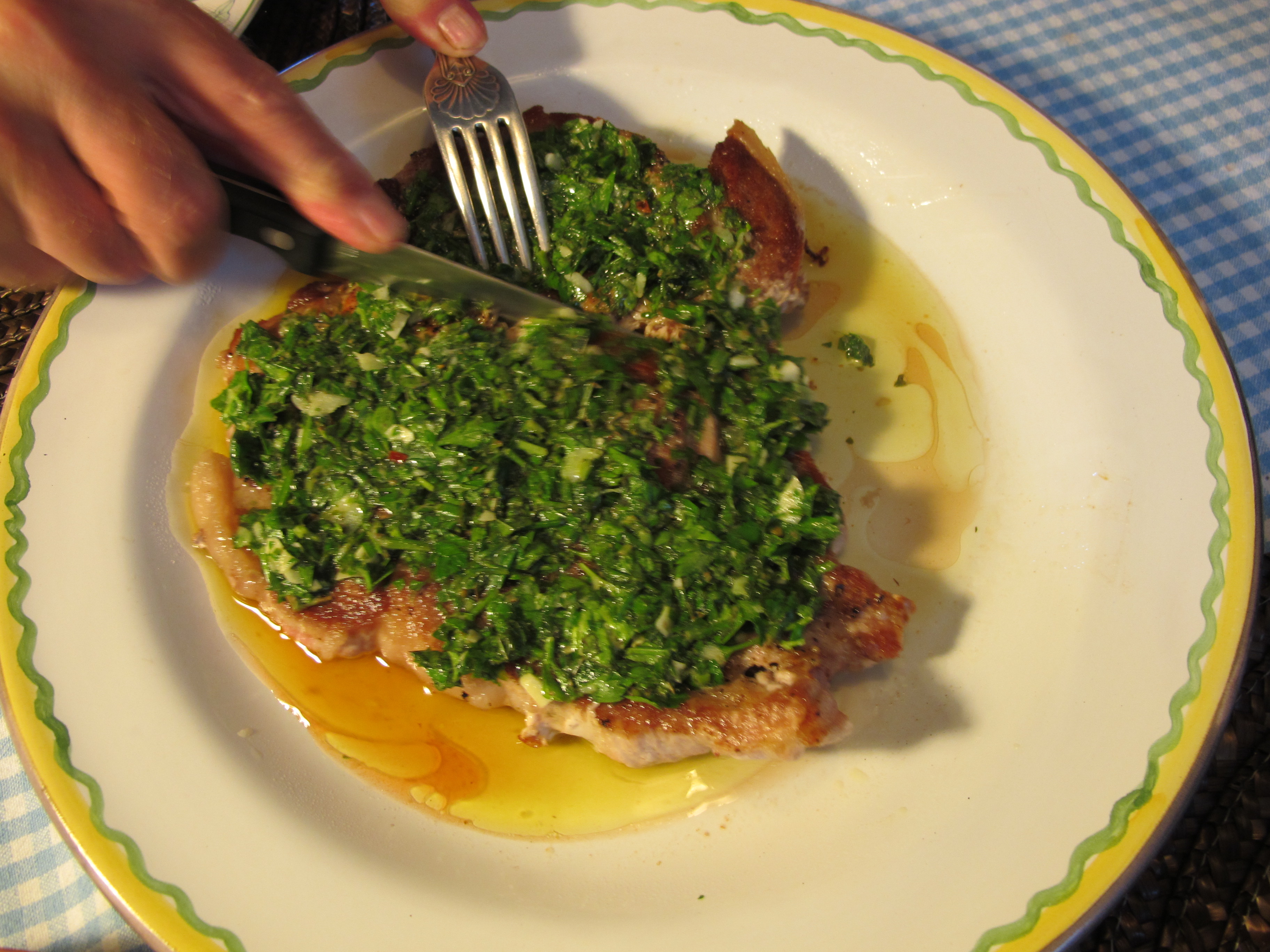
Meredith and I tried out the herb topping (suggested by The New York Times). It looks good and is tasty–but leave it off if you like.

I enjoyed a piece of the chop–plain–the other evening with some slices of tomato dressed with olive oil and salt. I didn’t miss the topping.

for 2

1 thickly cut pork loin chop–butterflied

1 tblsp olive oil

salt and pepper

for the herb sauce

3 tblsps parsley

2 tblsps mint

1 tblsp chives

1 clove of garlic–sliced finely

1 tblsp–lemon juice

4 tblsps–olive oil

salt and pepper

  • Pile the herbs together and chop them finely.
  • Season to taste.
  • Add the lemon juice.
  • Stir in the olive oil.

for the pork

  • Season the chop well with salt and pepper.
  • Heat the tablespoon of oil in a sauté pan to hot and slip in the chop.
  • Turn the heat down to medium and leave the chop to cook for 3 minutes.
  • Turn it over and cook for a further 3 minutes–(the cooking time depends on the thickness of the butterflied chop. The juices should not run pink.)
  • (If you are using the topping, spread some over the chop at this point).

  • Let it rest on a serving plate–covered with foil–for 5 minutes before slicing and sharing it.

Read Full Post »

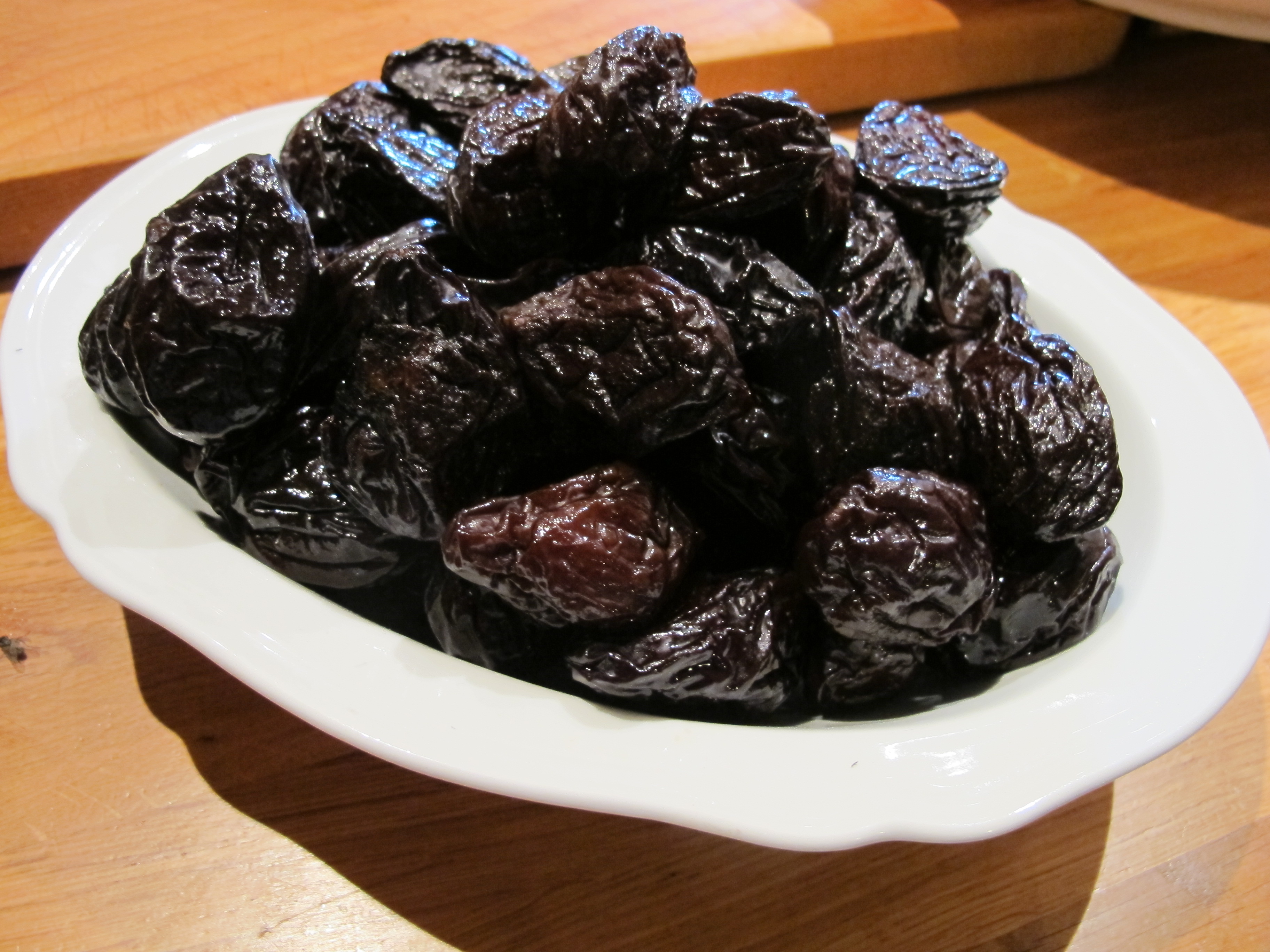
Pile of uncooked prunes

I like my daily prune.

I took a jar of cooked prunes to Corfu.

Seems eccentric–my mother must have had a hand in establishing the habit.

“Keeps you regular, Robin!”

There’s a funny side to prunes–mention of them can make people smile.

(Anything to do with body functions tends to bring a smile to English faces.)

The word itself has a comic sound– PROONE and it’s wrinkled appearance is not beautiful.

BUT they are delicious when soaked first and then gently stewed and allowed to cool.

The prunes here are from Agen–a couple of hours to the north west of us and they are extra as the French say of something special.

Some people eat them dried.

I prefer them after they’ve been through the Method–soft and melting in the mouth–as an essential part of breakfast.

The Method (for a pound of prunes):

  • Empty the prunes into a saucepan.
  • Cover them with boiling water.
  • Let them stand for a half hour.
  • Gently bring them up to the boil.
  • Cover them and let them simmer for another half hour–covered.
  • Leave them to cool then store them in the fridge.

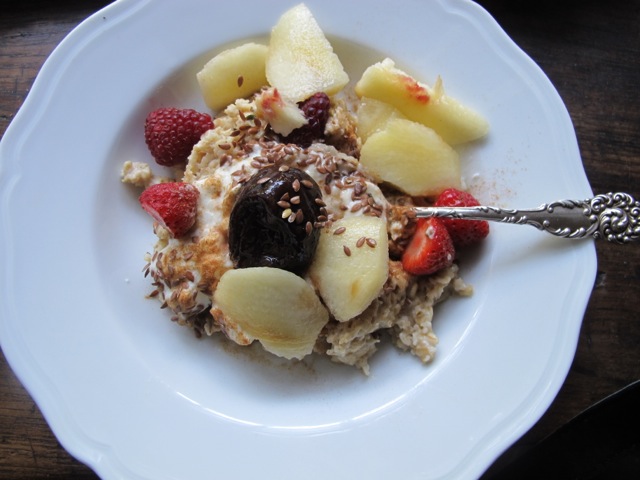
Here’s one in Meredith’s breakfast bowl–heaven she says!

“There’s no more faith in thee than in a stewed prune….”–                                                                                                          ~Jack Falstaff to Mistress Quickly in Shakespeare’s Henry the Fourth Part One.

I couldn’t possibly comment on that–but I have enough faith in prunes to take a jar of them to Corfu.

Read Full Post »

« Newer Posts - Older Posts »